• About
  • The Germans

A Work in Progress

A Work in Progress

Category Archives: Uncategorized

Sexiest Man Alive!

11 Monday Dec 2023

Posted by ag1970 in Film and Popular Culture, Uncategorized

≈ Leave a comment

Let the word go forth that I have been passed over again this year. Who’ve been my favorites? Well, George Clooney (a two-time “sexiest”), because he’s a fine actor with a marvelous self-deprecating sense of humor—the Hawaii movie, The Descendants, may be my favorite, tied with O Brother Where Art Thou? Three Kings is right up there, too, I think.

Idris Elba’s handsomeness and quiet intelligence, as a doctor who refuses to panic (much) after a plane crash in Alaska in The Mountain Between Us, with Kate Winslet, immediately appealed to me, and his commercials for Booking.com are charming.

But this year’s winner, Patrick Dempsey, is controversial. He’s too “old” (57), which is unfair to 71-year-old me, and he hasn’t done all that much lately, which is true.

I am a Patrick Dempsey fan only by extension. He was the romantic lead in Enchanted, about a Disney-type-all-sweetness princess transported to modern New York City, and it was Princess Amy Adams who caused Elizabeth and I to nearly fall out of our theater seats (remember those?) in a few seconds of shock before we started laughing uproariously. It was the cleaning scene, with the rats, pigeons and cucurachas:

And, truth be told, I never watched Grey’s Anatomy, which featured Hunky Dr. Patrick Dempsey, but the show’s star, Ellen Pompeo, moved me deeply in a film called Moonlight Mile.

In the early 1970s, Jake Gyllenaal’s fiance is murdered, shot to death, in her Massachusetts hometown. His character, emotionally shattered, moves in with her parents (Dustin Hoffman and Susan Sarandon. Some cast, huh?) and he gradually falls in love with Pompeo, whose relationship with the love of her life has ended. Pompeo works in a bar, and, despite Gyllenhaal’s stupid 1972 haircut, she falls in love with him. There’s nice chemistry between the two. In that film. Pompeo won me over as a kind of Sexiest Woman Alive, 2002 version. (Gyllenhaal, whose name is far too hard to spell, is also fine in Zodiac, about the San Francisco serial killer, as is Mark Ruffalo, who probably should be an S.M.A.,too)


Anyway, we were talking about Patrick Dempsey as the Sexiest Man Alive(!)—remember that? So now I’d like to devote some more thought to not talking about him. Today is the anniversary of the abdication of Edward VIII (“…the woman I love…”) and that set me to thinking. David (his family name), twit that he was, would’ve made a 1930s People cover, too. Who else might I have chosen?Well, here are twelve possibilities:

Born illegitimate in the West Indies, at 19, one of Washington’s most trusted advisors, architect of American capitalism, hotly pursued—you can almost hear their starched petticoats rustling–of the Schuyler sisters.
Widely regarded, in the years before the Great Unplesantness (1861-65) as the handsomest man in America. I parted ways with Lee after seeing the terrain he ordered his soldiers to take in Devil’s Den at Gettysburg. I stood on top and said aloud “Lee, you bastard.” I am fond of enunciating when I’m provoked.


No, he doesn’t look it, but neither did Henry Kissinger, also considered sexy to the women who knew him in the 1970s. That’s as far as I want to go with Kissinger. Beecher, from the brilliant family of preachers (and one sister, Harriet, wrote Uncle Tom’s Cabin; another, Catherine, invented the modern kitchen, based on ships’ galleys) was perhaps the brilliant-est. Anti-slavery, liberal in that he rejected fire and brimstone and charismatic and irresistible to his female congregants; a sex scandal destroyed his reputation.
Civil War hero, cavalryman, the Irish-born Keogh was Lancelot to George Custer’s Arthur in the Seventh Cavalry. He retained the medieval conceit of loving married women from afar, though not always. Rubbed out at the Little Bighorn, 1876.
Oakland’s finest–writer, seaman, Alaska gold-rusher, and—wait for it—an oyster pirate, who raided oyster beds in the East Bay in a sloop he’d named Razzle Dazzle. Just how cool is that? Very, I think.
Lincoln and his big brother, Hillery—who made the first airplane flight in county history over San Luis Obispo in 1910—were San Francisco’s Wright Brothers (they even started out, like the Wrights, with a bicycle shop). Orville praised Lincoln as the finest pilot in the world, and it’s said the young man left a trail of engagement rings where he barnstormed. Killed in 1915 when the wings of his monoplane crumpled and plane and pilot plunged into San Francisco Bay.
Legendary athlete, a three-sport star at Princeton (hockey, football, baseball, but a university rule forced him to give up baseball). Noted for his gallant sportsmanship. A member of the famed Lafayette Escadrille Squadron in World War I, Baker was killed in a fighter crash soon after the Armistice in 1918. He was twenty-six. The Hobey Baker Award recognizes, each year, the outstanding collegiate ice hockey player in America.
I was kissin’ Valentino by a clear blue Italian stream… The Bangles, “Manic Monday,” written by Prince.
His American wife, Wallis Simpson, turned out to be a Harpy. Their marriage relationship was a kind of Evil Stepmother-Simpering Stepson thing. Sick sick sick. Plus the pair evolved into continuing members of the Adolf Hitler Fan Club. (Lindbergh flirted with the Third Reich, too, coming close to treason until Pearl Harbor changed everything.)
If Clooney won it twice, this man would have won five or six times.
Dean’s three great films and his death came this year, in 1955. Holden is perhaps my favorite actor (Sunset Boulevard, Born Yesterday, Stalag 17, Bridge on the River Kwai, a very small film called Breezy, and Network are my favorites. He even did the cynic with hidden humanity role perfectly in a John Ford Civil War film, The Horse Soldiers, with John Wayne, who played John Wayne. My dear friend and former student Dee Ann needs to put in a vote for Picnic. Holden and Audrey Hepburn were deeply in love. It didn’t work out, and Dee Ann and I still regret that. They were a beautiful couple.
Holden and Hepburn lunch together while filming Sabrina. Sigh.
We had both of his Carnegie Hall live albums, and this multiculturarity, a word I just made up, and that beautiful voice made him one of the most important teachers of my childhood. Mom just thought he was gorgeous. Good call, Mom.

Finally, I would like to nominate Steve McQueen (Bullit, The Thomas Crown Affair) for a special Wardrobe of the Sexiest Man Alive (!) award.

Our faintly terrifying great aunts

10 Sunday Dec 2023

Posted by ag1970 in Family history, Uncategorized

≈ Leave a comment


I guess visiting my big sister stirred this up, but it occurred to me that when it comes to scary Great-aunts, us four Gregory kids may have cornered the market.

On Mom’s side, Margaret Fox, born 1840 County Wicklow, Ireland, became Sister Loreto, Daughters of Charity of St. Vincent de Paul. That’s her in front of her orphanage, once Philip Schuyler’s Albany home, and home, too, to those lovely Schuyler sisters from “Hamilton.”

I would not cross Sister Loreto, but, on the other hand, if her vocation called her to orphans, there’s an equal chance that she had a big, kind heart. She just looks scary in this, the only photo we have of her.


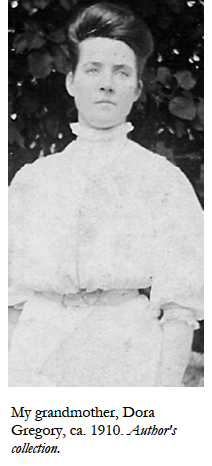
Speaking of scary, on Dad’s side, Jane Wilson, exquisite as a little girl of twelve or so, is seen to the left of my grandmother Dora in the next photo.

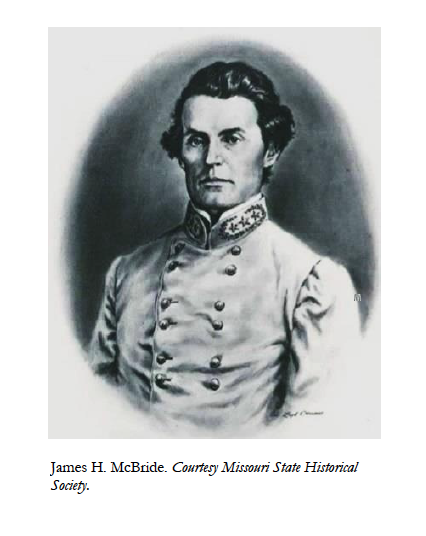
Something must have happened to Jane in puberty—was it a lightning strike?— and it’s not just the Frida Kahlo fused eyebrows: Suddenly, she’s the spitting image of her grandfather, Confederate Gen. James McBride.

And I, a Lincoln man, was named after the general.

There are other photos we have of Jane. See that look? It gets worse. She starts to look more and more like Rasputin. Without the beard.

Thank God.

Visiting Roberta

10 Sunday Dec 2023

Posted by ag1970 in Family history, Uncategorized

≈ Leave a comment

I love my big sister. And this horse is pretty neato, too.

Roberta and me oh, just a few years ago…

Happy Birthday, Mary, Queen of Scots!

08 Friday Dec 2023

Posted by ag1970 in History, Uncategorized

≈ Leave a comment

Fluttering eyelashes, botched beheadings, purloined pearls, bodies tumbling down the stairs, Notre Dame, Holyrood, mermaids, dispatch riders galloping over the moors, intense sexual attraction, three powerful queens, being strangled in your nightie, a thing for men’s legs, a loyal dog, secret codes and spymasters, four centuries of sweet revenge. If you’ve been sold on the notion that history is boring, you have been misinformed. Or badly informed.


History is not something that happens somewhere else to someone else…

05 Tuesday Dec 2023

Posted by ag1970 in American History, Arroyo Grande, History, Uncategorized, World War II

≈ 1 Comment

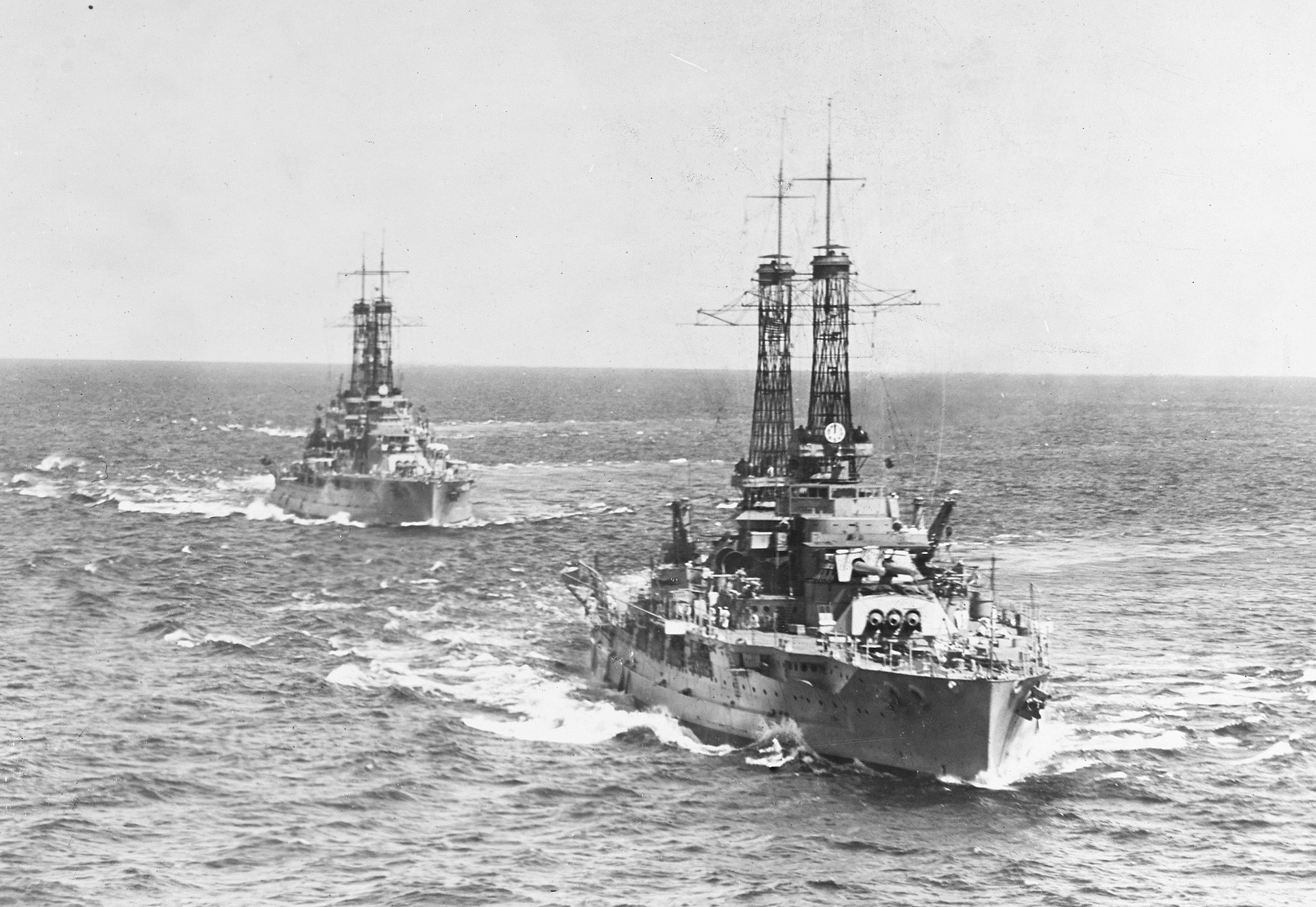
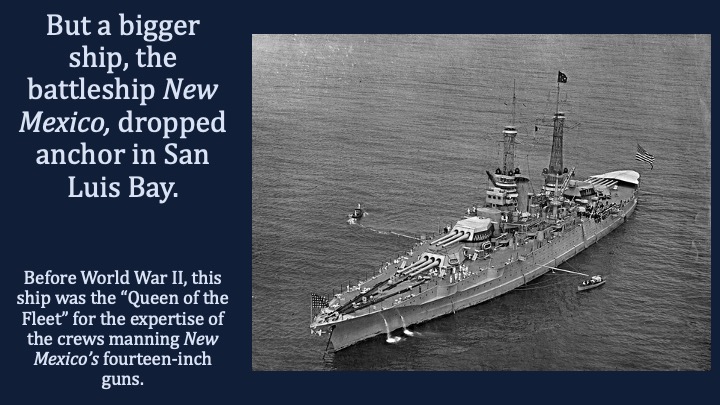
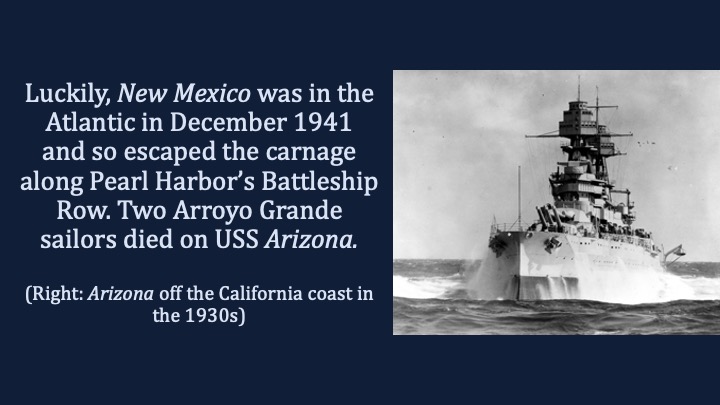
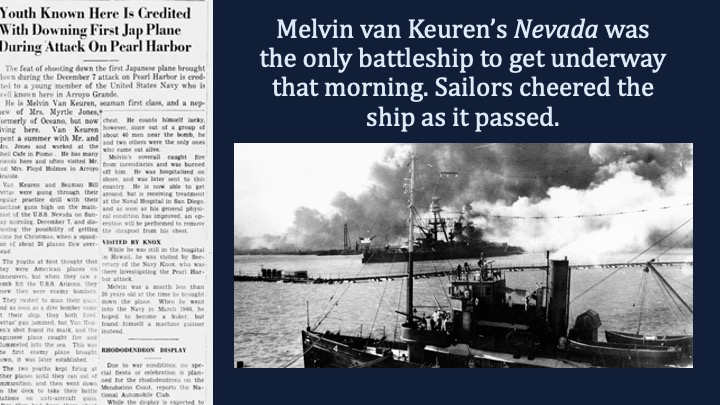
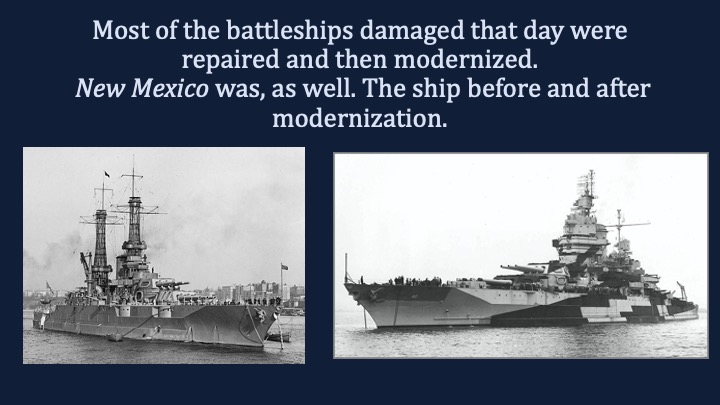
Southern San Luis Obispo County’s connections to Battleship Row, Pearl Harbor.

Sigh. Goodbye, Pac 12…

03 Sunday Dec 2023

Posted by ag1970 in Uncategorized

≈ Leave a comment

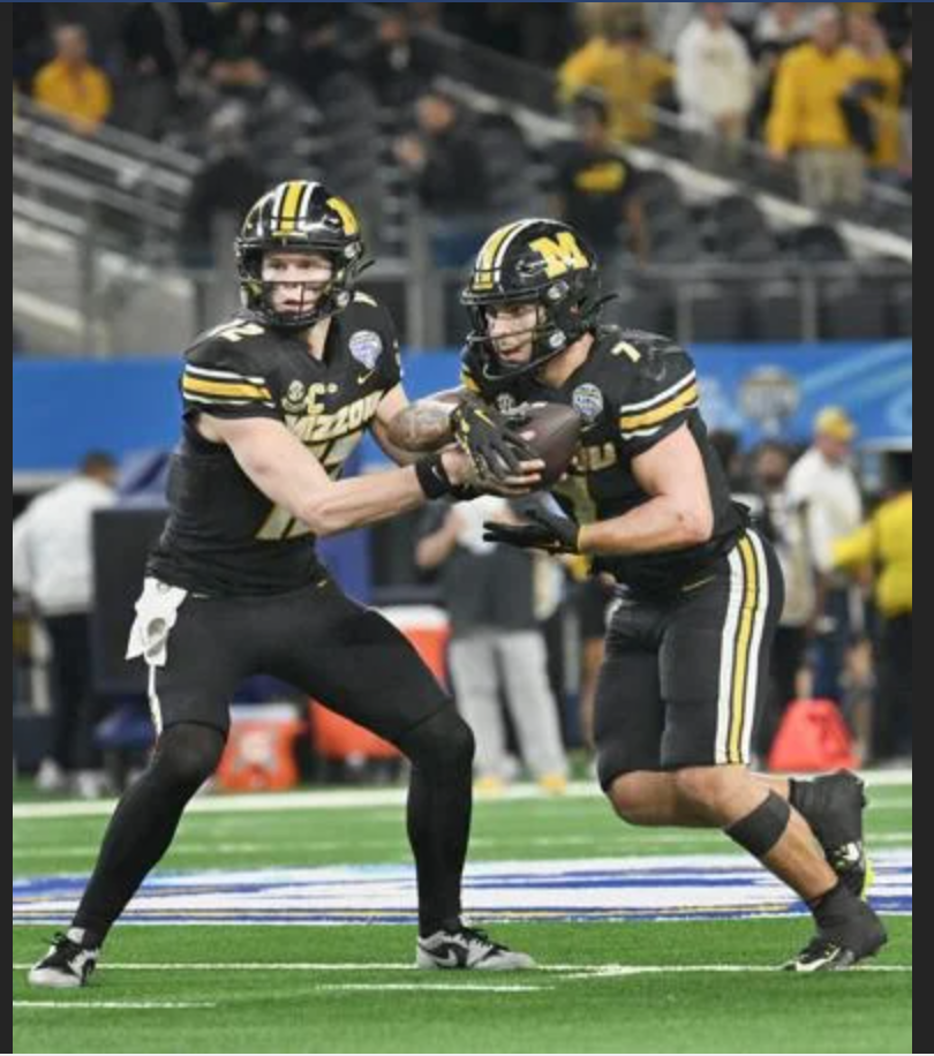
In truth, I could’ve done without the crying Notre Dame cheerleaders.

Well, Washington beat Oregon Friday night in the last Pac 12 Championship. I am sad to see the conference break up. I think that Washington State will play in the same league as Manchester United and Arizona might have the Edmonton Oilers on their schedule next year, I don’t know.

It was the Pac 4 in 1915, when the league was formed: Cal, Washington, Oregon and an agricultural college that is today Oregon State

In the late 1940s, Elizabeth’s Dad played end for Washington and he went on to play for the 49ers. Football was his ticket out of poverty.

A decade ago, AGHS sent kicker Garret Owens, a fine young man I had the honor to teach, to Oregon State. along with fellow Eagles Brent Vanderveen and Garrett Weinrich.

And one of Elizabeth’s brothers, Kevin, who passed away this year, played in three Rose Bowls under USC coach John McKay. He was a runty linebacker who became the Trojan defensive captain because he was also really smart.

I was in Missouri atop the very famous and beautiful Ozark Plateua in 1974 when, on November 30, SC played Notre Dame. I was watching at my cousin Frances Sally’s house. The Irish were leading 24-6 at the half and my Missouri kin were making fun of Californians. “Them Trojans are playin’ like SISSIES.” (I am exaggerating. But not much.)

Then USC came back, thanks to running back Anthony Davis’s six touchdowns. My close personal friend Anthony Davis. (He met my Dad in Bakersfield one day and then my phone rang. Dad said “There’s somebody I want you to talk to.” Then another voice said “Hi, Jim! It’s Anthony Davis.” I stopped breathing, but only for about an hour.)

Final score that day: USC 55, Notre Dame 24. And this was Ara freakin’ Parsegian’s Notre Dame. He is one of the greatest football coaches in college history.

Anyway, here are some highlights.


Christmases Past in Arroyo Grande, California

02 Saturday Dec 2023

Posted by ag1970 in Arroyo Grande, Uncategorized

≈ Leave a comment

A California ranchero suitably dressed (and tacked) for the holidays.

Since Arroyo Grande founder Francis Branch assumed Mexican citizenship to obtain the 1837 patent on his 17,000-acre Rancho Santa Manuela, his family’s Christmases would’ve had a distinctly Mexican flavor.

The dean of county historians, Dan Krieger, wrote a 2018 column with his wife Liz about Christmases in the rancho days. Rancheros, Krieger explained would’ve ridden into San Luis Obispo dressed in their finest, including their silver-inlaid saddles. Their families might’ve followed in the two-wheeled carretas, or carts, decorated for the occasion.

A carreta ride from Santa Manuela to the Old Mission couldn’t have been comfortable.

In town, Branch and his wife, Manuela, might’ve attended Christmas Eve mass. That would be followed by a Christmas play that focused on the shepherds’ discovery of the Christ child. And, for children, no holiday celebration would’ve been complete without the piñata, filled with the sweets that would spill out once the successful blow had been delivered.


Mission San Luis Obispo.

It was Queen Victoria’s German husband, Albert, who introduced the Christmas tree to the English-speaking world, and by the 1890s, it was central to Arroyo Grande’s celebrations. An 1896 Arroyo Grande Herald notes the big tree sponsored by the Grand Army of the Republic—Civil War veterans—put up outside their hall on Bridge Street, roughly across the street from the IOOF Hall.

Young lads atop the Bridge Street bridge, built in 1909.

Later, community Christmas trees marked the holidays. The whole town gathered for its lighting in a custom that began in 1898 went into the 1940s. The Christmas trees were tied to the nation’s history: a 1937 Herald-Recorder article—this Christmas was observed during the Great Depression–notes with some alarm that the community Christmas  expense fund, whose goal was $100, had not yet been met. Another issue Depression-era paper notes the generous contribution of a man who sent a check for $2.50 toward that year’s Christmas fund.

Sadly, a December 5, 1941 article anticipates the lighting of that year’s tree, an event that never would have happened because of the strict blackout regulations enforced immediately after Pearl Harbor. Arroyo Grande would later learn that two of its own, sailors on USS Arizona, had been killed on December 7.

Santa Manuela
Branch Elementary


School pageants were another way to the bring smaller, rural communities that surrounded Arroyo Grande together; little country schools were central to farm life in Arroyo Grande; they served as voting precincts and as meeting places for organizations like the Farmers’ Alliance. 

In town, an 1896 Arroyo Grande Grammar school program includes a play entitled “Brownies in Fairyland,” with an extensive cast that includes many pioneer surnames—Clevenger, Phoenix, Ballagh, Parsons, Musick, Whiteley and Silva are among them.

Even the tiny Santa Manuela School had a pageant in 1936, featuring familiar carols like “Hark! The Herald Angels Sing” and less familiar ones, like “Down the Chimney.” The teacher, Adelaide Rohde, would’ve spent countless hours rehearsing her students in addition to teaching her daily lessons, directed to multiple grade levels in a school that probably had no more than twenty or twenty-five students. But Santa Manuela was still prominent enough so that Santa himself made an appearance at the end of the program, handing out bags filled with popcorn and sweets, including to Miss Rohde and the eight audience members.

Since Branch School was twice the size of Santa Manuela—two rooms—it attracted an impressive audience of 125 in 1934. Both teachers—Mrs. Bair and Miss Whitlock—were also from prominent families—the Bairs ranched in the Huasna Valley and the Whitlocks owned the Commercial Company, a dry-goods store on Branch Street. The names here, too are familiar, many of them Azorean—Coehlo, Silva, Amaral, Reis—but George Cecchetti Sr., whose father came from Pisa, and four Agawas, two boys and two girls, whose parents came from Japan, also sing and act. The program features two harmonica solos, one by Billy Agawa and another by Francis Fink, who performed “Red River Valley.”

The Temple of the People’s Christmas observation seems to have been organized by Madame Borghild Janson, “the noted teacher of vocal culture.” A 1927 Herald-Recorder notes that the previous year’s program “overfilled” the Hiawatha Lodge, so 1927’s would feature two performances. Madame Janson staged a mystery play, a medieval tradition whose subject was biblical stories or the lives of the saints. In her choice of songs, she stuck to her theme. “Scandinavian Christmas songs from the 12th century” were part of the part of the program as well as more familiar Christmas carols.

The Temple of the People will celebrate its 100th anniversary in 2024.

A common thread in all of the holiday observations is the bringing together of people; Christmas broke down the isolation typical of far-flung rural farms and ranches. Seeing distant friends and neighbors must have been as much a celebration as was Christmas.


Adapted from The Heritage Press, published quarterly by the South County Historical Society. (Membership is $25 annually for individuals and $40 for couples.)

Fifteen song covers I just flat love…

29 Wednesday Nov 2023

Posted by ag1970 in Film and Popular Culture, Uncategorized

≈ Leave a comment

Bryan Ferry saxophonist Jorja Chalmers.

My new favorite way of procrastinating, and my ways of procrastinating are legion, are looking for covers of songs I love. They’re not always better, mind you, but sometimes a new interpretation is so good is that it reminds you of how good the original was. I love, have always loved, Neil Young, so this Dave Mathews cover of “Cortez the Killer” is amazing mostly because of the guitarist’s solo. His name is Warren Haynes.

“Like a Hurricane” is Neil Young another favorite. Bryan Ferry (Roxy Music) covers it in Lyon France. Ferry’s not the main attraction–the keyboardist-turned-saxophonist is ethereal.

The main attraction for me in one of my favorite Rolling Stones songs is the trombonist playing with the Tedeschi-Trucks Band. She is incredible.


Because they’re kids and just learning, the School of Rock people have put a few YouTube videos that are a little painful. I think these two have great merit. The lead singer nails “California Dreamin'” and the boy drummer and the girl bassist are freakin’ adorable.

Is it the same lead singer here? Being so young, has no right to “get” a song like this. She does.

Sometimes the interpreters are themselves exceedingly famous. Miley Cyrus’s cover of the Dolly Parton classic is, I think, stunning, and it preserves the song’s Appalachian-ness, a word I just invented. (I also like her cover of the Doors’ “Roadhouse Blues,” but it’s too racy for me to include today. It’s in another post about her, though.)

Miranda Lambert and The Gurlz do this Elvin Bishop classic justice—I like her jazzy voice. Lambert’s an animal lover, so I think there are one or two Great Danes in the studio.

I think everyone in the Western Hemisphere knows that I have a crush on an Austrian duo, the MonaLisa Twins. This was the first video I saw of them; I love also their sense of humor:


They perform at the Cavern Club in Liverpool, a replica of the club the Beatles played in Hamburg just before they hit the Big Time:


Los Lobos will never escape their cover of the Richie Valens classic. I think we’re all glad about that. I love this band. I love this performance at Watsonville High School in 1989. I’ve seen Los Lobos in concert twice. “La Bamba” got EVERYBODY cheering and dancing at both. Look at all those happy people in the audience:

Foxes and Fossils covers EVERYBODY, but I like this one for the lead singer and for the backing vocals that replicate the harmony and the punctuation (“Now don’t….don’t, don’t, don’t…) He’s right. There isn’t a good way to end this song:


“You’ve got spunk!” Lou Grant said in the first Mary Tyler Moore show. Mary Richards blushed and admitted that maybe she did. “I HATE spunk” Grant’s rejoinder was classic. So’s this song, and the lead singer has spunk.

This has always been one of my favorite Fleetwood Mac songs, and it is apparently eminently cover-able. Big big Super Bowl-esque production values here for the country group Little Big Town, and Keith Urban is showing off, but it’s still mighty darn lively. Oh, look! There’s Nicole Kidman!

Laura Nyro was one of my generation’s most gifted songwriters. Sara Bareilles, who knocked me out as Mary Magdalene in a live TV production of “Jesus Christ Superstar,” makes this song celebratory. Look at the happy people in the orchestra! The occasion? The induction of Nyro into the Rock Hall of Fame.

Hear, hear.

Just one more. In very distinguished company, watch Prince take over “While My Guitar Gently Weeps.” Sublime. He was our Amadeus.
A Crime on Bridge Street, Arroyo Grande, 1923

28 Tuesday Nov 2023

Posted by ag1970 in Arroyo Grande, Uncategorized

≈ 3 Comments

This article from the January 3, 1924 Arroyo Grande Herald-Recorder records a theft on Bridge Street. Mr. Pruess’s automobile curtains were stolen while he was in a lodge meeting. A little research evealed that the town druggist was a steadfast member of the International Order of Odd Fellows (an organization more popular than the Freemasons in the late 1800s) and so it’s likely that the crime took place here, on Bridge Street, outside the IOOF Hall that is now the South County Historical Society’s home.

Several things about this little story amazed me. Judge Gammons threw the book at the malefactor, a $23 fine (over $400 in 2023 dollars) and 30 days in jail. His victim, Mr. Pruess, was enormously popular. His friends included Ole Gullickson, likewise popular, and the two were among a group of local businessmen who went deer-hunting annually somewhere up north. They always bought lubricant–whiskey– first, purchased on the beach from a local bootlegger. Ole’s son Don remembered this because they always took Ole with them. Nobody would suspect and illegal booze purchase with a six-year-old -boy amid the grown men.

Don, probably in the Top Ten of the nicest people I have ever met, told me this story. He wasn’t 100% sure, but he thinks they bought the whiskey from “some guy named Alex.”


Mr. Pruess’s car was an “Overland,” a brand I’m not familiar with. So I looked it up. The ad above is for a 1923 model. The arrest came about because Mr. Pruess recognized his curtains the very next day. They were inside another Overland. It must’ve been a popular make then, even though it’s not around today.

Unlike Alex’s, almost not around.

Look at the job one man did in restoring this 1924 Overland, at one point in pieces in his garage. It took three years. It’s a beautiful car, I think, even though when you look closely at the front bumper, you realize that folks needed one of those arm-breaking cranks to start the engine.

I had one more little search to do. Who made “Overlands?” It turned out that the man was one John Willys, whose name will be connected forever to a little four-cylinder car that went to war after Pearl Harbor. Here are some of them being made at the Overland-Willys plant in Toledo, Ohio. John Willys was the father of the Jeep.

One more thing: I love photos of Old Arroyo (we do not use the term “The Village” in my house. It’s pretentious.), so here’s one that includes the IOOF Hall, built in 1902.

  1. The Olohan Building, home to Klondike Pizza. (I think, but I’m not sure, that the Mosher building is across the street, at the left lower edge of the photo. It’s Posies in the Village today; in the 1920s, it was the Mission Theater, busy showing silents and then talkies.)
  2. The IOOF Hall.
  3. The Presbyterian Church. Some Lucia Mar offices are there today.
  4. The doctor’s office–a beautiful building. It was Dr. Cookson’s office when I was little and today it’s a pediatrician’s office.
  5. St. Patrick’s Church, which had to be demolished because of termite damage.
  6. Mr. Giacomini’s house. He carved his own tombstone–it’s in the cemetery today, but he didn’t quite yet need it, it so he kept it in his front yard.
  7. The Methodist Church, today the Harvest Church.

    I’m a little unsure as to the picture’s date. The lettering suggests it’s from the very early 1900s, but I don’t see the very large and imposing grammar school, which stood on the site of today’s Ford agency. Its successor, the Orchard Street School, was a PWA New Deal project, so maybe this photo’s actually from the 1930s.

    I hope, by then, that Curtain Thief E.D. Howell had taken up the Straight and Narrow Path in life.

When Buffalo Bill came to San Luis Obispo

25 Saturday Nov 2023

Posted by ag1970 in Arroyo Grande, Film and Popular Culture, Uncategorized

≈ Leave a comment

Long before there were the television Westerns I grew up with, and long before there was television, there was Buffalo Bill’s Wild West Show, which played all over the world, including for Queen Victoria and a panoply of royal princesses. What I did not know is that before impresario Bill Cody died in 1917, his Wild West show visited San Luis Obispo twice, once in 1908 and once more in 1914.

The advance the 1908 show got—notices in the Tribune for weeks beforehand–rivals the publicity for the first airplane flight over San Luis Obispo two years later. Here’s the poster locals would’ve seen in 1908:

And here’s the 1914 version, when Cody’s show, maybe fading a little by then, was traveling alongside the Sells-Floto circus:

San Luis was tiny, so where are you going to put all those elephants and lions and Bill’s buffalo? For the 1918 show, he City and the showmen finally agreed on Mitchell Park, which remains a park today, near the corner of Osos and Pismo.

San Luis Obispo Tribune, October 13, 1908

By 1908, a onetime main attraction was eighteen years dead. Sitting Bull, the Lakota Chief, appeared with the show in the 1880s, near the close of his life. He was shot dead by Indian police at the Standing Rock Agency on December 15, 1890 at the climax of the Ghost Dance movement .

(That was just two weeks before the Seventh Cavalry’s revenge at Wounded Knee. Nineteen troopers received the Medal of Honor for their hard day’s work in killing 300 Lakota. The troopers had to ride two miles to gun down two women running in the snow.)

Back at Standing Rock on December 15, one of Sitting Bull’s horses had been a souvenir from the Wild West Show, trained to rear and prance at the sound of gunfire. The horse did just that when the shooting broke out.

In 1884, one of the show’s stops was Philadelphia. In addition to his stipend for appearing with Cody, Sitting Bull sold autographs. Then, as was typical with him, he gave all the money away.

It was in Philadelphia where was appalled by the sight of ragged children in the street, so that was where his Philadelphia tip money went. Likewise, Sitting Bull’s contemporary, Crazy Horse—two Arroyo Grande settlers, soldiers in 1865, saw him perform a “dare ride” across their front—was the same. He was among the finest hunters in his band, and, on the return to camp, he made sure that widows and orphans were fed first.

The Lakota loved children. Another thing that shocked Sitting Bull in 1884 was that so many urban children worked, from shining shoes to factory machine-tending, which killed them sometimes. Children, he believed, should be free, and they should be free to play.

So the sight of ragged children, many of them immigrants, moved Sitting Bull. “The White Man knows how to make everything,” he remarked to his companions. “He does not know how to distribute it.”

This is White Dove, one of his daughters:

Crazy Horse had a daughter, too. Her death had hurt him deeply. In the late spring of 1876, he visited his little girl on her funeral scaffold. He stayed for a few days, praying, fasting, talking to his daughter and listening for her answer. He got it. When he left, she had given him the calm he needed for the upcoming fight. All the Lakota knew it was coming. Sitting Bull had a vision of it happening. The fight was the one that would break out in the Valley of the Greasy Grass, what the waischus–White people—called “Little Bighorn.”

← Older posts
Newer posts →

Subscribe

  • Entries (RSS)
  • Comments (RSS)

Archives

  • June 2026
  • May 2026
  • April 2026
  • March 2026
  • February 2026
  • January 2026
  • December 2025
  • November 2025
  • October 2025
  • September 2025
  • August 2025
  • July 2025
  • June 2025
  • May 2025
  • April 2025
  • March 2025
  • February 2025
  • January 2025
  • December 2024
  • November 2024
  • October 2024
  • September 2024
  • August 2024
  • July 2024
  • June 2024
  • May 2024
  • April 2024
  • March 2024
  • February 2024
  • January 2024
  • December 2023
  • November 2023
  • October 2023
  • September 2023
  • August 2023
  • July 2023
  • June 2023
  • May 2023
  • April 2023
  • March 2023
  • February 2023
  • January 2023
  • December 2022
  • November 2022
  • October 2022
  • September 2022
  • August 2022
  • May 2022
  • April 2022
  • March 2022
  • February 2022
  • January 2022
  • December 2021
  • November 2021
  • October 2021
  • September 2021
  • August 2021
  • July 2021
  • June 2021
  • April 2021
  • March 2021
  • February 2021
  • January 2021
  • December 2020
  • November 2020
  • August 2020
  • July 2020
  • June 2020
  • May 2020
  • April 2020
  • January 2020
  • December 2019
  • November 2019
  • October 2019
  • September 2019
  • August 2019
  • May 2019
  • April 2019
  • March 2019
  • February 2019
  • January 2019
  • December 2018
  • November 2018
  • October 2018
  • September 2018
  • July 2018
  • June 2018
  • May 2018
  • April 2018
  • March 2018
  • February 2018
  • January 2018
  • December 2017
  • November 2017
  • October 2017
  • April 2017
  • March 2017
  • December 2016
  • November 2016
  • October 2016
  • September 2016
  • August 2016
  • July 2016
  • June 2016
  • April 2016
  • March 2016
  • February 2016
  • January 2016
  • December 2015
  • November 2015
  • October 2015
  • September 2015
  • August 2015
  • July 2015
  • June 2015
  • May 2015
  • April 2015
  • March 2015
  • February 2015
  • January 2015
  • December 2014
  • November 2014
  • September 2014
  • August 2014
  • July 2014

Categories

  • American History
  • Arroyo Grande
  • California history
  • Family history
  • Film and Popular Culture
  • History
  • News
  • Personal memoirs
  • Teaching
  • The Great Depression
  • trump
  • Uncategorized
  • World War II
  • Writing

Meta

  • Create account
  • Log in

Blog at WordPress.com.

  • Subscribe Subscribed
    • A Work in Progress
    • Join 69 other subscribers
    • Already have a WordPress.com account? Log in now.
    • A Work in Progress
    • Subscribe Subscribed
    • Sign up
    • Log in
    • Report this content
    • View site in Reader
    • Manage subscriptions
    • Collapse this bar

Loading Comments...