Please allow me a history teacher moment. It’s John Donne’s fault: “Any man’s death diminishes me.” This is about two women.
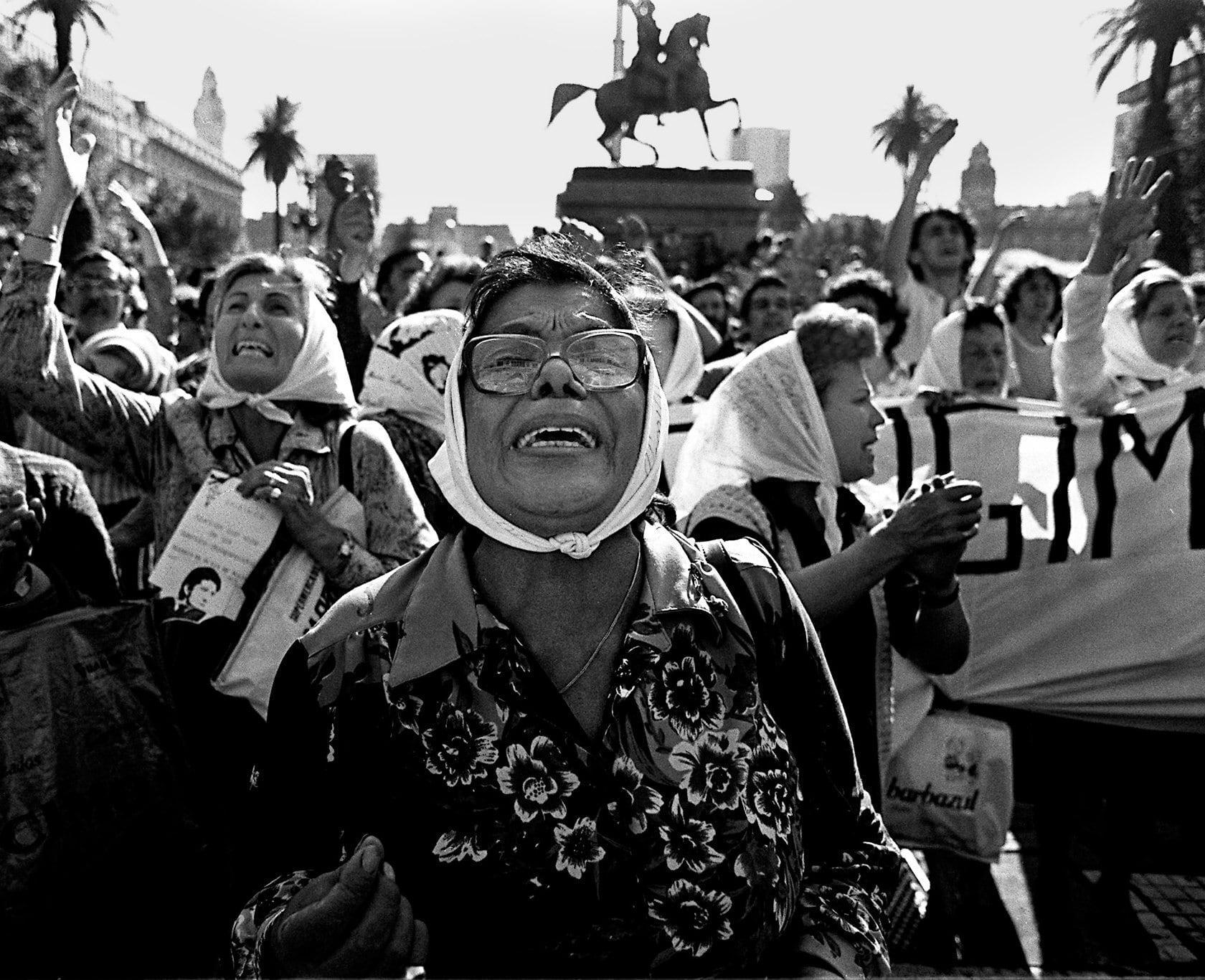
This is Clara Jurado, Mothers of the Disappeared (Desaparecidos), during a protest in Buenos Aires in 1983.
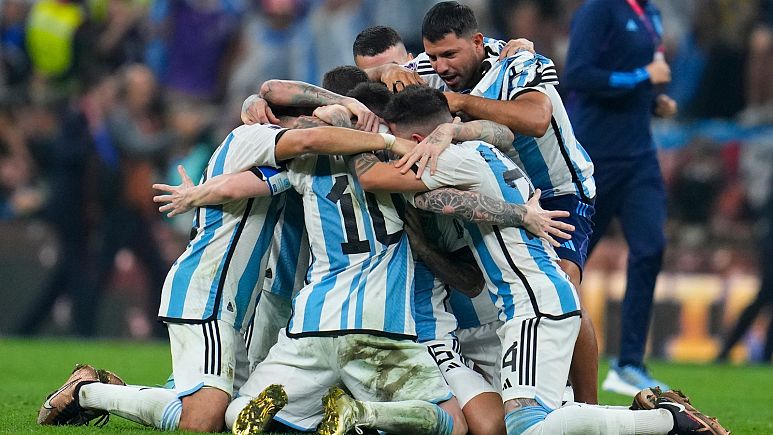
While I am happy for the Argentine football team, victors in Sunday’s World Cup, what is happening in Iran today happened in Argentina in 1976. When a military dictatorship came to power, a wave of arrests and extrajudicial killings followed.
30,000 Argentines, overwhelmingly young people, were “disappeared.” Pregnant detainees were executed soon after they had given birth.
I hope that the World Cup victory somehow brings healing—and much joy— to Argentina this year.
But last year, the Argentine government issued thousands of DNA kits to help identify the human remains still being unearthed. Because the two nations are so close, some of the DNA samples match living Italians.
There are still mass graves from the 1936-39 Spanish Civil War that remain undisturbed; previous generations knew where they were but did not talk about them. Young Spaniards talk about them but they have now passed into myth.
The writer Adam Hochschild wrote of the Russian River Ob changing course in 1976, exposing sandbanks packed densely with human bodies. Permafrost had preserved some so completely that relatives could recognize the man or woman who had gone missing in the 1930s. What the Ob revealed lay below what was the headquarters of Stalin’s secret police, the NKVD, in a town called Kolpashevo.
And now people are being “disappeared” in Iran.
This week actress Taraneh Alidoosti was arrested. She committed two crimes: protesting the brutal repression of protestors and posting this photograph. Her hair is uncovered.
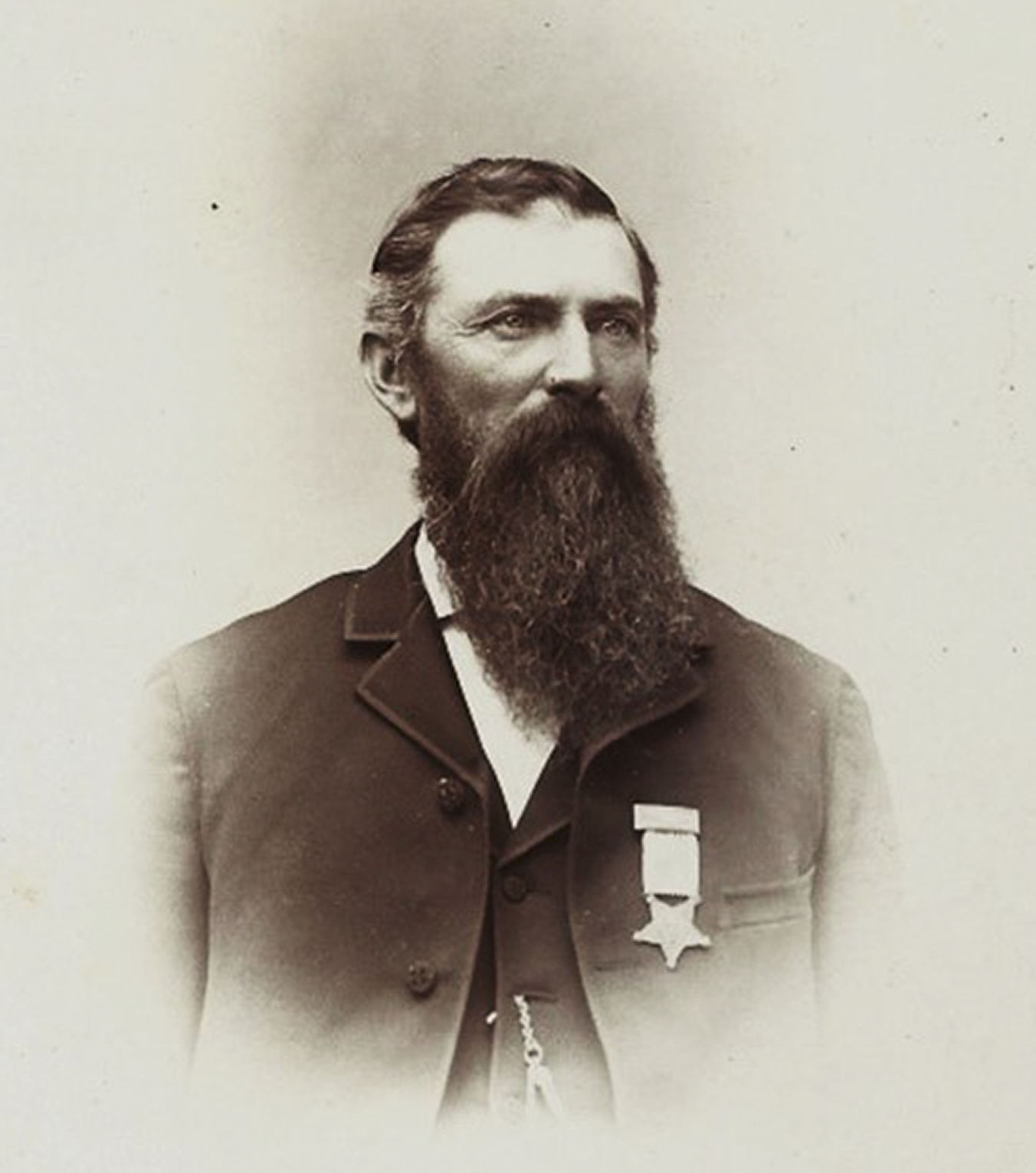
In the 1880s, Erastus Fouch farmed along was is today Lopez Drive. As a sixteen-year-old he’d fought in the Shenandoah Valleywhere he saw his brother killed in action. He later fought at Chancellorsville and Gettysburg. Here he wears his Grand Army of the Republic badge. Jack English photo.
Nearly sixty Civil War veterans are buried in the Arroyo Grande District Cemetery. This excerpt from the book Patriot Graves describes the forces that drove them here.
…A soldier who had endured the third day of Gettysburg and emerged unhurt, and who had then seen his own boys in their counterattack destroy Pickett’s Charge…had already passed the zenith of his life. Nothing like this would ever happen to him again, and what had happened to them brought them, ironically, great joy.
So, for a generation enmeshed in the ethical web spun tightly by mid-Victorian Protestantism—these were Christian soldiers who fought in armies, on both sides, marked by intense waves of wartime revivalism within their camps—the excitement of battle generated a profound moral contradiction. In This Republic of Suffering, a superb account of coming to terms with the scale of death the Civil War generated, Harvard president and historian Drew Gilpin Faust describes the experience of a stunned Confederate who, during a firefight, came to the aid of a shrieking comrade, only to find out that he was “executing a species of war dance,” exulting over the body of the Union soldier he’d just killed. In another battle in 1862, Union soldiers on the firing line called their shots, as if combat were billiards: “Watch me drop that fellow,” one said to his comrades; battle was, indeed, like a game.[1]
The killing didn’t end when the war did. Violent crime rose at three times the rate of population growth in the decades following the war, and perhaps as many as two-thirds of the nation’s convicted felons were veterans.[2] Soldiers understood, on some level, that combat had changed them irrevocably and some worried about it. Society, one Vermont soldier wrote his sister, “will not own the rude soldier when he comes back, but turn a cold shoulder to him, because he has become hardened by scenes of bloodshed and carnage.”[3] He was, in many respects, right: some of the soldiers who came home to Vermont, New Jersey or Iowa brought with them a measure of fear—they had become, in the Civil War novelist Michael Shaara’s term, “Killer Angels.”
Many Union soldiers had demonized themselves and by extension all of their comrades by celebrating their mustering out with epic alcohol binges and episodic violence throughout the demobilization summer of 1865.[4] A Chicago civilian’s insulting comment about William Sherman set off a saloon brawl that cascaded into a riot that police were helpless to put down. Only the fortuitous appearance of the legendarily hard-drinking Gen. Joseph Hooker, who had the credibility to intervene with combat veterans, brought the violence to an end.
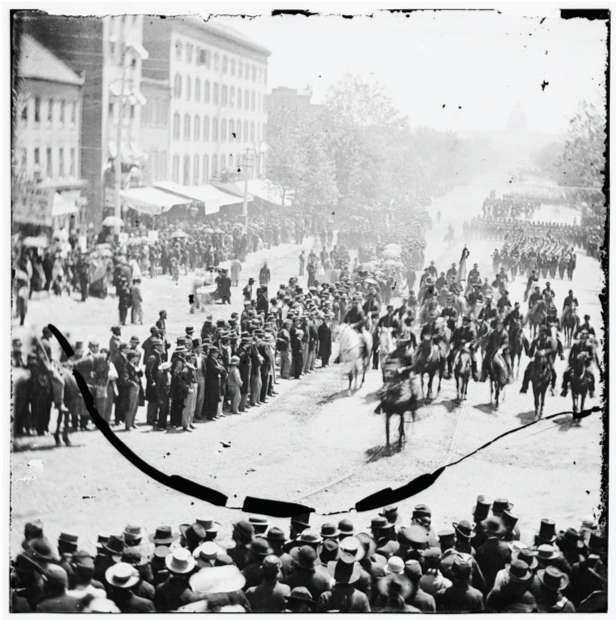
The Grand Review of the Armies at war’s end, Washington D.C., May 1865. Arroyo Grande settler Morris Denham marched with this unit, Francis Blair’s XVII Corps, Sherman’s army.
But for even the most sober of veterans that was precisely the problem with homecoming: it brought them little peace. Professor Jordan describes a sense of what, at its mildest, could be called disorientation. Home wasn’t home anymore. Even little farm towns had changed so much in four years that, for some veterans, they didn’t feel like home at all. Soldiers from the hard-fighting regiments of the Old Northwest, states like Iowa and Minnesota, couldn’t reconcile themselves to the cold winters they’d forgotten while fighting in Mississippi or Georgia. There was a more sinister change to which they couldn’t adjust: Union veterans resembled the little boys who’d survived the 1918 influenza epidemic and were finally let out to play, only to find there was no playmate on their city block left alive. The survivors of “Pals” Battalions who’d joined the Great War’s British Army together went home to neighborhoods empty of the young men with whom they’d grown up. Their pals were gone, swallowed up by the Western Front.
Gone too, in 1865, were whole towns of young men in New York or Vermont or Indiana, dead and buried on Southern farmland that had been poisoned by violence, land still studded with spent bullets. Other young men had vanished without a trace in dark, dense woodlots or fetid swamps. Soldiers came home, then, ostensibly alive and whole and strong but with unseen dead spaces inside where their comrades had once lived. Missing them, or the trauma of seeing them killed, figured in the chronic depression with which so many veterans struggled. Now that the war was done, they still were caught in its aftermath like swimmers in an undertow, struggling to break surface, to find light and cool air, to breathe again.
They recognized, too, that what they had fought for—for the rededication of the democracy Lincoln had described at Gettysburg in November 1863—was fast slipping away. Union veterans remained intensely suspicious of and hostile toward the defeated South; Lincoln’s assassination had been one impetus for their rancor but their anger only intensified when they read the newspaper accounts of the postwar emergence of the old Slave Codes, now called Black Codes. They read, too, of the defiance and the terrorism of the Ku Klux Klan, co-founded by a cavalryman, Nathan Bedford Forrest, who had bedeviled some of them in the Deep South. When Reconstruction ended in 1877, Jim Crow laws revived white supremacy in a way that rivaled the days of slavery. The Union veterans’ hostility was exacerbated because the other side refused to admit—significantly, on a moral level—that they’d lost the war. Typical, in 1894, were the dedicatory remarks that accompanied the unveiling of a Confederate memorial in Richmond, when newspapers noted that the clouds parted and the sun emerged when the speaker, the Rev. R.C. Cave, began an oration that included passages like this:
But brute force cannot settle questions of right and wrong. Thinking men do not judge the merits of a cause by the measure of its success; and I believe
The world shall yet decide
In truth’s clear, far-off light,
that the South was in the right; that her cause was just; that the men who took up arms in her defence were patriots who had even better reason for what they did than had the men who fought at Concord, Lexington, and Bunker Hill; and that her coercion, whatever good may have resulted or may hereafter result from it, was an outrage on liberty.[5]
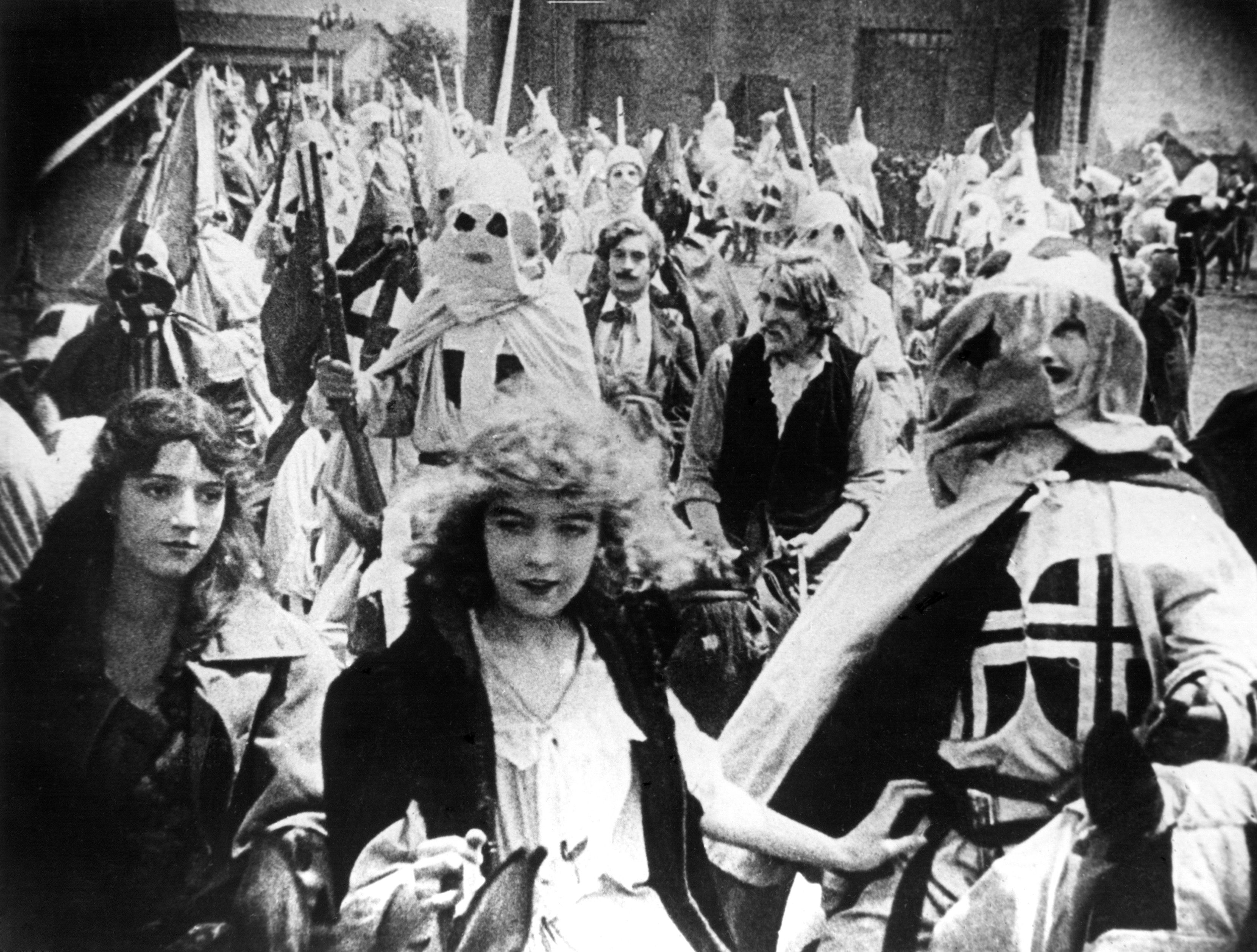
White supremacy triumphant, Birth of a Nation.
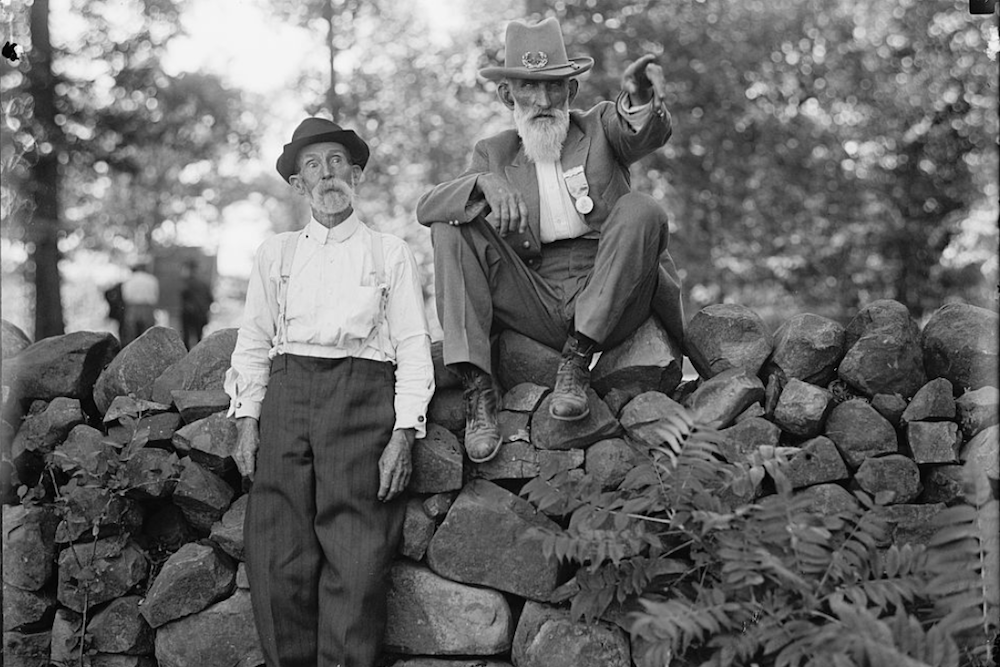
Similar remarks by Southern speakers invited to a Gettysburg reunion in 1913, Professor Jordan notes, rankled the same Union veterans who had protested another unveiling, in 1909, in the Capitol’s Statuary Hall: a sculpture of Robert E. Lee. No matter how chivalrous Lee had been (He never, for example, uttered the word “Yankees,” using instead, in his verbal orders to his subordinates, the term “those people.”), he was a killer, and he had harvested thousands of solders’ lives. The survivors of what they saw as Lee’s war would protest again at the rapturous reception, one that included the Southern-bred President Woodrow Wilson, awarded the 1915 D.W. Griffith film Birth of a Nation, which depicts Klansmen, too, as chivalric heroes who reassert Southern white supremacy over rapacious carpetbaggers and predatory African Americans. “It is like writing history with lightning,” the president said, “and my only regret is that it is all so terribly true.”[6] The most enduring image of the 1913 Gettysburg reunion is that of Confederate survivors of Pickett’s Charge reaching across the stone wall–fifty years before, it had been their objective–to shake the hands of Pennsylvania veterans. What goes unmentioned is the fistfight at the same event that sent seven aged Yankees and Confederates to the hospital.[7]
Two Gettysburg veterans, seemingly reconciled at the 1913 Reunion.
Even as Southern whites reasserted their social and political primacy, American democracy in the North was no tribute to the sacrifice of Civil War veterans, either. The Radical Republican Congress and Andrew Johnson finished what should have been Lincoln’s second term in what resembled the political equivalent of a Western range war. Johnson escaped conviction on impeachment charges by one Senate vote. Grant’s relentlessness and drive had served him well in the struggle against Lee, but another aspect of his personal character—an almost childlike credulity—ate his presidency alive in a series of scandals perpetrated by subordinates who betrayed Grant as surely as Warren G. Harding would be betrayed by his “Ohio Gang” in the 1920s.
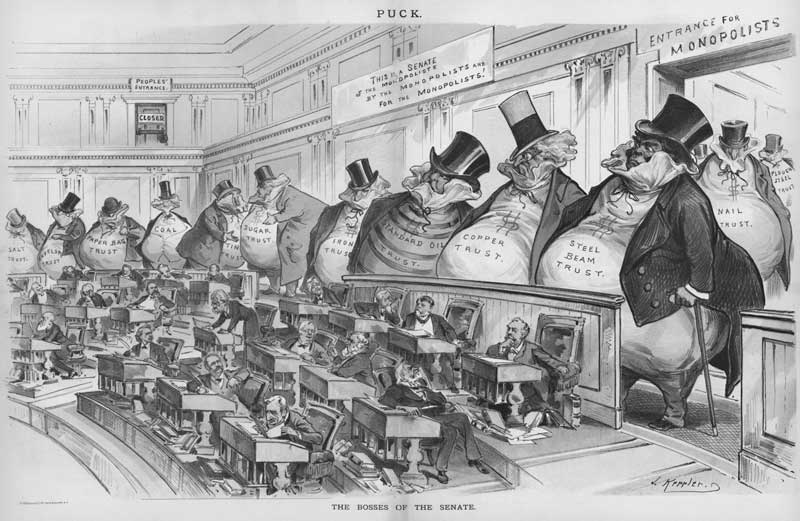
The corruption penetrated to state houses, where the lobbyist for the Santa Fe Railroad kept a slush fund in his office safe for the frequent lubrication of Kansas legislators about to vote on regulatory bills; the monopoly that railroads enjoyed in their American fiefdoms and the freight rates they demanded were so egregious that it cost a farmer more to ship a bushel of wheat from Topeka to Chicago, by rail, than it did to ship that bushel from Chicago to Liverpool, mostly by water. Machine politics dominated cities from New York to San Francisco, where Irish-American voters really did vote early and often, and deceased. In New York, the most famous political machine was Tammany Hall, and it was Tammany Hall’s Boss Tweed who disbursed the equivalent of $4 million to a Tammany-contracted plasterer for two days’ work on City Hall.
The 1889 cartoon “Bosses of the Senate” exemplifies the corruption of Gilded Age America.
In both their disillusionment and in their restlessness, the Civil War generation seems to resemble the generation that came of age during the First World War. After that war, they would become expatriates–Ernest Hemingway, F. Scott Fitzgerald, John Dos Passos among them—young men, many of them veterans, and young women, who no longer recognized or understood the America they’d known as children. They were among the members of Gertrude Stein’s “Lost Generation.”
…[Like}the young people of the 1920s, Civil War veterans were members of a generation on the move. In postwar America, veterans, according to a 2010 study by Seoul University economist Chulhee Lee, were 54% more likely to move to a different state and 36% more likely to move to a different region than non-veterans.[8] Lee posits several reasons for this phenomenon: a central one is the idea that veterans had been exposed to the concept of a wider nation, one beyond their rural farms or row tenements, by campaigns in the South. Westerners, too, fought along the Atlantic seaboard, and some Easterners saw combat or garrison duty during the 1860s Indian Wars on the frontier.
Lee’s point is a key one: Americans had been so isolated and disparate before the war that an outbreak of measles that would make a New York regiment sick would kill soldiers in the Iowa regiment bivouacked alongside, soldiers that, before the war, were so geographically isolated that they lacked the immunity to that particular strain of measles–measles, in fact, killed 11,000 soldiers during the war.[9] The war had begun to break that isolation down, and the troop movements necessary to fighting it had opened young soldiers’ minds to the vastness of their nation and to the possibility of starting over somewhere else.
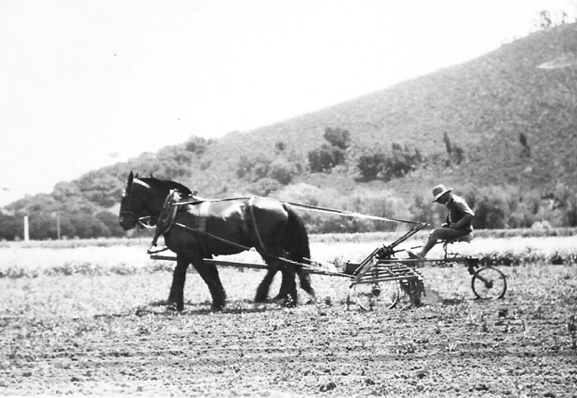
Among the area’s crops were flowers grown for seed. Here, a Waller Farms worker and his team are sowing a field. Photo courtesy Richard Waller
This pattern of increased mobility was a key factor in the lives of Arroyo Grande’s Union veterans. Over fifty would settle the Arroyo Grande Valley and nearby Nipomo. Enough census data exists to follow twenty-three of them, in the course of their lives. After the war, seven of them moved once from the state they’d served as soldiers; seven moved twice. Nine moved three times or more before they came to the Arroyo Grande area. So the men who came here had come as far as they could—like Jody’s grandfather in the Steinbeck novella The Red Pony, they had to stop because they’d arrived at the Pacific: their days of “Westering” were over.
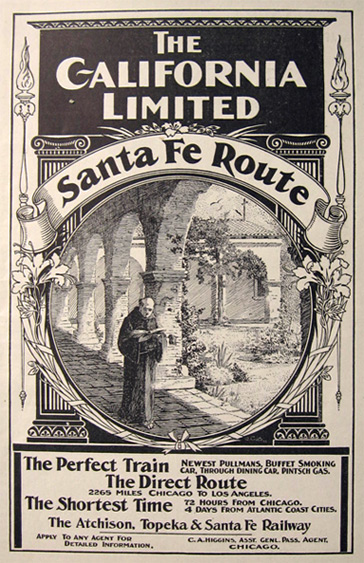
Santa Fe Ad, 1898. The fare from Chicago to Los Angeles was only $25 during the 1880s competition between the Santa Fe and Southern Pacific for California-bound passengers.
[1] Drew Gilpin Faust, This Republic of Suffering: Death and the American Civil War. Vintage Books: New York, 2008, pp. 37-38.
[2] Michael C.C. Adams, Living Hell: The Dark Side of the Civil War, Johns Hopkins University Press, Baltimore: 2014, p. 198.
An impassioned Facebook post I saw today demanded that local school board spend more on campus security and less on junk like CRT (Critical Race Theory) and Gender Studies. So, yes, it’s election time, and factuality is irritating and inconvenient at important times like this one.
But let me make a few points:
1. CRT is taught at places like Berkeley Law. It is not taught in Lucia Mar. When I taught U.S. History, I did teach my AGHS students about the 54th Massachusetts, about the Harlem Renaissance, about Rosa Parks and Mamie Till. I also showed them Bull Connor’s firehoses knocking down Black teenagers in Birmingham.
The damndest thing happened. Seeing those Black kids in Birmingham getting knocked down and helping each other up again made my White kids in Arroyo Grande and Grover Beach proud to be Americans. Prouder. So did the gravity of the Little Rock coed walking through a dense crowd of White abusers, their faces contorted, or the obvious enjoyment of White boys with butch haircuts and D.A.’s as they poured creamer and sugar and ketchup over the impassive Black boys who had merely come to the Woolworth’s counter for service.
The assessment at the end of the unit had them planning, writing and publishing, using computer software, a 1920s newspaper about what they’d learned. Invariably, every newspaper–every newspaper–had an article about Louis Armstrong. Watching him perform and listening to him talk about his life–the son of a New Orleans prostitute who’d learned to play a battered cornet in juvenile hall- had enchanted my students.
If that’s what the Facebook poster meant by Critical Race Theory, then I guess I’m for it.
2. I know of no such course called “Gender Studies” in Lucia Mar. I could be wrong. But if you removed the theme of “gender studies” from the AP European History course I taught at AGHS for nineteen years, then you’ve also removed about eight percent of the course content.
(My students would never learn, for example, that there were almost no illegitimate births in rural Tudor England. There were many, many marriages recorded in parish registers that were followed, with rapidity, by christenings. It wasn’t that young people were virtuous; it was that food was such a scarcity that community pressure forced the marriage so that responsibility would be taken for the extra mouth to feed.
(They would never about Victorian mourning customs, when middle-class widows wore black crape, highly flammable, for a year. They lived in homes lit by open gas jets.
(They’d never learn that the safety bicycle–coaster brakes–liberated Edwardian women from the whalebone corset; bicycles in turn threatened men so much that they threw rocks at parties of women cycling in the countryside. They’d never see the grainy, choppy moment of Edwardian film that shows the suffragist Emily Wilding Davison throwing herself under the King’s horse at the Derby.
(They’d never learn that the Russians whom the Nazi invaders feared the most were actually Ukrainian. They were snipers. They were women.)
But maybe studying the lives of women isn’t that important, after all.
3. As to campus security, maybe we do need a higher profile. But, God forbid, in the event of a shooting event on a local campus, you’re condemning those new district hires to death. Unless they, too, are armed with assault rifles, they don’t stand a chance against the shooter. At Uvalde, where police were armed with assault rifles, they didn’t take the chance to stop the shooter.
At any rate, I’m not sure I want my Alma Mater (AGHS ’70) to look like downtown Tijuana, where sixteen-year-olds in cheap security guard uniforms reflexively rub the trigger guards of their assault rifles. The place is crawling with them.
And there were 1,972 murders in Tijuana in 2021. So far this year, 1,500 have gone missing in Tijuana. Only some of them are Americans.
So, now that I think about it–maybe there’s another way to stop mass-casualty shooters, but we just haven’t hit on it yet– maybe I’ll move security guards a little lower down on my list of school priorities.
I keep coming back to what I taught, lessons that are embedded in some way in every discipline in every school curriculum in America.
School are places where we have the chance to teach values like these: We belong to each other, so we need to learn to cooperate with each other. Human life has value, so every human should be treated with dignity. Life has meaning, so there is reason for hope.
And, as infuriating as it can be, our system of democracy belongs to us; it, too, has value and dignity and meaning. And, God willing, it has hope.
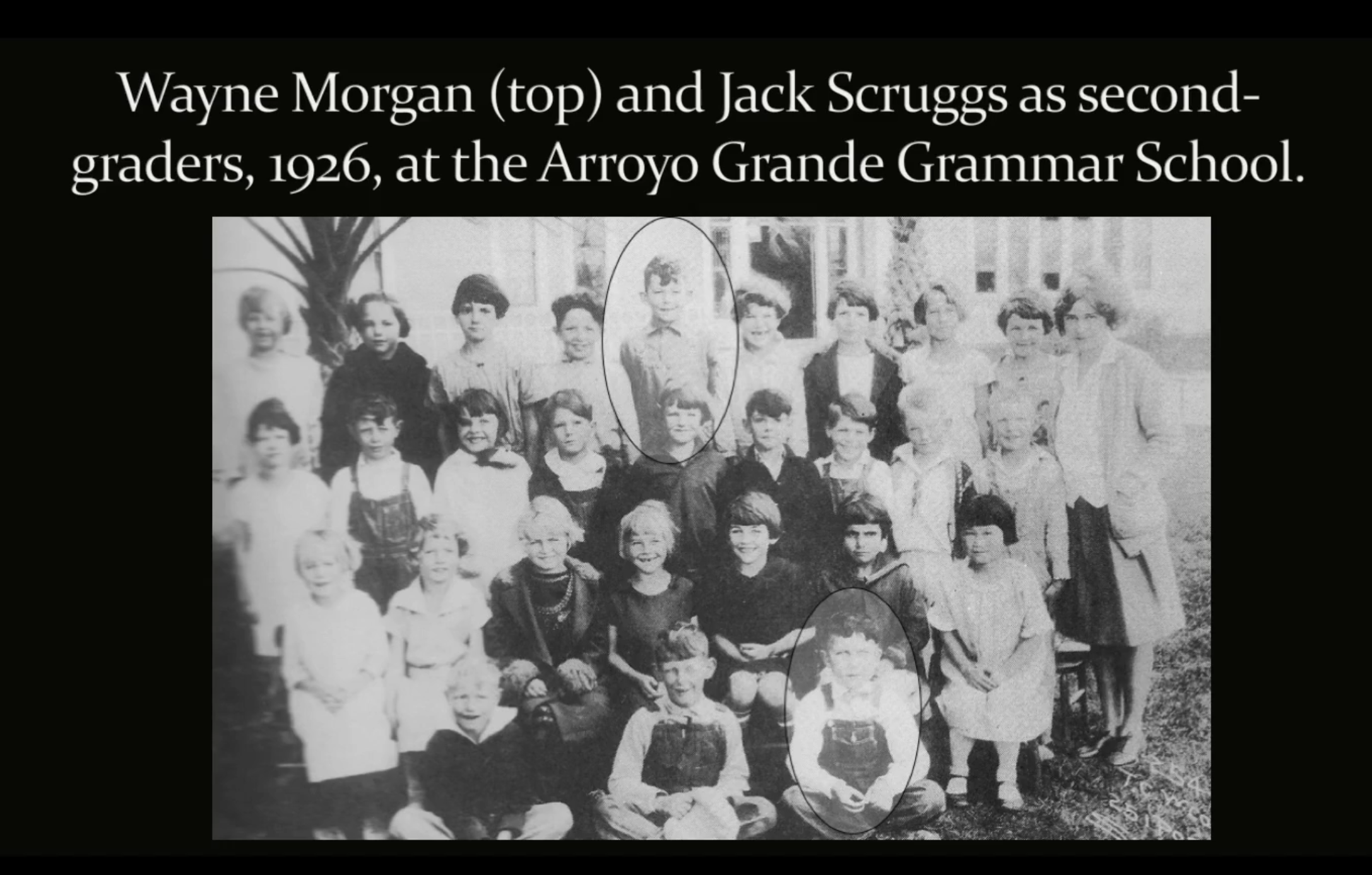
Schools are places to learn lessons like these. They are places, too, where boys and girls have the chance, in the confines of a little second-grade classroom, to build friendships that last for life. The two little boys below were second-grade friends at Arroyo Grande Grammar School in 1926.
Good friendships build good nations.
Fifteen years later, on battleship Arizona, both were killed in action. The last day of their friendship had meaning, because losing them drove an entire generation of schoolroom friends into the war that saved democracy.
I think we owe these two little boys something. The lessons of their lives, of duty and selflessness and sacrifice, need to be woven into the lives of our children– and of children yet born, to whom we owe just as much.
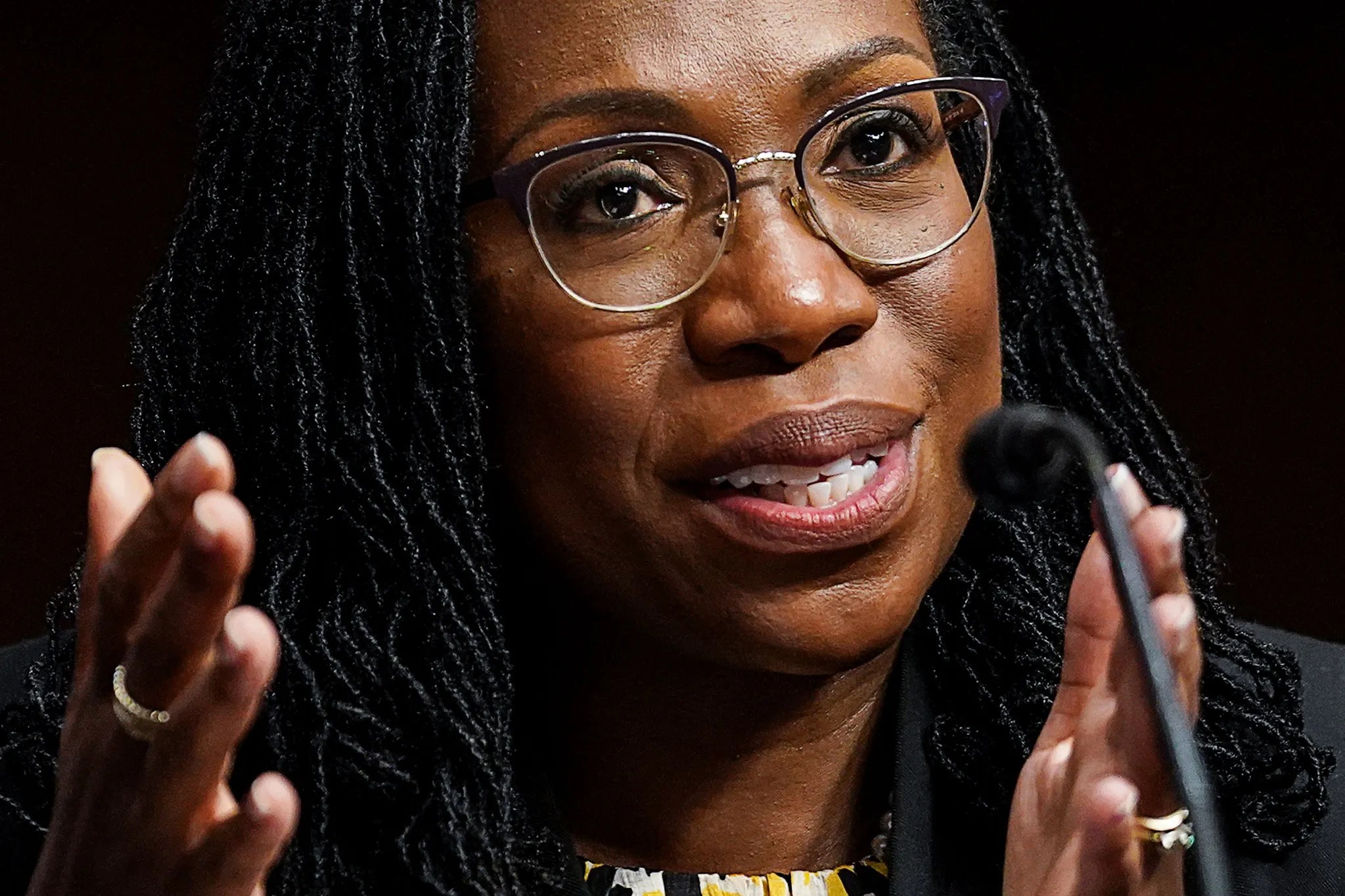
In only her second day of oral arguments, Supreme Court Justice Ketanji Brown Jackson is, to put it bluntly, dazzling.
The case in question is called Merrill v. Milligan. Bearing in mind that I am no Constitutional lawyer, this is what I understand.
The background: Alabama redrew its seven Congressional districts. Only one of the seven (as a percentage, 14% of the districts) has a Black majority. Twenty-seven percent of Alabama’s citizens are African American.
An appeals court that included two Trump appointees agreed that this deprived Black Alabamians of fair representation. The court threw out the new map, opining that an additional Black-majority Congressional district was appropriate.
Alabama appealed, arguing that 1) It cannot be proven that Alabama legislators were considering race in their redistricting and 2) the constitutionality of Section 2 of the Voting Rights Act, which prohibits any effort to discriminate against voters of color, is in question.
In fact, they argue, because it is explicitly considers race, Section 2 violates the equal protection clause of the 14th Amendment itself.
In fact, the traditional states’ rights argument has been this: The Constitution was and is meant to be color-blind, so any law that is specifically formulated on the basis of race is inherently unconstitutional.
Of course, this argument is a new one. It wouldn’t have been popular in Jim Crow Days.
So, in short, if Alabama wins its appeal, the Voting Rights Act is diluted even more than it has been..
Enter Justice Jackson. She’s addressing herself and her fellow justices, but formally her remarks are intended for Alabama’s Solicitor General. I’ll let her take over, in quotes taken from an article by journalist Travis Gettys:
“I don’t think that we can assume that just because race is taken into account that that necessarily creates an equal protection problem, Jackson began, “because I understood that we looked at the history and traditions of the Constitution and what the framers and the founders thought about, and when I drilled down to that level of analysis, it became clear to me that the framers themselves adopted the Equal Protection Clause, the 14th Amendment, the 15th Amendment, in a race-conscious way. That they were, in fact, trying to ensure that people who had been discriminated against, the freedmen, during the Reconstruction period, were actually brought equal to everyone else in society.
“Those post-Civil War amendments were explicitly drawn up and ratified to expand and protect the rights of the Black citizens who had been enslaved in Confederate states,” Jackson argued, and she backed her claims with statements made by the legislators who wrote and voted on those bills.
“I looked in the report that was submitted by the Joint Committee on Reconstruction, which drafted the 14th Amendment, and that report says that the entire point of the amendment was to secure rights of the freed former slaves,” Jackson argued. “The legislator who introduced that amendment said that, quote, ‘Unless the Constitution should restrain them, those states will all, I fear, keep up this discrimination and crush to death the hated freedmen.’
“That’s not a race-neutral or race-blind idea, in terms of the remedy, and even more than that, I don’t think that the historical record establishes that the founders believed that race neutrality or race blindness was required, right?” she continued. “They drafted the Civil Rights Act of 1866, which specifically stated that citizens would have the same civil rights as enjoyed by white citizens. That’s the point of that act, to make sure that the other citizens, the Black citizens, would have the same as the white citizens.
“They recognized that there was unequal treatment,” Jackson added. “People based on their race were being treated unequally and, importantly, when there was a concern that the Civil Rights Act wouldn’t have a constitutional foundation, that’s when the 14th Amendment came into play. It was drafted to give a constitutional foundation for a piece of legislation that was designed to make people who had less opportunity and less rights equal to white citizens.
“So with that as the framing and the background, I’m trying to understand your position that Section 2, which by its plain text is doing that same thing, is saying you need to identify people in this community who have less opportunity and less ability to participate and ensure that that’s remedied, right? It’s a race-conscious effort, as you have indicated. I’m trying to understand why that violates the Fourteenth Amendment, given the history and –and background of the Fourteenth Amendment?“
* * *
You are next on the tee, Mr. Alabama Solicitor General, sir.
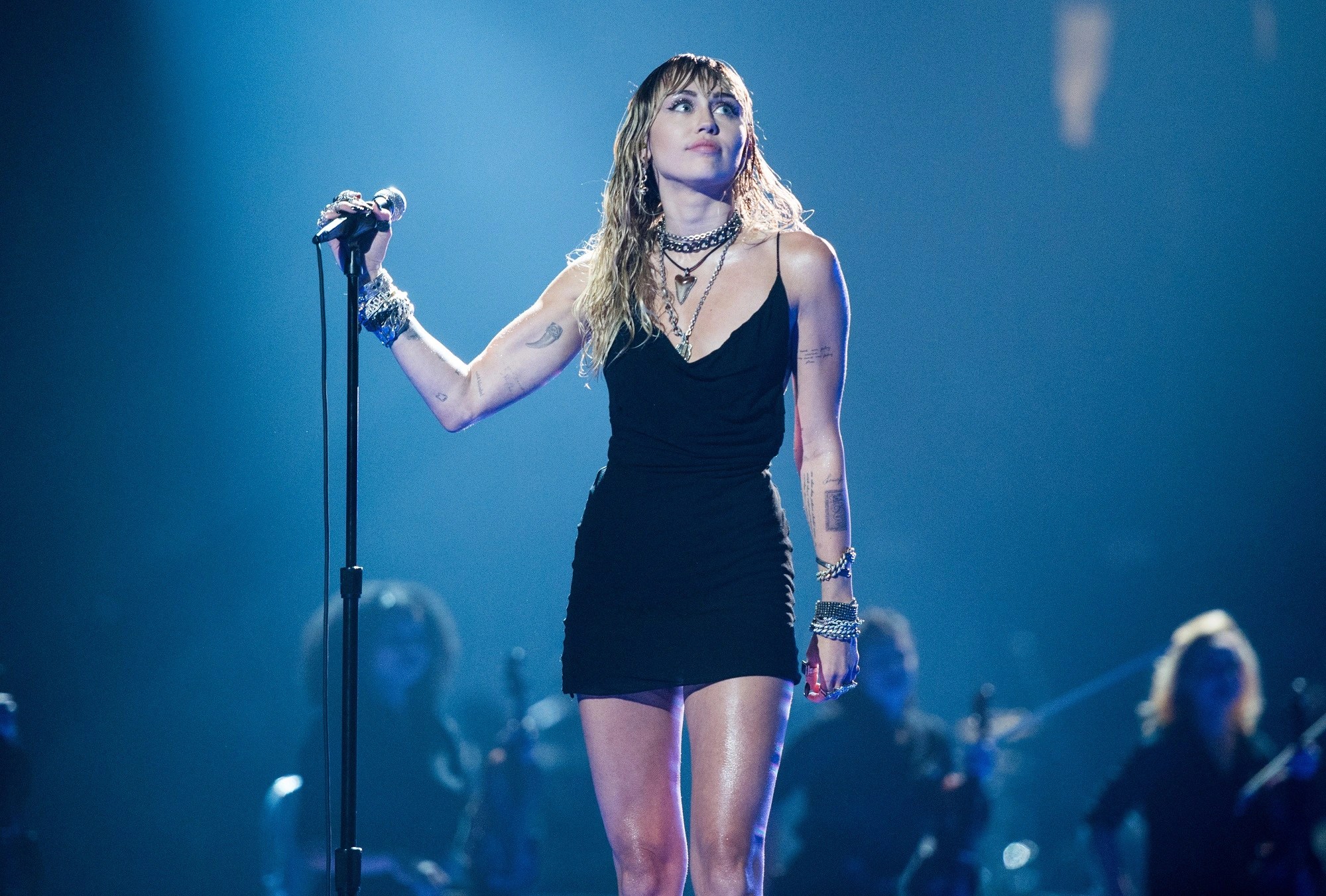
I am just old enough and just prudish enough to have been repelled by Miley Cyrus’s more outlandish pranks–maybe stuff like that is now in the rearview mirror of her life.
But I am just smart enough, if a little slow, to realize that she has one of the greatest voices of her generation. Her range is incredible (contrast “Zombie” with “Jolene,” both below.)
Beyond that, there’s an intelligence and sense of empathy there. Cyrus understands what she’s singing, whether the deep grief of “Zombie” or, listen as her accent changes, faintly Appalachian, and the timber of her voice rises, sweeter and higher inside her body, in “Jolene.”
I am an older man but it still took me a moment to get past the shortness of her skirt in “Roadhouse Blues”–it was a short moment, too–to understand that she understands the Blues, including Jim Morrison’s song.
She understood, too, how to dial herself down just enough to provide the background, in David Bowie’s “Heroes,” for a moving public service ad aired during the 2021 Super Bowl.
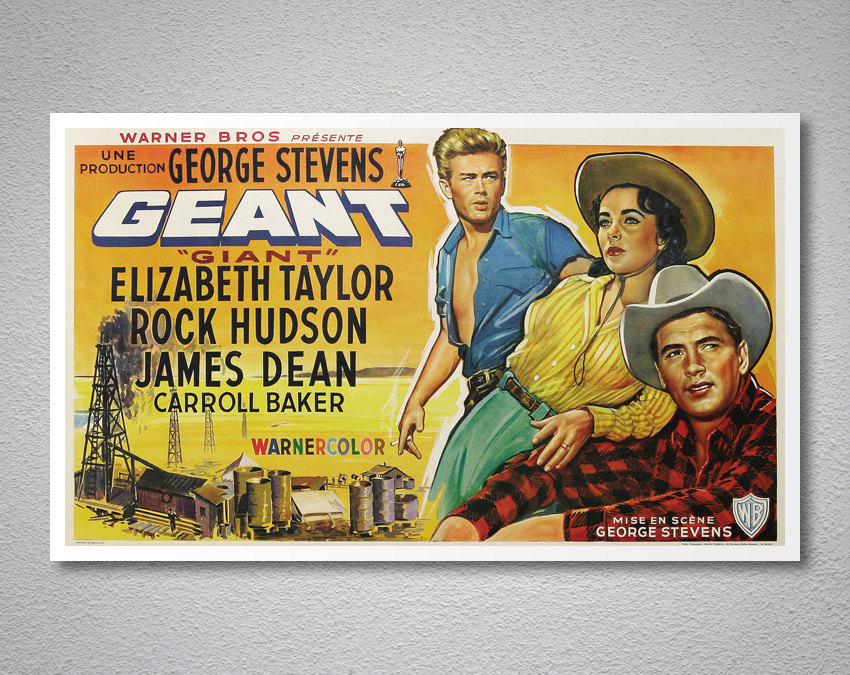
On this day in history, in 1985, Rock Hudson died.
Ironically, I think my favorite Rock Hudson scene comes near the end of the George Stevens classic “Giant.” Hudson, as an impossibly wealthy Texas rancher, gets the living crap beat out of himself in a roadside cafe.
His character, Bick Benedict, is pigheaded, arrogant, dismissive of women and bigoted.
But in this scene–one of his grandchildren is Mexican American-he comes to the defense of a family when the cafe’s cook, Sarge, starts to throw them out. They’re Mexican.
The result is one of the most epic fight scenes, brilliantly accompanied by “The Yellow Rose of Texas,” in Hollywood history, and one that changes your opinion of Bick Benedict.
A young Mexican American poet, Tino Villanueva, wrote about that scene. Here’s an excerpt:
…how quickly [Sarge] plopped the Hat heavily askew once more on the old Man’s head, seized two fistsful of shirt and Coat and lifted his slight body like nothing,
A no-thing, who could have been any of us, Weightless nobodies bronzed by real-time far Off somewhere, not here, but in another
Country, yet here, where Rock Hudson’s face Deepens; where in one motion, swift as a Miracle, he catches Sarge off guard, grabs His arm somehow, tumbles him back against
The counter and draws fire from Sarge to Begin the fight up and down the wide screen Of memory, ablaze in Warner-color light.
I guess I owed it to my historian’s sense of duty, so I looked it up. If ever a Queen was a monument to imperialism, it was Victoria—steam-powered British ships obliterating Chinese war junks to smooth the way for the lucrative and British-sponsored opium trade, Sepoy mutineers, lashed to cannon muzzles and so executed; 15,000 Sudanese rebels, armed with swords and spears, mowed down by Maxim guns at Omdurman.
But Elizabeth doesn’t escape her great-great grandmother’s legacy, either. When Kenyan independence fighters—the Mau Mau—rose up in rebellion in the 1950s, the British army and air force intervened, ostensibly to protect White Kenyan settlers. The Mau Mau killed 32 of them. The British hanged over a thousand Black Kenyans and killed ten times that number in forgotten but merciless airstrikes and skirmishes.
And Elizabeth was Queen.
Still.
I owe it to myself, as well, to appreciate—especially in the wake of recent years—what we call “Norms:” ceremony, dignity, tradition, reverence.
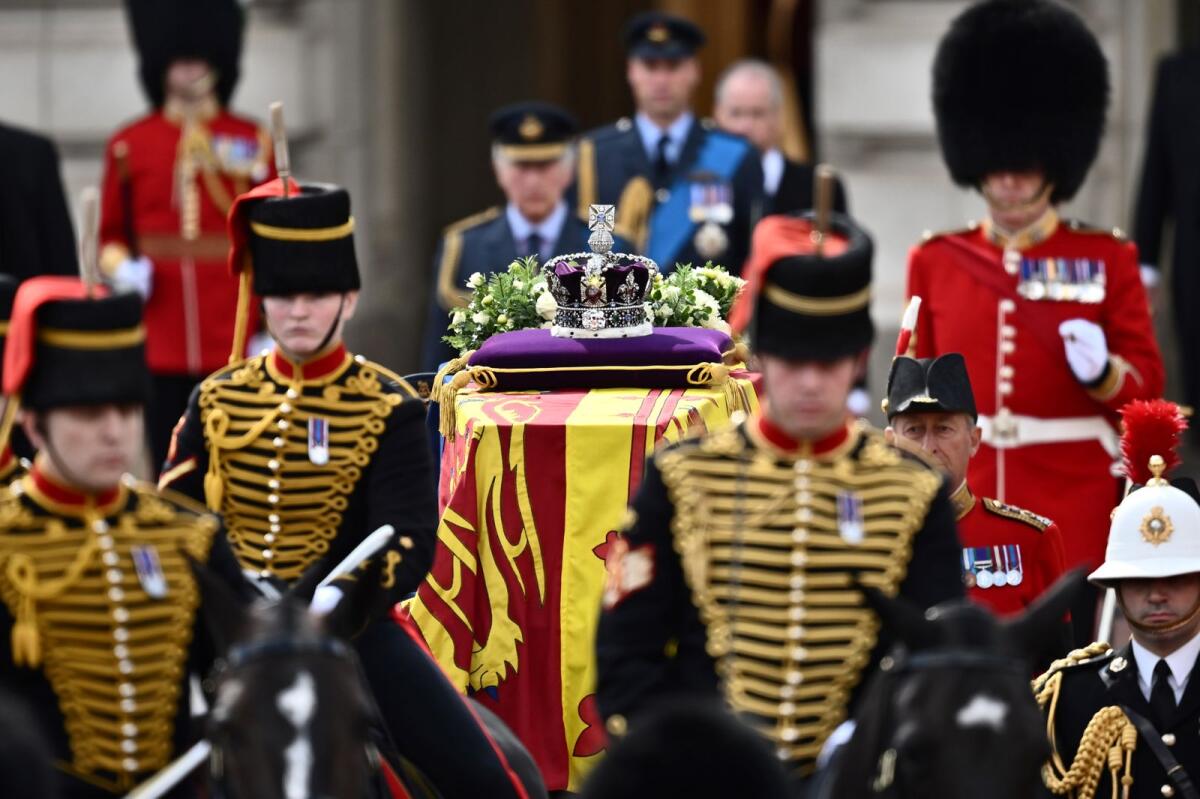
The uniforms of the Horse Artillery, in charge of transporting the Queen’s coffin, and the Grenadier Guards who flanked it on the journey to Westminster Hall this week are identical to the uniforms of the soldiers who accompanied Victoria’s coffin in 1901. The tradition of sailors moving the funeral caisson along in its journey begs with Victoria, as well.
But I was reminded, too, of a distinctive American funeral, and of me at eleven years old, watching television, transfixed, during the weekend that followed November 22, 1963. While the British have been planning for Elizabeth’s funeral—“Operation London Bridge”—for years, with the Queen’s help, Kennedy’s was quite different.
There were plans on the shelf, but the organizers for the president’s funeral essentially had three days to put it together.
In this, they were successful. It was both marvelous and painful. It was unforgettable.
I’ve written a lot about Black Jack, the riderless horse who followed the president’s caisson (the caisson that had carried FDR’s body; and the caskets of both presidents had been placed atop the catafalque built for Lincoln). The horse, a jet-black Morgan/Quarter horse cross, was ornery, nervous–unnerved by the collapse of a heavy metal gate inside a tunnel on the funeral’s route– and repeatedly attempted to bolt or to bite his nineteen-year-old handler, Pfc. Arthur Carlson. Black Jack once stomped on Carlson’s foot so hard that the upper sole of his Army-issue shoe was ripped. The young soldier thought his foot had been broken. Forbidden by protocol to speak to the horse to calm him, all Carlson could do was to hold on to the bridle with all his strength.
After the funeral, Black Jack caught his handlers by surprise. He’d become a celebrity and visitors came to see him at the Old Guard stables at Fort McLean, and the visitors who delighted the horse the most—he was incredibly gentle with them—were children.
I love horses, and I loved the big black horses in the Queen’s procession to Westminster Hall—one, a Royal Artillery horse who led the caisson, and in front of him, were two London police horses, at least sixteen hands and more likely seventeen, made bigger still by the smallness of the policewomen who handled them with such skill.
For JFK’s funeral, they were greys; the caisson’s six-horse team, one occasionally nuzzling the face of his harness-mate, and the enormous grey who led the caisson, pausing occasionally, seemingly to discipline the caisson team. He and his rider glided effortlessly and fluidly sideways, looking sharply at the caisson’s progress, every time the cortege turned a corner.
On arriving at Arlington, after an intemperate rendition of the indelibly Protestant “Onward Christian Soldiers” (indeed, most Americans in the South and Midwest had never before the televised funeral seen priests in full vestments, including Boston’s Cardinal Cushing), the procession returned to the cadence of muffled drums. After a moment, there were bagpipes—the Black Watch, no less, so now there were two sets of men in skirts—who had visited the White House and delighted the president, a student of Scottish history, including the struggle for independence.
“I am fond of lost causes,” the President noted ruefully that day, just before the Black Watch performed, just nine days before he was murdered in Dealey Plaza.
And the silent soldiers closest to the funeral bier weren’t Americans. They were Irish military cadets whom the president had met just five months before, on a return trip to Ireland, completing a journey that had begun when his ancestors, like mine, sailed from what was then Queenstown, today called Cobh, on Ireland’s east coast.
At least two of what were called Famine ships had foundered in the North Atlantic, lost with all aboard, just before our ancestors, the president’s and mine, left Ireland. The Irish cadets were there to remind us that we, all of us, are immigrants and so we come from people of courage. That might be the most marvelous American tradition of all.
In the long view, neither funeral–the president’s in 1963, the Queen’s in 2022–is necessarily about the empty person inside the coffin, for while Elizabeth had her Mau Maus, JFK inherited the rapist’s sense of entitlement that was his father’s work.
But the good news is that I think the funerals like these are more about us. We are deeply flawed but at the same time capable of great dignity, and capable of lending our dignity to human beings who are just as flawed as we are. In remembering them, in old traditions, we confront–without knowing it–our own importance, which lies in the value of our lives. And so, in the wake of slow marches, we move forward.
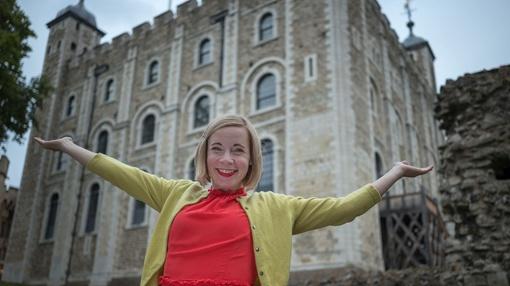
I’m kinda nuts about British historian Lucy Worsley; she is a hoot.
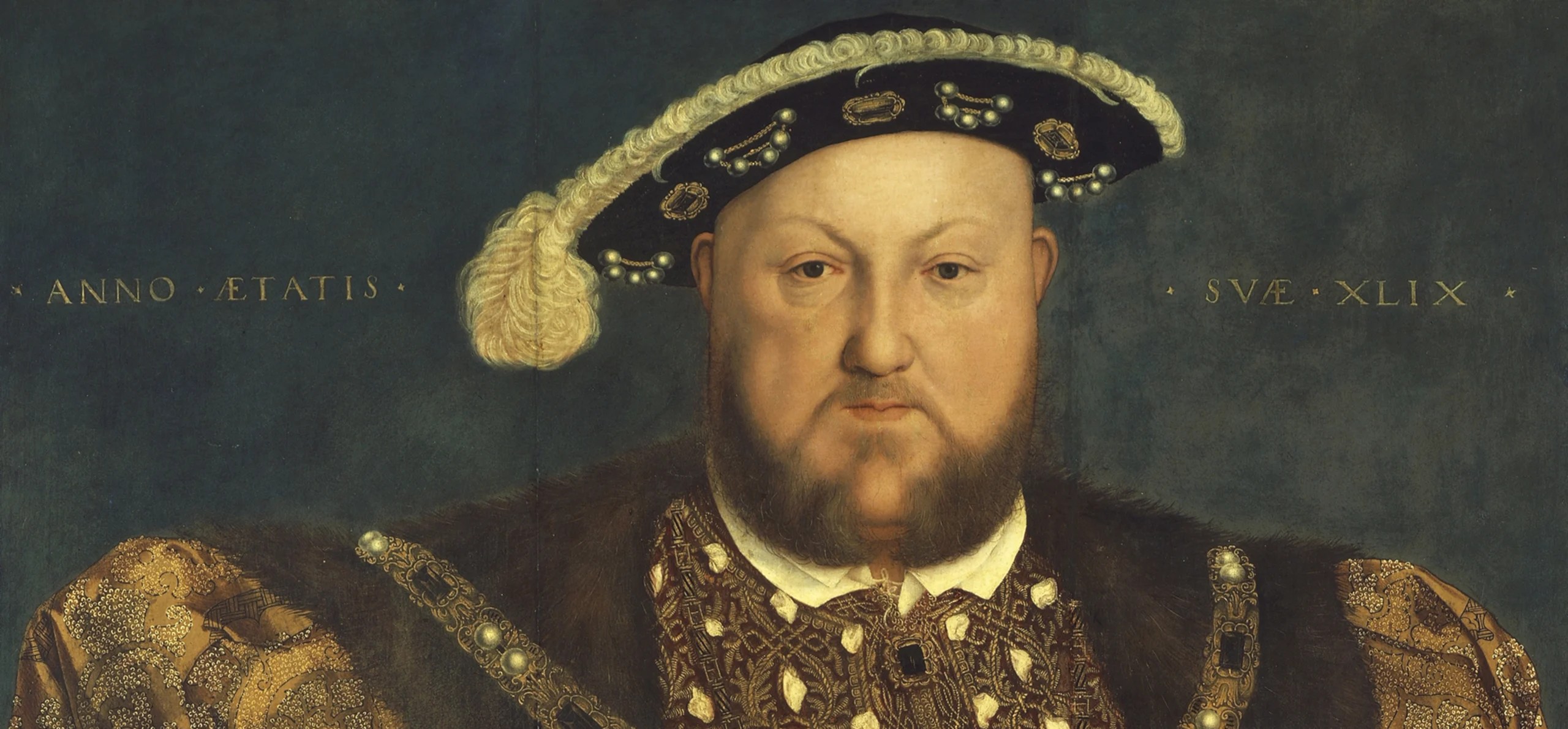
I first discovered her, while teaching European history, when she went to a modern grocery store to go shopping for Henry VIII.
The students were kinda nuts about her too: she’s a small person and the shopping cart was bulging at the seams, so she was huffing and puffing as she pushed it through the aisles. It was loaded mostly with meat (beef, pork, fowl, eels).
Turns out it’s no wonder Henry VIII weighed almost 400 pounds at the time of his death.
Sadly, on the tour to his final resting place at Windsor Castle, while Henry lay in repose in a church, his coffin exploded. Pent-up Royal Gas.
Gastly.
He’s Henry VIII he is; Henry VIII he is he is.
Anyway, if you get a chance, Worsley appears pretty regularly on PBS. She’s now the Chief Curator of Historic Royal Palaces.
Not a bad job, that.
She did a show that ran Sunday on three palaces:
1. The Tower of London. The oldest part, the White Tower, was intended to impress the local Saxons, whom the Normans considered imbeciles. To their horror, they’d built the privies in full view of London so that the beautiful stonework soon became, er, corrupted. Ah, who were the imbeciles NOW? So moved all the Royal Eliminatories to the back.
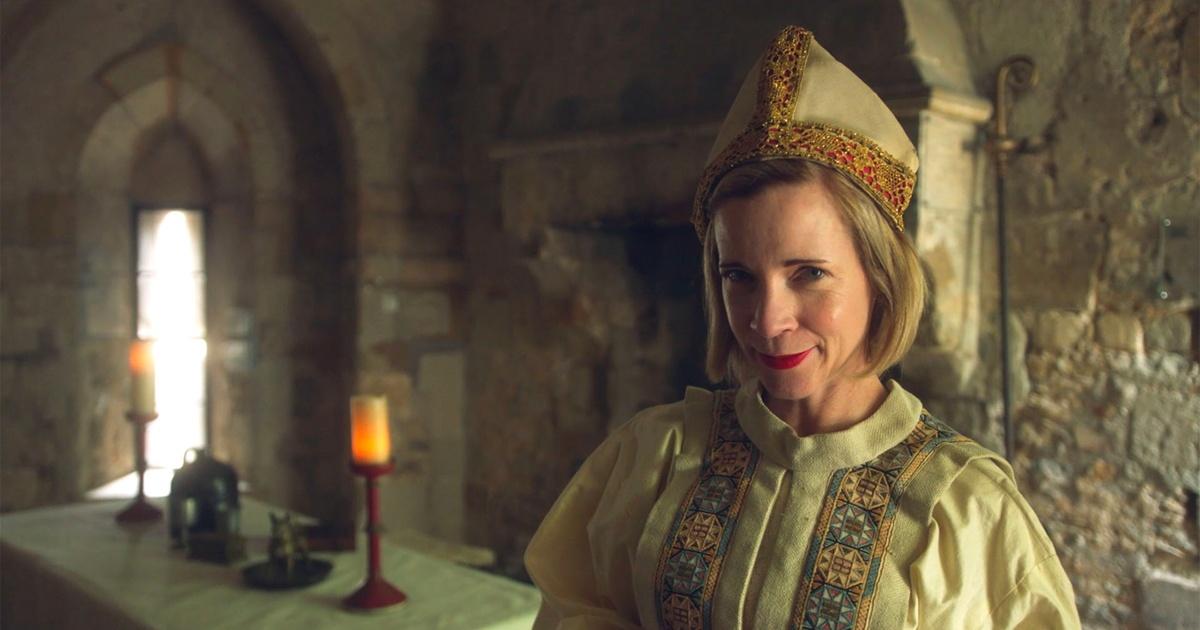
Worsley then played the first prisoner to escape from the tower–it became a prison, of course, as well as a palace– an obnoxious Norman bishop. She went clattering away down the cobblestones clutching her crozier. Oh, she also helped the Yeoman Warder, a Beefeater, feed the ravens, who are Mouseaters.
Worsley as the naughty bishop.
2. Hampton Court, once Cardinal Wolsey’s palace, was appropriated by Henry VIII once the Cardinal fell out of favor (couldn’t get the king his divorce.)
Wolsey took her show up to a nondescript room on an upper floor–desks and computers, used for training. But that was the bedroom of, in succession, Catherine of Aragon, Anne Boleyn and Henry’s favorite, Jane Seymour, who died in the room soon after giving birth to Edward, the king’s long-awaited and ultimately worthless royal heir.
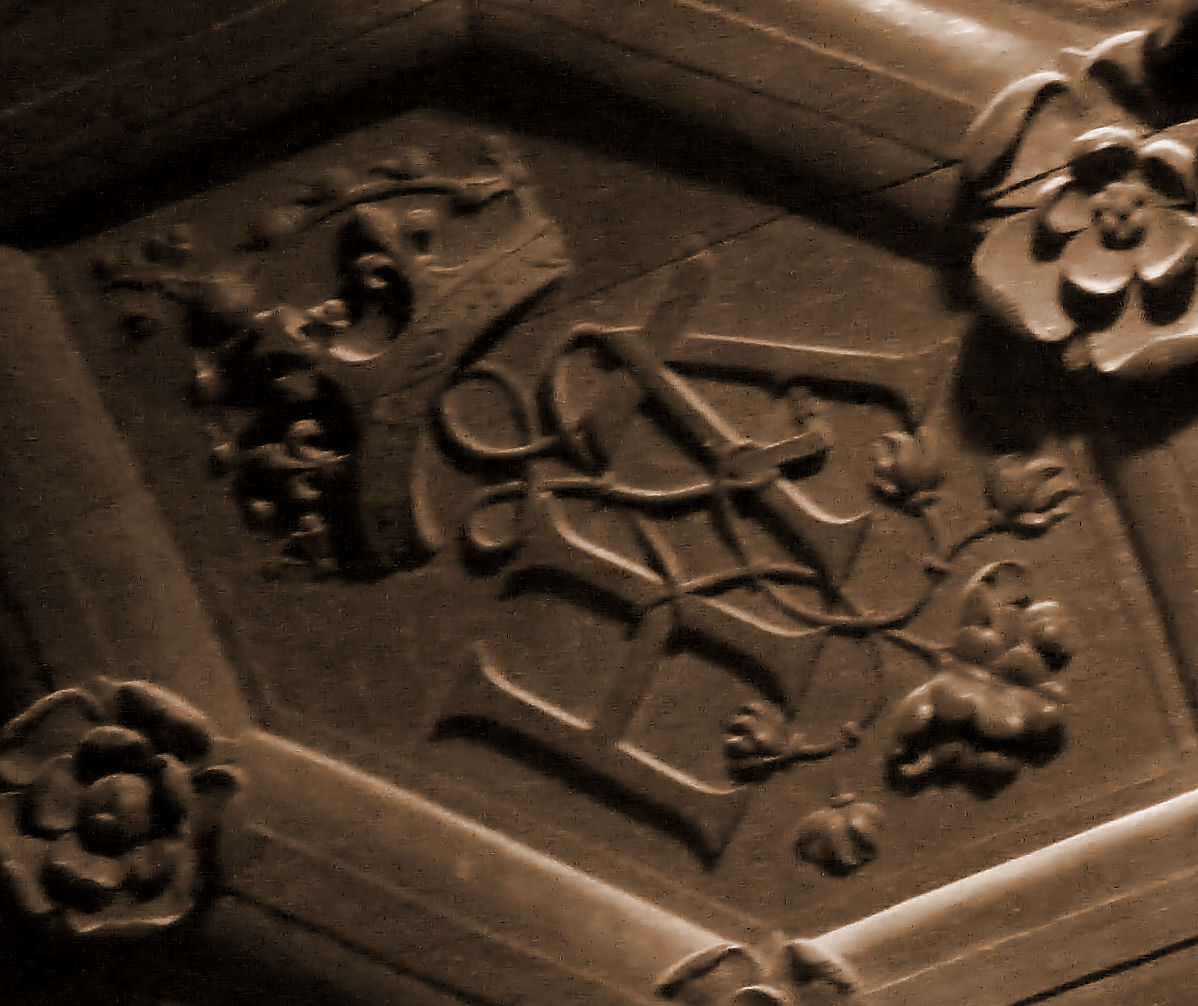
But Henry was once smitten (besmitten? besmot?) by Anne, so the royal dining hall was framed by gilt and woodwork with the interlocking initials “H” and “A.” But Henry married Jane only 11 days after Anne’s head and her body went in separate directions, so workmen were in a hurry. Worsley spotted a corner where they’d missed, in the woodwork, one set of interlocked initials.
Interlocked “H” and “A,” Hampton Court. Anne, depending on which way she was facing, she would’ve resembled a lower-case “b” or “d” when she married Henry. She was thoroughly pregnant with Elizabeth.
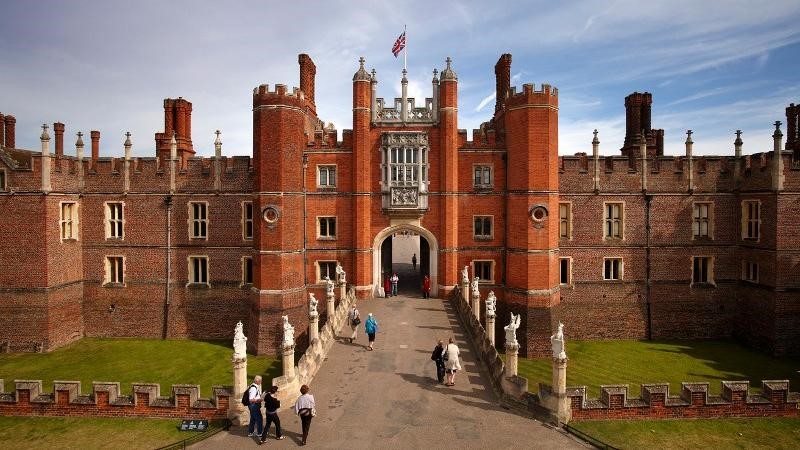
This palace was added onto, on the cheap, by the Stuarts, so it has a Tudor front, seen in the photograph, and a Palladian add-on (Queen Anne, played by the Oscar-winning Olivia Colman in “The Favourite,” would’ve lived here. With her rabbits.) It includes sharp spiky rails in some of the corners, to discourage the courtiers from relieving themselves thereupon.
Royal palaces–even Versailles–were notoriously smelly.
Hampton Court. The chimneys indicated the number of kitchens required to keep Henry VIII properly fed.
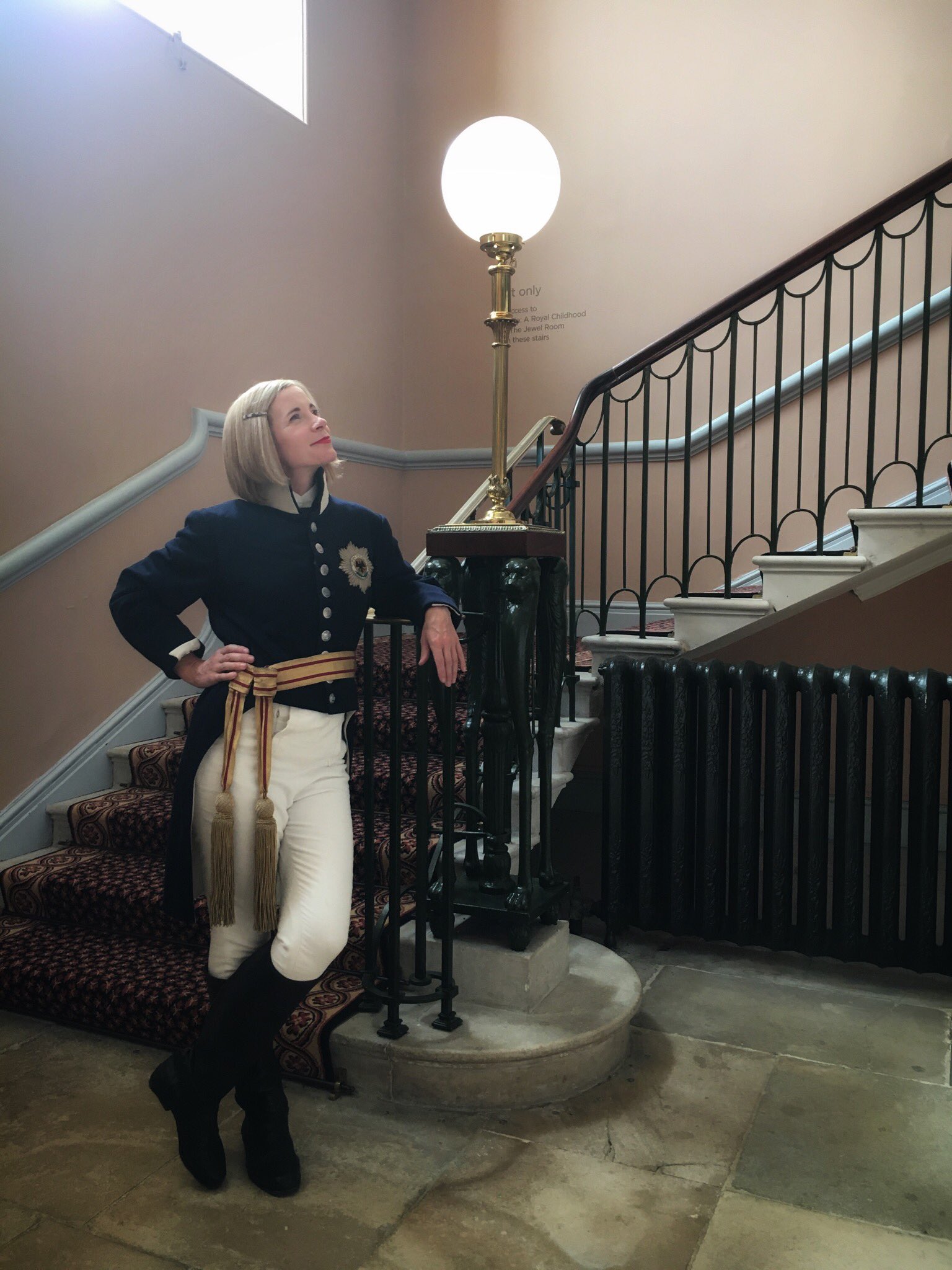
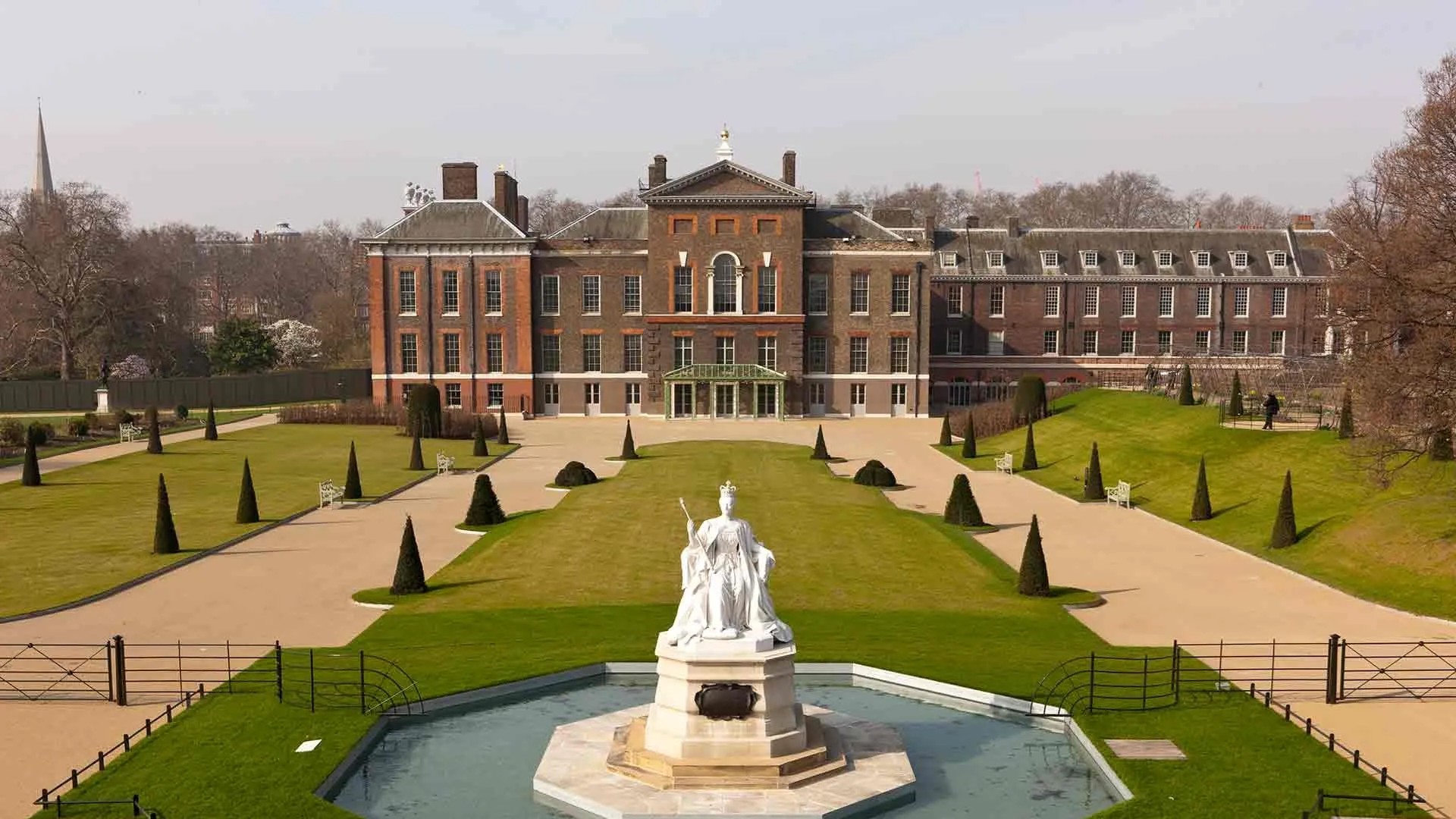
3. Kensington Palace was where Princess Victoria lived. Worsley–playing both roles, stood atop the staircase landing where Victoria first set eyes on Albert, at the bottom of the stairs. She was besmot and wrote at length in her diary about his eyes, his nose, his mouth and his limbs (“legs” was a dirty word in those days).
Albert thought she was okay.
That’s Worsley, as Albert, trying to look casual, at the bottom of the staircase.
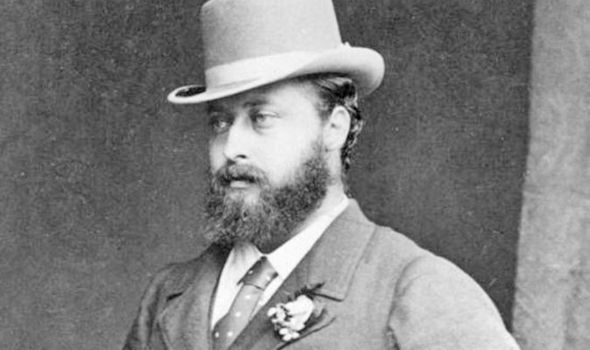
But once the two were married, they were a lusty pair. They must’ve worn out a host of royal bedsprings. Victoria adored Albert and adored sex. The end result–children–she was less than enthusiastic about. Especially her eldest son. Poor Bertie.
(Bertie, too, adored sex, especially with married women to whom he was not married. And he adored food. I guess he was a bit of a Henry VIII throwback. To this day, the custom of men leaving the bottom button on their sports coats or suit-coats unbuttoned was one that began with Bertie–Edward VII–who needed a little more room for the royal tummy.)
Flirty Bertie, who could never please his Mum
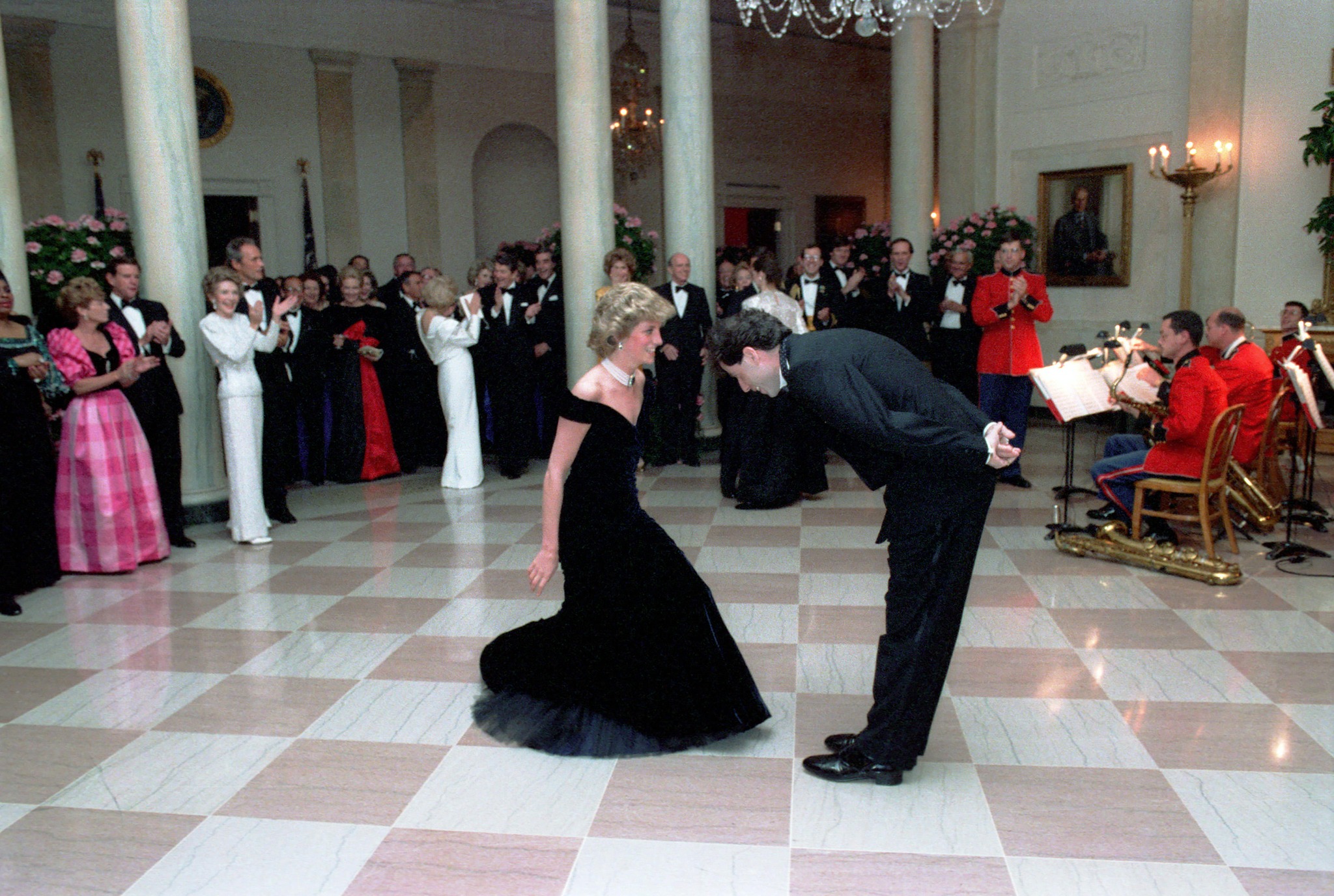
Kensington also features a big collection of court dress going back 300 years, and among them–what a prize!–is the dress Princess Diana wore when she danced with John Travolta at the White House. It’s a deep, deep blue and it’s stunning; all it lacks is, of course, Diana.