• About
  • The Germans

A Work in Progress

A Work in Progress

Category Archives: Uncategorized

Dickens at Christmas, 2016

05 Monday Dec 2016

Posted by ag1970 in trump, Uncategorized

≈ Leave a comment

dickens-at-desk

We keep coming back to A Christmas Carol, in all its variations, from Alistair Sim’s  film archetype to the Muppets, and it suddenly, since November, means as much now as it did when it was first published at Christmas in 1843.

Unlike another cinematic descendant, It’s a Wonderful Life,  Dickens’s novella was an instant sensation. It was beautifully timed: the Prince Consort, Albert, was bringing German Christmas traditions to England and transforming it into the holiday, down to gloriously lit Christmas trees, that Americans recognize today. I can still remember the German words to “A Christmas Tree” from Branch Elementary School:

Du grunst nicht nur zur Sommerzeit,
Nein, auch im Winter, wenn es schneit.
O Tannenbaum, O Tannenbaum
Wie treu sind deine Blatter!

And for that I have to thank Albert, doomed to perpetual marblehood by his neurotic widow. But even she read Dickens. (And Harriet Beecher Stowe: Uncle Tom’s Cabin made the Queen weep.)

And the rest of England was moved, as well, by literature, thanks to Dickens. Since most of his novels were serialized in newspapers, the Queen’s subjects were as addicted to them as modern Americans are to soap operas or to the next Star Wars release.

What we miss–and what Dickens intended–was that this little work was every bit as much about the nature of evil, especially when it’s deliberately chosen, as it was about Christmas. What saved Scrooge from his choices was the chance at redemption,  a theme constant in Dickens’s works, from Pip to Sidney Carton.

Here is the evil that was England’s freight in 1843: Already the white moths that  lived on birch trees in the Midlands and in London’s suburbs were disappearing. because the birch bark was no longer white: it was soot-gray, painted by the waste pouring out of coal-fired factories. The white moths became fodder for hungry birds, you see, and, as the devoutly Christian Darwin realized, nature selected the grayish mutations who were less conspicuous.

Other victims happened to be human beings. Child labor, like little Copperfield, Dickens’s equivalent in the bootblack factory, was commonplace and so were the debtors’ prisons where Dickens’s father, thinly disguised as the feckless and delightful Micawber, spent time. Parliament’s Sadler Commission toured and gathered the testimony of children who had watched numbly as their friends’ arms were crushed in the maws of power looms and of mothers whose lives were so fragile that they were never quite sure of just how old they were.

`Are there no prisons?’ asked Scrooge.

`Plenty of prisons,’ said the gentleman, laying down the pen again.

`The Treadmill and the Poor Law are in full vigour, then?’ said Scrooge.

`Both very busy, sir.’

`Oh! I was afraid, from what you said at first, that something had occurred to stop them in their useful course,’ said Scrooge. `I’m very glad to hear it.’

This is a treadmill, adapted, with the moral superiority attendant to imperialism, to India. Its ultimate purpose was to humiliate the poor.

prison-treadmill-resized

Unlike the poor, Scrooge is uncommonly and inscrutably lucky (he doesn’t much deserve it, does  he?) , of course, because Dickens offers him salvation through a series of haunts. First he is greeted by that inimitable “indigestible bit of beef:” his former partner, Marley.

episode_02_534x300

Marley’s ghost.

 “But you were always a good man of business, Jacob,’ faltered Scrooge, who now began to apply this to himself.

“Business!’ cried the Ghost, wringing its hands again. “Mankind was my business; charity, mercy, forbearance, and benevolence, were, all, my business. The deals of my trade were but a drop of water in the comprehensive ocean of my business!” 

It was the business of Victorian capitalists to magnify profit at the expense of humanity. They were helped by an influx of country folk whose land had been enclosed, accompanied by an ironic burst in population made possible by the food provided by the progressive farmers–Thomas Hardy’s folk– who had done the enclosing. There were an infinite number of prospective industrial workers and a finite number of industrial jobs.

01-1

Fezziwig at Christmas.

It is the pleasant duty of the Ghost of Christmas Past to remind Scrooge of what a good man of business Fezziwig was.  This was not a man prone to hiring and exploiting ignorant foreigners, to stiffing subcontractors, to using attorneys as if they were pit bulls. Not Fezziwig. And Scrooge is, course, such a vivid contrast:

725f2437cd79007d8f3fc89cfe5b0767

The Charitable Gentlemen visit Scrooge and Marley.

`If they would rather die,’ said Scrooge, `they had better do it, and decrease the surplus population.'”

In this passage, Dickens is mocking the economics–then called “the dismal science”–of Thomas Malthus, who argued that while the food supply increased arithmetically, the population increased geometrically, so starvation was a necessary and inevitable corrective. So, argued David Ricardo, Malthus’s acolyte, were depressed wages: since there were always more workers than there were jobs, wages, obedient to the laws of supply and demand, would always be depressed. It was a law of nature, and the capitalist was powerless to oppose it.

The Ghost of Christmas Present introduced Scrooge to reality:

257e645f677ed82382760e145d3df600

“This boy is Ignorance. This girl is Want. Beware them both, and all of their degree, but most of all beware this boy, for on his brow I see that written which is Doom, unless the writing be erased.

“Have they no refuge or resource?” cried Scrooge. ‘Are there no prisons?’said the Spirit, turning on him for the last time with his own words. ‘Are there no workhouses?'”

8

Scrooge and Cratchit keep Christmas

Scrooge’s one positive quality was that he was teachable. That smoothed his path to redemption.

At Christmas we celebrate the hope, incarnate in a newborn,  that we will find redemption. Many of us–perhaps all of us?–hunger for a force powerful enough to recognize, understand, and then burn away our shame. Beneath it is our core: the person who is our truest self.

The ultimate source of this kind of power, of course, was the child born in poverty. Perhaps it was his confrontation with poverty, and not with ghosts, that allowed Ebenezer Scrooge to discover the meaning of Christmas.


India.

Sister Aimee

17 Thursday Nov 2016

Posted by ag1970 in Uncategorized

≈ Leave a comment

Tatiana Maslany as Sister Alice on HBO’s Perry Mason.
Kerry Bishe as Sister Molly on Showtime’s Penny Dreadful: City of Angels

_79237805_aimee

Aimee Semple McPherson was, in the 1920s, one of the most famous evangelists in America and was the founder of the Foursquare Gospel Church, which is now 1,400 churches strong. She was a marvelous actress–advised in part by friend Charlie Chaplin, her sermons were framed by elaborate stage settings and she dressed in various costumes, as a little Dutch girl, for example, complete with sabots. The milkmaid-revivalist portrayed by Jean Simmons in the film production of Elmer Gantry was based on Sister Aimee, as was a character in Nathanael West’s dark novel, The Day of the Locust. She was flamboyant, dramatic, attractive and enormously successful.

She was known for her good works. In the 1925 Santa Barbara earthquake, she took the microphone away from a stunned broadcaster and immediately requested aid for the stricken city. Convoys of food, blankets and emergency supplies were soon on their way. She was insistent integrating her congregation, a courageous policy at a time when the power of the Ku Klux Klan, even in California, was at its height. She ran a commissary for the homeless out of her Angelus Temple that was shut down briefly in 1932 when a still was discovered in the kitchen.

1170577_154786054905660_1503215307_n
An electric trolley passes the Angelus Temple in this postwar photgraph.

In May 1926, Aimee disappeared. Presumed drowned off Venice Beach, a search that included the California National Guard failed to turn up any trace of the beloved Aimee. She was gone.

For a month.

In June, she turned up, disheveled and disoriented, in the town of Agua Prieta, on  the Mexican border, revealing that she’d escaped from an adobe house in Mexico where she’d been held captive by two kidnappers named “Steve” and “Rose.” She was hospitalized in Douglas, Arizona, and the newspaper accounts of her survival were welcome news to her followers: as many as 50,000 Angelenos were waiting for her when her train arrived from Arizona.

As it turned out, Aimee’s story was a fabrication. When her account began to come under scrutiny, she brazenly, and foolishly, demanded the grand jury investigation whose focus soon became Aimee herself.

ht19260603-2-8-a1-330w

Enough character witnesses appeared on her behalf to muddle the case, which was eventually dismissed, but this is what most likely happened: Aimee had an affair with a former employee, a radio engineer named Kenneth Ormiston, and the dates of her disappearance coincided with his rental of a seaside cottage in Carmel.

The plot thickened when Ormiston was identified as the male half of a couple that had registered as “Mr. and Mrs. Gibson”–the female was heavily veiled–when they’d checked in at the Hotel Andrews in San Luis Obispo shortly after Aimee’s alleged drowning.  The Andrews, which stood on the corner where the San Luis Obispo City-County Library today stands, reached the height of its fame in a 24-hour cycle of national newspapers.

Hotel Andrews San Luis Obispo, CA

Aimee had reached the height of her fame, as well. She continued to preach until her death in 1944, but the luster was gone; in-fighting between Aimee and her mother, Mildred Kennedy, took both a personal and business toll on the evangelist; when her body was found in an Oakland hotel, a bottle of Seconal was found nearby and the coroner’s inquest suggested that both an accidental overdose and kidney problems figured in Sister Aimee’s death.

Admirers sent eleven truckloads of flowers, valued at $50,000, to her funeral at the Angelus Temple. She is buried, along with so many other Hollywood stars, at Forest Lawn in Glendale.

1024px-aimee_semple_mcpherson_grave_at_forest_lawn_cemetery_in_glendale_california

The only Hollywood star who could exceed Sister Aimee, in my mind, was Burt Lancaster in one of the most stunning opening scenes in film history, from Elmer Gantry.

Home

16 Wednesday Nov 2016

Posted by ag1970 in Arroyo Grande, Uncategorized

≈ Leave a comment

1689864_10203039972623997_595650753_nA ten-mile corridor of land between Valley Road in Arroyo Grande and Mary Hall Road in the Huasna Valley has been the most formative influence of my life. I grew up on Huasna Road in the Upper Arroyo Grande Valley, and I knew instantly the day we moved there, when I was five, that this was home.

We never lacked for guests. There were mule deer, a weasel, red-tailed hawks, an unexplained peacock, and two barn owls that slept together on a ledge beneath the Harris Bridge. Coyotes yipped in the hills and a colony of beavers built a dam in the Arroyo Grande Creek that ran with rainbow trout I did catch and one big steelhead that I didn’t. Once a mountain lion sniffed around our Branch School softball field.

Just over the hill from the two-room school was the Branch family burying ground. I used to visit to wonder what Arroyo Grande Valley must have been like when Francis and Manuela Branch arrived in 1837, wonder at the heartbreak represented by the small tombstones of three daughters taken by smallpox in 1862.

It was in part the Branch family that would lead me to teach history for thirty years, when I found that my life’s calling and greatest joy was to be surrounded by teenagers.

I’ve written two books about Arroyo Grande since I retired in 2015, and I constantly find hope in our past:

• In 1862, a Civil War soldier, Erastus Fouch, lost his eighteen-year-old brother during a firefight with Stonewall Jackson’s forces in the Shenandoah Valley. Thirty years later, Fouch, now an Arroyo Grande farmer, would be the most forceful advocate for the founding of the high school, a perfect memorial to a lost brother.
• Ruth Paulding taught at the high school in the 1940s and 1950s. Her mother, Clara, had taught locally for over forty years, including, at one point, teaching sixty students in eleven grades at Branch by herself. Both Pauldings loved children. In the family home on Crown Hill, there are several tea and coffee services. In one of them, Ruth, at the end of the school year, would serve her students Mexican hot chocolate so rich that the teenagers would remember it the rest of their lives.
• The Ikeda brothers were superb athletes and passionate about baseball, which is the sport that that kept the internees together, body and soul, in the desolate World War II camp at Gila River. More than half of Arroyo Grande’s Japanese internees never came home after the war. The Ikedas did, to teach baseball to two generations of children who will never forget Coach Saburo Ikeda because, as one of them wrote, “Coach always had a smile on his face.”

On the day that we moved to Huasna Road, there had just been a thunderstorm, and the air was pungent with ozone and earth just turned over by a farmer’s tractor. In writing about our past, I am always inspired by chronicling lives as rich as the soil of the Valley, and I always come back to that moment, sixty years ago, when I knew I was home.

Pearl Harbor’s Impact on Arroyo Grande

30 Sunday Oct 2016

Posted by ag1970 in Uncategorized

≈ Leave a comment

battleship-row

Battleship Row, December 7. Arizona, at left, just inboard of the smaller ship Vestal, has just taken two bomb hits astern. This is the moment when Arroyo Grande sailor Jack Scruggs died.

Just before eight o’clock on December 7, 1941, a bomb’s concussion on battleship Arizona’s stern blew the lifeless body of Navy bandsman Jack Scruggs into Pearl Harbor. A little more than five minutes later, the second, fatal, bomb penetrated the teak deck, killing a second sailor, Wayne Morgan, and nearly 1200 of his shipmates when it detonated the forward powder magazines. Scruggs and Morgan had grown up in Arroyo Grande, a farm town in San Luis Obispo County.

Park Service divers can still see, just behind portholes, December 7 air trapped inside Arizona’s submerged compartments. A clock recovered from the chaplain’s cabin was frozen at just past 8:05 a.m., the moment the ship blew up.

Few moments can be frozen in time. History is remorseless and it demands change. The war changed Arroyo Grande forever. In a way, the little town of just under 1100 people was torn apart just as Arizona had been.

Residents here heard the first bulletin at about 11:30 a.m., as they were preparing for Sunday lunch, the big meal of the day for churchgoers like Juzo Ikeda’s family. Like many of the town’s Japanese-American residents, the Ikedas were Methodists. They were also baseball fans. Juzo’s sons had played for local businessman Vard Loomis’s club team, the Arroyo Grande Growers, and for Cal Poly.

Juzo was technically not “Japanese-American.” He was not permitted citizenship. The Supreme Court maintained that this honor was never intended for nonwhite immigrants.

The court couldn’t deny citizenship to Juzo’s sons, born Americans, or to the sons and daughters of families like the Kobaras, the Hayashis, the Fuchiwakis, the Nakamuras.

These young people played varsity sports at the high school on Crown Hill, or served in student government or on The Hi-Chatter, the school newspaper, or joined the Latin Club or the Stamp Collecting Club, the brainchild of young cousins John Loomis and Gordon Bennett, known for committing occasional acts of anarchy as little boys (John’s mother grew so frustrated that she once tied him to a tree. Gordon freed him.) and known even more for being good and loyal friends.

Two of those friends were Don Gullickson and Haruo Hayashi. Loomis, a Marine, and Bennett and Gullickson, sailors, would fight the Japanese in the Pacific in the last year of the war. They would also continue to write to Haruo at his internment camp at Gila River, Arizona.

Haruo joined the 442nd Regimental Combat Team, but he was very young—only a sophomore when Pearl Harbor was attacked—and the war ended before he could ship out for Europe.

Haruo never understood an incident at the 442nd’s training camp at Camp Shelby, Mississippi. A wonderful USO show arrived and while both the white and Nisei GI’s watched it in the camp auditorium, black GI’s had to content themselves with hearing what they could of the show while standing outside.

It wasn’t right, Haruo thought.

In April 1942, buses had appeared in the high school parking lot atop Crown Hill to take Haruo and his family to the assembly center in Tulare. A line of teenaged girls—twenty-five of the fifty-eight members of the Class of 1942 were Nisei—walked up the hill together to where some would board the buses. They were holding hands. They were sobbing.

Many young men would join the army after they and their families were moved to the desolate Gila River camp. Sgt. George Nakamura won a Bronze Star and a battlefield commission to lieutenant for rescuing a downed flier in China. Pfc. Sadami Fujita won his Bronze Star posthumously. German small-arms fire killed him as he brought up ammunition during the relief of the “Lost Battalion” in France in 1944. Nearly a thousand Nisei GI’s were killed or wounded in freeing the 230 young Texans pinned down in dense woodland splintered by German shellfire.

When Sgt. Hilo Fuchiwaki first came home at war’s end, he went to the movies in Pismo Beach in his uniform. A patron spat on him. When the Kobara family came home from the Gila River camp, they could hear gunshots in the night as they slept, for protection, in an interior hallway of their farmhouse.

As others began to come home, they found that families like the Loomises, the Silveiras and the Taylors had watched over their farmland and farm equipment. Insurance agent and football booster Pete Bachino, killed in the 1960 Cal Poly plane crash, had taken care of their cars.

But more than half of Arroyo Grande’s Japanese-Americans never came home again.

Arizona, twisted grotesquely at her mooring, burned for two days after the Pearl Harbor attack. The scar that this terrible fire left behind, even here, seems invisible only because it is so deep.

Tim

26 Monday Sep 2016

Posted by ag1970 in Uncategorized

≈ Leave a comment


Two years ago, we lost Tim O’Hara–
My brother-in-law.
My friend.
Some losses can’t be replaced.
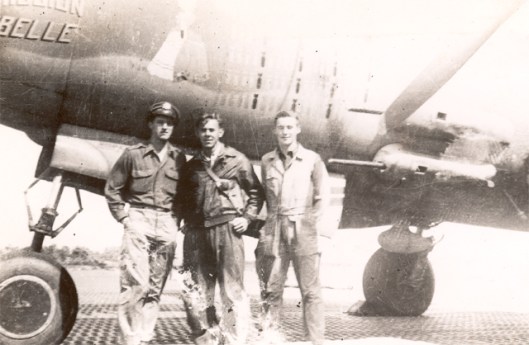
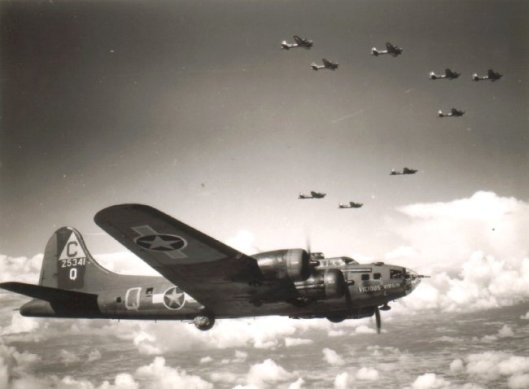
Tim’s Dad knew that, by the tens,
Each ten a B-17 crew lost in spiderwebs of flak,
Their missions interrupted,
In the same bright flash
That finally empties all our lives.
[The squadron is never the same,
And some holes can’t be filled.
I know that, from a lifetime of shoveling.]
But some men
Grow up with hearts so strong,
That they beat long after
Their own life’s mission is done.
Their hearts beat still in the lives
Of all who knew them.
Tim’s heart was like that–
Listen.


Tim O’Hara

The photographer

13 Saturday Aug 2016

Posted by ag1970 in Arroyo Grande, Uncategorized

≈ Leave a comment


Dorothea_Lange_atop_automobile_in_California

In 1936, the woman’s beret and mannish dress—oxford shirt, pleated skirt, sweater tied around her shoulders, high-topped tennis shoes—might have made her look a little like the outlaw Bonnie Parker. The car she drove was a powerful V8,  the engine Bonnie and Clyde favored, but her car was homely and utilitarian, a wood-paneled Model C Ford wagon, not sleek and raked like the Ford DeLuxe in which the outlaws had met their deaths two years before. The driver, nodding a little with each click of the seams in the two-lane concrete Highway 101, needed a wagon’s room, not for bank-bags full of loot, but for equipment, the boxy, awkward but fragile paraphernalia of the documentary photographer, tucked securely inside the passenger cabin and wedged together in cases to make the run north to San Francisco secure and tight.

She had a good six hours to go before San Francisco and so was taking a chance on dubious tires on the narrow coast highway, littered in sad little Darwinian islets with expired possums, skunks, and ground squirrels. For her, the more menacing detritus was that of a nation in motion: fragments of glass, shredded and peeled truck-tire treads, oil slicks, fragments of cargo that included scraps of lumber and tenpenny nails. Her  tires, nearly bald at the edges from months of traveling hard roads in the San Joaquin Valley and the California coast, were vulnerable to the traps the 101 had laid for her, but she wasn’t prepared for the trap the roadside sign presented.

PEA PICKERS CAMP

At first, she was strong enough to resist the seduction of the crudely-lettered sign; she had so far to go and had, after all, only reached the southern edge of San Luis Obispo County. Here  the terrain was just beginning to reveal that she’d left the gravitational pull of Los Angeles, which ends at about the Gaviota Pass, with its severe rock outcroppings scattered with spiny yucca plants, where the light hits hard at noontime and yields to soft pastels at sunset, purples and pinks, all suggestive of aridity and drought in a country meant for lizards and coyotes and not for farming.

Lending a helping hand, Nipomo.

She knew the farmland she was entering pretty well, had interviewed and talked to its Mexican migrants and itinerant cowboys and the gypsy people mistakenly generalized as “Okies,” “mistaken” because she’d photographed the same kind of people from as far away as Vermont. They lived in their canvas tents and lean-tos in labor camps like the one the cardboard sign suggested, and they were as hard and as stark and as dry as the rocks at Gaviota. Poverty and stoop labor and hunger and human hostility had dried these people out by 1936. If  the woman had her way, hope would wash through them like irrigation water the color of creamed coffee did through the furrows of the fields they worked, fields of pole beans and strawberries, cabbages and peas. But this water would revive them, fill them out, galvanize and energize them, restore to them the forward-looking strength that had been so fundamental to their ancestors from Germany, from the Scots Lowlands, from Sonora and Mississippi, from Luzon and Kyushu. These people waited, quiet, stoic, unblinking, for the waters of hope to baptize them. But they thirsted for them.

Doing laundry, migrant camp

She kept driving north past the irrigated fields and vast groves of fruit and walnut trees because there was no need for her to stop. On the seat and the floor beside her were thousands of  5 x 7 negatives secure inside their wooden frames, stored in black light-resistant boxes, and on that film she had captured the hard, dry, and thirsty people at work in their fields, in camps preparing dinner or washing laundry, and their children beside them in the fields, whole families struggling with the trailing bags they were struggling to fill with cotton bolls or onions or potatoes or with the tall wooden pails meant to be filled with fruit or pea pods. They harvested the food that fed a nation that was now too incapable, in places like Henry Ford’s Detroit, of feeding itself. Ironically, the harvesters themselves went hungry. They’d been abandoned by fossilized congressmen who forgot the hunger of the hill people that had driven their forebears, fierce Populists like Tom Watson, to the offices of great power that they now held.

So the migrants’ children’s bellies were swollen, their legs were like sticks, knock-kneed from rickets, and now, in the hard rains that had come late this year, the dominant sounds that came from the tents in the migrant camps were the wracking coughs of migrant children in attacks that convulsed them and curled them like sowbugs into the fetal position where they could gather enough strength for another breath. There were thousands of people like these harvest people, sealed in her negatives on the seat beside her, waiting to come to life again in tubs of fixer in the photo lab.

Some of them, some of those children, were going to die.

Lange photographed this sick migrant child near Bakersfield.
Migrant children, Nopomo. The little girl’s slight knock knees are suggestive of rickets, a nutritiional disease..


South of the Ontario Grade, to her left, was a stretch of the Pacific in a shallow crescent from Guadalupe to Port Harford; the sight of it must have hurried her north to where she would finally see the ocean again, and with it San Francisco.

Ten minutes later, impulsively, somewhere near San Luis Obispo, the driver pulled to the shoulder and stopped her car.

The engine idled and her grip tightened atop the steering wheel. She leaned forward until her forehead rested against her knuckles and she closed her eyes. She was tired. She had miles and hours of highway ahead of her before home and relief and release from the hard work she’d been doing. Then she sighed. There was only one thing to be done. She brought the Ford around in a U-turn and headed south on the highway she knew so well that she would intuit a mile ahead of its appearance where the sign would be,  where she would turn off the 101. She could not know it now, a little angry at herself for reversing  course, but when she turned off she would meet a Madonna of the Sorrows, a woman in a tent in a muddy field who would leave even a master like Raphael rapt in her presence and powerless to capture her image. This image was meant for the photographer, and meant for her alone.

Dinner

02 Tuesday Aug 2016

Posted by ag1970 in Uncategorized

≈ Leave a comment

Slide1

This may be my favorite photo in the book. You can see that I have just said something pithy and my sister is debating whether to pinch me. We used to play Confederates and Yankees with the Shannon boys–we were all Confederates, as were they, with one ancestor fighting in Barksdale’s Mississippi brigade, and Cayce named for him–and that is the photo’s relevance to a book about the Civil War.

My mother adored the Shannon boys, and the proof positive in this photograph is the Irish lace tablecloth she’s laid out. That was normally reserved for Thanksgiving and Christmas.

It’s dusk, and you can see the Santa Lucias beyond the glass doors. The view then was unencumbered by houses, and you could see Branch School, our two-roomed pink schoolhouse, in one corner of the Valley, a constant presence and comforting.

In the same direction, Dona Manuela Branch’s home burned down about that same time, 1959. This was the house that her sons had built for her after Francis Branch died in 1874. It happened in the early morning hours and the CDF trucks and their sirens woke us up; we looked out that door as the house burned, giving off a white-hot light that was as bright as a star, and then it was gone. A neighbor whose name I can’t remember–he always wore overalls–gave me a ride on his homemade motor scooter to the site, today marked by palm trees, and Mrs. Branch’s house was just a grey-black outline, with a few wisps of smoke, marking the foundation. It was tragic.

Out the side windows were my mother’s rose bushes and beyond that the little pasture where my sister’s horses grazed. Mrs. Harris lived across the street, the Coehlos a little beyond, the McNeils and then the Shannons near the end, near the junction of Branch Mill and Huasna Roads. The land beyond the pasture was planted, sometimes, in beans that climbed on their wooden stakes and on summer mornings, the ocean fog brushed the bean-stake tips until the sun burned it away. Sunrises were spectacular looking out those windows, and once snow dusted the foothills beyond the door. A place like this is a wonderful place to grow up and, for aspiring writers, like my friend Michael Shannon and me, it is a place rich with stories waiting to be told.


San Luis Obispo’s African American heritage

01 Monday Aug 2016

Posted by ag1970 in Uncategorized

≈ 1 Comment

images

I have been meaning to read this book for three years; it’s about the great African American migration from the South to the North.  Eventually, it would reach the Pacific Coast. I am also terrified to even start this book because I am afraid that I will love it,  and this is why: this is something I’d love to write about, too.

But I wonder if I can. There is the obvious handicap: I am as white as a new pack of Jockey briefs. Beyond that, I am descended from slaveowners—Virginians, Kentuckians, Missourians—and I am in fact named for two Confederates who, no matter how hard they  tried to twist the logic (their battle flag was a white cross on field of blue) were fighting to defend the perpetuation and the expansion of slavery, enormously profitable still in 1861. I grew up in a place rich in Mexican, Asian and Azorean culture, but the Stone family were about the only African Americans that I knew growing up, especially Malcolm, who was one of my older brother’s best friends.

But I’m like the dog in Up!—I keep having these “squirrel” moments. I am easily distracted. The 20s-30s book took a left turn and then went over a cliff into the Civil War, and now I want to tackle a subject about which I have only the briefest acquaintance.

That brief acquaintance came mostly through a year of the History of the American South at the University of Missouri. It hooked me. The Middle Passage, slaves’ impact on the English language and the coded language they spoke only among themselves, the centrality of Moses in their faith, the centrality of their faith in their endurance, the thousand ways they subtly resisted, the vitality of slaves’ family lives, which were always in danger, the incredible tension, on large plantations, that came when the eldest son inherited and suddenly, the woman who had for all intents and purposes been his mother now was his chattel.

After the war, the litany of injustices enraged, I guess, the Irish half of me: the revocation of voting rights after 1877, the rise of the KIan, race rioters bent on extermination, the wave of lynchings, including of women, including of children, the Scottsboro Boys, Emmett Till, three buried voting rights workers in Neshoba County, Mississippi, the murders of Medgar Evers and of Martin.

But.

There are incandescent bursts of dignity and pride, from the Tuskegee Institute to the vitality, up North, of the Harlem Renaissance and of the Negro Leagues. In World War I, black soldiers had fought like tigers, but they fought for the French, who asked to borrow them because they needed them, and the Americans were using them for manual labor. Black American poilus astonished the French with their battlefield discipline and their courage. [And the French fell in love with African Americans, too, with Sidney Bechet, with Josephine Baker, who felt more at home in Paris during the 20s than they had ever felt in the States.]

Despite their performance in the Great War, American policy was much the same in World War II, but then you see the brilliant bursts of pride and character again: the Tuskegee airmen, all-black tank units, the defiance of black sailors after the Port Chicago disaster that killed over three hundred of their comrades, the role black women played in defense plants from Biloxi to Seattle, despite the fact that even shipyard unions in the East Bay followed the color line.

10405274_560058990763002_4834834603604721394_n

It was the war that brought the first large numbers of African Americans to San Luis Obispo.  Jim Crow was observed here, too.  This building, which would be unrecognizable to any Camp San Luis Obispo soldier from 75 years ago, near Chinatown, was the black USO. The white USO was the gymnasium that still stands much as it just off Palm Street. The dependents of black GI’s began to settle in the southern part of town, especially in what had been Japantown, along what had been Eto Street because, of course, those people were banished to the desert and even the street name had to be banished, as well.

One of the conversations I had with Haruo Hayashi that endeared him to me the most was about his stint, near the end of the war, with the 442nd Regimental Combat Team. The Four-four-two GI’s trained in the Deep South, in Mississippi, and Haruo’s first encounter with Jim Crow came when his platoon of Nisei recruits had to choose between “white” and “colored” restrooms once they got off the buses for the first time at Camp Shelby. They discovered, after some spectacular and extended profanity and threats of physical violence from both white and black GIs, that “colored” was the incorrect choice. Haruo never got over, never understood, and still doesn’t understand, why at the excellent USO shows that came to that camp, black trainees had to be content with listening to dance bands or torch singers while standing outside the base concert hall. Haruo didn’t like it.

If the war brought African Americans here, where did they come from? How were they treated?  What triggered violence between black and white GIs in San Luis Obispo during the war? What role did St.Luke’s Missionary Baptist Church play in generating a sense of community and fellowship among San Luis Obispo’s black residents? Why did some of these wartime families stay in San Luis Obispo after the war, what kinds of jobs did they hold down, how were they treated? [One of them, I know, was a cook at the Madonna Inn, and am ashamed that  I cannot remember her name, but I do remember that my father, not necessarily an enlightened man when it came to race relations, loved her.] What was their experience of the civil rights movement? When they have family reunions or church potlucks, what food do they eat and where do the recipes come from? What makes so many of their families, like the Stone family, so successful and so open, especially in a community, like Grover (City), where they were not only a minority, but a tiny minority? Wasn’t  it lonely for them?

I have got a thousand more questions that only reveal my own cluelessness. But I’ve found out something about myself, as a writer, that I’ve always known about myself, as a person. I love to learn. And, in writing and teaching, there is no greater joy than in sharing what you’ve learned.

And I want to learn about the experience here of black folks. I am afraid they are stuck with me, a benign little human variation of kudzu. It’s because my Irish mother–there she is again!–so loved and admired what W.E.B. DuBois called “the souls of black folk.” I am, after all, my mother’s son.

1942-11-11-uso

Four marriages

30 Saturday Jul 2016

Posted by ag1970 in Arroyo Grande, Uncategorized

≈ 1 Comment

o-OLD-COUPLE-HOLDING-HANDS-facebook

The Pioneers

The first gunshot fired in the Arroyo Grande Valley came a few weeks before Victoria ascended the throne. It was probably fired from an 1825 Hawken rifle, and its target, dropped, might either have been a meal—mule deer creep down at dusk from the hills to water– or an animal that wanted to make the rifleman a meal. In 1837, the principal occupants of the Arroyo Grande Valley were grizzly bears—hundreds of them—who dominated, unchallenged, what was then monte, the Spanish word for a vast wasteland of marsh dense with cottonwoods. Another newcomer at the time, attempting to settle the remote Huasna Valley, claimed 45 bears in 1837 alone, and, before he gave up the idea of ranching altogether, estimated that he’d killed close to 200. The man who finally settled the Huasna, Isaac Sparks, outlasted the grizzly bears but not before one had cost him an eye.

The man who fired the Hawken rifle that day, Francis Branch, would not give up the idea of ranching and instead would begin to build a home that would someday be the center of a vast rancho, named for his wife, the Santa Manuela, of some 37,000 acres. He’d add to that adjunct lands of another several thousand to nearly double his holdings. He’d been a mountain man before he decided to take up ranching, so he did not miss his shot, and thirty years later, he would become the founder of Arroyo Grande.

He’d brought his wife, thirteen years his junior, with him to this wilderness. Her name was Manuela Carlon, and she would bear him a small army of eleven children, and many of them, as in any army, would be lost. Heavily pregnant, she rode the 90 miles back to her parents’ Santa Barbara home to deliver one child rather than bring it into a world of grizzly bears. She would have the pleasure of seeing what her husband had started grow: the little town of Arroyo Grande may have been her twelfth child and her most important, and it was bustling with commerce, progress and boosterism when she died at 94, in 1909.

But their time together was a time when men were as savage, if not more so, than the rapidly-dwindling grizzly bears. In the County Historical Museum in San Luis Obispo, 19th-century coroner’s reports are kept in what resembles an old-time library card catalogue, and every desk-drawer reveals an adventure when it’s opened. On delicate blue parchment, in the elegant cursive of Victorian America, a researcher can find reports, like the one on a cowboy’s body found on the Cuesta Grade north of San Luis Obispo, that read, with great precision and economy: “Cause of death: Pistol ball through heart.”

When a merciless gang of ship-jumpers and goldfield refugees murdered an innkeeper his family at Mission San Miguel in 1848, it was another former mountain man, like Branch, who found the bodies. “Medicine Jim” Beckwourth rode 62 miles south to William Dana’s Ranch Nipomo to deliver the news; later, Branch and John Price—an alcade, or justice of the peace—who had themselves been visiting the gold fields, inspected the grisly murder scene and Price turned out a posse of enraged citizens to pursue the killers.

It was a second posse of Santa Barbarans who finally caught up to the men south of Santa Barbara, near what is now the little town of Summerland. They were not particularly willing to surrender; there was a running gun battle before they were captured, and one was shot, another, according to some versions, drowned, but may have been helped, and the remaining three were executed by firing squad after an economic trial, shot by soldiers commanded by a future Civil War general, then-Lieutenant Edward O.C. Ord.

So it was an incomplete civilization: a tragedy central to Branch’s life can still be seen in the family’s little burying ground: a poignant story is symbolized by three small tombstones that flank Branch’s. Since his adobe ranch house was, as was customary among the rancheros, a stopping place for travelers, so the smallpox brought there by a stranger killed three of his daughters within a month in the summer of 1862.

Branch, away on business in San Francisco, was summoned home. By the time he arrived, his five-year-old and 16-year-old were already dead; 14-year-old Manuela, his wife’s namesake, would die shortly after. Edward Jenner had introduced smallpox vaccination in 1796, but in mid-century Arroyo Grande, the only available medical care came from the same Mission priest who probably performed the last rites for Branch’s children.

1862 was a turning point for the rancheros and the end of their dominance of the area. They had eradicated grizzlies and killers, but they had no weapons to use against the drought that came then and returns in cycles that 21st-century Americans can see every fall, when the hills of Central and Southern California, yellow and brittle, catch fire and send smoke plumes, into the skies.

When the cattle died, so did Branch’s fortune. The 1860s drought cost him $400,000—roughly $8 million today—and what would have broken another man’s spirit seemed only to energize Branch. Small, spare, said to love a good joke, even if he was the butt of it, Branch was also a sophisticated businessman, and had generated income in a variety of ways—including using the Arroyo Grande Creek to turn a millstone that ground the valley’s grain into flour—and began to make the shift to dairy farming. He was fighting his way back when he died in 1874.

Twelve years later, in 1886, a lynch mob broke into the town jail and hanged a father and his fifteen-year-old son accused of murder from the railway bridge over the Arroyo Grande Creek, along what is today Pacific Coast Railway Place.

While a local minister praised the lynching from his pulpit the Sunday after, Manuela Branch’s reaction was far more memorable. The lynch mob’s victims had been immigrants from Switzerland, newcomers, just as she and her husband had once been. In a gesture of consummate grace, at Manuela Branch’s insistence, they are buried today near Mr. and Mrs. Branch, near the three little girls they had lost to smallpox.

By the time she died, seventy-two years after she’d ridden as a 22-year-old down into a valley infested with grizzly bears, Manuela had become Dona Manuela, a kind of surrogate mother for the little town her husband had started. The Branches were in effect Arroyo Grande’s parents, and no community could hope for better role models, for people who exemplified courage, toughness, compassion, and character.

The Doctor, the Doctor’s Wife, the Doctor’s Daughter

Miss Ruth Paulding had retired by the time I knew her. She had taught language for so many years at Arroyo Grande Union High School, just across the street on Crown Hill from the house where she’d been born, that she became an institution. So had her mother, Clara, a lifelong teacher who decided to teach one more year, in Oceano, when she was seventy-one, so that she could splurge a little on herself. Her teacher’s salary that last year bought her a porcelain kitchen sink. And dentures.

I got to see that sink, among a houseful of minor but precious treasures, during a tour of the Paulding home.

I knew Ruth, or Miss Paulding, when I was a little boy. We were both parishioners at St. Barnabas Episcopal Church. She was by then in a wheelchair but had a kind of elegance about her that was captivating. If you got a little smile from Miss Paulding on returning to your pew from the communion rail, it carried the same freight as a priest’s blessing.

Ruth was born in that house and she would die there in the aftermath of the 1960s, when the nation seemed to be coming apart at the seams, because that was exactly what it was doing. Her mother, Clara, was a great student of history as well as a great teacher–she’d taught at Branch, Huasna, was the principal of the Arroyo Grande Grammar School and one of the founders of the high school–and she might have been able to give us all some perspective then, perspective we need today, about the durability of America and of Americans.

Clara was durable. She and Ed buried a little boy in the front yard, under a white rosebush, who should have been Ruth’s older brother. He died a few hours after a birth that nearly killed Clara, as well. But this was a woman who had commuted to Cholame to teach, spent the night at Creston to come home down the Grade in her trap and pony where there were no turnouts and the road edged sheer drops of hundreds of feet. She later taught at Branch, and by herself, sixty children at eleven different grade levels and not only did she juggle them artfully, but she loved them, too.

And that is the emotion that suffuses the Paulding House when you walk inside. It is a loving, unpretentious kind of homeliness and you are honored to be its guest. It is also a little insistent, as Clara was (she was descended from Jonathan Edwards, the terrifying Puritan divine) that you wipe your feet. That’s why the bathtub, one of Clara’s more prized possessions, adjoins an exterior door that overlooks the gardens where Ed loved to putter. Ed was a doctor by profession but was by nature a putterer. Clara was by nature a pragmatist, so Ed was not allowed back into the house after his gardening until he’d cleaned himself up in the bathroom first. And the bathtub was no trivial thing: people would drive out to the Coffee Rice home in the 1890s just to stare at the bathtub. It was the equivalent of a Disneyland ride. People just didn’t have them, and the Pauldings had Arroyo Grande’s second. It is a long one and looks like it was made for leisurely baths accompanied by books or magazines and maybe a hot chocolate.

Ed also loved woodcarving. Doctoring, not so much, although a glass hutch contains virtually every instrument he’d carried in his black bag, even his original Gray’s Anatomy. He resented it a little when folks got sick or fell off rooftops, as he did once, because it took him away from his flowers and his woodcarving. But there was nobody in San Luis Obispo County better equipped to deal with roof plunges than Ed: he was a natural-born orthopedist, and a bone set by Doc Paulding, it was said, healed as good as new and sometimes better. (Clara would need Ed when a speeding handcar smashed into her buggy at the foot of Crown Hill and broke her arm in three places. It healed completely. And the Pauldings got $1500 from the Pacific Coast Railway, which they needed. Ed was as inept with money as he was skilled at setting broken bones.)

So the mantle and smaller pieces–down to a little rocking chair for Ruth–were all made by Ed, and they’re cut with delicate and graceful motifs, usually floral, inspired by the models he’d just brought in from the garden where he loved to get dirty. Clara later bought a little farm, just outside of town, and it was there where Ed, in his older years, was happiest. When he got sick one day in what would turn out to be his last illness, he’d forgotten to take his morning medicine. Clara, 79, walked–or rather, marched–the five miles out to the farm and watched critically as Ed swallowed his required tablespoon.

There are curios, under glass, everywhere: a rhinoceros-hide warrior’s shield that Ed’s missionary parents had acquired in Syria, where he was born, a Chumash water-carrier, like a canteen, caulked with Pismo tar; the contents of Ed’s pockets, including his pocket-watch and chain, money clip, a tiny folding knife. Aside from Gray’s Anatomy, there are books everywhere: a collected Dickens, A Thousand and One Knights, a multi-volume history of the United States, collections of English Romantic poets, especially Tennyson, Clara’s favorite. And there is the bedframe, dark mahogany, with a lion’s head relief at the headboard, and that lion was Ruth’s lion. It protected her every night she went to sleep as a little girl; it was as solid and as real and as constant as were her parents.

And everywhere there are tea services. Ruth’s little-girl doll’s cups and saucers are painted with delicate, tiny flower buds. There is a sterling-silver coffee service at one end of the dining room table, and on a shelf above, there is the best of all. It’s the set Ruth reserved especially for her high school students when she welcomed them into the home of her own girlhood, and that service was reserved for hot chocolate so rich that teenagers would remember it the rest of their lives.

The Immigrants

There was only one humane opening in the anti-Japanese laws. They allowed those men already in American to settle here with their wives, to send home for them or to send, as if they came from the Sears Catalogue, for “picture brides.”

This is how Shigechika Kobara, one of the early immigrants to the valley, and his wife, Kimi, began their lives together. Their fathers were neighbors in Kagoshima, and after a short negotiation and a longer courtship, by letter, the match was made. Shigechika took a train north and was waiting on a Seattle dock, looking for his bride among the passengers on her ship as it began to berth. She was looking back.

“I remembered his brother, a naval officer,” Kimi recalled, “and I found a man who resembled him. I thought that this was the man I was about to marry. From the deck, I fixed my eyes on him, even though I had never met him. That is why it is called a ‘picture bride.’”

Life in Arroyo Grande dismayed the middle-class, somewhat sheltered Mrs. Kobara. While her husband got up every morning at 4:00 a.m. to groom and harness the draft horses for his boss, Mr. Tomooka, Kimi sat alone in the bed and wondered what she’d gotten into. She wondered every morning; she cried every night.

There is an extraordinary photograph in Cal Poly’s Special Collections.

It’s a housewarming party, about 1949, and it’s an important occasion because Pete Guion had broken decades of de facto segregation. He was the first Filipino American to buy a home in South County. A large group photo taken at the housewarming might be the most significant in the series, for it shows not only a proud Guion and his friends from the Filipino community but also Caucasian and Japanese faces. Something important was beginning to happen four years after the Kobara family had faced such a fearful homecoming from the internment camp at Gila River.

For Filipinos, that change came at the cost of many lives. They had
fought for the country of their birth as well as the country that had showed them little good will, and finally, they began to achieve a measure of justice. Filipino veterans were given a path to citizenship—ten thousand would become naturalized citizens, and under the December 1945 War Brides Act, they finally got the chance to marry and start families in America. So what followed the war was another remarkable campaign in the Philippines. This one was led by ardent bachelors, many of them former soldiers, and its objective was conquest of a different sort, in the form of a flurry of marriage proposals. Between 1945 and 1964, over four thousand Filipinas accepted and came to live in America.

Many of the men, because of immigration restrictions and the prewar miscegenation laws, had deferred marriage and so were considerably older than their fiancées, and they were in a hurry to resume their lives in California.

So they sought to win family approval, get a proper church wedding and arrange for the return of their new wives as quickly as possible. One local woman, Josie Bolivar, remembered her marriage as “kind of a shock” because it violated so many Filipino proprieties—parental negotiation, a protracted and tightly chaperoned courtship and the customary time it took to establish a bond between the groom and the bride’s family. Her father, at first, was upset, but Josie’s wedding—she was, after all, going to become an American—turned out to be a huge affair, complete with uninvited guests and feasting that lasted for days.

Perfecto Betita moved with similar speed in courting Evelyn:

“Right away, he said that we didn’t have much time, that they were looking for someone to marry, and it’s gonna be quick, because we have to go back. After about a month’s time, I found out he had already talked to my grandmother and grandfather, and my uncle and aunt. He told me he didn’t have any more time to stay in the Philippines, and he wanted to…well, marry me.”

The marriage was concluded, and Perfecto brought his bride to the States. When they arrived in San Francisco in July, the first thing the new husband had to do was to buy his wife a coat. She was freezing in what passed for a San Francisco summer. They took a Greyhound bus south to Arroyo Grande, where Evelyn had a reaction very similar to that of Kimi Kobara when she had come to the valley with her husband, Shigechika, in 1920:

Oh, we were so shocked when we came here. We thought we would come here and live in a big two-story, three-story house. But they worked at thefarm, and we were shocked! We said, “This is where they live? I thoughtyou lived in some three-story house? It’s all muddy and farmy!”

Both Evelyn Betita and Kimi Kobara had made marriages that would be happy and successful; their children and grandchildren were very bright, were hard workers and were likewise successful. The apple does not far fall from the tree, they say, not even when the tree’s roots are planted so far away, on Kyushu, in Japan or Luzon, in the Philippines.

My afternoon with the Pauldings

25 Monday Jul 2016

Posted by ag1970 in Arroyo Grande, Uncategorized

≈ 5 Comments

12063512_10207842859653171_3208888555396038759_n

Clara, Baby Ruth, Ruth’s cousin, Ormie, and Dr. Edwin Paulding, about 1898.

Miss Ruth Paulding had retired by the time I knew her. She had taught language for so many years at Arroyo Grande Union High School, just across the street on Crown Hill from the house where she’d been born, that she had become an institution. So had her mother, Clara, a lifelong teacher who decided to teach one more year, in Oceano, when she was seventy-one, so that she could splurge a little on herself. Her teacher’s salary that last year bought her a porcelain kitchen sink. And dentures.


Screen Shot 2016-08-03 at 7.39.53 PM

The St. Barnabas Sunday School, 1906. Clara Paulding, at upper right, was the church organist; this church is now Oceano’s St. Francis.

I got to see that sink, among a houseful of minor but precious treasures, during a tour today after rehearsal for the South County Historical Society production, The Mistress of Crown Hill.

I knew Ruth, or Miss Paulding, when I was a little boy. We were both parishioners at St. Barnabas Episcopal Church, then in a surplus World War II chapel on what was once Barnett Street; the street’s gone and so is the church, replaced by a gas station. Memories have more staying power than mere buildings, especially if they’re of women like Miss Paulding. She was by then in a wheelchair but had a kind of elegance about her, dressed as she was for Grace Cathedral instead of an old army chapel,  and if her body was betraying her, her spine curved cruelly, her spirit was graceful and even youthful. If you got a little smile from Miss Paulding on returning to your pew from the communion rail, it carried the same freight as a priest’s blessing.

Screen Shot 2016-07-28 at 4.33.40 PM

From the 1955 Arroyo Grande Union High School yearbook.

Ruth was born in that house and she would die there in the aftermath of the 1960s, when the nation seemed to be coming apart at the seams, because that was exactly what it was doing. Her mother, Clara, was a great student of history as well as a great teacher–she’d taught at Branch, Huasna, Santa Manuela, Oceano, was the principal of the Arroyo Grande Grammar School and one of the founders of the high school–and she might have been able to give us all some perspective then, perspective we need today, about the durability of America and of Americans.


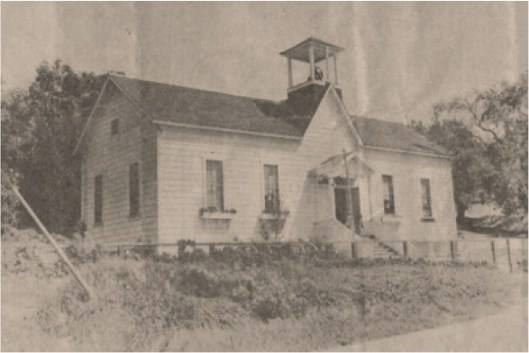
Branch

Branch Elementary School

Clara was durable. She and Ed buried a little boy in the front yard, under a white rosebush, who should have been Ruth’s older brother. He died a few hours after a birth that nearly killed Clara, as well. But this was a woman who had commuted to Cholame to teach, spent the night at Creston to come home down the Grade in her trap and pony where there were no turnouts and the road edged sheer drops of hundreds of feet.

image039

Clara Edwards Paudling, 1881.

I did not know that I had ties to Clara until later, but from what I knew about Ruth’smother, I was an admirer. She returned to college with Ruth, who’d been promised an extra $100 a year, if she took additional coursework, when the Second World War began to revive the economy. The pair decided to take summer courses at Clara’s alma mater, Mills College. Ruth took classes for the extra money; Clara, at ninety-three, took hers for pleasure, a course in “History of the United States to 1865” because, she said, she remembered the rest.

One of Clara’s assignments during nearly fifty years in the classroom had been at the school I attended, Branch Elementary. There is a photo of her in front of the school. Behind Clara and her bicycle in 1898 is the same doorway I would enter on my first day of formal education sixty years later. She taught, by herself, sixty children at eleven different grade levels and not only did she juggle them artfully, but she loved them, too.

10523966_10204259047340103_6944737570254081160_n-1

Clara Paulding, Branch School, 1898

Arroyo Grande’s population, at the time of the photograph, was approaching 1,000. Beyond the town, to the east in the Upper Valley, and to the west, bounded by the sand dunes at the edge of the Pacific, in the Lower Valley, there were patchworks of farms worked by ambitious pragmatists: Arroyo Grande men and their teams of heavily-muscled draft horses, their necks arched in effort, turned some of the richest soil in the world to prepare it for planting. They might have been plowing for sowing pumpkins or carrots, onions or beans, or one of the most important products in the many cycles of agriculture the Valley has seen: flowers, cultivated for their seeds.

What must have delighted Clara Paulding on her two-mile bicycle commute to her sixty students every morning would have been the sight of brilliant fields of flowers and, planted in others, she would have smelled the delicate fragrance of sweet peas.

waller

A Waller Seed Company employee cultivates a field in the Lower Arroyo Grande Valley at about the time of the First World War.

It’s not hard to imagine her, given her personality, waving cheerily to the men working those fields, their faces hidden by broad-brimmed straw hats, or to imagine them waving back, wide smiles creasing their upturned faces. because even as field workers they had never had this much hope, and even in the Upper Valley, hemmed in closely by the oak-studded Santa Lucia foothills, they had never had this much room.

Clara’s spirit was expansive. She may look severe in her photograph, but she adored, without disguising it, young people, and the youngest the most, a feeling they reciprocated. Her wave on school mornings would have touched these men, younger sons from a very crowded place, and not particularly welcome in this new place.

The men in the fields whom she greeted were from Japan, and some of them from a prefecture known as Hiroshima-ken.

Clara’s spirit suffuses the Paulding House when you walk inside. It is a loving, unpretentious kind of homeliness and you are honored to be its guest. It is also a little insistent, as Clara was (she was descended from Jonathan Edwards, the terrifying Puritan divine) that you wipe your feet. That’s why the bathtub, one of Clara’s more prized possessions, adjoins an exterior door that overlooks the gardens where Ed loved to putter. Ed was by nature a putterer. Clara was by nature a pragmatist, and Ed was not allowed back into the house after his gardening until he’d cleaned himself up in the bathroom first. And the bathtub was no trivial thing: people would drive out to the Coffee Rice home in the 1890s  just to stare at a bathtub that was the equivalent of a Disneyland ride. People just didn’t have them, and the Pauldings had Arroyo Grande’s second. It is a long one and looks like it was made for leisurely baths accompanied by books or magazines and maybe a hot chocolate.


Ed

Dr. Edwin Paulding

Ed also loved woodcarving. Doctoring, not so much, although a glass hutch contains virtually every instrument he’d carried in his black bag, even his original Gray’s Anatomy.  He resented it a little when folks got sick or fell off rooftops, as he did once, because it took him away from his flowers and his woodcarving. But there was nobody in San Luis Obispo County better equipped to deal with roof plunges than Ed: he was a natural-born orthopedist, and a bone set by Doc Paulding, it was said, healed as good as new and sometimes better. (Clara would need Ed when a speeding handcar smashed into her buggy at the foot of Crown Hill and broke her arm in three places. It healed completely. And the Pauldings got $1500 from the Pacific Coast Railway, which they needed. Ed was as inept with money as he was skilled at setting broken bones.)

So the mantle and smaller pieces–down to a little rocking chair for Ruth–were all made by Ed, and they’re cut with delicate and graceful motifs, usually floral, inspired by the models he’d just brought in from the garden where he loved to get dirty. Clara later bought a little farm, just outside of town, and it was there where Ed, in his older years, was happiest. When he got sick one day in what would turn out to be his last illness, he’d forgotten to take his morning medicine. Clara, 79, walked–or rather, marched–out to the farm and watched critically as Ed swallowed his required tablespoon.


Ruth, far right

Ruth, far right, as a little girl.

There are curios, under glass, everywhere: a rhinoceros-hide warrior’s shield that Ed’s missionary parents had acquired in Syria, where he was born, a Chumash water-carrier, like a canteen, caulked with Pismo tar; the contents of Ed’s pockets, including his pocket-watch and chain, money clip, a tiny folding knife. Aside from Gray’s Anatomy, there are books everywhere: a collected Dickens, A Thousand and One Knights, a multi-volume history of the United States, collections of English Romantic poets, especially Tennyson, Clara’s favorite. And there is the bedframe, dark walnut, with a lion’s head relief at the headboard, and that lion was Ruth’s lion. It protected her every night she went to sleep as a little girl; it was as solid and as real and as constant as were her parents.

And everywhere there are tea services. Ruth’s  little-girl doll’s cups and saucers are painted with delicate, tiny flower buds. There is a sterling-silver coffee service at one end of the dining room table, and on a shelf above, there is the best of all. It’s the set Ruth reserved especially for her high school students when she welcomed them into the home of her own girlhood, and that service was reserved for hot chocolate so rich that teenagers would remember it the rest of their lives.


Jim Gregory is a retired Arroyo Grande High School history teacher and the author of the books World War II Arroyo Grande and the just-released Patriot Graves: Discovering a California Town’s Civil War Heritage.


← Older posts
Newer posts →

Subscribe

  • Entries (RSS)
  • Comments (RSS)

Archives

  • June 2026
  • May 2026
  • April 2026
  • March 2026
  • February 2026
  • January 2026
  • December 2025
  • November 2025
  • October 2025
  • September 2025
  • August 2025
  • July 2025
  • June 2025
  • May 2025
  • April 2025
  • March 2025
  • February 2025
  • January 2025
  • December 2024
  • November 2024
  • October 2024
  • September 2024
  • August 2024
  • July 2024
  • June 2024
  • May 2024
  • April 2024
  • March 2024
  • February 2024
  • January 2024
  • December 2023
  • November 2023
  • October 2023
  • September 2023
  • August 2023
  • July 2023
  • June 2023
  • May 2023
  • April 2023
  • March 2023
  • February 2023
  • January 2023
  • December 2022
  • November 2022
  • October 2022
  • September 2022
  • August 2022
  • May 2022
  • April 2022
  • March 2022
  • February 2022
  • January 2022
  • December 2021
  • November 2021
  • October 2021
  • September 2021
  • August 2021
  • July 2021
  • June 2021
  • April 2021
  • March 2021
  • February 2021
  • January 2021
  • December 2020
  • November 2020
  • August 2020
  • July 2020
  • June 2020
  • May 2020
  • April 2020
  • January 2020
  • December 2019
  • November 2019
  • October 2019
  • September 2019
  • August 2019
  • May 2019
  • April 2019
  • March 2019
  • February 2019
  • January 2019
  • December 2018
  • November 2018
  • October 2018
  • September 2018
  • July 2018
  • June 2018
  • May 2018
  • April 2018
  • March 2018
  • February 2018
  • January 2018
  • December 2017
  • November 2017
  • October 2017
  • April 2017
  • March 2017
  • December 2016
  • November 2016
  • October 2016
  • September 2016
  • August 2016
  • July 2016
  • June 2016
  • April 2016
  • March 2016
  • February 2016
  • January 2016
  • December 2015
  • November 2015
  • October 2015
  • September 2015
  • August 2015
  • July 2015
  • June 2015
  • May 2015
  • April 2015
  • March 2015
  • February 2015
  • January 2015
  • December 2014
  • November 2014
  • September 2014
  • August 2014
  • July 2014

Categories

  • American History
  • Arroyo Grande
  • California history
  • Family history
  • Film and Popular Culture
  • History
  • News
  • Personal memoirs
  • Teaching
  • The Great Depression
  • trump
  • Uncategorized
  • World War II
  • Writing

Meta

  • Create account
  • Log in

Blog at WordPress.com.

  • Subscribe Subscribed
    • A Work in Progress
    • Join 69 other subscribers
    • Already have a WordPress.com account? Log in now.
    • A Work in Progress
    • Subscribe Subscribed
    • Sign up
    • Log in
    • Report this content
    • View site in Reader
    • Manage subscriptions
    • Collapse this bar

Loading Comments...