• About
  • The Germans

A Work in Progress

A Work in Progress

Category Archives: World War II

Coming Home

02 Saturday Oct 2021

Posted by ag1970 in American History, Arroyo Grande, History, Uncategorized, World War II

≈ Leave a comment

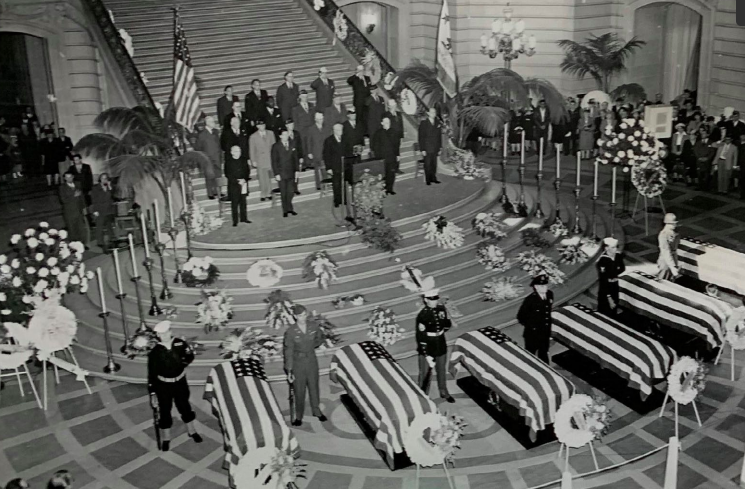
The first World War II American casualties to be repatriated, San Francisco, October 1947. US Dept. of Veterans’ Affairs

Of course I didn’t expect to meet him, but T5 Orville Tucker’s death crossed my life today. Here’s his grave, in the Arroyo Grande District Cemetery.
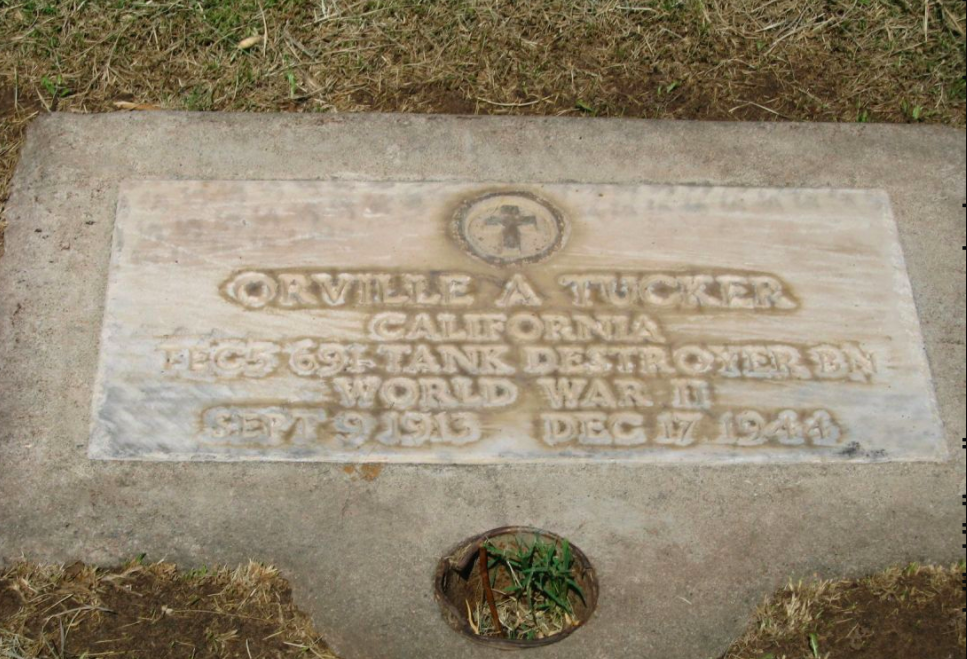
And there were a lot of things that struck me about him. The first was his date of death, and dates mean something to historians. We lost this American on the second day of Operation Wacht am Rhein, in what we now call the Battle of the Bulge.

It struck me, too, that he was part of a tank destroyer unit, like Frank Gularte, another Arroyo Grandean I know much better. Tucker was a member of the 691st TD Battalion, Gularte was part of the 607th. And the two soldiers died only days apart. Here’s what I wrote about Gularte on a website that memorializes fallen GI’s, killed in the war my father’s generation fought:

Sgt. Gularte served with the 607th Tank Destroyer Battalion and was killed in action 28 November 1944 near Metz, possibly outside the town of Merten. His son was born five days later in San Luis Obispo County, California. A memorial Mass was said in Sgt. Gularte’s memory at St. Patrick’s Church, Arroyo Grande, San Luis Obispo County, on Wed., 13 December 1944. Sgt. Gularte, before the war, was employed by E.C. Loomis and Son, a farm supply company; Gularte and his family were and are well-known and highly respected in the Arroyo Grande area.
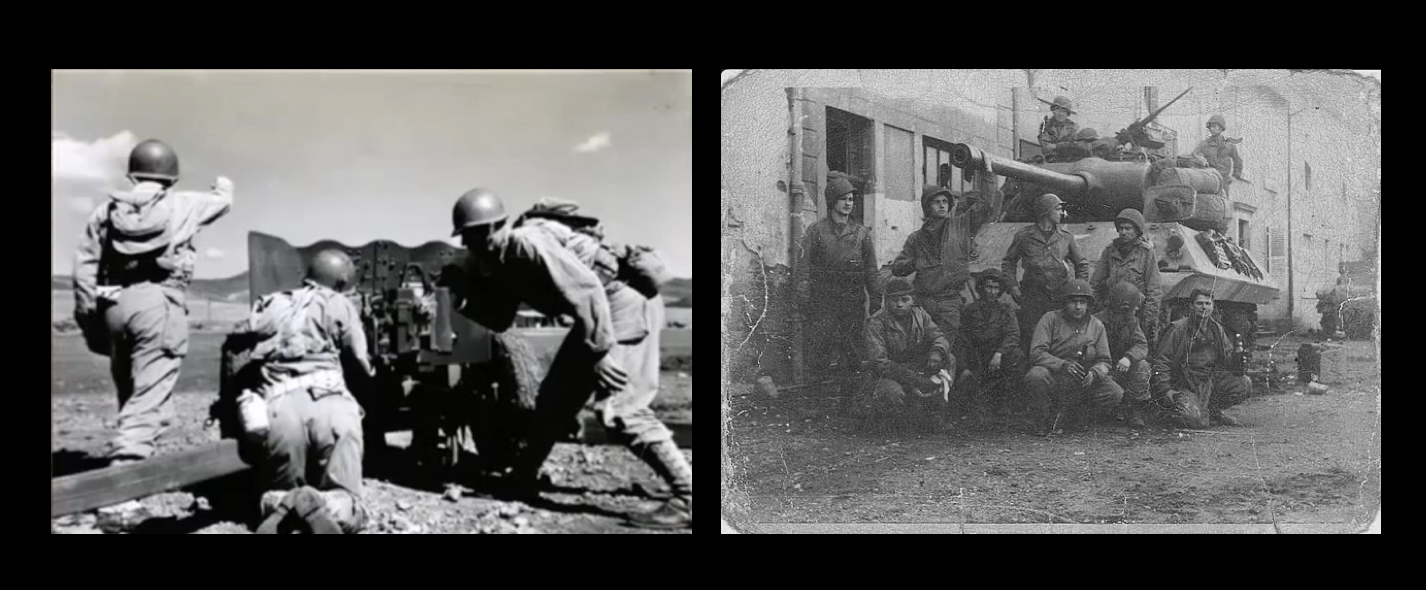
At the time of his death, Tucker’s battalion was still fighting enemy armor with the 57-mm artillery piece, like the one at left being manned by soldiers training at Camp San Luis Obispo in 1944. Frank’s 607th had graduated to the M36 tank destroyer–that’s a 607th TD in the other photo—built on the chassis and hull of the famed Sherman tank, but with a much more robust 90-mm gun.

But it was likely a Mauser rifle that killed Frank, in the hands of a German sniper, during an attack by the 607th that was to have been supported by infantry. They didn’t show, so Frank’s company went into action alone. German fire disabled three tank destroyers edging into Merten—a beautiful mountain town— and the American attack bogged down. Chaos ensued and it claimed Sgt. Gularte.

I don’t know yet how Orville died, but he’s got another tie to the Gularte family.
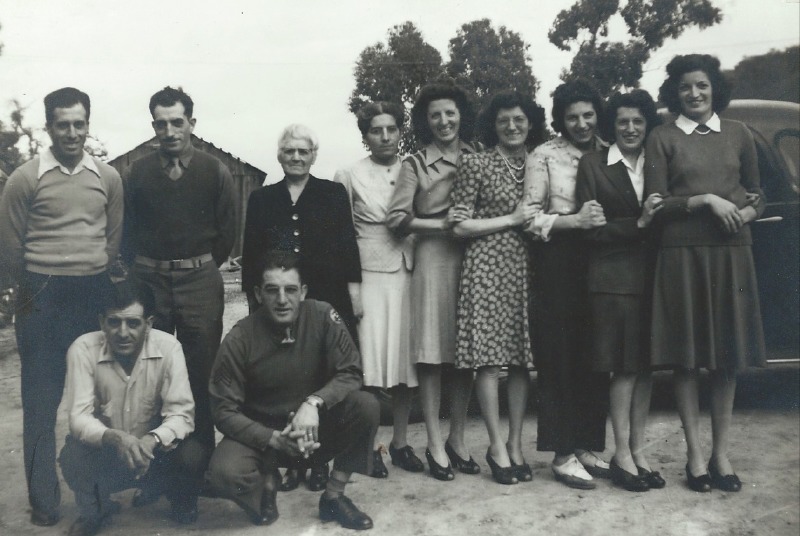
A family barbecue at the Gularte Ranch, behind the site of the IDES Hall just below Crown Hill. Manuel Gularte is standing; Frank is kneeling: Both are about to go to war in Europe.


As near as I can tell, in the opening hours of the Battle of the Bulge, Orville Tucker’s battalion was attached to the 28th Infantry Division. They were defending St. Vith, a Belgian town directly in the enemy’s line of advance and at the seam of two powerful German armies. Twenty-two thousand Americans were in the way of 100,000 Germans and their armor, including 500 tanks. The units that attacked St. Vith on December 17 included the 1st SS Panzer Division Leibstandarte SS Adolf Hitler, an SS unit that had it origins as the dictator’s bodyguard.

Their assignment was to take St. Vith by midnight December 17. It didn’t work out that way, partly in thanks to Orville Tucker and partly because of Frank’s brother, Manuel, also fighting to defend St. Vith. (Two Arroyo Grande settlers, Civil War veterans, had fought in separate regiments within 300 yards of each other at Gettysburg.) Manuel’s field artillery unit–they tended big 155-mm guns, updated versions of the artillery that stood guard over San Luis Bay here at home–and it was the accuracy and ferocity of their fire that delayed the German advance.
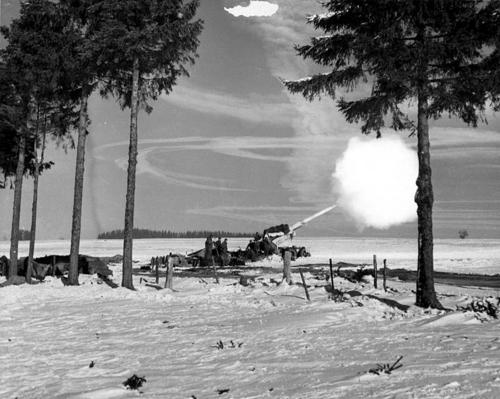
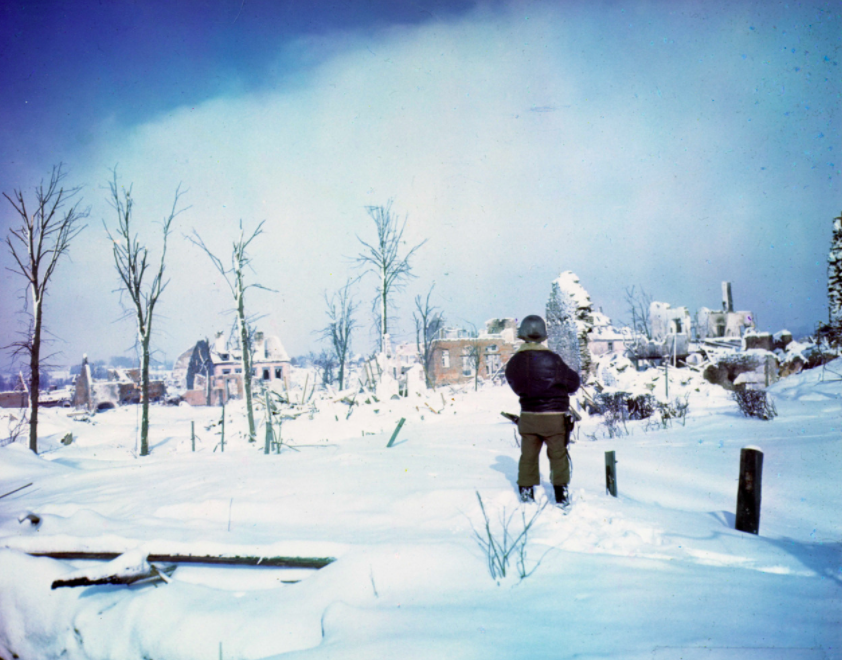
A 155-mm gun in action during the Battle of the Bulge; a GI on the outskirts of St. Vith in January 1945. The Battle of the Bulge was fought during the coldest winter in Europe in thirty years.

“Delay” was exactly what was needed. The panzers were fuel-poor (because Germany was: Berlin taxis were running on firewood in 1944) and the success of the Battle of the Ardennes depended on speed, on objectives seized promptly, even on the hopeful seizure of vast American stockpiles of gasoline.

Those might’ve been dispatched to the battlefield by my father, a lowly Quartermaster second lieutenant whose responsibilities included providing the African-American gasoline supply companies that kept the American army on the move.

By the time the American army had stopped moving—backward—and flattened the Bulge salient, 20,000 GI’s were dead, among them Orville Tucker. And though he died 5,000 miles away, Tucker was evidently one of the first local GI’s to come home. This is from the December 31, 1948, edition of the Arroyo Grande Herald-Recorder:
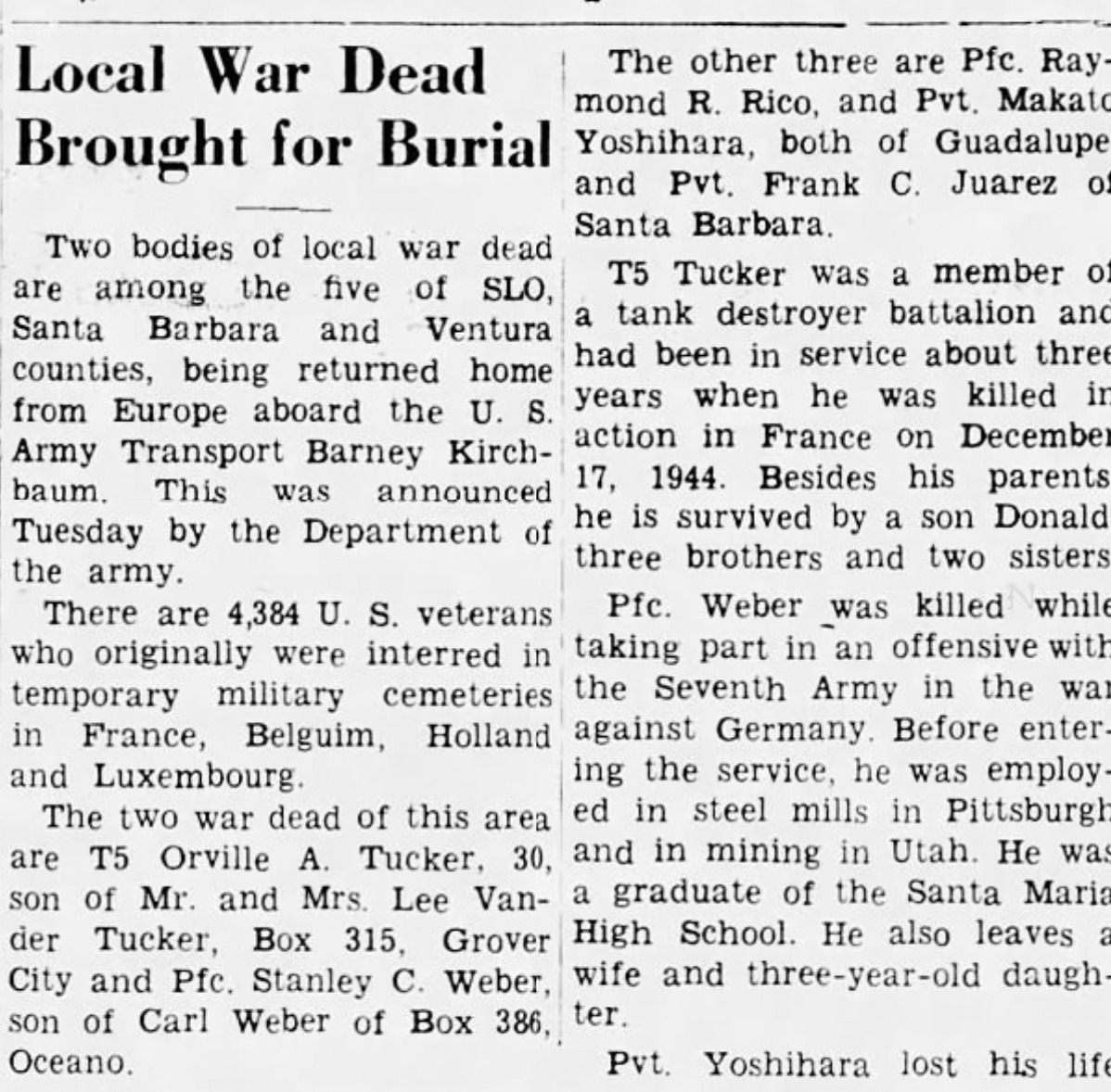

A sniper killed Yoshihara on the German frontier as the young man, a medic, was trying to save a brother soldier.

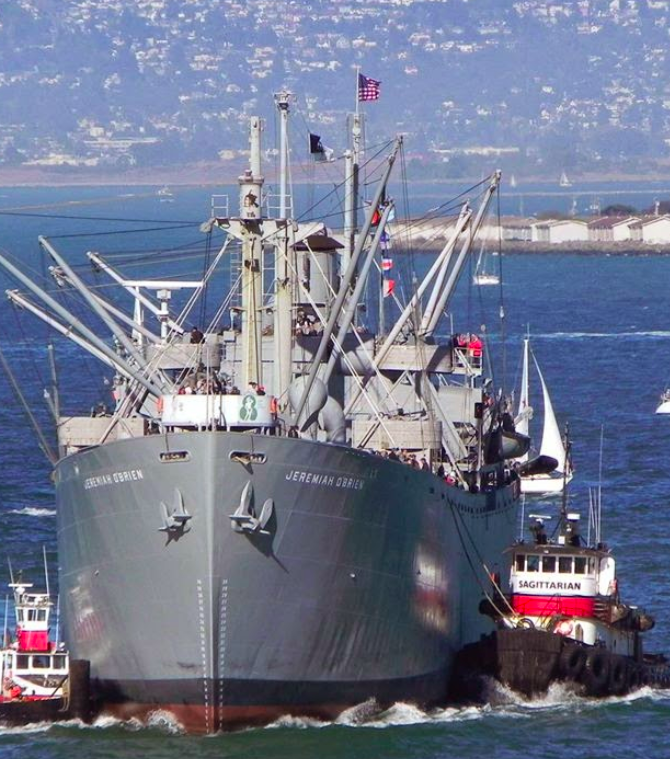
And the ship that brought Orville’s body home, the Barney Kirschbaum, named for an American merchant mariner killed in a 1943 U-boat attack, was a Liberty Ship, one of the miracles of the war, one of 2,710 such freighters launched from American shipyards during the war. Kirschbaum would’ve looked exactly like San Francisco’s Jeremiah O’Brien, tied up at Pier 45. (In 1994, O’Brien had the distinction of returning to the European Theater—to Normandy, no less—where she’d been part of D-Day fifty years before.)
The war dead intersect with my father’s life, as well. Once the war had ended, his duty shifted to training GI’s, nineteen-year-olds, some of them grads from Class of ’44. They’d come to Europe prepared the fight Germans, but the war was over, so Dad’s work, and theirs, was in Graves Registration. He trained these soldiers in the ghastly work of identifying the young Americans the war had claimed. Those young men—forever young— were then to be buried in one of a network of American military cemeteries. Many of those casualties, like Orville Tucker, would eventually come home.
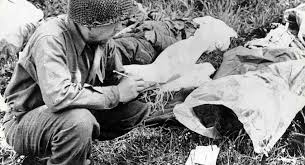
A Quartermaster, part of a Graves Registration unit, records the identities, soon after battle, of fallen soldiers.

One of the soldiers who came home after the war—in my family’s case to rural Missouri— was my father’s cousin, Roy.

Roy was discharged from a field hospital, where he’d been treated for shrapnel wounds, in November 1944. He went back into action in Alsace, where, in January 1945, another elite SS unit essentially wiped out the headquarters company to which he was attached.

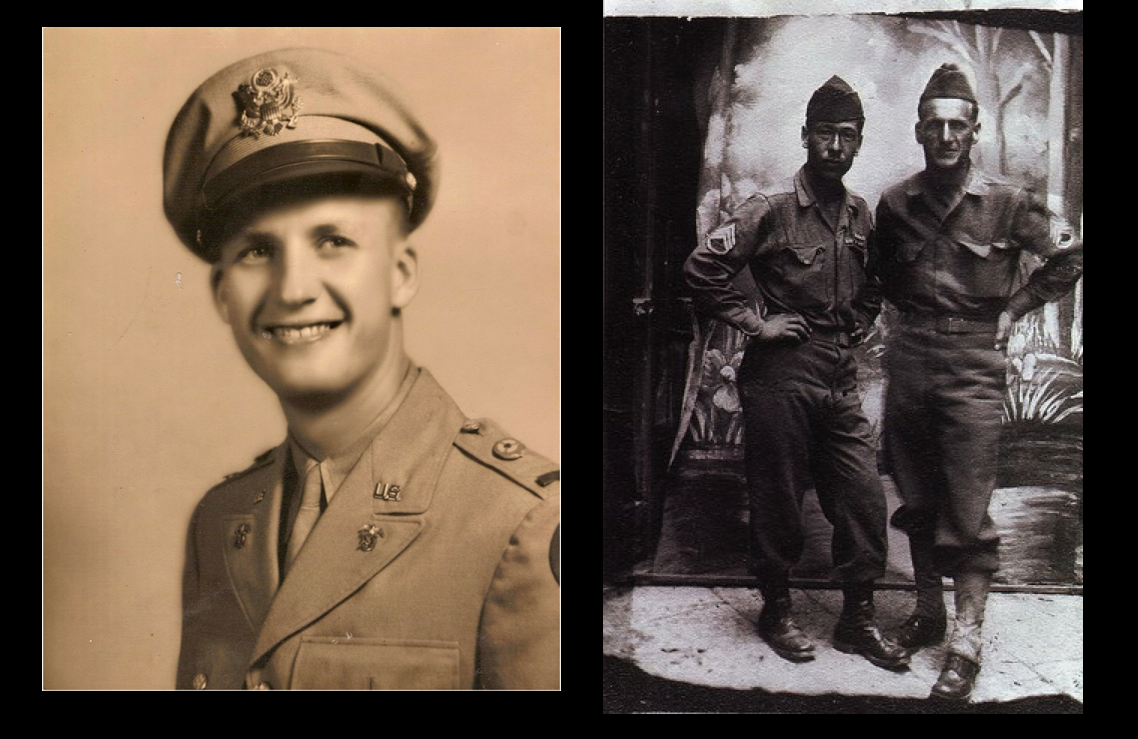
Roy—who’d fought with his buddy, Sgt. Chew, in Sicily, Italy, and finally France–looks remarkably like my Dad.
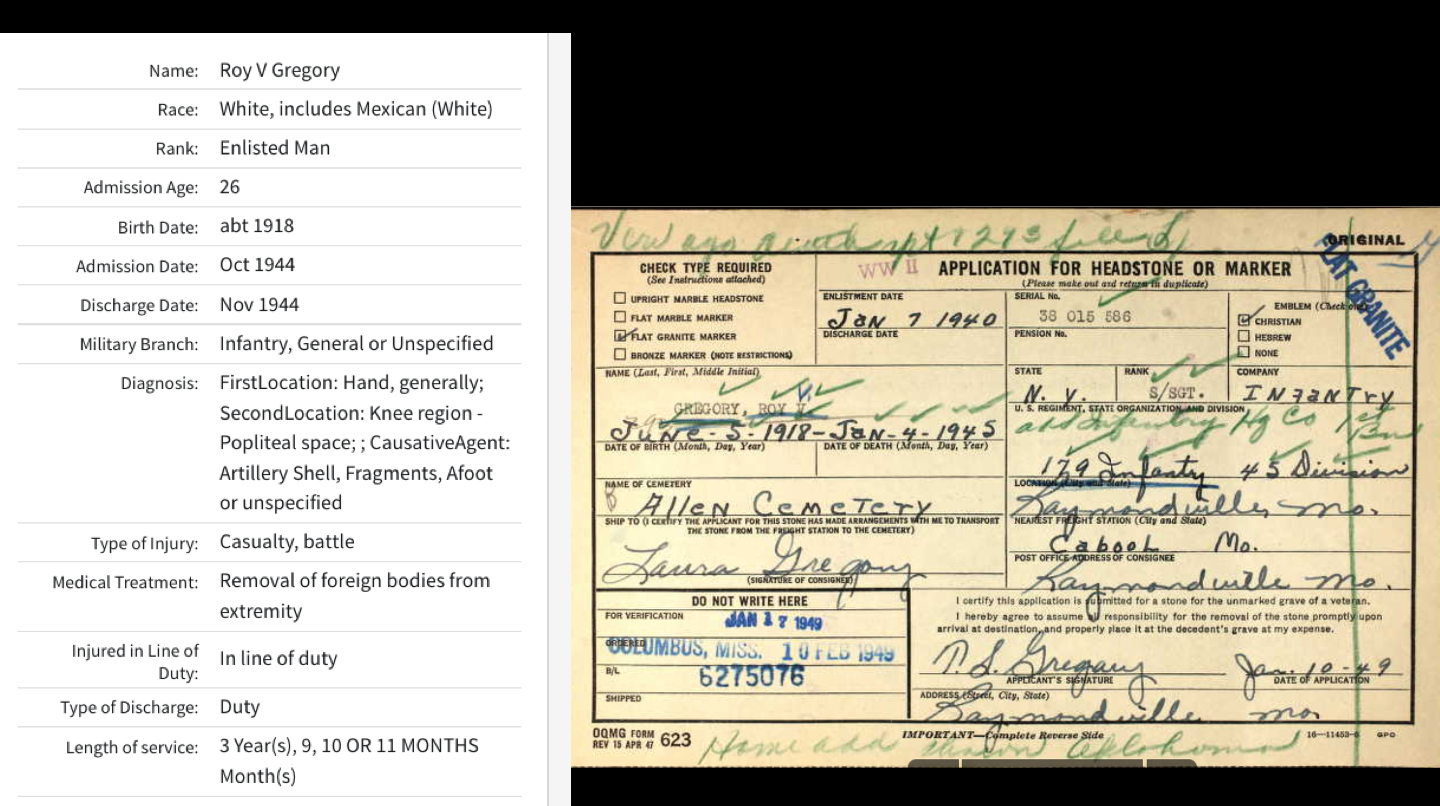
Sgt. Gregory’s hospital record; the family’s application for a military headstone. He is buried near my grandfather, John Smith Gregory.
My father as a lieutenant; Sgts. Chew and Gregory in a studio photograph taken in Italy.


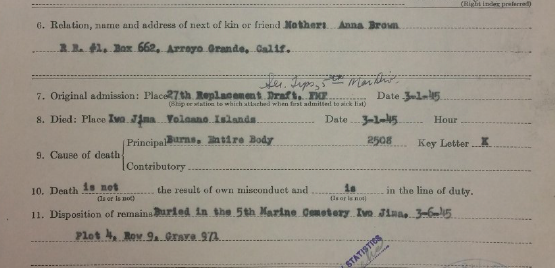
Graves registration work was ghastly, of course, because of the way these young men had died. Sometimes, in the Army Air Forces, when the flight surgeon of a bomb group had the duty of identifying the dead, the clues were circumstantial and almost always, as in the case of this Marine killed on Iwo Jima, the deaths were violent beyond imagination.
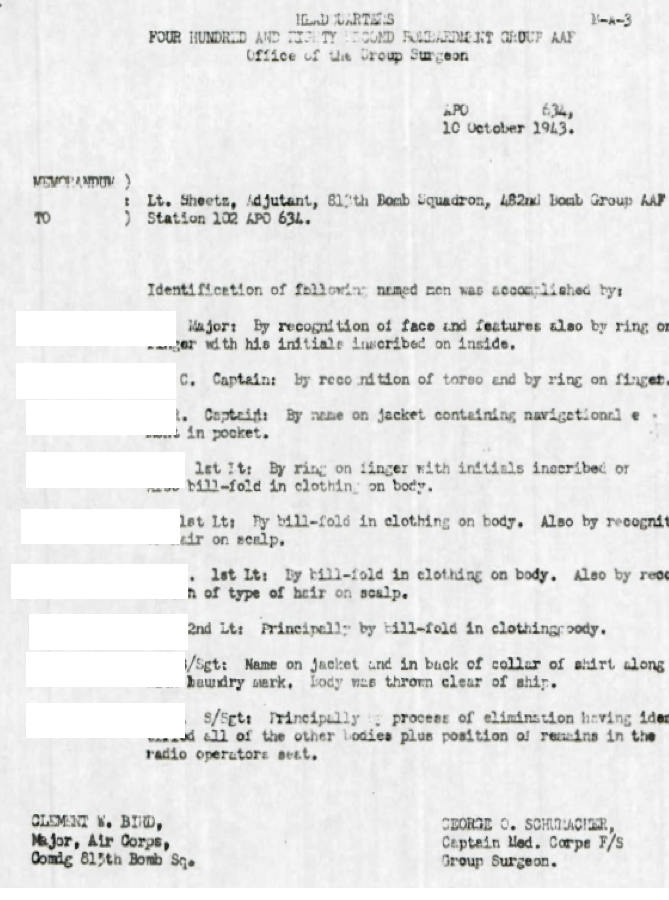
The dead recorded from this B-17 accident in northern England include Clarence “Hank” Ballagh, a young man whose ancestors came to Arroyo Grande in a covered wagon. He was the AGUHS valedictorian in 1938 and graduated from Cal with an engineering degree.
This young Marine, Louis Brown, was a farmer’s son from Corbett Canyon.

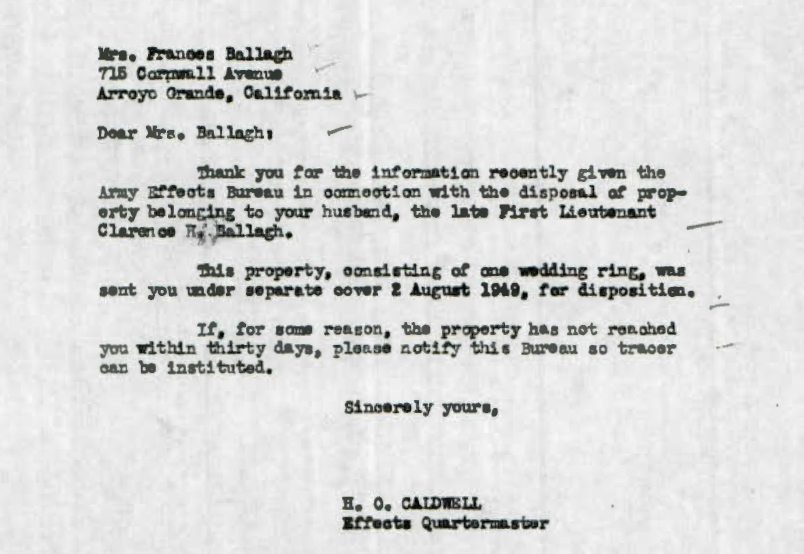
The Quartermasters also took charge of cataloguing a fallen man’s personal effects, and these reveal—with the possible exception of the Army Air Forces, where the sharp lines of rank blurred among bomber crews—that there remained a vast social gap between officers and enlisted men. These are the personal effects of Lt. Ballagh, the Berkeley grad, and Private Brown, who, like 64% of Americans in 1940, hadn’t finished high school:
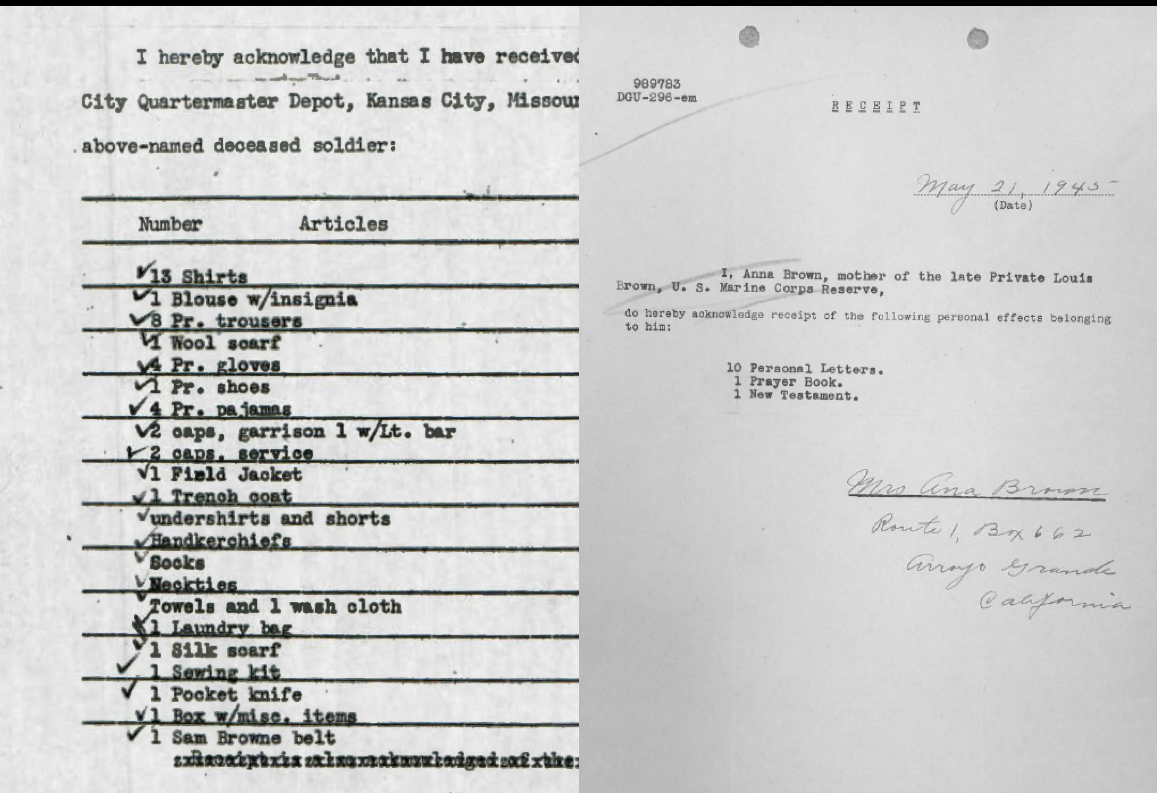
Brown’s Rosary is listed in a separate Navy Department letter to his mother.

Ballagh was killed when his plane flew into the side of an English mountain; fragments of the B-17 remain there today. Brown was killed, most likely by a Japanese land mine, no more than 48 hours after he went into action on Iwo Jima. Both came home to Arroyo Grande, in a bureaucratic ballet in quadruplicate steps, that was unmistakably human. There’s no mistake that the Army wants Lt. Ballagh, even in death, to come home safely.
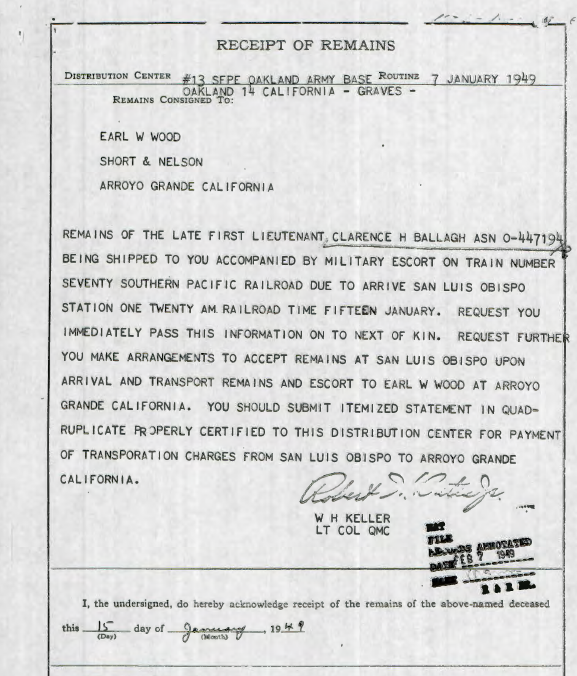
The records of the dead, I think, are important: they force us to confront a war now safely confined to history books and television screens. Beyond that, they reveal the terrible price that the living had to pay, as well.


The big guns above Shell Beach, 1942-1944

13 Monday Sep 2021

Posted by ag1970 in Arroyo Grande, Uncategorized, World War II

≈ 3 Comments


A World War I-vintage 155-mm artillery piece could hurl a 95-pound shell 20,000 yards.

If you’d been driving north to San Luis Obispo on the old two-lane 101, there was a a battery of these beasts on the hillside to your right as the road begins to curve inland, headed for true north.

They were there to guard San Luis Bay and they were manned by G.I.’s from the 54th Coast Artillery, an African-American unit that had trained at Fort Fisher, North Carolina–taken from the Confederacy by the Union Army in January 1865–before some of them wound up serving in our county between 1942 and 1944.

I learned this today over lunch, a treat from military historian Erik Brun, who is researching the 54th during the unit’s stay here.

Erik told me that White North Carolinians were not at all fond of having Black G.I.’s close by–even though these soldiers were learning to handle guns that theoretically could inflict considerable discouragement on the U-boats hunting their quarry just offshore.

Those people had forgotten World War I, when 10 merchant ships were torpedoed off the Outer Banks.

In World War II, the U-boats claimed 80 ships. North Carolinians could easily see the glow of burning tankers in the shipping lanes off their coast.

They couldn’t see the crews thrown into the burning water.

So they didn’t want the 54th Coast Artillery anywhere near.

Detachments from the 54th would come to us instead, charged with defending Estero Bay as well as San Luis Bay. And so, for a brief time, Black G.I.’s were part of daily life here.

Some of the 54th’s soldiers played baseball against Arroyo Grande Union High School. A 54th officer–officers were White– married Lorna Folkerts of Arroyo Grande in a candlelit ceremony in a Camp San Luis Obispo chapel. And in 1943, an octet from the 54th sang for South Countians in a holiday concert at the Pismo Beach Army Recreation Camp. The barracks at the Rec Camp had once stood on the site of today’s Arroyo Grande Woman’s Club, where they were built in 1934 to house 230 Civilian Conservation Corps workers from Delaware, New Jersey and New York City.

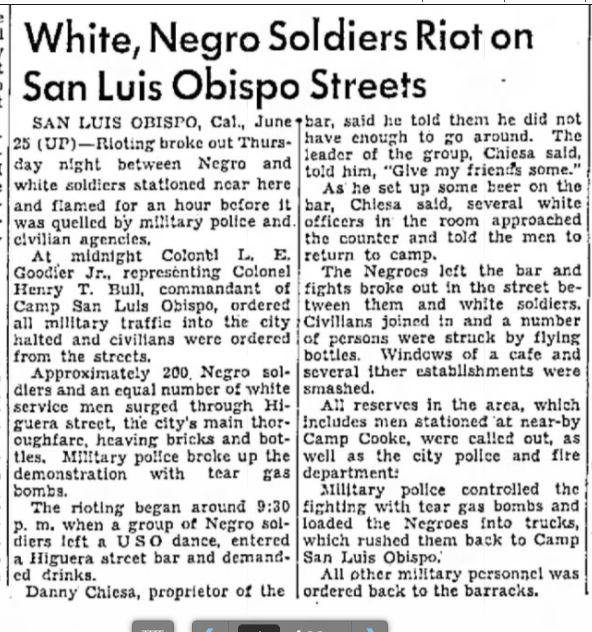
But the history of Black GIs in San Luis Obispo remains fraught. In June 1943, rioting broke out in San Luis Obispo and it made newspapers throughout America. This is from the June 25, 1943 Salt Lake City Tribune:

I have been trying to wrap my head around this. In an email to my friend Erik, I tried to explain it to myself.

* * *

It just occurred to me to look up the summer of 1943—what happened in SLO seems part of a national trend. There were race riots in —Mobile, Alabama (May 25) —Los Angeles (The Zoot Suit Riots, June 5-8) —Beaumont, Texas (June 15-17) —Detroit (June 20-22; 34 killed) —San Luis Obispo (June 24) —Harlem, NY (August 1-2)

It strikes me that racial tensions would’ve been intense here and across the nation.

The movement of Black Americans into defense jobs during the war was a factor in Mobile and Beaumont, where Black and White shipyard workers worked. The population influx, resulting housing shortages and competition between Black and White defense workers generated increasing tensions as the shipyards reached full production.

The same was true in Detroit, which created thousands of defense jobs—the city was a focal point for the Great Migration, where you could once find entire city blocks settled by families from the same county in Mississippi —but where housing shortages were (and are) notorious in the Black community and casual but cruel racism was, in 1943, a constant.

A similar influx, but of soldiers, happened here, in a little town not fully equipped to deal with thousands of GIs, including a shortage of places to entertain them. Blacks and Whites coming together (and the latter in such large numbers) and in seeming competition might’ve led to the kind of hostility seen in the shipyards.

It strikes me, too, that racism, including the stereotyping of Black Americans, might’ve typified a town like San Luis Obispo, which had little experience in interacting with them, including the soldiers of the 54th.

There’s a faint similarity, then, to the background of the Zoot Suit riots. Los Angeles was growing in the late 1930s and the war (e.g. the aircraft industry) accelerated it; the city did not plan well and the kind of housing problems that marked Detroit—as well as racism and job discrimination—were common to the Mexican-American community, which included Chavez Ravine.

But it was the decision to place a Naval installation there that resulted in fraught relations between sailors—outsiders, many from the Midwest or the South, who had little understanding of the Mexican-American community— and local residents. The two groups were strangers to each other, as was White San Luis Obispo to the 54th. So the Ravine in L.A. and Danny’s Bar on Higuera became flash-points for two of the 1943 riots.

* * *

I guess because I took a year of the History of the American South in college, at the University of Missouri, I’ve always been fascinated by this part of our history, by which I mean Black History, by which I mean American History.

My Dad, a quartermaster officer who grew up in Texas County, Missouri, was a small part of that history.

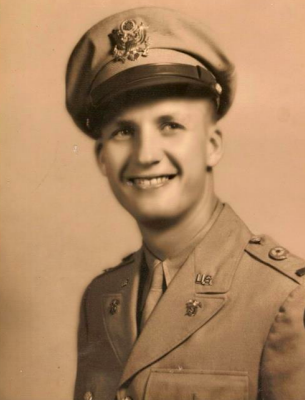
Lt. Robert W. Gregory, 1944


On the troopship to England, Dad was issued a .45 sidearm. It wasn’t for Germans. It was for Black soldiers, truckers, suffering belowdecks in the North Atlantic crossing. I wrote about this:

These were the men who would drive the deuce-and-a-half trucks on the  Red Ball Express. It was my father’s job the organize and send some of  these truckers, in gasoline supply companies, to the 1944 beachhead in  Normandy, where details from George Patton’s Third Army would arrive  regularly to kidnap them so that the great general would be the first to the  Rhine, the natural border between France and Germany. 

In this, Patton would succeed, but it was the Red Ball express that made his  moment, captured by wire service photographers, possible.  

Along the way, the black truckers died under artillery fire, died from worn out brakes and frayed tires and died from the irresistible urge to fall asleep  on darkened roads that led irrevocably east, from the Seine Valley to the  Ardennes. 

To stay alive, they learned to drive at night without headlights. If a driver  felt that sleep was too powerful to resist, he learned to switch seats with his  passenger and comrade while the truck was moving. When the trucks  didn’t move fast enough for the Red Ball drivers, they modified the  governors on their trucks’ carburetors. When the trucks broke down, they  resurrected them.  

On a typical day, 900 trucks were on the road, spaced at sixty-yard  intervals, to keep Third Army fed and its trucks and tanks fueled. 

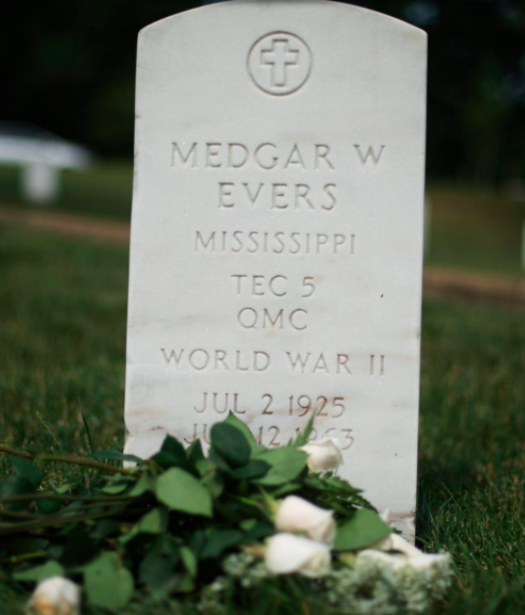
One of the Red Ball veterans was named Medgar Evers. After the war, he  became a civil rights activist. A sniper took his life near Jackson,  Mississippi, in 1963, with a Lee-Enfield rifle, the infantry weapon issued  the British soldiers who became my father’s wartime friends. 

Medgar Evers was thirty-seven years old. His wife, Myrlie, who would  become a formidable activist in her own right, and his three children were  at his graveside when he was buried at Arlington. 

Medgar’s killer was convicted. It took thirty-one years.


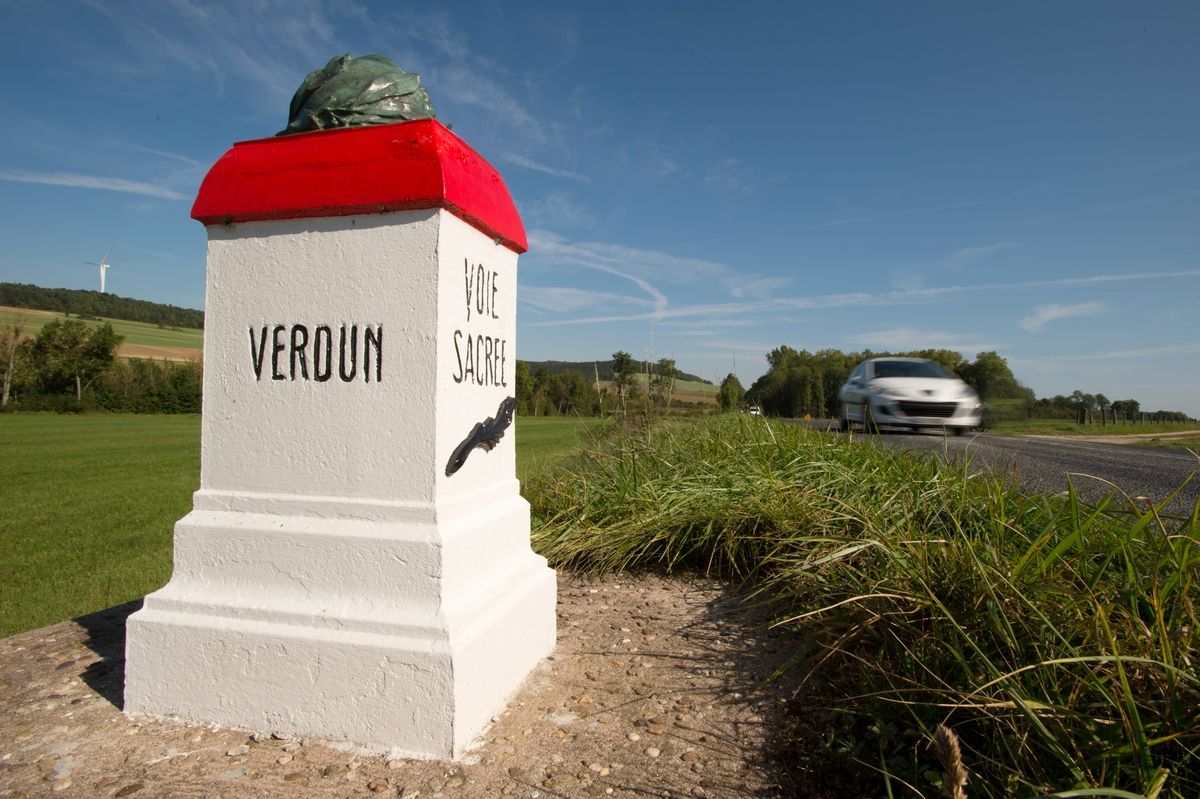
The 1916 Battle of Verdun was one of the ghastliest in twentieth-century history, claiming over 300,000 French and German lives and vaporizing seven French villages. But the French have honored their military truck drivers who were part of that terrible battle: The road to Verdun is called La Voie Sacree—The Sacred Way— and, as you approach the battlefield, which my students and I visited in 2010, markers commemorate French soldiers, the poilus, who drove the trucks.


So the French remember. What Arroyo Grande farmer Haruo Hayashi remembers during his time training with the 442nd Regimental Combat Team in Mississippi was the rigidity of Jim Crow. He couldn’t understand why Black soldiers weren’t allowed to watch USO shows inside the Camp Shelby (named after a Confederate cavalry officer) gymnasium. It bewildered him.

Haruo’s family was behind barbed wire at the Gila River internment camp.

So my time with Erik today gave me a lot to think about

This video shows a crew working the same kind of gun the 54th knew so well.


The wreck at 20,000 feet

11 Sunday Apr 2021

Posted by ag1970 in Uncategorized, World War II

≈ Leave a comment


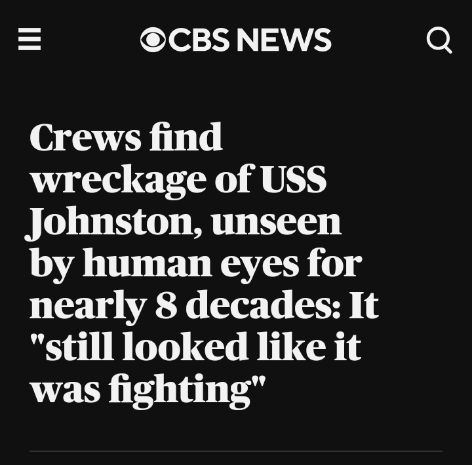
A news item, April 10:

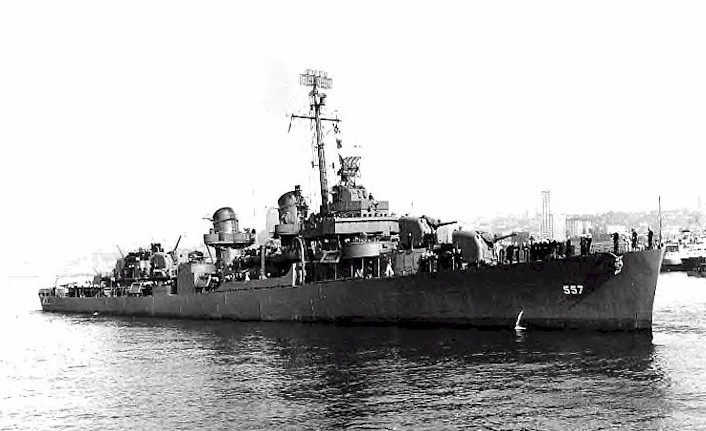
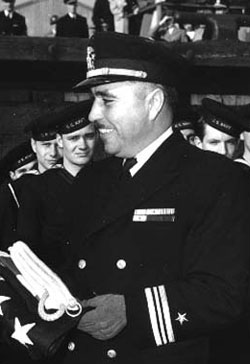
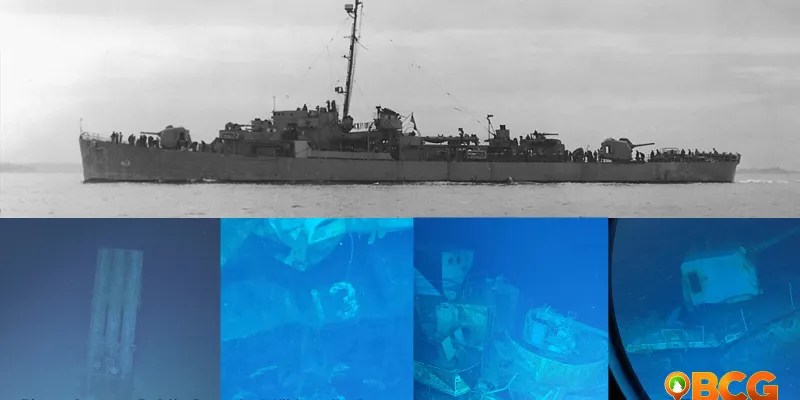
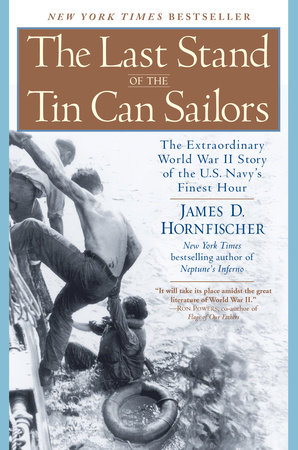
Lt. Cdr. Ernest Evans—vividly portrayed in the book “Last Stand of the Tin Can Sailors”— was commanding USS Johnston in October 1944.

His nickname, “Chief,” typical of the old Navy’s casual racism, alluded to his Cherokee/Creek ancestry. Annapolis must have been an ordeal for him.

Now, his destroyer was among those protecting landings in the Philippines when a massive Japanese task force—four battleships included—appeared from the northwest.

The main American force that was supposed to be guarding the invasion beaches—capital ships and big fleet carriers— was commanded by Adm. William Halsey.

It was gone. Halsey had been made the fool, lured away from the invasion by a Japanese decoy force that was essentially harmless.

The main battle force now appeared, intending to destroy the Americans as they landed.

Facing them were ships no bigger than USS Johnston and a complement of small aircraft carriers, “baby flattops.”

Evans was like Jesus’ Good Shepherd. The ships that were landing the GIs and their supplies were his flock; he was accountable for them and to them.

So he turned Johnston directly toward the enemy fleet. His destroyer, at 5500 tons, was armed with five 5-inch guns.

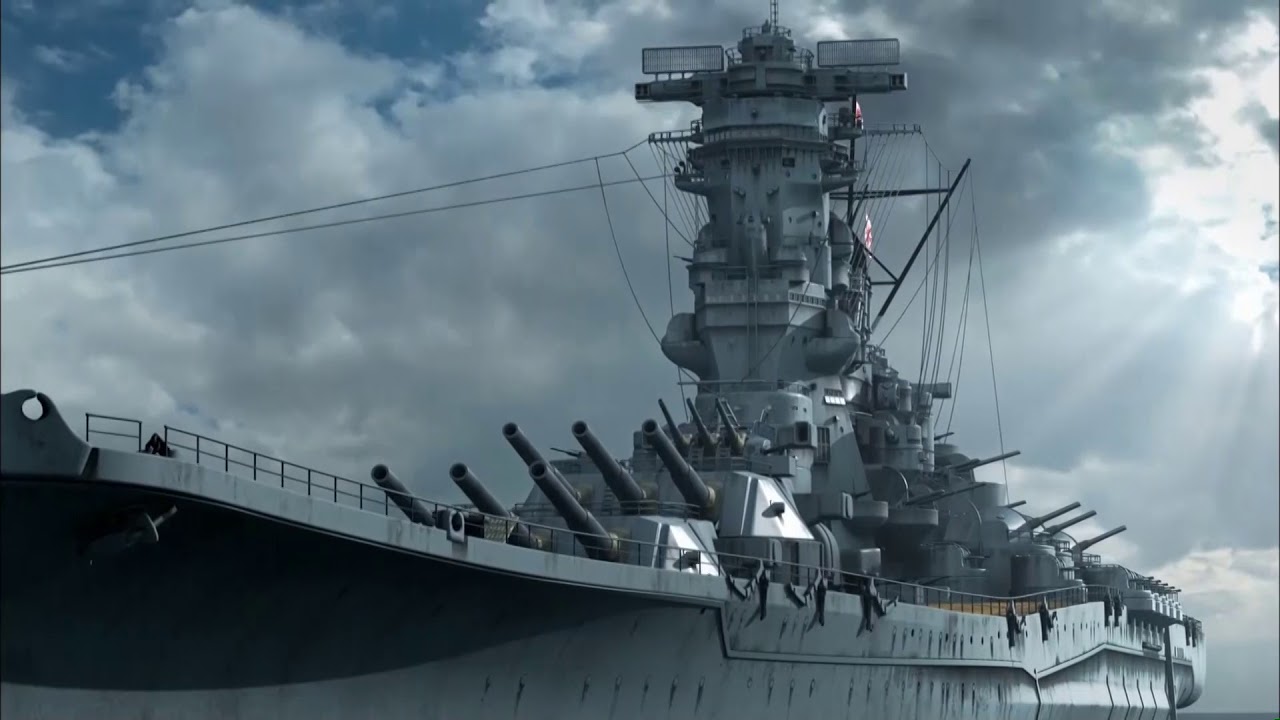
He was up against the battleship Yamato, 70,000 tons with nine 18-inch guns, twelve 6-inch guns and twelve 5-inch guns.

On her first run, Johnston fired two hundred shells and her entire complement of ten torpedoes: one of them blew the bow off a Japanese cruiser.

Johnston

Ships even smaller than Johnston—destroyer escorts—followed her lead and went in to attack. Yamato’s armor-piercing shells, intended to cripple battleships, went completely through the fragile destroyer escorts.

Yamato

Although eighteen-inch shells from Yamato struck Johnston’s engine room and so nearly halved her speed, Evans kept his ship fighting, dodging in and out of rain squalls or the smokescreen the destroyer escorts had laid down.

He fought two ship-to-ship battles, one against a heavy cruiser, another against a battleship seven times the size of his ship, at one point crossing an enemy ship’s “T” in a maneuver that would have made Lord Nelson proud.

The blue ships are crossing the T, bringing all their guns to bear.


Johnston scored at least sixty hits on the two enemy ships, but a six-inch shell from Yamato struck Johnston’s bridge, inflicting terrible casualties and mangling Evans’s left hand.

Evans kept his ship fighting.

The shellburst had nearly wiped out the bridge crew. It destroyed the wheel. Witnesses on a destroyer speeding past Johnston saw the badly hurt Evans–he’d suffered burn wounds and two fingers from his hand were gone—standing on the stern, bellowing orders down a hatch to where his ship was now being steered.

He waved at the passing ship.

Evans had taken Johnston into the fight at 7 a.m. By 9:45, the destroyer was dead in the water.

A swarm of Japanese destroyers then concentrated their fire on the ship that had bedeviled the entire fleet, and Evans finally ordered his men to abandon the sinking ship. He went into the water with them.

That was the last time Johnston’s crew saw their captain.

Evans

Ernest Evans was the first Native American naval officer to be awarded the Medal of Honor. 190 of his 327-man crew died with him.

But the Americans —little ships like Johnston and combat airplanes launched from the baby flattops—fought so fearlessly and so recklessly that after six hours of combat the Japanese, finally concluding that a fleet much bigger than theirs was about to prevail, abandoned their attack and withdrew.


Earlier this month, when the submersible found the wreck of the Johnston at 20,000 feet, her five-inch guns were still elevated, still pointed toward the enemy.

In June 2022, the same expedition discovered Johnston’s comrade, USS Samuel B. Roberts (below), at 22,000 feet. In the same battle, Roberts, 1370 tons, took on the heavy cruiser Chokai, blowing off her stern with a torpedo hit; the ship later had to be scuttled. Roberts’s commander, Lt. Cdr. Robert Copeland, then turned his attention to the heavy cruiser Chikuma, setting that ship’s bridge afire and destroying her No. 3 guns before three fourteen-inch shells from the battleship Kongo sent Roberts to the bottom. Ninety of her 210-man complement died, among them Gunner’s Mate 3c Paul Carr. His aft 5-inch gun turret is at far right in the photo sequence below. Carr died only after firing 325 shells at the enemy in a little over 35 minutes. A guided missile frigate is named for him today.

Hornfischer’s account of this battle is superb.


For Yoshi, who never came back

Featured

Posted by ag1970 in American History, Arroyo Grande, California history, History, Uncategorized, World War II

≈ 3 Comments

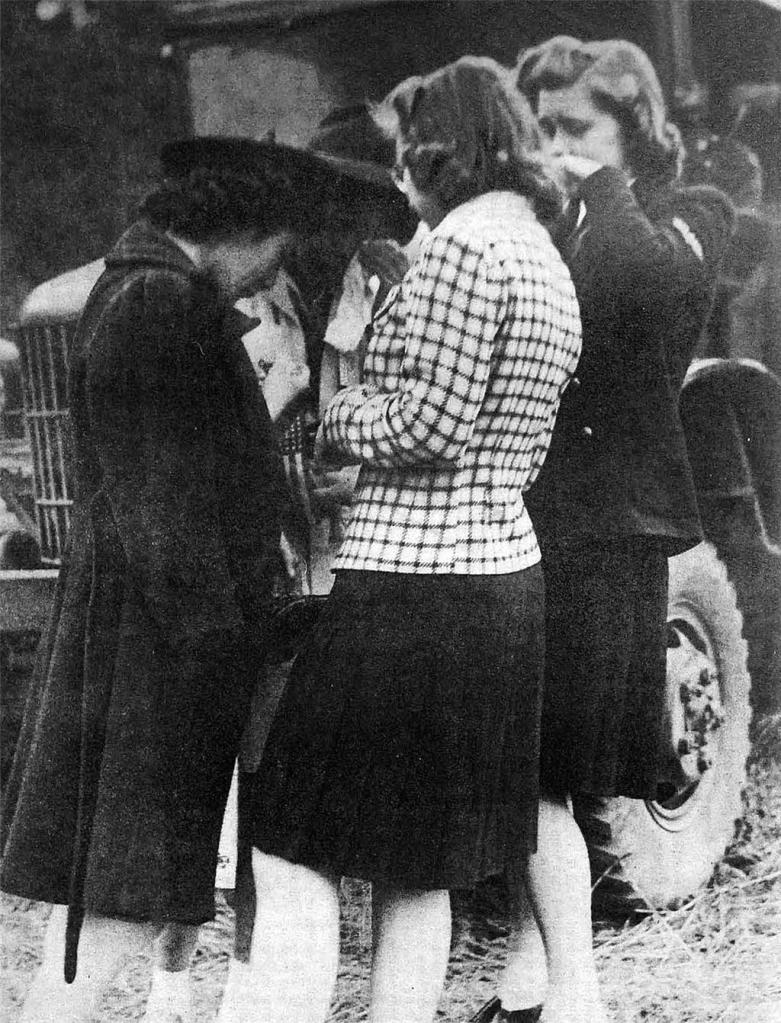
This photograph was taken on Bainbridge Island, Washington, on the day Executive Order 9066 was executed and these friends were separated.

There’s a good chance they never saw each other again.

When the buses came to take our Arroyo Grande, California, neighbors away on April 30, 1942, many of them—less than half—came back. I grew up here, and I don’t recognize many of the surnames in the old high school yearbooks.


One woman told me this: On the day the buses came to the high school parking lot, her mother saw a line of high-school girls, some Japanese, some not, walking up Crown Hill, walking up toward their high school, holding hands and sobbing.

Arroyo Grande’s Japanese-Americans went first to the Tulare County Fairgrounds, where they slept in livestock stalls, and then to the Rivers Camp in Arizona, where the temperature was at or above 109 degrees for twenty of their first thirty days there.

I interviewed a remarkable woman named Jean a few weeks ago. She is 94, is briskly intelligent, articulate and gracious. Her father owned the meat market on Branch Street in Arroyo Grande, population 1,090 in the 1940 census, and when his Japanese-American customers, farmers, came in to settle up before the buses came, he refused to take their money. “You keep it,” he told them. “You’re going to need it.”

When they came home three years later, he extended them easy credit until they could begin to bring in crops again. Jean showed me her father’s business ledgers, so I have no reason to doubt it when she told me that every one of those farmers paid her father back. In full.

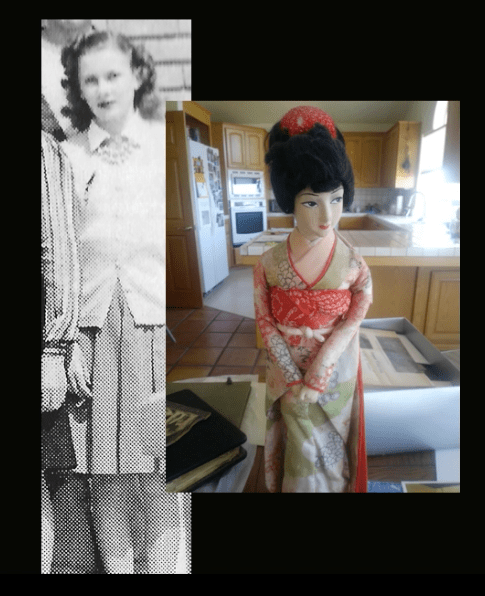
This is Jean as a high-school freshman. The doll, with her handmade kimono, came to Jean from Gila River in gratitude for her family’s friendship. For their loyalty.

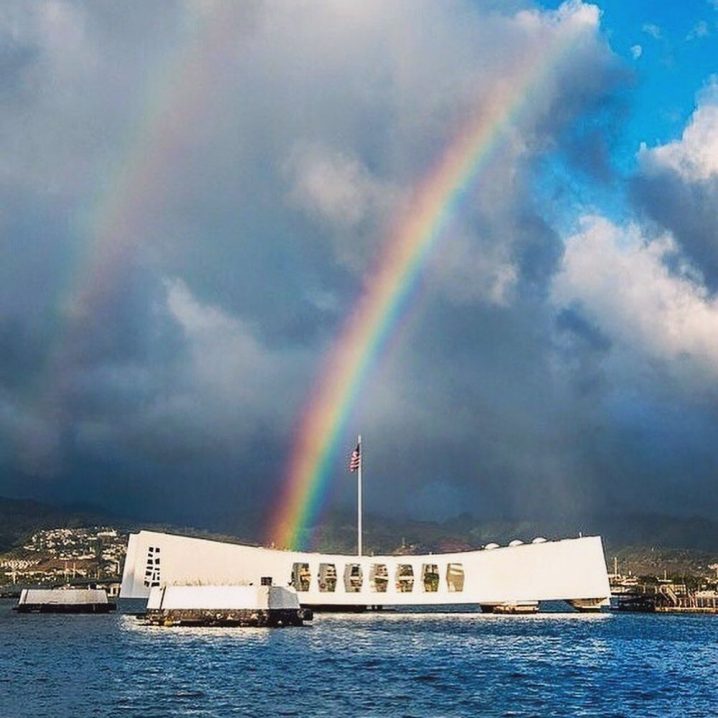
At ninety-four, that loyalty runs in Jean as deeply as it ever has. One of her best high-school friends was named Yoshi. I can find a photo of the two together in second grade. I found a photo, too, of two second-grade boys in the Arroyo Grande Grammar School in 1926. They would die, about twelve minutes apart, on USS Arizona.

Yoshi’s brother became a war hero. He won a battlefield promotion to lieutenant when he went behind Japanese lines in China to rescue a downed American flier.

Yoshi’s brother brought that flier in and made him safe. Jean never saw Yoshi again and, because of April 30, 1942, there is a part of her that can never feel safe.

The war, at its outset for America, killed two of our sailors. It would claim many more local young men, killing them in Ironbottom Sound off Guadalcanal and on the beach at Tarawa. It would kill a young paratrooper in Holland during Operation Market Garden. It would kill, with a sniper’s bullet, a tank-destoyer crewman on the German frontier three days before his first child, a son, was born.

The war killed neither Jean nor Yoshi. They remain its casualties, nonetheless.

We had to stop the interview for a moment. In remembering her friend, Jean was fighting hard to stop the tears. One escaped. That moment taught me so much history, and with such intensity, that I almost couldn’t bear it.

Classmates, Shipmates

Featured

Posted by ag1970 in American History, California history, History, Uncategorized, World War II

≈ Leave a comment

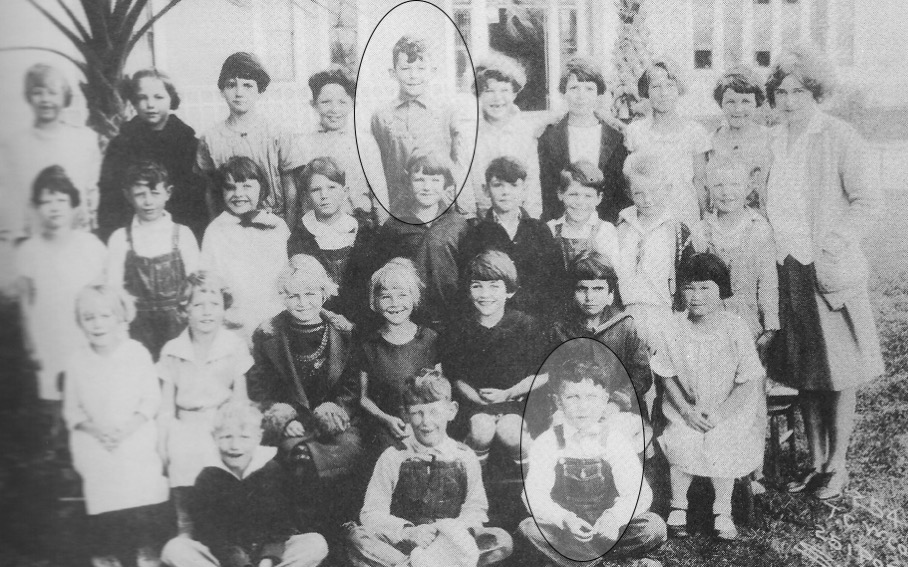
I was browsing an early 1980s version of Yesterday, Today and Tomorrow, the South County Historical Society journal, and I found this photograph of the Arroyo Grande Grammar School second grade in 1926-27.

The two boys who are circled are Wayne Morgan (top) and, in the front row, Jack Scruggs. Wayne’s father, Elmer, was a partner-owner of the Ford agency, today’s Doc Burnstein’s Ice Cream Parlor. Jack’s father had lost his farm earlier in the 1920s; at the time the class photo was taken, he worked with an oil prospecting company exploring the Huasna Valley.

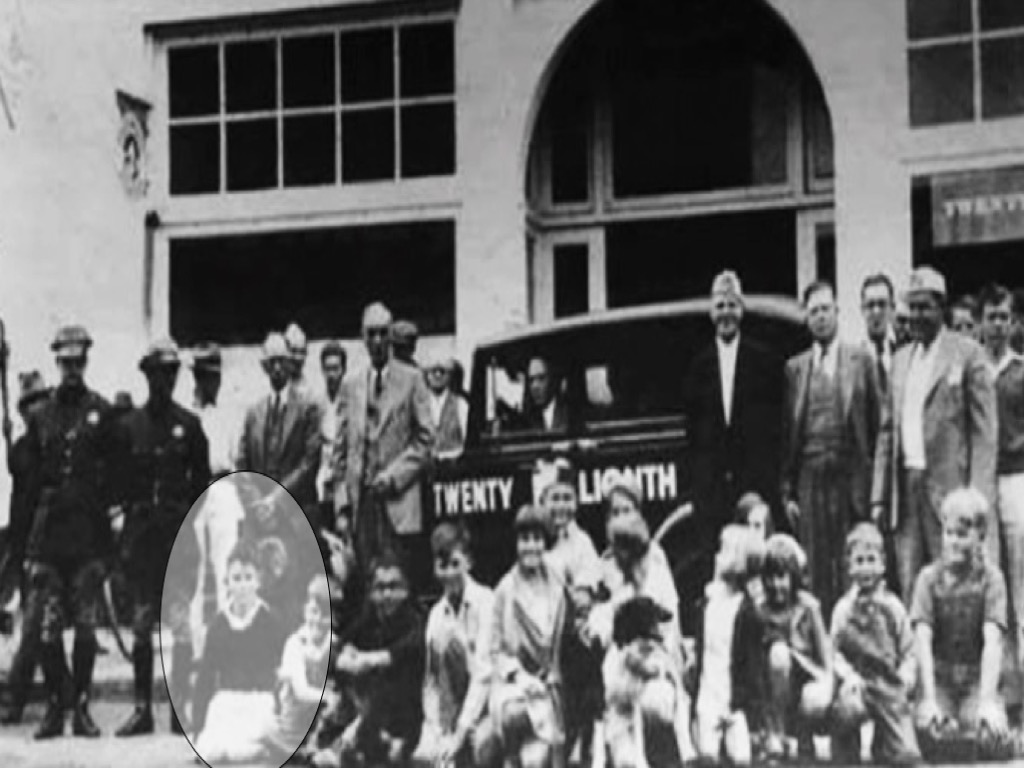
That’s Wayne in the front, in a photo taken during this Ford Model A’s nationwide tour in 1931 (the car, fully restored, is owned by a Michigan car collector).

Nine years later, Wayne would join the Navy.

By the time Wayne Morgan graduated from eighth grade, Jack Scruggs’s family had moved to Long Beach. Both boys were musicians–Wayne played violin in Mr. Chapek’s orchestra (he was also an avid Boy Scout), but Jack would make music his career.

In 1940, Jack joined the Navy.


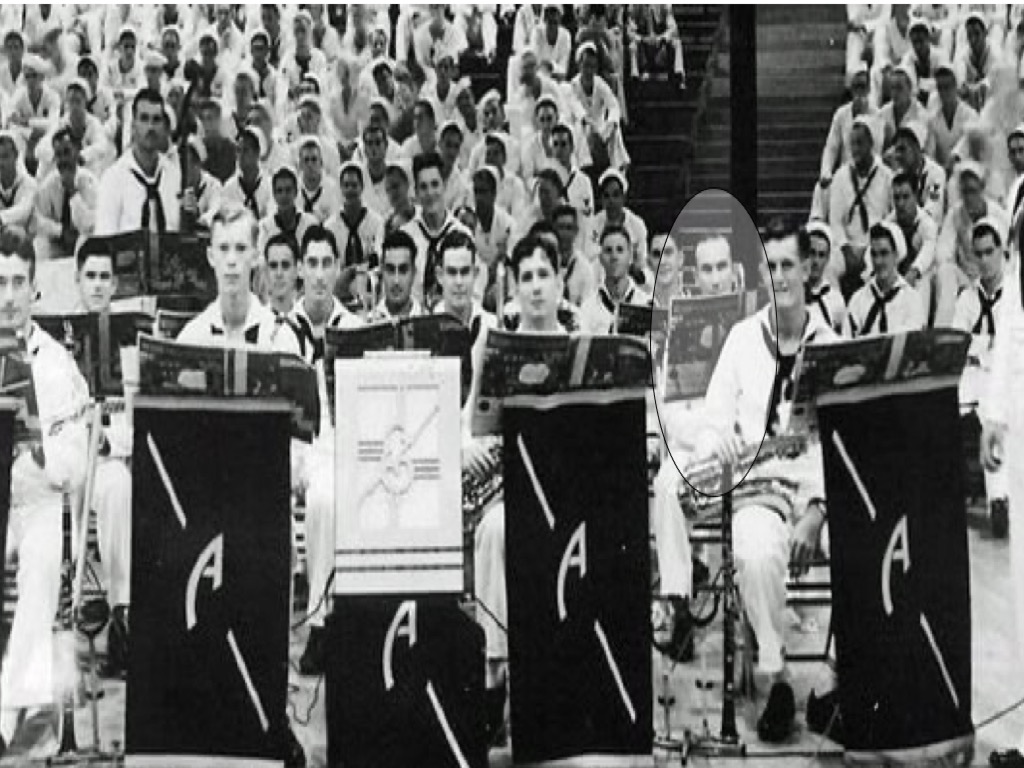
Jack is circled in this photo taken on November 22, 1941, during a Battle of the Bands competition among the ships of the Pacific Fleet. Jack was a trombonist in Navy Band 22–the band of USS Arizona.

So there’s a very good chance that the one-time classmates had a reunion on the great ship.

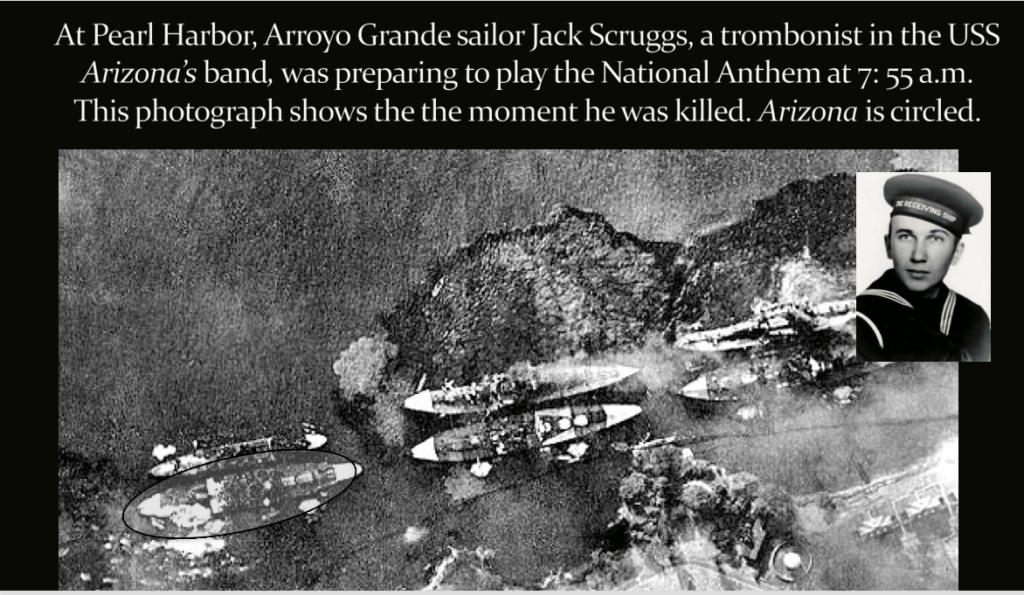
The tragic part of the story, of course, is that both were killed on Arizona. The concussion from a near-miss killed Jack just before 8 a.m. as the band was preparing to play the National Anthem during the colors ceremony. Wayne died about ten minutes later, when the ship blew up. So were all of Jack’s bandmates, killed at their action stations in the Number Two gun turret, just inboard from where the fatal bomb struck.

A few weeks before the attack, Jack had played “Happy Birthday” on the accordion for Rear Adm. Isaac Kidd’s wife–Kidd flew his flag on Arizona. All that was found of him after the attack was his Annapolis class ring, fused to a bulkhead.


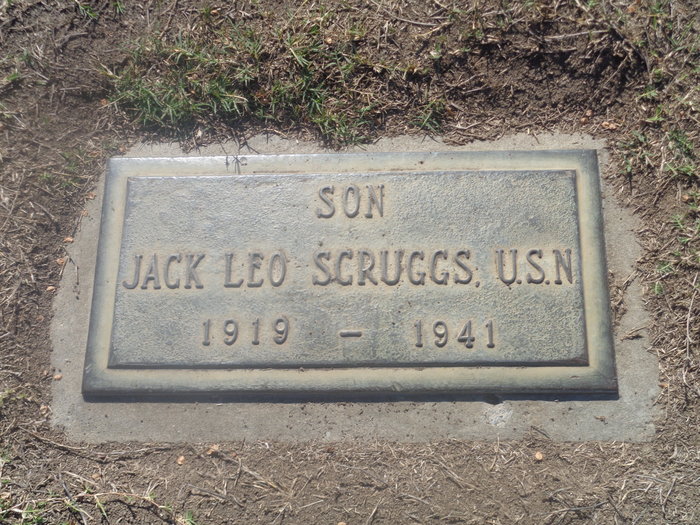
Jack’s body was recovered; he came home to Long Beach. Wayne rests with his shipmates.

185086433_1510535707


I knew both were from Arroyo Grande, population 1,090 in 1940. I thought it extraordinary that two young men from such a small town wound up serving on the same ship. I had no idea that they were in the same grammar school class. 

Sometimes even the smallest footnotes in history tell compelling stories.


Old lives that give life

02 Thursday May 2019

Posted by ag1970 in Uncategorized, World War II

≈ 3 Comments

bfe28d7a8b7be9fc6f17a6db83d96b18

GI’s from Al’s generation on the eve of D-Day.

My friend and former AGHS history student Eddie Matthews and I talked recently about the seemingly contradictory nature of friendships. They don’t always depend on length or frequency of contact. Sometimes someone comes into your life just a few times and Eddie’s point, over our coffees, was that even a casual friendship like that can still evolve into one of the most meaningful friendships of your life.

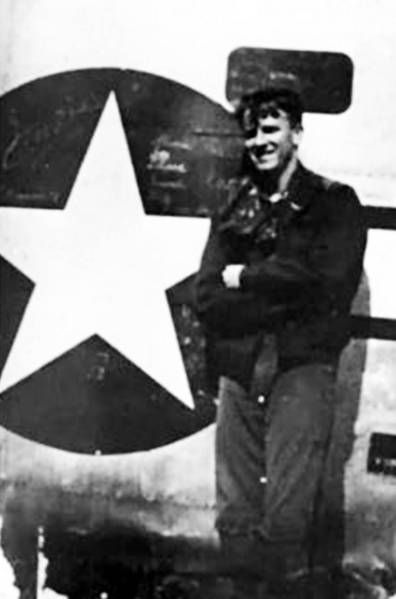
That’s just the case with another friend, Al Findley Jr, of Los Osos, once a B-24 Liberator radioman who survived having two of his aircrew’s bombers shot down during World War II. The second time, he lost four of the most meaningful friends of his life.

Radioman-gunner Albert Lee Findley

Findley next to his B-24.

Al died on April 28, at 96. His time had come. He’d had a long and extremely successful Air Force career and then became fascinated with antiques and that would become his retirement avocation. He retired to a beautiful place, Los Osos, and he left behind many friends.

I only met and talked to Al maybe four or five times. He was one of my sources for a book called Central Coast Aviators in World War II. But I count him as one of the best friends of my life. And so I miss him.

That’s what happens when you write books. In fact, the people you write about don’t even have to be alive to become close to you and important to you.

media-38320

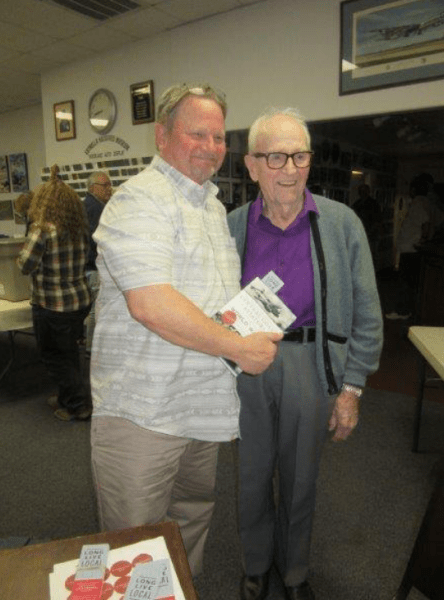
Two friends, Gregory and Findley, at the Estrella Warbirds Museum.

In old newspapers, I’ve been able to follow some local World War II servicemen throughout the course of their lives. Others left letters that were funny or poignant or even enchanting. Many were killed in action, but they became–not friends, exactly–to be honest, these soldiers from my parents’ generation became my sons.

In the 1930s, American social critics condemned that generation’s teens as self-centered, pleasure-seeking and lazy.

There’s just the slightest chance that those critics were right.

But then 400,000 of those young Americans died. That’s 400,000 military men and women. In 1942, as our industrial production surged, more Americans died in factory accidents than on the battlefield.

So I am so very proud to have known a World War II veteran who had no business living beyond his twenty-second birthday. And then he had the audacity to not just live such a long life, but to become a joyful person whose optimism was contagious.

1a7689b388

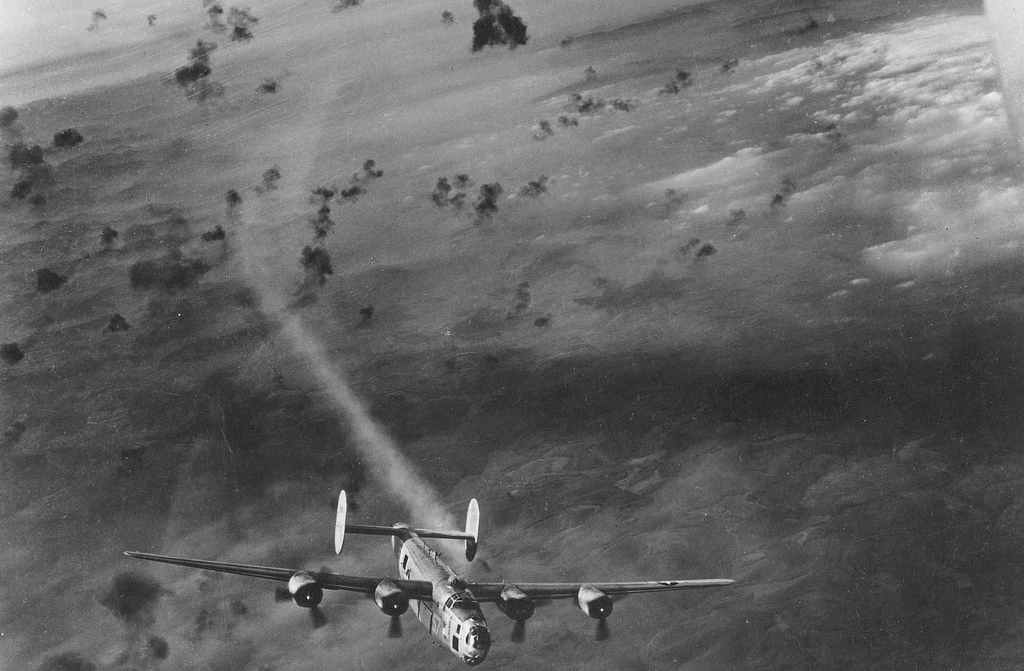
A B-24 trails smoke after a flak hit.

By contrast, much of my research begins in cemeteries. But that’s where you start to forget about death and instead begin to reconstruct lives. I write history to give lives back to the town and to the county where I grew up. I believe that old lives have the capacity to inspire us—in fact, they have the capacity to give life.

I’ve found old lives in yellowed newspapers and on tombstones, in copies of service jackets and in rifle company casualty reports. I found one in a copy of the telegram informing a Corbett Canyon farmer and his wife that their twenty-year-old had died five weeks before on Iwo Jima. I’ve found, in encounters even more fleeting than the ones Eddie and I discussed, my surrogate sons and daughters.

One of them died late last month.

Picture3

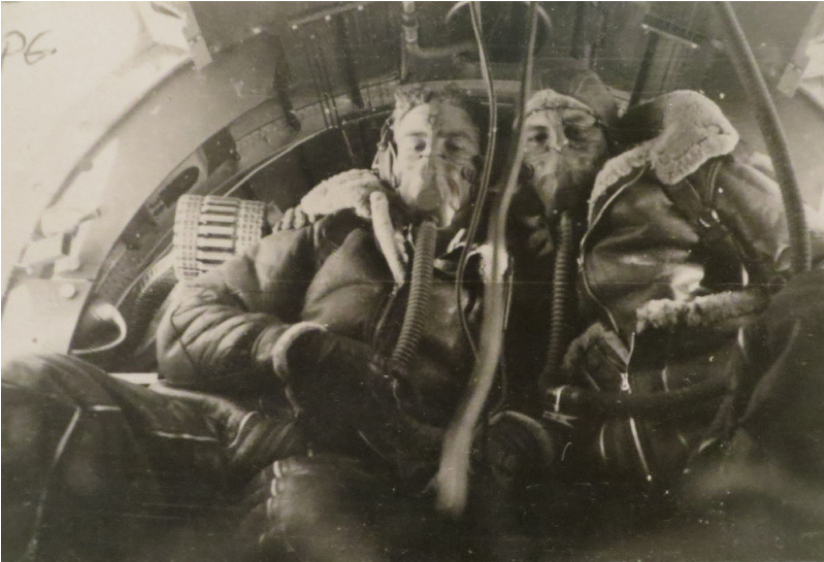
Waist gunners, Eighth Air Force, World War II>

Jim Gregory lives in Arroyo Grande. He taught history at Mission Prep and Arroyo Grande High School for thirty years. Eddie Matthews, an editor at Parthian Books, earned his doctorate in creative writing at the University of Swansea, Wales. Dr. Matthews teaches writing at Point Loma Nazarene University.

Dad and the German Major

06 Wednesday Jan 2016

Posted by ag1970 in American History, Arroyo Grande, Family history, History, World War II

≈ Leave a comment


003 (1)


I’ll be sending two copies of the book World War II Arroyo Grande to young active-duty soldiers. This makes me a happy new/old writer: one reason I wrote the book, I think, was to reintroduce the World War II generation to my generation and to my students, and I’ve always had a soft spot for students who’ve gone into the service. I’m also very happy that I’ll be sending a copy to Judith, a favorite student who achieved the highest grade ever in my U.S. History classes. Judith is from Germany. She loved learning American history.

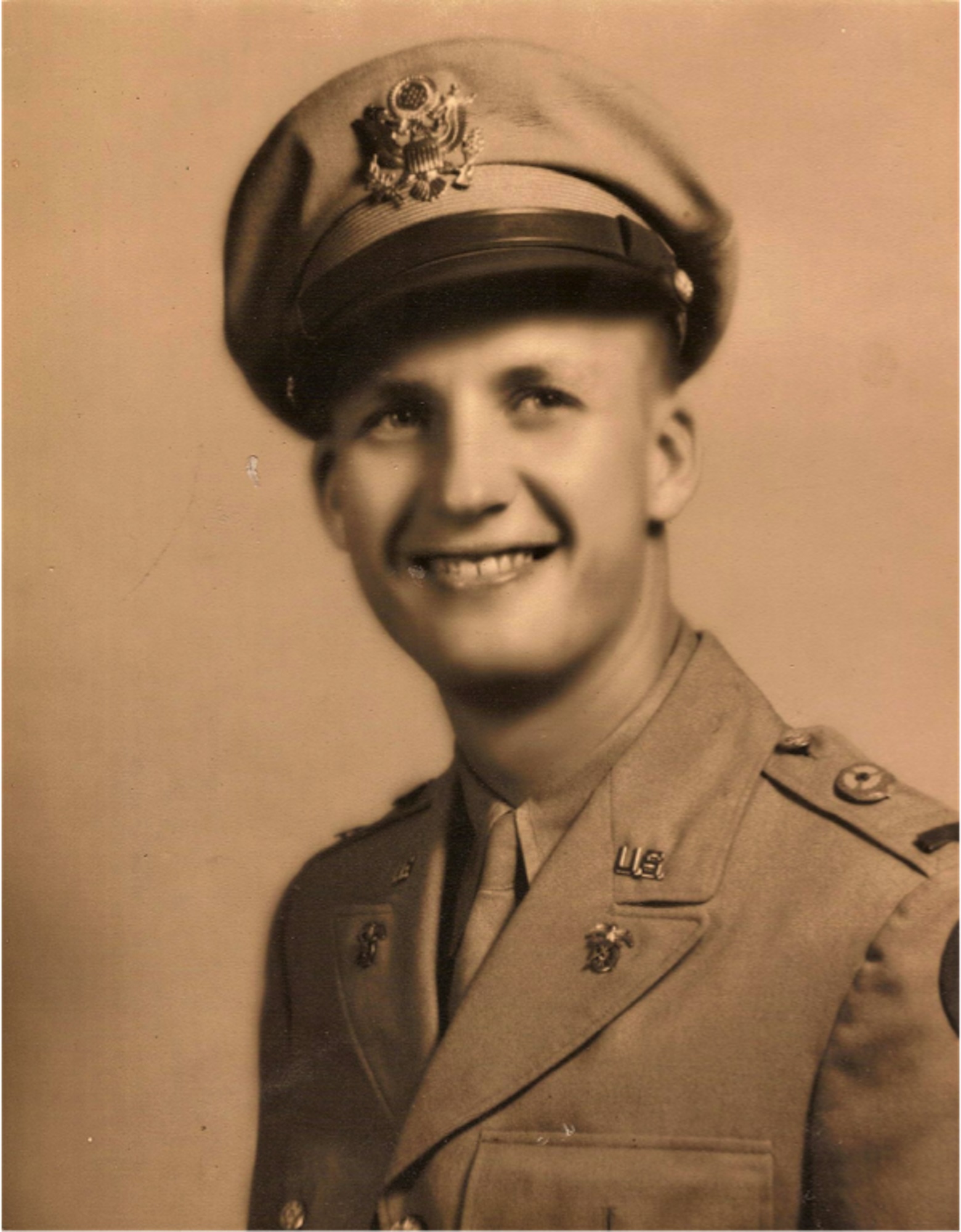
The photo is of my father when he was a young man on active duty in 1944. I’ve told Judith this story, but once the war had ended in the spring of 1945, Europe went hungry–the Continent’s infrastructure had been obliterated by ground combat and by the Allied air campaign. The footage of German kids eating out of garbage cans in 1945, in the long months before the Marshall Plan, always stunned my students. In the meantime, thousands of POW’s in our care died of hunger or of opportunistic diseases because civilians got first priority for food, and there never was enough.

A Wehrmacht major, who outranked my father, then a U.S. Army captain on occupation duty, somehow latched onto him and for a few weeks became his personal bodyservant: the German officer cooked for him, cleaned his quarters, washed and pressed his uniforms, the works.

He did that because Dad was a Quartermaster officer and so had access to food. (A year before, my father repaid an English family’s kindness to him with a bag of oranges. The mother’s British reserve crumbled. She wept. Her family hadn’t seen oranges in five years.) The young German officer wanted to live: his pride meant nothing when compared to the wife and children he wanted in his arms again once he was cashiered. My father was his ticket home.

In summer, he would begin the long walk home along roads choked with refugees and gaunt, tired soldiers. Dad never learned what happened to him but hoped, in talking about him years later, that the German major had lived a long and happy life. What started as a relationship of expedience had begun to edge into a friendship. Perhaps, very faintly in the recesses of my imagination, there was the unspoken thought that my student Judith was the major’s great-granddaughter. I owed it to this soldier to be the best teacher I could be for her.

The tough American soldiers of Easy Company–-the “Band of Brothers”–-liked the English, for the most part, loved the Dutch, but, like my father, felt most at home with Germans.

It does make you wish that British Pvt. William Tandey had shot Hitler in 1918, when he had the man in his sights at Marcoing. We could have done without Clemenceau as well, I guess, in his 1918-19 incarnation, but a younger Clemenceau had done great good for France and for the revolutionary ideals of tolerance and of the equality that citizenship confers.

These are ideals that Hitler despised because, of course, they included Jews, like Alfred Dreyfus. Clemenceau had been one of Dreyfus’s most adamant defenders. Dreyfus was a good French soldier, but the older Clemenceau dominated the drafting of a foolish, vindictive peace treaty dictated, in his mind, by a generation of good French soldiers whose bones littered the nation’s soil. Even today, farmers in northern France, in turning over fields there, find the bones of boys their harrow blades.

A generation after that war, there were more good soldiers, good young men on both sides who in a better world should never have been enemies. But they didn’t live in a better world; theirs had been penetrated by evil.

Americans had fought a war in the face of great evil once before. There was a lull in a Civil War campaign that gave a Union army band, its vast audience in bivouac, time enough for a concert. Confederates on a nearby hillside were listening. One of them called “Yank! Play one of ours!” So the band played “Dixie,” and at the song’s conclusion, both sides erupted, thousands cheering, tossing their caps in the air. They embraced a vivid moment when they were at peace together, before the close-quarters murder so characteristic of that war—and, sadly, so necessary for its resolution—resumed.

Similarly, once their war was over, a German soldier reached across the divide to make a necessary peace with my father. I hope my book will allow two young soldiers today to reach across the divide that time imposes to meet other young soldiers, including some who died such a long time ago. In a small way, it gives them life again.

Walt Whitman may have articulated this idea best in what I think is one of his finest poems, “Crossing Brooklyn Ferry.” Time and distance avail not, Whitman wrote. They are irrelevant. Indeed, when you read the poem you have the uncanny sense that Whitman is reading with you, just over your shoulder, or that you’re leaning on the ferry’s rail, together with the old man, the harbor’s breeze in his whiskers.

In the same way, we are all of us on the road together in the journeys of our lives. I think that sometimes, without recognizing them, we walk alongside our ancestors, and among them is the German major who yearns for home.

Swing Kids

22 Tuesday Dec 2015

Posted by ag1970 in American History, Film and Popular Culture, World War II

≈ Leave a comment

20151222_140005

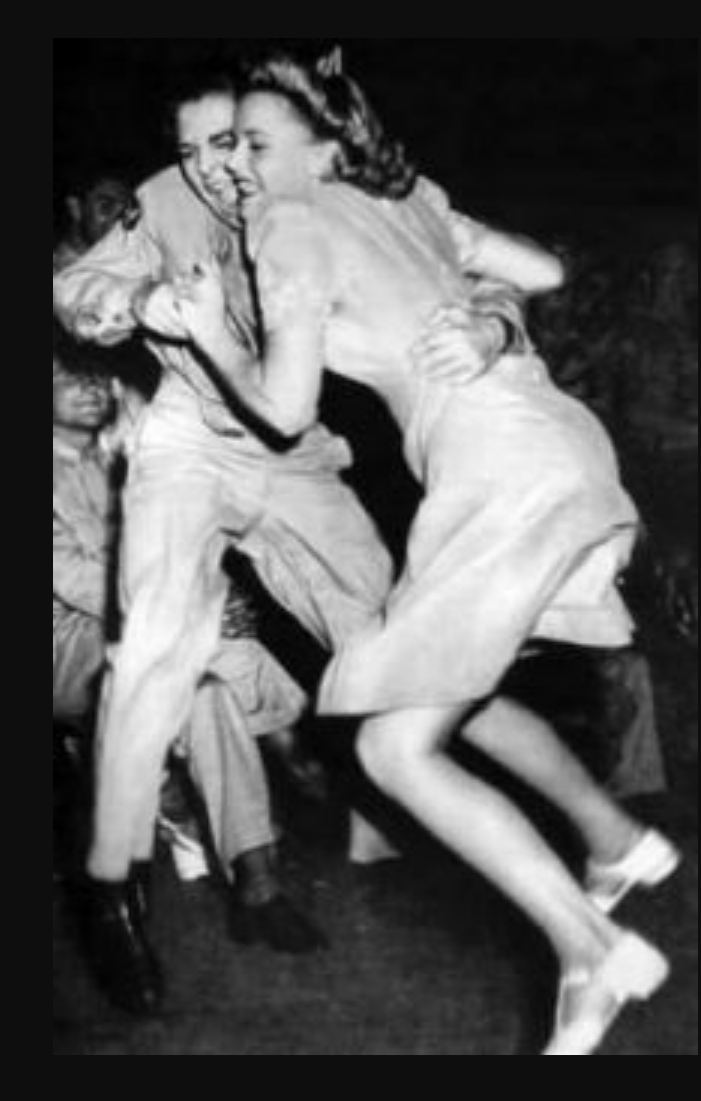
Whatever else I’ve said about the World War II generation–how sad but inevitable, our Sixties falling-out–there’s one more bit of praise: great music, and these young people could dance, a social rite mine left behind.

I put this together, part of a cycle of slide presentations, just in case they’re needed for whenever the book signing will be. Don’t want bored folks.

We open with a smidge of Andrews Sisters, a little silly, and then three Glenn Miller hits: the silky, evocative “Moonlight Serenade,” and then two go-to-war rousers, “St. Louis Blues March” and “American Patrol.” I wonder where Dad was when he first heard these songs? He still remembered “Bluebirds Over (the White Cliffs of Dover”) and, of course, “Der Fuhrer’s Face.” And maybe a French tune or two better left in French.


https://drive.google.com/file/d/0B05dFICUx2kGZWRDZ1BwR1ViaUk/view?usp=docslist_api

Pep Talk

17 Thursday Dec 2015

Posted by ag1970 in American History, California history, History, The Great Depression, Uncategorized, World War II, Writing

≈ Leave a comment

I have never been shy about writing fan letters, so I wrote one to the UC  Davis prof who’s written a terrific new book, Right Out of California, about political, economic and social conflict in 1930s California.

I also am a shameless little man, so I included the Domingo Martinez piece from the Arroyo Grande book and told her I was looking at writing about the 30s, too.

She emailed back later yesterday:

I’m so glad to hear that my book was relevant to you. I’m also very interested to learn about your own work. The central coast has some great stories from the interwar years to tell; and it seems, from the sample you provided me, that you’re the right person to tell them.

That’s nice. That’s not the clincher, though. My big sister, Roberta, wants me to write it, too.

So I guess I will.

What’s making me dawdle, before I pitch the book idea, is knowing how miserly the pay is. For each $21.99 copy of the World War II book, over a year’s work, I get about $1.50. And I’ve done the research, the writing, located 70+ images from all over the world, some which required me to buy usage rights, and I’ve done a good deal of the marketing.

So I feel like your basic oppressed proletarian.

The other factor: The sheer magnitude of the subject is daunting. World War II, as large-scale as it was, was chronologically compressed and its events already so familiar, so it was much more manageable.

So I think I’ll expand the scope of this book to include the 1920s. That sounds counterintuitive, but I realized that I don’t have the talent or the graduate assistants for a narrative history. What I can do is to generate a thematic overview of the interwar years, to tell good stories well. Themes might include Prohibition and crime; politics, Mr. Hearst, contrasted with the poor; the collapse of farm prices and that impact; daily life, especially of young people; dissidents and dropouts; the New Deal’s impact; the coming of the war.
I’ve got to expand the locale as well, so we’ll include material from Northern Santa Barbara County, even a little from Taft, from San Simeon, of course–but the bulk of the book would come from the area between San Luis Obispo and Nipomo.

[What’s hardest to come by, and what I hunger for, are statistical data that’ll give a snapshot of the Central Coast–everything from foreclosures to crop prices, housing starts to high school dropout rates. Those are hard to find.]

So it would be The Interwar Years on California’s Central Coast or something like that. Or maybe Pete’s Dragon.

Now I’ve got to generate a proposal and go back to my two most important secondary sources and organize the margin notes I’ve taken. I also need to read again David Kennedy’s Freedom from Fear.

Not a good day to feel under the weather.

20151217_084729

From Here to Eternity

10 Thursday Dec 2015

Posted by ag1970 in Film and Popular Culture, History, World War II

≈ 2 Comments


montgomery clift & burt lancaster - from here to eternity 1953

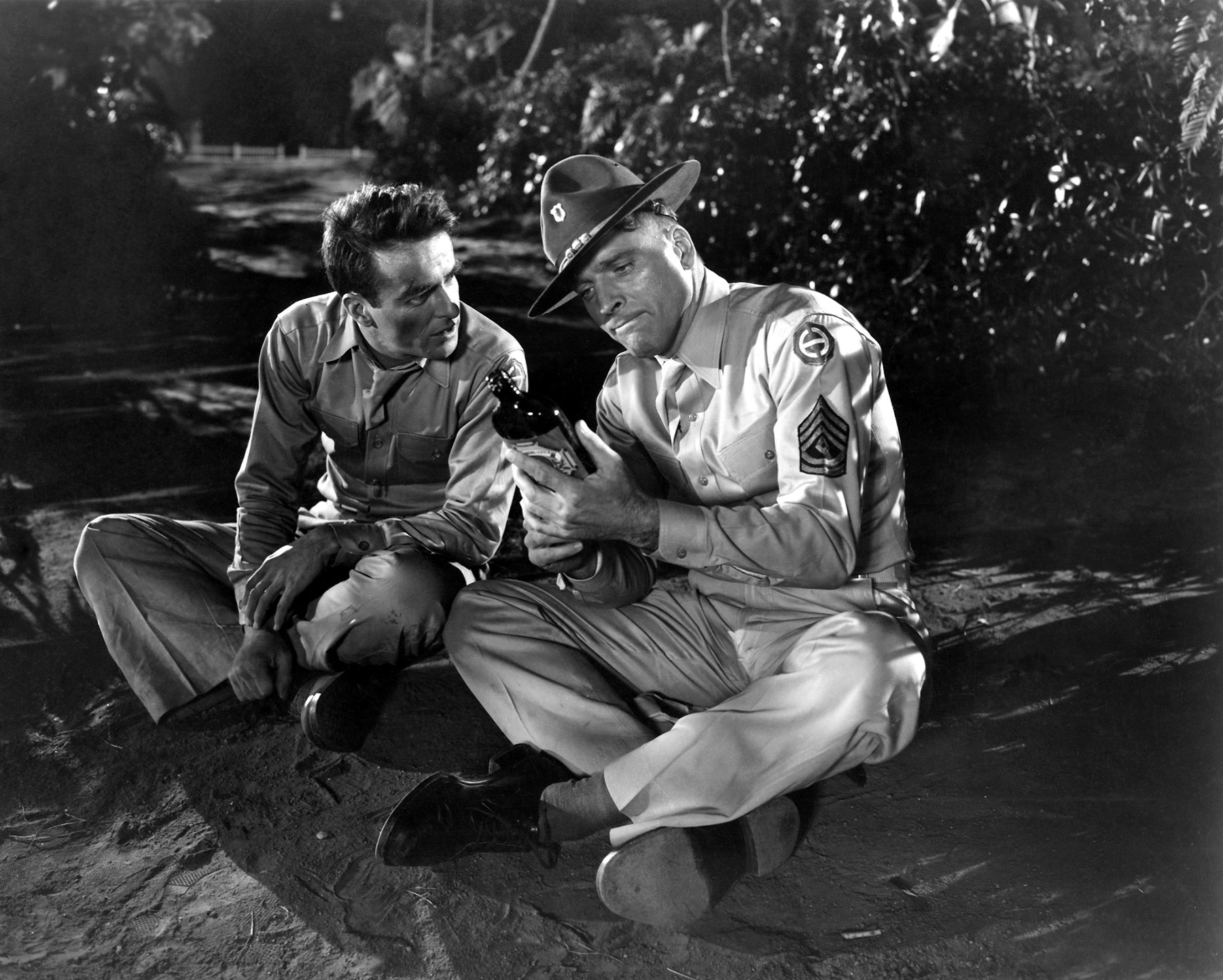
Montgomery Clift, as Prewitt, and Burt Lancaster, as Warden, share a bottle in the middle of the road.

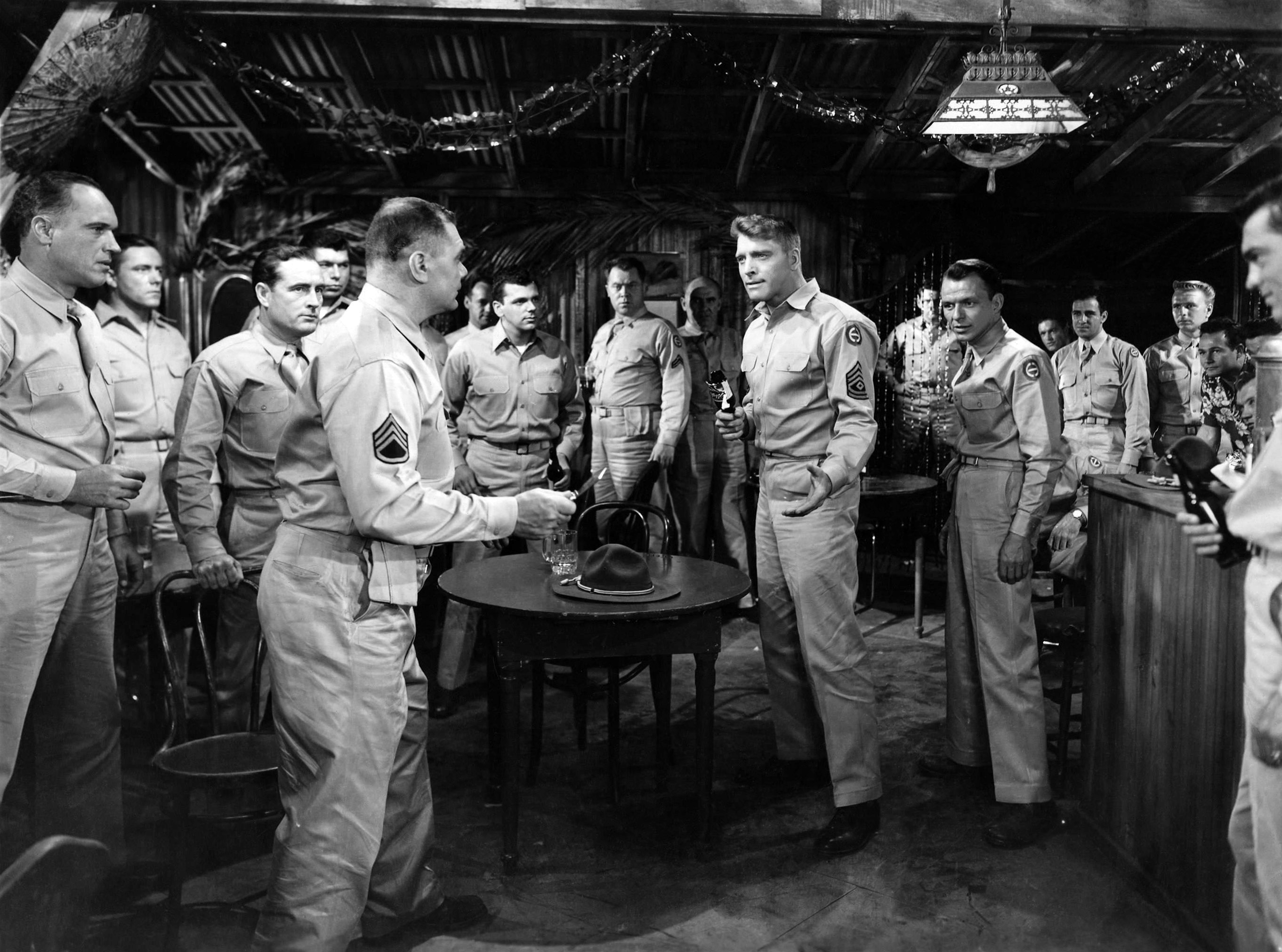
From Here to Eternity was on television again last night and I watched it again; in fact, it may be catching up to John Ford’s The Searchers and Milos Forman’s Amadeus as among those films I’ve watched the most.

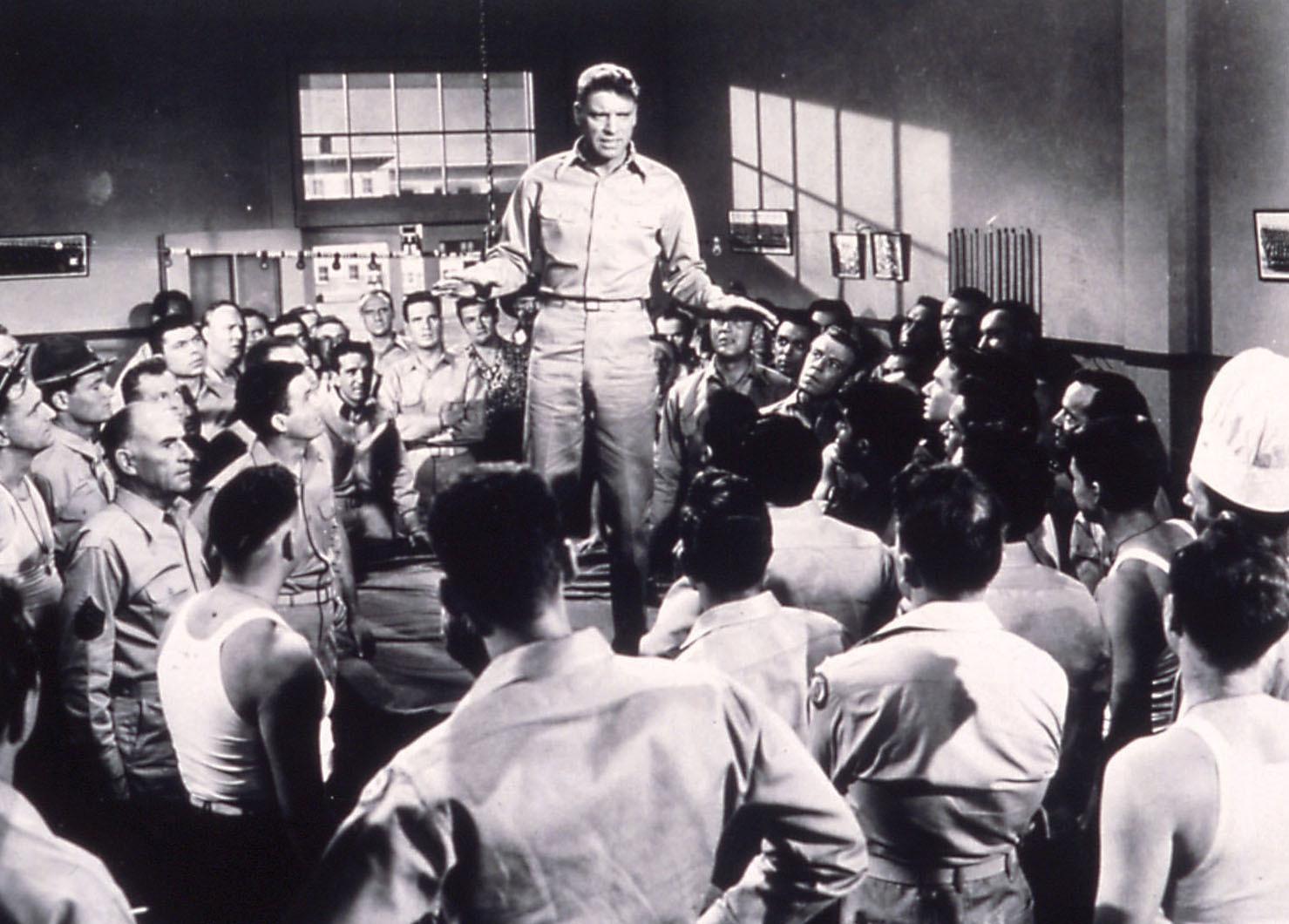
James Jones’s novel was brilliant and compelling, and Hollywood managed to make a film, an Academy-Award winner, that was just as good. It’s one of the most satisfying films for me to watch, which doesn’t mean it has happy endings: instead, everything that must happen to the major characters eventually happens. You don’t even necessarily root for them because you know full well that they’re all condemned, in some way, by forces too powerful for them to master and too complex for them to articulate, so any cheerleading is futile. But you genuinely admire them: this is my favorite Burt Lancaster film (Elmer Gantry is a close second) and what his Top Sergeant Warden shares with the defiant Montgomery Clift’s Prewitt is an incredible integrity and, in the end, a fierce devotion to The Company that will cost Prewitt his life.


46454859.cached

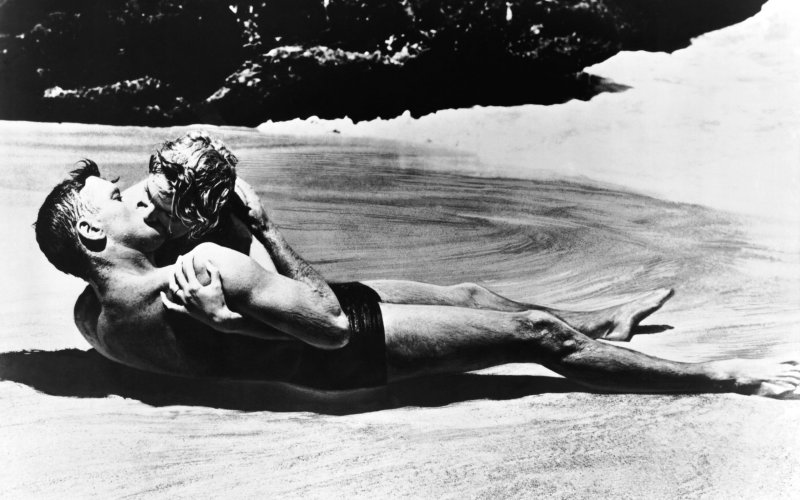
The kiss: Burt Lancaster and Deborah Kerr.

Of course, the most famous, and most parodied, scene in the film is the kiss in the surf between Warden and Karen Holmes, the frustrated, defeated wife of Capt. Holmes, the company commander so insistent on returning Pvt. Prewitt to the boxing ring. Holmes deserves everything he gets–one of the most enjoyable scenes is watching him get his just reward at the hands of Schofield Barracks’ C.O.–and it is Warden who gives Deborah Kerr’s Karen Holmes, if only briefly, the passion and the hope that you want her to have. She’s not a bad person–she’s made, in her marriage to a weak man, a bad choice. She knows it, which makes her decision at the film’s end noble, heroic, and tragic. She has integrity enough to match Warden’s.

This is the film, of course, that revived Frank Sinatra’s career, and he is terrific as Maggio. He has both a Brooklyn toughness and a kind of lost-puppy vulnerability and–that word again–his foolhardy integrity in standing up to the sadistic stockade sergeant, Fatso Judson, seems to be something that Maggio is compelled to do. It’s his destiny. When he finally does go to the stockade, where he’s beyond Prewitt’s protection, it’s a death sentence, and when he describes how he dies while in Prewitt’s arms, it’s a superb piece of acting.

So is the drunk scene between Lancaster’s Warden and Clift’s Prewitt. It is so arresting because it is so funny–you wonder if the two really were lit when they filmed it–but it’s also so revelatory because nowhere in the film, even with Karen Holmes, is Warden so tender and compassionate as he is with the company troublemaker, Prewitt. It’s this scene, and one shortly after, where bugler Prewitt plays two stanzas of the purest, most evocative version of “Taps” ever recorded, that makes the two protagonists’ devotion to The Company and to The Army so understandable.


Annex - Lancaster, Burt (From Here to Eternity)_05

Warden intercedes to protect Pvt. Maggio (right, Frank Sinatra) from stockade Sgt. “Fatso” Judson (Ernest Borgnine).

The film also has a compelling fight, though tame stuff by the standards of today’s gore, between the hapless Prewitt and a sadistic noncom, Sgt. Galovich, who proceeds to beat Prewitt to a pulp. Prewitt, who refuses to box for The Company, won’t fight back. When he finally does, with a flurry of body blows, you want to cheer, and when the tide begins to turn against Galovich, you don’t want the inept Capt. Holmes to stop it. You want Galovich obliterated. But when Holmes does finally step in, late, it’s the captain who’s the victim, because the fight has been witnessed by two of his superiors at Schofield who decide to investigate Holmes’s feckless command of The Company.

It’s Warden who is the real company commander. As a master of red tape, an almost clairvoyant anticipator of The Company’s crises and needs, contemptuous of weakness in his subordinate noncoms and even more contemptuous of all officers, especially his C.O., Warden is the perfect bureaucrat. Until Pearl Harbor. Then you see the Top Kick rise to the occasion and become the one man in The Company who keeps his head, giving rapid-fire and perfect orders to his men (“Make a pot–no, a barrel!– of coffee!” he snaps to the company cook.), then climbing to a barracks rooftop to bring down an attacking airplane with a .30-caliber machine gun. He becomes a warrior. Part of me doubts that Warden would survive the war, because so many good leaders like him would be weeded out by attrition as we learned to fight in places like Guadalcanal or North Africa, places with unforgiving learning curves. The war would cheat us of our Wardens.


77178-004-F46E8E0B

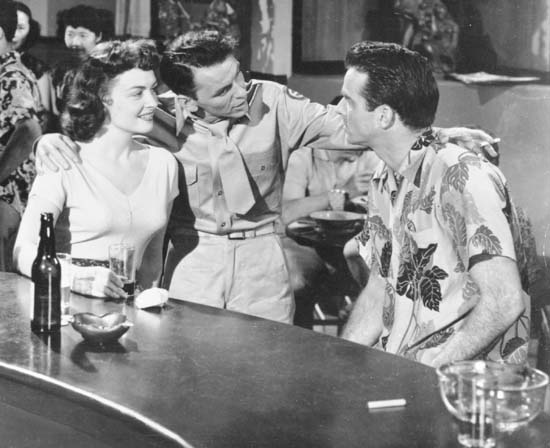
Lorene, Maggio and Prewitt at the bar of The Congress Club.

The only careless element in a terrific ensemble cast is, to me, Pvt. Prewitt’s love interest: Donna Reed’s character, Lorene, a working girl at The Congress Club, a bar/brothel that Schofield’s GI’s frequent. It’s as if the scriptwriters and director Fred Zinnemann can’t quite decide what to do with her. They’ve got to fly a prostitute under the radar of 1950s film standards, so she winds up coming off as more of an undergrad at a Midwestern university instead of a Honolulu bargirl. Her earnest, intellectual roommate has their house full of books. So she is unconvincing, which I don’t think is Reed’s fault: she’s a victim of the one bit of indecision and timidity in a film that is otherwise so honest.(To be honest, Reed may be a victim of my own Baby Boomage and her housewife/mother role from The Donna Reed Show, but Borgnine’s malevolent Fatso is sublime; he transcends his turn in McHale’s Navy.)

But Reed earns redemption as an actress in the film’s denouement, when she speaks of Prewitt as a war hero and you realize that Lorene, with her fantasy of making enough at The Congress Club to build herself and her mother a little home in Oregon, is and always has been gently unhinged. Nothing good will come of Lorene: she will drift away, like the leis the women toss onto the ocean’s surface from the rail of their steamer bound for the States. Only one character will never drift away and will always have a home, and that’s Top Sergeant Warden.


still-of-burt-lancaster-and-tim-ryan-in-from-here-to-eternity-(1953)-large-picture

Top Kick Warden takes command, December 7.


← Older posts
Newer posts →

Subscribe

  • Entries (RSS)
  • Comments (RSS)

Archives

  • June 2026
  • May 2026
  • April 2026
  • March 2026
  • February 2026
  • January 2026
  • December 2025
  • November 2025
  • October 2025
  • September 2025
  • August 2025
  • July 2025
  • June 2025
  • May 2025
  • April 2025
  • March 2025
  • February 2025
  • January 2025
  • December 2024
  • November 2024
  • October 2024
  • September 2024
  • August 2024
  • July 2024
  • June 2024
  • May 2024
  • April 2024
  • March 2024
  • February 2024
  • January 2024
  • December 2023
  • November 2023
  • October 2023
  • September 2023
  • August 2023
  • July 2023
  • June 2023
  • May 2023
  • April 2023
  • March 2023
  • February 2023
  • January 2023
  • December 2022
  • November 2022
  • October 2022
  • September 2022
  • August 2022
  • May 2022
  • April 2022
  • March 2022
  • February 2022
  • January 2022
  • December 2021
  • November 2021
  • October 2021
  • September 2021
  • August 2021
  • July 2021
  • June 2021
  • April 2021
  • March 2021
  • February 2021
  • January 2021
  • December 2020
  • November 2020
  • August 2020
  • July 2020
  • June 2020
  • May 2020
  • April 2020
  • January 2020
  • December 2019
  • November 2019
  • October 2019
  • September 2019
  • August 2019
  • May 2019
  • April 2019
  • March 2019
  • February 2019
  • January 2019
  • December 2018
  • November 2018
  • October 2018
  • September 2018
  • July 2018
  • June 2018
  • May 2018
  • April 2018
  • March 2018
  • February 2018
  • January 2018
  • December 2017
  • November 2017
  • October 2017
  • April 2017
  • March 2017
  • December 2016
  • November 2016
  • October 2016
  • September 2016
  • August 2016
  • July 2016
  • June 2016
  • April 2016
  • March 2016
  • February 2016
  • January 2016
  • December 2015
  • November 2015
  • October 2015
  • September 2015
  • August 2015
  • July 2015
  • June 2015
  • May 2015
  • April 2015
  • March 2015
  • February 2015
  • January 2015
  • December 2014
  • November 2014
  • September 2014
  • August 2014
  • July 2014

Categories

  • American History
  • Arroyo Grande
  • California history
  • Family history
  • Film and Popular Culture
  • History
  • News
  • Personal memoirs
  • Teaching
  • The Great Depression
  • trump
  • Uncategorized
  • World War II
  • Writing

Meta

  • Create account
  • Log in

Blog at WordPress.com.

  • Subscribe Subscribed
    • A Work in Progress
    • Join 69 other subscribers
    • Already have a WordPress.com account? Log in now.
    • A Work in Progress
    • Subscribe Subscribed
    • Sign up
    • Log in
    • Report this content
    • View site in Reader
    • Manage subscriptions
    • Collapse this bar

Loading Comments...