The Actor Sterling Hayden—and the best movie death scene of 1954

The film Suddenly begins with languid scene-setting shots, a device Woody Allen used in Midnight in Paris, but these, of course are in black and white, and the little California town, called Suddenly (I’d place it somewhere between Pumpkin Center and Avenal) reveals its church, courthouse, supermarket. One of the first kinetic characters we meet is Sterling Hayden, the sheriff. Hayden was 6′ 5″ and so makes his service revolver look like a Mattel Fanner 50. Here’s the film’s trailer:


And here’s the cast:


A little boy, eight, called Pidge, for some reason–maybe he poops a lot?–adores Hayden’s Sheriff Tod Shaw. Sheriff Tod Shaw adores little Pidge’s mother, Ellen, a war widow who hates guns and who resists the sheriff’s earnest wooing because she won’t betray her husband’s memory. When Shaw buys Pidge a toy revolver, that’s the final straw. Ellen, furious, reads him several riot acts.

Then things get even more complicated. The President of the United States is to make a train stop at the Suddenly station on his way for a little vacation. An advance team of Secret Service agents arrives and swears the sheriff and everybody else to secrecy.

The secret leaks, because Frank Sinatra arrives in Suddenly with two fellow assassins, neither one the reddest fruit in the Tomato Garden of Film Criminals, and the three take up a sniper’s nest in—wouldn’t you know it?— Ellen’s home, with Pidge and her father-in-law, a retired Secret Service agent. Convenient, no?

Here’s where the film gets eerie, at least for us history majors.

Ellen’s home is about 200 yards away from the train station. That’s the president’s Cadillac limousine awaiting for his arrival in the 1954 film. Lee Harvey Oswald’s sniper’s perch was about 200 feet above President Kennedy’s Lincoln; the fatal shot came at about 265 feet. The second photo is from a Secret Service reconstruction in 1964.


Sinatra, out to kill the president in Suddenly, was, in the real world, a close friend of JFK’s. That ended after the 1960 election, when Attorney General Robert Kennedy began a campaign against organized crime, including mobster Sam Giancana. Giancana and Sinatra were partners in the Cal-Neva Lodge. Giancana and JFK shared a mistress, Judith Campbell Exner. One of the it-will-never-go-to-bed rumors (a term that doesn’t apply to Exner) was that JFK’s murder was a mob hit.


Kennedy and Sinatra; Giancana and Sinatra; Judith Exner


Sterling Hayden was the crooked cop whom Michael Corleone shot dead in mid-veal in The Godfather. Michael’s father, the Don, was a composite, but there were strong resemblances to—wait for it!—Chicago’s Sam Giancana.

Another Godfather connection? The movie poster includes Sinatra’s well-deserved Oscar for his portrayal of Maggio in From Here to Eternity. It was the Corleonie family who got fading singer Johnny Fontane his big “war movie” role, thanks to *shiver!* the bigshot producer waking up with his thoroughbred’s head beneath the sheets.

Try the veal. It’s the best in the city. Hayden’s cop a moment before his death; Michael and the Don confer; Sam Giancana.

Hayden was also Gen. Jack D. Ripper, modeled on Air Force Gen. Curtis “Bombs Away!” LeMay, in Stanley Kubrick’s Dr. Strangelove, which, of course, includes this mesmerizing speech by Hayden/Ripper, directed against fluoridated water, a big issue in the 1960s that is getting trendy again. Here’s the speech:

Lemay and JFK at a missile launch. The president’s Ray-Bans were a kind of sensation. Lemay and the president confer during the Cuban Missile Crisis. Lemay had commanded the firebombing campaign against Japan in 1945, during which he ordered his B-29s to fly lower, for accuracy’s sake. He proposed using nuclear bombs against Cuba and the Soviet missile sites there. Kennedy demurred.

Kennedy despised the Central Intelligence Agency, whose bungling of the Bay of Pigs invasion of Cuba (Fidel Castro’s takeover is vividly portrayed in The Godfather Part II), but Sterling Hayden, as a World War II Marine—that’s him below— had been an operative in the OSS, the World War II precursor of the CIA.


In the process—he earned a Silver Star for valor—Hayden became deeply sympathetic to the Yugoslav partisans he worked with as they resisted the Nazis who occupied their nation. This led him to an unwise decision: He was briefly a member of the Communist Party USA. The chickens came home to roost in 1951, when Hayden was ordered to testify before the notorious House Committee on Un-American Activities. Hayden was in the midst of a hard-fought divorce, and his lawyer assured him that the government, if it wished, could make sure that he would never see his little boy again.

So Hayden testified, and named the names of what were called Fellow Travelers, and the shame of the man once called “the most beautiful man in the movies” followed him the rest of his life.

Hayden testifying; “The Most Beautiful Man” and his beautiful first wife, actress Madeline Carroll.

Hayden sought solace in the sea—part of his OSS spying had involved sailing along the Yugoslav coast to keep in touch with the partisans–and his expertise as a sailor led to two books, the autobiographical Wanderer, which I need to read, and the novel Voyage, which I have read. It is superb.


But I believe I promised an epic death scene in the title of this meandering little post.

Sterling Hayden is fairly passive in Suddenly, the result of a gunshot wound from would-be assassin Sinatra. But the plot thickens.

Pidge—wasn’t I right?—has to go to the bathroom. Along the way, he discovers his grandfather’s old Secret Service revolver. Winks are exchanged when Pidge returns to the living room and deftly switches his toy gun with grandfather’s real one.

This kid is bright.

So’s grandfather. He fakes a heart attack and call for his nitroglycerine capsules. Pidge fetches them, his mom gets a glass of water, and grandfather, demonstrating the same drinking problem depicted in Airplane!, spills it on the floor.

On the floor just below a folding metal table where the assassins have set up their rifle, a M1 Garand graced by a stubby scope above and a big magazine below. During the war, when the M1 was standard issue for American rifleman, it was not known as a sniper’s rifle, and it had a glaring deficiency: when the rifleman had emptied his eight-round clip, a bracket was ejected that made a loud “PING!” That informed any nearby enemy who was paying attention that the Yank was out of ammunition.

Sinatra plays a G.I. who discovered, in Italy, how thrilling it was to kill Nearby Enemies. So his weapon of choice is an M1, but with a difference: It sports a clip that looks as if it could hold twenty rounds.

So now we’ve got a rifle mounted on a metal table with spilled water on the floor. We’ve also got a TV repairman who wandered into a bad situation. A tube needs replacement (convenience stores in Arroyo Grande used to have tube-testers so you could figure out which one you needed to replace. And TV repair was once a secure occupation.)

Grandfather, recovered from his alleged heart attack, muses aloud to the TV repairman: “Boy, I bet if you attached this wire here from the back of the TV to the leg of that metal table, it’d be a natural antenna. We’d get such a good picture for the ball game.”

I think he has to repeat this a couple of times, including using semaphore flags. The TV repairman’s eyes finally brighten.

So when, just before the president arrives, one of Sinatra’ henchmen stumbles and finds himself pulling the rifle’s trigger. He is not-so-instantly electrocuted. In his convulsions, his finger remains on the M1’s trigger and the rifle keeps firing, over and over, and so alerts the authorities that something peculiar is going on in that house above the train station.

It’s a stunningly violent scene for 1954—maybe even for today—but because you don’t really see it coming until the TV repairman does, it’s a corker.


Oh, and the sheriff winds up with the girl, with Ellen. Satisfying all around, by golly.

The Man Who Fell 22,000 Feet

Alan Magee was a ball-turret gunner on a B-17 based at RAF Molesworth in March 1943. A key responsibility of his bomb group, the 360th, and his squadron, the 303rd, was to assault the German U-boat bases along France’s western coast. The U-boats themselves, as long as they were in their pens, were safe; the concrete and steel protection, built by slave labor, was so indestructible that the French Navy used the sub pens for their submarines throughout the Cold War.

In 1943, the U-boats were attacks were devastating, the tonnage sunk so vast that England was in danger of starving. (My father gifted a British family, in 1944, with a bag of California oranges. The mother of the family burst into tears. They hadn’t seen fresh oranges since 1939. That was the work of the U-boats.)

Later, the Halcyon brothers, the Varians, would help to develop the klystron tube, an improvement on radar that, in air attacks, devastated the U-boats once they’d slipped into the slipped from their protection at St. Nazaire or Lorient. I once read a gripping autobiography written by a U-boat captain, appropriately entitled Iron Coffins; by 1944, that’s what they’d become.

So it wasn’t the sub pens themselves that were the targets of Magee’s squadron: it was the yards where torpedoes were gathered after their shipment from German factories to the French coast.

His B-17 was named “Snap! Crackle! Pop!” after the Rice Krispies characters, which made for far less racy nose painting than the generously-bosomed Vargas girl imitations that adorned so many B-17s. (Pilots averaged around twenty-two; some gunners, liars, were fifteen.)


Since Magee was a ball-turret gunner, that meant he was the tiniest of the nine men he flew with. Only a small man could fit in the bubble beneath the B-17. An electrical motor rotated the turret; the exit hatch, however could only be opened from inside the B-17’s fuselage, .

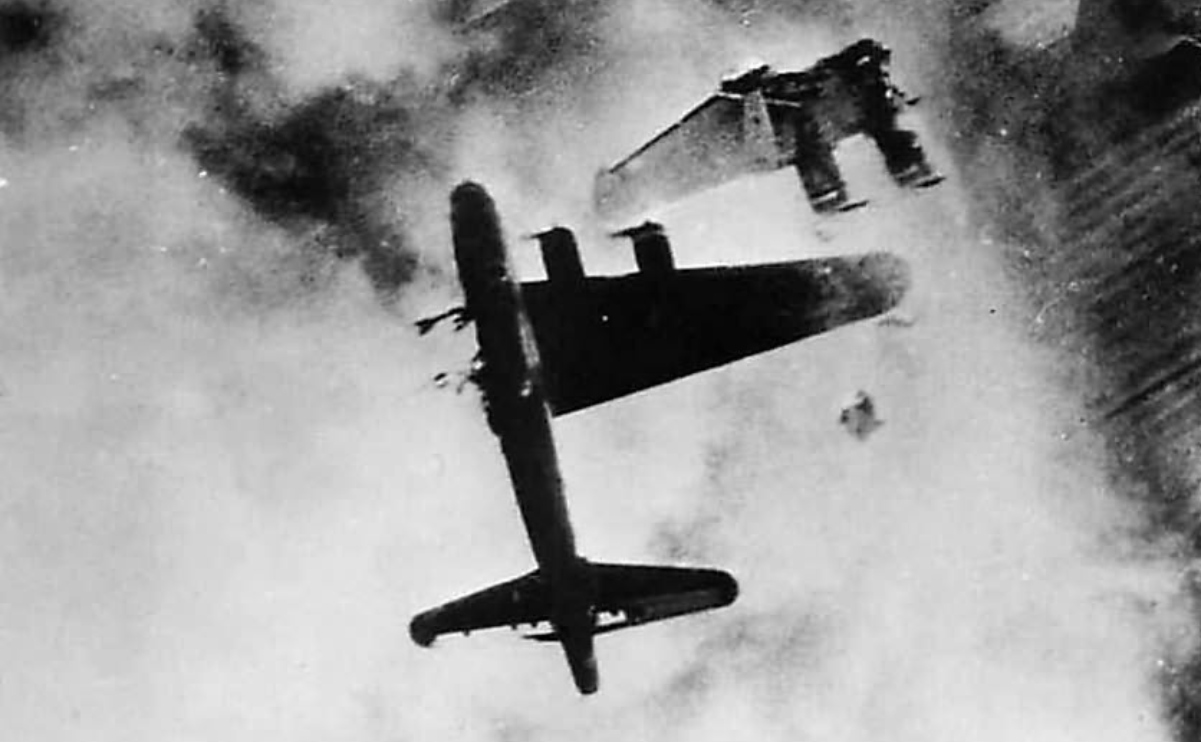
Magee was lucky. When “Snap! Crackle! Pop!” was riddled by German fighters on the St. Nazaire mission, on January 3, 1943, He found his way onto the flight deck, inside the seeming safety of the fuselage.

That’s when the B-17 blew up.

Magee was thrown out by the blast, semiconscious, and began to fall.

He had no parachute.

He had 22,000 feet to fall.

What broke his fall was the steel-and-glass roof of the St. Nazaire train station, made famous in studies by the Impressionist Claude Monet, obsessive, in 1877, about capturing light properly at different times of the day, experiments he could continue with the Rouen Cathedral and along the banks of the Seine.


The train roof broke Magee’s fall, and it broke Magee. One arm was nearly severed. one leg was broken, he suffered massive internal injuries and the surface of his body was peppered by bits of shrapnel. In a story not uncommon for the war in Europe, a German military doctor saved his life. The antiaircraft crew that had shot down another Morro Bay copilot offered him a hot bowl of potato soup once they’d recovered him, about to be shot by an irate German farmer. When he was on his way to a POW camp, he boarded a train with his Luftwaffe guard, who slipped the latches of the briefcase he was carrying, removed its contents, and wordlessly offered Lt. Robert Abbey Dickson a thick slice of sausage atop black bread.

Robert Abbey Dickson survived the war and over two years in a POW camp. He became the father of three little girls who adored their dad.
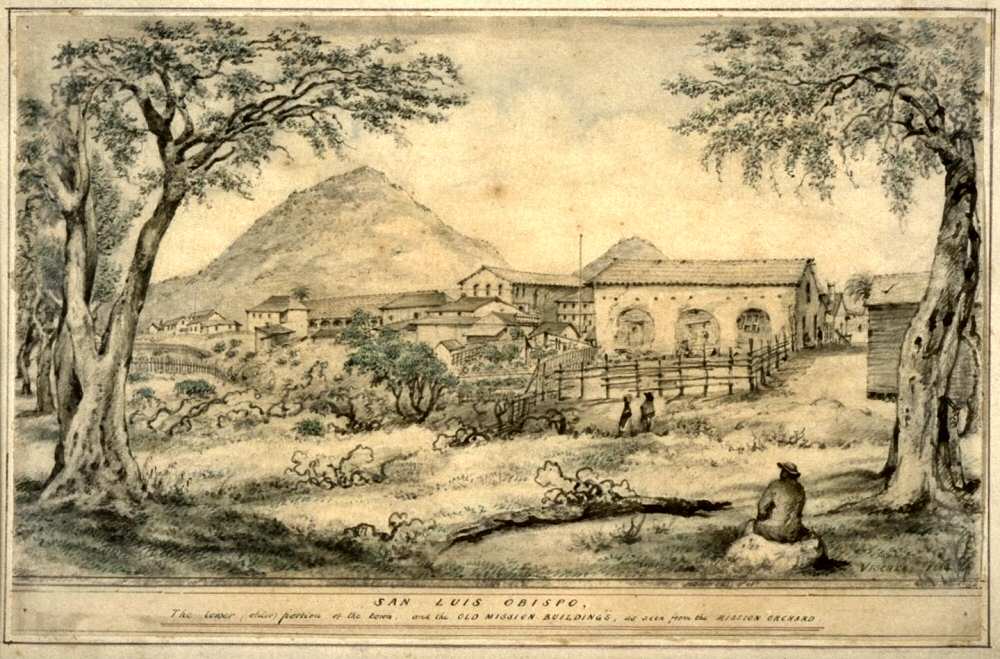


In the 1990s, Alan Magee returned to France for the unveiling of this memorial to the crew of “Snap! Crackle! Pop!”


That might be the end of the story, but of course it isn’t. Weeks later, another member of the 303rd Bomb Squadron was killed returning from a raid on the submarine facilities at Lorient. Clair Abbot Tyler was from Morro Bay. I once lived on Piney Way, the street where he grew up. The best man at his wedding, to a schoolteacher and descendant of the Dana family, was Alex Madonna, for whom my father worked.
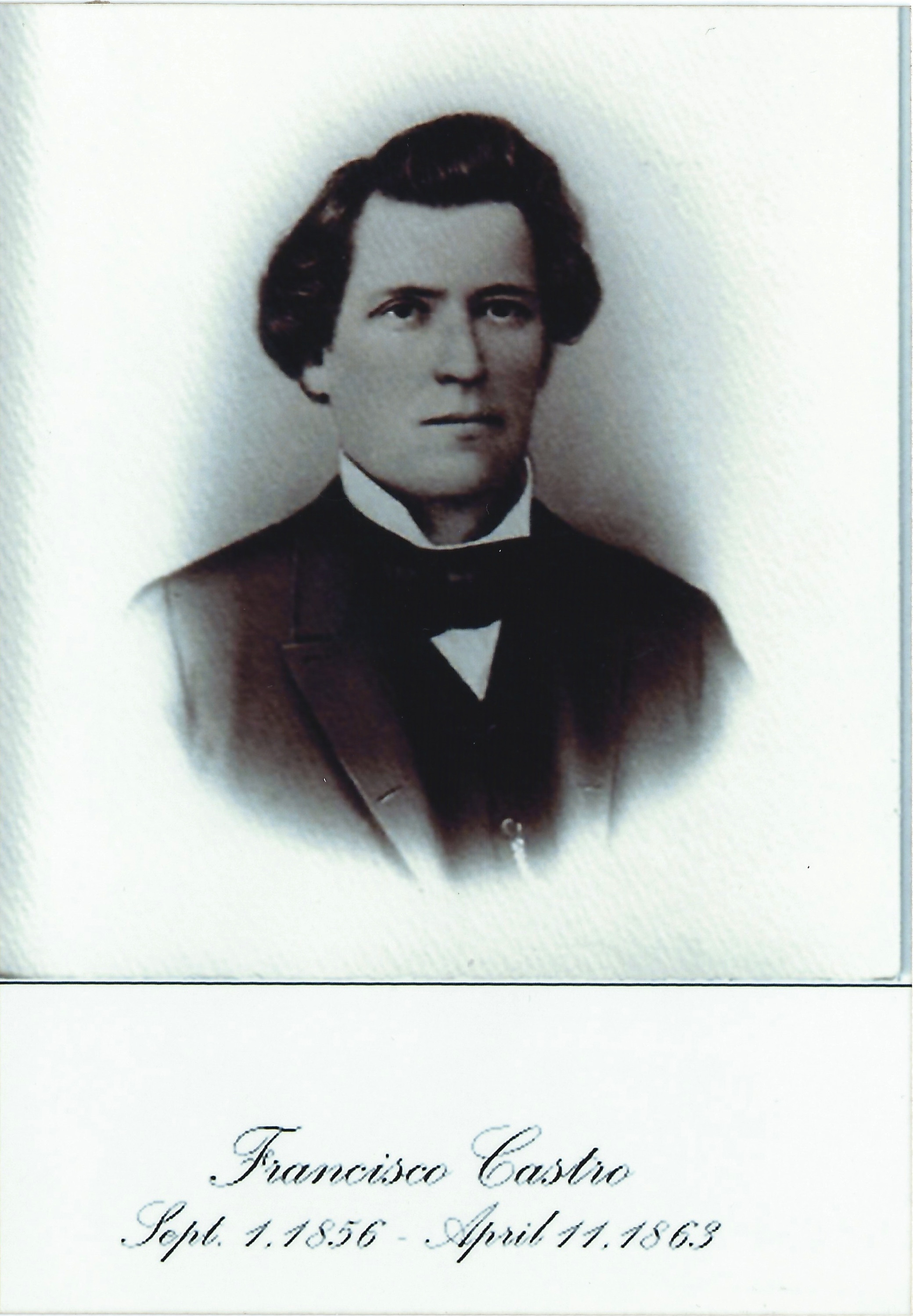
Like so many fliers I wrote about in Central Coast Aviators in World War II, Tyler left a little girl behind.


Here is his story.


And one final point, but this one about U-boats. There have been so many fine World War II films, and one of the finest is German, written and directed by Wolfgang Petersen. Das Boot (1981) humbled me in that it separated Germans from Nazis. In this scene, the crew sings a popular British tune from the First World War, mostly to infuriate the boat’s political officer. He got off easily. In The Hunt for Red October, Sean Connery strangled his political officer.


i

August 1914 and Ghosts of Crises Past

“Based on the highly provocative statements of the Former President of Russia, Dmitry Medvedev … I have ordered two Nuclear Submarines to be positioned in the appropriate regions, just in case these foolish and inflammatory statements are more than just that,” Trump said in Friday’s social media post.

So the president has repositioned two Ohio-class submarines, among our most potent offensive weapons, in response to a taunt from Medvedev, who pointed out that Putin’s Russia still has the destructive power of Brezhnev’s Soviet Union. In the process, announcing the movement of even two American submarines is a major faux pas—Trump is no more judicious in his use of than was Medvedev in his–in that even the vaguest citation of nuclear submarines is never to be disclosed.

Loose lips sink ships.


I couldn’t help but think of the contrast between this president’s intellect and that of John F. Kennedy’s. Kennedy was a quick study, not a deep one, but what separates these two so much is the fact that Kennedy read books. True some of them were James Bond novels, but one of them, in 1962, was Barbara Tuchman’s incredible history of the outbreak of World War I, The Guns of August. It’s a history so rich and yet so full of bravado, braggadaccio and deep hatreds that it makes, oddly, for compelling reading. The video below will explain a little more, but Kennedy was reading this book just before the Cuban Missile Crisis, and he averred then, and I paraphrase, that after being confronted with stupidity on such a massive scale, that he was not going to be the man responsible for starting World War III.

So, in October 1962, a historian I would not read for many, many years may, in fact, have helped to save my life.

Donald Trump, of course, does not read. He had to be told which side won the war that Tuchman wrote about. And he always rises to the bait, with his skin as thin as onion paper, as he did with the former premier.

By contrast, it was Robert Kennedy, in October 1962, who did the opposite. Khrushchev, when challenged about the presence of Soviet offensive missiles in Cuba, sent the White House a conciliatory letter. That was followed, and very quickly, by a letter that was threatening and bellicose.

It was Robert Kennedy who suggested replying only to the first letter, ignoring the second one altogether. That response provided a sliver of movement that eventually defused the crisis that threatened all of our lives, including mine, at ten, in the Upper Arroyo Grande Valley of California.

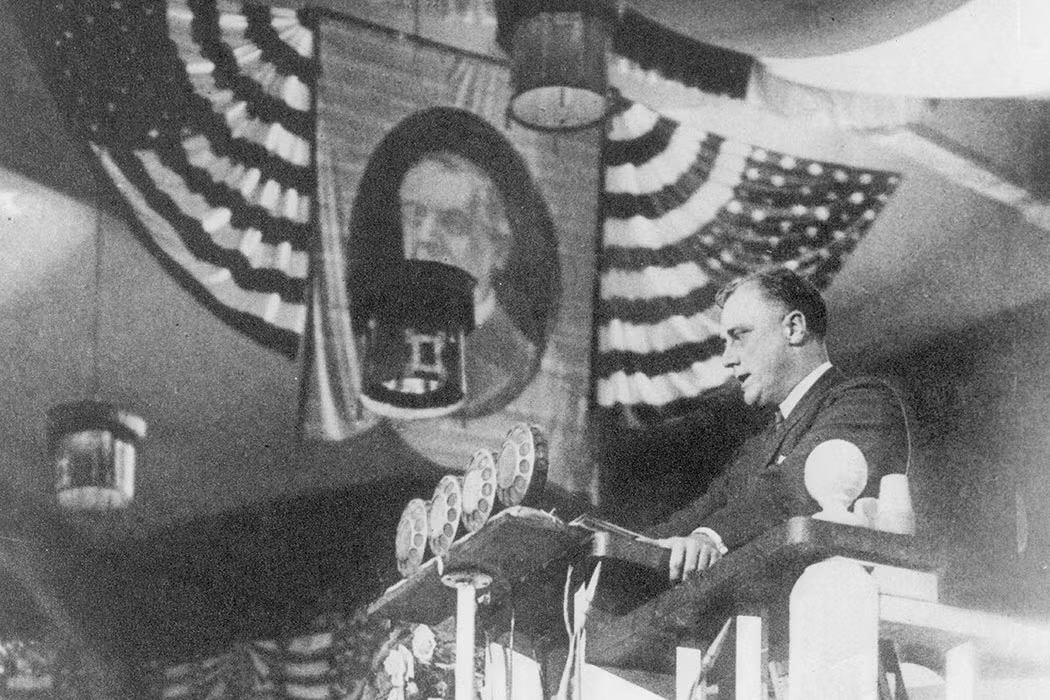
John and Robert Kennedy confer during the Democratic National Convention, 1960.


One of the most plaintive anecdotes of the earlier crisis, the one in August 1914, was the bellicose and fiercely-mustachioed Kaiser Wilhelm—he whose personality approaches that of Donald J. Trump— asking his military advisors, plaintively, if the German troop trains now bound for the Franco-Belgian frontier and for Russia couldn’t be called back.

No, sire, he was informed. It is too late for that. In the meantime, on August 2, an itinerant and luckless artist, Homburg in hand, reacted jubilantly to the war news when it arrived in Vienna. Corporal Hitler would be a brave soldier, gassed amid the carnage that followed and demented but calculating after the bloodletting was ended by the fractured peace at Versailles.


August 1914.


The Missile Crisis made such a deep impression on me that fifty years later, I turned it into a simulation for my AGHS AP European History classes. A preview is below: Each student was assigned a role as a member of EXCOMM, Kennedy’s advisers during the ten-day crisis. The genuine passion, even anger (especially the groups that featured Gen. Curtis “Bombs Away” Lemay) that animated them as they acted out their roles was one of the most satsifying lessons of my teaching career. They understood what the stakes were in October 1962.

The EXCOMM groups at work.


Aces and Eights: August 2, 1876

James Butler Hickock—“Wild Bill”—was only 29 when he was shot by Jack McCall in Deadwood. “Aces and Eights”—the poker hand he was playing—has been known ever since as “The Dead Man’s Hand.”

My first exposure to the man, when television screens were slightly bigger than postage stamps, was “The Adventures of Wild Bill Hickock.” Guy Madison played a squeaky-clean Pure American version of the gunfighter/lawman, with an equally squeaky-clean cowboy hat that never existed in 1876. Fortunately, his sidekick was the delightful Andy Devine, the stagecoach driver in John Ford’s 1939 Stagecoach, who rotundness, crowned by a an endearing squeaky voice, kept us from taking Wild Bill too seriously. Except for me, but I was only four.


I would not return to Hickock, thanks to the interventions of other TV gunmen/heroes, like James Arness, Richard Boone and Steve McQueen, until I began teaching U.S. History and American Lit at Mission Prep. Every year, I showed the revisionist Western Little Big Man because of its sweep, which included, for once, telling the Native American side of the story. Dustin Hoffman, too, was extraordinary. Before he became an adult Human Being—a Cheyenne—he had a gunfighter period, and it included this encounter with Wild Bill, played by Jeff Corey, an actor instantly recognizable for his many appearances in The Twilight Zone. Corey is excellent here, but it’s Hoffman’s squeaky leather that steals the scene.

It would be a good long time before I found a Wild Bill I’d want to hang with, if only fitfully. Jeff Bridges Bill is losing his eyesight, frequents opium dens, is adored by Ellen Barkin’s Calamity Jane (she looks like Calamity Jane not at all. Deadwood’s Robin Weigert is far closer to the mark, and she cleans up real good. She is lovely.)


What made Bridges even more real to me was that hat. It was amazing, and it looked like one of the hats the Hickock actually wore.

Bill liked his hats, even this one, from his buffalo hunter days..


Jeff Bridges, without a doubt, is one of my favorite actors, and his Bill is sublime, down to the gravelly voice he’s evolved into Rooster Cogburn’s. But he’s not my favorite Wild Bill. That honor, of course, belongs to Keith Carradine, who blends his portrayal, of a wasted man who knows he’s doomed, with unfolded moments of honor, taking up a hammer, for example, to help newcomers to Deadwood set up a hardware store or refusing to throw down when goaded by men almost as crude as the current president.

There was a certain nobility in Carradine’s character. I knew this scene was coming in Deadwood, and, like Calamity Jane, it took me a long while to get over it.


My father, born July 31, 1918

My Pop’s birthday anniversary (it would be #107) is tomorrow. He’s in this photo.

My Aunt Mildred (She preferred to be called “Aunt Bill.” Mildred, that unfortunate name, comes from a marriage connection to Washington’s Aunt Mildred) and Dad in Raymondville, Missouri, about 1936. They’re with Blackie the dog.

Blackie had just been given away for “botherin’ sheep,” but this is the moment when he arrived home after a forty-mile walk, running away from his new home in Rolla to be back with his people in Raymondville.

I inherited a little bit of an Ozark Plateau accent from these people; I’ve grown out of most of it, but here are some samples:

“July” is pronounced with a distinct emphasis on the first syllable.

“Insurance” is likewise.

“Theater” is pronounced “Thee AY ter.”


When I was in college and staying with kin near Raymondville, I was walking to the local burger stand in Licking, Missouri (MLB baseballs were once manufactured there) for some deep-fried mushrooms. Once you get deep-fried mushrooms fixed in your mind, they do not go away. I heard a voice.

BOY!

Kept walking.

BOY!

Damn. I heard it twice. It was a man calling me from a pickup truck. He just wanted directions. He meant no harm. I restrained myself, because he had a rifle rack. But I was steamed.

BTW: Deep-fried pickles, from The Heist in Lexington, Missouri, where my great-great-GREAT grandpappy fought a Civil War battle (I think his general’s commission got lost in the mail, a peril when you choose a confederate form of government) are beyond even deep-fried mushrooms. They are transcendental. The restaurant’s called The Heist because it was once a bank, robbed by Frank and Jesse James.


I was delighted to read that a Bakersfield-based restaurant, “Honey I’m Home” has opened up a Pismo Beach branch. The menu is pure Texas County, Missouri:

Chicken-fried steak and eggs, hash browns, biscuits and gravy.

Hamburger steak and eggs, hash browns, biscuits and gravy.

Deep-fried catfish and eggs, hash browns, biscuits and gravy.

I haven’t tried the place yet nor will I tell my cardiologist if I do, but the menu fits my Dad and me perfectly.


Before I go on anymore, I need to pause for my grandmother’s mashed taters. She was a delegate to the 1924 Democratic convention in Madison Square Garden, the granddaughter of a kinda sorta Confederate brigadier general, and that woman, although scary (she’d been a rural Ozark Plateau schoolmarm and swung her cane liberally when we tested her), could flat-out COOK.

https://jimgregory52.wordpress.com/2018/10/04/grandma-gregorys-mashed-taters/


My college friends and I once found a handsome catfish struggling from a trotline over a creek near Columbia, Missouri. We liberated him. Then we fried him. He was delicious. Parenthetically, water moccasins inhabit Missouri creeks. You have to really, really want some deep-fried catfish to wade in after one.

My college friends also enjoyed exploring nearby caves. You get absolutely filthy with deep-down Missouri clay, but finding cave explorer graffiti left by University of Missouri students in 1874 makes you pretty happy anyway.


My father was a marvelous joke-teller and was especially fond of Spoonerisms. One of his favorites was about the Empress of Iran, the Shan. (A mythical title). I don’t remember the joke except for the punchline:

“Where were YOU when the fit hit the Shan?”

Another, about Roy Rogers killing the mountain lion that ate his cowboy boots:

“Pardon me, Roy. Is that the cat that chewed you new shoes?”


Dad was also a repository of pithy sayings, some from the Great Depression, some from World War II:

“Use it up, wear it out. Make it do or do without.”

“When in danger or in doubt, nose her down and bail out.”

Which contrasted with:

“Forward ever! Backward never! Sink or swim! Do or die!”


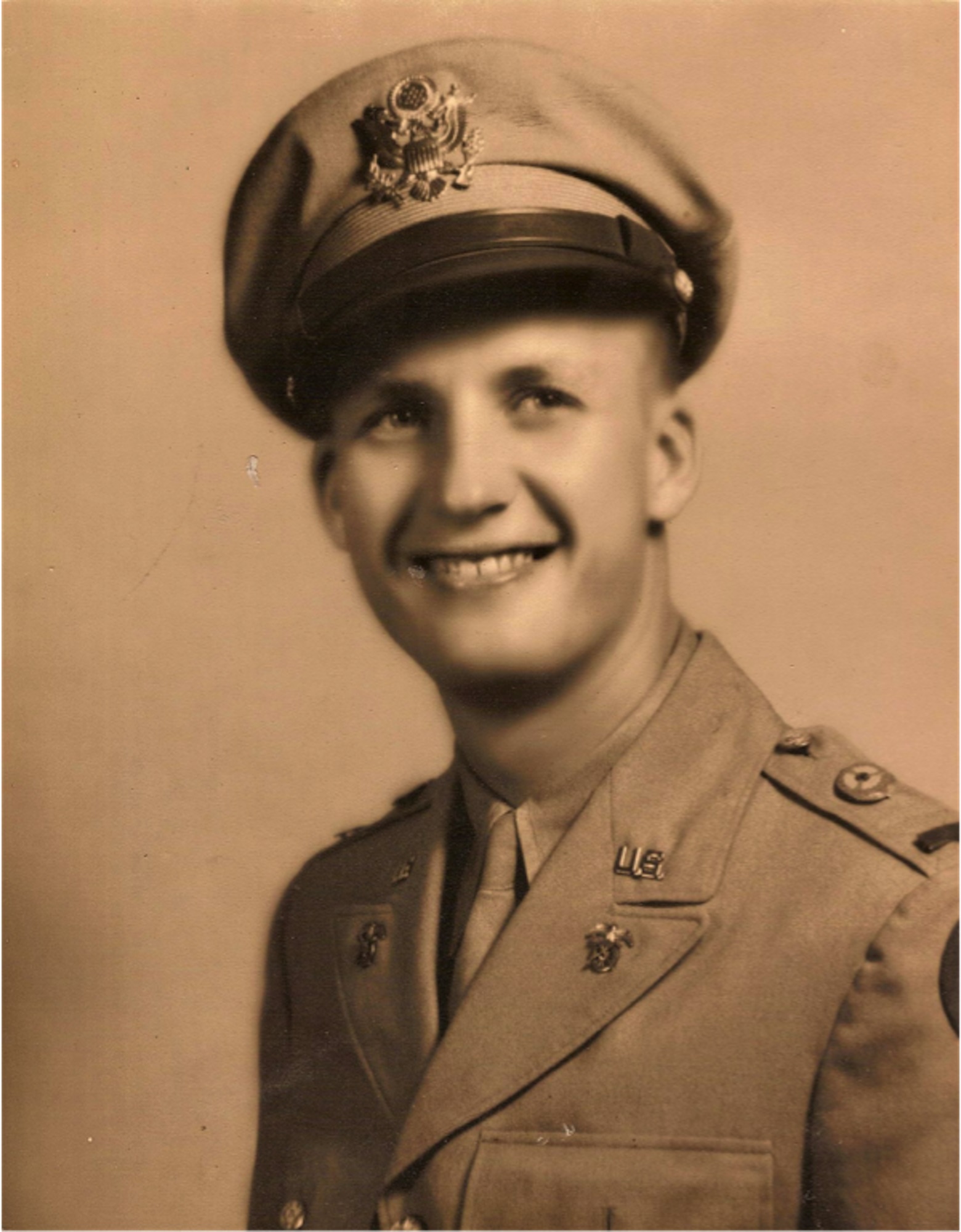
Lt. Dad (Robert Wilson Gregory), 1944.

He came home from World War II Europe with a profound and colorful vocabulary, which we discovered every time he tried to adjust the TV antenna on the roof, and us just below:

“A little more! A little more! STOP! Too far!”

From the roof: ARGDIDDLYGMRPHSONOF!!!VILEBASTARDSSNAFUFUBAR!


His greatest gift to me was teaching me how to tell stories. His only equal is my friend and mentor, Cal Poly Emeritus History Professor Dan Krieger. They taught me how to teach, which led me to thirty-one of the happiest years of my life, knee-deep in teenagers.

At least I wasn’t knee-deep in water moccasins.

Me and my AP European History students, Arroyo Grande High School. San Luis Tribune photo.

“This is the Army” (1943)

Elizabeth and I were watching this film, featuring this Irving Berlin song, and modestly enjoying it.

And, of course, being raised proper by our World War II-generation parents, we began to wonder where the Black GI’s were. Not one in sight.

They were in London, where their dash endeared them to most Londoners. There was an outburst of “race riots,” from San Luis Obispo to Greenland, the same year as this film.

No one—no one—marched and sang cadence like Black American soldiers, including these young men on a British street.

And their dash was often equaled by their sass. This soldier, with his M1 Garand, seems to be outpacing the White column beyond him.

But you didn’t see Black GIs in This Is the Army. Then this scene appeared, in all its glory, in blackface, even with blackface transvestites.

Only 432 World War II American servicemen were recipients of that rarest of honors, the Medal of Honor. Not one of them was a Black man.

It took the Army until 1997 to bestow the Medal of Honor on these soldiers:


By 1997, Baker was the only one of this group still alive. Here is his Medal of Honor citation:

For conspicuous gallantry and intrepidity at the risk of his life above and beyond the call of duty: First Lieutenant Vernon J. Baker distinguished himself by extraordinary heroism in action on 5 and 6 April 1945. At 0500 hours on 5 April 1945, Lieutenant Baker advanced at the head of his weapons platoon, along with Company C’s three rifle platoons, towards their objective, Castle Aghinolfi – a German mountain strong point on the high ground just east of the coastal highway and about two miles from the 370th Infantry Regiment’s line of departure. Moving more rapidly than the rest of the company, Lieutenant Baker and about 25 men reached the south side of a draw some 250 yards from the castle within two hours. In reconnoitering for a suitable position to set up a machine gun, Lieutenant Baker observed two cylindrical objects pointing out a slit in a mount at the edge of a hill. Crawling up and under the opening, he stuck his M-1 into the slit and emptied the clip, killing the observation post’s two occupants. Moving to another position in the same area, Lieutenant Baker stumbled upon a well-camouflaged machine gun nest, the crew of which was eating breakfast. He shot and killed both enemy soldiers. After Captain John F. Runyon, Company C’s Commander joined the group, a German soldier appeared from the draw and hurled a grenade which failed to explode. Lieutenant Baker shot the enemy soldier twice as he tried to flee. Lieutenant Baker then went down into the draw alone. There he blasted open the concealed entrance of another dugout with a hand grenade, shot one German soldier who emerged after the explosion, tossed another grenade into the dugout and entered firing his sub-machine gun killing two more Germans. As Lieutenant Baker climbed back out of the draw, enemy machine gun and mortar fire began to inflict heavy casualties among the group of 25 soldiers, killing or wounding about two-thirds of them. When expected reinforcements did not arrive, Captain Runyon ordered a withdrawal in two groups. Lieutenant Baker volunteered to cover the withdrawal of the first group, which consisted mostly of walking wounded, and to remain to assist in the evacuation of the more seriously wounded. During the second group’s withdrawal, Lieutenant Baker, supported by covering fire from one of the platoon members, destroyed two machine gun positions (previously bypassed during the assault) with hand grenades. In all, Lieutenant Baker accounted for nine enemy dead soldiers, elimination of three machine gun positions, an observation post, and a dugout. On the following night, Lieutenant Baker voluntarily led a battalion advance through enemy mine fields and heavy fire toward the division objective. Lieutenant Baker’s fighting spirit and daring leadership were an inspiration to his men and exemplify the highest traditions of the military service.

The Dylan song that always brings tears to my eyes

When “Knockin’ on Heaven’s Door” appeared in Pat Garrett and Billy the Kid, it was complemented by two fine actors, Katy Jurado and Slim Pickens. Pickens is facing imminent death—you can see his realization of this, and then his light beginning to fade, In Jurado, you see the love she carries for him. Surprisingly—maybe not—the tenderness of the scene was directed perfectly by Sam Peckinpah.

Avril Lavigne’s version, framed as an antiwar song, is incredible.

The “Playing for Change” people produced this Afro-influenced version, but the harmonica could’ve been Dylan’s own.


There’s not a version of this song I’ve heard that I dislike, including from The Dead, Guns ‘n’ Roses, another “Playing for Change” version, also Afro-influenced and at least one “America’s Got Talent” cover. This one, with Dylan and Tom Petty, kinda seethes. The background singers are miraculous.


It’s not a” “girl” song, you might say. But I give you Avril and this woman, Leire. Born in the Basque Country, she’s performing her version near Leicester Square, in London There’s a chance that her version is my favorite.. Wow.


And, to get off-topic, one more from Leire, this time from Pink Floyd.


July 20, 1944: My role in the plot to kill Hitler

Tags

, , , , , ,

Why can’t my generals be more loyal, like Hiter’s generals? Donald Trump to Chief of Staff Gen. John Kelly.

Hitler’s generals tried to kill him, and they almost pulled it off, Kelly replied.

The most famous example of Kelly’s history, which is factual, as opposed to the President’s knowledge of history, which is nonexistent, is the July 20, 1944 bomb plot, engineered, as we all know, by Tom Cruise (Valkyerie), not my favorite actor, with an assist by Bill Nighy, who is.

The story is familiar to those who study history. Claus von Stauffenberg, a decorated German officer who kept losing parts of himself (one eye, one arm), was, like most of modern Washington D.C., disgusted with his nation’s leader. Unlike most of D.C., he was willing to do something about it.

At Hitler’s bunker in East Prussia, the Wolf’s Lair, Stauffenberg nudged a briefcase full of plastique under the map table to the edge of the Fuhrer’s kneecaps. He then discreetly left. Another officer, wanting a better view of the movement of the mythical panzer divisions–reinforced, equipped and sped into action across the map—Normandy at one end and the Russian frontier at the other, by Hitler, nudged the briefcase out of his way and behind a support that held the map table up.

The finicky offer painted the wall when the bomb detonated.

The Fuhrer had his pants shredded. Sadly, the explosion did not kill him at all.

Hours later, Stauffenberg was shot, the lucky fellow, unlike other senior officers, Bomb Plot plotters, who were hanged with piano wire, a procedure filmed and played for Hitler’s pleasure.

Claus and Nina von Stauffenberg in their 1933 wedding.


Our piano-wire days are not here yet, but we need to be patient. We’re firing already, nicely, on all eight cylinders of Gestapo.


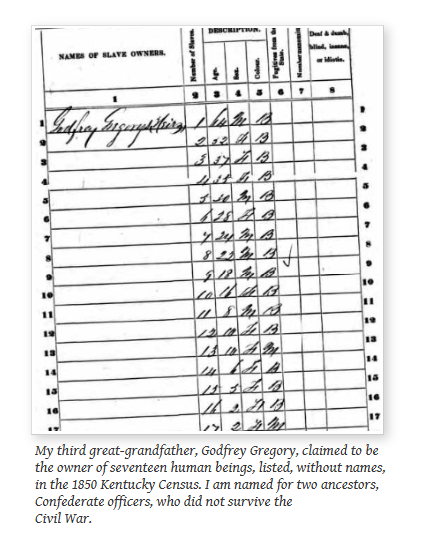
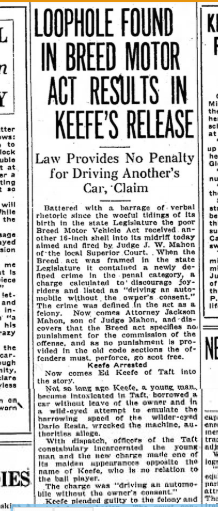
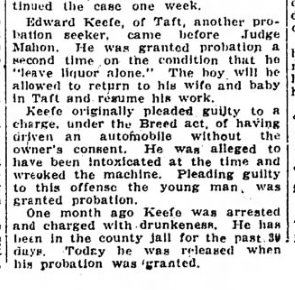
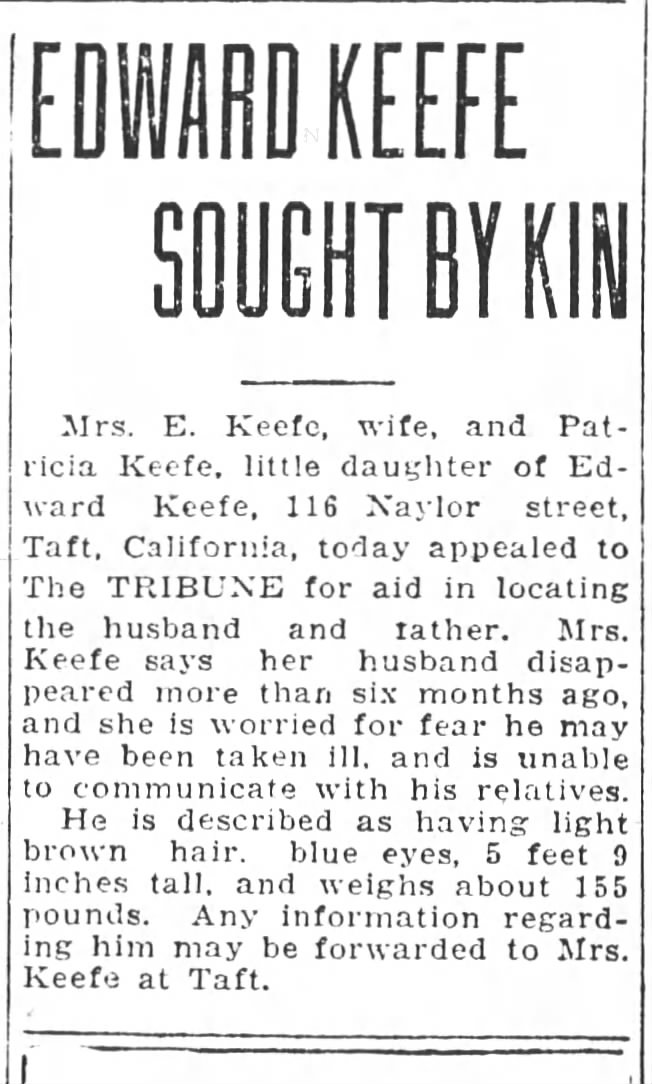
The doomed nationalist, Stauffenberg, was from Baden-Wurttemberg, and so were the ancestors of my beloved Grandma Kelly, whose maiden name (Kircher, from the word for “Church”) was blended with Irish blood, which may have led to two Irish husbands—one Keefe, a charming drunk and a car thief, my biological grandfather; one Kelly, a cop, my real grandfather.

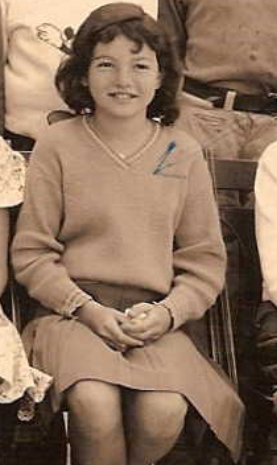
My grandmother and my mother, circa 1925, about when the first Irishman, Ed Keefe, disappeared forever.

Baden-Wurttemberg, where the bomb plotter and a California gold chlorider (my Grandma Kelly’s father, Michael, who worked in a gold-processing mine and mill now beneath Lake Shasta) is stunningly beautiful.. On the left is the town where the Kirchers lived, until the 1830s; on the right is the Evangelical Lutheran church were Michen, my third great-grandfather, was baptized.

So there’s little chance that Stauffenberg and I are distant cousins. I wouldn’t mind it.

That’s not all. Oh, no.

Hitler was examined intensively after the bomb’s detonation had reduced his pants to crenelated culottes, There was not damage Down There, not that der Pilz des Anführers (“The Leader’s Mushroom”), a term suggested by porn star and Trump couplet and strumpet Stormy Daniels.

But up there? Here’s where I come in. I attended Stanford University.

Okay, for a week.

I studied the history of Depression, New Deal and World War II America with Dr. David Kennedy—an amazing man—who’d written the Pulitzer Prize-winning account of those years, Freedom from Fear. On one of our breaks—all of us high-school history teachers—we toured the Hoover Institute.

To refresh your memory, Hoover accomplished this in the 1932 presidential election (in red).


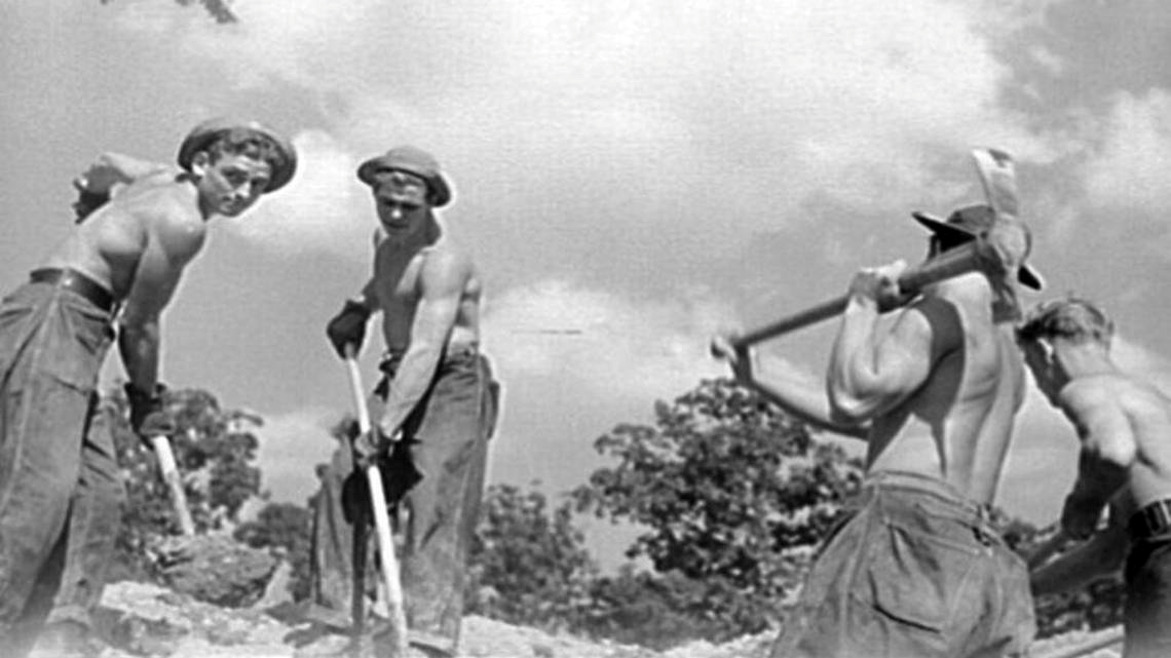
He was succeeded, of course, by some fellow from upstate New York who gave my teenaged father a job in relief work, distributing food to proud Ozark hill people whose starvation, briefly, overcame their pride, who sent CCC teenagers from New York City to Arroyo Grande to reclaim the soil that had been devastated by erosion, whose federal employees built school buildings extant in Arroyo Grande, whose vice president appointed my father to Officers’ Candidate School during World War II, whose tour of Camp Lejeune in December 1944 was guided by a Marine, a motor pool driver, a sergeant, a woman, from nearby Oceano, California, who’d lost her brother two years before on Tarawa.


So there’s all that.

The Murrays are all that. Our alleged president isn’t. He gives us nothing, sacrifices nothing, cares nothing for us, deserves nothing from us.

But at the Hoover Institute, an incredible repository, I was allowed to hold the X-ray of Hitler’s skull, taken after the misdirected explosion at the Wolf’s Lair this day in 1944. I have not seen an x-ray of our leader’s skull, but I have seen this one.


What I’ve seen instead, and just in the last few days, are President’ Trump’s ankles. They are grossly swollen, explained away glibly by the latest of his snake-oil doctors, like the one who proclaimed him the fittest man ever to occupy the White House.

But I’ve learned not to take his doctors’ word for anything. A more hopeful explanation, after a steady diet of Big Macs, incinerated New York steaks, gray inside, and colored only by Heinz ketchup, Kentucky-fried buckets whose grease is wiped clean on the armrests of Air Force One, double Mar-a-Lago helpings of chocolate cake with ice cream—he eats piggishly in front of his guests, allowed slivers of cake—complemented by exercise that consists of driving a golf cart across painfully manicured—by immigrants–putting greens. So there is a good chance that those bloated ankles portend congestive heart failure.

And, with God’s help, and may it be soon, the arteries that supply his heart and his brain will collapse.

He will not die for awhile.

He will stare, silent and furious, just as Stalin did at his Inner Circle after his stroke—many of them were soon the be shot at the Lubyanka, the secret police slaughterhouse in Moscow—at the the White House eunuchs who’ve abetted his every aberrant behavior, most of all the predatory ones, and they will have nothing for him, nothing to save him from the drowning his cruelty has earned him.

The cruelty he’ll leave behind is vast and invasive. The healing will take years. The war that lies ahead of us will be the hardest we have ever fought. To fight it, we need to look beyond ourselves.


Just another day at La Casa de Gregory

We brought Elizabeth home from the hospital this afternoon with one sprained and one broken ankle. It was a team effort: Brother-in-law Rick, sister-in-law Evie, #2 son Thomas, cheering by sister Sally and niece Becky. Thank the Lord.

I was about to work out when she called. She’d fallen on Dodson Way. Oh, crap. Was it the knee she shattered a year ago? Nope. Ankle(s).

When I arrived, some nice Dodson Way people were minding the dogs and comforting Elizabeth until the ambulance and the fire truck, whose sirens we could hear from WAY off, arrived.

They said you could hear the final artillery barrage on July 3 at Gettysburg in Harrisburg,, Philadelphia and Baltimore. The sirens reminded me of that.

Four cute young men took care of her.

The ambulance guys were very solicitous. I asked one if Frank Kelton still owned the ambulance company. We were altar boys together at St. Barnabas. Nope, the ambulance guys replied. Frank’s retired, but his son is the boss now.

$3500 for the ambulance? one cute young man asked. Or, your husband could drive you to the ER.

Two crazy kids, 1986 and 2021.

We chose the latter.

So I pull up to the AG Community Hospital with one wife in pain, one Irish Setter and one Basset Hound. I dash inside.

Dash, dash dash.

They point me to a wheelchair.

Wheel, wheel, wheel.

STAY, doggies!

I take Brigid and Walter home. Then I change out of my stinky gym gear into a nice shirt and shorts. I hear the front screen door click.

Sprint, sprint, sprint.

Brigid is in the front yard, doing puzzled orbits. She looks like she’s about to take off. Maybe, she’s thinking, there are ducks nearby for me to find?

NO! I shout. She stops. IN THE HOUSE! She obeys.

Wait. Didn’t we have TWO dogs? Confirmed. So this is what I do next:

WALTER!

Walter?

Walter Walter Walter Walllll-ter?

Repeat 17 times.

He’s not in front. He’s not in back. He’s not at his girlfriend Millie’s at the end of the block.

WALTER? Okay, I’m almost sobbing.

Walter and Millie. True love.

Meanwhile, my wife is in the ER. Without me.

I walk again to the end of the block. Then to the other end. Then I get in the car and circumnavigate Fair Oaks two and a half times.

I come home, defeated and disconsolate. Then I knock on Jim, our next-door neighbor’s door. Walter was there all along.

Basset hounds are notoriously stubborn. And selectively deaf.

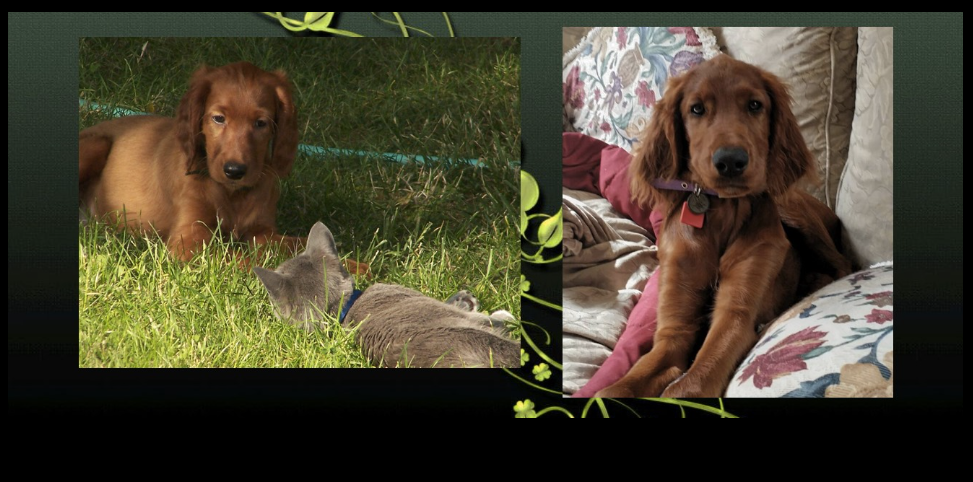
But to give you an idea of what Basset hounds mean to me, I smoked a pack of cigarettes in the two days after Wilson, our first Basset, died. I hadn’t smoked in forty years. That’s Wilson, at left, and Walter, puppyish, on the right.

But I had to slap on after-shave and squeegee on deodorant. Back to the hospital.

The receptionist suggests politely: “Your wife’s credit card isn’t going through. Would you like me to try it again?”

A few minutes later: “Would you like me try it again?”

I’m flop-sweating now, because I was going to go to SESLOC to get a new credit card for the one I think is lodged somewhere in the washing machine. We had no backup credit card, and, true, we have a debit card, but it was already $187 overdrawn.

“Would you like me to try it again?” She was so nice about it.

Fourth time. It worked. “The problem was on our end,” she admitted. I was so nice about it.

When we got home, we found out that the card had, indeed, been charged four times.

I thought about telling them that Dr. Cookson, who founded the hospital, was my doctor when I was little, but the Frank Kelton story didn’t go over all that well, so I held my tongue.

As I did when they kept calling out a woman named Maria in the waiting room. I had to put my hands around my own neck to keep from belting out “Maria” from “West Side Story.”

Getting home was as painful for Elizabeth on crutches and a borrowed wheeliemajig . Thank goodness, Thomas had made dinner. It just took awhile to get Elizabeth inside so she could enjoy it.

We got her situated in the same bed where she’d lived for so many weeks last summer with the shattered kneecap.

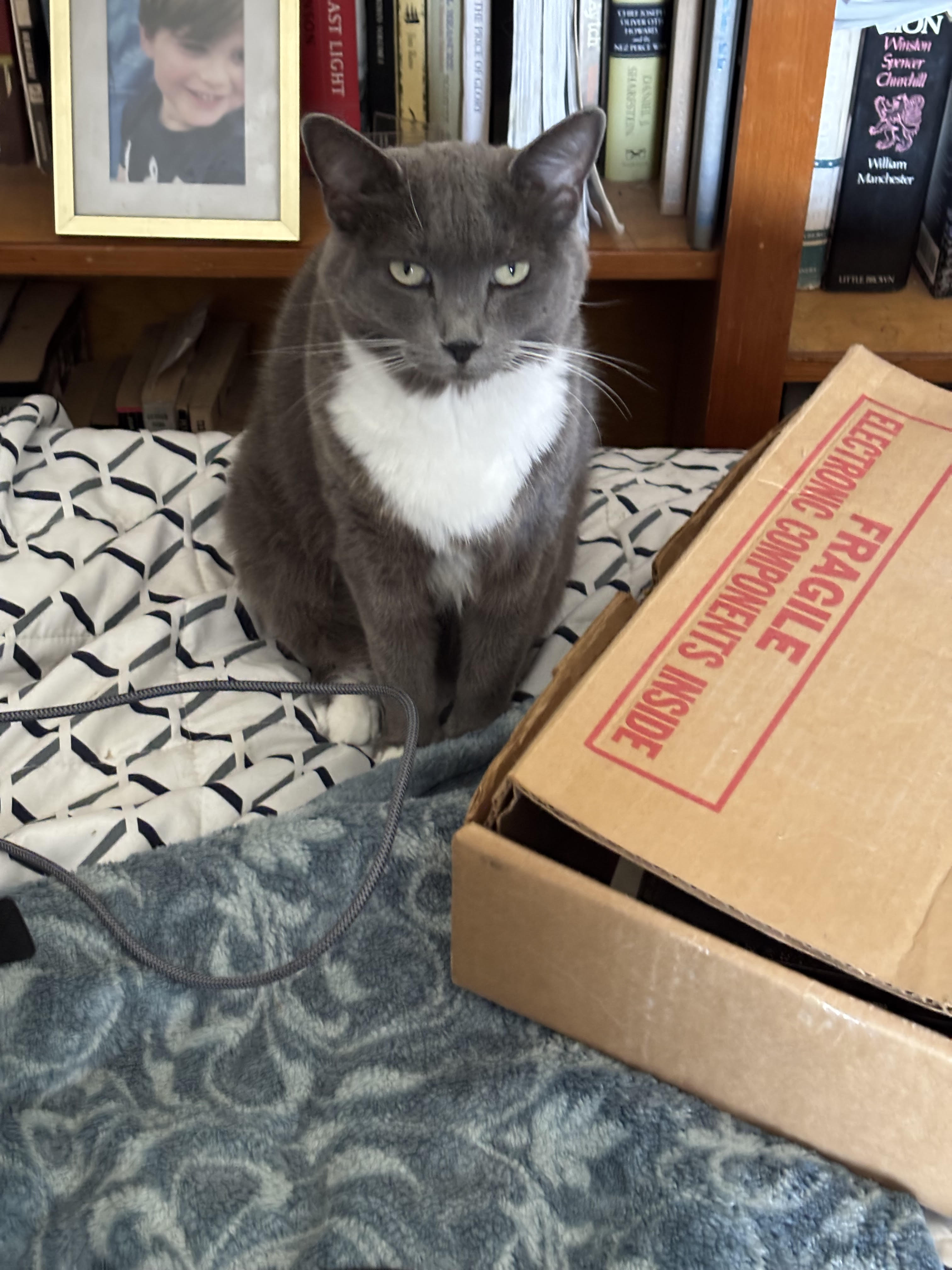
Winston the Cat, Wilson the Basset and Brigid the Irish Setter all squeezed in close to Mom.

Elizabeth broke her right ankle. In a game against the Steelers, her dad broke his left ankle.

Brigid has occasional seizures and the medication prescribed her sometimes makes her forget what her hind end is doing.

Yup. She forgot.

Brigid, looking perplexed on St. Patrick’s Day.

To give you an idea of how wet the bed was, I will have to refer you to Pharoah’s army getting drownded in Cecil B. DeMille’s 1956 “The Ten Commandments,” which the four-year-old me saw at the Fair Oaks. The struggling horsies [SEE: Jim Morrison, the Doors, the song “Horse Latitudes,” which includes the line “Mute nostril agony”] forever traumatized me, although not quite as much as Bambi’s mother.

That much pee.

So I/we changed the sheets.

Change, change, change.

Do you feel a wet spot?

Yes.

Do you feel a wet spot?

Yes.

I think we have it all.

Wait. She got this pillow, too.

* * *

Just another day at La Casa de Gregory.