• About
  • The Germans

A Work in Progress

A Work in Progress

Tag Archives: family

The Dodger Stadium Case

01 Monday Dec 2025

Posted by ag1970 in Uncategorized

≈ Leave a comment

Tags

baseball, chavez-ravine, dodgers, family, fiction, life, short-story, Writing
You don’t have to believe me, not one damn bit. I don’t need your sympathy, but, many years ago, I could’ve used a Corona Familiar. I was stranded two miles northwest of Loma Enjuta, California, with the radiator steaming the way Mt. St. Helens would steam a year later. It was a miserable moment in what turned out to be the most satisfying case of my time as an L.A. private detective.

I was giving a lift to the little boy I’d found by the side of the road next to his dead horse. He regarded the Buick’s breakdown and me gravely. So did the buzzard with the head shaped like your grandfather’s Adam’s Apple. The buzzard was not in the Express Line at Taco Bell. He was content, instead, with his dark sepulchral wings spread in the sun, to wait for his dinner—that would be us–to be properly cooked.

I smiled bravely at the little boy. We’d spoken enough, in Spanglish, for me to understand that his horse, old enough to be a mount in Pancho Villa’s dorados in 1916, had decided that in this heat, it was better for him just to lie down. So, he did.

The little boy lived in Loma Enjuta, and he probably would catch hell for coming home alone, so our conversation grew a little stilted. But at least he smiled faintly back.

I’d come to this place, so bare that it makes the nearby Salton Sea look like Lake Tahoe, to look for a missing old man, Patrick O’Connell Jimenez, a sugar beet farmer, who’d gotten off the Union Station Greyhound stop in Los Angeles and then vanished.

The Jimenez family came into my office smelling like sugar beets. I’ve smelled worse smells. I once passed an Amarillo stockyard at noon.

But they were Irish Mexicans, like the actor Anthony Quinn, and so maybe my favorite kind—although, to be truthful, I like Mexicans and Mexican Americans of any variety, and, even better, like them if they have a little sugar beet money.

I came south two weeks after that interview, when the Buick overheated. I  hadn’t found much up in L.A. and hadn’t gotten much help from LAPD Detective Sgt. Lopez, who’d looked at me dubiously and asked

You want my help in finding WHAT?

A lost Mexican.

A lost Mexican? In L.A.?

He was old.

That helps immensely.

And he would have smelled.

So does my abuela.

So now I needed information about Patrick O’Connell Jimenez. I needed to interview again his family, maybe, but not likely, the local priest, maybe, but even less likely, the Loma Enjuta Police.

The buzzard ruffled his wings. He was hungrier now and we weren’t dead enough yet.

“Ha!” I cried for the little boy.

The steam coming from the Buick’s radiator had subsided to the point where I could unscrew the cap without getting my arm blown off. I refilled the radiator from the Joad Family Model Waterbag, checked for potential leaks to be plugged from the bucket of Bazooka bubble gum in the back seat, and started the car.

It was a grand car, a 1957 Roadmaster, emerald over cream, with the classic bullet holes alongside the hood. I loved the steering wheel, too, big enough for a World War II fleet carrier.
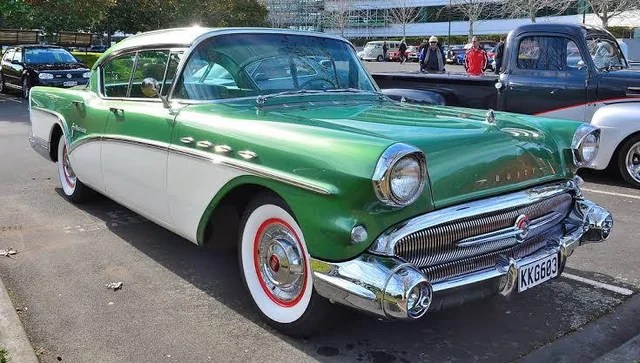
The Buick


The little boy and I got back in and back on the road. I managed to scrape together enough Spanish, free of conjugated verbs, and I pulled  a fifty out of my wallet, asking my passenger if he’d care to translate for me. He agreed. Happily. He began to blow Bazooka bubbles. His name was Carlos.

You know you’re getting close to a town like his from all the white plastic Ralph’s shopping bags entangled in the sagebrush. This is civilization in California.

Carlos got me to pull over the parking lot of a tamale house from the shoebox school of architecture. He opened the screen door and held it for me gingerly. Once I was through, he dashed inside and the door imploded, smacking us both in the ass.

It was his mom’s place. He was relieved because he wasn’t in trouble. The old horse was an old horse. His mother’s eyes liquified a little when, I think, Carlos told her how nice I had been. She made me sit down and prepared a big plate of chiles rellenos surrounded by rice and liquidy refried beans, the way I like them. The meal came with some one-shade-short-of-thermonuclear salsa, the way I like it, and a stack of fresh corn tortillas for the scooping.

Fresh corn tortillas, unlike sugar beets, have the most the most beautiful smell on this here Planet Earth.

I was happy in my scooping and, to the buzzard’s regret, could have died right then and there a happy man.

But Carlos was on the payroll now, and his mom knew the Jimenez family. My Spanish was still alive enough to capture about every fifth word, but the one that stuck was “Doyers.”

“Dodgers?” I asked Carlos.

That was it. The old man had gotten a wild hair and announced it here while scooping his his frijoles.. He’d decided to take the bus taken the bus north for a three-night homestand between the Dodgers and the Gigantes of San Francisco. Don Sutton was one of the L.A. pitchers, and Patrick O’Hara Jimenez loved him. Pedro Borbon, whom the old man liked no better than a scorpion in his work boot, was one of the Giants’ pitchers. His hatred for Borbon was inexplicable and visceral.

Don Sutton.
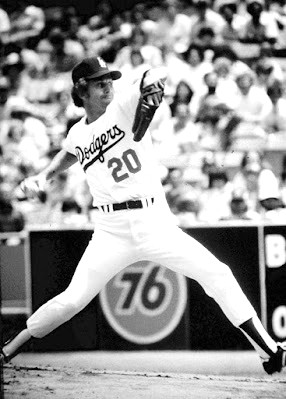


Now, I had discovered purpose for his visit north. Carlos and I then drove to the police, who were Oklahomans and thinly pleasant, with thin blond mustaches in need of Miracle-Gro. They were stumped, too, and not terribly bright. We tried the Santa Ines de Bohemia parish house, where the young priest, Father Herman, was asleep after some vigilant taste-testing of communion wine.

No help there. Carlos took me for one more stop, the Jimenez home. Sugar beets will not get you Mt. Vernon, but the Jimenez home was large and kind of upscale Bakersfield.


Patrick’s daughter, Scarlett Dolores, and his son-in-law, Alvino, sat me down and brought me that Corona and Carlos a lemonade. I’d liked them in my office and that didn’t let up now in their living room. We were parked on the sofa in front of the family’s massive Curtis-Mathes console television, the size of a coffin, big enough to contain a man the size of, say, Don Drysdale.

Scarlett said her dad loved watching the Dodgers on the big color screen and, when Borbon pitched for the Giants, the usually dignified old farmer hurled thick and vile Spanish insults at the Dominican starter.
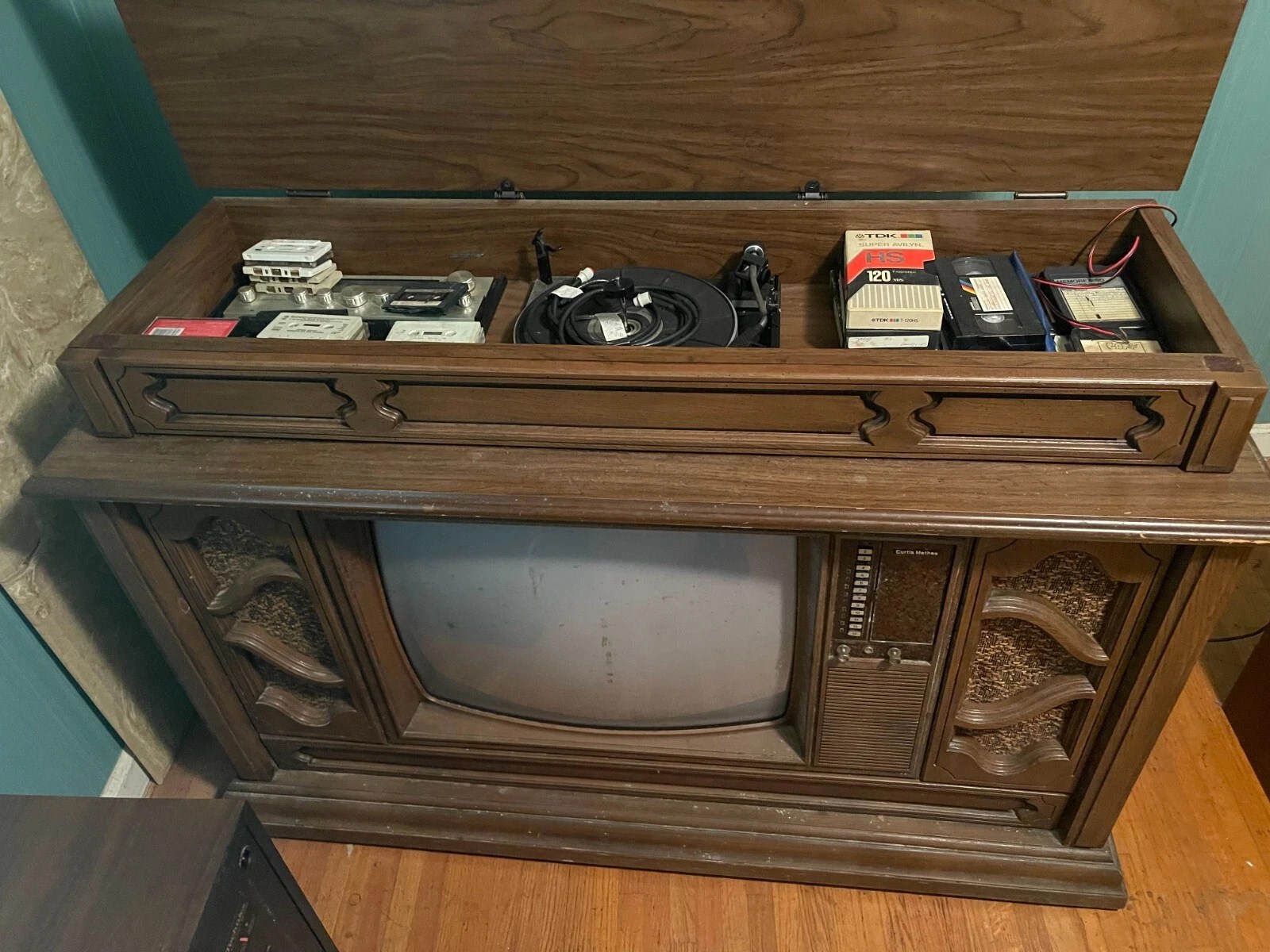
A well-worn 1970s Curtis-Mathes console. The only feature it lacked was a defibrillator.


“Go home and chop sugar!” Patrick would shout and would add verbiage that the couple could not repeat in front of Carlos. Patrick hated cane sugar, too.

But they had not much more to offer. Fr When the old man decided to vanish, he did a thorough job—-but they thought a sudden and impulsive trip to Chavez Ravine, where he could yell at Borbon in person, was at least plausible.

I got home to L.A. about one in the morning.

At four in the morning, I woke up in my apartment, in many ways a duplicate of Fred MacMuray’s in Double Indemnity. I was in a MacMurrayesque cold sweat.

I’d covered the old man’s origin point. What about his destination?

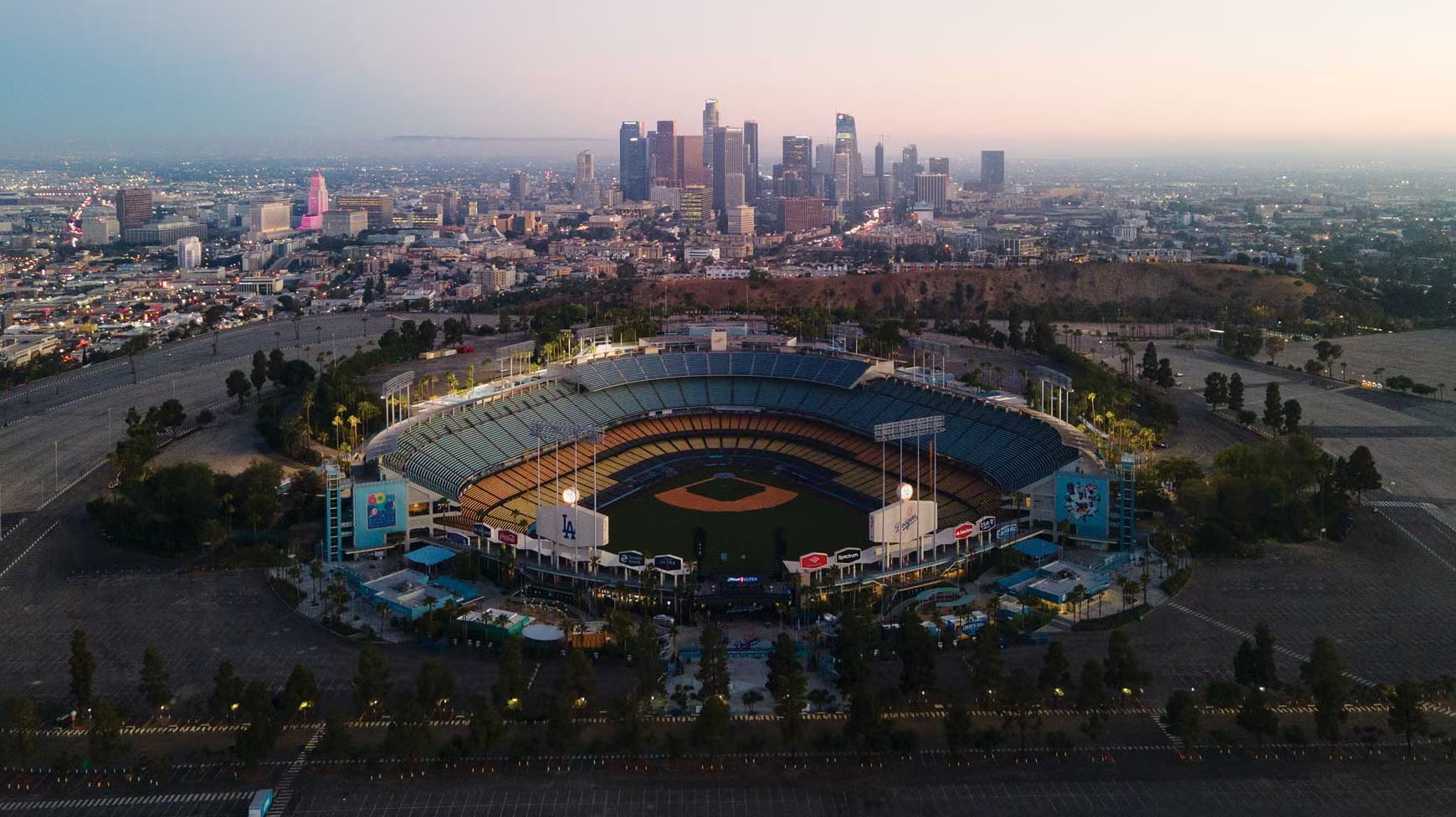
I needed to go to Chavez Ravine.

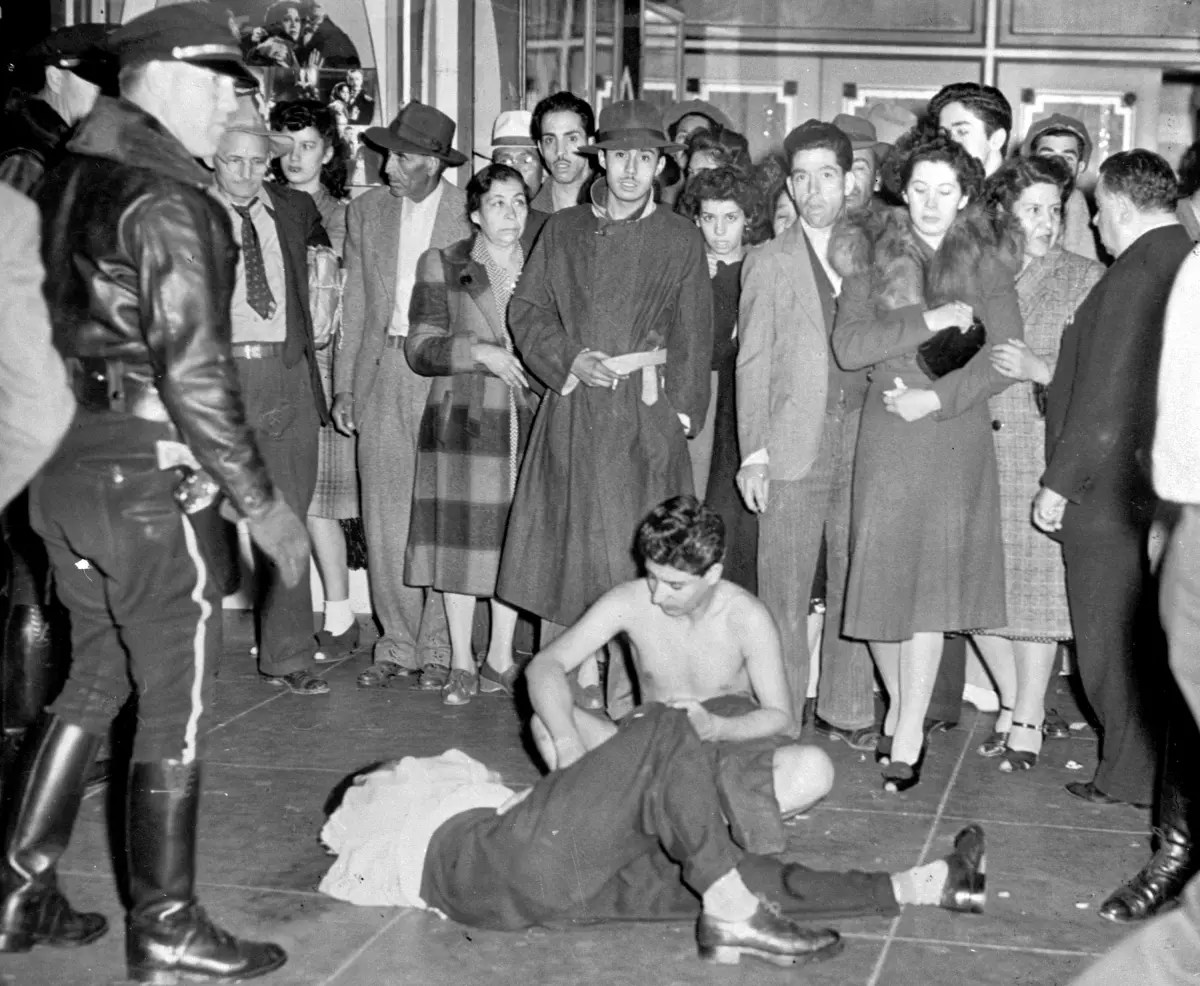
The Ravine once upon a time was the lively barrio where, in1943, Midwestern sailors wolf-whistling at lovely chicanas precipitated the Zoot Suit Riots. The LAPD intervened in the customary way: they waited until the sailors, using axe-handles, had beaten the Zoot Suiters senseless.

Then they arrested the Mexican kids.

Two decades later, the City of Los Angeles flattened the Ravine with battalions of bulldozers to make way for Walter O’Malley’s Dodger Stadium. The only thing that remains of the barrio is its name, sometimes used to refer to the stadium that replaced it.
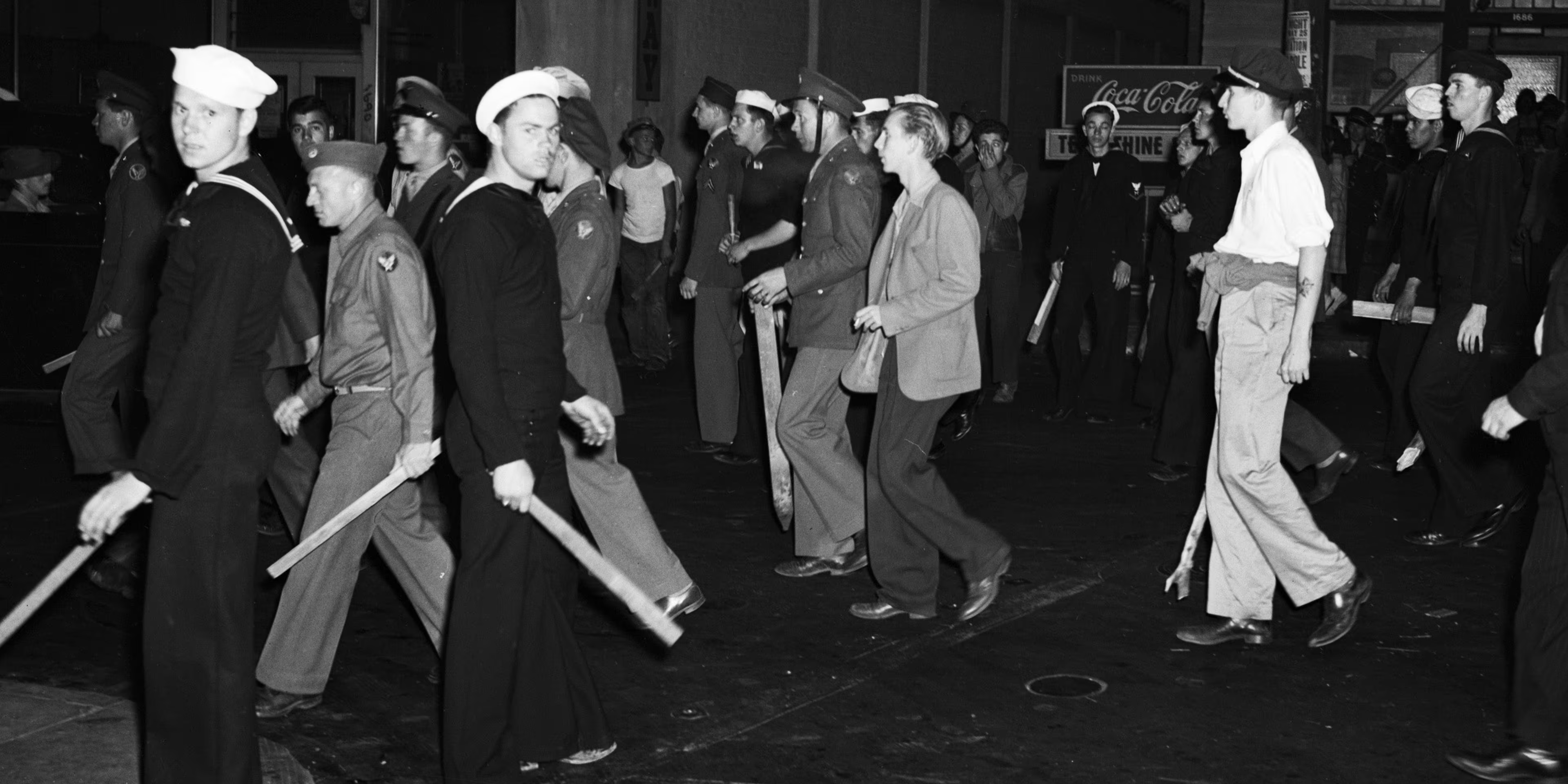

I had a friend at Chavez Ravine, and in the Dodger organization. He sold frozen lemonades, in big conical containers, in the stands during games, so he had enough pull to get me in as they were preparing the field for a night game.

I’d asked about my eleventh employee about any old Mexicans they’d seen in the last three weeks and got the Detective Sgt. Lopez treatment from all of them. The twelfth was chalking baselines and his eyes widened.

“You mean like the old guy who was nailed during batting practice?”

Well, yes, I replied, trying to be even-voiced, that might be the one.

He asked for a moment and walked into the groundskeeper’s.

He never came back out, but two security officers did. They airlifted me, my toes never quite touching the ground, to the Dodger Stadium Corporate Offices, which even the likes of Vin Scully entered maybe two or three times a year. (Jerry Doggett Scully’s co-broadcaster, was made to wait outside.)
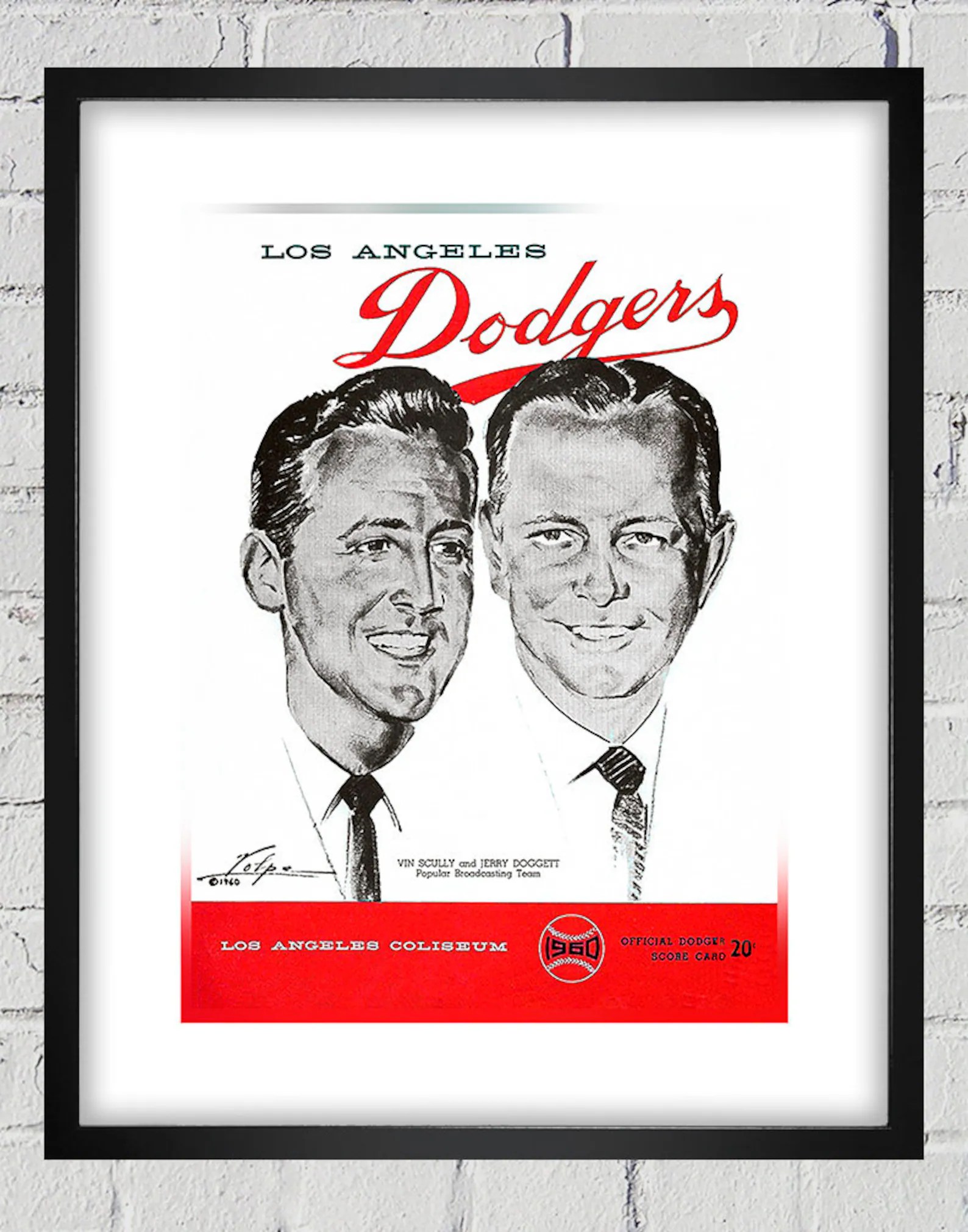
Broadcasters Scully and Doggett, from a 1960 program. Scully was a masterful storyteller and game-caller. Doggett, who got a few middle innings, was stolid but occasionally confused.

I was reamed by a junior executive, a young, good-looking man with a German-Jewish surname, who threatened me with arrest for trespassing.

Sure. Arrest me. But what happened to the old man?

Security was summoned.

One floor up, I got the same treatment by another executive, this one Italian American. 

This is why I was a Dodger fan, too. They’d carried that whole immigrant ethic from Brooklyn to the West Coast. And after they’d bulldozed Chavez Ravine for the stadium, they’d even pay a little back with the kid pitcher from a town smaller than Loma Enjuta–Etchohuaquila, Sonora—the birthplace of Fernando Valenzuela.

The next-floor-up executive soon grew tired of me. He called Security. They were getting a workout that day.

They glided me up, not unpleasantly, to the sanctum sanctorum of Dodger Baseball, the O’Malley family office. They let me sweat awhile in a big leather sofa and then Himself walked in.
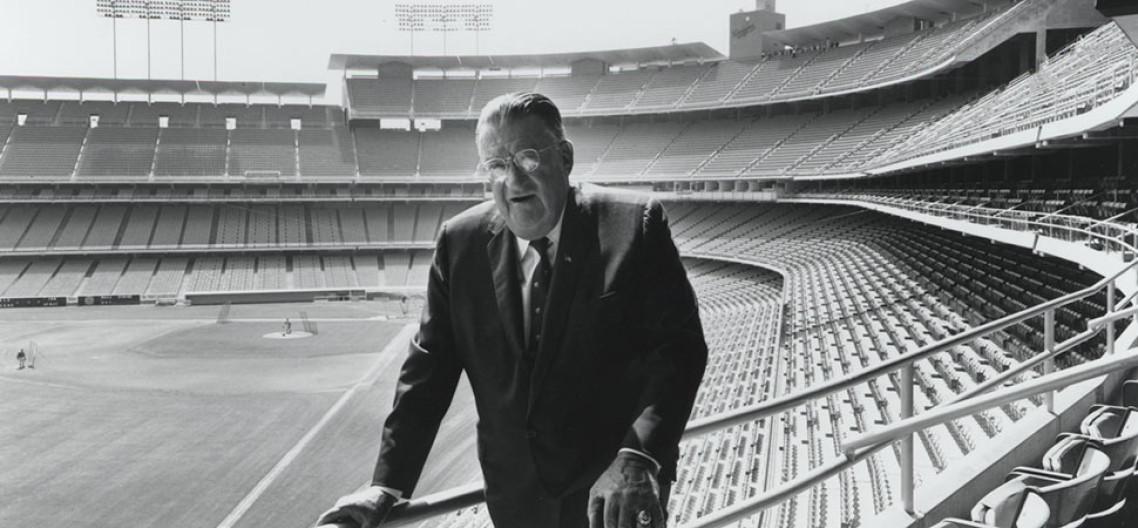
Walter O’Malley and his kingdom.


It was the Old Man, Walter O’Malley, preceded into the office, for several seconds, by his cigar. He sat in an office chair big enough for Pharaoh and looked at me a long time in silence.

What do you want? he snarled. Finally.

I want to find out about an elderly man a Mr. Jimenez, who has disappeared. I was retained by his family. Dodger Stadium was the last place he was seen alive.

And what in Christ’s Pajamas do you think we have to do with him disappearing?

Word has it he was hit here by a line drive during BP. He wasn’t seen after that.

Damned lie, O’Malley replied from behind a cumulus cloud of cigar smoke. Jesus Christ and Sandy Koufax!

Your best pinch-hitter of all time, Manny Mota, killed a kid in the stands with a line drive back in 1970.

I’d done my homework.

Silence. For a long time.

He’s still here, O’Malley finally whispered.

Manny Mota?

No. Your old man.

What?

Look, O’Malley said. I am a businessman, and I am an old man, too. It’s time for me to turn the team over to my son and, when his time comes, the team may pass into another family—maybe even a foreign family, like those Frenchies, the Rothschilds, or those Murdochs from Australia.

So?

So our brand—the Dodgers—has an immaculate reputation, and an old man getting killed during BP could do us irreparable harm. But, being an old man myself, we treated the one you’re looking for with complete dignity.

How?

He’s underneath the pitcher’s mound.

Beg pardon?

The next away series, we excavated the pitcher’s mound, wrapped him in Mexican and American flags, covered him in roses, put the mound back together. After that, we invited mariachis to play at the mound. Told them it was some kind of welcome for a kid pitcher who’d soon be coming up from Mexico.
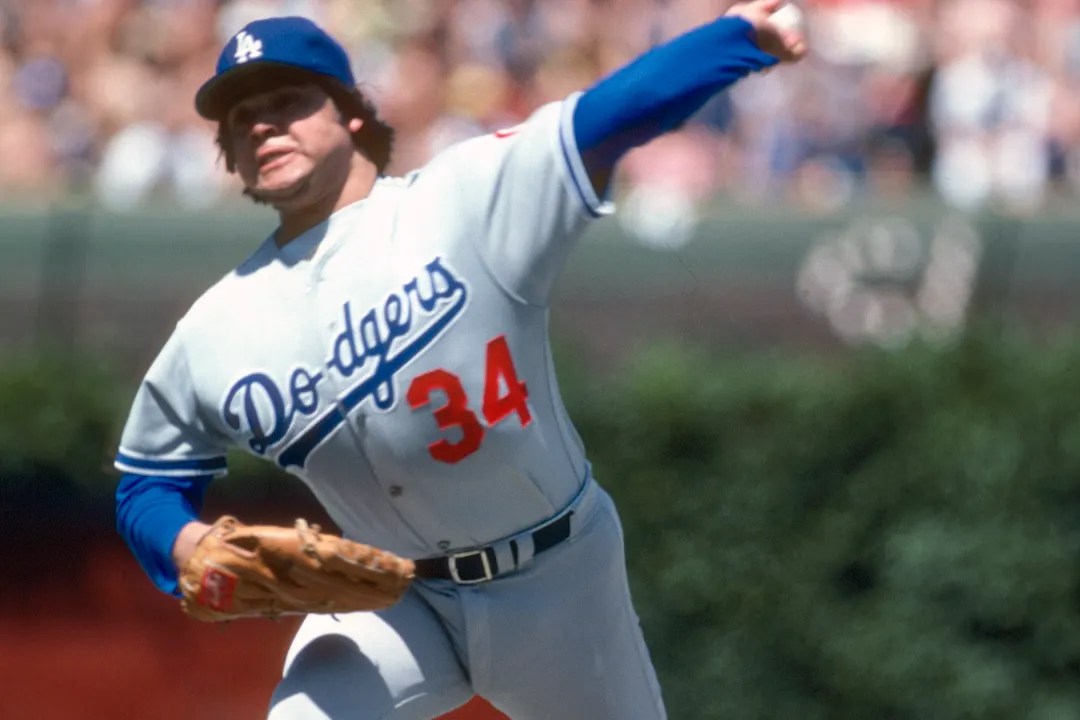
Fernando. In his first start–Opening Day, 1981–he shut out the Astros 2-0.


You got most of the flags right. This Mexican was half Irish. His full name was Patrick O’Connell Jimenez. The name was starting to roll off my tongue now.

Ỏ, cac, O’Malley said. Oh, shit.

His face had softened a little, transforming into that of Jackie Robinson’s surrogate father. Surrogate uncle. Robinson’s surrogate father was Brooklyn GM Branch Rickey, Protestant Irish, who’d signed Robinson to a minor league contract in 1945.

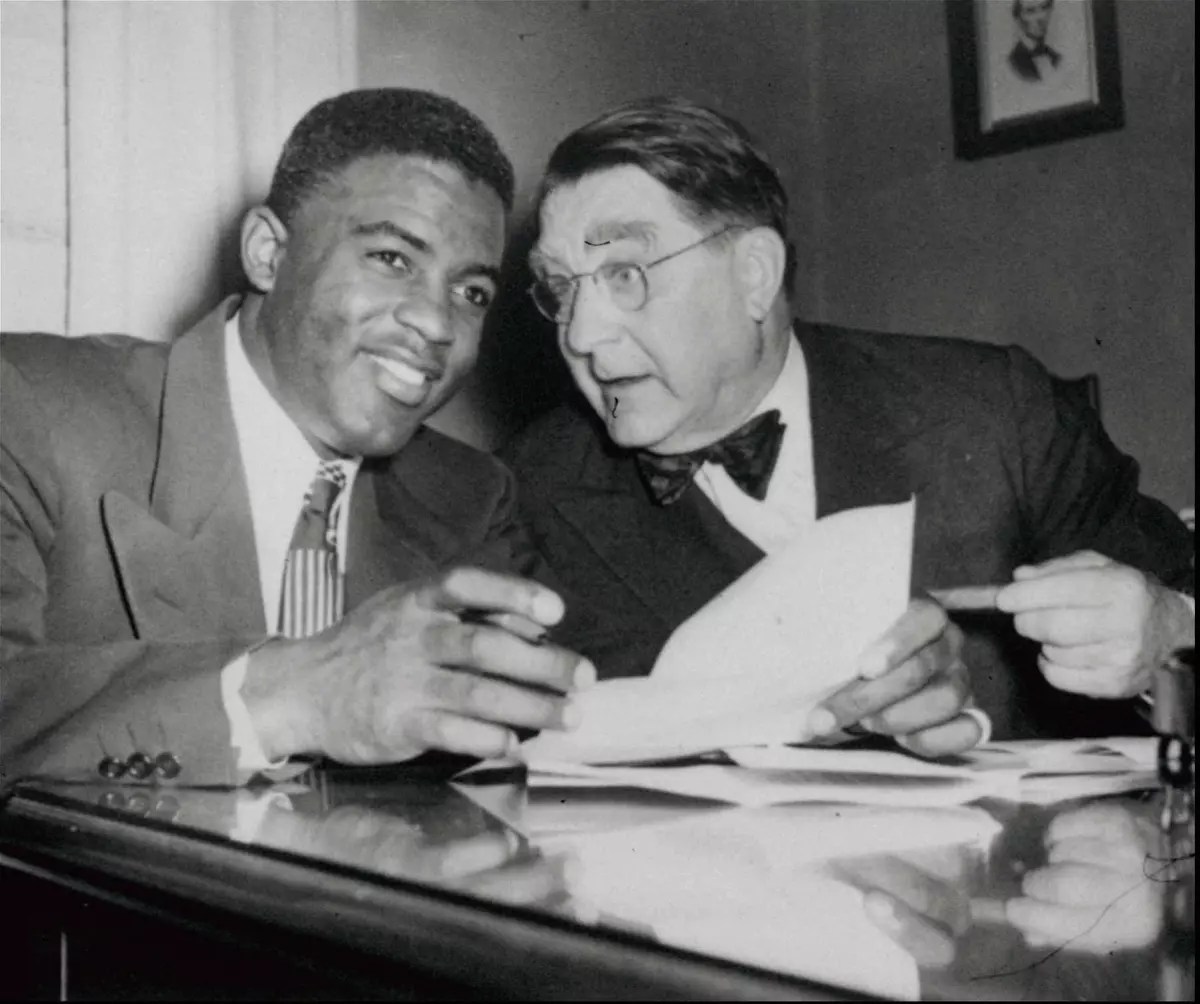
Robinson and O’Malley; #42 and Branch Rickey.


Well, then. What is it that you want?

The family has a right to know, I said.

O’Malley’s silences were masterful.

Three days later, I drove back to Loma Enjuta. I presented Carlos with a Don Sutton autographed baseball. I presented Scarlett and Alvino with a non-disclosure agreement. They signed it because of the big color Curtis-Mathes television and, as they say in MLB trades, for a cash consideration.

For the rest of his MLB career, they believed that Borbon, who would pitch for many clubs, could never be comfortable atop that Dodger Stadium mound. They would think, while watching Dodger games on his TV, of Patrick O’Connell Jimenez, just below Borbon, and that made their secret a proud one.
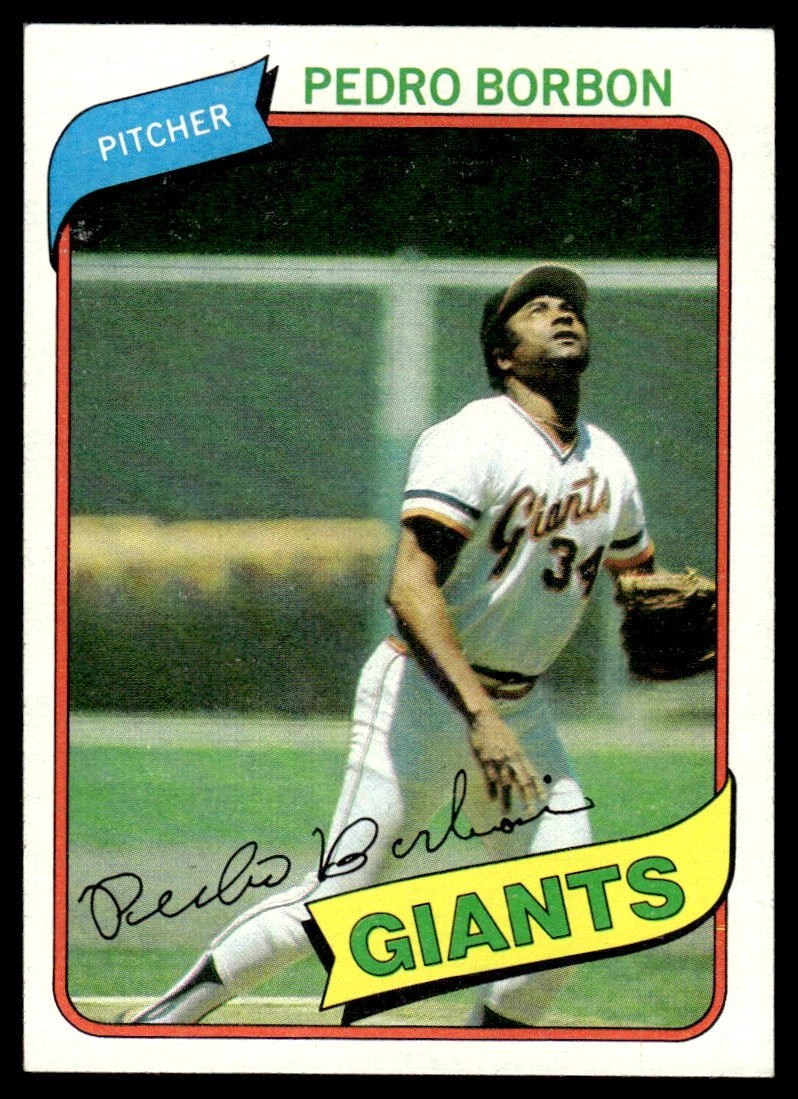
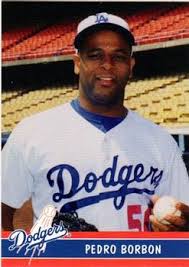


Twenty years after his father’s time, Pedro Borbon, Jr., became a Dodger pitcher. In 1996, the team was sold to the Murdoch family’s Newscorp. They, in turn, sold the team in 2004.

MAGA, 1764

12 Sunday Oct 2025

Posted by ag1970 in trump, Uncategorized

≈ Leave a comment

Tags

ancestry, family, Family history, genealogy, History

I love that Arroyo Grande—especially Branch Street Arroyo Grande—has an independent bookstore. My ego is happy because Monarch Books carries my books. We were waiting for a table to open across the street—my elder son’s and my younger sister’s birthdays—so I wandered across Branch to look for my books. I found them, but even I’m not so vain as to go into a bookstore and just looky-loo.

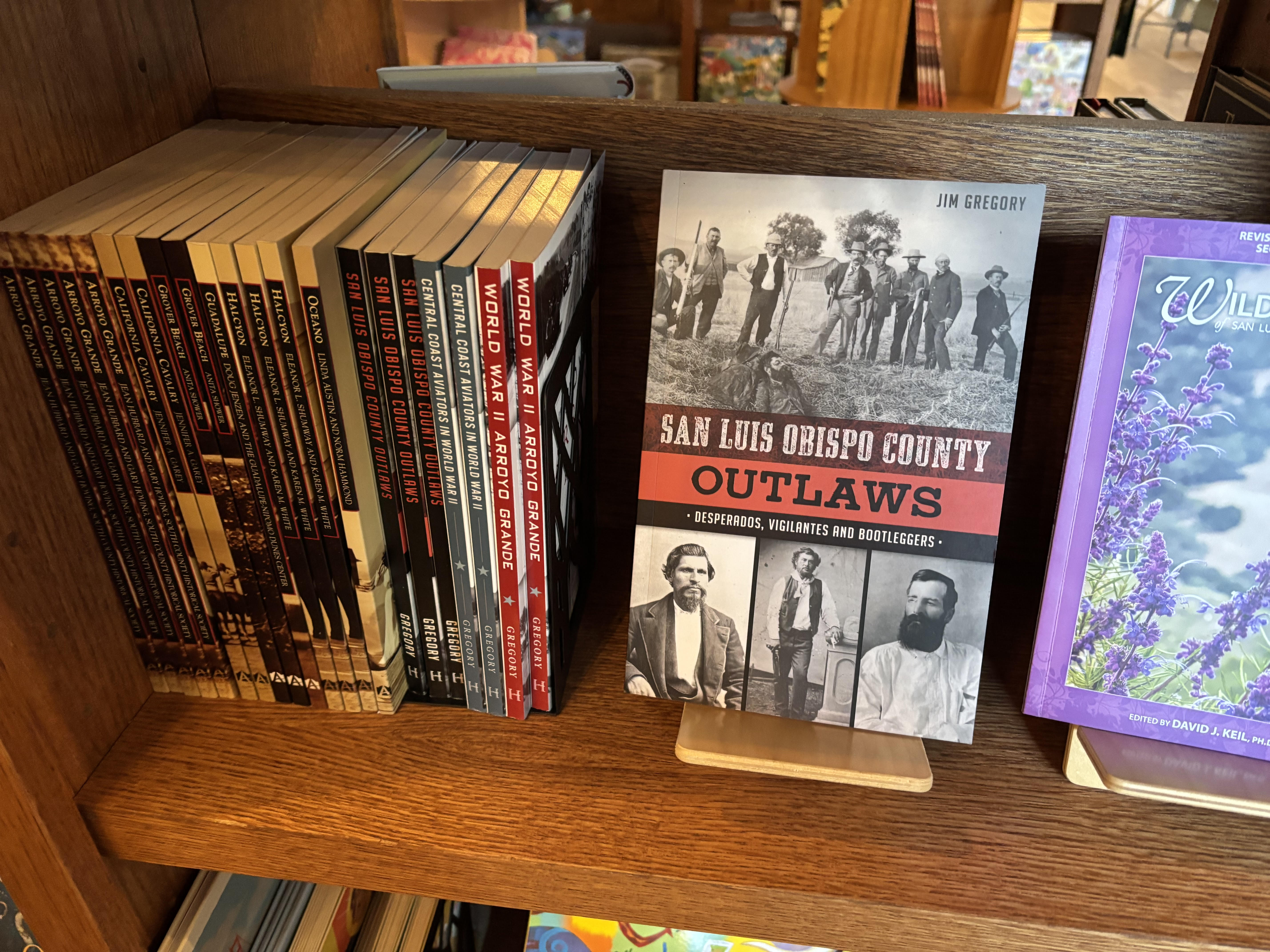
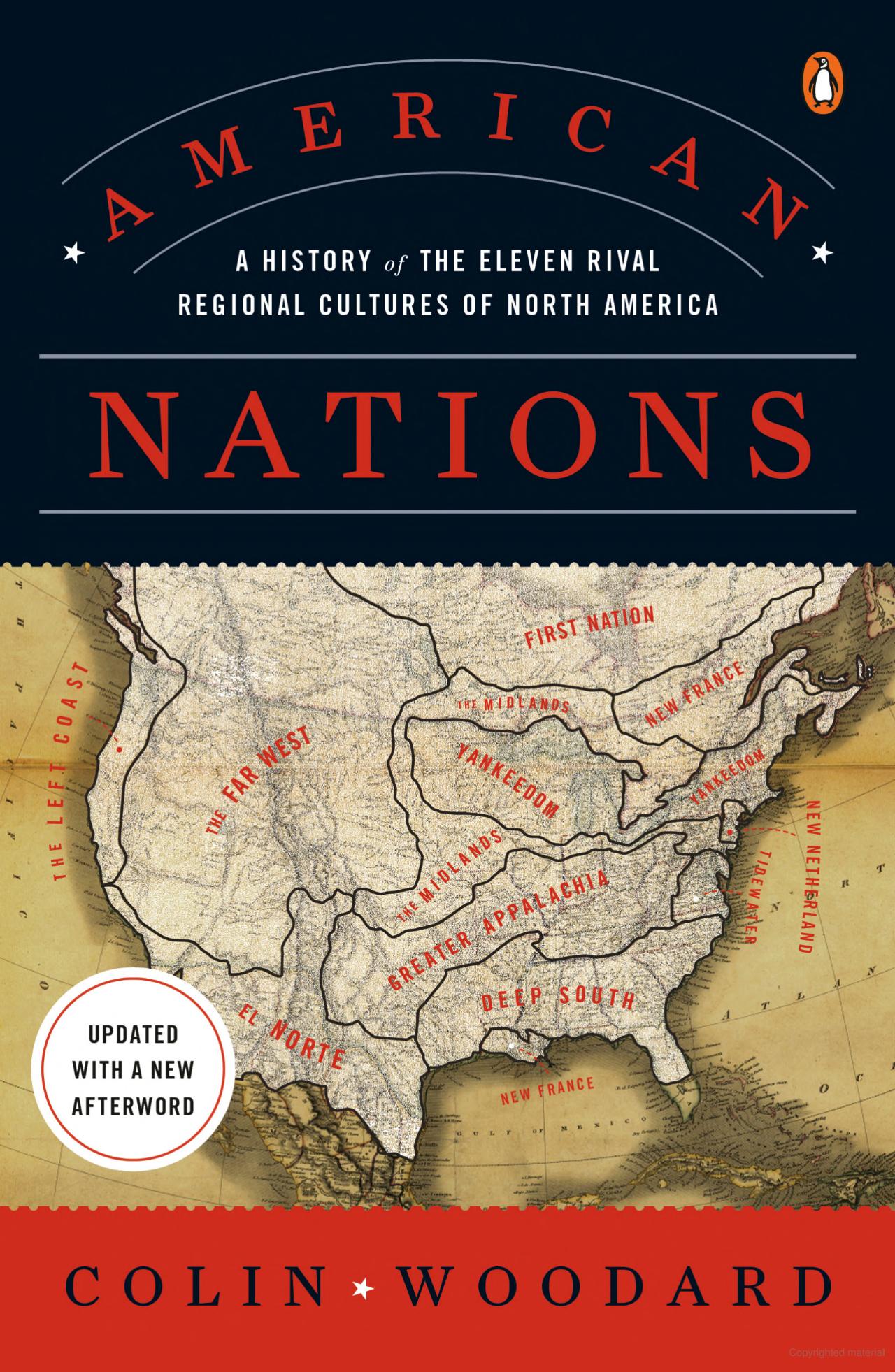
So I bought a book. This book.

I’ve only just started it, but it’s already one of the most extraordinary books I’ve read in years. I rarely start books at the beginning, so I dove into the first chapter about one of Woodard’s seven nations, “Greater Appalachia,” because my father’s family has roots there, planted firmly on Missouri’s Ozark Plateau.

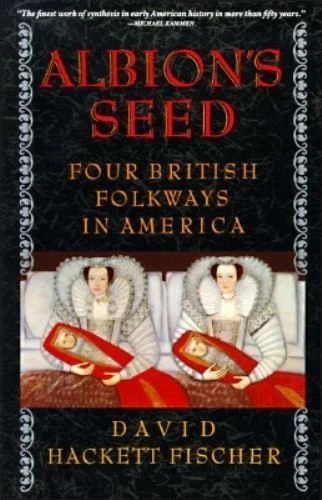
It reminded me of another extraordinary book I read years ago. I shared excerpts from Albion’s Seed with my AGHS history students, again, partly out of vanity, because another part of my family, Episcopalians all, comes from a second nation in Woodard’s book, “Tidewater.” They lived in places whose names—Fredericksburg, Spotslyvania, Petersburg—would be known as terrible battlefields a century after their arrival in America.


One of them, a collateral ancestor, Roger Gregory, married Mildred Washington, the great man’s aunt, and that homely name has persisted in my family, down to my own Aunt Mildred, who preferred to be called “Bill.”

Roger eventually sold Mt. Vernon to Washington’s father. My family is not known for its real estate acumen.

But Albion’s Seed revealed that Tidewater Virginians socialized their children by teaching them dance. That tradition carried down to my grandfather, John Smith Gregory, allegedly the sweetest waltzer in Texas County, Missouri. John could make his partner believe that the sawdust-strewn floor at a barn dance was polished glass. Even in his fifties, his partners were usually teenaged girls, waiting patiently for their turn on Mr. Gregory’s dance card.

My grandmother seethed. What can I say about my Grandmother Gregory? When she visited us kids in Arroyo Grande, we hid her dentures.

Her fried chicken, however, was sublime.

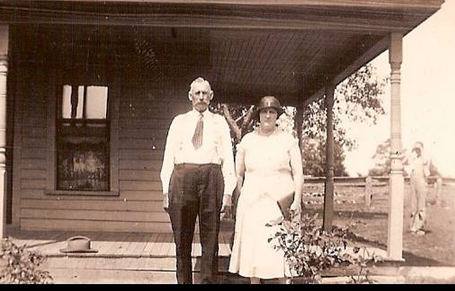
My grandparents, John and Dora Gregory, in front of the farmhouse. As you can tell, my grandmother–a delegate to the 1924 Democratic Convention in Madison Square Garden—was a hard woman to knock down in a windstorm. My dad is at right.

One day in 1933, she called my dad back to the farmhouse, which is still there, because he was barefoot. Dad was going to cross the road with Grandfather John to visit a neighbor. Grandma Gregory’s Scots-Irish pride would not permit a son of hers to visit Mr. Dixon barefoot.

So my grandfather, mostly deaf by then, never heard the speeding Ford roadster that killed him.

They let schools out the day of Mr. Gregory’s funeral.

There have been other books written about people like my ancestors, who migrated from the English Midlands to Tidewater Virginia, then Kentucky, then Missouri, until oil brought them to California. But other ancestors, like my Grandmother Gregory’s, came from Ulster or the Scots Lowlands, desperately poor, oppressed and spoiling for a fight. If they couldn’t get one in the British Isles, they’d be happy to start one in America. Woodard calls them the Borderlanders.

Former Virginia Sen. James Webb wrote Born Fighting, about the Scots-Irish military tradition in American history. Many of them, of course, marched in Stonewall Jackson’s “foot cavalry,” perhaps the finest infantry in the Victorian world, named for the rapidity of their marching. My Uncle Tilford’s middle name was “Stonewall.” So it goes.

And, of course, JD Vance’s offering was Hillbilly Elegy, a petulant book I started twice and then put down, never to return. I have started David Copperfield six times, and I will finish it because the book deserves it.

American Nations deserves a first reading and then many more.

To my shock, I discovered the echo of the January 6 people in the first chapter about “Greater Appalachia,” a region whose culture informs the Ozark Plateau.

REUTERS/Leah Millis/File Photo


Among the observations that Woodard makes about the people of Greater Appalachia, whom he calls the Borderlanders:

–They didn’t trust law courts. Justice, instead, was personal and retributive. The Hatfield-McCoy bloodletting is an example of a Borderland tradition that persisted long after their ancestors came to America.

–Within the group, Borderlanders did not tolerate dissent. Those, including kin, who violated the moral code, grounded in a cultural construct of reality, were dealt with violently.

–Borderlanders hated outsiders, most of all Native Americans, on whose land they squatted. When indigenous people resisted, the retribution visited on them was merciless, including the scalping of children.

–Because they’d been so exploited by absentee landlords in England, Scotland and Ulster, they despised city people, including those in Philadelphia, where a group took up arms, marched on the City of Brotherly Love (even Philadelphia’s Quakers took up arms) and were turned back by cannon loaded almost to the muzzle with grapeshot and by sweet Enlightenment reasoning. Negotiation with Benjamin Franklin finally persuaded the insurrectionists, known as “the Paxton Boys,” to go home.

–While Borderlanders resented the wealthy and the powerful, they followed their own leaders, who rose to the top not because of their command of policy or sweet reasoning, but by the force of their personalities, their emotional appeal and the blandishment of their personal wealth. Disparities in wealth were enormous among these people, and they were tolerated. Woodard notes that the top ten percent monopolized land in AppalachianAmerica, while the lower half had no land at all.

It struck me, in reading the passage about the march on Philadelphia, that MAGA, as far back as 1764, has been an American tradition. Today’s movement, of course, is not ethnic, but it has the trappings—a sense of injustice, of entitlement, of envy and of incipient rage— the same forces that drove the Paxton Boys’ march on the city they despised.

I found some comfort in this understanding, which I hope is accurate, because, after all, we survived 1764.

There are other inklings of hope in my Borderland ancestry. I am named for and descended from two Confederate officers, one, a brigadier general (James McBride died of illness in 1862); the other, his son, Capt. Douglass McBride (my middle name), was vaporized by a Yankee artillery shell in Arkansas the same year.

You’d think we would’ve learned, except for my Uncle Tilford Stonewall Gregory’s middle name.

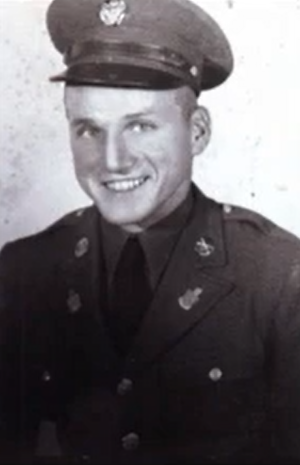
One of Tilford’s sons, Roy, was my cousin. When World War II came to America, Roy, from the Missouri Ozarks, joined the Army and became a member of the Oklahoma-based 45th Infantry Division. He would fight in Italy and Western Europe and was wounded twice—both times from shell fragments from the superb German field gun, the 88— and was recovering from the second when the Germans launched Operation Nordwind in January 1945, in support of the greater offensive in the Battle of the Bulge.

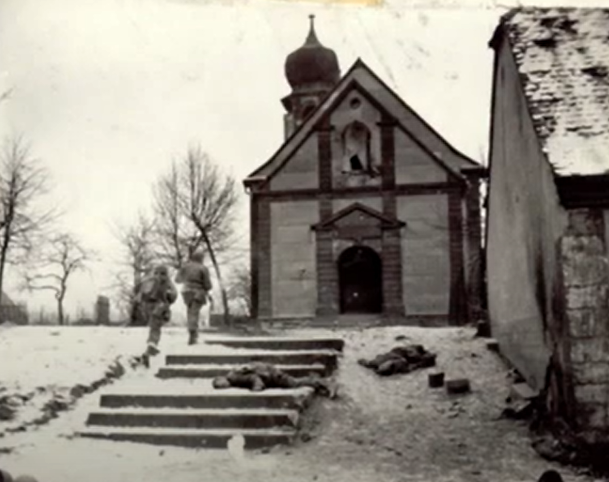
Roy, in recovery, was discharged from the hospital and sent to the front, to a French town, WIngen-sur-Moder, on the German frontier. His company was attacked by Waffen-SS mountain troops, soldiers who fought without mercy, and it was their artillery that finally claimed him. He died on the steps of the village church.

He came home to Greater Appalachia, to the Allen Cemetery in Texas County, Missouri, where his grave is not far from our Grandfather John’s, the sweetest waltzer in Texas County, Missouri.

My cousin, you see, was an Antifascist.

My cousin Roy; the church where he died.


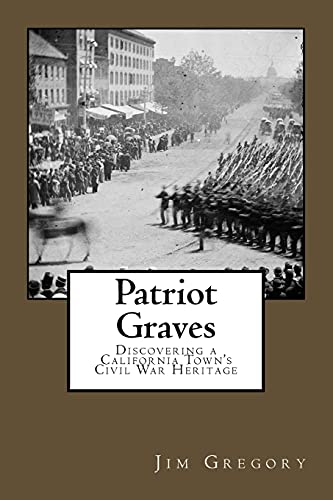
–Jim Gregory’s book Patriot Graves: Discovering a California Town’s Civil War Heritage, is about the sixty Union Civil War veterans buried in the Arroyo Grande District Cemetery.

Version 1.0.0

My Waycool Big Brother

18 Sunday May 2025

Posted by ag1970 in Family history, Uncategorized

≈ Leave a comment

Tags

books, family, love

May 12, 2025:

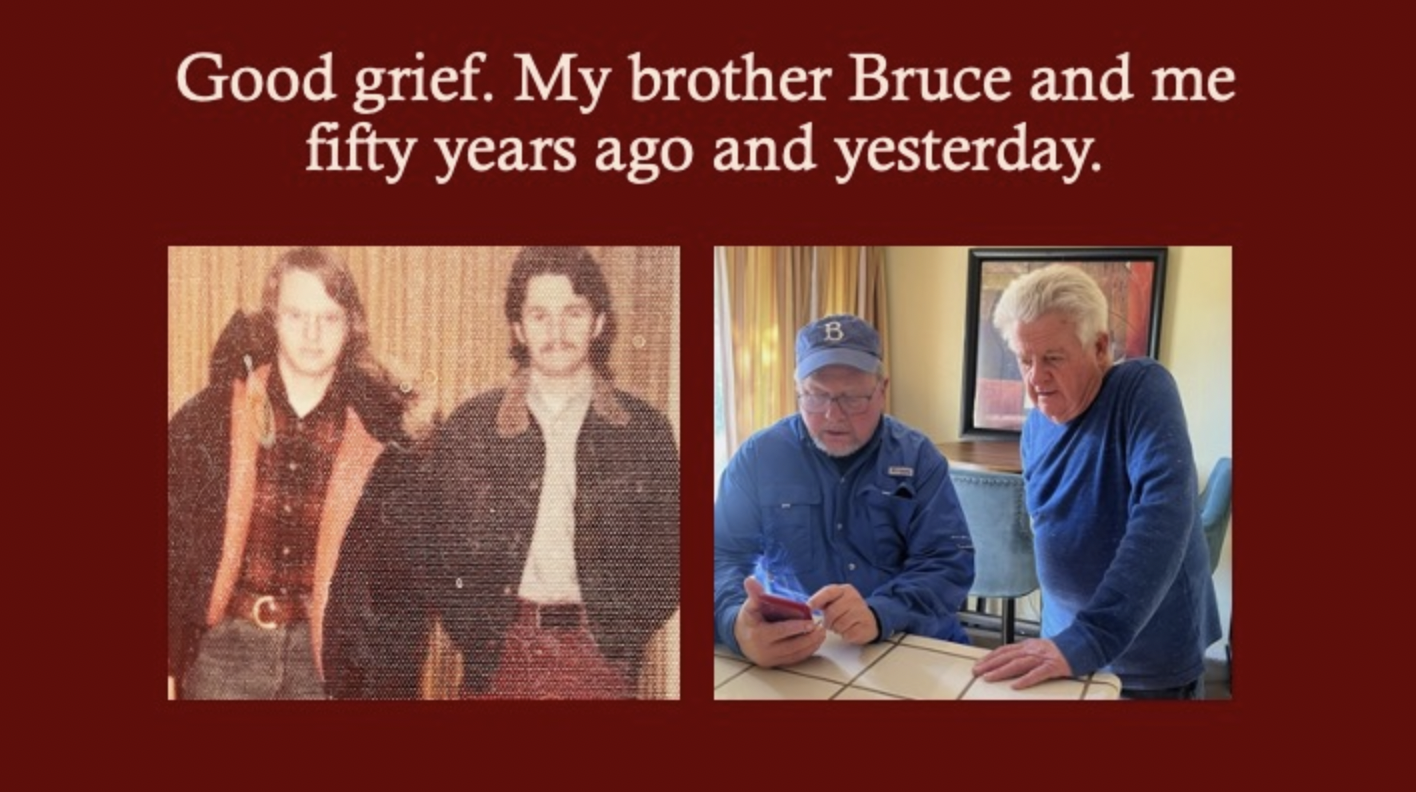
Tomorrow is my big brother Bruce’s birthday. He has many distinctions and we have more than a few similarities.

Distinctions:

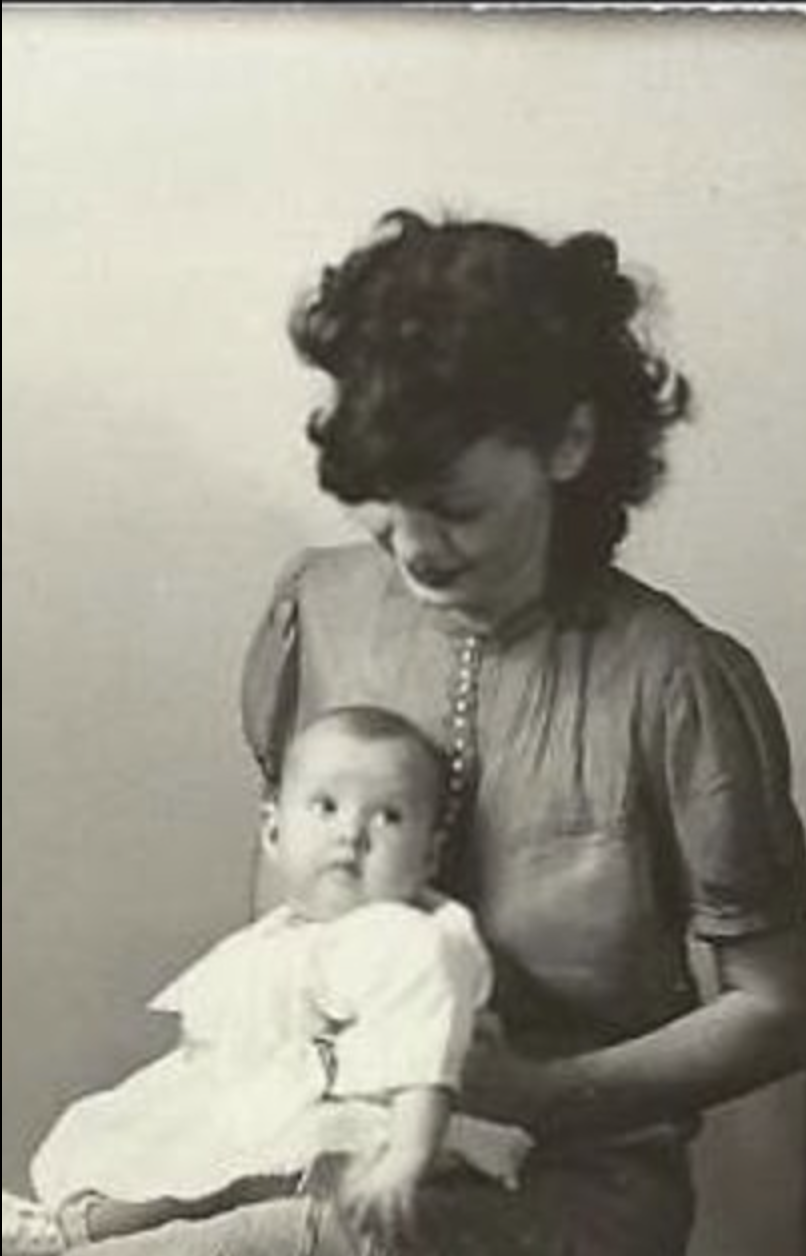
1. He was the only one of the four Gregory kids to inherit Mom’s brown hair and eyes. His middle name is “Keefe,” Mom’s maiden name, and traceable back to her ancestors in County Wicklow, on the Irish Sea. The first photo shows him with our beautiful Mom.

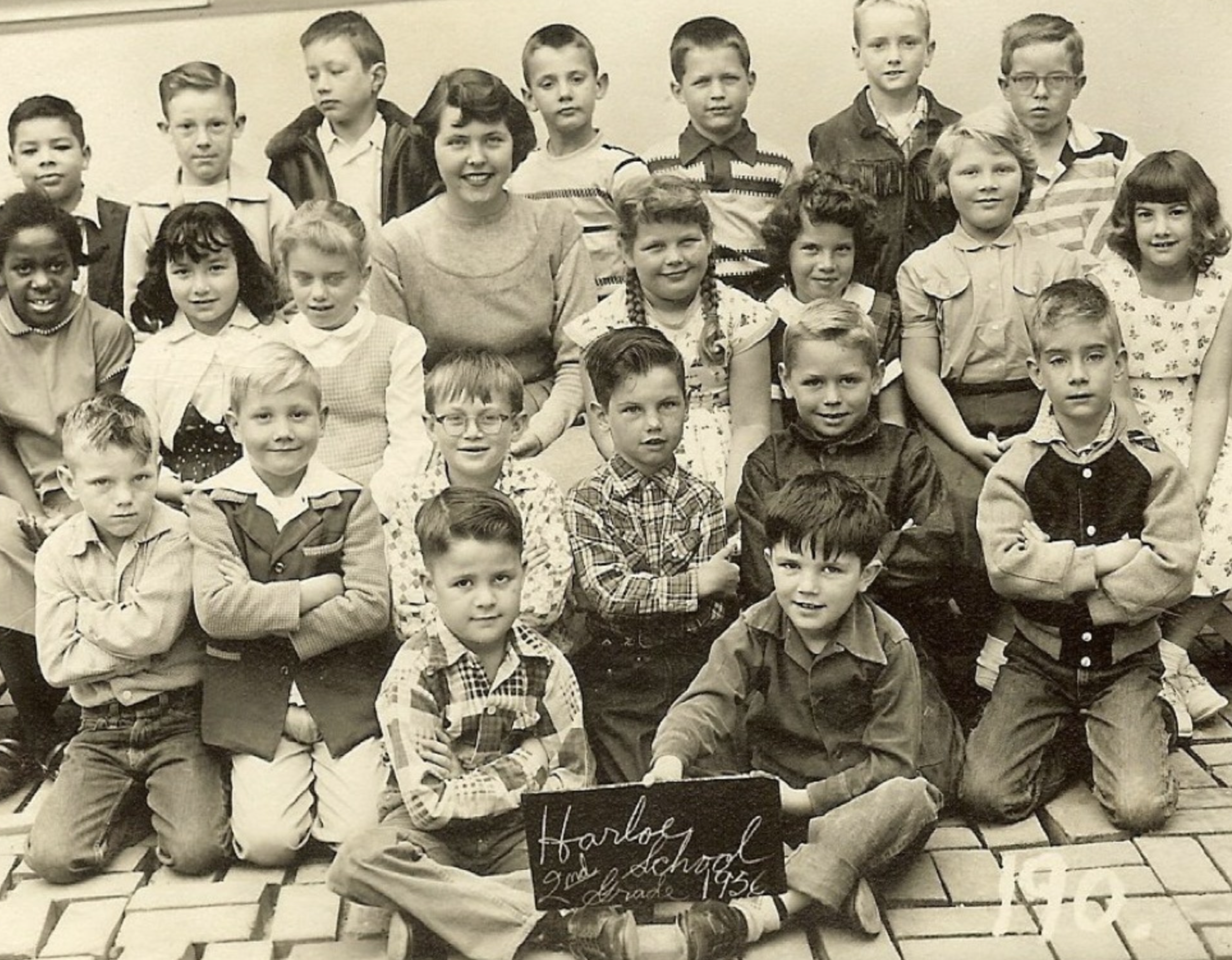
2. Family legend has it that he was so reluctant to start school at Margaret Harloe Elementary that he climbed the school flagpole and hung there awhile. They were sensible. He got hungry.

Bruce, front row to the left of the chalkboard.

3. We both later attended Branch, but because he was four years older, he got to hear aged, aged Fred Jones speak about the 1886 double lynching from the PCRR trestle at the base of Crown Hill. Fred saw it happen.

4. His AG(U)HS teachers adored him. Room 301 (I taught in 306) had glass soundproof booths for Sara Steigerwalt’s speech class (we both loved Sara, who was scary). Six years after he’d explained the Battle of Gettysburg to his classmates, his battlefield map of July 2 was still in one of those booths.

Our other scary/much adored teacher was English and Journalism teacher Carol Hirons. I was teaching at AGHS the year of Carol’s retirement, and on her last day, she walked up to me with an 11th Grade American Lit anthology that I recognized immediately.

She had tears in her eyes. “Jim, I wanted you to have this.” I got tears in my eyes as Carol walked away toward the parking lot, and then I opened the book. 

It was Bruce’s.

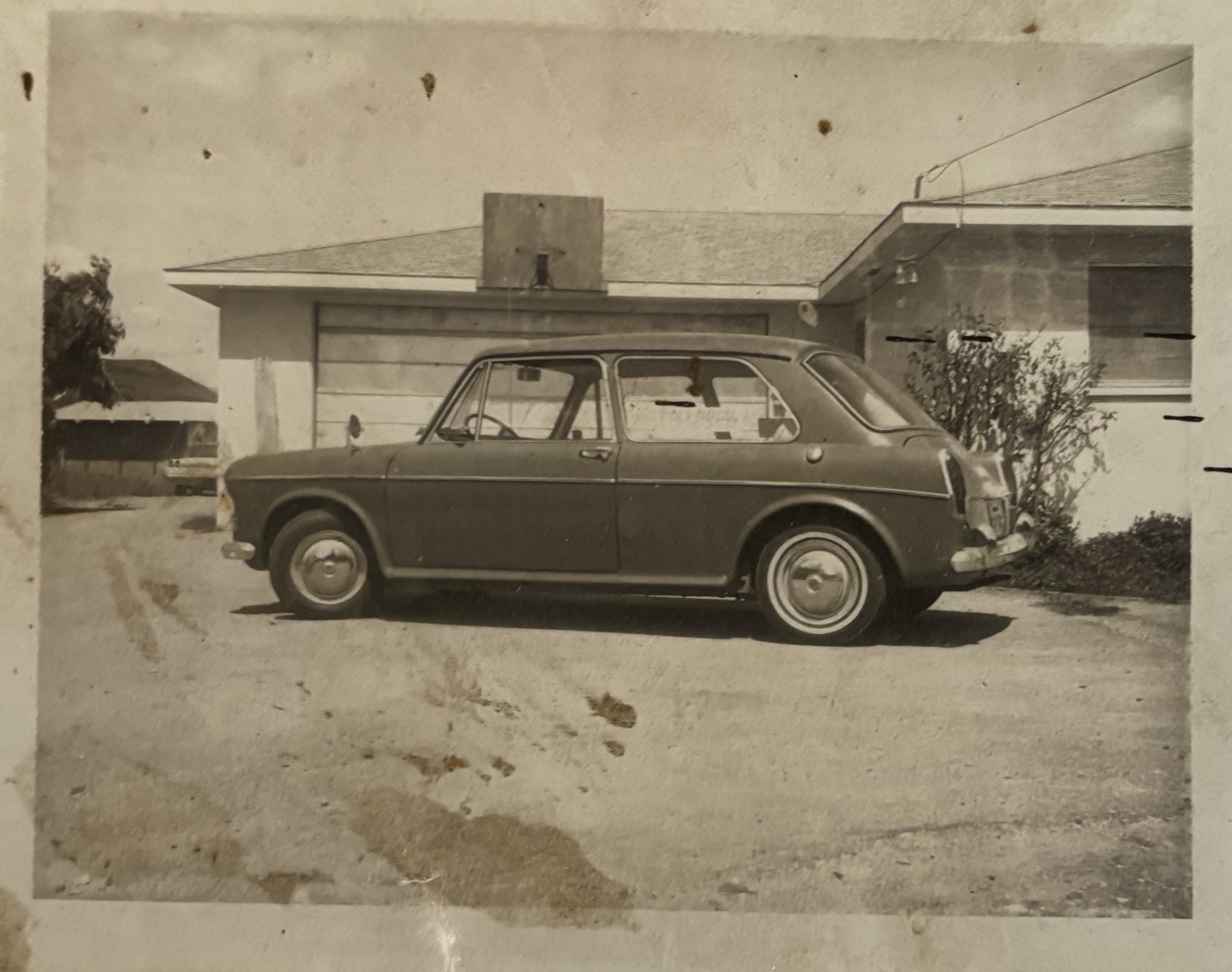
5. Learning to drive a stick eluded me, until Bruce taught me on his little MG sedan. I hope we didn’t run over too many of Mr. Shannon’s Brussels Sprouts.

The MG


6. He is gifted mechanically. I have a hard time clearing out the vacuum cleaner of debris. His airplane and car and ship models were meticulous. Mine looked like the mashed potatoes in “Close Encounters of the Third Kind.” Bruce was a finish carpenter.

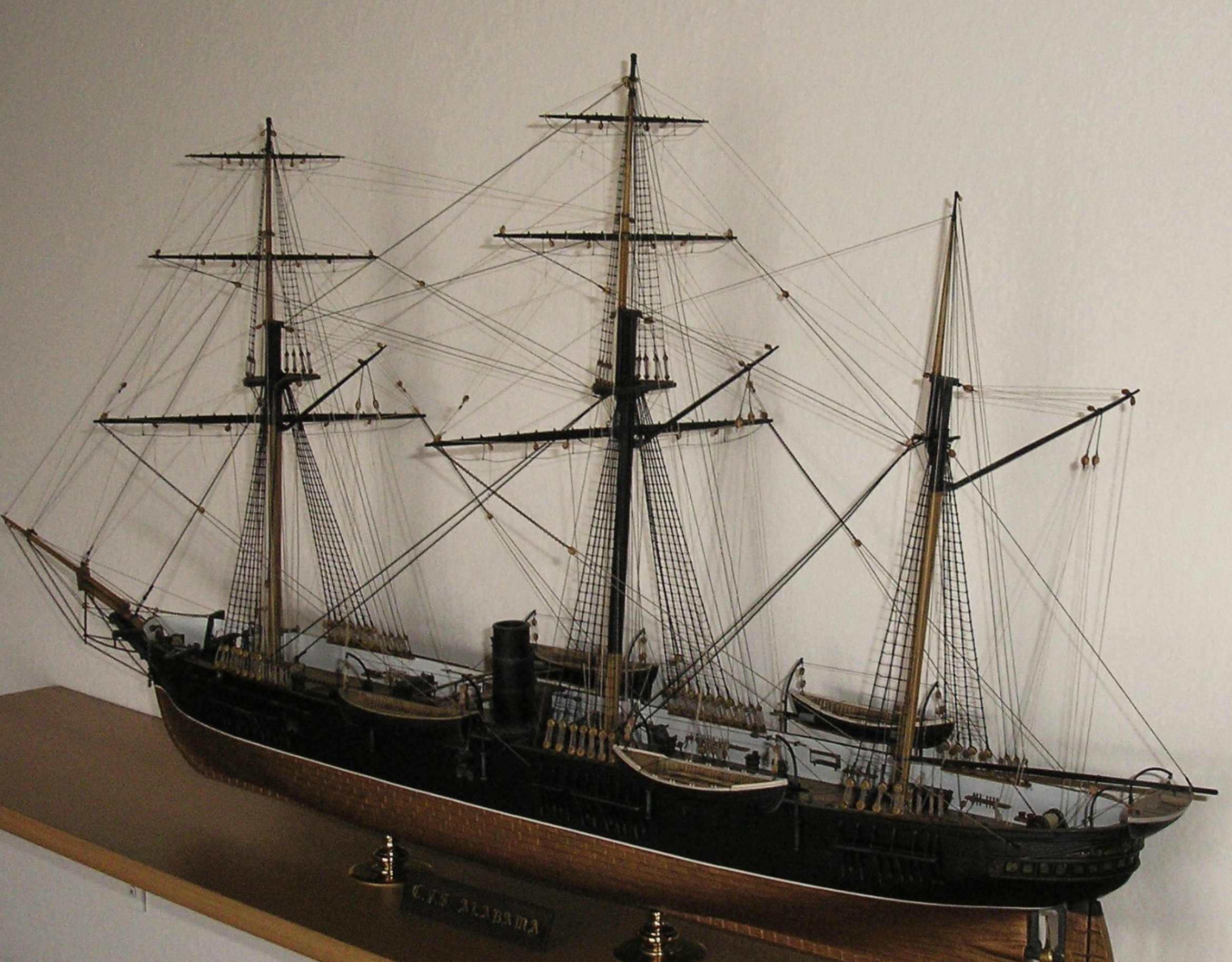
Bruce made this Revell model of the Confederate commerce raider, Alabama, but his was under full sail. It was marvelous. I got a little bit even many years later when, at Mission Prep, I taught Travis Semmes, a direct descendant of Alabama’s captain, Raphel Semmes.


7, He is meticulous. We had a drawer full of “Mad” magazines, his, and they were arranged in some fashion I did not understand–either by date, theme or the redness of Alfred E. Neuman’s hair.

It never failed. “Been in my ‘Mads’ again, haven’t you?”

He was a pain in the ass until he turned nineteen. He took great joy in picking on me.


More on this at the end.


Similarities:


1. It is almost impossible to tell us apart on the telephone.


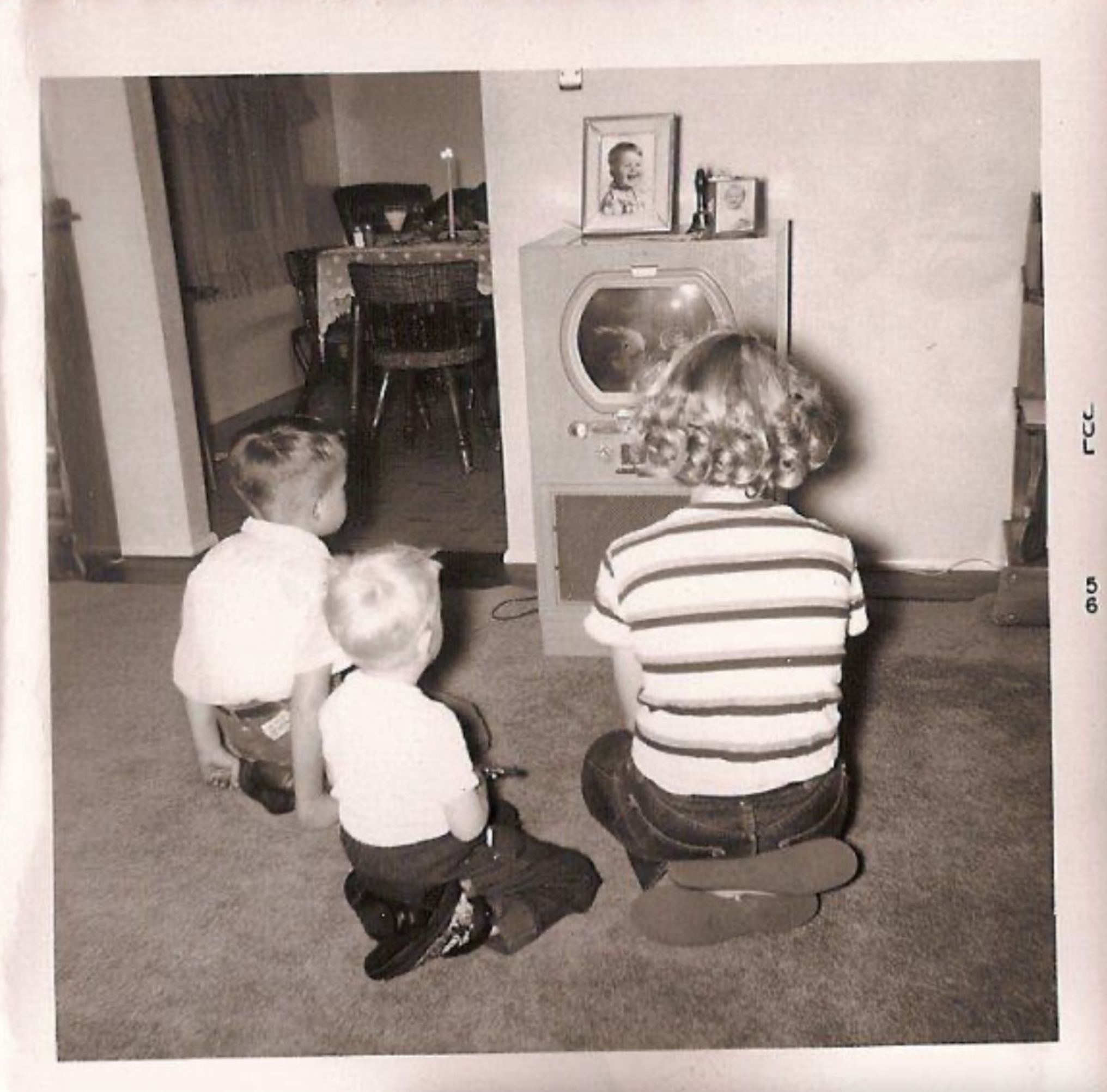
2. We are both TV Boomer Generation types. Here are Roberta, Bruce and I watching the TV when we lived on Sunset Drive. Yes, that is a TV.

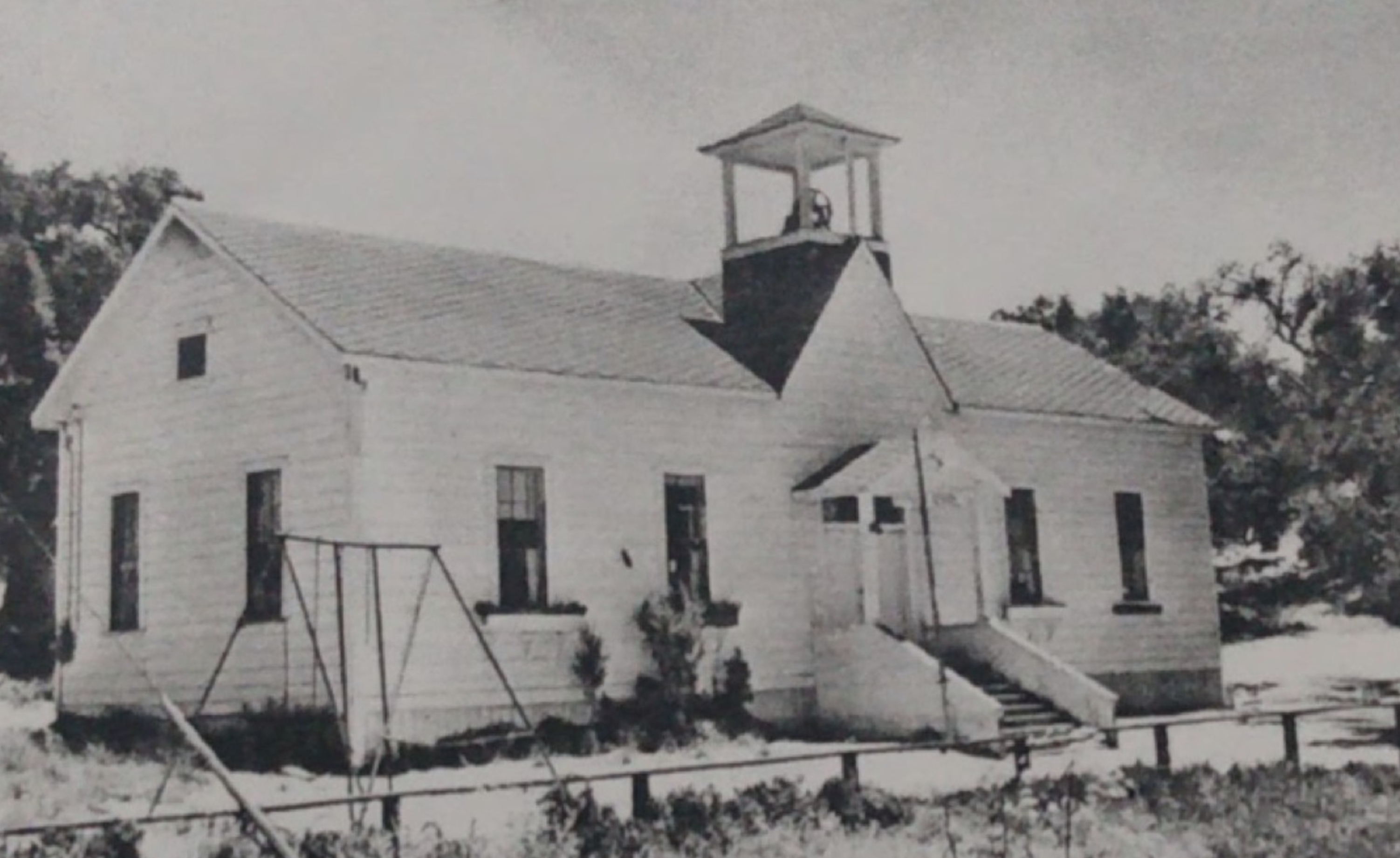
3. We are both Branch School products, including several grades spent in the 1888 schoolhouse that still stands in the Upper Arroyo Grande Valley. (Photo above, although we lacked the belltower. Termites.)


4. Bruce was the emcee for the 1966 Senior Class play at AGUHS. I was the emcee for the 1970 AGHS Senior Class play.


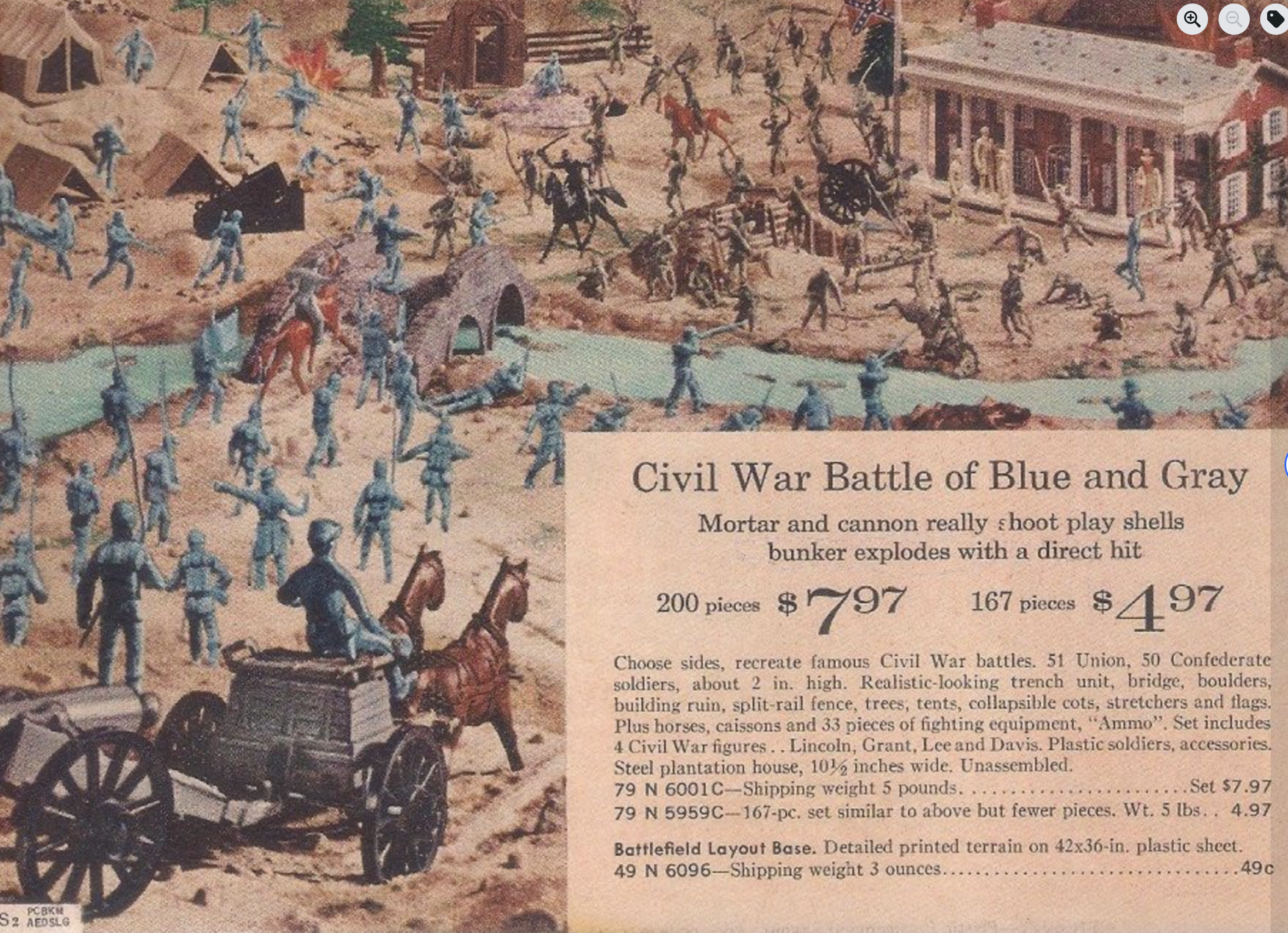
5. We both enjoyed setting up toy soldiers and them utterly destroying them with industrial-strength rubber bands that our Dad brought home from the Madonna Construction Co. offices, where he was comptroller.

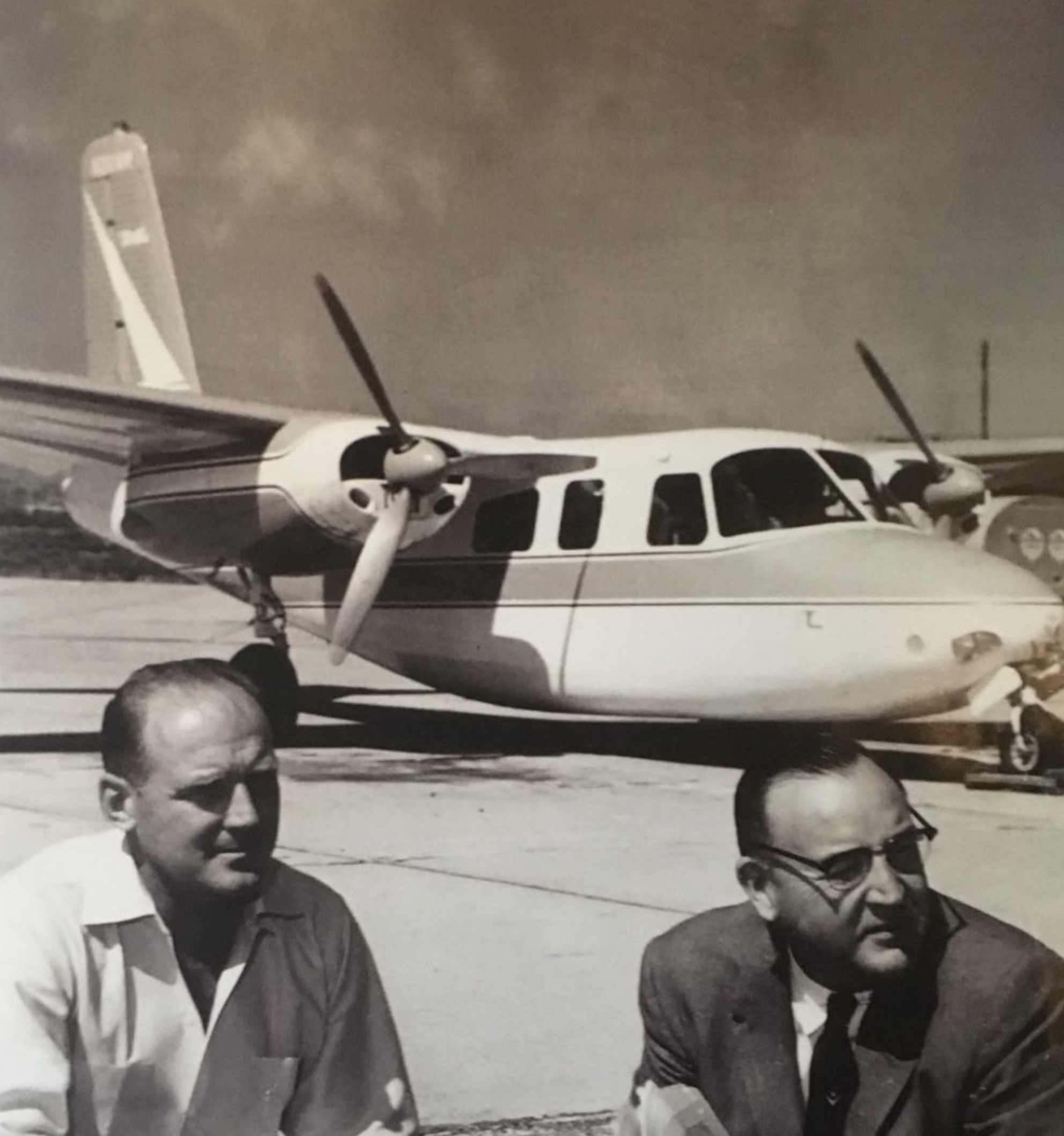
6, Both of us took our first airplane ride, to Marysville, where Dad was bidding a job, in Madonna Construction’s Aerocommander, piloted by Earl Thomson, one of the founders, in 1939, of today’s airport. In the photo, that’s Madonna and the first Gov. Brown in front of that airplane. (That trip led to me writing a book about local World War II combat fliers sixty-two years later.)

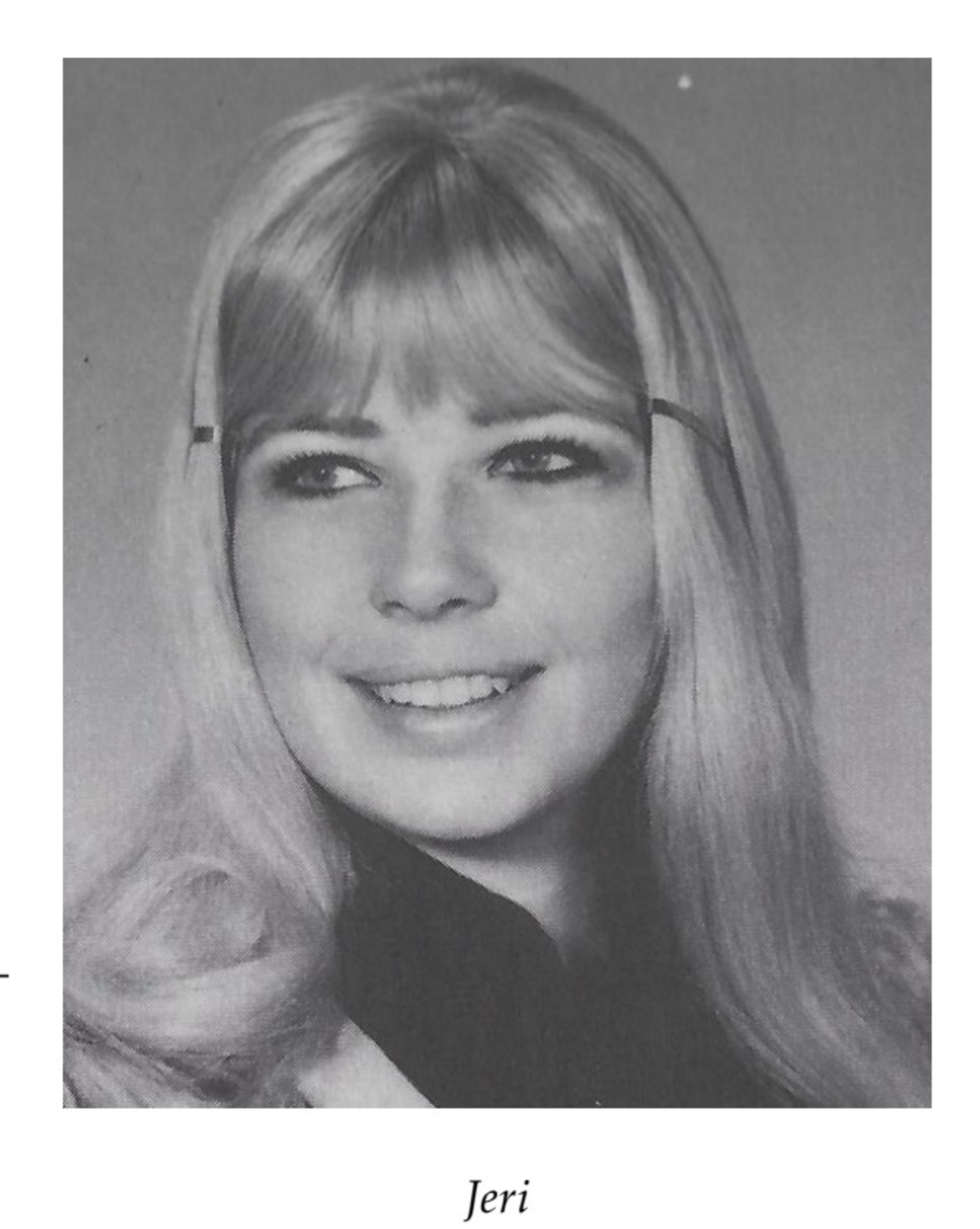
Bruce was later a busboy at the Madonna Inn, where I took Jeri Tomson, my 1969 AGHS Christmas Formal date, for two prime rib dinners which set me back $13.84.

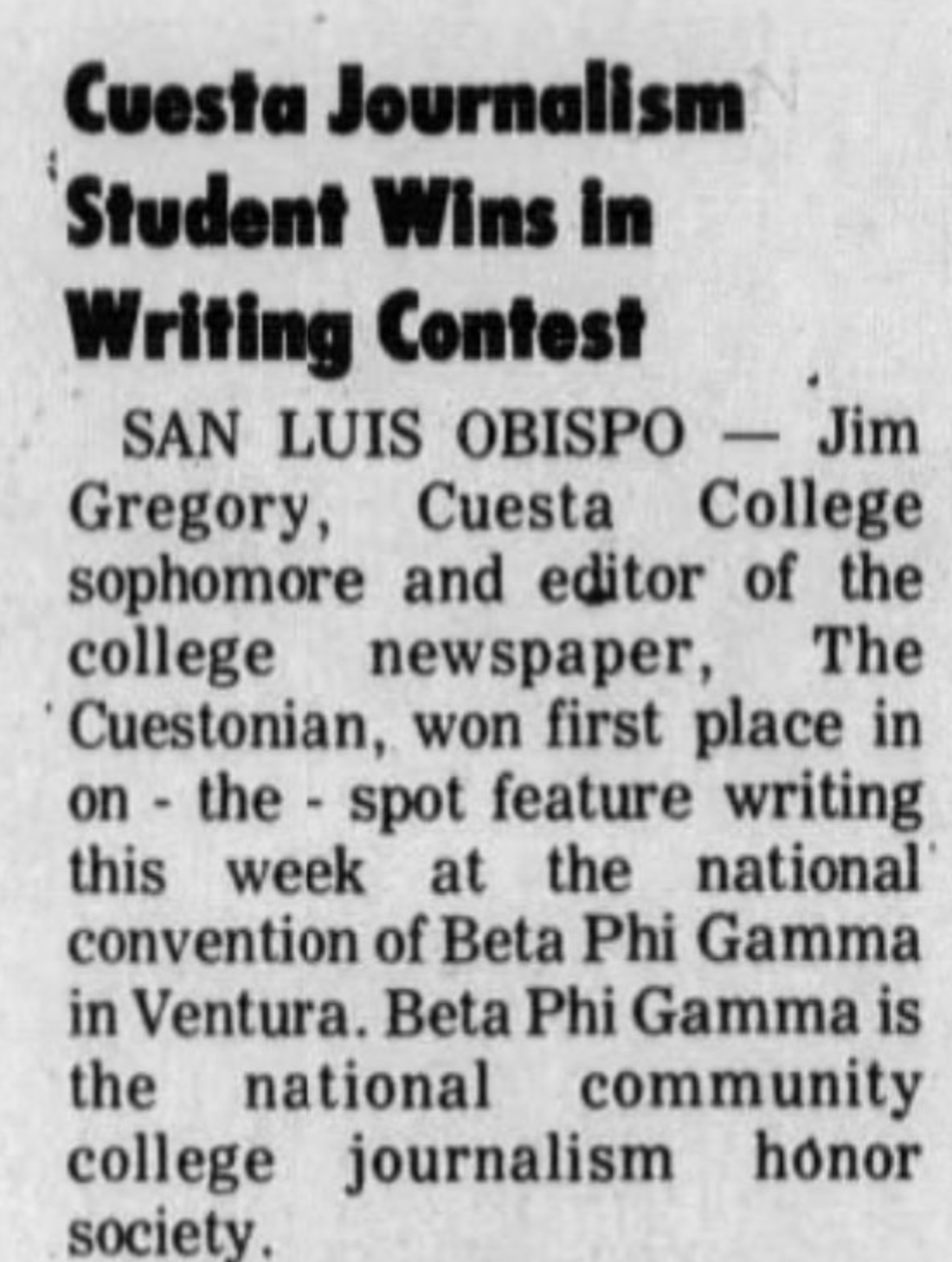
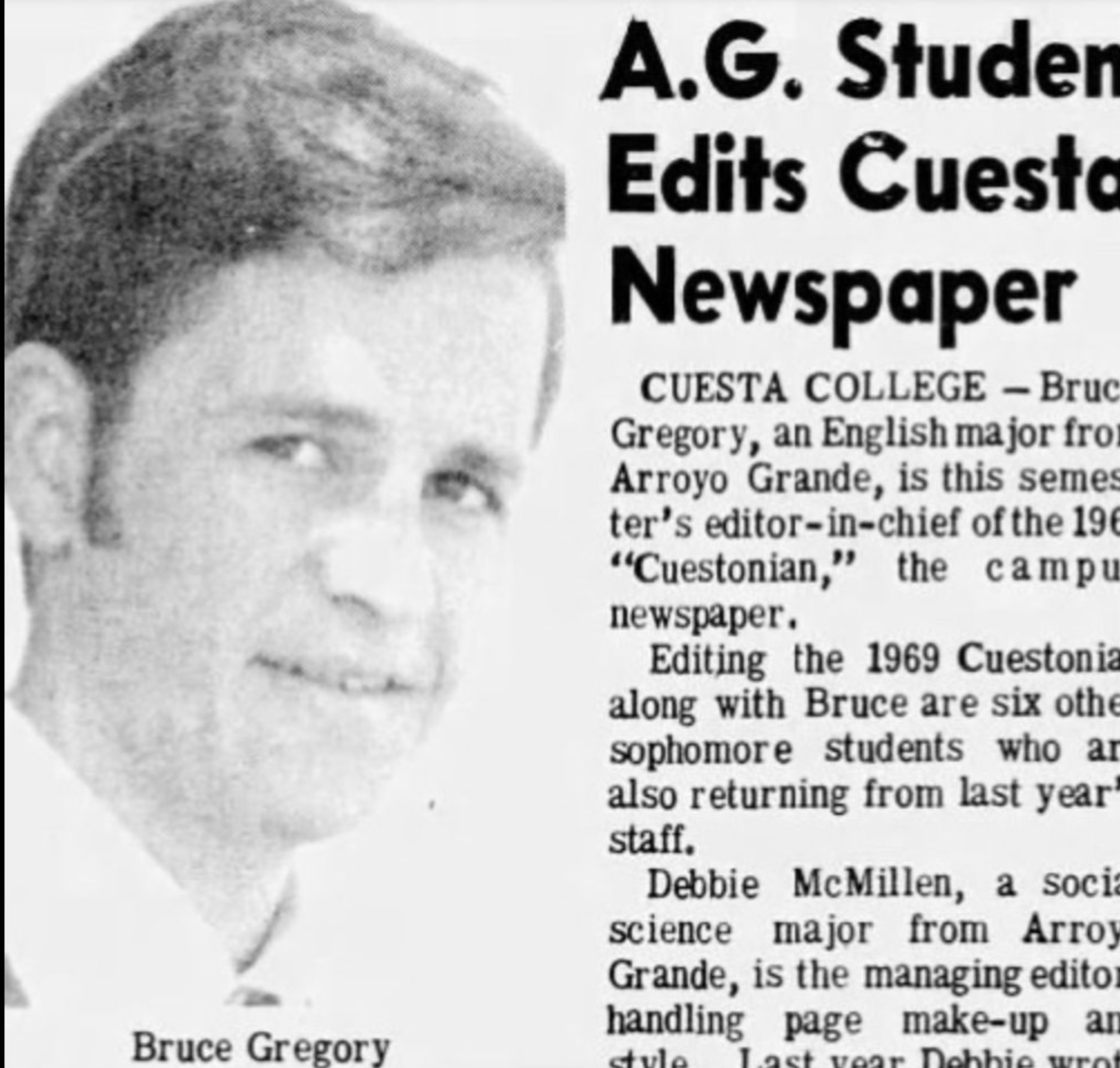
7. Bruce was the editor of the Cuesta College newspaper, “The Cuestonian.” Four years later, so was I.

When he turned nineteen, (I was ADHD and so a much BIGGER pain in the ass than he ever was), I’d become slightly less annoying, at fifteen. That’s when he turned into the best big brother anyone could hope for. 

Tomorrow he turns 77. I am 73. 

He’s still the best big brother anyone could hope for.

Subscribe

  • Entries (RSS)
  • Comments (RSS)

Archives

  • January 2026
  • December 2025
  • November 2025
  • October 2025
  • September 2025
  • August 2025
  • July 2025
  • June 2025
  • May 2025
  • April 2025
  • March 2025
  • February 2025
  • January 2025
  • December 2024
  • November 2024
  • October 2024
  • September 2024
  • August 2024
  • July 2024
  • June 2024
  • May 2024
  • April 2024
  • March 2024
  • February 2024
  • January 2024
  • December 2023
  • November 2023
  • October 2023
  • September 2023
  • August 2023
  • July 2023
  • June 2023
  • May 2023
  • April 2023
  • March 2023
  • February 2023
  • January 2023
  • December 2022
  • November 2022
  • October 2022
  • September 2022
  • August 2022
  • May 2022
  • April 2022
  • March 2022
  • February 2022
  • January 2022
  • December 2021
  • November 2021
  • October 2021
  • September 2021
  • August 2021
  • July 2021
  • June 2021
  • April 2021
  • March 2021
  • February 2021
  • January 2021
  • December 2020
  • November 2020
  • August 2020
  • July 2020
  • June 2020
  • May 2020
  • April 2020
  • January 2020
  • December 2019
  • November 2019
  • October 2019
  • September 2019
  • August 2019
  • May 2019
  • April 2019
  • March 2019
  • February 2019
  • January 2019
  • December 2018
  • November 2018
  • October 2018
  • September 2018
  • July 2018
  • June 2018
  • May 2018
  • April 2018
  • March 2018
  • February 2018
  • January 2018
  • December 2017
  • November 2017
  • October 2017
  • April 2017
  • March 2017
  • December 2016
  • November 2016
  • October 2016
  • September 2016
  • August 2016
  • July 2016
  • June 2016
  • April 2016
  • March 2016
  • February 2016
  • January 2016
  • December 2015
  • November 2015
  • October 2015
  • September 2015
  • August 2015
  • July 2015
  • June 2015
  • May 2015
  • April 2015
  • March 2015
  • February 2015
  • January 2015
  • December 2014
  • November 2014
  • September 2014
  • August 2014
  • July 2014

Categories

  • American History
  • Arroyo Grande
  • California history
  • Family history
  • Film and Popular Culture
  • History
  • News
  • Personal memoirs
  • Teaching
  • The Great Depression
  • trump
  • Uncategorized
  • World War II
  • Writing

Meta

  • Create account
  • Log in

Blog at WordPress.com.

  • Subscribe Subscribed
    • A Work in Progress
    • Join 68 other subscribers
    • Already have a WordPress.com account? Log in now.
    • A Work in Progress
    • Subscribe Subscribed
    • Sign up
    • Log in
    • Report this content
    • View site in Reader
    • Manage subscriptions
    • Collapse this bar
 

Loading Comments...