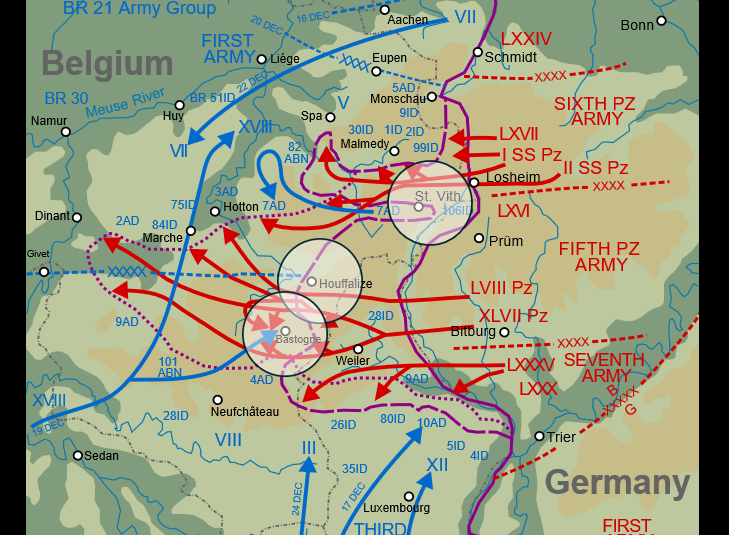
The “Bulge,” in the dotted line, indicates the depth of the German assault, intended to drive a wedge between the American and British armies and drive to the Channel.
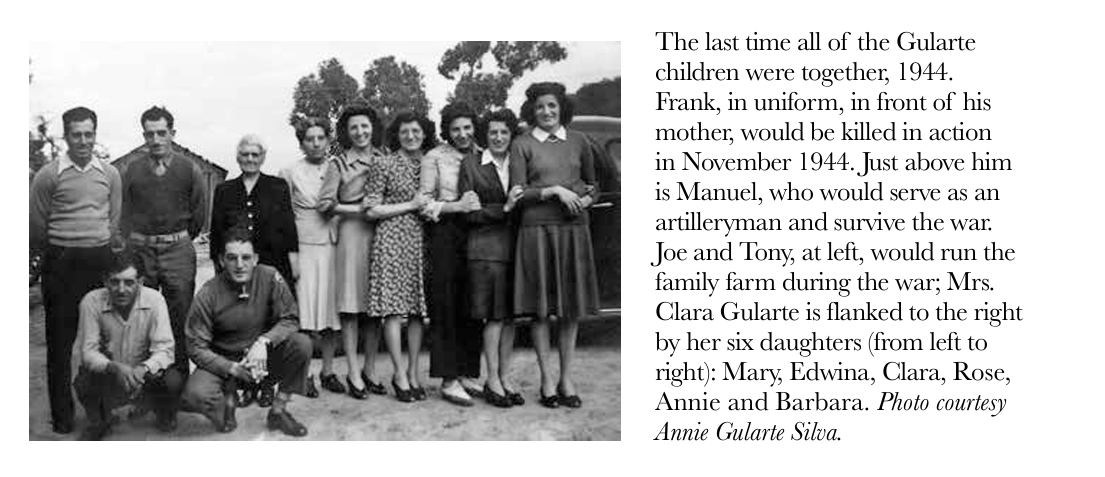
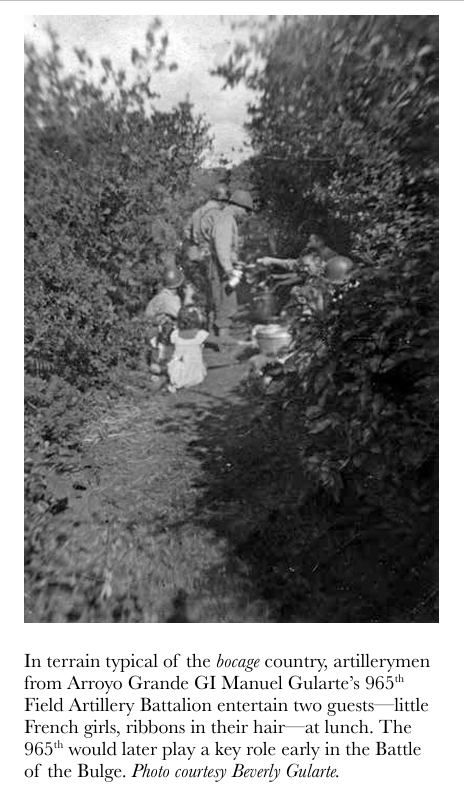
Manuel Gularte, Arroyo Grande, 965th Artillery Battalion
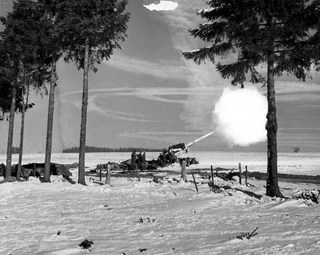
The 965th provided fire support at the town of St. Vith for the 7th Armored Division and the 106th Infantry Division. Their fire and the resistance of the two divisions stalled the German attack at its onset, which later took its toll as German tanks and trucks began to run out of fuel—by now, Berlin taxis were running on firewood. Oil had never been a German resource, which led to HItler’s Russian debacle. This was his Western Front disaster.
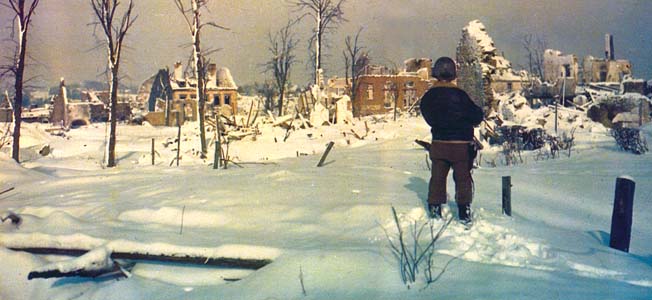
A 155mm “Long Tom” fires a round in the Battle of the Bulge.A G.I. in St. Vith.
Art Youman, Arroyo Grande, 101st Airborne
The “brothers” were Easy Company, 506th Parachute Infantry, 101st Airborne, and Youman, before the war a firefighter at Camp San Luis Obispo, was among them. He’d been promoted to Sergeant by Easy Company commander Dick Winters in Holland in September, and now the 101st was being asked to hold Bastogne, a Belgian town awash in the German advance. Their stand, during the coldest winter in Europe in thirty years, was, like St. Vith, a critical fight, diverting German forces determined to wipe the Americans out. They failed.
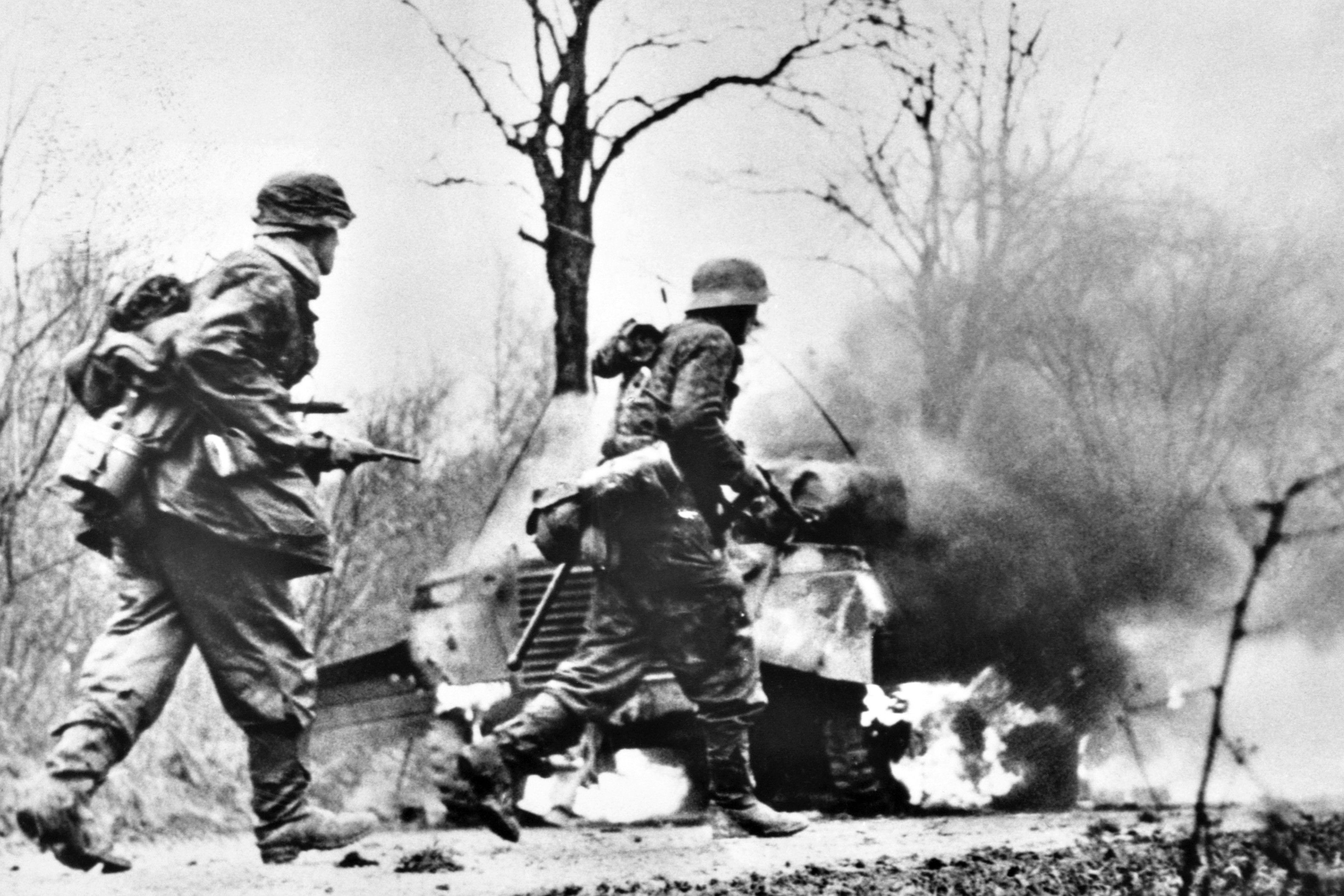
German infantry during their offensive.
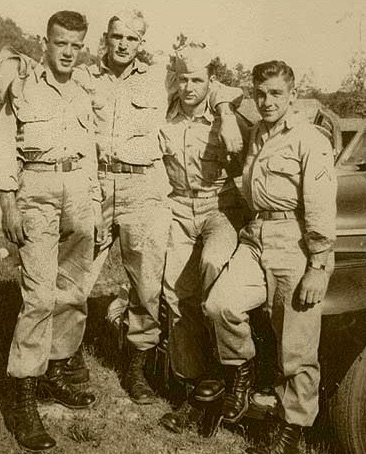
Youman, second from left, during Easy Company training.
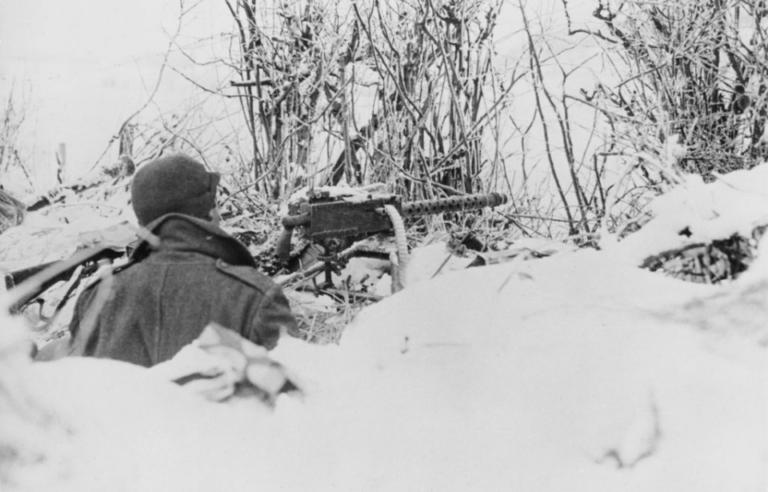
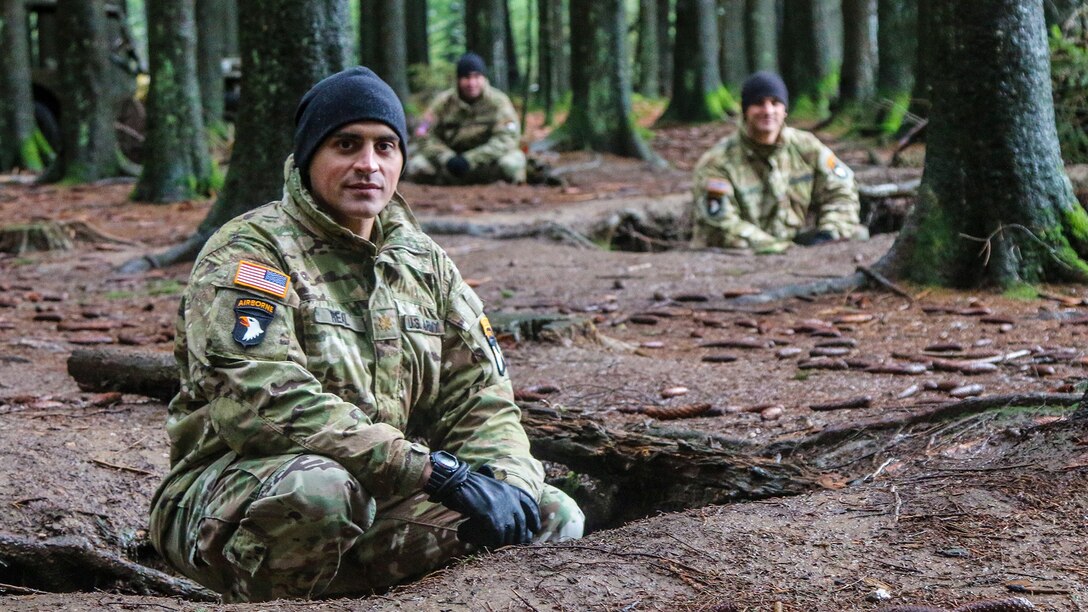
(Above): A 101st machine gunner in his foxhole; 101st soldiers in the 1944 foxholes their comrades had dug. This photo was taken 75 years after the Bulge.
James Pearson, Paso Robles, 455th Bomb Squadron, 323rd Bomb Group
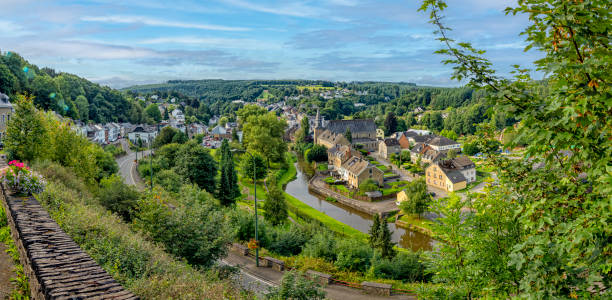
(Above: Houffalize, Belgium; a German Panther tank in the town center suggest this town’s importance in the Battle of the Bulge.
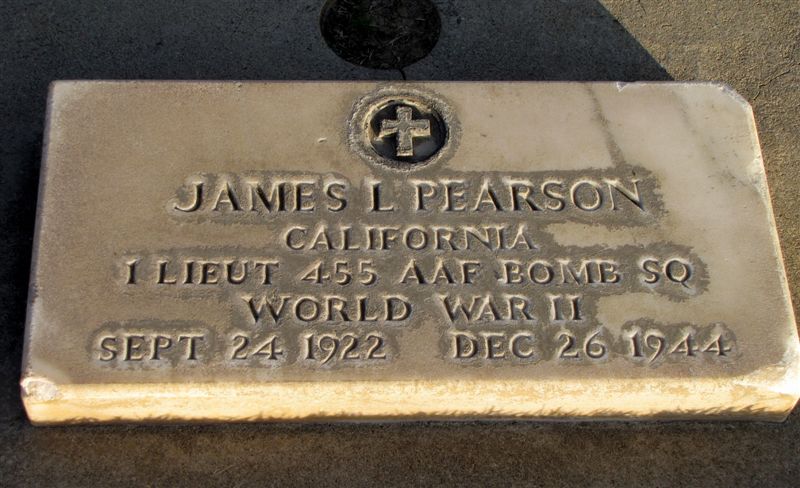
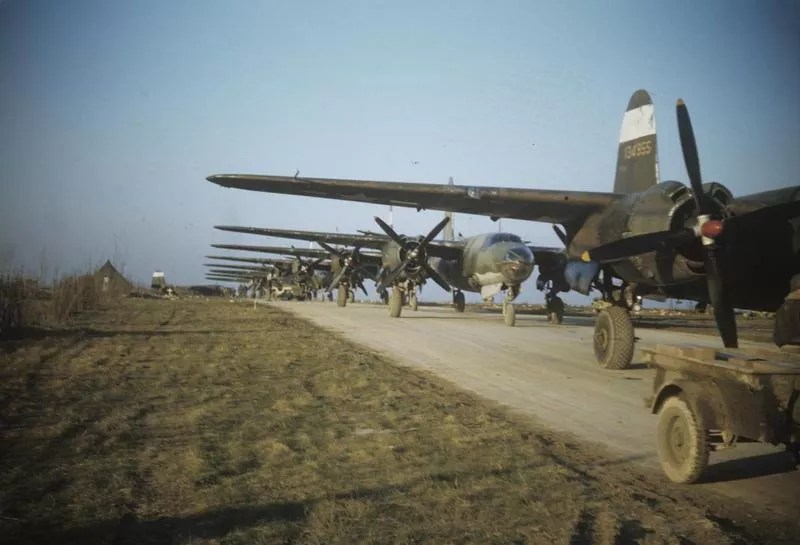
Another key turning point in the Battle of the Bulge was the lifting of a stubborn overcast, which allowed American airpower to assert itself. One medium bomber that participated in this effort, a Martin B-26 Marauder, had a crew that included 1st Lt. James Pearson, the navigator. On December 26, 1944, that aircraft, “Mission Belle,” was shot down over this beautiful town. There were no survivors.
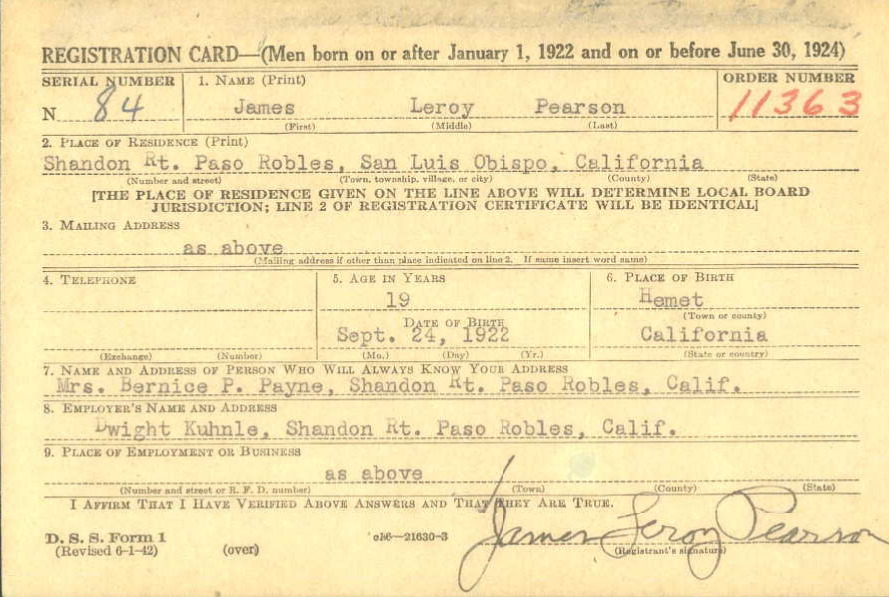
Pearson’s draft cardHe is buried in Hanford
“Mission Belle,” with an earlier aircrew, February 1944. The aircraft flew 149 combat missions.“Belle” at the right edge of this photo, taking off from Laon, France, in December 1944, the month Pearson was killed.
(Below): B-26 Marauders from Pearson’s bomb group–the “White Tails”–over Germany. The video’s music is touching, as is the sight, far below the Marauders, of P-38 fighters, which have connections to the Central Coast. You hope they are safely headed home.
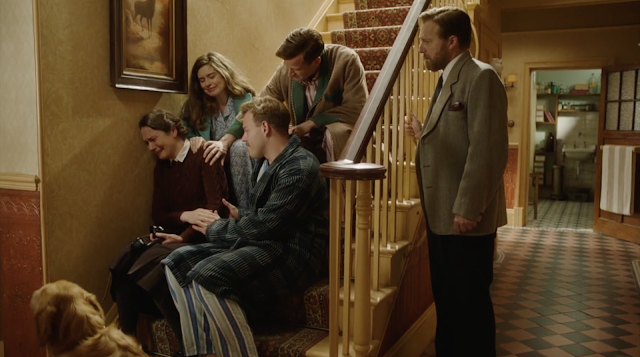
Last night, PBS reprised the 2024 All Creatures Great and Small Christmas episode. It tugged, as usual, at the heartstrngs, but this was set at Christmas 1941, when the world had gone quite mad.
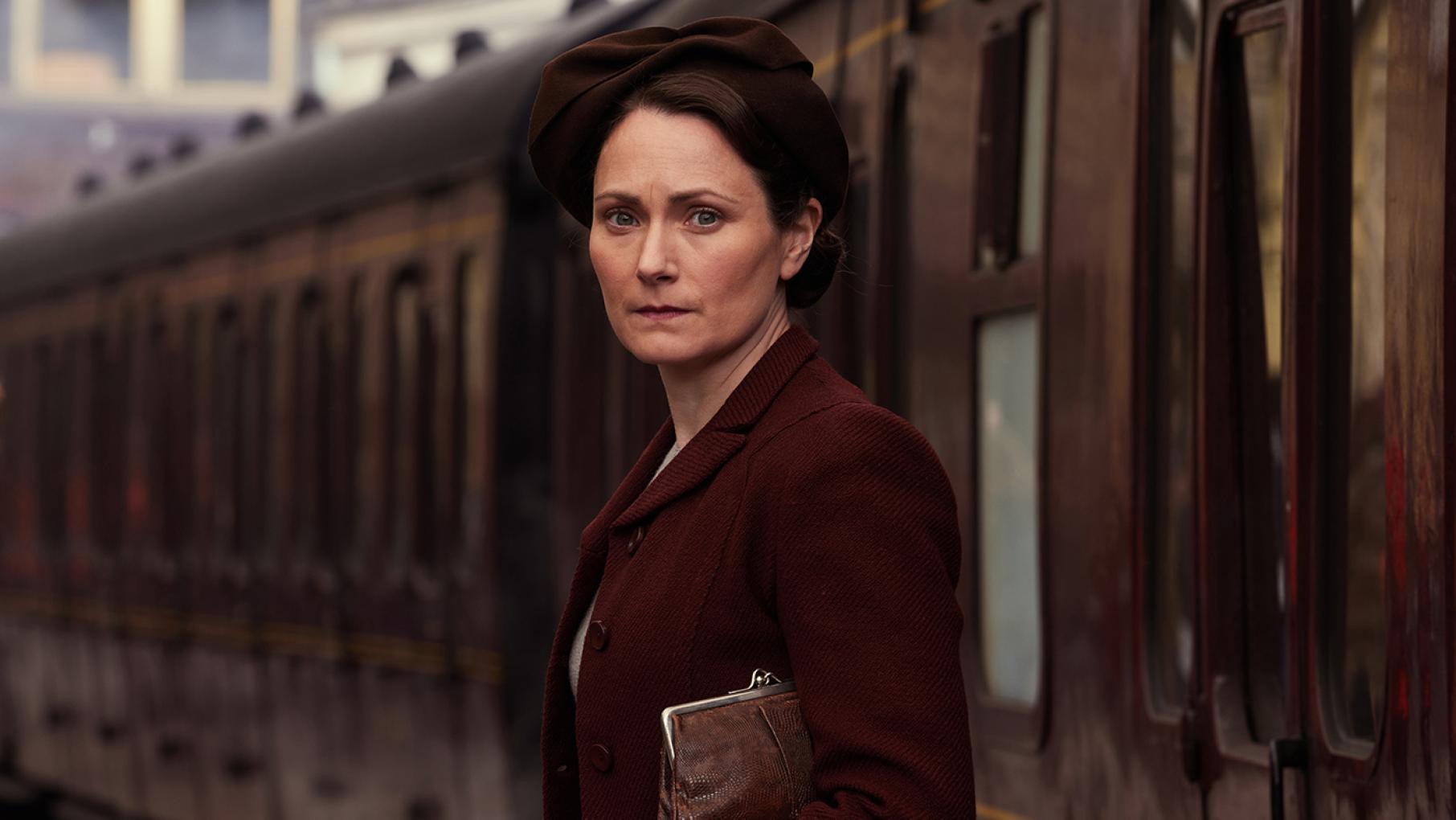
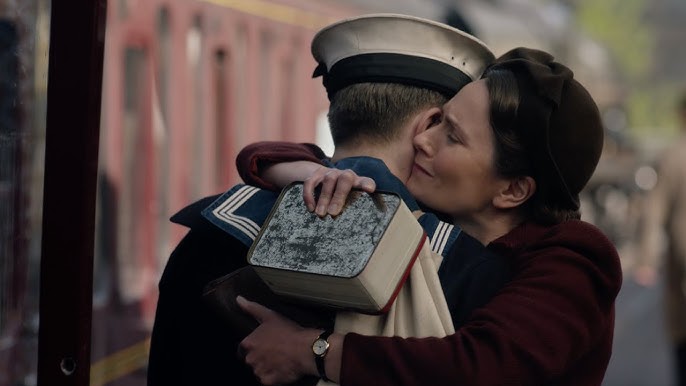
Earlier in the season, the housekeeper, Mrs. Hall, had reunited with her estranged son, only to see his train take him away to a war in progress in Britain since 1939, and to his duty in the Royal Navy.
Word comes over what was called the wireless that her son’s ship, the battle cruiser HMS Repulse, has been sunk, along with the battleship Prince of Wales. The Farnons and the Herriots were about to attend to Christmas dinner when Siegfried, the head of the veterinary practice, had to break the news to the woman who is the emotional glue of the home. When she collapses, the ripple that spreads through Skeldale House is seismic.
The news shouldn’t have been brought because the tragedy shouldn’t have happened. Only three days after Pearl Harbor, the two great ships sailed north heedlessly, without air protecton, and, just as Pearl Harbor had proven, battleships were vulnerable to air attack. 840 British sailors died, the victims of that terrible and seemingly congenital White Man’s disease, arrogance. Swarms of Japanese planes descended on the pride of the Royal Navy in the Far East. Twenty-eight Japanese aviators gave their lives for their country in a running battle that lasted a little over an hour.
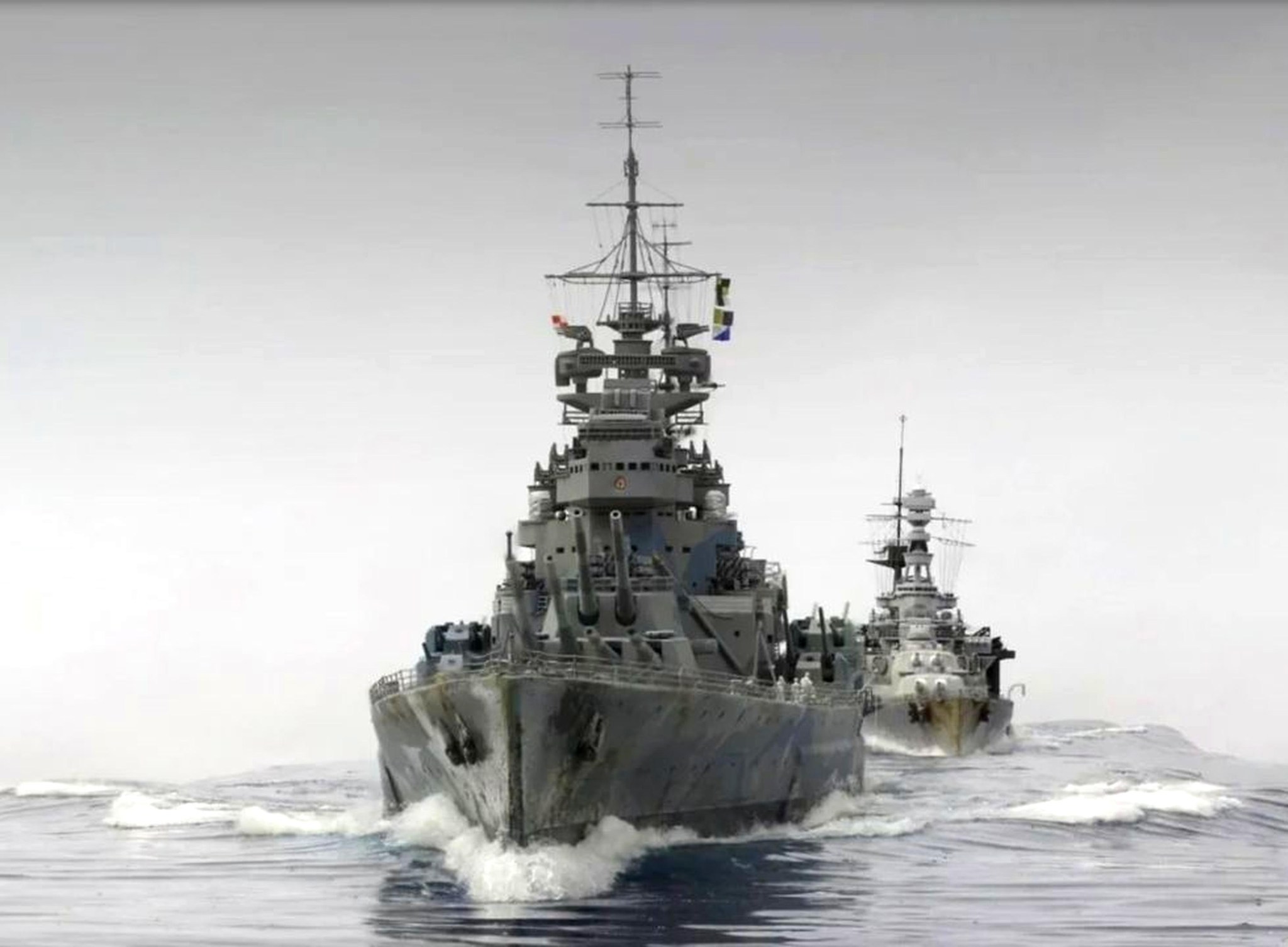
The illustration depicts Prince of Wales with Repulse in her wake.
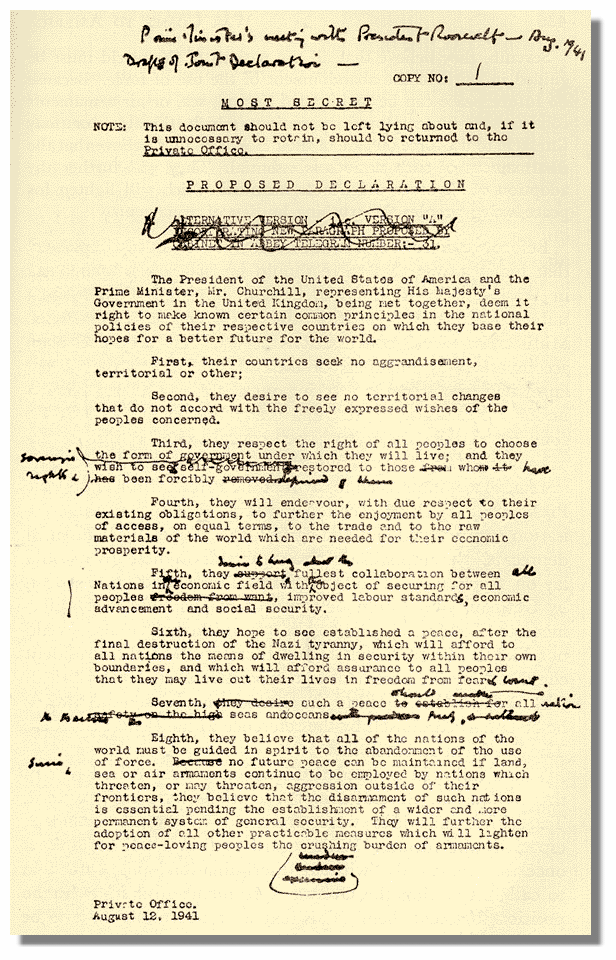
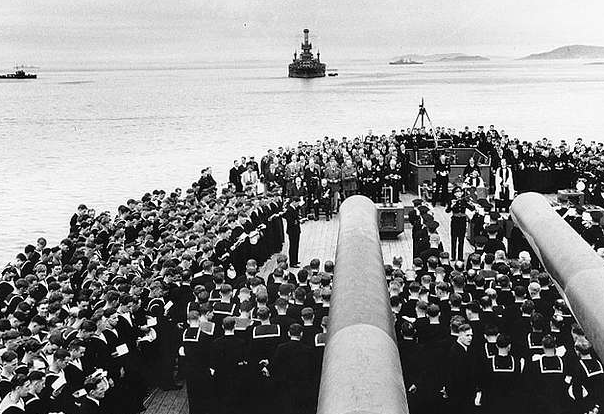
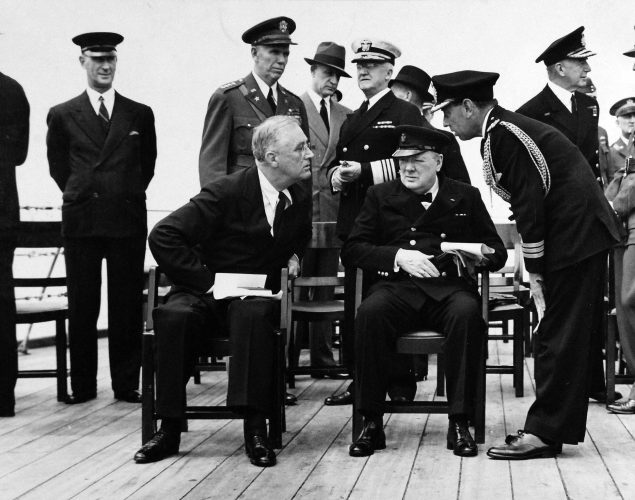
The loss of Prince of Wales would have resonance in America, waiting to learn about the destruction wreaked on the American base at Pearl Harbor. The British battleship represented the birth of the Anglo-American alliance that seems to be in grave danger today. It was on Prince of Wales, off the coast of Newfoundland, where Winston Churchill and Franklin Roosevelt met—in person, for the first time— for a conference that concluded with the issuing of The Atlantic Charter, a set of principles that seem to be in grave danger, as well. This is Churchill’s annotated copy:
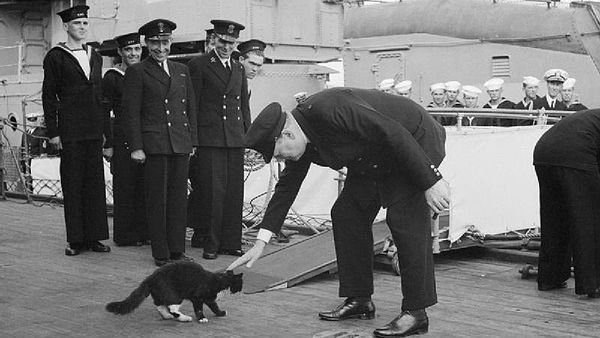
(Above) Churchill, always fond of cats, greets Prince of Wales mascot Blackie on arriving for the conference. Blackie survived the battleship’s sinking; many of the sailors, attending divine services with the two leaders, would not.
The great ship was ideal for the meeting between the president and the prime minister. One of the similarities that cemented their friendship was their love for the navy. Churchill had served as First Lord of the Admiralty (he used the term “Naval Person” to refer to himself in his correspondence with Roosevelt) FDR, like his wife’s uncle Theodore, had served as Assistant Secretary of the Navy.
FDR and Chuchrill aboard Prince of Wales. Gen. George Marshall is just behind the president.
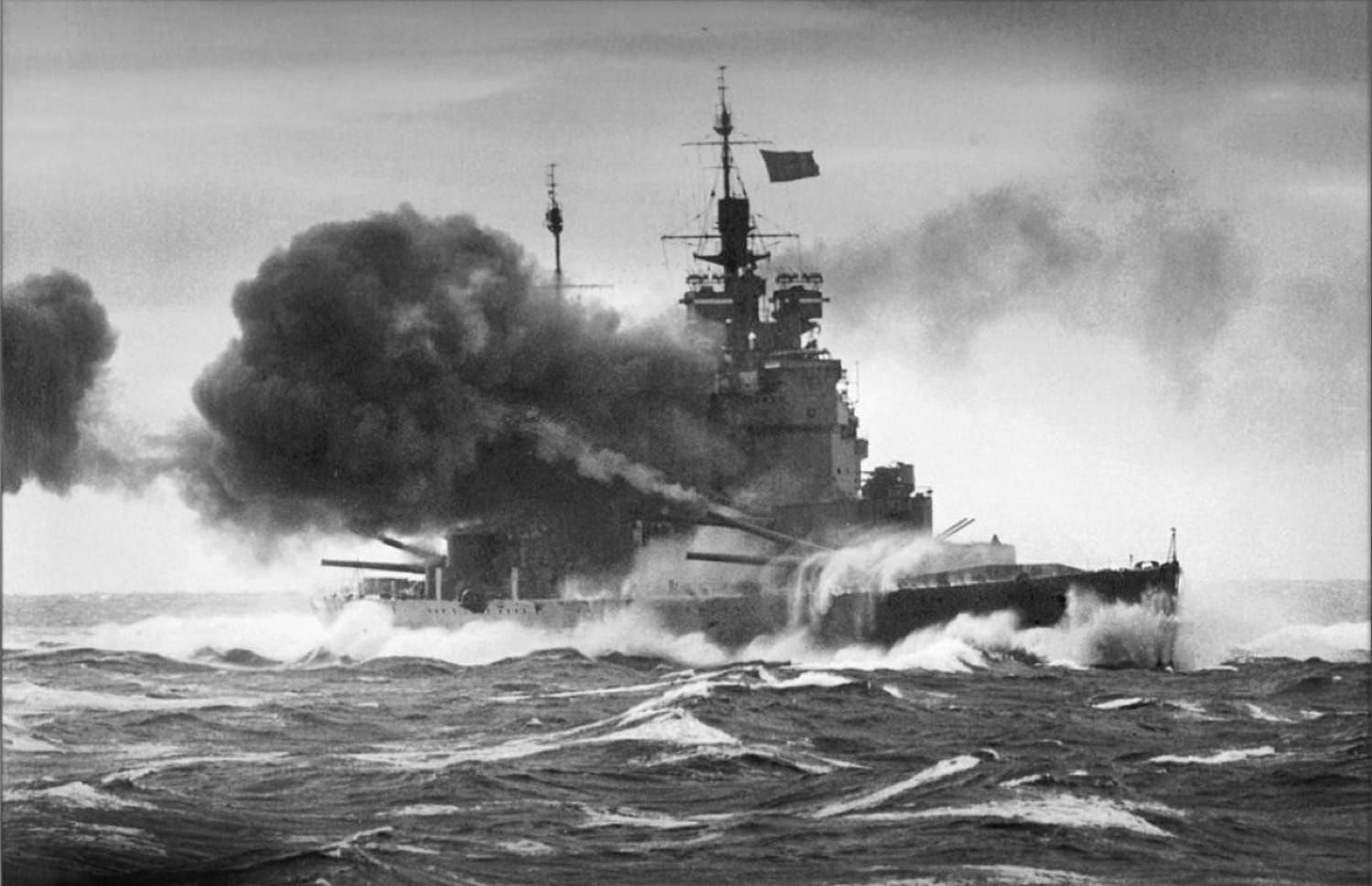
Three months later, it was appropriate that another battleship, HMS Duke of York ( engaging a German battleship, Scharnhorst, in the 1943 photo below) brought Churchill to America.
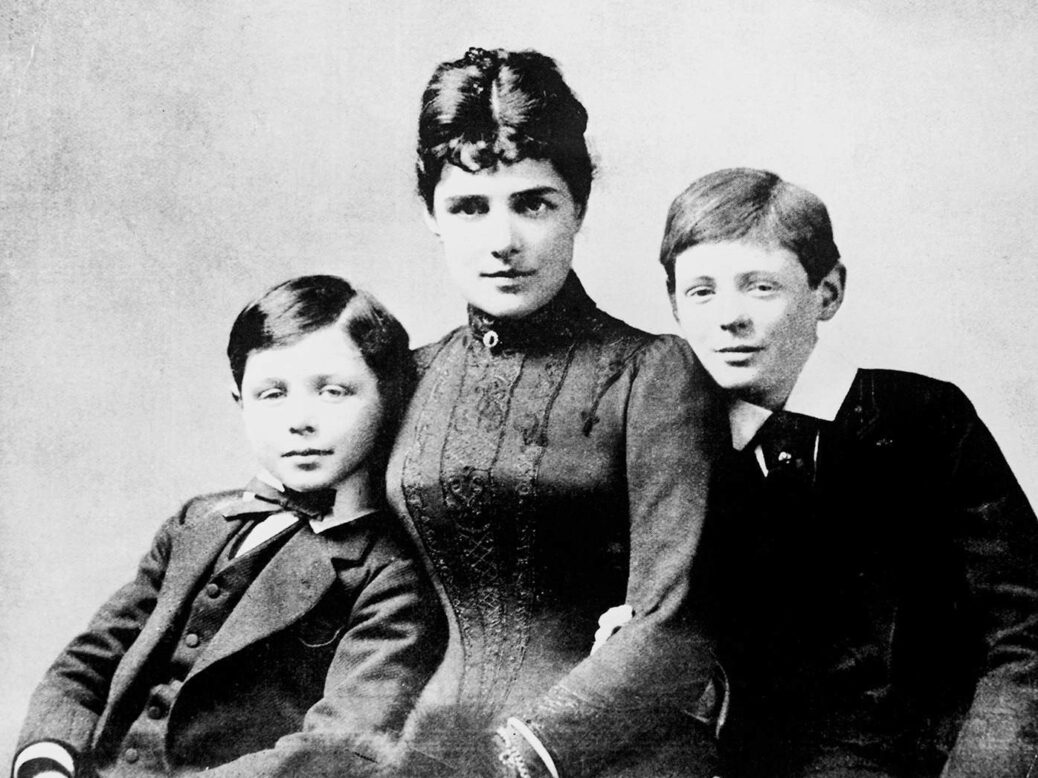
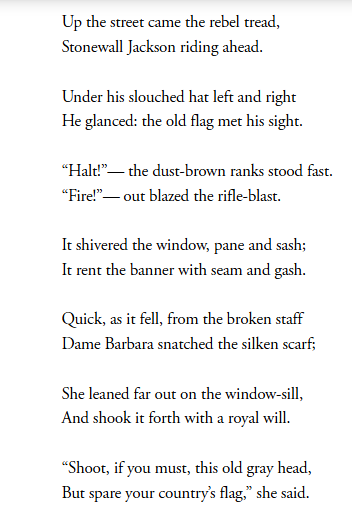
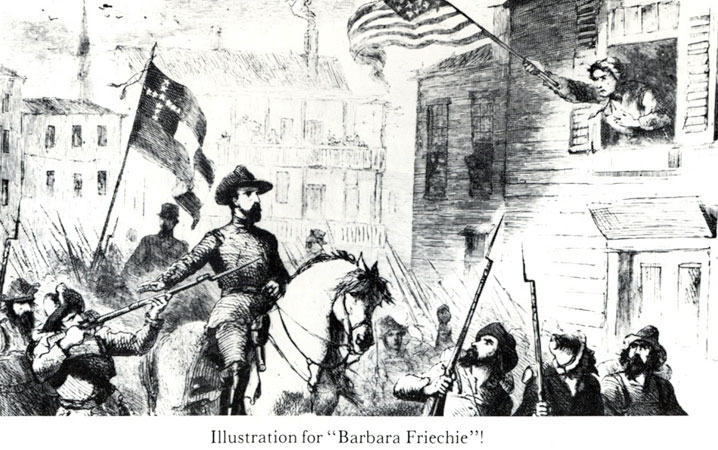
On the way to the White House, motoring through Maryland, the Prime Minister regaled the President by reciting, from memory, the Whittier poem “Barbara Fritchie,” about an elderly Frederick, Maryland, woman who defied the invading Confederates by waving the American flag out her window. The poem is very long and not very good, but Churchill relished it—reminding his hosts that he, thanks to his mother, Jennie, was half-American.
Jennie Jerome Churchill and her sons, Jack and Winston
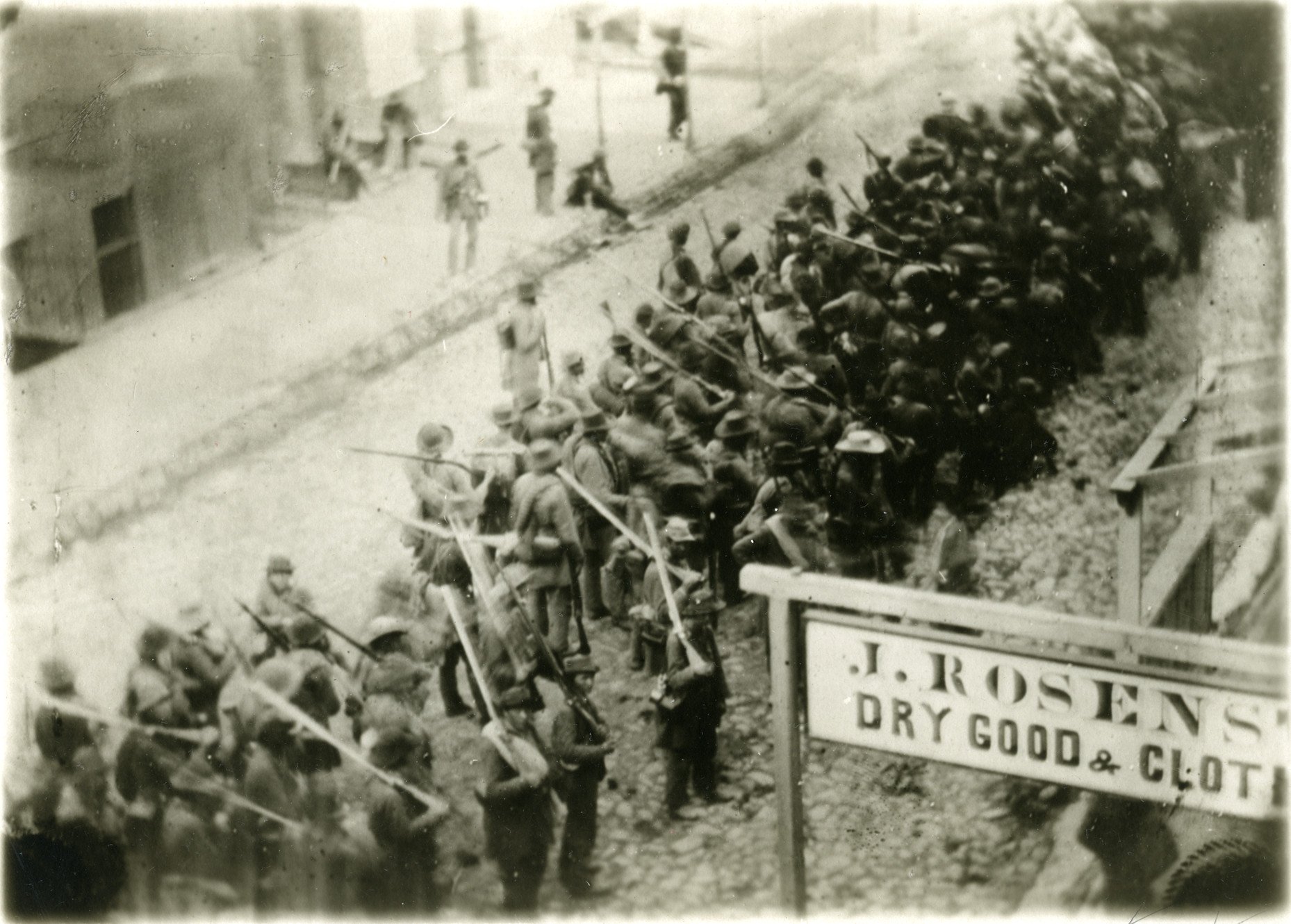
Lee’s troops in Frederick, September 1862. They’re on their way to Antietam, the costliest battle in American history.
Churchill arrived at the White House on December 13 and didn’t return home until January 17, 1942. Along the way he horrified White House staff with his breakfast orders, which included copious amounts of whiskey and soda, remained naked—not counting the cigar— and pink as a cherub when the president visited him immediately after a bath. Churchill, a late-late riser, worried Eleanor because he kept her husband up until the wee hours; the P.M. also made discreet use of the White House’s potted plants because the president adored cocktail hour and invented concoctions for his guests that were said to be truly dreadful.
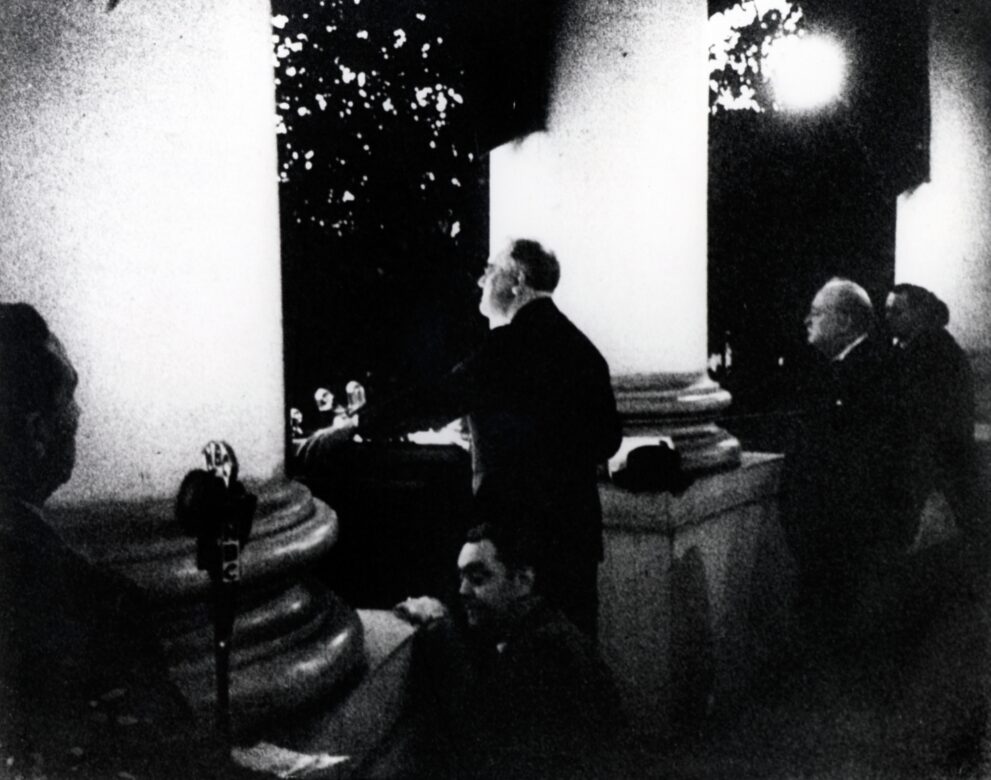
Churchill, to FDR’s right, witnesses the lighting of the National Christmas tree, December 24, 1941.
The meetings were productive but fraught: The two leaders (Churchill may have had a mild heart attack) were enduring the aftershocks of Pearl Harbor and the capital ships’ sinkings: Japanese troops were advancing rapidly in the Philippines, the fall of Hong Kong on Christmas Day crushed the prime minister.
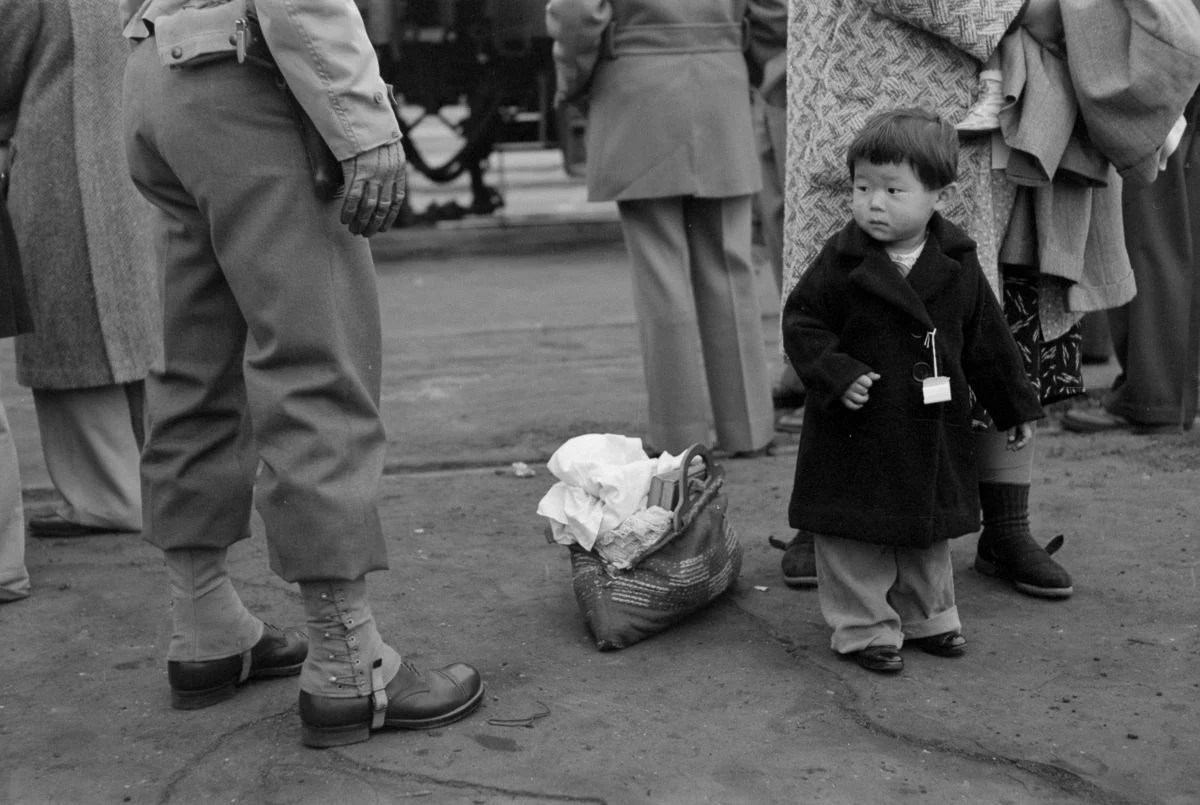
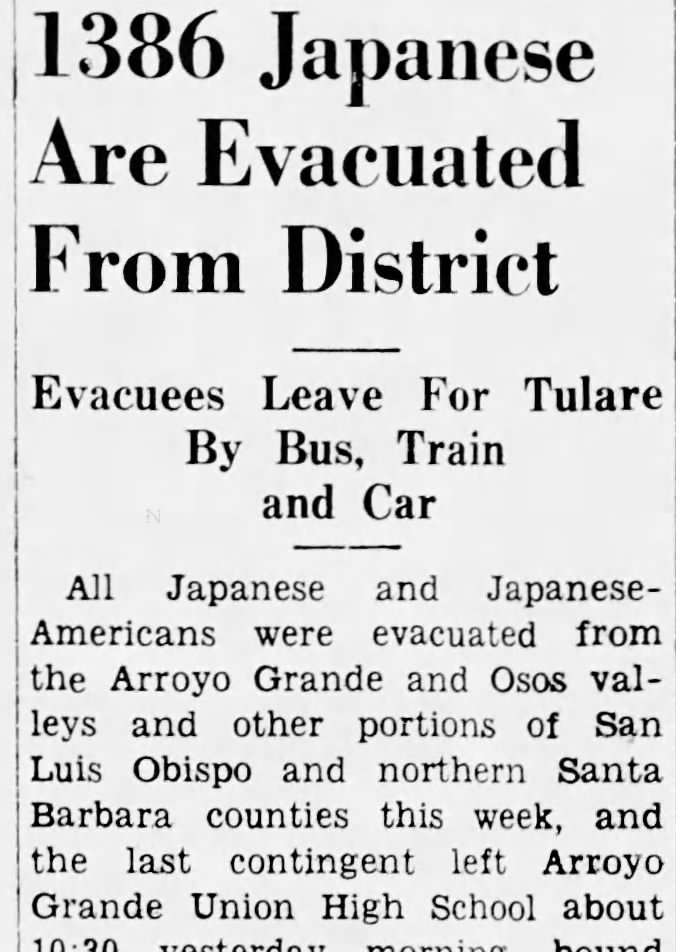
Historians theorize that these runaway Japanese successes, and FDR’s fondness for his new friend, played a key role in the president’s decision to issue Executive Order 9066, which was enforced here, in Arroyo Grande, 2400 miles from Pearl Harbor, 2800 miles from Washington DC and 5400 miles from London.
The aftershocks of December 1941 finally crested here on April 30, 1942. This war spared no one.
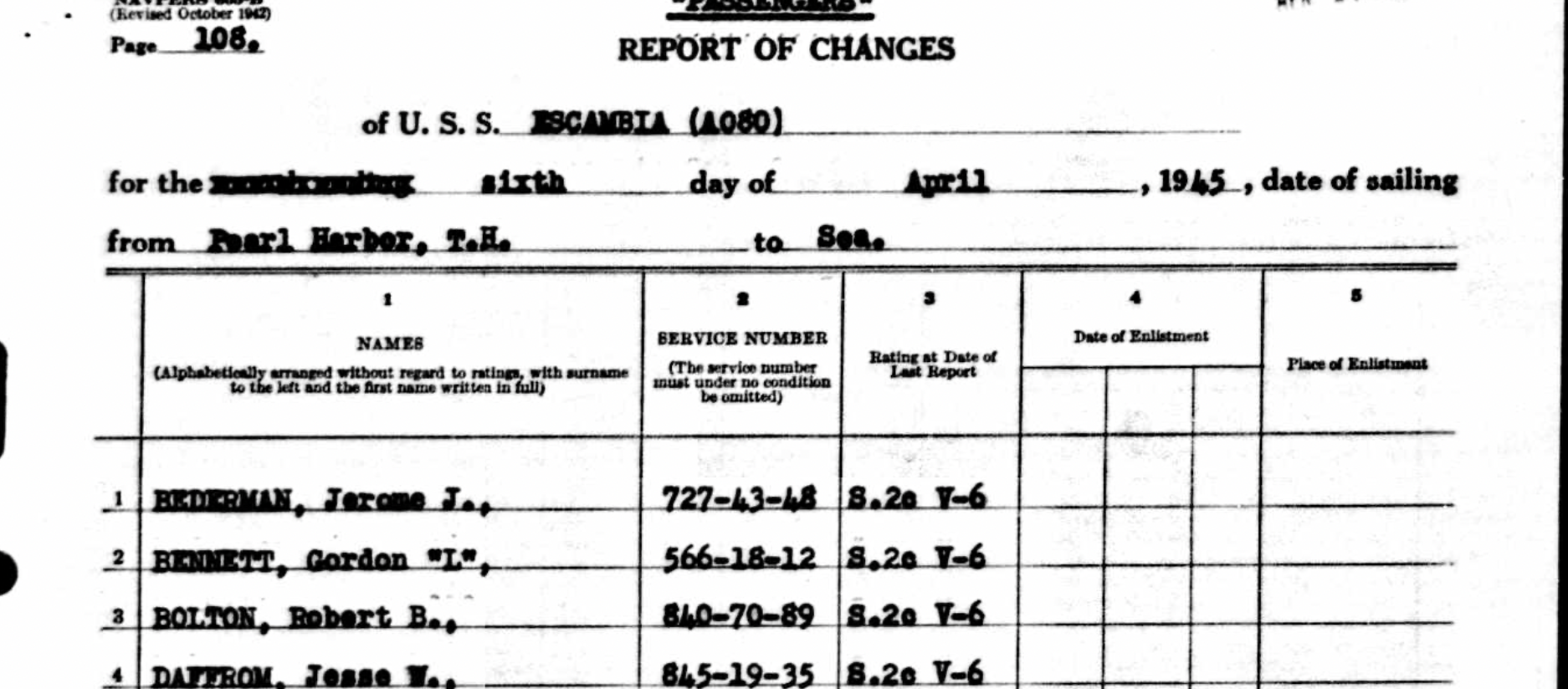
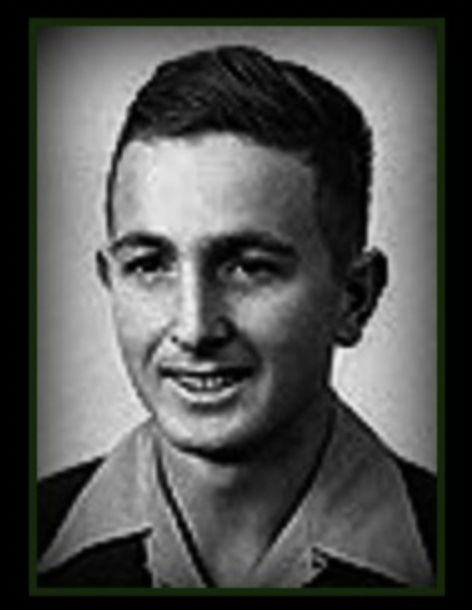
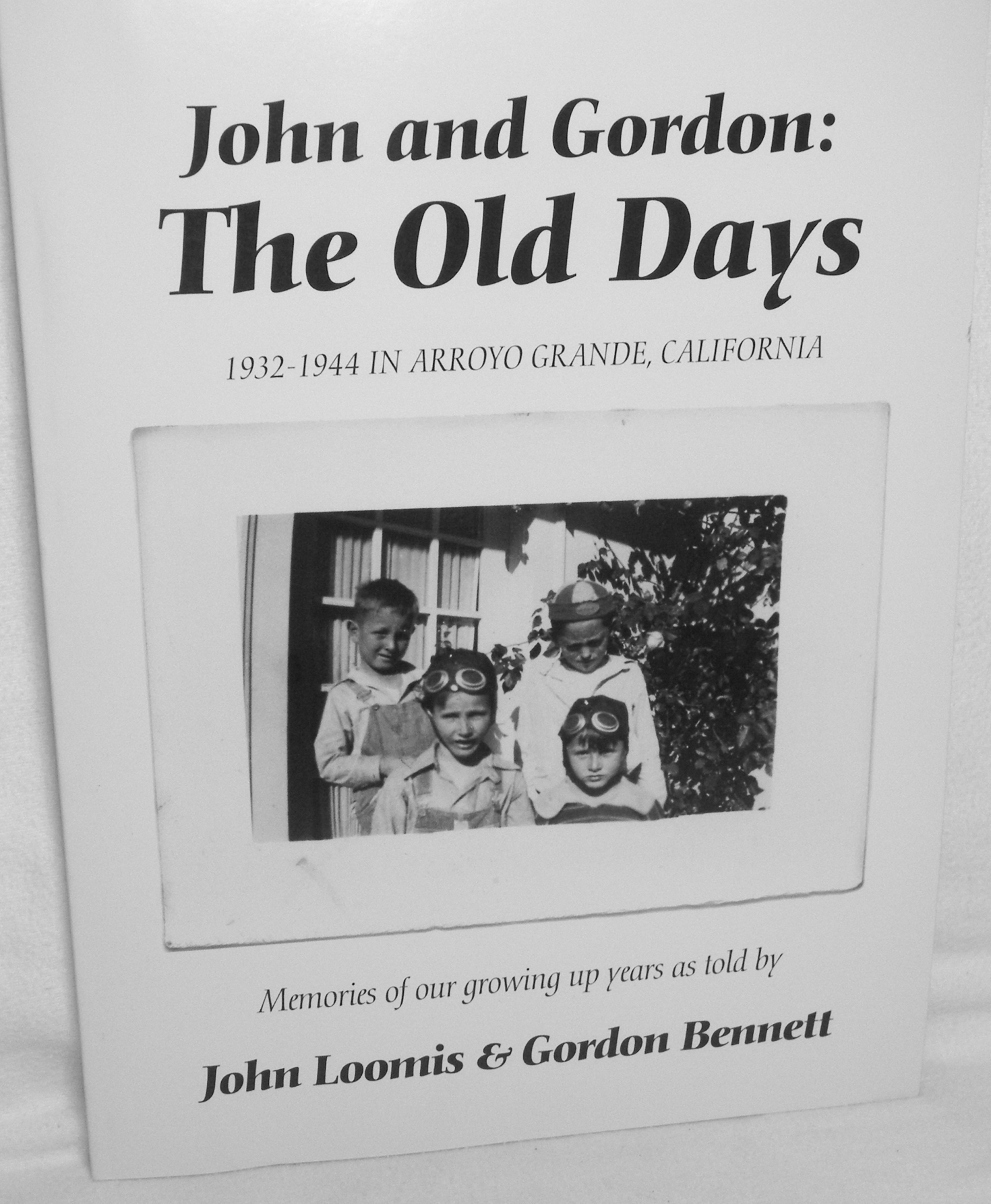
Gordon Bennett, Arroyo Grande Union High School ’44, was one of my students’ favorite guest speakers when I taught U.S. History at AGHS. He was a gifted storyteller with a sense of humor as dry as vermouth. My students and I loved hearing his stories about growing up in Arroyo Grande during the Depression and World War II.
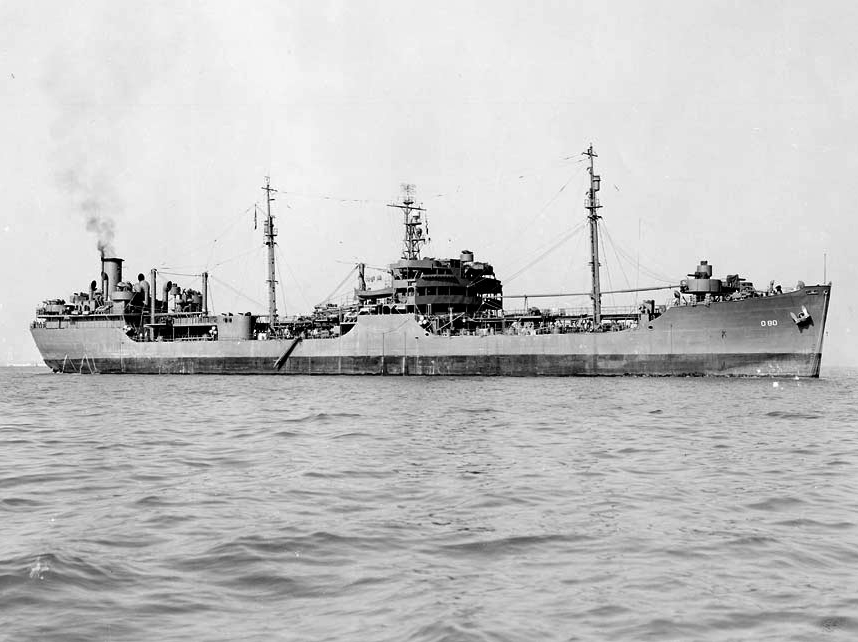
World War II was waiting for them when both Gordon and his cousin, John Loomis, joined the service. The two found themselves not that far apart during the Battle of Okinawa, which had begun April 1, 1945. John was onshore with the 1st Marine Division, Gordon offshore serving as a sailor on the fleet oiler Escambia (named after a river in Florida).
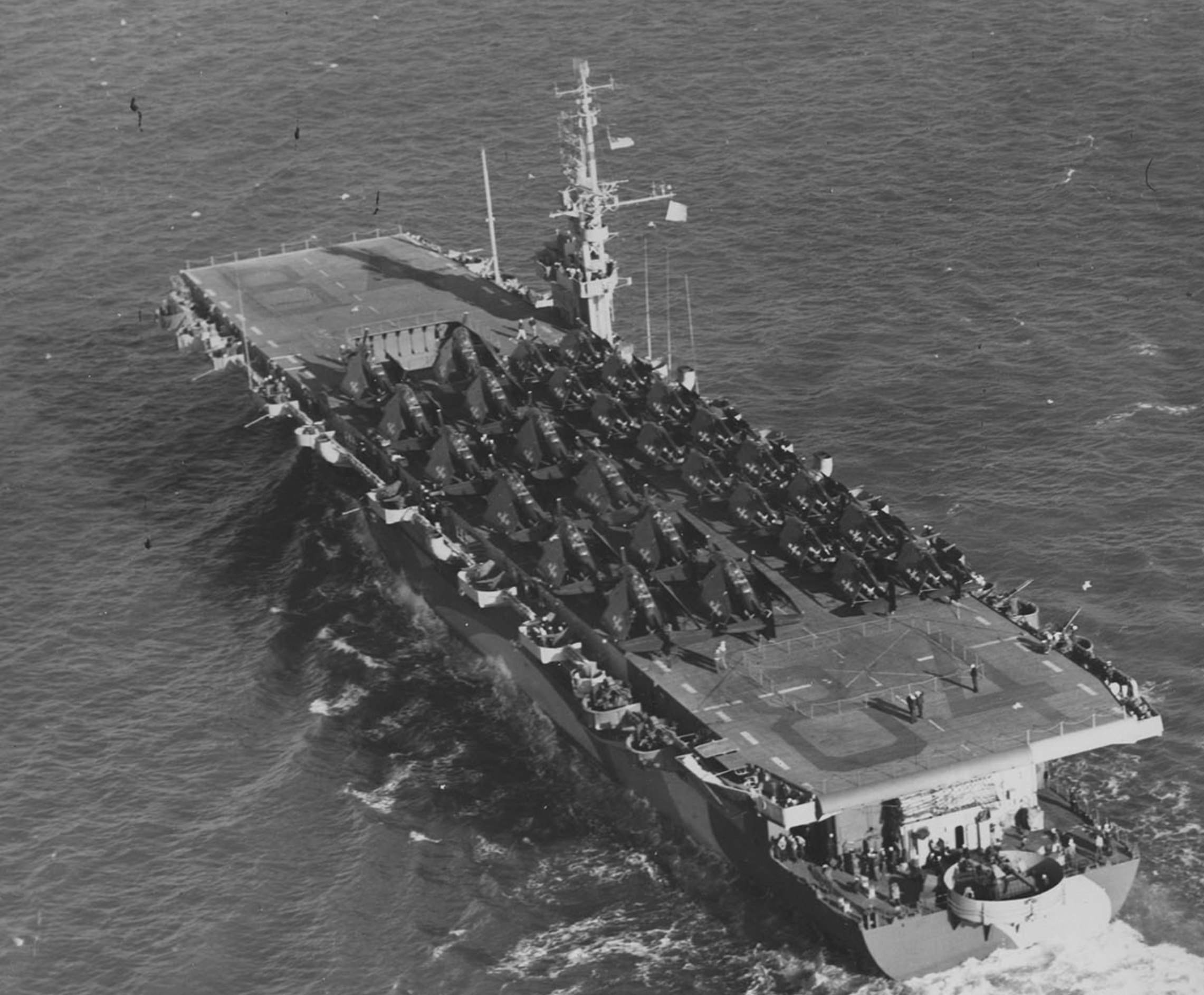
Gordon and his shipmates serviced escort carriers (small carriers that carried around thirty planes, like Emerald Bay (above), during the height of the kamikaze attacks off Okinawa. Thirty-four Navy vessels were sunk and over 280 damaged during the last, desperate battle of the war. The little carriers that were Escambia’s responsibility escaped and launched a series of airstrikes on the island. Both Escambia and Emerald Bay were based at Ulithi, where Gordon, according to legend, experimented in the distillation of medicinal beverages.
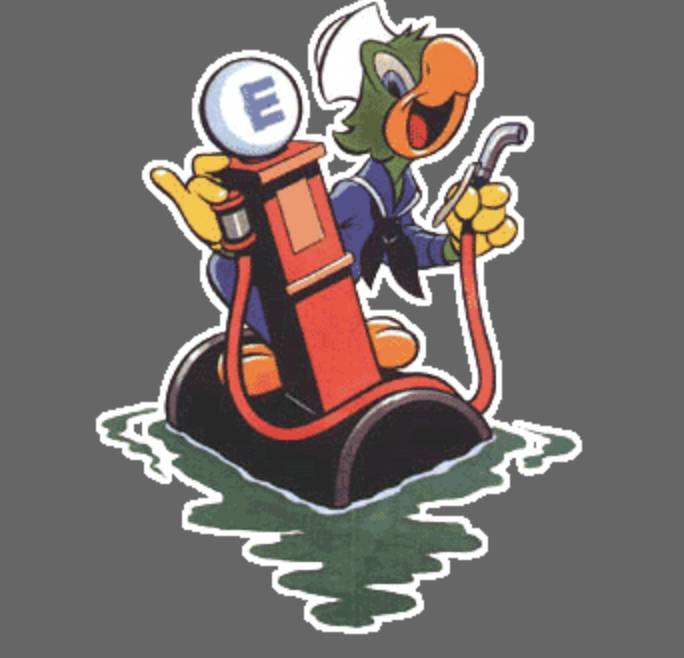
Above: The Ulithi anchorage; Gordon in high school; USS Escambia’s logo, designed by a Disney artist.
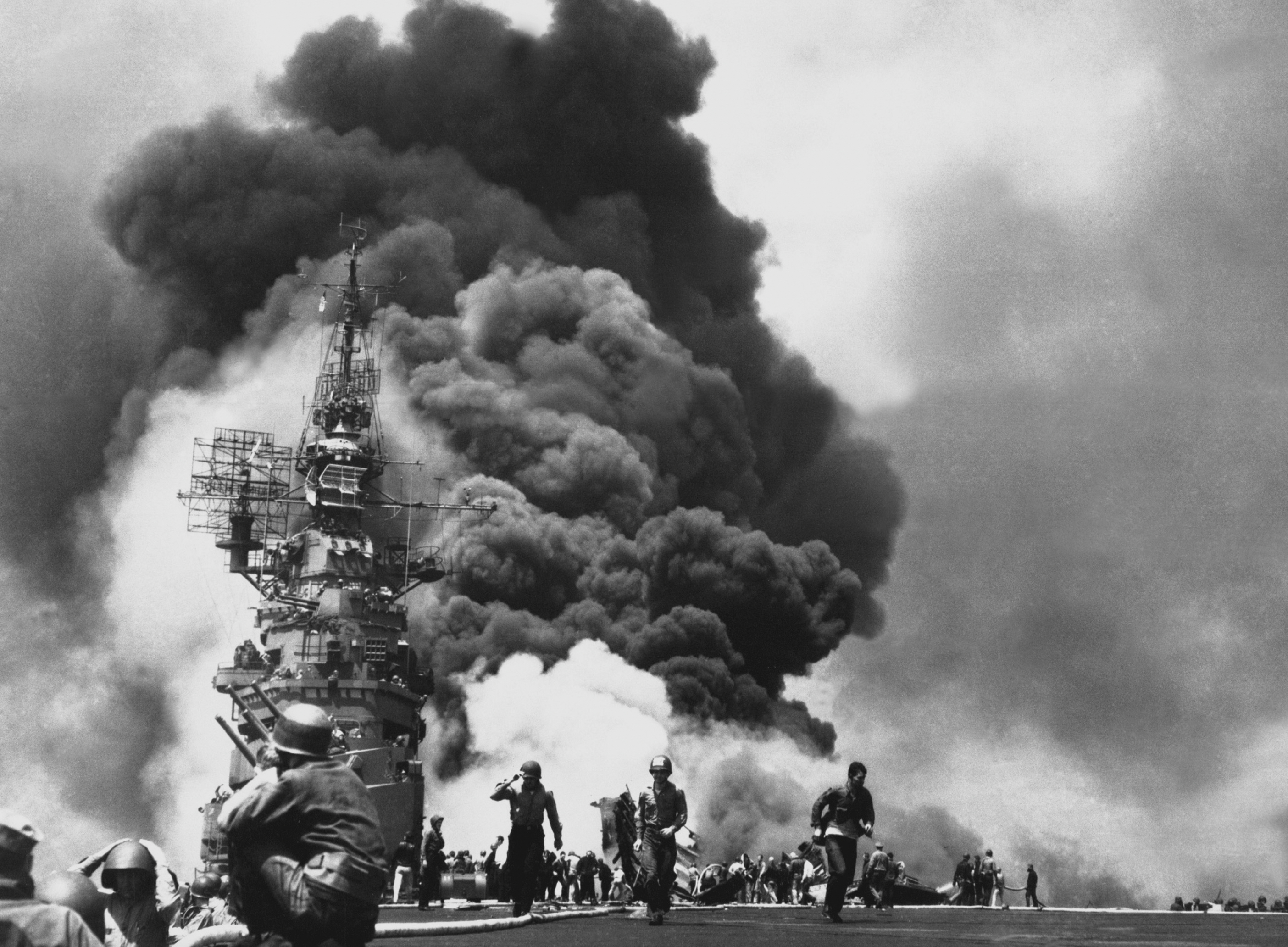
Which, given the ferocity of the kamikaze attacks, I might’ve sipped. The carrier Bunker Hill after once such attack, below.
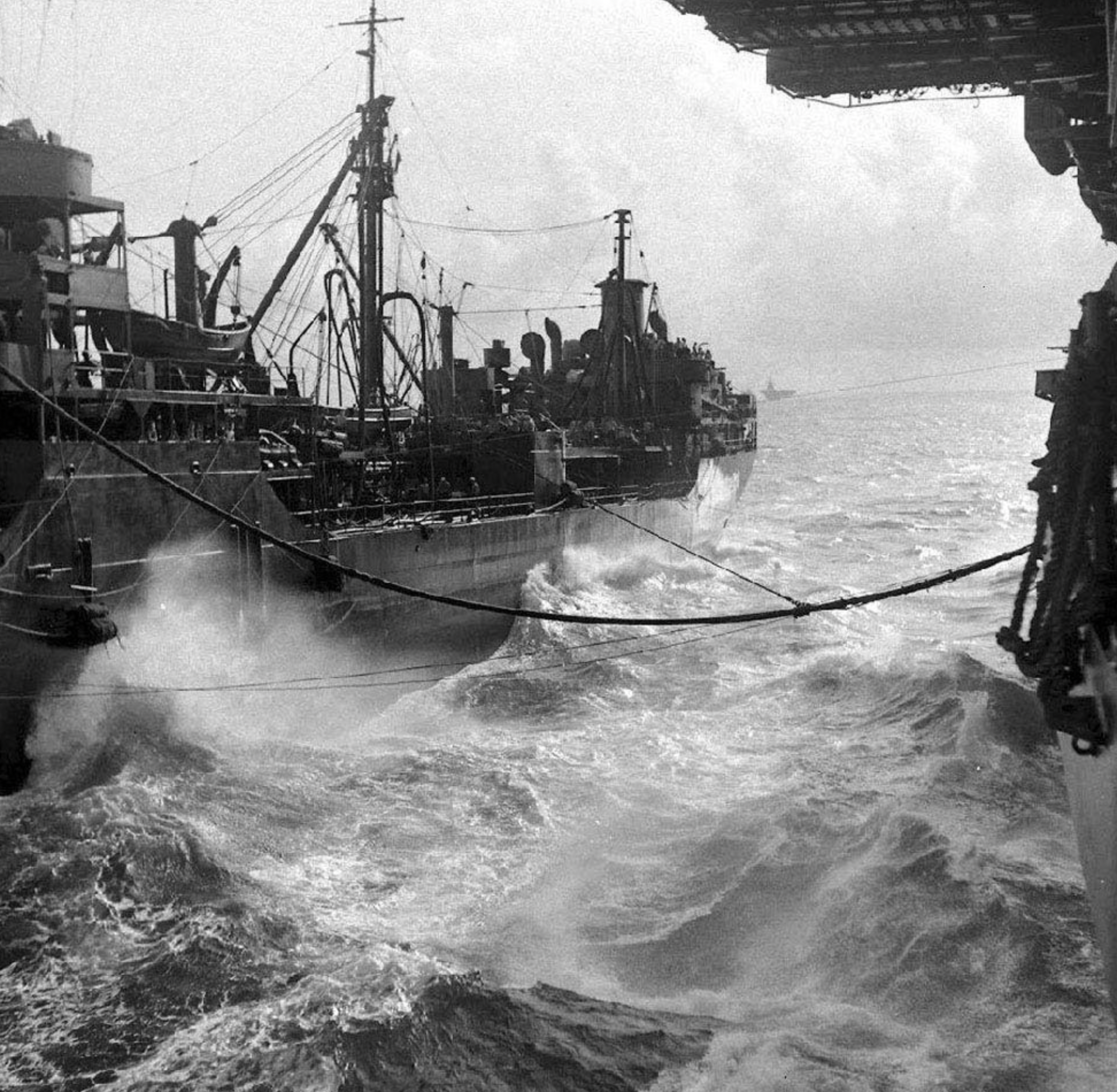
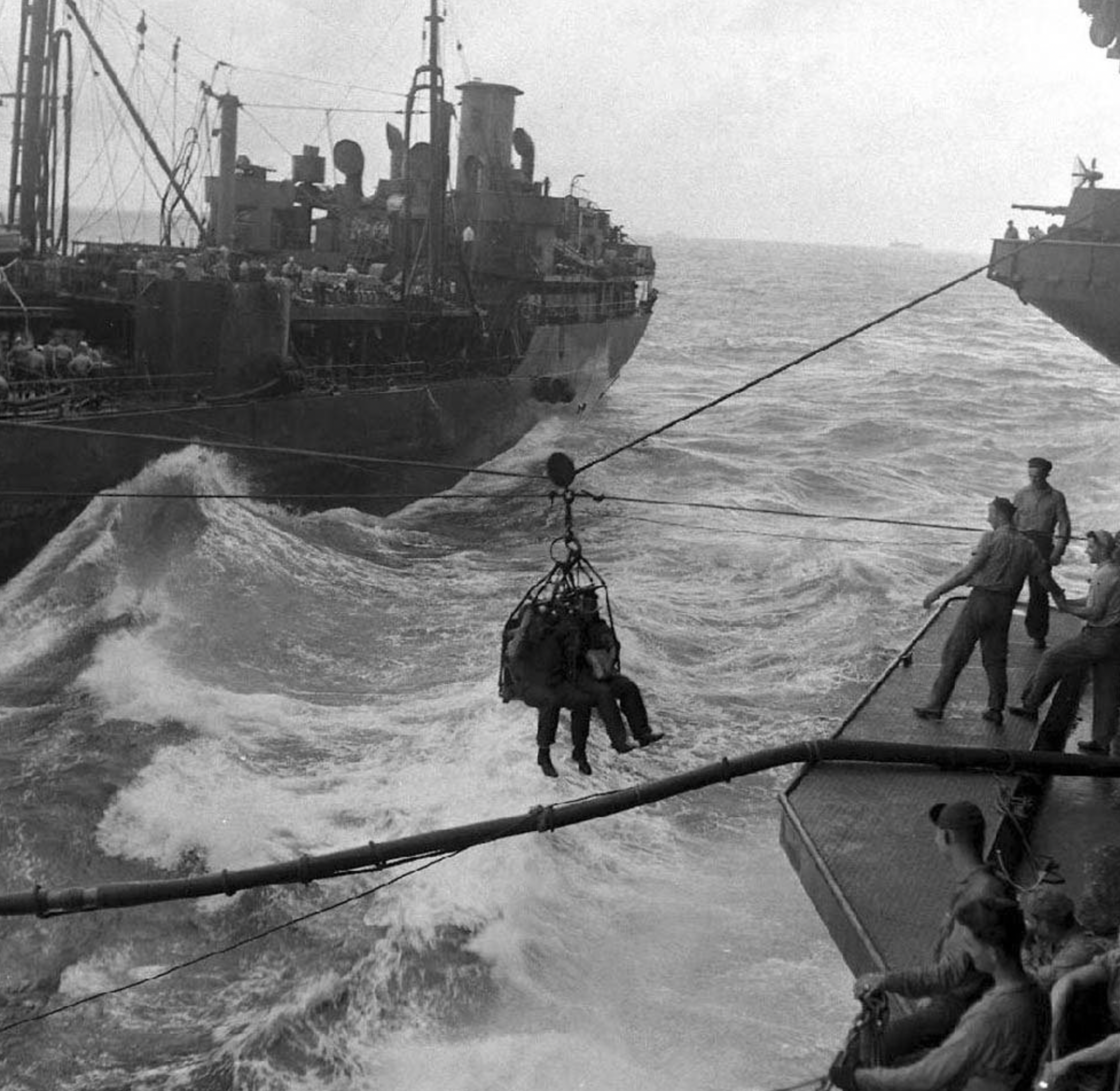
The sailors on the fleet oilers were tough men. Fueling at sea was smelly, dirty, and very dangerous. The two photos show a fueling operation between Escambia and the fleet carrier Ticonderoga in July 1945. The way Escambia sailors return to their ship, in that breeches buoy, does not seem safe to me, but my guess is that Gordon would have had his turn in the same kind of conditions.
Sadly, Escambia (below, about 1950) would be used by, of all institutions, the United States Army during the Vietnam War as an auxiliary power plant. Transferred to the Vietnamese government in 1971, Gordon’t ship was scrapped.
Happily, Gordon came home safe. So did his cousin, John. They had many years of storytelling ahead of them. Gordon, in my classroom, fueled the imaginations of the young people who were high-school juniors in 2003, just as Gordon had been in 1943.





 A Work in Progress