• About
  • The Germans

A Work in Progress

A Work in Progress

Category Archives: Arroyo Grande

Dad and the German Major

06 Wednesday Jan 2016

Posted by ag1970 in American History, Arroyo Grande, Family history, History, World War II

≈ Leave a comment


003 (1)


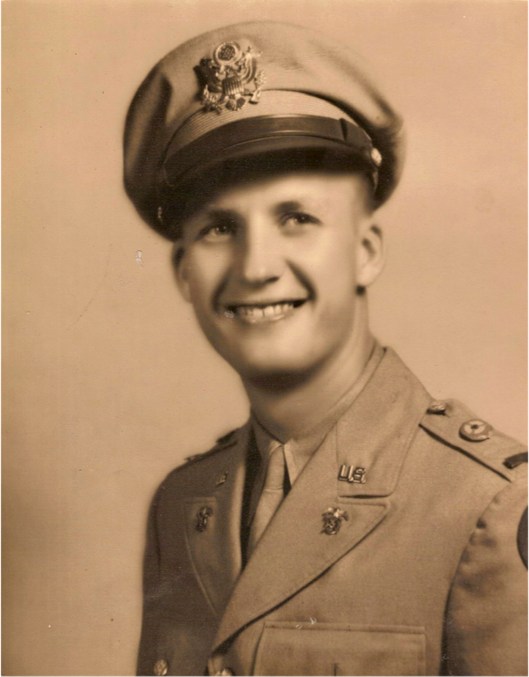
I’ll be sending two copies of the book World War II Arroyo Grande to young active-duty soldiers. This makes me a happy new/old writer: one reason I wrote the book, I think, was to reintroduce the World War II generation to my generation and to my students, and I’ve always had a soft spot for students who’ve gone into the service. I’m also very happy that I’ll be sending a copy to Judith, a favorite student who achieved the highest grade ever in my U.S. History classes. Judith is from Germany. She loved learning American history.

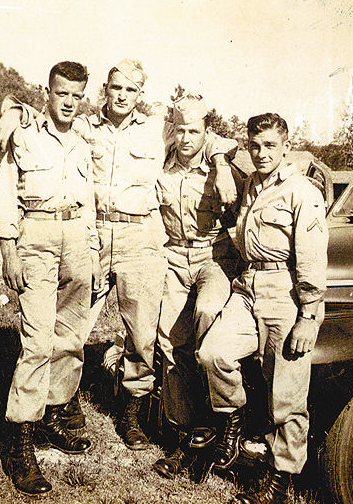
The photo is of my father when he was a young man on active duty in 1944. I’ve told Judith this story, but once the war had ended in the spring of 1945, Europe went hungry–the Continent’s infrastructure had been obliterated by ground combat and by the Allied air campaign. The footage of German kids eating out of garbage cans in 1945, in the long months before the Marshall Plan, always stunned my students. In the meantime, thousands of POW’s in our care died of hunger or of opportunistic diseases because civilians got first priority for food, and there never was enough.

A Wehrmacht major, who outranked my father, then a U.S. Army captain on occupation duty, somehow latched onto him and for a few weeks became his personal bodyservant: the German officer cooked for him, cleaned his quarters, washed and pressed his uniforms, the works.

He did that because Dad was a Quartermaster officer and so had access to food. (A year before, my father repaid an English family’s kindness to him with a bag of oranges. The mother’s British reserve crumbled. She wept. Her family hadn’t seen oranges in five years.) The young German officer wanted to live: his pride meant nothing when compared to the wife and children he wanted in his arms again once he was cashiered. My father was his ticket home.

In summer, he would begin the long walk home along roads choked with refugees and gaunt, tired soldiers. Dad never learned what happened to him but hoped, in talking about him years later, that the German major had lived a long and happy life. What started as a relationship of expedience had begun to edge into a friendship. Perhaps, very faintly in the recesses of my imagination, there was the unspoken thought that my student Judith was the major’s great-granddaughter. I owed it to this soldier to be the best teacher I could be for her.

The tough American soldiers of Easy Company–-the “Band of Brothers”–-liked the English, for the most part, loved the Dutch, but, like my father, felt most at home with Germans.

It does make you wish that British Pvt. William Tandey had shot Hitler in 1918, when he had the man in his sights at Marcoing. We could have done without Clemenceau as well, I guess, in his 1918-19 incarnation, but a younger Clemenceau had done great good for France and for the revolutionary ideals of tolerance and of the equality that citizenship confers.

These are ideals that Hitler despised because, of course, they included Jews, like Alfred Dreyfus. Clemenceau had been one of Dreyfus’s most adamant defenders. Dreyfus was a good French soldier, but the older Clemenceau dominated the drafting of a foolish, vindictive peace treaty dictated, in his mind, by a generation of good French soldiers whose bones littered the nation’s soil. Even today, farmers in northern France, in turning over fields there, find the bones of boys their harrow blades.

A generation after that war, there were more good soldiers, good young men on both sides who in a better world should never have been enemies. But they didn’t live in a better world; theirs had been penetrated by evil.

Americans had fought a war in the face of great evil once before. There was a lull in a Civil War campaign that gave a Union army band, its vast audience in bivouac, time enough for a concert. Confederates on a nearby hillside were listening. One of them called “Yank! Play one of ours!” So the band played “Dixie,” and at the song’s conclusion, both sides erupted, thousands cheering, tossing their caps in the air. They embraced a vivid moment when they were at peace together, before the close-quarters murder so characteristic of that war—and, sadly, so necessary for its resolution—resumed.

Similarly, once their war was over, a German soldier reached across the divide to make a necessary peace with my father. I hope my book will allow two young soldiers today to reach across the divide that time imposes to meet other young soldiers, including some who died such a long time ago. In a small way, it gives them life again.

Walt Whitman may have articulated this idea best in what I think is one of his finest poems, “Crossing Brooklyn Ferry.” Time and distance avail not, Whitman wrote. They are irrelevant. Indeed, when you read the poem you have the uncanny sense that Whitman is reading with you, just over your shoulder, or that you’re leaning on the ferry’s rail, together with the old man, the harbor’s breeze in his whiskers.

In the same way, we are all of us on the road together in the journeys of our lives. I think that sometimes, without recognizing them, we walk alongside our ancestors, and among them is the German major who yearns for home.
Pretty Eleanor, Bank Robber

25 Wednesday Nov 2015

Posted by ag1970 in American History, Arroyo Grande, California history, History

≈ 2 Comments

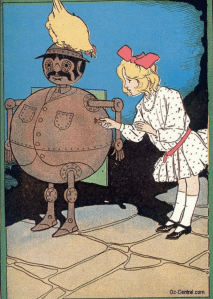
Eleanor Walling was an enchanting little girl—one can easily visualize her in a blouse with a sailor’s collar, with a big bow in her hair, like L. Frank Baum’s Dorothy. She was also a talent and a ticket-office draw for her father, a small-town impresario who owned the Lompoc Opera House, the setting for a 1912 rally for Bull Moose candidate Theodore Roosevelt. On that day, Eleanor enchanted the Lompoc Journal, too. The paper notes that

The program was introduced in a most pleasant manner by little Eleanor Walling, daintily clad and draped in a flag, stepping to the front of the stage and with her little violin leading the orchestra in the Star Spangled Banner in a way that carried the audience away.

20151127_022128
Illustrator John Rea Neill’s Dorothy, with Tik-Tok the mechanical man and Billina the hen, from L. Frank Baum’s 1907 Ozma of Oz

Eleanor was eight years old. Her mother had died young, but either she or J.O., Eleanor’s father, had bequeathed the little girl with extraordinary musical gifts. She was an actress as well as a violinist, appearing in her father’s plays, including The Moonshiner’s Daughter or in the title role in Editha’s Burglar, which “proved a hummer,” according to the Journal. Sometimes she shared the bill with silent films like Tobacco Mania.

Eleanor, born in Oregon, San Luis Obispo, or England, depending on the source, had, by World War I, joined her father and siblings in a new enterprise: the Walling Orchestra entertained at concerts and dances in a roadhouse owned by J.O. near Avila Beach. They were the band of choice when Arroyo Grande got its brand-new electric streetlights. But by 1920 or so, Eleanor had struck out on her own, for the vaudeville circuit, the story went.

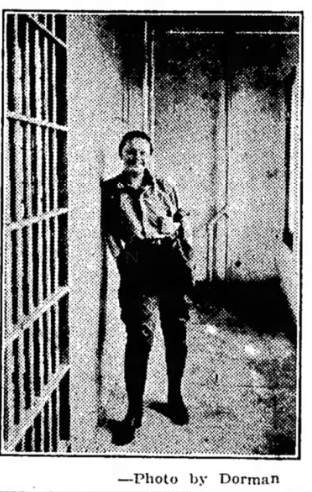
Pretty Eleanor was 20 years old and just as enchanting when she played the violin for her guards at the Kern County Jail in the spring of 1924. She’d been accused, with a male accomplice, of robbing a Taft bank of $5700. A revolver discharged during the robbery. Eleanor, much later, allowed that it might have been hers, but she wasn’t clear on who was holding it at the time. Then, after that, she suggested that she hadn’t been in the bank at all. Her story changed as often as her birthplace.

Screen Shot 2015-11-26 at 4.10.18 PM
An unrepentant-appearing Eleanor in the Kern County Jail, from the Bakersfield Californian.

But in the robbery’s immediate aftermath, she wasn’t suggesting anything. Detectives from both the sheriff’s office and the LAPD grilled her for two days. They got nothing. EFFORTS OF POLICE OFFICERS AMUSE GIRL HELD IN ROBBERY, a headline read. Her hair was cut short, like a Flapper’s, so she became the “Bobbed-Hair Bandit.” PRETTY ELEANOR SMILES AT OFFICERS AS THEY QUESTION HER, another headline announced. She decided to let her hair grow, now that she had the time. She pled “not guilty” in April.

She changed her plea in May. She might have been threatened by a defense witness called to testify on behalf of Bill Crockett, her accomplice, suspected of planning the bank robbery.

According to the prospective witness, a Folsom inmate, Eleanor had been with him when he had shot a “Dutchman” during an armed robbery in Los Angeles. He complained later that they’d paid doughboys $32 a month to kill Dutchmen, but they gave him 29 years, and he’d just wounded his. And his conviction came because Eleanor had turned state’s evidence. Now, he suggested, she’d been much more than an innocent bystander.

Meanwhile, the papers were reporting that she had been one of the robbers who’d  burst into the Taft State Bank on March 13, 1924, at 9 a.m., helping to round up customers and tellers. She’d been dressed as a man. She continued to dress that way—“her crossed legs garbed in khaki and long hiking boots”—after her arrest.

The Taft State Bank is today a popular sports bar.

Newspaper stories hinted that she wasn’t innocent in other ways. Both the defense witness and Bill Crockett were infatuated with her. So were the deputies at the Kern County Jail.

But by the time of the trial for the robbery, a reporter wrote, “gleaming hatred” appeared in Crockett’s eyes at the mere mention of her name. Crockett was unlucky in love and inept in crime: his mask had slipped as he herded the bank’s occupants into the vault, so a teller on the witness stand identified him without hesitation.  And while they’d made away with $5700–nearly $80,000 today–they’d overlooked another $30,000 nearby.

And not only had Eleanor confessed, but she’d led the detectives to the cash. They found a thousand buried under two railroad ties on General Petroleum property outside of Taft; another $1800 was buried at the base of a telephone pole.

Pretty Eleanor distanced herself from the robbery on the witness stand, when “every pair of eyes in the courtroom was directed at her,” as a Bakersfield newspaper reporter wrote. It’s a good bet that Bill Crockett’s eyes gleamed, him wishing he could burn holes in her, through that

…ponged blouse with a man’s collar, about which was knotted a shoestring “sheik tie.” Over her blouse she wore a brown and fawn-colored barred sports vest. A brown full silk skirt completed her ensemble.

She wasn’t there at all, she said. That was another man, Ray. All she’d done was to burn their clothes after and change the license plates on their car. Oh, and she’d buried the revolvers somewhere between Taft and Fellows.

Eleanor was giving one of her last performances for an audience of any size. They were rapt. She went to prison anyway.

Ironically, Bill Crockett was acquitted, only to be convicted later of a second robbery. He’d do time and so would two of his brothers, one a thief and the other a forger who, according to a family history, would do the hardest time of all, on Alcatraz.

Until Taft, Eleanor’s record was a clean one, with one exception: in 1920, she’d started an 18-month term in a Ventura reformatory. She hadn’t played the vaudeville circuit. She’d run away from home.

Her San Quentin term was five years to life. The “Bobbed-Hair Bandit” shared a cell with Clara, “The Girl with a Hammer,” after her murder weapon of choice. Eleanor had been an actress, but Clara was a drama queen: she tried to escape twice and failed both times, once breaking out of a town jail, once slashing her wrists with a razor blade she’d borrowed from a San Quentin matron. Eleanor did her time quietly.

Eleanor booking
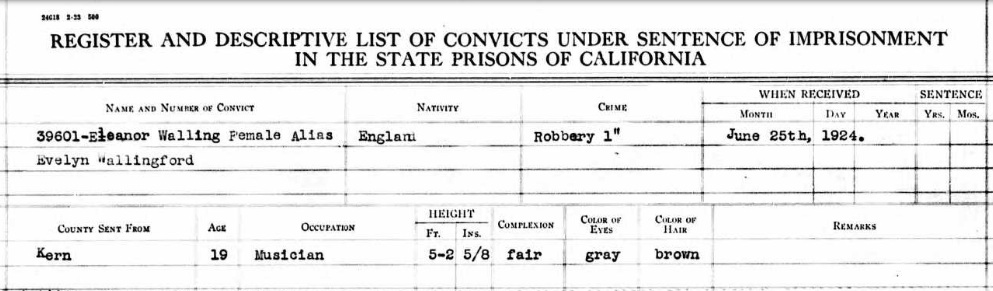
Eleanor’s booking record, San Quentin.

After her parole, she lived in San Francisco, in the Noble Hotel, on a narrow block of Geary Street. The 1930 census lists her occupation as “musician.”

Two years after that, the Oakland Tribune reported that she’d been questioned and released for a bank robbery in the city. Some San Francisco police detective must’ve been disappointed, because he’d certainly done his homework and it must have looked like a good collar. The armed robbers had been two women, dressed as men.

The last barbecue

01 Saturday Aug 2015

Posted by ag1970 in Arroyo Grande, Uncategorized

≈ Leave a comment

Joe, Tony, Manuel, Frank, Mom (Clara), Mary, Edwina, Clara, Rose, Annie, and Barbara

Joe, Tony, Manuel, Frank, Mom (Clara), Mary, Edwina, Clara, Rose, Annie, and Barbara

Eighty-eight photographs with captions and credits, check. I would like to thank Mrs. Clara Gularte for lining up her six daughters in age order–I think I’ve got them right– in this 1944 photograph, at a family barbecue on the ranch at the entrance to Corbett Canyon. It was taken just before her two soldier-sons went overseas. She made it easy, lining up those girls, on us History Types. This is a beautiful photo of a beautiful family, and many thanks to Annie and John Silva.

The tragedy of the photo is that Frank, kneeling, wouldn’t make it home. He would be killed in France on November 29, 1944; his little boy would be born five days later. Shortly after the joy of Frank Jr.’s birth, his wife, Sally, and the family got the worst telegram, from the War Department, that a family could possibly get.

On December 13, a memorial mass was said for Frank at St. Patrick’s. Four days after that, his brother, Manuel, standing in this photo, went into action with his artillery battery at St. Vith to cover the American retreat in the Battle of the Bulge. That was the day that Arthur Youman entered Bastogne with his outfit, the 101st Airborne Division.

It was Youman’s twenty-third birthday.

I’ve been living with this war for a year now. It’s getting a little overwhelming.

Our Airborne Brother

26 Sunday Jul 2015

Posted by ag1970 in Arroyo Grande, Uncategorized

≈ Leave a comment

Arthur Youman, second from left, in training with the 101st Airborne.

Arthur Youman, second from left, in training with the 101st Airborne.

…Frank’s brother, Manuel, and his 965th Field Artillery Battalion began a desperate fight around St. Vith, Belgium, in support of elements of the Seventh Armored Division. The Americans would lose the town to the Germans, but the 965th’s heavy guns—155 mm cannon—would be one of the factors that would make them pay dearly for it, wrecking the enemy’s timetable: the Seventh Armored abandoned the town four days after the German target date for its seizure: December 17, 1944.

That was the day that the 101st Airborne Division arrived to take up defensive positions in and around Bastogne. Their stubborn resistance in holding this town, in the rear of the German advance, was another decisive factor that prevented the Bulge from becoming the breakthrough that Hitler so desperately wanted: the German drive to the west lost momentum as thousands of Wehrmacht soldiers were thrown into the attack on Bastogne. There, among the tough and battle-wise Americans—some of their foxholes are faintly visible today– was a young sergeant from Arroyo Grande, Arthur C. Youman. He arrived in Bastogne on his twenty-third birthday.

Youman was Kentucky-born and was raised in Kern County, but he’d been living in Arroyo Grande when he enlisted in 1943. He and his comrades were told that the 101st faced, at most, three days in the line. It didn’t work out that way. For nine days they were surrounded, relying on scattered airdrops of food and ammunition to keep going. George Patton’s Third Army launched a furious attack on the southern shoulder of the Bulge and finally broke through: the first of Patton’s tankers to make contact with the 101st, on December 26, was Creighton Abrams, the future commander of American forces in Vietnam. But German resistance continued, with Youman and the paratroopers fighting into February, when they were finally pulled off the line. They had meantime endured not just the last great German offensive of the war, but also the coldest winter in Europe in thirty years.

Youman was a good soldier in one of the best combat units in American military history. He’d dropped into Normandy on D-Day, helped to capture the key Norman town, Carentan, and then joined the 101st in the ill-conceived Operation Market Garden, Field Marshal Montgomery’s attempt, in Holland, to seize the Rhine River bridges and deliver a thrust into Germany. Market Garden was a fiasco: it would claim another Arroyo Grande paratrooper, Lt. Francis Eberding, a member of the 82nd Airborne Division.

The 101st fought in Holland from September until the end of October: one high point came when Youman’s company rescued 100 British soldiers stranded in Arnhem, the centerpiece for Cornelius Ryan’s A Bridge too Far. It was during Market Garden that Youman would be promoted to sergeant; he’d impressed his boss.

The young officer who promoted Youman was Lt. Richard Winters, the commander of Easy Company, 506th Parachute Infantry Regiment, 101st Airborne Division. Youman was one of historian Stephen Ambrose’s “Band of Brothers.”

Brother and Sister

08 Wednesday Jul 2015

Posted by ag1970 in American History, Arroyo Grande, California history, World War II

≈ Leave a comment

20150705_164657

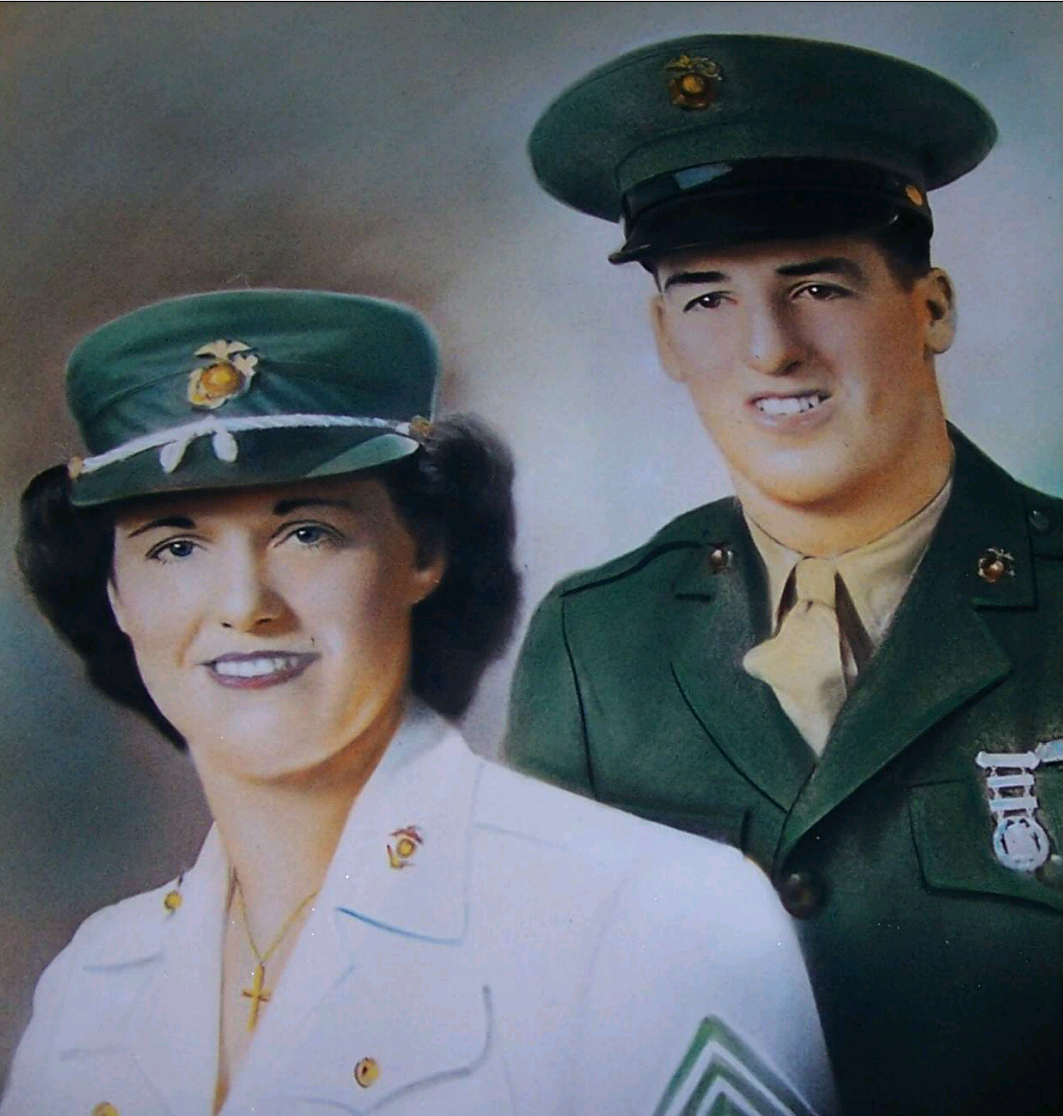
Thelma and George Murray, in a composite made for their mother.

If Guadalcanal was a turning point, Tarawa was one of the most terrible teaching moments of the American war, and it led to two close encounters with history for a brother and sister from the Lower Arroyo Grande Valley, from the little town of Oceano. This is where the farm fields end at steep seaside sand dunes, and here are the packing sheds and the loading docks alongside railroad tracks that carry Valley produce to distant markets.

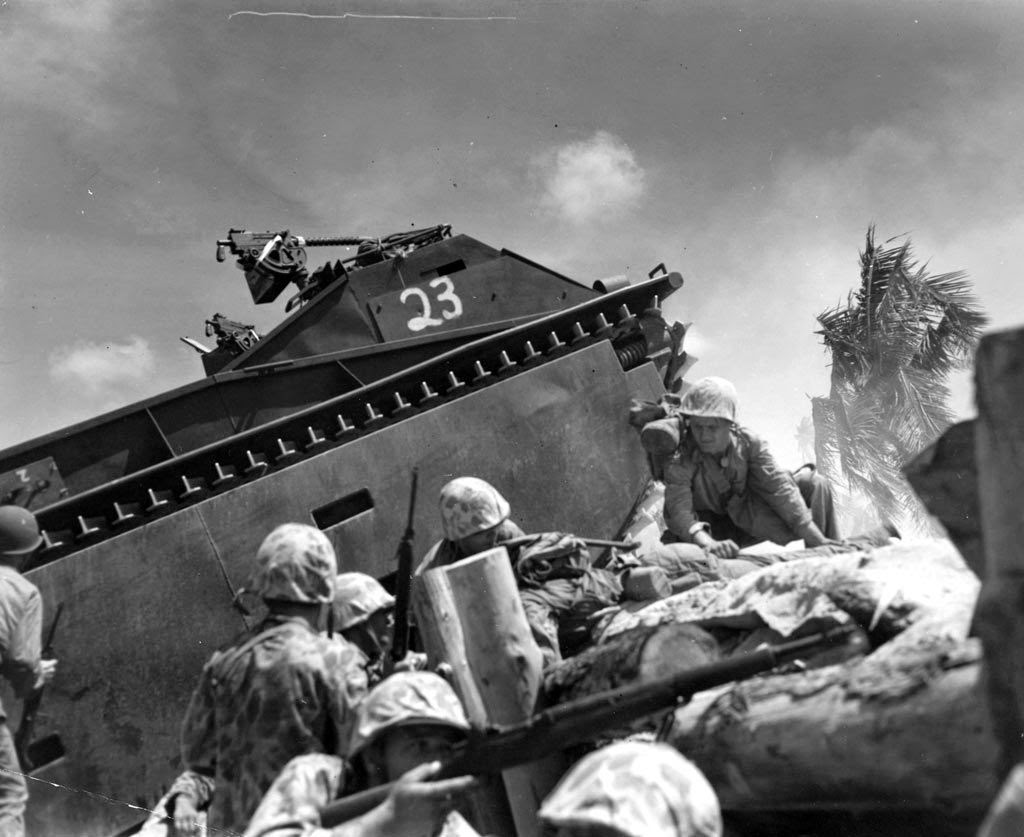
The brother was a Marine private, George Murray, who was killed in action in the in the Battle of Tarawa in the Gilbert Islands in November 1943.  It was a horrific battle—one of the best accounts of it comes in an aptly-titled book, One Square Mile of Hell–in which many mistakes were made. Murray didn’t die in vain, for the mistakes made at Tarawa, the first objective in Adm. Chester Nimitz’s Central Pacific island-hopping campaign, would save the lives of later Marines and of the dogfaces who landed on the coast of Normandy seven months later.

One of the mistakes in this pioneering amphibious assault was in was in the miscalculation of the tides at Betio Island, the key objective in the Tarawa Atoll, which shifted capriciously and so left many of the Marines unable to land on D-Day, on November 20. Their landing craft, the Higgins boat, was unable to surmount the coral reef that guarded the approach to Betio’s landing beaches.

George Murray was among them. While earlier units took such intense fire that 2200 of the 5000 Marines in the initial wave were killed or wounded, his unit, the 1st Battalion, 2nd Marine Regiment, spent most of D-Day, November 20, circling, hour after hour, outside the reef, impotent. It must have been maddening for them, and they were hungry, wet, seasick, and terrified.

It was close to 10 p.m. when Murray’s company was finally ordered to land in support of the first waves, desperately clinging to a sliver of beach below a sea wall and flanking a pier on Betio. The Marines had to transfer from their landing craft—the Higgins boat was essential to the war effort but this day was impeded by the reef—to LVT’s, the smaller amphibious tractors that also were facing their first test under fire. Murray’s company would hit the beach at about 11:30.

Marines use an amphibious tractor for cover on the beach at Betio Island, Tarawa.

Marines use an amphibious tractor for cover on the beach at Betio Island, Tarawa.

A Department of Defense summary prepared for Murray’s descendants is both colorless and oddly moving in its description of what happened at that moment:

Three tractors of Company B landed on the left side of Red Beach Two. When the men tried to disembark from the first two tractors, only nine of the twenty-four men actually reached the beach…Private First Class Murray’s Casualty Card indicates that he died of gunshot wounds to the head and chest on 20 November 1943. Private First Class Murray was reported buried in East Division Cemetery…Row A, Grave 6. Based on PFC Murray’s recorded circumstances of death and the indication that he was initially buried at this location, it seems likely that PFC Murray did make it to the beach before being killed.

PFC Murray didn’t make it home. His remains have since been lost. Local historian and museum curator Linda Austin has joined Murray’s nephew and namesake, George Winslett, in a long and emotionally-charged search, lobbying the Defense Department and winning the support of JPAC—the Joint POW/MIA Accounting Command—in the search for Murray. In a tragedy of errors, Navy SEABEE teams reorganized and reconfigured East Division Cemetery after the battle; after the war, Army Graves Registration teams, guided by information from Marine Corps chaplains present for the original burials, could not find the cemetery. After digging several cross trenches, the team finally began to find graves—but only 129 of the more than 400 they’d expected. Several sets of remains were transferred to Hawaii for identification, but Murray was not found, either on Betio or in the forensic labs on Oahu.  For his mother, Edith, it was like losing her only son twice: she now had no formal way to honor him. She was heartbroken.

So was Murray’s sister, Thelma. She wasn’t willing to wait to honor her younger brother—they were two years apart–so she, too, joined the Marines. She became a driver–and a good one—stationed at Camp Lejeune, North Carolina. Thelma eventually would marry another good driver, a truck driver, Elmer Thomas Anderson, with whom she’d hitched a ride from home in Oceano to a new duty post in San Francisco; Anderson drove for what would become Certified Freight Lines, located where the Bank of America now stands on Branch Street. An honorably discharged Army Air Force staff sergeant, Elmer would sometimes debate good-naturedly with his bride of more than forty years on who, precisely, outranked whom.

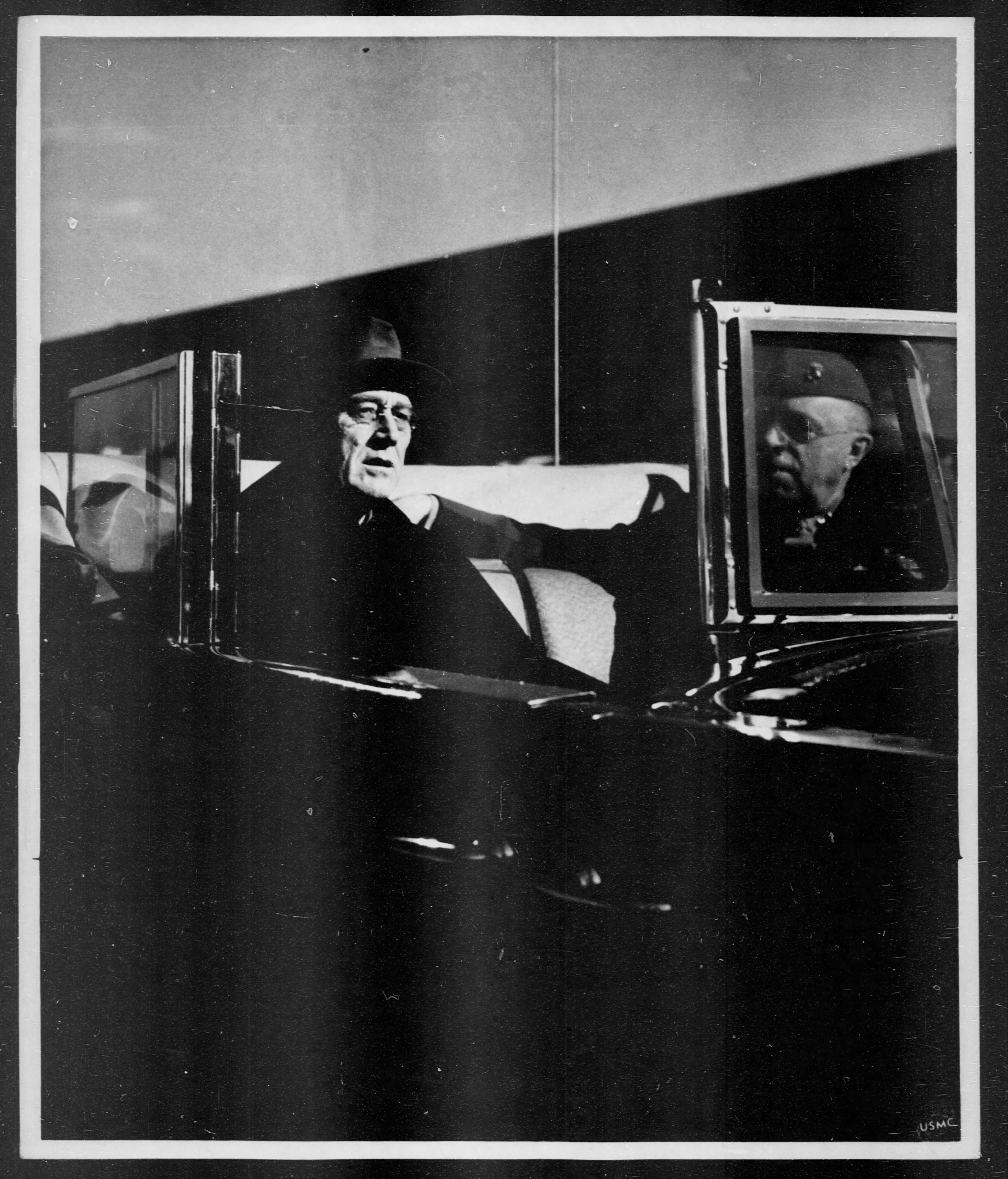
One of Thelma’s assignments as a driver at had come when a dignitary visited Camp Lejeune on December 18, 1944, and he had to have the best Marine possible to transport him. Marine Lt. Gen. Herbert Lloyd Wilkerson, a Guadalcanal veteran, was an officer trainee that day. He remembered, in a 1999 interview:

The black cabriolet, with its top down, pulled up close to our commanding officer, LTCOL Piper, who presented us to the Commander-In-Chief. I was in the front rank within 20 feet from the auto and could hear their voices. The auto was driven so close to the commanding officer that he hardly needed to move to reach the side of the vehicle.

The driver needed to be exact, because the dignitary couldn’t get out of the cabriolet and so reveal his paralysis to the fit young Marines.

Thelma’s passenger that day, of course, was President Roosevelt.

FDR at Camp Lejeune 18 Dec 1944

FDR with the Camp Lejeune commanding officer, December 18, 1944.

Newer posts →

Subscribe

  • Entries (RSS)
  • Comments (RSS)

Archives

  • June 2026
  • May 2026
  • April 2026
  • March 2026
  • February 2026
  • January 2026
  • December 2025
  • November 2025
  • October 2025
  • September 2025
  • August 2025
  • July 2025
  • June 2025
  • May 2025
  • April 2025
  • March 2025
  • February 2025
  • January 2025
  • December 2024
  • November 2024
  • October 2024
  • September 2024
  • August 2024
  • July 2024
  • June 2024
  • May 2024
  • April 2024
  • March 2024
  • February 2024
  • January 2024
  • December 2023
  • November 2023
  • October 2023
  • September 2023
  • August 2023
  • July 2023
  • June 2023
  • May 2023
  • April 2023
  • March 2023
  • February 2023
  • January 2023
  • December 2022
  • November 2022
  • October 2022
  • September 2022
  • August 2022
  • May 2022
  • April 2022
  • March 2022
  • February 2022
  • January 2022
  • December 2021
  • November 2021
  • October 2021
  • September 2021
  • August 2021
  • July 2021
  • June 2021
  • April 2021
  • March 2021
  • February 2021
  • January 2021
  • December 2020
  • November 2020
  • August 2020
  • July 2020
  • June 2020
  • May 2020
  • April 2020
  • January 2020
  • December 2019
  • November 2019
  • October 2019
  • September 2019
  • August 2019
  • May 2019
  • April 2019
  • March 2019
  • February 2019
  • January 2019
  • December 2018
  • November 2018
  • October 2018
  • September 2018
  • July 2018
  • June 2018
  • May 2018
  • April 2018
  • March 2018
  • February 2018
  • January 2018
  • December 2017
  • November 2017
  • October 2017
  • April 2017
  • March 2017
  • December 2016
  • November 2016
  • October 2016
  • September 2016
  • August 2016
  • July 2016
  • June 2016
  • April 2016
  • March 2016
  • February 2016
  • January 2016
  • December 2015
  • November 2015
  • October 2015
  • September 2015
  • August 2015
  • July 2015
  • June 2015
  • May 2015
  • April 2015
  • March 2015
  • February 2015
  • January 2015
  • December 2014
  • November 2014
  • September 2014
  • August 2014
  • July 2014

Categories

  • American History
  • Arroyo Grande
  • California history
  • Family history
  • Film and Popular Culture
  • History
  • News
  • Personal memoirs
  • Teaching
  • The Great Depression
  • trump
  • Uncategorized
  • World War II
  • Writing

Meta

  • Create account
  • Log in

Blog at WordPress.com.

  • Subscribe Subscribed
    • A Work in Progress
    • Join 69 other subscribers
    • Already have a WordPress.com account? Log in now.
    • A Work in Progress
    • Subscribe Subscribed
    • Sign up
    • Log in
    • Report this content
    • View site in Reader
    • Manage subscriptions
    • Collapse this bar

Loading Comments...