• About
  • The Germans

A Work in Progress

A Work in Progress

Category Archives: Arroyo Grande

The Amazing McChesneys, from Corbett Canyon

11 Sunday Feb 2018

Posted by ag1970 in Arroyo Grande, Uncategorized

≈ Leave a comment

10666295_123155394868

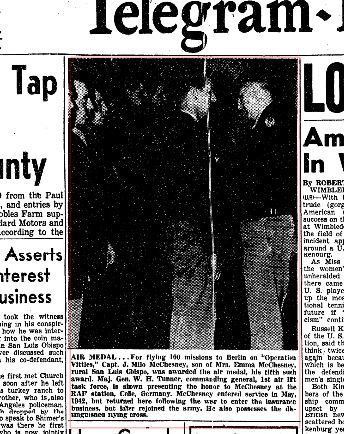
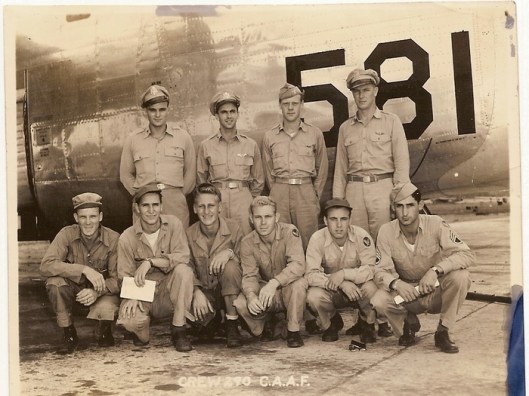
Jess Milo McChesney, B-24 pilot, top right.

The reason I write books is to disabuse us of the notion that, because we’re from a rural California county, we’re not all that important to American history.  This is not so.

The McChesney family of Corbett Canyon–I was taught by a relative, Eva Fahey, at Branch School, went to Arroyo Grande High with another, Leroy McChesney III, and finally, taught a third, Kathryn, who is quietly but incandescently brilliant–is a perfect example of what I’m talking about.

They ran a dairy out there (the McChesney children would lay out milk cans on a trestle for the Pacific Coast Railway and, magically, have it return to them as ice cream from the Golden State Creamery in San Luis Obispo), but dairy cows were far from their chief interest.

Leroy McChensey Jr., tall and rangy, would take breaks from the milk barn to, in borrowing Whitman’s phrase, “stare in perfect wonder” at the vultures drifting effortlessly overhead. He caught the flying bug early.

leroy_jr_300-L

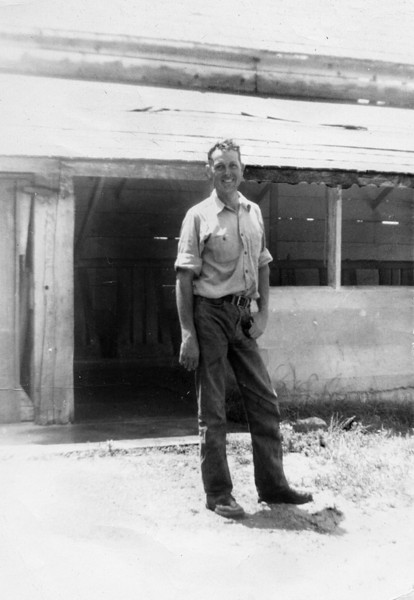
Leroy McChesney Jr.

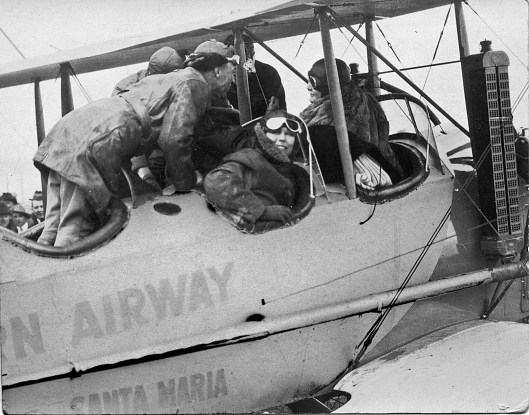
The urge to fly got worse when a wrong-way biplane from Santa Maria landed in a pasture alongside the McChesney farm, which the pilot, in 1922, had mistaken for his landing strip in Santa Maria, most likely another pasture just a tad bit farther south.


crash landing ranch

The wrong-way airplane, with passengers who don’t seem too upset, Corbett Canyon, 1922.

The proof that Leroy had been bitten badly by flying came long after he’d earned a pilot’s license, once he’d married and started a family. He began building a full-scale glider, for whatever reason, in the living room. It grew. The kids had to dodge the fuselage to make their way to the kitchen for Golden State ice cream in the freezer. I think eventually Leroy’s project migrated outside, but his love for flying remained such a constant in the family that, years later, after he’d suffered a heart attack, his wife, Grace, took up flying. She reasoned that she’d have to land the damned plane. Truth be told, she, a member of the “99’s,” a women’s flying group, may have been the better pilot.

But, unlike Leroy, she didn’t get the country airport, McChesney Field, named for her. It was Leroy’s boundless energy as an advocate for fellow fliers and as a member of several state and national aviation boards that got that well-deserved honor.

His little brother, Jess, caught the bug, too. And he was a war hero, like the more famous son of another dairy family, the Edna Valley Righettis, who gave us P-51 pilot Elwyn, an enormously gifted flier and leader, lost in 1945.

Jess flew his thirty-five B-24 combat missions, in the Fifteenth Air Force, out of Italy, a pilot whose career was book-ended by crash landings on both his first and final bomb missions, which wended their way over the Alps and into Austria, Germany, and Hungary, where civilians lynched downed aircrews. On both those book-end missions, the latter a belly-flop on a British airfield, the big bomber he piloted had been shot to pieces.

One of his gunners tried to contact the family many, many years later, and learned, over the phone, that Jess had died. He was devastated.

“I would fly to the gates of hell with that man,” he said simply over the long-distance connection.

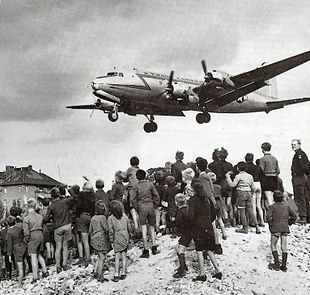
Jess’s career did not end with the end of World War II. He would win his fifth Air Medal in “Operation Vittles,” which we know better as the 1948-49 Berlin Airlift, when Stalin, determined to starve the western Allies out of Berlin, deep inside East Germany, closed the borders to ground traffic.

Of course, it wasn’t Allies who were going to starve. It was German children. So in one 310px-C-54landingattemplehofof, I think, the most heroic episodes in our history, veteran World War II pilots who had been shot to pieces by German 88-mm flak or by German fighters, FW-190s, turned instead to airlifting fuel and food and medicine to Berliners, and especially to children. That’s when Jess Milo McChesney was activated from the Reserves and flew the 100 missions that would add a fifth Air Medal to his DFC.

We tend to downplay the Berlin Airlift in favor of the “Memphis Belles” of World War II but, truth be told, what Jess did in 1948-49 was nearly as dangerous. The relief flights were so relentless and so constant–one of the biggest cities in the world had to be supplied completely by air–that exhausted pilots made mistakes that killed them and their aircrews, or exhausted airframes failed and plunged, in pieces, into Berlin suburbs. These were enormously courageous and compassionate young men.

4d4c75c4e316c73e6489a3894d6e9ea2

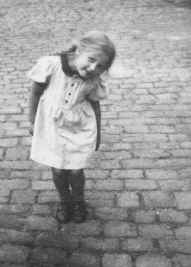
An American GI in Berlin’s occupation force recorded this image of a little girl in 1945.

Of course, the most famous of Jess’s comrades was Gail Halverson, “Der Schockoladen Flieger,” who tied handkerchiefs to Hershey Bars and dropped them, in their little parachutes, to the children of Berlin on his approach to the airfield at Templehof.

Halverson did this because he loved children. I watched a story, on CBS news on, I think, the fiftieth anniversary of Halverson’s chocolate campaign. When he landed in Berlin, he was immediately buried by a mass of adoring and middle-aged German hausfraus, who had never and would never surrender their love for Americans.

And Jess Milo McChesney, far less famous than Halverson but just as brave and just as bound by duty and by compassion, is just as important to American history. There is a powerful connection between Berlin and Corbett Canyon, California.


jess


A Lifetime of Teachers

02 Tuesday Jan 2018

Posted by ag1970 in Arroyo Grande, Uncategorized

≈ Leave a comment


One of the reasons I decided to write books was this man, Stanford’s David Kennedy.

 
20161218094946003_hd
 
 
I took a class in 2004 from Dr. Kennedy, who won the Pulitzer Prize for his history of America during the Great Depression and the Second World
War, Freedom from Fear, and was transfixed by his clear-headed and richly anecdotal re-telling of the years that formed my parents, and, of course, myself.
 

Dan Krieger (European history) and Jim Hayes (Journalism), two Poly professors in a lifetime of wonderful teachers, are among the other reasons I wanted to teach history and write about it, as well.

 
2014.07_Jim-Hayes-Legacy
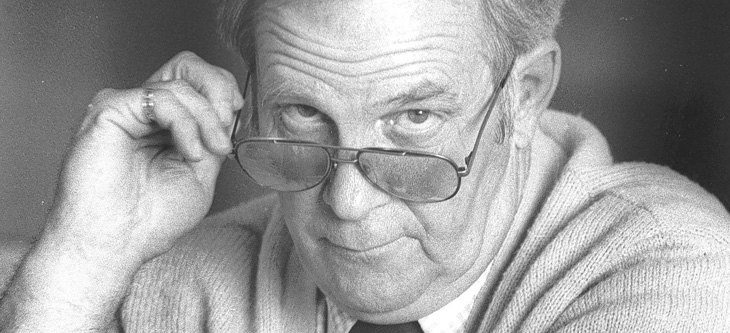
Jim Hayes. I know that look very well. It says: “Re-write.”
 

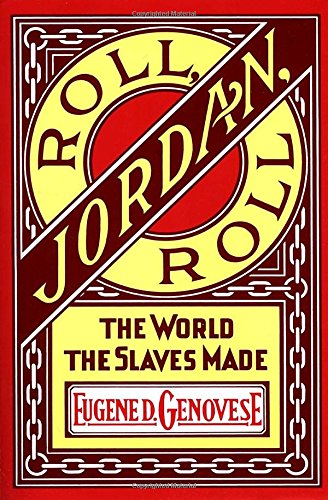
At the University of Missouri,  Charles Dew’s teaching on the history of African-American slavery–another book that was formative to me was Genovese’s, part of Dew’s required readings–David Thelen’s teaching on Populism and the Progressive movement, Winfield Burggraff’s teaching on Latin American history, and Richard Bienvenu’s teaching on the history of socialist thought all made me want to be like them.

 
613IChmB9qL
 
 
Two teachers at Arroyo Grande High School–Carol Hirons (Journalism) and Sara Steigerwalt (Speech) had already taught me, without me knowing it, HOW to teach history.
 
The first teacher who told me that I should write books was my Branch School teacher in 5th and 6th grades, Mr. William E. Burns Jr.
 
 
Branch
Branch School, in its two-room version. In 1962, we moved to a school with four rooms.
 
I am inordinately lucky.
 
So when I found out that Prof. Kennedy’s wife, Judy, grew up in SLO County, I contacted him to send her a copy of the “Outlaws” book, a proposition he very kindly accepted.
 

Here’s the surprising part: Mrs. Kennedy is Alex Madonna’s niece, and my Dad was Madonna Construction Company’s comptroller in the 1950s and 1960s. It is, after all, a small world, and still rich with stories to be told.

 
20160203_135223
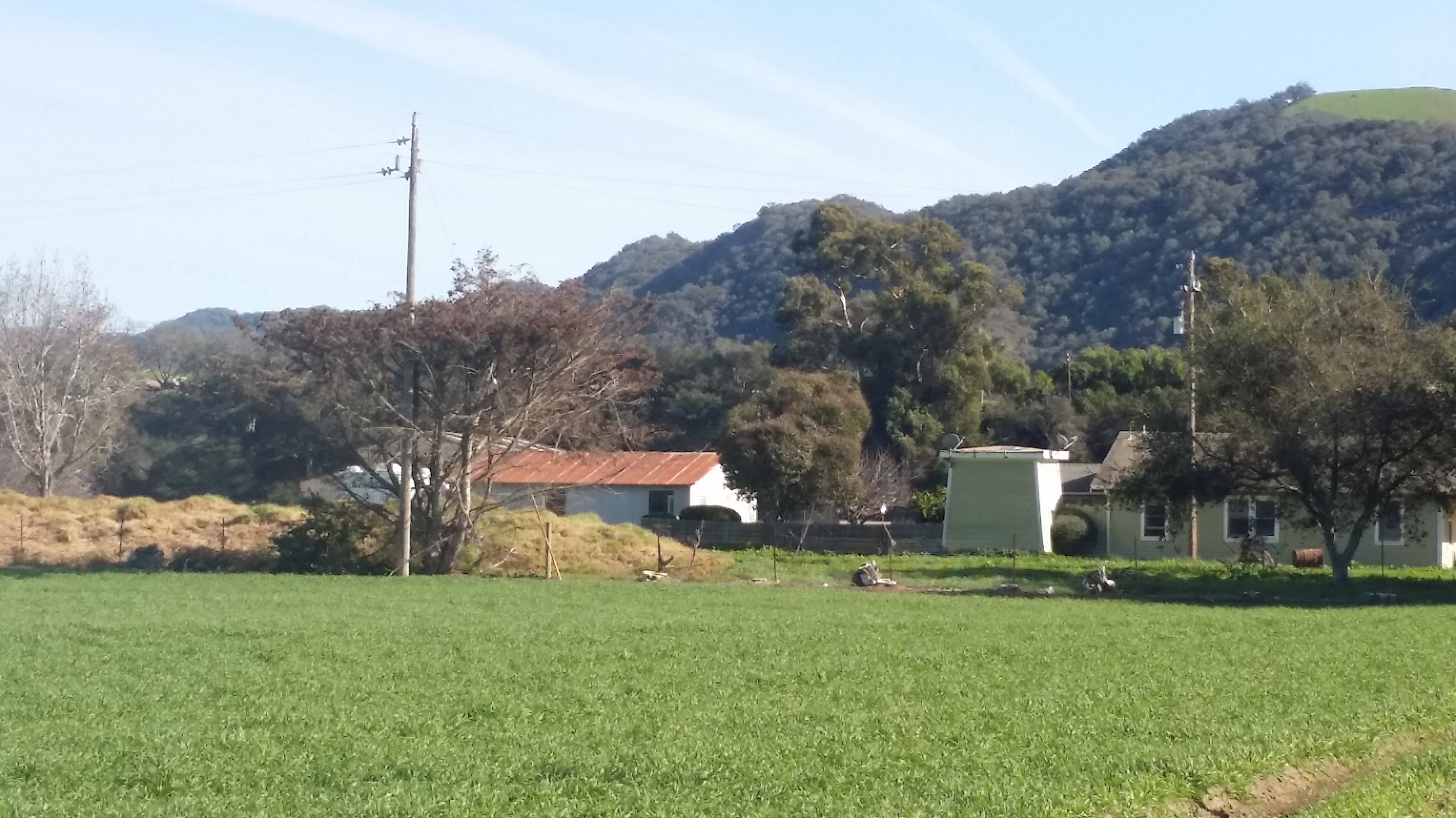
This is where I grew up–the Upper Arroyo Grande Valley.
 
 
I wouldn’t have any stories to tell except for the place where I grew up, except for my parents, except for my teachers. I don’t think any of the last, from Mr. Burns to Dr. Kennedy, know how profound their impact has been, and how long it will last–past their lifetimes, past mine, in small ways, in small stories vividly re-told.
 
Teachers live lives that will color and enliven the lives of children not yet born. It is these children, God willing, who will heal the wounds that history inflicts on all of us.
 
It is teachers that will show them the way home to their ideals, and to ours.

Horsewomen

13 Monday Mar 2017

Posted by ag1970 in Arroyo Grande, Uncategorized

≈ 1 Comment


FullSizeRender (2)

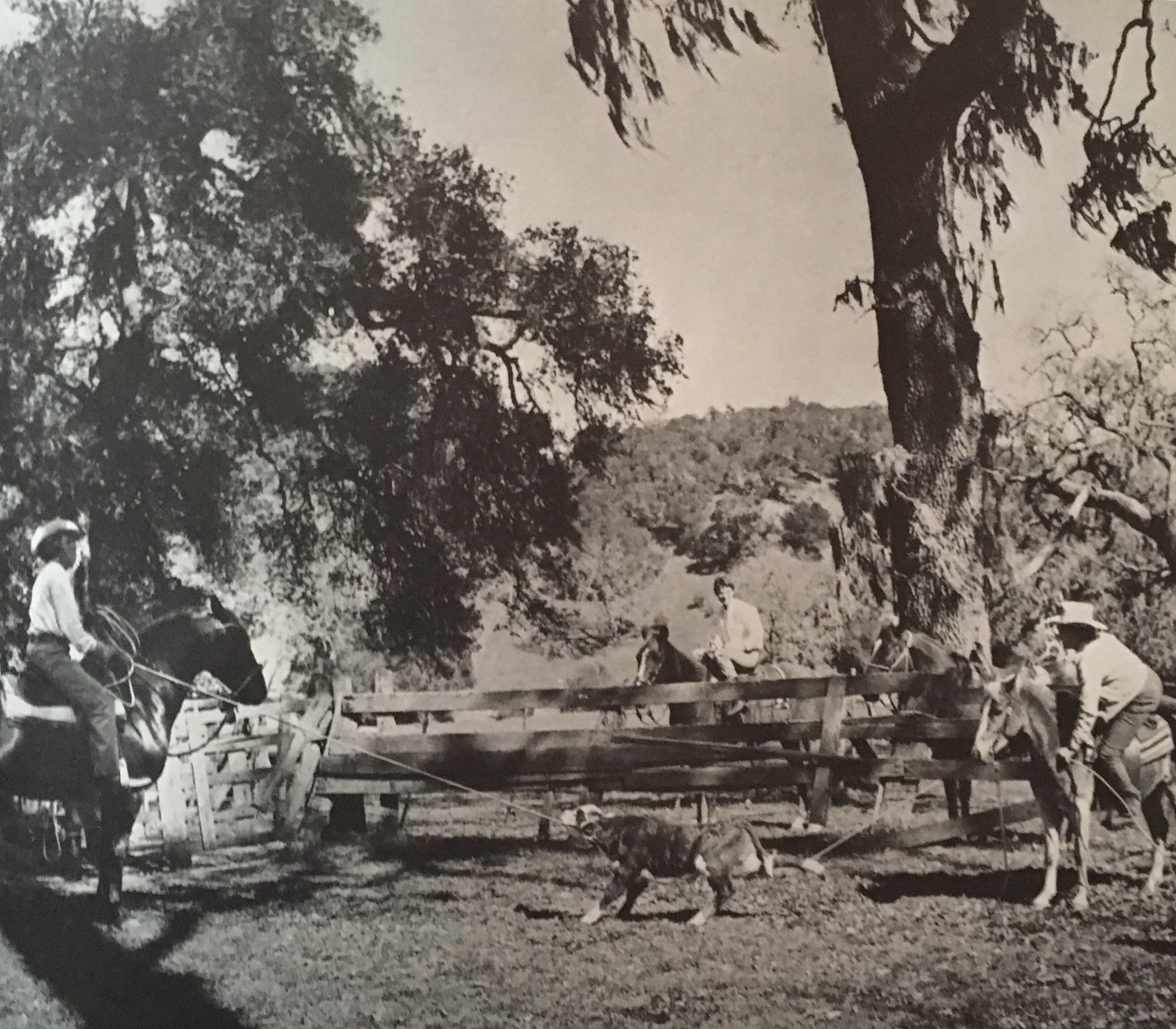
I was so happy to find this book, Horses of the West, by the superb photographer Jeanne Thwaites, from 1971, because it’s out of print AND because that’s my big sister, Roberta Gregory, on her Morgan mare, in the center of this photo, between two noted local horsewomen, Sid Spencer and Anne Westerman.

Sid and Anne were sisters. Anne raised her Welsh ponies off of Carpenter Canyon Road and the little fellows were unintimidated by Sid’s Herefords, some of them as big as the ponies, at roundup time. [Welsh ponies used to haul carloads of coal out of mines, so they’re tough little beasties.] Anne taught locally for many years, including a stint at the one-room Santa Manuela School, now in Arroyo Grande’s Heritage Square. P.J. Hemmi, lynched at fifteen in 1886 from the Arroyo Grande PCRR trestle, also attended a previous version of that school, which burned. Lumber from that school was salvaged to build “our” 1901 schoolhouse. That was a long, long, long time, of course, before Anne’s tenure there.

Sid was a widow who raised cattle and her Morgans in Lopez Canyon. At roundup time, it was an all-woman occasion: Anne, Sid, Sheila Varian and her foundation stud, Bay-Abi, who was both beautiful and beautifully trained at working with cattle, and a host of young women, including Roberta. They were, I think, undogmatic and unaware feminists, because they had absolutely nothing to prove to any man, didn’t give a damn what men thought of them, and didn’t need them or their advice. They roped, branded, nutted, fell off and got knocked silly, survived rollovers, broke horses, and, more often, broke bones. Mature horsepeople are about as arthritic as NFL veterans.

They were wonderful.

By the way, Dad and some friends once went dove hunting on Alex Madonna’s land, adjacent to Sid’s, and they wandered onto her property. They were dismayed when she threw down on them with a 30-30 carbine and suggested that everybody just relax until the sheriff got there. Everybody relaxed. Sort of. Sid was quiet, soft-spoken, but very direct. She was a force of nature.

Home

16 Wednesday Nov 2016

Posted by ag1970 in Arroyo Grande, Uncategorized

≈ Leave a comment

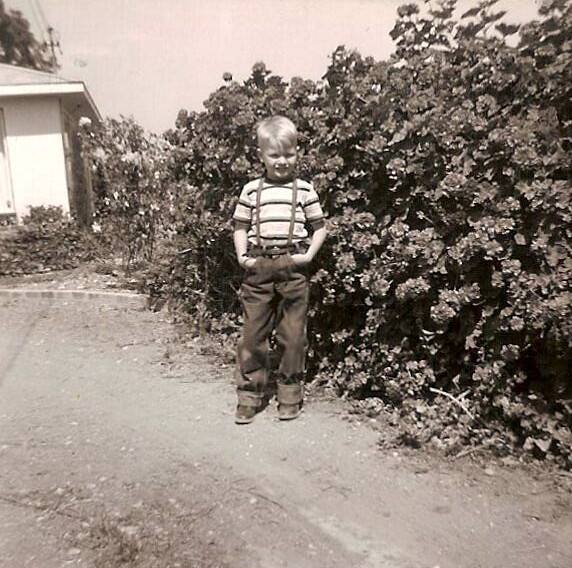
1689864_10203039972623997_595650753_nA ten-mile corridor of land between Valley Road in Arroyo Grande and Mary Hall Road in the Huasna Valley has been the most formative influence of my life. I grew up on Huasna Road in the Upper Arroyo Grande Valley, and I knew instantly the day we moved there, when I was five, that this was home.

We never lacked for guests. There were mule deer, a weasel, red-tailed hawks, an unexplained peacock, and two barn owls that slept together on a ledge beneath the Harris Bridge. Coyotes yipped in the hills and a colony of beavers built a dam in the Arroyo Grande Creek that ran with rainbow trout I did catch and one big steelhead that I didn’t. Once a mountain lion sniffed around our Branch School softball field.

Just over the hill from the two-room school was the Branch family burying ground. I used to visit to wonder what Arroyo Grande Valley must have been like when Francis and Manuela Branch arrived in 1837, wonder at the heartbreak represented by the small tombstones of three daughters taken by smallpox in 1862.

It was in part the Branch family that would lead me to teach history for thirty years, when I found that my life’s calling and greatest joy was to be surrounded by teenagers.

I’ve written two books about Arroyo Grande since I retired in 2015, and I constantly find hope in our past:

• In 1862, a Civil War soldier, Erastus Fouch, lost his eighteen-year-old brother during a firefight with Stonewall Jackson’s forces in the Shenandoah Valley. Thirty years later, Fouch, now an Arroyo Grande farmer, would be the most forceful advocate for the founding of the high school, a perfect memorial to a lost brother.
• Ruth Paulding taught at the high school in the 1940s and 1950s. Her mother, Clara, had taught locally for over forty years, including, at one point, teaching sixty students in eleven grades at Branch by herself. Both Pauldings loved children. In the family home on Crown Hill, there are several tea and coffee services. In one of them, Ruth, at the end of the school year, would serve her students Mexican hot chocolate so rich that the teenagers would remember it the rest of their lives.
• The Ikeda brothers were superb athletes and passionate about baseball, which is the sport that that kept the internees together, body and soul, in the desolate World War II camp at Gila River. More than half of Arroyo Grande’s Japanese internees never came home after the war. The Ikedas did, to teach baseball to two generations of children who will never forget Coach Saburo Ikeda because, as one of them wrote, “Coach always had a smile on his face.”

On the day that we moved to Huasna Road, there had just been a thunderstorm, and the air was pungent with ozone and earth just turned over by a farmer’s tractor. In writing about our past, I am always inspired by chronicling lives as rich as the soil of the Valley, and I always come back to that moment, sixty years ago, when I knew I was home.

The photographer

13 Saturday Aug 2016

Posted by ag1970 in Arroyo Grande, Uncategorized

≈ Leave a comment


Dorothea_Lange_atop_automobile_in_California

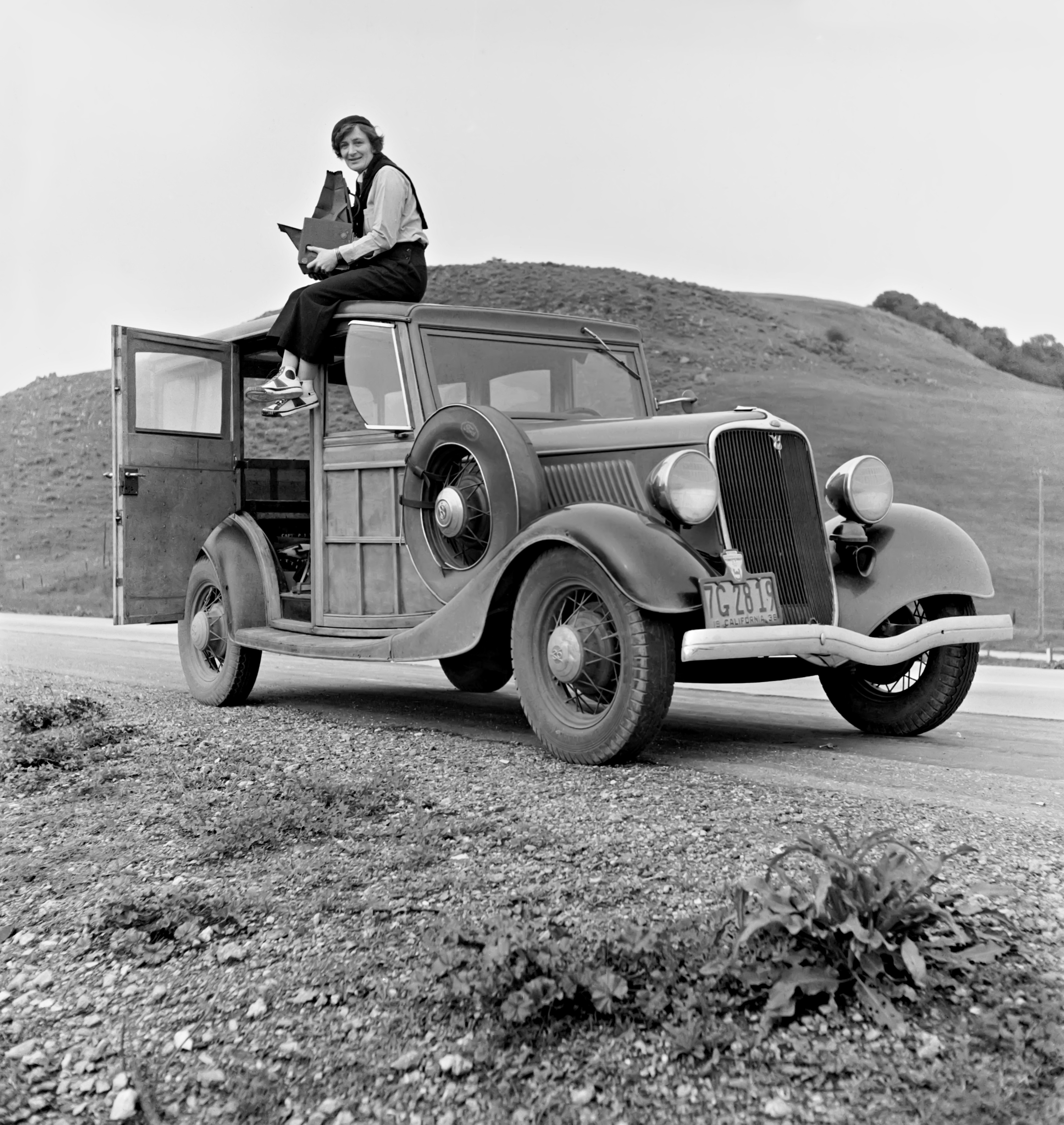
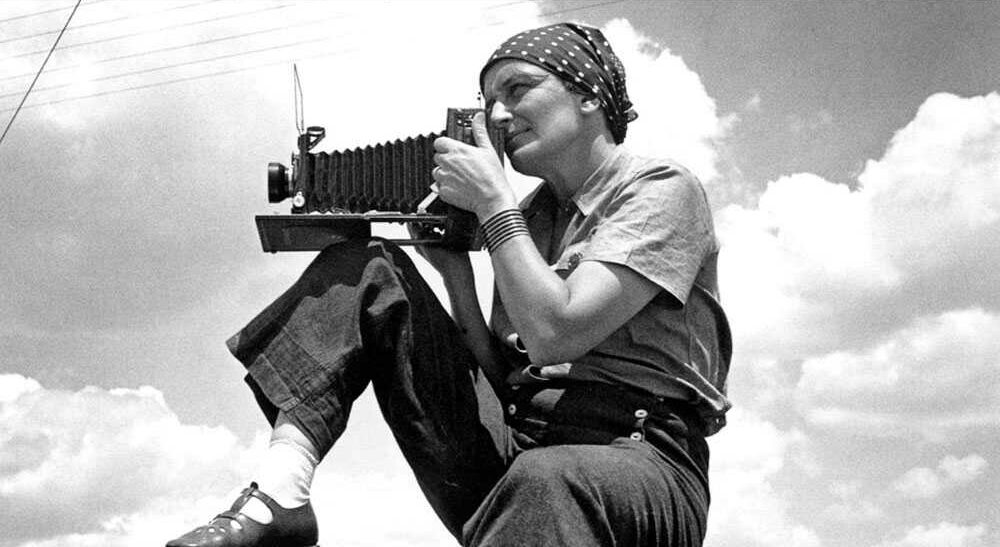
In 1936, the woman’s beret and mannish dress—oxford shirt, pleated skirt, sweater tied around her shoulders, high-topped tennis shoes—might have made her look a little like the outlaw Bonnie Parker. The car she drove was a powerful V8,  the engine Bonnie and Clyde favored, but her car was homely and utilitarian, a wood-paneled Model C Ford wagon, not sleek and raked like the Ford DeLuxe in which the outlaws had met their deaths two years before. The driver, nodding a little with each click of the seams in the two-lane concrete Highway 101, needed a wagon’s room, not for bank-bags full of loot, but for equipment, the boxy, awkward but fragile paraphernalia of the documentary photographer, tucked securely inside the passenger cabin and wedged together in cases to make the run north to San Francisco secure and tight.

She had a good six hours to go before San Francisco and so was taking a chance on dubious tires on the narrow coast highway, littered in sad little Darwinian islets with expired possums, skunks, and ground squirrels. For her, the more menacing detritus was that of a nation in motion: fragments of glass, shredded and peeled truck-tire treads, oil slicks, fragments of cargo that included scraps of lumber and tenpenny nails. Her  tires, nearly bald at the edges from months of traveling hard roads in the San Joaquin Valley and the California coast, were vulnerable to the traps the 101 had laid for her, but she wasn’t prepared for the trap the roadside sign presented.

PEA PICKERS CAMP

At first, she was strong enough to resist the seduction of the crudely-lettered sign; she had so far to go and had, after all, only reached the southern edge of San Luis Obispo County. Here  the terrain was just beginning to reveal that she’d left the gravitational pull of Los Angeles, which ends at about the Gaviota Pass, with its severe rock outcroppings scattered with spiny yucca plants, where the light hits hard at noontime and yields to soft pastels at sunset, purples and pinks, all suggestive of aridity and drought in a country meant for lizards and coyotes and not for farming.

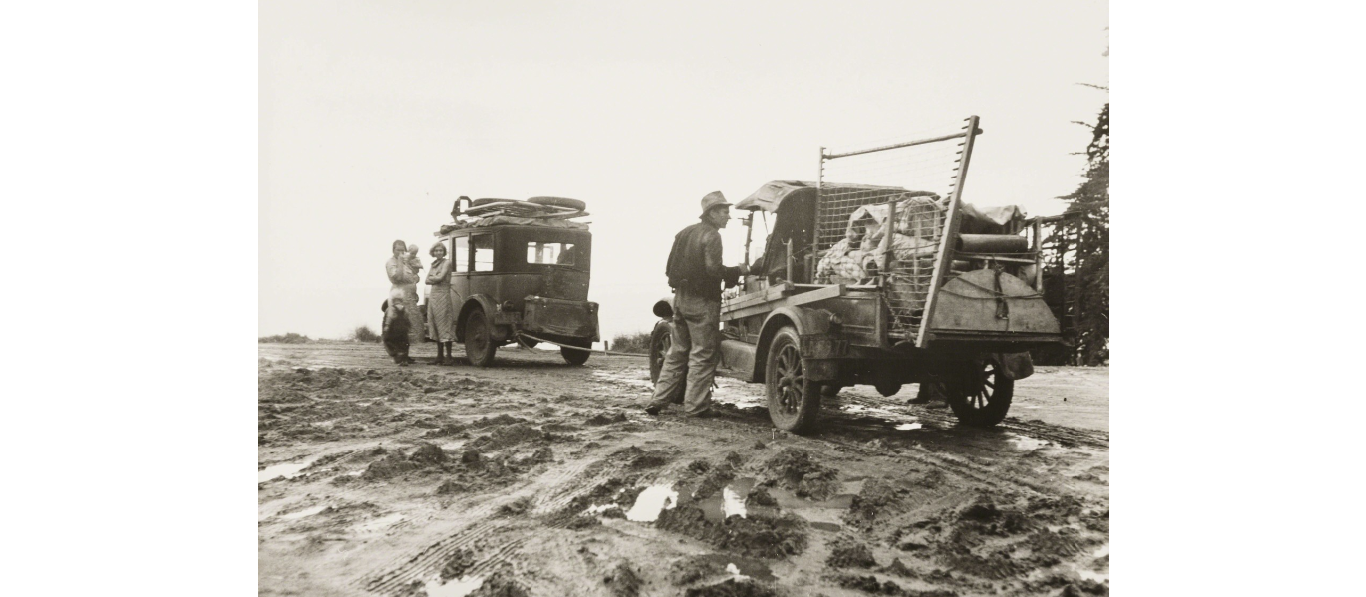
Lending a helping hand, Nipomo.

She knew the farmland she was entering pretty well, had interviewed and talked to its Mexican migrants and itinerant cowboys and the gypsy people mistakenly generalized as “Okies,” “mistaken” because she’d photographed the same kind of people from as far away as Vermont. They lived in their canvas tents and lean-tos in labor camps like the one the cardboard sign suggested, and they were as hard and as stark and as dry as the rocks at Gaviota. Poverty and stoop labor and hunger and human hostility had dried these people out by 1936. If  the woman had her way, hope would wash through them like irrigation water the color of creamed coffee did through the furrows of the fields they worked, fields of pole beans and strawberries, cabbages and peas. But this water would revive them, fill them out, galvanize and energize them, restore to them the forward-looking strength that had been so fundamental to their ancestors from Germany, from the Scots Lowlands, from Sonora and Mississippi, from Luzon and Kyushu. These people waited, quiet, stoic, unblinking, for the waters of hope to baptize them. But they thirsted for them.

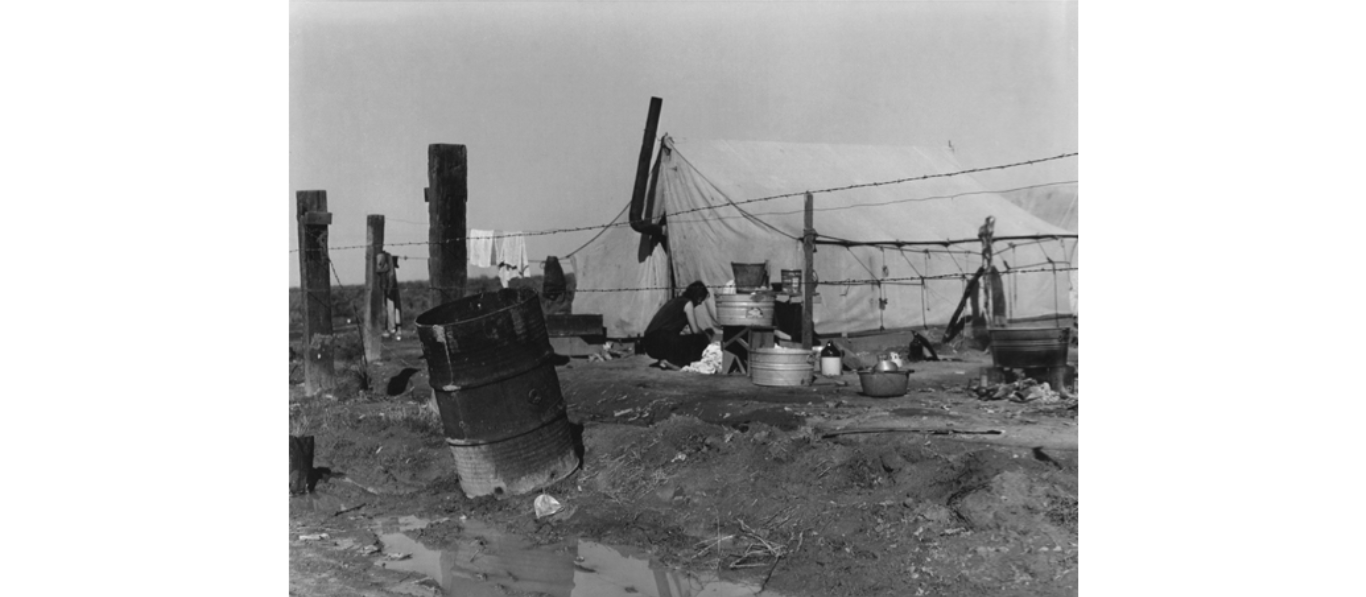
Doing laundry, migrant camp

She kept driving north past the irrigated fields and vast groves of fruit and walnut trees because there was no need for her to stop. On the seat and the floor beside her were thousands of  5 x 7 negatives secure inside their wooden frames, stored in black light-resistant boxes, and on that film she had captured the hard, dry, and thirsty people at work in their fields, in camps preparing dinner or washing laundry, and their children beside them in the fields, whole families struggling with the trailing bags they were struggling to fill with cotton bolls or onions or potatoes or with the tall wooden pails meant to be filled with fruit or pea pods. They harvested the food that fed a nation that was now too incapable, in places like Henry Ford’s Detroit, of feeding itself. Ironically, the harvesters themselves went hungry. They’d been abandoned by fossilized congressmen who forgot the hunger of the hill people that had driven their forebears, fierce Populists like Tom Watson, to the offices of great power that they now held.

So the migrants’ children’s bellies were swollen, their legs were like sticks, knock-kneed from rickets, and now, in the hard rains that had come late this year, the dominant sounds that came from the tents in the migrant camps were the wracking coughs of migrant children in attacks that convulsed them and curled them like sowbugs into the fetal position where they could gather enough strength for another breath. There were thousands of people like these harvest people, sealed in her negatives on the seat beside her, waiting to come to life again in tubs of fixer in the photo lab.

Some of them, some of those children, were going to die.

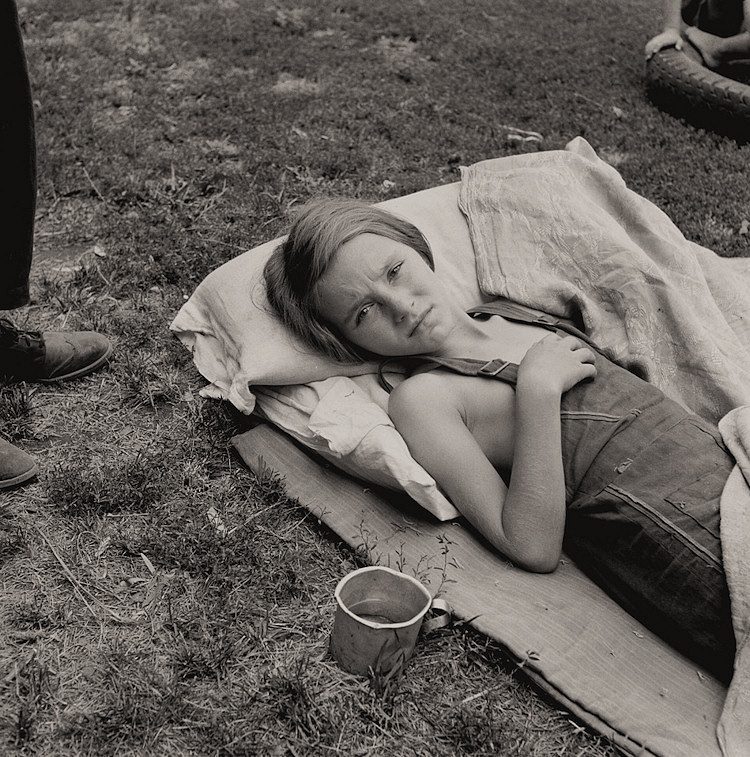
Lange photographed this sick migrant child near Bakersfield.
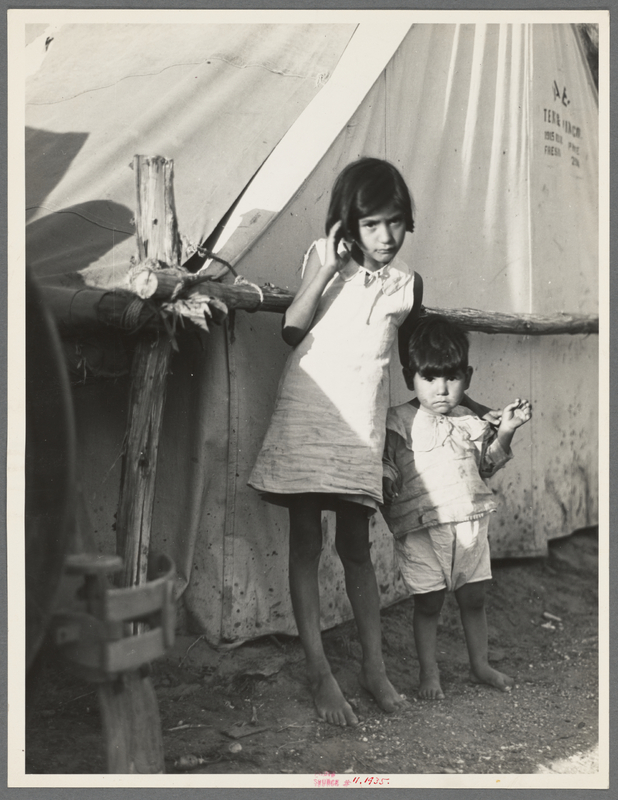
Migrant children, Nopomo. The little girl’s slight knock knees are suggestive of rickets, a nutritiional disease..


South of the Ontario Grade, to her left, was a stretch of the Pacific in a shallow crescent from Guadalupe to Port Harford; the sight of it must have hurried her north to where she would finally see the ocean again, and with it San Francisco.

Ten minutes later, impulsively, somewhere near San Luis Obispo, the driver pulled to the shoulder and stopped her car.

The engine idled and her grip tightened atop the steering wheel. She leaned forward until her forehead rested against her knuckles and she closed her eyes. She was tired. She had miles and hours of highway ahead of her before home and relief and release from the hard work she’d been doing. Then she sighed. There was only one thing to be done. She brought the Ford around in a U-turn and headed south on the highway she knew so well that she would intuit a mile ahead of its appearance where the sign would be,  where she would turn off the 101. She could not know it now, a little angry at herself for reversing  course, but when she turned off she would meet a Madonna of the Sorrows, a woman in a tent in a muddy field who would leave even a master like Raphael rapt in her presence and powerless to capture her image. This image was meant for the photographer, and meant for her alone.

Four marriages

30 Saturday Jul 2016

Posted by ag1970 in Arroyo Grande, Uncategorized

≈ 1 Comment

o-OLD-COUPLE-HOLDING-HANDS-facebook

The Pioneers

The first gunshot fired in the Arroyo Grande Valley came a few weeks before Victoria ascended the throne. It was probably fired from an 1825 Hawken rifle, and its target, dropped, might either have been a meal—mule deer creep down at dusk from the hills to water– or an animal that wanted to make the rifleman a meal. In 1837, the principal occupants of the Arroyo Grande Valley were grizzly bears—hundreds of them—who dominated, unchallenged, what was then monte, the Spanish word for a vast wasteland of marsh dense with cottonwoods. Another newcomer at the time, attempting to settle the remote Huasna Valley, claimed 45 bears in 1837 alone, and, before he gave up the idea of ranching altogether, estimated that he’d killed close to 200. The man who finally settled the Huasna, Isaac Sparks, outlasted the grizzly bears but not before one had cost him an eye.

The man who fired the Hawken rifle that day, Francis Branch, would not give up the idea of ranching and instead would begin to build a home that would someday be the center of a vast rancho, named for his wife, the Santa Manuela, of some 37,000 acres. He’d add to that adjunct lands of another several thousand to nearly double his holdings. He’d been a mountain man before he decided to take up ranching, so he did not miss his shot, and thirty years later, he would become the founder of Arroyo Grande.

He’d brought his wife, thirteen years his junior, with him to this wilderness. Her name was Manuela Carlon, and she would bear him a small army of eleven children, and many of them, as in any army, would be lost. Heavily pregnant, she rode the 90 miles back to her parents’ Santa Barbara home to deliver one child rather than bring it into a world of grizzly bears. She would have the pleasure of seeing what her husband had started grow: the little town of Arroyo Grande may have been her twelfth child and her most important, and it was bustling with commerce, progress and boosterism when she died at 94, in 1909.

But their time together was a time when men were as savage, if not more so, than the rapidly-dwindling grizzly bears. In the County Historical Museum in San Luis Obispo, 19th-century coroner’s reports are kept in what resembles an old-time library card catalogue, and every desk-drawer reveals an adventure when it’s opened. On delicate blue parchment, in the elegant cursive of Victorian America, a researcher can find reports, like the one on a cowboy’s body found on the Cuesta Grade north of San Luis Obispo, that read, with great precision and economy: “Cause of death: Pistol ball through heart.”

When a merciless gang of ship-jumpers and goldfield refugees murdered an innkeeper his family at Mission San Miguel in 1848, it was another former mountain man, like Branch, who found the bodies. “Medicine Jim” Beckwourth rode 62 miles south to William Dana’s Ranch Nipomo to deliver the news; later, Branch and John Price—an alcade, or justice of the peace—who had themselves been visiting the gold fields, inspected the grisly murder scene and Price turned out a posse of enraged citizens to pursue the killers.

It was a second posse of Santa Barbarans who finally caught up to the men south of Santa Barbara, near what is now the little town of Summerland. They were not particularly willing to surrender; there was a running gun battle before they were captured, and one was shot, another, according to some versions, drowned, but may have been helped, and the remaining three were executed by firing squad after an economic trial, shot by soldiers commanded by a future Civil War general, then-Lieutenant Edward O.C. Ord.

So it was an incomplete civilization: a tragedy central to Branch’s life can still be seen in the family’s little burying ground: a poignant story is symbolized by three small tombstones that flank Branch’s. Since his adobe ranch house was, as was customary among the rancheros, a stopping place for travelers, so the smallpox brought there by a stranger killed three of his daughters within a month in the summer of 1862.

Branch, away on business in San Francisco, was summoned home. By the time he arrived, his five-year-old and 16-year-old were already dead; 14-year-old Manuela, his wife’s namesake, would die shortly after. Edward Jenner had introduced smallpox vaccination in 1796, but in mid-century Arroyo Grande, the only available medical care came from the same Mission priest who probably performed the last rites for Branch’s children.

1862 was a turning point for the rancheros and the end of their dominance of the area. They had eradicated grizzlies and killers, but they had no weapons to use against the drought that came then and returns in cycles that 21st-century Americans can see every fall, when the hills of Central and Southern California, yellow and brittle, catch fire and send smoke plumes, into the skies.

When the cattle died, so did Branch’s fortune. The 1860s drought cost him $400,000—roughly $8 million today—and what would have broken another man’s spirit seemed only to energize Branch. Small, spare, said to love a good joke, even if he was the butt of it, Branch was also a sophisticated businessman, and had generated income in a variety of ways—including using the Arroyo Grande Creek to turn a millstone that ground the valley’s grain into flour—and began to make the shift to dairy farming. He was fighting his way back when he died in 1874.

Twelve years later, in 1886, a lynch mob broke into the town jail and hanged a father and his fifteen-year-old son accused of murder from the railway bridge over the Arroyo Grande Creek, along what is today Pacific Coast Railway Place.

While a local minister praised the lynching from his pulpit the Sunday after, Manuela Branch’s reaction was far more memorable. The lynch mob’s victims had been immigrants from Switzerland, newcomers, just as she and her husband had once been. In a gesture of consummate grace, at Manuela Branch’s insistence, they are buried today near Mr. and Mrs. Branch, near the three little girls they had lost to smallpox.

By the time she died, seventy-two years after she’d ridden as a 22-year-old down into a valley infested with grizzly bears, Manuela had become Dona Manuela, a kind of surrogate mother for the little town her husband had started. The Branches were in effect Arroyo Grande’s parents, and no community could hope for better role models, for people who exemplified courage, toughness, compassion, and character.

The Doctor, the Doctor’s Wife, the Doctor’s Daughter

Miss Ruth Paulding had retired by the time I knew her. She had taught language for so many years at Arroyo Grande Union High School, just across the street on Crown Hill from the house where she’d been born, that she became an institution. So had her mother, Clara, a lifelong teacher who decided to teach one more year, in Oceano, when she was seventy-one, so that she could splurge a little on herself. Her teacher’s salary that last year bought her a porcelain kitchen sink. And dentures.

I got to see that sink, among a houseful of minor but precious treasures, during a tour of the Paulding home.

I knew Ruth, or Miss Paulding, when I was a little boy. We were both parishioners at St. Barnabas Episcopal Church. She was by then in a wheelchair but had a kind of elegance about her that was captivating. If you got a little smile from Miss Paulding on returning to your pew from the communion rail, it carried the same freight as a priest’s blessing.

Ruth was born in that house and she would die there in the aftermath of the 1960s, when the nation seemed to be coming apart at the seams, because that was exactly what it was doing. Her mother, Clara, was a great student of history as well as a great teacher–she’d taught at Branch, Huasna, was the principal of the Arroyo Grande Grammar School and one of the founders of the high school–and she might have been able to give us all some perspective then, perspective we need today, about the durability of America and of Americans.

Clara was durable. She and Ed buried a little boy in the front yard, under a white rosebush, who should have been Ruth’s older brother. He died a few hours after a birth that nearly killed Clara, as well. But this was a woman who had commuted to Cholame to teach, spent the night at Creston to come home down the Grade in her trap and pony where there were no turnouts and the road edged sheer drops of hundreds of feet. She later taught at Branch, and by herself, sixty children at eleven different grade levels and not only did she juggle them artfully, but she loved them, too.

And that is the emotion that suffuses the Paulding House when you walk inside. It is a loving, unpretentious kind of homeliness and you are honored to be its guest. It is also a little insistent, as Clara was (she was descended from Jonathan Edwards, the terrifying Puritan divine) that you wipe your feet. That’s why the bathtub, one of Clara’s more prized possessions, adjoins an exterior door that overlooks the gardens where Ed loved to putter. Ed was a doctor by profession but was by nature a putterer. Clara was by nature a pragmatist, so Ed was not allowed back into the house after his gardening until he’d cleaned himself up in the bathroom first. And the bathtub was no trivial thing: people would drive out to the Coffee Rice home in the 1890s just to stare at the bathtub. It was the equivalent of a Disneyland ride. People just didn’t have them, and the Pauldings had Arroyo Grande’s second. It is a long one and looks like it was made for leisurely baths accompanied by books or magazines and maybe a hot chocolate.

Ed also loved woodcarving. Doctoring, not so much, although a glass hutch contains virtually every instrument he’d carried in his black bag, even his original Gray’s Anatomy. He resented it a little when folks got sick or fell off rooftops, as he did once, because it took him away from his flowers and his woodcarving. But there was nobody in San Luis Obispo County better equipped to deal with roof plunges than Ed: he was a natural-born orthopedist, and a bone set by Doc Paulding, it was said, healed as good as new and sometimes better. (Clara would need Ed when a speeding handcar smashed into her buggy at the foot of Crown Hill and broke her arm in three places. It healed completely. And the Pauldings got $1500 from the Pacific Coast Railway, which they needed. Ed was as inept with money as he was skilled at setting broken bones.)

So the mantle and smaller pieces–down to a little rocking chair for Ruth–were all made by Ed, and they’re cut with delicate and graceful motifs, usually floral, inspired by the models he’d just brought in from the garden where he loved to get dirty. Clara later bought a little farm, just outside of town, and it was there where Ed, in his older years, was happiest. When he got sick one day in what would turn out to be his last illness, he’d forgotten to take his morning medicine. Clara, 79, walked–or rather, marched–the five miles out to the farm and watched critically as Ed swallowed his required tablespoon.

There are curios, under glass, everywhere: a rhinoceros-hide warrior’s shield that Ed’s missionary parents had acquired in Syria, where he was born, a Chumash water-carrier, like a canteen, caulked with Pismo tar; the contents of Ed’s pockets, including his pocket-watch and chain, money clip, a tiny folding knife. Aside from Gray’s Anatomy, there are books everywhere: a collected Dickens, A Thousand and One Knights, a multi-volume history of the United States, collections of English Romantic poets, especially Tennyson, Clara’s favorite. And there is the bedframe, dark mahogany, with a lion’s head relief at the headboard, and that lion was Ruth’s lion. It protected her every night she went to sleep as a little girl; it was as solid and as real and as constant as were her parents.

And everywhere there are tea services. Ruth’s little-girl doll’s cups and saucers are painted with delicate, tiny flower buds. There is a sterling-silver coffee service at one end of the dining room table, and on a shelf above, there is the best of all. It’s the set Ruth reserved especially for her high school students when she welcomed them into the home of her own girlhood, and that service was reserved for hot chocolate so rich that teenagers would remember it the rest of their lives.

The Immigrants

There was only one humane opening in the anti-Japanese laws. They allowed those men already in American to settle here with their wives, to send home for them or to send, as if they came from the Sears Catalogue, for “picture brides.”

This is how Shigechika Kobara, one of the early immigrants to the valley, and his wife, Kimi, began their lives together. Their fathers were neighbors in Kagoshima, and after a short negotiation and a longer courtship, by letter, the match was made. Shigechika took a train north and was waiting on a Seattle dock, looking for his bride among the passengers on her ship as it began to berth. She was looking back.

“I remembered his brother, a naval officer,” Kimi recalled, “and I found a man who resembled him. I thought that this was the man I was about to marry. From the deck, I fixed my eyes on him, even though I had never met him. That is why it is called a ‘picture bride.’”

Life in Arroyo Grande dismayed the middle-class, somewhat sheltered Mrs. Kobara. While her husband got up every morning at 4:00 a.m. to groom and harness the draft horses for his boss, Mr. Tomooka, Kimi sat alone in the bed and wondered what she’d gotten into. She wondered every morning; she cried every night.

There is an extraordinary photograph in Cal Poly’s Special Collections.

It’s a housewarming party, about 1949, and it’s an important occasion because Pete Guion had broken decades of de facto segregation. He was the first Filipino American to buy a home in South County. A large group photo taken at the housewarming might be the most significant in the series, for it shows not only a proud Guion and his friends from the Filipino community but also Caucasian and Japanese faces. Something important was beginning to happen four years after the Kobara family had faced such a fearful homecoming from the internment camp at Gila River.

For Filipinos, that change came at the cost of many lives. They had
fought for the country of their birth as well as the country that had showed them little good will, and finally, they began to achieve a measure of justice. Filipino veterans were given a path to citizenship—ten thousand would become naturalized citizens, and under the December 1945 War Brides Act, they finally got the chance to marry and start families in America. So what followed the war was another remarkable campaign in the Philippines. This one was led by ardent bachelors, many of them former soldiers, and its objective was conquest of a different sort, in the form of a flurry of marriage proposals. Between 1945 and 1964, over four thousand Filipinas accepted and came to live in America.

Many of the men, because of immigration restrictions and the prewar miscegenation laws, had deferred marriage and so were considerably older than their fiancées, and they were in a hurry to resume their lives in California.

So they sought to win family approval, get a proper church wedding and arrange for the return of their new wives as quickly as possible. One local woman, Josie Bolivar, remembered her marriage as “kind of a shock” because it violated so many Filipino proprieties—parental negotiation, a protracted and tightly chaperoned courtship and the customary time it took to establish a bond between the groom and the bride’s family. Her father, at first, was upset, but Josie’s wedding—she was, after all, going to become an American—turned out to be a huge affair, complete with uninvited guests and feasting that lasted for days.

Perfecto Betita moved with similar speed in courting Evelyn:

“Right away, he said that we didn’t have much time, that they were looking for someone to marry, and it’s gonna be quick, because we have to go back. After about a month’s time, I found out he had already talked to my grandmother and grandfather, and my uncle and aunt. He told me he didn’t have any more time to stay in the Philippines, and he wanted to…well, marry me.”

The marriage was concluded, and Perfecto brought his bride to the States. When they arrived in San Francisco in July, the first thing the new husband had to do was to buy his wife a coat. She was freezing in what passed for a San Francisco summer. They took a Greyhound bus south to Arroyo Grande, where Evelyn had a reaction very similar to that of Kimi Kobara when she had come to the valley with her husband, Shigechika, in 1920:

Oh, we were so shocked when we came here. We thought we would come here and live in a big two-story, three-story house. But they worked at thefarm, and we were shocked! We said, “This is where they live? I thoughtyou lived in some three-story house? It’s all muddy and farmy!”

Both Evelyn Betita and Kimi Kobara had made marriages that would be happy and successful; their children and grandchildren were very bright, were hard workers and were likewise successful. The apple does not far fall from the tree, they say, not even when the tree’s roots are planted so far away, on Kyushu, in Japan or Luzon, in the Philippines.

My afternoon with the Pauldings

25 Monday Jul 2016

Posted by ag1970 in Arroyo Grande, Uncategorized

≈ 5 Comments

12063512_10207842859653171_3208888555396038759_n

Clara, Baby Ruth, Ruth’s cousin, Ormie, and Dr. Edwin Paulding, about 1898.

Miss Ruth Paulding had retired by the time I knew her. She had taught language for so many years at Arroyo Grande Union High School, just across the street on Crown Hill from the house where she’d been born, that she had become an institution. So had her mother, Clara, a lifelong teacher who decided to teach one more year, in Oceano, when she was seventy-one, so that she could splurge a little on herself. Her teacher’s salary that last year bought her a porcelain kitchen sink. And dentures.


Screen Shot 2016-08-03 at 7.39.53 PM

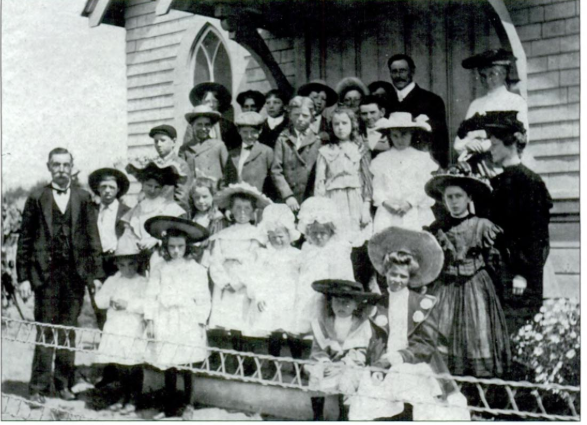
The St. Barnabas Sunday School, 1906. Clara Paulding, at upper right, was the church organist; this church is now Oceano’s St. Francis.

I got to see that sink, among a houseful of minor but precious treasures, during a tour today after rehearsal for the South County Historical Society production, The Mistress of Crown Hill.

I knew Ruth, or Miss Paulding, when I was a little boy. We were both parishioners at St. Barnabas Episcopal Church, then in a surplus World War II chapel on what was once Barnett Street; the street’s gone and so is the church, replaced by a gas station. Memories have more staying power than mere buildings, especially if they’re of women like Miss Paulding. She was by then in a wheelchair but had a kind of elegance about her, dressed as she was for Grace Cathedral instead of an old army chapel,  and if her body was betraying her, her spine curved cruelly, her spirit was graceful and even youthful. If you got a little smile from Miss Paulding on returning to your pew from the communion rail, it carried the same freight as a priest’s blessing.

Screen Shot 2016-07-28 at 4.33.40 PM

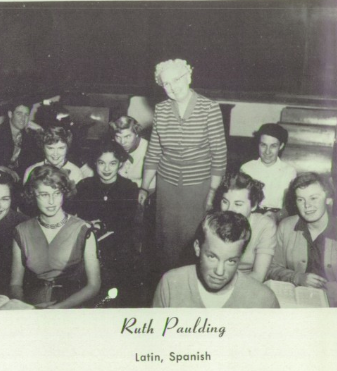
From the 1955 Arroyo Grande Union High School yearbook.

Ruth was born in that house and she would die there in the aftermath of the 1960s, when the nation seemed to be coming apart at the seams, because that was exactly what it was doing. Her mother, Clara, was a great student of history as well as a great teacher–she’d taught at Branch, Huasna, Santa Manuela, Oceano, was the principal of the Arroyo Grande Grammar School and one of the founders of the high school–and she might have been able to give us all some perspective then, perspective we need today, about the durability of America and of Americans.


Branch

Branch Elementary School

Clara was durable. She and Ed buried a little boy in the front yard, under a white rosebush, who should have been Ruth’s older brother. He died a few hours after a birth that nearly killed Clara, as well. But this was a woman who had commuted to Cholame to teach, spent the night at Creston to come home down the Grade in her trap and pony where there were no turnouts and the road edged sheer drops of hundreds of feet.

image039

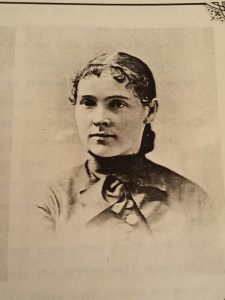
Clara Edwards Paudling, 1881.

I did not know that I had ties to Clara until later, but from what I knew about Ruth’smother, I was an admirer. She returned to college with Ruth, who’d been promised an extra $100 a year, if she took additional coursework, when the Second World War began to revive the economy. The pair decided to take summer courses at Clara’s alma mater, Mills College. Ruth took classes for the extra money; Clara, at ninety-three, took hers for pleasure, a course in “History of the United States to 1865” because, she said, she remembered the rest.

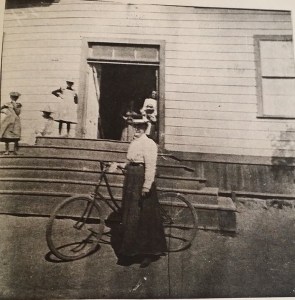
One of Clara’s assignments during nearly fifty years in the classroom had been at the school I attended, Branch Elementary. There is a photo of her in front of the school. Behind Clara and her bicycle in 1898 is the same doorway I would enter on my first day of formal education sixty years later. She taught, by herself, sixty children at eleven different grade levels and not only did she juggle them artfully, but she loved them, too.

10523966_10204259047340103_6944737570254081160_n-1

Clara Paulding, Branch School, 1898

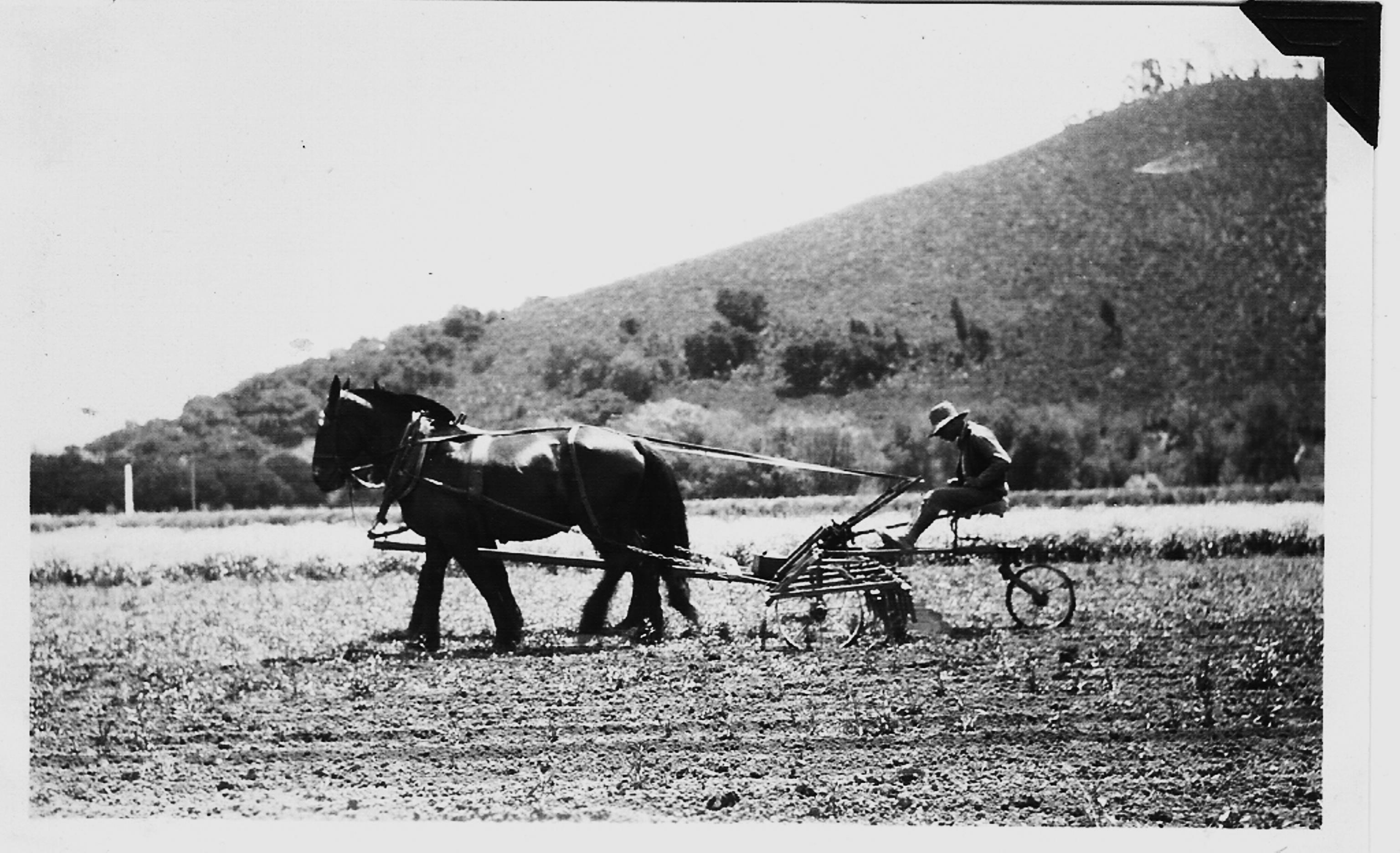
Arroyo Grande’s population, at the time of the photograph, was approaching 1,000. Beyond the town, to the east in the Upper Valley, and to the west, bounded by the sand dunes at the edge of the Pacific, in the Lower Valley, there were patchworks of farms worked by ambitious pragmatists: Arroyo Grande men and their teams of heavily-muscled draft horses, their necks arched in effort, turned some of the richest soil in the world to prepare it for planting. They might have been plowing for sowing pumpkins or carrots, onions or beans, or one of the most important products in the many cycles of agriculture the Valley has seen: flowers, cultivated for their seeds.

What must have delighted Clara Paulding on her two-mile bicycle commute to her sixty students every morning would have been the sight of brilliant fields of flowers and, planted in others, she would have smelled the delicate fragrance of sweet peas.

waller

A Waller Seed Company employee cultivates a field in the Lower Arroyo Grande Valley at about the time of the First World War.

It’s not hard to imagine her, given her personality, waving cheerily to the men working those fields, their faces hidden by broad-brimmed straw hats, or to imagine them waving back, wide smiles creasing their upturned faces. because even as field workers they had never had this much hope, and even in the Upper Valley, hemmed in closely by the oak-studded Santa Lucia foothills, they had never had this much room.

Clara’s spirit was expansive. She may look severe in her photograph, but she adored, without disguising it, young people, and the youngest the most, a feeling they reciprocated. Her wave on school mornings would have touched these men, younger sons from a very crowded place, and not particularly welcome in this new place.

The men in the fields whom she greeted were from Japan, and some of them from a prefecture known as Hiroshima-ken.

Clara’s spirit suffuses the Paulding House when you walk inside. It is a loving, unpretentious kind of homeliness and you are honored to be its guest. It is also a little insistent, as Clara was (she was descended from Jonathan Edwards, the terrifying Puritan divine) that you wipe your feet. That’s why the bathtub, one of Clara’s more prized possessions, adjoins an exterior door that overlooks the gardens where Ed loved to putter. Ed was by nature a putterer. Clara was by nature a pragmatist, and Ed was not allowed back into the house after his gardening until he’d cleaned himself up in the bathroom first. And the bathtub was no trivial thing: people would drive out to the Coffee Rice home in the 1890s  just to stare at a bathtub that was the equivalent of a Disneyland ride. People just didn’t have them, and the Pauldings had Arroyo Grande’s second. It is a long one and looks like it was made for leisurely baths accompanied by books or magazines and maybe a hot chocolate.


Ed

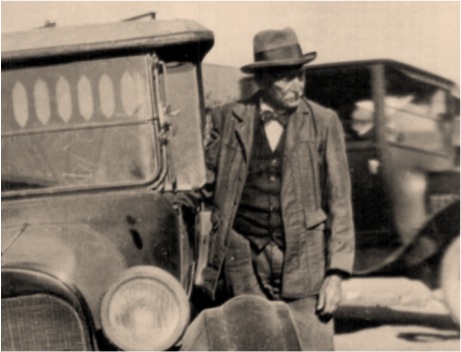
Dr. Edwin Paulding

Ed also loved woodcarving. Doctoring, not so much, although a glass hutch contains virtually every instrument he’d carried in his black bag, even his original Gray’s Anatomy.  He resented it a little when folks got sick or fell off rooftops, as he did once, because it took him away from his flowers and his woodcarving. But there was nobody in San Luis Obispo County better equipped to deal with roof plunges than Ed: he was a natural-born orthopedist, and a bone set by Doc Paulding, it was said, healed as good as new and sometimes better. (Clara would need Ed when a speeding handcar smashed into her buggy at the foot of Crown Hill and broke her arm in three places. It healed completely. And the Pauldings got $1500 from the Pacific Coast Railway, which they needed. Ed was as inept with money as he was skilled at setting broken bones.)

So the mantle and smaller pieces–down to a little rocking chair for Ruth–were all made by Ed, and they’re cut with delicate and graceful motifs, usually floral, inspired by the models he’d just brought in from the garden where he loved to get dirty. Clara later bought a little farm, just outside of town, and it was there where Ed, in his older years, was happiest. When he got sick one day in what would turn out to be his last illness, he’d forgotten to take his morning medicine. Clara, 79, walked–or rather, marched–out to the farm and watched critically as Ed swallowed his required tablespoon.


Ruth, far right

Ruth, far right, as a little girl.

There are curios, under glass, everywhere: a rhinoceros-hide warrior’s shield that Ed’s missionary parents had acquired in Syria, where he was born, a Chumash water-carrier, like a canteen, caulked with Pismo tar; the contents of Ed’s pockets, including his pocket-watch and chain, money clip, a tiny folding knife. Aside from Gray’s Anatomy, there are books everywhere: a collected Dickens, A Thousand and One Knights, a multi-volume history of the United States, collections of English Romantic poets, especially Tennyson, Clara’s favorite. And there is the bedframe, dark walnut, with a lion’s head relief at the headboard, and that lion was Ruth’s lion. It protected her every night she went to sleep as a little girl; it was as solid and as real and as constant as were her parents.

And everywhere there are tea services. Ruth’s  little-girl doll’s cups and saucers are painted with delicate, tiny flower buds. There is a sterling-silver coffee service at one end of the dining room table, and on a shelf above, there is the best of all. It’s the set Ruth reserved especially for her high school students when she welcomed them into the home of her own girlhood, and that service was reserved for hot chocolate so rich that teenagers would remember it the rest of their lives.


Jim Gregory is a retired Arroyo Grande High School history teacher and the author of the books World War II Arroyo Grande and the just-released Patriot Graves: Discovering a California Town’s Civil War Heritage.


Harmonic Convergence

26 Sunday Jun 2016

Posted by ag1970 in Arroyo Grande, Uncategorized

≈ Leave a comment

DSC01516.JPG
After the show today, Elizabeth and I visited the Temple of the People and talked with Eleanor Shumway, the wonderful woman who is the Temple Guardian. I don’t know about mysticism or Magnetic Lines, but I DO know that every time I’m in Halcyon, my blood pressure seems to drop a little and I seem to relax. So that got me to thinking about special places in my life. I bet you have them, too. Here’s a few on the Jimmy List:
1. Halcyon.  Wind chimes required.
2. San Francisco. Still my favorite city. My first trip there, I was six, and there was a lightning storm. I was impressed. Then I saw the Golden Gate Bridge. I was overwhelmed.
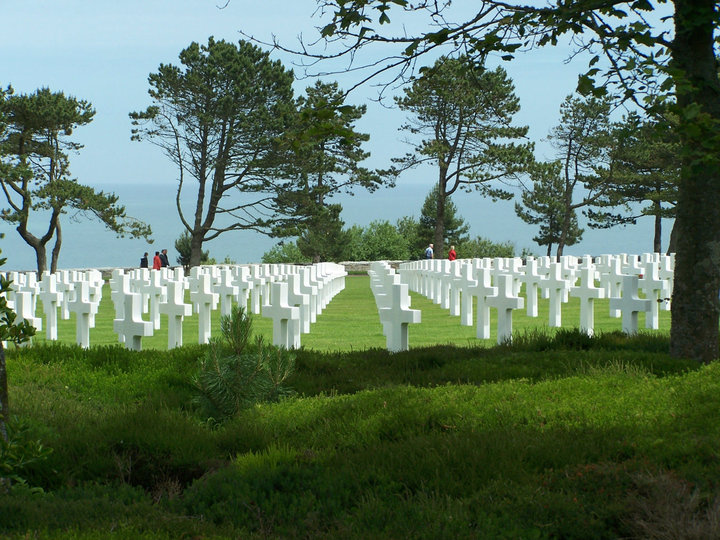
3. The American Cemetery at Colleville-sur-Mer, above Omaha Beach. It’s beautiful and incredibly serene. You are compelled to touch the crosses and Stars of David. With the sea air, the marble is so cold that it startles you. You keep brushing the markers with your fingertips anyway. You want so badly for those young men to know that you are there.
35992_1493078450682_2630988_n
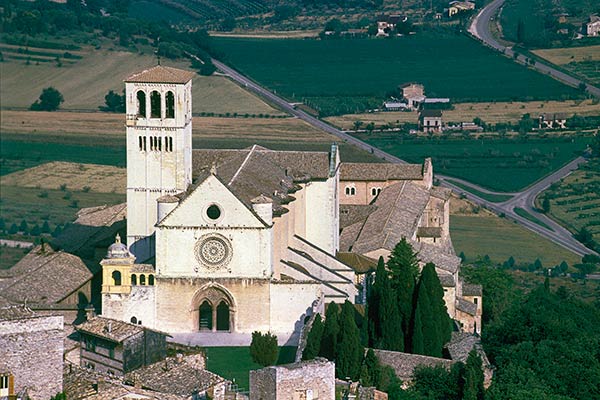
4.  Assisi, Italy. Both for the hilltop view and for being near Francis.
asissi_st_francis_cathedral_600
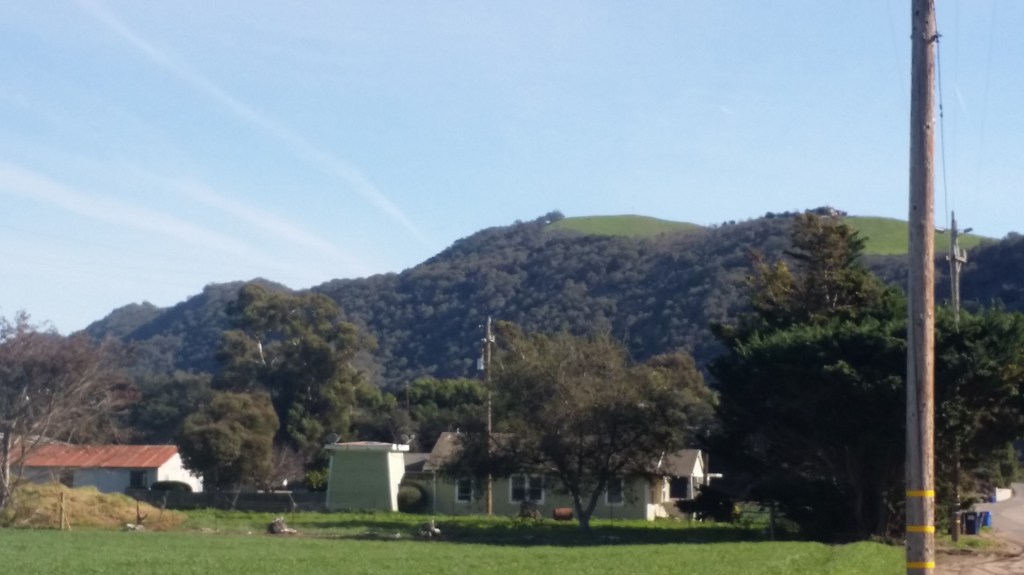
5. A little square between Branch Mill Road and Arroyo Grande Creek, where I grew up.
20160203_135150
 

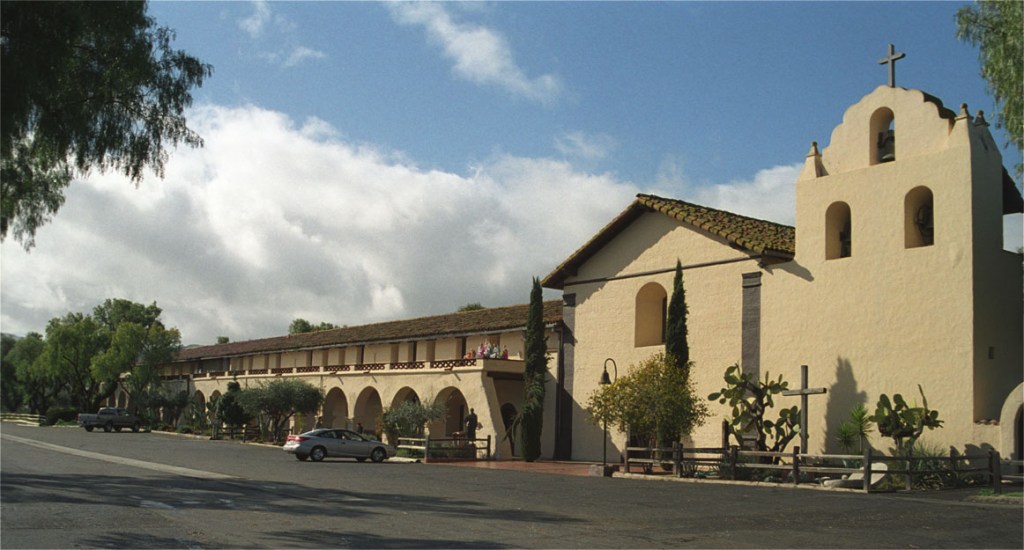
6. Mission Santa Ines. It was my Mom’s favorite mission, my fourth-grade mission project, the place where Elizabeth and I were married, and there are miles of open country that front the place where you can imagine what it might have been like two hundred years ago.


Mission_StInes

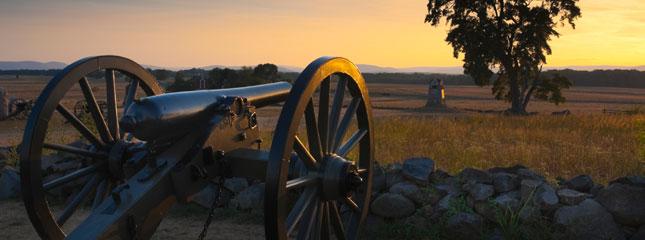
7. Gettysburg. Yes, it’s haunted.
gettysburg
8. The Uffizi, Florence. I think I could live there.
9. Rural Missouri, summer, when the lighting bugs start to come out.
10. St. Stephen’s Park, Dublin, on a typical (wet) Irish day, when the sun suddenly comes out, brilliant and clear. Miraculous.
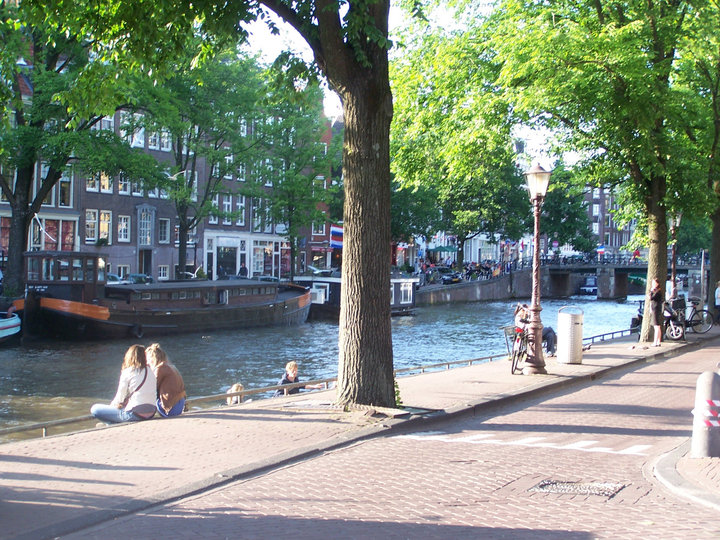
11. Anne Frank’s home, Amsterdam. No other place has ever evoked so much sorrow and compassion in me. The family’s presence is palpable.
37360_1492991128499_520747_n.jpg
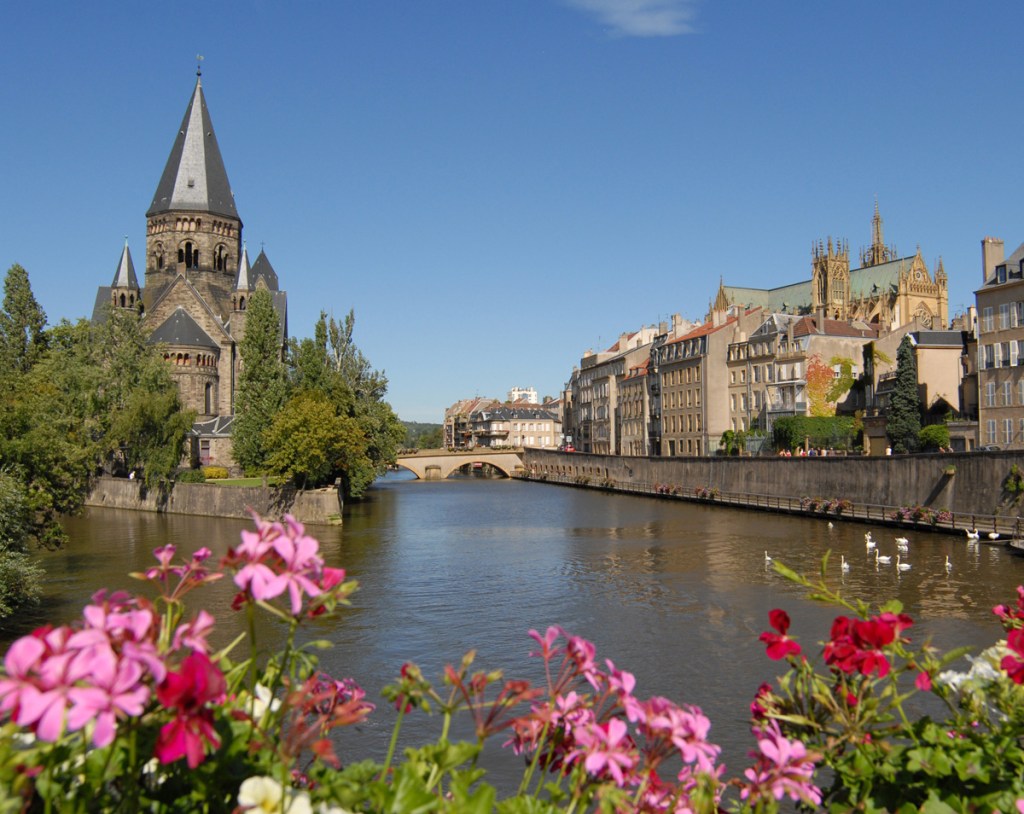
12. Metz, France, nearing sunset, when trout start to nose up and leave little ringlets on the surface of the Moselle.
1200_954_4_templeneuf-moselle

Gallery

An unplanned gift

03 Wednesday Feb 2016

Posted by ag1970 in Arroyo Grande, Uncategorized

≈ 1 Comment

This gallery contains 25 photos.

Arroyo Grande’s Old Soldiers

03 Wednesday Feb 2016

Posted by ag1970 in Arroyo Grande, Uncategorized

≈ Leave a comment


Otis W.Smith Sawtelle CA near LA

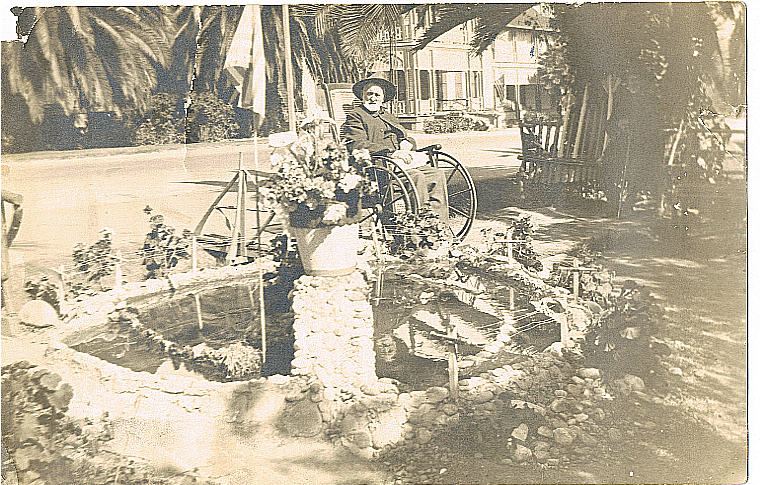
This is Arroyo Grande’s Medal of Honor winner, Otis Smith, in a pleasant-looking Californio courtyard at the Sawtelle Home for Disabled Veterans in Los Angeles, about 1915. Smith won his medal for seizing the flag of the 6th Florida at the Battle of Nashville in December 1864.

He would live fifty-nine more years. Like other veterans, he seemed to be semi-migratory, checking in and out of Sawtelle. Cavalryman James Dowell, a member of an important family in the South County, checked himself into the facility twice, in 1903 and 1907, for unknown reasons, but they must have been serious ones, because he was an independent farmer in the Arroyo Grande Valley–the only medical condition listed was one endemic to cavalrymen like him: hemorrhoids. He is listed as “D’Pd” on one discharge, “Own Request” for the second.

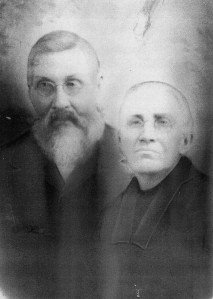
James Ananias Dowell and Louisa Jane Dowell

James and Louisa Dowell

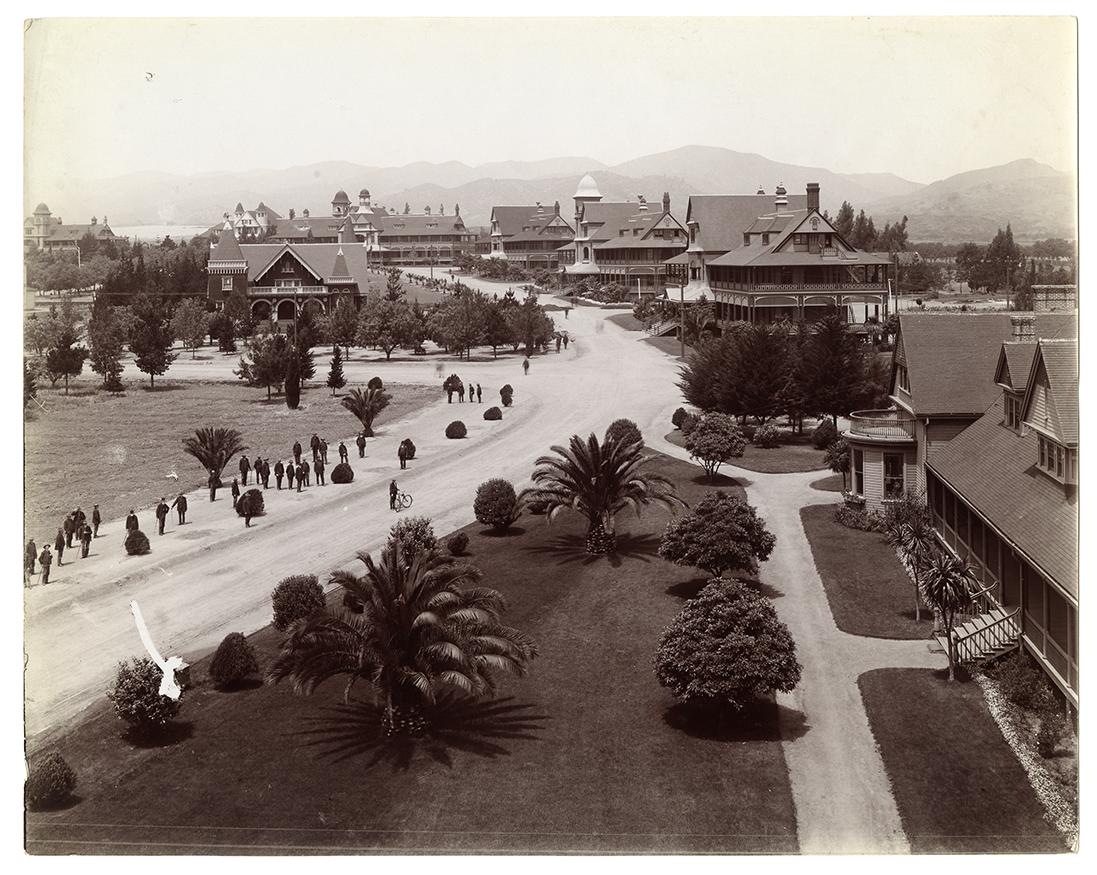
Sawtelle looked beautiful. It wasn’t, necessarily. The people who ran the home were twice investigated but twice exonerated for mistreating the pensioners in their care.

A widespread complaint was the food–or, rather, the lack of it. If meat appeared, the veterans knew it was because there was an important visitor.  “I know,” one veteran said in 1909 of other mealtimes, “exactly what we’ll have tonight. Prunes, applesauce, a little bread and tea. About three cents’ worth.” Other problems were more serious: one veteran was found dead off the grounds: he’d wandered away, fallen into a ravine, and broken his neck.

Maltreatment of Civil War veterans, from what I’m learning, seems to have been widespread. Americans lauded them on the Fourth and Decoration Day, and the rest of the year seem to have wanted them to disappear. The sight of legless or armless men was resented; when soldiers came home from the war, thousands went on an kind of mass bender, got into fights, raised hell, and made Americans fearful of them and the resentment of that, too, seemed to stick.

Of course many of them couldn’t leave the alcohol alone: a hard drinker in one veterans’ home had a habit of biting the other pensioners; another got the point where he had to be committed to an asylum, a third lay down on the railroad tracks to die; a bottle of whiskey was found nearby as a kind of abstract suicide note.

You wonder if a place as beautiful as this, even if it’d been run skillfully and compassionately, could ever offset the demons that pursued these soldiers for decades after Appomattox.

Sawtelle was located just west of the 405, near UCLA. It was torn down years ago. You hope its demolition released the battalion of ghosts that must have haunted the place.

Sawtelle_Veterans_Home Wikipedia no restrictions


← Older posts
Newer posts →

Subscribe

  • Entries (RSS)
  • Comments (RSS)

Archives

  • June 2026
  • May 2026
  • April 2026
  • March 2026
  • February 2026
  • January 2026
  • December 2025
  • November 2025
  • October 2025
  • September 2025
  • August 2025
  • July 2025
  • June 2025
  • May 2025
  • April 2025
  • March 2025
  • February 2025
  • January 2025
  • December 2024
  • November 2024
  • October 2024
  • September 2024
  • August 2024
  • July 2024
  • June 2024
  • May 2024
  • April 2024
  • March 2024
  • February 2024
  • January 2024
  • December 2023
  • November 2023
  • October 2023
  • September 2023
  • August 2023
  • July 2023
  • June 2023
  • May 2023
  • April 2023
  • March 2023
  • February 2023
  • January 2023
  • December 2022
  • November 2022
  • October 2022
  • September 2022
  • August 2022
  • May 2022
  • April 2022
  • March 2022
  • February 2022
  • January 2022
  • December 2021
  • November 2021
  • October 2021
  • September 2021
  • August 2021
  • July 2021
  • June 2021
  • April 2021
  • March 2021
  • February 2021
  • January 2021
  • December 2020
  • November 2020
  • August 2020
  • July 2020
  • June 2020
  • May 2020
  • April 2020
  • January 2020
  • December 2019
  • November 2019
  • October 2019
  • September 2019
  • August 2019
  • May 2019
  • April 2019
  • March 2019
  • February 2019
  • January 2019
  • December 2018
  • November 2018
  • October 2018
  • September 2018
  • July 2018
  • June 2018
  • May 2018
  • April 2018
  • March 2018
  • February 2018
  • January 2018
  • December 2017
  • November 2017
  • October 2017
  • April 2017
  • March 2017
  • December 2016
  • November 2016
  • October 2016
  • September 2016
  • August 2016
  • July 2016
  • June 2016
  • April 2016
  • March 2016
  • February 2016
  • January 2016
  • December 2015
  • November 2015
  • October 2015
  • September 2015
  • August 2015
  • July 2015
  • June 2015
  • May 2015
  • April 2015
  • March 2015
  • February 2015
  • January 2015
  • December 2014
  • November 2014
  • September 2014
  • August 2014
  • July 2014

Categories

  • American History
  • Arroyo Grande
  • California history
  • Family history
  • Film and Popular Culture
  • History
  • News
  • Personal memoirs
  • Teaching
  • The Great Depression
  • trump
  • Uncategorized
  • World War II
  • Writing

Meta

  • Create account
  • Log in

Blog at WordPress.com.

  • Subscribe Subscribed
    • A Work in Progress
    • Join 69 other subscribers
    • Already have a WordPress.com account? Log in now.
    • A Work in Progress
    • Subscribe Subscribed
    • Sign up
    • Log in
    • Report this content
    • View site in Reader
    • Manage subscriptions
    • Collapse this bar

Loading Comments...