I can get through one episode at a time of the Spielberg/Tom Hanks series Band of Brothers, which speaks more to me because my Dad was an Army officer in Europe. Sometimes I can’t get that far in The Pacific. It’s so harrowing that I don’t know how any Marine came home undamaged. I don’t imagine that any did.
I read, many years ago, With the Old Breed, by Eugene “Sledgehammer” Sledge, a character in the miniseries, and the historian/biographer William Manchester’s account of his war service, Goodbye Darkness, and both left me deeply troubled. That’s exactly the impact they should’ve had.
Somehow, thanks to the work of computer artists and the incredible composition, “Honor,” by Hans Zimmer, the opening credits to the miniseries are strangely and surpassingly beautiful.
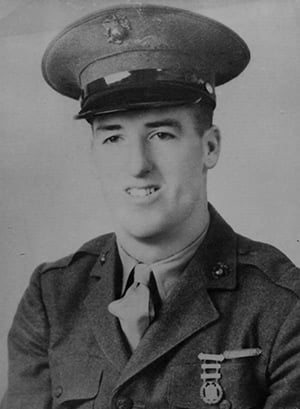
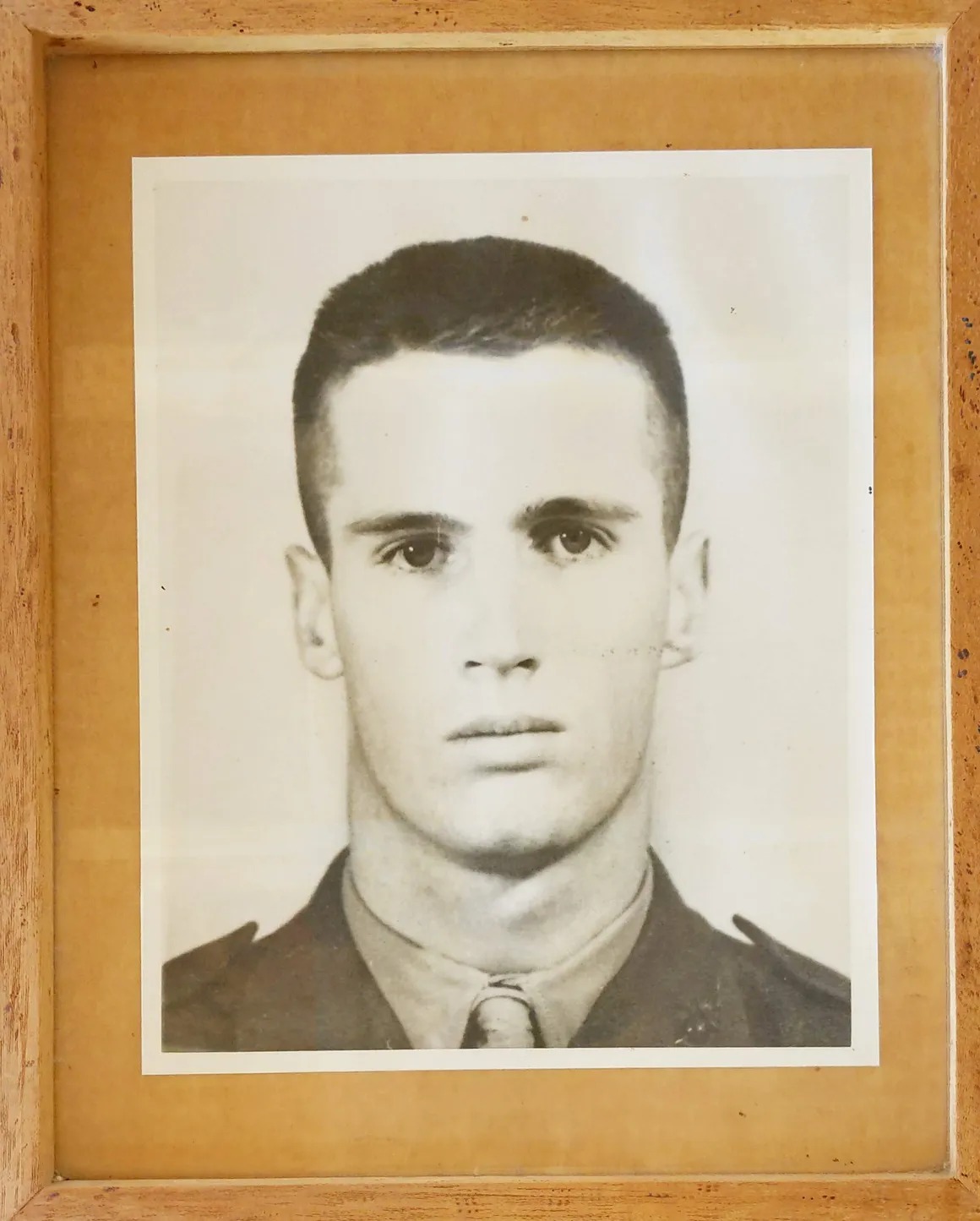
But it remains a disconnect in my spirit, to imagine what young men from my hometown went through. There were other Marines, but here are five who resonate for me.
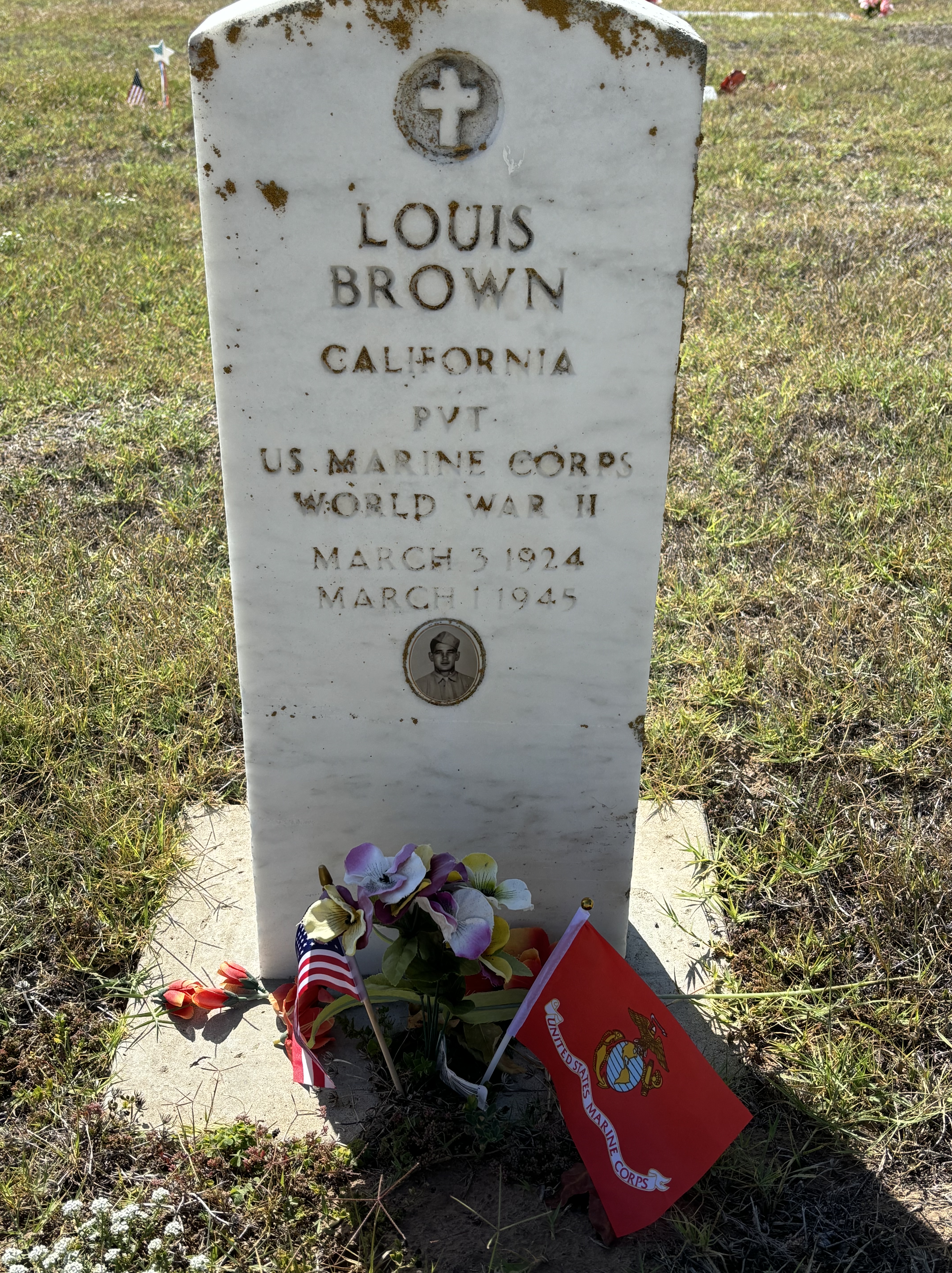
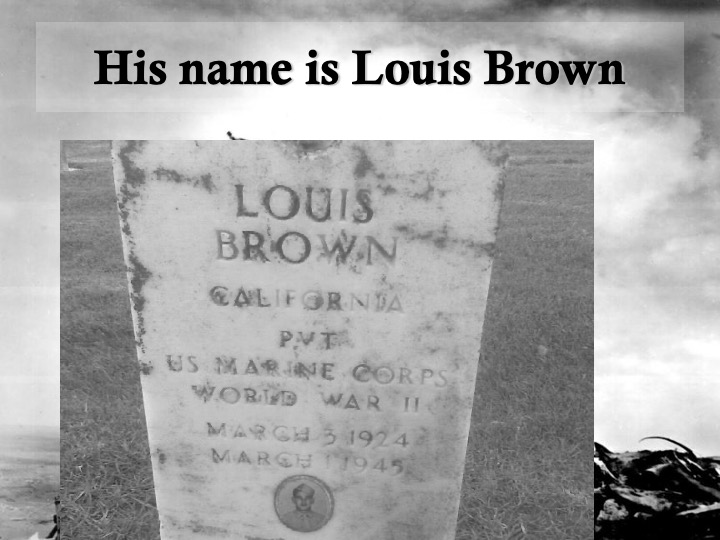
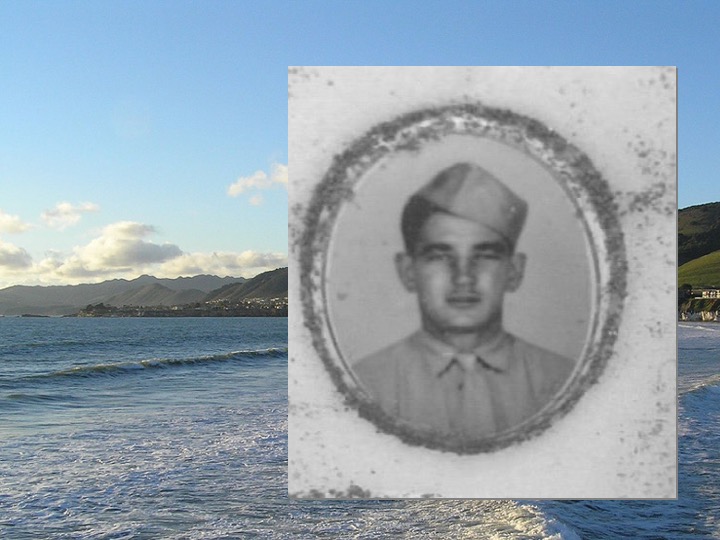
Louis Brown, killed on the beach at Saipan in 1942, finally came home to his mother in 2017.
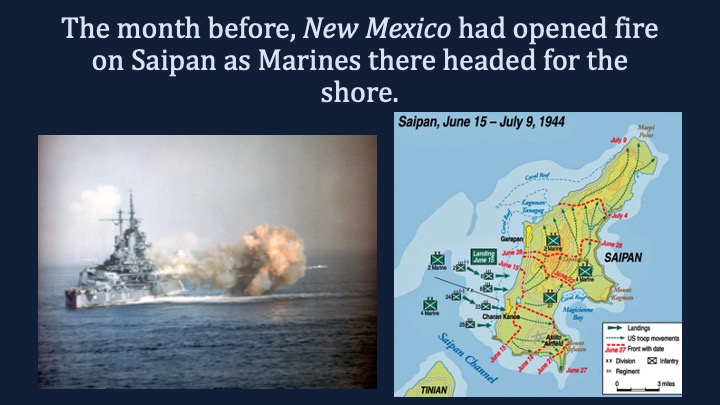
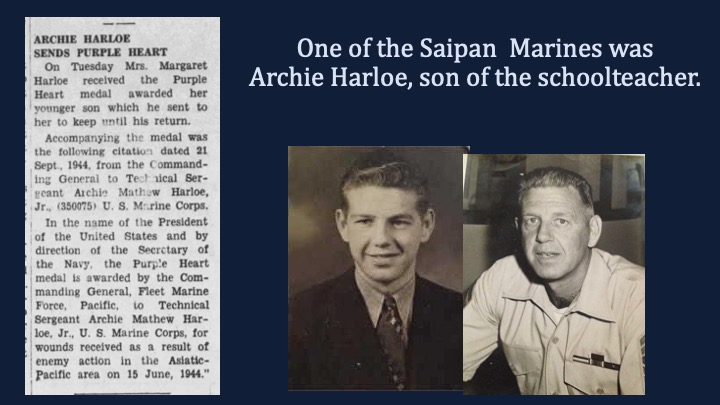
Archie Harloe, son of the schoolteacher, was part of the invasion Saipan. He survived, but Marines watched, horrified, as islanders leaped to their deaths from ocean cliffs. They’d been told the Americans would torture them.
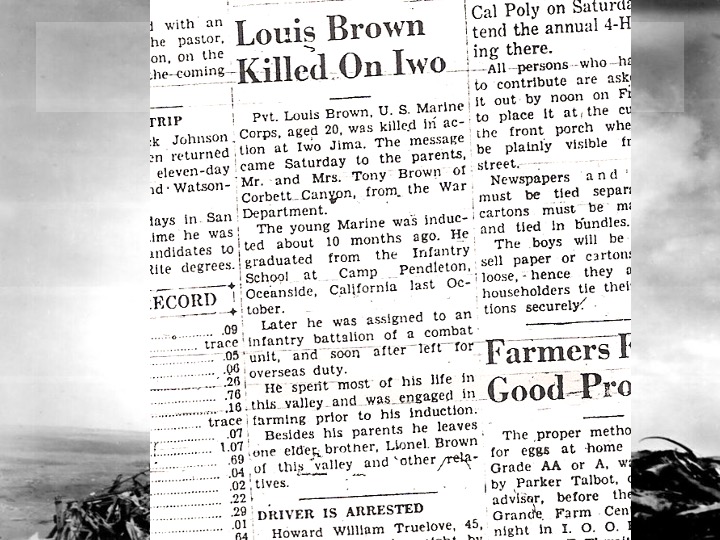
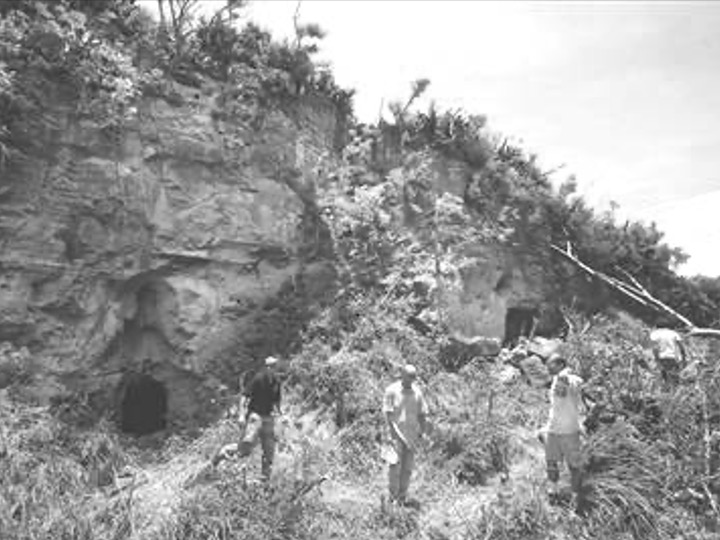
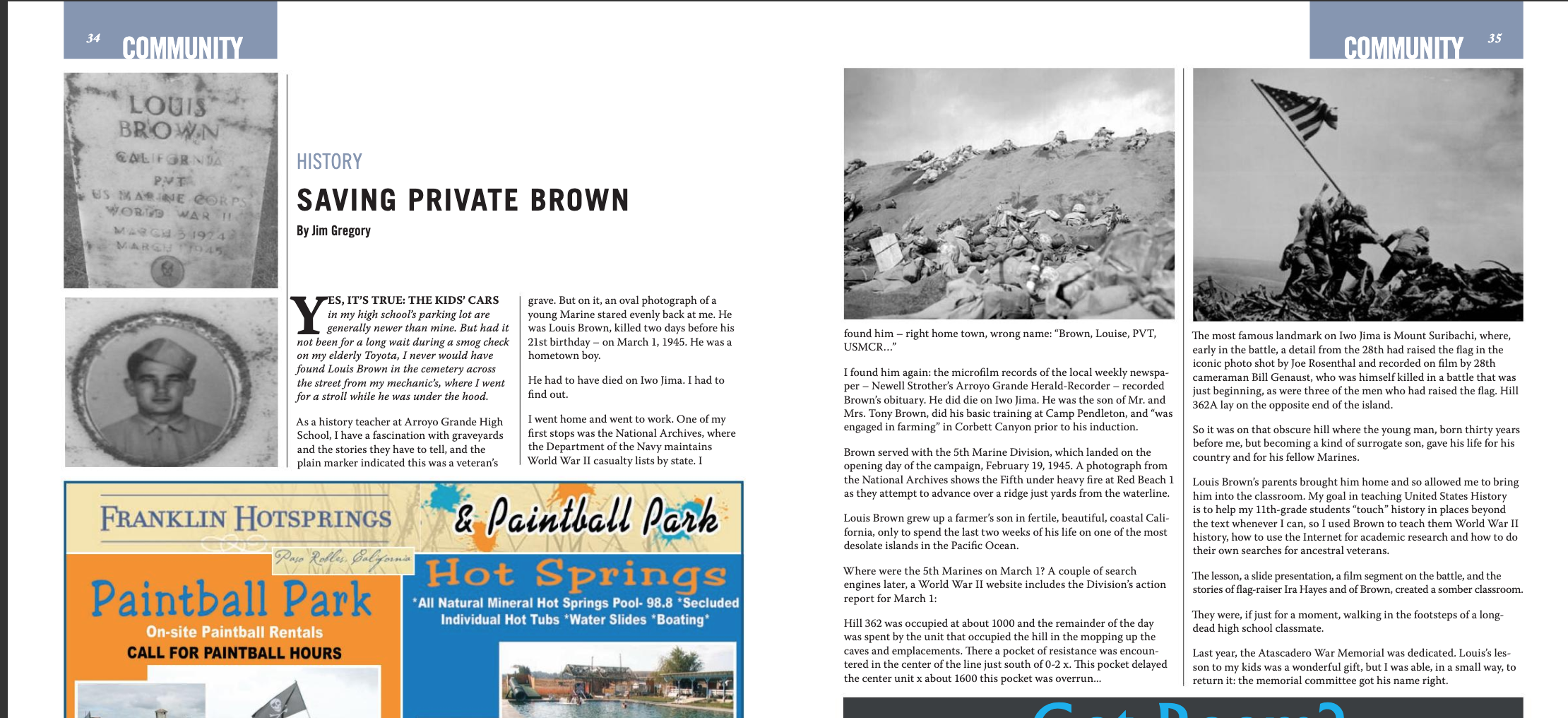
Louis Brown, the son of a Corbett Canyon farmer, an Azorean immigrant, stepped on a Japanese on Iwo Jima. Cause of death: “Burns, entire body.” This is the young man who, on finding his grave, started me writing books. What I owe him is beyond measure.
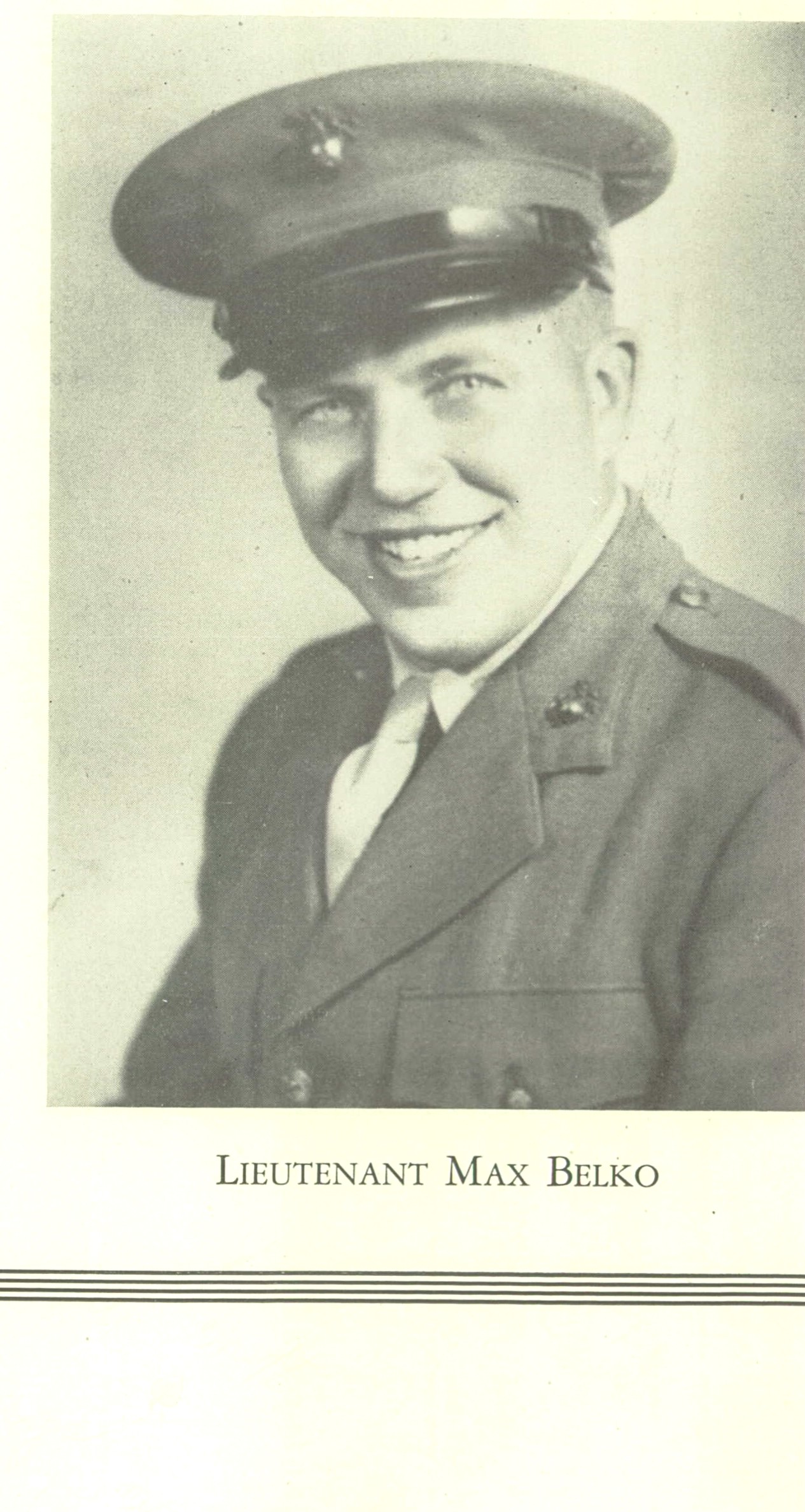
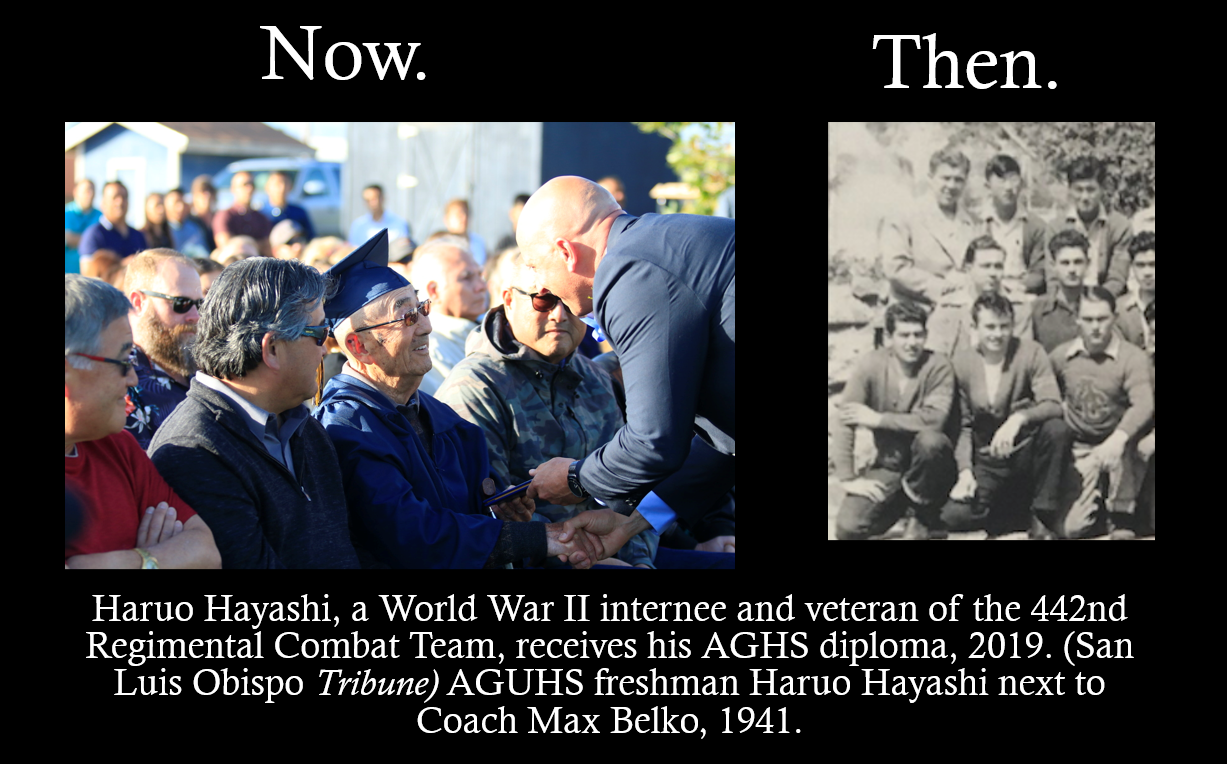
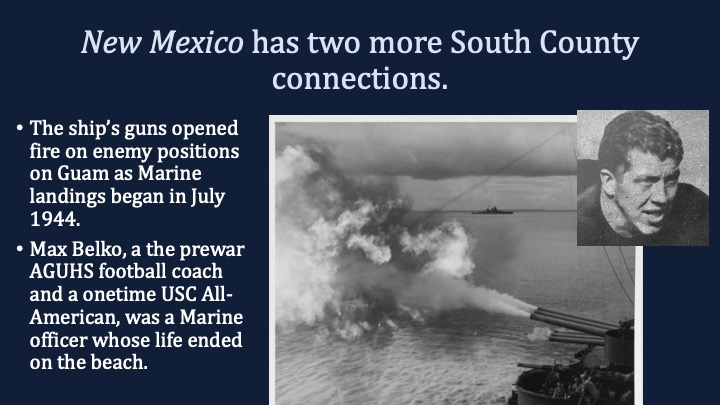
Lt. Max Belko, a USC All-American football player, became a P.E. teacher and football/basketball coach at Arroyo Grande Union High School–his kids would’ve played in today’s Paulding Gym. He was killed on the beach in the invasion of Guam.
John Loomis, AGUHS ’44, joined the Marines so he could get into the war before it ended. He did, at Okinawa, one of the costliest battles in the Pacific. He survived to raise the daughters and the son who would be among my closest friends growing up.
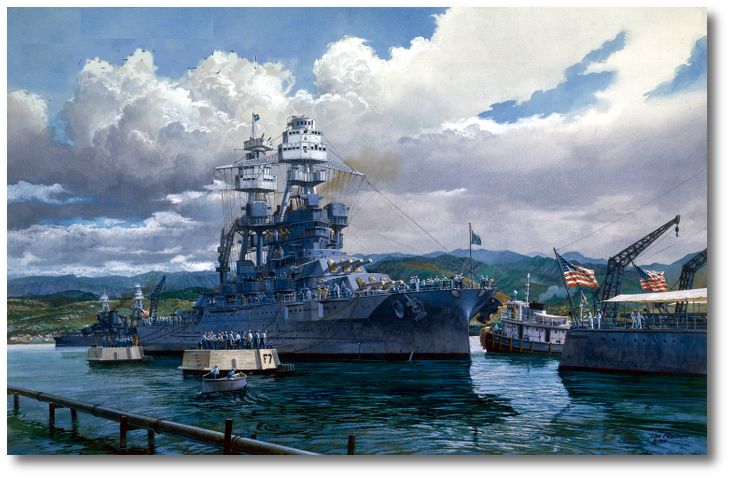
Arizona’s Last Mooring, Friday, December 5, 1941, by Tom Freeman
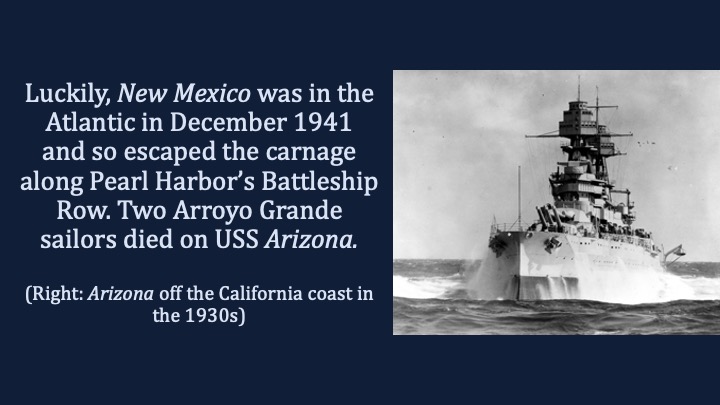
This beautiful and poignant painting is by the late Tom Freeman. I’ve used it several times, since I write so much about World War II, including the two Arroyo Grande sailors lost when Arizona blew up on Sunday, December 7. 1941. I loved teaching United States History, and this ship is so evocative of one of the sharpest turning points in our past.
Monday’s turning point—the Inauguration—is so sharp that it could, metaphorically at least, break our necks.
This might well be our last weekend as a free people. We might have thought this so on December 8, when vast Japanese fleets and air armadas were rumored off San Francisco, when Germany, who declared war the next day, seemed so invincible. It took us nearly four years to make ourselves free again.
I wonder if we’ve lost the will to be free—it’s hard work, true— in 2025. Now we want to be the tough guys the Japanese thought themselves to be in 1941. They wanted a free hand in China. We want Greenland and the Canal and maybe even Canada. We are ambitious, aren’t we? And both the Japanese and the Germans, two nations in the grip of racism, wanted to punish anyone whom they considered their inferiors. Now we want to be the punishers.
My fears about us, today, were heightened by brief glimpses—about all I could take–of this week’s Senate confirmation hearings. They included an alcoholic misogynist who will preside over Defense, a Wall Street player who believes in the magic of tariffs—someone needs to explain the Great Depression to this man— and in the wisdom of tax cuts for the wealthiest Americans, a state attorney general, a 2020 election denier, who thinks Justice has been “weaponized,” and, today featured the DHS-Secretary designate, who dragged her hunting dog into a gravel pit and shot her dead.
What I saw was appalling. All of them were evasive when they weren’t being hyperbolic. All of them lied about the policies they would enforce or choose not to enforce, just as three Supreme Court nominees lied. All of them had kissed the generous rear (wisely, from the great distance that separates D.C. from Mar-a-Lago) of the man who’d nominated them. They were beholden to him, afraid of him. He was the audience they were playing to.
Of course, they were all Republicans. But these are all Republicans, too. From “Truth Social” Wednesday, as quoted by NPR:
“As of today, the incoming Trump Administration has hired over 1,000 people for The United States Government,” Trump’s post reads. “They are outstanding in every way, and you will see the fruits of their labor over the coming years. We will MAKE AMERICA GREAT AGAIN, and it will happen very quickly!
“In order to save time, money, and effort, it would be helpful if you would not send, or recommend to us, people who worked with, or are endorsed by, Americans for No Prosperity (headed by Charles Koch), ‘Dumb as a Rock’ John Bolton, ‘Birdbrain’ Nikki Haley, Mike Pence, disloyal Warmongers Dick Cheney, and his Psycho daughter, Liz, Mitt Romney, Paul Ryan, General(?) Mark Milley, James Mattis, Mark Yesper, or any of the other people suffering from Trump Derangement Syndrome, more commonly known as TDS. Thank you for your attention to this matter!”and his Psycho daughter, Liz.
These people—not to mention scores of Democrats, are among the Enemy Within. The Democrats might find themselves in prison if Trump, the man Scots refer to as the “Cheetoh-Faced Shitgibbon”—can move fast enough before the midterms.
That’s what he wants to do, with his seventh-grade command of his emotions, his language, his nation’s history (he did not know who won World War I; a speech he gave on Gettysburg reads like seventh-grade crib notes) and of his curious middle school/Mean Girls definition of “treason,” the crime he asserts that was committed by Liz Cheney, Adam Schiff and Gen. Mark Milley.
The Americans who voted for the Shitgibbon, who will, of course, pay a terrible price, given his designs on Medicare, Medicaid, Social Security, on the prices they’ll pay, inflated by his tariffs, on the fecklessness of industrialists, enriched by the Trumpian tax cuts and freed to visit on their employees the kind of cruelty depicted by Upton Sinclair, even by Charles Dickens.
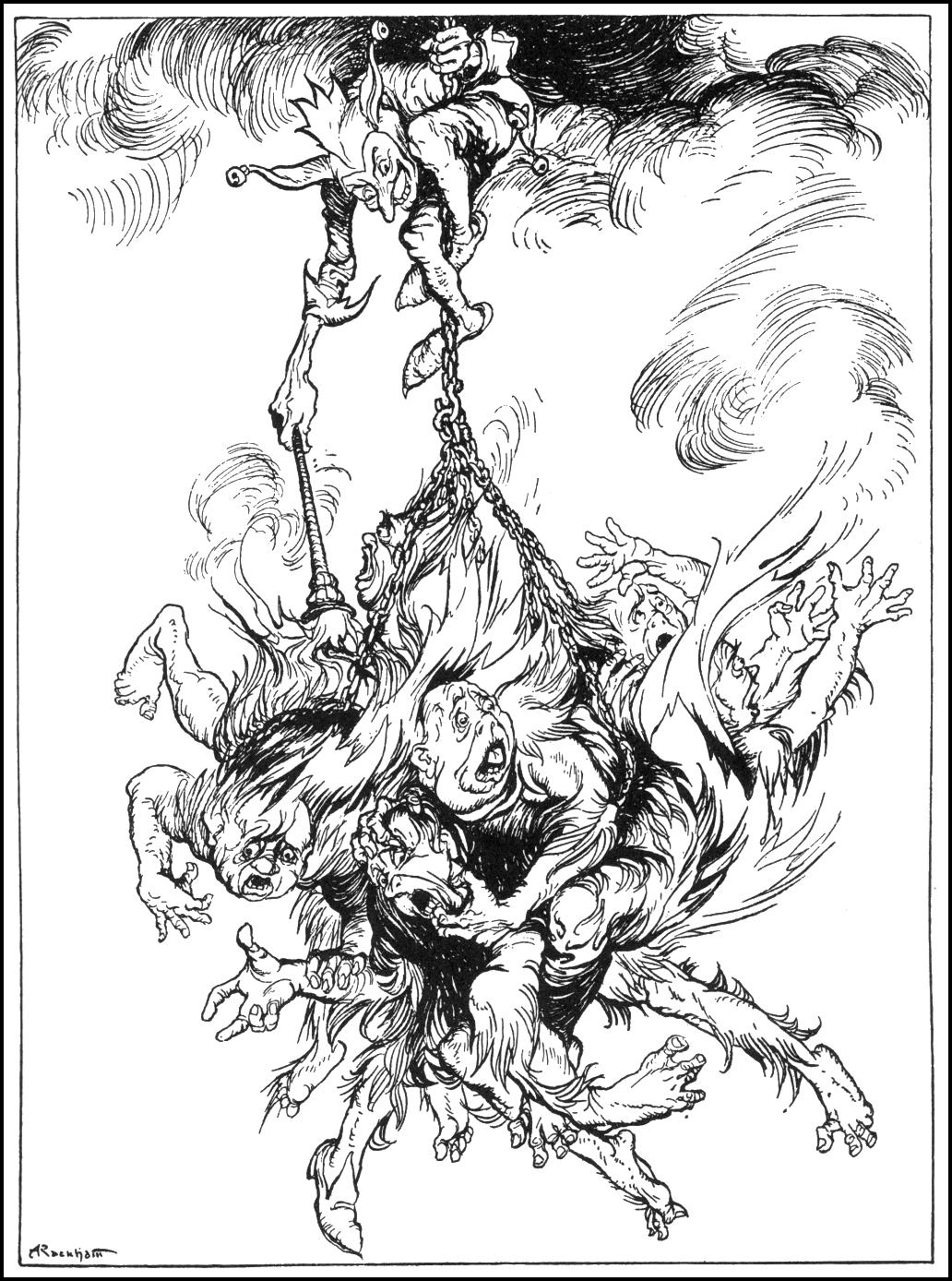
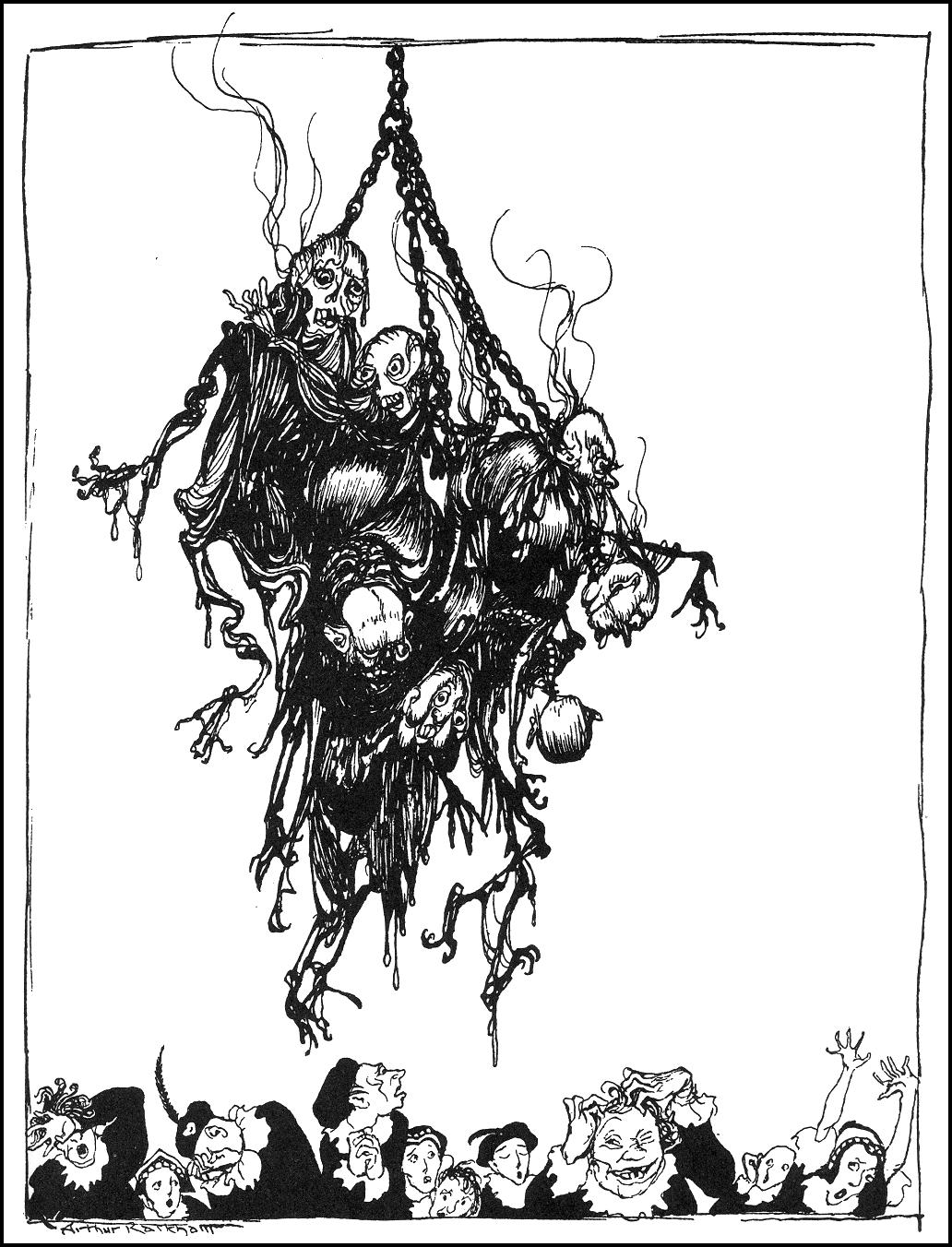
The testifiers remind me of the ghastly Edgar Allan Poe story, “Hop-Frog; Or, the Eight Chained Ourang-Outangs.” A despotic ruler throws a costume party. His high-born guests, like the president-elect’s oligarchs and nominees, think themselves so far above the common folk that they make fun of them. They are especially merciless toward the king’s court jester.
But it’s the court jester who proposes the costume party. All agree that it’s a splendid idea.
The jester also provides the costumes—the orangutan costumes—tight-fitting and doused in alcohol. Once the party’s underway, he sets his tormenters alight.
This is easily one of Poe’s most dismal stories, and as you may have noted, he is not one of our more cheerful writers. I don’t advocate this fate for the potential Cabinet officers who are testifying this week. But if they are someday consumed by fire, the agent that starts it will be, of course, hairspray.
Their boss, disappointed, will turn on them, as he has on nearly everyone else who has served him.
Or, if Justice and the FBI and his other Cabinet officers survive Trump, there is still a chance, a slight one, given recent history, of their jail time sometime after 2028.
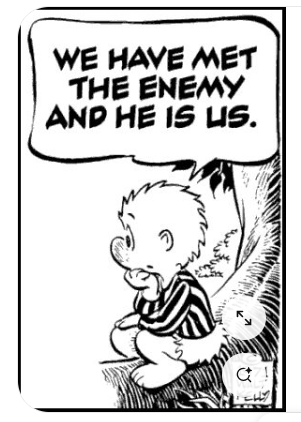
As for the rest of us, I’m reminded of the late cartoonist/satirist Walt Kelly, who created a swamp inherited by a variety of creatures, including Pogo the Possum. Kelly was one of the few—others were CBS newsman Edward R. Murrow and The Crucible’s Arthur Miller—to finally come around and confront Sen. Joseph McCarthy and his communist witch hunts. This might be the wisest remark Pogo ever uttered.
It fits seventy years after the Army-McCarthy hearings that finally brought Joseph McCarthy down.
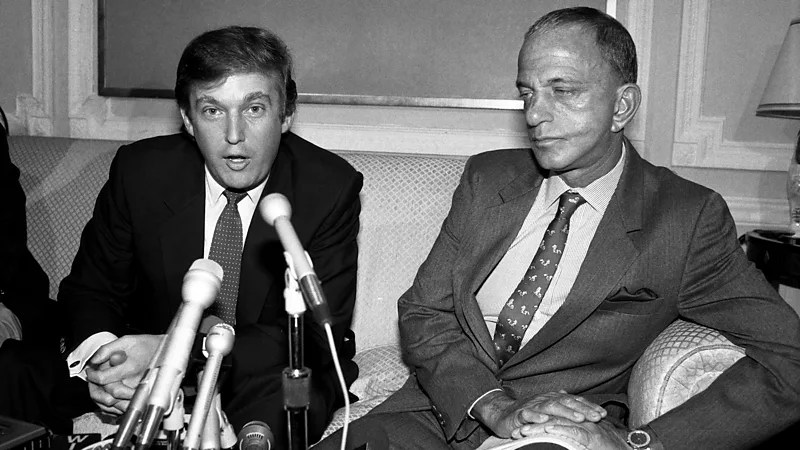
McCarthy’s chief counsel, of course, was Roy Cohn, one of President-elect Trump’s mentors.
The turning point came in a confrontation between United States Army counsel Joseph Welch and Sen. McCarthy. It was an indelible moment, captured live on television, then in its infancy.
I do not know if we can find another Joseph Welch. But, in just my family’s humble past, we found a sailor and a soldier who gave their lives for us, in December 1941 and January 1945, respectively. We have Irish immigrants who worked in Pennsylvania oilfields, homesteaded on the Minnesota prairie, grew oranges in Southern California. We have a woman—my paternal grandmother—who was one of the first delegates to a national political convention, in Madison Square Garden in 1924. We have a woman—my maternal grandmother—who grew up in a rough gold-mining town and learned to cook from Chinese immigrants. My paternal grandfather was so devoted to education on the Ozark Plateau that they dismissed classes in Texas County, Missouri, on the day of his funeral in 1933. My maternal grandfather was a cop in a tough oil-town, Taft, who once laid out three roughnecks, cold as tinned sardines, in an alleyway after they’d jumped him. He helped a lost little boy, terrified, find his way home. We have a railroad engineer who drove the Great Northern Empire Builder until the day he died at the controls. We have an Irish immigrant nun who devoted her life to orphans in the Albany orphanage that was once the home of Hamilton’s Schuyler sisters.
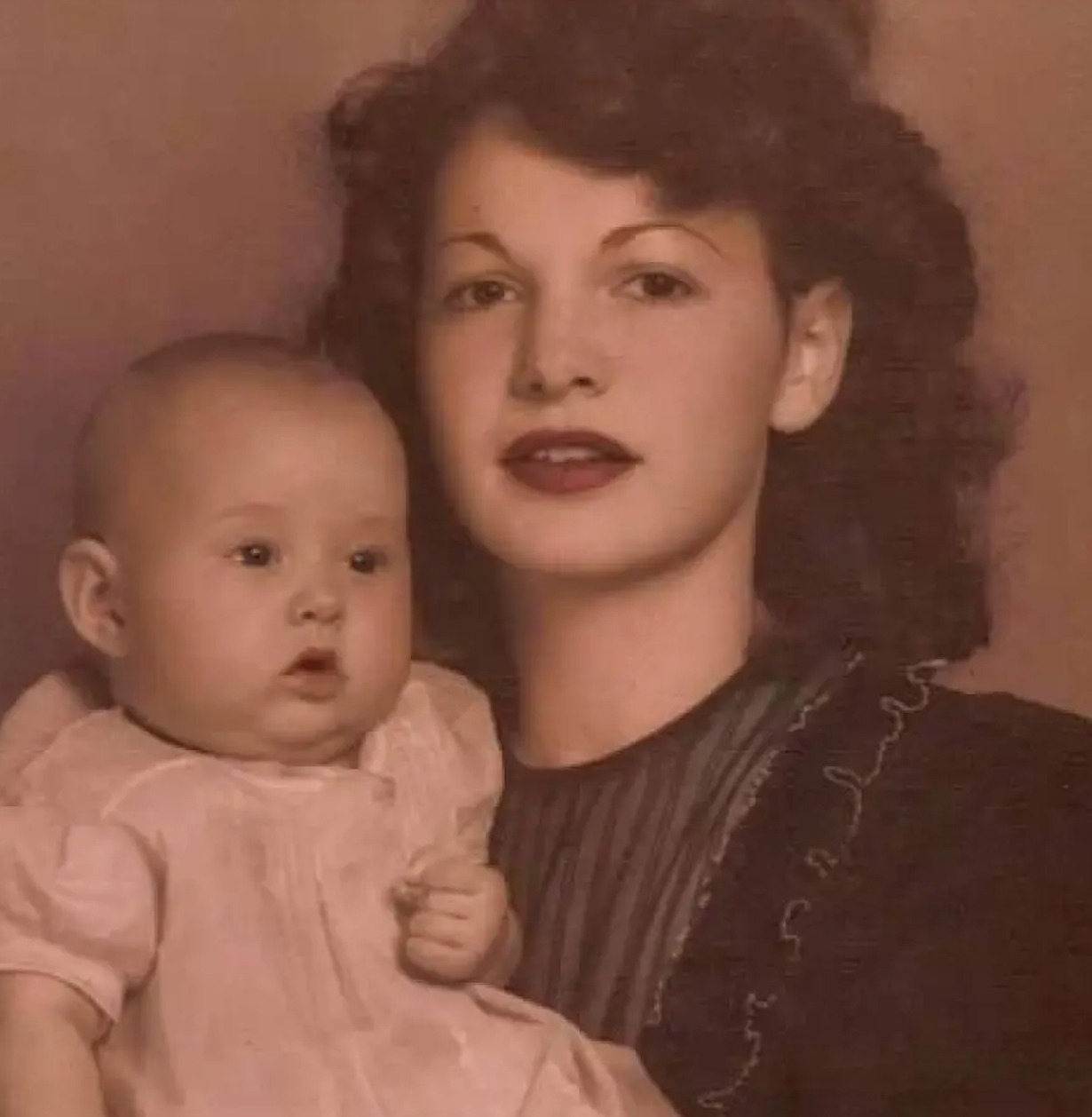
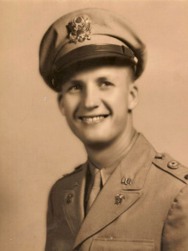
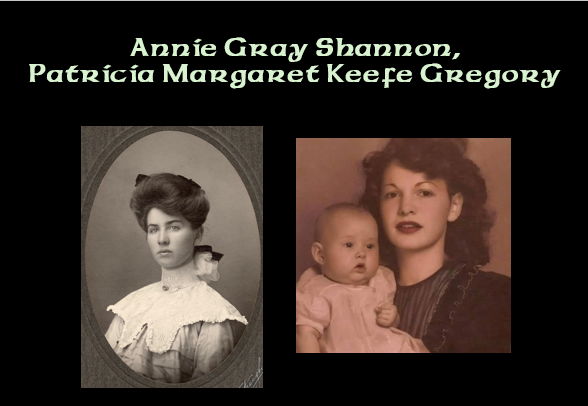
And, of course, we have my folks, in the photos just above, who taught me many things, including the deep love I have for my country, including and despite its faults. They made me, without knowing it, a history teacher.
There’s just the faintest chance that in this immense reach for power that begins Monday, Donald John Trump will soon find himself outnumbered by people of character. Nearly all of them, including my family members, are dead now. They are ghosts. Maybe Trump, if he’s lucky, will suffer a Dickensian fate, like Scrooge’s redemption.
Or maybe, finally, in the depth of his cruelty, Poe will catch up with him instead.
Defense Secretary nominee Pete Hegseth. All hat, no cattle?
So says Defense Secretary nominee Pete Hegseth, who went on to say that “unity is our strength.” I fail to see the contradiction that he does.
Women’s Airforce Service Pilot Hazel Ying Lee, killed in the line of duty, 1944.
Baron Friedrich von Steuben, who played a major role in training Washington’s Continental Army, was gay.
Sen. Daniel Inouye, 442nd Regimental Combat Team, Medal of Honor.
Navy veteran Tammie Jo Shults, who, in 2018, brought her Southwest Airlines passenger jet safely in after an engine had exploded in mid-flight.
Henry Johnson, 369th Infantry, “The Harlem Hellfighters.” When Johnson and a comrade were attacked by twelve Germans in May 1918, he defended his friend in hand-to-hand combat, killing or wounding several Germans with a bolo knife. He was awarded a Croix de Guerre with a Gold Palm, the highest French decoration for bravery.
Lt. Col. Bree Fram is an astronautical engineer with the U.S. Space Force. She is transgender.
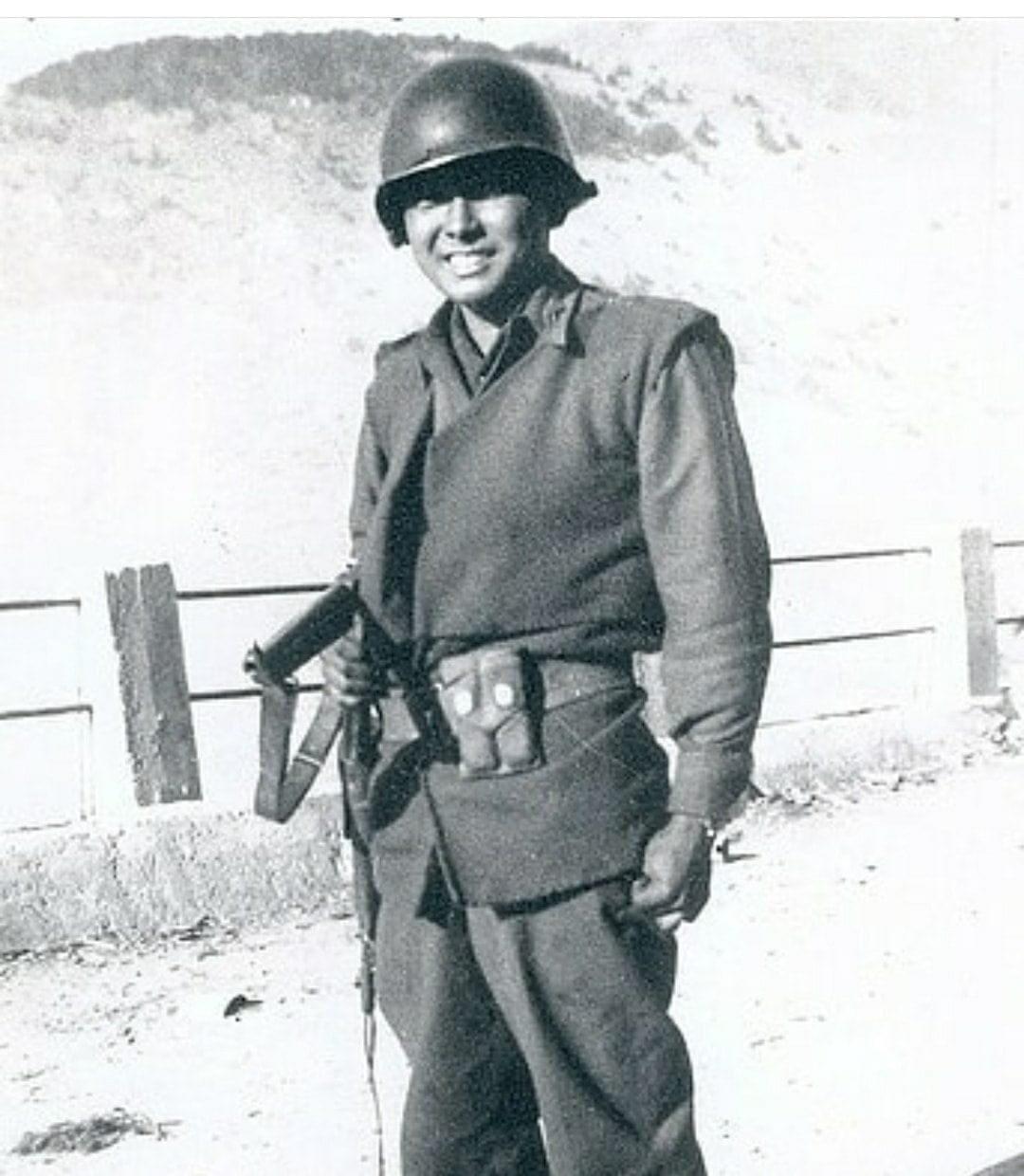
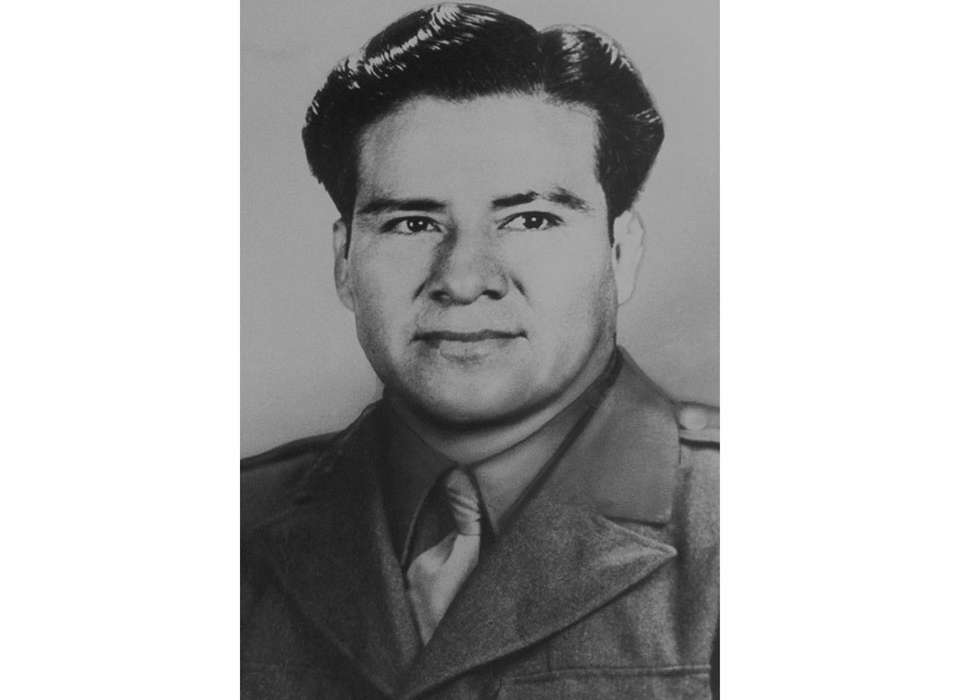
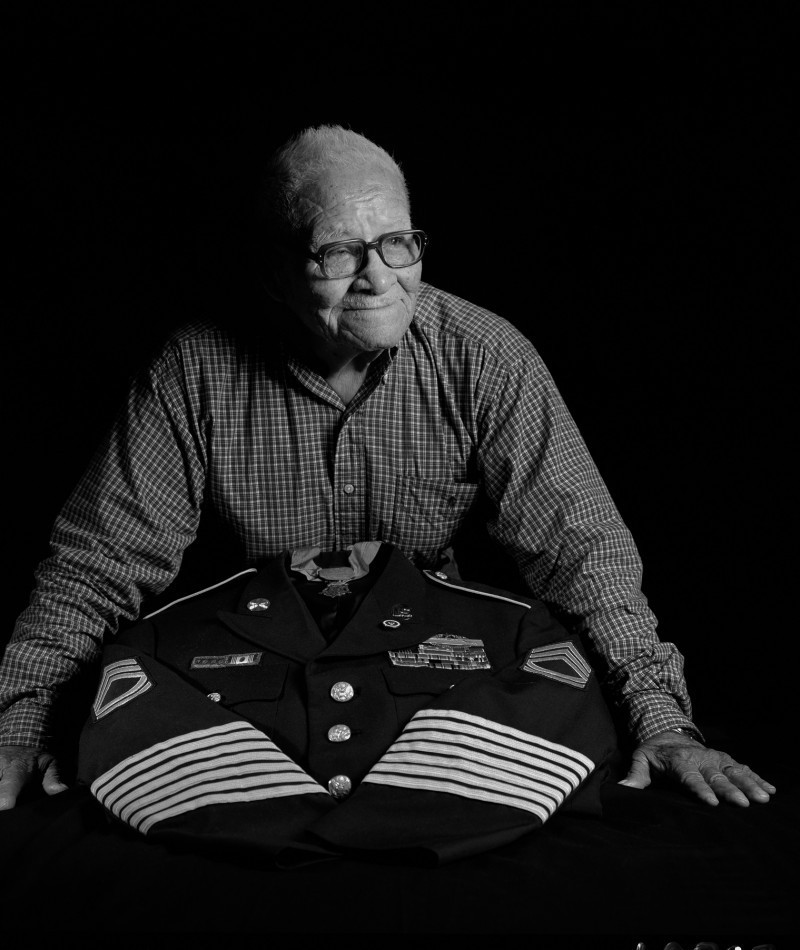
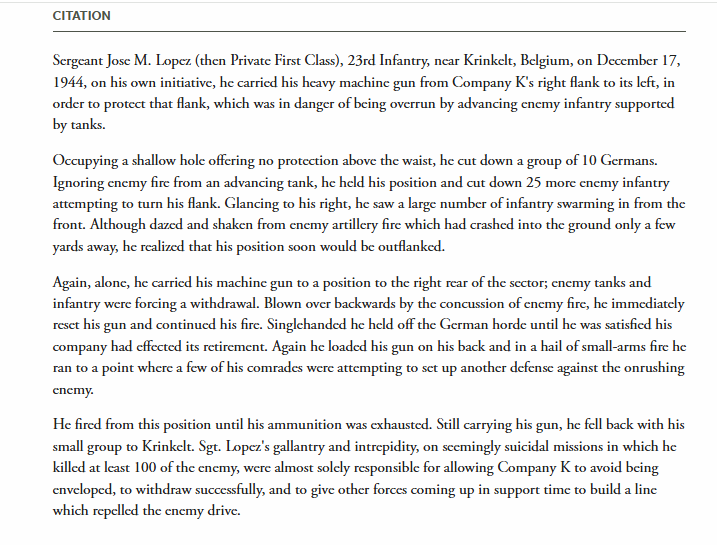
Sgt. Jose Mendoza Lopez was born in Mexico. Below is his Medal of Honor citation.
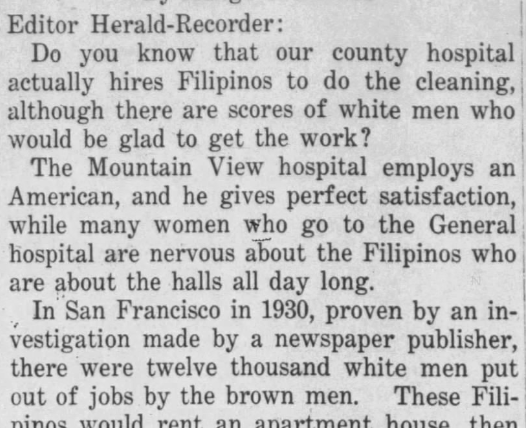
A view of Filipino immigrants from the Arroyo Grande Herald-Recorder, March 1934:
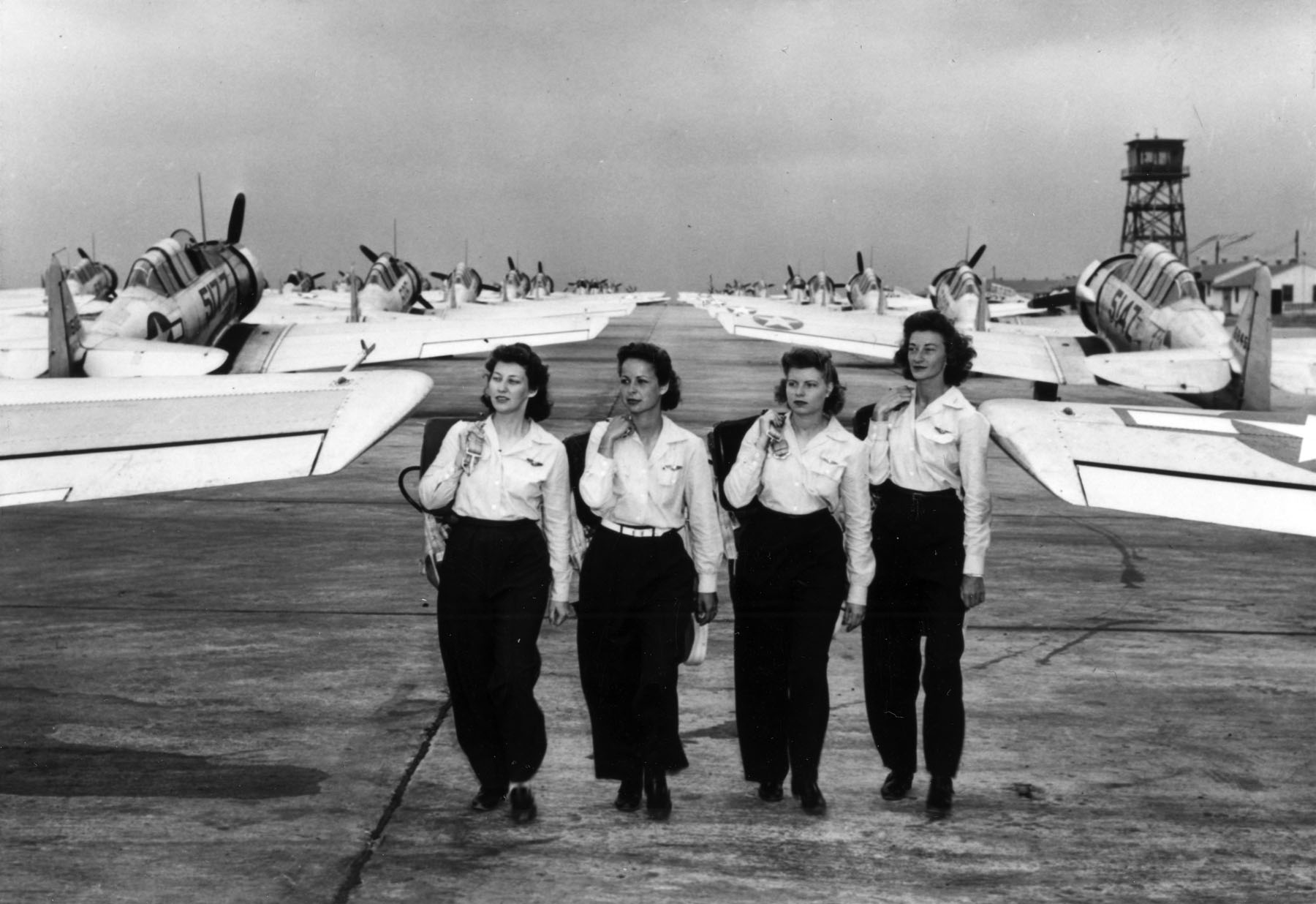
WASPs walk a flightline of AT-6 Texans, World War II
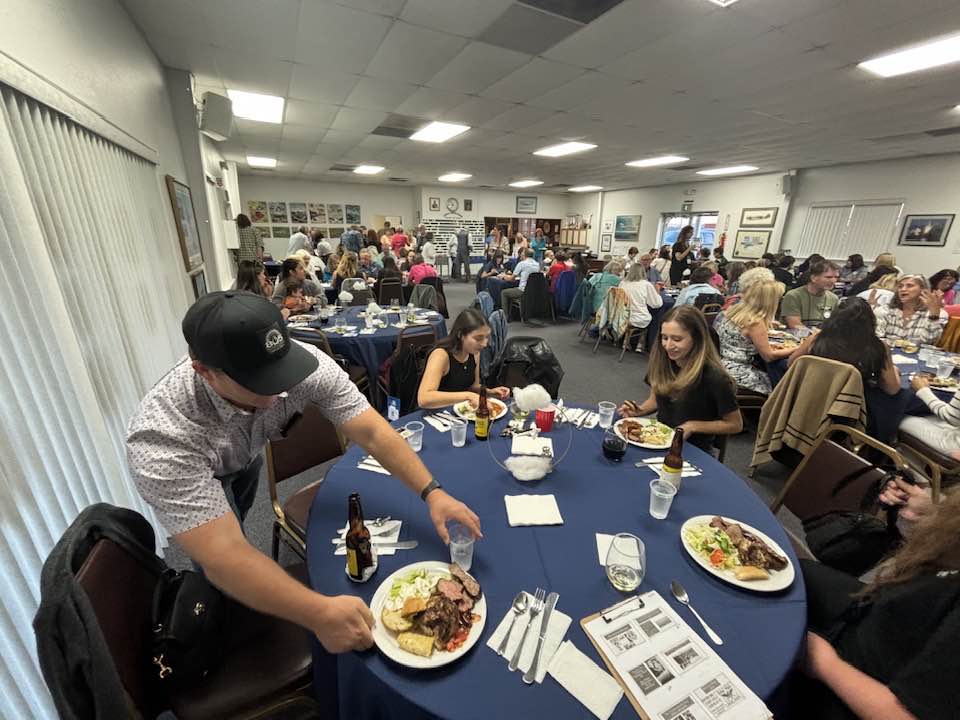
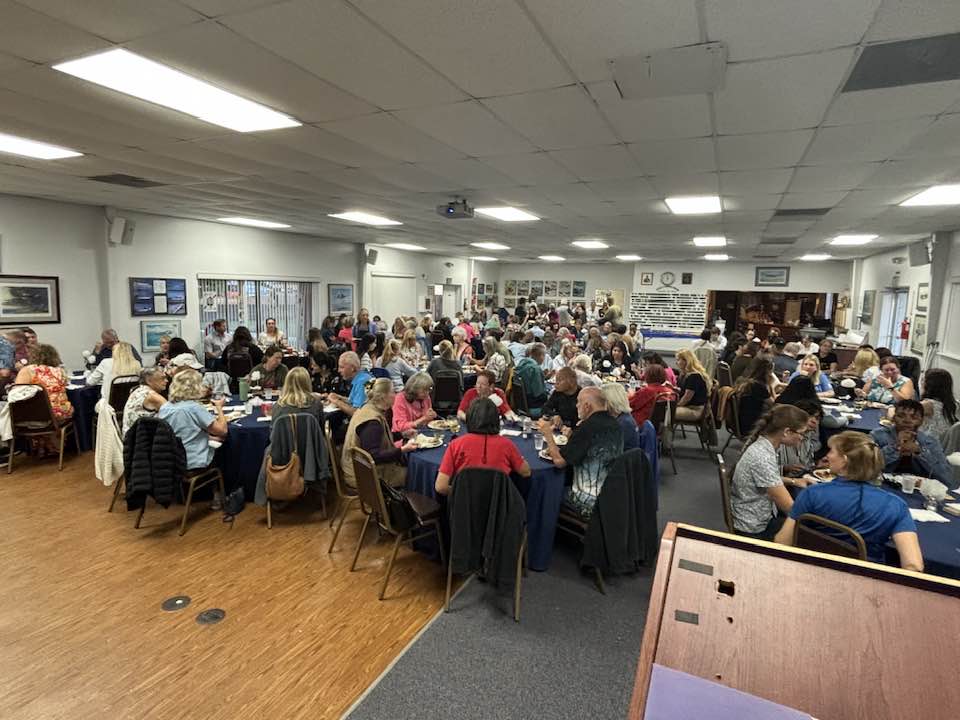
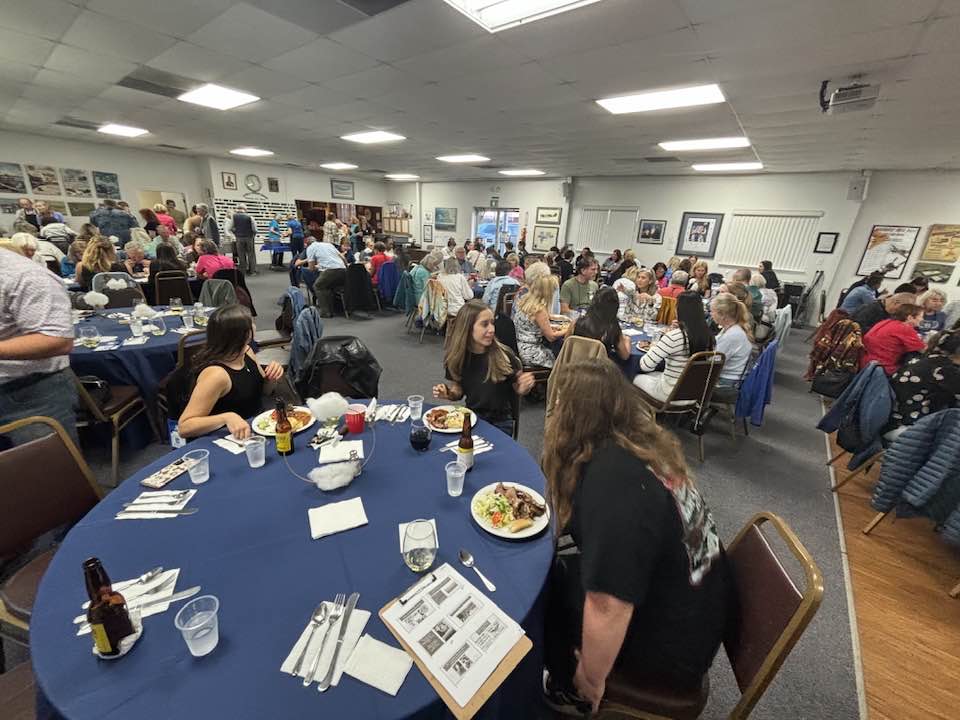
I was honored to speak to the Southwest Section of the 99s, the women pilots’ organization, at the Estrella Warbirds Museum, another favorite, last night. I have to admit that it was a thrill. For one, it was a packed house. For another, I was happy to see that the pilots were of all ages, from their early twenties to women who have been 99s for over 40 years.
I talked about the history of local aviation, including women pilots, and then about the Women’s Airforce Service Pilots (WASPs).
Over 1,000 WASPs augmented the military flying force by ferrying combat airplanes from factory to field, test-flying repaired trainers, towing targets and other tasks. Thirty-eight died for their country, but since they were technically “civilian contractors,” the Army refused to pay for their funeral expenses. They were summarily fired in December 1944.
It took thirty-two years for Congress to finally recognize them for what they really were: Military veterans of World War II.
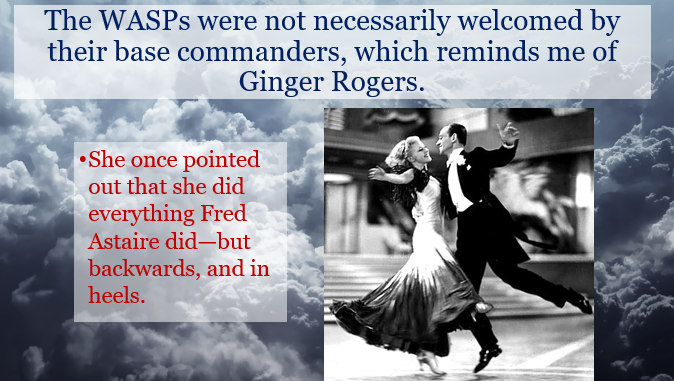
In talking about these incredible women last night, I’ve rarely had a livelier audience. They cheered when the name of Elizabeth Dinan, a legendary local pilot and flight instructor, appeared, and when the image of Blue Angel Amanda Miller appeared. (Elizabeth’s P-40 Warhawk earrings endeared her to me, immediately.) They liked this slide, and they laughed, a little ruefully, at its message. (The cadets in training did not share their commanders’ view. Many came to the WASPs for advice: “What should I do if my plane….?”)
The 99s were so much fun for me. Afterward, folks came up to me to talks awhile. A man suggested I research “Lucky” Penny, the Air Force fighter pilot who was ordered to scramble, unarmed, on 9/11. She decided that if it came to that, she would ram one of the hijacked jets. I met another local woman, now retired, who became a DC-10 pilot. I was so thrilled that I almost started hopping up and down, like I did the time the B-17 “Sentimental Journey” passed over AGHS and interrupted me, happily, in the middle of a lecture on the Thirty Years War. I ran outside my classroom and began hopping up and down—“A B-17! A B-17!”— with my students staring at me. They looked a little worried.
What the 99s did was validate the interest I discovered in teaching women’s history as part of the AP Euro course at AGHS. It’s part of a larger topic, social history that, along with military history, is important to me.
Thank you, San Luis Obispo 99s, for your invitation to speak.
But I post so much, espeically on Facebook, about history stuff that I hate the idea of me sounding like I am bragging. My Irish-American mother had, as one of her central teachings, that there was no sin quite so terrible as the sin of Pride.
Here’s the deal, Mom. I am now seventy-two, and I have enough stories inside me for two lifetimes. Each story I write takes days of research. Each of the little books I’ve written represent a year of work.
If I don’t get the stories I have left out, they will be lost.
Mom died when I was seventeen, but, as I once told my high school students, she was alive in me every day I taught them. She was right there beside me. Her passion was social justice.
It was Dad’s voice alive in me in the stories I told the teens I loved to teach, at both at Mission Prep and then at my Alma Mater, AGHS, and there’s no better way to teach history than to tell stories. My father was a mesmerizing storyteller. He was right there beside me, too.
Me, being emphatic, as usual, Mission Prep.
So the little stories I post on Facebook—and the marvelous, evocative stories told by my friend Michael Shannon, who grew up near us in the Upper Arroyo Grande Valley–are begging to come out. Michael’s stories a lyrical and vivid and, given his four generations in Arroyo Grande, they have roots that make them even more authentic and timeless.
As soon as Michael and I think of one story, another one surfaces. I was asked recently to give five or six examples of acts of kindness, selflessness or sacrifice from Arroyo Grandeans from our past.
I wrote twelve.
Seven more are waiting to be written.
Michael could double those.
Both of us are in our seventies. Neither of us, I think, writes to show ourselves off. We write, instead, to show off people from our hometown’s past whose lives were marked by grace, or generosity, by sacrifice or by courage.
Most of all, Michael and I are drawn to stories about people whose lives were marked by kindness.
These people are our heroes.
I’ve written, too, about our town’s failures–the mob that descended on Chinatown in 1886 and forced the residents to flee, the double lynching a few weeks later, the ugly bigotry directed at Filipino immigrants, the few locals, motivated by envy directed toward the Japanese immigrants who’d become so successful, who applauded Executive Order 9066.
The fact remains that the heroes far, far outnumber the cowards from our past.
They have to be written about. They have to be remembered. In however many years I have left to me, I want to be part of remembering them.
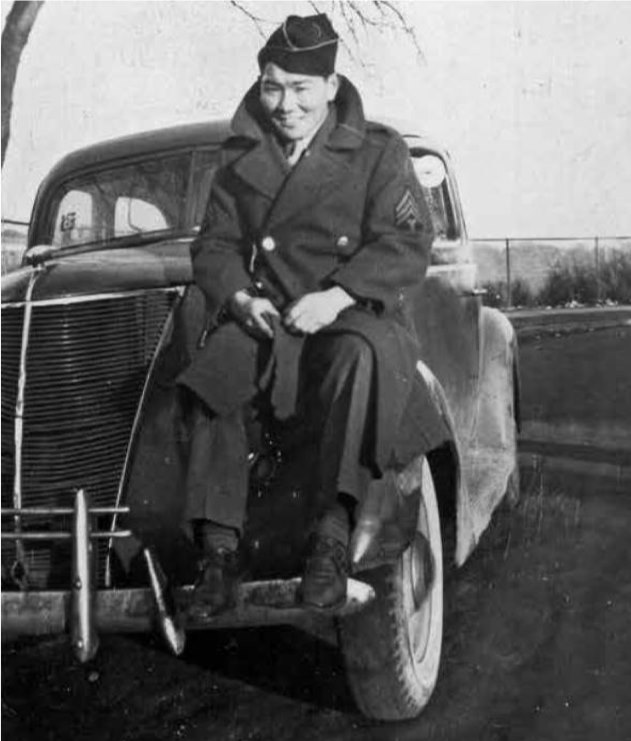
Sgt. George Nakamura
Here is one of my favorite stories; I’ve told it many times before, but for some of you, this might be the first time.
AGUHS grad and Army Intelligence Officer George Nakamura, posing on the car (note the bald wartime tires) when he was studying his family’s Japanese in, of all places, Minnesota. Some of his instructors would’ve been intelligence officers, too. Many of them were women.
Nakamura was part of a team attached to–and meant to spy on–Mao Zedong’s guerrillas as they fought the Japanese in the mountains of Ya’Nan Province.
Nakamura disguised himself as a Chinese peasant to go behind Japanese lines to rescue a downed American flier. He was twenty years old.
When he turned twenty-one, the former sports editor of the AGUHS “Hi-Chatter” had so charmed his hosts that they threw him a birthday party. Somebody had a record player.
So the female fighters took turns dancing with the former editor of the AGUHS “Hi-Chatter.”
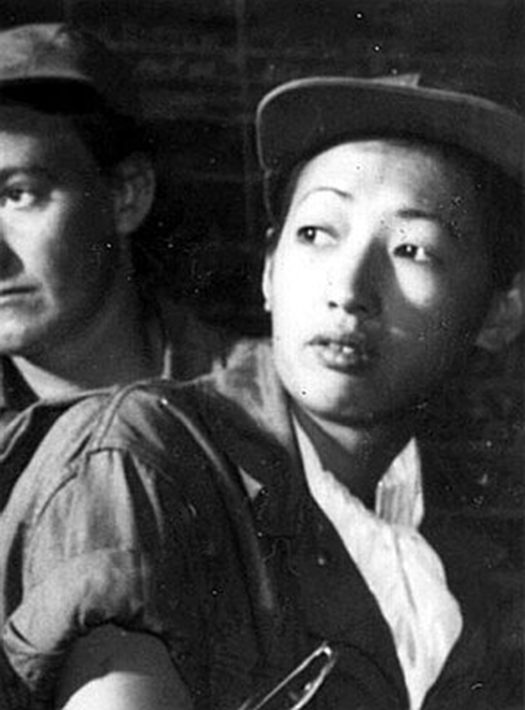
One of them was a famous prewar film actress, Jiang Qing.
She was the boss’s wife. The woman who danced with Nakamura would be far more famous by her married name: She was Madame Mao.
That’s a hell of a story. There are thousands more from this little town. There are so many stories; there is not nearly enough time.
Please forgive this reflection, but this is how I think, and this is how I taught history.
* * *
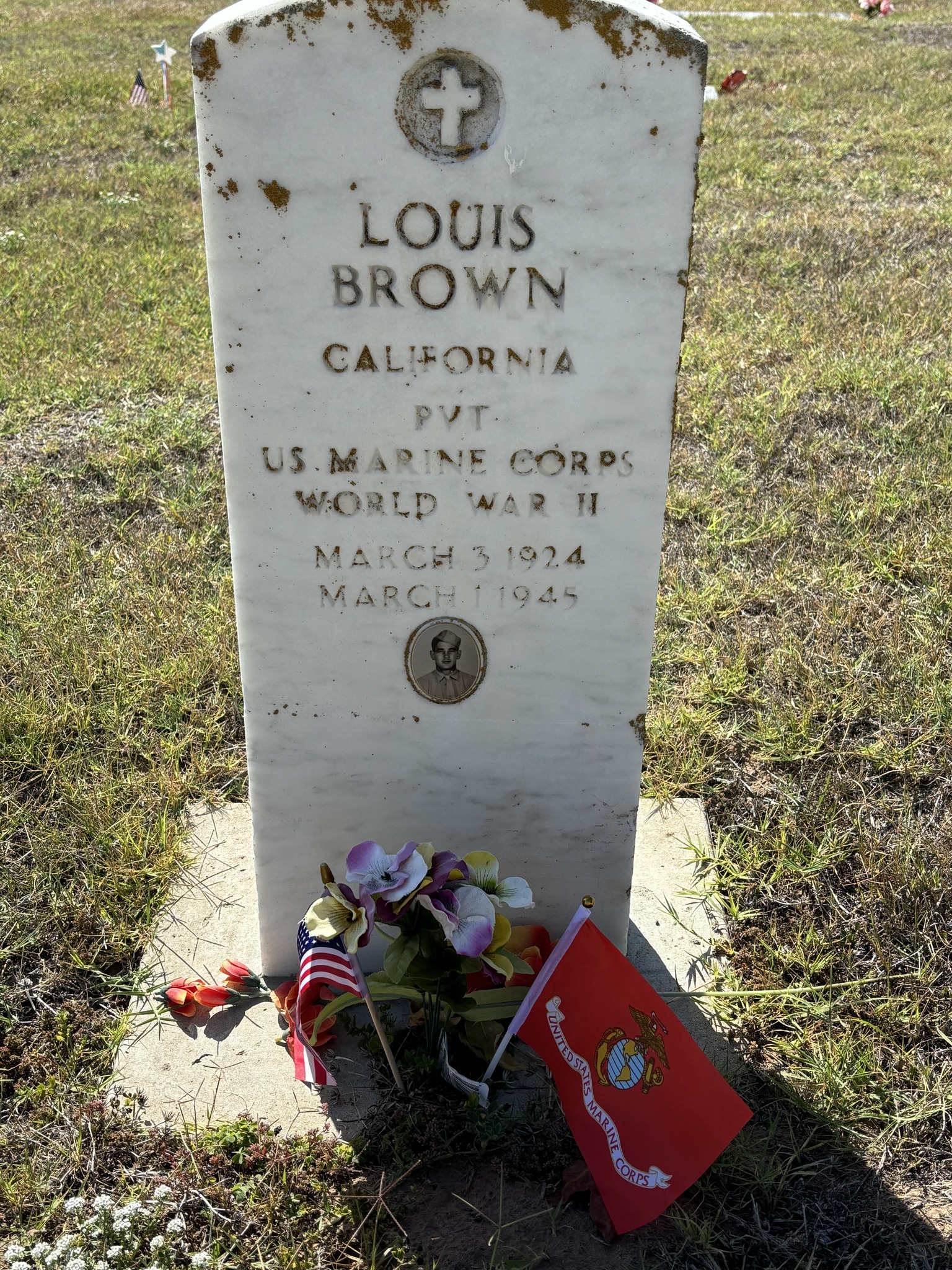
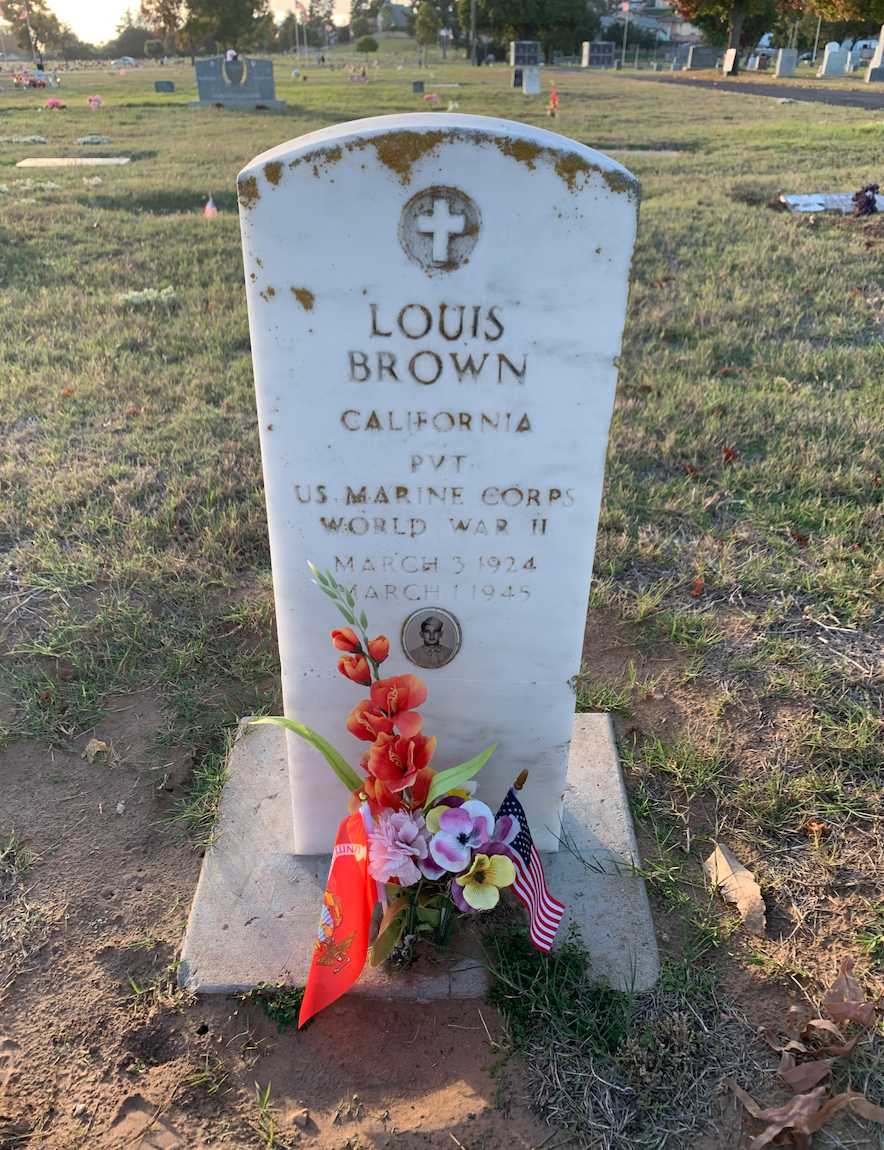
Pvt. Brown’s flags were threadbare–the American flag was gone–so I needed to take care of business.
On the way to his grave, in he IDES section of our cemetery, a big Dodge pickup was parked in the drive-path, the driver’s side door open. . Next to it was an older woman, a term, at seventy-two, that I use heedlessly, kneeling in front of a grave that was almost knee deep in flowers, surmounted by a happy pinwheel.
I don’t know why I say things like this, but I do.
“That is beautiful!” I told the lady.
She smiled and then her shoulders sagged. “My daughter. She’s been gone twenty-seven years.”
“I am so sorry.” The obligatory and stupid response. “I’m going to visit a Marine killed on Iwo Jima.” I had to repeat it. We’re both a little hard of hearing.
She put her hand over her mouth for a moment. “He died for his country.”
“Yes, he did, and he helped me to write a book about Arroyo Grande and World War II. He was the inspiration. I owe him so much.”
She liked that, I think, but we were still standing by her daughter’s grave, in the sun, and it was a little warm.
I don’t know why I do this, but I do. I had Private Brown’s flags in my left hand, so I reached out to her with my right. We held hands for a moment. I didn’t squeeze hers too tightly; she was wearing rings, one of them I am sure a wedding band.
“God bless you,” I said. I do know why I said this. Yes, I do. That’s the way my mother raised me.
After I’d tended to “my Marine”–he got fresh flags (needs new flowers), I ran my fingers over the smooth glass that covers the oval portrait on his tombstone, used the tombstone to get my my 72-year-old feet again, and gave its rough top a few pats with the palm of my hand. Then I began to walk back to my car.
The woman was still there, but this time, in the shade, thank goodness. She was kneeling at another grave, like her daughter’s, rich with flowers.
I didn’t bother her this time. I left her alone there, in the shade. She was by now standing but looking intently at the tombstone.
The past, Faulkner famously wrote, isn’t dead. It isn’t even past. I hope that the devotion the woman showed has been inherited by her grandchildren and great-grandchildren. I suspect that it has.
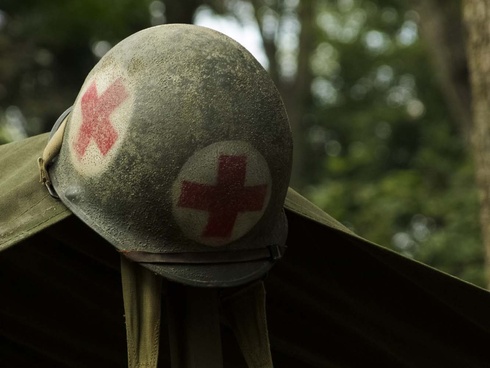
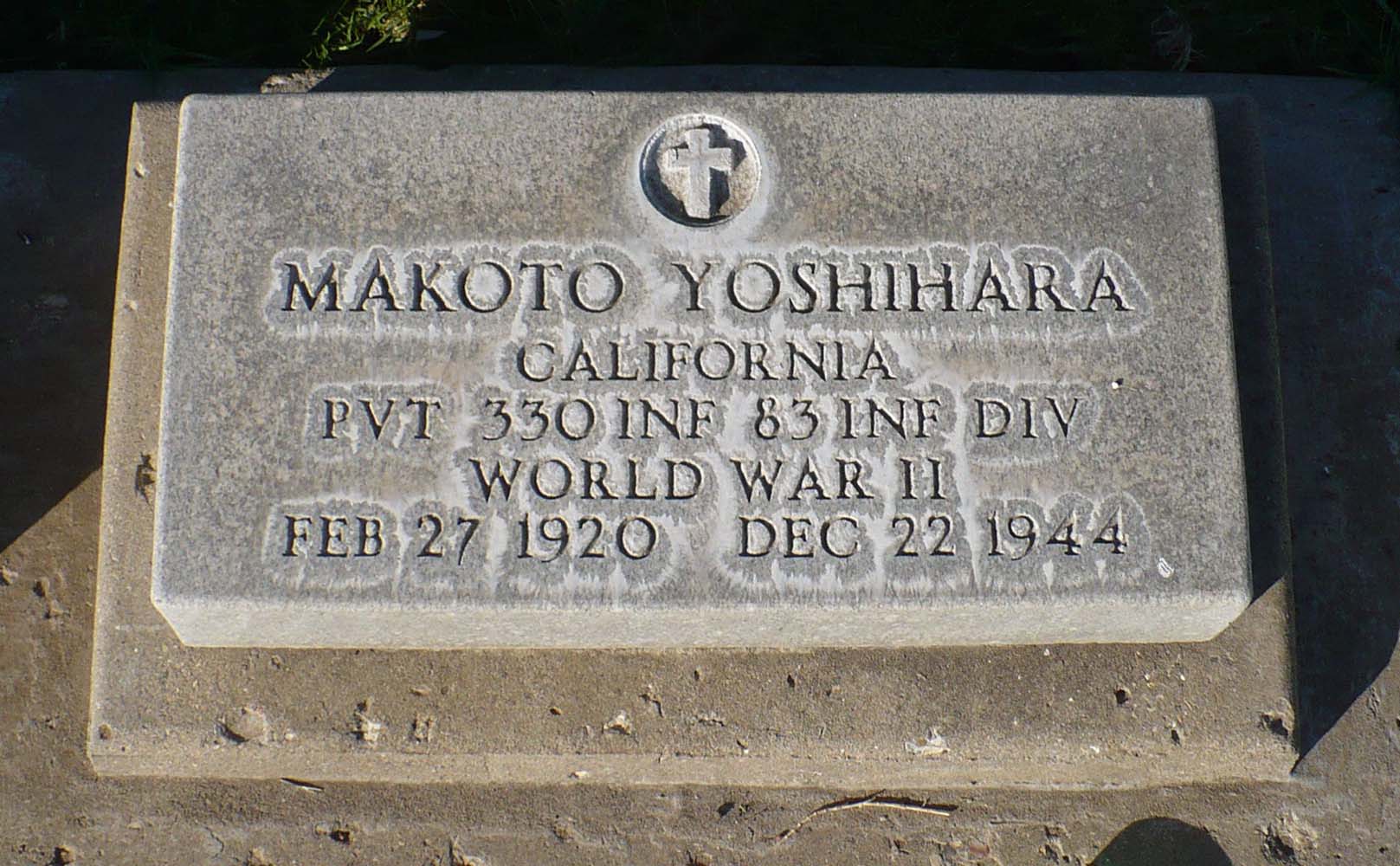
Makoto Yoshihra was a Guadalupe boy who played football for Santa Maria High School. He wanted to become an automobile mechanic, but Pearl Harbor intervened.
He instead became the only Nisei medic in the 83rd Infantry Division, a unit made up overwhelmingly of White boys from Ohio who’d never seen a Japanese-American in their lives.
This Japanese-American, once the 83rd went into action in Europe, began to save their lives.
Because he was a medic, he wore the helmet insignia–a red cross on a white background–that designated him as such. Because medics wore that helmet, they became favored targets for German snipers. If a sniper could kill a medic, then he could kill, indirectly, the six or seven or twenty lives that the medic might save.
So that is why the sniper shot Makoto dead in the Huertgen Forest in late 1944. He was kneeling over a wounded comrade when the bullet hit.
Makoto’s helmet doomed him.
So did the logo of the World Central Kitchen convoy.
If you are about to accuse me of being anti-Semitic, you don’t know me. You don’t know what I taught my students about anti-Semitism and you don’t know the emotional toll that teaching the Holocaust took on me every year of the thirty years I taught.
You don’t know my mother, who never forgave Germany.
But now we have the Israeli airstrike on the World Central Kitchen convoy. My mother would never have forgiven that, either.
There is a difference between Israel and Bibi Netenyahu. I am convinced that he pulled the trigger on Chef Andres’ people. The impact? Now the people of Gaza are deprived of the 300,000 meals a day that the World Central Kitchen provided them.
And so they will die. They will die because that is what Netenyahu and the extremists in his cabinet want.
In the last great shipment of European Jews from Hungary to Auschwitz-Birkenau, once they’d been offloaded from the cattle cars, processed through the selection ramp and then shunted to a field near the gas chambers, there are photos of Jewish children who have only a half-hour or so to live.
They are eating bread provided by the SS. One photo shows another little girl still eating her bread on the way to her death.
There will be no bread for the children of Gaza. They won’t enjoy even the cynical mercy of the SS.
This is mercy: The Army’s Graves Registration Teams gently carried Makoto’s body–it did not matter that he “looked” Japanese– away from the battlefield, perhaps with the body of the G.I. he could not save. They would have meticulously catalogued his personal effects, enclosed him in a canvas shroud, and then they would have taken him to a military cemetery on the Franco-German border.
When the war ended, the Army brought him home to Guadalupe. His coffin would’ve come across the Atlantic in the cargo hold of a Liberty Ship, inside a metal coffin draped in an American flag. We have a tradition of treating our war dead with care.
The children of Gaza will die now because now there is no one left to care for them. Because they will die in such great numbers, bulldozers will bury them.
You may bring up October 7, and you have every right to do so. I will counter with December 7.
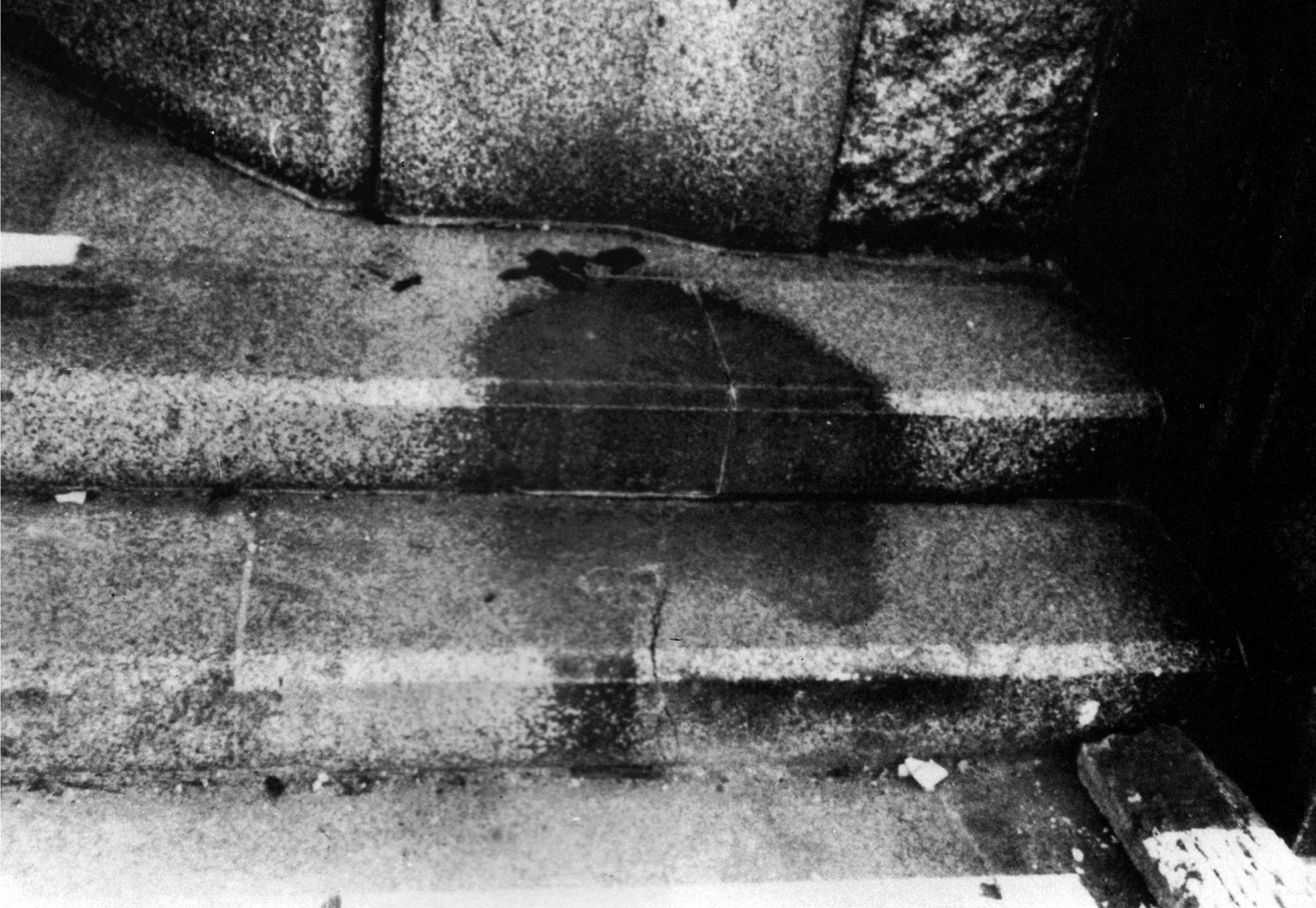
This is the image of a woman waiting for the bank to open in Hiroshima—rather, this is the shadow of her vaporized body. Can you tell me which plane she flew along Battleship Row? Was it a Zero? A torpedo bomber? Did she fly the dive bomber that dropped the fatal bomb on USS Arizona?
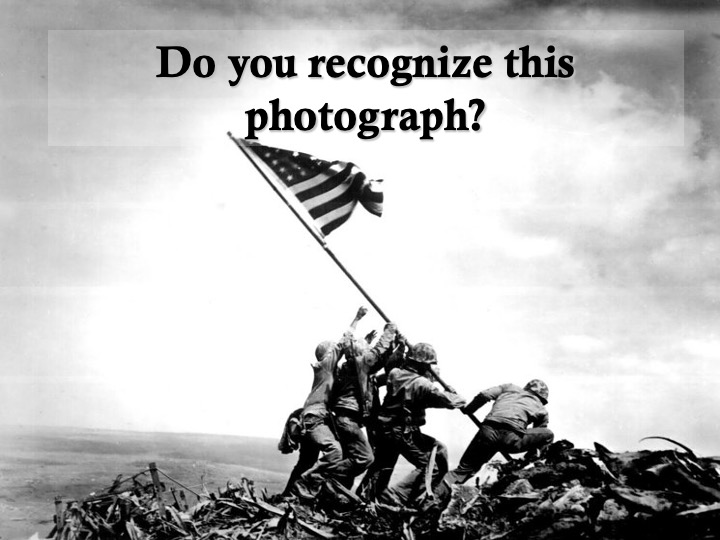
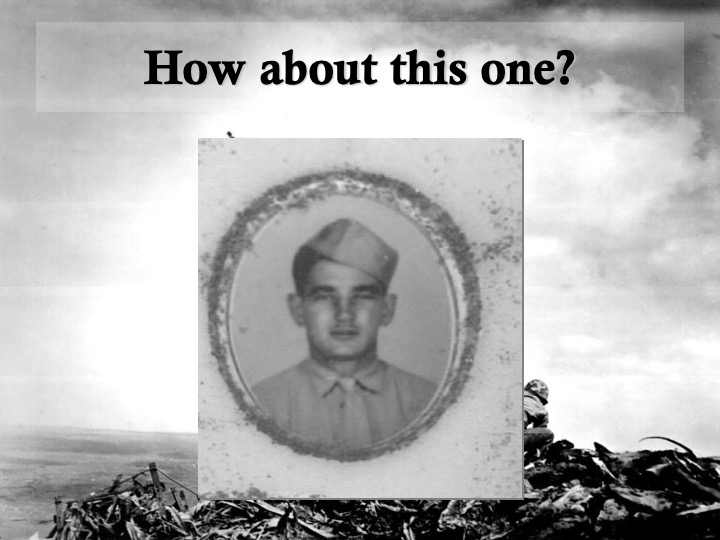
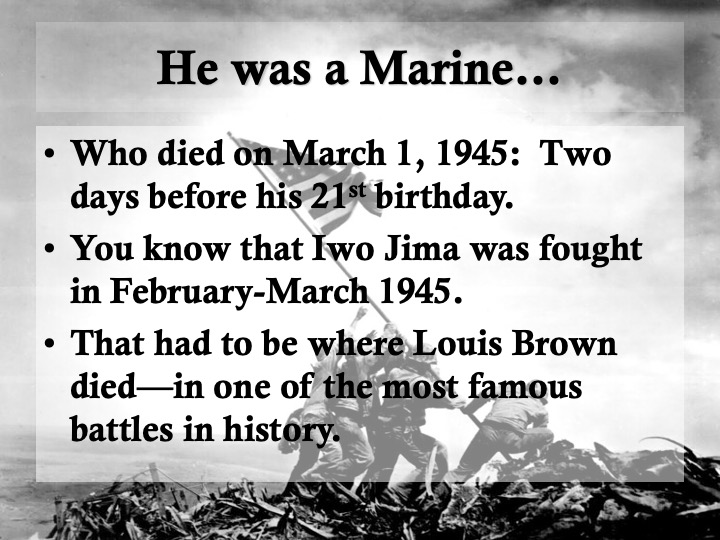
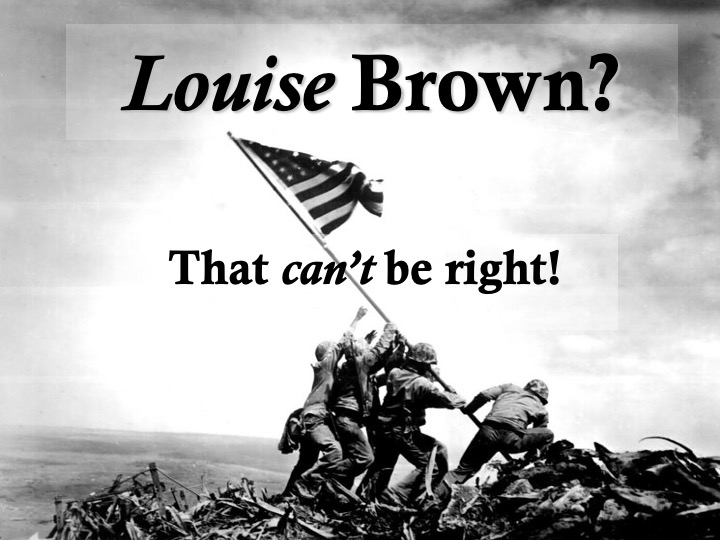
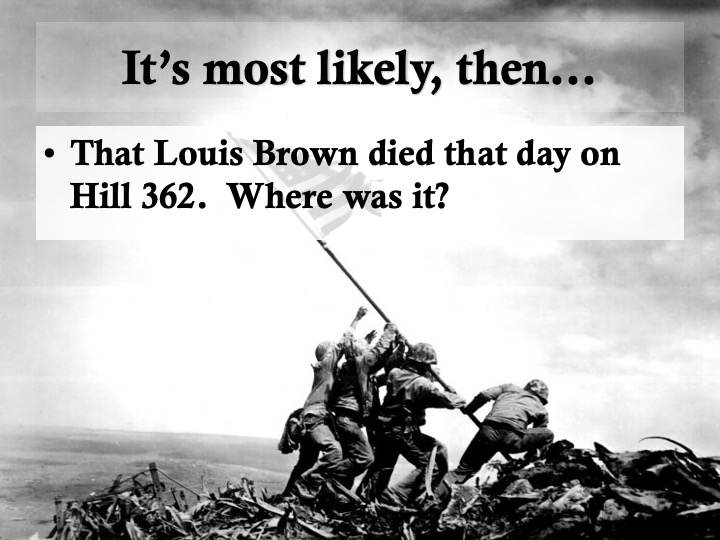
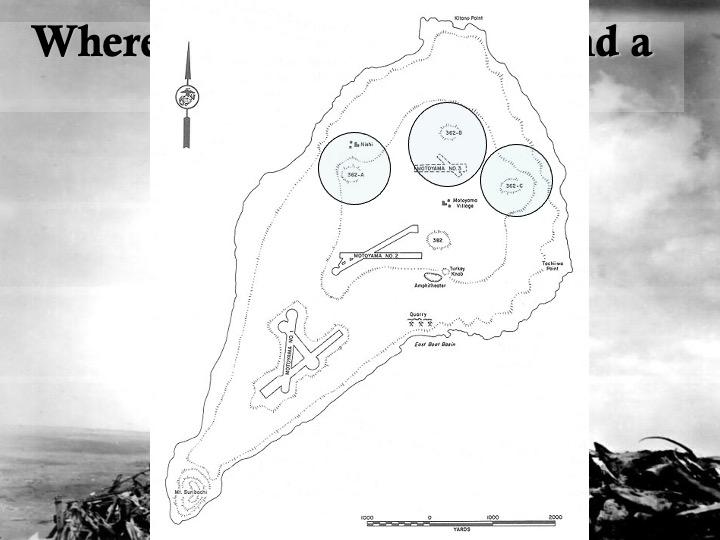
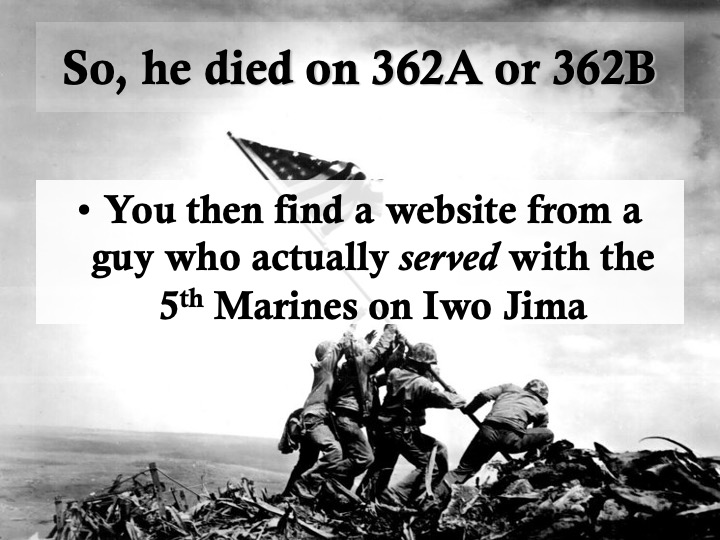
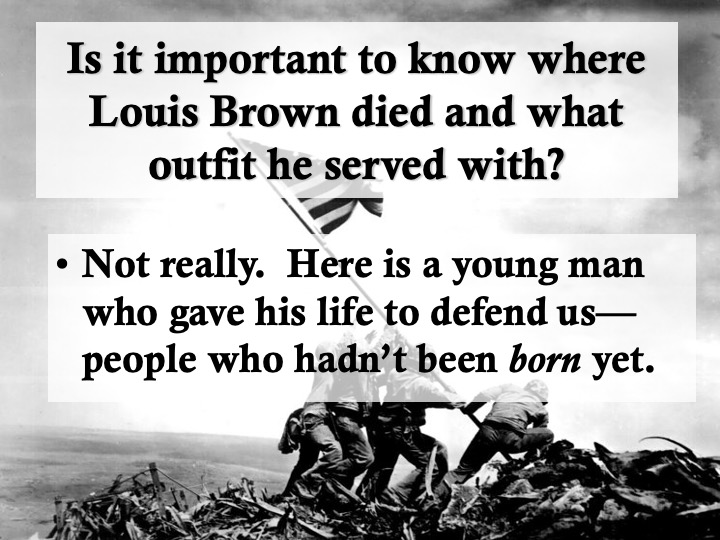
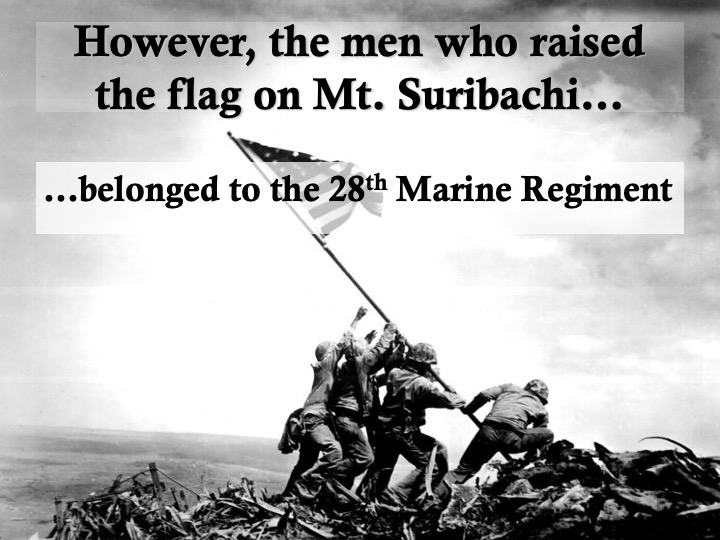
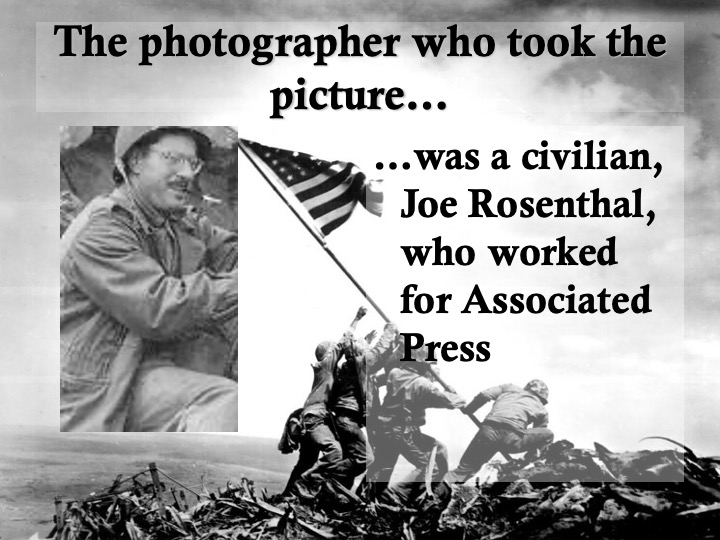
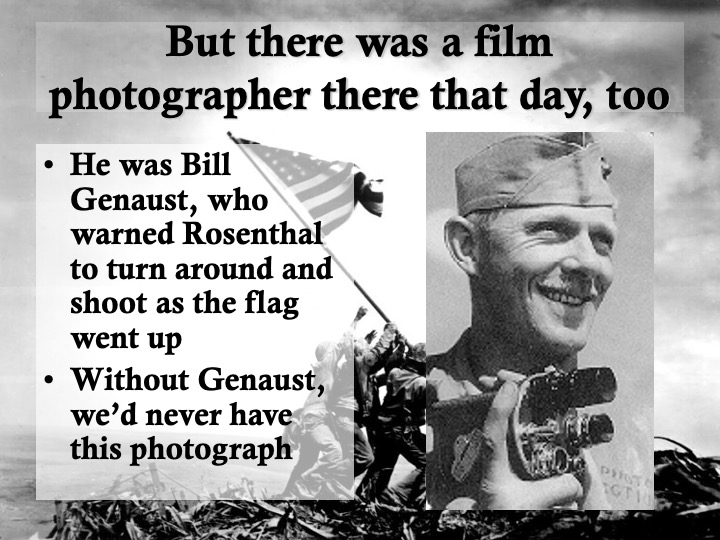
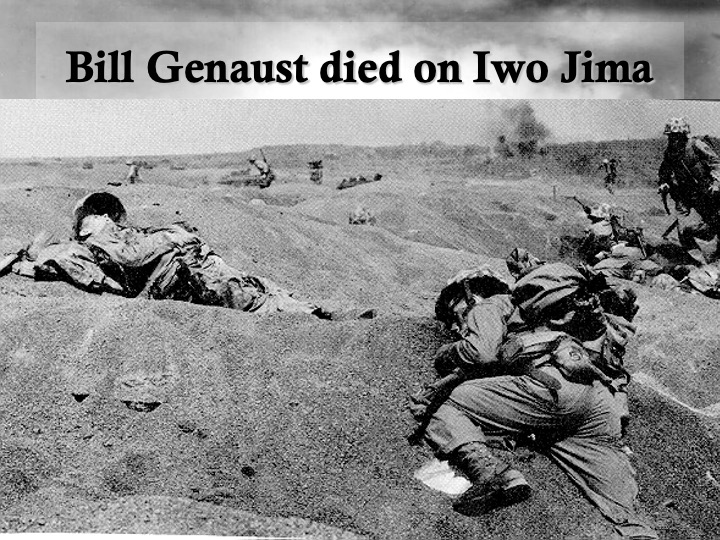
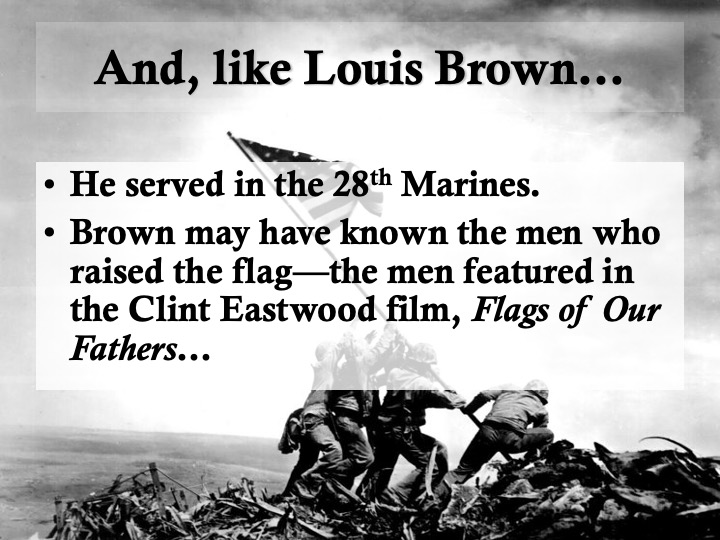
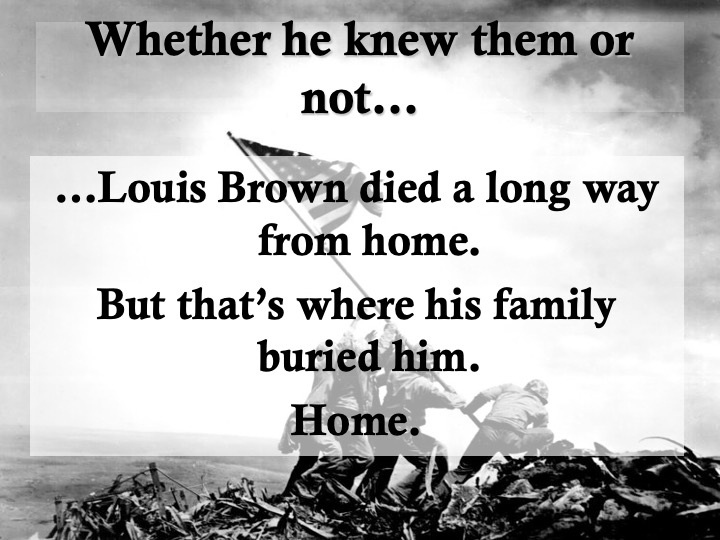
Today is February 23. On this day in 1945, a detail from the 28th Marine Regiment was immortalized in this Joe Rosenthal photograph as, still under fire, they raised a second, larger, flag atop Mt. Suribachi on Iwo Jima. The young Marine on the right had six days to live. He was a farmer’s son from Corbett Canyon, near Arroyo Grande. His parents were Azorean immigrants. And I knew, from the date on his tombstone, that he died on Iwo Jima.
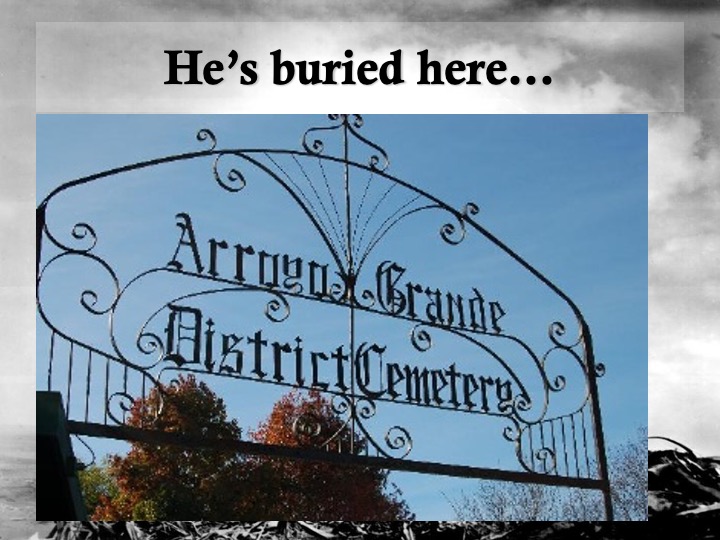
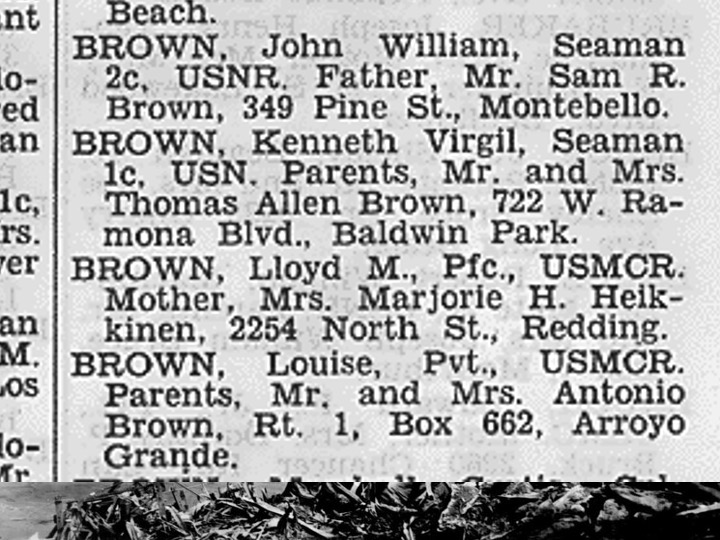
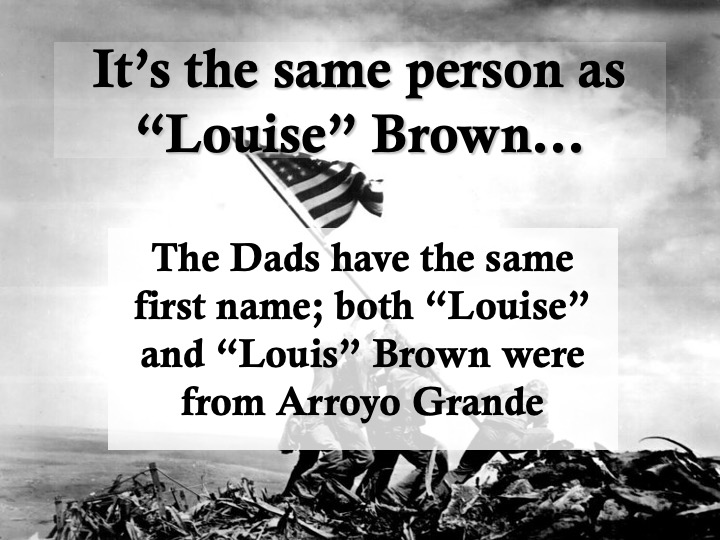
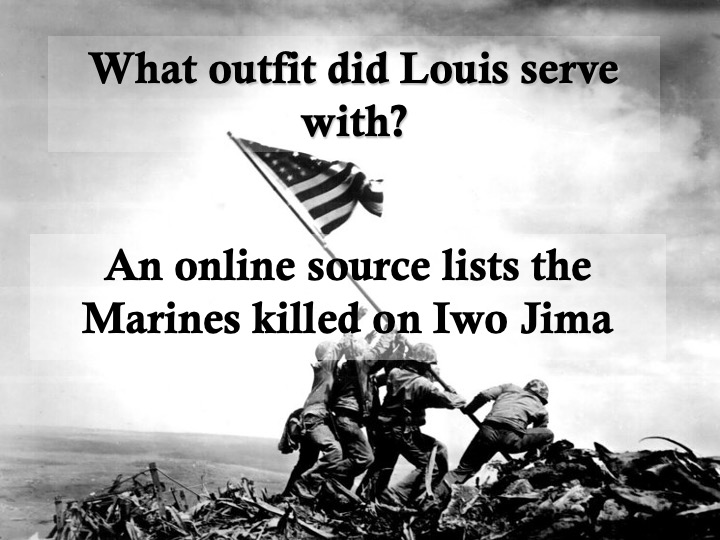
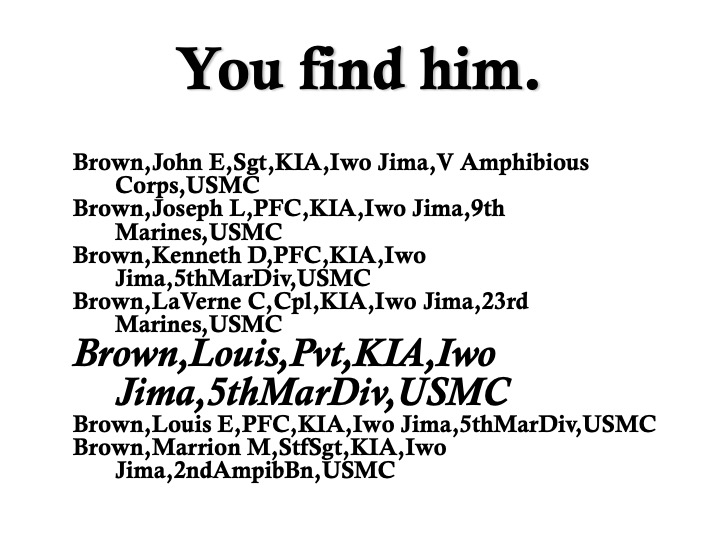
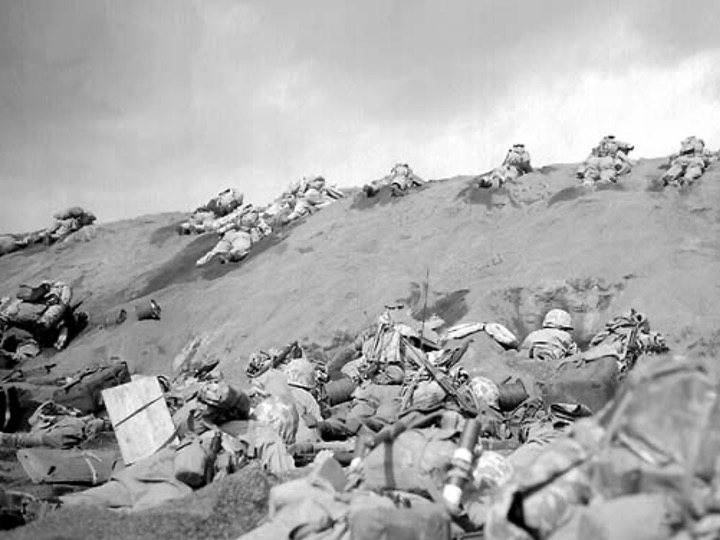
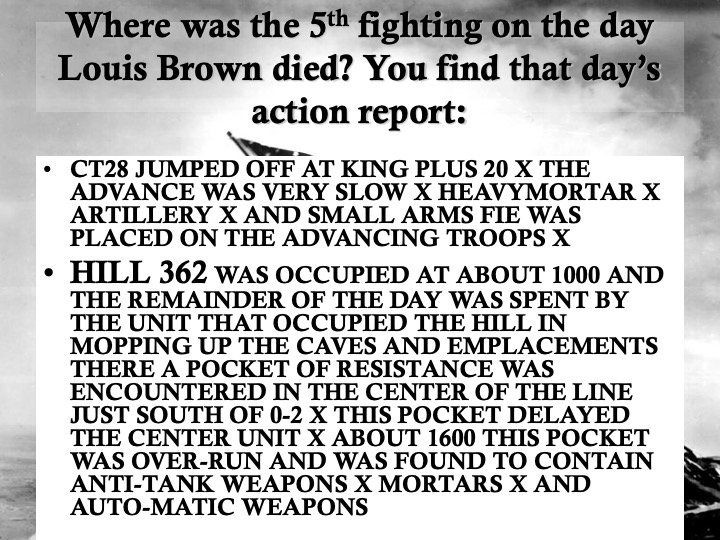
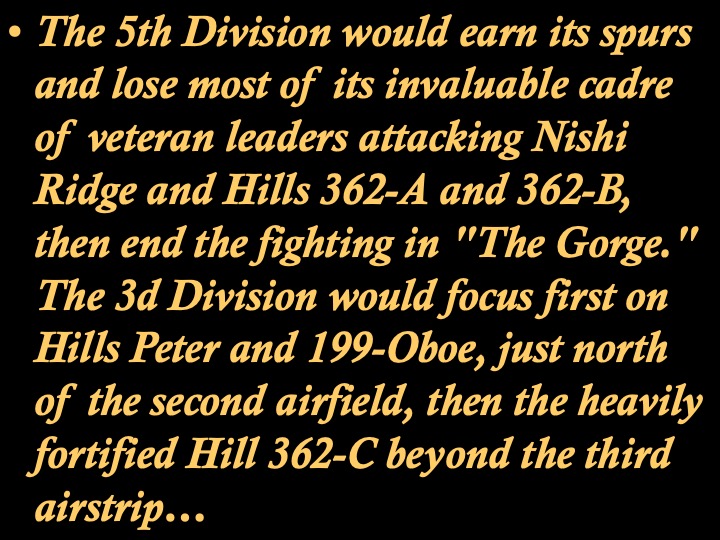
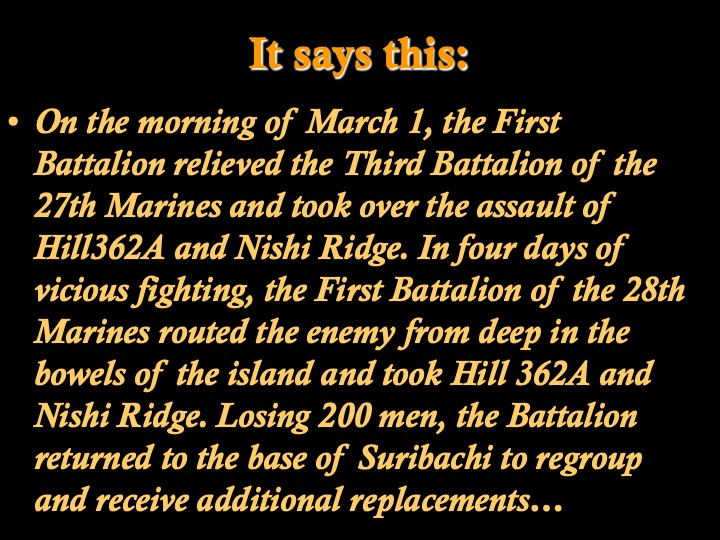
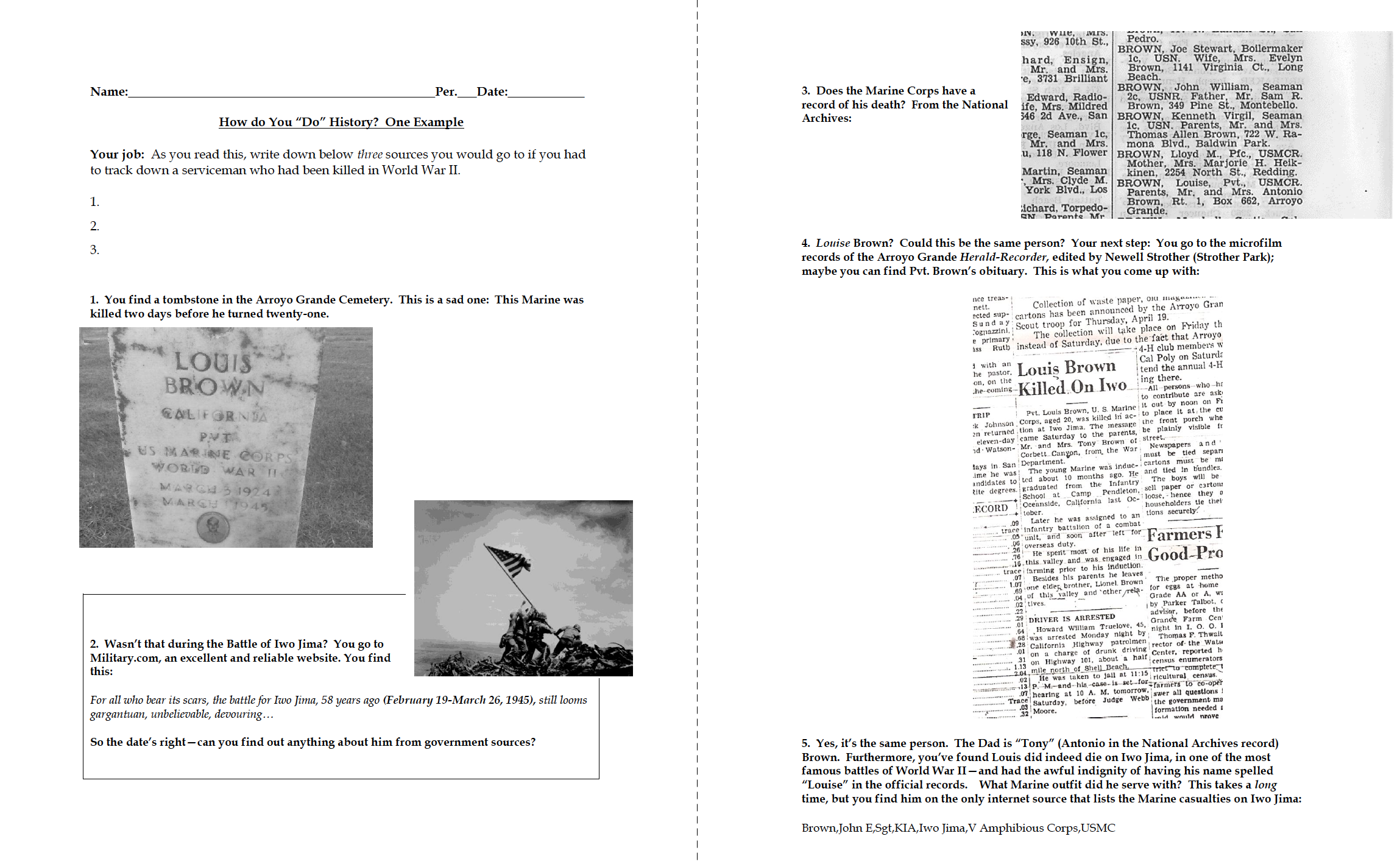
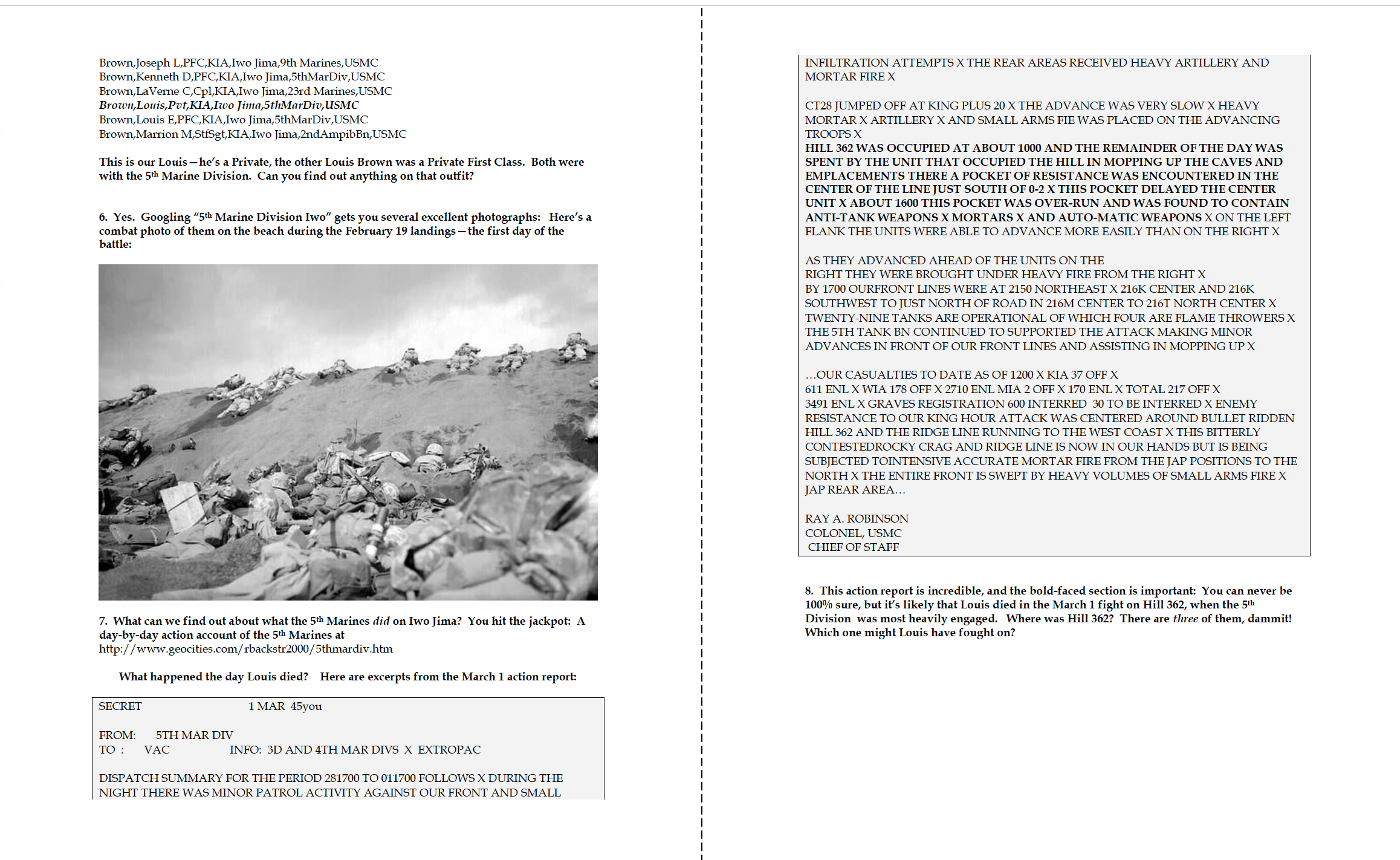
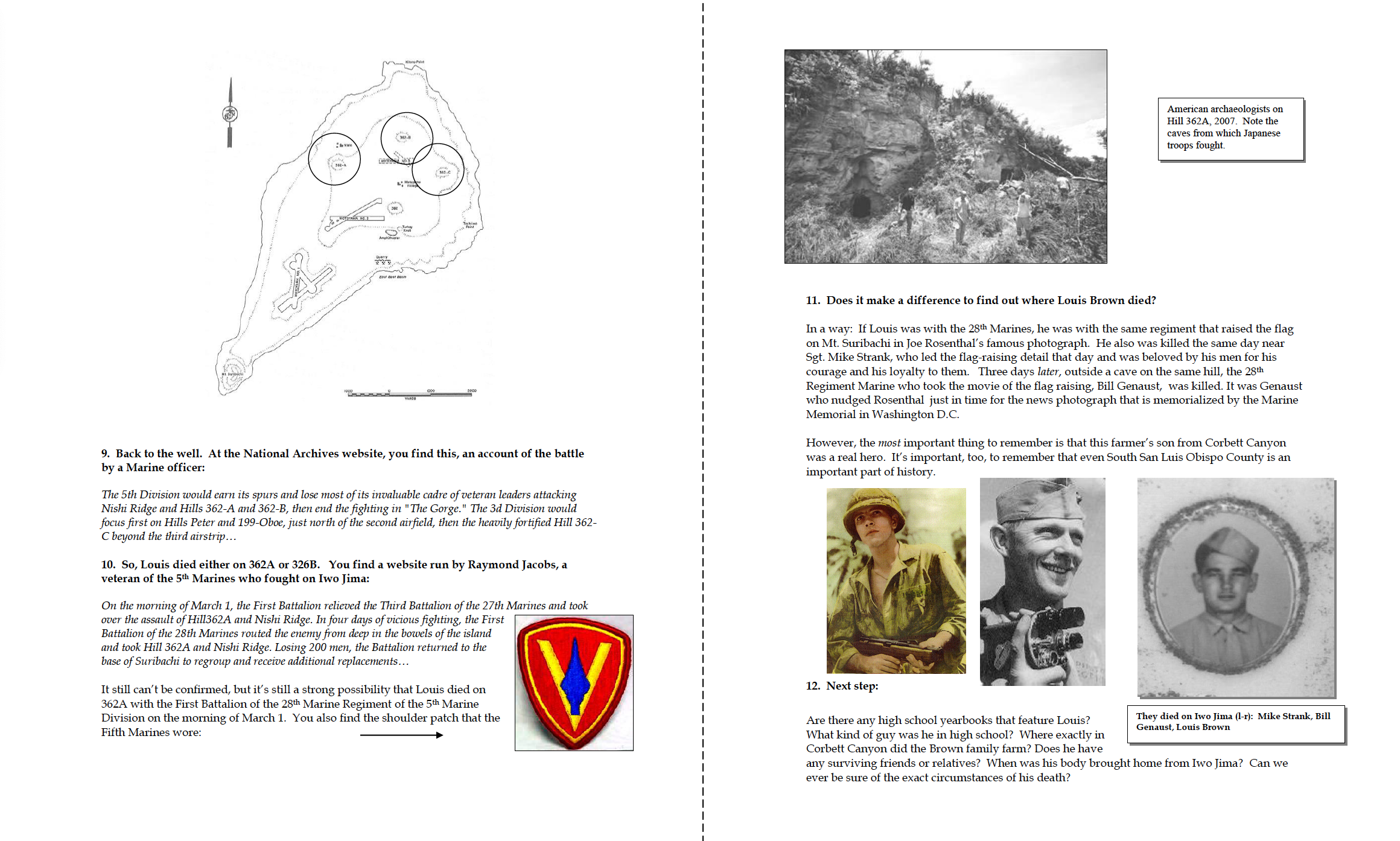
I owe Pvt. Louis Brown so much for many reasons. In my history classes, I wanted my students to learn the basics of research, including forensic study of a battlefield (The Little Bighorn) and using deductive reasoning to analyze a murder scene (the Lizzie Borden home) so that they could begin to appreciate how historians think. So the sad business of finding this young man’s tombstone inspired a lesson plan. I walked students through the steps of researching a World War II combatant—may they might research an ancestor someday—by modeling what I’d done, in a series of PowerPoint slides:
And, yes, this would be on the test, so they had a notes handout to help them follow along:
Louis Brown had by now become important to me. I wanted other people to know him, too, hence this article in the June 2009 SLO Journal Plus.
Even that wasn’t enough, so, when I began to give talks on local World War II history, Louis Brown was part of them.
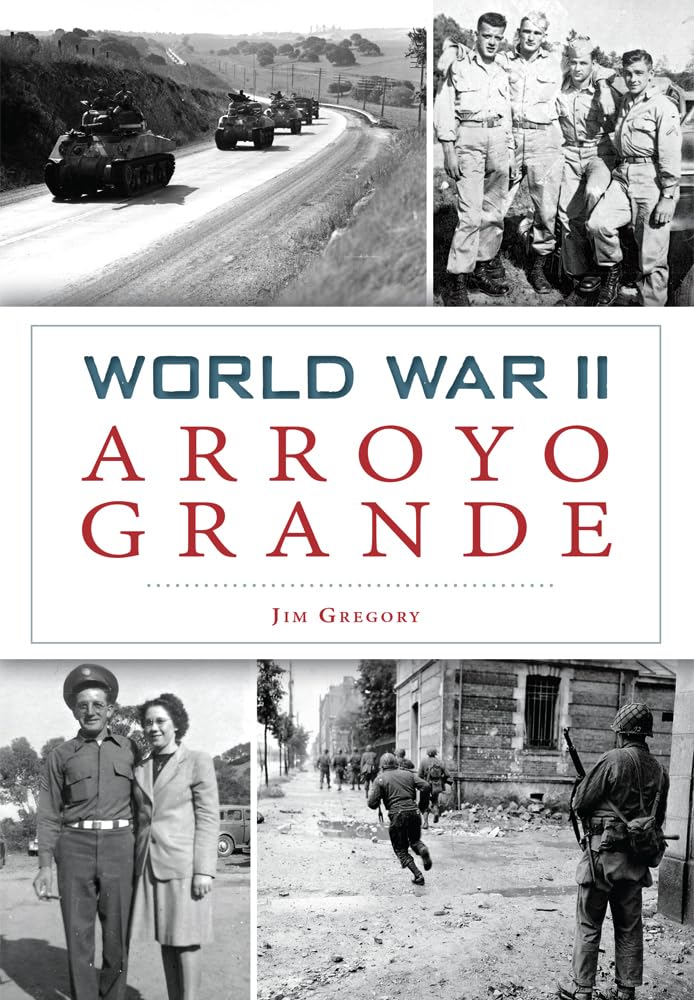
By now, of course, I was hooked on doing research like this, so Brown inspired this 2016 book, my first.
And this is why, every few months, I make sure that he has new American and Marine Corps flags. Sometimes, as this photo shows, someone else has left him flowers. That is a great kindness: Brown is their Marine, too.
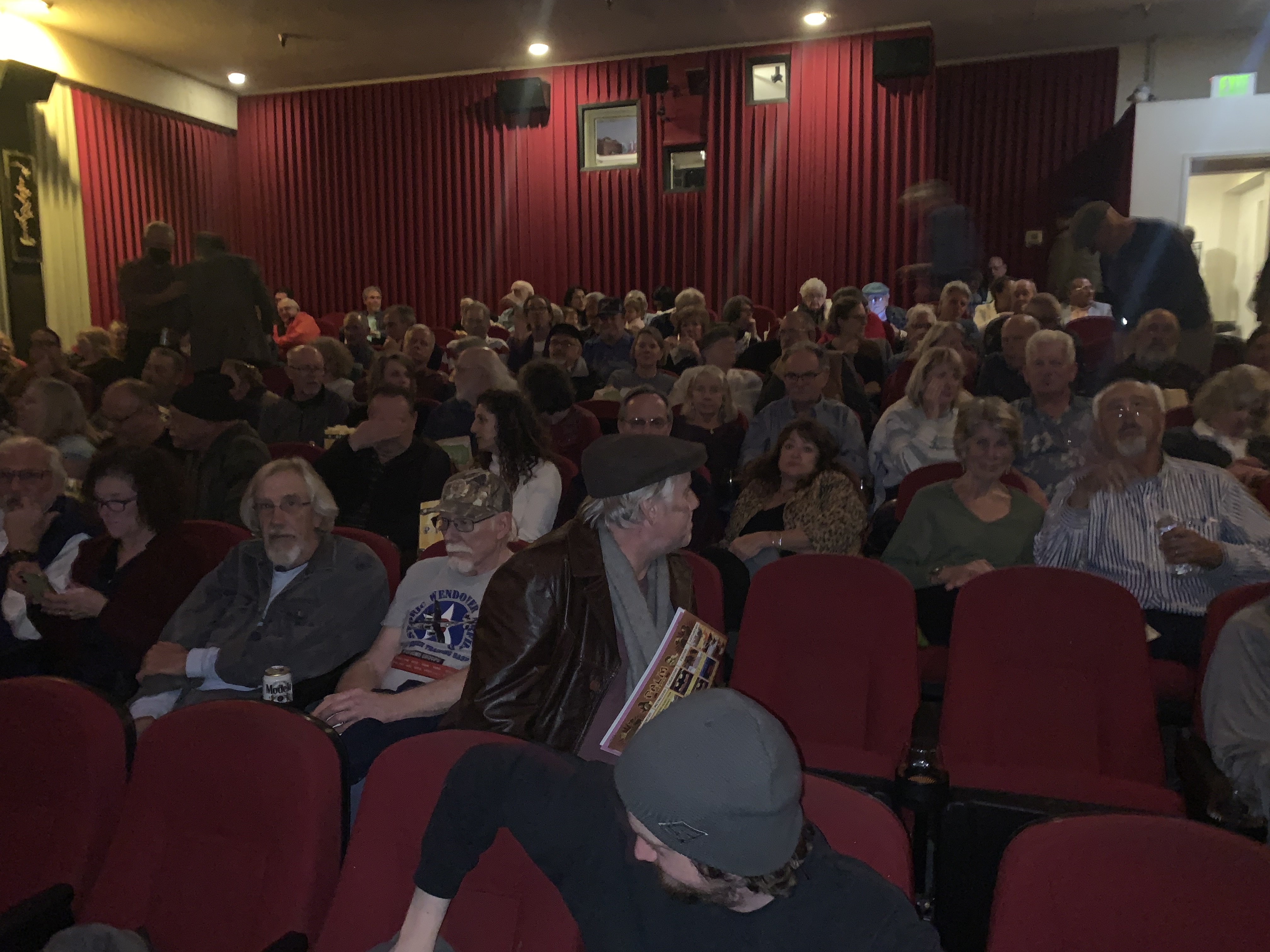
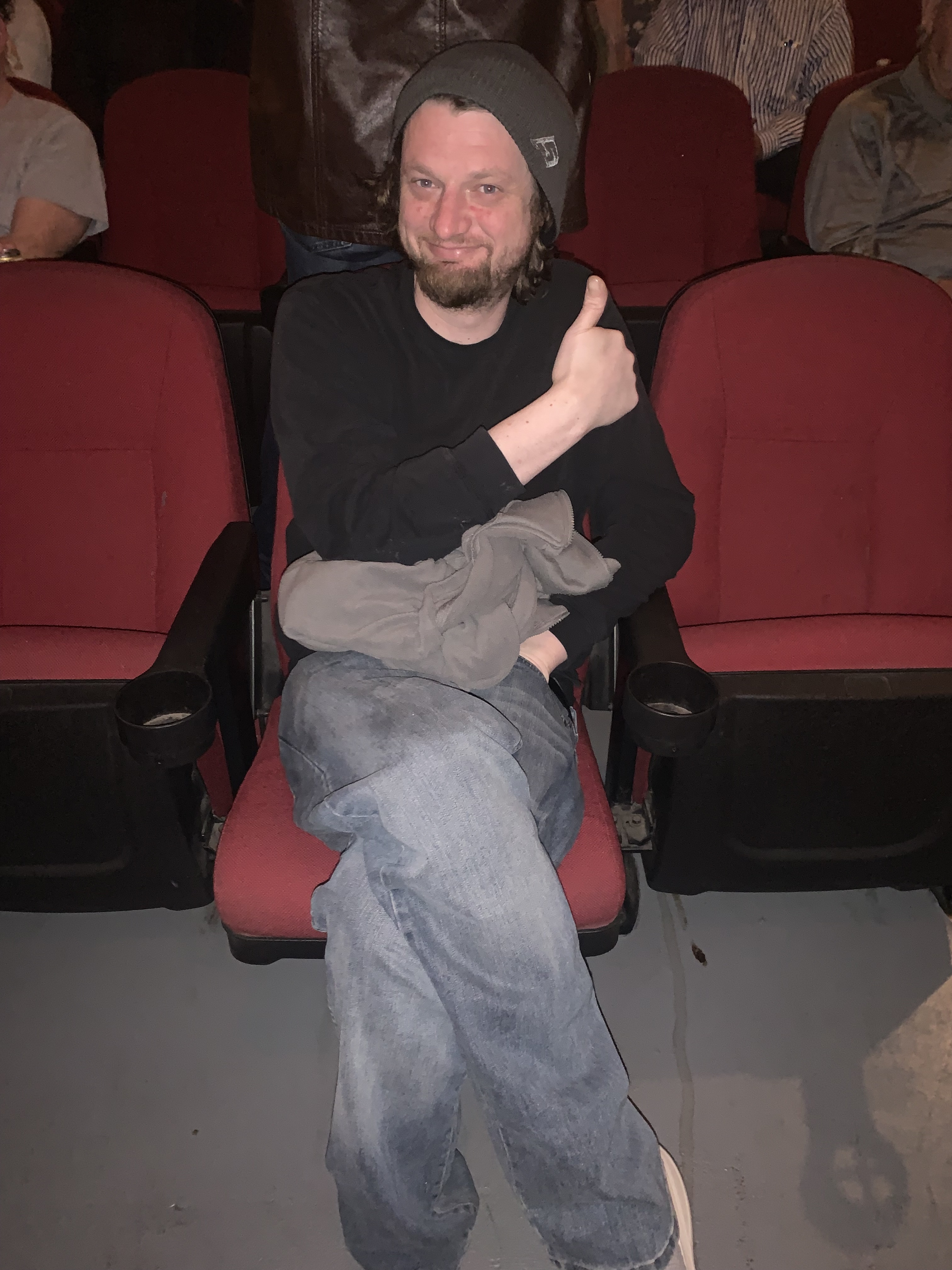
Thomas and I were among many guests at the Palm Theater for a screening last night, courtesy of the theater owners and also David and Naomi Blakely, because David’s father, Everett,is among the fliers featured in this Apple TV Spielberg/Hanks miniseries.
David was a warm and generous host and, best of all, his Mom, now 101, joined us along with other heroes of mine, including Dan and Liz Krieger, writer Tom Fulks, fellow historian and fellow TR fan John Ashbaugh, military historians Erik Brun and Preston King, the Central Coast Veterans Museum’s Bart Topham and world traveler/radio correspondent extraordinaireTom Wilmer.
Thank you, David and Naomi.
That’s my boy!
As to the miniseries—we saw the first two episodes—it was excellent, beautifully photographed, by turns harrowing, inspirational and funny, and it was all about men who in their late teens or early- to mid-twenties who fought a war that was unbelievably dangerous. We saw airmen wounded—including from frostbite— in last night’s screening. I was reminded that for every American infantryman killed in World War II, three were wounded. For every American airman wounded, three were killed.
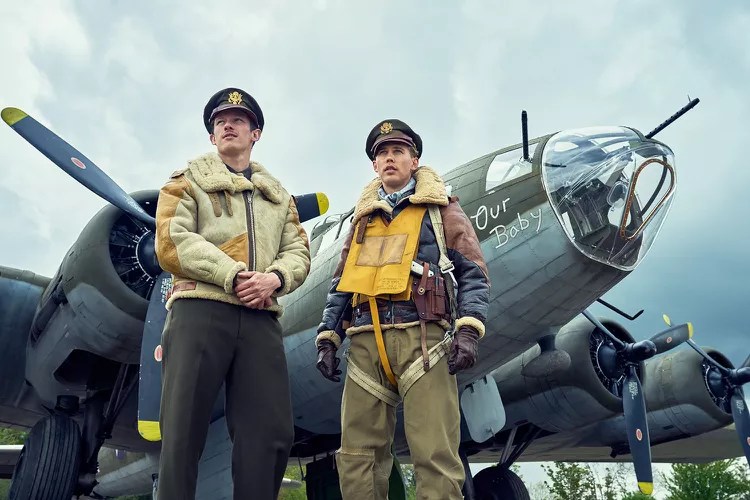
Collum Turner and Austin Butler
Two friends are at the heart of the first two episodes. Major Bucky Egan (Collum Turner) is mercurial, a grand and extravagant drinker, whose anger comes explosively. His friend, Major Gale “Buck” Cleven (Austin Butler, Academy Award winner for Elvis) is stoic, reserved, unbelievably cool under fire. It’s the same kind of dynamic that made Kirk and Spock and many years later (the film based on O’Brian’s novels, Master and Commander) Aubrey and Maturin work so well.
And, even though he was hidden behind his oxygen mask, there was Ev Blakely, the kind of man who, in later years, worked in the shop in the garage of his San Luis Obispo home to help Boy Scouts finish their Eagle projects or boys and girls build Christmas gifts for their parents. He was a warrior with a heart called to service, including to children.
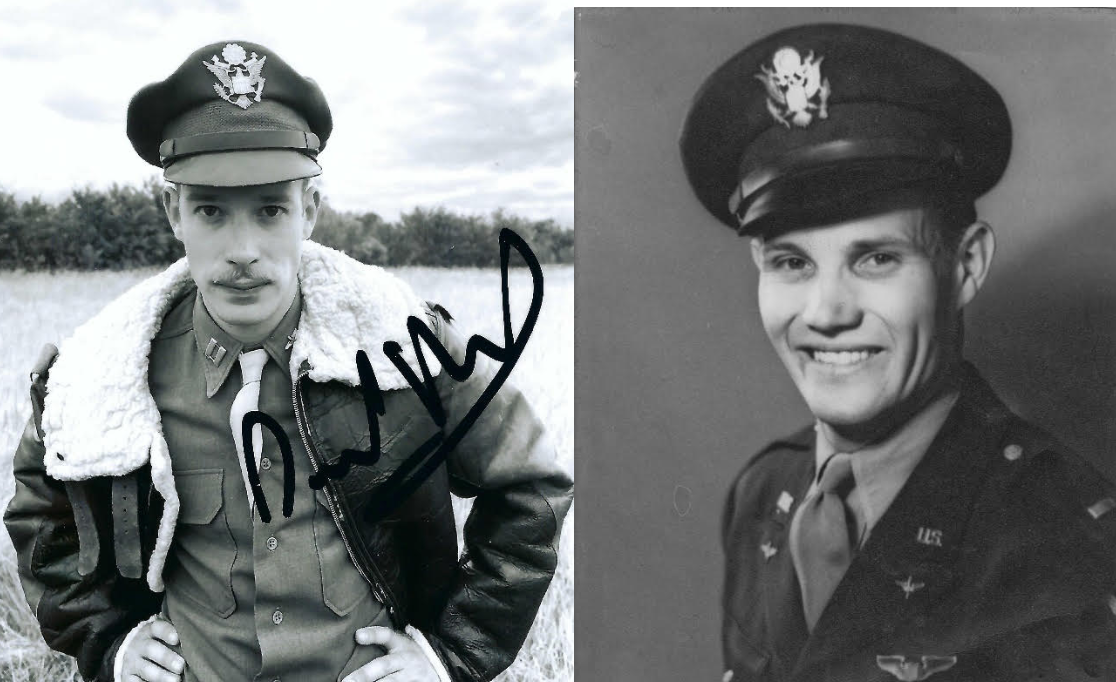
David Shields as Maj. Everett Blakely
There were many things that struck me about the showing, and I was profoundly touched by them. In no particular order:
Grommet: The wire that gave an officer’s hat its stiffness was removed in the Army Air Forces. You couldn’t get your headphones around a grommetted hat, but the unintended side effect was a kind of rakish look that, I guess, charmed young women, and U.S. Army officers in World War II already wore uniforms that were so handsome that the Army has recently brought them back.
The “pinks and green” officer’s uniform. One—Army Air Forces Gen. James Doolittle–has liberated his service hat from its grommet.
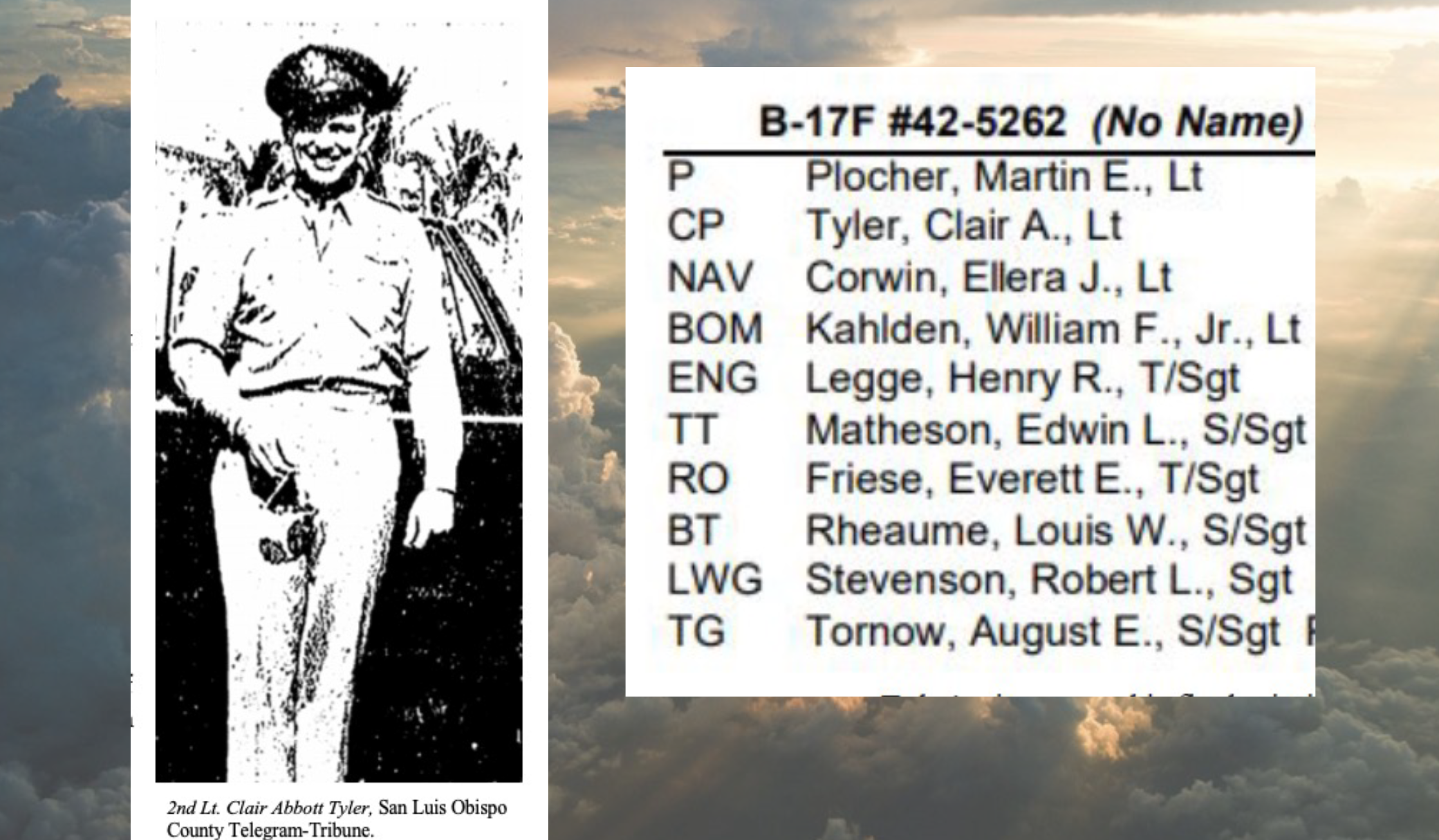
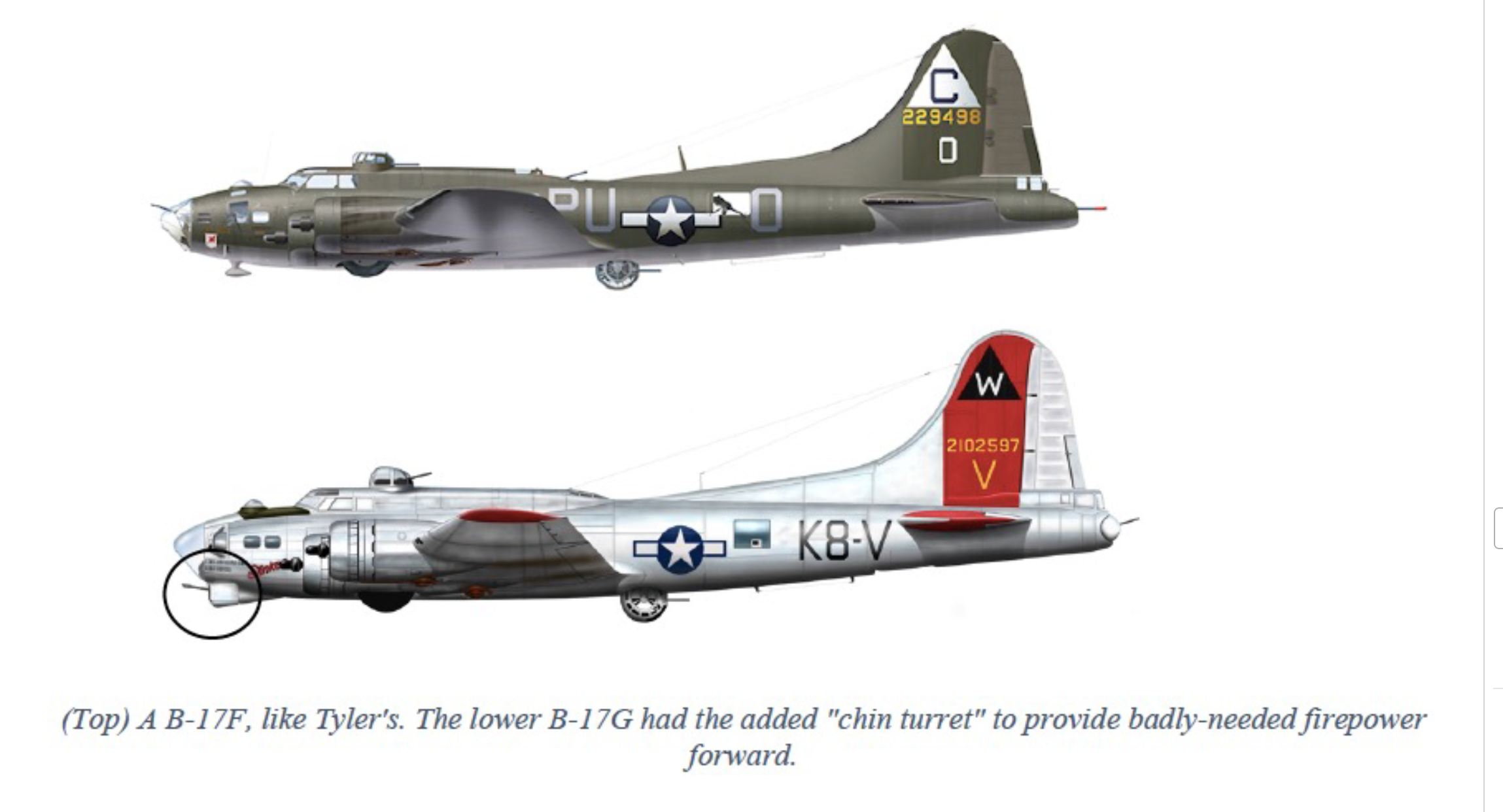
The B-17F’s weakness: Masters is set early on in the American air war, in 1943, and Ev Blakely and his fellow pilots flew the B-17F, a superb airplane with a fatal weakness: Only one machine gun in the plexiglas nose. So German fighter pilots learned quickly to attack B-17s head-on, and one of our county’s first air casualties, Clair Abbott Tyler, was a co-pilot killed in precisely this kind of attack, from a Focke-Wulf 190 that came out of the sun.
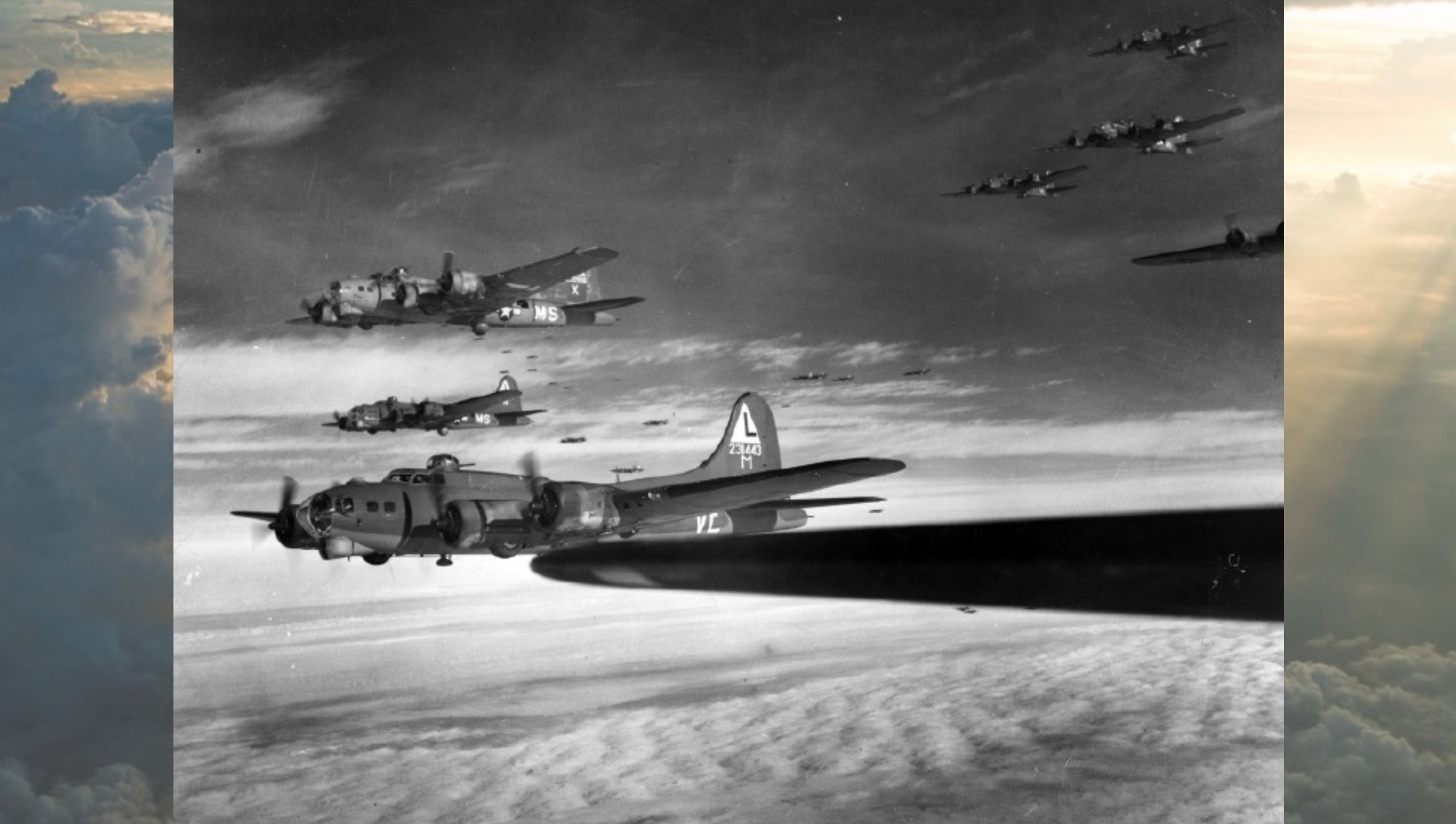
Tyler’s crew on his last mission. Alex Madonna had been the best man at Tyler’s wedding.Tyler’s B-17 in its position that day.B-17Fs from Tyler’s bomb group.A cannon shell from an FW-190 like this one killed Tyler in his seat.The “chin turret” that gave the B-17G more firepower forward.
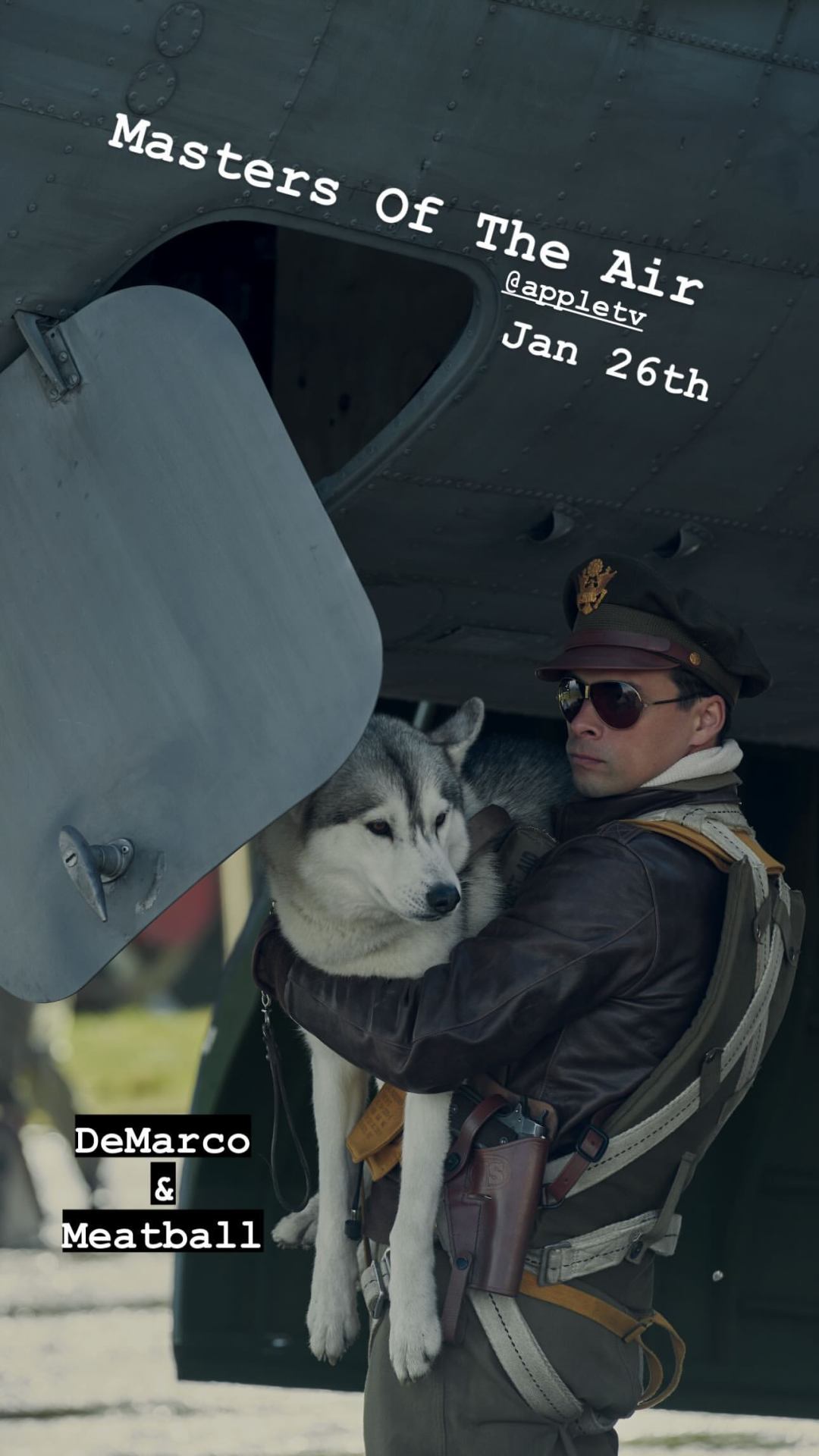
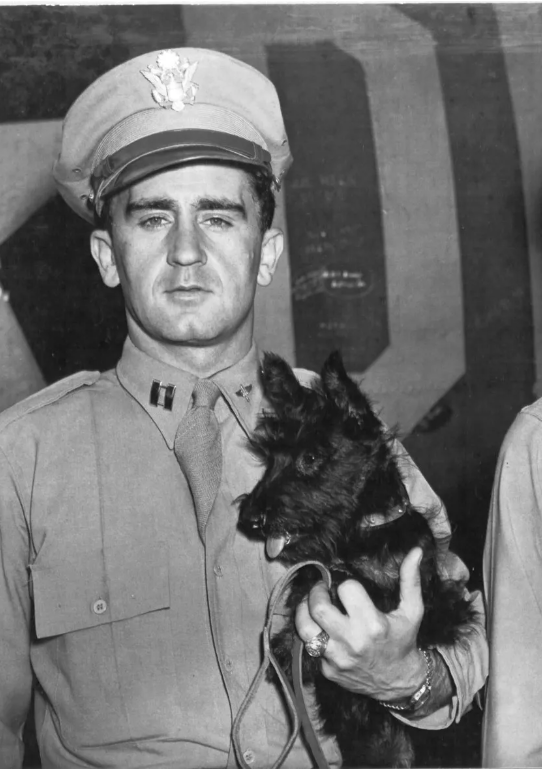
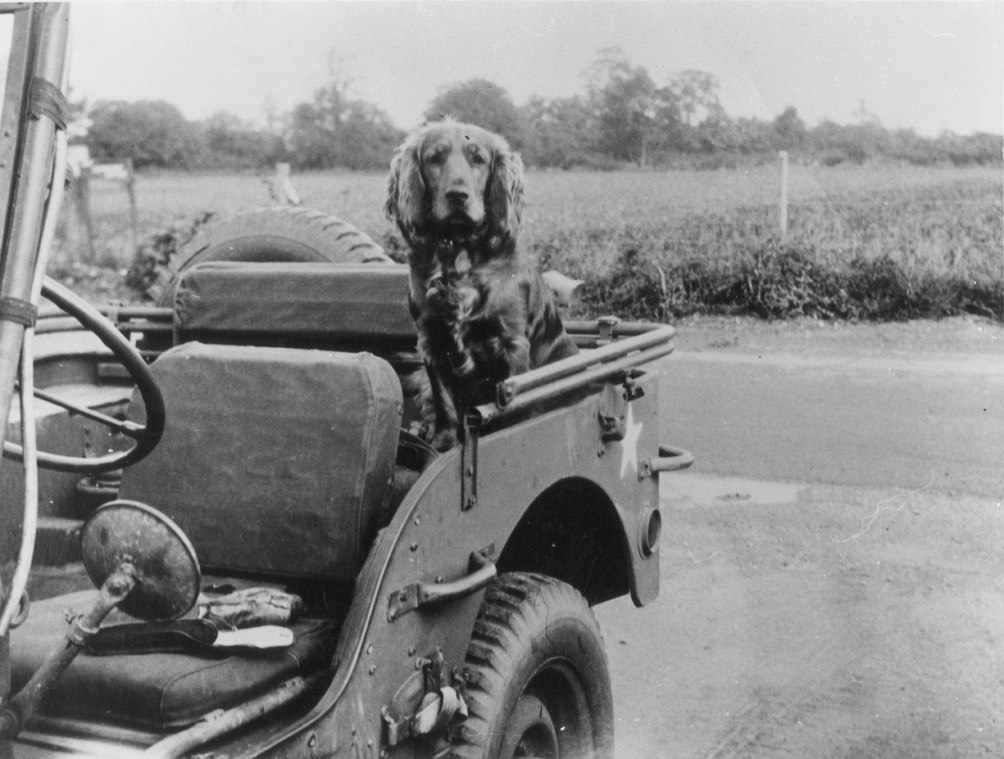
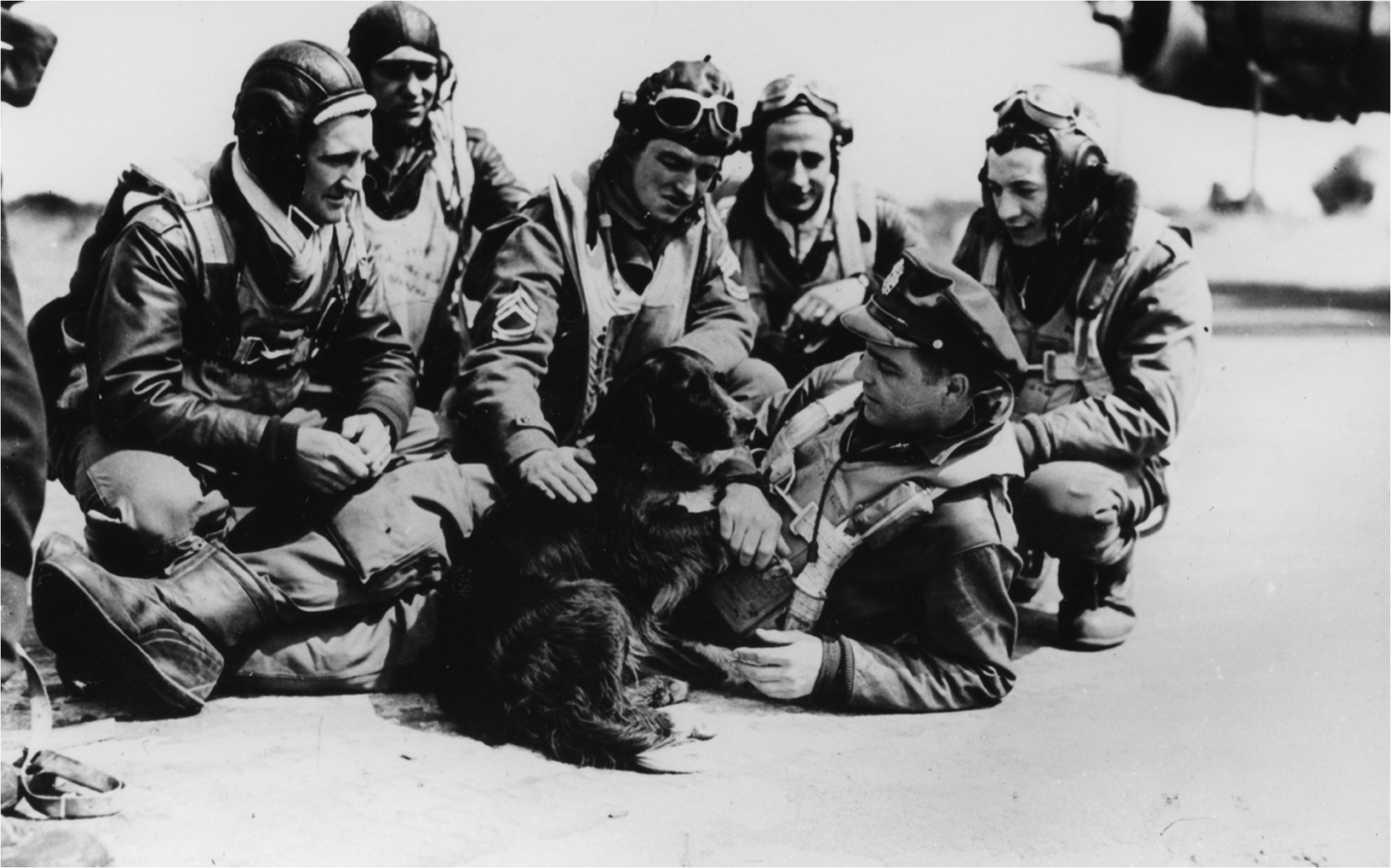
Dogs: Meatball, a gorgeous Siberian Husky, makes an appearance in the first episode. Airmen were devoted to their dogs—one of the most famous, the Scottie named Stuka, was Capt. James Verinis’ dog and the mascot of the B-17 Memphis Belle. She was in a London pet shop window and for Verinis, it was love at first sight. Stuka became a Yank after the war.
The historian for one bomb group told me that dogs not only heard the B-17s coming home first, but ground crews knew an aircrew was safe when a dog became noticeably excited. She’d recognized the individual pitch of her human’s engines. No greater love.
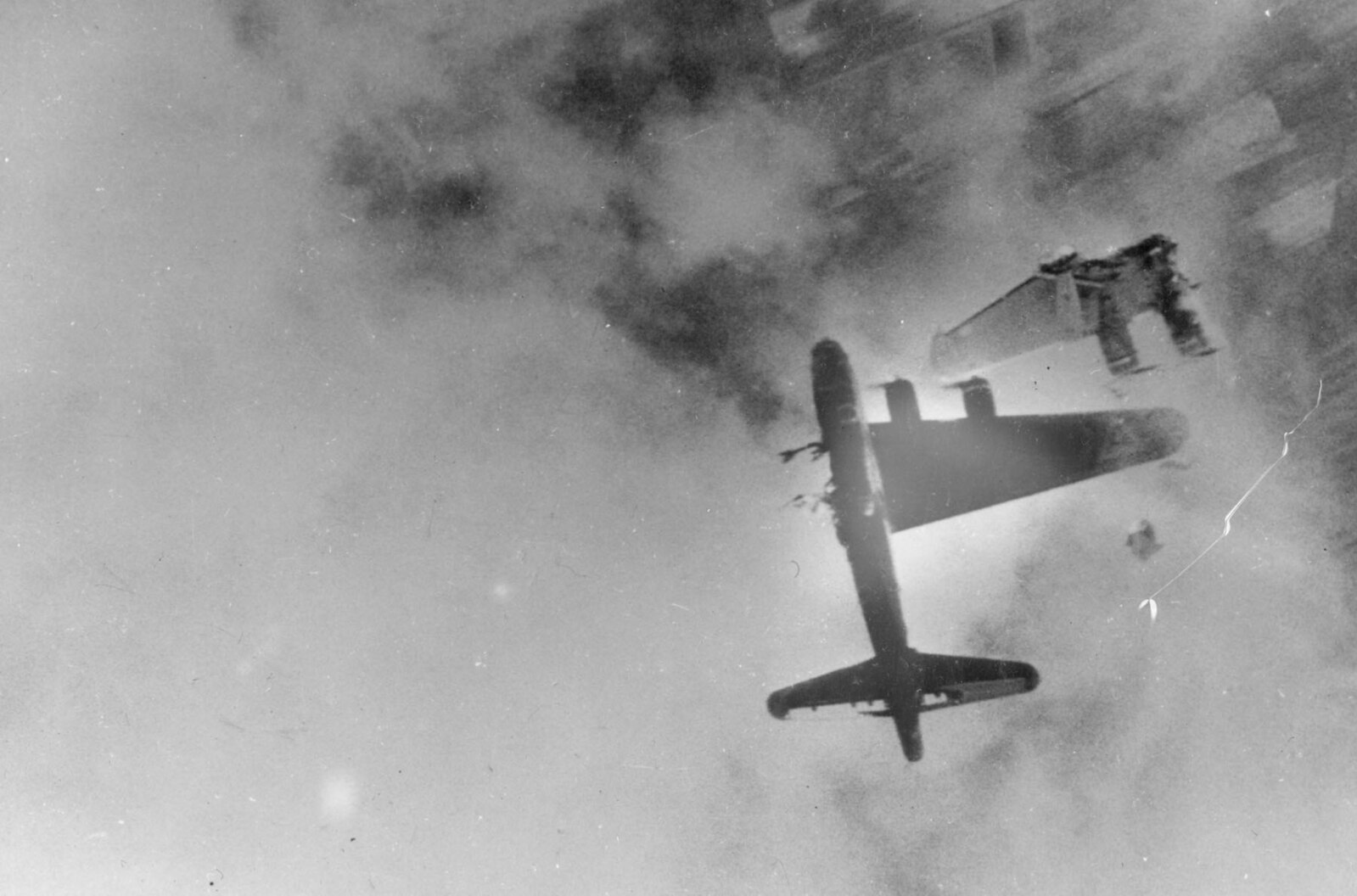
Losing the B-17: Maj. Blakely’s 100th Bomb Group suffered appalling losses—they were the “Bloody 100th”—and as many airmen were killed in World War II as Marines were killed in their deadly march across the Pacific, from Guadalcanal to Okinawa. It’s hard to watch a ship carrying ten young men, all between sixteen (some gunners were also liars in their enlistments) and twenty-two, burst into flames or come apart in midair, even in computer-generated images. On one mission, Henry Hall of Cayucos, saw the following: a shot-up B-17 lazily dropped one of its wheels before beginning its fatal plunge. On the way down, it clipped two more B-17’s and they went in, too. Another bomb wing, off-course and late, came in behind Hall’s and they were pummeled. Ev Blakely’s 100th Bomb Group sent in sixteen B-17s on that mission. Only one came home.
This B-17 was “The Wee Willie”
The Target: Two of the 100th’s missions in the first episodes are attacks on German U-boat pens, one near Bremen and another in Norway. The impact of the U-boat on transatlantic shipping was such that in a story that stayed with my father, he gifted a British family with a bag of oranges in 1944. The mother of the family burst into tears. They hadn’t seen oranges, thanks to the U-boats, since 1939.
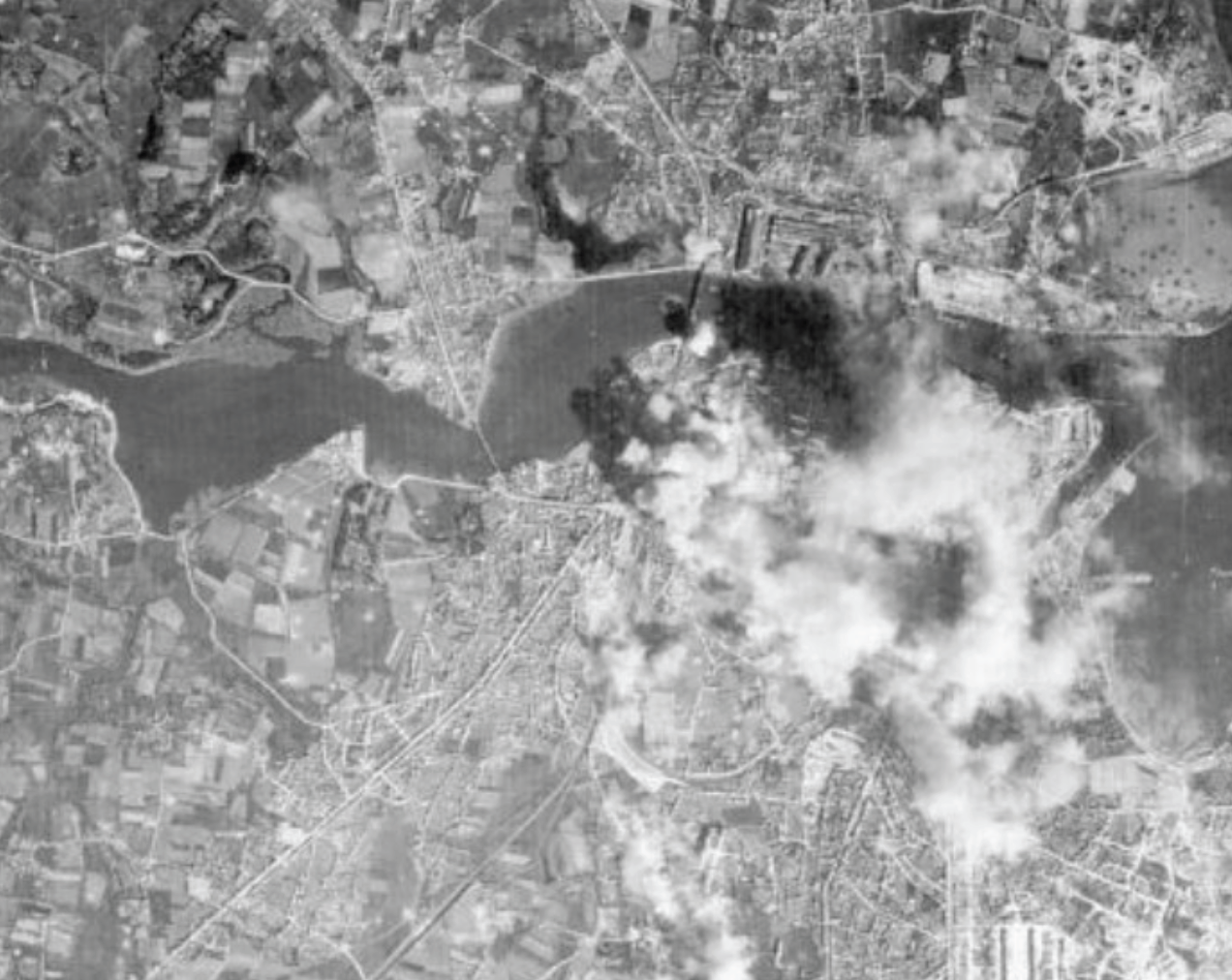
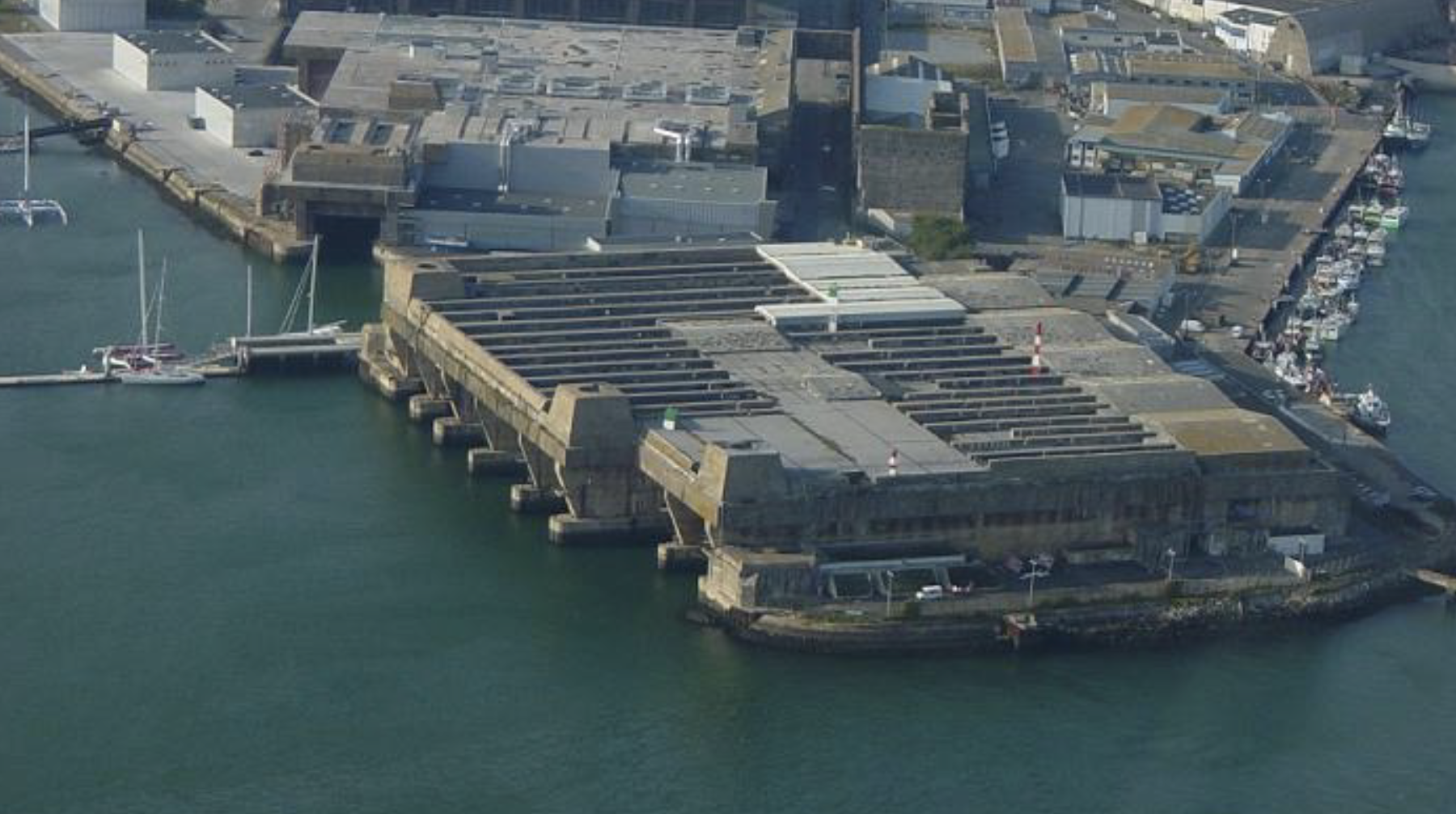
Clair Tyler was killed after an attack on the sub pens at Lorient, France. Below is a strike photo from his last mission and next to it are the sub pens. Today. They were indestructible—in fact, the Lorient pens were the base for French submarines four decades after World War II had ended.
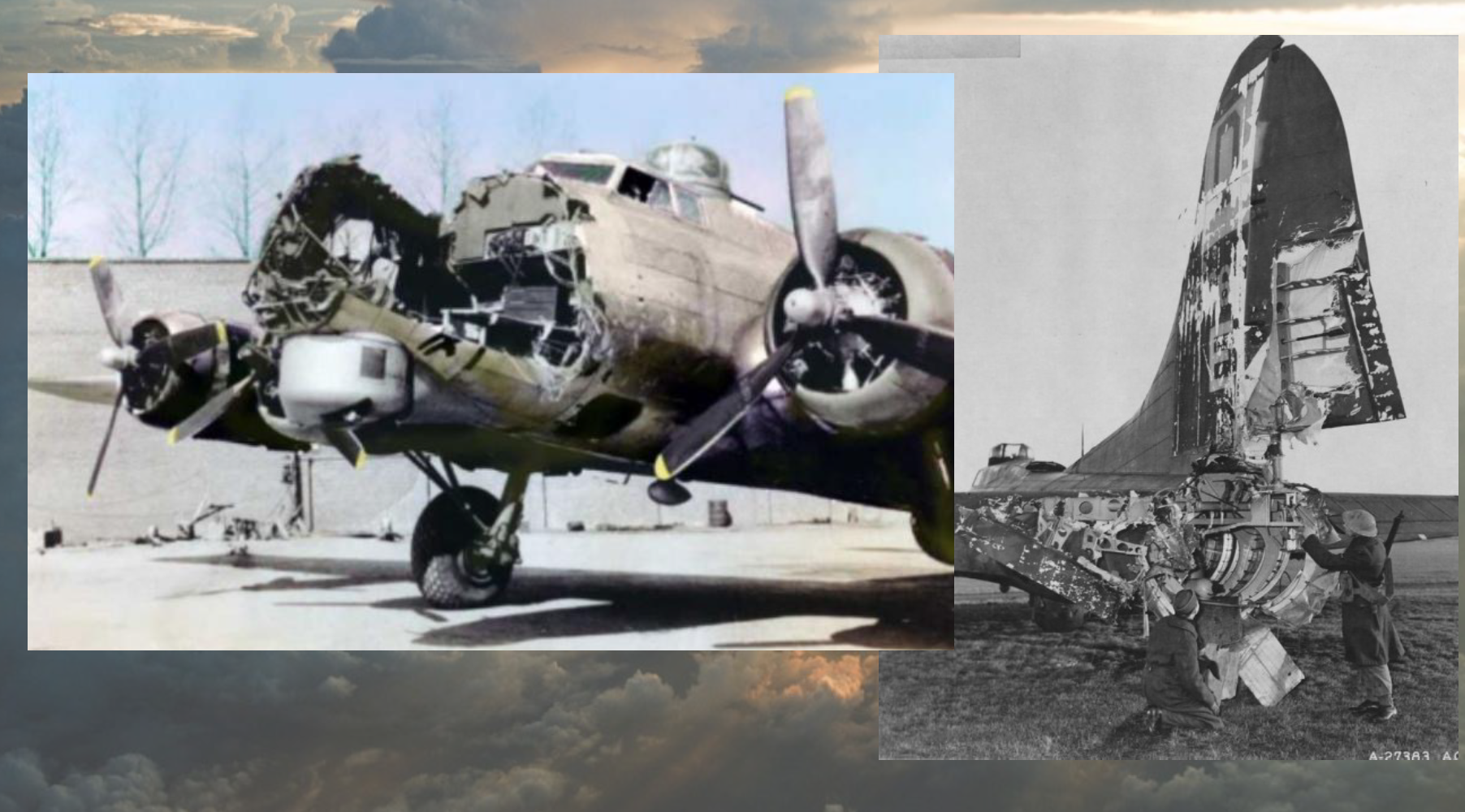
Loving the B-17: Its partner among heavy bombers, the B-24, was a little faster, carried a bigger payload and had a longer range, and there were more of them. But the B-24 lacked the B-17’s graceful Art Deco lines and it was a beast to fly—an analogy might be that the B-24 lacked the B-17’s “power steering,” and pilots of the former sometimes lost five to ten pounds on a typical mission. But the B-17’s most admirable trait may have been its ability to absorb punishment. Maj. Cleven is stunned by the damage German explosive shells (flak) have done to his ship on his return to the airfield at Thorpe Abbots. These planes returned home, too.
Green eggs and Spam: One of the funniest lines in the first episode is a speculative comment on the age of the powdered eggs airmen ate. This passage from Central Coast Aviators also comments on the food airmen ate:
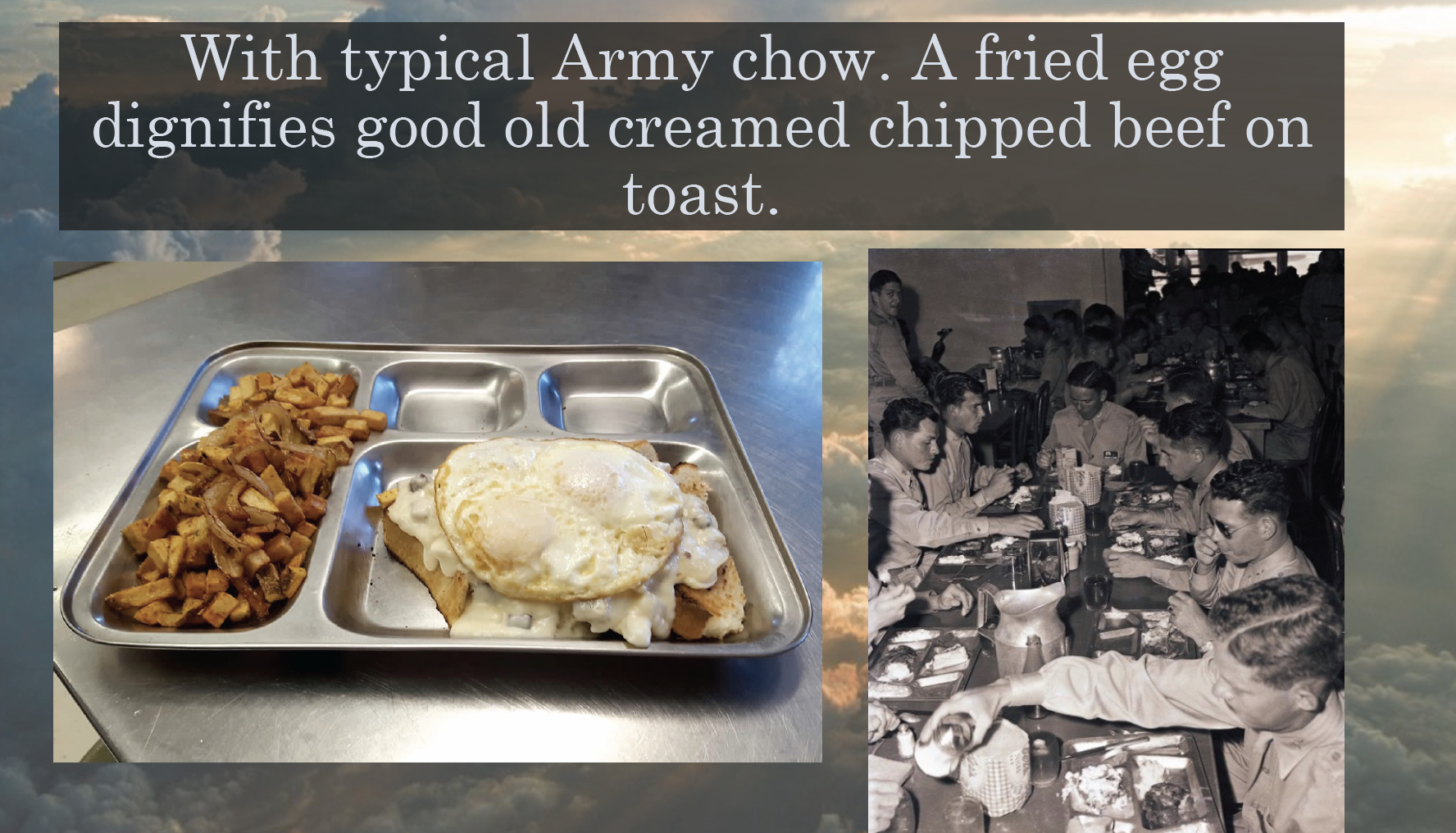
...[E]en in the AAF, the green-hued powdered eggs, along with the ubiquitous Spam, were breakfast standards, and creamed chipped beef on toast—referred to as “shit on a shingle”—followed airmen across the Atlantic from the air bases stateside where they’d first encountered what seemed to be, to the military, a perverse culinary masterpiece.
Nine thousand Army Air Forces cadets went through Hancock’s training program, on the site of today’s college, during the war. Here are some Hancock cadets at table with you-know-what on shingle, surmounted by a fried egg, in the other photo.
British children: David made one of the best points of the night in his introduction. The series pays attention to the ground crews who kept the B-17s flying. While the aircrews slept—fitfully—before a mission, the ground crews were up all night arming, fueling, tuning engines, fine-tuning electrical and hydraulic systems. The most prized crew chief in the episode is a nineteen-year-old corporal who’s struck up a friendship with two British kids. In truth, while other Brits may have resented the Yanks, who could sometimes be obnoxious (“Overfed, overpaid, oversexed and over here”), children adored them. And their Hershey bars. If takeoff came at a decent morning hour, the perimeter fence around an airfield would’ve been lined with schoolchildren, there to wave goodbye to “their” Yanks.
In 2019, the city of Sheffield commemorated the crew of a crippled B-17G returning from a mission in 1944. As the pilot began to bring his plane down, he pulled up to avoid a park crowded with children. The bomber came down somewhere else. There were no survivors.