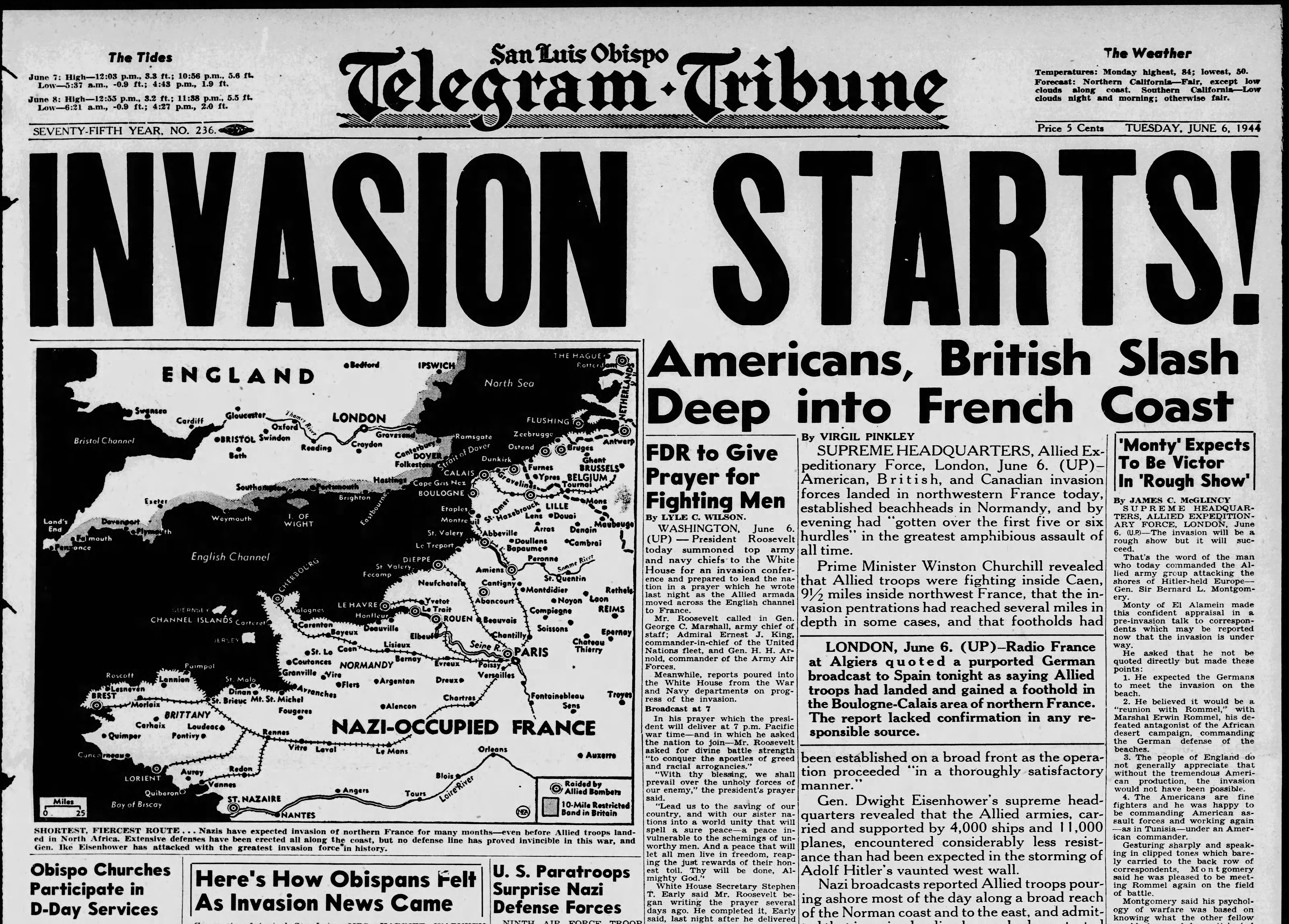
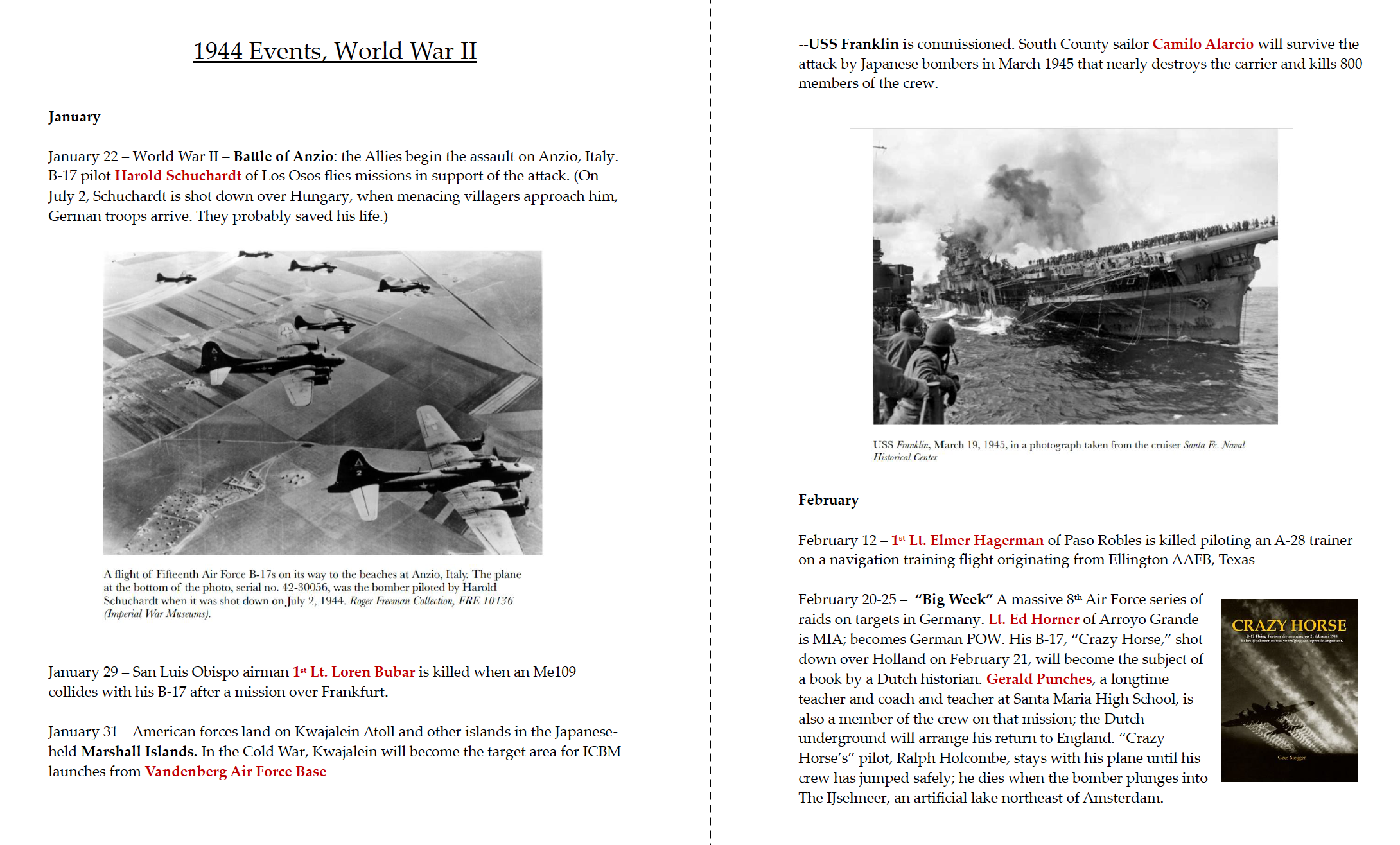
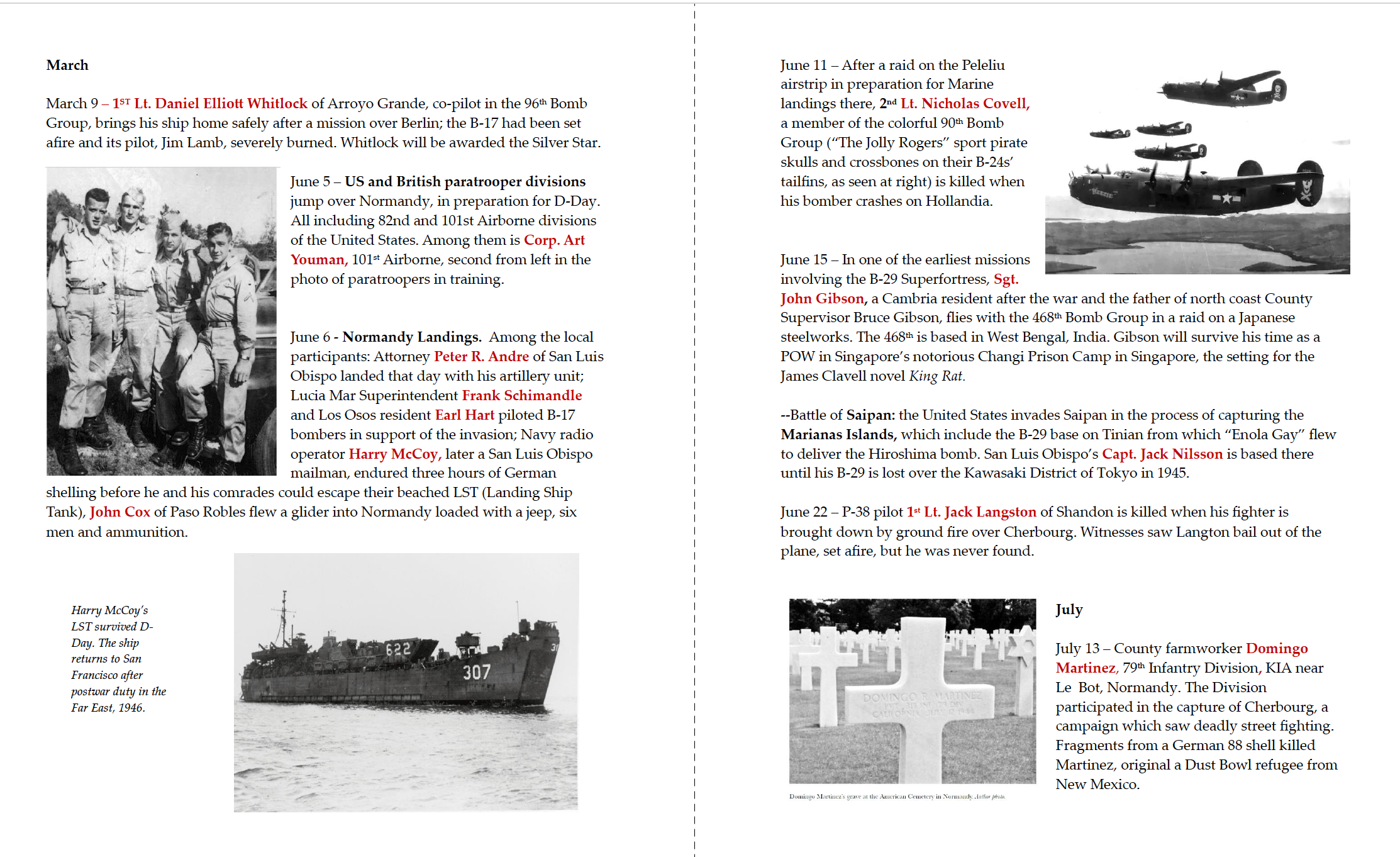
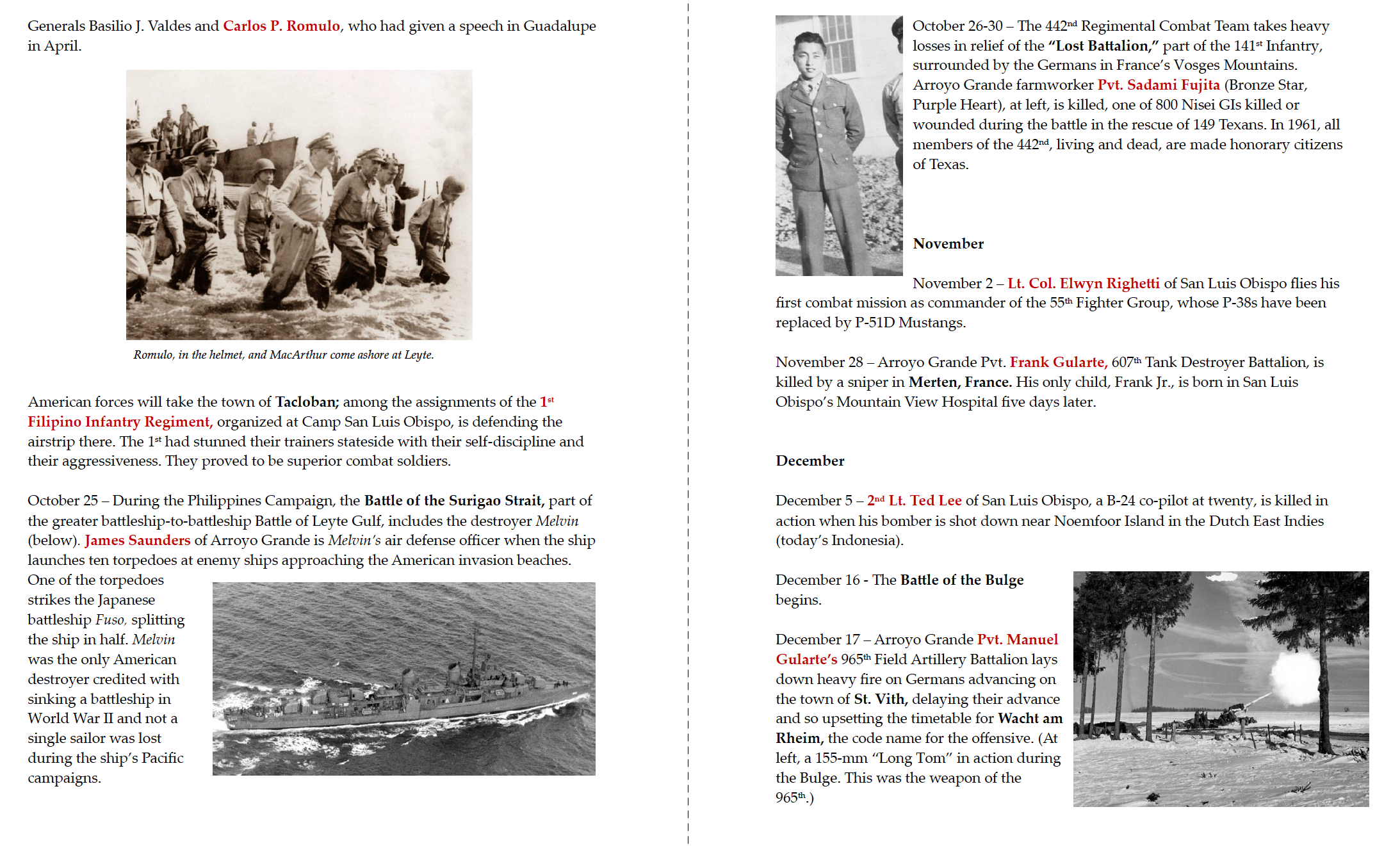
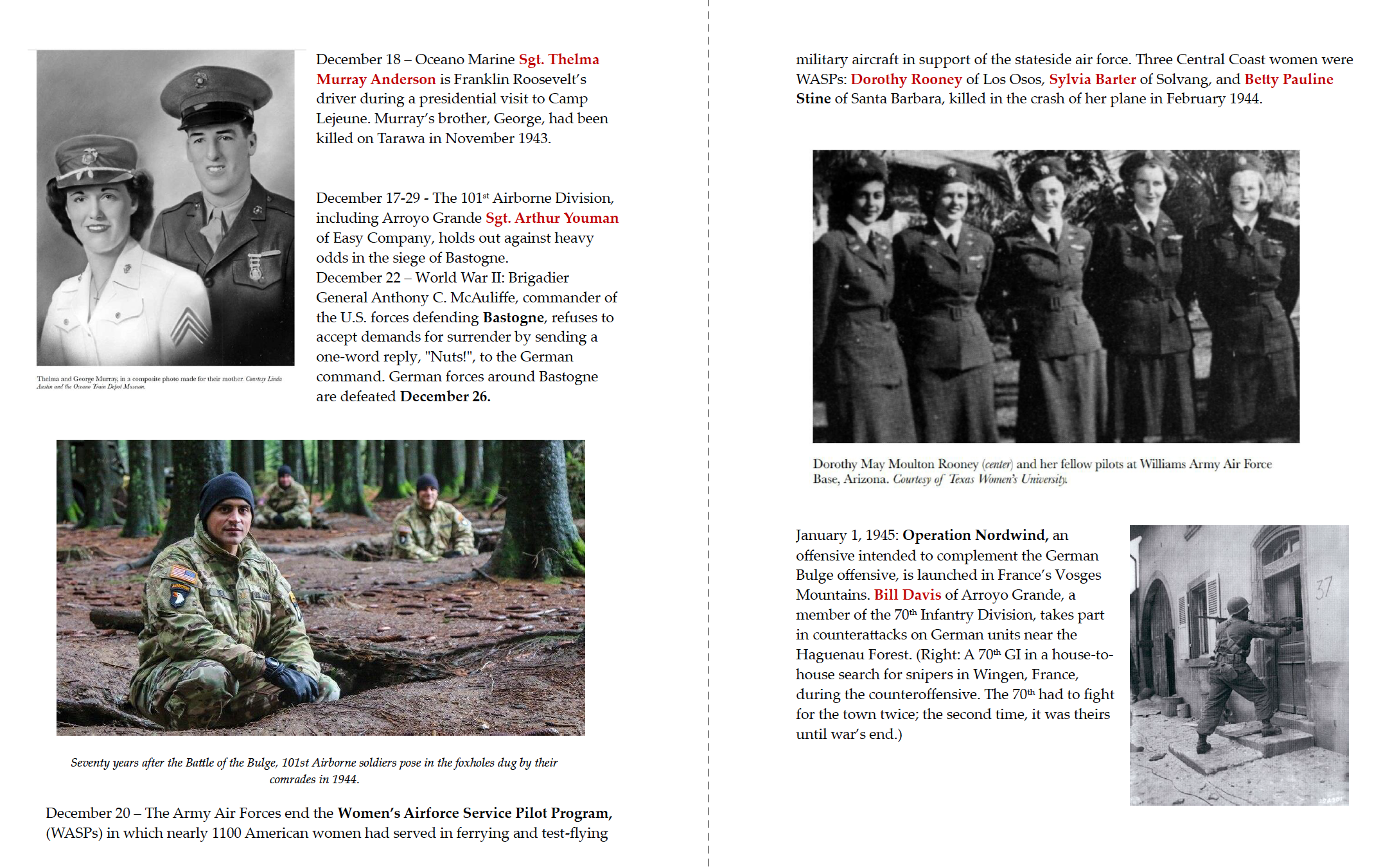
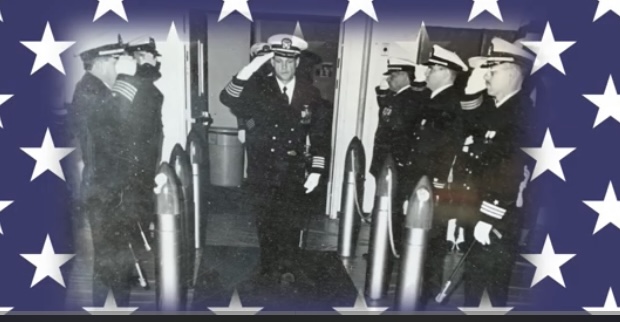
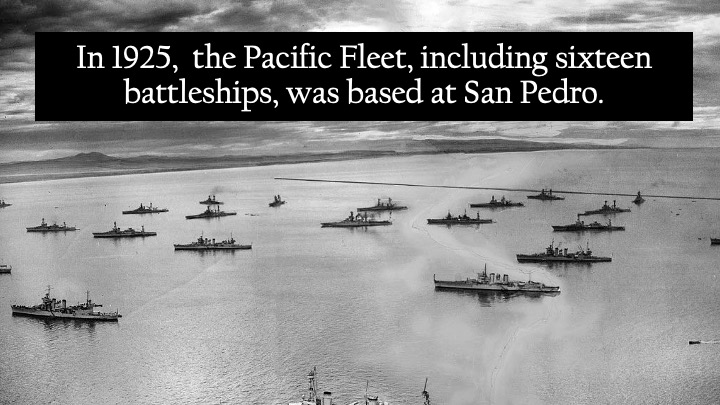
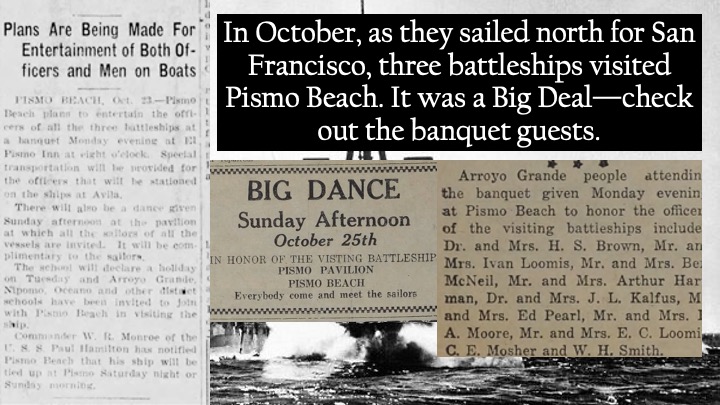
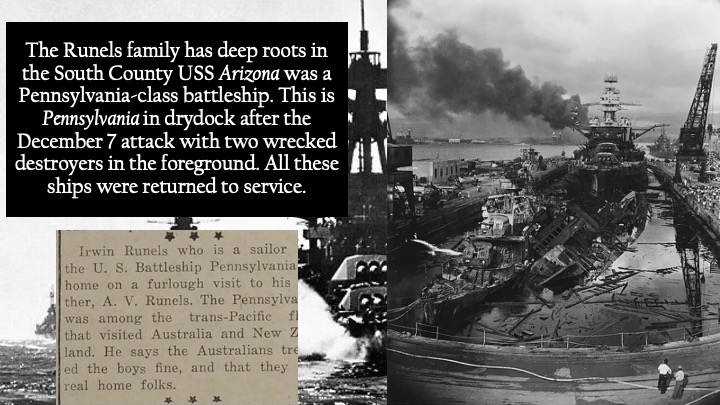
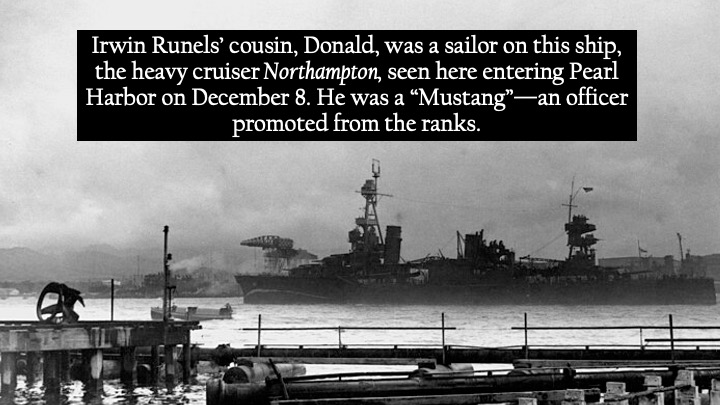
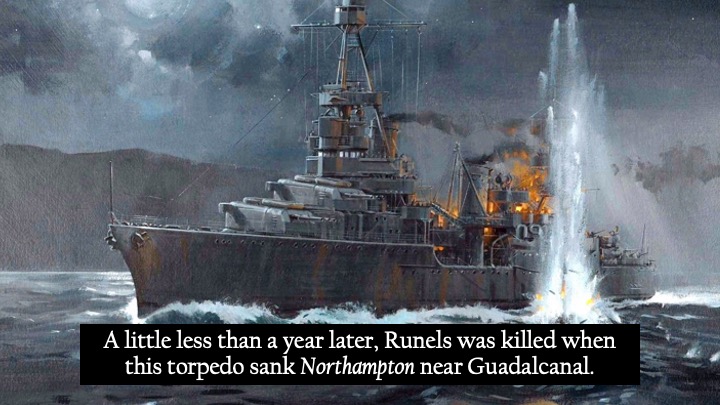
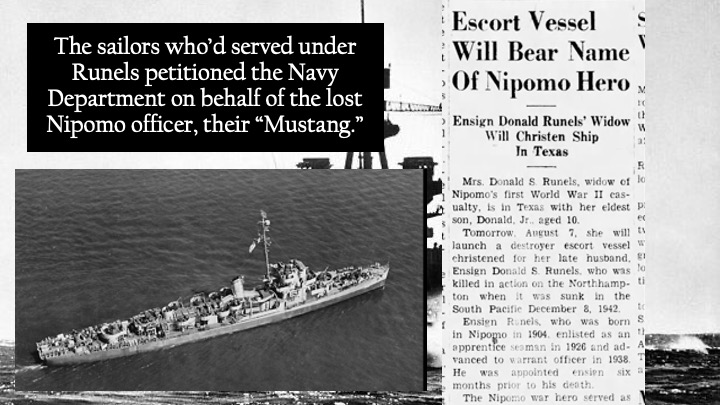
My friends John Ashbaugh and Erik Brun were the impetus for a series of events marking the eightieth anniversary of World War II last year. The pace will quicken this year with the eightieth anniversary this year of 1944. I thought I should at least begin to find some people who either lived in the area or who settled here after the war to learn about their links to their eventful year. The images below are just a beginning. There must be families out there who have stories to share about parents or grandparents—or great-grandparents—for whom 1944 was a watershed. Here are some stories either from my books, my blog or from back issues of the San Luis Obispo Telegram-Tribune, thankfully, now digitized.
I’ve been obsessing over this particular anniversary this year. I think it’s in part because we lost Captain Steve, USN, my brother-in-law, an Annapolis grad. I miss that man.
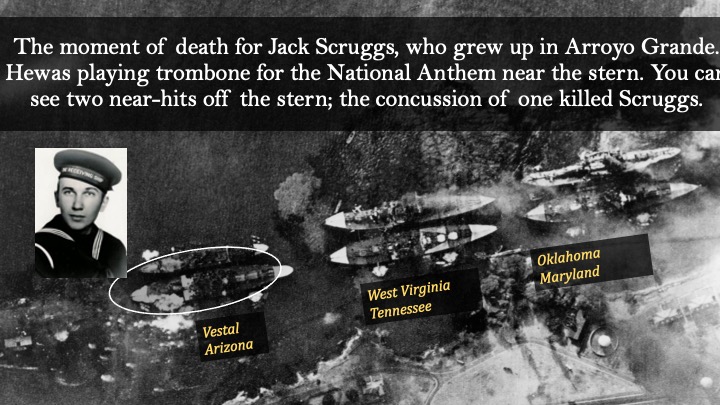
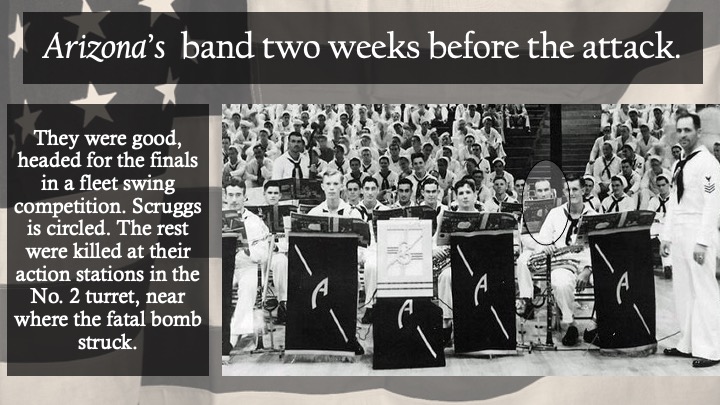
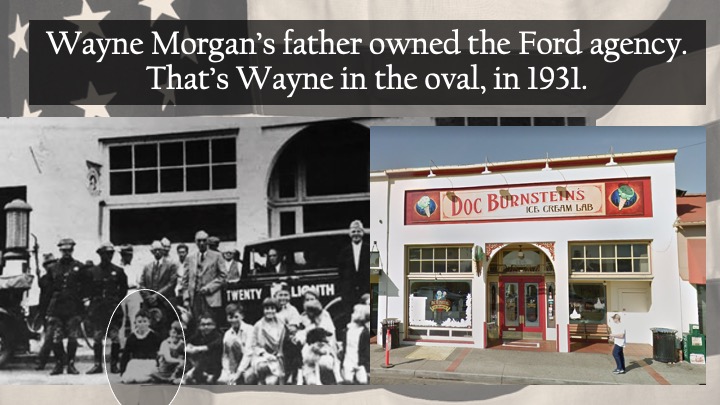
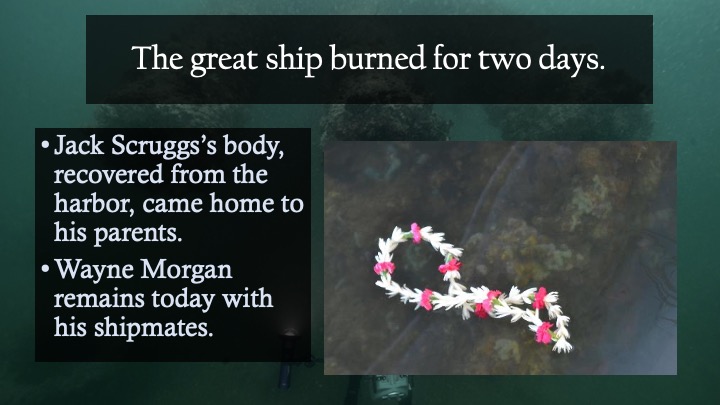
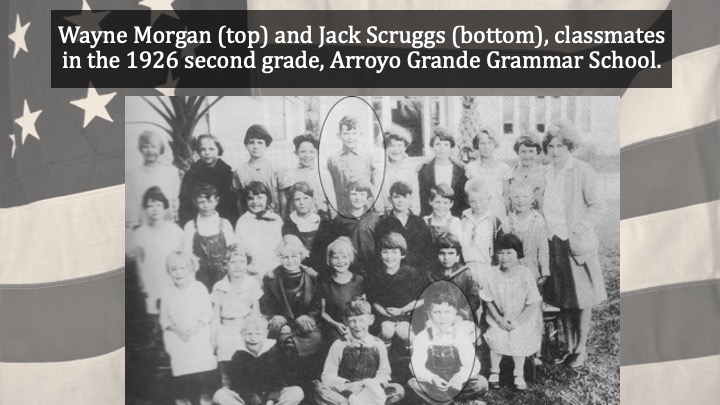
So this video is for Steve Bruce, and for Jack Scruggs and Wayne Morgan, Arroyo Grande boys, for two little Arroyo Grande girls, Jeanne and Yoshi.
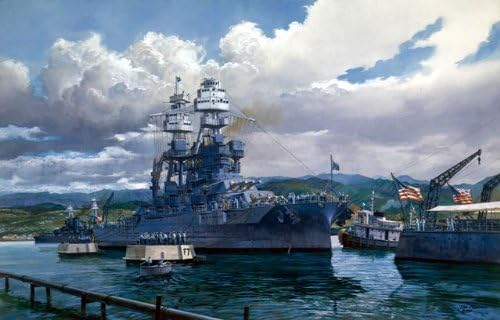
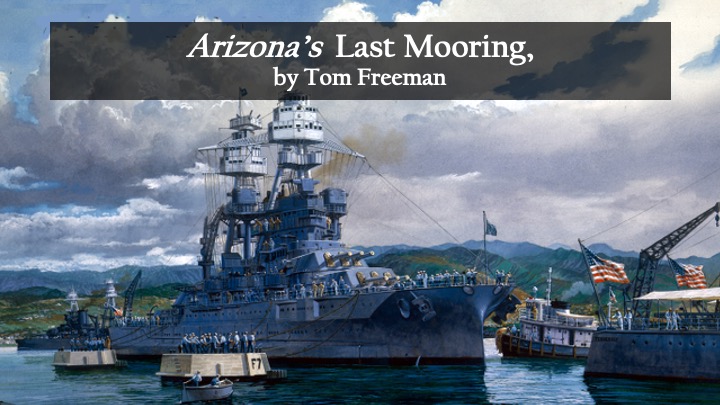
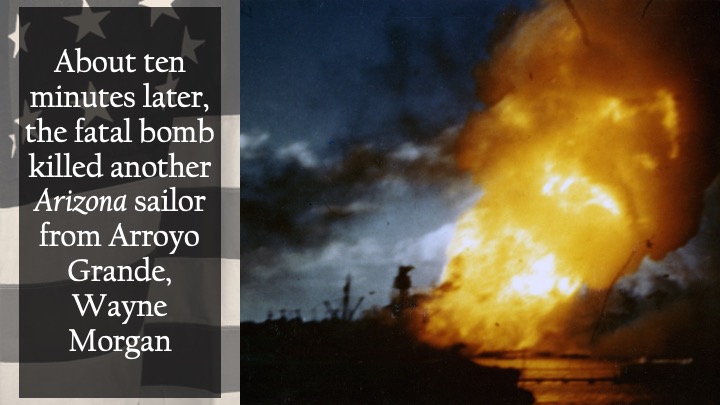
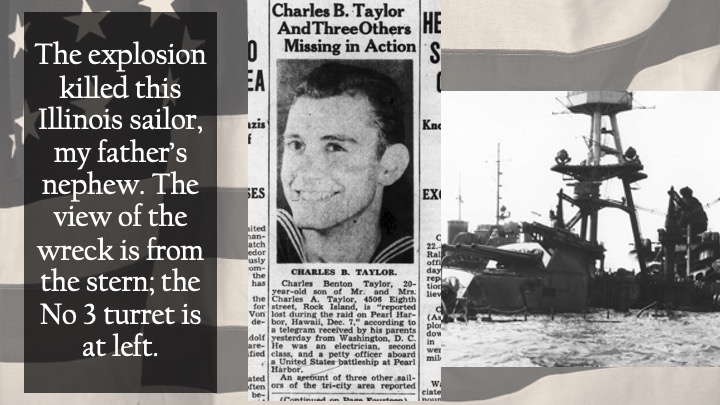
This painting haunts me. The artist is obviously gifted—capturing both water, as the Impressionists did this well, and the great steel machinery of a warship with equal skill means something. So does the occasion. It is 9:15 a.m. on December 5 and Arizona is being secured to her mooring quays near the end of battleship row. Two Arroyo Grande sailors and one from my family have a little under forty-eight hours to live.
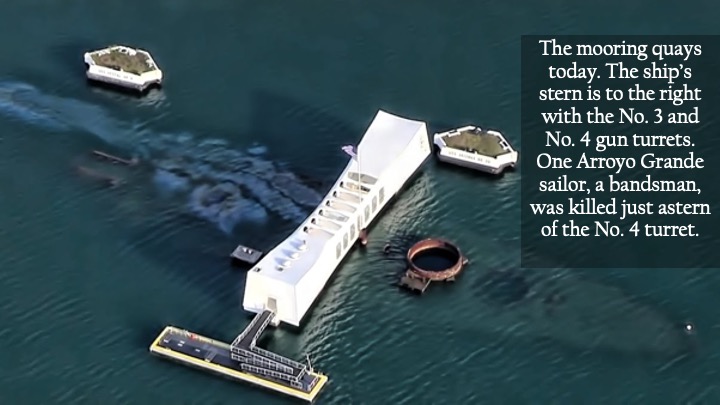
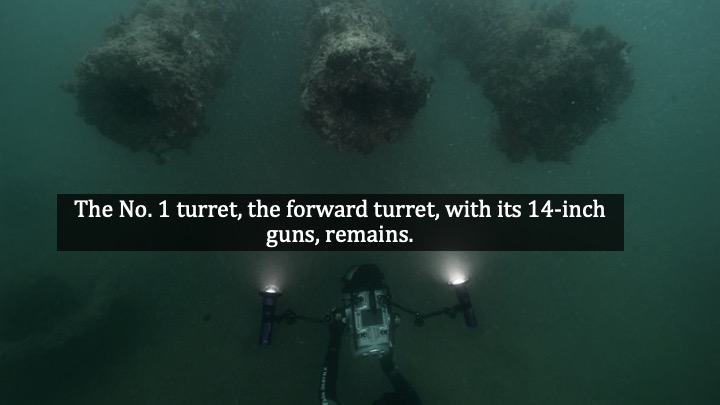
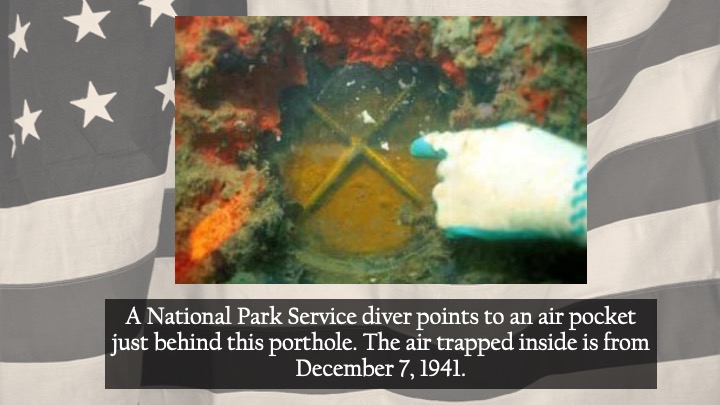
A year ago, in a moving ceremony, the Central Coast Veterans Museum unveiled this artifact from the battleship.
I remember a Twilight Zone where the protagonist was somehow transported from modern times, meaning 1960, to a passenger compartment on Lusitania in 1915. Serling was fond of time-traveling. So am I, thought I haven’t actually practiced it much. Of course in the episode the man’s warnings were useless—he was thought to be a lunatic—because history moves with great weight and determination. He was crushed by it.
Likewise, I have a foolish urge to drive a jeep down to chew out the duty officer who’s shrugging off the radar blips on Opana Point or break up the golf foursome that includes Adm. Kimmel and Gen. Short and somehow order them to get their fannies, even if they are in plus-fours, to their headquarters, and NOW. And I want someone to take that damned war-warning telegram seriously.
I’ve had no luck so far in these endeavors.
There was a science fiction-ish novel, The Final Countdown, and there was a not-very-good the film based on it. In the film, Adm. Kirk Douglas’s aircraft carrier was beamed–is that the right word?–from the 1970s back to the predawn of December 7 and his radar picked up Kido Butai-–the 1st Air Fleet and its six carriers—and he had the chance to obliterate it with his jets, Phantoms and Crusaders and such. I don’t remember what Kirk did, but I think he decided that you don’t mess with the timeline. Kirk (See: Seven Days in May , 1964) usually gets it right. And one of the better Simpsons Hallowe’en episodes made that point, when Homer stomped on a prehistoric bug and messed up everything.
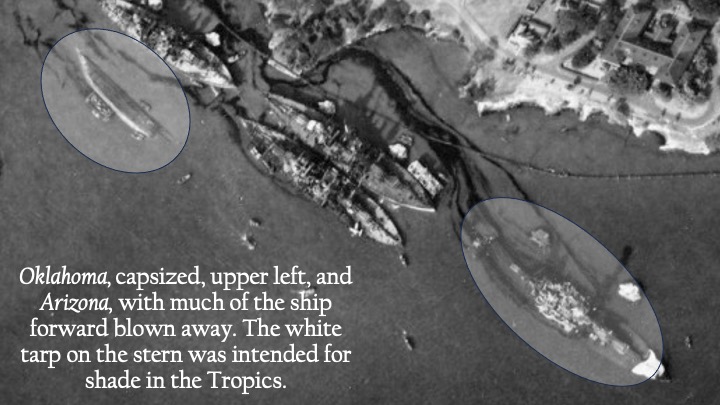
But today—and the day after tomorrow—aren’t funny. The attack on Pearl Harbor made us the world power that we are today. There are few turning points in history as clear as this one. It also claimed 1,177 Arizona sailors and Marines, most killed instantly, and it led to Executive Order 9066, to the shameful confinement of the families of some of my closest friends.
At Gila River, the desert winds carried the spores for Valley Fever that decimated the elderly Issei, the first generation immigrants who were not permitted to become citizens because they did not have the appopriate prerequisite, said the Supreme Court, which was Whiteness. They and their children turned the desert into truck gardens—cauliflower thrived at Gila River—and the young Nisei men joined the army to prove they were Americans. Many gave what Lincoln called, so movingly, “the last full measure of devotion.” 400,000 young Americans died with them, along with thousands more—many of them women—in wartime industrial accidents.
So this is Arizona in the last few moments of peace hours away from her last full measure of devotion. The America of Log Cabin syrup in little tin cans, of glass milk bottles delivered in Model A panel trucks, of Fred and Ginger and ruby slippers and Andy Hardy malt shops, is on the verge of vanishing. We’d built dams and bridges and dizzying skyscrapers in the Thirties, before Pearl Harbor, now we would build tanks and planes and, of course, warships.
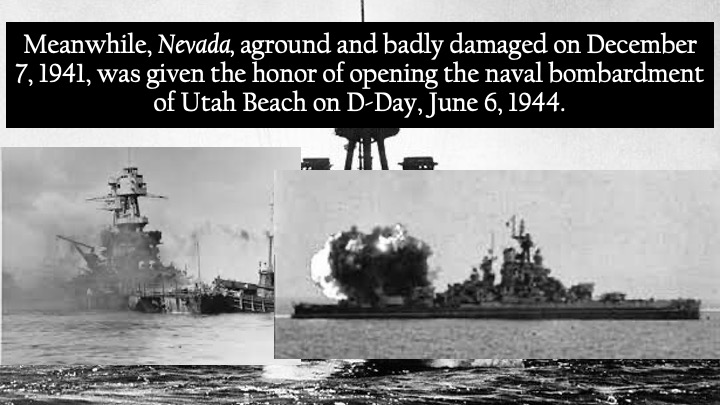
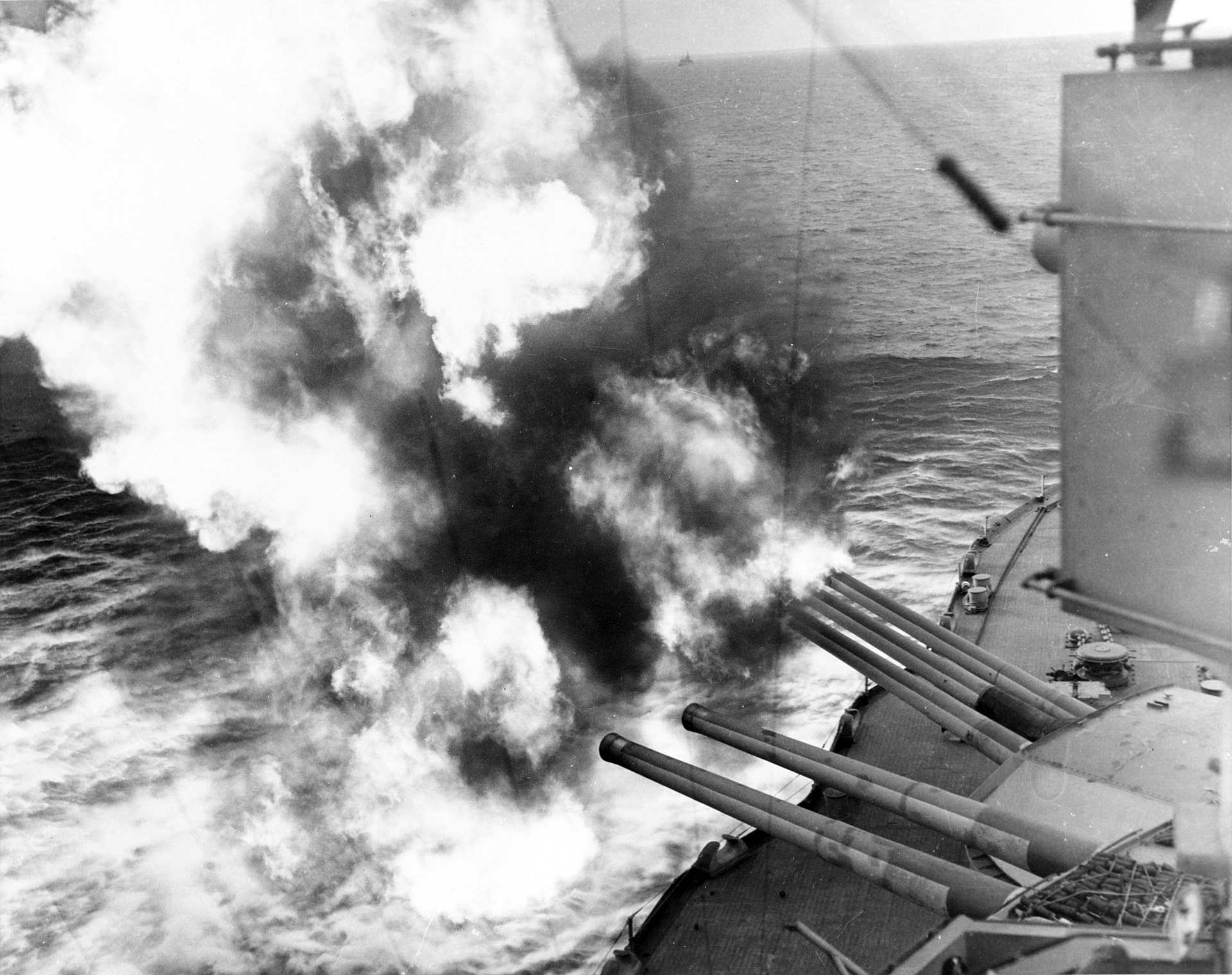
All but three of the battleships destroyed on December 7 were raised, repaired, refitted and modernized. Nevada, the only member of Battleship Row to make steam and get underway that terrible morning would, two and a half years later, cross the Channel to hurl the great weight over her fourteen-inch guns at the enemy behind Utah Beach. Nevada was afforded the great and perfect justice of firing the first salvo.
These were her guns at work that day, on another historic morning, during another historic turning point.
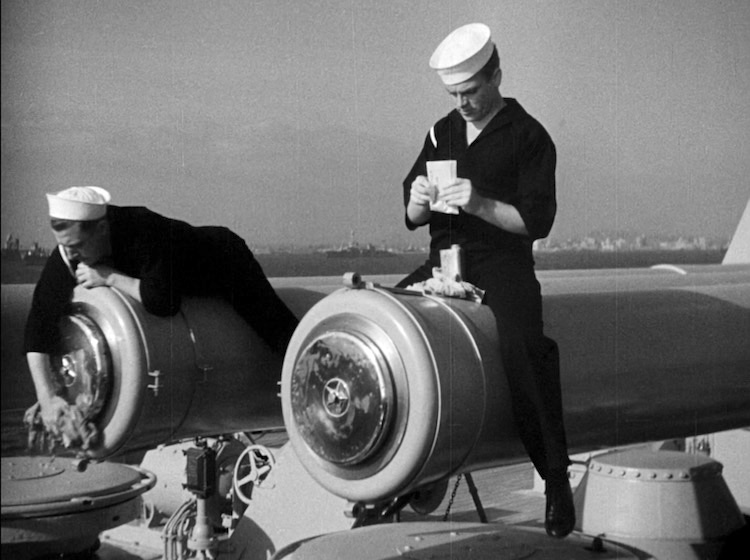
Forward 14/45 guns of USS Nevada (BB-36) fire on positions ashore, during the landings on Utah Beach, 6 June 1944. Official U.S. Navy Photograph, now in the collections of the National Archives.James Cagney in 1934’s Here Comes the Navy, filmed on Arizona. Arizona in line ahead in heavy seas.
A dignitary sails the Caribbean with the great ship:
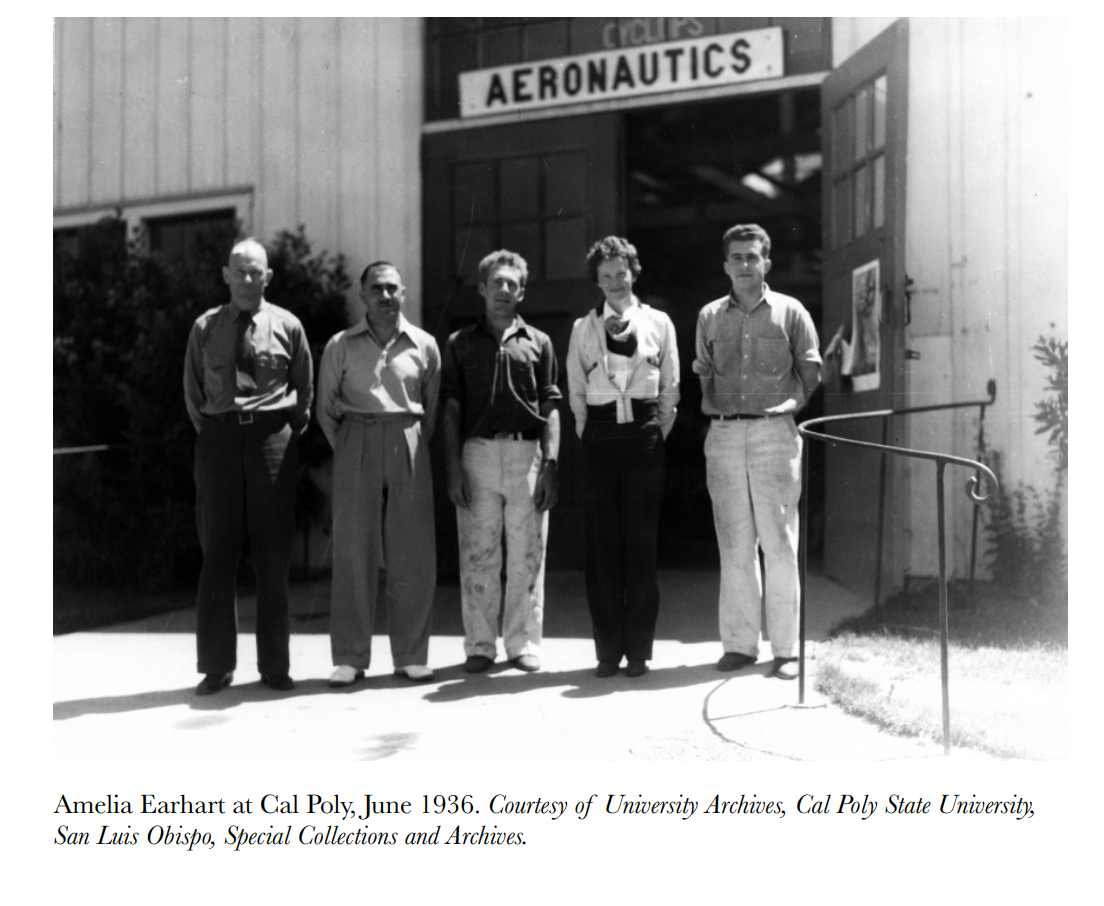
My AGHS teaching partner and dear friend Amber Derbidge (we both love airplanes) once loaned me her DVD of Amelia, the movie bio of the aviator’s life, and it just happened to be on the TV again yesterday and I got all misty-eyed again and damn if she and Fred Noonan didn’t disappear again. It happens every time. What’s haunting are the stories that seem authentic, about people who reported hearing Amelia’s voice over their short-wave radios for weeks after the Coast Guard lost contact with her.
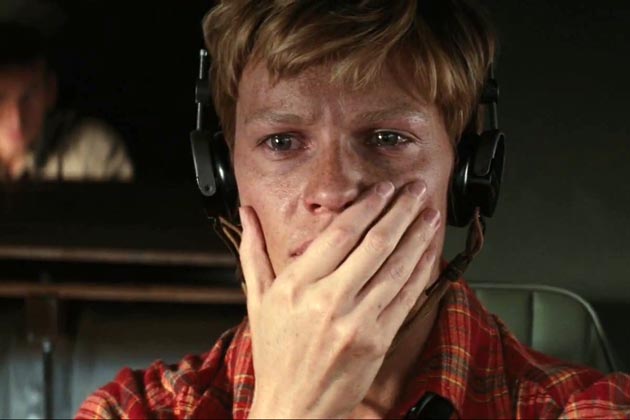
In the movie, Hilary Swank’s Amelia knows she’s done for, and she gets misty-eyed, too, as the enormity of her situation sinks in. It’s heart-breaking.
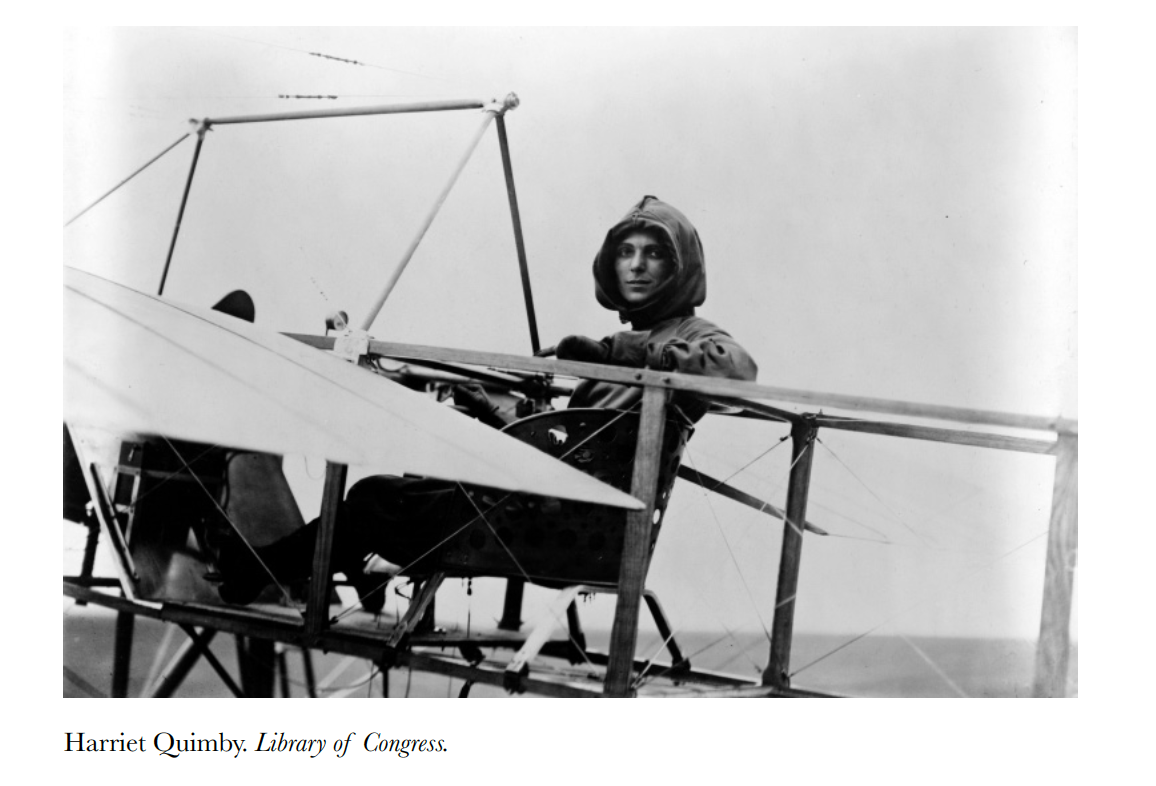
It’s obvious to say that early aviation was dangerous. Harriet Quimby, who claimed Arroyo Grande as her hometown, became the first woman in American to earn a pilot’s license. She was the first to fly across the English Channel in April 1912. In July, she was dead, killed when her Bleriot monoplane flipped and dumped her and a passenger into the ocean near Boston.
Harriet and Amelia and then I learned about Dorothy, who became yet another pilot-hero. She was a WASP. Here’s the story:
Dorothy Rooney died a few years ago at 102. But on Sunday, when I gave a talk on aviation history at the SLO Airport, I met Dorothy’s flight instructor, Elizabeth, once again. No, not her World War II flight instructor, but almost that good. I will try to approximate Elizabeth’s story. (Elizabeth wears little P-40 Thunderbolt earrings, which endears her to me).
My friend Elizabeth Dinan, center.
“Are there any female flight instructors here?” an older woman asked Elizabeth one day at McChesney Field.
“Well, I’m one.”
“Can you give a lesson?”
“Sure. When would like to go up?”
“Now. I flew a little during World War II and I just wanted to see if the magic was still there.”
So they went up. After fifteen minutes or so, Elizabeth asked her student, who was, of course, Dorothy May Moulton Rooney, if she’d like to take the wheel.
“Naw.”
A moment passed.
“OKAY!”
For the next forty-five minutes, Elizabeth’s student took the Cessna through its paces, kind of lazy-like.
“Why’s the rudder so sticky?” Dorothy asked.
Elizabeth realized that Dorothy had been used to flying military trainers and warplanes, and the Cessna’s controls must’ve seemed primitive. But she brought the plane in for a landing. It was a bouncy one.
For Dorothy, the magic was still there.
“Can we do this again?” she asked Elizabeth. Elizabeth nodded. That began decades of friendship.
But it took awhile to work out Dorothy’s landings. Again, it was because of the warplanes she’d flown–the approach in a powerful plane is much steeper and more abrupt as the pilot brings it home. After awhile, Dorothy learned to make her approaches shallow enough so that the landings were almost as smooth as the happy moments the two spent in the air.
Here’s a wonderful SLO Tribune story about the group, the 99s, that Elizabeth’s part of—you’ll recognize her by those earrings— and what makes this old geezer (me) happy is to see how many young women are becoming pilots.
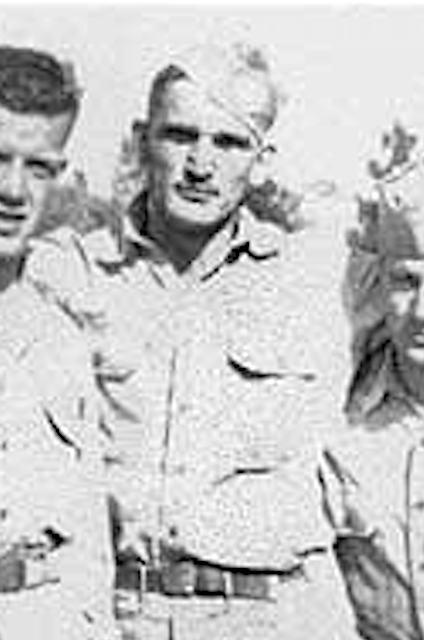
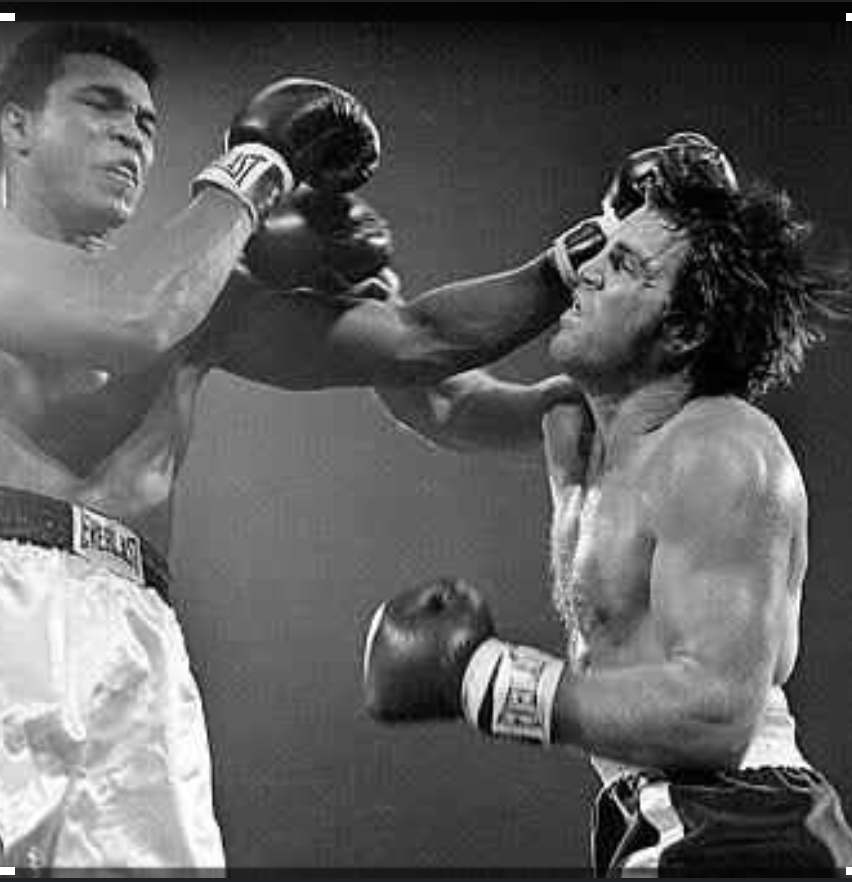
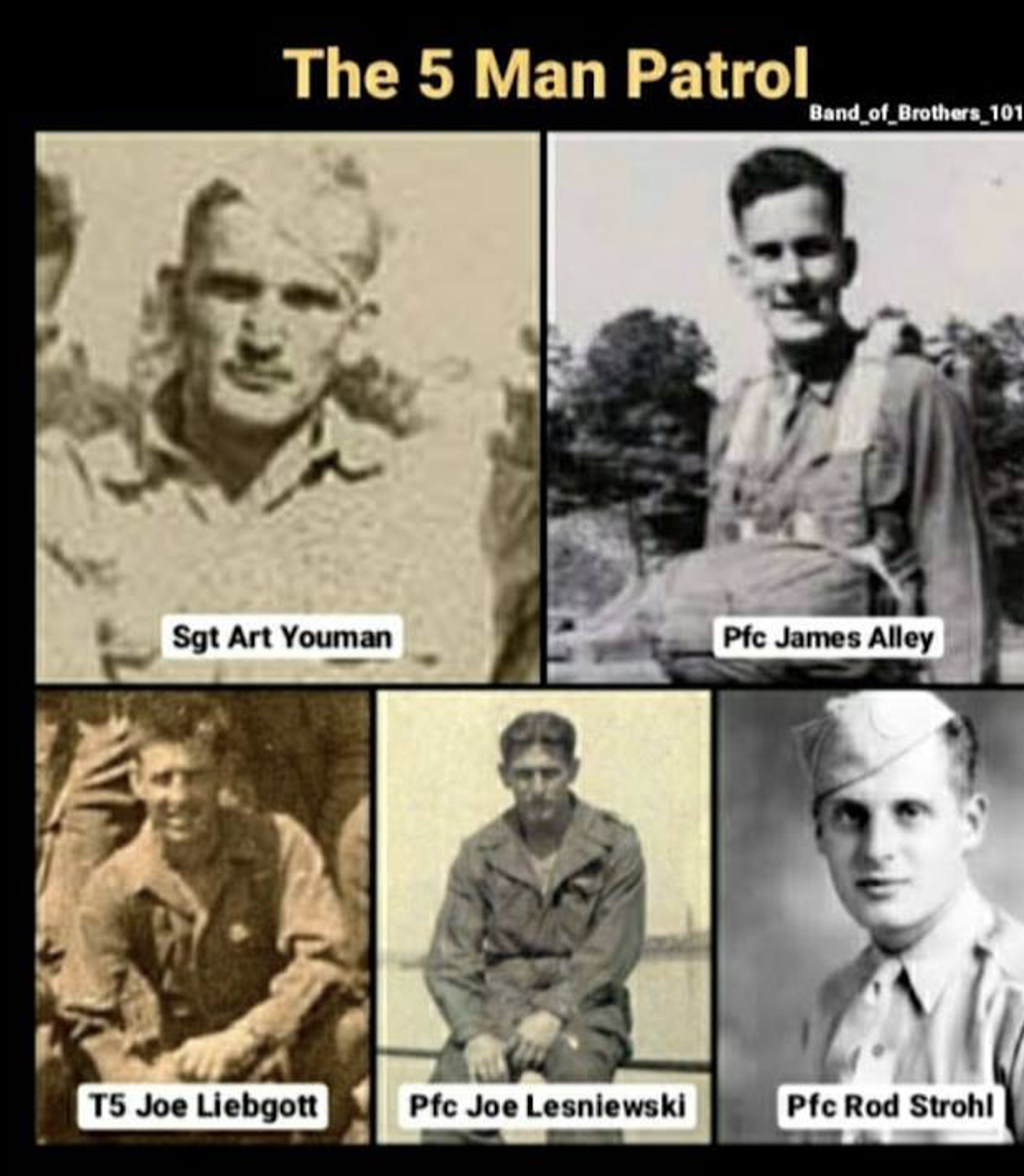
I was thinking about one of my heroes from Arroyo Grande’s past, Staff Sgt. Art Youman, a member of the 101st Airborne’s Easy Company in World War II. This closeup of Youman, taken in training in South Carolina, shows what just might be a boxer’s nose. That’s Jerry Quarry (his little brother Mike, a light heavyweight, lived in San Luis Obispo County for a time) in the right-hand photo, having his nose adjusted by Muhammad Ali. Quarry, always a contender but never a champion in the heavyweight division, was a man of enormous courage. Youman shared that quality.
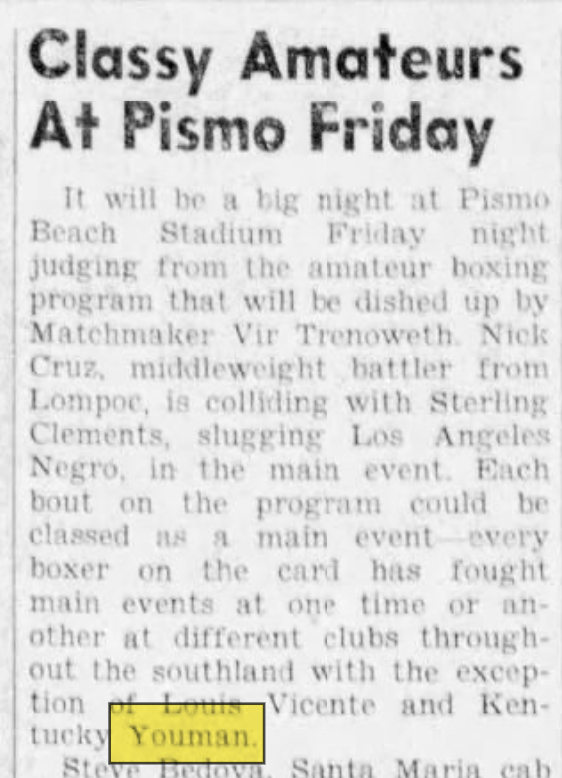
Well, my hunch was right. This item from a fall 1940 San Luis Obispo Telegram-Tribune, when boxing was big in Pismo Beach:
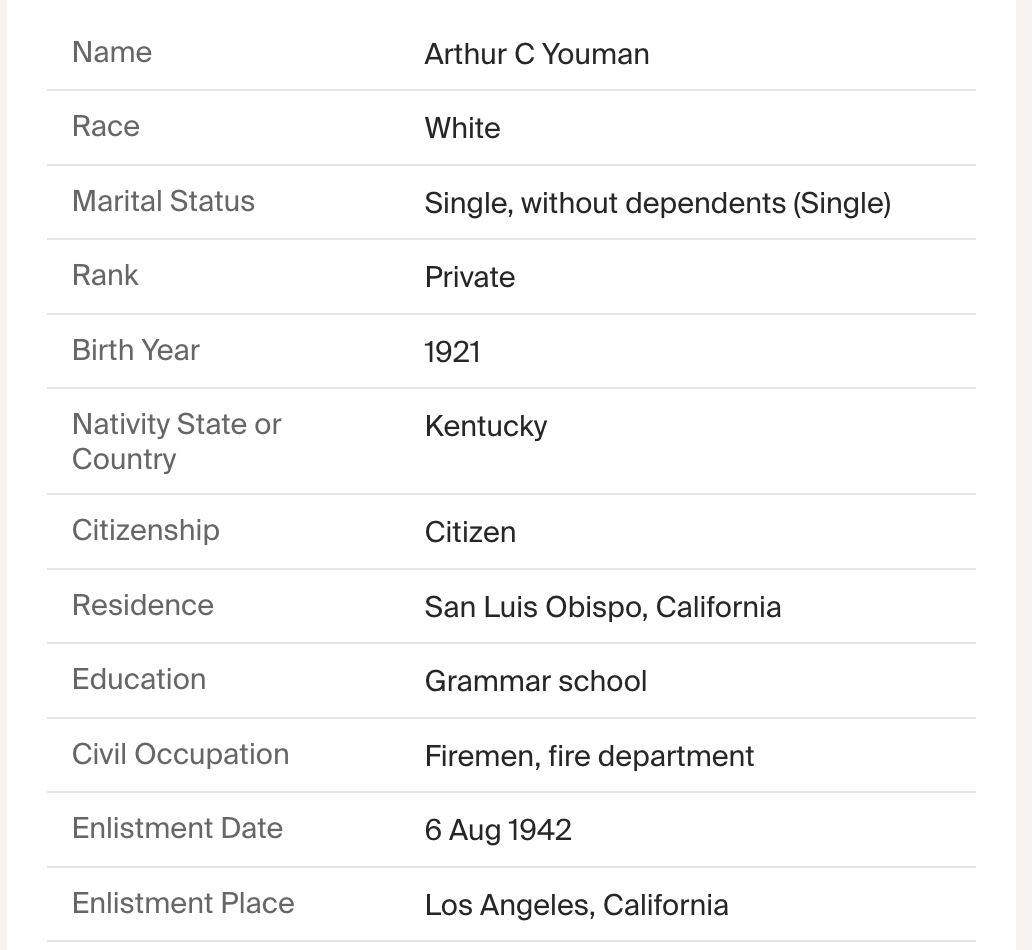
You wince at the “slugging Negro” reference—in a similar fashion, Filipino fighters were identified by their homeland—but “Kentucky Youman” won his bout via a TKO (Technical Knockout.) Why was an Arroyo Grande fighter named “Kentucky?” Ancestry.com provided the explanation from Youman’s August 1942 enlistment record.
My grandfather was a Kentuckian, too. Youman’s his draft card yielded a little more information:
I knew that Youman was a firefighter in San Luis Obispo, but I didn’t know it was for the Camp San Luis Obispo fire department (absorbed after the war by what is today CAL FIRE). I’d assumed that he worked for the City of San Luis Obispo. This new information was even better, because, thanks to my two military history experts and friends, Erik Brun and Dan Sebby, I found this photo yesterday that they’d posted late last year:
The California National Guard acquired this 1942 Seagrave fire engine in 2022 and the Guard’s history division hopes to restore it. It was, in fact, assigned to Camp San Luis Obispo in 1942, and since Art Youman didn’t enlist until August, there’s a chance that he rode on or even drove this engine. So this is, in a way, Easy Company’s fire engine, too.
Youman’s life accelerated quickly the next two years, with the tough training that shaped paratroopers and with combat.
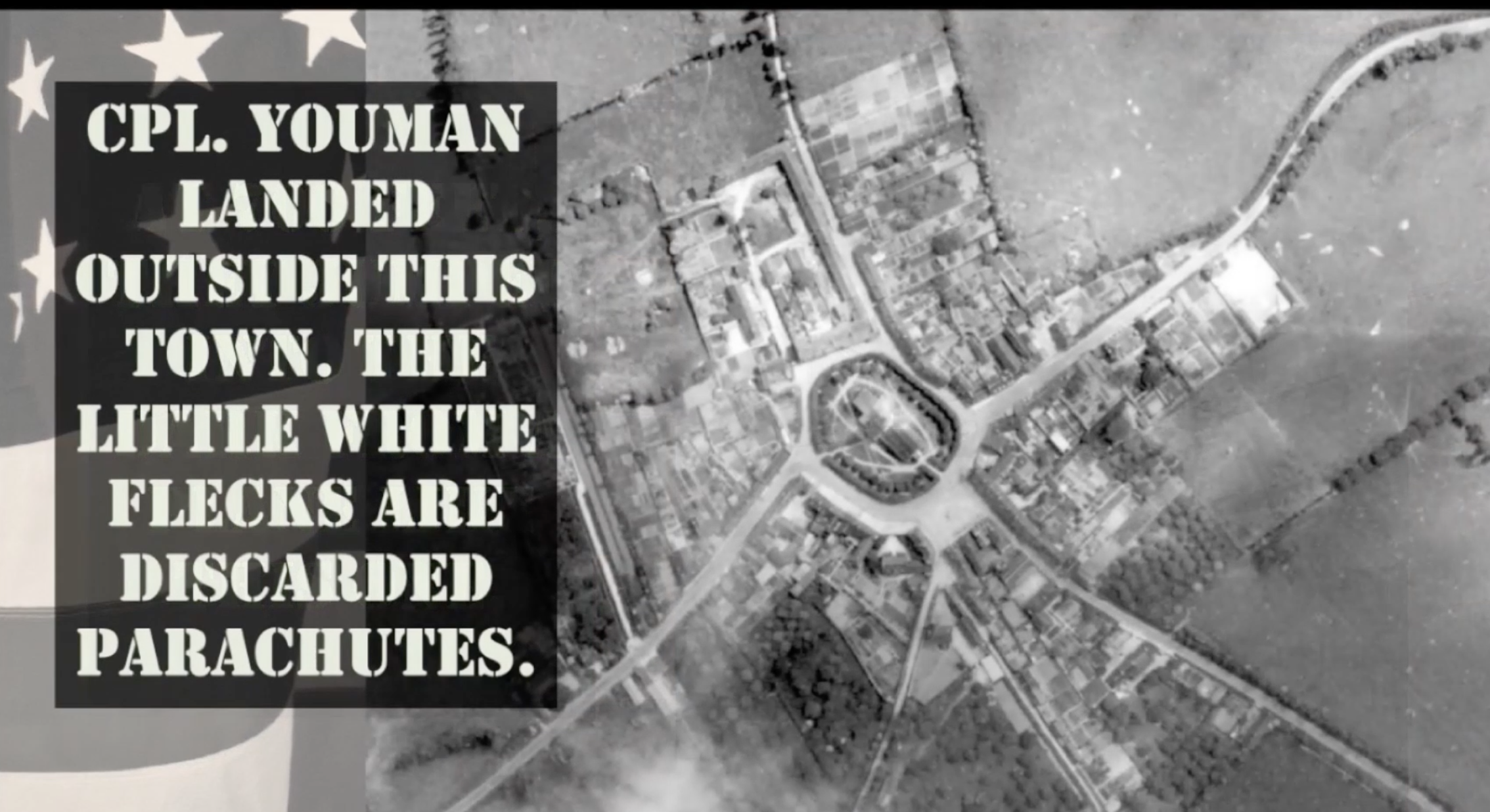
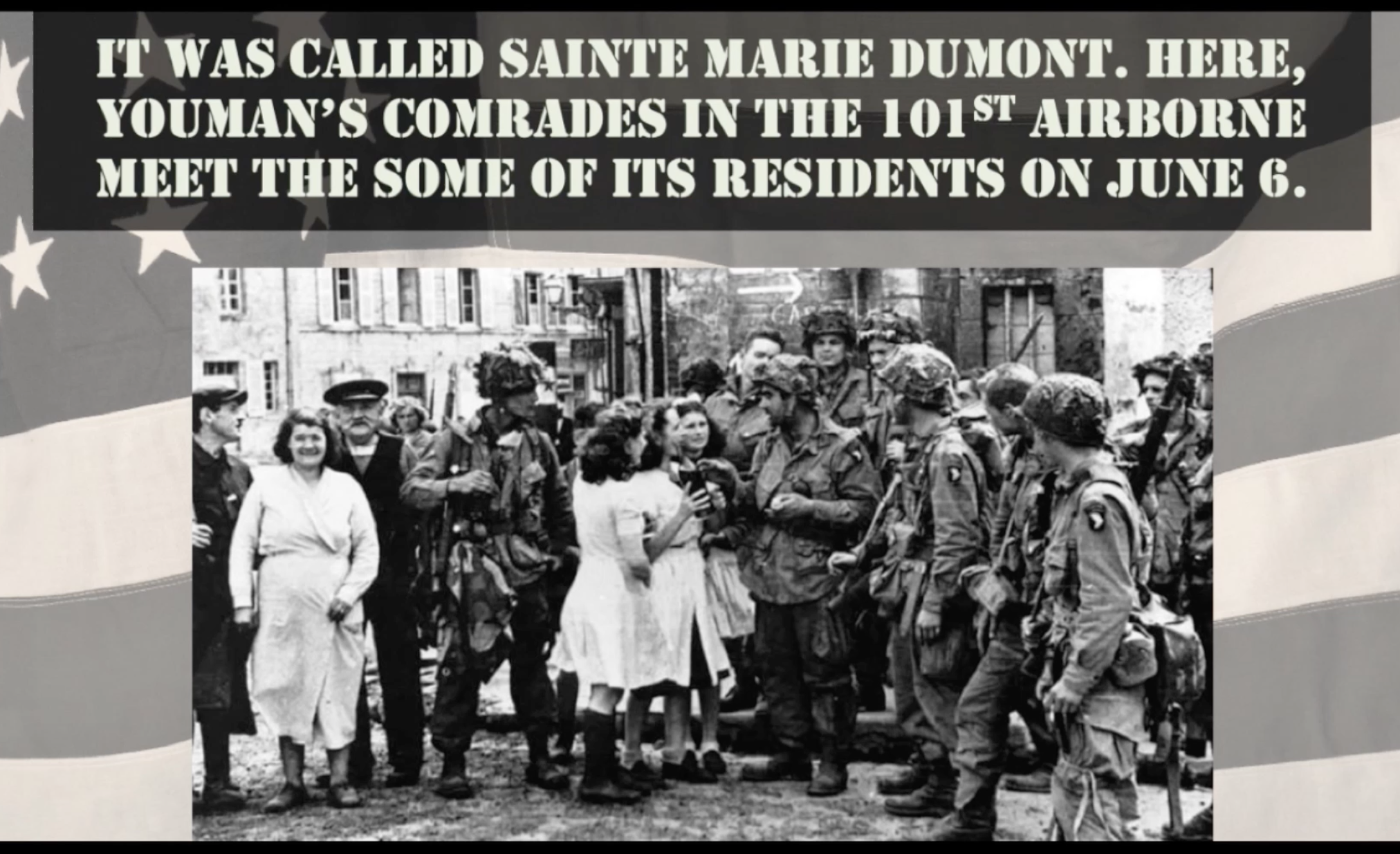
He parachuted into Normandy on D-Day.
Later, in the fall during Operation Market Garden, Youman had led a small patrol to this Dutch crossroads when he and his men encountered a German patrol. A flurry of hand grenades came down on the paratroopers, which they returned—one of Youman’s men threw his entire consignment of six grenades. They returned to Easy Company mostly intact except for the shrapnel splinters. October 8 marks the 79th anniversary of that encounter.
Source: “Dalton,” Flickr.
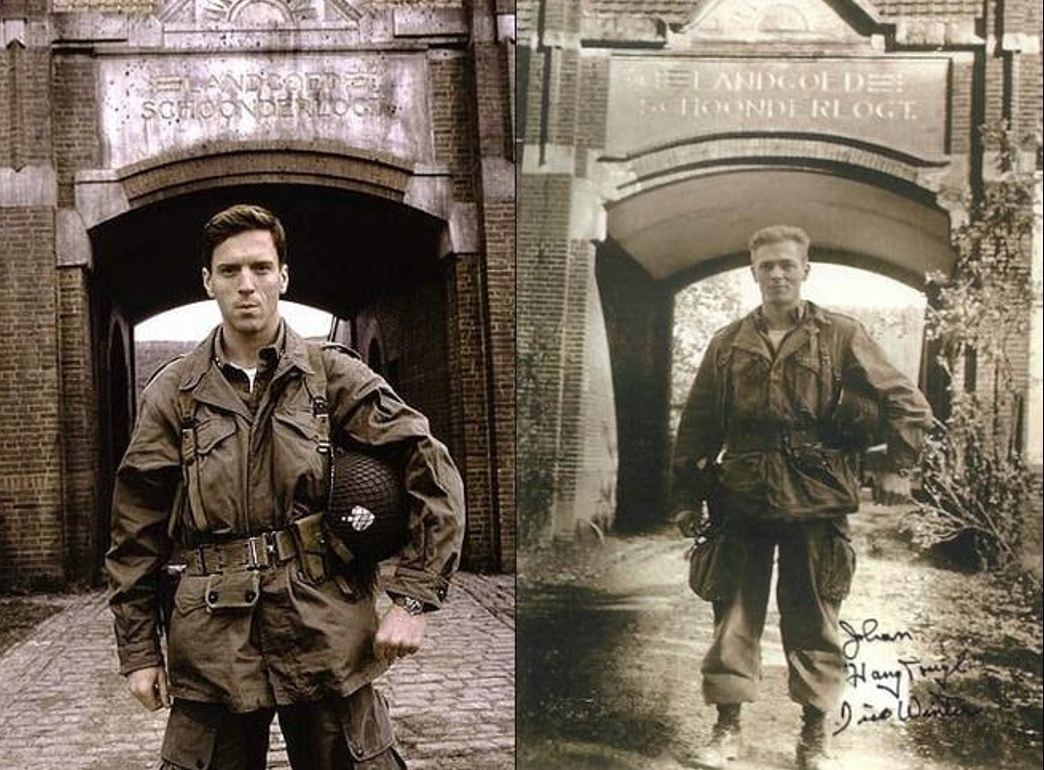
It was in Holland where the Arroyo Grande fighter with the boxer’s nose was promoted to staff sergeant by Capt. Dick Winters, portrayed by British actor Damien Lewis (at left; Winters at right) in HBO’s Band of Brothers, based on the Stephen Ambrose book.
Eight weeks later, on either his 23rd or 24th birthday—the records differ—Art Youman marched into Bastogne with the 101st Airborne, a Belgian town my students and I visited in 2010. Their resistance there, during the coldest winter in Europe in thirty years, did much to foil the great German counteroffensive in the Battle of the Bulge. Art Youman’s combat career lasted about six and a half harrowing months, interrupted only briefly by a furlough in England. That career ended in the Battle of the Bulge and his hospital record is a testament to both the power of German artillery and the punishment of that winter’s cold.
Youman was only 54 when he died, but he has family still in San Luis Obispo County, in Paso and in Nipomo. I’ve met a few of them, and they are warm people, nice people, proud of Art. They have every right to be.
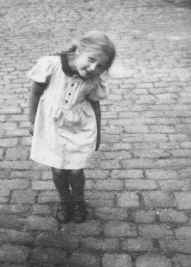
Some of my favorite World War II photos include children. The first is of a little Berlin girl, soon after the war’s end. She is meeting her first American, a G.I. in the 77th Infantry Division.
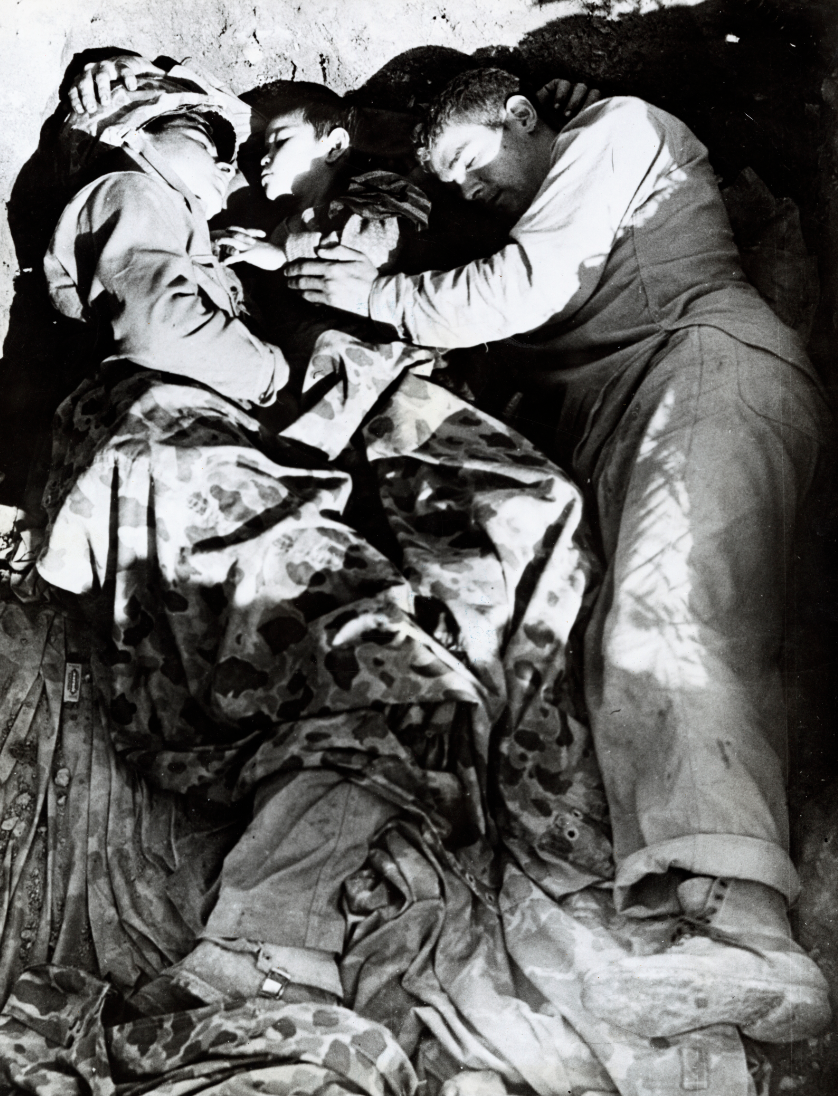
The second gets me misty. The little boy lost his immediate family in the horrific battle for Okinawa. The two young Marines cared for him until relatives were found.
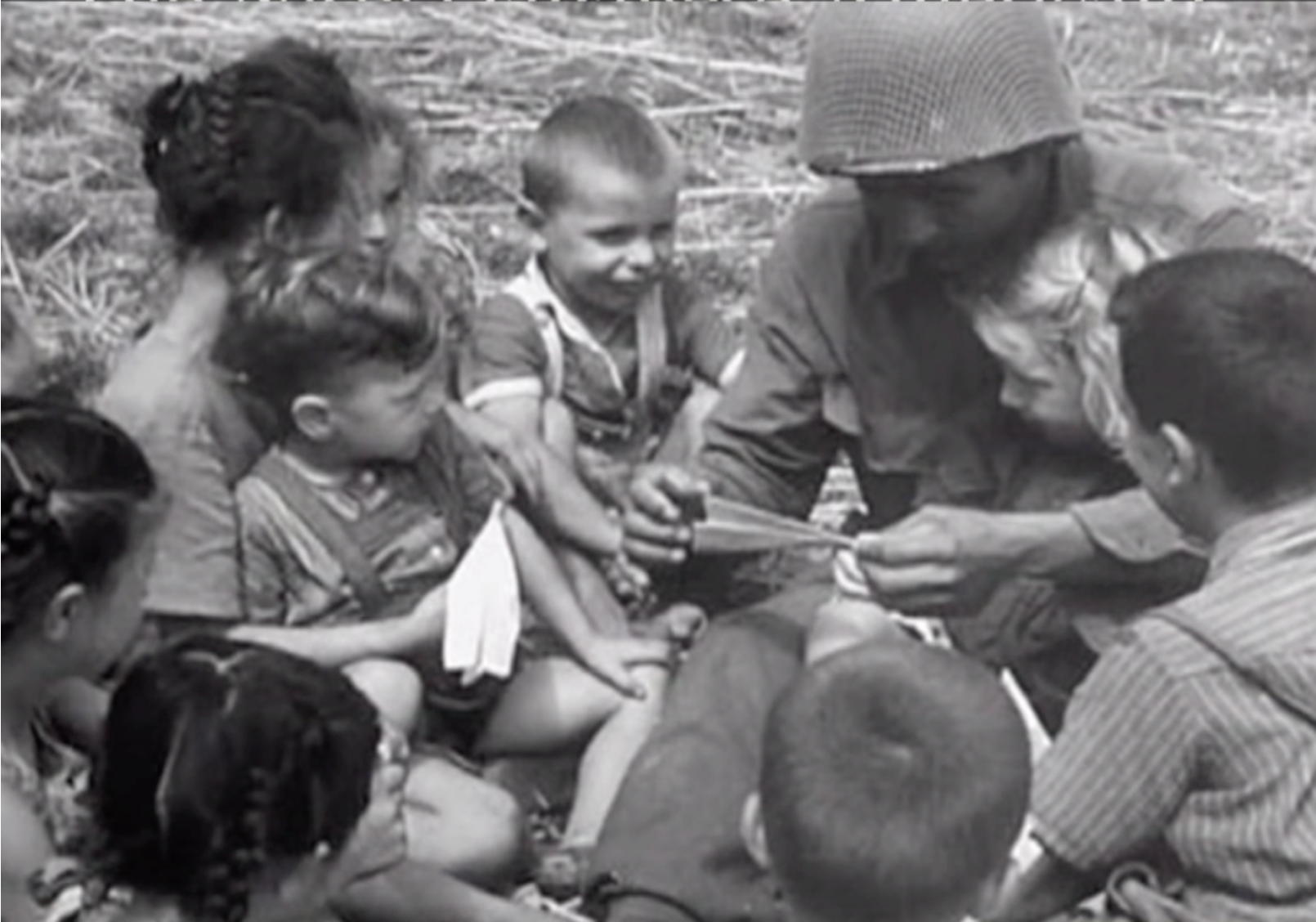
A Nisei G.I. with the 442nd Regimental Combat Team teaches a rapt audience how to make a paper airplane. His arm’s around a little girl who’s nestled close to him. I suspect that in this moment she feels safe, probably for the first time in a long time.
In England, shortly before D-Day, a G.I. gives a British lady help with the jump rope.
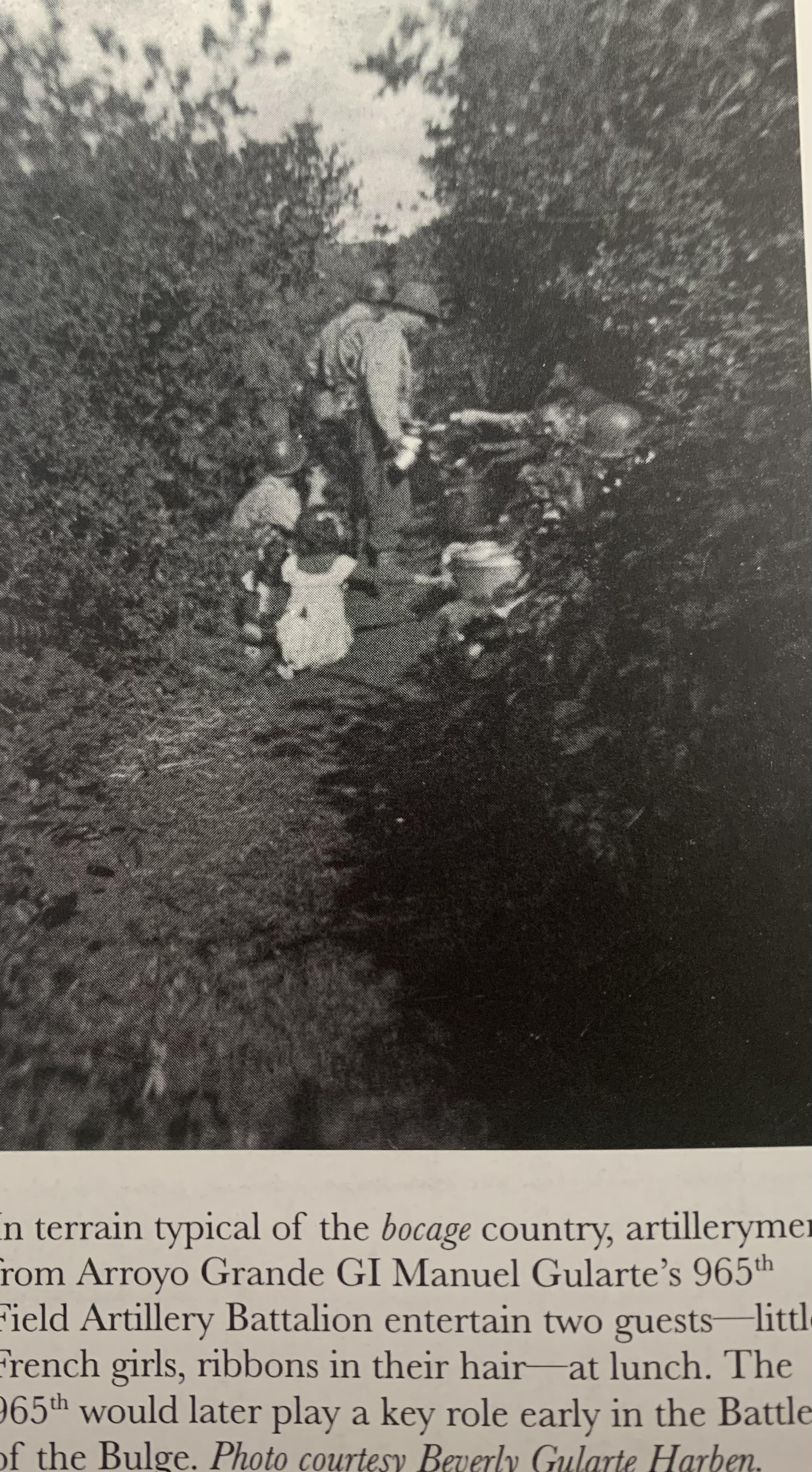
Manuel Gularte of Arroyo Grande and his comrades entertain guests for lunch in Normandy. Manuel’s brother, Frank, was killed on the German border just five days before his son, Frank Jr., was born at the Mountain View Hospital in San Luis Obispo.
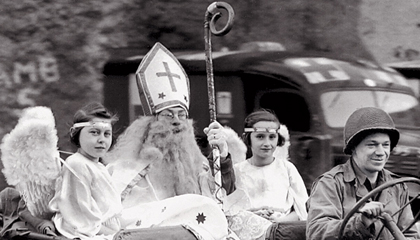
And in Luxembourg, Christmas 1944, while the Battle of the Bulge is raging nearby–there’s an amazing Battle of the Bulge museum in Diekirch, Luxembourg–a G.I. playing St. Nicholas, flanked by two angels, heads out to distribute gifts. Note the expression on the jeep driver’s face.
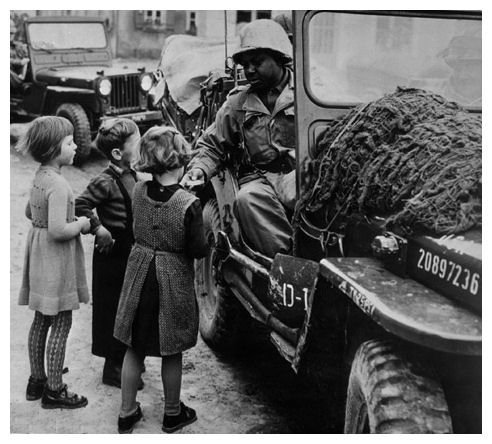
Finally, a soldier, I suspect a member of the famed Red Ball Express, makes friends with a little refugee while another little girl–her sister?–makes sure that she doesn’t leave her doll behind.
I am not naive enough to suggest that all Americans were angels. They weren’t. There were rapes, murders, thefts. Racism was a given and violence, especially attacks on Black G.I.’s, was commonplace, at its height in 1943. In New Zealand, American Marines attacked Maori soldiers for entering the bar where the Yanks were drinking beers.
Filipino-Americans were subject to some of the most virulent and racist invective–you can find examples in the old Arroyo Grande “Herald-Recorders”–and they responded by becoming some of the finest infantrymen of the war.
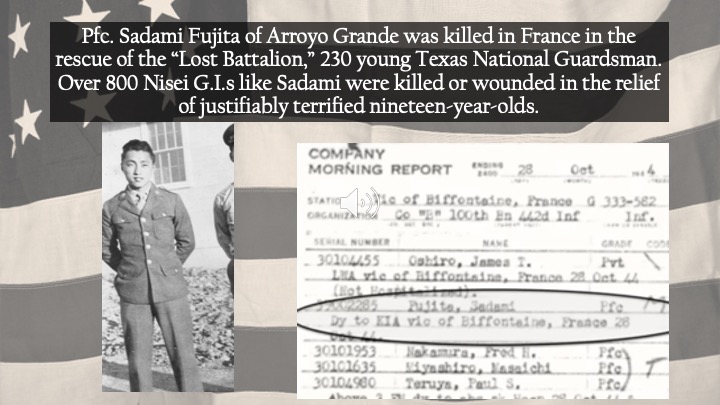
While their parents and grandparents were behind barbed wire, Japanese-American G.I.’s were marked by the frequency of their Purple Hearts, by Bronze Stars that should’ve been Silver Stars, by Silver Stars that should’ve been Medals of Honor. Nearly 1,000 of them were killed or wounded in October 1944 to break through and rescue a Texas National Guard Unit–240 justifiably terrified 19-year-olds- surrounded by the Germans in France’s Vosges Mountains.
These weren’t hyphenated Americans. They were Americans.
My parents’ generation was condemned before the war by sociologists who saw them as self-indulgent and frivolous. They proved the eggheads wrong. Spectacularly. That’s why I write about World War II so much.
In my book Central Coast Aviators in World War II, I wrote about a brilliant man named John Keegan:
If there was a military historian with a gift close to Shakespeare’s, it was another Englishman named John Keegan. Keegan was a little boy in the English countryside, in Somerset, when the Americans began to arrive in late 1943 and into the spring of 1944. Little English boys had lived for years with the deepest of privations—thanks, in large part, to the U-boat campaign that had nearly starved Shakespeare’s “sceptred isle” to death—and then the Americans came. They were, as Keegan later said—for once at a loss of words while narrating a documentary on the 1918 turning point of World War I—“Well, they were Americans!” By which he meant they were boisterous, cocky, well fed, well clothed and, thank God, friendly, with an innocence and immediacy that was distinctly American. Their World War II counterparts taught English boys baseball, and they flirted with their big sisters and married some of them—but most of them not—which meant that little boys Keegan’s age would inherit littler half-Yank nieces and nephews. Most of all, they were generous. There seemed to be no end to their Hershey bars (there wouldn’t be after the war, either, when, during the Berlin Airlift,one of Arroyo Grande bomber pilot Jess Milo McChesney’s comrades, Gail Halverson, air- dropped Hershey bars, floating on little parachutes, to the hungry children of blockaded Berlin) and no end to the rough affection for children that came with these big, loud men from across the sea.
And then they were gone. Keegan has vividly described the early morning dark when that happened, when the chinaware and modest family crystal on every shelf in the Keegan home began protesting, rattling an alarm soloud that it woke the family up, if the motion beneath their beds hadn’t already made them sit bolt upright. The anxiety of Keegan’s family, their neighbors and other families all across East Anglia was relieved only when they went outside. Then anxiety gave way to wonder. They could feel in their breastbones the vibrations—“the grinding forced you to the ground,” Keegan remembered—of the engines of thousands of airplanes, but they could see only dim red and amber lights in the sky, heading east, toward France. Some of the Americans Keegan had learned to love so quickly, his heroes, were on those airplanes, and tens of thousands of more, his heroes, were riding deathly pale on landing craft corkscrewing in foul Channel waters, and they were all headed for Normandy.
It was D-day.
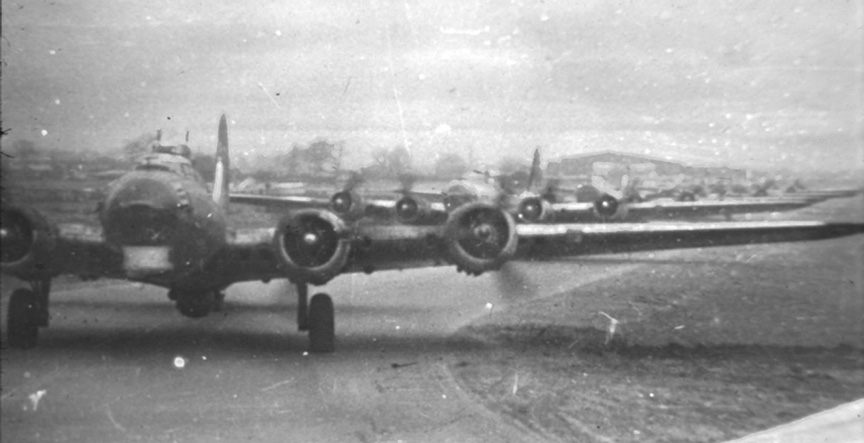
B-17’s from the 398th Bomb Group assemble for takeoff. At most any American airfield, British children were there for moments like this. Pressed agains the airfield’s perimeter fence, they’d come to wave goodbye to “their” Yanks.
A (wonderful) AGHS German teacher, Mark Kamin, was leading a group of students on a tour of Bavaria. I think they were waiting for their bus when an older German woman approached them.
“You’re Americans, aren’t you?” she asked Mark.
Yes, we are, Mark replied
Her eyes began to fill with tears. “I just wanted to thank you,” she said, “for how kind your soldiers were to me when I was a little girl.”
Candy, Berlin, May 1 1945
We are so divided now, but these photos of men long dead fill me with hope. Their generation lit a path for us to follow. It’s up to us to find it.
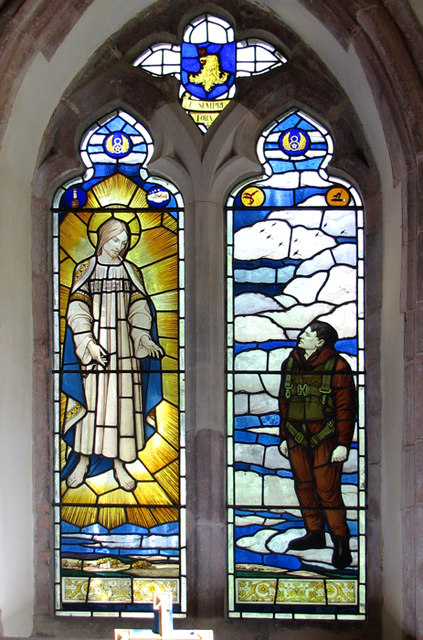
St. Andrew’s Church, England. Two Arroyo Grande B-17 fliers served at the nearby 8th Air Force Base at Snetterton Heath. One of them, Clarence “Hank” Ballagh, the AGUHS 1937 Valedictorian, was killed eighty years ago next month. Here, an American airman looks up to the Risen Christ. The English have not forgotten Yanks like Hank Ballagh.
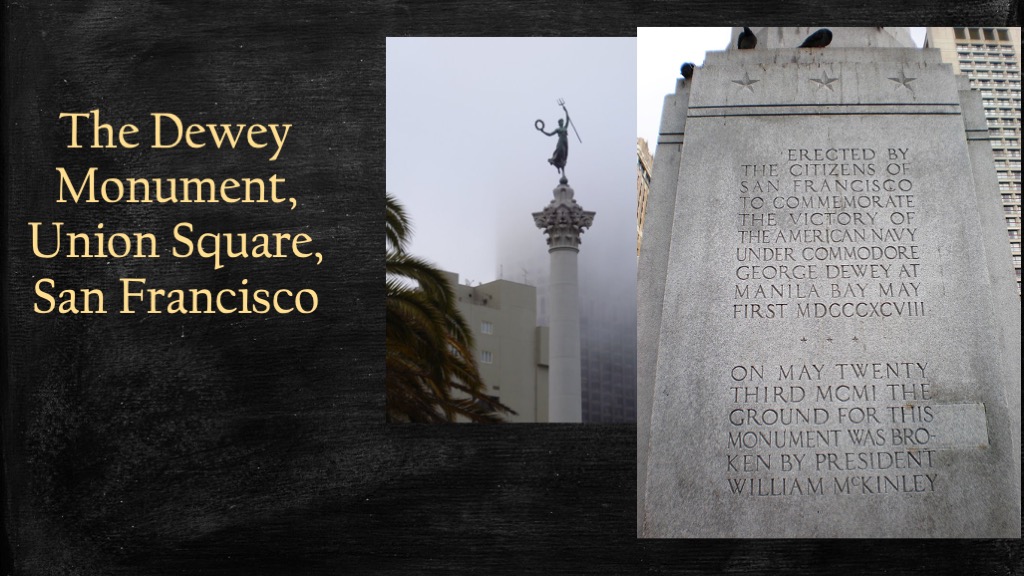
I did not expect to find a George Dewey monument in Union Square in San Francisco on our recent visit. But it was there. And it was big. The Goddess of Victory, atop her column, appeared to be hailing a cab across the street at the St. Francis Hotel.
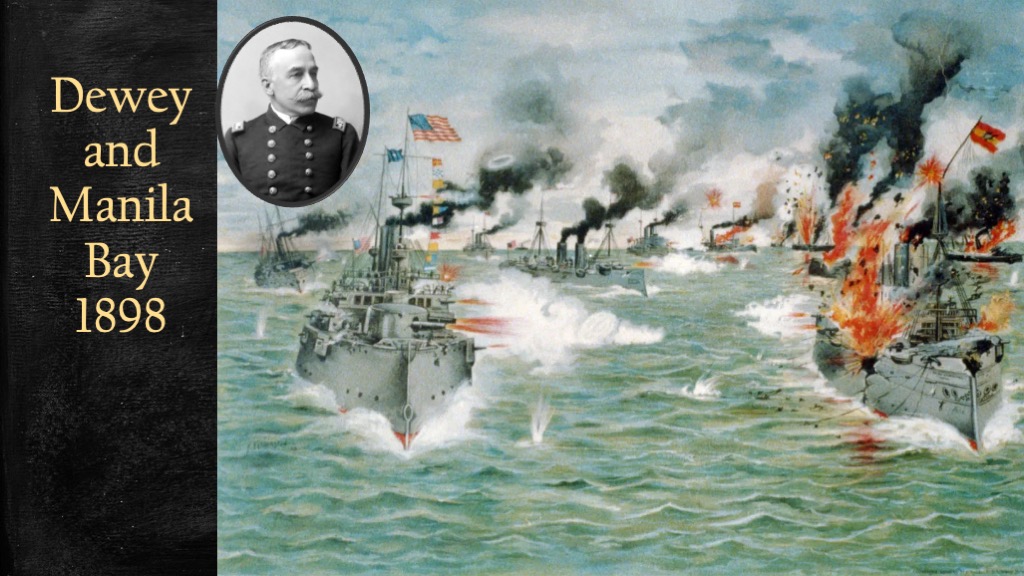
This is why it’s there: In 1898, in the Spanish-American War, Commodore George Dewey led an American fleet into Manila Bay and annihilated the Spanish Asiatic Fleet there. We lost one sailor, felled by sunstroke.
The vicious three-year war that followed, the Philippine Insurrection, tore Americans apart. It claimed 200,000 lives among the people who’d made the mistake of assuming that Dewey and the Americans were their liberators. They would have to liberate themselves, not from the Spanish, but from the Americans.
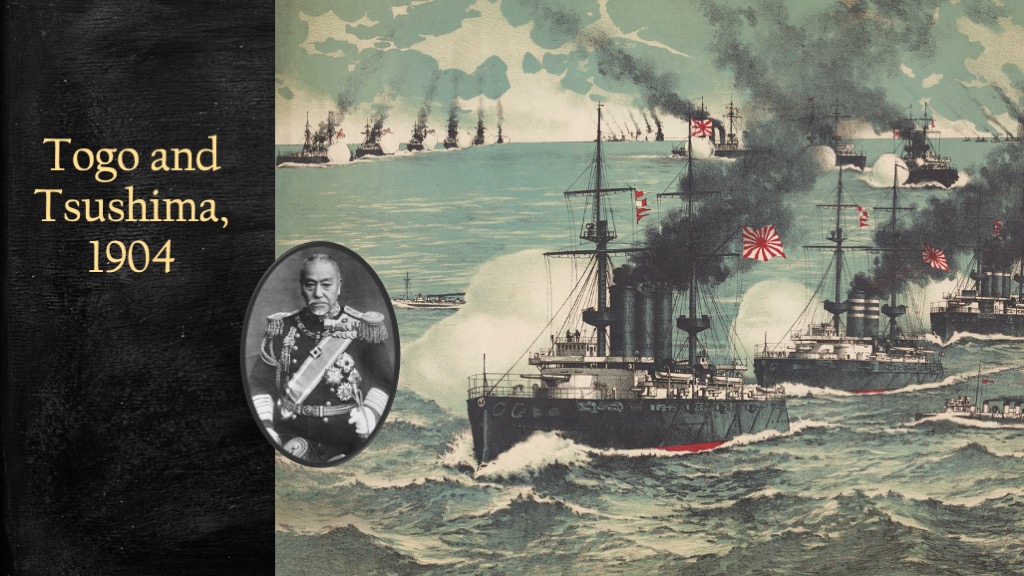
In 1904, Admiral Tōgō Heihachirō took on a Russian fleet in the Tsushima Straits. The Japanese sank 21 Russian ships, including seven battleships, and captured seven more. Togo lost three torpedo boats. Over 5,000 Russian sailors were killed; Togo lost 117.
A young officer who would become, later, a naval aide in the Japanese embassy to Washington, lost two fingers on his left hand during the battle. Isoroku Yamamoto, who grew very fond of Americans, would supervise the planning for Pearl Harbor.
Revolution tore Russia part the next year, 1905. It turned out to be the dress rehearsal for 1917. The little fellow today may be borrowing from the Totalitarian Guidebook to Europe between 1936 and 1939, but’s reaching farther back in history. He wants Tsar Nicholas’s empire back again, so he started with what he thought would be a cheap victory.
Pride is cheap when it comes from cheap victories. Battles like these, when confined safely to history texts, can seem comic, but more than a century ago, two new world powers, competing for power in the Western Pacific, would inevitably meet each other in unimaginable tragedy.
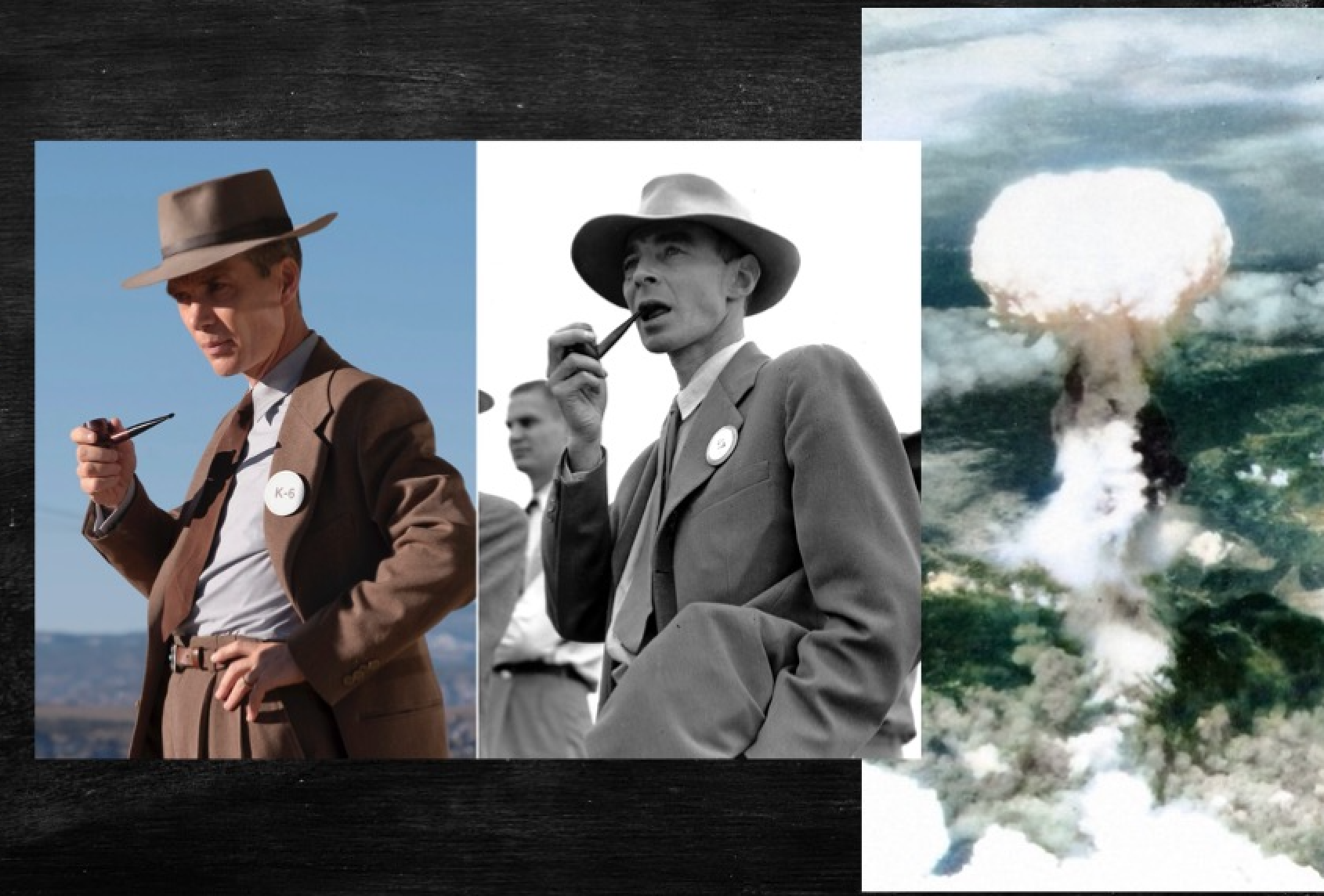
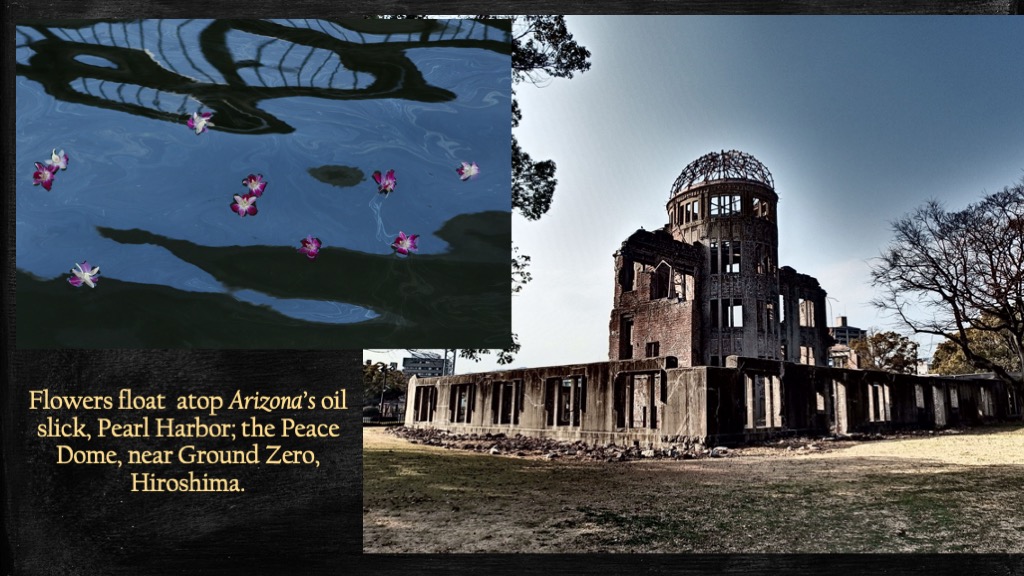
So, in a way, the roots for the war that ended in Hiroshima were planted with the Dewey Monument’s cornerstone in San Francisco. The keel for Sōryū, one of the fleet carriers that launched its planes at Pearl Harbor, was laid down in November 1934. In Hiroshima. I am not suggesting an equivalency here.
This is what I am suggesting:
The worth of nineteen-year-old battleship sailors from Oklahoma on December 7 or Hiroshima schoolchildren in their uniforms on August 6 is incalculable. They are precious beyond our understanding.
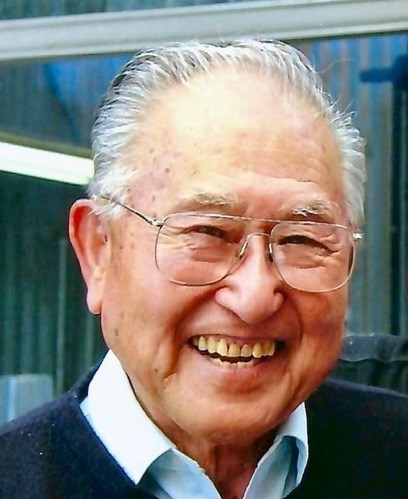
Arroyo Grande’s Ben Dohi died last month, and his obituary was so beautifully written that I wanted to include it below:
Benjamin Hideo Dohi November 8, 1927 – May 26, 2023
Arroyo Grande, California – A little piece of our community’s history was lost last week with the passing of Benjamin Hideo Dohi at age 95. Ben passed peacefully at home on May 26 after a long life filled with hard work and the love of family.
Benjamin Hideo Dohi was born on November 8, 1927 into a farming family to parents Hugh Setsugo Dohi and Hide Kobayashi Dohi in Santa Maria, California. Ben contracted pneumonia as an infant and after the doctors had given up hope on his recovery, it was the love of his mother that nurtured him through his illness and his early months of life.
That same tenacity and determination would be what saw him through his early adult years as an internee in the Japanese internment camp at Poston, Arizona from 1942-1945. Benjamin was 14 when he, along with his parents and two brothers and two sisters, were evacuated from Arroyo Grande to a waiting facility in Clovis, California before being transported to Poston, where he resided until the end of World War II. Although Ben would end up starting high school at Arroyo Grande High School as a freshman, he moved to Clovis High School then on to Poston High School where he earned his high school diploma. “The only thing I lost was my youth,” said Ben when interviewed by Mathew Donovan for Cal Poly in 2006. He credits his teachers at the internment camp, who were mostly Quaker volunteers, for the valuable lessons learned while there. When the Japanese were released from the camp in 1945, Ben successfully transferred to college in Kansas City, Missouri where he said he knew as much as the other students but was mostly treated like a “novelty.”
But Ben’s education was once again interrupted in 1946 when he enlisted into the US Army and began training in Military Intelligence. He served two years in Japan as an interpreter after completing a language program at the Language School in Monterey, California. After being discharged from the army, Ben completed one year of law school at the University of California, Berkeley, but the draw of farming and the love of the Arroyo Grande community brought him home.
In 1955 Ben became a grower for POVE, Pismo Oceano Vegetable Exchange, the largest Japanese cooperative of farmers in California. He joined the Hayashi, Ikeda, Kobara, Saruwatari, Fuchiwaki, Kawaoka, and Fukuhara families. It was in the office of POVE that Benjamin Dohi met the woman who would change his life. Ty Yamaguchi, who had also been a young woman in the same internment camp, won Ben’s heart and they married soon after Ben joined the family of growers who would go on to become one of the most successful farming operations in the state.
The young Dohi family experienced heartbreak when their first child, Leslie Naomi Dohi, died at childbirth in 1958; Ben and Ty were later blessed with the birth of their sons, Hugh Jonathan in 1959 and Peter Benjamin 1961. Ben, along with his wife, Ty, dedicated their lives to growing their business, Dohi Farms, and although there were struggles in the beginning, once he began growing bell peppers they found their stride. Ben took great pride in growing bell peppers which was his most important crop in the early years of farming. As Ben’s sons got older he was able to build a home for his young family on the same property where he was raised as a child.
Ben split his time between farming and watching his boys play sports, as well as coaching some of their baseball teams, a skill he learned in the internment camp. Ben loved to take his family on vacations and loved to teach his boys how to fish in Arroyo Grande and Lopez Creek. He instilled in his boys a love of farming, family, and community. He showed his sons how to be honest, generous, and humble in life, and these values became theirs in their own lives.
Ben never wanted to dwell on the past; instead, he focused on his work, his family, and his business. Nothing made him happier than driving in his pickup truck alongside sons Hugh and Peter overseeing each farm which he referred to as “making my rounds.” He always gave credit to “the Man upstairs” for any success he had.
His was a life well-lived.
Ben is preceded in death by his wife, Ty, and his baby daughter, Leslie, brother, Abe, and sister, Ruth. He is survived by his son, Hugh Dohi (Shawnah Dohi), son, Peter Dohi, brother, Paul Dohi, sister, Grace Dohi, nephews Gregory Dohi and Anthony Dohi, and niece Sylvia Roldan-Dohi.
The family expresses its deep appreciation and gratitude to the community of Arroyo Grande, the farm families of POVE, and the doctors and nurses of Arroyo Grande Hospital and San Luis Post Acute. In lieu of flowers, donations can be made to Arroyo Grande Community Hospital Foundation 345 S. Halcyon Road Arroyo Grande, CA 93420 or to Kristie Yamaguchi Always Dream at 125 Railroad Ave, Suite 203 Danville, CA 94526. No services are planned.
Ben
So Ben’s sons still farm land, near the high school, that his family has been farming for nearly a hundred years. I knew Ben and his wife, Ty Yamaguchi Dohi, in high school, where I was a sometimes visitor to the Dohi home. This is where I first discovered sushi, a treat reserved for special Japanese holidays like the Fourth of July and Labor Day. The three Yamaguchi sisters prepared it in the kitchen, frequently giggling—they must have been a handful as teenagers—and I’d break away frequently from the men and the TV sports we were watching to hang with the sisters, who sometimes fed me samples.
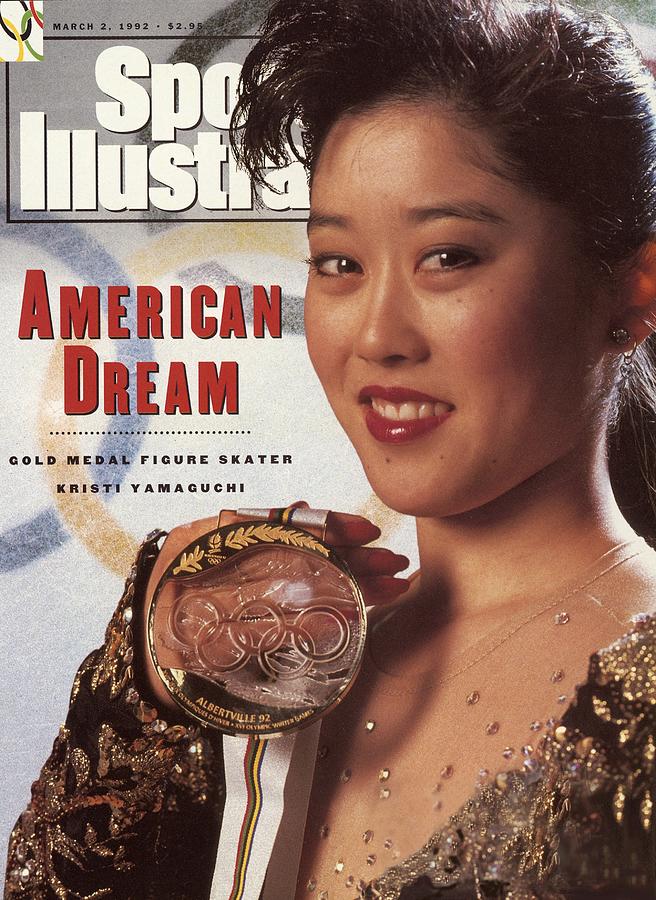
On one such occasion, I got to hold the beautiful baby girl who would grow up to be Kristi Yamaguchi.
Ben’s death led to updating a video—I’m a historian—that I’ve shared with schools and community groups about the experience of people like Ben during World War II. Executive Order 9066, as you’ll see, was perhaps the single most tragic event in my hometown’s history. But the way that both Japanese Americans and their friends responded brings to mind the word that so marks Ben Dohi’s life: Honor.
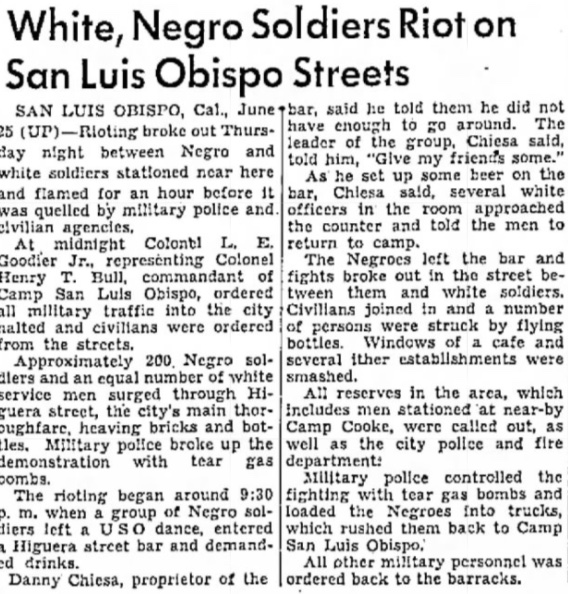
The wire press story recalls a painful part of our past, eighty years ago next week. There were Black Quartermaster units at Camp San Luis Obispo, support troops at the Santa Maria Army Air Force Base, and the 54th Coast Artillery—-a unit designation remindful of a proud part of our nation’s past, the Civil War’s 54th Massachusetts—manned gun positions overlooking Port San Luis and Estero Bay. The fighting the story describes took place on the night of Thursday, June 24, 1943.
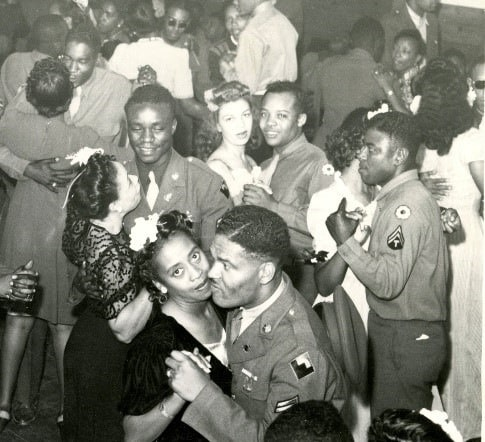
San Luis Obispo, as the nation did, followed the color line. There were, according to extensive research done by military historian Erik Burn, separate USOs. White GI’s frequented what is today’s Ludwick Community Center; the extant USO for Black GI’s is today’s City Utilities Department at 873 Morro, near the Palm Street parking structure.
Black GI’s and their dates at their San Luis Obispo USO. Photo courtesy Lt. Col. Erik Brun
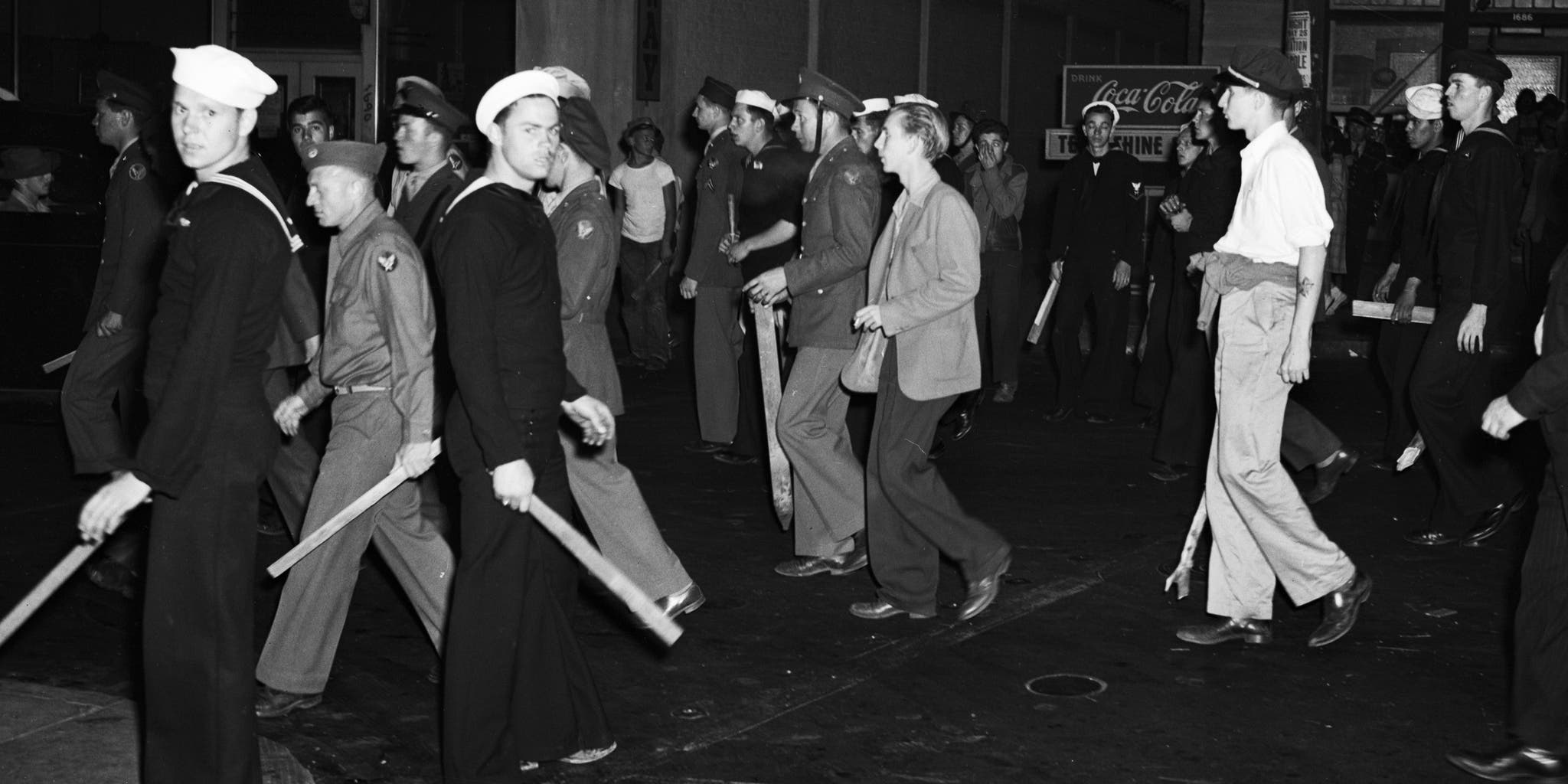
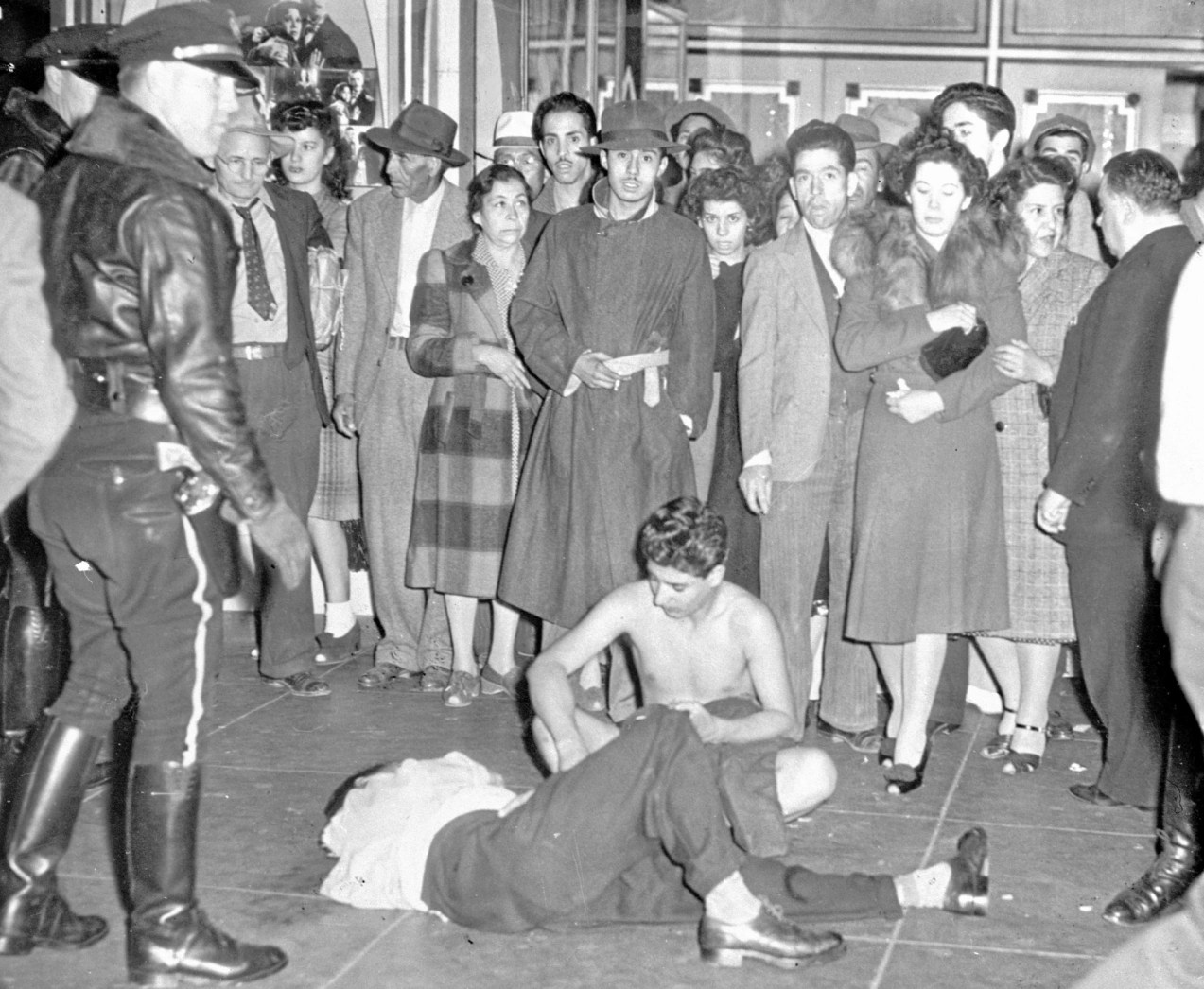
The most famous 1943 incident, of course, belongs to L.A., where Army and Navy enlisted men, many Midwestern or Southern, armed with axe handles, beat and then stripped young Latino “Zoot-Suiters” in fighting that had begun near the Naval Armory in Chavez Ravine and then rolled south to Chinatown and east to Boyle Heights, finally ending at a boundary that is today’s Santa Monica Freeway.
The Latino kids’ sense of style was made manifest in their Zoot Suits. The fashion—considered seditious, I guess, in a time when cloth was rationed, was popular with young Black kids, too. Cab Calloway is blatantly Zootish in the excerpt from 1943’s Stormy Weather, a film, I need to point out, that made the sixteen million men who served in World War II fall in love with Lena Horne. (The song spilled over into literature, too: a passage from Steinbeck’s Sweet Thursday has trumpeter Cacahuete, Joseph and Mary’s nephew, playing “Stormy Weather” into a Cannery Row storm drain for the reverb while the sea-lions accompany him from their rocks on China Point.)
The LAPD had no fondness for minority youth culture in 1943. As was its wont in those days, the Department arrested the Chicano kids, the Zoots, but only after they’d been stripped and beaten. They were easier collars then, when they were bleeding on the sidewalk. And, since they were overwhelmingly the victims of violence, the three days of mayhem were immortalized as the “Zoot Suit Riots.”
The Zoot Suit riots were a vivid but not exclusive reminder of American racism in 1943. Some of the other incidents:
May 25, 1943: On the same date that George Floyd was murdered in 2020, the promotion of twelve Black workers at a Mobile, Alabama, shipyard that built and maintained U.S. Navy warships led to attacks, by 4,000 Whites, on Black defense workers. Some of those workers jumped into the Mobile River to escape the mob. After at least fifty were injured, National Guard troops put the rioting down.
June 3-8: The Zoot Suit Riots.
June 15-17: Beaumont, Texas, where an influx of both Black and White shipyard workers and crowded housing were factors in three days of rioting that left three dead, two of them Black, one White. A White woman had accused a Black man of rape; when a White crowd gathered around the jail where suspects were held and were denied access, they invaded Beaumont’s Black neighborhoods, torching over 100 homes.
June 20: The Belle Isle Riots in Detroit. 6,000 troops were called out by the president to end violence that resulted in 34 deaths—twenty-five of the victims were Black– fueled by rumors that a White woman had been raped and that a White mob had thrown a Black mother and her child off a Belle Isle bridge. Background tensions included densely packed ghettos and, as was the case in Beaumont, the promotion of Black defense workers. Police stood by as a Black man was beaten to death; a White doctor was murdered as he was making a house call.
June 24: Fighting between White and Black GI’s in downtown San Luis Obispo. As the article notes, MP’s took the Black GI’s into custody and drove them to Camp San Luis Obispo.
August 1 and 2: As a Black soldier attempted to intervene in the arrest of a young Black woman, an NYPD officer shot him. Rumors that the soldier had been killed led to two days of violence that killed six and caused millions in property damage. Ralph Ellison, in The Invisible Man, and James Baldwin, in Notes of a Native Son, incorporated the riot into American literature.
Racial violence didn’t end at our shores. On April 3’s “Battle of Manners Street” in Wellington, New Zealand, the fighting resulted from American Marines blocking the entrance of Maori soldiers to an all-services social club. In June, one American soldier was killed during interracial violence in Northern England in what became known as the “Battle of Bamber Bridge,” after the town where fighting, including exchanges of gunfire, broke out between Black troops and White MPs. Five American servicemen were shot. In the aftermath, thirty-two, all of them Black, were court-martialed.
The people of Bamber Bridge were sympathetic to the Black soldiers they had begun to befriend. Anthony Burgess, the author of A Clockwork Orange, taught in the little town then, and remembered that when one local innkeeper was ordered to institute a color bar, he put out the following sign:
OUT OF BOUNDS TO WHITE SOLDIERS
* * *
When I taught U.S. History at Arroyo Grande High School, we learned about the L.A. riots every year, using animated maps to follow their progress, reading contemporary news reports and hearing, thanks to PBS, from people who’d lived through the time and scholars who’d studied it. I assume teachers aren’t supposed to teach anything anymore that puts America in a negative light or that might make European-American kids feel guilty.
It’s funny, but my kinds, mostly Anglo, never seemed to feel guilty. They loved the way these teenagers from East L.A. dressed and danced. What they hated was the cruelty visited on them. They would learn about other soldiers and sailors, heroes, as we studied the war itself. But, to use an analogy I’m fond of: I’ve been married for thirty-seven years, and my wife doesn’t love me because I’m perfect. What she feels for me is mature love.
I love my country in the same way, in spite of and in part because of its imperfections.
There was blood on the sidewalks sidewalks along Higuera in 1943. To look away does America and Americans a disservice. In confronting demons from our past, we give our young people the tools they’ll need to form a more perfect union.