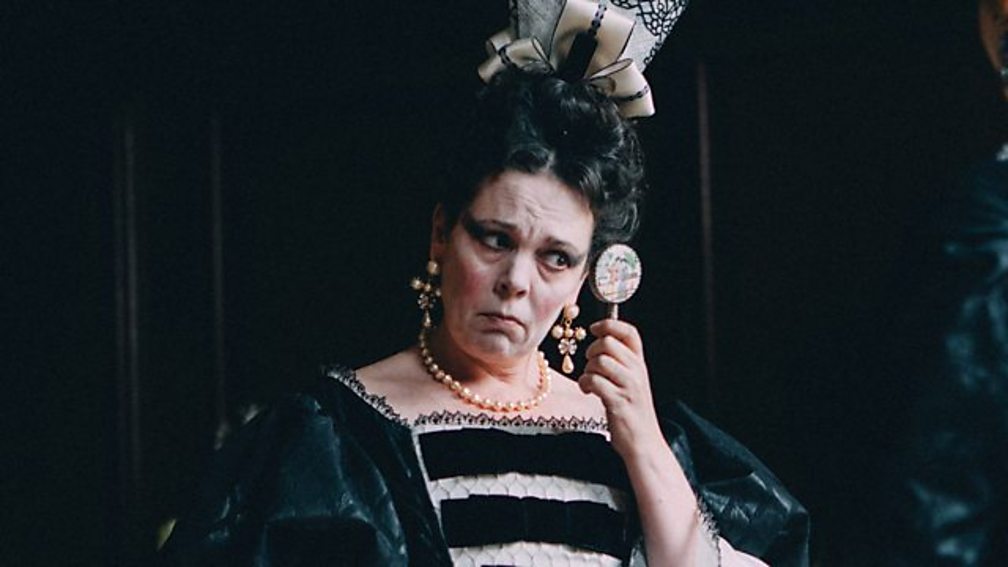
I guess they’re painting over the brick of the H.M. Warden Jr. Building (1905) in San Luis Obispo—most memorable to me as the onetime home of Corcoran’s Restaurant, in business at that site from about 1943 to 1974. The brick, of course, is beautiful on its own.
Throughout 1904 and into early 1905, a series of old San Luis Obispo Tribune articles follow its construction from the letting out of bids to its completion, when the building, which would become a beehive of retail stores and medical offices, was praised for its beauty.
So I, being nosy, looked up the architect. It turns out that the man was a local—H.S. Laird was born in New York but came to San Luis Obispo in the late 1870s and lived out his life here. And during his time, he designed a stunning number of buildings, many of them still with us, from the 1890s and the early 1900s, are still with us. Some, like the Call Building (once the home of Gabby’s Bookstore) have been sadly reshaped, but all of them, I think, are a tribute to a remarkable architect.
In early modern Europe, illegitimacy was a rare problem. Premarital sex wasn’t rare, not at all.
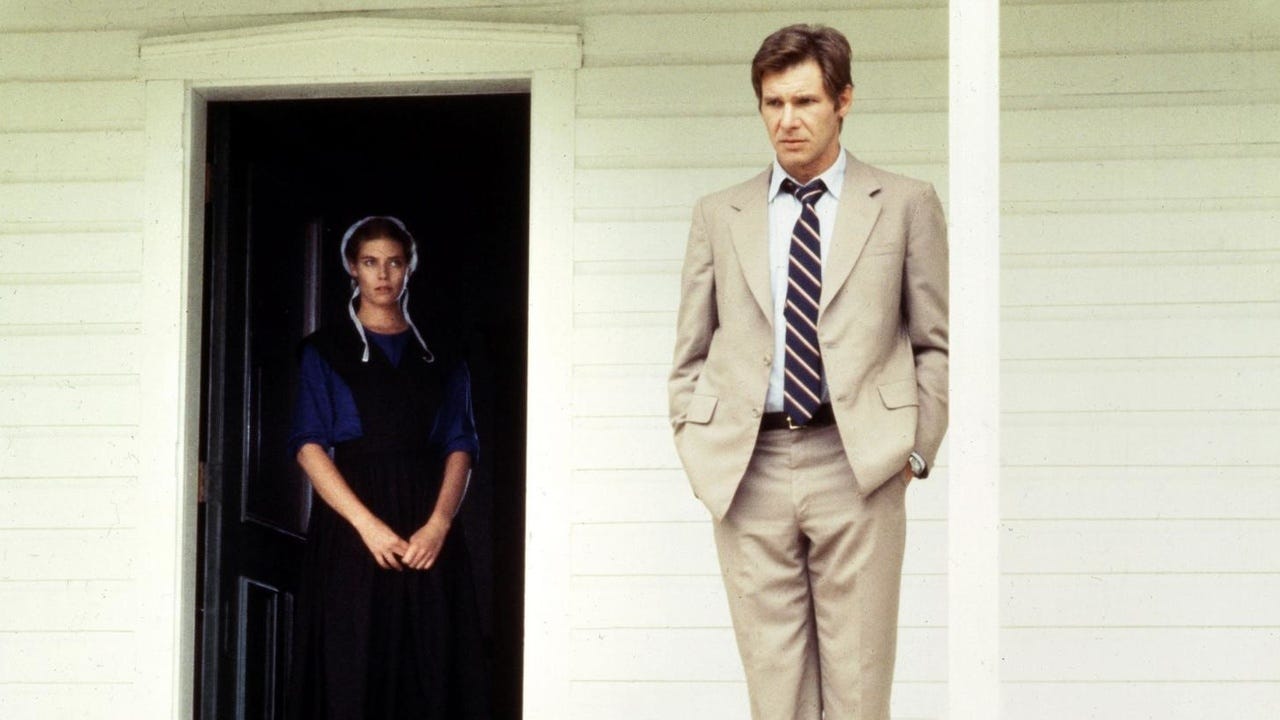
But early modern Europe was overwhelmingly rural and based on subsistence agriculture—“strip farming,” an inefficient tradition handed down from the Middle Ages. The problem with illegitimate babies in subsistence villages, so often on the edge of starvation, was that they represented another more mouths to feed. A fatherless child was a clear and present danger.
The solution was decisive and it was immediate: Once village lad got a village lass pregnant, they were married. Community pressure was formidable. And since peasants in France, for example, rarely traveled beyond the sound of their parish church’s bells, running away, for fathers-to-be, was not an option. The world beyond those bells was full of wolves and witches and brutal highwaymen. It was time to face the music, you accidental fathers.
Thanks to parish registers, we understand why so many weddings are followed so closely by so many christenings.
The 18th Century Industrial Revolution changed all that. With improved roads and, later, railroads, the young village lout who got a girl pregnant could more easily disappear, and growing cities provided young louts with factory work.
The result was catastrophic: an explosion in fatherless babies. This is a “foundling wheel” in Macon, France, where a distraught mother could deposit her baby and so place it in the hands of the Church. The lives of abandoned children would be chronicled by Victor Hugo and Charles Dickens.
One way of coping with this “illegitimacy explosion,” of course, was the establishment of orphanages. Some of those were run by the Daughters of Charity of St. Vincent de Paul. The Daughters also ministered to the poor and the sick.

Which leads me to this building, the Marine Hospital in Evansville, Indiana, built in 1850, became a military hospital during the Civil War. There’s a chance that an Arroyo Grande woman, Maria Elizabeth Breed, worked here in the wake of the 1862 Battle of Shiloh, when casualties were evacuated by steamboat from Pittsburg Landing up the Ohio River to Evansville. My friend and fellow historian Shirley Gibson discovered Breed in searching old newspapers.
Serving as a Civil War nurse wasn’t for the faint-hearted. At Antietam, a bullet nicked Clara Barton’s sleeve and killed the soldier who was her patient. Lauretta Cutter Hoisington of Halcyon contracted typhoid while tending to Union soldiers taken down by the disease. And Hannah Ropes, who knew the author Louisa May Alcott, literally worked herself to death in her devotion to her young soldiers.
After the war, the Daughters of Charity, the order already noted for its devotion, took over this hospital.
And that brings me to another woman: our second great-aunt, Sister Loreto, born Margaret Fox in 1840 County Wicklow, Ireland.
She would’ve been about nine when her family, the Foxes, and the Keefes sailed for Quebec. This was the same year where two Famine Ships foundered on icebergs. One of them, the brig Hannah, so close to its destination, struck an iceberg in the Gulf of St. Lawerence; the captain and two mates escaped in a lifeboat, leaving 176 Irish passengers behind. Forty-nine drowned.
The ordeal wouldn’t have ended then. Grosse Isle, on the St. Lawerence River, served as a quarantine station for the passengers coming to Canada. At least 3,000 Famine refugees died there between 1847 and the arrival of the Foxes and the Keefes, whose friendship would someday be cemented by the 1874 marriage, in Ontario, of Thomas Keefe and another Margaret Fox. These were our great-grandparents.
When the Irish-born Margaret Fox took her vows, she lived as a novice at this convent. It remains as part of the University of Missouri-St. Louis campus. Sally Jackoway, my sister’s late mother-in-law, worked as an UMSL administrator and may have worked here.
Meanwhile, this is the only image we have of Sister Loreto and, granted, it’s a little terrifying.
Sister Loreto, Daughters of Charity of St. Vincent de Paul, chose serving orphans as her vocation. One hopes that this photo, from a Daughters of Charity website, is indicative of Loreto’s attitude toward them:
The headgear, the cornette, marked the Daughters. Here they are at their orphanage in Albany, New York, with some of their little charges:
And this poignant record reveals the names and origins of some of those Albany orphans (note that the fathers’ column is blank); judging from their ages, many would always be orphans. One hopes the Daughters had prepared them to cope with life as adults, which can be as cold as an Albany winter.
While the orphans would eventually leave the orphanage, Sister Loreto didn’t. She died there, at 77, in 1917. And this is where she did her life’s work, at the Philip Schuyler mansion, completed in Albany in 1761.
If you look closely at the upper-left side of the old photo of Sister Loreto, you can detect the pediment and a post that supports the railing along the roofline, seen during restoration here.
The three beautiful Schuyler sisters, from Hamilton.
So this was once the home, built by her father of Elizabeth Schuyler, a Revolutionary War major general. Elizabeth was the woman who would marry Alexander Hamilton in this home, and she was the middle of the three daughters imagined by Lin-Manuel Miranda. Her life would be marked by sadness: their son, Philip, died in a duel in 1801 on the same site, on a bluff above the Hudson, where Burr would take Alexander Hamilton’s life three years later. Hamilton left her with his substantial debts; financial genius doesn’t necessarily translate, I guess, to a financial genius’s personal life.
Elizabeth “Liza” Schuyler Hamilton, “Portrait of Mrs. Elizabeth Hamilton,” 1787, when she was thirty.
But Elizabeth achieved a kind of Elder Stateswoman status among young society women too young to remember the American Revolution. She outlived some of them. And it was appropriate that her childhood home became what it did. Until her death, at 97, Elizabeth Schuyler Hamilton devoted herself to a charity that cared for orphans.
Daughters of Charity keeping busy; one at needlepoint. One wonders if Elizabeth Schuyler Hamilton did the same during the Revolutionary War, while waiting for news of her young army officer husband.
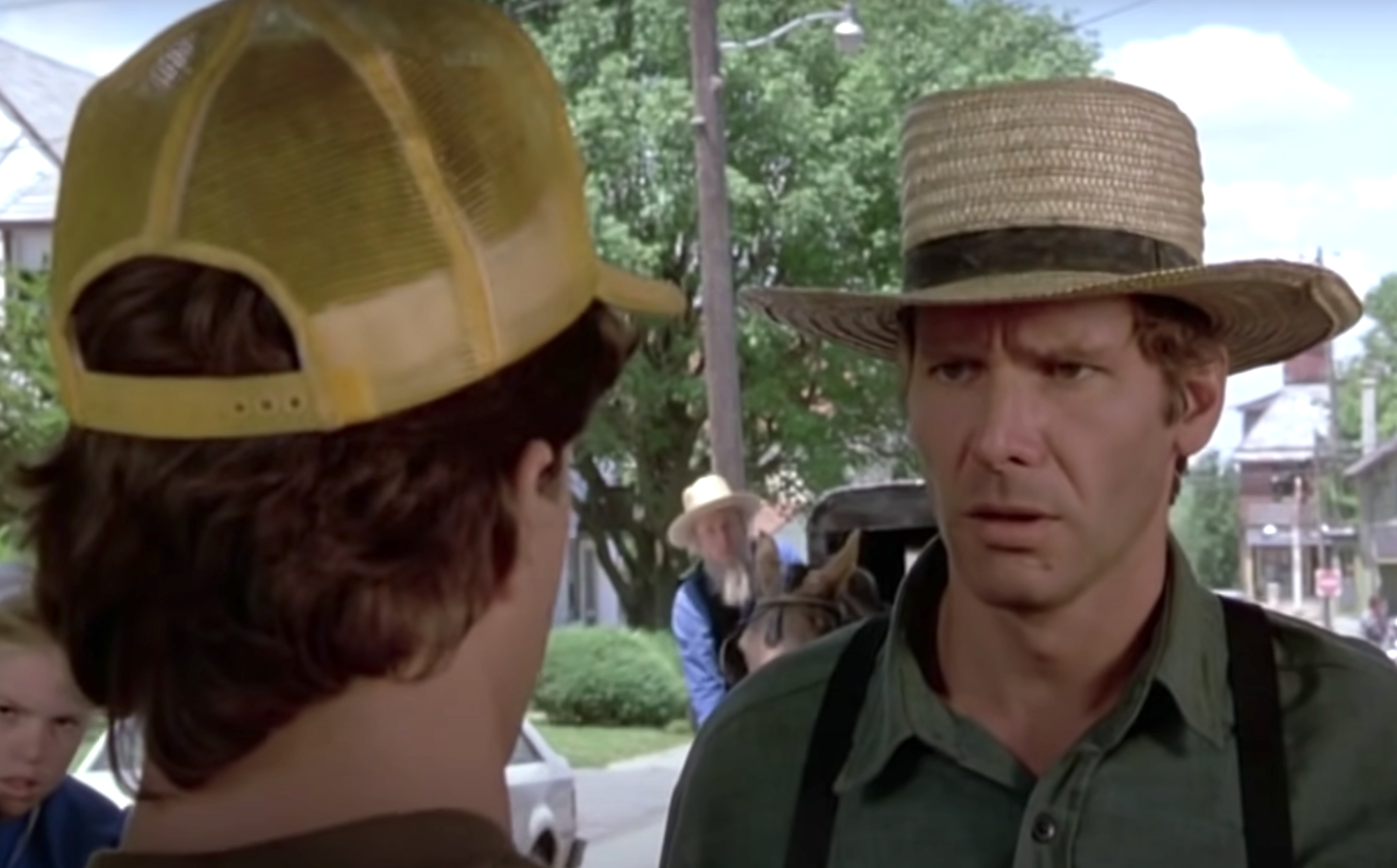
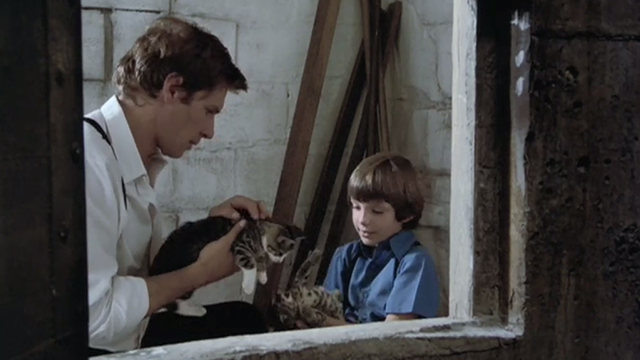
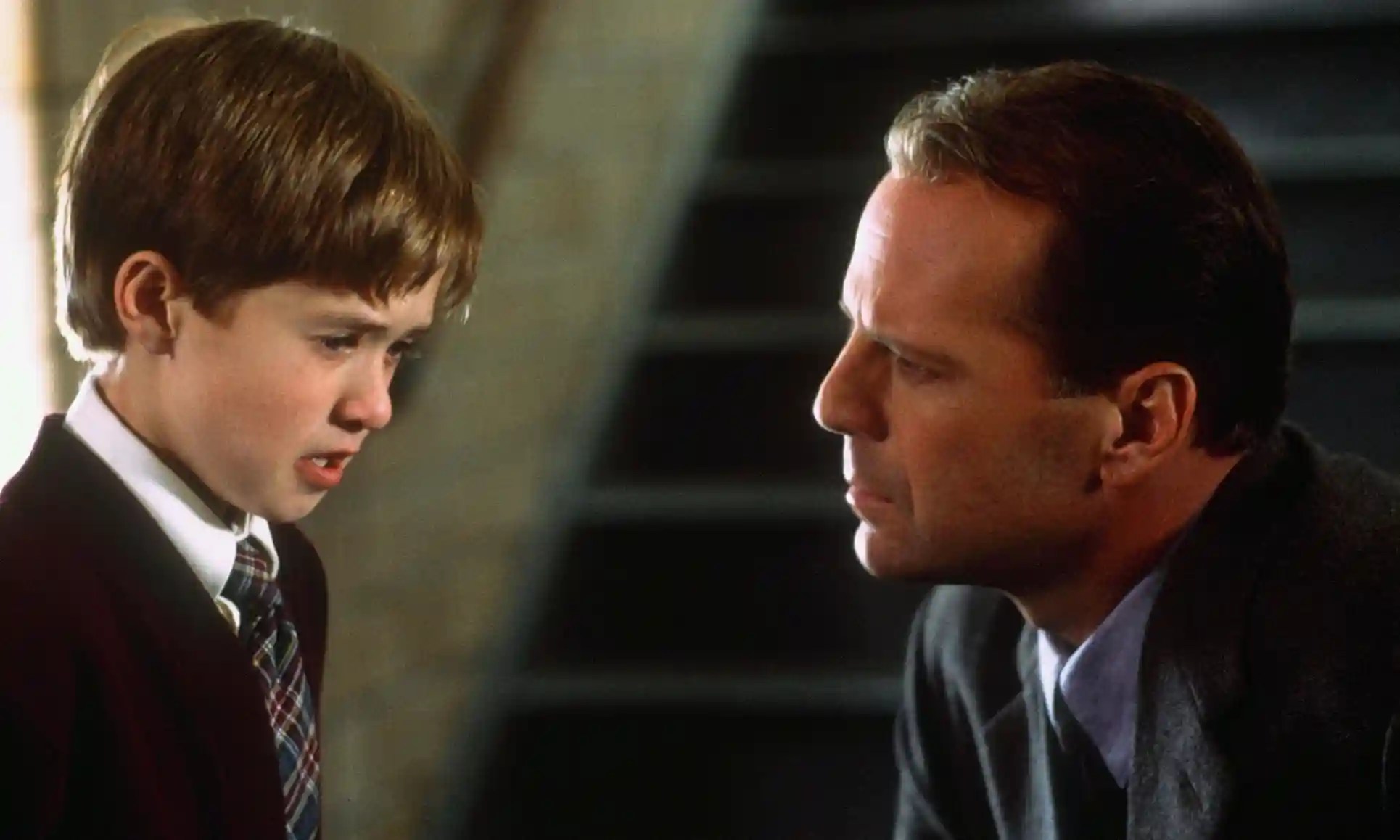
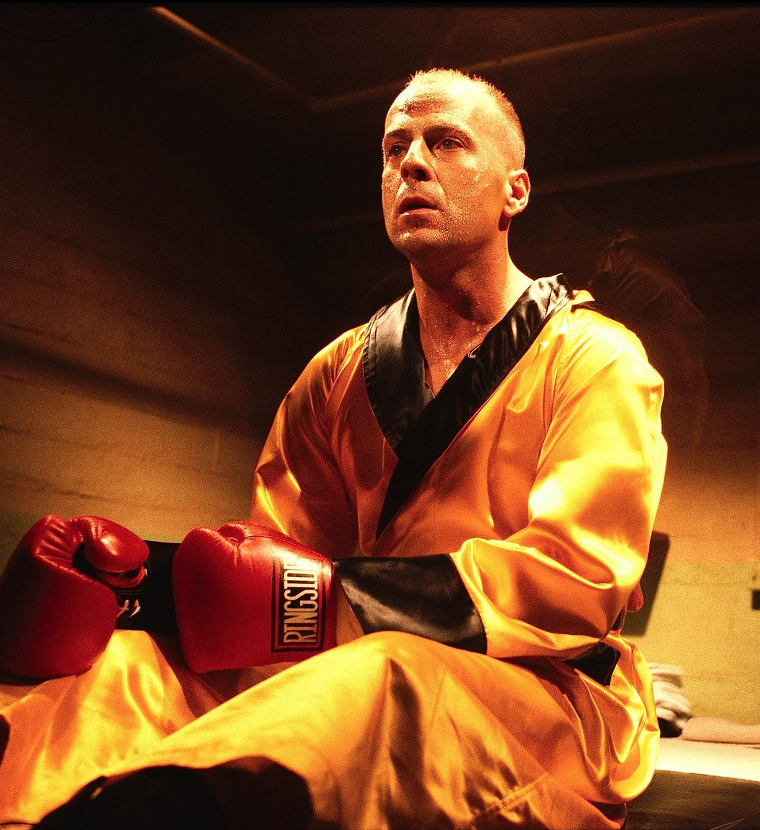
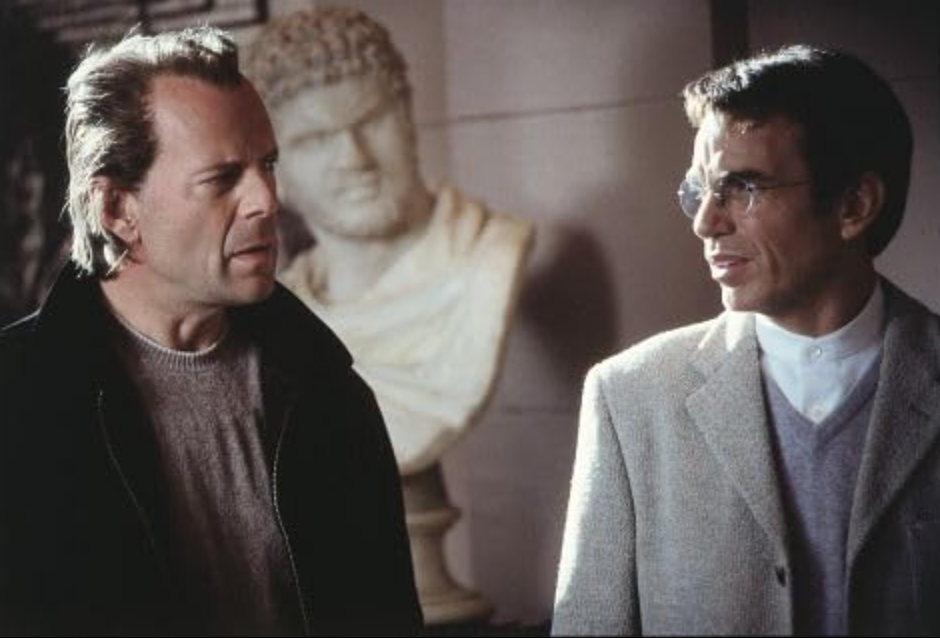
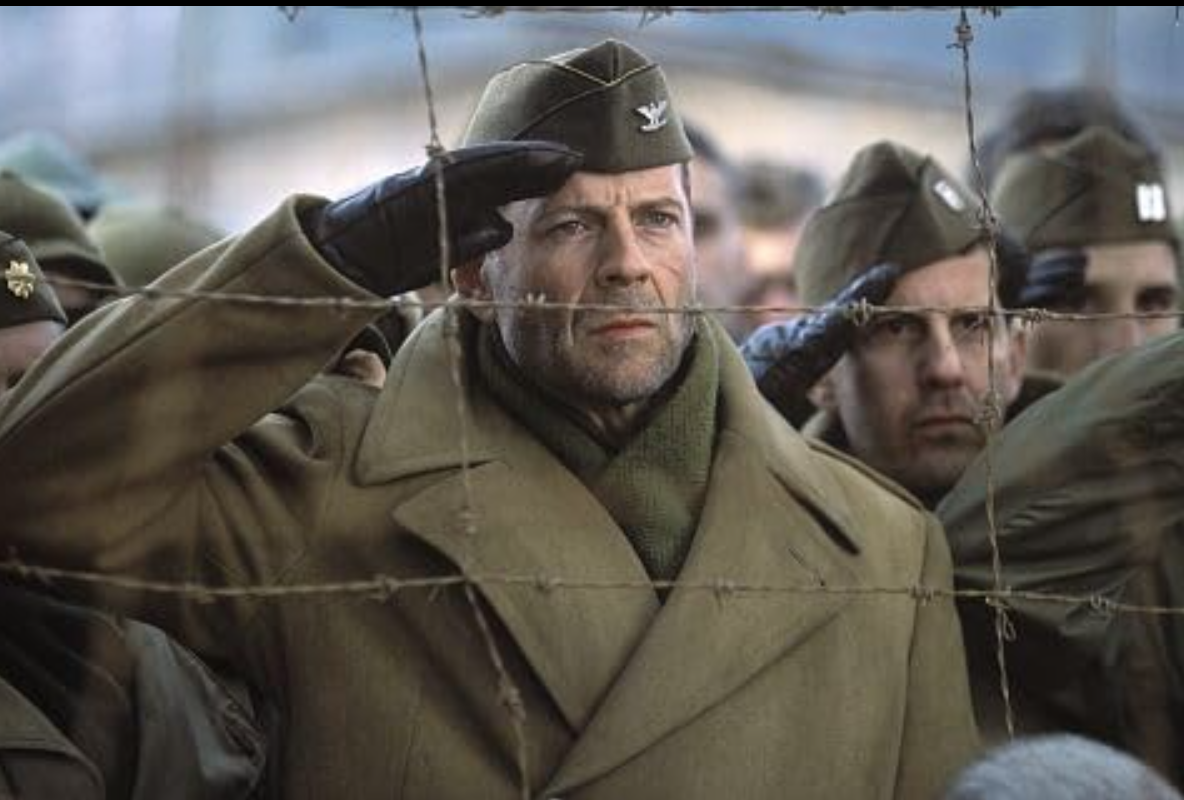
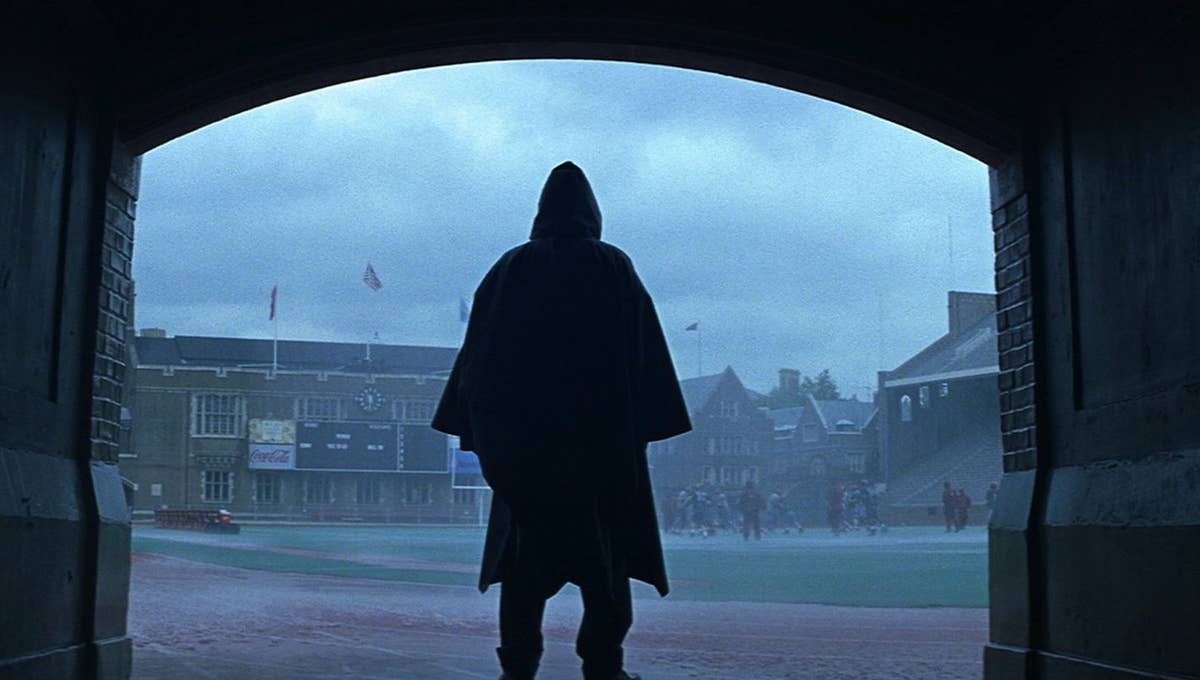
Jack Nicholson, 85, has finally done the unforgivable. He has gotten old. The photo in the montage below got widespread play about a month ago, but I have some things to say about him.
Mind you, I am fully aware that Nicholson is…well… kind of a lecher. After Geena Davis appeared in a pink bikini in Earth Girls Are Easy–here, an Alien Spacecraft bearing her soon-to-be real-life love, Jeff Goldblum, is about to land in her swimming pool—she got a phone call from Nicholson. “Well, Geena,” he said. “How about it?”
He was known for dating beautiful women, like Michelle Phillips, formerly a Mama, as in the Mamas and the Papas, and for maybe the only long relationship he ever sustained, with Anjelica Huston. I remember her best as Clara, an enormously attractive and powerful woman, deeply grounded, in Lonesome Dove. Hell’s bells, Jack: Robert Duvall’s Gus made a mistake not marrying Clara. Get a clue!
Huston as Clara. She was indelible.
But, as to his films, there are two seemingly trivial things I remember about Nicholson and remember vividly: His wardrobe in Chinatown, including the vented tan suit he wears to Mulwray’s place on Santa Catalina and the dark pinstripe in the interview with Evelyn in the bar (it still stands in L.A.’s Koreatown.) It broke my heart to see J.J. Gittes’ suits get bloodied and rended by bullies—or to see that convertible coupe impale itself on an orange tree.
But—sorry to go all Boomer on you—this was the scene, from Easy Rider—that first knocked me and my Arroyo Grande High School friends out, when Nicholson’s alcoholic small-town lawyer meets bikers Peter Fonda and Dennis Hopper:
The immortal line is as follows: ‘Nik nik NIK!INDIANS!“
And here’s the helmet:
It’s even more Boomerish to bring up Cuckoo’s Nest, but I have some reliability in this direction, having read Ken Kesey’s novels and, just as good, Tom Wolfe’s portrayal of Kesey in The Electric Kool-Aid Acid Test. I think Randle McMurphy and Jack Nicholson are pretty much the same person, and I like the man’s sand and the electricity of his interaction with Nurse Ratched. This scene is his mid-film act of rebellion. The patients see their reflection in the little television screen—that and Ratched’s face seal McMurphy’s victory.
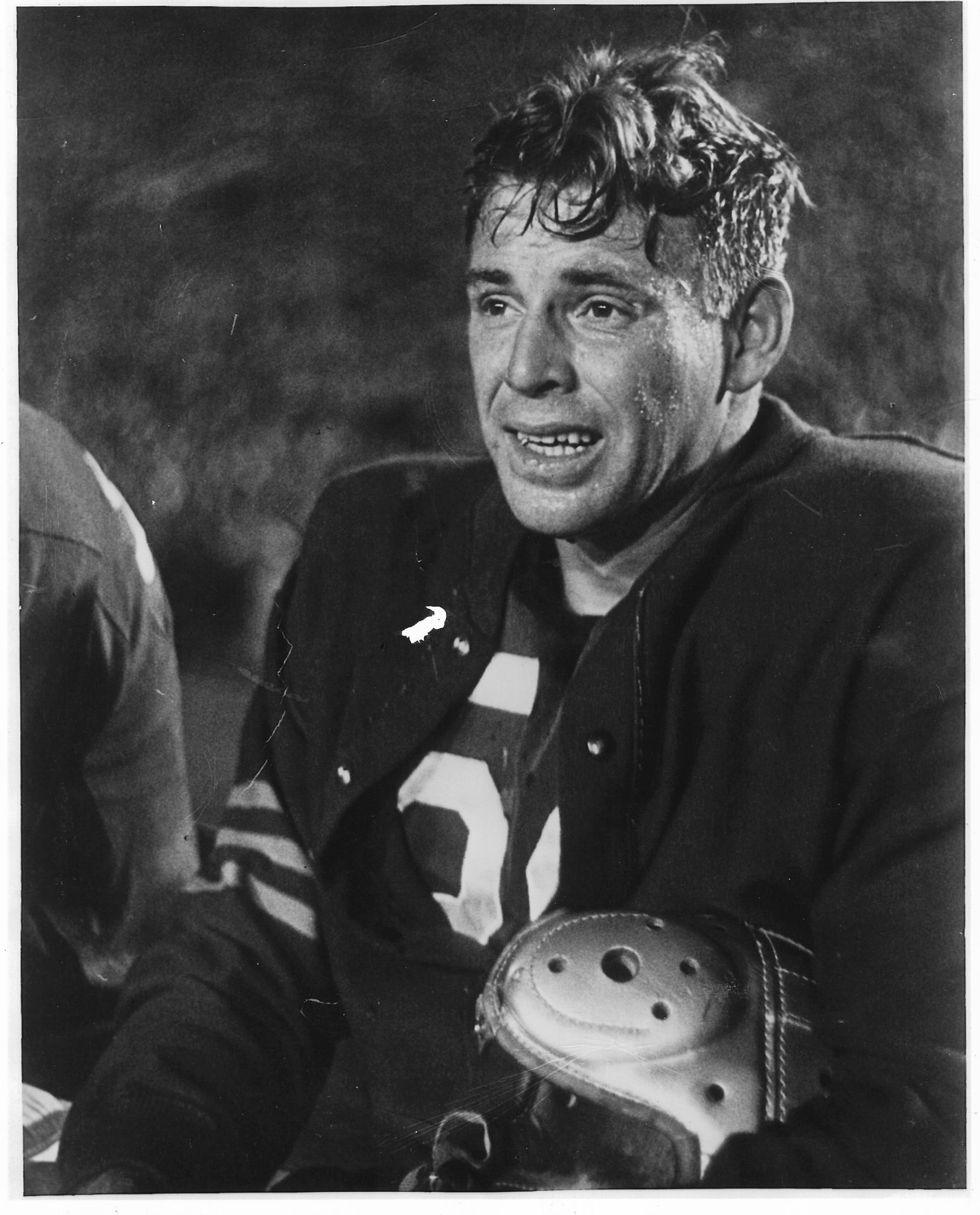
And, since Sandy Koufax was my childhood hero, I remember the 1963 World Series.
The other segment that stuck with us was from director Hal Ashby’s The Last Detail, where two sailors, lifers, escort a large and bumpkinlike eighteen-year-old sailor to the Portsmouth Naval Prison. (He’s made the mistake of stealing his base commander’s wife’s coin-collecting jar for, I think, the March of Dimes.)
Nicholson takes a liking to the young sailor, played by Randy Quaid, who is genuinely large and bumpkinlike,so he persuades his fellow Shore Patrolman, Mulhall, played with beautiful restraint by Otis Young, to take the kid out for a beer. (Just before Saturday Night Live,Gilda Radner makes a brief appearance as the member of a chanting group that meets behind the inevitable 60s-70s curtain of strung glass beads.)
Here are the two Nicholson turns I still love, even if he is 85 years old, That’s not his damn fault:
I waxed poetic in an earlier blog post about Terence Malick’s Day of Heaven, which even Richard Gere didn’t ruin (SEE: Gere’s victory dance in King David) It is not a great film, but it is beautiful. What I found interesting about it—I haven’t seen shots framed with this artistry since John Ford’s Monument Valley days—is the great ease in which Malick tells the story without dialogue. These scenes can go on for a long time (you start to get uncomfortable until somebody in Days, hopefully Sam Shepard, interrupts with a declarative sentence or two.)
I saw the same comfort in silence last night in watching Malick’s The Thin Red Line, based on the James Jones novel. Like Days, it is a gorgeous film, but the exteriors aren’t North Texas, but the jungles, swamps and shoreline of Guadalcanal, one of the earliest and most decisive Pacific land battles of World War II.
Malick’s comfortable with us gazing for long stretches, in complete silence at faces of actors like Jim Caviezel or Adrien Brody or Sean Penn. Then he will dissolve to sawgrass or dense tree canopies or impossibly steep hillsides, again in silence, and then, when you just can’t take it anymore, because you know the enemy is hiding just behind the silence, a fusillade from a Japanese Nakajima machine gun or a series of explosions from the impact of a Marine 105-mm artillery barrage comes as a relief.
An even better silence breaker is Nick Nolte’s Lt. Col. Tall. Here, in my imagination, is Nolte’s script:
CAPT GAFF (John Cusack): My men need water, sir. LT COL TALL: RANTS.FINISHES AFTER THE SIXTH “GODDAM.”
But it was an earlier film, Badlands, that I now realize was the first Malick film to resonate with me. It featured Martin Sheen and Sissy Spacek as two crazy teenaged kids—Charlie Starkweather and Carol Fugate—were the real-life models for Sheen’s Kit and Spacek’s Holly—who go on a 1950s killing spree in the Great Plains, filmed, lovely and desolate, and so vast as to make the kids’ Cadillac seem tiny.
But there are no Great Plains in the closeness of this opening scene. Inchoate, restless Kit is riding his garbage truck in narrow small-town alleys, suggesting his need to break out into the open as the film widens the story. Holly, in her lonely baton twirling, needs to break out, too, from an oppressive household and into the short, violent journey of her sexuality.
Holly will spend a long time in the oppressive confines of prison; Kit’s liberation will come from the hangman and in the space between the killing chamber’s trap door and the dirt floor beneath his swaying feet.
The opening is made perfect, too, I think, because of Malick’s choice of the Carl Orff song “Gassenhauer,” (“Street Song.”) This was not a film we’d seen before, not in 1973, the year of The Last Detail.
I taught history, about which I am passionate, but I guess I was always a writing teacher at heart. History was the medium I used to teach thinking, writing, speaking and—here’s where we get a little Wokey, I guess— empathy for the people who populate our past. And, contrary to my generally squishy and gentle reputation, I had some hard edges, I guess. I was never the same after I took twenty students out to see the SLO debut of Master and Commander.
So I could be a jerk when a jerk was needed. I preferred to think of myself as Lucky Jack Aubrey, the creation of novelist Patrick O’Brian, frigate captain, and those thirty-five students were men and women with Hearts of Oak.
This is from AP European History at Arroyo Grande High School, maybe just a few years ago. The music is Boccherini.
This dealt with free-response essays. Our favorites—my English teacher partner and dear friend Amber Derbidge and I—were what are called Document-Based Questions, in which the student is given an hour to weave a series of primary resources, from both history and literature, into a coherent essay that answers the essay prompt. One example is shown below.
I wrote every essay myself, whether free-response or DBQ, before I assigned them to our sophomores.
Our students were sixteen years old. Some of them were fifteen. The rigor we demanded of them paid off, I think; it was such a joy to see the change in them from the beginning of the year to the end. Their maturation was kind of miraculous.
This is the Arroyo Grande Creek alongside the house where I grew up. The creek makes for rich alluvial soil, so many years before my family moved here, two Civil War veterans farmed within a mile of this spot. Both were Ohioans and both had been neighbors twenty years before they came to California in the 1880s.
But that day was July 1, 1863, when their regiments took up their positions on Barlow’s Knoll.
Fouch became a fierce defender of the high school where I would someday be a student and teach history. It was not at first popular with Arroyo Grande taxpayers, but Fouch, a formidable man, saw to it that the high school would not only survive but get its first schoolhouse in 1906.
Sylvanus Ullom’s son—later high school graduating classes are populated by plenty of Ulloms–became a house painter who, in 1918, won the contract to paint the 1888 two-room schoolhouse, yellow in this photograph, where my education began.
Their descendants still live in Arroyo Grande today.
I was asked how old the Arroyo Grande District Cemetery was, and I still don’t know the definitive answer. Thanks to the San Luis Obispo Genealogical Society, I launched a search that revealed the oldest graves—there are three—date from 1881.
Then I noticed that two of the burials were girls named “Hess.” Then, thanks to the Find a Grave website, I found them. They were sisters and they died within a week of each other. I will never know why, but there was a worldwide cholera outbreak in 1881, and it claimed about 30,000 lives in the Americas, so there’s a chance that this is what took Louisa and Lenna from their parents.
Their parents were immigrants from Hesse, Germany; the entry in the 1880 Census for Arroyo Grande doesn’t include Lenna, who probably was still in her mother’s womb when the enumerator came to visit.
Henry Hess was a successful man but the irony is that the fruits of his hard work as a farmer were recognized in this piece from the San Luis Tribune, published just four days before he lost Louisa.
When we studied childhood in AP European history at Arroyo Grande High School, the callous and even cruel way that children were treated in early modern Europe was shocking to us. It was in part a function of childhood mortality rates; parents could not afford the emotional investment in children who were more likely than not to die, so they became little worker drones in European farm families.
It was farming that changed that attitude. The Agricultural Revolution of the 1600s-1800s (crop rotation and new farm implements like the seed drill were among the contributors) exponentially increased Europe’s food supply. Better diet meant more and more children survived to adulthood. That fact may have deepened the ties between parents and their children.
In fact, macabre as it may seem to us, photography, in its infancy, meant that families with some substance had their dead children memorialized. This meant that they loved them so much—and that death in children was becoming an aberration—that they didn’t want to let their babies go.
But California, even in the 1880s, was still on the frontier and medicine was still relatively primitive. Farmers all across America, like Mr. Hess, would have consulted cure-alls like this: Mrs. Winslow’s Soothing Syrup included generous helpings of alcohol and opium.
And this cure-all, from an 1881 San Francisco newspaper ad, included cholera among the afflictions that it claimed to treat.
In the years before Dr. Paulding came to Arroyo Grande in the late 1880s, and before his brother established the town’s first drug store, the Sears Roebuck Catalogue was the pharmacy for American farmers. (The film Tombstone, among others, depicted Mattie Blaylock, Wyatt Earp’s common-law wife, and her struggle with addiction to laudanum.)
So children’s health was still precarious in frontier Arroyo Grande. While the evidence is indirect, I suspect that Mr. and Mrs. Hess were devastated. Despite his success in Arroyo Grande, he would be buried in Santa Clara. Maybe he had to get away from 1881 and what it had done to him.
Arroyo Grande’s founder, Francis Branch, was devastated, too, by the loss of three daughters, taken by smallpox, in the summer of 1862. But he missed them so much that, twelve years later, he was buried next to his little girls.
So Prigohzin, the hot-dog vendor turned mercenary chief turned his Wagner Group column around on the M4 highway to Moscow, belying a few unguarded moments of hope this morning that pointed to the end of Putin’s dictatorship.
That means the kids who posed happily this morning on television in Rostov-on-Don with Wagner Group tanks will wind up looking like the Soviet novelist Alexander Sohlzenitsyn, seen here as a zek–a political prisoner–in Stalin’s Gulag.
UNSPECIFIED – AUGUST 04: Alexandre Soljenitsyne, the day of his liberation in 1953 after 8 years in Gulag (Photo by Apic/GettyImages)
If we are lucky, Prigohzin will wind up the way the Romanov family did in Yekaterinburg in 1918, where the Bolsheviks held them captive in an immense home, the Ipatiev House.
This is the wall of the room in that home’s basement where the Bolshevik secret police, the Cheka, used pistols to murder all of them.
In the decades after 1918, so many devout Russians visited the home to pray that the local communist party chief ordered it torn down in 1977. His name was Boris Yeltsin. All Saints’ Church stands on that site today, memorializing a beautiful but profoundly clueless family.
Prigohzin, a war criminal, deserves pistols but no churches. CNN ran thankfully blurred footage of his mercenaries interrogating a prisoner by smashing his hands and feet with a sledgehammer. The man did not survive Prigozhin’s boys, most of them recruited from Russian prisons.
But I was rooting for him for just a few hours on Saturday, if only in the hope that the hole his Wagner Group had left behind in Ukraine would be filled by Ukrainian soldiers.
I was reminded, too, of Operation Market Garden—in someways similar t0 but in more important ways vastly different from Saturday’s event—in the fall of 1944, where Field Marshal Montgomery came up with what sounded like a brilliant idea: Drop paratroopers into Holland and drive into Holland with British armor along the excellent Dutch roads and then force a Rhine crossing into Germany.
It was a disaster. Market Garden included two South County 101st Airborne soldiers; one, Arroyo Grande’s Art Youman, was promoted to sergeant by Easy Company’s Richard Winters for his conduct and the other, a young lieutenant, Oceano’s William Francis Everding, was killed as the Germans retook the town his regiment had liberated. After Market Garden’s failure, most of Holland, except for the south, was reclaimed by the German Army, the Wehrmacht. But the difference between 1944 and 2023 lies in the character of the would-be liberators. I offer these photos as proof.
(Top): A British soldier feeds two little Dutch boys during Market Garden; at war’s end, American G.I.’s are escorted to a folk dance by Dutch children.
But the Dutch thought all of their progressive, prosperous and historically brilliant nation had been liberated. For a few days, they were jubilant, just like the kids taking selfies Saturday with the Wagner Group tanks. Hitler had been defeated, or so it seemed and, for a few hours, it must’ve looked like Putin was about the be defeated, too.
And so now Vladi Putin, two inches shorter than Hitler but in every other respect his doppelganger–down to kidnaping children to raise them Russians, just as Hitler did Eastern European children to raise them as Aryans–might have just enough breathing space to reconsolidate his power and turn his attention again to the important business of destroying Ukrainian churches.
But there’s one hopeful sign, macabre as it is.
The most famous sniper of World War II was named Lyudmila Pavlichenko, a Red Army soldier credited with killing 300 German soldiers who were part of Hitler’s invasion of the Soviet Union.
She has a modern-day counterpart, a Marine, who goes by the pseudonym “Charcoal.” She has another nickname that once belonged to Pavlichenko:
“Lady Death.” Like her predecessor, Charcoal is Ukrainian.