My kind of war story

The Estrella Warbirds, a group of antique military airplane fans (like me) in northern San Luis Obispo County, have 7 or 8 World War II airmen among their membership.

One of them was a fighter pilot.

For the Germans.

Which he wasn’t. Not exactly.

His Dad was American, his Mom was German, but he was living with Mom and going to university when Hitler declared war on the U.S. (which he wasn’t required to do, by the way) after the Pearl Harbor attack. The Nazi government wouldn’t let him go back to the States.

–I grew up in America! he protested.

NEIN! replied the Nazi bureaucracy. You’re staying here, young man, and you will do military service for the Fatherland.

 Which he did, in the German air force, or Luftwaffe.


2-1


He wound up flying the plane in the picture, a Heinkel He162 (this one is the “D” model). Notice the absence of propellers? It was one of the Fuhrer’s beloved wonder weapons, put into production near the end of the war. It was a jet.

It was also a death trap. Note the placement of the engine. Visualize an He162 hit by shellfire, and the pilot trying to bail out.

See where he would go?

Which is what happened to this hapless young man’s airplane in 1945: it was hit by shellfire–in this case, a 20mm cannon.

He made one of the mistakes fighter pilots are NOT supposed to make. As he was landing, he forgot to look behind him.

If he had, he would have seen the American P-38 firing a burst from its machine guns, just to kind of finish off the work his cannon had started. He was the last thing the young American/German pilot needed that day: a perfectionist.

1418140188897

A P-38 Lightning


So a Browning 12.5 mm machine gun bullet went through the young pilot’s leg. He forgot all about landing and got busy passing out.

When he regained consciousness, he received news from a monstrous American GI, a sergeant, standing over him and peering into the cockpit.

Here was the news: “Hey! I think this sumbitch is still alive!”

He was indeed. And, as it turned out, the Americans liked this particular sumbitch, who probably knew as much about Joe DiMaggio and Buck Rogers in the 25th Century as they did. He was treated at a mobile hospital and somehow stayed with the American unit that had captured him.

His near-death experience happened only about a hundred miles from his mother’s home.

When the Americans’ advance took them there, they knocked on his Mom’s door and dropped him off for her to take care of.

After the war, he came home. To here, that is. And now he lives in the Paso Robles area.

That, I think, is a good war story.

Mama, don’t let your babies grow up to be historians.

us-coast-guardsmen-assisting-a-wounded-marine-returning-from-the-fight-on-iwo-jima

Coast Guardsmen and a wounded Iwo Jima Marine.

I got wounded today–nothing at all like what this young Marine is going through. I left something out of the book, and I got reamed for it. I’d let a reader down who deserved to be in the book. A lot of it went back to the maddening business about the photographs. I submitted 104; they used 70, of the 70, I had to re-submit about thirty.

It has to do with megapixels and dpm’s, which are beyond my understanding. What it meant was that a story and image–this man’s story and his family’s story– that deserved to be shared didn’t make it into the book. There were other images that didn’t get in, each with its own story, that included:

–My friend Will Tarwater

–Vard Loomis and the Arroyo Grande Growers baseball team–Vard’s first name was “Joseph,” as in Joe, one of the best friends of a lifetime.

–The Dohi family; it took me weeks to get permission to use this photo. Didn’t make it.

–Jess Milo McChensney and his B-24 crew

–A photo of Clara Paulding, just dismounted from her bicycle, in front of 1898 Branch Elementary School–the same schoolhouse where my education would begin sixty years later.

–Pvt. Francis Fink, a relative of an Arroyo Grande family that means a lot to me.

–A photo I thought essential, of two Filipino men in the garden of their Allen Street home, inundated with ten-year-old boys who were their pals.

–A photo donated by my friend Gerrie Quaresma, of a Portuguese wedding of an ancestor of hers at old St. Patrick’s.

–The senior portrait of Elliott Whitlock, who won the Silver Star for bringing his B-17 and her crew home to their base in Norfolk.

Not getting those in and not having the chance to tell the story the way you want to is  heart-breaking.

I was so disgusted with their photo policy that I decided, at one point, to give up the book entirely. I had put too much work into it and changed my mind.

But one part of the reaming that grated was the insinuation that I hadn’t worked hard enough in my research, that I didn’t do enough homework.

Getting called on the carpet for an accusation like that is bullshit.

The “Notes” section only lists those works I actually cited in the manuscript. If I’d had a bibliography, here are the sources I consulted to learn about one Marine’s family, his service, and his death (I got his whole personnel file, including his fitness reports, his last will and testament, the last effects recovered from his body, the pitifully small list of his personal belongings kept back home, at Pendleton, and some things that were none of my damned business. I used it and then trashed it. It seemed an invasion of the young man’s privacy, and he’d led a good and hard-working life.):

I don’t have all of them, but here are the at least most of the sources I consulted to learn about Marine Pvt. Louis Brown, about one man:

  • “Azoreans and Madeirans,” Minority Rights Group International—Workingto Secure the Rights of Minorities and Indigenous Peoples, http://www.minorityrights.org/1820/portugal/azorea.
  • Yesterday, Today, and Tomorrow, vol. 5 (Arroyo Grande, CA: South County HistoricalSociety, 1981–89).
  • Antone [sic] Brown, “Headstone Applications for Military Veterans,” Ancestry.com.2009.
  • “Certificate of Death,” Private Louis Brown, Bureau of Medicine and Surgery, Navy Department, Washington, D.C., June 1945.
  • Antone [sic] and Anna Brown, “Family Tree,” Ancestry.com
  • 1920 Census
  • 1930 Census
  • 1940 CensusComplete personnel file, Pvt. Louis Brown, Records of the United States Marine Corps, Department of the Navy, National Archives (that cost $100)
  • Arroyo Grande Valley Herald-Recorder, 6 April 1945
  • World War II Navy, Marine Corps, and Coast Guard Casualties, 1941-1945. (where I discovered Louis’ name had been spelled “Louise.”)
  • The First Battalion of the 28th Marines on Iwo Jima: A Day-by-Day History from Personal Accounts and Official Reports, with Complete Muster Rolls, by Robert E. Allen.
  • MUSTER ROLL OF OFFICERS AND ENLISTED MEN OF THE U.S. MARINE CORPS FIRST BATTALION, TWENTY-EIGHTH MARINES, FIFTH MARINE DIVISION, FLEET MARINE FORCE, C/O Fleet Post Office, San Francisco California.
  • The United States Marines on Iwo Jima: The Battle and the Flag Raisings. By Bernard C. Nalty and Danny J. Crawford
  • Fifth Marine Division Daily Summaries, Iwo Jima. 19 Feb. 1945-24 March 1945.
  • The Ghosts of Iwo Jima. Robert Burrell, 2006.
  • Action Report on Iwo Jima, Part 1, Vol I: Schmidt, K.E. Rockey, 7 February 1945-24 May 1945.
  • “Closing In: Marines in the Seizure of Iwo Jima,” by Colonel Joseph H. Alexander,U.S. Marine Corps (Ret.)
  • “Team Find Two Possible Sites in Search for Remains of Marine From Iwo Jima Flag-Raising,” (Bill Genaust) AP, June 27, 2007
  • Map: “ Iwo Jima: Nishi Village and Hill 362-A.” jacklummus.com
  • Records of War: Casualties of Iwo Jima. http://www.recordsofwar.com/iwo/dead/dead.htm
  • Iwo Jima Retrospective,” by Cyril J. O’Brien. http://www.military.com/NewContent/0,13190,NI_Iwo_Jima2,00.html
  • From Leatherneck: Iwo Jima: “Hell With The Fire Out” – See more at: https://www.mca-marines.org/gazette/leatherneck-iwo-jima-hell-fire-out#sthash.G6FJ7IHq.dpuf
  • Sergeant Christopher Zahn, “Echoes of Iwo Jima Heard by Present-day Marines,”Quantico Sentry Online, http://www.quanticosentryonline.com.

The sum total of that research was a 640-word passage in a small (35,000-word) book. And for every $21.99 book The History Press sells, I get less than $1–this is for work that lasted over eighteen months. I will break even for that work. Maybe.

It may sound like it, but this isn’t meant to be sour grapes. I’m a happy historian. I deserved the knock—and besides, it was just the corrective I needed—but I’m still proud of the work I did. I knew from the beginning that I would miss some stories that needed to be told–one that comes to mind is of an Army nurse who would’ve pulled duty during the Bulge in 1944-45– but that story didn’t happen after eight phone calls that were never returned. Sometimes, though, I just wish folks would wait a minute before they let fly. I can be accused of many, many things. Laziness isn’t one of them. It wasn’t true of me as a teacher, it’s not true of me as a writer, and, like my critic, I’ve gotten my hopes up as a writer and had stories, story ideas, and essays rejected by more editors than I can count. It was crushing.

What I did, though, was pick myself, up and keep writing–until I wrote a book that is imperfect, but  writing the book filled a hole in my town’s heritage that no one realized was there at all.

Oh, and the other criticism, that there were too many Japanese in the book? 25 of the 58 members of the Class of ’42 were Japanese-American. I just emphasized the “American” part.


Buyer, Beware! Confessions from a guy who wrote a book

Screen Shot 2015-11-28 at 6.36.09 AM


  1. It is not perfect. I made mistakes—word choice here, a caption there (one cites walnut trees that aren’t there because they switched photos; I won’t cop to that one), and there will be factual errors that, for someone trained as newspaper reporter, are sins that send a writer to hell, postage paid. There were about 35 revisions to the book, and sometimes things I corrected were counter-corrected in a manner that wouldn’t have happened with good old typewriter drafts. Other mistakes I made because sometimes I am stupid. Also, the young woman who edited the book and I have a deeply philosophical disagreement over comma usage. And there were gaps in her knowledge: she didn’t appear to know all that much about World War II; she turned all ships from “shes” into “its,” and she was not clear on what school the word “Cal” denoted.  She also did some wonderful and necessary corrections that made my draft better.
  1. Two of the chapters are not about World War II. My audience was my friends from Arroyo Grande, but I also wanted to introduce strangers to my home town, so Chapter 2, “Pioneers,” goes back to 1837 and Branch, and Chapter 3, “Immigrants,” focuses on the waves of immigration from the Azores, Japan and the Philippines, which became necessary because the children of those people would play such a prominent part in the book, in fighting and enduring the war.
  1. There are not enough Mexicans in the book, and this from someone whose college major’s focus was Latin American, and particularly Mexican, history. Part of this is because we deported so many early in the Depression—many of them, by the way, American citizens. Part of it’s because my publisher didn’t understand the “South County” concept, the Five Cities familiar to you and me, and while there were many Mexican-American veterans from Oceano, she wanted the book’s focus on A.G. Most of the servicemen I discuss have a common thread, and that’s their attendance at the Arroyo Grande Union High School. Because of the Great Depression, there were many World War II servicemen who’d achieved only an eighth-grade education because they lived in the kind  of poverty that made high school a luxury. They went to work. At the time of the War, the dominant immigrant groups here, and represented in the yearbooks, were of Portuguese or Japanese descent. 43% of the Class of 1942 was Nisei.
  1. There are not enough women in the book. Had we more industry here, that would have been a different story. There’s some detail about a woman Marine; nine phone calls to learn more about an Army nurse proved fruitless and I am sad about that. But women—like Clara and Ruth Paulding, Gladys Loomis,Eileen Taylor, Kimi Kobara, Evelyn Betita—who appear only briefly in the book still have important roles to play, and some of them are staggeringly heroic.
  1. For a book about Arroyo Grande, we sure spend a lot of time in places like Normandy and the South Pacific. That’s one of the major reasons for me writing the book. I think our kids—my students—feel sometimes that history is something that happens somewhere else, to someone else. That’s not true, because Arroyo Grande has unique links to wartime London, to Bastogne, to Iwo Jima, and even to Hiroshima. I wanted to make that connection because even a little farm town of 1,092 people was—and is—important to all history, and so to all Americans.
  1. The worst part was the photographs. I am heartbroken because photos of new and dear friends like Will Tarwater, or the fathers of friends—Pvt. Francis Fink—or heroes who need their faces to be seen, like Jack Leo Scruggs, killed on Arizona, did not have images that fit the peculiar digital requirements of modern publishing. The photographs I mention here were submitted and re-submitted; I made alternate versions or hunted down alternate versions on my own, and submitted those, but they didn’t make the cut. This turned, for me, out to be the most hurtful aspect of writing the book and the one area where I feel like a failure.
  1. This is not academic history. This is this is a very personal book. I use the pronoun “I” in several places, something I will not tolerate in my students’ essays, because this is a book that is deeply rooted in my life experience, and that life experience includes events, like the death of a Marine on Hill 362A on Iwo Jima, that happened a long time before I was born. When I found that Marine’s grave in the Arroyo Grande cemetery, he, like so many soldiers and sailors I wrote about, became part of my family. These young men are from my father’s generation; in writing about them, they became my sons.
  1. I know that there are many, many stories that I missed. I regret those almost as much as I do the photographs, but I had a word count limit–it’s just a little book– and I had a deadline. They made me stop. Good thing. If I’d been the editor for Gone with the Wind, the movie would still be on the cutting-room floor.

The Work that Teachers Do

Tags


12466239_10208324640457390_4987351987083300621_o


12548856_10208324641497416_6532004896748370571_n


10314542_10208324641737422_1985620031252979684_n


I re-read the manuscript of my little book, World War II Arroyo Grande, this morning, found it brilliant, and then remembered, because of a degenerative neck disk, that I was loopy on Norco, and “The Berenstain Bears Dig a Septic Tank” on Norco would have exactly the same impact on me as the first time I read From Here to Eternity or Cold Mountain.

Here’s the Magic part.

There are three books, out or about to be released, written by former students of mine. I take no credit for anything they write–except for their history essays–but I am every bit as happy for these books as I am for mine, and now that I know how hard the work in writing a book truly is I don’t even have the words for how proud I am of three young writers: Alex Bittner, Maeva Considine, and Evan Devereaux.

No work is more demanding and more lonely than the craft of writing. With one exception, and that is teaching.

What we do every day in the classroom isn’t work–for me, it was the greatest joy to teach young people like these in my years at Mission Prep and then in Lucia Mar. Nowhere was I more authentically myself than in a classroom, in the time I shared with teenagers.

For most of us, the “work” begins at three o’clock and ends in the dark. The weekends are just two more workdays: we write our weekly plans at our kids’ Babe Ruth games and we grade our essays at Cafe Andreini–seething a little at the guy at the next table burrowed deep inside the Sunday “Times” or the fiftysomethings in bicycle tights about to head up the Huasna. It’s galling to see leisure flaunted so shamelessly while we work in such anonymity.

It takes a toll. My serum cholesterol levels dropped 61 points in the five months after I retired.

We work hard, but the toll is exacted most in the extra work we are required by distant decision-makers to do–mandated in a fantasy world where we actually have the time to do it–and what we do for them is eventually written up in a barbaric language, Educationese. It’s work that almost always has no meaning and does almost nothing to make us better teachers, when wanting to be a better teacher is a constant hunger every good teacher feels. A good teacher would never force her students to do this kind of work because she respects children.

And the work we amass really is meaningless, because within three years it’s all thrown away. A new model rolls into Education–NCLB, OBE, Integrated Teams, The Common Core–so a new paradigm shift sweeps us away and we start a new round of what is most accurately called “busywork.” We feel a little like Rose Parade princesses, with fixed smiles that make even a princess’s jaw ache and endless Rose Princess waves that will eventually numb her arm. We’re like prisoners on a pedagogical Rose Float whose petals will turn brown as quickly as the last one’s did.

And we are told, every time, that we should not fear change. This is insanity, of course, not “change,” what we do to teachers. It’s the kind of busywork that crushes the second-greatest gift a classroom teacher has: her idealism.

Her greatest gift, of course, is the roomful of children entrusted to her, the complex and precious aggregate of human beings she has to face every Monday morning.

I hated Monday first period. I am an introvert and I was terrified every first period of every Monday for thirty years. My hands trembled every Monday for thirty years. But we force ourselves to begin because we worked so hard, when we were alone and anonymous, on our lesson plan. Plans. Mine usually went through two and sometimes three revisions.

Sometimes they don’t work at all and you have to learn to throw the plan out in the middle of a class and fly by wire.

A lot of good teaching is like that: it’s not meant to be weighed, measured and stored in the Skinner boxes the distant decision-makers build for teachers. A lot of good teaching is instinctual, improvisational, and attuned to what the students need in the moments where they depend on your leadership and on your humanity.

By the way, thank God, the anxiety of starting a class dissipates and in a few minutes: we are so absorbed in teaching the plan well and clearly that we really have just the faintest connection to it. Even in the lessons that go well, we teach instinctively, because now we are in a deep, living and constantly evolving relationship with our students.

We aren’t dispensing information. We’re inspiring, infuriating, affirming, correcting, evoking, and confronting.

There is nothing in my life–only the births of my sons come immediately to mind– that has made me happier than my time with children, and the captivity of all the unseen we work we do to prepare is transformed, as if it were alchemy, into the kind of freedom only a teacher understands.

What other career gives you something that approaches the sensation Orville Wright might have felt that day at Kitty Hawk?

And then young adults like these three remind us that what we do is important and powerful. It makes an old teacher like me very quiet inside. My little Wright flyer is safely on the beach again, and the miracle of what we’ve done together is overwhelming.

Huasna Road spirituality


1929425_1124481235982_1907209_n

Mom and Roberta, 1943


I think about my Mom a lot in January, the month when she was born, and in March, the month when she died. She never said any of the things below, but I decided to try to say them for her as authentically as I could. What lessons did I learn from her when I was a little boy?  I decided on ten. I’ll never get the wording exactly right, and I’ll never be able to articulate all the lessons, because so many of them were nonverbal and taught by example. Ours was not a peaceful home, nor was it always a happy one, but there were times when my mother’s parenting was, as I think about it more than fifty years later, actually quite inspired.


Ten Lessons

  1. Each of our lives is tuned differently, so each of us produces a different tone. It’s the melodies that please God most.
  2. Books, and music, and ideas, and politics, and God, and talk. That makes this place, five thousand miles away from Ireland, an Irish house.
  3. You young people might be all right after all. Ringo makes me think so. He looks just like a Basset hound!
  4. Faith is stronger when it’s tempered by doubt. The men they tried at Nuremberg were True Believers.
  5. Those people working the pepper field over our pasture fence don’t look like us, and they don’t speak our language. How lucky we are to have them so close.
  6. You’re the one that burns a little hotter than the others. I need to be patient because I love you.
  7. We owe the poor our love and respect; we owe the rich prayers for good eyesight. It’s so hard to see a carpenter’s son planing His father’s wood from the great heights that they inhabit.
  8. There is no forgiving intentional cruelty.
  9. I will raise singular daughters and honorable sons.
  10.  Life inflicts terrible wounds and unbearable pain. Just hang on. If the pain continues, just hang on. A time may come when you need to let go of it. Say goodbye with love.

Dad and the German Major


003 (1)


I’ll be sending two copies of the book World War II Arroyo Grande to young active-duty soldiers. This makes me a happy new/old writer: one reason I wrote the book, I think, was to reintroduce the World War II generation to my generation and to my students, and I’ve always had a soft spot for students who’ve gone into the service. I’m also very happy that I’ll be sending a copy to Judith, a favorite student who achieved the highest grade ever in my U.S. History classes. Judith is from Germany. She loved learning American history.

The photo is of my father when he was a young man on active duty in 1944. I’ve told Judith this story, but once the war had ended in the spring of 1945, Europe went hungry–the Continent’s infrastructure had been obliterated by ground combat and by the Allied air campaign. The footage of German kids eating out of garbage cans in 1945, in the long months before the Marshall Plan, always stunned my students. In the meantime, thousands of POW’s in our care died of hunger or of opportunistic diseases because civilians got first priority for food, and there never was enough.

A Wehrmacht major, who outranked my father, then a U.S. Army captain on occupation duty, somehow latched onto him and for a few weeks became his personal bodyservant: the German officer cooked for him, cleaned his quarters, washed and pressed his uniforms, the works.

He did that because Dad was a Quartermaster officer and so had access to food. (A year before, my father repaid an English family’s kindness to him with a bag of oranges. The mother’s British reserve crumbled. She wept. Her family hadn’t seen oranges in five years.) The young German officer wanted to live: his pride meant nothing when compared to the wife and children he wanted in his arms again once he was cashiered. My father was his ticket home.

In summer, he would begin the long walk home along roads choked with refugees and gaunt, tired soldiers. Dad never learned what happened to him but hoped, in talking about him years later, that the German major had lived a long and happy life. What started as a relationship of expedience had begun to edge into a friendship. Perhaps, very faintly in the recesses of my imagination, there was the unspoken thought that my student Judith was the major’s great-granddaughter. I owed it to this soldier to be the best teacher I could be for her.

The tough American soldiers of Easy Company–-the “Band of Brothers”–-liked the English, for the most part, loved the Dutch, but, like my father, felt most at home with Germans.

It does make you wish that British Pvt. William Tandey had shot Hitler in 1918, when he had the man in his sights at Marcoing. We could have done without Clemenceau as well, I guess, in his 1918-19 incarnation, but a younger Clemenceau had done great good for France and for the revolutionary ideals of tolerance and of the equality that citizenship confers.

These are ideals that Hitler despised because, of course, they included Jews, like Alfred Dreyfus. Clemenceau had been one of Dreyfus’s most adamant defenders. Dreyfus was a good French soldier, but the older Clemenceau dominated the drafting of a foolish, vindictive peace treaty dictated, in his mind, by a generation of good French soldiers whose bones littered the nation’s soil. Even today, farmers in northern France, in turning over fields there, find the bones of boys their harrow blades.

A generation after that war, there were more good soldiers, good young men on both sides who in a better world should never have been enemies. But they didn’t live in a better world; theirs had been penetrated by evil.

Americans had fought a war in the face of great evil once before. There was a lull in a Civil War campaign that gave a Union army band, its vast audience in bivouac, time enough for a concert. Confederates on a nearby hillside were listening. One of them called “Yank! Play one of ours!” So the band played “Dixie,” and at the song’s conclusion, both sides erupted, thousands cheering, tossing their caps in the air. They embraced a vivid moment when they were at peace together, before the close-quarters murder so characteristic of that war—and, sadly, so necessary for its resolution—resumed.

Similarly, once their war was over, a German soldier reached across the divide to make a necessary peace with my father. I hope my book will allow two young soldiers today to reach across the divide that time imposes to meet other young soldiers, including some who died such a long time ago. In a small way, it gives them life again.

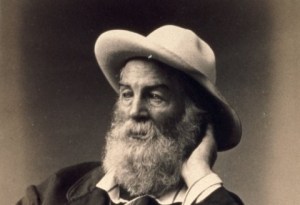
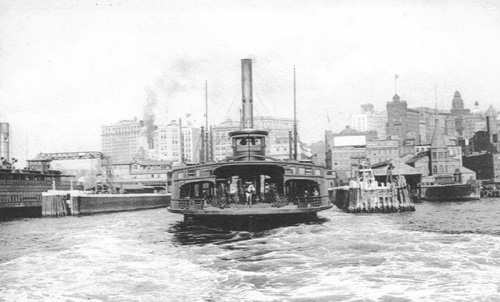
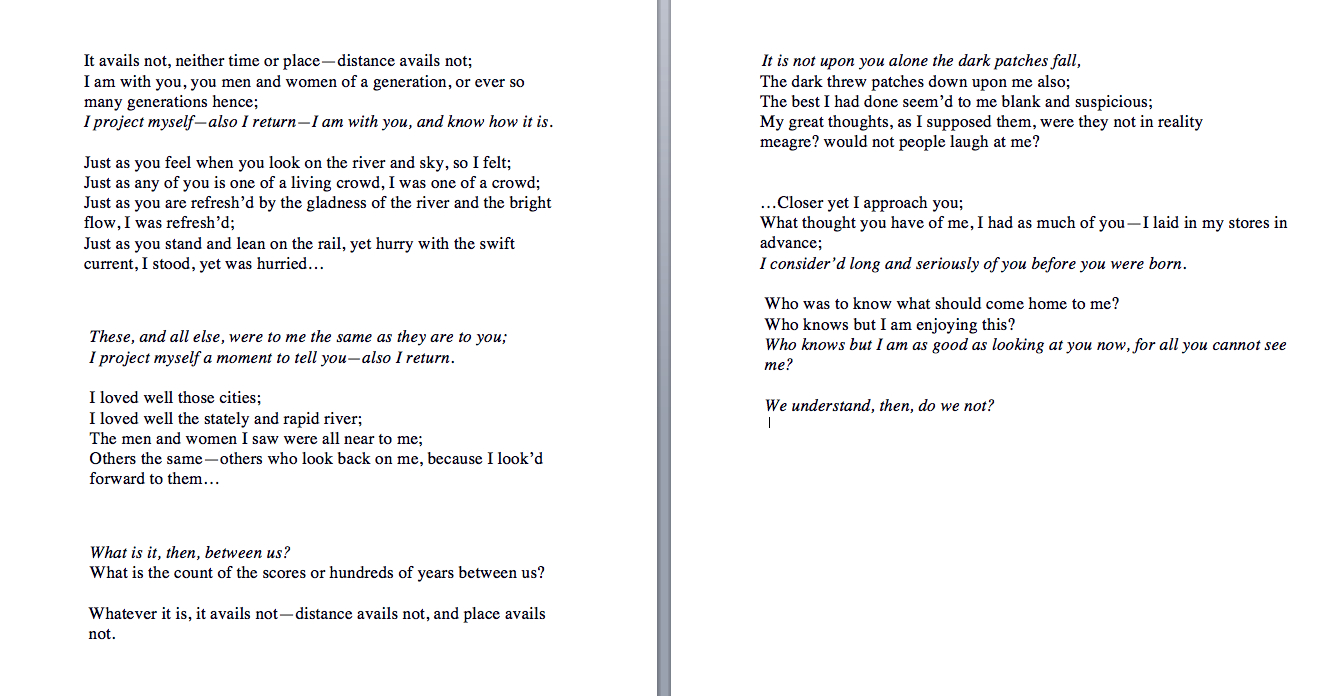
Walt Whitman may have articulated this idea best in what I think is one of his finest poems, “Crossing Brooklyn Ferry.” Time and distance avail not, Whitman wrote. They are irrelevant. Indeed, when you read the poem you have the uncanny sense that Whitman is reading with you, just over your shoulder, or that you’re leaning on the ferry’s rail, together with the old man, the harbor’s breeze in his whiskers.

In the same way, we are all of us on the road together in the journeys of our lives. I think that sometimes, without recognizing them, we walk alongside our ancestors, and among them is the German major who yearns for home.

The hunch

1003595_10208291341784944_2527951556034985778_n

It took me almost 64 years, but I finally found this handsome young fella last night. This is Dykes Johnson, Taft Union High School ’27, Stanford University BS, University of Louisville M.D., Taft Union High School Hall of Fame.

He passed away in 1996. Damn it.

I was born on January 25, 1952, when I should’ve been arriving some time around Washington’s birthday. Dykes was our family doctor in Taft. He was a flying enthusiast–he’d also served in the Navy as a doctor during the War–and was gone to the other end of a Valley on some kind of fly-in.

When Dad took Mom to the hospital, things weren’t going so well. Dad was scared. I was about to make my appearance (or not) when Dykes burst through the door, which almost hit my Dad in the face.

Dykes, I guess, was a blunt man, and especially that night. “Get the hell out of here!” he told my father. “Something’s wrong.”

He’d flown back down to Taft. He’d had a hunch.

I was not only a preemie–four pounds–but the cord was wrapped around my neck and I was blue. I’d stopped breathing.

Meet the man who saved my life

A spooky hallway in the abandoned West Side Hospital, built in 1949. This is where I was born; it was demolished a few years ago.
The Dykes Johnson Medical Center, torn down in late 2022.

Two brides.

2-brides-wedding-style-page

I’ve been seeing a lot of this in recent years on Facebook: a former female student gets married. To another female. So I guess I’ll keep this as a link on Facebook, rather than a direct entry, to avoid the stone-throwing.

But, again, you’re dealing with my Irish mother’s son, and she’s the Irish mother who loved God with her mind as much as her heart: she amazed priests, to the point of devastation, with her knowledge of theology. Her first prime directive, similar to Christ’s, was that love is a gift from God. From that flows a corollary: To love another human being is the most terrifying leap anybody can make, and to have the courage to commit yourself to the leap—both to the letting go, and to the hanging on on the other side—is the most perfect gift a person can give back to God.

So seeing those photos of young women who’ve made that commitment has a deep impact on me. The photos show two young women who are happy.  So they make me happy, too.

These young people, just starting new lives together, don’t need my blessing. I don’t have that kind of power, and that’s not the point I’m trying to make. I can only tell you–please forgive my forwardness–that I love you and I am very proud of you. You have reciprocated God’s greatest gift. And no stone can wound the strength in two people united together.

Before you throw yours, if you’re infuriated by my impious linkage of God with same-sex marriage, wait and listen quietly to discern whether condemnation—when you might be as confident in your faith as the Sanhedrin was in its faith when it arrested Jesus—is really what God desires. I believe from the bottom of my heart that She has a surprise for you.

Gisela’s murder


Gisela Mota


Gisela Mota became the mayor of Tenmixco, Mexico–in Morelos, the state of a hero of mine, Emiliano Zapata–on Friday. She’s seen here at her swearing in. Yesterday, Saturday, drug cartel gunmen shot her to death outside her home.

I hate drugs because they are so much more insidious than bullets. So it’s jarring when a little research reveals that recent marijuana legalization may have been the most effective tactic yet used against the Mexican cartels. They are losing a significant part of the immense flow of dollars that sustains them. They are hurting.

So was a recovering heroin addict I knew once. But he was having a far, far easier time than the guy trying to kick his—legal—prescription painkillers. That man was going to pieces. Both  were sick men; I’m not sure why they’re alive, but not this vital young woman. None of this makes sense to me.

Two more things, in our relationship with Mexico, don’t make sense to me, either:

  • In the wake of NAFTA, American corn producers dumped their product on the world market a decade ago. They generated a wave of foreclosures on small Mexican farms and the resultant migration, now subsiding, that Mr. Trump wants to end with a wall.
  • If you know our history of alcohol abuse, from the very beginning of the nation (it was, ironically, corn alcohol at the beginning), then you know that we are not noted for our impulse control. So it’s not supply, but instead American demand for drugs that helps to fuel the cartel crossfire that kills so many innocent Mexicans.

“Poor Mexico,” the poet Octavio Paz once wrote. “So far from God, so close to the United States!”  Few nations are so tightly linked yet so insistent on denying their kinship. The first victim of the Mexican Revolution was an El Paso housewife hanging out her laundry, killed by a bullet that crossed the border. More than a century later, the cartel murders represent the worst violence since the Revolution, which killed a million people, or one of every ten Mexicans.

Somehow, the drug violence must stop. I don’t know how to stop it. But I know that this not what Zapata died for when he, too, was assassinated in 1919. I know, looking at Gisela’s image, that the Mexican people have been cheated again, robbed of a young woman of promise in the young part of a year that now promises nothing at all.