
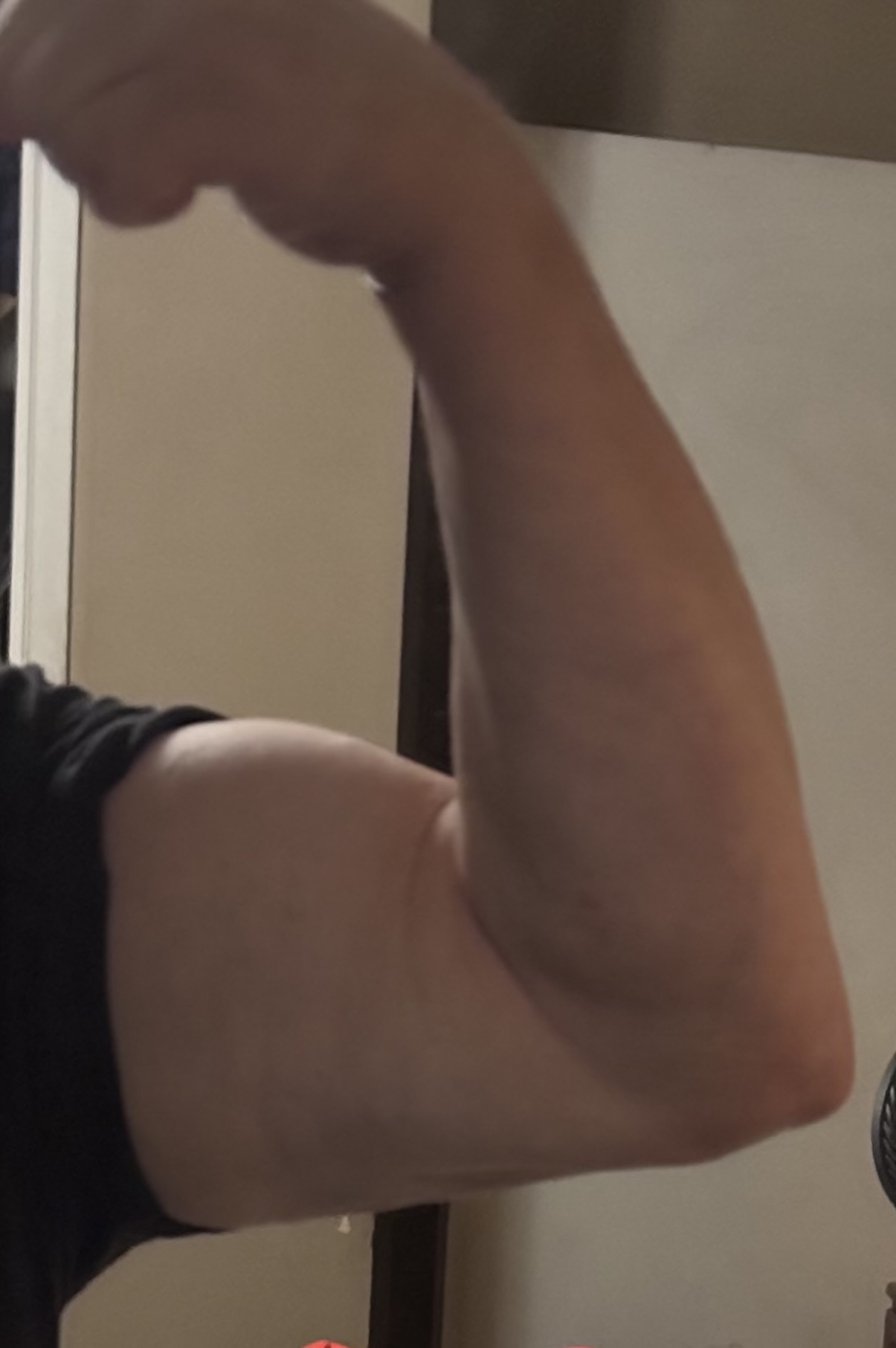
This is my left bicep at seventy-four. I still kind of like it, but I took the photo in part to reflect on the miraculous business of aging.
I have exercised most of my life. I began, at thirteen, with those cheap plastic plates filled with concrete. When I first met my much-beloved sister-in-law, Evie, I looked like an upside-down capital letter “L,” because I’d just hurt my back lifting and I had to reach up to shake her hand.
The rigor of exercise, of course, was compensation, because I was so small—a mere four-pounder at birth and no more than 115 lbs. as a senior in high school.
So I kept at it until things got Real Serious.
That would’ve been in the late 1970s and early 1980s, when a relationship ended and a little squirrely gym opened up in what is now the Downtown Cinema in SLO. It was this place, its claims greatly overblown in this 1984 ad, because the entire Health Fitness Center wasn’t much bigger than your typical Taco Bell.
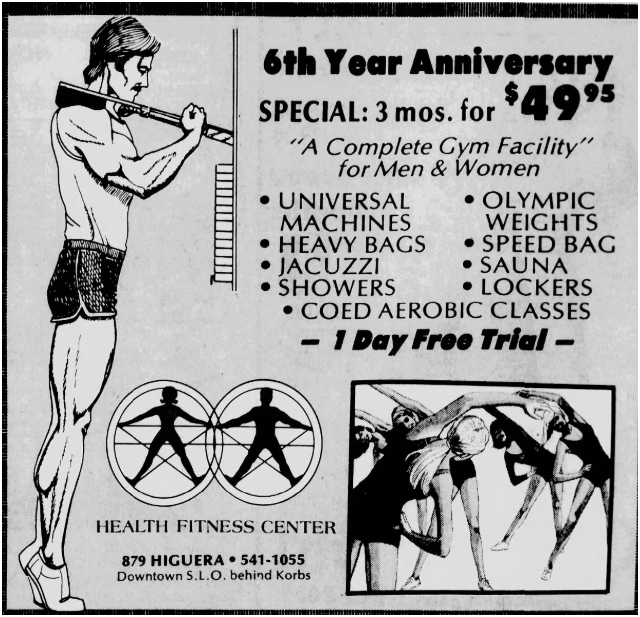
Anyway, I was heartbroken and I reasoned, quite unreasonably, that small men need big muscles to find someone with whom they might fall in love. (It took me six years to find Elizabeth.)
And I didn’t eat Taco Bell. Nope. I ate a lot of eggs, both cooked and raw, mixed into yogurt-and-protein powder blends, taught myself to like liver and cottage cheese and the least-expensive cuts of steak. After I’d finished a meal, you’d hear faint “clicks” as my arteries snapped shut.
As to the workouts? Those I liked (the liver not so much), mostly because of my workout partner, Cleo. The Health Fitness Center had Universal machines and racks of chrome-plated dumbbells in the main workout area (Chrome? Can you imagine?) but my favorite place, with Cleo, was a little back room with Real Deal weight plates, black, some with flecks of rust, and a squat rack and a T-bar for bent rows. That was my happy place.
So I got big, like a plumaged bird, and began to affect tight polo shirts that felt good because of the way your biceps felt at the sleeves and the way your lats stretched the material when you’d bend to pick something up.
Oh, I was a Peacock Dandy.
That phase kind of ended when my brother and I volunteered as stagehands for a bodybuilding show at the SLO Veterans’ Building. The entrants, preening and oiled, nauseated me.
But I continued to exercise, off and on—weightlifting, running, rowing—and still do, but the photograph of my bicep is intended to remind me that all glory is fleeting.
Watching and feeling yourself age is fascinating. That seventy-four-year-old bicep is a mere hillock. Those washboard abs are still there, but hidden beneath a layer of Jabba the Hutt. Bench press reps with 200 lbs. (my son John does the same with 300) now require intense focus at 90 lbs. I don’t do squats anymore because I might melt, at the bottom of the exercise, like the Wicked Witch does when Dorothy throws water on her.
I have fallen a lot lately, and it takes me a long, long time to get up again. If I drop a dime on the floor, it stays there, waiting to be claimed. (If it’s a slice of lunch meat, well, that’s why we have dogs.) My once-long, fluid golf backswing is truncated by half. Getting laundry out of the dryer nearly constitutes a workout.
Of course, in my Health Fitness days, I never once imagined these things would happen to me, and I pitied the old men who’d gamely joined the gym. They moved so painfully and slowly.
And now I am one of them.
And there is great joy to be found here.
When you start to intuit and then confirm the process of mortality, you can begin to forgive yourself. All the mistakes you’ve made and all the hurts you’ve inflicted still register—sometimes painfully—but, incrementally, the pain begins to recede. You begin to look at your baby pictures or at Hollywood films made around the time of your birth (when men still wore felt hats) and you realize how lucky you are to have lived such a long time I’ve now outlived the lifespans of my father and two grandfathers. Lincoln, who always seemed ancient to me, died eighteen years my junior. I am older than Pope Leo.
Knowing these things, you can start to let go of your youth—I can no longer do reps with 200 lbs., but I can write about what it was like to experience the Beatles in 1964 or Prince in the 1980s. You find it much easier to time-travel, to 1863 Gettysburg or the 1928 Democratic Convention in New York City or to Oklahoma in the 1930s, with immense black dust clouds marshaling on the horizon.
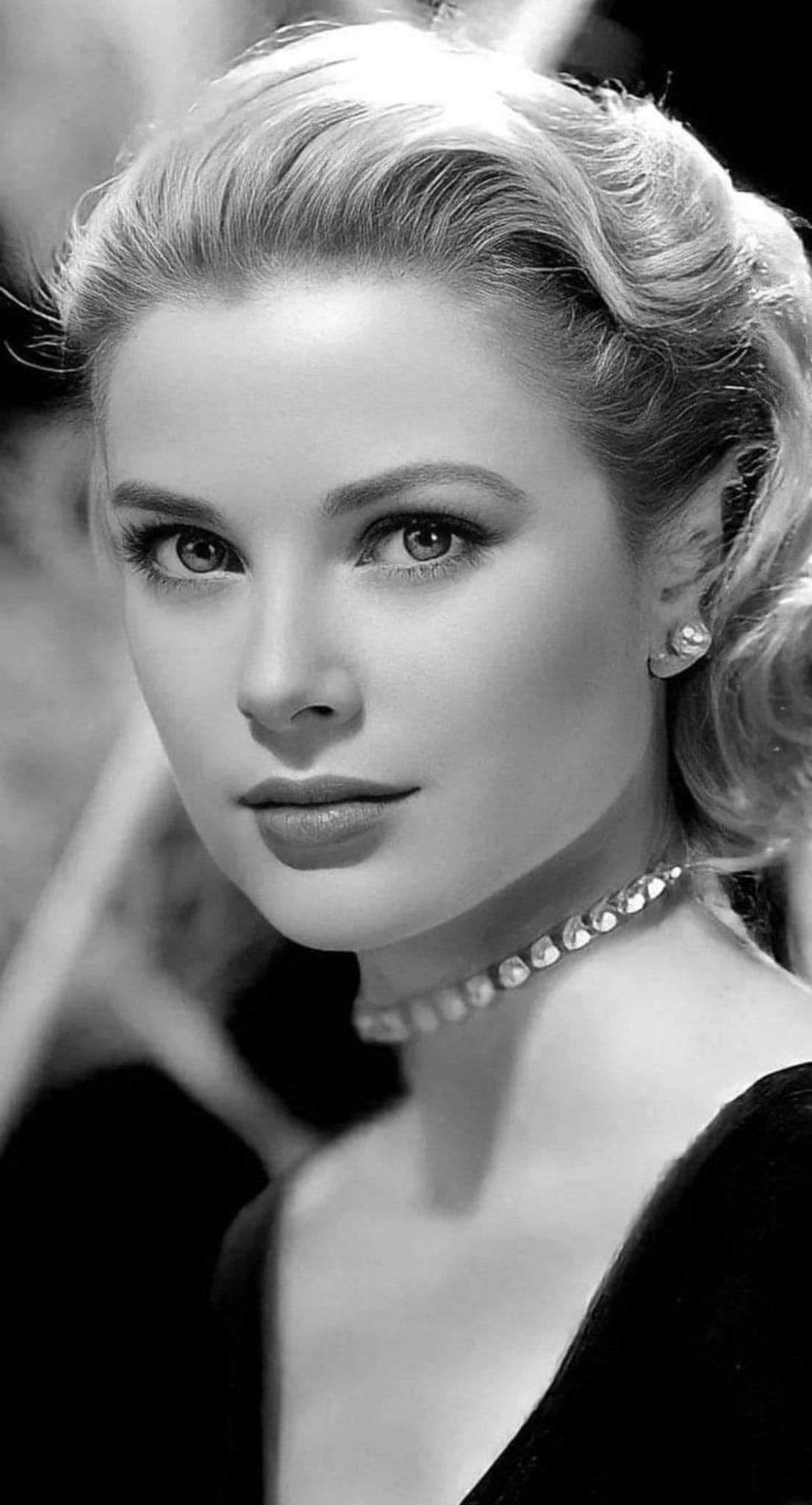
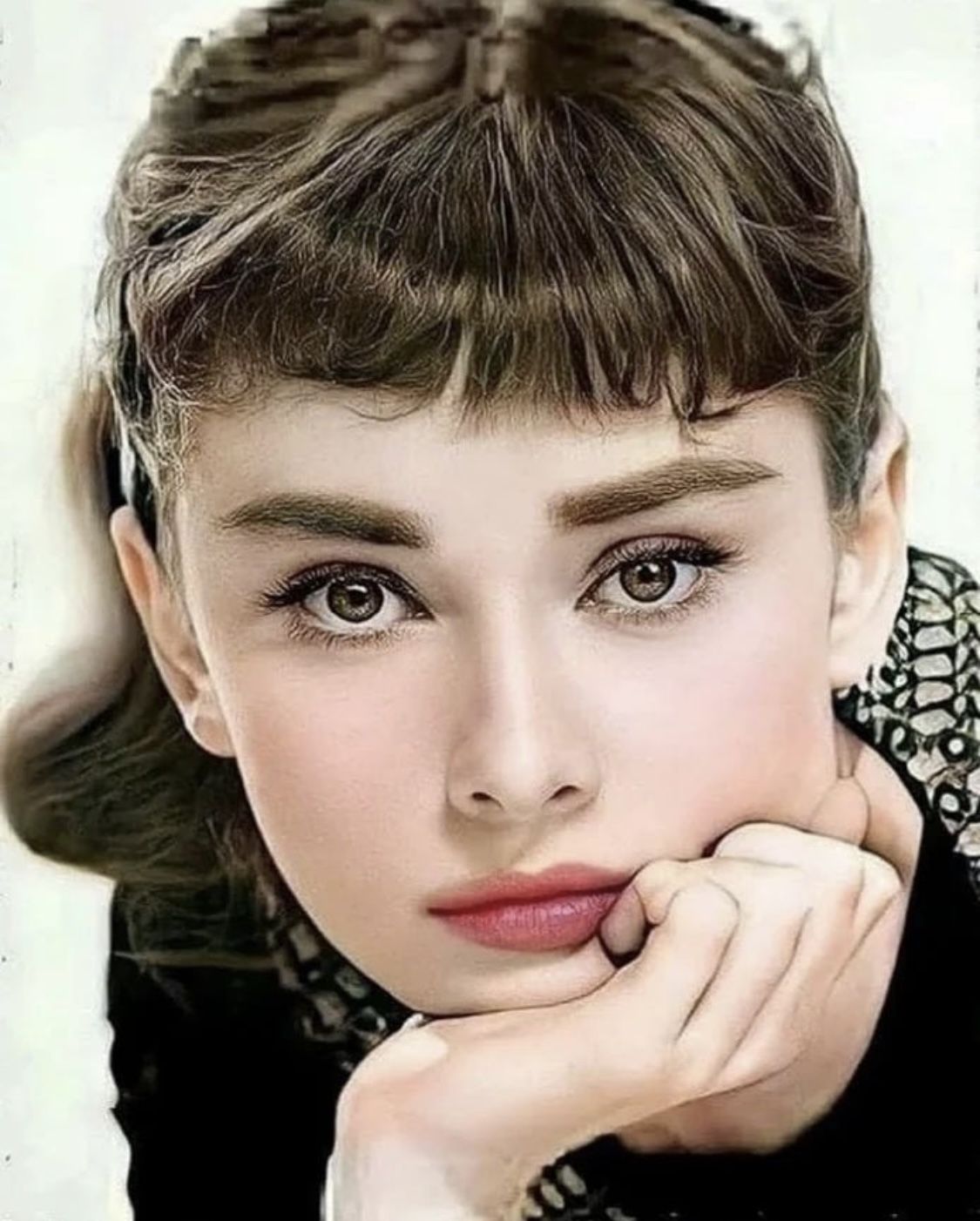
It’s far easier to fall in love all over again with Myrna Loy or Lauren Bacall or Grace Kelly or Audrey Hepburn. You begin to realize how blessed you’ve been by living a life informed by film.
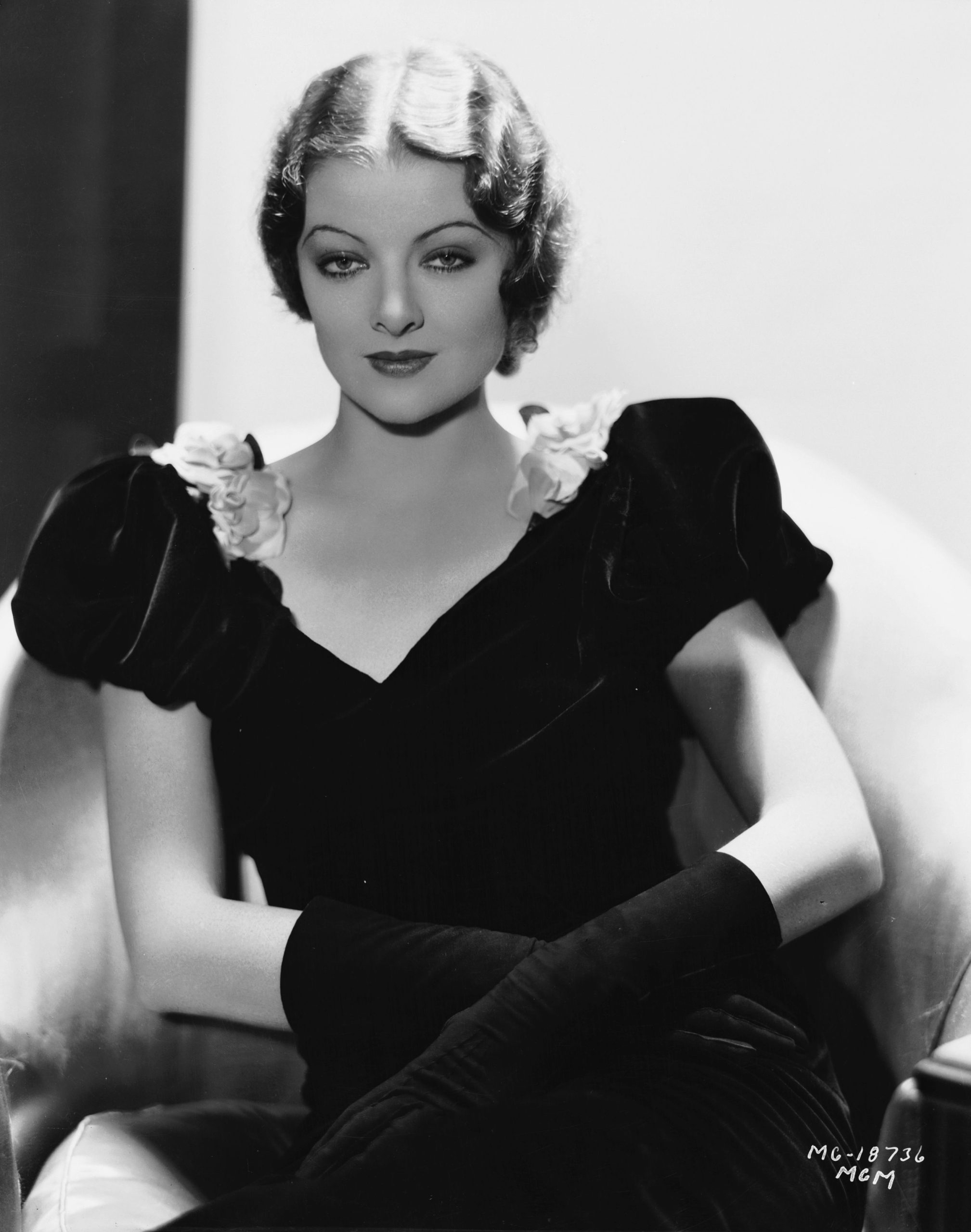
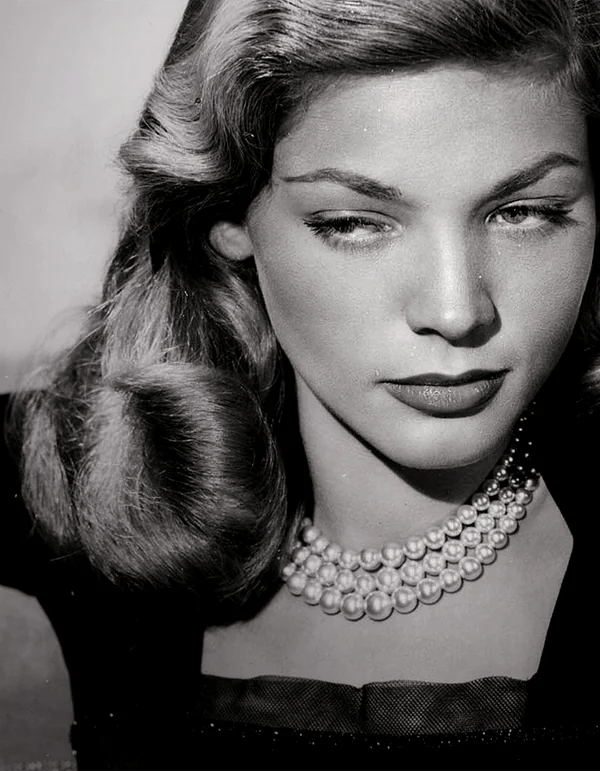
You return, without embarrassment, to the music of your youth. This is one of my favorite songs, and it always will be.
Best of all, you relive, if you were a teacher, the times you spent with young people. The first teenagers I taught are now approaching sixty and the last—this is Katrina and her little girl—are starting families.
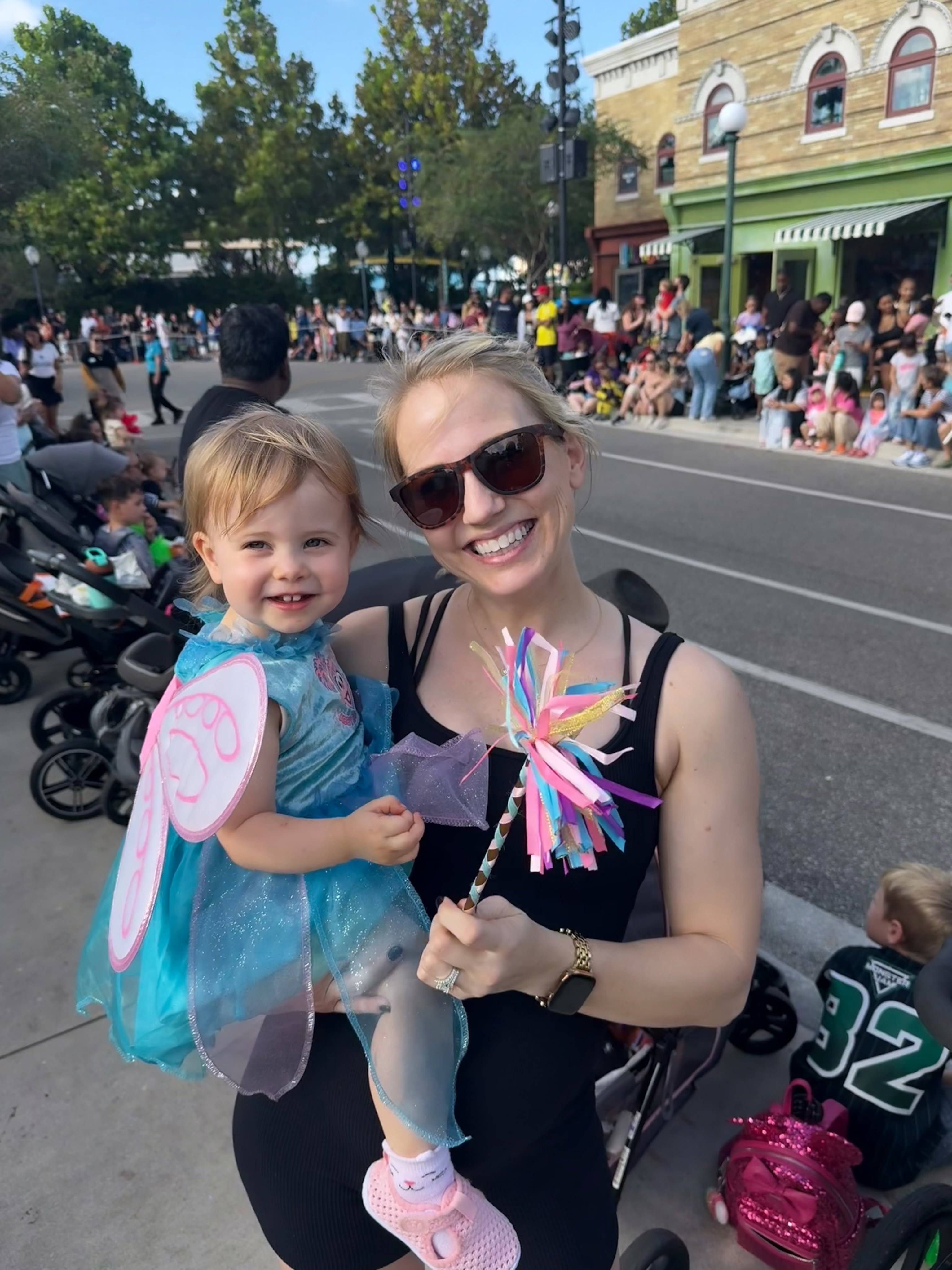
When you forgive yourself, I think you can begin to accept the miracles—like the two above—that are life’s constants in your own life. And your own life, if you’re willing to calmly watch its ebb, has constant promise, too.
[For] life’s not a paragraph
And death i think is no parenthesis.
–e.e. cummings

