Former and much-beloved Arroyo Grande High School student Victoria, whom I teased for being distantly related, from my college studies, to a moderately reformist Mexican president, listened so intently in my classes and was so unafraid to ask hard questions that she became one of those students you never forget.
When you wanted to see whether your thirty-two kids had “got it,” your eyes always traveled back to Victoria’s because she was so transparently honest. She was your reality check.
She knew as well and all along that teaching history was just my cover story.
When I was teaching material as arcane and fun as social history (using parish registers to discover that many, many Tudor brides were heavily pregnant) or the more conventional stuff, like the stages of the French Revolution— or when we went on our little classroom trips to Paris in the Second Empire or to interwar Berlin–what I was really teaching, I hoped, transcended mere information. I wanted the thirty-three to learn humanity and empathy and hope. In teaching art, I had the chance to inspire them. In teaching war, I had the chance to make them angry.
History’s inert unless it inspires feelings we didn’t know we had that we discover in people we’ll never know.
Victoria got all that. And then she used it.
So now she is a mother and is a mover and shaker for environmental and cultural causes. I am so immensely proud of her.
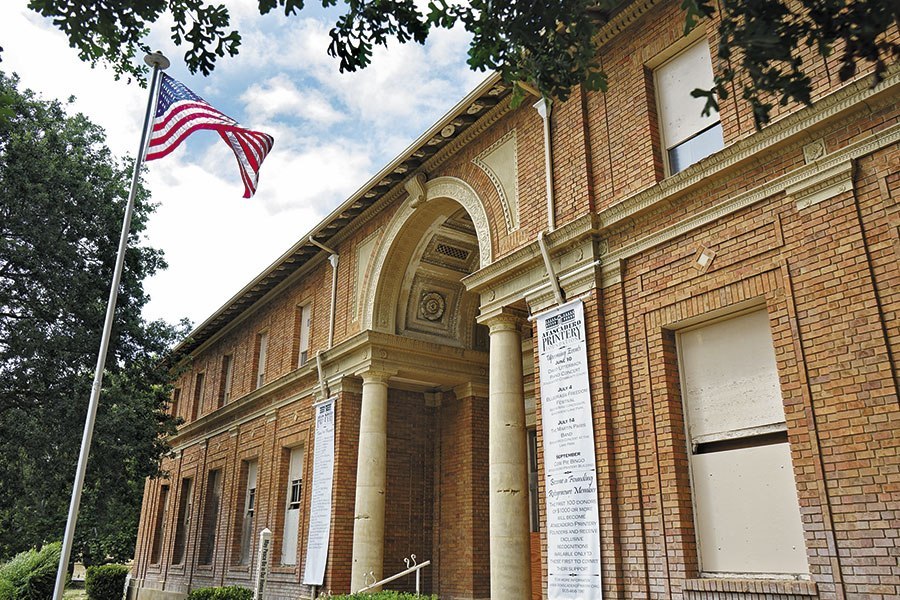
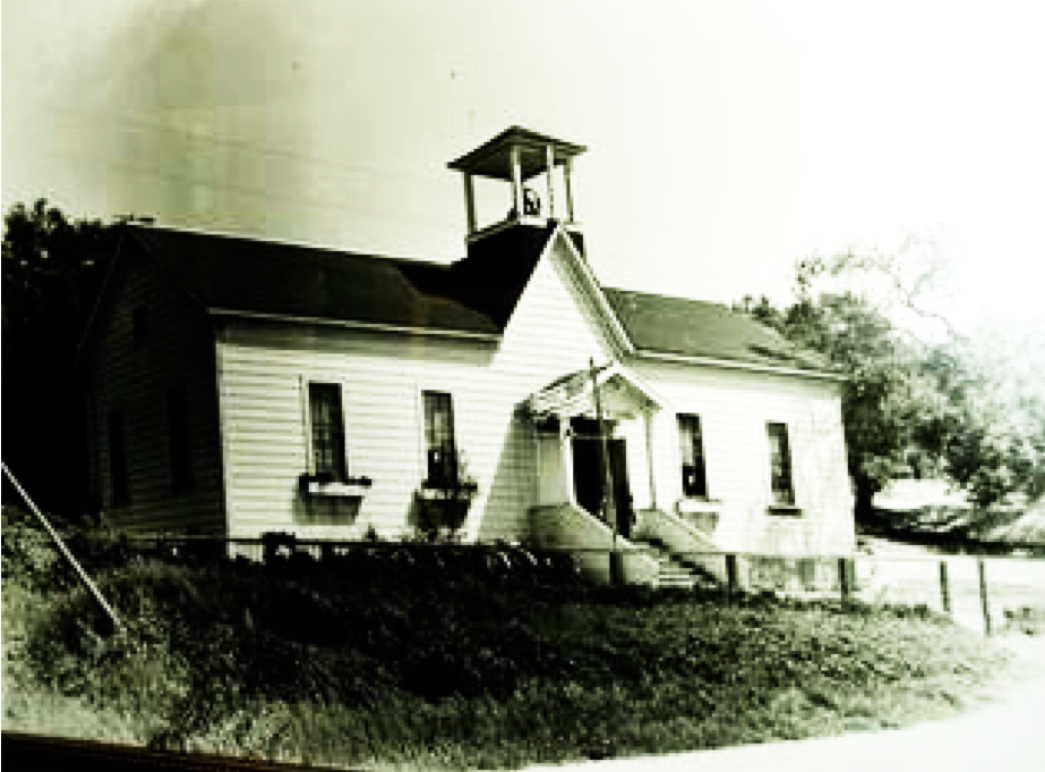
She’s part of Atascadero Printery Foundation–you can find it online, along with some photos of this beautiful building–and so is working toward the restoration of the old Printery to make it a community center for the arts.
This is how Victoria makes history live again.
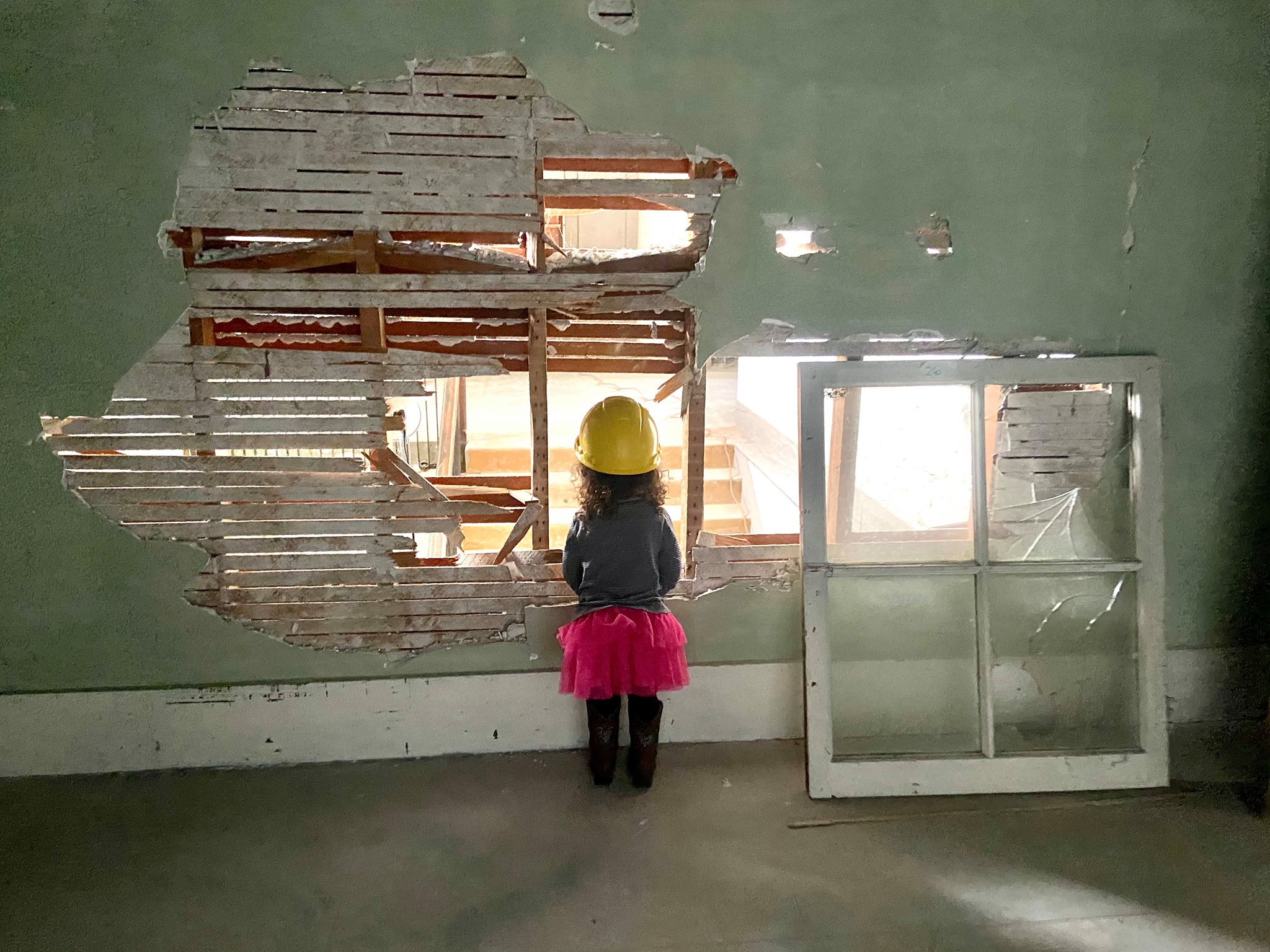
And the photo above shows her daughter on a tour of the Printery. I haven’t seen an image like this one—not in a long, long time, and not until now, when I need it most—that made me so hopeful for the future.
I have no idea how this is is going to end up, so I might as well begin.
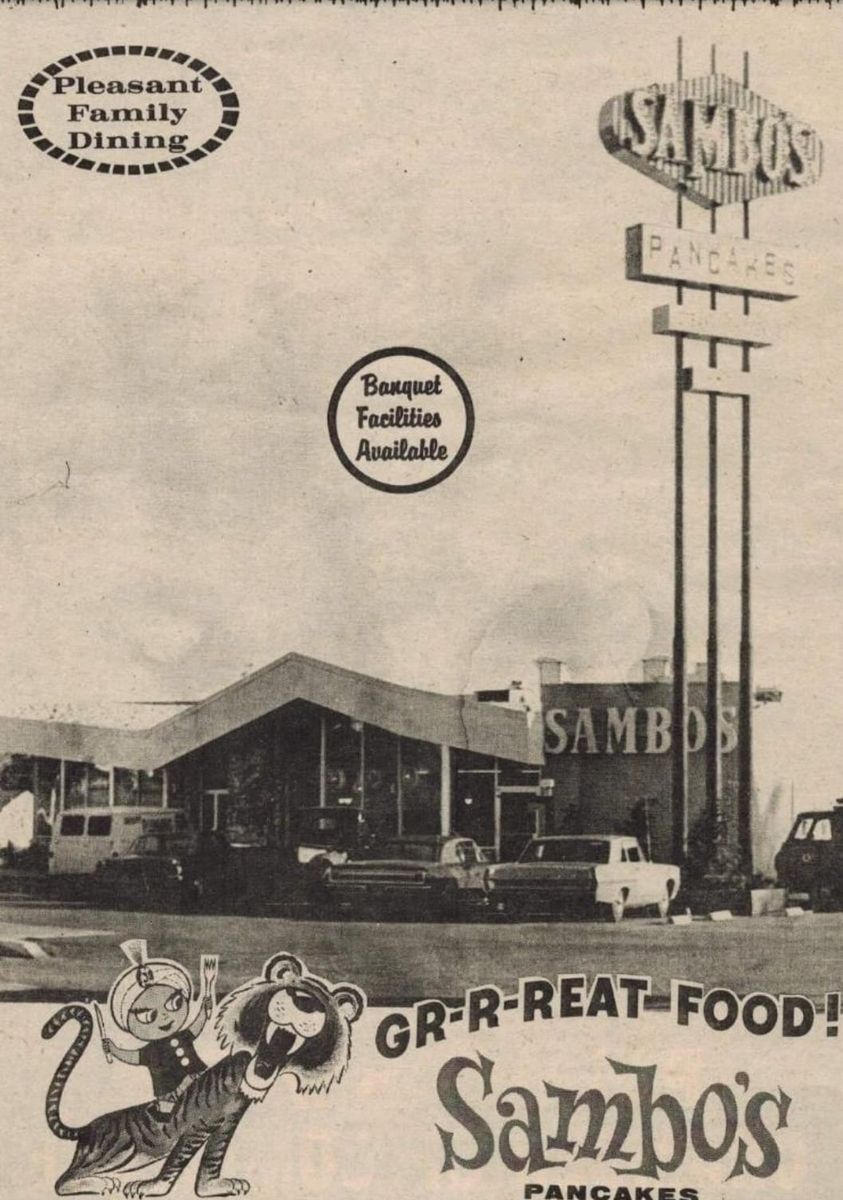
This place became, much later, Francisco’s Country Kitchen, which I came to love both for its biscuits and gravy and for the density of the newspaper racks out front. They will demolish it soon, and that makes me fearful. No so much for losing the building, which is a minor example of a style that considered Moderne sometime between Sputnik and Apollo 13, but because even the most transitory spark lit by the wreckers might ignite fifty years of kitchen grease with the explosive force of a typical B-52 payload.
I’m just glad we live on the far side of Grand Avenue.
But before it was Francisco’s, it was Sambo’s, a story that had always charmed me—imagine tigers spinning themselves into butter, I thought, at four, and imagine how delicious they would be!—but became politically inconvenient many years later after the summit of my time there. That was about 1969.
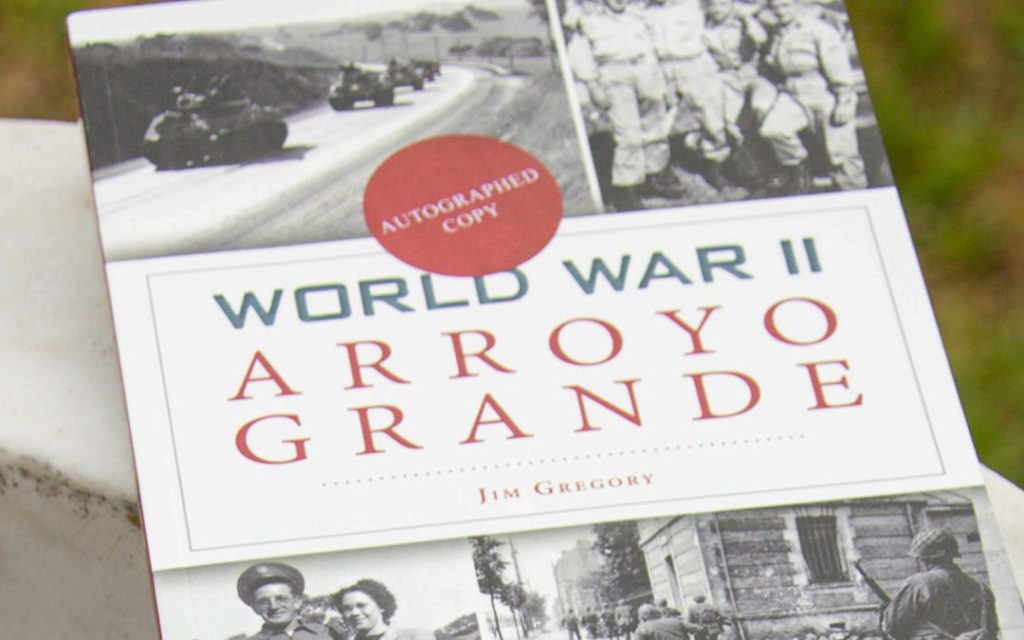
Ten years after, it was still one of my favorite places. When I was a newspaper reporter for the Telegram-Tribune, I interviewed Leroy Saruwatari there for a feature on the demise of Arroyo Grande’s once-vast walnut orchards. Leroy told me about the perpetrator—husk fly larvae, which are so voracious and pitiless that you wonder why the orchards didn’t collapse, on their own, into sawdust–but he also told me a little about his family, perhaps the first Japanese immigrants to the Arroyo Grande Valley. They came here about 1903. Leroy didn’t know this, but that interview in a booth at Sambo’s so moved me that it would pay off thirty-seven years later when I wrote a little about his family in the book World War II Arroyo Grande.
Sometimes, years after the interview, I would stop in for a coffee or even a breakfast, take a booth to myself if it was during the slack in the morning shift, and furtively stare at the men sitting at the stools along the counter. They were farmers, come in for breakfast and coffee and gossip during a slack time for them, at a midpoint between sunrise and lunch.
Some of them wore green John Deere hats, many more wore the same felt hats typified by Bogart and made unfashionable by JFK, who hated hats. My father’s, with a broad brim and a silk ribbon and bow, lived out its life hidden— neglected except by me, who took it down and tried it on as a child—in the upper reaches of a narrow closet in our home on Huasna Road. Dad’s hat was pristine. The farmers’ hats were dented and stained by the traces of loam that is a compound of Upper Valley soil and irrigation water. Perhaps they’d blown off their heads while they towed a harrow into a field to break it up for a new crop of peppers or cabbage or pole beans.
I was far too shy to sit among them. So I just sat in my booth, waited for my order, and watched them quietly. Had I been a teenaged girl and had it been twenty years earlier, they would have been my Beatles and I would have been screeching. Thank the Good Lord for timing.
I am, after all, the grandson of a farmer from the Ozark Plateau who wore overalls all his adult life, who raised corn and milo and soybeans and—he was considered odd for this—ginseng, who slaughtered hogs in December and who, even into his sixties, was the most graceful waltzer in Texas County, Missouri. The line of teenaged girls waiting their turn to dance with Mr. Gregory did not amuse my grandmother.
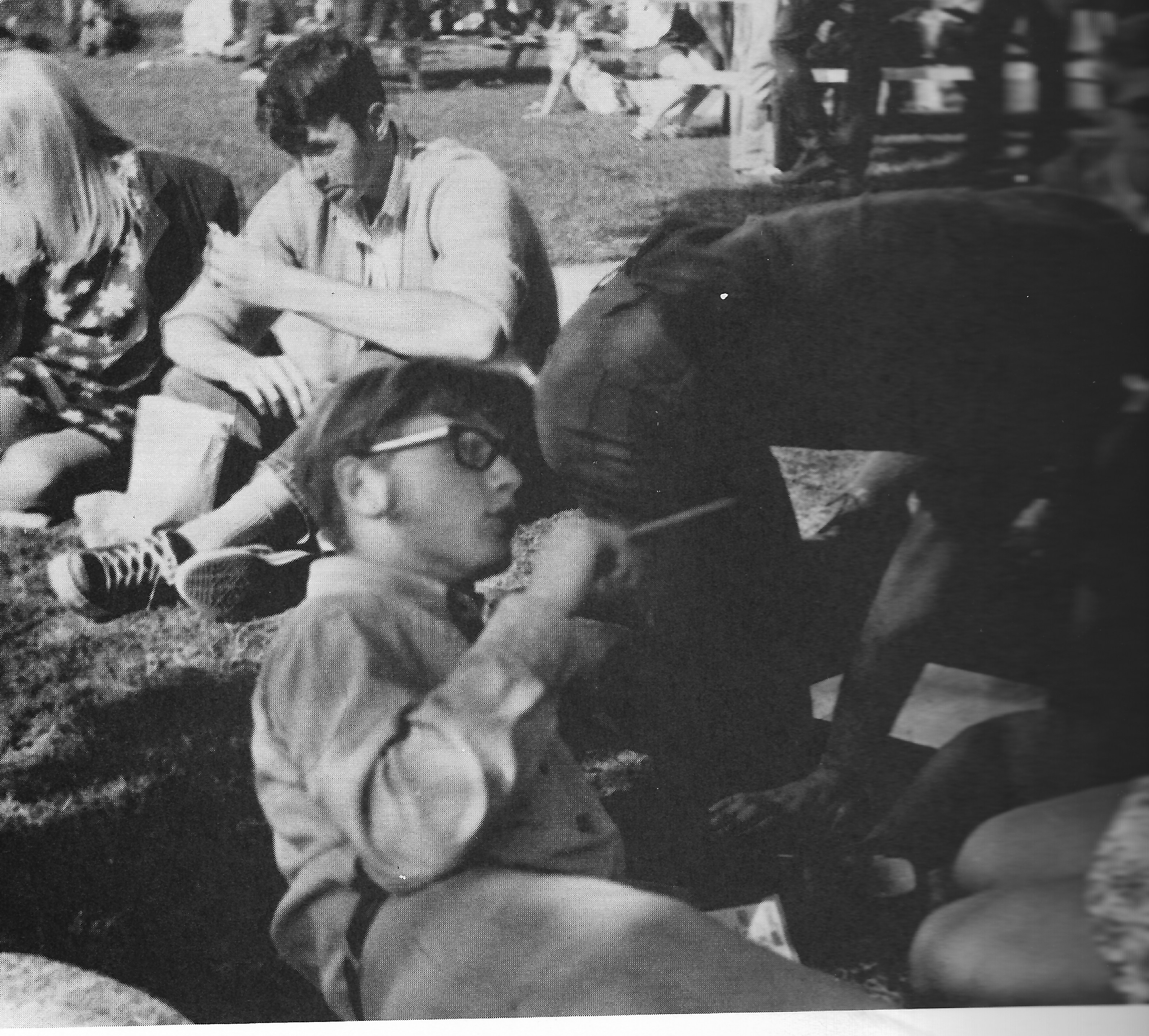
And years before I sat quietly watching the farmers at the Sambo’s counter, this was me.
See? I’m being pedantic already. I’m a senior at Arroyo Grande High School, in the Quad, and quite full of myself. Probably I’m at the midpoint of a book–you can see one just beneath my legs—and probably it’s Herman Hesse or Kurt Vonnegut. My victim—you can just see her kneecaps—is my girlfriend, Susan. Susan was—is— extraordinary. She was bright and lovely and, by God, she had tamed a raccoon. She was a horsewoman and she loved my little sister, Sally, so sometimes she’d appear in our driveway and ask to take my seven-year-old sister for a ride. She’d keep one arm around Sally, the other controlled the reins, and they’d ride through Kaz Ikeda’s cabbage fields and talk. My little sister is bright and lovely, too, and I think that a small part of her was formed on those quiet horseback rides.
The rear end belongs to Jack. Just beyond him, with a sandwich, is Clayton, a Canadian transplant whose family settled near the mouth of Lopez Canyon where they raised horses, too. Next to Clayton, the young woman is Lois. Lois was stunning. She had beautiful wide eyes with impossibly long eyelashes and a breathy voice—a little Marilyn Monroe-ish—that devastated every seventeen-year-old male within fifty yards of that tree in the Quad of Arroyo Grande High School.
They chopped the tree down, many years later.
But Lois brings me back to Sambo’s, because her boyfriend was Paul. Paul was my classmate and intellectual soulmate. He may have turned me on to Hesse—“turned me on” was a stock phrase in 1969— and, for a brief time, to psychedelics. Paul was kind of shambly and self-effacing; he sometimes threatened to disappear inside the clothes that seemed just a little too big for him. But he was also brilliant—not just in English but also in mathematics and science and all the other subjects in which I was not at all brilliant.
Lois adored him. So did I.
Paul’s family lived in the blocks of houses bounded by Grand Avenue and the 101. (Another family I loved, the Hirases, lived there, too.) So it was natural, when I visited him, that the meeting adjourned to the nearby counter at Sambo’s, just a short walk away.
We were quiet during our visits there. In 1969, after an AGHS football game, Sambo’s was besieged and had to surrender to hordes of teenagers who ordered enough cheeseburgers and fries to ensure the eventual but inevitable cardiac occlusions, who shouted at each other from three booths away and experimented with how far they could shoot—at each other— a crinkled soda-straw wrapper from the end of its plastic muzzle.
[I didn’t order a cheeseburger. My favorite was a short stack of pancakes with scrambled eggs and blackberry syrup. This might still be one of my favorite meals.]
But we must have been exasperating. I am not sure this is so, but I expect it is: The waitresses’ hair was tied into tight ponytails behind or lacquered beehives above to keep their hairdos out of the food. You could almost see the ponytails come undone or stray strands of beehive, like little blond flags, wander away under the stress of serving teenagers with no more discipline than your typical Capitol Hill mob.
But that was after games.
Paul and I were quiet at our counter seats—the bank opposite from the one where I watched the farmers so many years later—and all we wanted was coffee. I could be wrong, but I believe Sambo’s had a policy then was can be briefly summarized: We are the Marianas Trench of Coffee. For ten cents.
So Paul and I, no matter how different we were—he was far brighter and more worldly; he smoked Winstons and I smoked Camel Filters–would sit there, exploring the depths of Sambo’s Coffee Policy, and we would talk about Hesse and Vonnegut and Steinbeck, about Squares, which included Richard Nixon, about film, about the White Album and about the one passion that we shared above all others: Eric Clapton, Jack Bruce and Ginger Baker, from the supergroup Cream.
“Ya need more cream for your coffee, Hon?” That was the waitress. I can’t remember her name. Since I was seventeen and she was in her mid-forties, she seemed to me a relic from Egypt’s Middle Kingdom. She moved noiselessly on white nurses’ shoes from one bank of the counter seats to the other; she pinned her orders to the cook’s wheel and spun it with great authority, she knew how much to talk and when to shut up.
And she called me “Hon.” [Yes, I know. ALL waitresses call you “Hon.”]
My mother had just died, in 1969, and this waitress was about Mom’s age. Gravity— and doubtless some heartbreak, which is none of my damned business –was beginning to pull the features of her face to the south but their counterpoint was the discipline of her beehive, Peroxide Harlow, which towered defiantly north.
And not only did she put up with us, the pretentious punks that we were, but she never failed to glide back to us for refills, which I always looked forward to. There I was, sitting next to a friend whom I loved and having my cup filled by a woman whom I loved, too. She didn’t know that.
But when she asked quietly “More coffee, Hon?”—I know now this was simply because she had no idea what my name was—for just a moment, Sambo’s restored my mother to me. I wasn’t the only one, either, looking for his Mum that year.
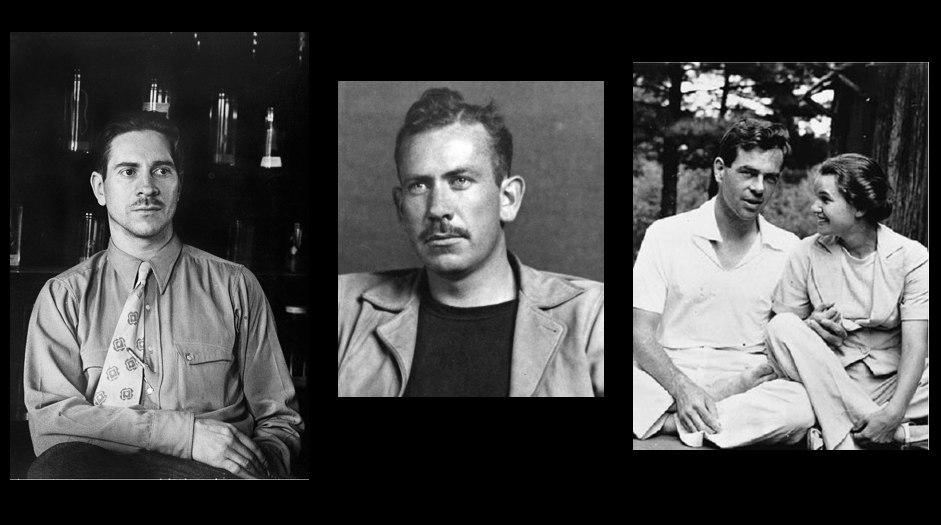
Ricketts, Steinbeck, Campbell and his wife Jean Erdman, a Martha Graham dancer.
If I had a time machine, I’d take it to Cannery Row, Monterey, about 1935.
Ed Ricketts, “Doc,” of Pacific Biological already has steaks and oysters and a loaf of sourdough, the last neatly bisected and all of them bathed in garlic and butter, ready to grill.
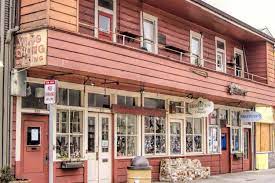
He crosses the street to Wing Chong’s for a gallon of red wine. He crosses back to start preparing dinner.
Wing Chong’s Market, Cannery Row, Monterey.
The guests, who drove in together from Pacific Grove, knock perfunctorily and walk in unencumbered—one of them, with luck, might’ve remembered to bring loaves of hard salami and Jack cheese. Regardless, Ricketts offers them their wine, poured generously into laboratory beakers. Then they barbecue, and one guest, the writer, offers unsolicited opinions—the very worst kind—on the proper way to grill Spencer steaks. They sip.
The steak expert is the the the novelist John Steinbeck. His friend and co-pilot on the perilous journey tomorrow morning back to Pacific Grove is the mythologist Joseph Campbell, who bears a remarkable resemblance to my Grandfather Kelly.
When their time comes, the steak and oysters and sourdough are dispatched promptly, along with a perfunctory iceberg salad with Thousand Islands dressing.
Two-thirds of the wine is left.
I don’t want the wine or the salad or the steak or the oysters–or even the sourdough, dipped in steak juices. I want to be, for just a short time, a fly on the wall, a grass snake under a warm lamp in one of Pacific Biological’s glass terrariums or even a skate breathing noiselessly at the bottom of a tank, just to listen, in my animal disguise, when the talk that won’t end until sunrise begins.
And could they talk. There would have been a lot of laughter, but there would’ve been confrontational moments, too. Ricketts, especially, with the scalpel that is a scientist’s mind, would have sliced his friends’ theories— about sexuality, life after death, about God the Father-Creator vs. God the Prime Mover, about the Great Depression and Italian Fascism— into slices as transparent as sashimi.
I can almost see Steinbeck, from my skate’s tank, slumped disconsolate into his chair once he’s been bested by his friend. In the silence, the only sound might’ve been the waves crashing into the pilings beneath the floor. But writers never shut up. Steinbeck would’ve found his voice again.
When sunrise came, I am sure that they departed wobbly friends.
Ten years away from 1935, the Allies will liberate Dachau and Auschwitz-Birkenau and they will vaporize Hamburg and Hiroshima. Three years later, Doc Ricketts, will be gone, killed on the train tracks above the Row—a little later, The Log from the Sea of Cortez will be his eulogy [Sweet Thursday would have embarrassed Ricketts]— so talks quite like this won’t happen anymore.
That’s a sadness because they told each other such grand stories, made even grander because they were told inside such a homely building.
What they told each other, thought through and distilled and re-worded, was what they’d learned from each other.
They were a biologist whose mind was so profound but whose stock-in-trade was Pacific Coast specimens for high school biology classrooms in Minnesota; a frustrated novelist, who’d written a dismal treatment of the pirate Captain Morgan and an immature and condescending novel about a paisano named Danny from Tortilla Flat and a mythologist who occupied an academic stratosphere to which no living wage could ascend.
What they discovered in each other was an electric attraction—or what Whitman called a “necessary film”— that ties all of us together. Granted, the red wine helped. They talked about our antecedence as clarified by Charles Darwin and William Jennings Bryan, they talked about Celtic and Hindi myth, about human nature’s potential, found in The Buddha, and its tawdriness, found in Huckleberry Finn. They argued about every conceivable topic, from Jungian theory to St. Francis’s wolf.
If they agreed on anything by the time the sun came up over the Gavilan Mountains, it was that this place—this planet—was a living organism, that we were its subordinates and, at the same time, its most murderous and indispensable components. They agreed that we belonged to it, and so to each other.
All of this disparate business, of course, had been hashed out a century before and a continent away from Pacific Biological by the Transcendentalists at Brook Farm. And before that, an ocean away, the same kind of talk happened, but it was in German: the Romantics there called the “necessary film” that ties all of us together weltgeist: World-Spirit.
But they didn’t have barbecue.
The talk on Cannery Row would have disappeared with the Del Monte Express that killed Ed Ricketts, except for Bill Moyers’s marvelous PBS series, The Hero’s Journey: Joseph Campbell and the Power of Myth. This was when we learned, thanks to Campbell, just how miraculous Luke Skywalker’s arrival truly was. Luke became even more miraculous when the mythologist helped us to understand, to our delight, that there was nothing new about Star Wars at all.
And then Campbell, thanks in great part to what he’d learned at Pacific Biological, told Moyers and all of us miraculous stories of his own that, of course, didn’t belong to him at all. He had learned them, too.
Bill Moyers (foreground) and Joseph Campbell, The Power of Myth. PBS.
But that series was a long time ago. But now, against the hard edges of current events, it’s in our soft remembrance of myth where we find the deepest truths, and there we have the chance to find our way back from the desolate place where we find ourselves now.
In the myth that is American film, I look to Frank Capra and Howard Hawks, and, when I can stand him, to John Ford. In writing, I look to Steinbeck and Willa Cather and to Hemingway’s short fiction; from my generation, I look to New Journalists like Tom Wolfe and Gay Talese. I look to the historians Bruce Catton and Barbara Tuchman and Doris Kearns Goodwin, to young historians like Laura Hillenbrand and Lynne Olson and Isabel Wilkerson, to baseball writers Roger Angell and Roger Kahn. I look to documentarian Ken Burns. I rely on the stories they tell me because they are true.
There are some—a harpy in Congress— who hold that our destiny lies in hating each other. That is a monstrous lie.
One way we can counteract this lie is to tell each other the truth: We belong to each other.
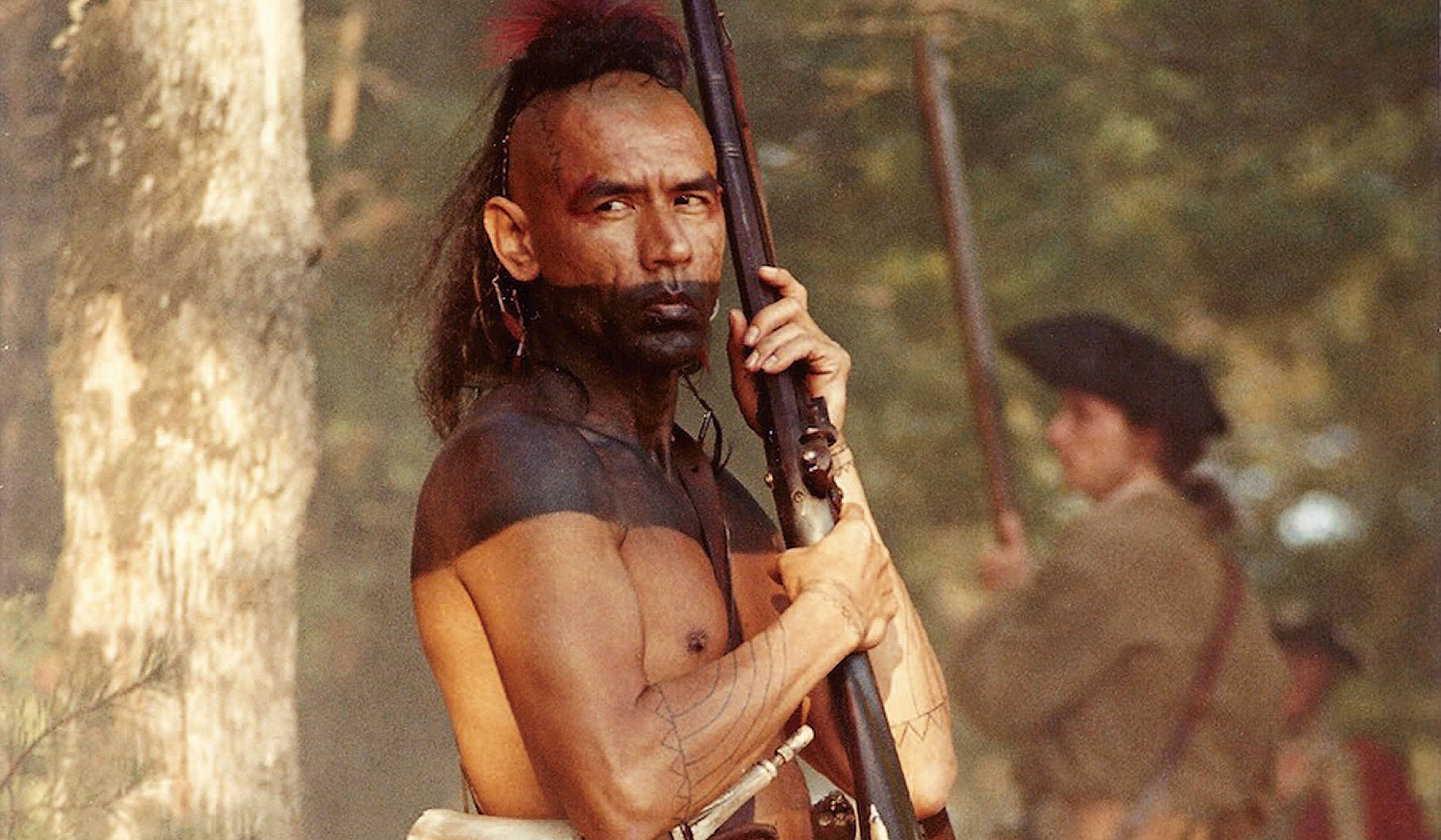
Here is just one example of what connects us: Campbell told Moyers that his research had taught him that there is a version of “Cinderella,” in one form or another, that’s found in nearly every culture in the world. I once watched Wes Studi—so terrifying as Magua in the film Last of the Mohicans—read a Native American version of the story to little children on Reading Rainbow, and he was so open-hearted and read the story so beautifully that the children at his feet, wide-eyed, knew immediately that it was a true story.
So here’s a story that I invented. The fact that it never happened doesn’t make it any less true.
It’s day’s end in Monterey in the summer of 1935. I am shivering a little in the fog despite layers of sweater and jacket. I am sitting on the bottom step of Pacific Biological. It’s cold, but I can smell the promise of warmth: red oak burning on a grill nearby. Then, in my story, I see Ed Ricketts, dressed in indifferent shades of khaki complemented by a surplus olive Army tie. He is closing a worn leather jacket across his chest and against the chill as he crosses the street with a gallon of red wine, which he carries with care, because the bottle’s green glass is thin. Its bottom is lined with sediment.
When he sees me waiting for him, an immense smile transforms his face, always serious, except for now.
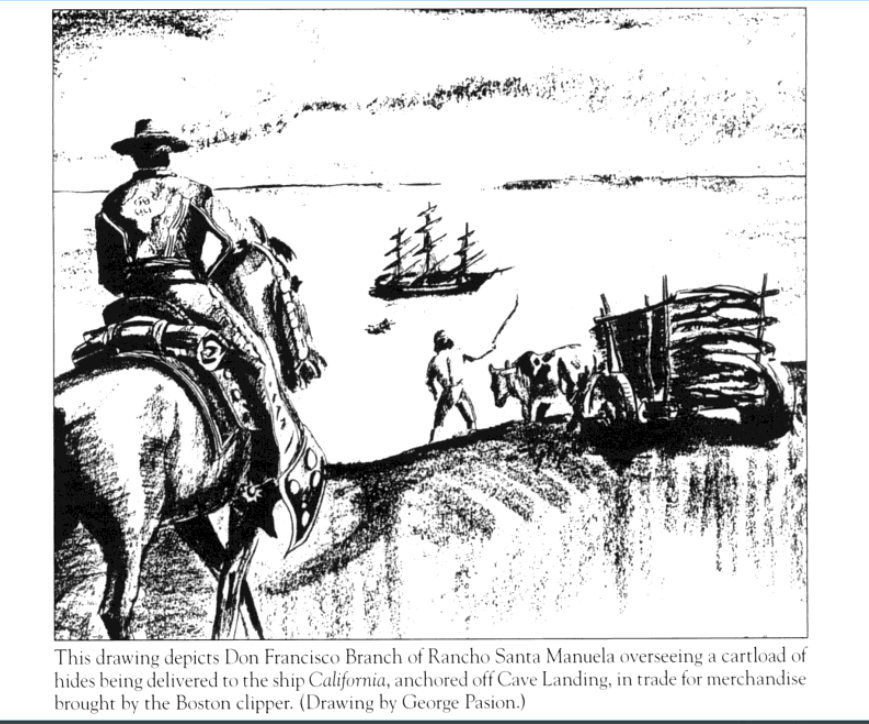
This drawing appears in Jean Hubbard and Gary Hoving’s outstanding book, from Arcadia Publishing, about Arroyo Grande’s history.
It moves me every time I see it. This is why.
The artist was my best friend in first grade at the two-room Branch School. George’s original hangs on a wall of the South County Historical Society’s research library, so every time I go inside I feel an instant of intense pain. George Pasion died two years ago.
George introduced me to empathy. He wore heavy leg braces—the film Forrest Gump replicated them— and running, for him, was awkward and painful. I remember distinctly one day when he could not keep up with the rest of us boys, and his eyes filled with tears. He was frustrated and enraged.
That moment broke my six-year-old heart, which is as good a way as any to begin a friendship.
George’s heart carried immense weight that belied the weakness of his legs. He was strong in ways we couldn’t understand. He was intensely focused but sometimes far, far away; his art, at which we always marveled, took him to places we couldn’t begin to imagine. This piece indicates he found the ability to time-travel while the rest of us were stuck in the Cold War and Mouseketeers.
There was immense wisdom in George, even then, when he was just a second-grade boy.
It was, of course, a wisdom he must’ve inherited from his parents. His father was Filipino, a member of the manong—Elder Brother—generation, bachelor men who came to Arroyo Grande to help support their parents back home. They fought, like tigers, in World War II and, at war’s end, they brought war brides home from the Islands, thanks to newfound liberality on the part of the federal government. Before the war, almost no Filipinas were allowed to immigrate; in California, male immigrants outnumbered them a hundred to one.
This was thanks to some of the most virulent racism, including in Arroyo Grande, that I’ve ever encountered in my research.
So it was World War II, and the families that soldiers started, that made my friend from sixty-two years ago possible. I last saw him fifty years ago. In learning of his passing, and in seeing this drawing, I’m reminded of the Whitman line.
Time avails not, the old fellow wrote in one of my favorite poems, “Crossing Brooklyn Ferry.” Time, according to the poet, doesn’t matter. There are some moments, when we keep them, that can never escape us. And there are some people, like the audacious poet, the old silky-bearded rascal, who inserts himself into his poem, who are looking at us fondly just beyond the reach of our vision.
And so George remains as vivid a presence in my life today as he was in that moment, in 1958, when I saw his eyes fill with tears. That was the moment that made him my first best friend.
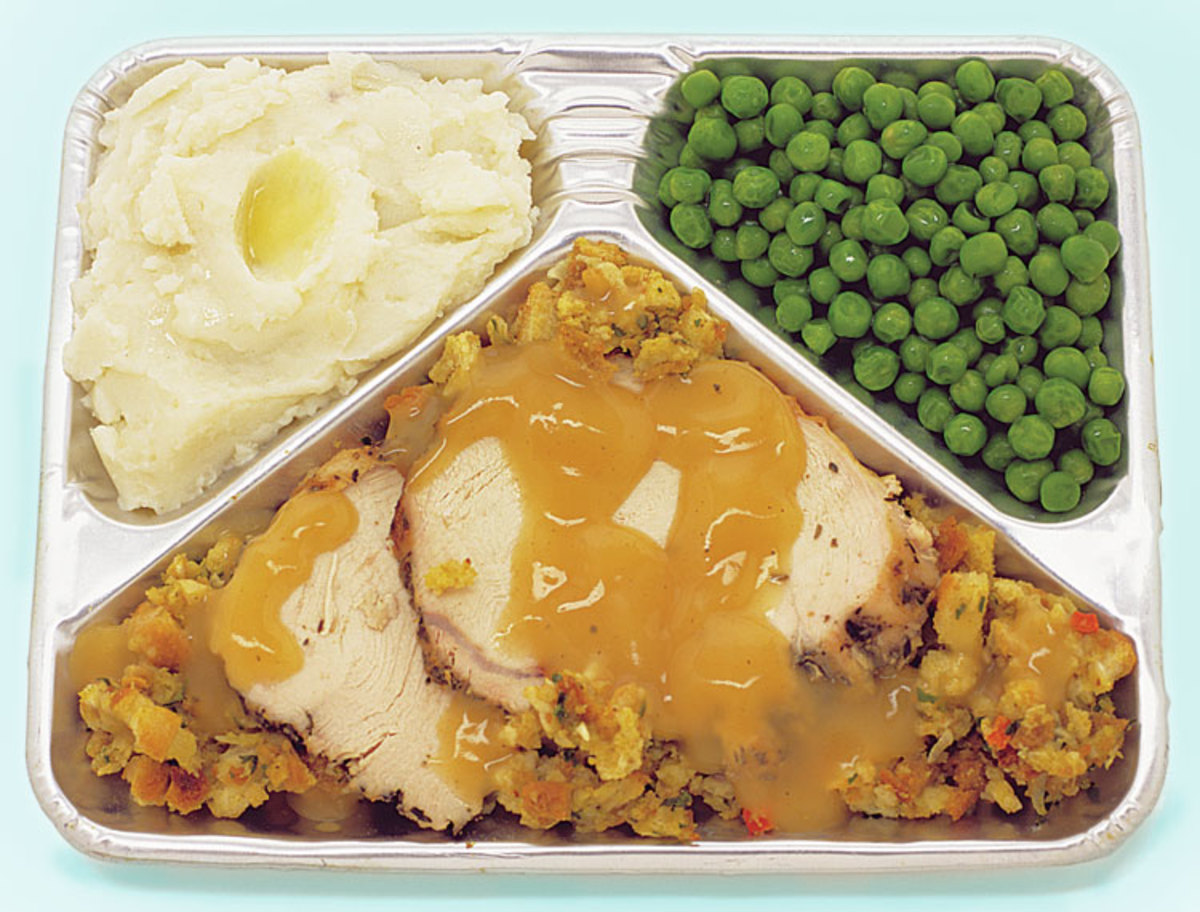
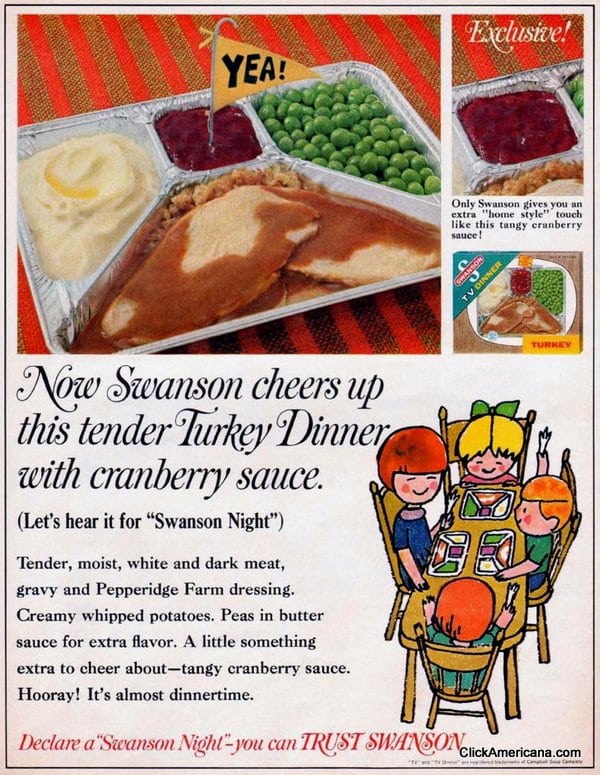
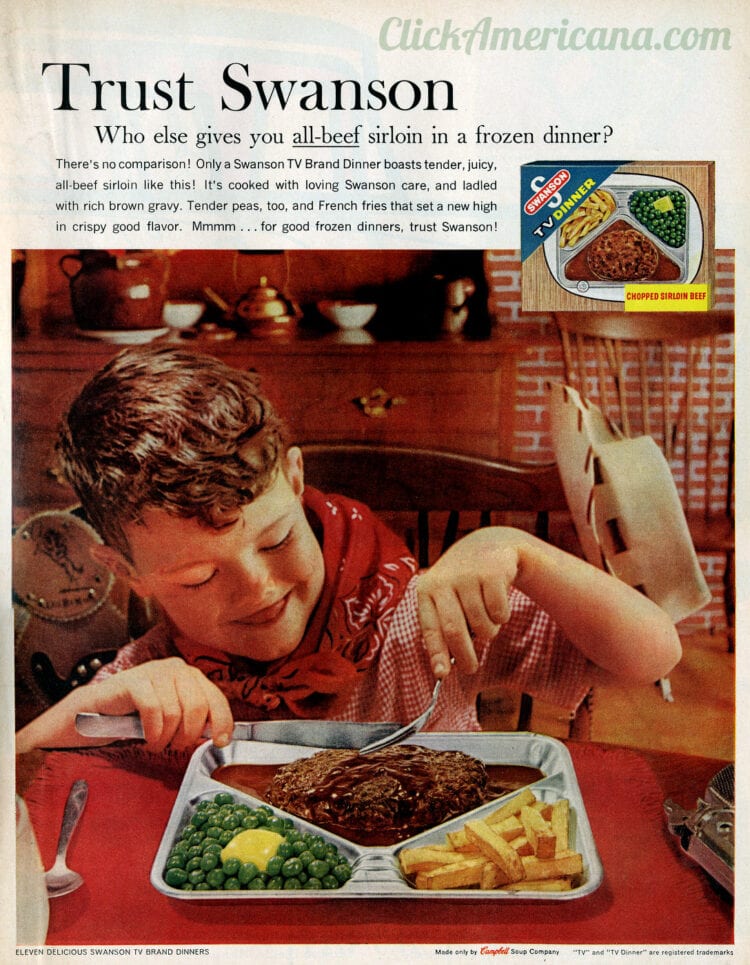
The first TV Dinners began appearing in the mid-1950s, and the Turkey Dinner may have been the first. The turkey had the consistency of papyrus; the mashed potatoes were bland, the dressing turned to goosh, but the peas made outstanding projectiles. We survived the privation younger kids would never know: Cranberry Sauce, added years later, kicked up Swanson’s game a notch. You could dunk the turkey in it to more or less give it some zip.The fried chicken dinners always disappeared from the freezer first. The batter was kidnip (instead of catnip) because it was faintly sweet; the peas this time came with buddies, which made them tolerable, but the mashed potatoes were still disappointing. They tasted like beach sand. The apple/peach combo was a nice notion but they had consistency of banana slugs, whose consistency I do not care to contemplate.I do not understand this cowpoke’s happiness. The one thing you’d think an American TV dinner could do well would be beef. Wrong. This looked like roadsplat and tasted like ketchup, which you could chug anytime out of Mom’s fridge. The fries were an abomination but you ate them first because they were fries. Sort of. The peas were, well, Swanson peas. Boring. Uninspired. Still, they were throwable or, even better, launchable–they traveled at great velocity from your spoon, a kind of dinner-table catapult. Another failed attempt in the World of Beef. The beef tasted like recycled shoe tongues or perhaps the “bully beef” salvaged from the vast British stockpiles left over from the Battle of the Somme (1916). No self-respecting penitentiary would serve a meal this bad. Not even a British one.
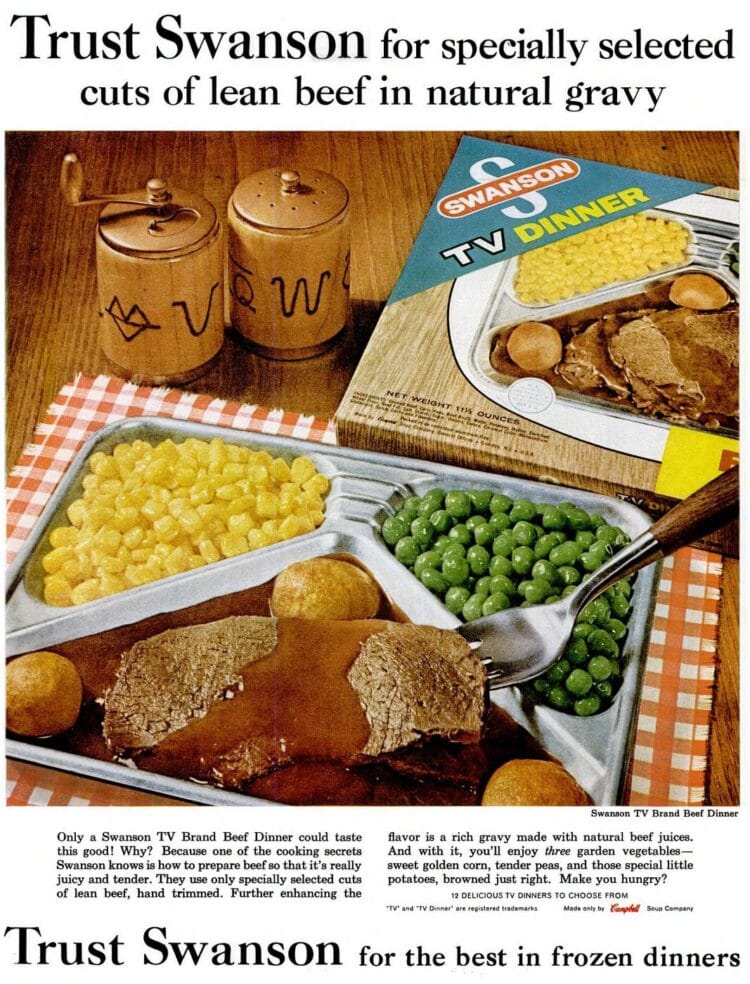
The closest thing to success with beef, due largely to the thin brown gravy, which was actually tasty and the only corrective in the Scientific Literature for the mashed potatoes–finally, if you drowned them, they tasted almost good. The gingerbread brownie? The work of a madman.
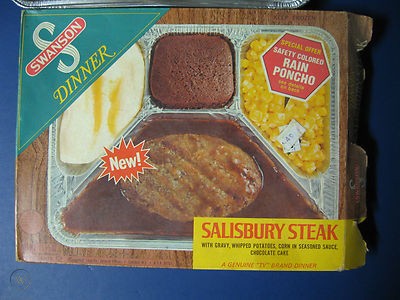
We never had this one, but any meal with pickled red cabbage gets my hearty approval. Sadly, the photographer who took this shot for the TV Dinner carton appears to have dropped his glass eye into the dessert.
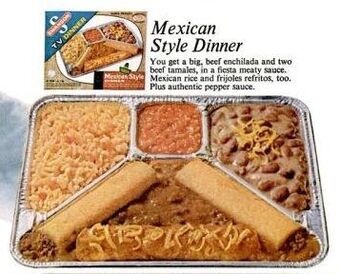
More international genius. The enchilada wasn’t too bad. You could just about stand the refried beans, whose aroma brought to mind molten rubber at the Goodyear Tire Factory, but they improved if you mooshed them together with the rice. Nice chili gravy with Undetermined Meat Objects within. The real disappointments were the two “tamales,” essentially surplus Mexican Navy torpedoes and, as torpedoes sometimes do, they’d settle to the bottom and just stay there. For days.
Took FOREVER to cook, and by the time it was ready, your twelve-year-old self was so famished that its just-out-of-the-oven super-steamed heat burned away the top layers of skin cells on your palate and tongue, which meant that you couldn’t taste anything for several days. But if you had the patience to let it cool a bit, this little gem was Comfort Food Supreme. After a tough day at school, a nice snack to eat during Rocky and Bullwinkle or while watching dreamy girls dance the Frug or the Slauson on a music show called Where the Action Is. The natural order was restored.
I have been stunned, but not at all surprised, by the sadness so many of us feel at the closing of The Grad, the burger/bar/nightclub in an immense building that seemed to hold the south side of San Luis Obispo down for the last forty-five years.
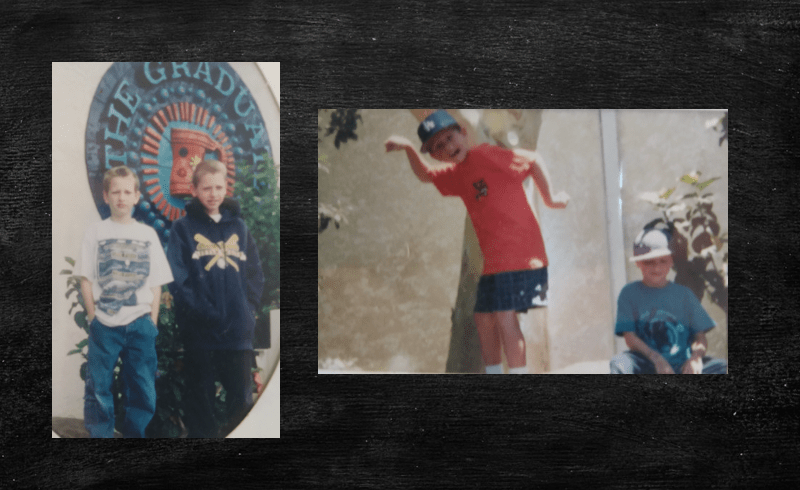
The grief is authentic and I would like to argue that it’s justified, too. Even my wife had tears in her eyes last night: when we were young parents, lunch at The Grad was a supreme treat for our two little boys, who ran about like wildebeest on the dance floor and played video games and then, when they were very little, after their Junior Gradburgers, they’d fall asleep in the back of our VW Westphalia on the way home to Los Osos.
Grad lads. John is 31; Thomas is 29.
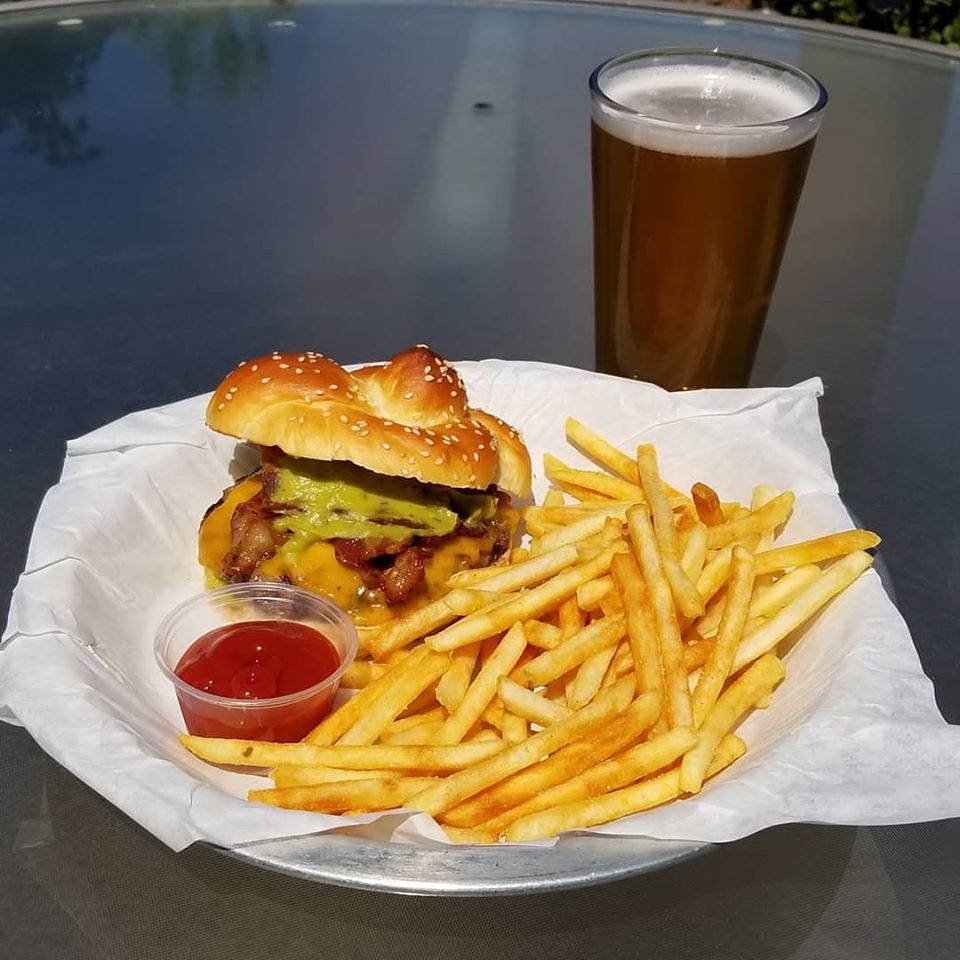
I had my share of burgers there–and beers, too, as a bachelor–with friends like David Cherry and Ricky Monroe and Cleo Cooper and with the fine young man, Rob Rosales, once a Grad bouncer, who would become my best man in 1986. My friend Randy Fiser, a fine teacher and a master of the pizza oven, was once a Grad bouncer, too. I didn’t need much bouncing back then, being a raging introvert. The dancing at night always disoriented me a little–I don’t do well with noise–but it was still fun and the girls were pretty and, as Hemingway would say, the bathrooms were (mostly) clean and well-lighted. And the bartenders were friendly.
But I mostly remember The Grad because of Elizabeth and our little boys.
And, being a lifelong devotee of bread products, I remember the fresh-baked Gradburger buns, which were exquisite, baked by a tiny lady whose eyes were intent behind thick glasses and who was the figurative grandmother to every young person who worked there. A kid took your order, and they were almost always cheerful, but seeing Herself in her bakery, in her stolidity, was assurance of permanence, like the Washington Monument or St. Patrick’s Cathedral. She was a monument, too. But a tiny one.
But nothing, of course, is permanent.
There are plenty of people, as cold-blooded as snakes but far less attractive, who are dismissive of us when something fundamental changes in our lives and we are saddened, even if it’s just a burger joint. Or even if it’s a place like Alex’s BBQ in Shell Beach, far older and just as homely as The Grad. But Alex’s had aromatic ribs whose smokiness you can still smell and it had industrial-strength Martinis that recalled its happily scandalous connections to Prohibition bootlegging. Alex’s was the last restaurant where my Dad and I shared a meal before his death. It was destroyed capriciously, with no more warning than the Japanese carrier task force gave Pearl Harbor.
Even though the snaky people are probably correct, I’d argue that we have a right, if only for a moment, to mourn Progress. We have no power to stop it.
But we leave pieces of our lives in vacant buildings or in the powdered brick that rises from buildings broken up by wreckers as merciless at the Caterpillars that flattened Okie farmhouses in The Grapes of Wrath.
I long ago gave up trying to understand San Luis Obispo, where Progress, when measured in storefronts, is so constant and so fickle that it’s the historic equivalent of a strobe light, freezing us in one moment that’s gone in the next.
But here is where I left pieces of my life: The Sno-White Creamery on Monterey, where Mom took me for consolation after getting a doctor’s shot; Corcoran’s lunches with my mother and grandmother, where you raised a little Bear Flag to let the waitress know you were ready to order; Riley’s Department Store, where Santa, with soft whiskers and a crushed velvet suit, sat in a big chair expecting you; Gabby’s Bookstore, where my parents found a collection of Robert Frost poems, a Christmas gift now sixty years old; Green Brothers clothing, where I rented my Prom tuxes and endured the sardonic but delightful humor of my favorite Green brother, Joe, as he measured me.
I even miss Aethelred’s, a bar where I left parts of myself that I never noticed were missing, including much of my hearing, and the Taco Bell on Santa Rosa, where 29-cent (or were they 19 cents?) tacos and burritos around the big round fire out front kept me sustained in my early college years.
I might miss, most of all, Muzio’s Market on Monterey Street, with its wooden floors and cramped colorful shelves and just-pink, just-sliced roast beef under the glass counter.
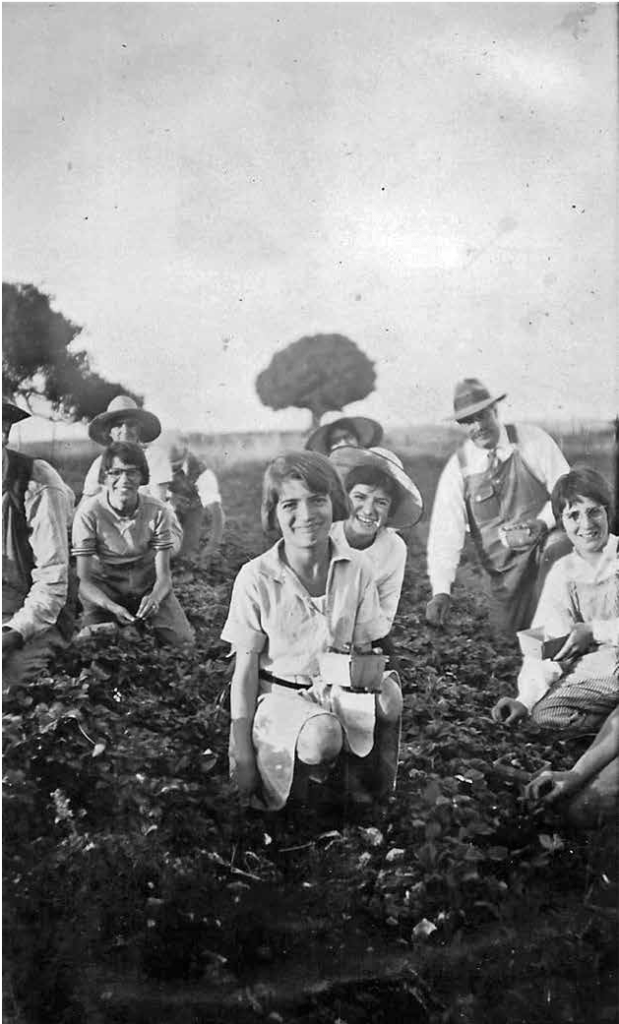
Joe Gularte of Corbett Canyon once delivered fresh strawberries to Muzio’s in a Model A pickup whose bench seat was lined with excited Gularte girls going to town.
Joe Gularte and his daughters picking strawberries.
Joe’s son, Frank, died a decade later, in November 1944, during a firefight in the streets of a beautiful mountain French town, Merten, in the Moselle Valley along the German border. Frank’s last moments were chaotic. The first tank destroyer in his battalion to creep into Merten was fired on and returned fire, but then, in moving around a tank barrier, it got mired in the mud was destroyed by a German anti-tank crew. The next destroyer turned back, the third tumbled into a ditch and was set ablaze by enemy fire and the fourth’s gun jammed.
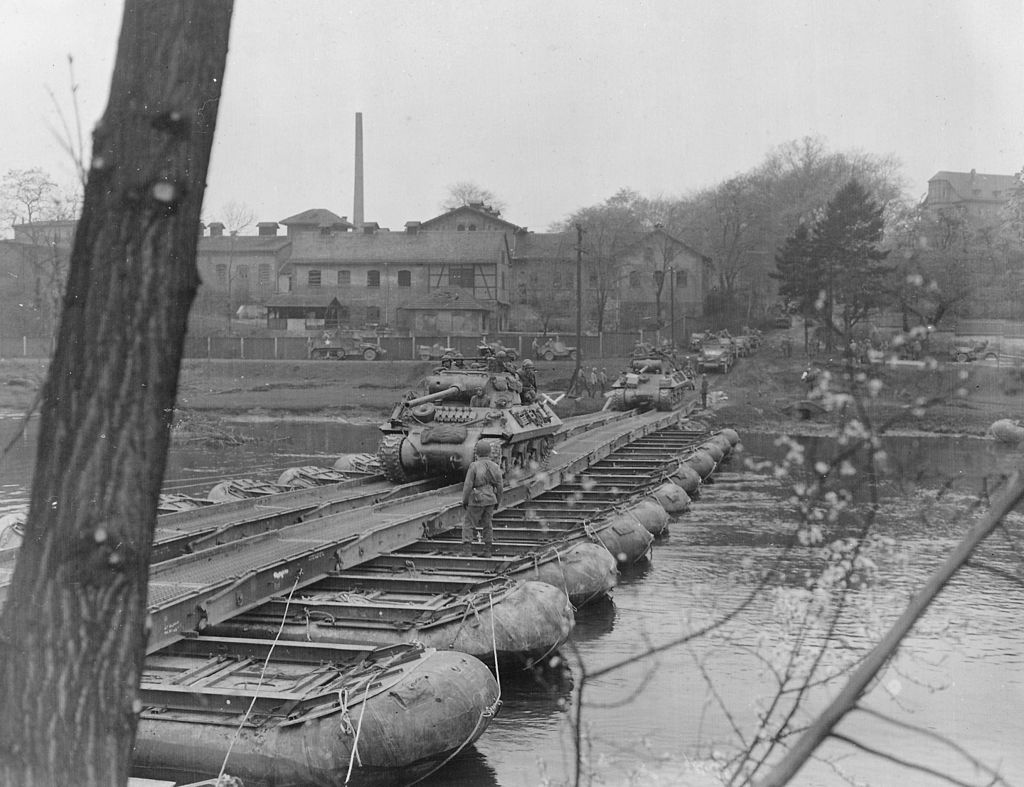
Tank destroyers from Frank Gularte’s unit make the river crossing across a pontoon bridge into Germany, April 1945.
Frank’s son, and Joe’s grandson, Frank Jr., was born in the Mountain View Hospital on Upper Marsh Street three days after the sniper robbed him of his father.
It took another week for the War Department telegram to come home to Corbett Canyon.
Progress hasn’t the time for details like these.
So this business about mourning the latest victim of Progress, The Grad, strikes me as perfectly sensible. What we’re mourning is a place where we’ve shared our lives. In a time when we are so bitterly divided against each other, with the kind of venom we haven’t seen since the Civil War, we will miss The Grad because it reminded us that we, all of us, belong most of all to each other.
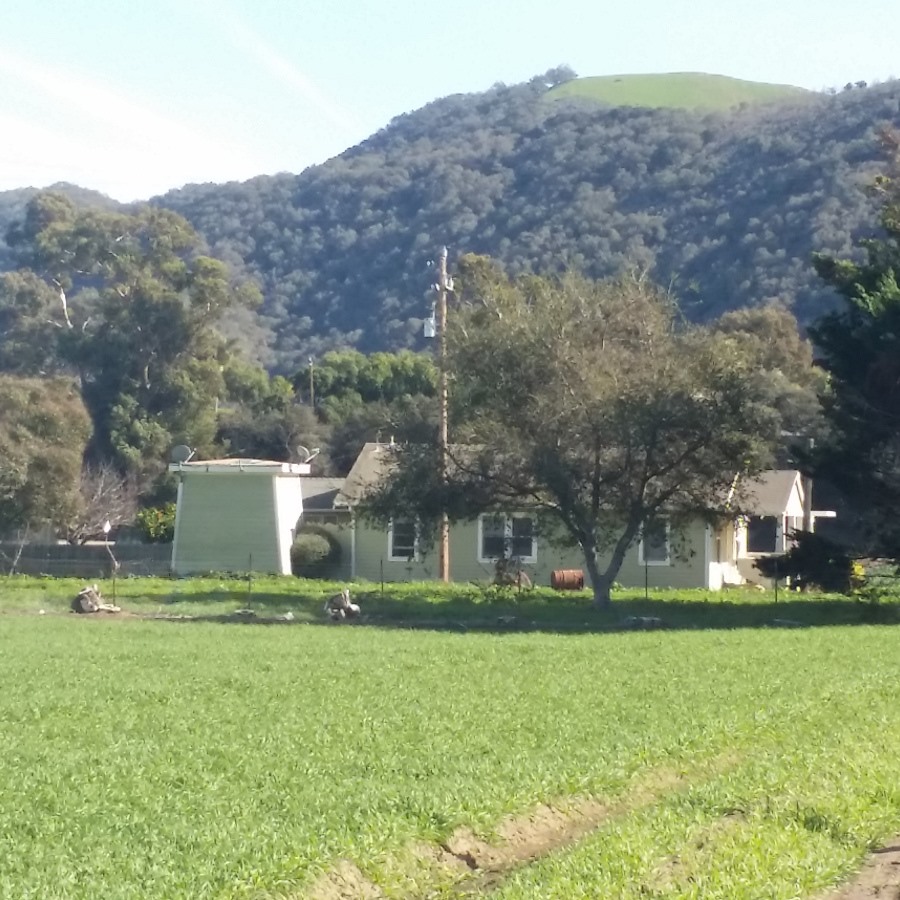
…Just east of Old Arroyo, farm fields also bordered the house where I grew up during the 1950s and 1960s. With my big brother, I walked through them on my way to school, past men cultivating crops with el cortito, the “short hoe”—backbreaking work with a tool that would be outlawed in 1974. The soil of these fields is rich and loamy, alluvial deposits that are the gift of the Arroyo Grande Creek, which flows into the Pacific Ocean seven miles from its origins in the Santa Lucia Mountains.
During my childhood, the creek was my playground. My friends and I fished for rainbow trout in little eddies and in a beaver pond adjacent to farmer Kazuo Ikeda’s cabbages. In fact, steelhead trout still swam upstream to spawn; they are now gone this far south in California. I hooked one once when I was eleven, and the shock of the big fish hitting and then fighting made me nearly drop my pole. I had never seen anything quite so beautiful and so violent—so determined to escape and to live. She did both.
It was earning a living that absorbed my father; a brilliant man with a gift for numbers, he became an accountant who was determined that his children would not suffer anything like the poverty he’d seen among his neighbors in the Ozark foothills during the Great Depression. Beyond that, he was determined that they would all get a college education. His mother, our grandmother Gregory, had been a rural schoolmarm. My education began with two severe but gifted women at the two-room Branch Elementary School, another rural school, with some seventy-odd students in grades one through eight.
Though our teachers dressed like the women in Grant Woods’s Daughters of the American Revolution, they had none of the insipid smugness of Wood’s subjects. These women were teachers because they had the calling; their lives had purpose. Each had to choreograph teaching six subjects to four grades—first through fourth in one room, fifth through eighth in the other— and so they ran a tight ship. We would learn their way, a requirement for which, many years later, I would be deeply grateful.
My first teacher, however, was my mother, and she was remarkable. Her childhood had been a hard one. She grew up poor. Her ne’er-do-well Irish father deserted the family when she was a toddler in an oil boomtown, Taft, just over the county line. When I was very little, we played school. She even rang a hand bell—it had been Grandmother Gregory’s—when “recess” was over. On my first day of formal education, I remember realizing, with a little shock of pleasure, that I could read the names of my classmates as our teacher, Mrs. Brown, wrote them on the blackboard.
One lesson appeared to my mother in the form of a Mexican fieldworker, a bracero, who one day walked into our front yard and up to her. She kept her garden shears at port arms and shoved me behind her skirts. The man signaled that he wanted to fill an empty wine gallon jug with water for himself and his friends, who were working the pepper field adjacent to our pasture. His face, with a tiny Cantínflas mustache, radiated good humor. My mother relaxed and filled the jug from her garden hose. The water was cold. I knew that because of what she said next.
“Now, help him carry it back.”
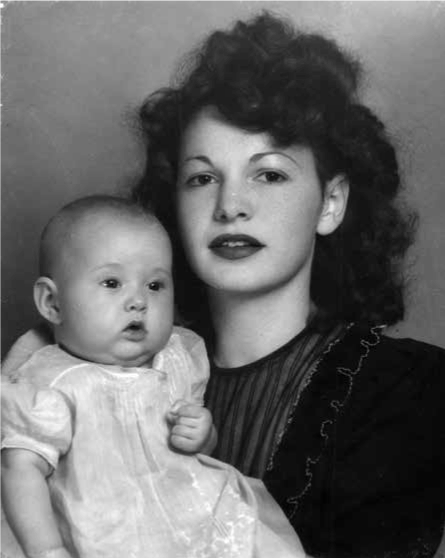
My mother and my bis sister, Roberta, about 1943.
So I did. And I stayed awhile. These men worked for George Shannon, a man of immense warmth, and on later visits to their barracks at Shannon’s farm—it smelled of earth and Aqua Velva and laundry soap—I learned a little Spanish from the braceros. They spread snapshots across their bunks of wives and girlfriends and children, and they laughed when I tried out my new words in their language. That encounter would lead to my college studies’ focus, the history of Mexico and Latin America.
Year later, a Spanish professor—I am ashamed at how much of the language I’ve forgotten– at my Midwestern college took me aside after class and told me this:
“Mr. Gregory, you have a pronounced Mexican accent.”
It was one of the finest compliments I’ve ever received.
In the early summer of 1944—when Gen. Dwight Eisenhower receives his weather officer’s report for June 6 and says simply, “OK, we’ll go,” when Rome falls to Mark Clark’s armies and when horrified marines watch Japanese civilians leap to their deaths from the cliffs of Saipan—the war, for Americans at home, was both distant and, for grieving families, painfully intimate, but even the war could not touch the work to be done.
That month, in the upper Arroyo Grande Valley of coastal California, this is what you would see, possibly through the dense, cold morning fog: labor contractors drop off pickup loads of fieldworkers at the Harris Bridge, which spans the creek that nourishes and gives the valley its name.
The workers cross the bridge whistling, an incredibly beautiful, almost baroque whistling of Mexican folk tunes from the time of the revolution or love songs, as they walk down to the fields to their work with their lunches— wine jugs filled with drinking water and perhaps chorizo-and-egg burritos wrapped in wax paper, fuel for the kind of physical work that would make most men sit in the freshly turned field gasping within fifteen minutes and woefully regarding their quickly blistered hands.
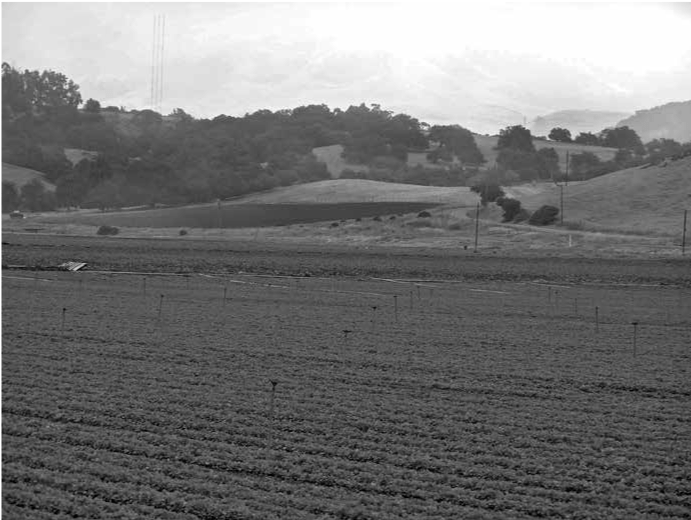
Row crops, Upper Arroyo Grande Valley
Their summer work might be in a new bean field, where the whistling would eventually stop because it is such a tax on men who work hard, whose breathing soon becomes laborious and therefore precious. To begin a newly planted field of beans, the fieldworkers have to drive wooden stakes into precise parade-ground lines along the furrows, so that the bean vines can use the stakes to climb and twist—they will eventually bear delicate, bell-shaped flowers that stretch toward the sun. The sun invariably appears in late morning, when it burns the sea fog away, and the colors of the valley— wheaten hills and verdant bottomland where the crop is in—are reborn, vivid and sharply focused.
To drive the wooden stakes, the fieldworkers use a heavy metal tube, a driver, with a handle attached that resembles that of an old-time pump primer that nineteenth-century settlers used to draw water from the ground. So the whistling stops and is replaced by the rhythmic ring of the stake drivers as the workers pound hundreds of stakes into the field.
It is a musical sound. But of course, what you cannot hear are the grunts of the men at each stroke of the stake driver; what you cannot feel is the enormous weight that exhausted arms and shoulders soon take on; and what you cannot avoid, if you think about it sensibly, is admiration for the men who feed you.
Since World War II, agriculture here has changed—pole beans and the seemingly limitless groves of walnut trees that once competed with row crops are gone, the latter victims of a malevolent infestation of insect larvae. Today, farmers grow more exotic crops, like bok choy and kale, and along the hillsides given over to beef cattle as far back as the beginning of the nineteenth century, there are new farmers and new rows of wine grapes, profitable, lovely and greedy for water—a commodity that isn’t plentiful in California—multiplying every year. The beef cattle haven’t dominated the coastal hills since the 1860s, when the drought that periodically afflicts the state hit as hard as it ever has. The cattle, either killed outright by ravenous coyotes or mountain lions come down from distant folds in the hills or dead of thirst and hunger, would have covered the hills with their bones.
It was that kind of drought that may have brought a fieldworker, whose family had lived for generations in New Mexico, to these coastal valleys in 1940. Much of his native state in the years before had been swept away by the Dust Bowl. Winds had carried the copper-red soil as far east as the Mid- Atlantic to drop it, like gritty rain from a place that had none, onto ships still sailing freely between continents.
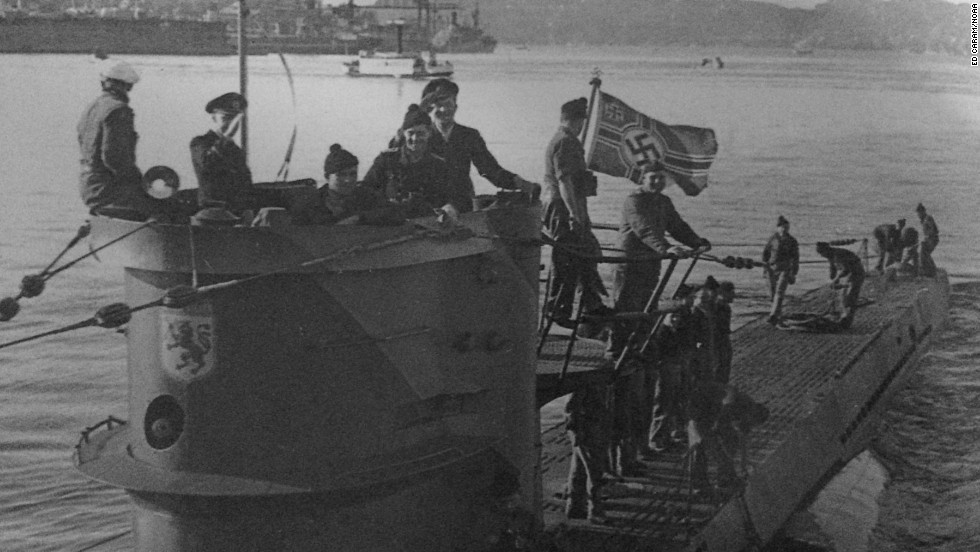
The German U-boat U-576 leaves harbor. She was later sunk with all hands off North Carolina.
Those ships would lose their freedom in the years immediately after, and the coyotes that hunted them without fear were U-boats come out of their lairs in Kiel and later in Lorient. U-boat captains called this the “Happy Time.” The U-boats would someday kill that young fieldworker, if indirectly, as part of an inexorable chain of events that would lead him to Normandy, so far away from the fields that border Arroyo Grande Creek, and to pastures bound by hedges and grazed by fat dairy cows, cows that lowed piteously to be milked in what had become killing zones. One of them, dead in the crossfire, may have provided scant cover from the German machine guns that harvested crops of young men for fieldworker, now rifleman, Private Domingo Martinez.
A German artillery shell killed Pvt. Martinez near Bolleville, Normandy. He lies in the American Cemetery above Omaha Beach.
There are times in any amateur historian’s research when you’re led in a direction you didn’t expect. If you’re lucky, that new direction will reward you with a lesson in our shared humanity–which, to me, is what history is all about, anyway.
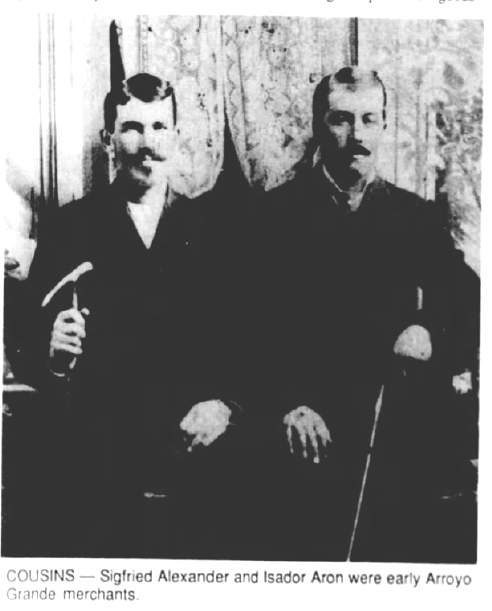
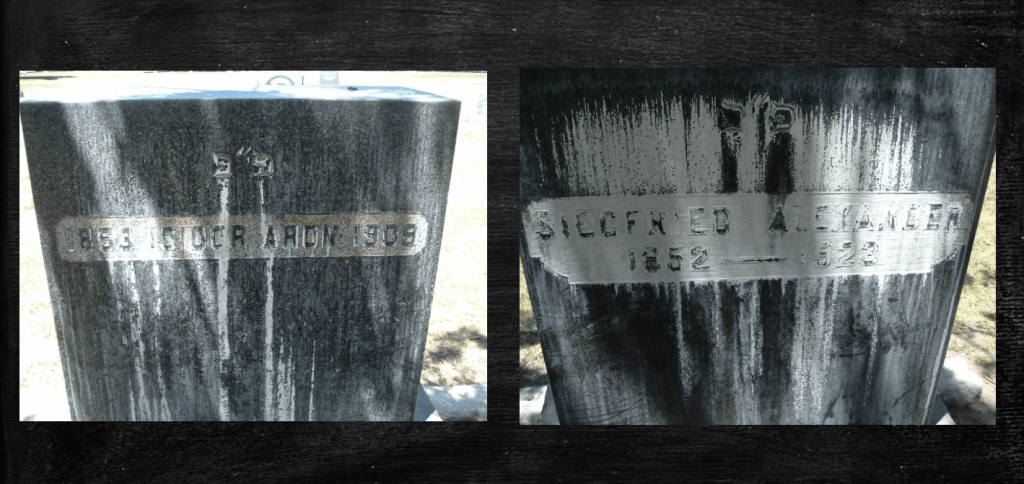
The facts seem basic. Isidor Aron (1853-1909) and Siegfried Alexander (1856-1923), were cousins, from Posen, a province of Prussia until Bismarck completed Germany’s unification in The Hall of Mirrors at Versailles in 1871. This was the final act of a victory over Napoleon III’s France that would poison Europe. This moment made Verdun possible—the place where, beneath plexiglas panels in the floor of the battlefield ossuary, the unidentified bones of tens of thousands of French and German boys are stacked, orderly and ghastly.
The two cousins had emigrated to America two years before the Bismarck’s moment in the Hall of Mirrors—that’s good news— but not long after their adoptive nation’s near-annihilation in the Civil War. That’s bad news. German immigrants were not viewed kindly—my grandmother’s people came here from Baden-Wurttemberg—and the war had made them tragicomic. The Army of the Potomac’s XI Corps, after all, made up mostly of German immigrants (“We Fight Mits Sigel,” a popular song was titled, in honor of their commander, Franz Sigel), had collapsed under the weight of Stonewall Jackson’s stunning surprise attack at Chancellorsville in May 1863, in Lee’s greatest victory.
The Confederates had come bursting out of dense woods thought impassable, trilling their Rebel Yell and preceded by panic-stricken jackrabbits, foxes and deer who galloped through the Union soldiers at their suppers. The Germans trailed the animals in their flight, but not by much.
For a time, the only resistance on Hooker’s right seemed to be coming from a single cannon, also in retreat, but manned by a crew that would pause periodically to load and fire a canister charge, essentially, the artillery version of a shotgun shell, loaded with deadly steel balls, into their pursuers. The defiant artillery crew was directed by a German immigrant, Captain Hubert Dilger. A Southern artillerist described Dilger’s actions that day as “superhuman,” and the young Union officer would win the Medal of Honor.
It appears that Dilger was overshadowed by bad generalship and the resultant flight of XI Corps. It would take generations for their descendants—Eisenhower, Eichelberger, Spaatz, Nimitz—to redeem Chancellorsville.
For the rest of the war, XI Corps would be derisively referred to as “The Flying Dutchmen.” Ironically, it was a Confederate state—Texas, of all places—that would welcome German immigrants with open arms. Texas German is still spoken there.
German immigrant Isidor Aron came to California. Here’s a 1905 passport application, preparatory to the great adventure of his life, which includes the record of his immigration and citizenship.
Luckily, Isidor and his cousin Siegfried were far too young for Chancellorsville. They took up clerking in San Francisco, possibly attracted by the reputation of another successful German—another German Jew—the Bavarian-born Levi Strauss.
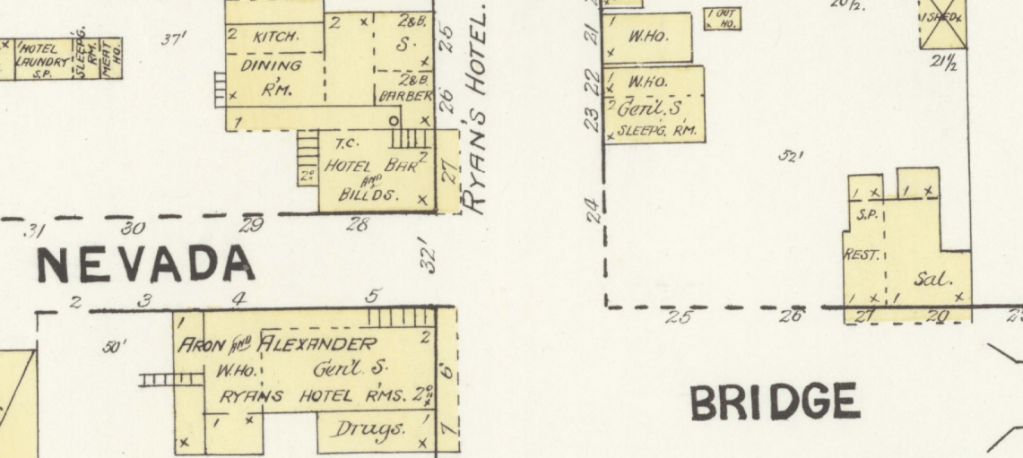
The cousins came to Arroyo Grande as merchants in the 1880s, setting up a haberdashery and dry-goods store on the corner of Branch and Bridge Streets, on the site of today’s “Something Different” store, which was once the Bank of America.
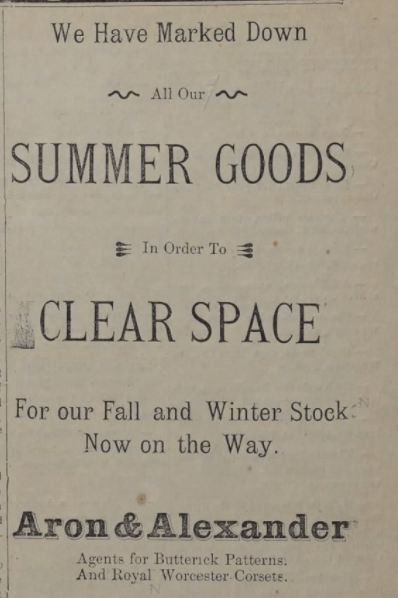
In August 1897, the cousins took out a rare display ad—they were given to more modest two-line blurbs that typified the advertising columns of small-town Victorian weeklies— in the Arroyo Grande Valley Herald-Recorder.
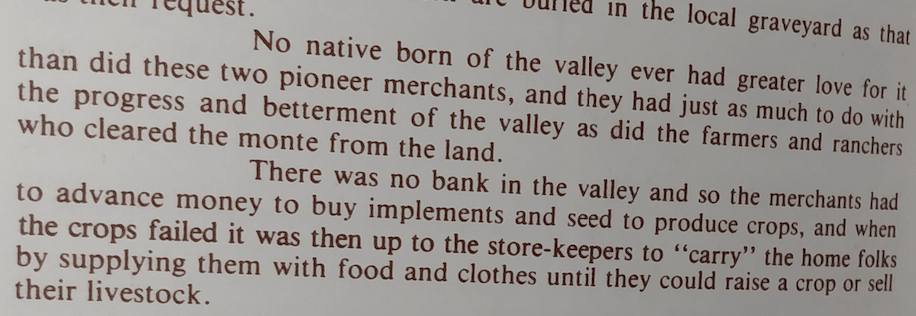
What is clear from the historical record is the popularity of Aron and Alexander—as men and fellow citizens, and not just as merchants. The venerable local historian Madge Ditmas wrote in one of her 1941 Herald-Recorder columns, just before veering off into one of her typical anti-FDR screeds, that these Germans weren’t seen as foreigners at all.
So the seemingly effortless generosity of the two—which had to have come, in reality, with tremendous effort—endeared them to Arroyo Grande.
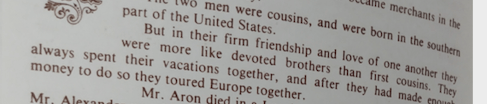
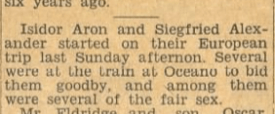
Sadly, the cousins would die far from their American home. A stroke killed Aron in 1909 Los Angeles; a heart attack ended Alexander’s life in 1922 San Francisco. But, as Ditmas notes, they loved to travel, and luckily, they managed to take what was called the Grand Tour together in 1905, four years before Aron’s death. Here’s a note from the Herald-Recorder that clearly indicates the presence of an Aron and Alexander Fan Club:
The cousins were eventually buried together. Aron is buried in Plot C8 in the Arroyo Grande District Cemetery; Alexander lies alongside, in C10. Atop their tombstones are the Hebrew letters that tell you
Here lies a son of God.
Of that, I am sure. To have made your way as a foreigner in a place as foreign as Arroyo Grande, on the continent’s edge, to have generated so much good will, speaks unwritten volumes beyond the simple profundity of their tombstones. They were certainly devoted to their business and to each other, but they were devoted—perhaps even more— to my home town. Their lives shaped ours in ways we may never fully understand or appreciate.
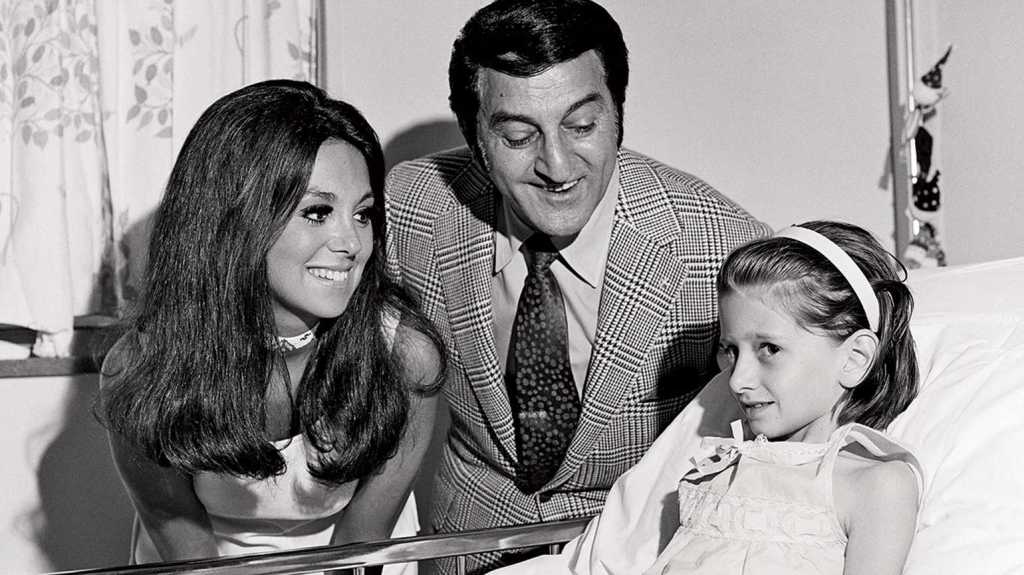
This was all provoked by Marlo Thomas and a St. Jude’s Hospital commercial. They always leave me little weepy. I immediately turn the channel, too, whenever they show the ASPCA abandoned dogs commercials. I’m just a wimp.
Anyway…
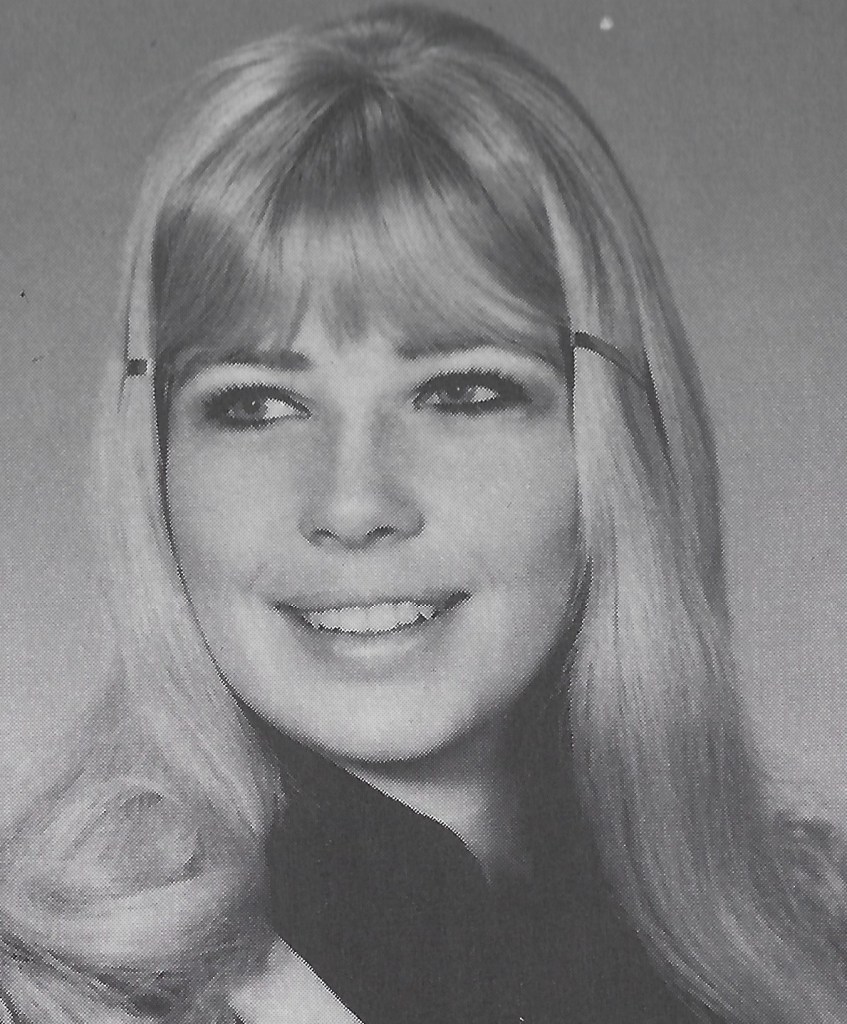
Jeri.
My woeful performance on the “Ten Famous People You Have Met and One You Haven’t” Facebook survey– my famous people were pretty anemic, including G.D. Spradlin, the actor who sent Martin Sheen Up the River in Apocalypse Now and the guy whom singer Trini Lopez portrayed in The Dirty Dozen. (“Lemon tree, verrry pret-ty…” Trini Lopez sang. The G.I. he portrayed blew stuff up.)
I remembered that Jeri was my date for the 1969 Arroyo Grande High School Winter Formal. She was very bright and had a refreshingly sardonic sense of humor that was about 23 years older than the rest of us. Jeri and I were just friends, with no romantic inclinations, except for the ones I felt for her car.
She drove a 1966 Mustang 2 +2 Fastback, with a classic short-block 289 V-8 under the hood. Sigh!
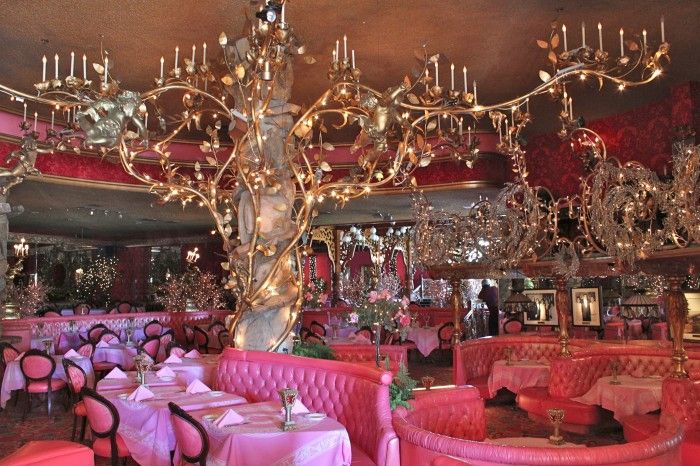
Alas, we went to the Madonna Inn for dinner in my father’s 1965 Chrysler, which, for those of you not up on your Chryslers, was roughly the size of the carrier USS Eisenhower.
Jeri and I on our way to the Madonna Inn.
No, Jeri was not a Famous People. We’ll get to that right after we order.
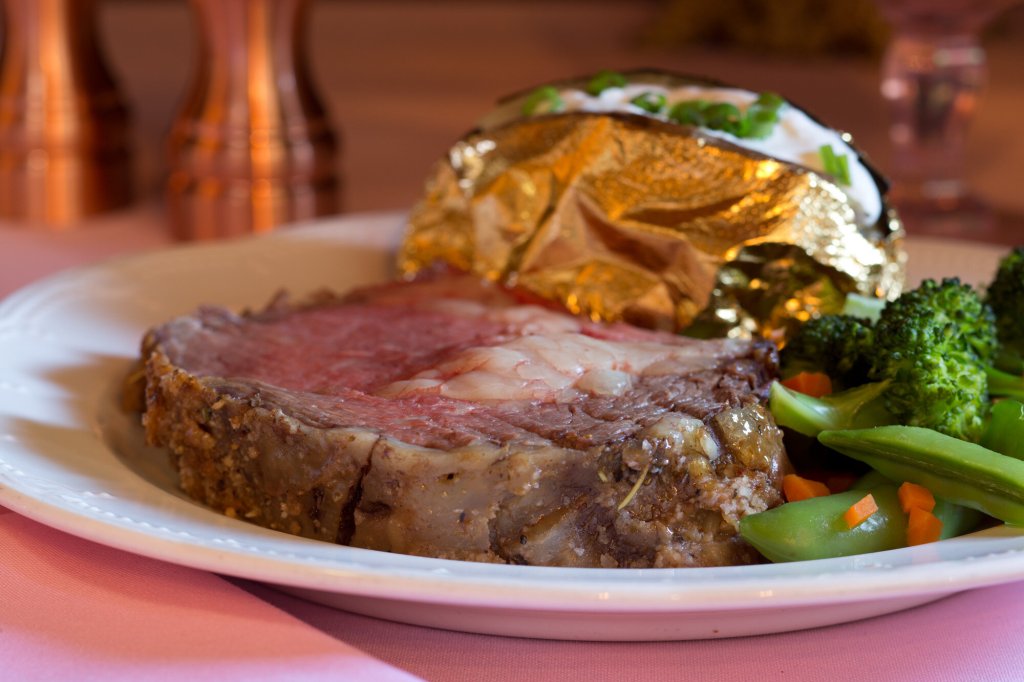
Yes, baked potatoes with sour cream, please.
As we were beginning dinner (TWO prime rib dinners, $13.74. I kept the receipt), Jeri punched me in the arm. It wasn’t something wrong with the prime rib. It was DANNY THOMAS, sitting in a booth thirty feet away with Mrs. Madonna, and Jeri wanted his autograph. If Danny Thomas wasn’t exactly a celebrity on the scale of all four Cartwrights AND Marshal Dillon in the Madonna Inn Liberace Room on horseback, he was close enough for two kids from Arroyo Grande, California, USA.
The Madonna Inn–as always, casual and understated.
Now, I worked with Jeri on the school newspaper, and she’d punched me in the arm before. She could leave a bruise if you’d deserved it.
So, after about the third punch, I went over to the booth, introduced myself, blushing profusely and speaking in what must have sounded like Urdu (I knew Mrs. Madonna slightly; my Dad worked for Madonna Construction) and Mr. Danny Thomas provided the autograph.
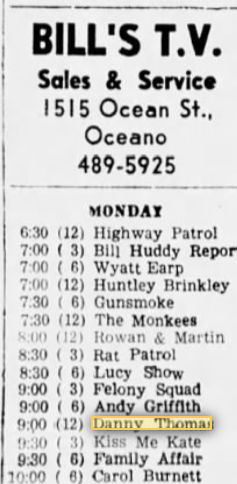
Danny Thomas and his lovely daughter, Marlo, at St. Jude’s, the incredible hospital Mr. Thomas founded. (Below) Mr. Thomas’s sitcom was at one point on opposite The Andy Griffith Show, which was awkward, because Thomas was Griffith’s executive producer.
That is not really the point of the story, but I have misplaced the point somewhere.
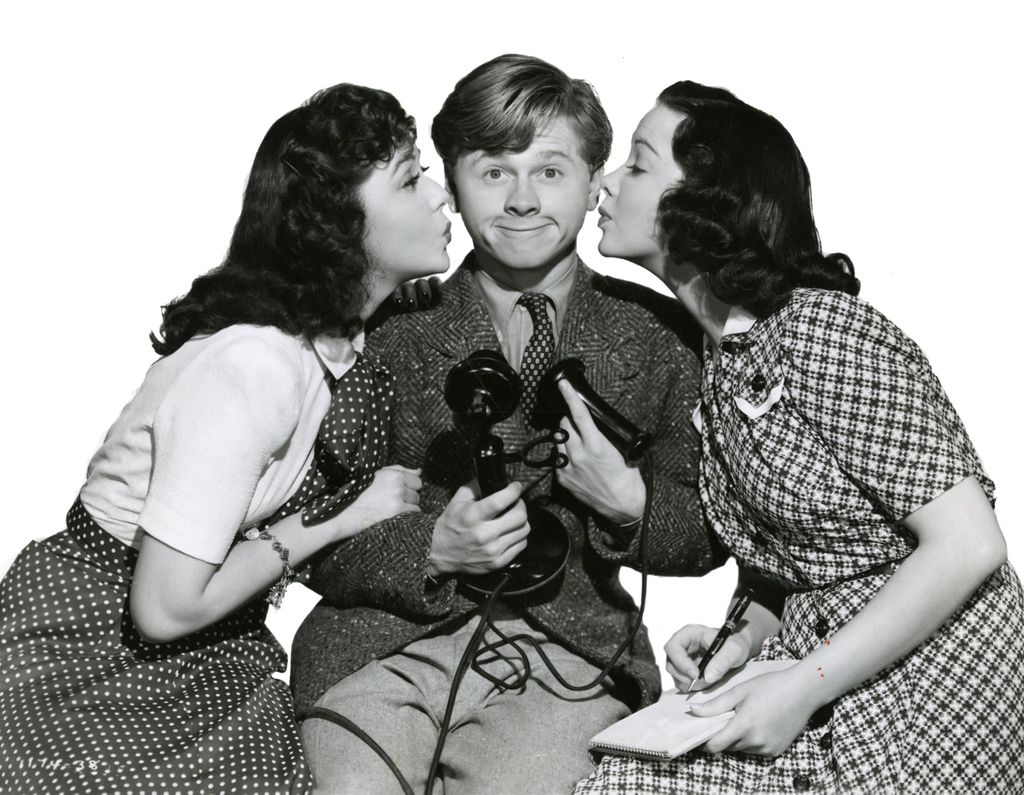
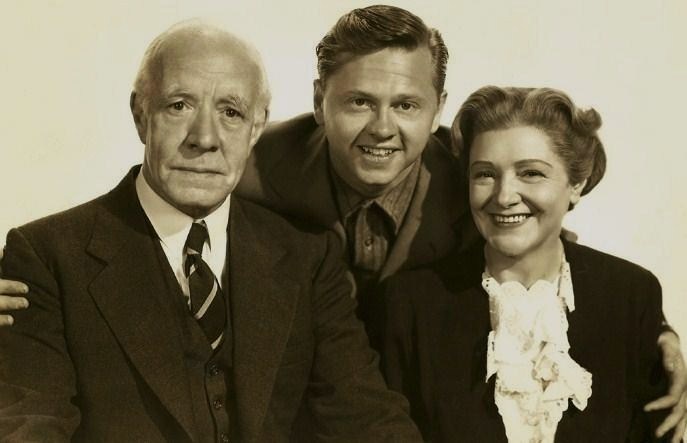
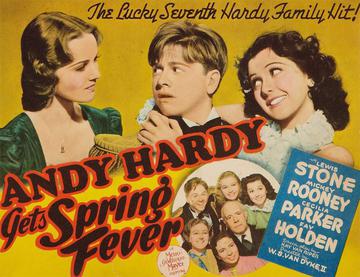
I have been undertaking a Serious Historical Study of the Andy Hardy movies that appear frequently on TCM. There were sixteen made between 1937 and 1958, during which Mickey Rooney’s Andy grew not an inch. Andy would go off to World War II but that part of his life is forgotten in favor of “I know what let’s do! Let’s put on a show!“
The films I’ve seen leave me with even more questions.
1. Did Andy ALWAYS wear a tie?
2. Did Americans once put that much sugar on their corn flakes?
3. Was that car as beautiful as I thought it was? Yes, it was. Andy’s high school graduation gift was a 1940 Plymouth convertible. Possibly it was a bribe offered Judge Stone, like the silver candlestick offered Thomas More in A Man for All Seasons.
4. Mrs. Hardy deserves far more credit. I think she irons Andy’s undershorts.
5. Judge Hardy is rarely in court. He mostly just hangs around and dispenses advice, like Ozzie Nelson did in Ozzie and Harriet. And, given Lewis Stone’s appearance, I would guess he was about 78 when his son Andy was born.
6. It seemed to take Andy about seven years to get through high school. Maybe that’s because in Andy Hardy Gets Spring Fever, he falls in love with his drama teacher, Helen Gilbert.
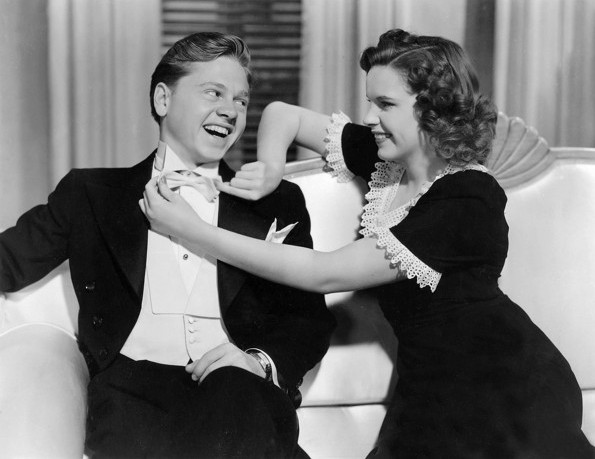
7. In one scene, Andy ties a BOW TIE while talking to Mrs. Hardy without the use of a mirror. That’s an Academy Award right there, as far as I’m concerned.
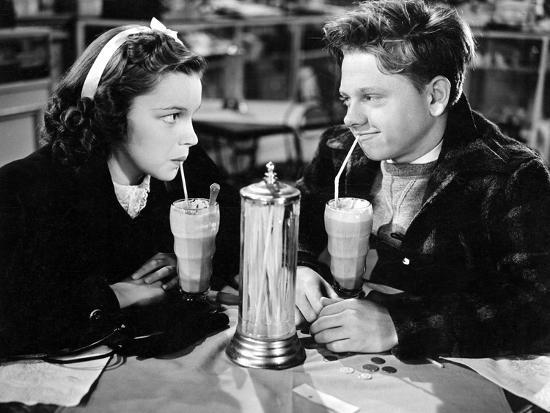
8. We need soda fountains to make a comeback. My father first met my mother in a soda fountain in 1939.
9. In Love Finds Andy Hardy, Andy offers to court a friend’s girlfriend while he’s away on a weeks-long family vacation so no other guys will Make the Moves on her. They haggle over the fee. They agree on eight bits (a dollar) or $18.36 in today’s money. Good Lord, money went a lot farther then.
10. In Andy Hardy’s Private Secretary, Andy and Polly go parking in what looks like Amazon rainforest in the 1940 Plymouth convertible. Judge Hardy and a good portion of the supporting cast suddenly pull up and hilarity ensues. If any OTHER Andy Hardy type had been caught by his Dad parking with Anne Rutherford (Polly), he would’ve been horsewhipped.
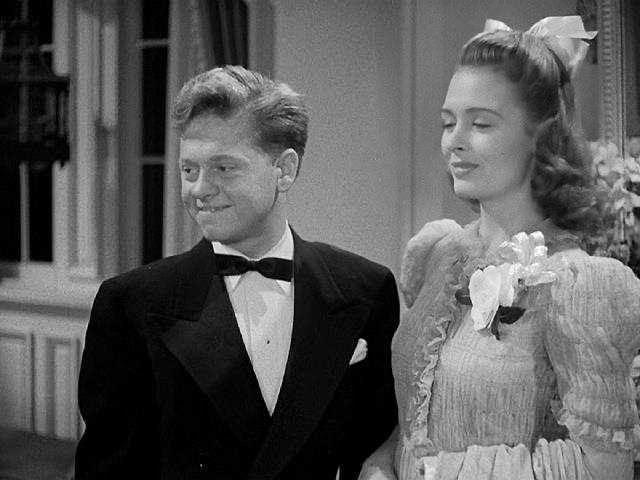
11. Judy Garland appears in only three of the films. Andy is dismissive of her, because she’s just a kid. I find that really difficult to believe. Donna Reed (below) appears one film, too, and that’s good, because that might’ve laid the groundwork for her casting opposite James Stewart in It’s a Wonderful Life.
12. The girl Andy dates for his friend (for $18.36 in 2020 money) in LoveFinds Andy Hardy is Lana Turner. He finds her spoiled and selfish and, in my mind, no competition for Judy Garland. He breaks off the pseudo-relationship, which is good news because Lana Turner grows up to get her husband murdered and John Garfield sent to The Chair in “The Postman Always Rings Twice.”
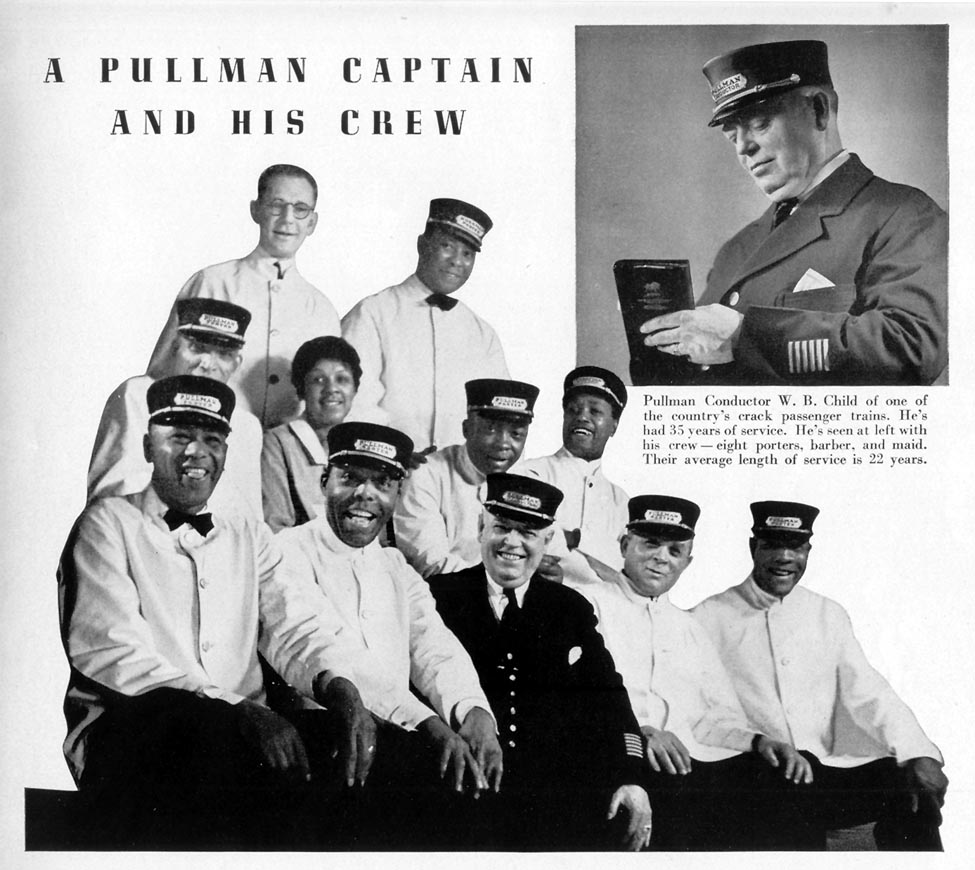
13. There are Black people in Andy’s hometown, Carvel, USA (like The Simpsons’ Springfield, it’s everywhere but nowhere in particular). They are all—all of them— Pullman porters, it seems. That part of the Andy Hardy myth is less appealing to me than Andy and Judy and their fountain soda.