

Today the president* revoked the findings on the impact of greenhouse gases on the environment and so opened the way for accelerated climate change.
That’s because the EPA—an agency founded by a noted Bolshevik, Richard Nixon—has been stripped of its power to regulate greenhouse gases.
And so we turn to history, and, predictable considering it’s me posting this, eventually to Ireland.
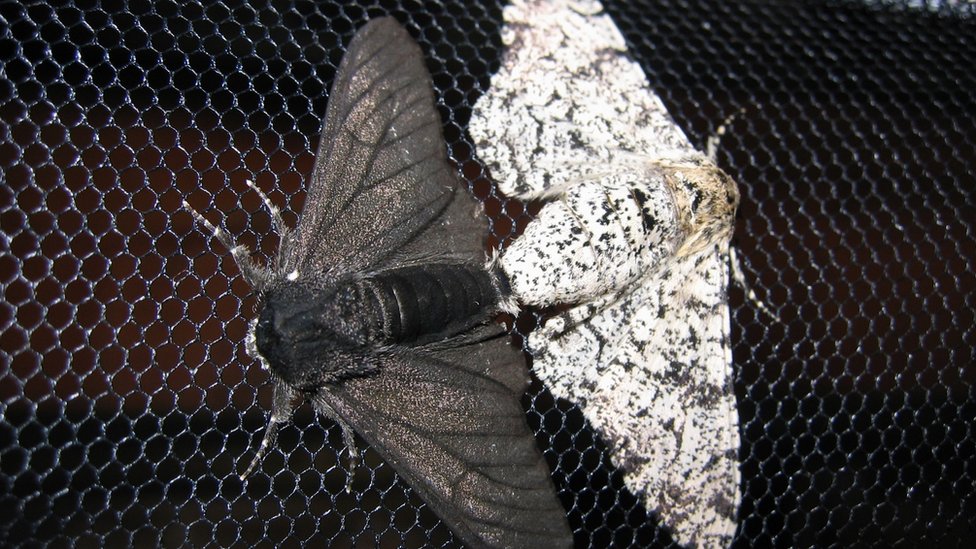
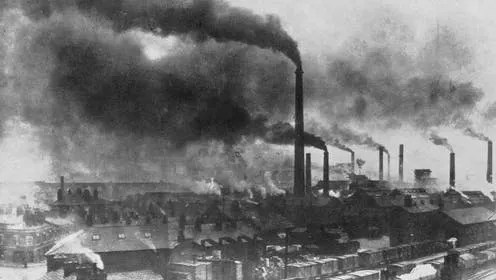
White birch trees proliferated in and around London and the white moths that made them home did, as well. That was until the industrial smoke of the Industrial Revolution made white moths easy prey for hungry birds, because the birch trees were now stained, irrevocably, gray. Black and peppered moths, less visible, survived, according to that theory propagated by a devout Anglican, Charles Darwin.
The president* is 79, and doddering at a rate uncommon even for someone his age. (He will assemble a Filet o’FIsh rogether with a Big Mac t at lunch, chase that monstrosity with a Quarter Pounder, fries, and an extra-large Diet Coke.)
So he will die soon, if not soon enough and, for a man who epitomizes Malignant Narcissism, it’s perfect opportunity, in encouraging greenhouse gases, to kill the rest of us human beings, too. We deserve it, in his eyes, and we’re not so adept at changing colors. (His is White.)
That brings us to St. Patrick’s Day, coming next month.
I’m not suggesting that the Irish have some kind of monopoly on goodness or on holiness. More Irish died at the hands of brother Irishmen during the terrible Irish Civil War of the 1920s. And even in our Civil War, at Fredericksburg, the Confederate 24th Georgia, so Irish that a gold harp was sewn into the fabric of their regimental flag, stood up from behind a stone wall and fired into the faces of the Union Irish Brigade, immigrant soldiers from New York, Massachusetts and Pennsylvania. The slaughter they inflicted was terrible.
But the Irish, despite those exceptions, have a reverence for life—exemplified by desperate Irish mothers, during the Famine, who gathered nettles in church burying grounds to make soup. That reverence extends to the sea, to thorn trees, where the fairies live, to animals, to the Earth.
You can even see this in the original version of the Cranberries’ “Dreams,” where Irish mourners dislodge a tree whose spirit is revealed when washed with water.
No Irish immigrant—to South County San Luis Obispo, where I grew up—exemplified that reverence more for the natural world than did the poet Ella Young. The only thing remotely like her that I’ve encountered comes from the Northern Chumash—the ytt People–the First People to live where I now live—who breathed every breath along with the Earth’s.
I have no power as monstrous as the president’s*, but I do have Ella Young’s power as part of my faith, a faith that grows from my own roots in County Wicklow, where dolphins dance in the air just offshore.
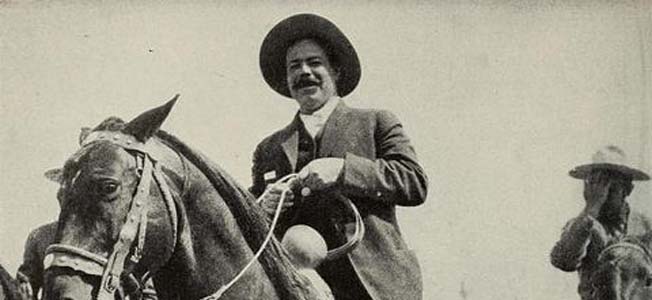
The image below is a young man named Patrick, who loves whales.
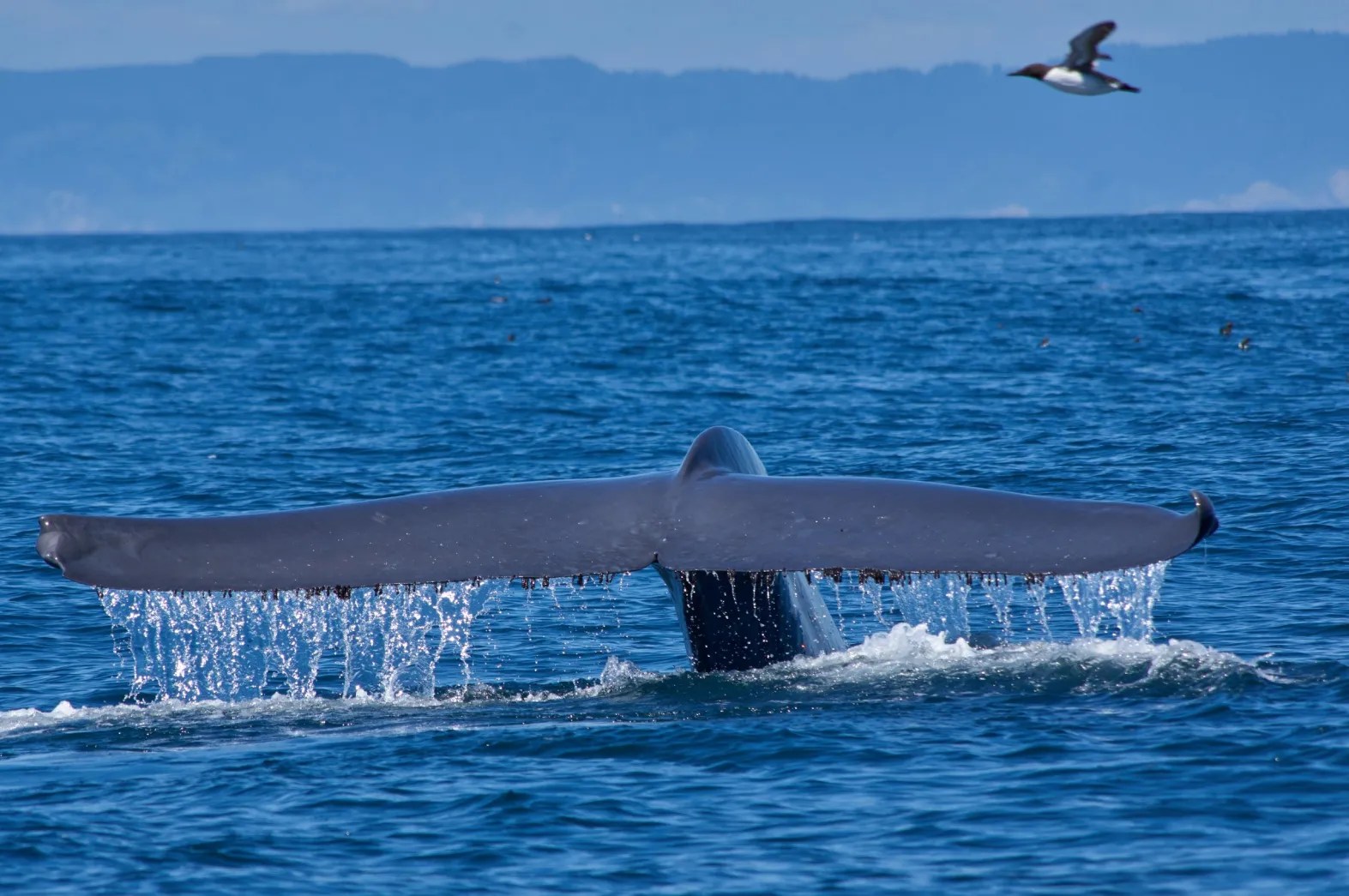
So this St. Patrick’s Day, there a creature of God asleep below the surface of God’s waters, rising in sunlight like this blue whale off the California coast.
If you are at all Irish, this makes perfect sense: this is my mother’s daughter. This whale is my sister. She comes to surface in the hope of someday seeing my son Thomas as he casts his line into the sea from the Pismo Beach pier.



















 A Work in Progress