• About
  • The Germans

A Work in Progress

A Work in Progress

Tag Archives: History

Oct. 21, 1805: Lord Nelson is dead. But he’s still kind of fun.

20 Monday Oct 2025

Posted by ag1970 in Uncategorized

≈ Leave a comment

Tags

british-history, england, History, nelson, royal-navy

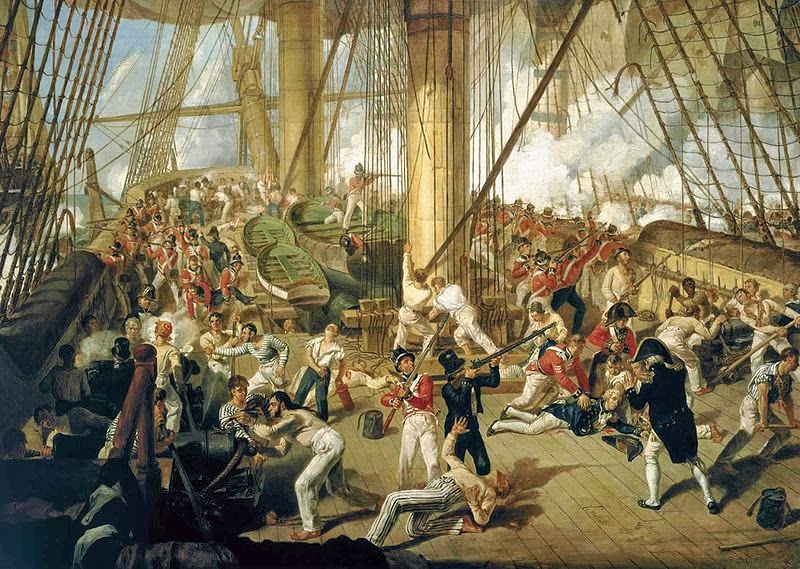
A royal marine and a midshipman return fire on the French sniper that has just shot Admiral Nelson, lying on the deck, right-center.

October 21 is “Trafalagar Day,” commemorating the overwhelming victory of Lord Admiral Horatio Nelson’s British fleet over a combined Franco-Spanish fleet off Spain’s Cape Trafalgar. It’s also the day Nelson died. As he paced the quarterdeck of his flagship, HMS Victory, a French sniper shot him in the shoulder. The musket ball wento on to puncture Nelson’s lung and shatter his spine. He died several hours later belowdecks.

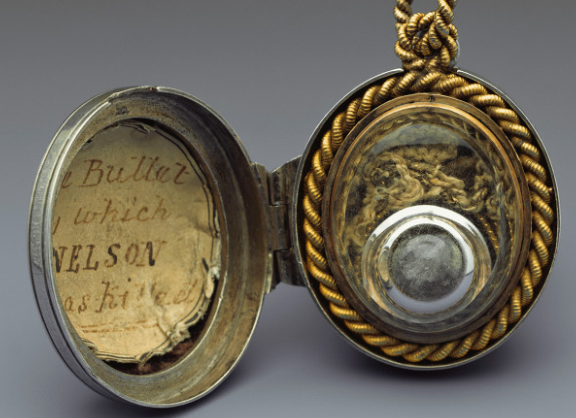
The musket ball was removed by Victory’s surgeon. It wound up preserved in this locket, surrounded by gold braid taken from the little admiral’s dress coat. (He was somewhere between 5’4″ and 5’7″.)
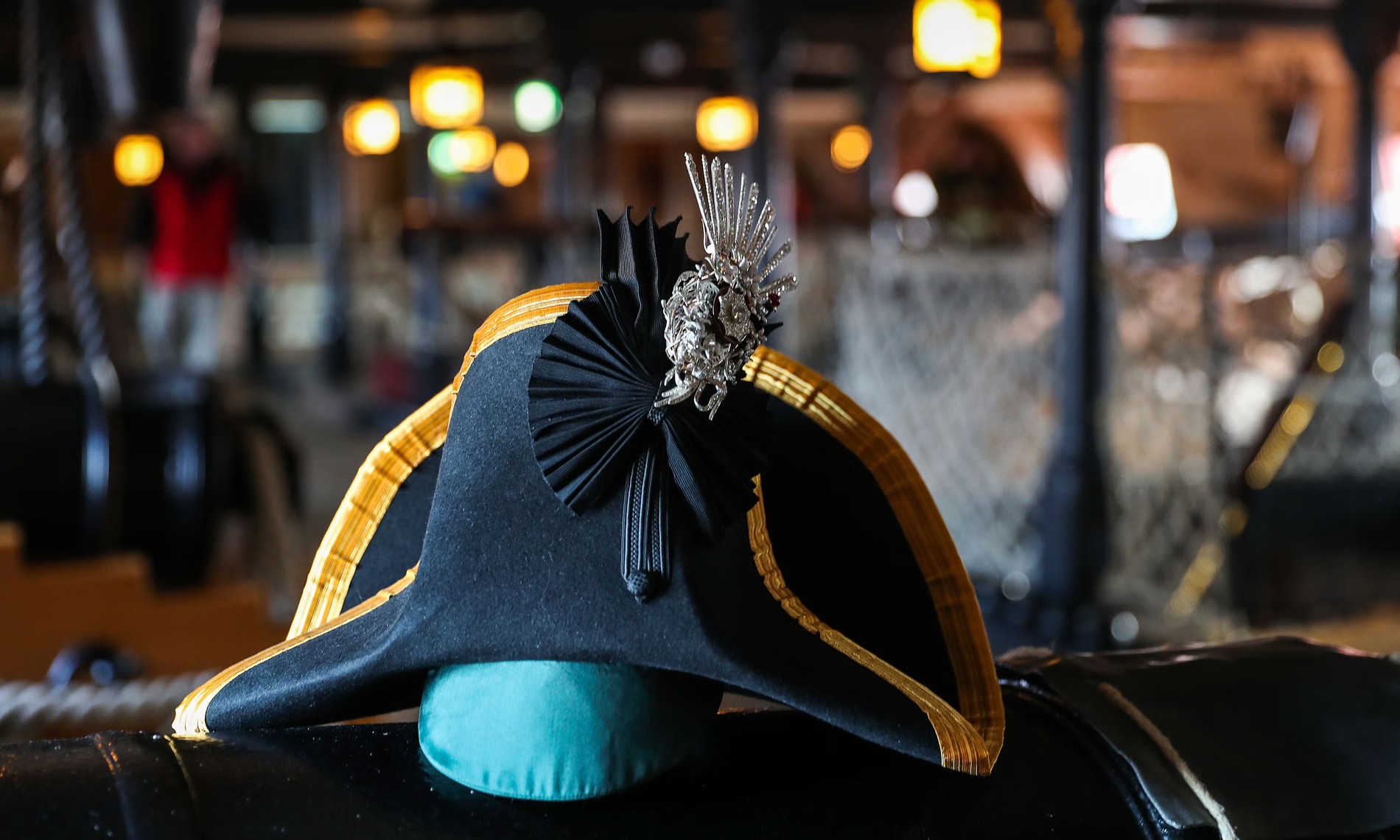
–To be truthful, Nelson got himself shot. He gloried, as George Custer did, in elaborate uniforms and was wearing all his medals (not quite so many as a North Korean general, to be sure) as Victory went into battle, including the diamond-encrusted cockade presented him by the Sultan of Turkey in 1798. This replica (the original was stolen years ago) shows what it looked like. All those medals and foofery made him an easy target for an ambitious sniper.
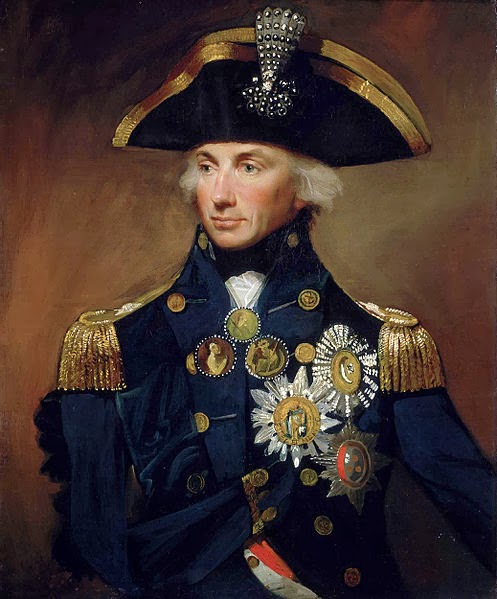

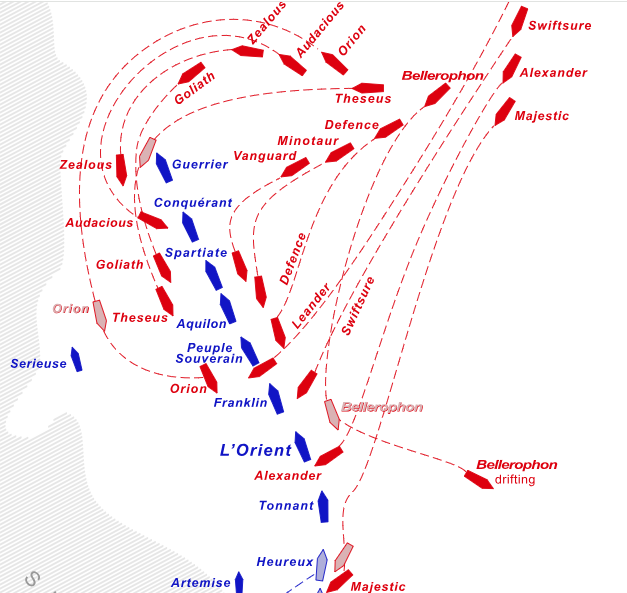
–Nelson was awarded that hat accessory after his victory over a French fleet at Aboukir Bay in Egypt. What came to be called “The Nelson touch”—shameless audacity—was in full display at Aboukir Bay. The French had anchored their fleet just beyond shoal waters, so shallow that no attacking ship would dare enter. They were wrong. Nelson divided his fleet, sending half into the shallowest part of the bay. Another column of British ships attacked the seaward side of the French ships, meaning that all of the French guns, port and starboard, were very, very busy that day. The British lost 218 sailors at what came to be called the Battle of the Nile. The French lost over 5,000. The fleet was there, by the way, in support of Napoleon’s invasion of Egypt. After Nelson’s victory, the Emperor, as he would do in the retreat from Moscow, abandoned his army and went back to Paris.
–Nelson’s audacity was shown even when he was a sixteen-year-old midshipman. On a voyage to the far north in search of the Northwest Passage, he was onshore and confronted a polar bear. I think both parties eventually fled, but the incident’s notoriety led to this 1809 painting.


–In 1794, during an assault on Corsica, a cannonball’s impact sent sand and stone into then-Captain Nelson’s face, leaving him nearly blind in his right eye. Seven years later, in an attack on the French-Allied Danish fleet at Copenhagen, the admiral in command used signal flags to order a withdrawl. Nelson raised his telescope toward the flagship and insisted that he saw no such order. He was holding the telescope to his blind eye—we get the expresson “to turn a blind eye” from this incident. The Brtish went on to win the Battle of Copenhagen.

A collector peers through the telescope Nelson used at Trafalgar in 1805.

–A musket ball hit Nelson in the right arm during an attack on Spanish forces in the Canary Islands. The wound was so serious that a surgeon had to amputate. Nelson adapted, teaching himself to write left-handed and using this combined fork and knife to eat.



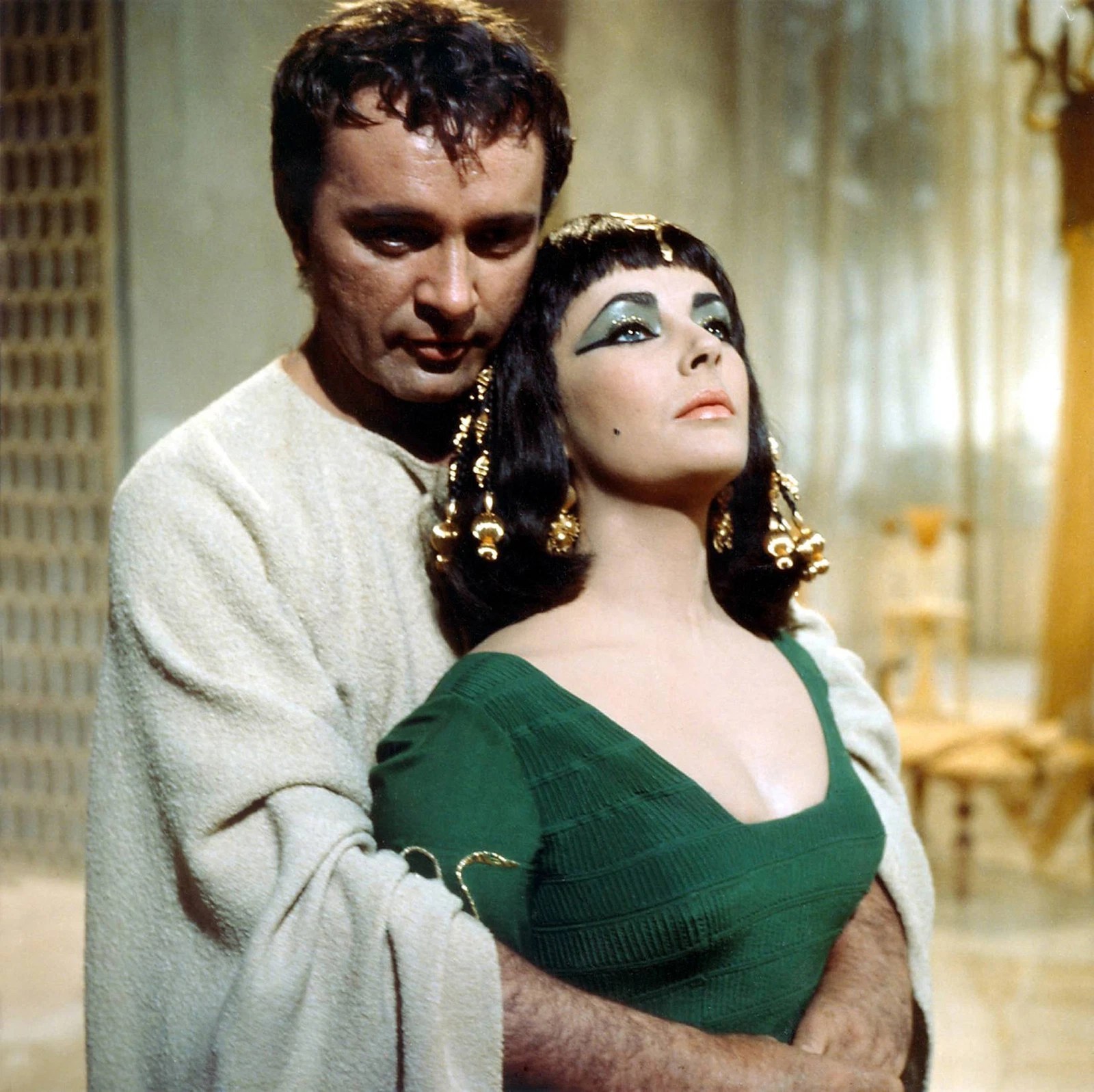
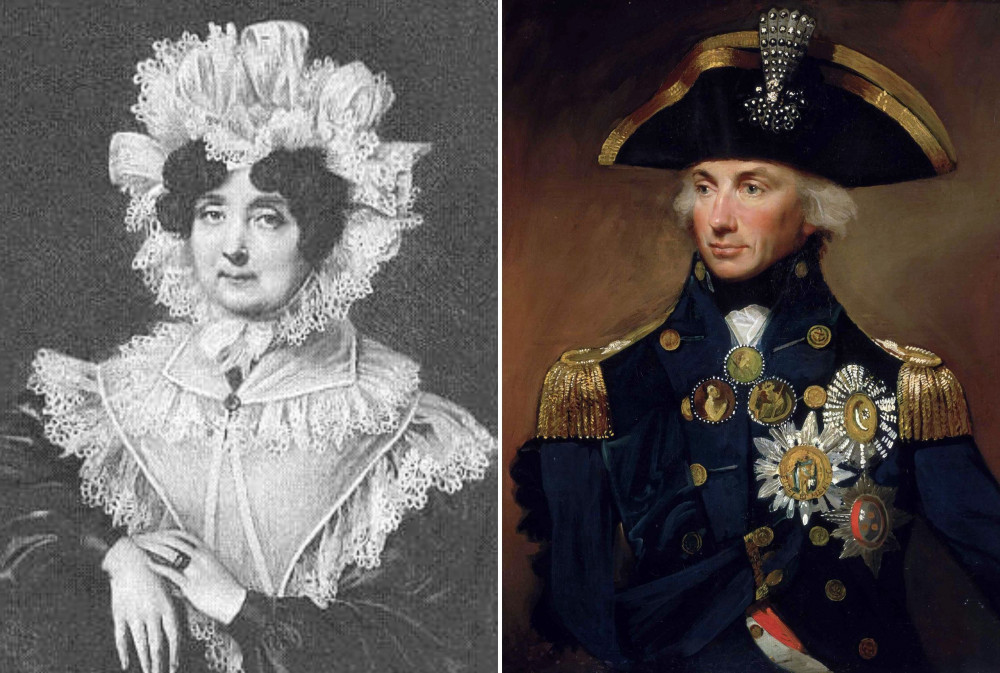
–He was the son of an Anglican minister and was properly married to a widow, Frances Nisbet, in 1787. Six years later, on a visit to Sir William Hamilton, the British ambassador to Naples, he first caught sight of Sir William’s wife, Emma. It was all over after that. The two marrieds entered into a lively relationship that was analogous perhaps only to the Richard Burton/Elizabeth Taylor scandal that began during the filming of Cleopatra. While Nelson continued to support his wife—she remained “devoted” to him, it’s said—Nelson’s devotion lay forever after in the charming arms of Emma. The relationship produced a daughter, tragically named Horatia.
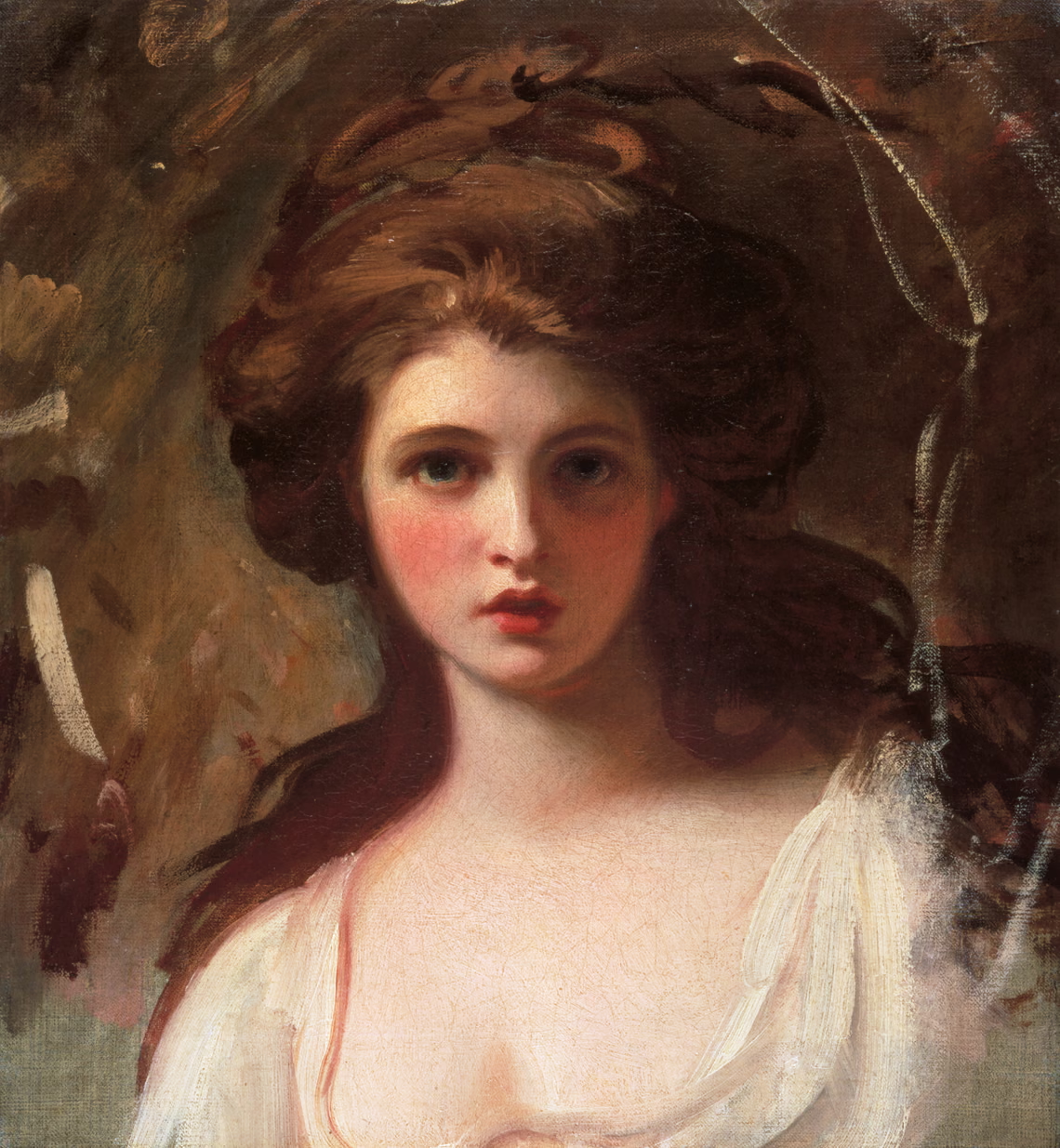
A young Emma Hamilton.
An artist imagined Nelson and Emma in Naples.
Liz and Dick in a scene from Cleopatra.
Frances Nisbet—“Fanny”—and His Lordship. Her father had lots of money.

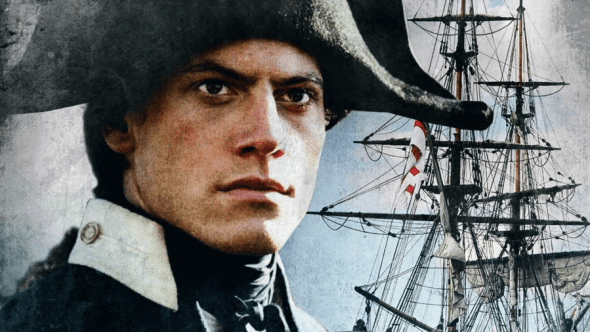
–Like my fictional naval hero, Horatio Hornblower, played by Ioan Gruffudd in a TV miniseries, Nelson was largely out of sight once his ship sailed from England. That’s because both salty sea-dogs were prone to violent seasickness, which both overcame only after several miserable days at sea.

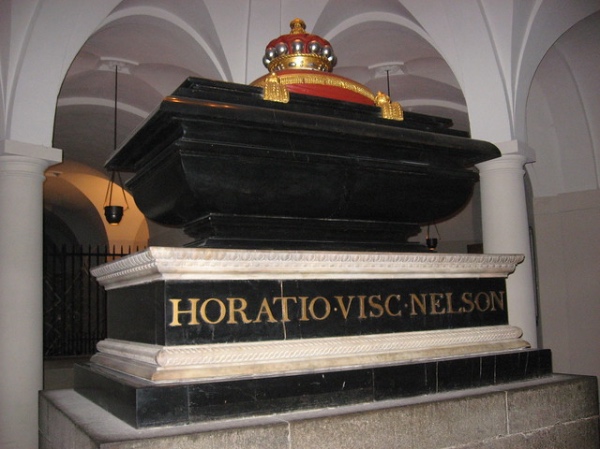
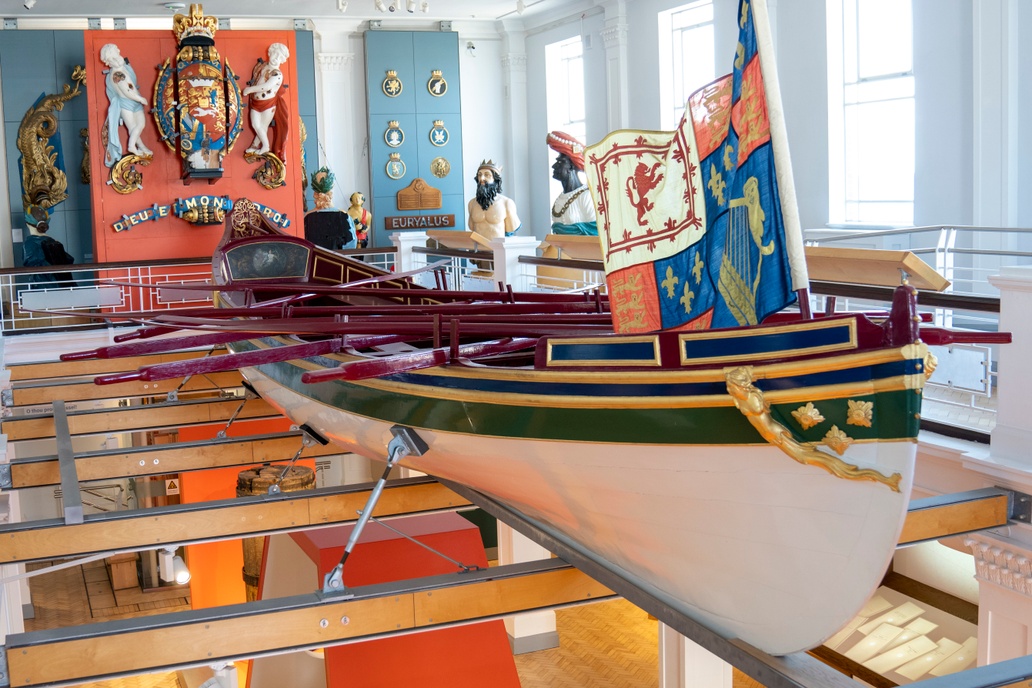
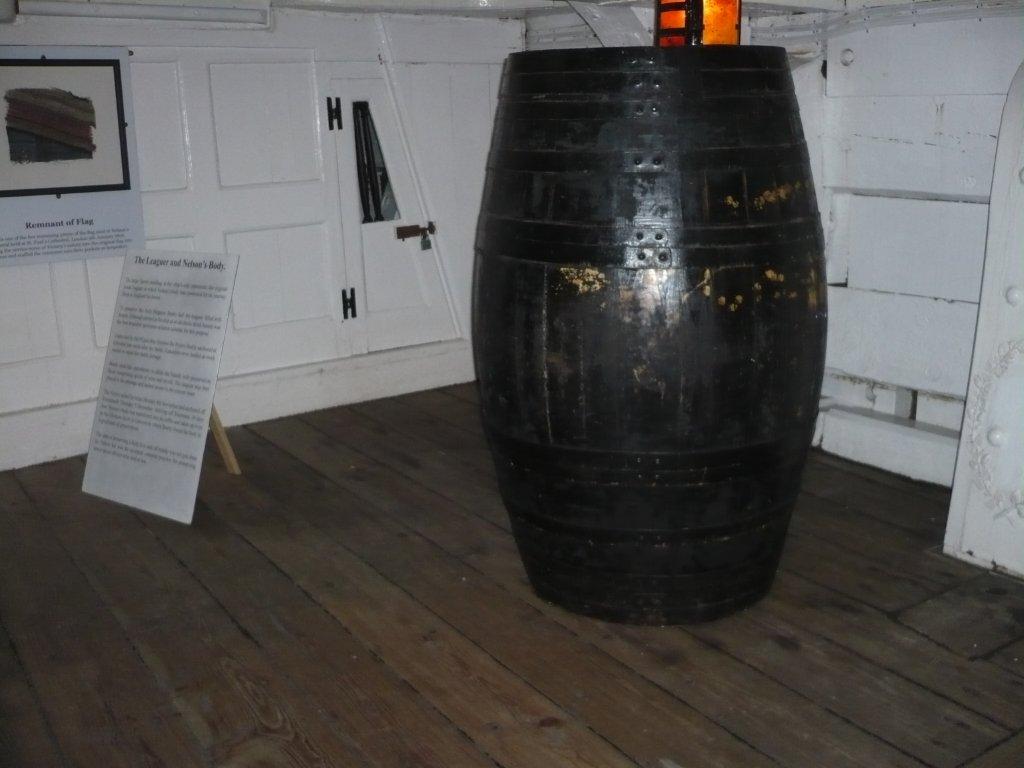
–Nelson died on the orlop deck of HMS Victory, the 104-gun ship still on display in Portsmouth. But in 1805, it was a long voyage (Victory had been mostly dismasted) back to England. What to do with his lordship? It was decided to insert him into an empty ship’s cask and then fill the cask with brandy to preserve the body. It worked. Mostly. On lying in state, Nelson’s face had to be covered with a handkerchief; the rest of him was in his full-dress uniform. He’s buried in a massive tomb in St. Paul’s that belies the actual size of its occupant. Elizabeth and I saw the funeral barge that carried his coffin to St. Paul’s. In the novel Hornblower and the Atropos, the junior captain is in charge of the barge when it begins to take on water from the Thames. Hornblower and the barge crew make it to the cathedral, but not before he suffers the most epic panic attack, I think, ever recorded in fiction.

Oh, and a ration of rum or brandy allotted daily to British sailors came to be known as “Nelson’s Blood.” Ew.
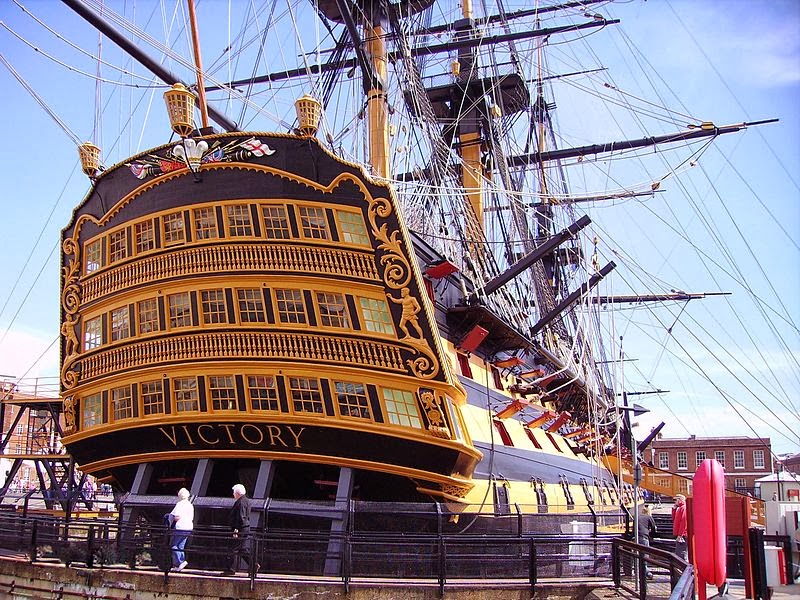
HMS Victory’s stern, Portsmouth.
A water cask like the one that carried Nelson’s body.
Nelson’s tomb in the crypt of St. Paul’s, London.
The royal barge, on display in Portsmouth, that gave young Capt. Hornblower such a hard time.

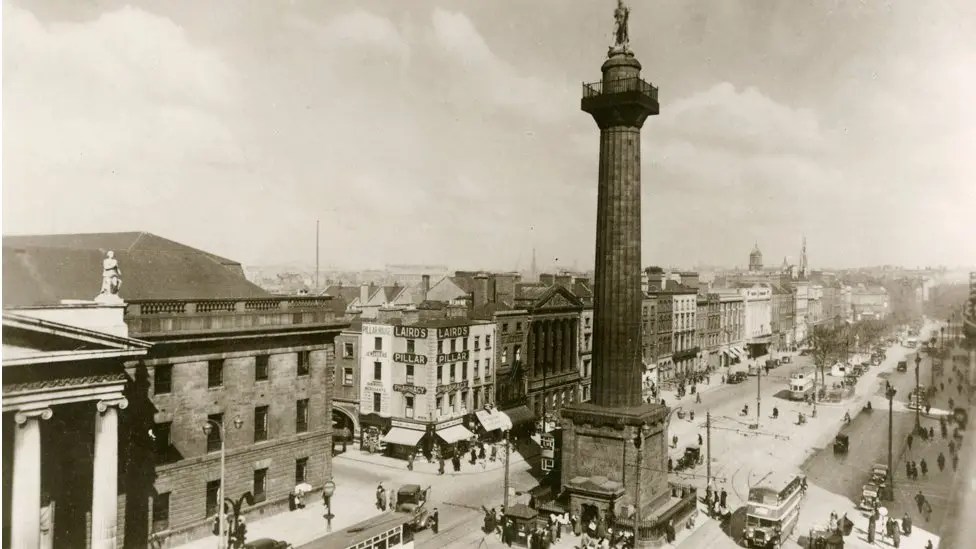
–What Nelson lacked in height he made up for in monuments. The little admiral was placed, in stone, atop two famous columns. One stands in, of course, London’s Trafalgar Square. Another once stood on O’Connell Street in Dublin, uncomfortably close to the General Post Office, the site of the 1916 Easter Rising. Fifty years after the Rising, the IRA blew Lord Nelson up.

So it goes.
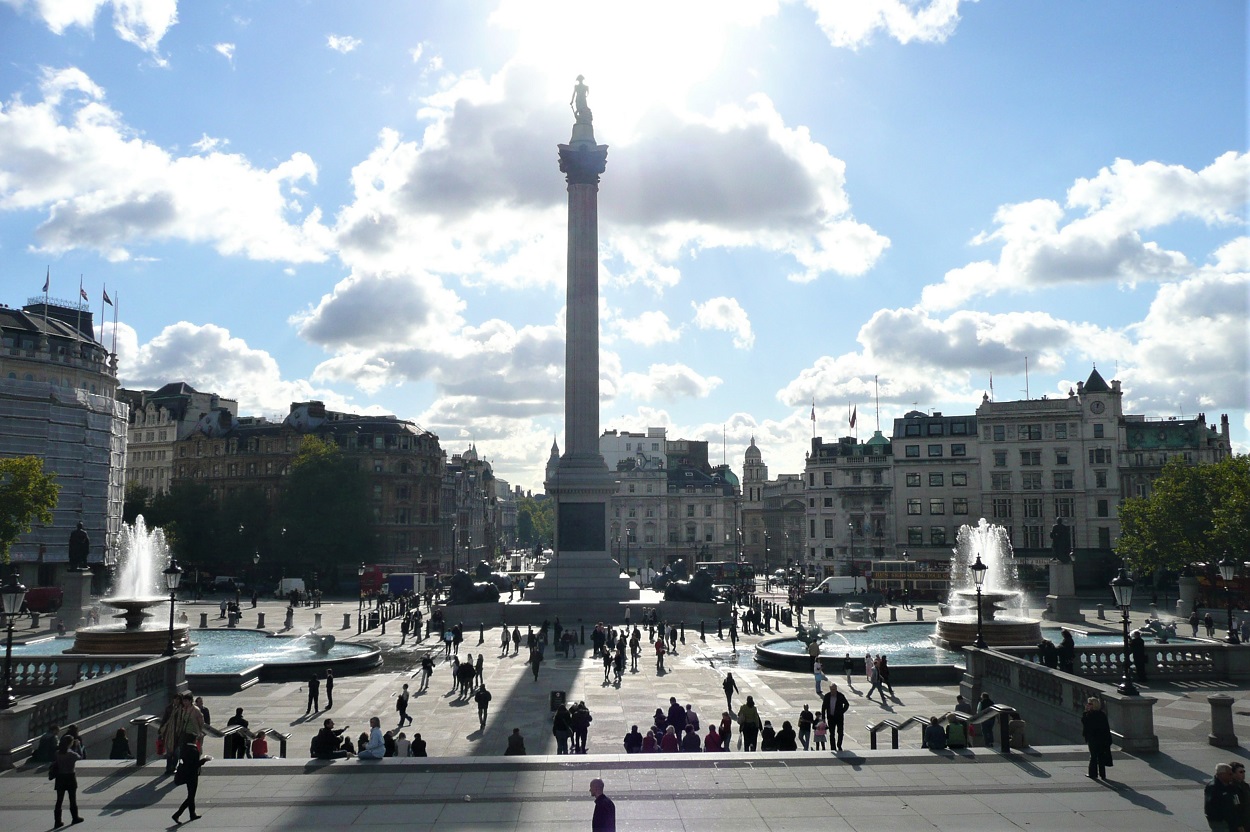
Nelson’s Column, Trafalgar Square.
“Nelson’s Pillar,” Dublin. The General Post Office ia at the extrme left edge of this photo.
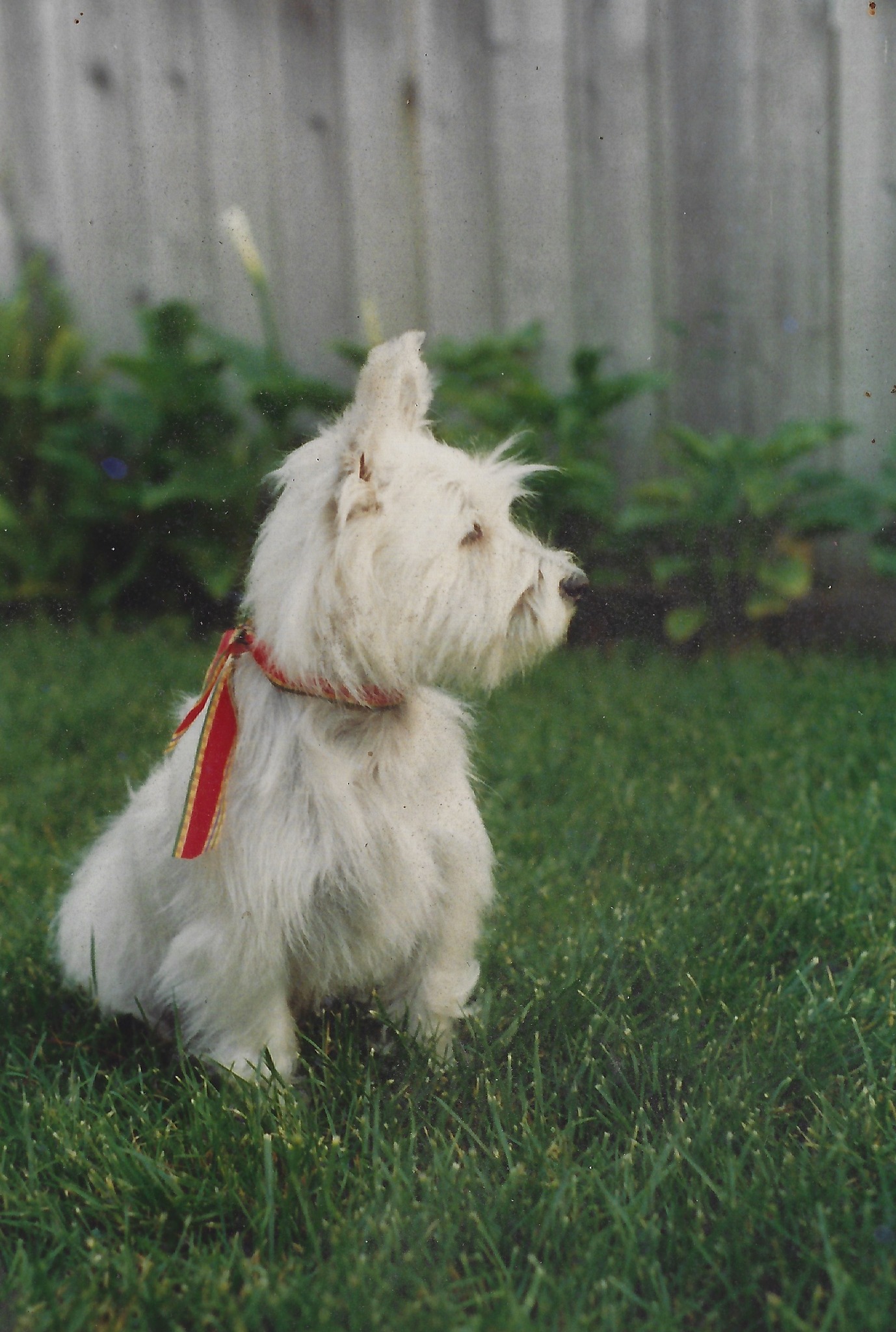
My doggie, Nelson, was a West Highland White Terrier.

And it’s only appropriate to close this piece with this song.


MAGA, 1764

12 Sunday Oct 2025

Posted by ag1970 in trump, Uncategorized

≈ Leave a comment

Tags

ancestry, family, Family history, genealogy, History

I love that Arroyo Grande—especially Branch Street Arroyo Grande—has an independent bookstore. My ego is happy because Monarch Books carries my books. We were waiting for a table to open across the street—my elder son’s and my younger sister’s birthdays—so I wandered across Branch to look for my books. I found them, but even I’m not so vain as to go into a bookstore and just looky-loo.

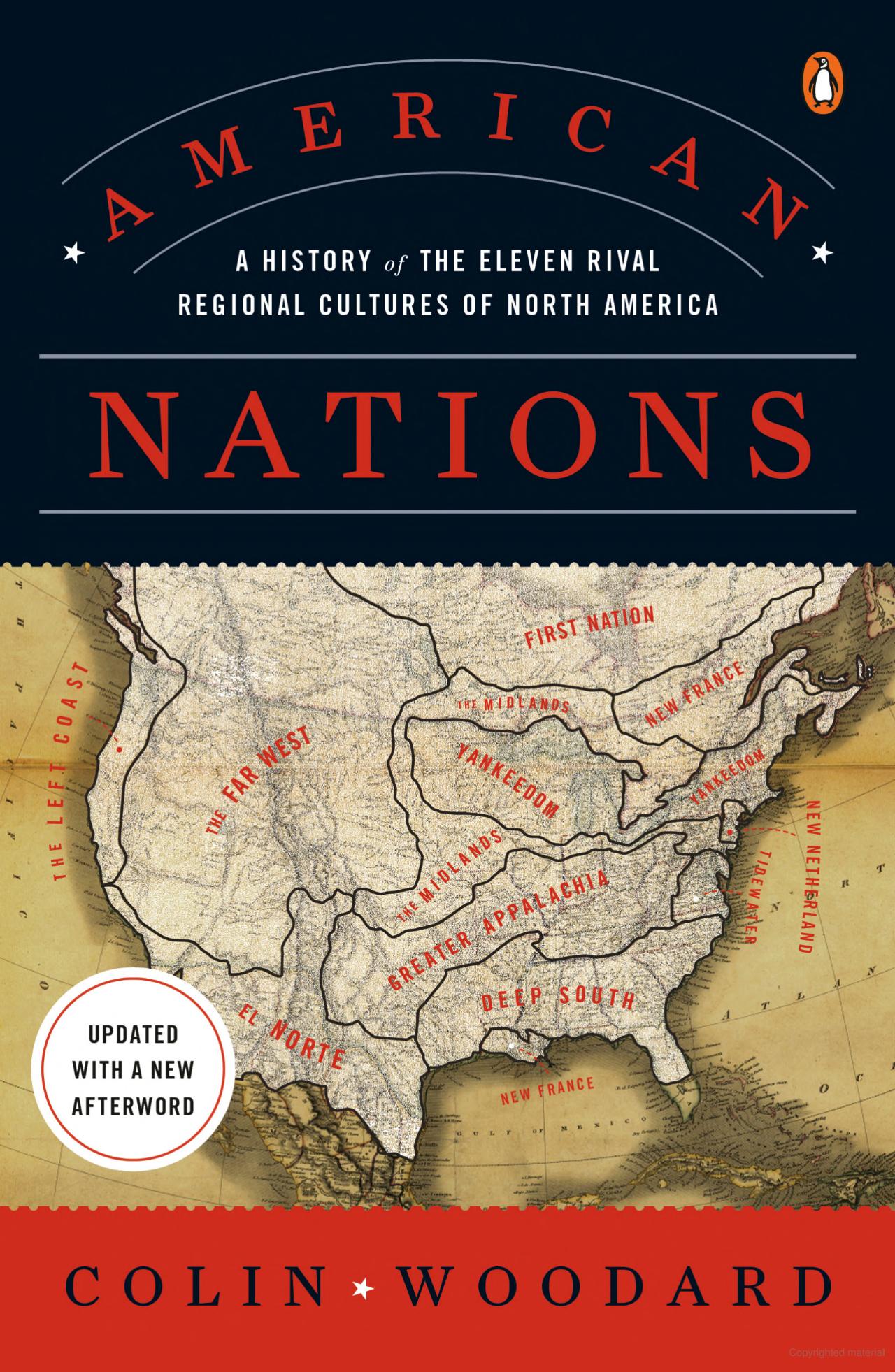
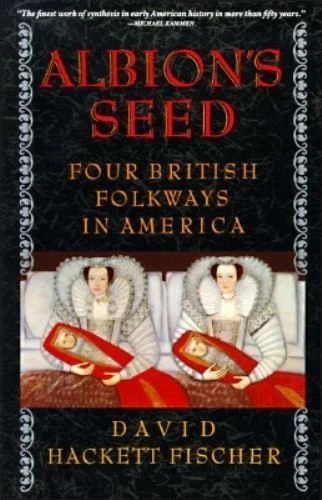
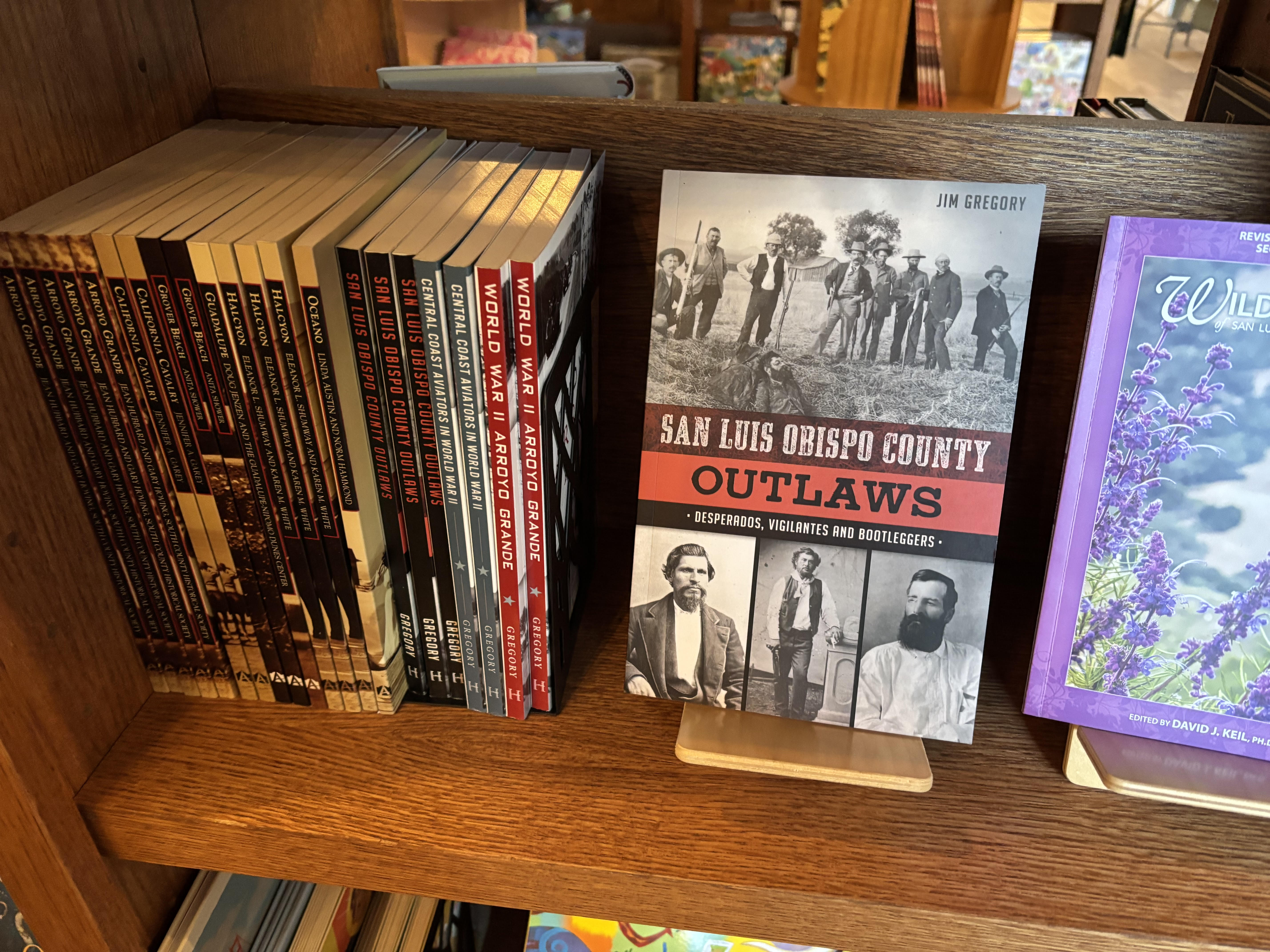
So I bought a book. This book.

I’ve only just started it, but it’s already one of the most extraordinary books I’ve read in years. I rarely start books at the beginning, so I dove into the first chapter about one of Woodard’s seven nations, “Greater Appalachia,” because my father’s family has roots there, planted firmly on Missouri’s Ozark Plateau.

It reminded me of another extraordinary book I read years ago. I shared excerpts from Albion’s Seed with my AGHS history students, again, partly out of vanity, because another part of my family, Episcopalians all, comes from a second nation in Woodard’s book, “Tidewater.” They lived in places whose names—Fredericksburg, Spotslyvania, Petersburg—would be known as terrible battlefields a century after their arrival in America.


One of them, a collateral ancestor, Roger Gregory, married Mildred Washington, the great man’s aunt, and that homely name has persisted in my family, down to my own Aunt Mildred, who preferred to be called “Bill.”

Roger eventually sold Mt. Vernon to Washington’s father. My family is not known for its real estate acumen.

But Albion’s Seed revealed that Tidewater Virginians socialized their children by teaching them dance. That tradition carried down to my grandfather, John Smith Gregory, allegedly the sweetest waltzer in Texas County, Missouri. John could make his partner believe that the sawdust-strewn floor at a barn dance was polished glass. Even in his fifties, his partners were usually teenaged girls, waiting patiently for their turn on Mr. Gregory’s dance card.

My grandmother seethed. What can I say about my Grandmother Gregory? When she visited us kids in Arroyo Grande, we hid her dentures.

Her fried chicken, however, was sublime.

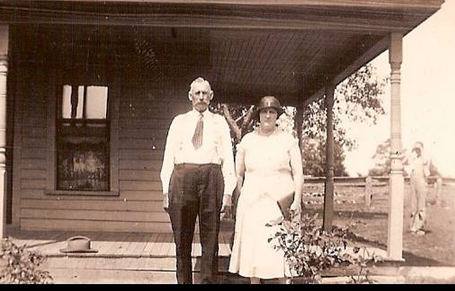
My grandparents, John and Dora Gregory, in front of the farmhouse. As you can tell, my grandmother–a delegate to the 1924 Democratic Convention in Madison Square Garden—was a hard woman to knock down in a windstorm. My dad is at right.

One day in 1933, she called my dad back to the farmhouse, which is still there, because he was barefoot. Dad was going to cross the road with Grandfather John to visit a neighbor. Grandma Gregory’s Scots-Irish pride would not permit a son of hers to visit Mr. Dixon barefoot.

So my grandfather, mostly deaf by then, never heard the speeding Ford roadster that killed him.

They let schools out the day of Mr. Gregory’s funeral.

There have been other books written about people like my ancestors, who migrated from the English Midlands to Tidewater Virginia, then Kentucky, then Missouri, until oil brought them to California. But other ancestors, like my Grandmother Gregory’s, came from Ulster or the Scots Lowlands, desperately poor, oppressed and spoiling for a fight. If they couldn’t get one in the British Isles, they’d be happy to start one in America. Woodard calls them the Borderlanders.

Former Virginia Sen. James Webb wrote Born Fighting, about the Scots-Irish military tradition in American history. Many of them, of course, marched in Stonewall Jackson’s “foot cavalry,” perhaps the finest infantry in the Victorian world, named for the rapidity of their marching. My Uncle Tilford’s middle name was “Stonewall.” So it goes.
And, of course, JD Vance’s offering was Hillbilly Elegy, a petulant book I started twice and then put down, never to return. I have started David Copperfield six times, and I will finish it because the book deserves it.

American Nations deserves a first reading and then many more.

To my shock, I discovered the echo of the January 6 people in the first chapter about “Greater Appalachia,” a region whose culture informs the Ozark Plateau.

REUTERS/Leah Millis/File Photo


Among the observations that Woodard makes about the people of Greater Appalachia, whom he calls the Borderlanders:

–They didn’t trust law courts. Justice, instead, was personal and retributive. The Hatfield-McCoy bloodletting is an example of a Borderland tradition that persisted long after their ancestors came to America.

–Within the group, Borderlanders did not tolerate dissent. Those, including kin, who violated the moral code, grounded in a cultural construct of reality, were dealt with violently.

–Borderlanders hated outsiders, most of all Native Americans, on whose land they squatted. When indigenous people resisted, the retribution visited on them was merciless, including the scalping of children.

–Because they’d been so exploited by absentee landlords in England, Scotland and Ulster, they despised city people, including those in Philadelphia, where a group took up arms, marched on the City of Brotherly Love (even Philadelphia’s Quakers took up arms) and were turned back by cannon loaded almost to the muzzle with grapeshot and by sweet Enlightenment reasoning. Negotiation with Benjamin Franklin finally persuaded the insurrectionists, known as “the Paxton Boys,” to go home.
–While Borderlanders resented the wealthy and the powerful, they followed their own leaders, who rose to the top not because of their command of policy or sweet reasoning, but by the force of their personalities, their emotional appeal and the blandishment of their personal wealth. Disparities in wealth were enormous among these people, and they were tolerated. Woodard notes that the top ten percent monopolized land in AppalachianAmerica, while the lower half had no land at all.

It struck me, in reading the passage about the march on Philadelphia, that MAGA, as far back as 1764, has been an American tradition. Today’s movement, of course, is not ethnic, but it has the trappings—a sense of injustice, of entitlement, of envy and of incipient rage— the same forces that drove the Paxton Boys’ march on the city they despised.

I found some comfort in this understanding, which I hope is accurate, because, after all, we survived 1764.

There are other inklings of hope in my Borderland ancestry. I am named for and descended from two Confederate officers, one, a brigadier general (James McBride died of illness in 1862); the other, his son, Capt. Douglass McBride (my middle name), was vaporized by a Yankee artillery shell in Arkansas the same year.

You’d think we would’ve learned, except for my Uncle Tilford Stonewall Gregory’s middle name.

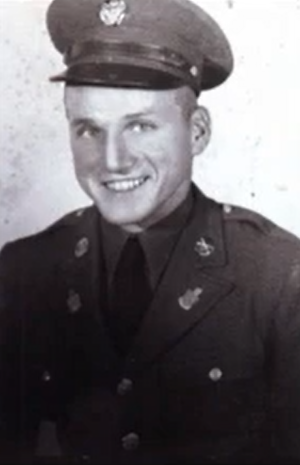
One of Tilford’s sons, Roy, was my cousin. When World War II came to America, Roy, from the Missouri Ozarks, joined the Army and became a member of the Oklahoma-based 45th Infantry Division. He would fight in Italy and Western Europe and was wounded twice—both times from shell fragments from the superb German field gun, the 88— and was recovering from the second when the Germans launched Operation Nordwind in January 1945, in support of the greater offensive in the Battle of the Bulge.

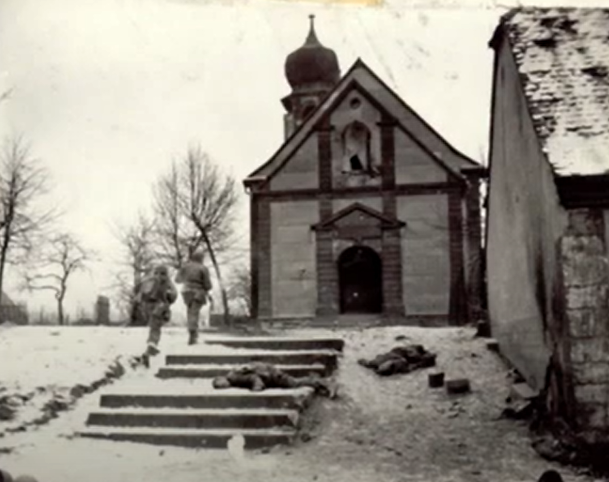
Roy, in recovery, was discharged from the hospital and sent to the front, to a French town, WIngen-sur-Moder, on the German frontier. His company was attacked by Waffen-SS mountain troops, soldiers who fought without mercy, and it was their artillery that finally claimed him. He died on the steps of the village church.

He came home to Greater Appalachia, to the Allen Cemetery in Texas County, Missouri, where his grave is not far from our Grandfather John’s, the sweetest waltzer in Texas County, Missouri.

My cousin, you see, was an Antifascist.

My cousin Roy; the church where he died.


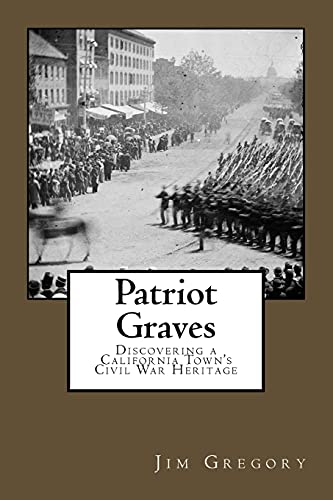
–Jim Gregory’s book Patriot Graves: Discovering a California Town’s Civil War Heritage, is about the sixty Union Civil War veterans buried in the Arroyo Grande District Cemetery.

Version 1.0.0

John Lennon’s Birthday

10 Friday Oct 2025

Posted by ag1970 in Uncategorized

≈ Leave a comment

Tags

History, john-lennon, Writing

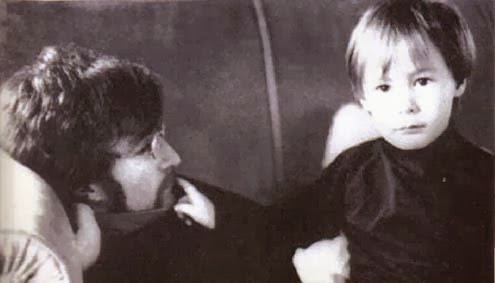
John and Julian, his elder son.

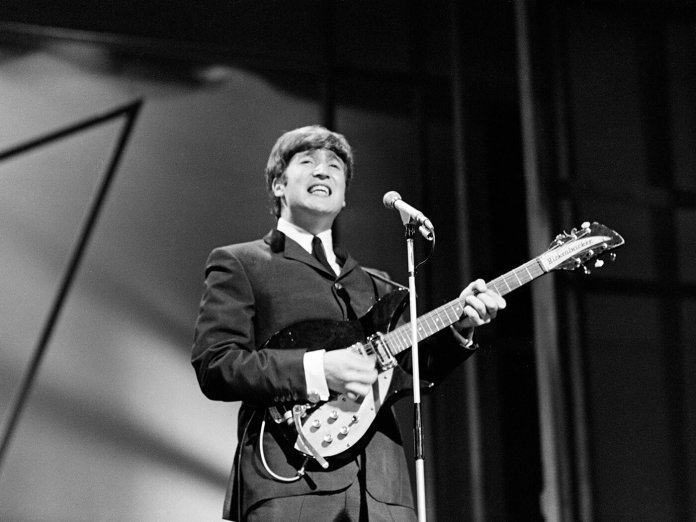
John Lennon was born on October 9, 1940, in Liverpool. The following month, the first round of raids from The Blitz, the Nazis’ attempt to pulverize England from the air, began. In an often merciful phenonmenon that neuroscientist call “infantile amnesia,” Lennon’s earliest memories, as he tried to sleep in the arms of his mother, would’ve been the detonations of Luftwaffe bombs, both muffled and instant, the fetid stink of human waste in the network of shelters designed to protect the port city’s workers and stevedores and their families, and, when the raid was over, he would’ve felt cold air and smelled the stink of burning buildings, burned Liverpudlians, and air made dense and moist by firehoses.

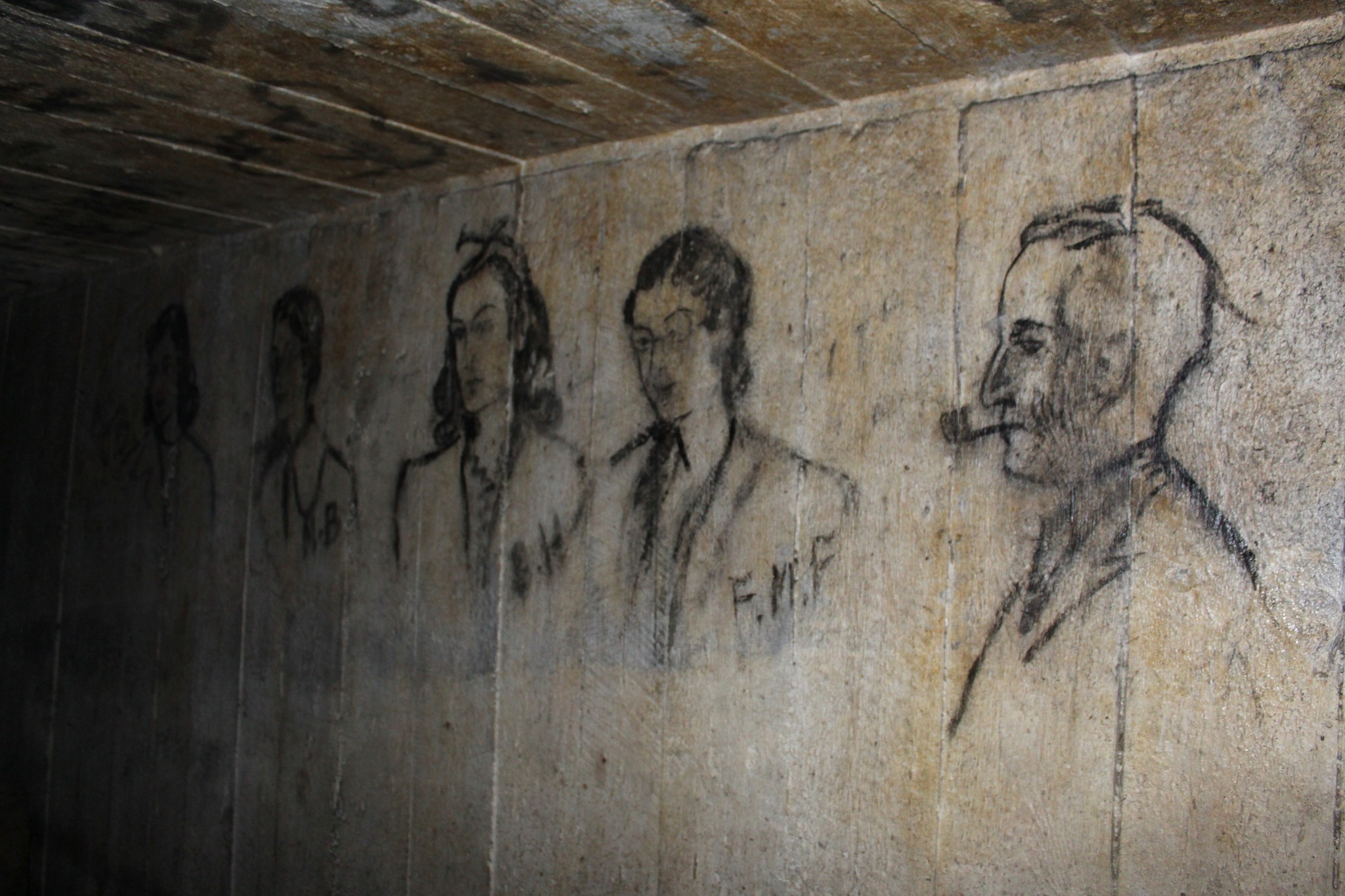
An artist of a different kind left his or her mark in this Liverpool air-raid shelter.


So that’s how Lennon’s life began.

John and Cynthia Lennon


His father, Alfred, was a merchant seaman; and the month John was born, U-boats sent 350,000 tons of Allied shipping to the bottom. The u-boats’ goal was to starve Great Britain, and, in 1940, they were winning. Alfred, also known as “Freddie,” wasn’t. He went AWOL in 1943, allegedly fleeing for stealing a bottle of beer, and the checks he sent to his little family stopped coming.

Freddie in the 1970s.

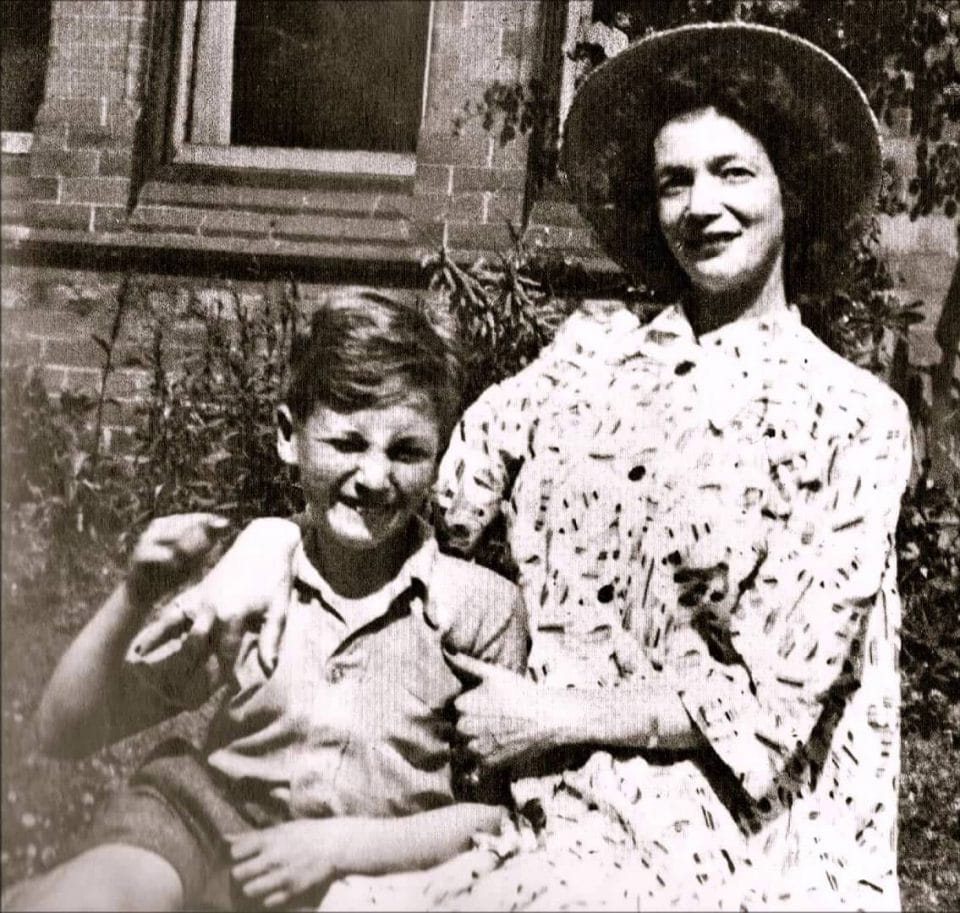
This means that John’s childhood would’ve been a meager one, and that included the love any little boy would’ve wanted from his parents. He adored him Mum, Julia, but she was more of a playmate—musical, as was Freddie, high-spirited, funny—than a real Mum. It was her sister, Mimi, who did the mothering when Lennon was five.

Julia was walking near Mimi’s house in 1958 when she was killed. She was run down by a car driven by an off-duty policeman. John succumbed to what he called a “blind rage” for the next two years, fighting and drinking.

But what Julia left behind for her son the guitar she bought for him. It was his first.

July 20, 1944: My role in the plot to kill Hitler

21 Monday Jul 2025

Posted by ag1970 in Uncategorized

≈ Leave a comment

Tags

germany, History, hitler, holocaust, july-1944-plot, politics, trump

Why can’t my generals be more loyal, like Hiter’s generals? Donald Trump to Chief of Staff Gen. John Kelly.

Hitler’s generals tried to kill him, and they almost pulled it off, Kelly replied.

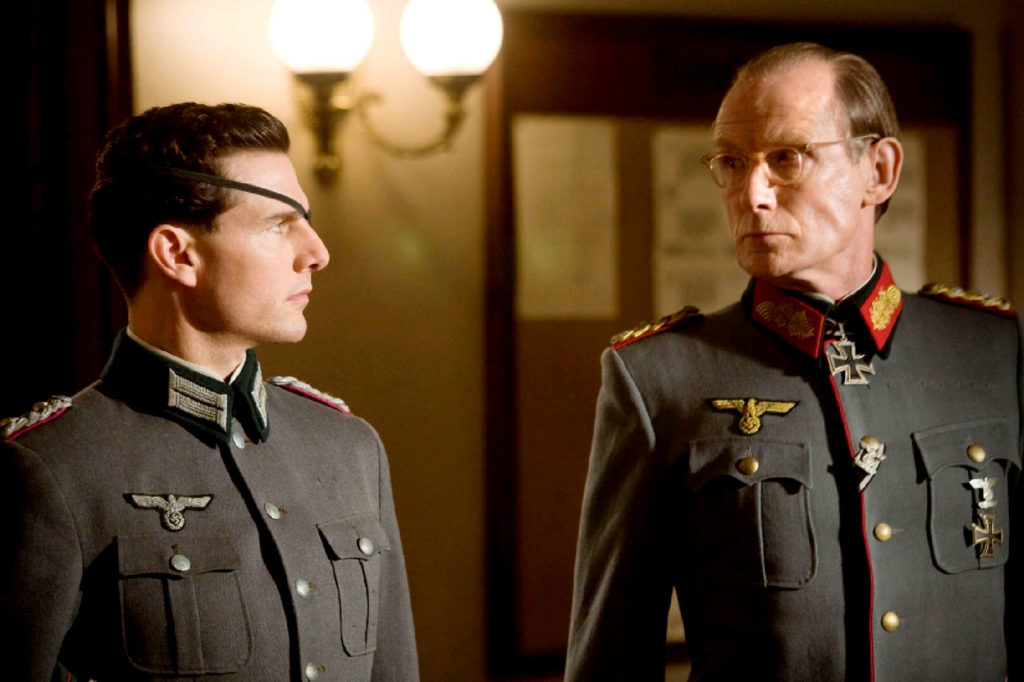
The most famous example of Kelly’s history, which is factual, as opposed to the President’s knowledge of history, which is nonexistent, is the July 20, 1944 bomb plot, engineered, as we all know, by Tom Cruise (Valkyerie), not my favorite actor, with an assist by Bill Nighy, who is.

The story is familiar to those who study history. Claus von Stauffenberg, a decorated German officer who kept losing parts of himself (one eye, one arm), was, like most of modern Washington D.C., disgusted with his nation’s leader. Unlike most of D.C., he was willing to do something about it.

At Hitler’s bunker in East Prussia, the Wolf’s Lair, Stauffenberg nudged a briefcase full of plastique under the map table to the edge of the Fuhrer’s kneecaps. He then discreetly left. Another officer, wanting a better view of the movement of the mythical panzer divisions–reinforced, equipped and sped into action across the map—Normandy at one end and the Russian frontier at the other, by Hitler, nudged the briefcase out of his way and behind a support that held the map table up.

The finicky offer painted the wall when the bomb detonated.

The Fuhrer had his pants shredded. Sadly, the explosion did not kill him at all.

Hours later, Stauffenberg was shot, the lucky fellow, unlike other senior officers, Bomb Plot plotters, who were hanged with piano wire, a procedure filmed and played for Hitler’s pleasure.

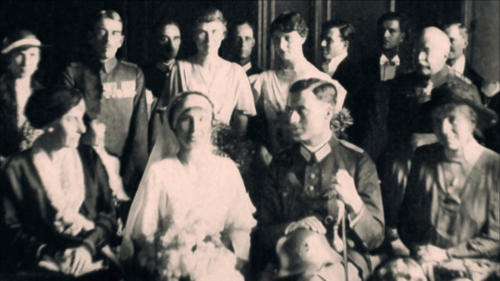
Claus and Nina von Stauffenberg in their 1933 wedding.


Our piano-wire days are not here yet, but we need to be patient. We’re firing already, nicely, on all eight cylinders of Gestapo.


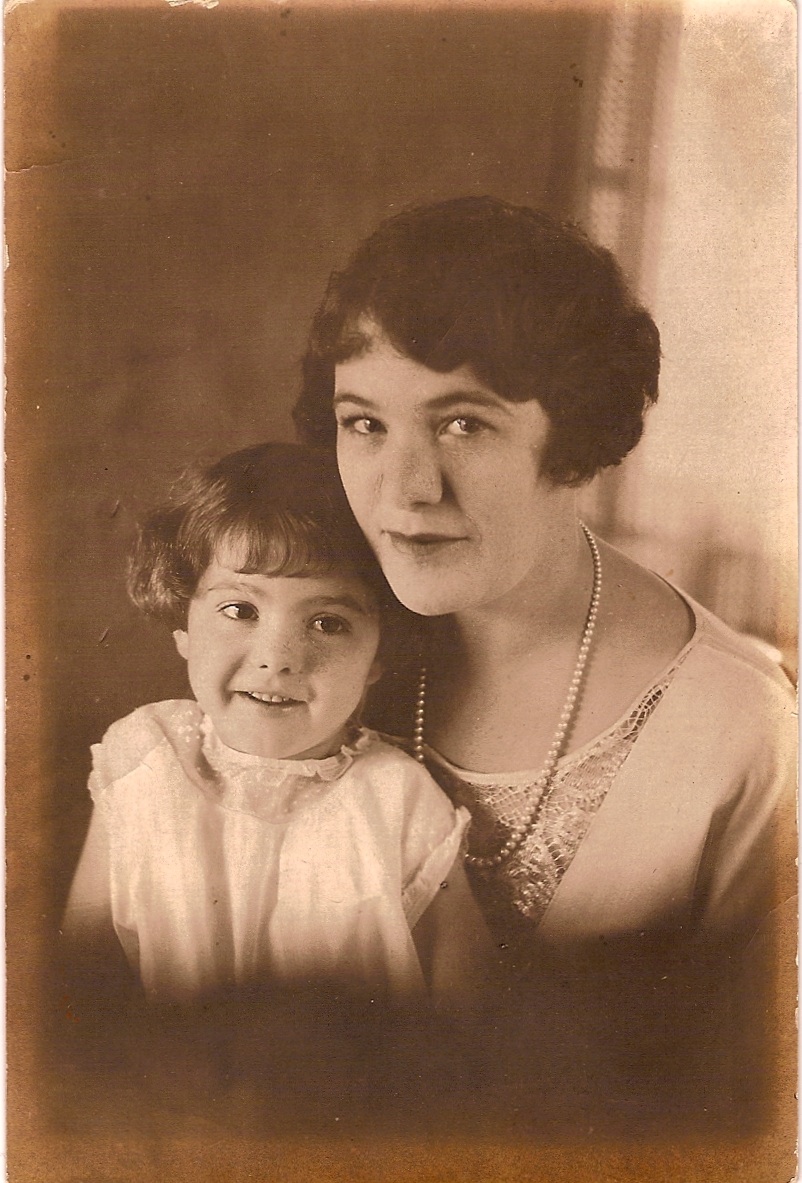
The doomed nationalist, Stauffenberg, was from Baden-Wurttemberg, and so were the ancestors of my beloved Grandma Kelly, whose maiden name (Kircher, from the word for “Church”) was blended with Irish blood, which may have led to two Irish husbands—one Keefe, a charming drunk and a car thief, my biological grandfather; one Kelly, a cop, my real grandfather.

My grandmother and my mother, circa 1925, about when the first Irishman, Ed Keefe, disappeared forever.

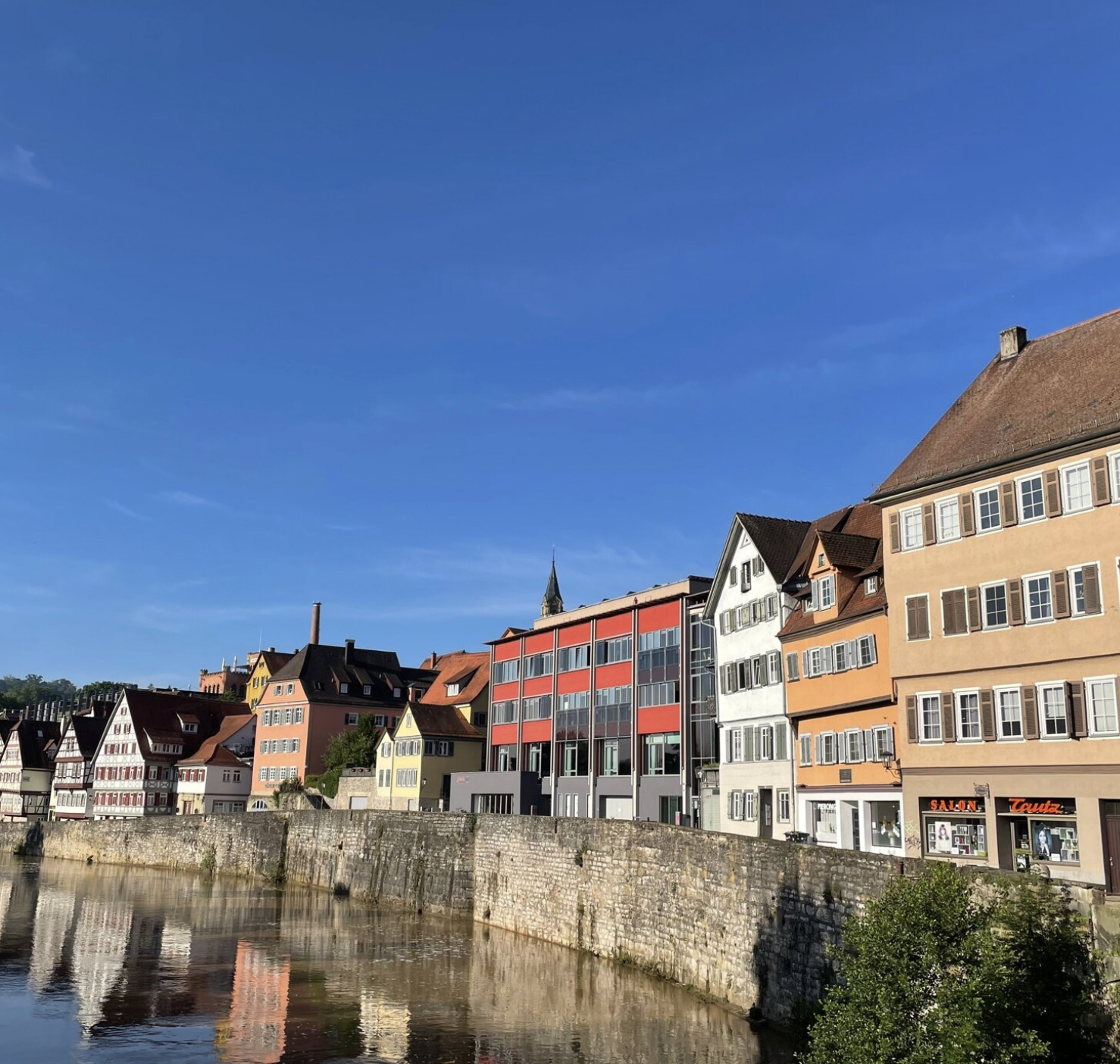
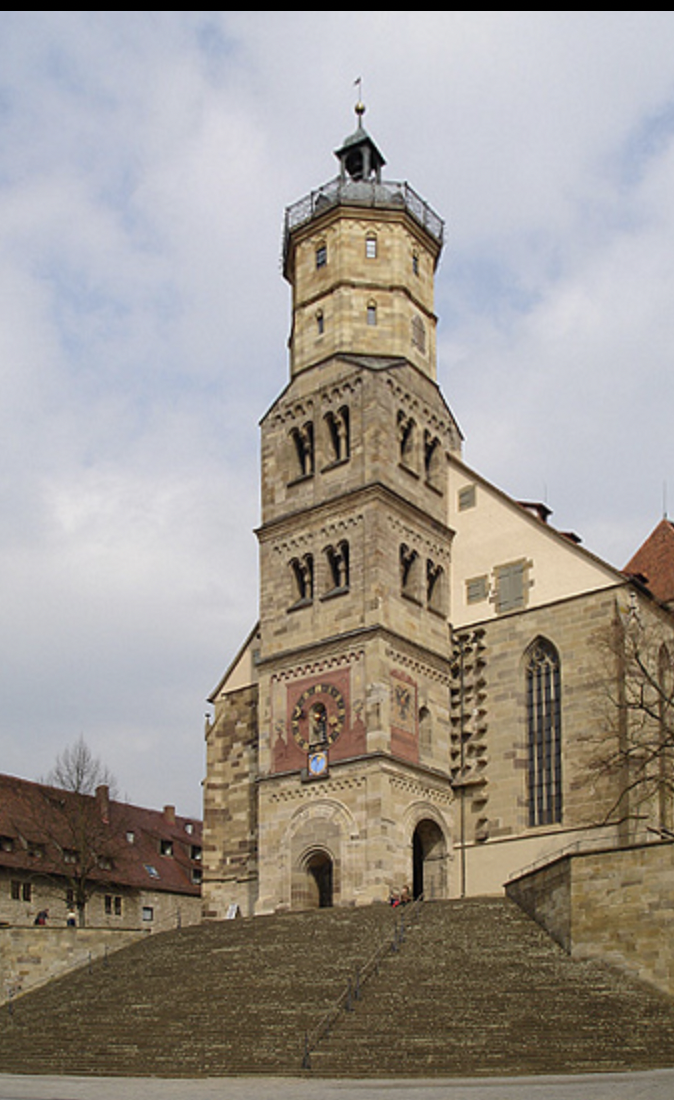
Baden-Wurttemberg, where the bomb plotter and a California gold chlorider (my Grandma Kelly’s father, Michael, who worked in a gold-processing mine and mill now beneath Lake Shasta) is stunningly beautiful.. On the left is the town where the Kirchers lived, until the 1830s; on the right is the Evangelical Lutheran church were Michen, my third great-grandfather, was baptized.

So there’s little chance that Stauffenberg and I are distant cousins. I wouldn’t mind it.

That’s not all. Oh, no.

Hitler was examined intensively after the bomb’s detonation had reduced his pants to crenelated culottes, There was not damage Down There, not that der Pilz des Anführers (“The Leader’s Mushroom”), a term suggested by porn star and Trump couplet and strumpet Stormy Daniels.

But up there? Here’s where I come in. I attended Stanford University.

Okay, for a week.

I studied the history of Depression, New Deal and World War II America with Dr. David Kennedy—an amazing man—who’d written the Pulitzer Prize-winning account of those years, Freedom from Fear. On one of our breaks—all of us high-school history teachers—we toured the Hoover Institute.

To refresh your memory, Hoover accomplished this in the 1932 presidential election (in red).


He was succeeded, of course, by some fellow from upstate New York who gave my teenaged father a job in relief work, distributing food to proud Ozark hill people whose starvation, briefly, overcame their pride, who sent CCC teenagers from New York City to Arroyo Grande to reclaim the soil that had been devastated by erosion, whose federal employees built school buildings extant in Arroyo Grande, whose vice president appointed my father to Officers’ Candidate School during World War II, whose tour of Camp Lejeune in December 1944 was guided by a Marine, a motor pool driver, a sergeant, a woman, from nearby Oceano, California, who’d lost her brother two years before on Tarawa.

Thelma and George Murray, in a composite made for their mother after his death.
Murray’s body, and the graveyard of his Marine brothers on Tarawa, disappeared. He was found and came home to his mother
–hie is now buried with her–in 2017.


So there’s all that.

The Murrays are all that. Our alleged president isn’t. He gives us nothing, sacrifices nothing, cares nothing for us, deserves nothing from us.

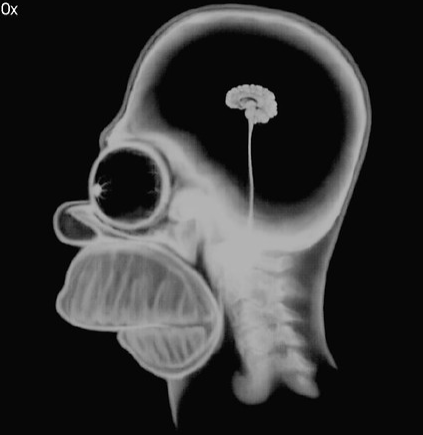
But at the Hoover Institute, an incredible repository, I was allowed to hold the X-ray of Hitler’s skull, taken after the misdirected explosion at the Wolf’s Lair this day in 1944. I have not seen an x-ray of our leader’s skull, but I have seen this one.


What I’ve seen instead, and just in the last few days, are President’ Trump’s ankles. They are grossly swollen, explained away glibly by the latest of his snake-oil doctors, like the one who proclaimed him the fittest man ever to occupy the White House.

But I’ve learned not to take his doctors’ word for anything. A more hopeful explanation, after a steady diet of Big Macs, incinerated New York steaks, gray inside, and colored only by Heinz ketchup, Kentucky-fried buckets whose grease is wiped clean on the armrests of Air Force One, double Mar-a-Lago helpings of chocolate cake with ice cream—he eats piggishly in front of his guests, allowed slivers of cake—complemented by exercise that consists of driving a golf cart across painfully manicured—by immigrants–putting greens. So there is a good chance that those bloated ankles portend congestive heart failure.

And, with God’s help, and may it be soon, the arteries that supply his heart and his brain will collapse.

He will not die for awhile.

He will stare, silent and furious, just as Stalin did at his Inner Circle after his stroke—many of them were soon the be shot at the Lubyanka, the secret police slaughterhouse in Moscow—at the the White House eunuchs who’ve abetted his every aberrant behavior, most of all the predatory ones, and they will have nothing for him, nothing to save him from the drowning his cruelty has earned him.

The cruelty he’ll leave behind is vast and invasive. The healing will take years. The war that lies ahead of us will be the hardest we have ever fought. To fight it, we need to look beyond ourselves.


The Arroyo Grande Valley and its People

16 Wednesday Jul 2025

Posted by ag1970 in Uncategorized

≈ 1 Comment

Tags

Arroyo Grande, arroyo grande libary, arroyo-grande-history, Azorean Americans, California and the Great Depression, California and World War II, California Ranchos, Dorothea Lange, education, Filipino Americans, History, History Center of San Luis Obispo, Immigrants to California, Japanese Americans, Mexican Americans, south-county-historical-society

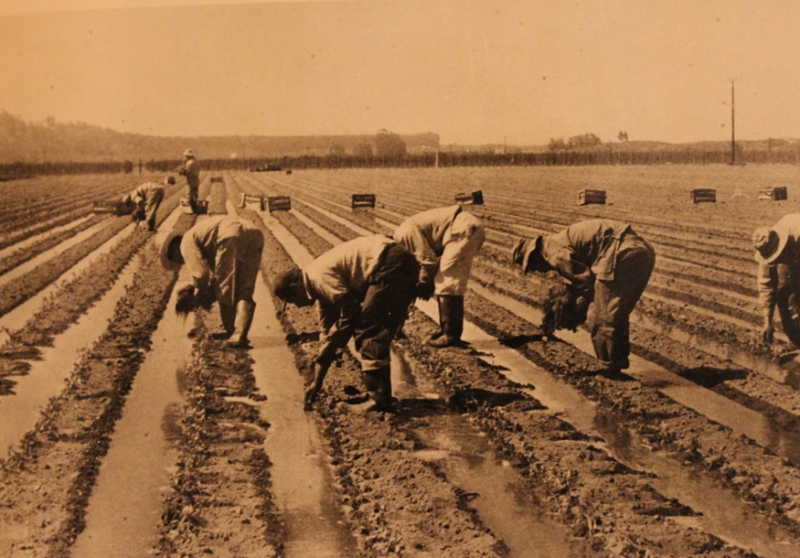
Japanese American farmworkers planting seedlings in the Lower Arroyo Grande Valley. Pismo-Oceano Vegetable Exchange.

It’s just a first draft, and it’s not Hollywood Production Quality. But this presentation draft, to be given in final form next Saturday, is still very close to my heart.


Irish v. Irish

21 Saturday Jun 2025

Posted by ag1970 in Uncategorized

≈ Leave a comment

Tags

History, ireland, poetry, theatre, travel

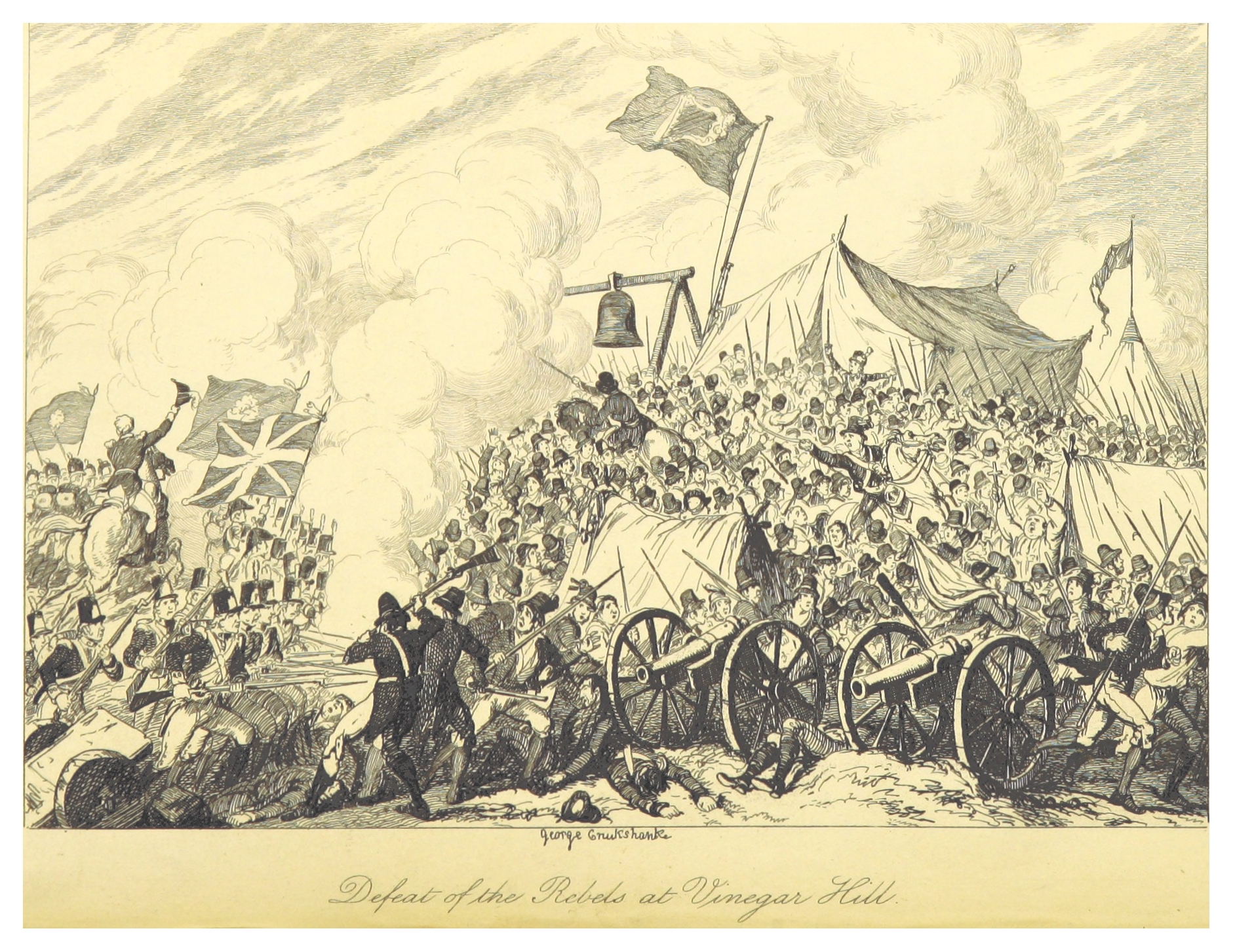
Today is a sad day for Irish nationalism. The culmination of the Wolfe Tone rebellion in 1798—planned with the hope that the French would intervene against England—was a humiliating defeat at the Battle of Vinegar Hill, June 21, 1798. The illustration below, by an artist George Cruikshank, depicts the defeated Irish (1,200 dead and wounded to England’s 100) and they are terrified. Justly so. British soldiers were disciplined, trained with brutality, and so remorseless. The Americans, twenty years before, had the magic formula, including foreign help, which the French provided—but half-heartedly—to the rebels like those who died that day.

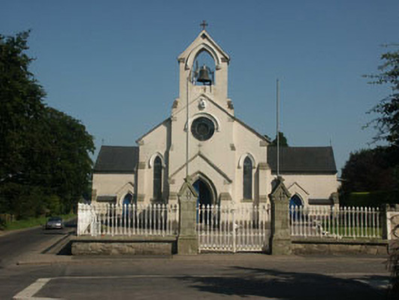
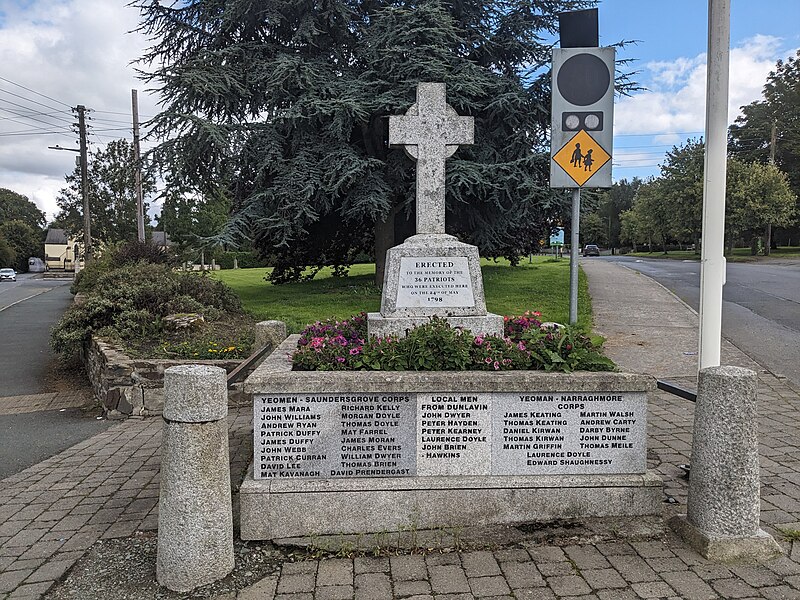
The month before, in what was called the Wolfe Tone rebellion, after its nationalist (and Protestant) leader, firing squads executed thirty-six suspected rebels, in front of their families, on the village green in Dunlavin, County Wicklow. Wicklow is where my ancestors came from. Twenty years after the firing squads, St. Nicholas Church (below) was completed. This is where my third great-grandfather, Hugh Keefe, was baptized in 1821. The church faces the Dunlavin green and the memorial to the executed.

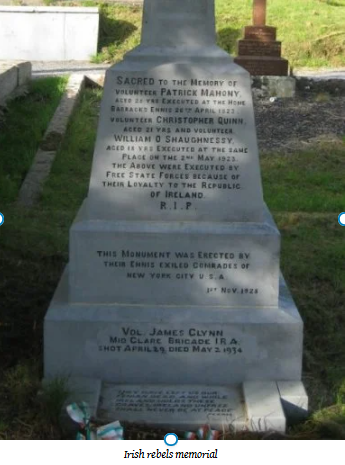
The executioners, as it turns out, weren’t English at all. The Yeomanry was the Irish paramilitary group, allied with England, that did the deed that day in May 1798. This pattern would continued for over a hundred years. The memorial below, from the 20th Century, is in County Kerry, where our friend Sister Teresa O’Connell is buried

This is what I wrote about this memorial in Sister Teresa’s cemetery:

Maybe it’s typical that this memorial was made possible by expatriates, Irish living comfortably and happily distant in New York. What it commemorates might be too painful to remember for the people who live in Ennis today. The four Irish Republican Army men cited on this monument were killed in the Civil War that followed the Republic’s creation, but not by the English. Three of the four were shot by firing squads made up of fellow Irishmen during the Civil War of 1922. Two were eighteen years old. They were Republicans executed by soldiers of the Irish Free State, the government that shot three times as many Irish revolutionaries in 1922 as the English had during the rising of 1919-1921.

One of the eighteen-year-olds wrote this on the eve of his execution:

Home Barracks, Ennis

Dearest Father,

My last letter to you; I know it is hard, but welcome be the will of God. I am to be executed in the morning, but I hope you will try and bear it. Tell Katie not to be fretting for me as it was all for Ireland; it is rough on my brothers and sisters–poor Jim, John, Joe, Paddy, Michael, Cissie, Mary Margaret–hope you will mind them and try to put them in good positions. Tell them to pray for me. Well father, I am taking it great, as better men than ever I was fell. You have a son that you can be proud of, as I think I have done my part for the land I love. Tell all the neighbours in the Turnpike to pray for me. Tell Nanna, Mary and Jimmy to pray for me, Joe, Sean, Mago, Julia, Mrs. Considine and family, also Joe McCormack, the Browne family, my uncle Jim and the Tipperary people which I knew. I hope you will mind yourself, and do not fret for me. With the help of God I will be happy with my mother in Heaven, and away from all the trouble of this world, so I think I will be happy...

…Dear father, I will now say goodbye – goodbye ‘till we meet in heaven.

I remain,
Your loving son,
Christ
ie

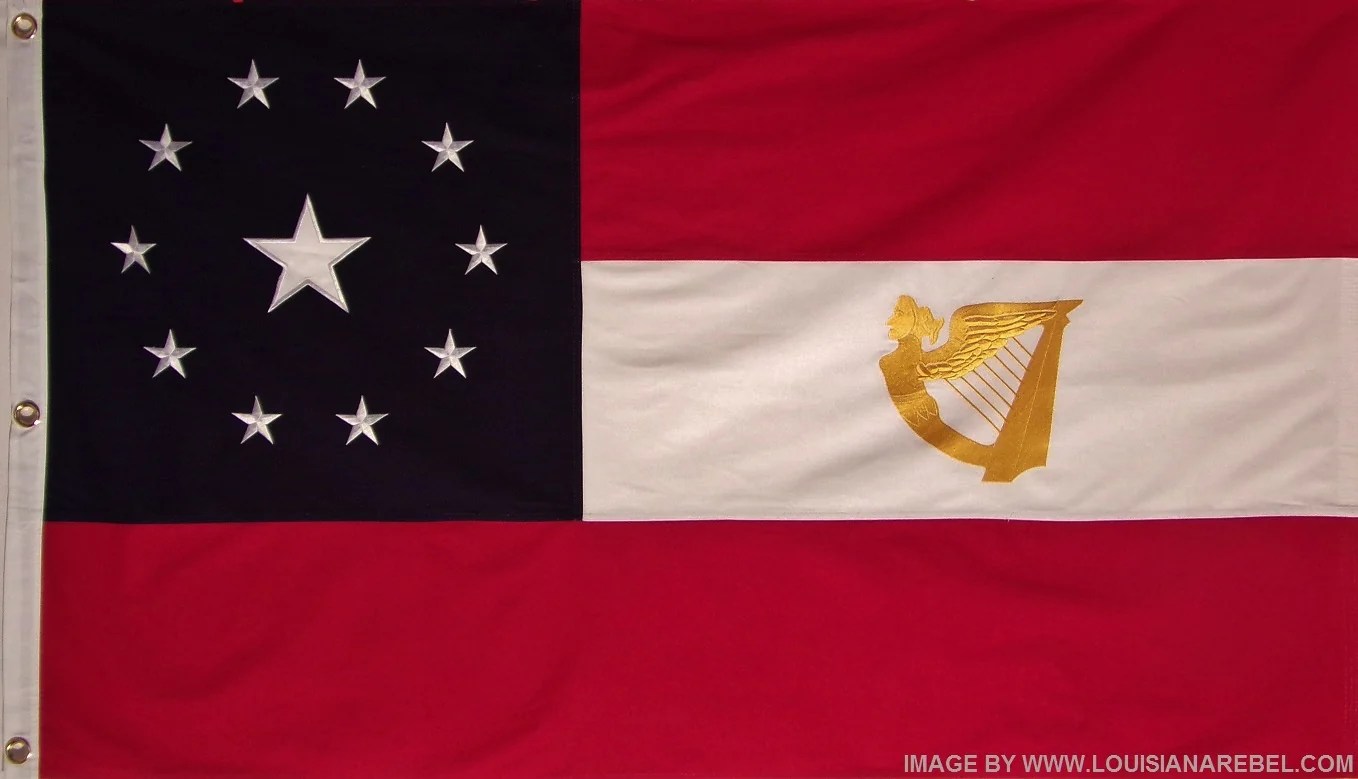
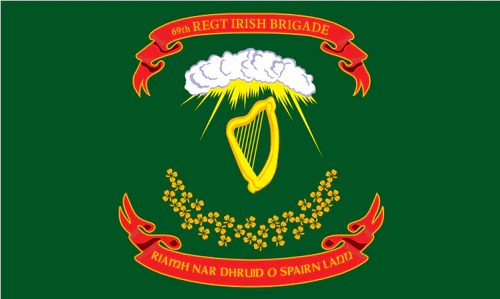
An Arroyo Grande resident, buried in our cemetery, fought in the 24th Georgia, recruited and raised in counties dense with Irish immigrants. There was a gold Irish harp on the 24th’s flag.

In December 1862, the Irish in the 24th repeated the terrible pattern from 3,000 miles away, from their homeland. This is what about I wrote about them and the Battle of Fredericksburg, transmuted into a short video.


This lovely little girl…

02 Wednesday Apr 2025

Posted by ag1970 in Uncategorized

≈ Leave a comment

Tags

ancestry, books, Family history, genealogy, History

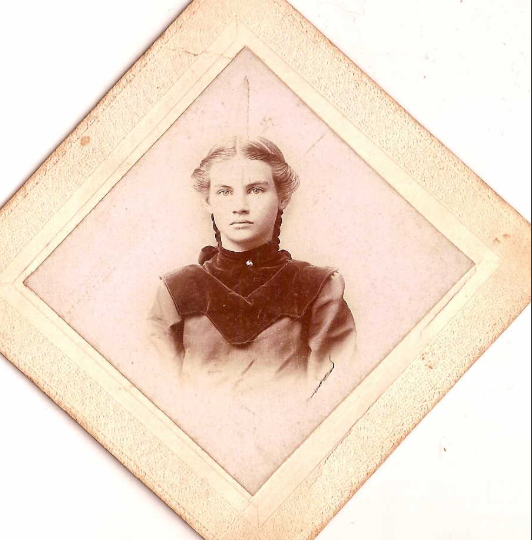
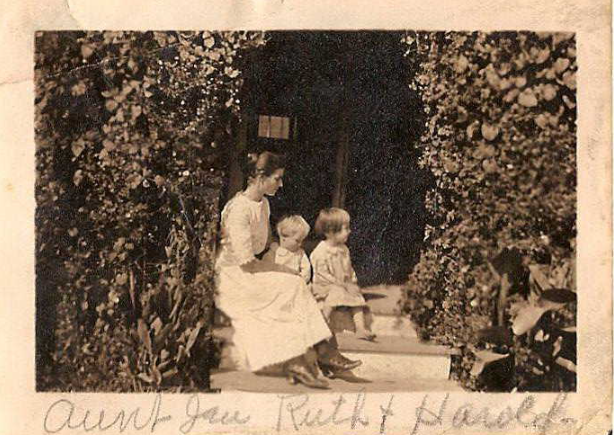
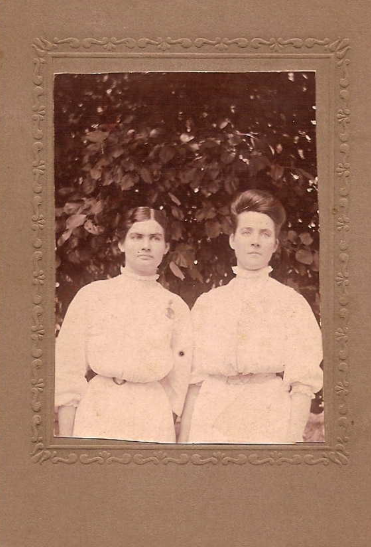
My Great Aunt Jane, or Jennie, or Mildred Jane Wilson, a name that has persisted, unfortunately ever since a collateral Gregory married the great man’s aunt, Mildred Washington. Even my Aunt Mildred Gregory preferred “Aunt Bill.” That’s Aunt Bill circa 1935.


But, you must admit, Great Aunt Jane, or Jennie, was an enchanting little girl. She was born in Licking, Missouri, in 1884 and died in Yellowstone, Montana, in 1978.

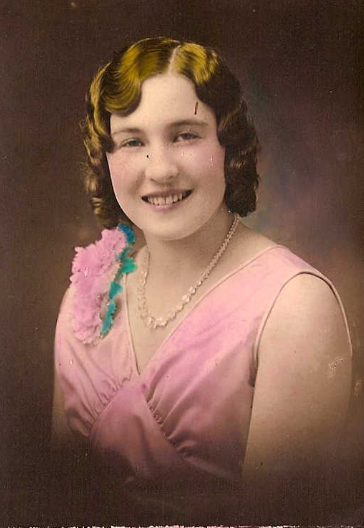
So that’s Jennie, then Jennie with my grandmother Dora (a year older), then Jennie with her husband, Mr. Kofahl, and daughter, Sally Ruth, (who died in Taft, where there are entire regiments of Kofahls.)

So that’s Jennie, then Jennie with my grandmother Dora (a year older), then Jennie with her husband, Mr. Kofahl, and daughter, Sally Ruth, (who died in Taft, where there are entire regiments of Kofahls.)

What disturbs me a little is that Jennie, such a lovely little girl, looks more and more like Rasputin.


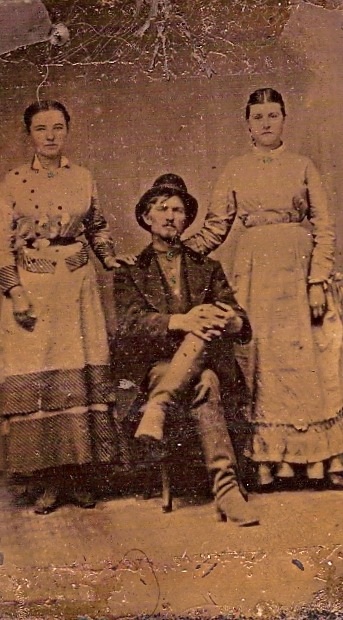
She did not get that from her mother—my great-grandmother, Sallie McBride Wilson. That’s Sallie, on the right, her sister on the left and my great-grandfather, Taylor Wilson, in the center. Sallie has such a sweet face; she died young and left Taylor the heartbreak he never got over. This photo, a tintype, was in a Texas County, Missouri root cellar for thirty-five years before it was restored to my father.

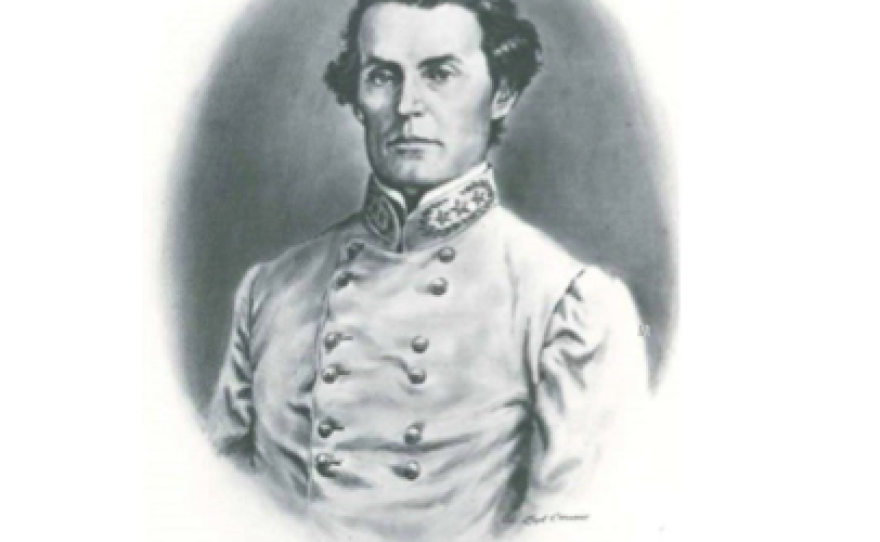
Then, good grief, I realized where Jennie’s expression came from. It wasn’t Rasputin. It was my Confederate ancestor, Gen. James McBride, for whom I am named. He was Jennie’s grandfather.

That’s the General’s look, which I always ascribed to chronic constipation.

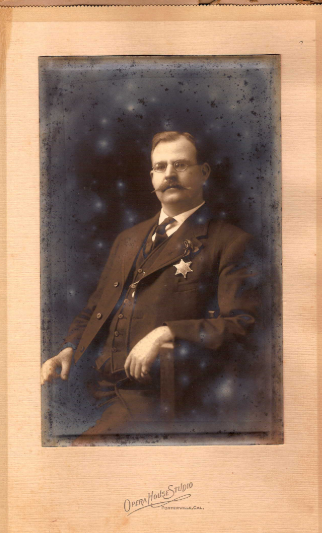
However, Jennie evidently was a wonderful mother to Sally Ruth, and her brother, Jim Ed Wilson, was the police chief of Shafter.

Missourians like two names.

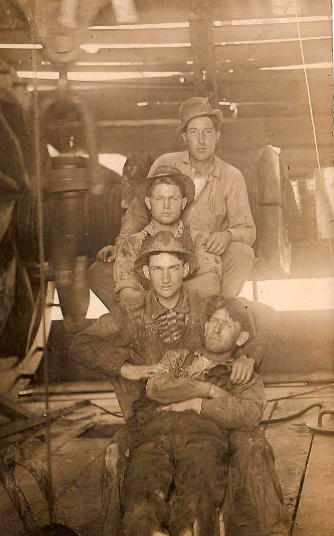
Three more Wilson brothers worked in the Taft oilfields–the top three in the photo. One of them, I think Cal, grew so frustrated with the camp cook that he threw him into a boiler. We have never ascertained whether it was lit. He must’ve been crabby, like the General.

Cal’s nephew, Robert Wilson Gregory, was stationed at Gardner Field in Taft—Chuck Yeager trained there—discovered that not only was the food terrible, but that the head cook was embezzling mess funds and serving substandard farm, when Army food was already awful, while pocketing the Army’s money. Busting the cook got Dad into Officers’ Candidate School.

Don’t mess with an accountant.

Or, I think, with Aunt Jane.


April 1945: Thank you for your service, Gordon Bennett

02 Wednesday Apr 2025

Posted by ag1970 in Arroyo Grande, California history, World War II

≈ Leave a comment

Tags

aviation, History, world-war-2, wwii

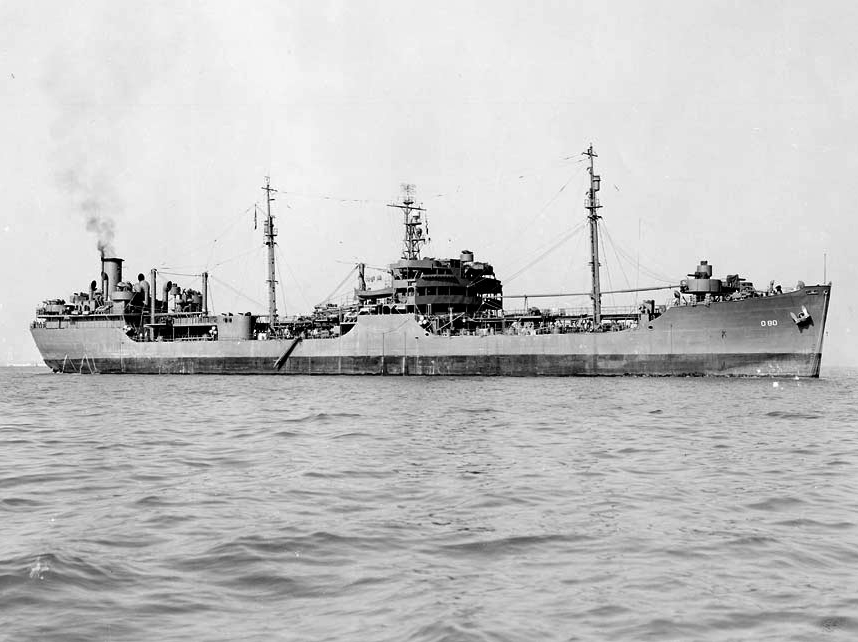
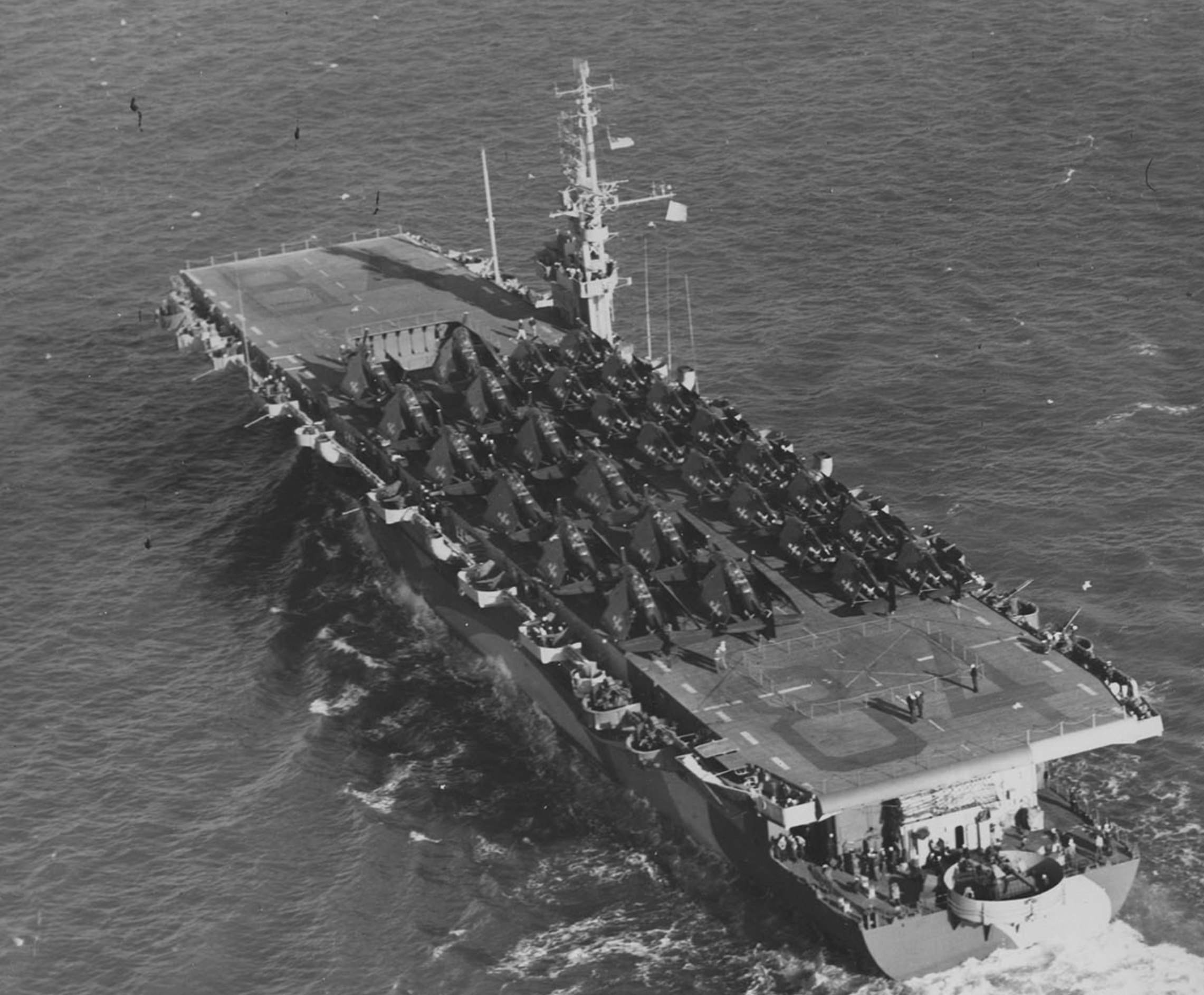
Gordon’s fleet oiler, USS Escambia

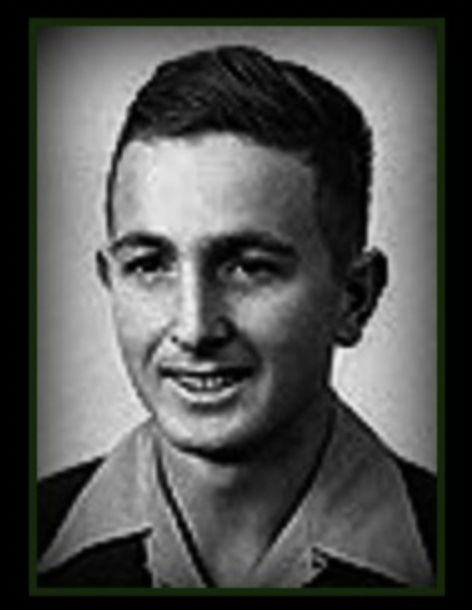
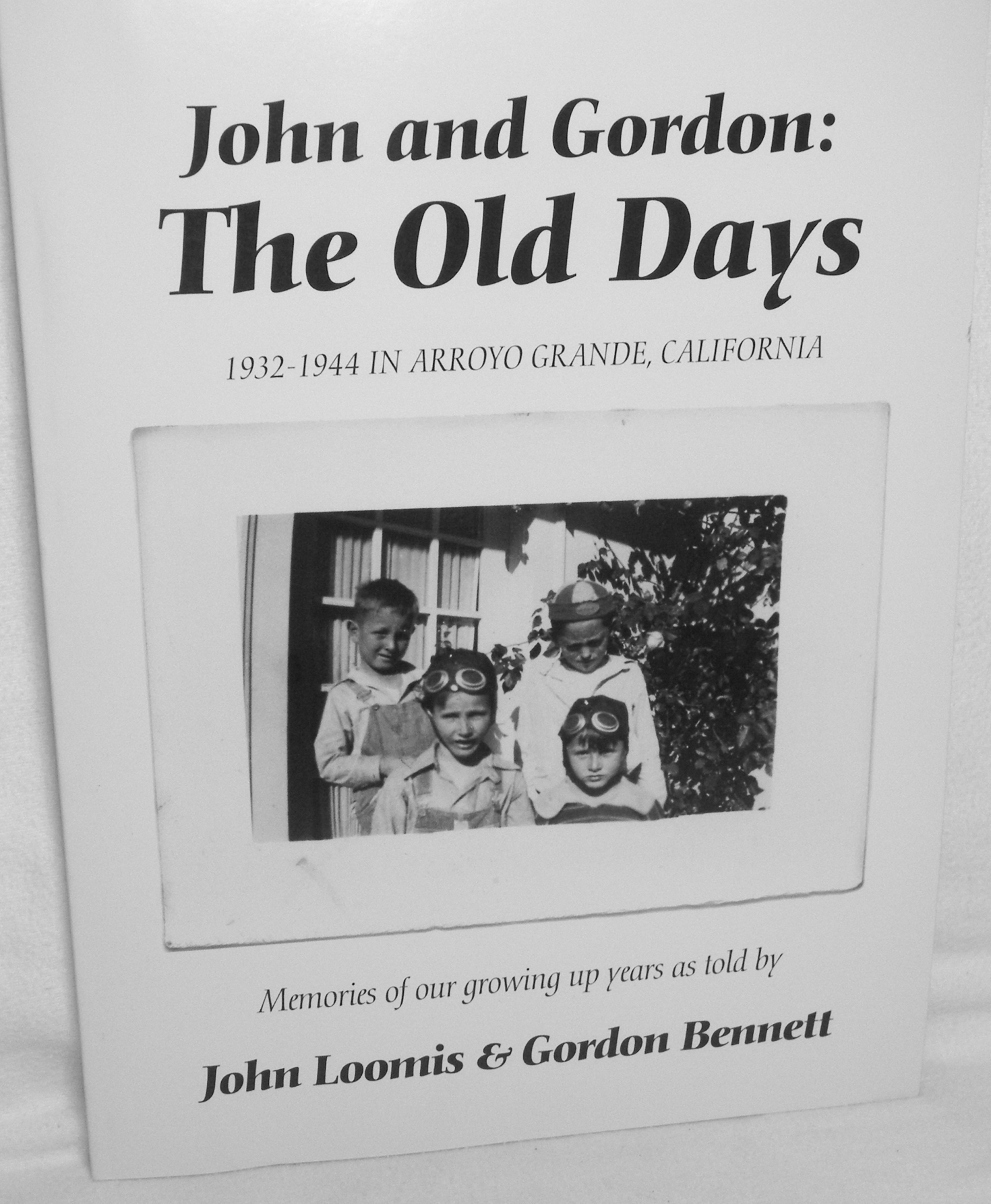
Gordon Bennett, Arroyo Grande Union High School ’44, was one of my students’ favorite guest speakers when I taught U.S. History at AGHS. He was a gifted storyteller with a sense of humor as dry as vermouth. My students and I loved hearing his stories about growing up in Arroyo Grande during the Depression and World War II.

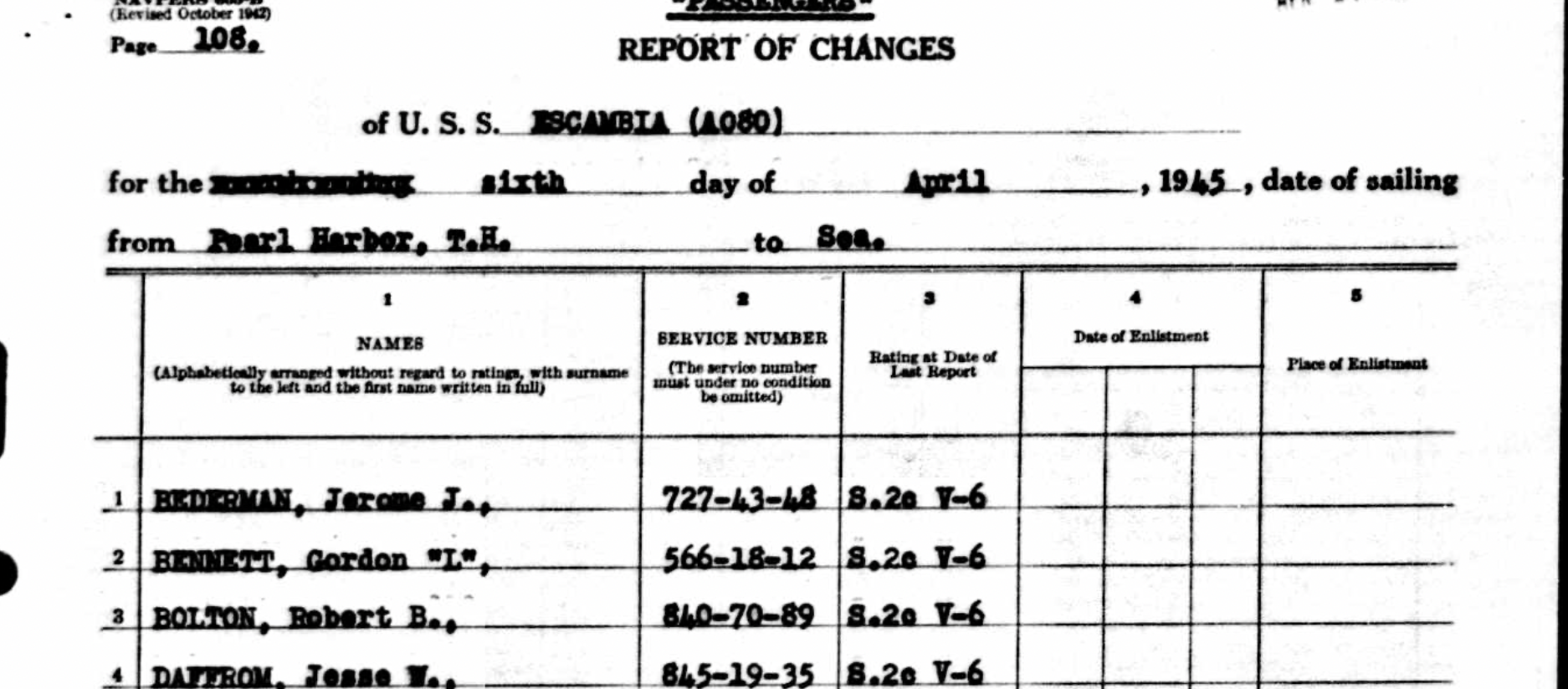
World War II was waiting for them when both Gordon and his cousin, John Loomis, joined the service. The two found themselves not that far apart during the Battle of Okinawa, which had begun April 1, 1945. John was onshore with the 1st Marine Division, Gordon offshore serving as a sailor on the fleet oiler Escambia (named after a river in Florida).

Gordon and his shipmates serviced escort carriers (small carriers that carried around thirty planes, like Emerald Bay (above), during the height of the kamikaze attacks off Okinawa. Thirty-four Navy vessels were sunk and over 280 damaged during the last, desperate battle of the war. The little carriers that were Escambia’s responsibility escaped and launched a series of airstrikes on the island. Both Escambia and Emerald Bay were based at Ulithi, where Gordon, according to legend, experimented in the distillation of medicinal beverages.

Above: The Ulithi anchorage; Gordon in high school; USS Escambia’s logo, designed by a Disney artist.

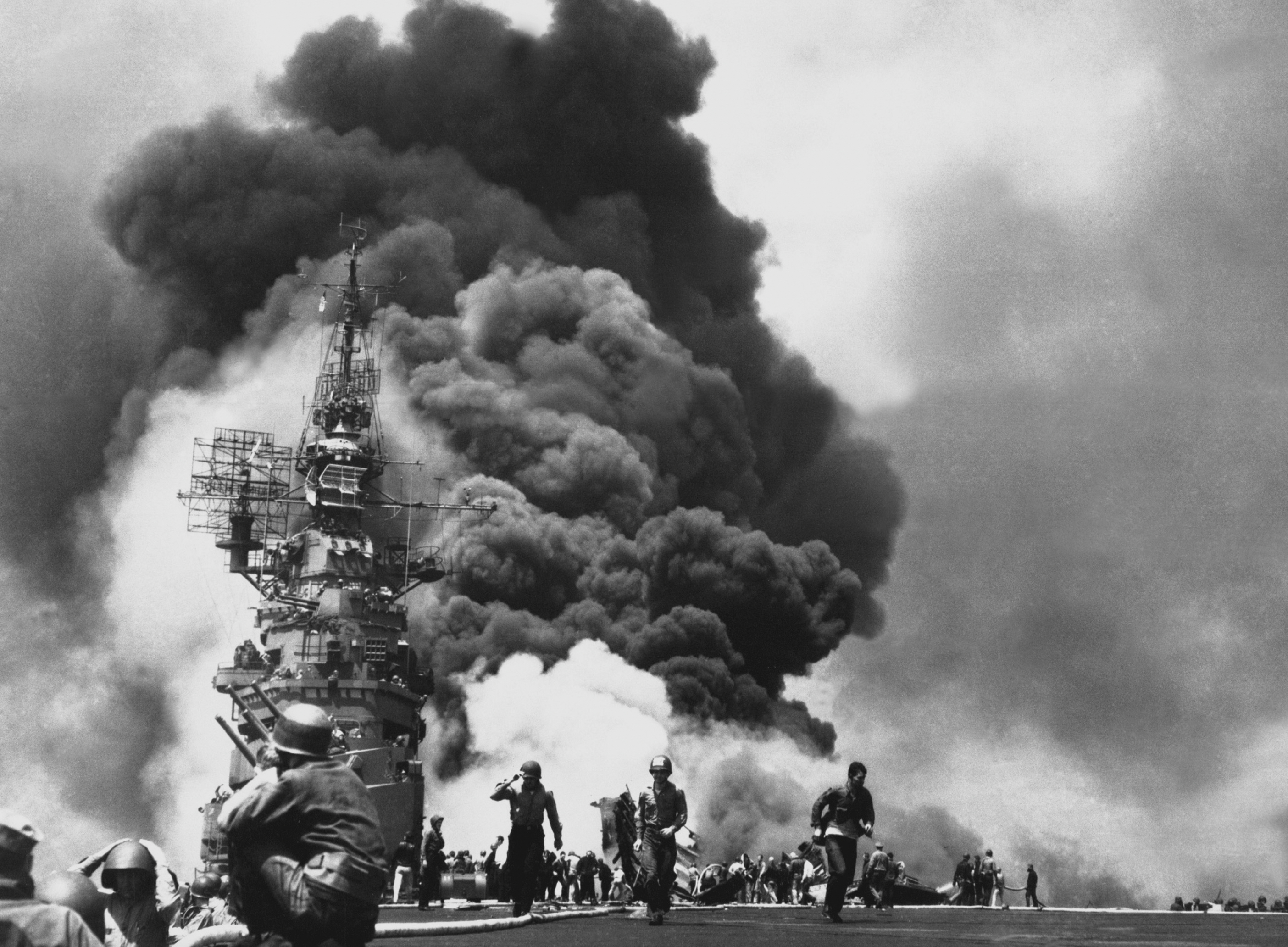
Which, given the ferocity of the kamikaze attacks, I might’ve sipped. The carrier Bunker Hill after once such attack, below.


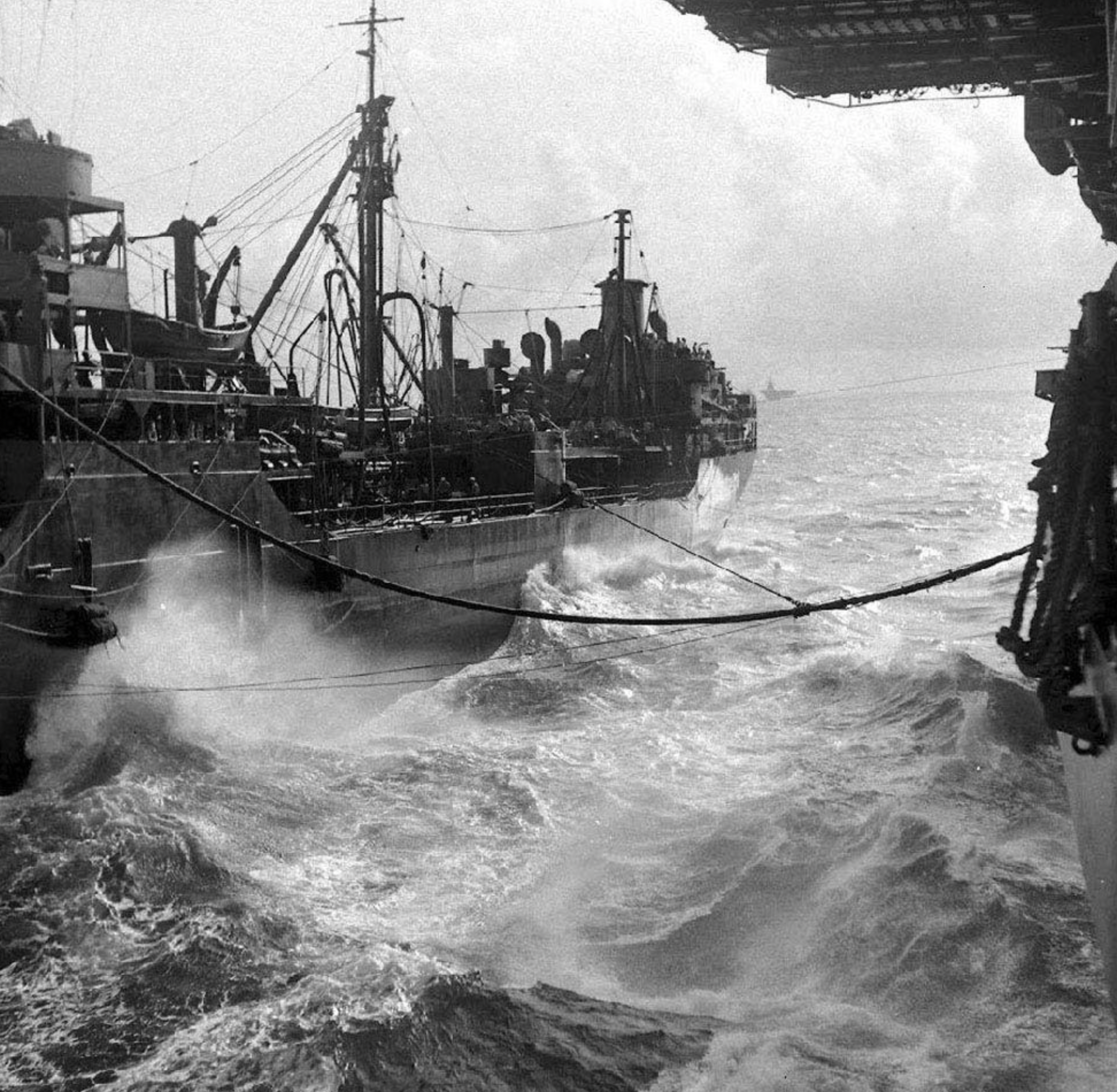
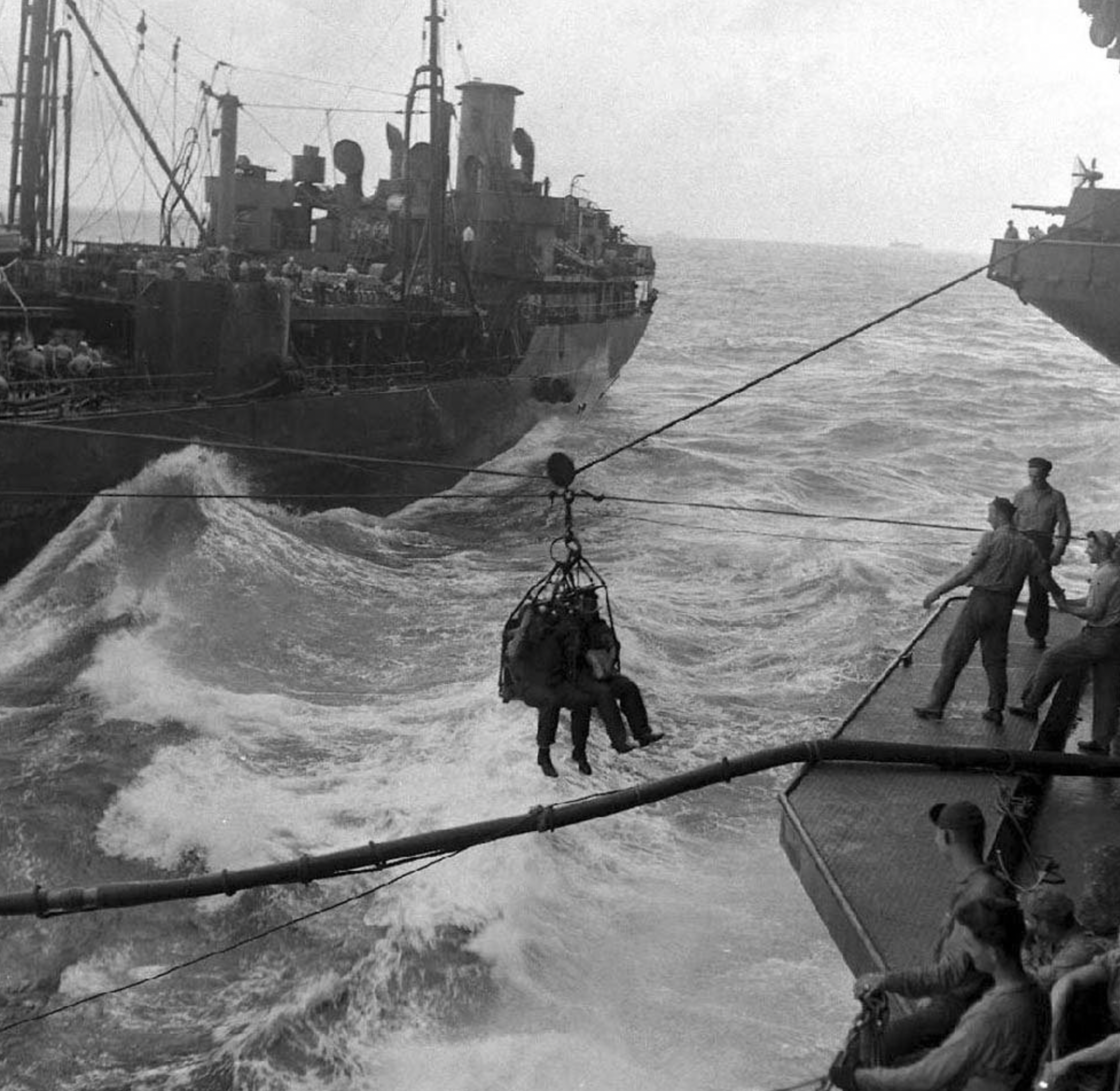
The sailors on the fleet oilers were tough men. Fueling at sea was smelly, dirty, and very dangerous. The two photos show a fueling operation between Escambia and the fleet carrier Ticonderoga in July 1945. The way Escambia sailors return to their ship, in that breeches buoy, does not seem safe to me, but my guess is that Gordon would have had his turn in the same kind of conditions.

Sadly, Escambia (below, about 1950) would be used by, of all institutions, the United States Army during the Vietnam War as an auxiliary power plant. Transferred to the Vietnamese government in 1971, Gordon’t ship was scrapped.

Happily, Gordon came home safe. So did his cousin, John. They had many years of storytelling ahead of them. Gordon, in my classroom, fueled the imaginations of the young people who were high-school juniors in 2003, just as Gordon had been in 1943.

(Below): Gordon’s obituary, which is enchanting.

https://www.legacy.com/us/obituaries/sanluisobispo/name/gordon-bennett-obituary?id=11810332

“My ancestors came here the RIGHT way.”

13 Monday Jan 2025

Posted by ag1970 in trump, Uncategorized

≈ Leave a comment

Tags

Family history, genealogy, History, immigrants

A father and daughter, “illegals,” drowned in the Rio Grande, 2019.

If you know history—worse, if you teach it, which steers you into confrontations you don’t want—your tolerance for ignorance dissipates. This quote is a favorite of ignorant people.

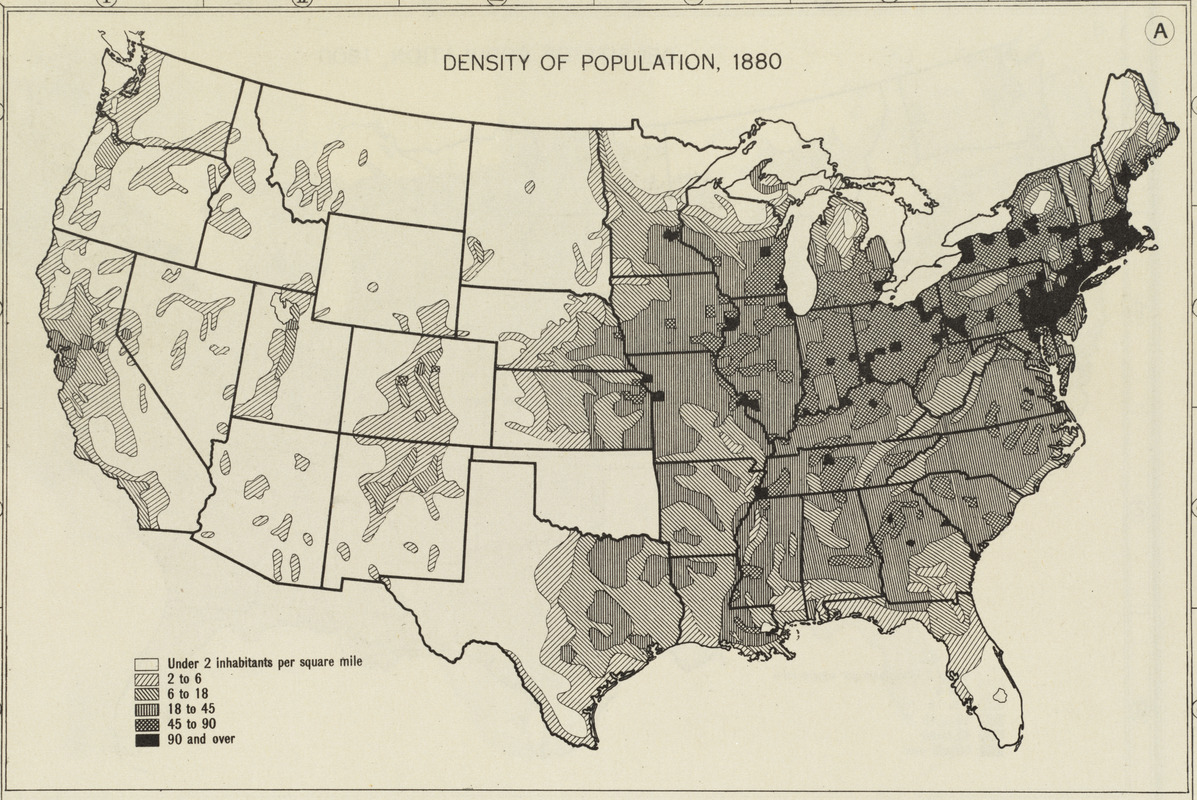
Of course your ancestors came here the “right way,” especially if they came between 1880 and 1914. We had another ten years before we would subdue the first immigrants—the Lakota people—at Wounded Knee, and we still had a vast continent to fill once we’d accomplished the extermination, or near-exterminations, that we’d always glorified, from Puritan sermons to the the pronouncements of the first governor of California to breathless newspaper dispatches from the Black Hills, and its gold deposits, in the 1870s.

So your ancestors—Italians, Poles, Russian Jews, Bohemians. Irish and the largest immirant group, Germans–were needed to fill the empty space in this map. Their influence remains: In Texas, there are many little towns where “Texas German,” is the second language. Missouri River towns have names like Versailles, Vichy, Hermann. In my hometown, Arroyo Grande, Califronia, what is now Cherry Avenue was dense with Bohemian families.

We were starved for people. Unless, of course, to use a few examples, you were Chinese (denied with the Exclusion Act), Japanese (The “Gentleman’s Agreement”) or Filipino (citizens and then, on a Congressional whim, not citizens. Filipinas were not allowed to come to America.)

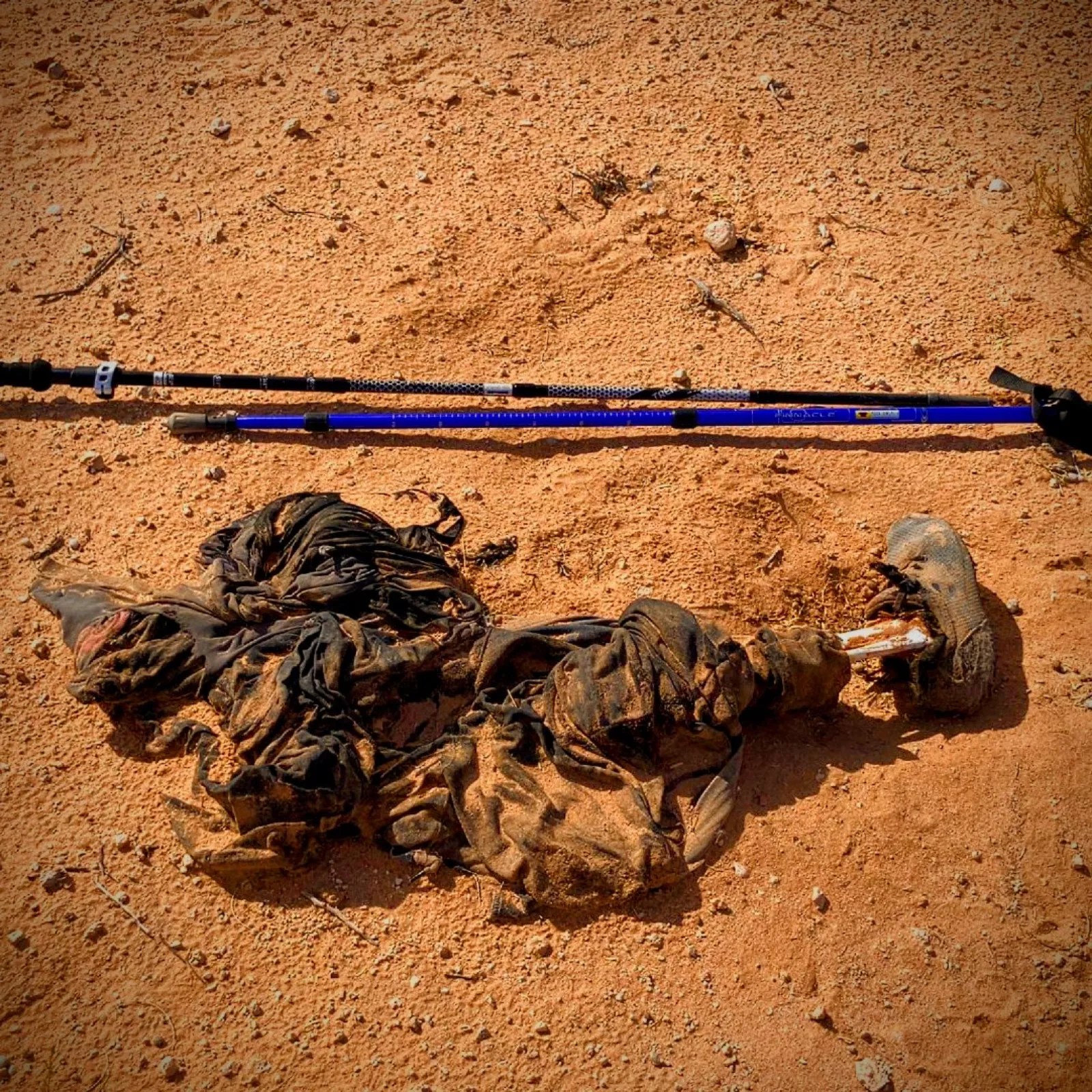
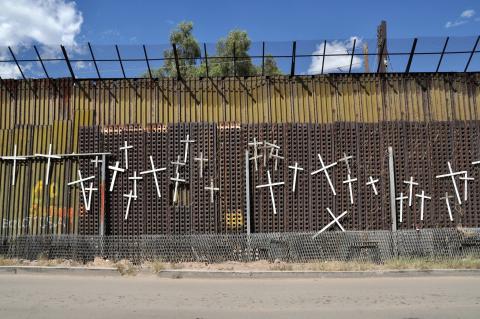
“Illegal Aliens” are driven by the same desires that motivated Italians, Russian Jews or the Irish: poverty, persecution, starvation. But not even the “coffin ships” that claimed so many Irish immigrants can compare to the agonizing deaths in our Desert Southwest today.

The great irony is that we are as starved for people now as we were in 1880. The vastness now is not calculated in land, but in the passing of Americans from my generation—the so-called” Boomers”—who, liked the migrants, leave nothing behind when they die: the American birth rate in 2023 was half that of 1957, in the midst of the Baby Boom. And the Boomers are retiring—or dying—so it’s we account who for the gap today, generational rather than geographical, that so closely resembles the emptiness between the Mississippi and the Pacific in 1880.

But these people are not welcomed, ostensibly because they came here the “wrong way.” They came here because death squads killed friends or family members, because climate change has reduced fields of corn to crisp rows resembling papyrus, because there are no jobs for young people in bifurcated economies marked by the vast divide between landowning elites and landless farmworkers.

What would you do in the same circumstances? Illuminate me.

How has history influenced my life?

25 Wednesday Dec 2024

Posted by ag1970 in Arroyo Grande, Uncategorized

≈ Leave a comment

Tags

arroyo-grande-history, History, history-center-of-san-luis-obispo, san-luis-obispo-county-history, south-county-historical-society

This is a first draft–most of it borrowed from other writing of mine–of remarks I’m to give for the History Center of San Luis Obispo on October 19 at the beautiful octagonal barn just south of town.

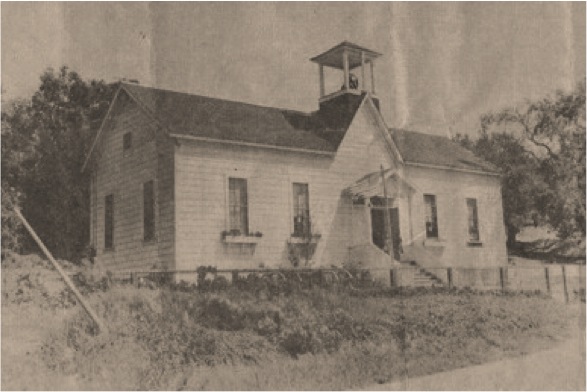
I began my formal education in a two-room schoolhouse in the Upper Arroyo Grande Valley that had been built in 1888. Some of our desks still had inkwells. A two-cubicle outhouse was our restroom. One day a mountain lion came down from the hill above the schoolhouse and sniffed around our baseball field.

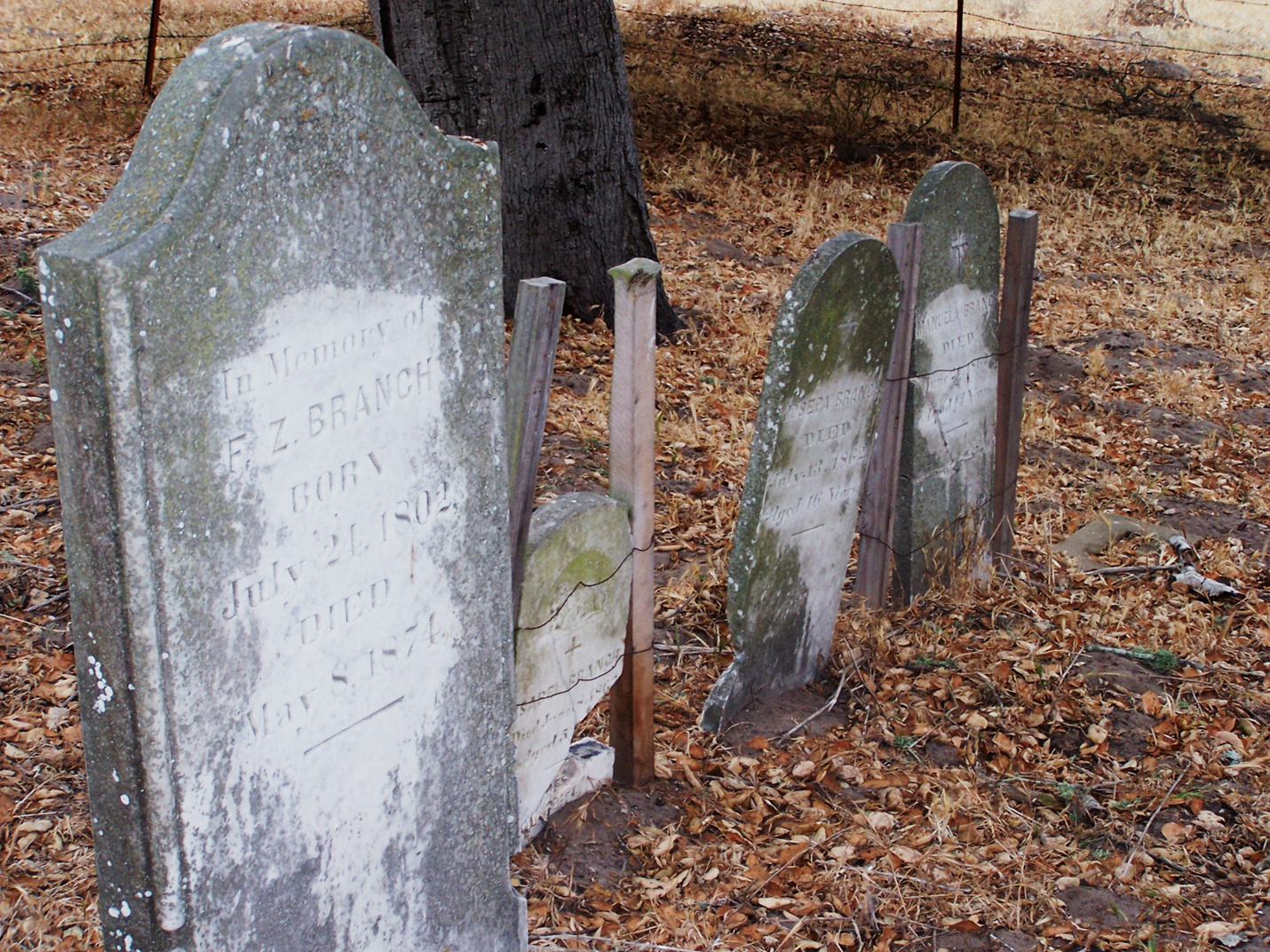
Just over the hill was a little family cemetery that contained the graves of the Branch family, rancheros and founders of Arroyo Grande. Mr. Branch, who died in 1874, is buried beside three daughters, all taken by smallpox in the summer of 1862. And nearby are the graves of a father and son, suspected killers, lynched from a railroad trestle over the creek in 1886.

I had no choice but to become a history teacher. Later, I had the chance to write books about the history—local history—that I love so much.

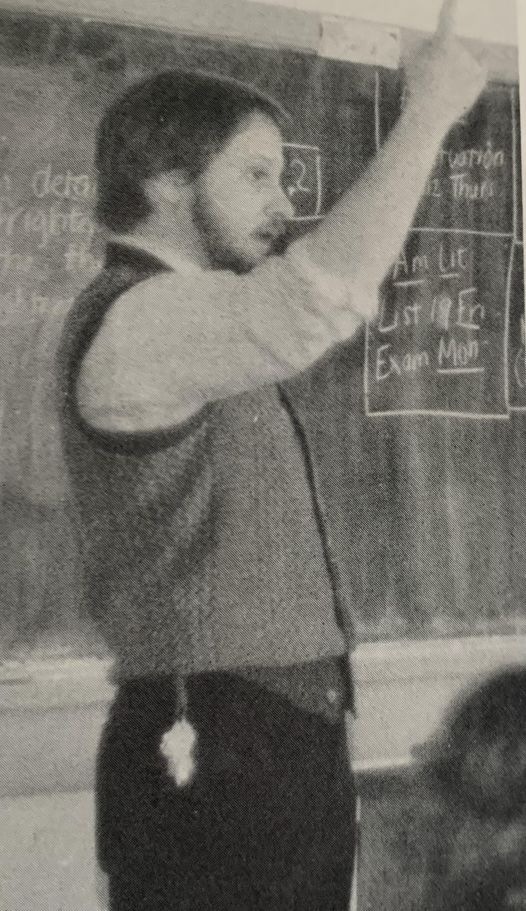
Me, teaching, I guess, at Mission Prep. It’s probably Civil War-era, either Whitman’s poem “Crossing Brooklyn Ferry” or Little Round Top on July 2 at Gettysburg.

The lynch mob’s victims, a father and his fifteen-year-old son, led to a book about San Luis Obispo County outlaws.

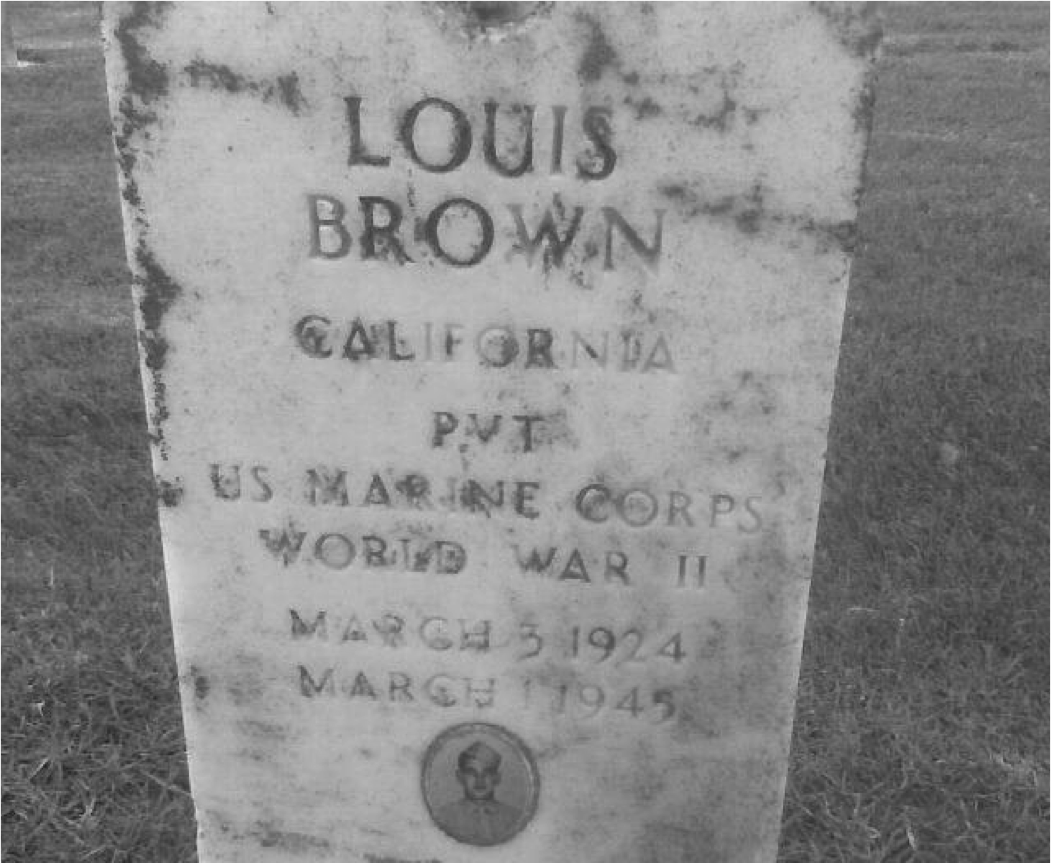
Finding a Marine’s tombstone—he grew up in Corbett Canyon and died on Iwo Jima three days short of his twenty-first birthday—led to a book about World War II.


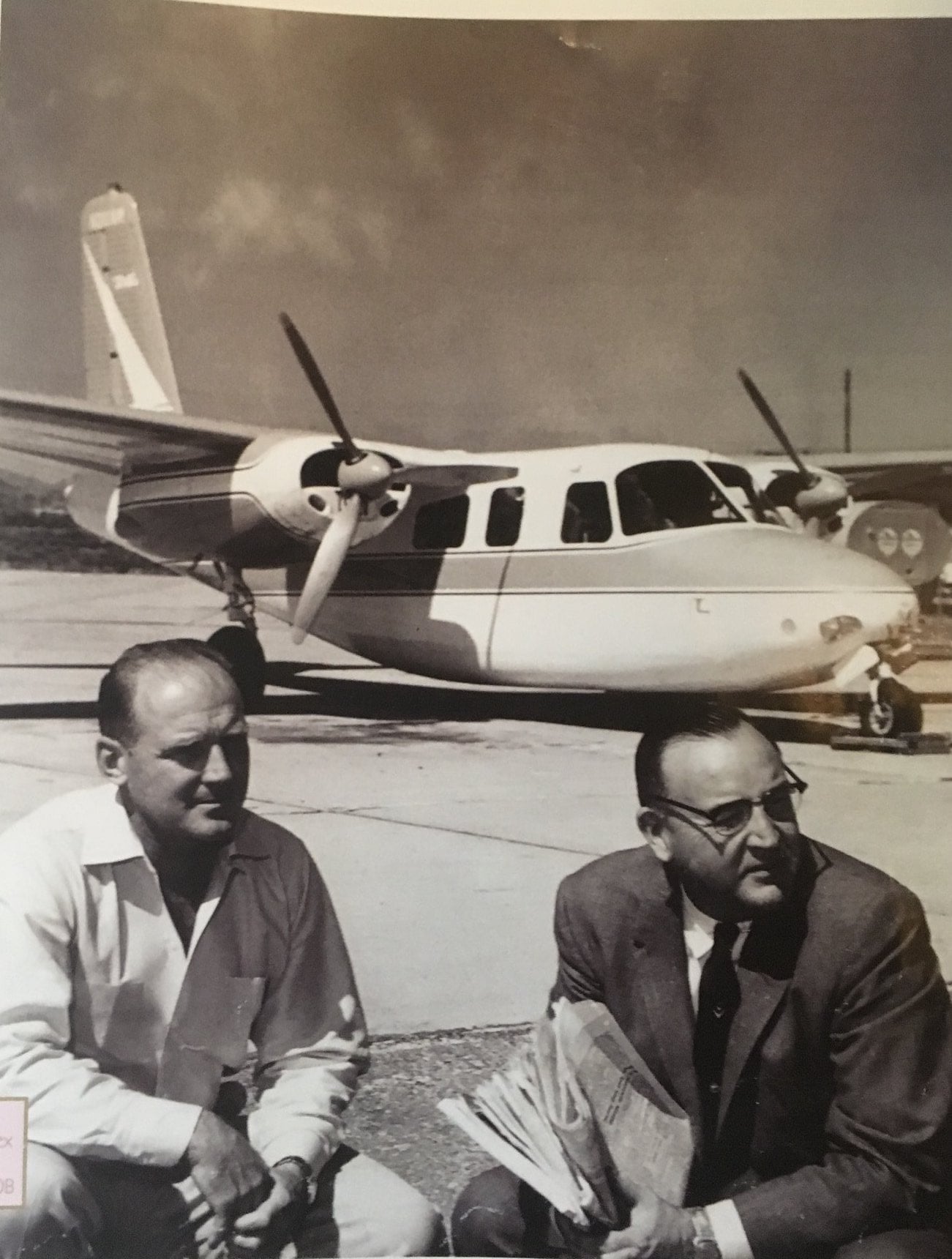
My father was Madonna Construction’s comptroller. He took my brother Bruce and me on  an airplane with him once—I was six—while he bid a job in Marysville. The plane was Madonna’s twin-engined Aerocommander; the pilot was Earl Thomson, co- founder of the county airport. I was enthralled by that trip. Sixty years later, it led to a book about Central Coast aviators in World War II.

Alex Madonna, Gov. “Pat” Brown, and the Aerocommander.


My father liked to tell family stories. Dad and Dan Krieger were the best storytellers I have ever known, and that is how I taught history for thirty years.

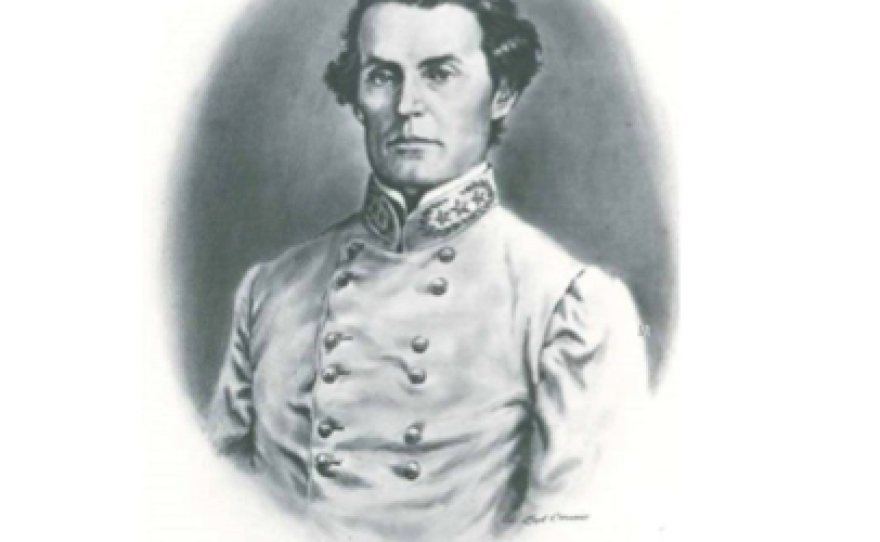
My name, James Douglass, is from Dad’s family. James comes from my great-great grandfather, an undistinguished Confederate brigadier general. Douglass comes from his son, a young staff officer who had an unfortunate encounter with a Union artillery shell in Arkansas in 1862.  Dad’s stories about his family, influding these two, would lead to my writing a book about the Civil War and the sixty veterans buried in Arroyo Grande’s cemetery. To my distinct pleasure, they are all Yankees.

I do not want to cause a political ruckus here, but I am a Lincoln man.


Gen. James H. McBride, for whom I am named.


History can touch us in what seem to be the most casual of ways.

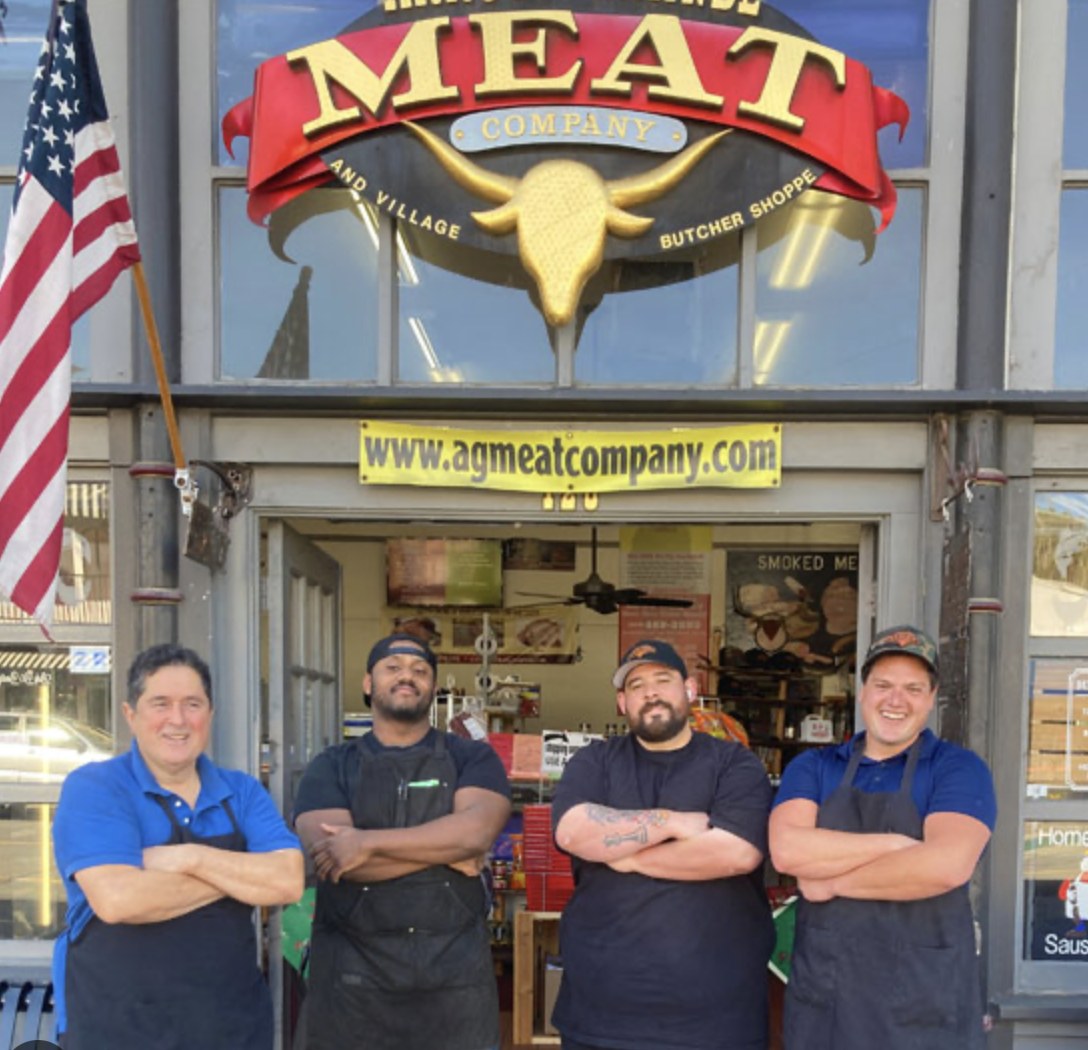
Last week I  spent a large sum of cash at the Arroyo Grande Meat Co. on Branch Street, and it was money well spent: Five grass-fed Spencer steaks for my son John’s birthday.

While I waited for the steaks to be wrapped, I remembered that

–This has been a meat market since 1897.

–It, and the storefronts alongside it, were built with brick quarried from Tally Ho Creek clay.

–The brick was fired in a lot owned by Pete Olohan, Saloonist Extraordinaire, and the building named for him includes today’s Klondike Pizza.

–Two of the early meat market partners were E.C. Loomis, he of the feed store, now empty, at the base of Crown Hill, and Mathias Swall, who also built the bank that is now Lightning Joe’s.

–Mr. and Mrs. Swall lived in the home that is now the Murphy Law Firm on Branch Street. They both loved music and played instruments and resolved to teach their children to play instruments, as well. There were twelve little Swalls. Noisiest house in town.

–E.C. Loomis’s sons, including Vard, a onetime Stanford pitcher who coached a local Nisei team, safeguarded the farms and farm equipment of their Japanese American customers during internment, among many local families who did so out of simple admiration for their neighbors, their values and for their devotion to the little town they shared.

–That is how Vard Ikeda got his name, and those families’ friendship is in part why two generations of Ikedas have been so incredibly important to local youth sports.

–Shortly before they were “evacuated” to internment camps in 1942, Japanese farmers came into the meat market to settle their bills. Paul Wilkinson, then the owner, refused to take their money. These were his friends.

“You keep it,” he told them. “You’re going to need it.”

After the war, they paid Mr. Wilkinson back. In full.


I grew up with schoolmates whose grandparents came from Kyushu, the southernmost Japanese home island. Some of my friends’ families came from the Azores and some from Luzon, in the Philippines.

When I was a little boy, the whistling of braceros—baroque and beautiful—woke me up summer mornings as they went down to the fields next to us for work.

I learned my first Spanish from them. Years later, one of my university Spanish professors took me aside to offer me one of the greatest compliments of my life::

“Mr. Gregory, you have a distinct Mexican accent.”

My first sushi was on a special Japanese holiday—I think it was Labor Day—at Ben Dohi’s house. Ben was married to a Yamaguchi sister, and Dr. Jim Yamaguchi came down with his wife and baby girl from the Bay area to visit. I got to hold Jim Yamaguchi’s daughter. Her name was Kristi. She would grow up to be an Olympic gold medalist. I did not drop her.

Kristi Yamaguchi, 1992 Winter Olympics


Mary Gularte took pity on me one cold morning when the schoolbus was late. She took me inside her kitchen and kept an eye out for the bus while setting a dish of sopa—Portuguese stew—on the kitchen table in front of me. I inhaled it. I did not have to eat the rest of the day.

My friends included families with surnames like Pasion and Domingo and sometimes they’d bring back sugarcane from the Philippines and gift me with a stalk to gnaw on. It was wonderful, but I later discovered lumpias, the divine Filipino egg roll, at the Arroyo Grande Harvest Festival. It gave me the greatest pleasure to watch Filipino mothers, most of them, once upon a time, war brides, watch me as I took my first bite of lumpia. My reaction must have been transparent. They beamed.

These were the helping hands that built our county. They helped me in my growing up. These people filled me with their history, by which I mean our history, and they remind me that history is always around us, sometimes just beyond the reach of our understanding. I write about history because I owe the past so much. My writing is the least, and it’s the very least, that I can do for my friends, including those I never had the chance to meet.

My grandfather, Ozark Plateau farmer John Smith Gregory (1862-1933) died eighteen years before I was born. He was the sweetest waltzer in Texas County, Missouri; I wish he’d lived long enough to teach me how to dance.
← Older posts
Newer posts →

Subscribe

  • Entries (RSS)
  • Comments (RSS)

Archives

  • June 2026
  • May 2026
  • April 2026
  • March 2026
  • February 2026
  • January 2026
  • December 2025
  • November 2025
  • October 2025
  • September 2025
  • August 2025
  • July 2025
  • June 2025
  • May 2025
  • April 2025
  • March 2025
  • February 2025
  • January 2025
  • December 2024
  • November 2024
  • October 2024
  • September 2024
  • August 2024
  • July 2024
  • June 2024
  • May 2024
  • April 2024
  • March 2024
  • February 2024
  • January 2024
  • December 2023
  • November 2023
  • October 2023
  • September 2023
  • August 2023
  • July 2023
  • June 2023
  • May 2023
  • April 2023
  • March 2023
  • February 2023
  • January 2023
  • December 2022
  • November 2022
  • October 2022
  • September 2022
  • August 2022
  • May 2022
  • April 2022
  • March 2022
  • February 2022
  • January 2022
  • December 2021
  • November 2021
  • October 2021
  • September 2021
  • August 2021
  • July 2021
  • June 2021
  • April 2021
  • March 2021
  • February 2021
  • January 2021
  • December 2020
  • November 2020
  • August 2020
  • July 2020
  • June 2020
  • May 2020
  • April 2020
  • January 2020
  • December 2019
  • November 2019
  • October 2019
  • September 2019
  • August 2019
  • May 2019
  • April 2019
  • March 2019
  • February 2019
  • January 2019
  • December 2018
  • November 2018
  • October 2018
  • September 2018
  • July 2018
  • June 2018
  • May 2018
  • April 2018
  • March 2018
  • February 2018
  • January 2018
  • December 2017
  • November 2017
  • October 2017
  • April 2017
  • March 2017
  • December 2016
  • November 2016
  • October 2016
  • September 2016
  • August 2016
  • July 2016
  • June 2016
  • April 2016
  • March 2016
  • February 2016
  • January 2016
  • December 2015
  • November 2015
  • October 2015
  • September 2015
  • August 2015
  • July 2015
  • June 2015
  • May 2015
  • April 2015
  • March 2015
  • February 2015
  • January 2015
  • December 2014
  • November 2014
  • September 2014
  • August 2014
  • July 2014

Categories

  • American History
  • Arroyo Grande
  • California history
  • Family history
  • Film and Popular Culture
  • History
  • News
  • Personal memoirs
  • Teaching
  • The Great Depression
  • trump
  • Uncategorized
  • World War II
  • Writing

Meta

  • Create account
  • Log in

Blog at WordPress.com.

  • Subscribe Subscribed
    • A Work in Progress
    • Join 69 other subscribers
    • Already have a WordPress.com account? Log in now.
    • A Work in Progress
    • Subscribe Subscribed
    • Sign up
    • Log in
    • Report this content
    • View site in Reader
    • Manage subscriptions
    • Collapse this bar

Loading Comments...