How to write a [little] history book


P-51_katydid_850

Lt. Col. Elwyn Righetti’s P-51, “Katydid,” on a strafing run. Righetti disappeared after being shot down over Germany in 1945. He was raised in San Luis Obispo.

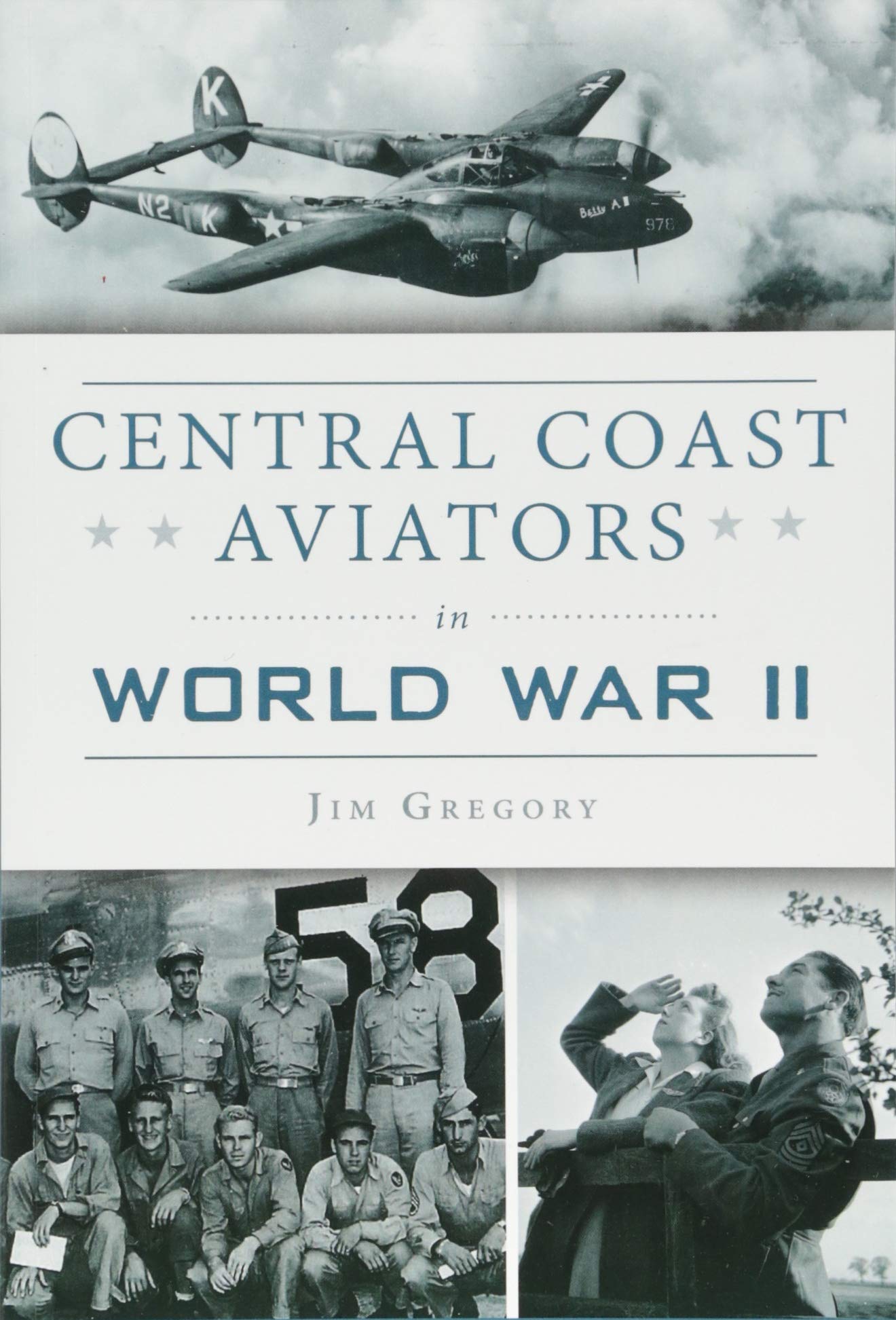
I get asked sometimes how I do my research for my books. They are small books, but I was asked again yesterday and decided, just to be able to answer future questions semi-coherently, to set down how I researched the next book, Central Coast Aviators in World War II, coming out in May. Okay (deep breath), here goes:

  1. I started by looking up the names of the county war dead on the Atascadero Veterans’ Memorial. From there, I identified eighteen young men—all Army Air Forces, the branch in which nearly all local men served (and the vast majority in Europe)—killed in action or in training accidents.
  2. I used three websites—newspapers.com, genealogy bank and ancestry.com—to locate the obituaries and circumstances of death for each airman. In some cases (Lt. Clair Tyler of Morro Bay, for example, a B-17 co-pilot killed over Brittany; Capt. Jack Nilsson of San Luis Obispo, a B-29 Pathfinder pilot, killed over Japan) I was able trace these young men through virtually every stage of their lives, which was both fascinating and heart-breaking to write: Tyler’s best man was Alex Madonna; Nilsson, as an eight-year-old, went to a birthday party for a little Berkemeyer daughter. Since her family owned the local bakery, the cake must’ve been awesome!
  3. Those websites were also invaluable in tracing the history of aviation in our county, including the first airplane flight over San Luis Obispo, in 1910 (other sources, primarily San Francisco newspapers, taught me about the lives of the Beachey brothers–Hillery, who’d flown that airplane, and Lincoln, who drowned when his monoplane plunged into San Francisco Bay–and were the West Coast equivalent of the Wright Brothers), Amelia Earhart’s visit to Cal Poly and the history of San Luis Obispo Airport.
  4. Another incredible source, as usual, was Cal Poly’s Special Collections and Archives, which helped me to pin down the history of the Aeronautical Engineering Program—Poly students built the first student-constructed airplane in American history, in 1928, “Glen-Mont”—and rare photographs. Michael Semas was  generous in allowing me to use photos from 1910 and the Camp Merriam (now Camp San Luis Obispo) airfield during the 1930s.
  5. As always, California military historian Sgt. Major Dan Sebby and his California Military History website were incredibly helpful in both the history of Hancock Field and in helping me find information on the aviation program at Camp Merriam.
  6. For the living fliers, including WASP pilot Dorothy Rooney, the SLO Veterans’ Museum has compiled about 200 oral history interviews. (The lioness’s share of this remarkable effort has fallen on two interviewers, Joanne Cargill and Joy Becker, and all of us owe them a terrific debt.) I narrowed that list down to World War II aviators, about thirty, and then attempted to contact each one or their survivors for permission to use the material, now on a Library of Congress website. I was successful in about twenty cases. These interviews were the single most important resource for this book, and when I get hammered, as I will be, for leaving fliers out, it would have been helpful if they’d set their memories down as these fliers did!
  7. Another wonderful source for the WASPs was Texas Women’s University, where I learned more about Dorothy Rooney and about two Santa Barbara County WASPs, one killed in a training accident and another, raised in Solvang, who became a lifelong flier after the war. I found her children interviewed one son on the phone and got permission to quote from the marvelous obituary they’d written for her.
  8. The Santa Maria Museum of Flight was another excellent resource; I spent a day with the curator there and got his permission to use several photos of Primary Training at Hancock Field (today’s Hancock College) and material from one yearbook: a class from 1941 yielded seven participants in the Doolittle Raid, five Air Aces, two future four-star Air Force generals, and one cadet who didn’t make it as a pilot but became a B-24 bombardier in the Pacific: Louis Zamperini, the subject of Laura Hillenbrand’s excellent book Unbroken. About 8,000 cadets went through Primary Flight Training at Hancock Field.
  9. For Cal Poly’s Naval Aviation Cadet pre-flight program (about 3,000 cadets went through Poly), I found first-hand material in a memoir written by former Poly President Robert Kennedy, two online autobiographies written by pilots who’d gone through Poly’s program, and back issues of Mustang Roundup, the wartime magazine that replaced the El Rodeo yearbook during the war years.
  10. Particularly useful as a local source: David Middlecamp’s always-revelatory column, “Photos from the Vault” and Dan Krieger’s “Times Past,” particularly on the life and death of perhaps our best-known local hero, P-51 pilot Elwyn Righetti (I also corresponded with Righetti’s biographer, Jay Stout, who was very helpful.)
  11. Foreign sources were just as helpful, particularly the Imperial War Museum and its sister institution, the American Air Museum in Britain. These sources yielded wonderful wartime photographs of aircrew, air bases and aircraft. The also corroborated the fate of lost airmen and were a starting point for determining the fates of lost aircraft. Other websites, in Holland and France, were also useful in helping to find both bombers and fighters in which local fliers had been lost.
  12. In the European Theater, the Air Museum provided the name, if applicable, and serial numbers of both American bombers and fighters. The are websites with MACR (Missing Aircrew Reports) listed by date and the plane’s serial number, and I used those websites to verify the identities and losses of aircraft. In a few cases, the Air Museum provides, in some cases,  Deceased Personnel Files; in two cases, I was able to discover the fate of a local flier by using the file belonging to another crewman on his aircraft. Both sources were also helpful in determining the fates of lost airmen and aircraft in the Pacific Theater.
  13. Army Air Forces accident reports are also available online and provide some detail on both stateside and overseas plane crashes. I was amazed to discover, for example, that there were nine P-38 crashes among fighters based at the Santa Maria Army Airfield in January 1945 alone, claiming the lives of three pilots and two civilians (in a cafe on Broadway in Santa Maria) on the ground.
  14. Although most of the World War II generation is gone, I was able to conduct interviews with Albert Lee Findley Jr of Los Osos, shot down twice as a B-24 crewman, and John Sim Stuart, a retired Cal Poly professor and P-47 fighter pilot who witnessed the flash of the Nagasaki bomb. The McChesney family, both in person and on a family website, was wonderful in revealing the history of local aviation—the County Airport is McChesney Field.
  15. Hometown Heroes Radio and the Estrella Warbirds Museum in Paso Robles were key in providing information on Hal Bauer, an Atascadero resident who was a Luftwaffe test pilot (he flew the wooden jet, the He-162) with an incredible story. As an American citizen, Lt. Commander Hal Bauer flew intelligence missions along the Chinese and Soviet borders during the Korean War.
  16. Several units maintain online histories that include Mission Reports. I was able, for example, to locate and identify aircrew, target, mission duration and losses for virtually every mission that Flight Engineer Sgt Al Spierling ever flew, including his thirteenth, in B-17 “Georgia Peach,” which survived a near-collision over the target–Berlin–and a flak hit that took out two engines. (Spierling later taught Auto Shop at Arroyo Grande High School.) Roy Lee Grover’s 405th Bomb Squadron, based in Australia and then New Guinea, has an incredible website, heavily illustrated. Arroyo Grandean Jess Milo McChesney’s 376th Bomb Group has another superb website that fills in a lot of gaps on the neglected Fifteenth Air Force, based in North Africa and then in Italy. One source—on lost flier Clair Tyler’s 303rd Bomb Group—even provided an illustrated diagram of each B-17’s position in his bomb squadron on the day he was killed on a mission over Lorient.
  17. One wonderful find was the 303rd Bomb Group’s “Duties and Responsibilities of the B-17 Crewmen,” a wartime manual for each of the ten men who flew the heavy bomber and the 303rd’s “Aerial Bombs,” a detailed description of bomber ordnance. Just one more: Maj. James J. Carroll, “Physiological Problems of Bomber Crews in the Eighth Air Force during World War II,” a paper prepared for the Air Command and Staff College, which detailed just how uncomfortable, including the difficulty of taking a pee,  flying a combat mission was, “uncomfortable” being an understatement. Another paper, on tropical diseases in World War II, revealed how life for Pacific fliers was even more “uncomfortable.”
  18. Other websites provided both visual and written information on POW’s, even including artwork and cartoons, which were delightful, of camp life. The oral history interviews from local fliers also provided incredible detail on the meagerness of diet, on the menace of German civilians (there were lynchings of downed Americans by enraged Germans, Hungarians and others), and the frequent and unexpected kindness of German soldiers toward their captives.
  19. Family members, and correspondence with them, were incredibly helpful. Particularly helpful were the daughters of B-17 co-pilot Robert Abbey Dickson of Morro Bay, the daughter of P-38 and P-51 pilot William K. Pope of Paso Robles , the descendants of B-17 pilot Harold Schuchardt of Los Osos, the sister of B-26 pilot Richard Vane Jones, a Cal Poly education professor, and Bruce Gibson, the son of a B-29 crewman taken prisoner by the Japanese.
  20. Beyond the primary sources and interviews, there were several books, secondary sources,  that were very important. By far the most important was John McManus’s book, Deadly Sky. I think he is one of our finest World War II writers.


Cover


Just for grins, here are the book’s notes, one of the parts of any history book that I always take time to read:

Notes

1 “303rd BG(H) Combat Mission No. 20, 6 March 1943,” http://www.303rdbg.com/missionreports/020.pdf
2 Eddie Deerfield, editor, Hell’s Angels Newsletter. “The Terrifying Last Mission of the Mart in Plocher Crew,” May 1999. http://www.303rdbg.com/missionreports/020.pdf.
3 The information on 2nd Lt. Tyler is taken from several articles in the San Luis Obispo Telegram-Tribune, beginning November 24, 1931 and ending August 27, 1943.
4 “100 Years Ago: July 5, 1898-July 12, 1898,” Wilmar N. Tognazzini, compiler, http://wntog.weebly.com/1898.html.
5 Carly Courtney, “Lincoln J. Beachey: The Tragic Rise and Fall of the Master Birdman,” Disciples of Flight, October 31, 2016, https://disciplesofflight.com/aviation-pioneer-lincoln-j-beachey/.
6 “Official Program for Celebration that Began This Afternoon,” San Luis Obispo Daily Telegram, July 2, 1910, p. 3.
7 Frank Marrero, “Lincoln Beachey: The Forgotten Father of Aerobatics,” Flight Journal Magazine, April 1999, http://www.frankmarrero.com/Beachey/The_Forgotten_Father_of_Aerobatics.html.
8 David Middlecamp, “Aerial Pioneer Harriet Quimby,” from the blog Photos from the Vault, San Luis Obispo Tribune, July 14, 2010, http://sloblogs.thetribunenews.com/slovault/2010/07/aerial-pioneer-harriet-quimby/
9 “Harriet Quimby,” National Aviation Hall of Fame, http://www.nationalaviation.org/our-enshrinees/quimby-harriet/ Accessed June 17, 2017.
10 Earl Miller, “Famous Flier Inspects Poly Aerial Building,” San Luis Obispo Daily Telegram, June 25, 1936, p. 1.
11 Interview with Leroy McChesney III, Arroyo Grande, California, May 9, 2017.
12 “Airplane Lands at Arroyo Grande by Mistake,” San Luis Obispo Tribune, March 22, 1922.
13 Barnes McCormick, Conrad Newberry, Eric Jumper, eds. Aerospace Engineering during the First Century of Flight, American Institute of Aeronautics and Astronautics, Reston, Virginia, 2004. Pp. 861-62.
14 “Matriarch of music in SLO dies at 98,” San Luis Obispo Tribune, Dec. 7, 2010, http://www.sanluisobispo.com/news/local/article39139020.html.
15 “Guardsman Praises Airport,” San Luis Obispo Daily Telegram, Feb. 17, 1939, p. 1.
16 “Learn to Fly!” San Luis Obispo Telegram-Tribune, Sept. 6, 1940, p. 20.
17 Jay A. Stout, Vanished Hero. Casemate Publishers, Havertown, PA, 2016, p.18.
18 Stout, p. 53-54.
19 Read D. Tuddenham, “Soldier Intelligence in World Wars I and II,” http://www.iapsych.com/iqmr/fe/LinkedDocuments/tuddenham1948.pdfb.
20 Elena Sullivan, “Cal Poly Women: Roles and Depictions during World War II,” Research Paper, History 303-01, California Polytechnic University-San Luis Obispo, March 2016. http://digitalcommons.calpoly.edu/cgi/viewcontent.cgi?article=1022&context=cphistory.
21 Robert E. Kennedy, Learn by Doing Memoirs of a University President, Monograph, Robert E. Kennedy, California Polytechnic University-San Luis Obispo, 2001, p. 83.
22 Eldon N. Price, Senior Birdman: The Guy Who Just Had to Fly, iUniverse Inc. Publishing, 2006, pp. 21-22.
23 Wendell Bell, Memories of the Future, Transaction Publishers: New Brunswick, New Jersey, 2012, pp. 42-43.
24 “Boeing / Stearman PT-17 ‘Kaydet,’” http://www.warbirdalley.com/pt17.htm. Accessed June 21, 2017.
25 The accounts of San Luis Obispo County airmen lost to training accidents comes from various issues of the San Luis Obispo Telegram-Tribune, 1943-45.
26 Marilyn R. Pierce, Earning Their Wings: Accidents and Fatalities in the United States Army Air Forces During Flight Training in World War Two. PhD Dissertation, Kansas State University, Manhattan, Kansas: 2013.
27 “Capt. G. Allan Hancock,” http://www.hancockcollege.edu/public_affairs/capt-hancock.php. Accessed June 22, 2017.
28 Justin Rughe, “Historic California Posts, Camps, Stations and Airfields: Hancock Field,” http://www.militarymuseum.org/HancockField.html. Accessed June 22, 2017.
29 Interview with Santa Maria Museum of Flight CEO Mike Geddry Sr., May 4, 2017
30 Eugene Fletcher, Mister: The Training of an Aviation Cadet in World War II. The University of Washington Press, 1992: pp 61-62.
31 John C. McManus, Deadly Sky: The American Combat Airman in World War II, New American Library, New York: 2000, p. 23.
32 Stout, Vanished Hero, p.23.
92
33 “Lt. Hagerman, Paso Robles, Killed in Air Crash,” San Luis Obispo Telegram-Tribune, February 14, 1944, p. 1.
34 “Dorothy May Moulton Rooney,” oral history interview by Joanne Cargill, January 27, 2010. Dorothy May Moulton Rooney Collection(AFC/2001/001/71857), Veterans History Project, American Folklife Center, Library of Congress.
35 “Betty Pauline Stine,” https://airforce.togetherweserved.com/usaf/servlet/tws.webapp.WebApp?cmd=ShadowBoxProfile&type=PersonAssociationExt&ID=22008. Accessed June 23, 2017.
36 “Above and Beyond: Gertrude “Tommy” Tompkins-Silver,” http://www.wingsacrossamerica.org/above—beyond.html. Accessed June 23, 2017.
37 Susan Stambeg, “Female WWII Pilots: The Original Fly Girls,” NPR transcript for Morning Edition, March 9, 2010, http://www.npr.org/2010/03/09/123773525/female-wwii-pilots-the-original-fly-girls. Accessed June 23, 2017.
38 Katherine Sharp Landdeck, “A Woman Pilot Receives the Military Funeral the Army Denied Her,” The Atlantic, September 8, 2016, https://www.theatlantic.com/politics/archive/2016/09/wasp-elaine-harmon-arlington-national-cemetery/499112/. Accessed June 23, 2017.
39 “WASP Final Flight: Sylvia Barter, 43-W-7,” http://waspfinalflight.blogspot.com/2009_02_01_archive.html. Accessed June 23, 2017.
40 “Albert Lee Findley Jr,” oral history interview by Joy Becker, September 26, 2013, Albert Lee Findley, Jr. Collection (AFC/2001/001/93273), Veterans History Project, American Folklife Center, Library of Congress.
41 “Consolidated B-24J Liberator,” http://www.joebaugher.com/usaf_bombers/b24_18.html. Accessed July 7, 2017.
42 “Robert Abbey Dickson,” oral history interview by Joanne Cargill, September 19, 2007, Robert Abbey Dickson Collection (AFC/2001/001/56287), Veterans History Project, American Folklife Center, Library of Congress.
43 Jay A. Stout, Hell’s Angels: The True Story of the 303rd Bomb Group in World War II, Berkley Caliber Books, New York: 2015, pp. 96-98.
44 Don Moore, “He Flew with Jimmy Stewart in WW II,” https://donmooreswartales.com/2010/05/05/jim-myers/. Accessed June 24, 2017.
45 Sam McGowan, “The Boeing B-17 Flying Fortress vs. the Consolidated B-24 Liberator,” February 21, 2017, http://warfarehistorynetwork.com/daily/wwii/the-boeing-b-17-flying-fortress-vs-the-consolidated-b-24-liberator/
Accessed June 24, 2017.
46 “Harold Edgar Schuchardt,” oral history interview by Joanne Cargill, May 10, 2007, Harold Edgar Schuchardt Collection (AFC/2001/001/51597), Veterans History Project, American Folklife Center, Library of Congress.
47 “Duties and Responsibilities of the B-17 Crewmen,” 303rd Bomb Group (H), http://www.303rdbg.com/crew-duties.html. Accessed June 23, 2017.
48 “Aerial Bombs,” 303rd Bomb Group (H), http://www.303rdbg.com/bombs.html. Accessed June 27, 1942.
49 John T. Correll, “Daylight Precision Bombing,” Air Force Magazine, October 2008. http://www.airforcemag.com/MagazineArchive/Pages/2008/October%202008/1008daylight.aspx. Accessed June 27, 2017.
50 Sandra MacGregor, “Richard Cowles, World War II Tailgunner,” SLO Journal Plus, August 2015: pp. 28-29.
51 McManus, Deadly Sky, pp. 37-42.
52 “Albert Spierling,” oral history interview by Joanne Cargill, Nov. 21, 2003, Albert A. Spierling Collection (AFC/2001/001/10402), Veterans History Project, American Folklife Center, Library of Congress.
53 Maj. James J. Carroll, “Physiological Problems of Bomber Crews in the Eighth Air Force during World War II,” paper prepared for the Air Command and Staff College, March 1997. http://www.dtic.mil/cgi-bin/GetTRDoc?AD=ADA398044. Accessed June 27, 2017.
54 “Richard Vane Jones,” oral history interview by Joy Becker, May 7, 2009. Richard V. Jones Collection (AFC/2001/001/71933), Veterans History Project, American Folklife Center, Library of Congress.
55 “Henry Joe Hall,” oral history interview by Joy Becker, May 21, 2009. Henry J. Hall Collection (AFC/2001/001/71890), Veterans History Project, American Folklife Center, Library of Congress.
56 Elizabeth Grice, “War Memories: John Keegan’s Life and Times,” The Telegraph, September 17, 2009. http://www.telegraph.co.uk/culture/books/6203052/War-memories-John-Keegans-life-and-times.html. Accessed July 2, 2017.
57 Foot Soldiers, “The Allies.” The History Channel, 1998.
58 Donald L. Miller, Masters of the Air, Simon and Schuster Paperbacks, New York: 2006, pp. 137-38.
59 “Albert Spierling,” oral history interview.
60 Jerome O’Connor, “U Boat Sanctuary—Inside the Indestructible U Boat Bases in Brittany,” January 1, 2008,
http://historyarticles.com/gray-wolves-den/ Accessed July 2, 2017.
93
61 “The Bombing of Germany 1940 – 1945: Allied air-strikes and civil mood in Germany,” University of Exeter, http://humanities.exeter.ac.uk/history/research/centres/warstateandsociety/projects/bombing/germany/. Accessed July 2, 2017.
62 “Individual Deceased Personnel File: 1st Lt. Clarence H. Ballagh,” 1949. American Air Museum in Britain. https://www.americanairmuseum.com/person/32316. Accessed June 2, 2017.
63 “Sidewalk dedication, 1944, Arroyo Grande, California.” https://www.ancestry.com/media/viewer/viewer/c22332c1-e9fc-40d8-8b55-cbc5d6b3488b/7516801/-1076227646. Accessed June 2, 2017.
64 “File 164. 1944-02-21/21 B-17 42-30280 Holcombe IJsselmeer Zeewolde,” http://www.zzairwar.nl/dossiers/164.html. Accessed July 2, 2017
65 J. David Rogers, PhD, University of Missouri-Rolla, “Doolittle, Black Monday, and Innovation,” https://web.mst.edu/~rogersda/american&military_history/Doolittle-Black%20Monday-Need%20for%20Innovation-1944.pdf. Accessed July 4, 2017.
66 Telephone communication with 91st Bomb Group historian Jody Kelly, July 9, 2017.
67 “Marshall Stelzriede’s Wartime Story: The Experiences of a B-17 Navigator During World War II,” http://www.stelzriede.com/ms/html/marshwcp.htm. Accessed June 17, 2017.
68 Roy Lee Grover, Incidents in the Life of a B-25 Pilot, AuthorHouse, Bloomington, IN: 2006, pp. 40-41.
69 “John Sim Stuart,” oral history interview by Joy Becker, November 17, 2009. John Sim Stuart Collection (AFC/2001/001/71863), Veterans History Project, American Folklife Center, Library of Congress
70 McManus, Deadly Sky, p. 110.
71 Capt. James J. Sapero, USN, “Tropical Diseases in Veterans of World War II.” New England Journal of Medicine, December 1946, Vol 235, No.24, p. 843.
72 Grover, Incidents, pp. 40-41.
73 Grover, pp. 37-38.
74 Allen D. Boyer, “Legendary WWII pilot Pappy Gunn gets his due in new biography,” The Oregonian, November 27, 2016. http://www.oregonlive.com/books/index.ssf/2016/11/indestructible_pappy_gunn_john.html. Accessed July 7, 2017.
75 “Roy Lee Grover, 2014 Veterans’ Day Honoree,” University of Utah. http://veteransday.utah.edu/?p=2543. Accessed July 8, 2017.
76 Joseph Rogers, “Arthur Rogers: The Jolly Rogers,” https://prezi.com/5syuymfh9obl/arthur-henry-rogers-the-jolly-rogers/. Accessed July 7, 2017.
77 Pacific Wrecks, “B-24J-150-CO Liberator Serial Number 44-40188,” https://www.pacificwrecks.com/aircraft/b-24/44-40188.html. Accessed June 20, 2017.
78 “County Men in the Fight: Purple Heart Award,” San Luis Obispo Telegram-Tribune, February 27, 1945, p. 1.
79 “Historical Snapshot: B-29 Superfortress,” Boeing Corporation, http://www.boeing.com/history/products/b-29-superfortress.page. Accessed July 8, 2017.
80 “John Sanderson Gibson,” oral history interview by Margie Shafer and Maxine Fischer, July 14, 2003. John Sanderson Gibson Collection (AFC/2001/001/07842), Veterans History Project, American Folklife Center, Library of Congress.
81 “Aviation History Online: Boeing B-29 Superfortress,” http://www.aviation-history.com/boeing/b29.html. Accessed July 9, 2017.
82 Jack Nilsson’s biographical information comes from several stories from the San Luis Obispo Telegram-Tribune, 1931-1940.
83 Joe Baugher, “B-29 Attacks on Japan from the Marianas,” March 15, 2002, http://www.joebaugher.com/usaf_bombers/b29_10.html. Accessed July 9, 2017.
84 Herman S. Wolk, “The Twentieth Against Japan,” Air Force Magazine, April 2004, pp. 68-73. http://www.airforcemag.com/MagazineArchive/Documents/2004/April%202004/0404japan.pdf. Accessed July 7, 2017
85 “B-29 Combat Mission Logs, 1945, of William C. Atkinson, Radar Navigator,” http://www.atkinsopht.com/atk/saipan.htm. Accessed July 6, 2017
86 Spierling, oral history interview.
87 The information on targets comes from Bob Brown’s missions list, courtesy of the Central Coast Veterans’ Museum, and from the missions list kept by SSgt. John Ward, who flew with McChesney, courtesy of Michael McChesney.
88 “D-Day Leaders: Spaatz,” Military.com. http://www.military.com/Content/MoreContent1/?file=dday_leaders7. Accessed July 10, 2017.
94
89 Spierling, oral history interview.
90 Interview with Albert Lee Findley, Jr., Central Coast Veterans’ Museum, July 7, 2017.
91 “County Men in the Fight: Jess M. McChesney,” San Luis Obispo Telegram-Tribune, May 17, 1945, p. 1.
92 Interview with Leroy McChesney III, Arroyo Grande, California, May 9, 2017.
93 David Middlecamp, “Arroyo Grande veteran survived three plane crashes in World War II,” Photos from the Vault. San Luis Obispo Tribune, May 27, 2016. http://www.sanluisobispo.com/news/local/news-columns-blogs/photos-from-the-vault/article80444052.html. Accessed July 11, 2017.
94 McManus, Deadly Sky, p. 269.
95 Victor Gregg, “I survived the bombing of Dresden and continue to believe it was a war crime,” The Guardian, February 15, 2013, https://www.theguardian.com/commentisfree/2013/feb/15/bombing-dresden-war-crime. Accessed July 11, 2017.
96 Miller, Masters of the Air, pp. 305-306.
97 Jeffrey Meyers, “The Death of Randall Jarrell,” VQR: A National Journal of Literature and Discussion, Summer 1982, http://www.vqronline.org/essay/death-randall-jarrell. Accessed July 11, 2017.
98 Miller, pp. 387-388.
99 “Stalag XIII-D,” http://wwii-pow-camps.mooseroots.com/l/264/Stalag-13D-Oflag-73. Accessed July 17, 2017.
100 Gibson, interview, American Folklife Center, Library of Congress.
101 “Messerschmitt Bf 110 (Me-F110),” Acepilots.com, 2011. http://acepilots.com/german/bf110.html. Accessed July 18, 2017.
102 McManus, Deadly Sky, p. 51.
103 Jim Gregory, World War II Arroyo Grande, The History Press, Charleston, SC: 2016, p. 102.
104 David Middlecamp, “Photos from the Vault: P-38 training crash in Santa Maria, World War II week by week,” San Luis Obispo Tribune, http://www.sanluisobispo.com/news/local/news-columns-blogs/photos-from-the-vault/article39511437.html. Accessed July 18, 2017.
105 “Chester Eckermann,” oral history interview by Joanne Cargill, Central Coast Veterans’ Museum, April 26, 2007. Chester Earl Eckermann Collection (AFC/2001/001/49482), Veterans History Project, American Folklife Center, Library of Congress.
106Stout, Vanished Hero, xvi.
107 Dr. Henry Goodall, “Joe Griffin : Memoirs of summer 1944 : 367th USAF Fighter Group,” Friends of the New Forest Airfields, March 21, 2016, https://fonfasite.wordpress.com/2016/03/21/joe-griffin-memoirs-of-summer-1944-367-fg/. Accessed July 18, 2017.
108 “France—Crashes 39-45: Crash du P-38 Lightning type J-15-LO s/n 42-104212,” http://francecrashes39-45.net/page_fiche_av.php?id=6175. Accessed July 18, 2017.
109 “Quesada, Elwood Richard, Aviation Pioneer,” National Aviation Hall of Fame, http://www.nationalaviation.org/our-enshrinees/quesada-elwood-richard/. Accessed July 19, 2017.
110 Michael D. Hull, “Embattled Skies: Air Power at the Battle of the Bulge,” Warfare History Network, January 7, 2016, http://warfarehistorynetwork.com/daily/wwii/embattled-skies-air-power-at-the-battle-of-the-bulge/. Accessed July 19, 2017.
111 “Heinkel He 162 Jet Fighter Test Pilot,” PeninsulaSrVideos, December 28, 2012. https://www.youtube.com/watch?v=xmJqjx9VVKM. Accessed July 19, 2017.
112 “William K. Pope,” oral history interview by Joanne Cargill, Central Coast Veterans’ Museum, December 3, 2009. William Pope Collection (AFC/2001/001/71853), Veterans History Project, American Folklife Center, Library of Congress.
113 Stout, Vanished Hero, p. 83.
114 “Statistical Record, 55th Fighter Group,” http://www.55th.org/. Accessed July 19, 2017.
115 Stout, Vanished Hero, xi-xiii.
116 David Middlecamp, “Remembering Elwyn Righetti on Memorial Day,” Photos from the Vault, San Luis Obispo Tribune, May 21, 2015, http://www.sanluisobispo.com/news/local/news-columns-blogs/photos-from-the-vault/article39533085.html. Accessed July 17, 2017.
117Personal communication with former Cal Poly architecture student David D. Floyd, July 10,
2017.
118 Stuart, oral history interview.
119 Record of KIA status for Lt. Raymond Ranger, National Archives, https://www.fold3.com/image/29032675. Accessed July 20, 2017.
120 Incident report, Hickam Field, 21 April 1945. https://www.fold3.com/image/295871536. Accessed July 20, 2017.


Doomed boys, lucky boys, brave boys. Our boys.


18EtRC.So.76

Sgt. Donal Laird, San Luis Obispo, third from left, top row, was a ball-turret gunner killed on his first combat mission in 1944. The wristwatch he wore that day was returned to his family in 2016.

At least eighteen local fliers were killed in World War II, brought down by German fighters, flak, engine malfunctions or by the mistakes they’d made in training.

Here are some of them:

https://drive.google.com/file/d/1TWlbAK0uCcNWUVefk_GZsWy5BJ16qZ1U/view?usp=sharing

But not all the stories that will be told in the book I’ve written, due out in May, are sad ones.

–Nearly 9,000 Army Air Forces cadets went through their Primary flight training at Hancock Field in Santa Maria, now the site of Hancock College. One of them was Louis Zamperini, the subject of Laura Hillenbrand’s book Unbroken. At least two would go on to become four-star Air Force generals after he war. Another 3,000 young men did their Navy pre-flight training at Cal Poly, which mostly abandoned civilian education, except for about eighty students, during the war.

–Lt. Elliott Whitlock of Arroyo Grande won a Silver Star for bringing his crippled B-17 home after a mission over Berlin in 1944. His bomb squadron’s mascot, a Tunisian donkey named Lady Moe, waited quietly each mission alongside the ground crews until Whitlock and all of his comrades who could come home had come home.

–Roy Lee Grover of Santa Maria was such a daring pilot that, after one mission near New Guinea, he dived so low in stafing a Japanese freighter that he brought the ship’s radio antenna home to base, draped around one wing of his B-25 Mitchell bomber.

–The P-38 was, at least in Europe, an inferior fighter to the vaunted P-51. It proved so for Lt. Chester Eckermann of Orcutt when the lubricant to his machine guns froze during a mission over the Alps. But the P-38 was valued for its forward armament, and Eckermann, in escorting his bombers home, found that he could intimidate German fighters by turning and pointing his ship’s nose at them. They immediately broke off contact and flew away.

–Capt. Jess Milo McChesney of Arroyo Grande crash landed twice, on both his first and final missions as a B-24 pilot in Italy, but his ship was so badly shot up that one of his crewmen later side admiringly: “I would fly through the gates of hell with that man.” McChesney later won his fifth Air Medal for flying 100 missions during the Berlin Airlift.

–TSgt Albert Lee Findley Jr., of Los Osos, was shot down twice. The second time was over Germany, and led to him spending the last months of the war as a POW. The first time was far more pleasant: his B-24 Liberator crash-landed near a village in just-liberated France, and the village adopted Findley’s aircrew, feting, feasting, and celebrating them—one villager became pen-pals with Findley’s Mom, back in Oklahoma—until finally, their commanding officer flew low over the village and dropped a canister with a stern message for Findley and his comrades to get back to base. Immediately.

–Harald Bauer, from Paso Robles, was a teenaged Luftwaffe test pilot. When a P-51 shot his jet down, he crash-landed behind American lines. Badly wounded, he was treated by U.S. Army medics. When his captors found out he was half-American, they returned Bauer to his mother’s front door in Germany, in the path of their advance. “Here’s your son, Ma’am,” the GI’s said politely.


Women at War

wasps6

A WASP, World War II

I guess, as a teacher, I always felt more at home and comfortable with boys. The problem was, and it’s mine, that I worried so much about the girls.

I hope they understand now, as women, how much it meant to me to teach them, to give them just a little confidence, and how much their humanity meant to me. They were two thousand precious and irreplaceable surrogate daughters.

I hope they understand, too, the burden I’m putting on them in how much I trust them to redeem the damage older people like me—our childhoods littered by acres of gifts beneath tinseled Christmas trees and our childhood heroes blown apart by gunshots—have endured and have inflicted. We’ve left a terrible bill to pay.

But they, the two thousand young women I’ve taught, may understand, I hope, from my teaching that we’ve been here before as a people, and that we’ve paid similar bills, healed similar hurts, and come out stronger than we were before. From the history I’ve been taught, I am constantly moved at how much women have moved us along, no matter how painful the moving can be. I am moved today by how many women are running for office.

I’m to speak to middle-grade students next month. I’m going to use what I’ve learned from World War II to remind the girls (and, just as much and even more, the boys) in 4th and 5th grades that it’s women who have so selflessly redeemed us before. I hope some of the children blush, if only for a moment, when they realize that it’s the little girls among them who will grow up to accept such terrible greatness.


d255659231c354ff172be102e23a33cd

U.S. Navy Nurse, Iwo Jima, 1945.

In the link below, some images of women who’ve accepted their inherent greatness.

https://drive.google.com/file/d/14Ahf8ijpjm8G02W9mn-NS_heHlwMmmSv/view?usp=sharing

Lost boys, not so lost.


b17hit


The fourth book, Central Coast Aviators of World War II, will be about war again, and it will be about my parents’ generation again. That doesn’t mean I haven’t learned anything new.

I’ve found a couple of scholarly treatises on this generation, written during the mid-1930s, that bewailed them, negated their promise and despaired for civilization’s future. They were seen by those scholars as shallow, easily distracted by trivialities like popular music and films. They were pleasure-seekers intent on immediate gratification.

And then evil descended on a mythic scale–it was Tolkiensesque–and the Jitterbuggers and hot-rodders and bobby-soxers proved that the scholars, in this case, were idiots.

There is no parallel for what Tom Brokaw called “The Greatest Generation” until and unless you look at the voting patterns and the political candidacies of the Millenials. Yes, many of them are struggling: many are jobless and hopeless, some are in jail, some have succumbed to early-onset cynicism.

But if you look at the World War II generation closely–especially at the few lost fliers who left behind their high school photos– you experience the shock of recognition.

Had I been misplaced a few decades, these kids could have been my kids, back-row wise-crackers or front-row hand-raisers, in any of my history classes. I would have been watching them proudly in the 1930s when they turned their tassels; I would have kept tabs on them, with them gone on to college or trades, gone on to families (three of these boys died with toddler girls back home) and then I would have lost them in the dislocation of wartime America.

They were gone, with events moving so rapidly,  to the Army Air Forces, gone to die in a war that made them vanish, because, in so many cases, there was no body to bring home to San Luis Obispo or Templeton or Arroyo Grande. They had fallen from the sky to leave nothing to the rest of us, earth-bound and bereft.

What they left behind–what they died for, even if they could not have articulated it, because that’s the job of historians–was the ideal of republican democracy and the belief in our common humanity.

If you believe in those things, as I do,  then the best part, the best part, is that they are not gone at all. They are not vanished. They are not dead. I can see them, coming home to us in a generation born a half-century after these young men had flown five miles above us.


Don Gullickson

0presidentialwinnersbw

Don Gullickson of Arroyo Grande has passed away at 91. He’s at the top right in this photo of the South County Historical Society.

There are many reasons this is a big deal.

I knew Don, but only slightly. I talked to him three or four times, found him intelligent, articulate and very funny. I wished I had talked to him more and listened to him even more than that.

He told me a little about bootlegging days, when he was just a little fellow. His Dad, Ole, was among a group of hunters, including the local pharmacist and other luminaries, who liked to secure a supply of Powerful Beverages before they went up north to hunt deer.

I am not, mind you, advocating the combination of Powerful Beverages and 30.06 rifles. That was their deal.

They bought their bootleg booze from a supplier in Shell Beach. Don, when I talked to him, couldn’t grab his name, but he was Greek.

So was Alex Spanos, the owner of Alex’s BBQ and known to be a modest bootlegger.

Ole and his friends would always take Don along with them when they made their booze purchases, sometimes right on the beach. Their reasoning was that no deputy sheriff would be suspicious of a bunch of guys with a five-year-old tagging along.

They were right.

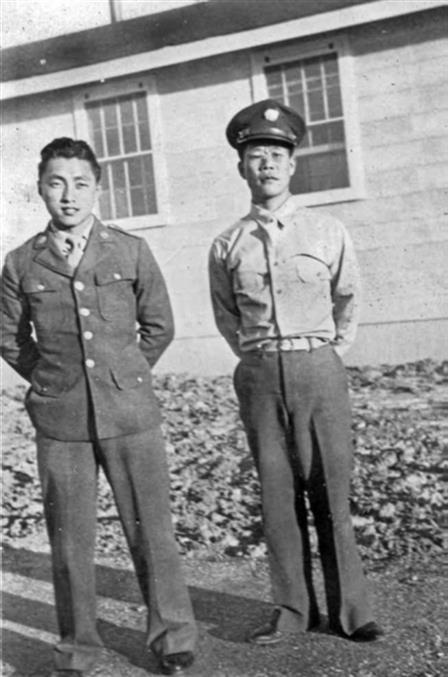
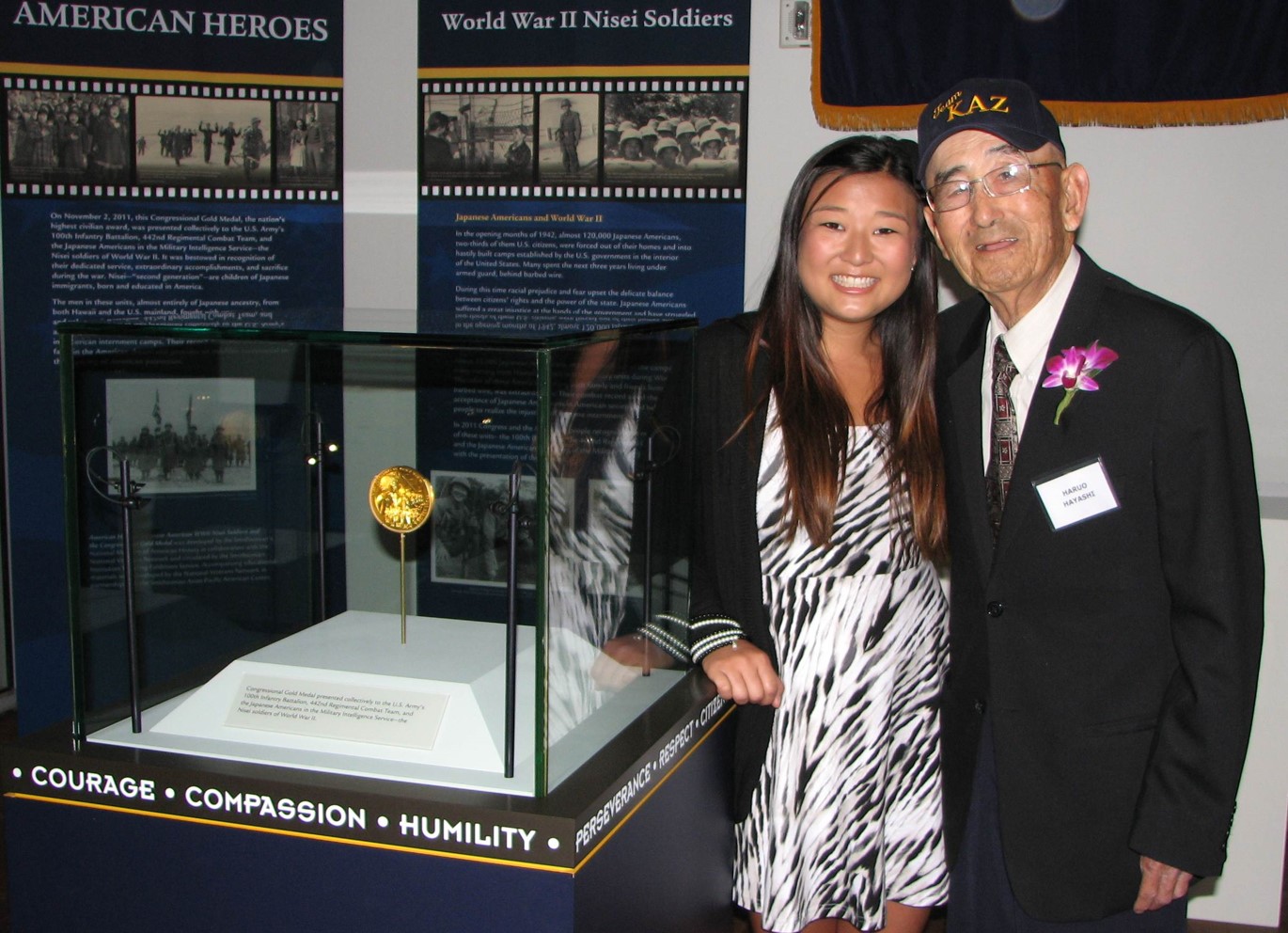
Ten years later, Don was one part of a kind of Four Musketeers: Himself, John Loomis, Gordon Bennett and Haruo Hayashi.

Haruo, an AGUHS sophomore, was at home recovering from appendicitis surgery when the Japanese hit Pearl Harbor. He was anxious about getting better and returning to high school.

He was relieved when one of the toughest kids in school, Milt Guggia, beckoned to him. “Haruo,” Milt told him earnestly, “If anybody calls you a ‘Jap,’ I will beat the shit out of him.”

What a wonderful thing.

So, too, were the Four Musketeers. They stood by all their Nisei friends, but they stayed especially constant to Haruo, a painfully near-sighted boy, an Equipment Manager in high-school athletics, a boy who had to learn English from a kind little girl who was his classmate at the old grammar school on Traffic Way, where the Ford agency is today.

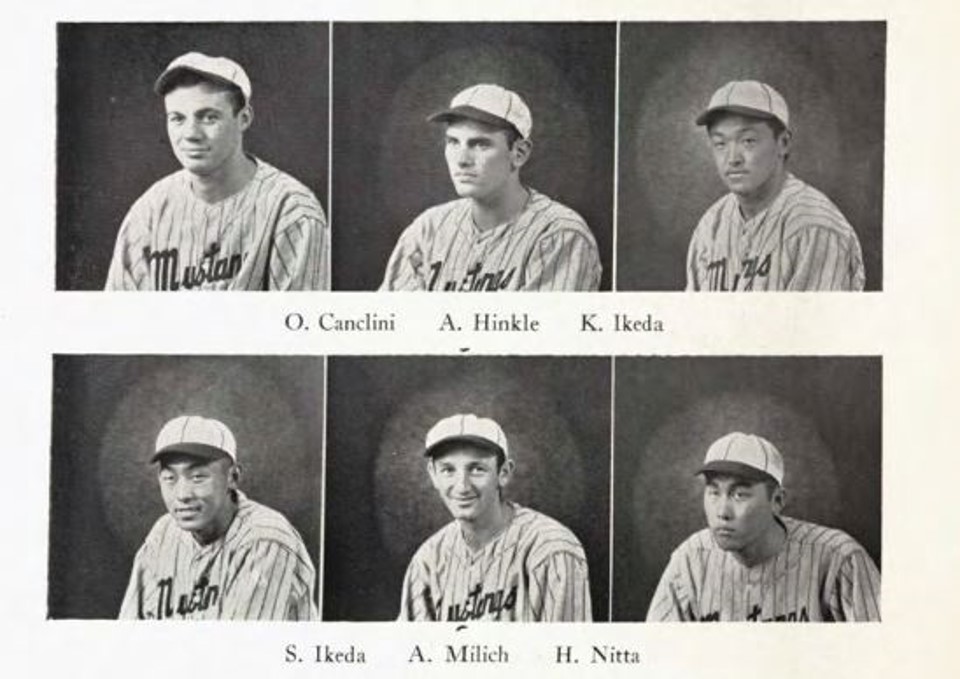
In April, the buses came and took Haruo Hayashi and his family away, along with the Kobaras, the Fukuharas, the Fuchiwakis, the Ikedas (except for Kaz, who stayed after to care for his father, his back broken after a team of farmhorses ran away with him), and so many more.

Haruo went first to the Tulare Fairgrounds, where the animal stalls where they kept our neighbors still stank of livestock.

Then he and our neighbors went to Gila River, where the temperature hovered at or above 100 degrees for the first month they were there. Then the desert winds came up, carrying the spores for Valley Fever, and that is what began killing off the grandparents who had first come to our Valley from Japan, most of them from Kyushu, a few from Hiroshima-ken.

Haruo finished high school there, taught by Quakers who insisted on living their faith. He continued to receive letters from the Four Musketeers, including Don.

Maybe “Boococks” would be a better term than “Musketeers.” That’s what their little circle called themselves. They were all members of the AGUHS Stamp Club.

Three of them fought in the Pacific. John, the Marine, fought on Peleliu and in the last terrible campaign on Okinawa. He didn’t know it, but his cousin Gordon Bennet was just offshore, on a fleet oiler like the ones the green kamikaze pilots—they were essentially children—excitedly mistook for heavy cruisers or battleships before they went in for their dives. Don was a swabbie, too.

Haruo joined the 442nd Regimental Combat Team, but the war in Europe ended before he had his chance. The razor-thin little near-sighted teenager was a heavy machine-gun instructor when word came that he could go home.

When he did, he found that the Phelans and Taylors had taken care of his father’s land and his farm equipment. He lived with the Bennetts during the period of transition—not always peaceful—until he could take up farming again.

John, Gordon and Don all came home, too. The Boococks were together again, and they remained that way for seventy-five years.

I think there can be no finer compliment to a man like Don Gullickson that to call him a true friend to his friends.

He was an Arroyo Grande boy, you see.

“Beat to Quarters, Mr. Bush!”

ef9ebf605e226efe77007b7c5ebf6536

Ioan Gruffud as a hunky Lieutentant Horblower
in the television miniseries

My first adult reading had to have been, at least in terms of fiction, the trilogy of Horatio Hornblower novels my father had bought some time during World War II, possibly when he was stationed in London. He liked the books and they may have inspired him to take the steam train down to Portsmouth to see Admiral Nelson’s HMS Victory. One of the souvenirs he brought home with him, besides several bottles of Cointreau, was a little tin box of hard candy, its lid embossed with the image of the great ship on which Nelson–Hornblower’s real-life inspiration, just as Hornblower would inspire Captain Kirk– had died in 1805. My mother kept the box for years to store bobbins of her brightly-colored sewing-machine thread.

Hornblower, like Nelson, was a Royal Navy officer during the Napoleonic Wars, and he became so popular the his creator, C.S. Forester, could not get rid of him, in much the same way L. Frank Baum could not get rid of Dorothy nor Conan Doyle kill off Sherlock Holmes. Forester would eventually write nearly twenty in the series that followed the hero from his days as a green (This is meant quite literally. See below.) midshipman, with feet the size of shovels, to his last posting as an admiral in the West Indies, and in the process, his novels would spawn a little trailing fleet of fictional acolytes: Nicholas Ramage, Richard Bolitho and, of course, Jack Aubrey, the creation of Patrick O’Brian, a writer–like spy novelist John LeCarré–who has, through the force of his prose, leaped the gap between popular fiction and literature.

mastercommander

The best of friends: the logician Dr. Maturin and the passionate Captain Aubrey in director Peter Weir’s Master and Commander.

If Hornblower’s leap didn’t quite make it, blame his big feet. But that was what immediately lovable about Forester’s character: He was imperfect, a little cranky, relentlessly critical of himself, and modern. In the first few pages of the first novel in series, we learn he is disgusted because he, a frigate captain in his thirties, is beginning to develop a pot belly. He is given to shouting “God damn your eyes!” at his coxswains and servants, a phrase, sadly, that I never revived. Like his real-life inspiration, Lord Nelson, he starts each voyage confined to his cabin, where he is violently and spectacularly seasick. He sits a horse, elbows akimbo, buttocks and saddle at war with each other, with no more grace than Ichabod Crane did. He is trapped in an unhappy marriage with the unhappy Maria (“simpering” is the adjective Forester chooses) —had they lipstick in Napoleonic Europe, Maria’s would have been very red, liberally and inaccurately applied, and since she was constantly weeping at her husband’s departures, her mascara would’ve run like printer’s ink.

Fortunately for Hornblower, Forester kills Maria off by the third novel, replacing her with the far more elegant Lady Barbara, sensitive to and soothing of her husband’s many moods. She is, I think, a fictional counterpart to the sensitive and soothing Clementine Churchill, who deserved a Victoria Cross for not only putting up with Winston, but for her courageous persistence in loving him.  Hornblower’s men love him, too–a phenomenon he can’t quite understand, which is charming in itself–because he inspires them and he is, in his prickly way, devoted to them, despite their tendency, in battle, to be skewered by splinters or reduced to jelly by enemy cannonballs bouncing their way along the main deck. (“Jelly” is a favorite of Forester’s, since it was in such short supply, I suppose, in wartime England)

Not that this moodiness of Hornblower’s was ill-earned: As a very young officer, his first prize ship—a “prize” was a captured enemy vessel that meant money for a crew, and Hornblower was given command of this one—was a French coaster hauling a cargo of rice. What Hornblower and his prize crew didn’t realize was that the little ship was holed below the waterline. So sea-water rushed into the hold and the rice did the usual thing that rice does when it gets flustered and wet: it expanded, tearing young Hornblower’s little command into pieces, the ship’s planks exploding like gunshots, before he and his crew had to be rescued. Hornblower has a history of leaks. In a later novel, Hornblower and the Atropos, as a junior post-captain, he’s given the honor of commanding Lord Nelson’s funeral barge—and balanced on the barge is the massive coffin that contains the tiny admiral—when, in mid-Thames, it begins to spring leaks. Hornblower manages to bring the barge safely to its destination, St. Paul’s, for Nelson’s funeral—I’ve seen that barge, in the Royal Naval Museum in Portsmouth—but not before suffering what has to be the most epic panic attack in English-language fiction.

Even his fighting ships betray him. His first ship-of-the-line, an early 19th century equivalent to a battleship, Sutherland, is Dutch-built and so is shallow-drafted—she’s meant to protect a coastline on which Hans Brinker occasionally skates—and so sails with all the grace of pig iron. The French sink Sutherland, good news for Hornblower, but capture him and Mr. William Bush, his stolid and mildly dim-witted First Lieutenant, which is not so good. Hornblower will escape eventually to go on to command, as a commodore, a little fleet of ships in the Baltic, including a bastardization of naval architecture called a bomb-ketch, which is essentially a floating mortar and so graceless as to make Sutherland look like a clipper ship.

Hornblower6

Robert Beatty, as Lt. Bush, at left; Gregory Peck, as a mysteriously American-sounding Hornblower, at right, in the 1951 film version of the first novels.

Forester wrote so many Hornblower novels and wrote them so well that one of my favorites was not a novel and was not written by him at all. A gentleman named C. Northcote Parkinson, thanks to his discovery of the mythical Hornblower Family Papers, wrote a biography, The Life and Times of Horatio Hornblower, as if his subject was not mythical at all. It is enchanting.

The best part reveals another facet of Hornblower’s character that redeems his crankiness and his seeming ill-luck: He is a man of immense courage. His moral center, part of what makes him so critical of himself, is clear from the first moment we meet him, as a midshipmen. A little later, as an immensely junior lieutenant, he is assigned to the luckless ship-of-the-line Renown, whose captain, Sawyer, is mean-spirited, vengeful, and flagrantly paranoid. He makes Bligh look liked Billie Burke’s Glenda the Good in 1939’s Wizard of Oz.

Before Sawyer can foul up a mission against the Spanish by court-martialing his officers on trumped-up charges of mutiny, he mysteriously tumbles down a hatch, fractures his skull, and so command passes to a far more capable man, First Lieutenant Buckland. Buckland will then lead the Renowns to a daring victory (the shore party is commanded by Bush) over the perfidious Spanish, who, in Hornblower’s world, are just as perfidious as they’d been in 1588, Good Queen Bess’s time.

At a much later time, 1970, it is Parkinson, thanks to the Hornblower Papers, who reveals the ultimate and shocking truth. Sawyer was in part right: There was a mutiny, but it was, according to C. Northcote Parkinson, a mutiny of one, on the part of the lowly Fifth Lieutenant, Horatio Hornblower. While Renown’s coterie of officers fretted about what to do about their mad captain—they were seized with paralysis with the enemy virtually within sight—it was Hornblower who shoved Sawyer down the open hatchway. It was an action motivated by Hornblower’s unfailing devotion to his duty, and it was the mad Captain Sawyer who was preventing Renown from doing hers.

Wes Studi


26168508_2011746602439462_6439320735585962278_n

I hope Hollywood doesn’t screw this up. The plot involves Indian fighter/army captain Christian Bale, who is charged with escorting a captive Cheyenne chief, in what seems to be a brief moment of compassion in Indian policy, back home to die.

The escort, which is made up of Buffalo Soldiers (accurate to the setting, 1892) is set upon by a common enemy–Comanches, easily the most feared tribe on the Great Plains.

You know all those old Westerns that show Indians firing at full gallop while hanging along their horses’ flanks? Only the Comanches could do that. All the other Plains tribes–even the Lakota, the majority present at the rubbing-out of Custer’s command–fought dismounted, just as the Bluecoat cavalry did.

All the other Plains tribes reckoned their wealth in horses. The Comanche saw their horses as utilitarian only. They would ride them to death, it is said, and then eat them. The formidable Apaches, who shared territory, very briefly, with the Comanches, were terrified of them. I think that’s what makes one of my favorite Westerns, The Searchers, so riveting: when the Comanches show up, unseen except for a flickering mirror-signal and unheard except for their mimicking of bird calls, you know the settlers they’re about to attack are doomed.

vlcsnap-2017-01-08-11h04m04s599.png

The book about them, Empire of the Summer Moon, and about their leader Quanah Parker–and about the raid and kidnapping that inspired The Searchers–is first-rate. It would turn out that the only fighters equal to the Comanches were the Texas Rangers, and what gave them their edge was their scrappiness (think Woodrow and Gus from Lonesome Dove), and, even more important, the technological advantage the Rangers gained once they’d armed themselves with Samuel Colt’s revolver.m6VWBwMAox4C

The about-to-get-here film features Wes Studi, a wonderful actor, as the dying Cheyenne leader. He was Magua in Last of the Mohicans [a book it is not at all necessary to read: Mark Twain’s essay “Fenimore Cooper’s Literary Offenses” is far better] and the title character in Geronimo: An American Legend, which was a far better film that the stupid title would indicate.

My favorite Studi role, however, came on a chance viewing of Reading Rainbow. He read a Native American version of “Cinderella” to very little kids, who were enthralled. His remorseless Magua was just a role. This is a very gentle man.

video.0-28-37.232


Perfection.


Hogan_Merion_1_iron_better.ashx_

Number One Son got me not one, but TWO books about golfer Ben Hogan. This is a photo of his one-iron to the green to win the 1950 U.S. Open on the last and 72nd hole.

Hogan was not a warm man. He loved golf. He loved his wife, Valerie, and there it ends. But the year before this shot, he’d thrown his body, instinctively, in front of Valerie’s as their car crashed head-on into a bus that emerged suddenly from a dense Texas ground-fog while they were on the road between tournaments.

The impact nearly crushed Hogan. He walked with a limp for the rest of his life. But he’d saved Valerie’s life, and his own, in that moment. Had he not loved her so much, had he not thrown himself in front of her, the steering column would have impaled him.

So the next year, limping, he won the U.S. Open with this one-iron, with a club so difficult to hit that almost no modern golfer carries it anymore. His shot ranks with breaking the sound barrier, with an Olympic triple-axel triple-toe, with climbing Everest, with baking a weightless souffle.

His talent was modest, compared to that of his contemporaries, naturals like Sam Snead, Byron Nelson and Jimmy Demaret.  But he had an engineer’s mind, and he rationalized the elusiveness of the golf swing and broke it down into component parts in a way that made sense to him. In so doing, he practiced , it’s said, until his hands bled, but he wasn’t a drudge. He loved to practice, loved to live for the moment when his timing and the impact point met to create a perfect one-iron–his described a gentle fade–in a way that seemed (it was a lie, of course) to be effortless.

Shagging balls for Hogan wasn’t effortless, because he could be merciless with the young boys who shagged for him in practice: he grew so accurate that he hit them repeatedly, and it hurt. He didn’t notice. He was focused on the impact as much or more than the shot’s destination. His cigarette glowed furiously between shots. Impatient, he motioned his shagger to move backward ten yards, out of the line of fire, until he changed clubs and started to hit him repeatedly with a six-iron rather than a seven.

Once a knot of overbearing Kern County oilmen begged Hogan, playing an exhibition in Bakersfield, to give them lessons. He would be paid handsomely. He looked at them narrowly through his cigarette smoke, and flat turned them down. He was angry. Didn’t they know what he knew? They already had the best teaching pro in America, a stubby little guy named Eddie Nowak.

Nowak, many years later, would teach me how to play at Black Lake, in Nipomo. Hogan was right: Nowak was one of the best teachers I’ve ever had, and one of the toughest. The discipline and the work ethic he taught me has lasted me all the days of my life, one in which golf has been mostly absent.  Eddie didn’t just teach me golf. He taught me how hard you have to work to take on life. He was my Hogan.

A Lifetime of Teachers


One of the reasons I decided to write books was this man, Stanford’s David Kennedy.

 
20161218094946003_hd
 
 
I took a class in 2004 from Dr. Kennedy, who won the Pulitzer Prize for his history of America during the Great Depression and the Second World
War, Freedom from Fear, and was transfixed by his clear-headed and richly anecdotal re-telling of the years that formed my parents, and, of course, myself.
 

Dan Krieger (European history) and Jim Hayes (Journalism), two Poly professors in a lifetime of wonderful teachers, are among the other reasons I wanted to teach history and write about it, as well.

 
2014.07_Jim-Hayes-Legacy
Jim Hayes. I know that look very well. It says: “Re-write.”
 

At the University of Missouri,  Charles Dew’s teaching on the history of African-American slavery–another book that was formative to me was Genovese’s, part of Dew’s required readings–David Thelen’s teaching on Populism and the Progressive movement, Winfield Burggraff’s teaching on Latin American history, and Richard Bienvenu’s teaching on the history of socialist thought all made me want to be like them.

 
613IChmB9qL
 
 
Two teachers at Arroyo Grande High School–Carol Hirons (Journalism) and Sara Steigerwalt (Speech) had already taught me, without me knowing it, HOW to teach history.
 
The first teacher who told me that I should write books was my Branch School teacher in 5th and 6th grades, Mr. William E. Burns Jr.
 
 
Branch
Branch School, in its two-room version. In 1962, we moved to a school with four rooms.
 
I am inordinately lucky.
 
So when I found out that Prof. Kennedy’s wife, Judy, grew up in SLO County, I contacted him to send her a copy of the “Outlaws” book, a proposition he very kindly accepted.
 

Here’s the surprising part: Mrs. Kennedy is Alex Madonna’s niece, and my Dad was Madonna Construction Company’s comptroller in the 1950s and 1960s. It is, after all, a small world, and still rich with stories to be told.

 
20160203_135223
This is where I grew up–the Upper Arroyo Grande Valley.
 
 
I wouldn’t have any stories to tell except for the place where I grew up, except for my parents, except for my teachers. I don’t think any of the last, from Mr. Burns to Dr. Kennedy, know how profound their impact has been, and how long it will last–past their lifetimes, past mine, in small ways, in small stories vividly re-told.
 
Teachers live lives that will color and enliven the lives of children not yet born. It is these children, God willing, who will heal the wounds that history inflicts on all of us.
 
It is teachers that will show them the way home to their ideals, and to ours.