Today the president* revoked the findings on the impact of greenhouse gases on the environment and so opened the way for accelerated climate change.
That’s because the EPA—an agency founded by a noted Bolshevik, Richard Nixon—has been stripped of its power to regulate greenhouse gases.
And so we turn to history, and, predictable considering it’s me posting this, eventually to Ireland.
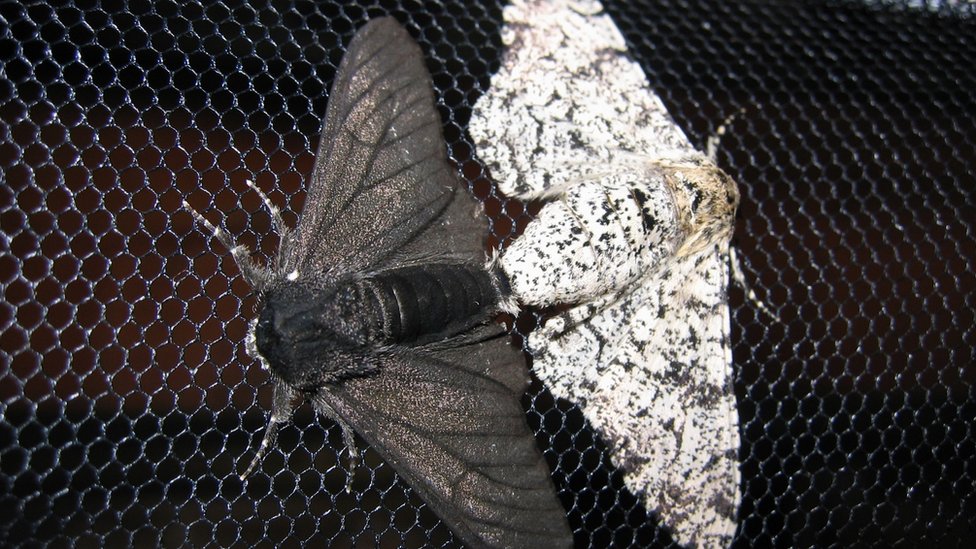
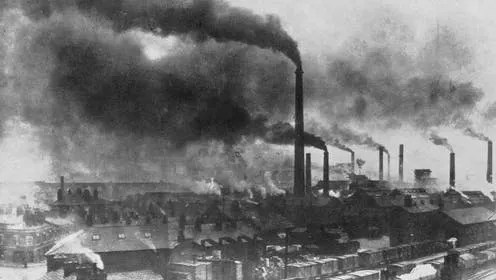
White birch trees proliferated in and around London and the white moths that made them home did, as well. That was until the industrial smoke of the Industrial Revolution made white moths easy prey for hungry birds, because the birch trees were now stained, irrevocably, gray. Black and peppered moths, less visible, survived, according to that theory propagated by a devout Anglican, Charles Darwin.
The president* is 79, and doddering at a rate uncommon even for someone his age. (He will assemble a Filet o’FIsh rogether with a Big Mac t at lunch, chase that monstrosity with a Quarter Pounder, fries, and an extra-large Diet Coke.)
So he will die soon, if not soon enough and, for a man who epitomizes Malignant Narcissism, it’s perfect opportunity, in encouraging greenhouse gases, to kill the rest of us human beings, too. We deserve it, in his eyes, and we’re not so adept at changing colors. (His is White.)
That brings us to St. Patrick’s Day, coming next month.
I’m not suggesting that the Irish have some kind of monopoly on goodness or on holiness. More Irish died at the hands of brother Irishmen during the terrible Irish Civil War of the 1920s. And even in our Civil War, at Fredericksburg, the Confederate 24th Georgia, so Irish that a gold harp was sewn into the fabric of their regimental flag, stood up from behind a stone wall and fired into the faces of the Union Irish Brigade, immigrant soldiers from New York, Massachusetts and Pennsylvania. The slaughter they inflicted was terrible.
But the Irish, despite those exceptions, have a reverence for life—exemplified by desperate Irish mothers, during the Famine, who gathered nettles in church burying grounds to make soup. That reverence extends to the sea, to thorn trees, where the fairies live, to animals, to the Earth.
You can even see this in the original version of the Cranberries’ “Dreams,” where Irish mourners dislodge a tree whose spirit is revealed when washed with water.
No Irish immigrant—to South County San Luis Obispo, where I grew up—exemplified that reverence more for the natural world than did the poet Ella Young. The only thing remotely like her that I’ve encountered comes from the Northern Chumash—the ytt People–the First People to live where I now live—who breathed every breath along with the Earth’s.
I have no power as monstrous as the president’s*, but I do have Ella Young’s power as part of my faith, a faith that grows from my own roots in County Wicklow, where dolphins dance in the air just offshore.
The image below is a young man named Patrick, who loves whales.
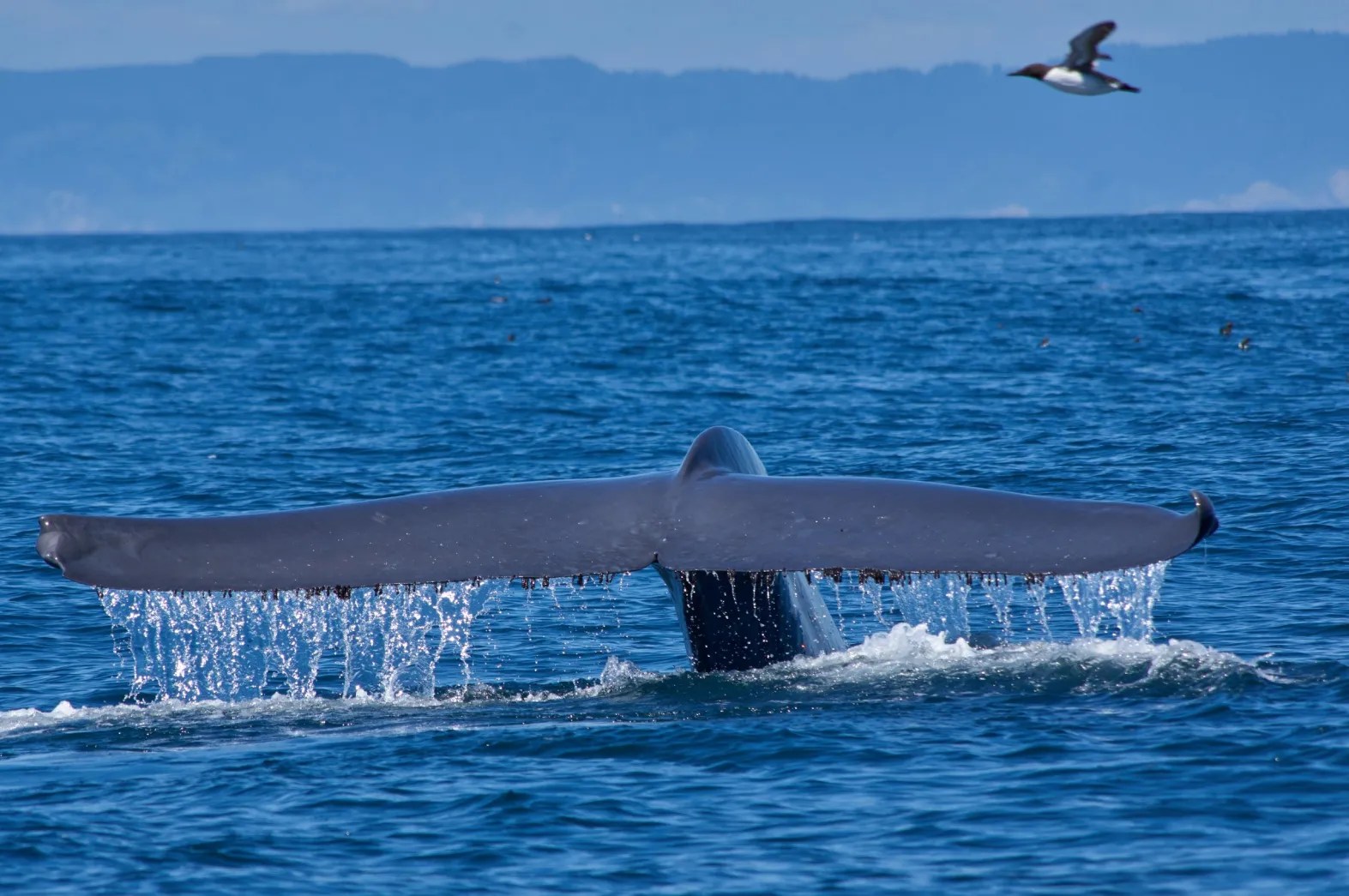
So this St. Patrick’s Day, there a creature of God asleep below the surface of God’s waters, rising in sunlight like this blue whale off the California coast.
If you are at all Irish, this makes perfect sense: this is my mother’s daughter. This whale is my sister. She comes to surface in the hope of someday seeing my son Thomas as he casts his line into the sea from the Pismo Beach pier.
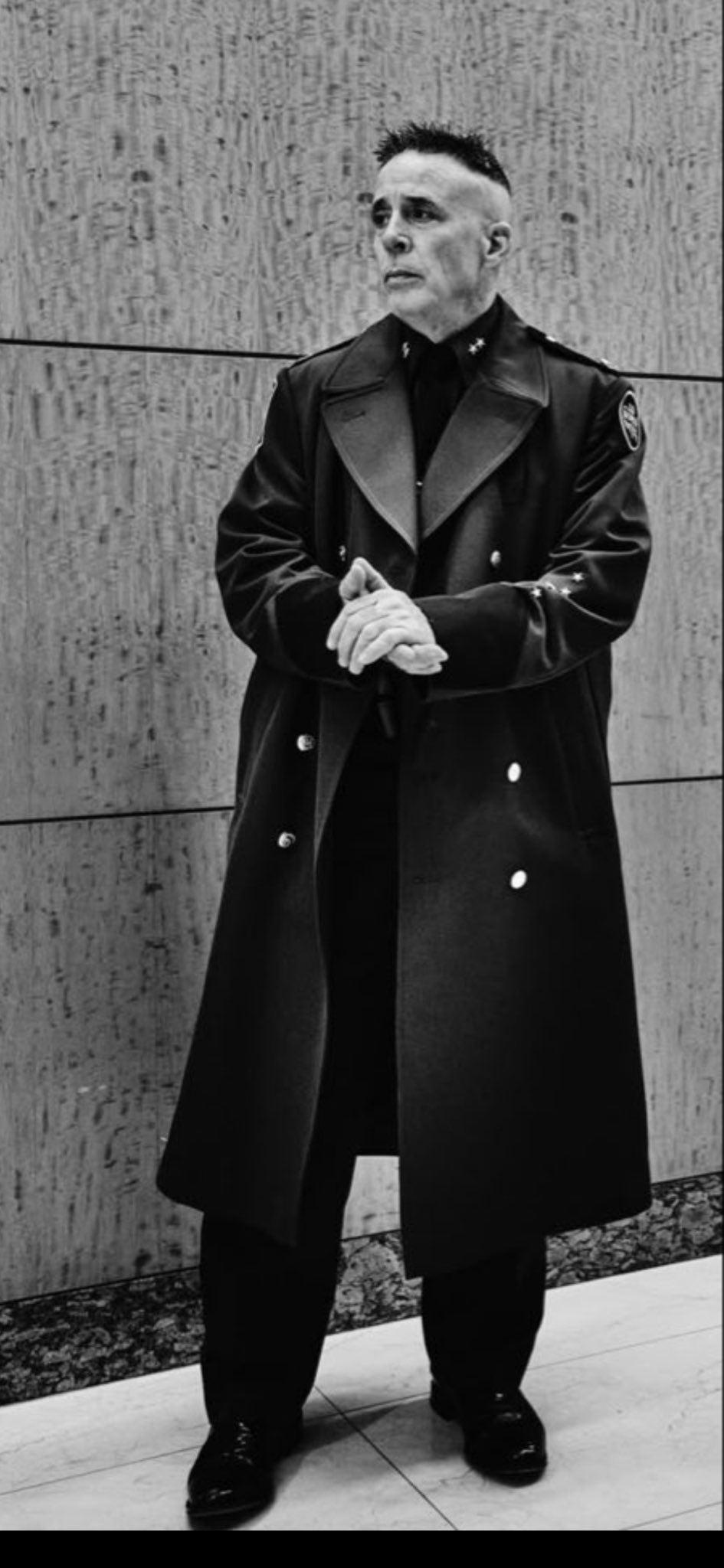
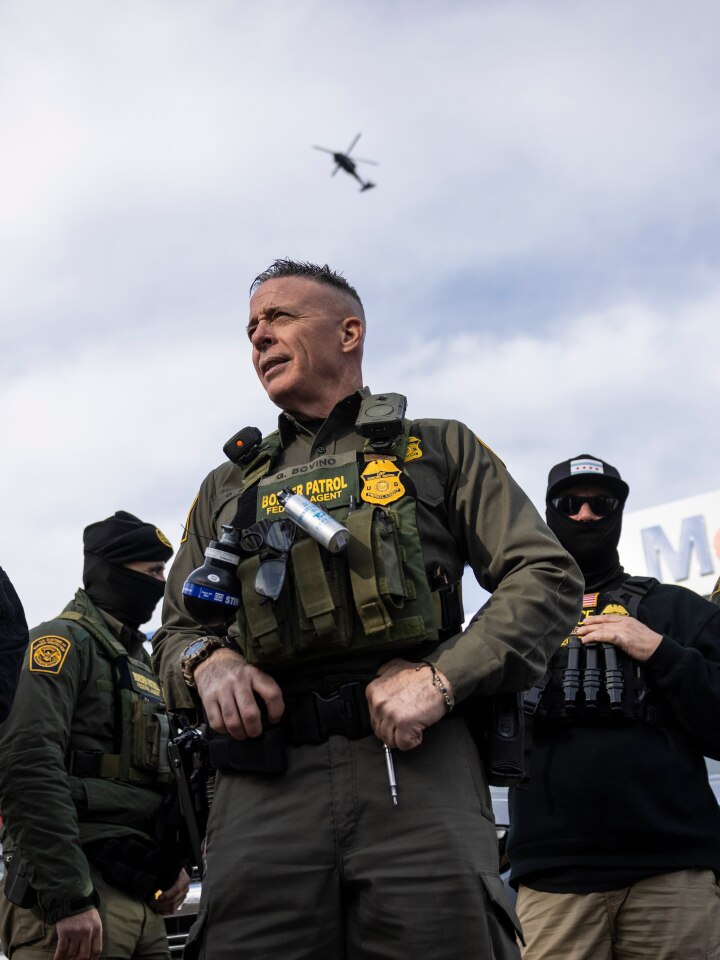
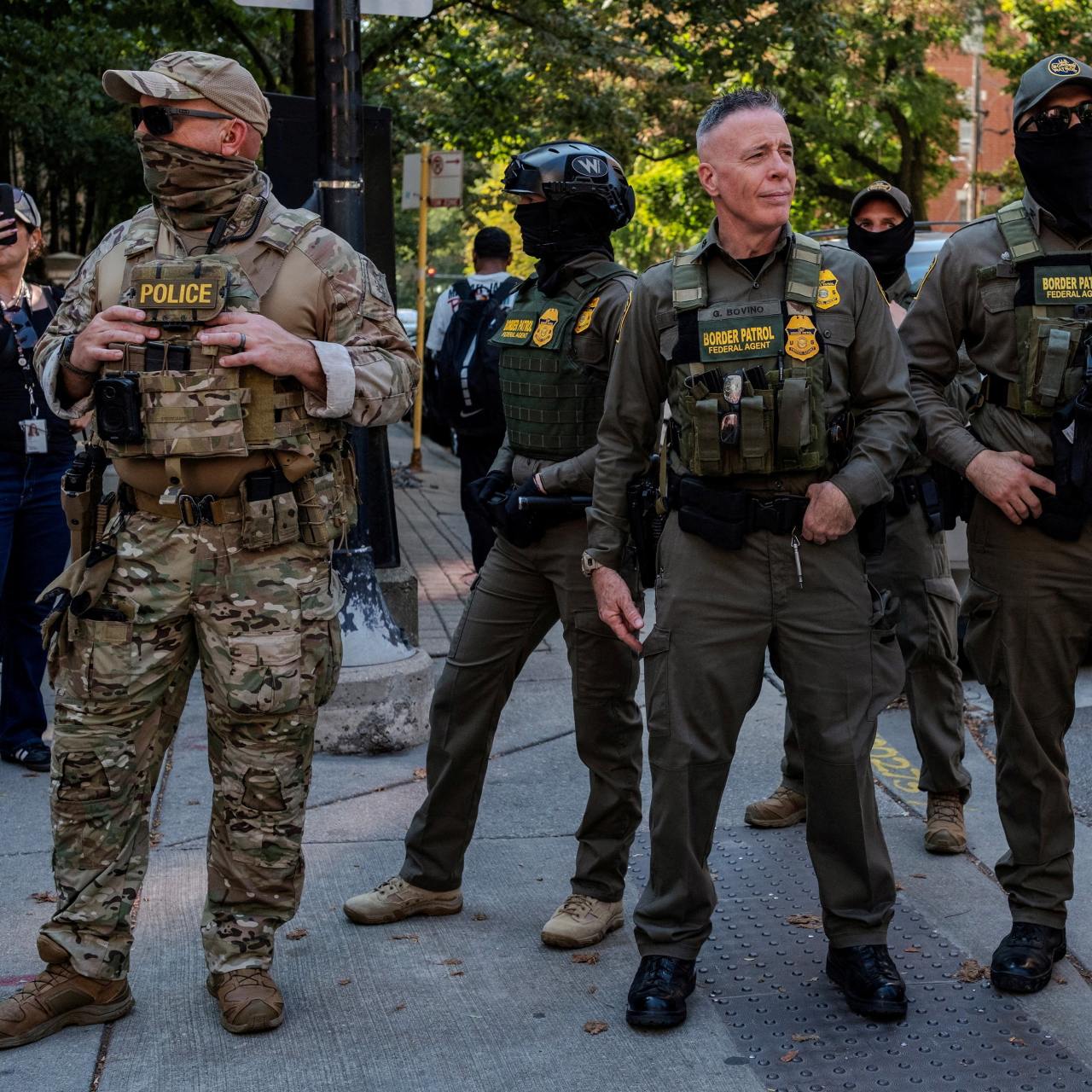
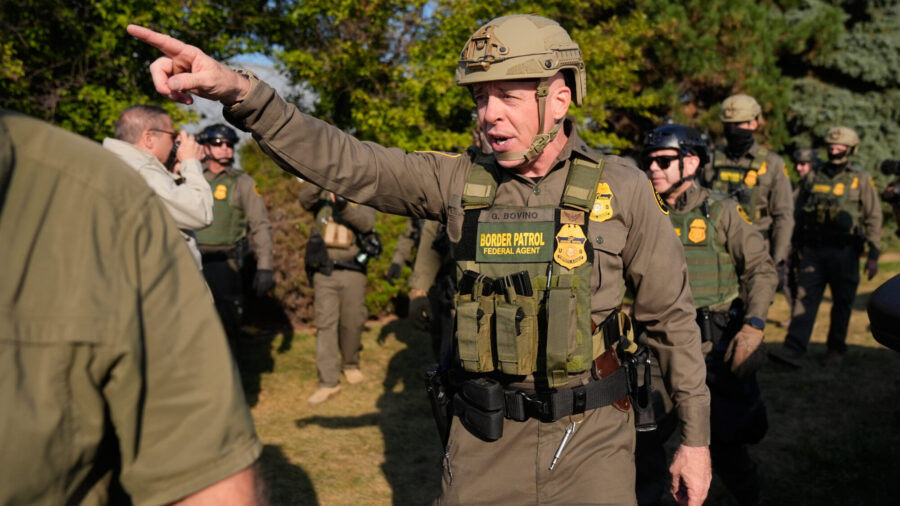
That’s Border Patrol head Gregory Bovino on CNN this morning, defending the second fatal shooting by federal agents in Minneapolis. I could take only about thirty seconds before I muted the television’s sound. That left me with his image. Why is he wearing a Sam Browne belt?
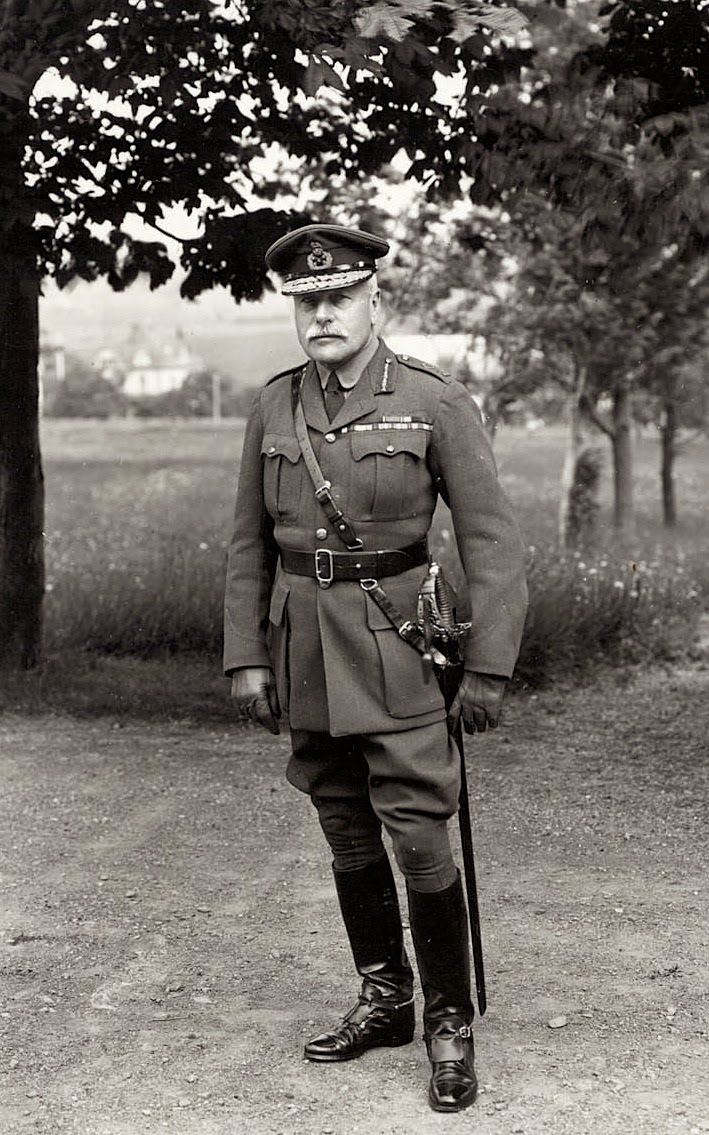
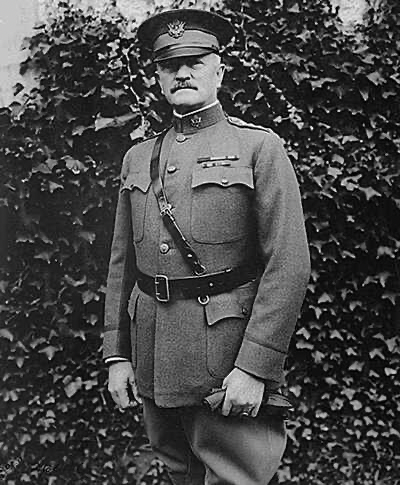
The belt was an innovation by British General Sam Browne: after losing an arm in the Sepoy Rebellion, it stabilize Browne’s sword belt, making it easier for him to draw it from its scabbard.
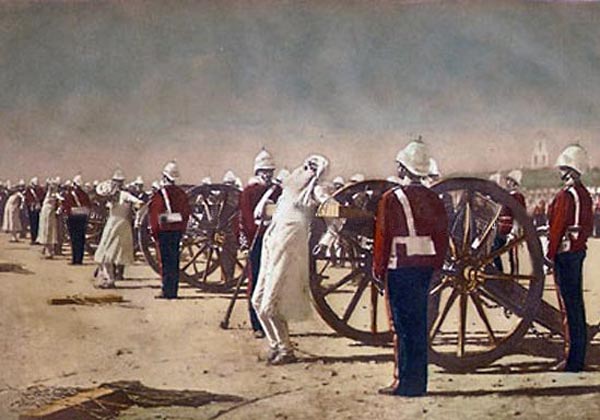
Oh, and this is how the British dealt with accused Sepoy (Indians who served in the Raj’s army) rebels: Blowing them apart from the muzzle of a cannon.
The Sam Browne belt became a regular feature in the British Army, down to the present. For one thing, it immediately distinguished officers from their inferiors. And, in class-conscious Britain, “inferiors” is not an accidental word choice. After his catastrophic losses in the 1916 Battle of the Somme–7,000 British soldiers mowed down by German machine-gun teams in the first thirty minutes—their commander, Field Marshal Sir Douglas Haig wryly commented that “it certainly keeps them off the streets, doesn’t it?”
Unfortunately, the belt also became standard for American officers until it was discontinued in World War II. That’s Haig, on the left, and his contemporary, our John J. Pershing, on the right. American police forces adopted it, as well, until it was realized that criminals were using the belt to strangle arresting officers.
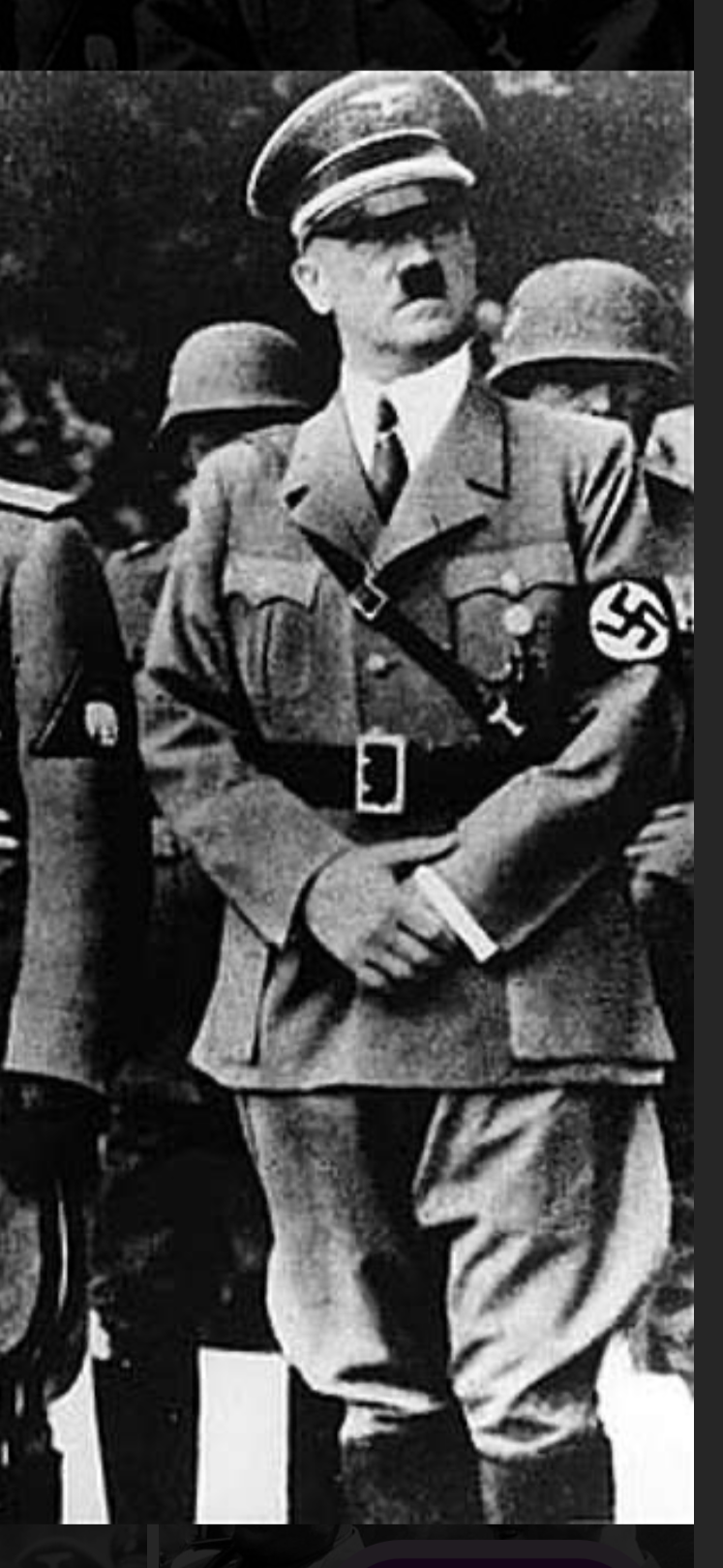
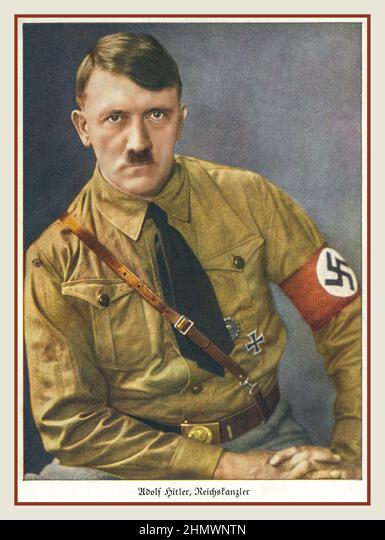
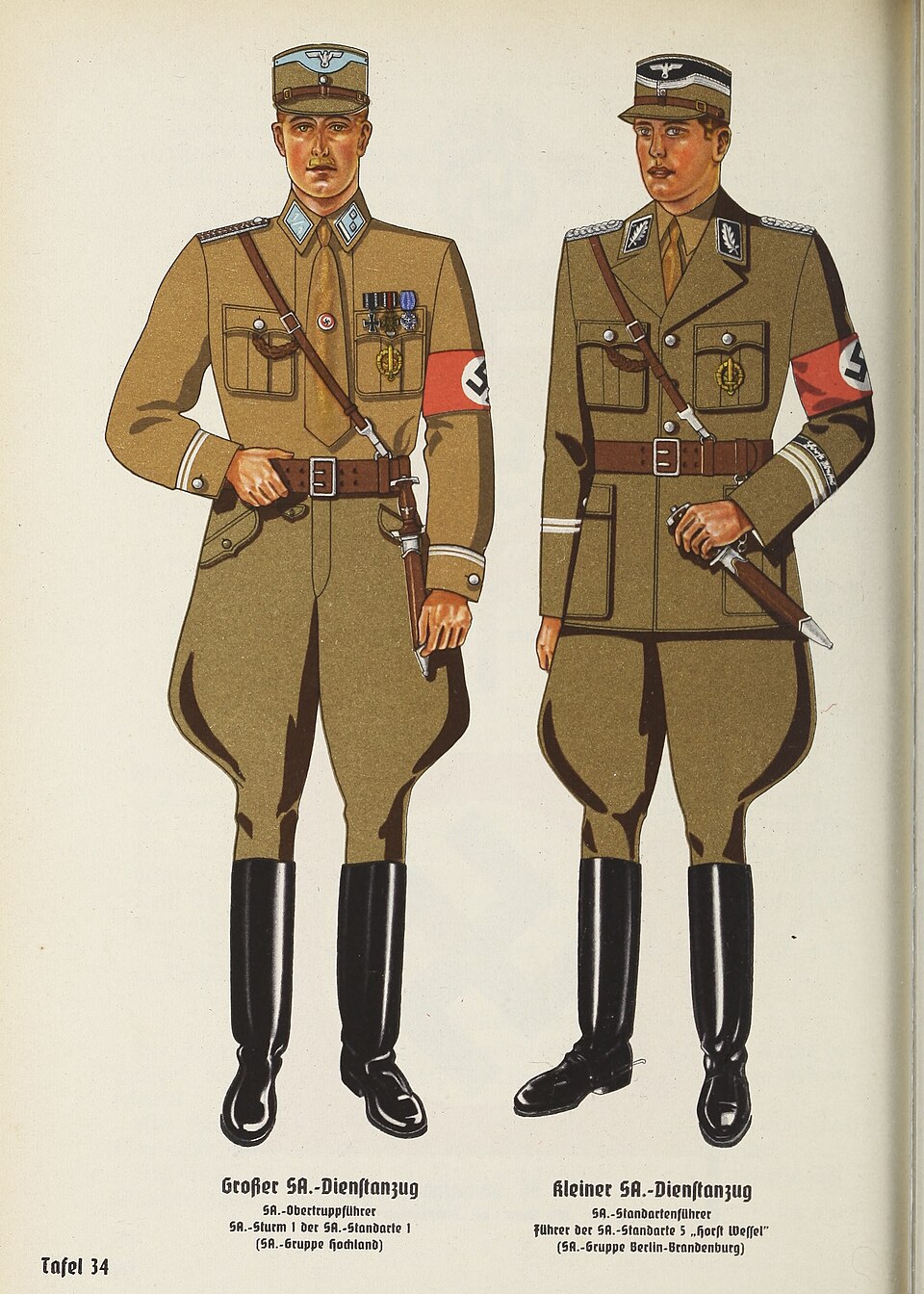
The accessory found its way into Hitler’s hypermilitarized Germany, as well. The Fuhrer, even as a humble early-on National Socialist, rarely appeared in public without his, and the Sam Browne belt became standard for the SA, or Brownshirts, the nearest historical equivalent to ICE.
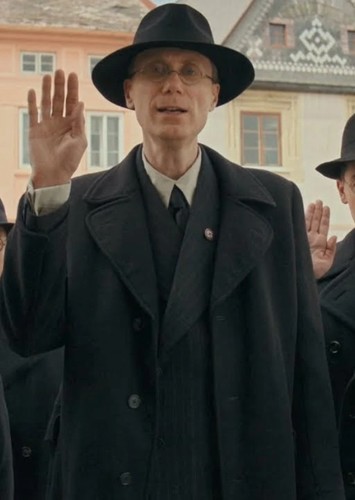
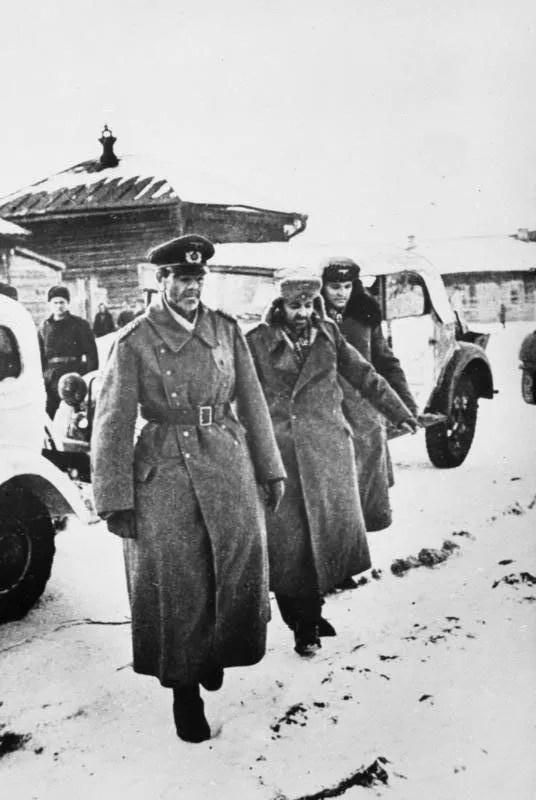
Bovino is fond of long trenchcoats, another feature of another Nazi organization, the Gestapo, or Secret Police (the movie still is from Jojo Rabbit), another apt description of the masked paramilitaries now infesting Minneapolis. It was also favored by Wehrmact officers, including those celebrating the 1940 fall of Norway in front of the Oslo National Theater. The fashion statement is more dire when it’s illustrated by an exhausted Field Marshal Paulus surrendering in 1943 Stalingrad.
So if appearance is everything, Gregory Bovino, a small man, is meticulous about his.
It’s so ironic when the same man, with supreme gall, tells us not to believe what our eyes see.
One Hundred Years Ago (with additional commentary from me)
February 6
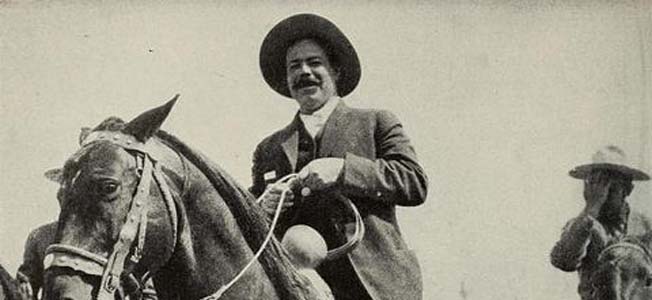
The skull of Mexican revolutionary Pancho Villa is stolen from his grave in Chihuahua. Its whereabouts are unknown to this day. (His widow, Luz, keeps the touring car in which Villa was shot, in 1923, in the front yard of their hacienda. It becomes a planter.)
March 4
A writer in in Budapest commits suicide and leaves behind a note containing a crossword puzzle. The puzzle is yet to be solved.
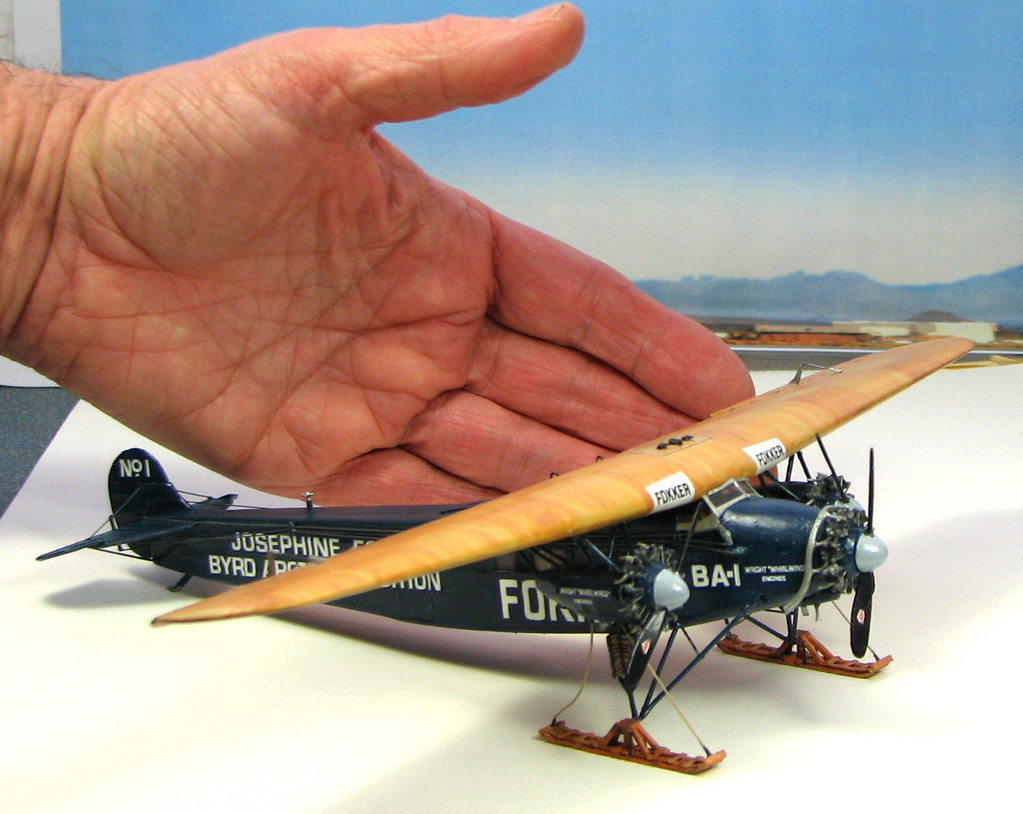
May 9: Explorer Richard E. Byrd and his Navy Chief Aviation pilot Floyd Bennett claim to be the first people to fly over the North Pole, in their plane named “Josephine Ford,” which, if you ask me, looks far to small to make such a demanding trip.
May 12: Norwegian Roald Amundsen and his fifteen-strong crew fly over the North Pole in their “Norge” airship, becoming the first verified explorers to accomplish the feat. Seventy years later, it’s revealed that “Josephine Ford” had sprung an oil leak and the Americans had to turn back before they reached the Pole.
Damn.
June 23
The first Scholastic Aptitude Test (now commonly referred to as SAT) is administered to 8,000 high school students. The test, based on a World War I aptitude test administered to immigrants, is aimed at keeping Jewish students, disturbingly bright and hard-working, out of Ivy League colleges. I am not making this up.
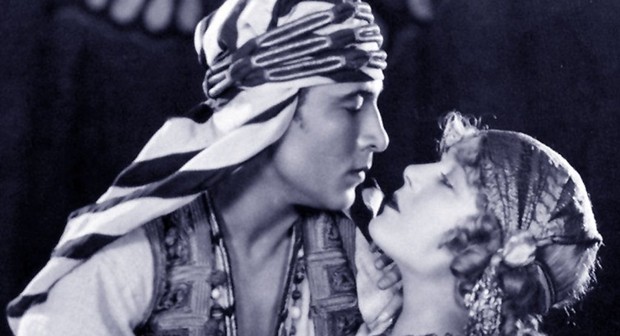
“The Latin Lover” Rudolph Valentino, Hollywood silent movie star, dies suddenly of perforated ulcers, aged 31. His condition is named after him as “Valentino’s syndrome”. The following day, 60,000 mourners cause a riot in New York trying to reach Valentino’s body. (Part of Valentino’s 1921 film The Sheik was filmed in the Guadalupe Dunes.)
September 20
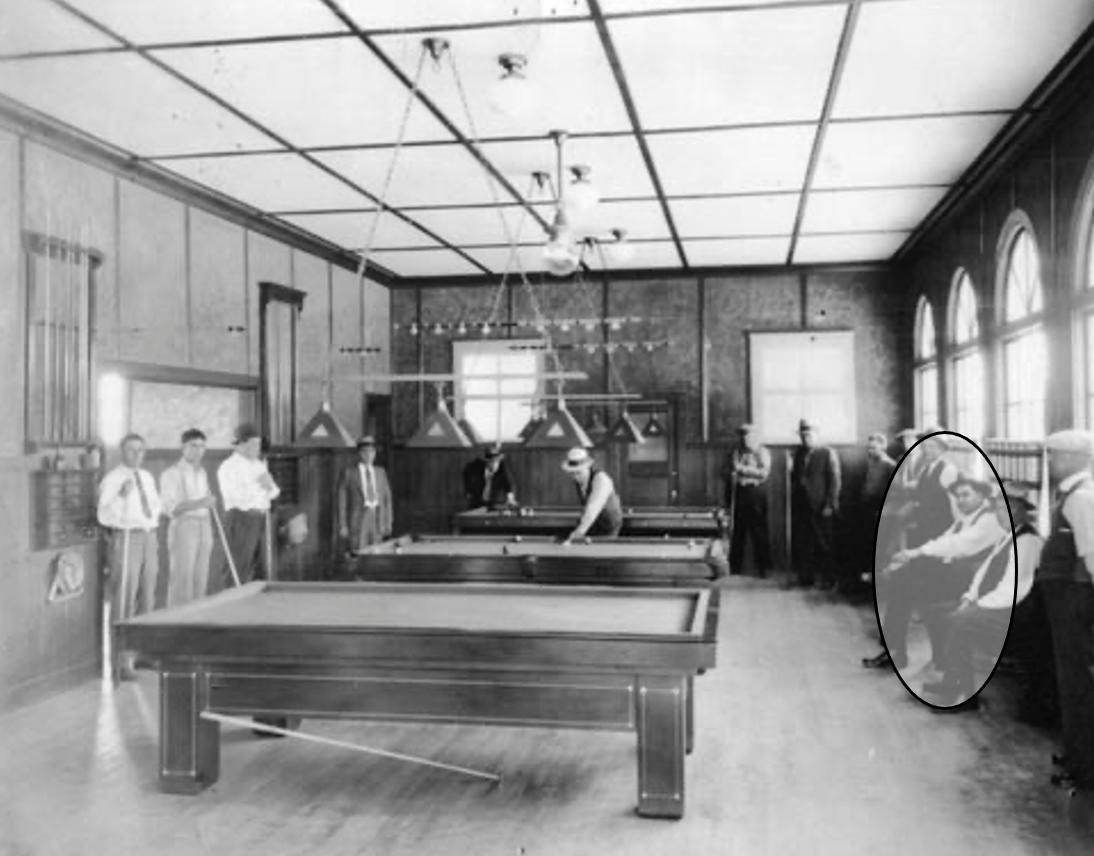
The North Side Gang attempts to assassinate powerful mob boss and rival Al Capone at the Hawthorne Hotel in Cicero, Illinois. Despite over a thousand rounds of submachine gun ammunition being fired, Capone escapes unharmed. (Capone favored the Central Coast as prime territory for bootlegging. By tradition, the photo below shows Capone shooting pool at what is today the Cool Cat Cafe in Pismo Beach. Those windows remain.)
October
6. Against the St. Louis Cardinals, The Yankees’ Babe Ruth hits three home runs in a World Series game, the first player ever to do so.
14. A.A. Milne’s children’s book Winnie-the-Pooh published by Methuen & Co. in London. (Eeyore fan here.)
22. Ernest Hemingway’s debut novel The Sun Also Rises is published. (About bulls but not balls.)
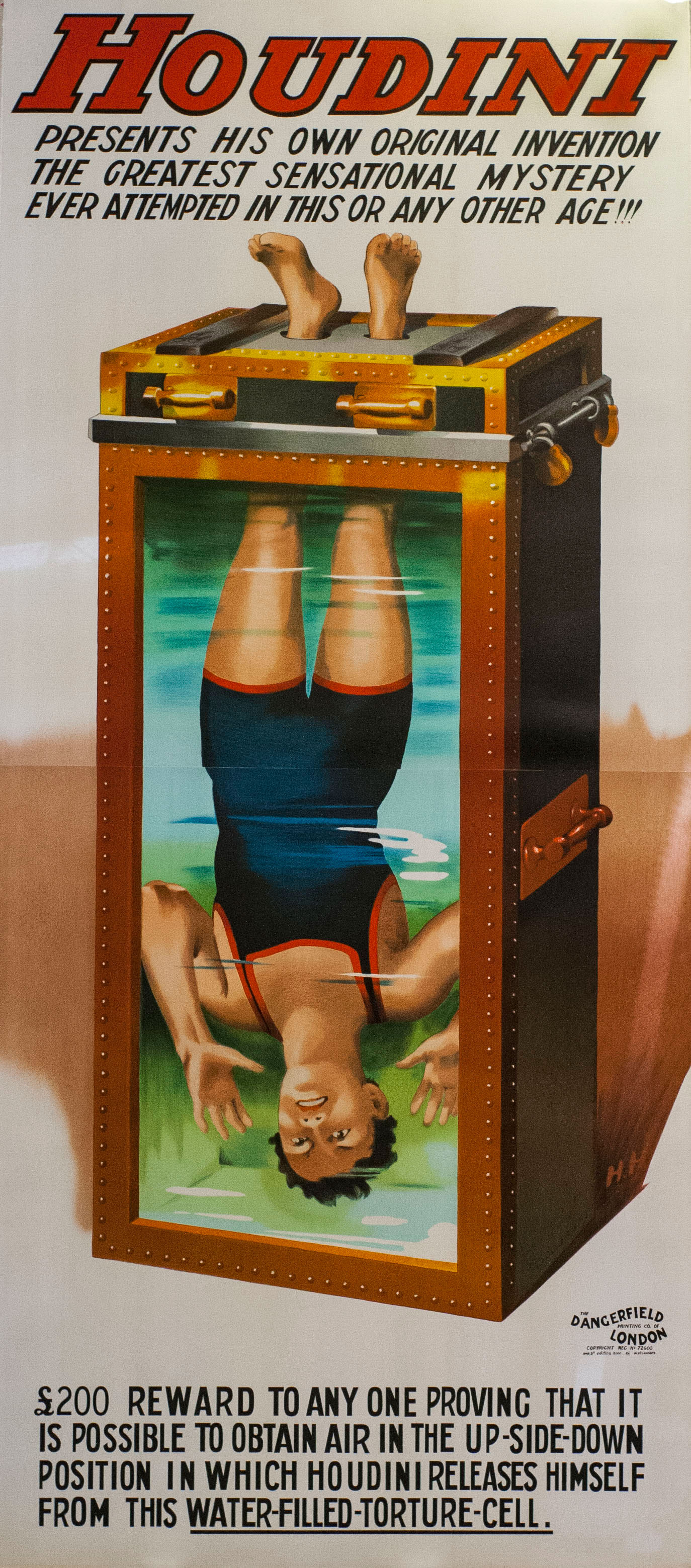
31. On Hallowe’en, escapologist and illusionist Harry Houdini dies from sepsis after suffering a ruptured appendix during a dangerous escape attempt from a water tank.
November
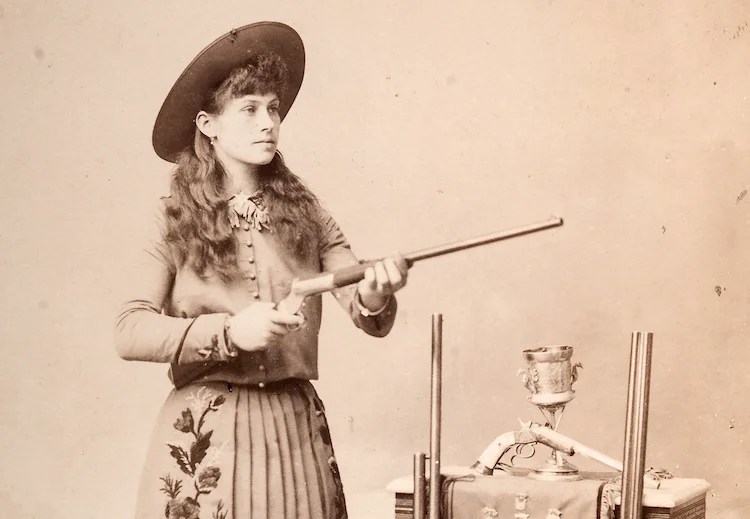
3. Sharpshooter Annie Oakley, star of Buffalo Bill’s Wild West show and later the subject of the musical Annie Get Your Gun, dies in Greenville, Ohio aged 66. (Sitting Bull, who befriended her, called her “Little Miss Sure Shot; the Wild West Show visited San Luis Obispo twice in the early 1900s.)
13. P. L. Travers’ short story “Mary Poppins and the Match Man” appears in The Christchurch Sun in New Zealand, marking the first published appearance of the eponymous character. (Mary’s a Kiwi!)
December
3. Mystery and thriller writer Agatha Christie disappears from her home in Surrey, England. She would be found 11 days later at a spa in Harrogate, purportedly suffering from amnesia.
5. Soviet silent film Battleship Potemkin is released in America, being shown in New York. (The stairway shootout in Kevin Costner’s The Untouchables is an homage to a similar scene in Potemkin.)
11. Adolf Hitler, leader of the Nazi Party, publishes Volume 2 of his manifesto Mein Kampf. (It is the safest place for Germans to hide their money, in that no one has ever read Volume 2.)
31. Buster Keaton’s brilliant film The General–his unlikely hero, a Southerner, steals a locomotive during the Civil War—debuts in Tokyo.
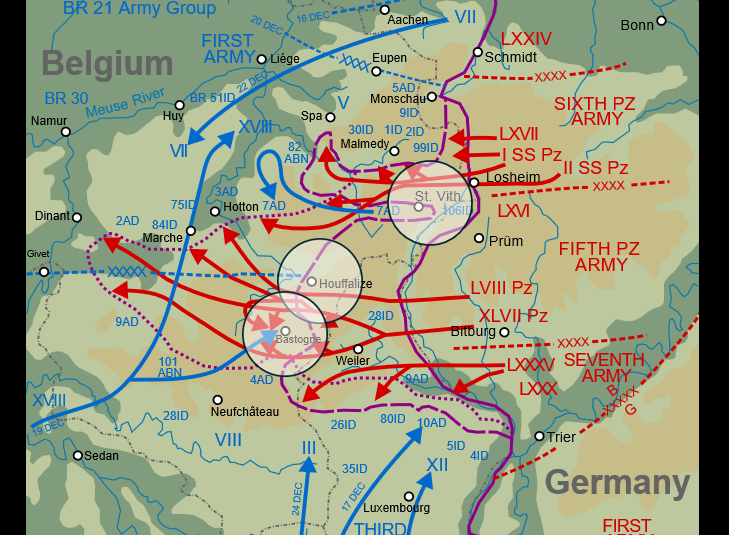
The “Bulge,” in the dotted line, indicates the depth of the German assault, intended to drive a wedge between the American and British armies and drive to the Channel.
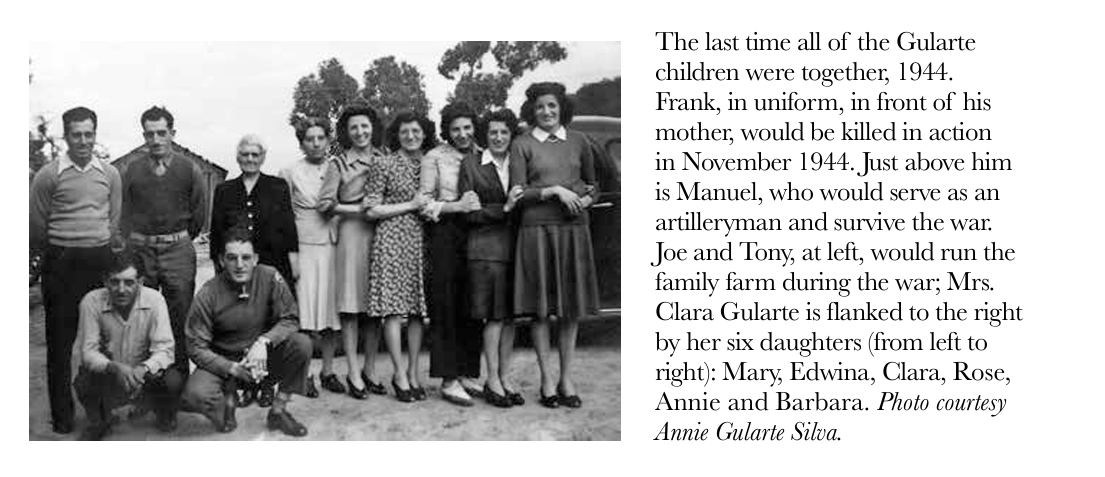
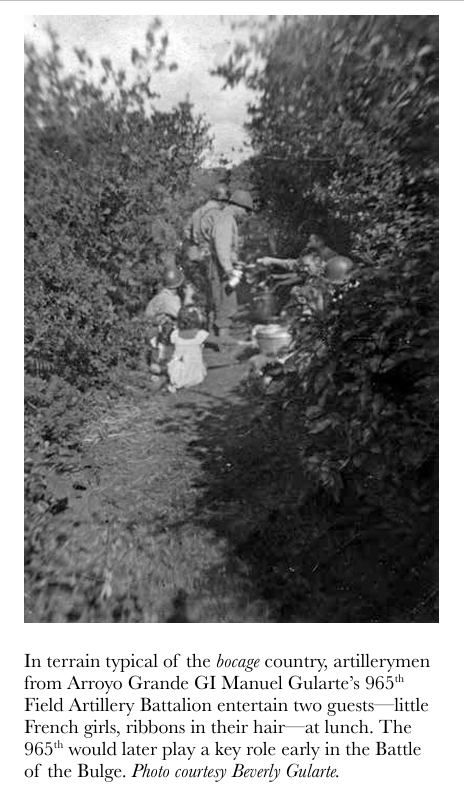
Manuel Gularte, Arroyo Grande, 965th Artillery Battalion
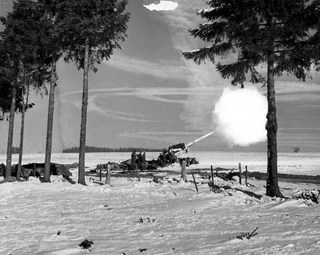
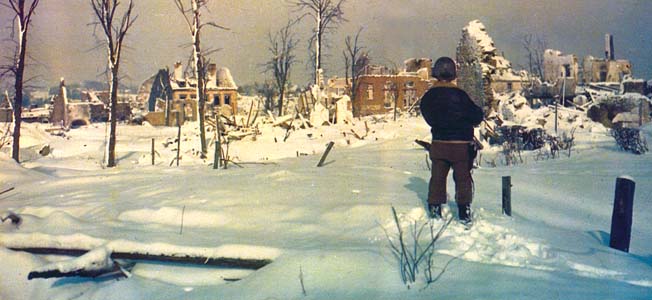
The 965th provided fire support at the town of St. Vith for the 7th Armored Division and the 106th Infantry Division. Their fire and the resistance of the two divisions stalled the German attack at its onset, which later took its toll as German tanks and trucks began to run out of fuel—by now, Berlin taxis were running on firewood. Oil had never been a German resource, which led to HItler’s Russian debacle. This was his Western Front disaster.
A 155mm “Long Tom” fires a round in the Battle of the Bulge.A G.I. in St. Vith.
Art Youman, Arroyo Grande, 101st Airborne
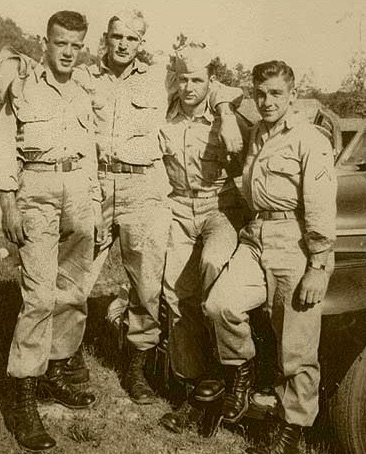
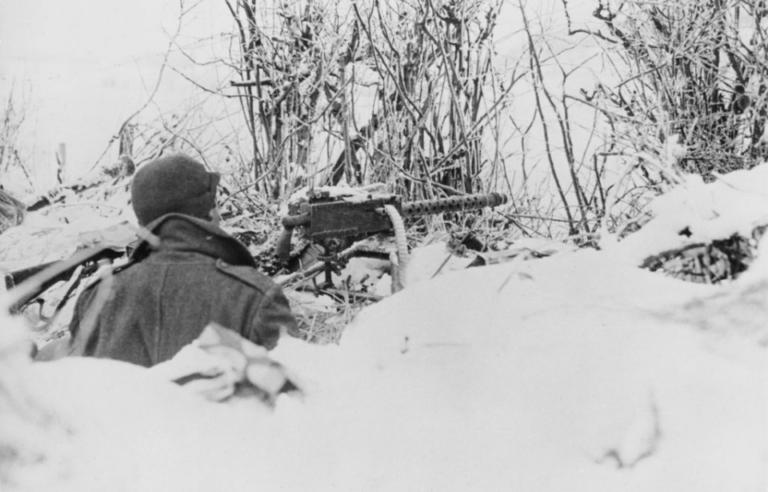
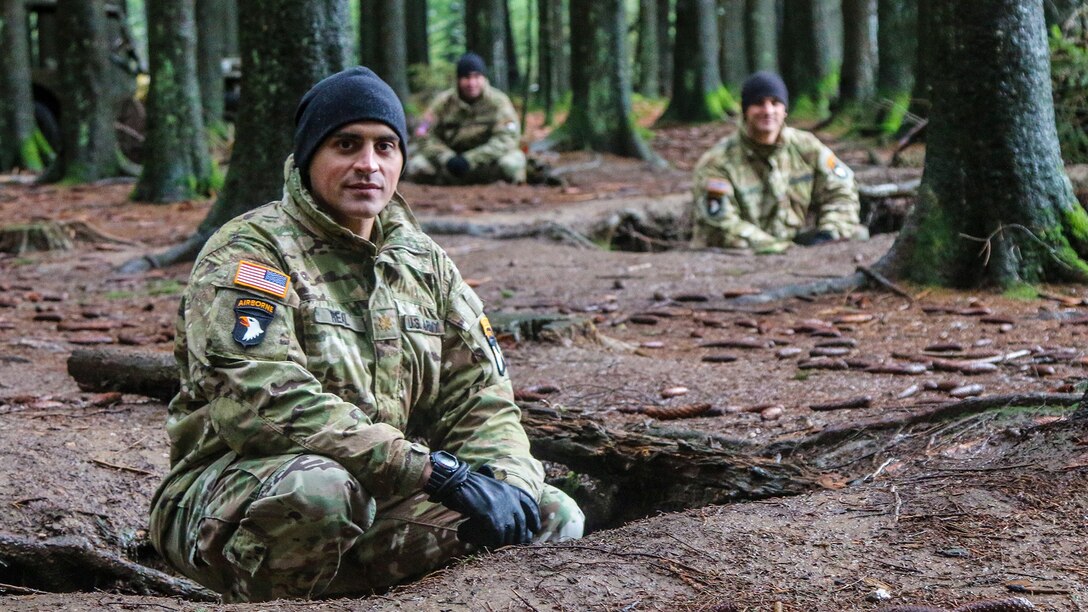
The “brothers” were Easy Company, 506th Parachute Infantry, 101st Airborne, and Youman, before the war a firefighter at Camp San Luis Obispo, was among them. He’d been promoted to Sergeant by Easy Company commander Dick Winters in Holland in September, and now the 101st was being asked to hold Bastogne, a Belgian town awash in the German advance. Their stand, during the coldest winter in Europe in thirty years, was, like St. Vith, a critical fight, diverting German forces determined to wipe the Americans out. They failed.
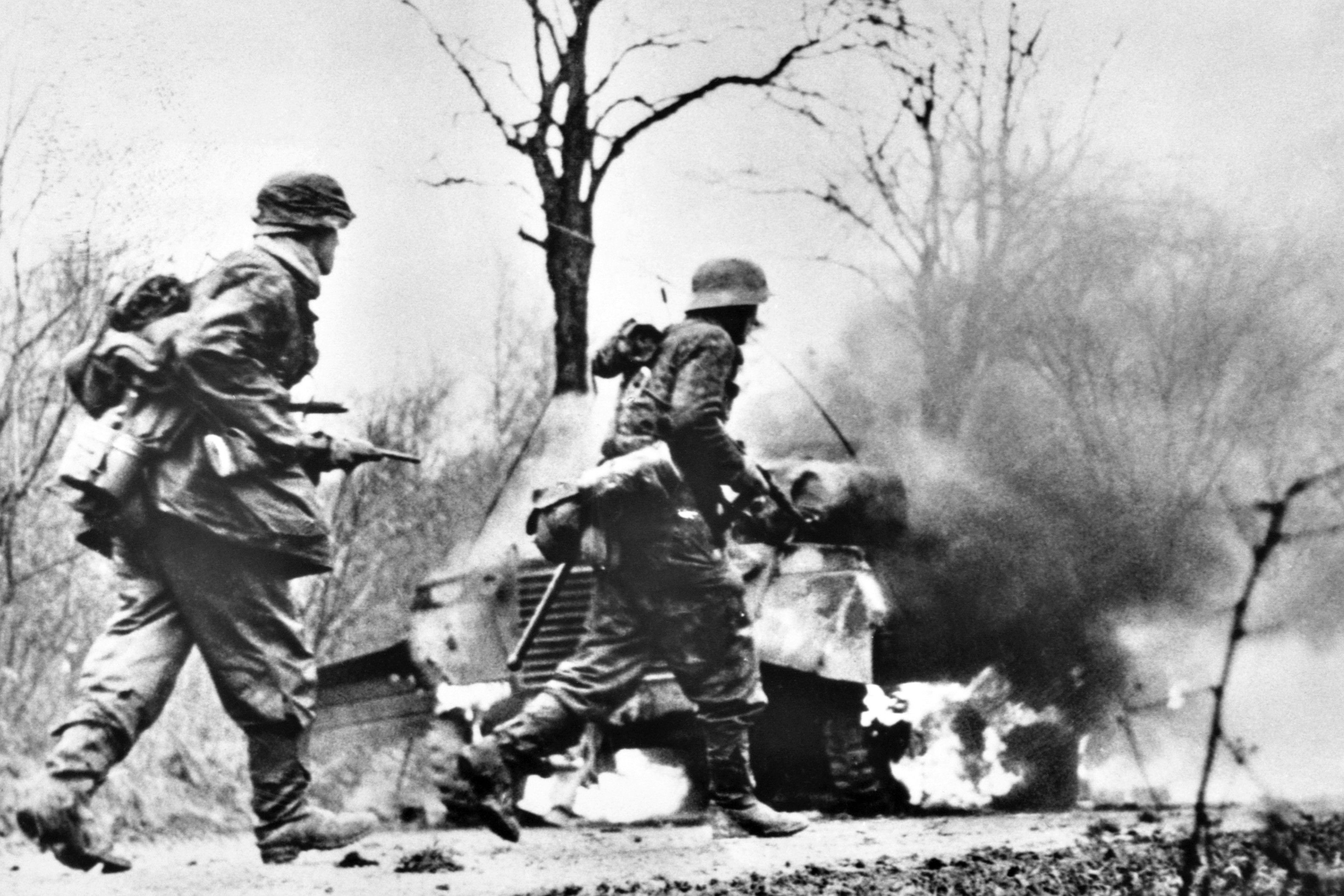
German infantry during their offensive.
Youman, second from left, during Easy Company training.
(Above): A 101st machine gunner in his foxhole; 101st soldiers in the 1944 foxholes their comrades had dug. This photo was taken 75 years after the Bulge.
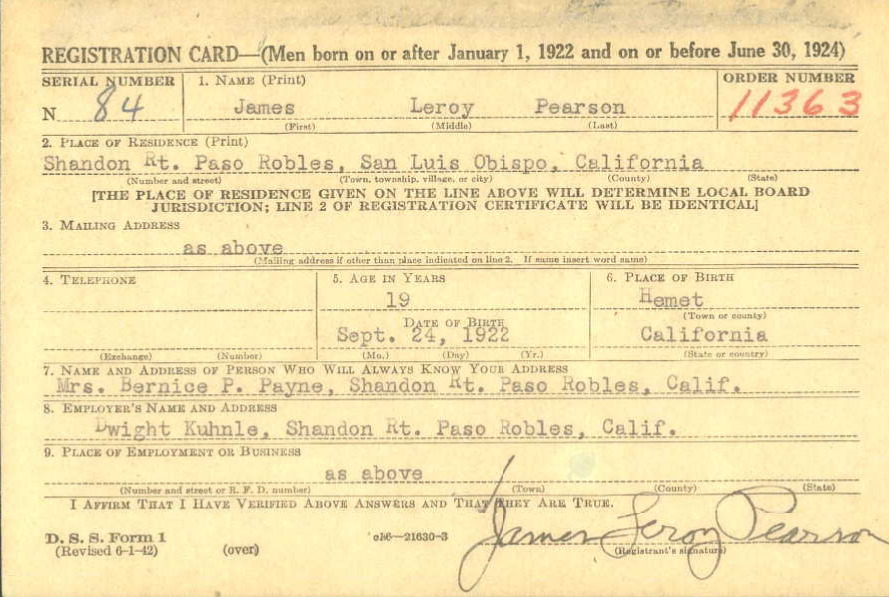
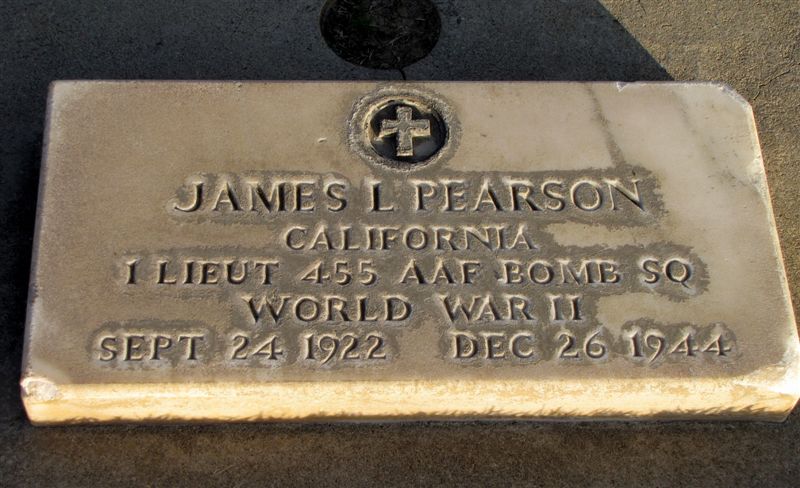
James Pearson, Paso Robles, 455th Bomb Squadron, 323rd Bomb Group
(Above: Houffalize, Belgium; a German Panther tank in the town center suggest this town’s importance in the Battle of the Bulge.
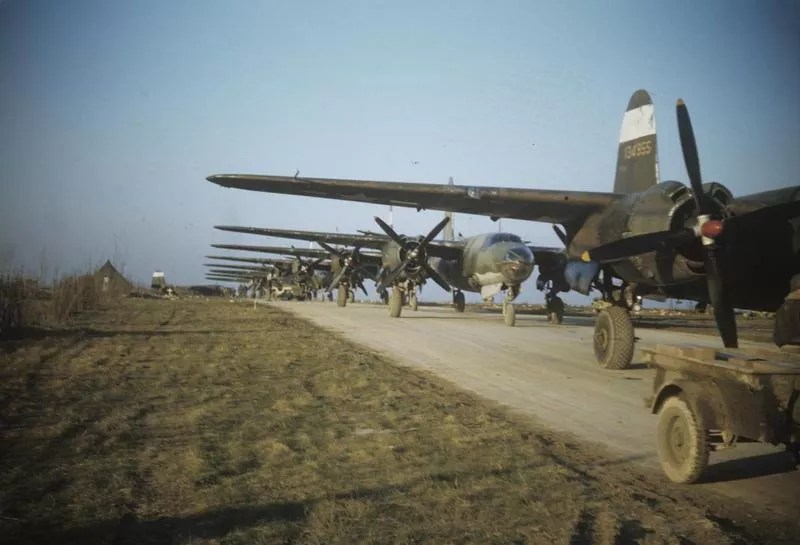
Another key turning point in the Battle of the Bulge was the lifting of a stubborn overcast, which allowed American airpower to assert itself. One medium bomber that participated in this effort, a Martin B-26 Marauder, had a crew that included 1st Lt. James Pearson, the navigator. On December 26, 1944, that aircraft, “Mission Belle,” was shot down over this beautiful town. There were no survivors.
Pearson’s draft cardHe is buried in Hanford
“Mission Belle,” with an earlier aircrew, February 1944. The aircraft flew 149 combat missions.“Belle” at the right edge of this photo, taking off from Laon, France, in December 1944, the month Pearson was killed.
(Below): B-26 Marauders from Pearson’s bomb group–the “White Tails”–over Germany. The video’s music is touching, as is the sight, far below the Marauders, of P-38 fighters, which have connections to the Central Coast. You hope they are safely headed home.
More and more, as I age (Oops! One arm just fell off!) the more I appreciate Thanksgiving.
We forget sometimes that it’s a uniquely American holiday, first declared by my foremost hero, Abraham Lincoln.
When I wrote a book about local World War II aviators, I found dozens of heroes. Most of them were Eighth Air Force fliers, stationed in England.
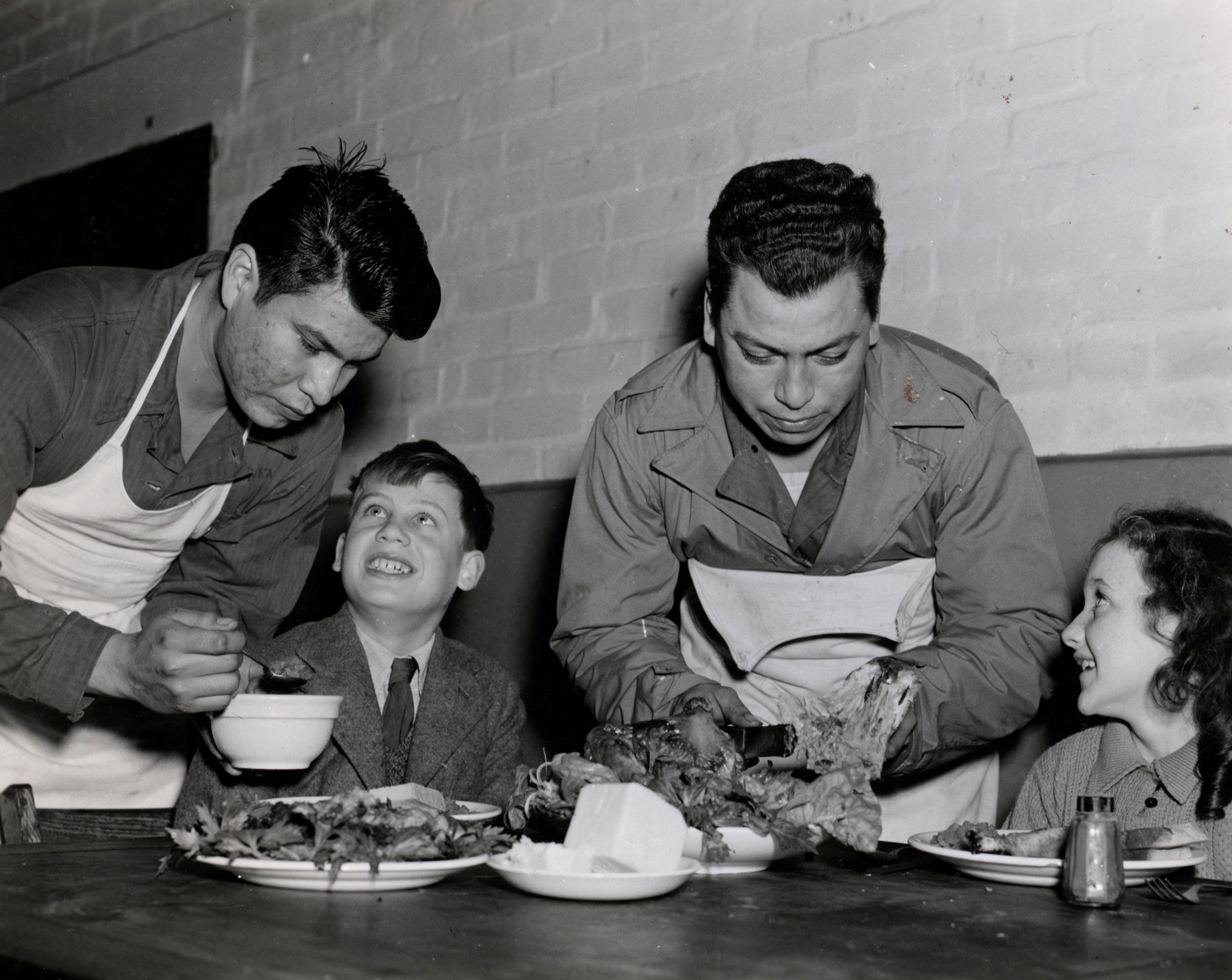
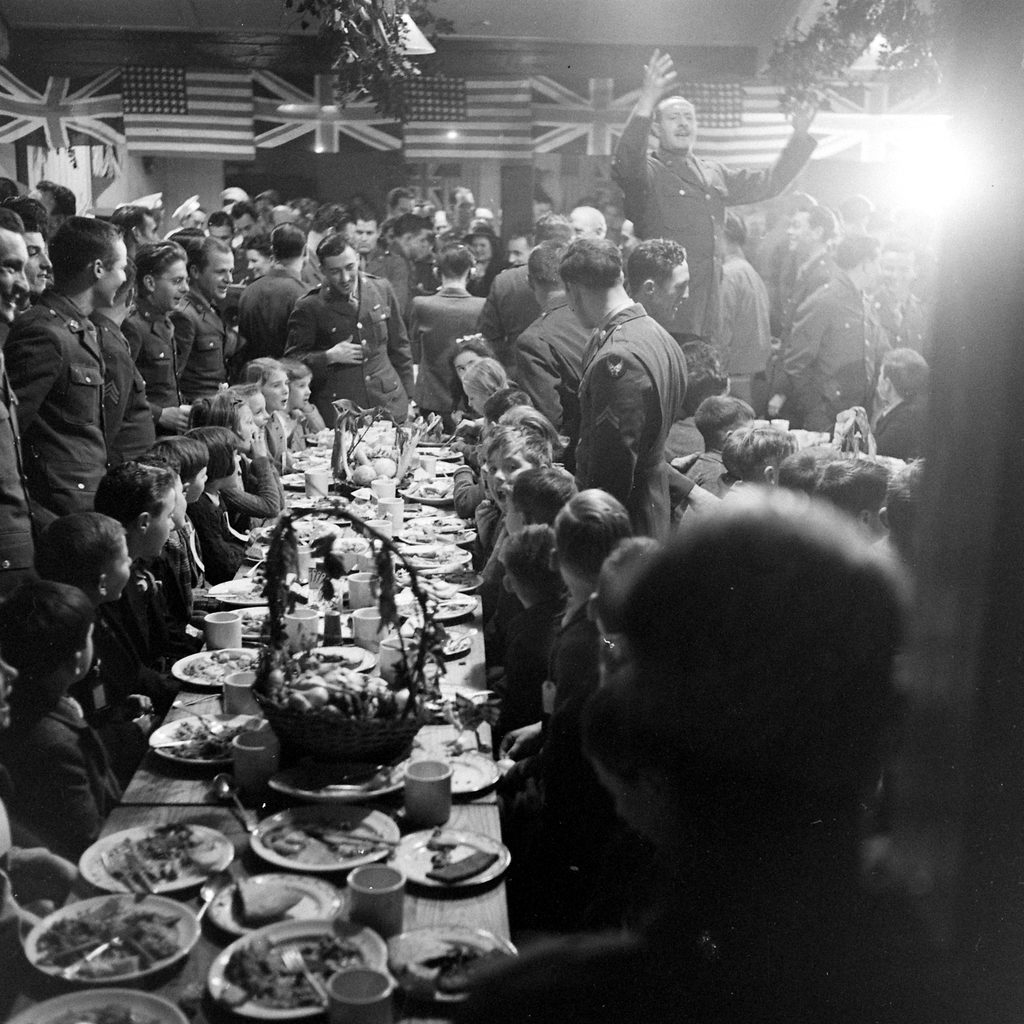
These photos show some of those Yanks. One teaches British war orphans about baseball.
Joseph Sleeping Bear, on the left, helps to serve a Thanksgiving meal to British kids.
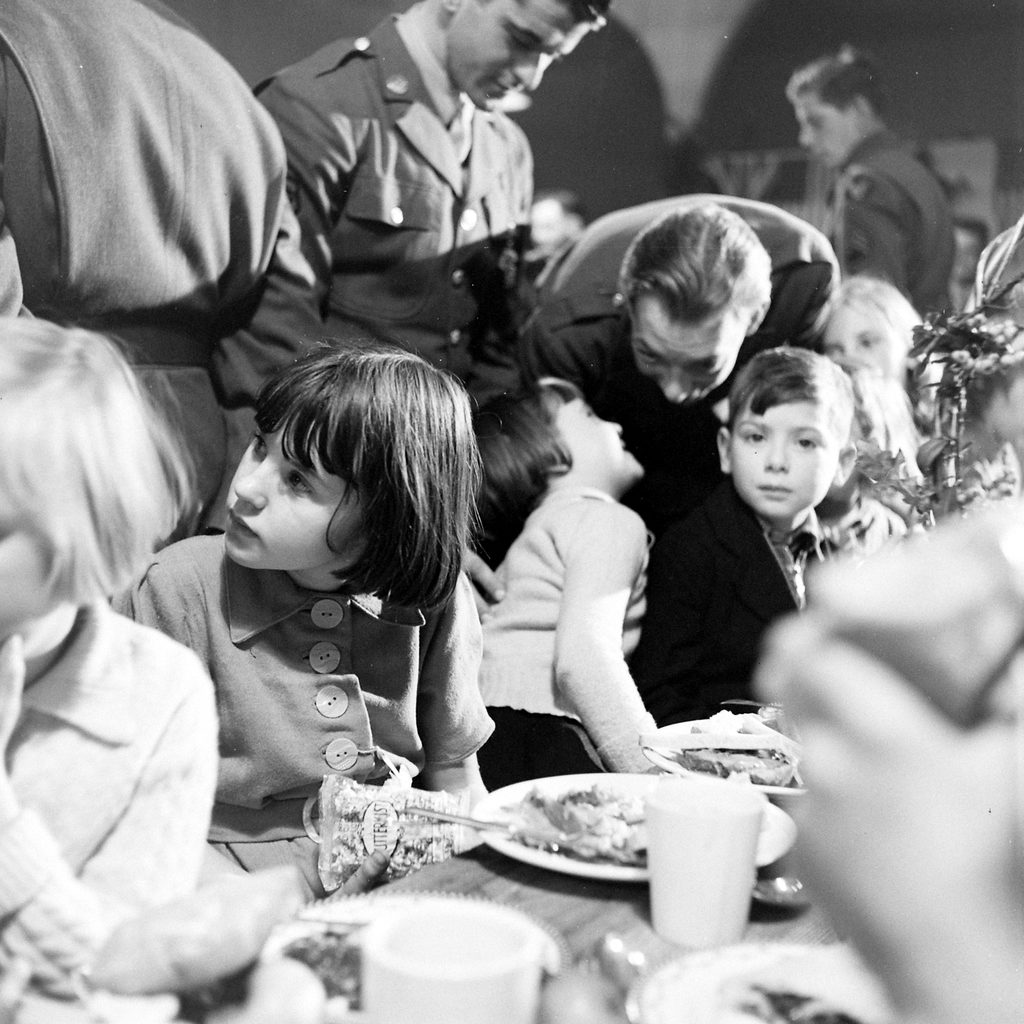
Two photos show a grander Thanksgiving celebration, with Army Air Forces officers in conversation with their little guests.
SandS
For British children, Thanksgiving was an impossible holiday. Thanks to the U-boat campaign, the British had been going hungry for years.
I’ve told the story before because I’m so touched by it. My father, an Army officer, was kind of “adopted” by a family in London–a common occurrence–and when he brought them a bag of California oranges in the summer of 1944, the family’s mother burst into tears. Her family hadn’s seen fresh oranges since 1939.
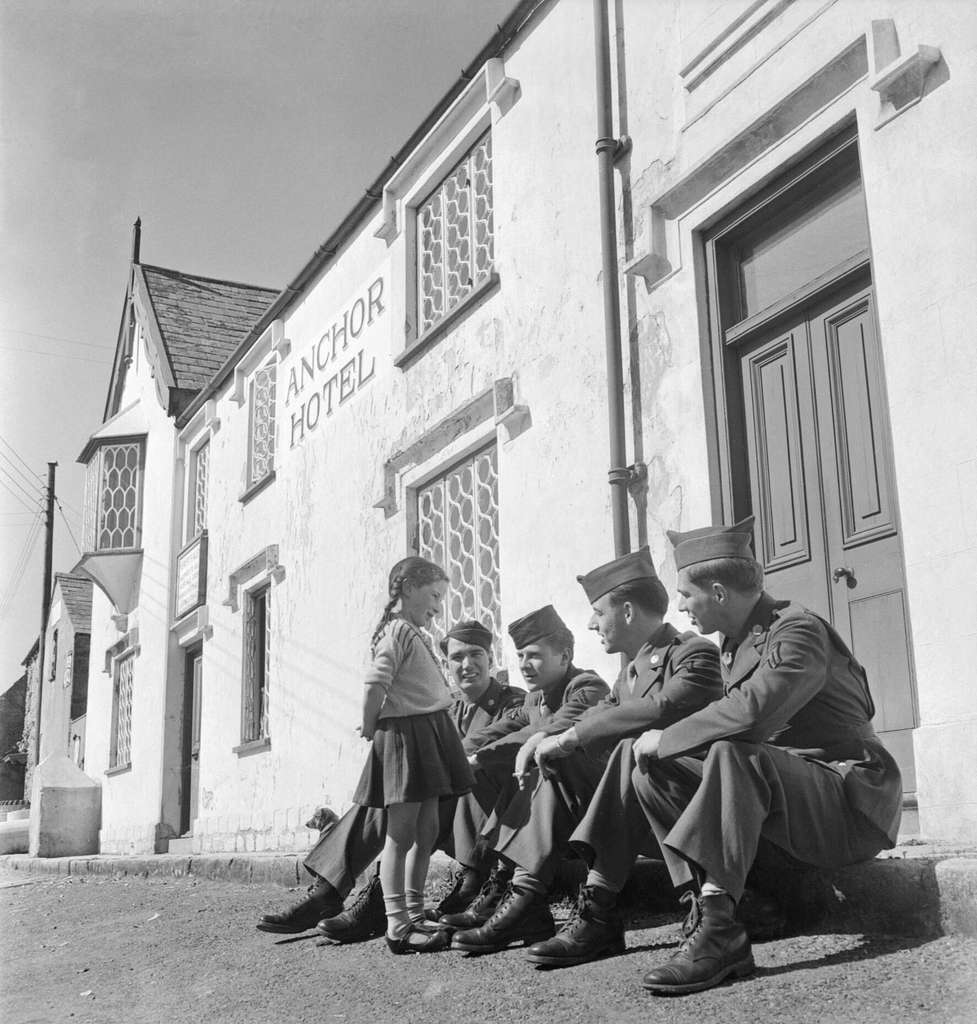
What the Yanks brought was their brashness, their loudness, and their determination to romance English girls–the elder sisters of children like these. So they left behind Anglo-American babies.
But they left behind their good will, offered in seemingly endless Hersey bars and spearmint gum. Their rough kindness remains vivid in the memories of children, now in old age, who will never forget the Americans.
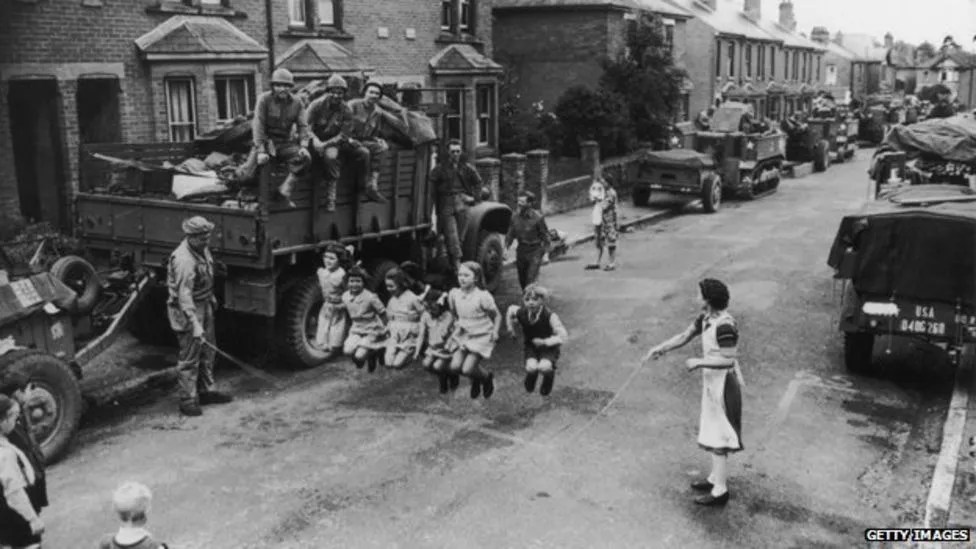
An American soldier, among those marshaling for D-Day in southern England, finds time for a little jump rope.Yanks and “Freckles,” the little Dorset girl who befriended them.
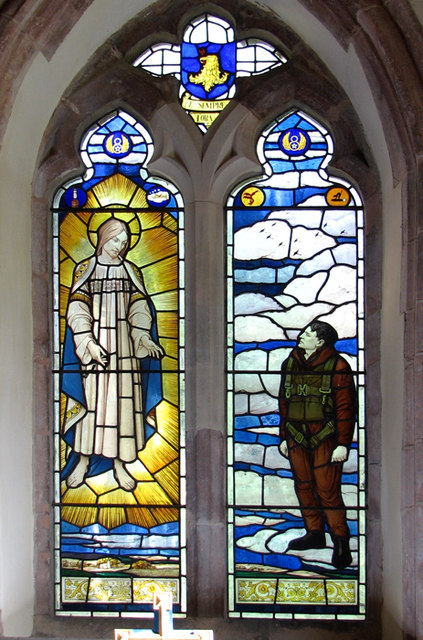
There’s proof of that remembering. The stained-glass window is from a church near a wartime airfield, RAF Alconbury, from which at least three Arroyo Grande airmen, B-17 crewmen, flew.
The left panel depicts the Risen Christ. In the right panel, looking up at Jesus, is a Yank airman.
I keep writing about this generation, stupidly condemned by prewar sociologists as self-centered and pleasure-seeking, because I loved my parents so much, and because the war brought out in these Americans the generosity that I think is a fundamental American trait.
It’s a trait that has been nearly destroyed in the last year.
Picture this about the impact we had in England: On nearly every heavy bomber mission taking off from nearly every American airfield in England, little schoolchildren would gather to line the airfield’s perimeter fence.
They were there to wave goodbye to their Yanks.
Addenda: This kind comment appeared in he original Facebook post of this essay.
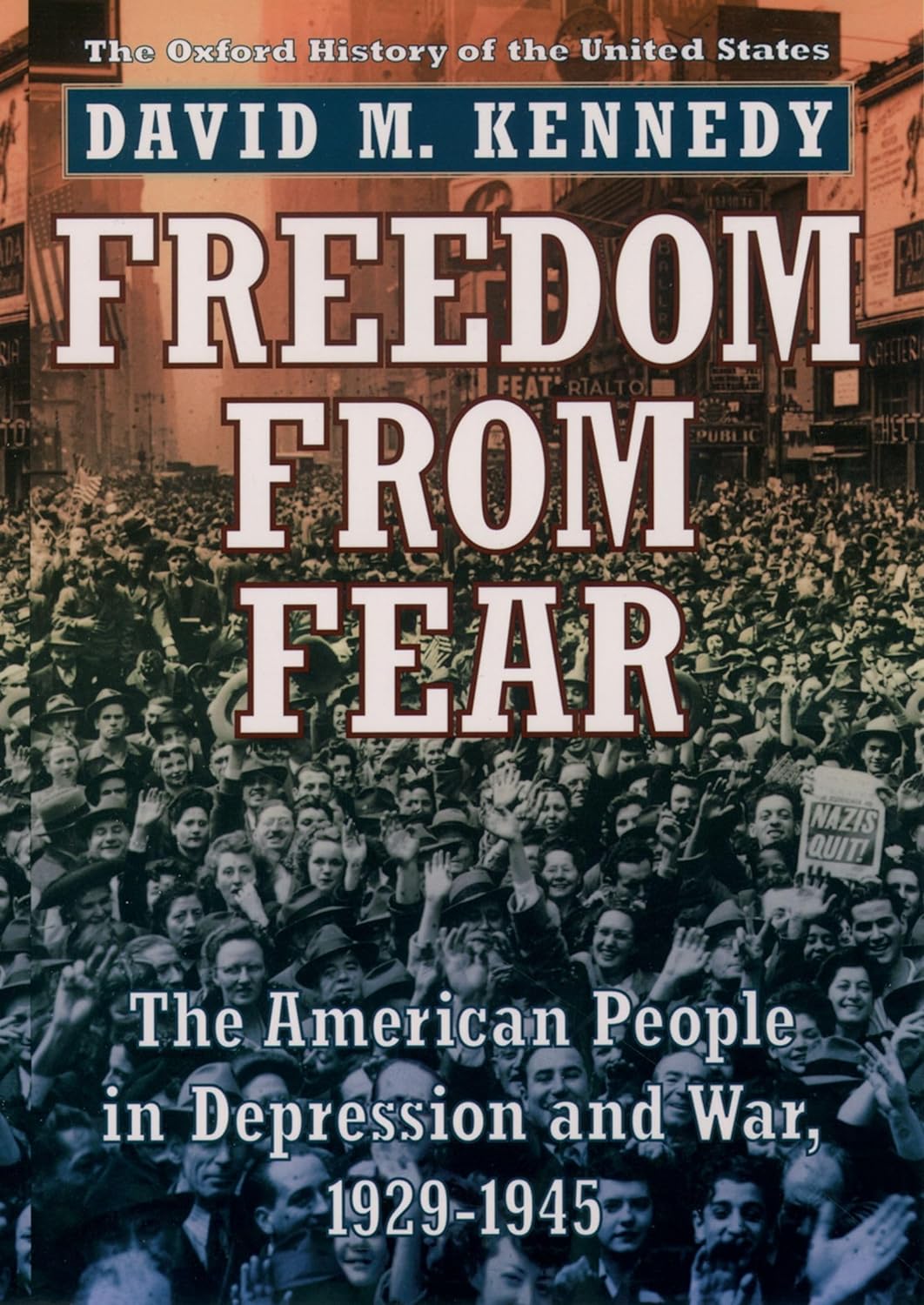
Stanford history professor David M. Kennedy published the book Freedom from Fear, about America in depression and war. It won the Pulitzer Prize.
I took a weeklong class from Kennedy, along with thirty history teachers from all over America, at Stanford in 2004. It was one of the great experiences of my life: Kennedy was warm and engaging, answered questions with both brilliance and respect, and his admiration for the Americans he’d written about was obvious. My admiration for Kennedy will remain with me always.
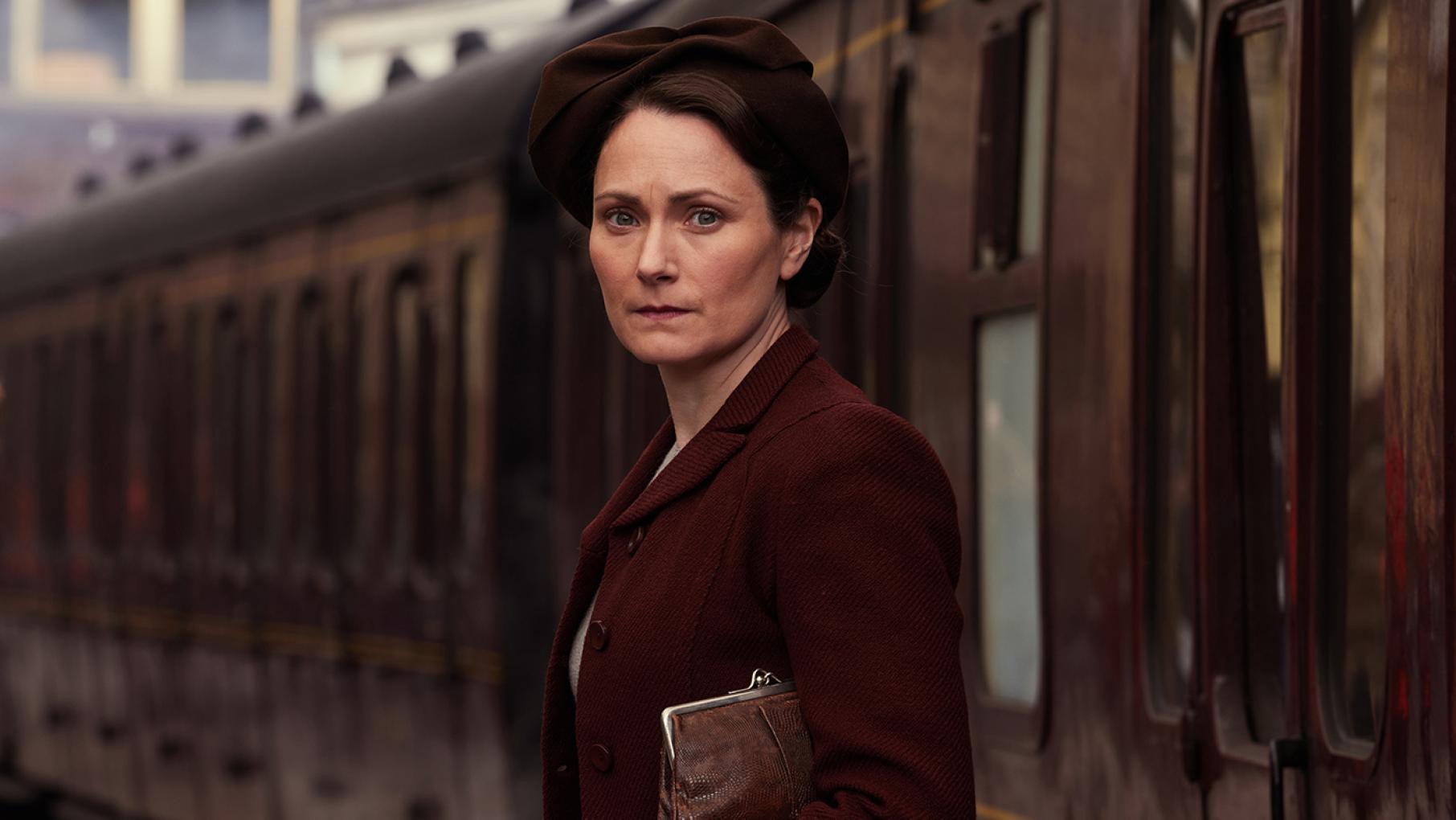
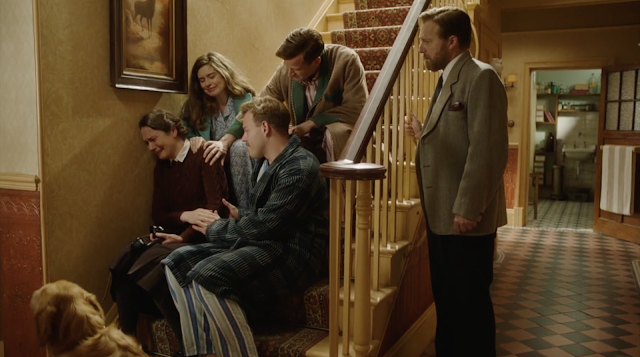
Last night, PBS reprised the 2024 All Creatures Great and Small Christmas episode. It tugged, as usual, at the heartstrngs, but this was set at Christmas 1941, when the world had gone quite mad.
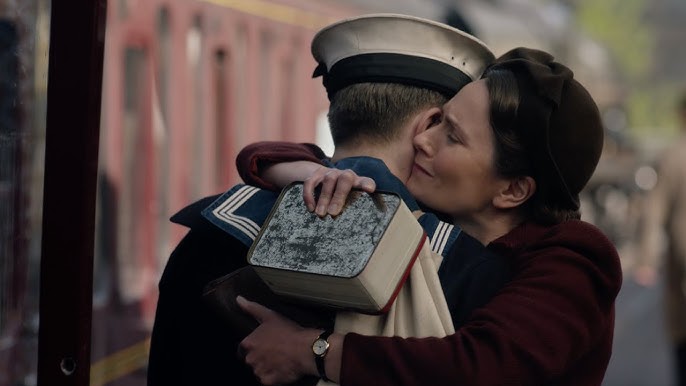
Earlier in the season, the housekeeper, Mrs. Hall, had reunited with her estranged son, only to see his train take him away to a war in progress in Britain since 1939, and to his duty in the Royal Navy.
Word comes over what was called the wireless that her son’s ship, the battle cruiser HMS Repulse, has been sunk, along with the battleship Prince of Wales. The Farnons and the Herriots were about to attend to Christmas dinner when Siegfried, the head of the veterinary practice, had to break the news to the woman who is the emotional glue of the home. When she collapses, the ripple that spreads through Skeldale House is seismic.
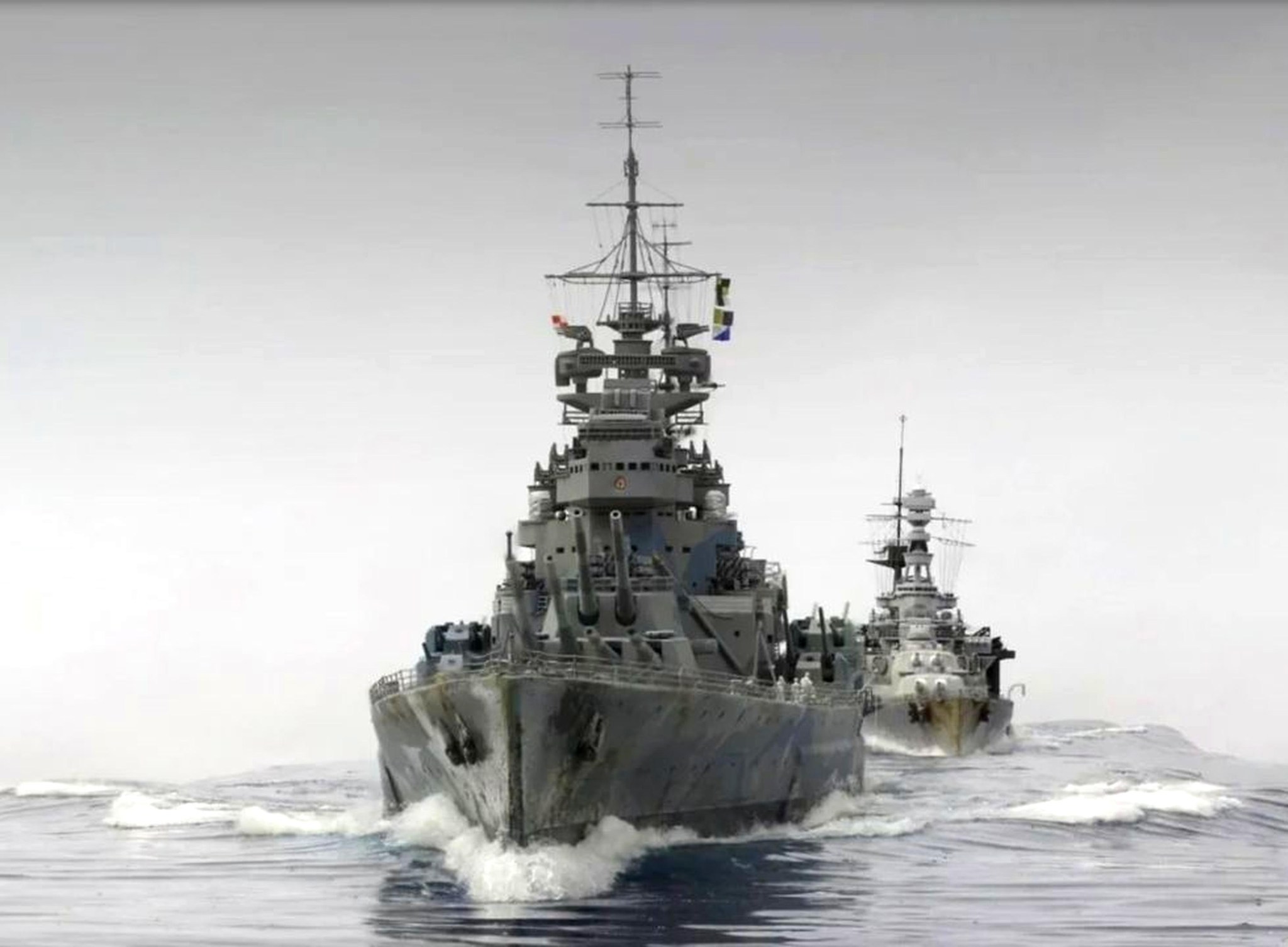
The news shouldn’t have been brought because the tragedy shouldn’t have happened. Only three days after Pearl Harbor, the two great ships sailed north heedlessly, without air protecton, and, just as Pearl Harbor had proven, battleships were vulnerable to air attack. 840 British sailors died, the victims of that terrible and seemingly congenital White Man’s disease, arrogance. Swarms of Japanese planes descended on the pride of the Royal Navy in the Far East. Twenty-eight Japanese aviators gave their lives for their country in a running battle that lasted a little over an hour.
The illustration depicts Prince of Wales with Repulse in her wake.
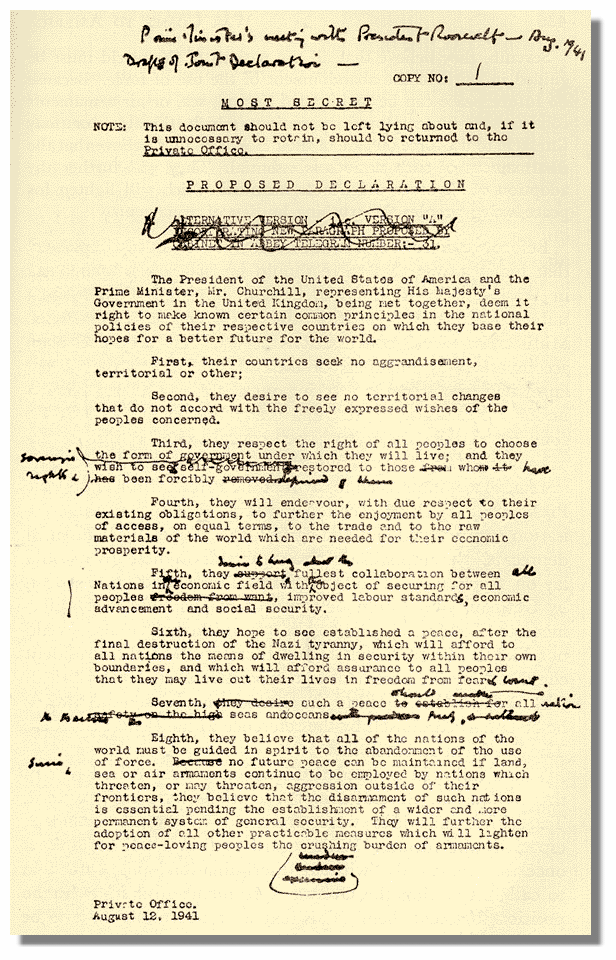
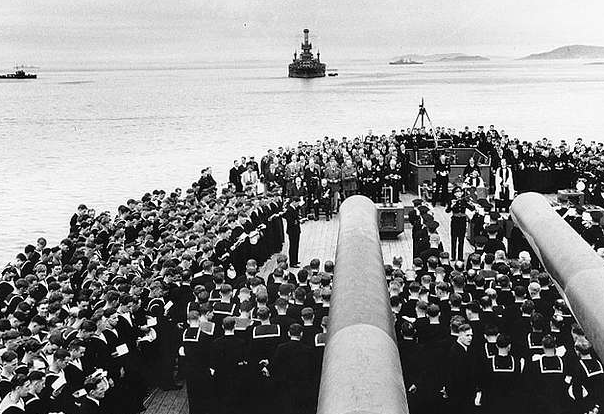
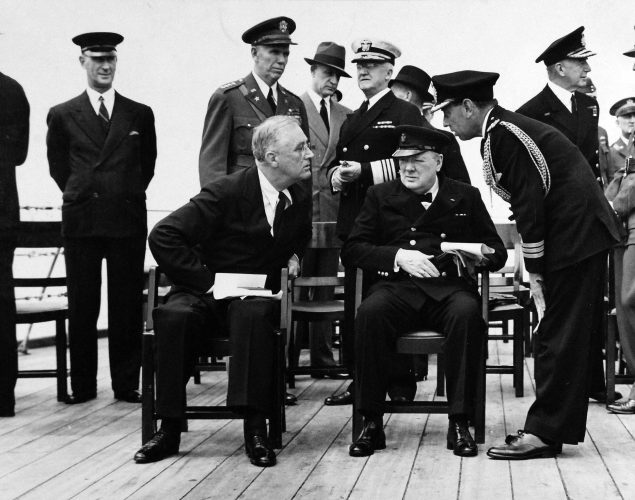
The loss of Prince of Wales would have resonance in America, waiting to learn about the destruction wreaked on the American base at Pearl Harbor. The British battleship represented the birth of the Anglo-American alliance that seems to be in grave danger today. It was on Prince of Wales, off the coast of Newfoundland, where Winston Churchill and Franklin Roosevelt met—in person, for the first time— for a conference that concluded with the issuing of The Atlantic Charter, a set of principles that seem to be in grave danger, as well. This is Churchill’s annotated copy:
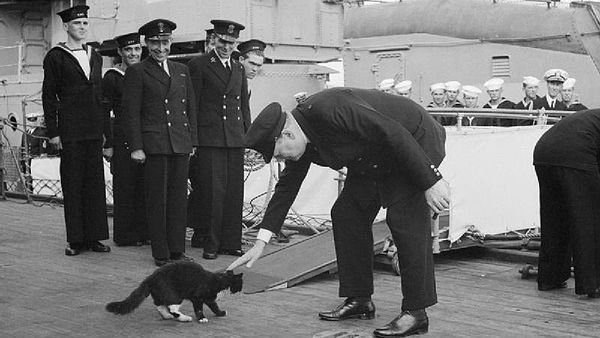
(Above) Churchill, always fond of cats, greets Prince of Wales mascot Blackie on arriving for the conference. Blackie survived the battleship’s sinking; many of the sailors, attending divine services with the two leaders, would not.
The great ship was ideal for the meeting between the president and the prime minister. One of the similarities that cemented their friendship was their love for the navy. Churchill had served as First Lord of the Admiralty (he used the term “Naval Person” to refer to himself in his correspondence with Roosevelt) FDR, like his wife’s uncle Theodore, had served as Assistant Secretary of the Navy.
FDR and Chuchrill aboard Prince of Wales. Gen. George Marshall is just behind the president.
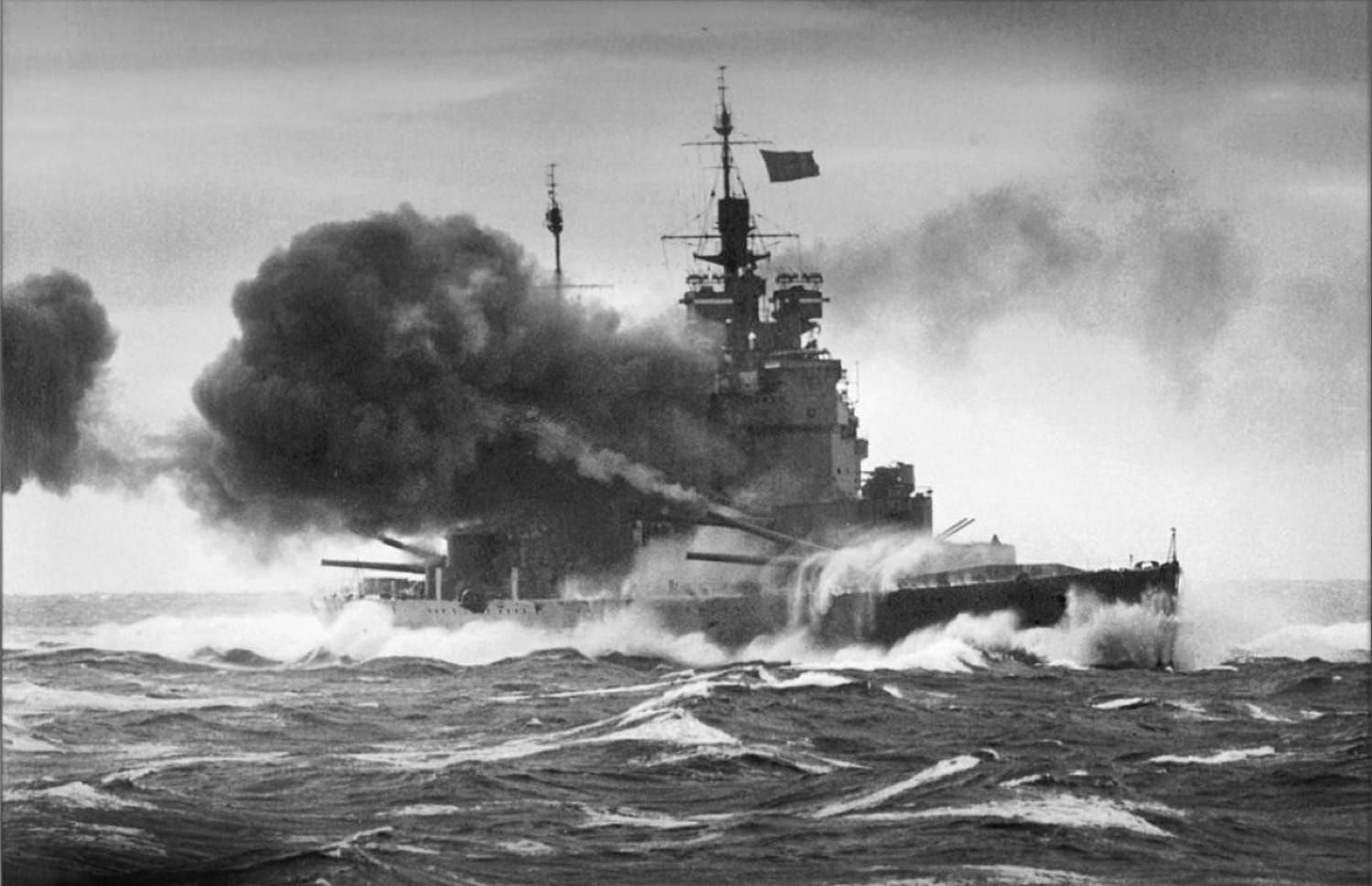
Three months later, it was appropriate that another battleship, HMS Duke of York ( engaging a German battleship, Scharnhorst, in the 1943 photo below) brought Churchill to America.
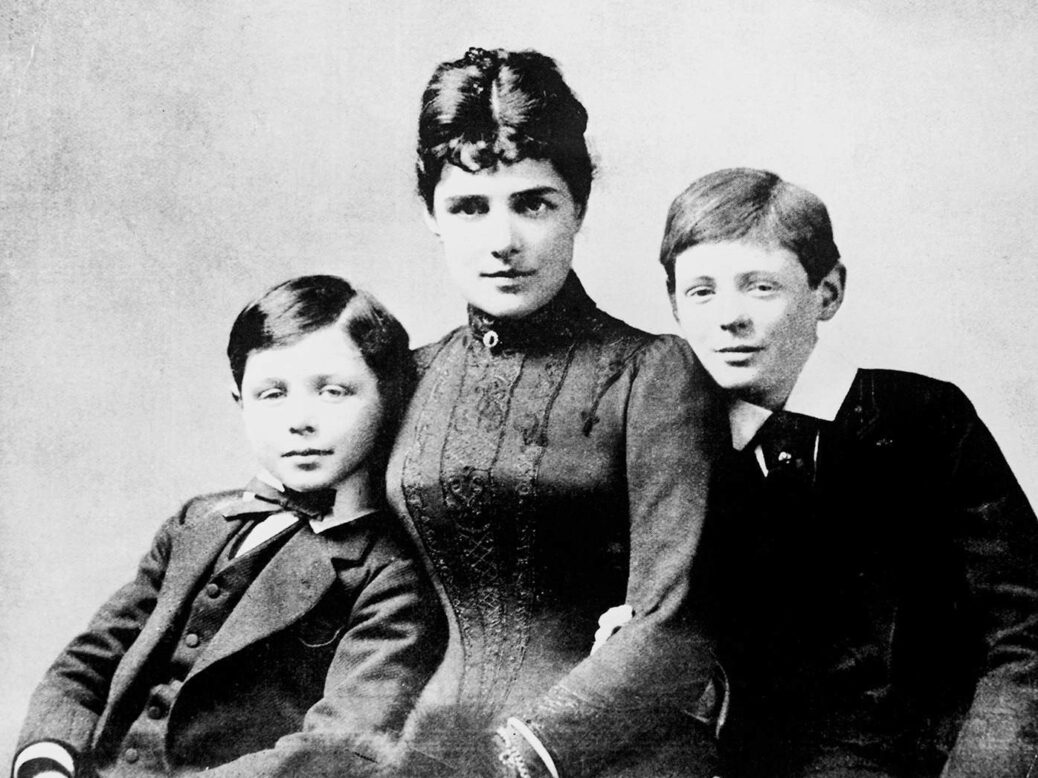
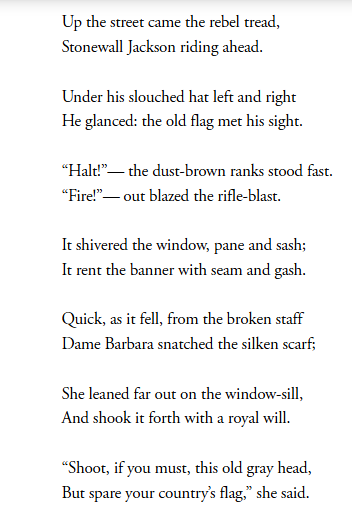
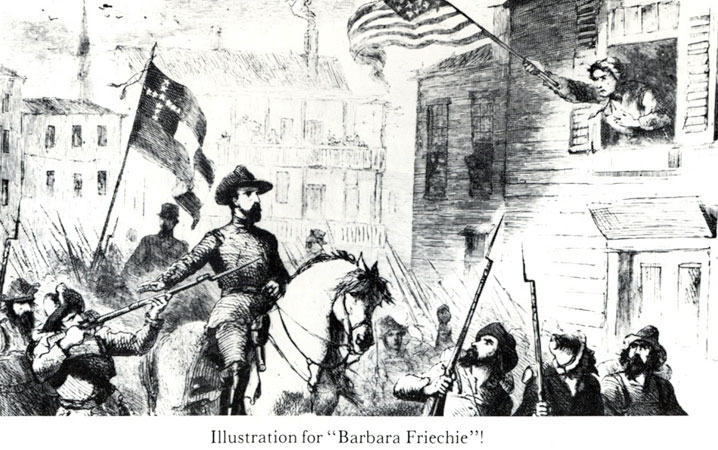
On the way to the White House, motoring through Maryland, the Prime Minister regaled the President by reciting, from memory, the Whittier poem “Barbara Fritchie,” about an elderly Frederick, Maryland, woman who defied the invading Confederates by waving the American flag out her window. The poem is very long and not very good, but Churchill relished it—reminding his hosts that he, thanks to his mother, Jennie, was half-American.
Jennie Jerome Churchill and her sons, Jack and Winston
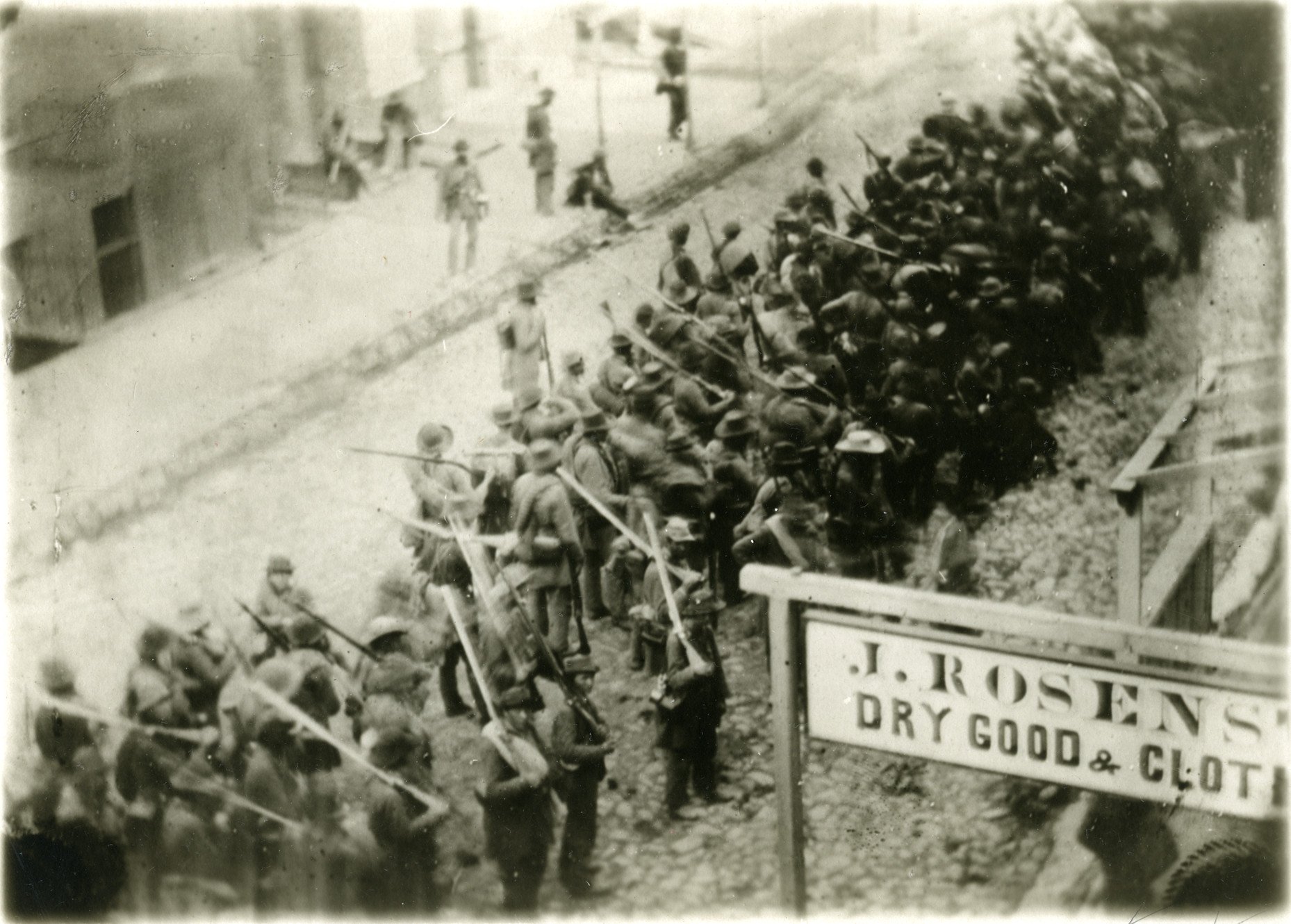
Lee’s troops in Frederick, September 1862. They’re on their way to Antietam, the costliest battle in American history.
Churchill arrived at the White House on December 13 and didn’t return home until January 17, 1942. Along the way he horrified White House staff with his breakfast orders, which included copious amounts of whiskey and soda, remained naked—not counting the cigar— and pink as a cherub when the president visited him immediately after a bath. Churchill, a late-late riser, worried Eleanor because he kept her husband up until the wee hours; the P.M. also made discreet use of the White House’s potted plants because the president adored cocktail hour and invented concoctions for his guests that were said to be truly dreadful.
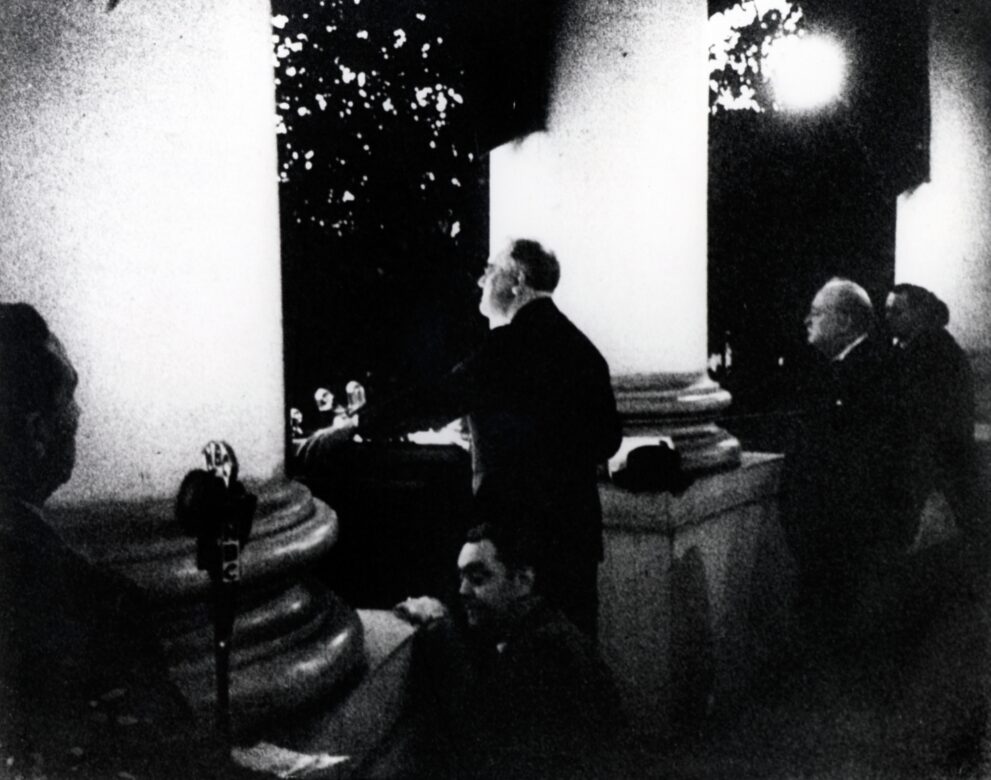
Churchill, to FDR’s right, witnesses the lighting of the National Christmas tree, December 24, 1941.
The meetings were productive but fraught: The two leaders (Churchill may have had a mild heart attack) were enduring the aftershocks of Pearl Harbor and the capital ships’ sinkings: Japanese troops were advancing rapidly in the Philippines, the fall of Hong Kong on Christmas Day crushed the prime minister.
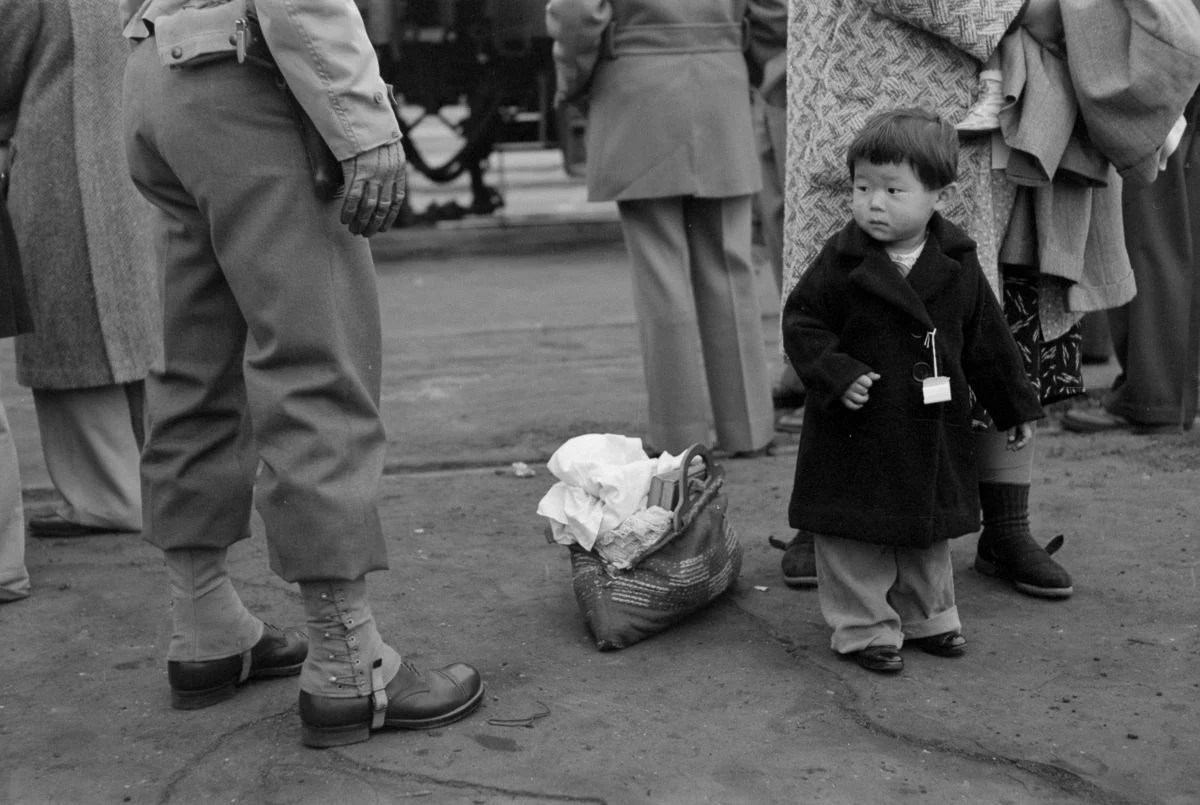
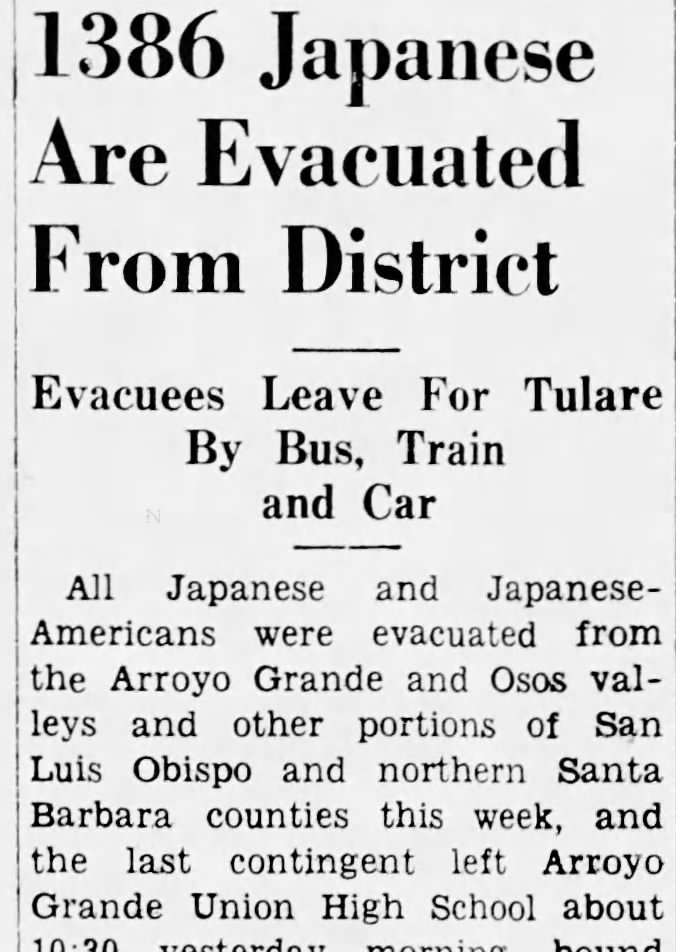
Historians theorize that these runaway Japanese successes, and FDR’s fondness for his new friend, played a key role in the president’s decision to issue Executive Order 9066, which was enforced here, in Arroyo Grande, 2400 miles from Pearl Harbor, 2800 miles from Washington DC and 5400 miles from London.
The aftershocks of December 1941 finally crested here on April 30, 1942. This war spared no one.
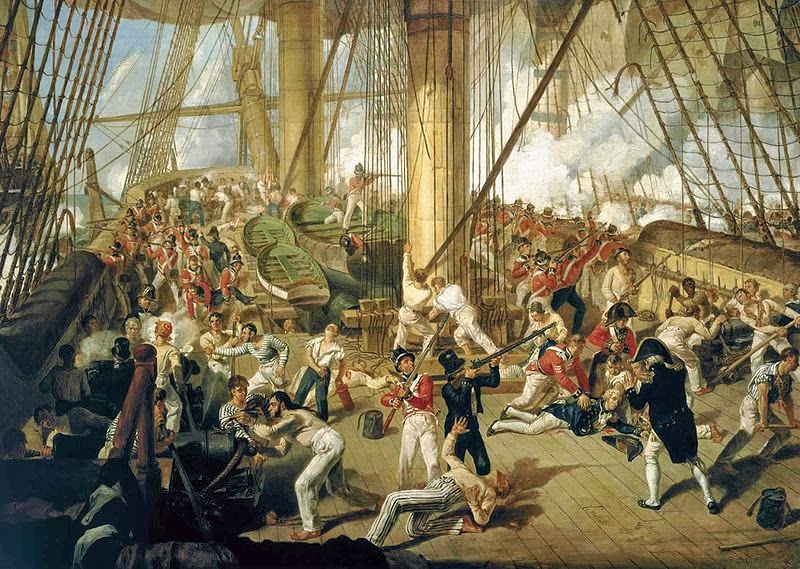
A royal marine and a midshipman return fire on the French sniper that has just shot Admiral Nelson, lying on the deck, right-center.
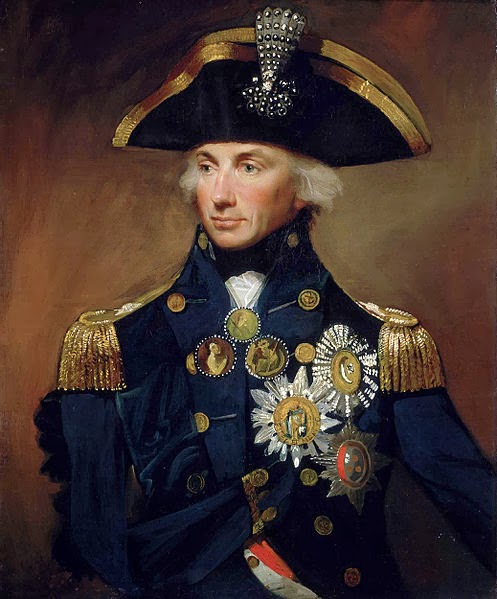
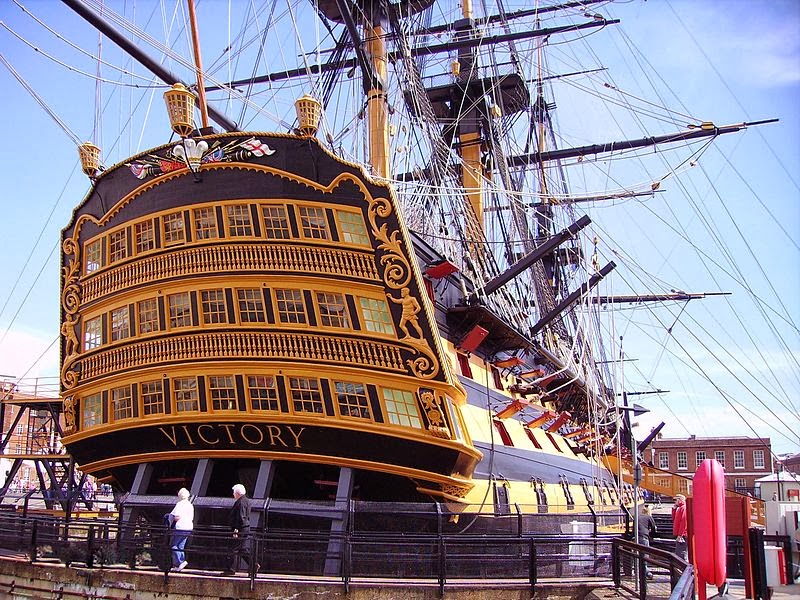
October 21 is “Trafalagar Day,” commemorating the overwhelming victory of Lord Admiral Horatio Nelson’s British fleet over a combined Franco-Spanish fleet off Spain’s Cape Trafalgar. It’s also the day Nelson died. As he paced the quarterdeck of his flagship, HMS Victory, a French sniper shot him in the shoulder. The musket ball wento on to puncture Nelson’s lung and shatter his spine. He died several hours later belowdecks.
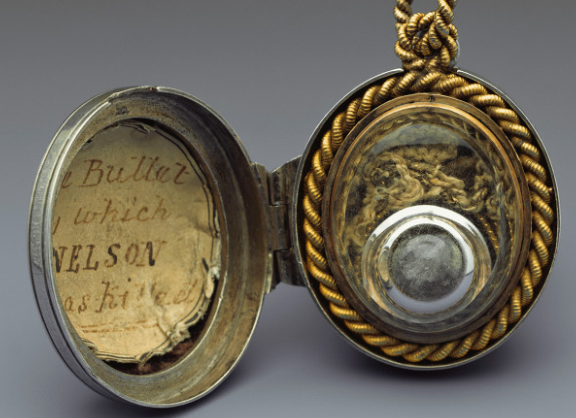
The musket ball was removed by Victory’s surgeon. It wound up preserved in this locket, surrounded by gold braid taken from the little admiral’s dress coat. (He was somewhere between 5’4″ and 5’7″.)
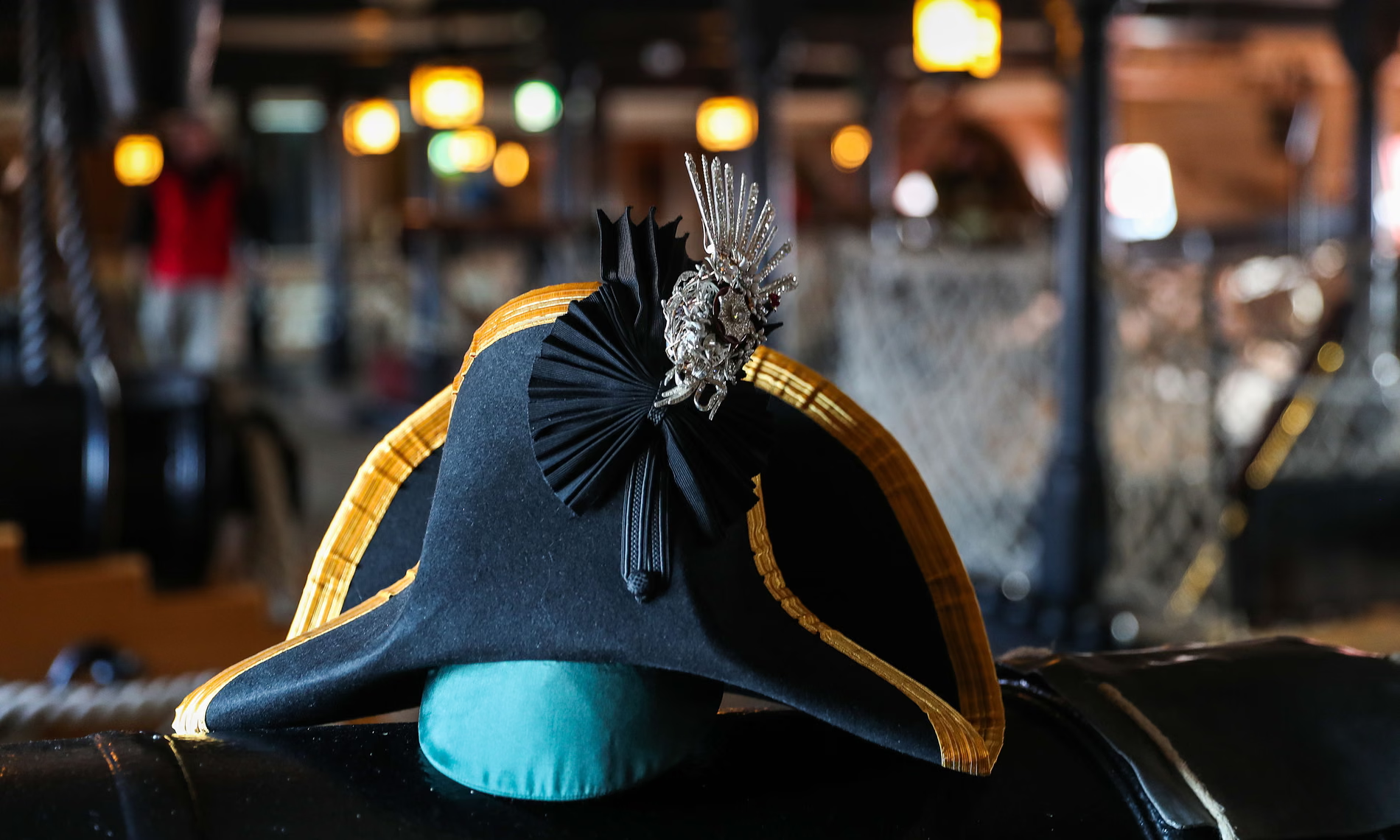
–To be truthful, Nelson got himself shot. He gloried, as George Custer did, in elaborate uniforms and was wearing all his medals (not quite so many as a North Korean general, to be sure) as Victory went into battle, including the diamond-encrusted cockade presented him by the Sultan of Turkey in 1798. This replica (the original was stolen years ago) shows what it looked like. All those medals and foofery made him an easy target for an ambitious sniper.
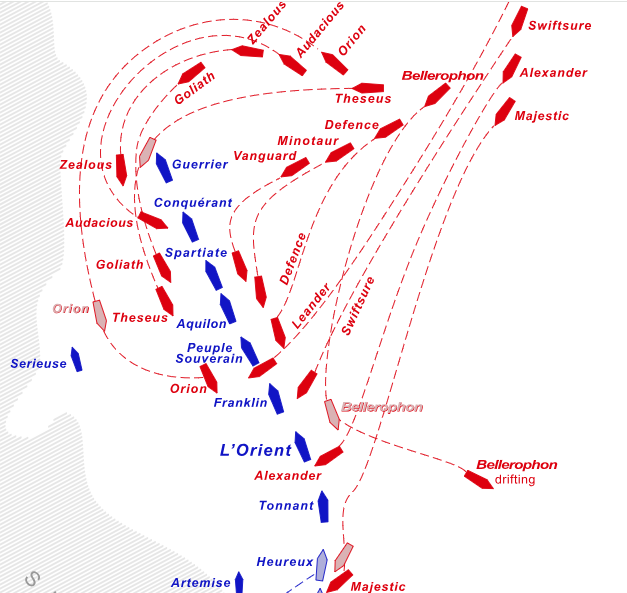
–Nelson was awarded that hat accessory after his victory over a French fleet at Aboukir Bay in Egypt. What came to be called “The Nelson touch”—shameless audacity—was in full display at Aboukir Bay. The French had anchored their fleet just beyond shoal waters, so shallow that no attacking ship would dare enter. They were wrong. Nelson divided his fleet, sending half into the shallowest part of the bay. Another column of British ships attacked the seaward side of the French ships, meaning that all of the French guns, port and starboard, were very, very busy that day. The British lost 218 sailors at what came to be called the Battle of the Nile. The French lost over 5,000. The fleet was there, by the way, in support of Napoleon’s invasion of Egypt. After Nelson’s victory, the Emperor, as he would do in the retreat from Moscow, abandoned his army and went back to Paris.
–Nelson’s audacity was shown even when he was a sixteen-year-old midshipman. On a voyage to the far north in search of the Northwest Passage, he was onshore and confronted a polar bear. I think both parties eventually fled, but the incident’s notoriety led to this 1809 painting.
–In 1794, during an assault on Corsica, a cannonball’s impact sent sand and stone into then-Captain Nelson’s face, leaving him nearly blind in his right eye. Seven years later, in an attack on the French-Allied Danish fleet at Copenhagen, the admiral in command used signal flags to order a withdrawl. Nelson raised his telescope toward the flagship and insisted that he saw no such order. He was holding the telescope to his blind eye—we get the expresson “to turn a blind eye” from this incident. The Brtish went on to win the Battle of Copenhagen.
A collector peers through the telescope Nelson used at Trafalgar in 1805.
–A musket ball hit Nelson in the right arm during an attack on Spanish forces in the Canary Islands. The wound was so serious that a surgeon had to amputate. Nelson adapted, teaching himself to write left-handed and using this combined fork and knife to eat.
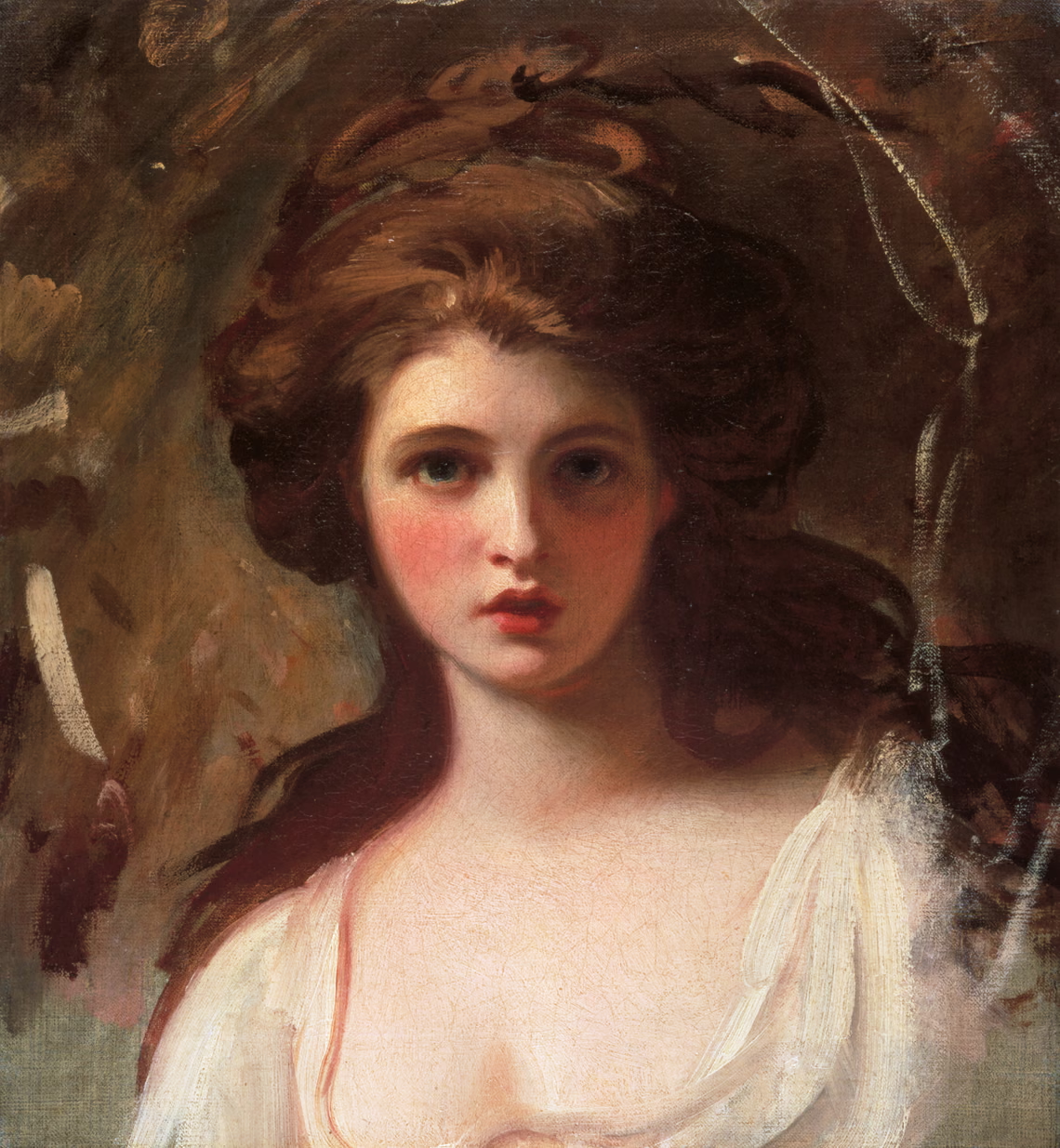
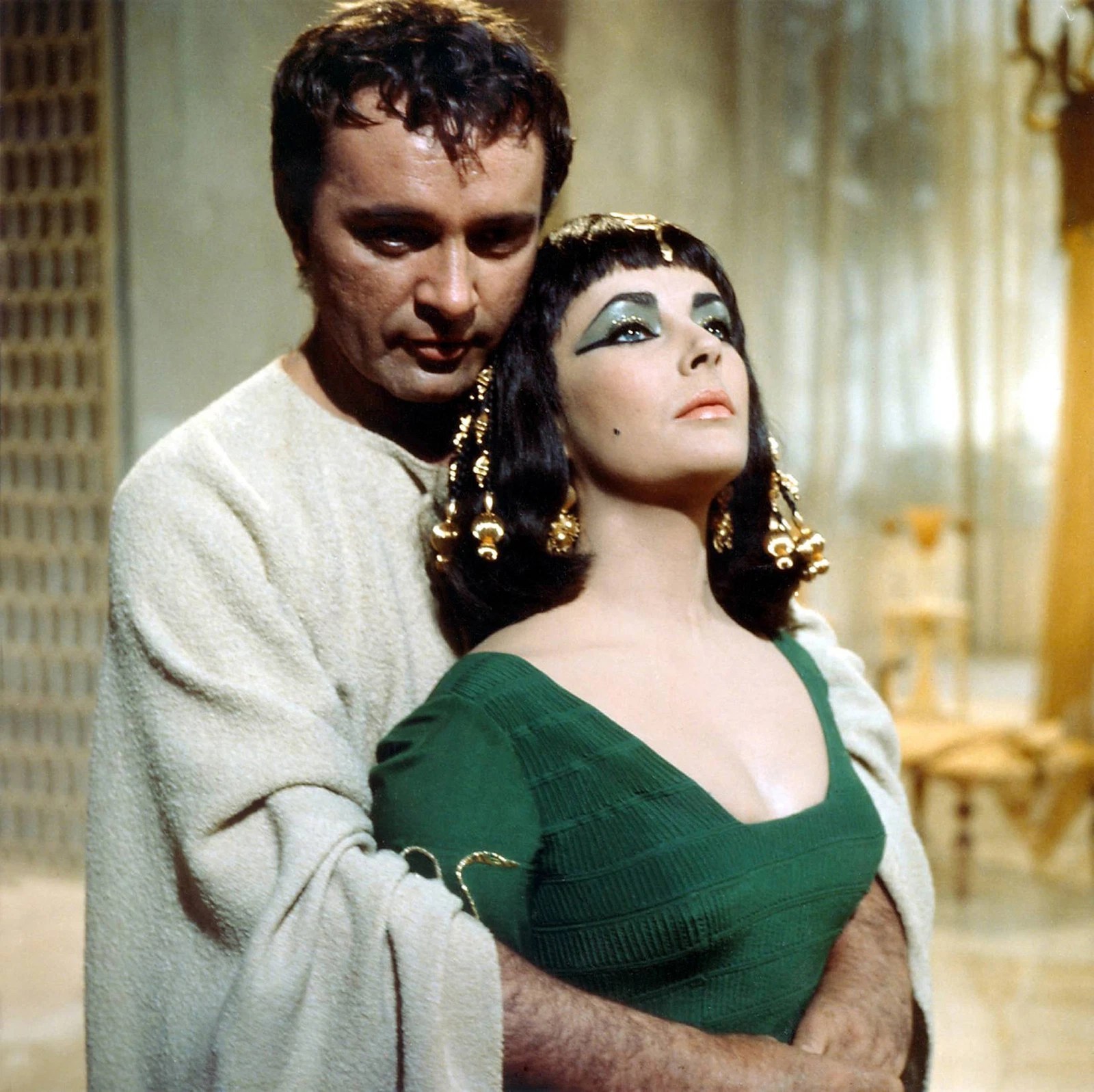
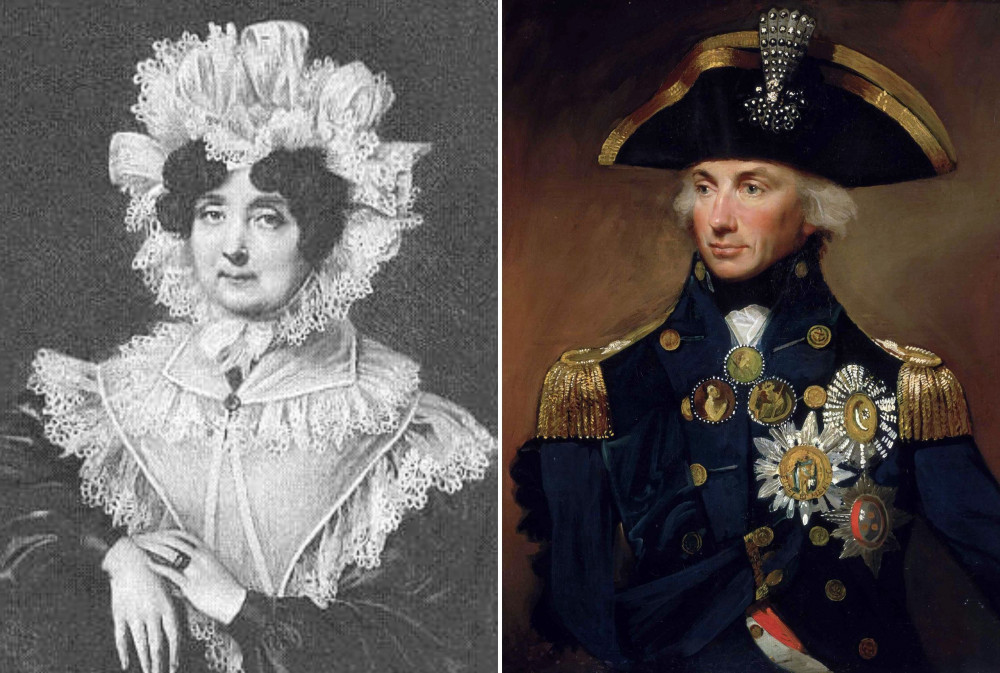
–He was the son of an Anglican minister and was properly married to a widow, Frances Nisbet, in 1787. Six years later, on a visit to Sir William Hamilton, the British ambassador to Naples, he first caught sight of Sir William’s wife, Emma. It was all over after that. The two marrieds entered into a lively relationship that was analogous perhaps only to the Richard Burton/Elizabeth Taylor scandal that began during the filming of Cleopatra. While Nelson continued to support his wife—she remained “devoted” to him, it’s said—Nelson’s devotion lay forever after in the charming arms of Emma. The relationship produced a daughter, tragically named Horatia.
A young Emma Hamilton.An artist imagined Nelson and Emma in Naples.Liz and Dick in a scene from Cleopatra.Frances Nisbet—“Fanny”—and His Lordship. Her father had lots of money.
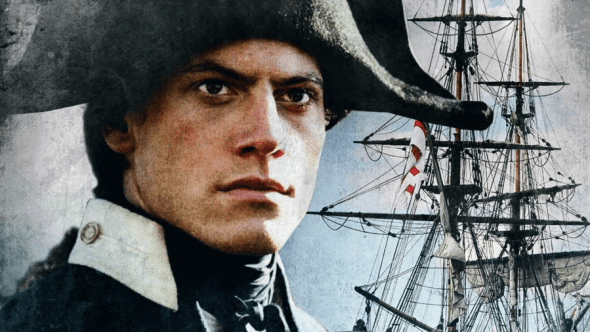
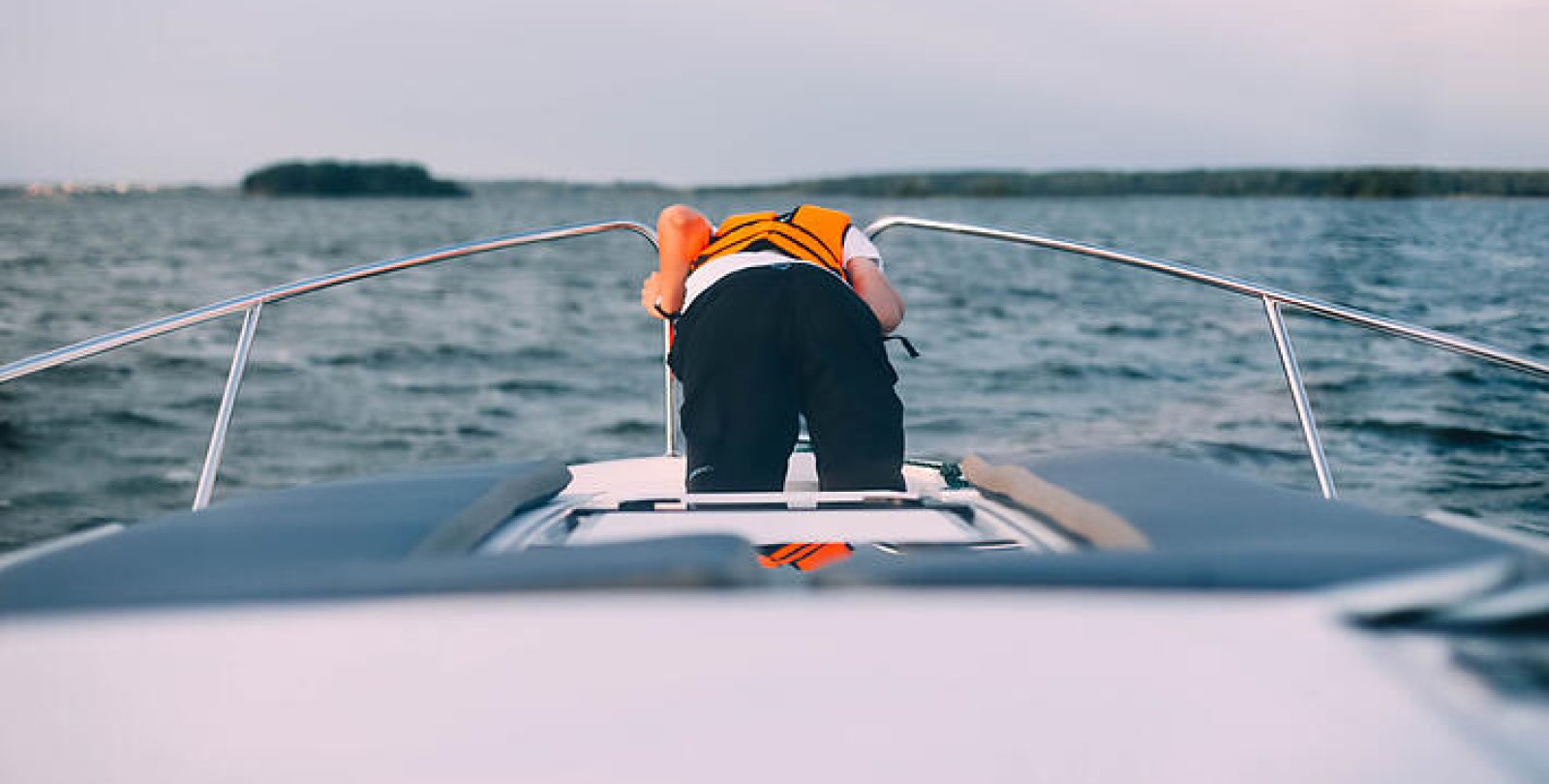
–Like my fictional naval hero, Horatio Hornblower, played by Ioan Gruffudd in a TV miniseries, Nelson was largely out of sight once his ship sailed from England. That’s because both salty sea-dogs were prone to violent seasickness, which both overcame only after several miserable days at sea.
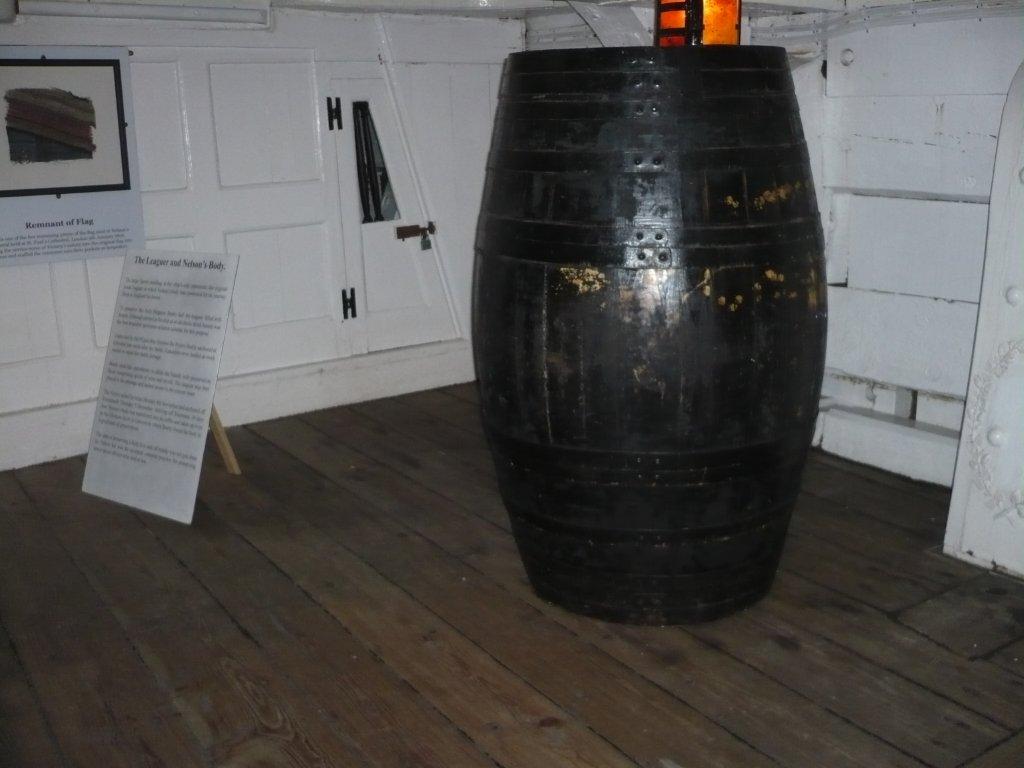
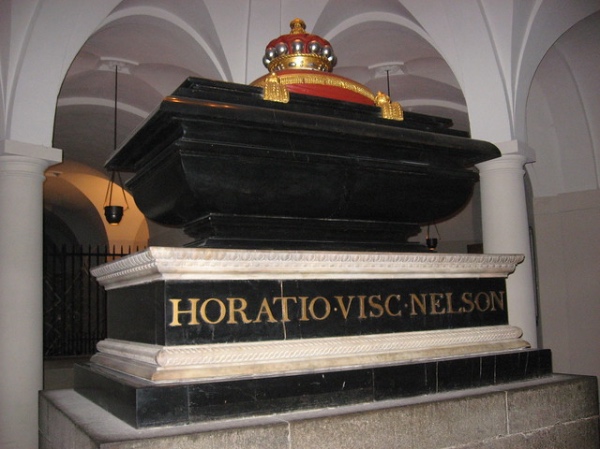
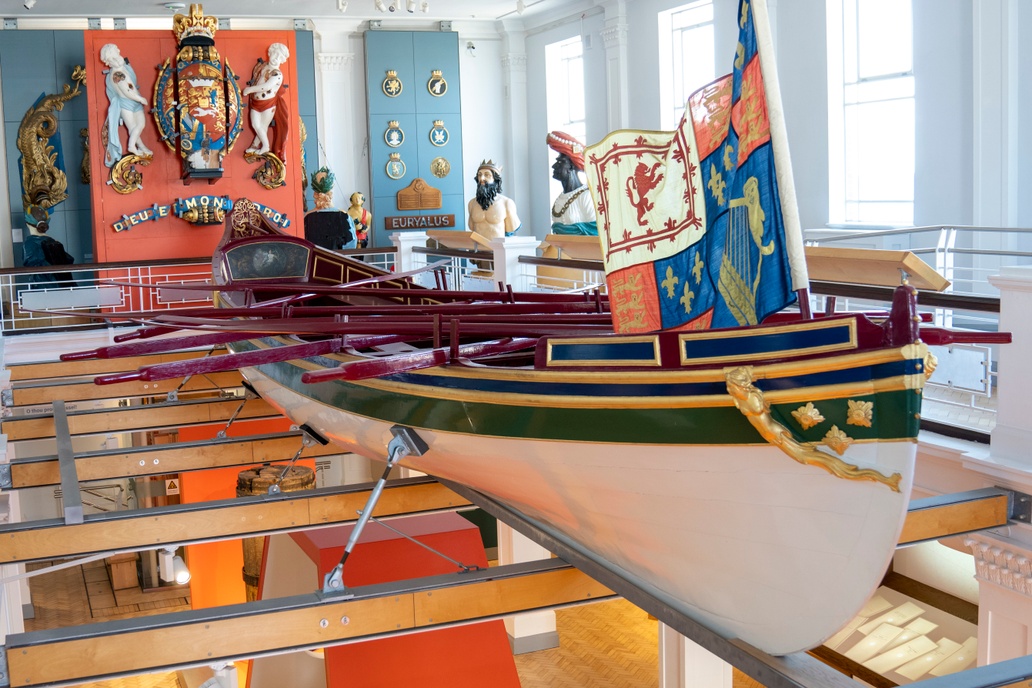
–Nelson died on the orlop deck of HMS Victory, the 104-gun ship still on display in Portsmouth. But in 1805, it was a long voyage (Victory had been mostly dismasted) back to England. What to do with his lordship? It was decided to insert him into an empty ship’s cask and then fill the cask with brandy to preserve the body. It worked. Mostly. On lying in state, Nelson’s face had to be covered with a handkerchief; the rest of him was in his full-dress uniform. He’s buried in a massive tomb in St. Paul’s that belies the actual size of its occupant. Elizabeth and I saw the funeral barge that carried his coffin to St. Paul’s. In the novel Hornblower and the Atropos, the junior captain is in charge of the barge when it begins to take on water from the Thames. Hornblower and the barge crew make it to the cathedral, but not before he suffers the most epic panic attack, I think, ever recorded in fiction.
Oh, and a ration of rum or brandy allotted daily to British sailors came to be known as “Nelson’s Blood.” Ew.
HMS Victory’s stern, Portsmouth.A water cask like the one that carried Nelson’s body.Nelson’s tomb in the crypt of St. Paul’s, London.The royal barge, on display in Portsmouth, that gave young Capt. Hornblower such a hard time.
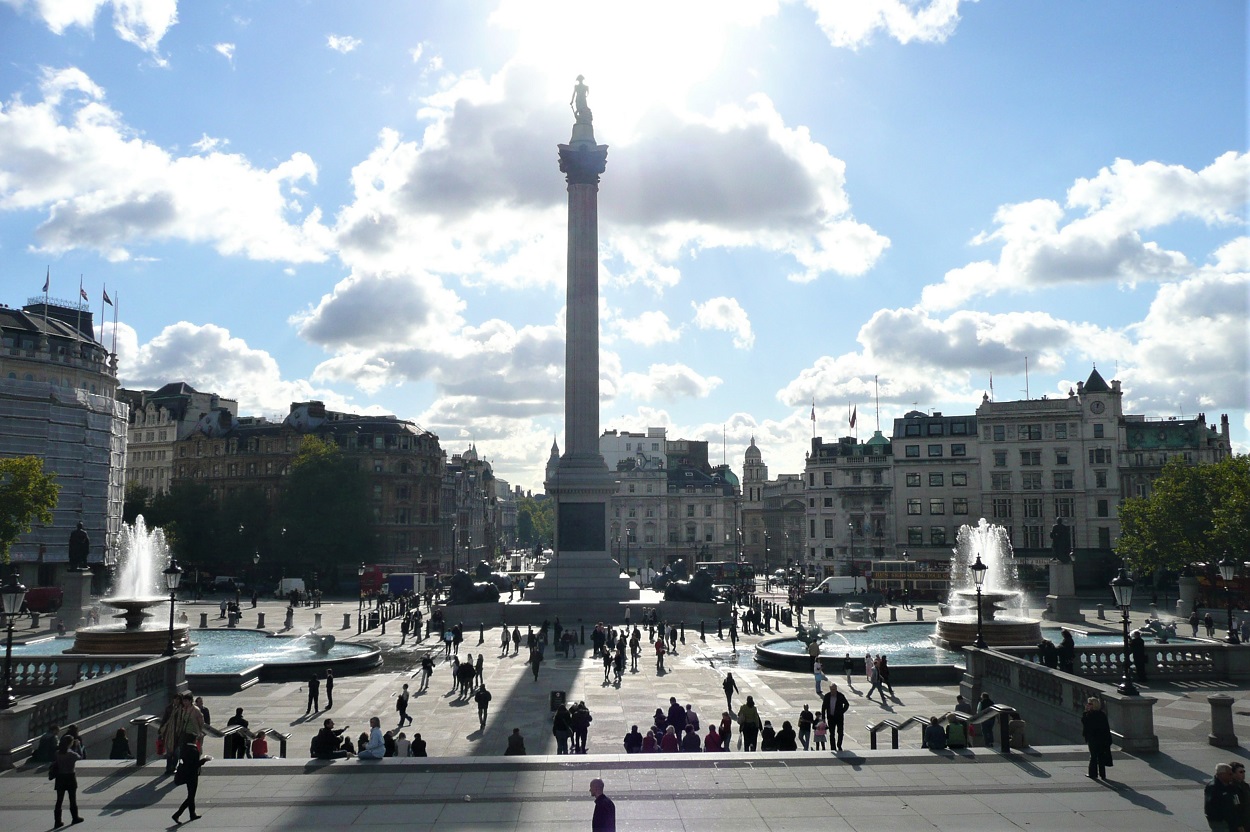
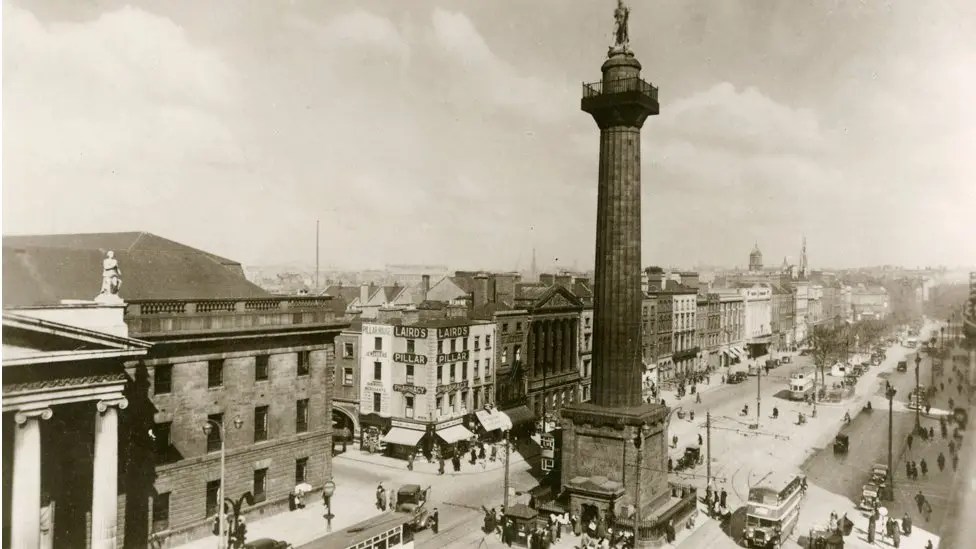
–What Nelson lacked in height he made up for in monuments. The little admiral was placed, in stone, atop two famous columns. One stands in, of course, London’s Trafalgar Square. Another once stood on O’Connell Street in Dublin, uncomfortably close to the General Post Office, the site of the 1916 Easter Rising. Fifty years after the Rising, the IRA blew Lord Nelson up.
So it goes.
Nelson’s Column, Trafalgar Square.“Nelson’s Pillar,” Dublin. The General Post Office ia at the extrme left edge of this photo.
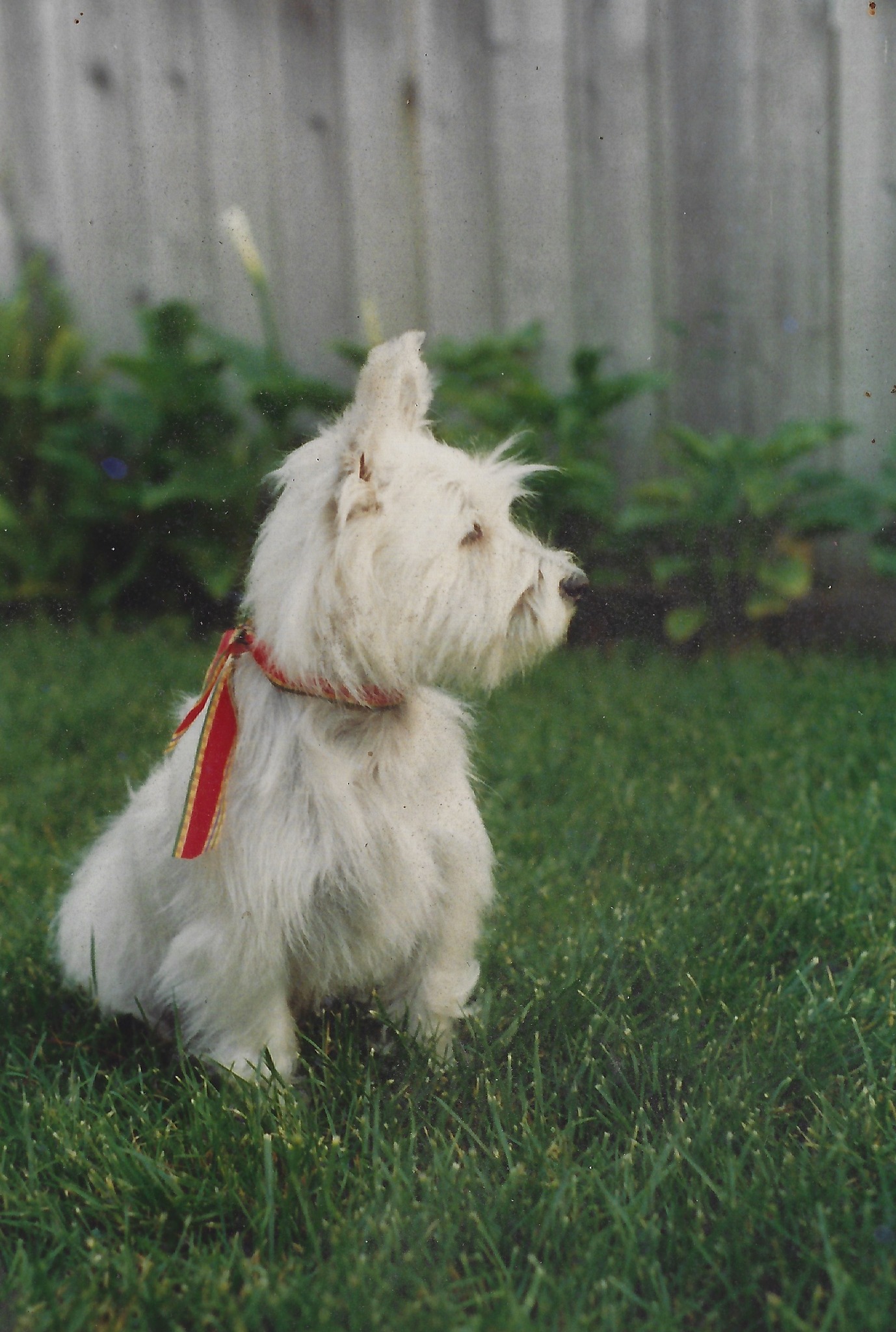
My doggie, Nelson, was a West Highland White Terrier.
And it’s only appropriate to close this piece with this song.
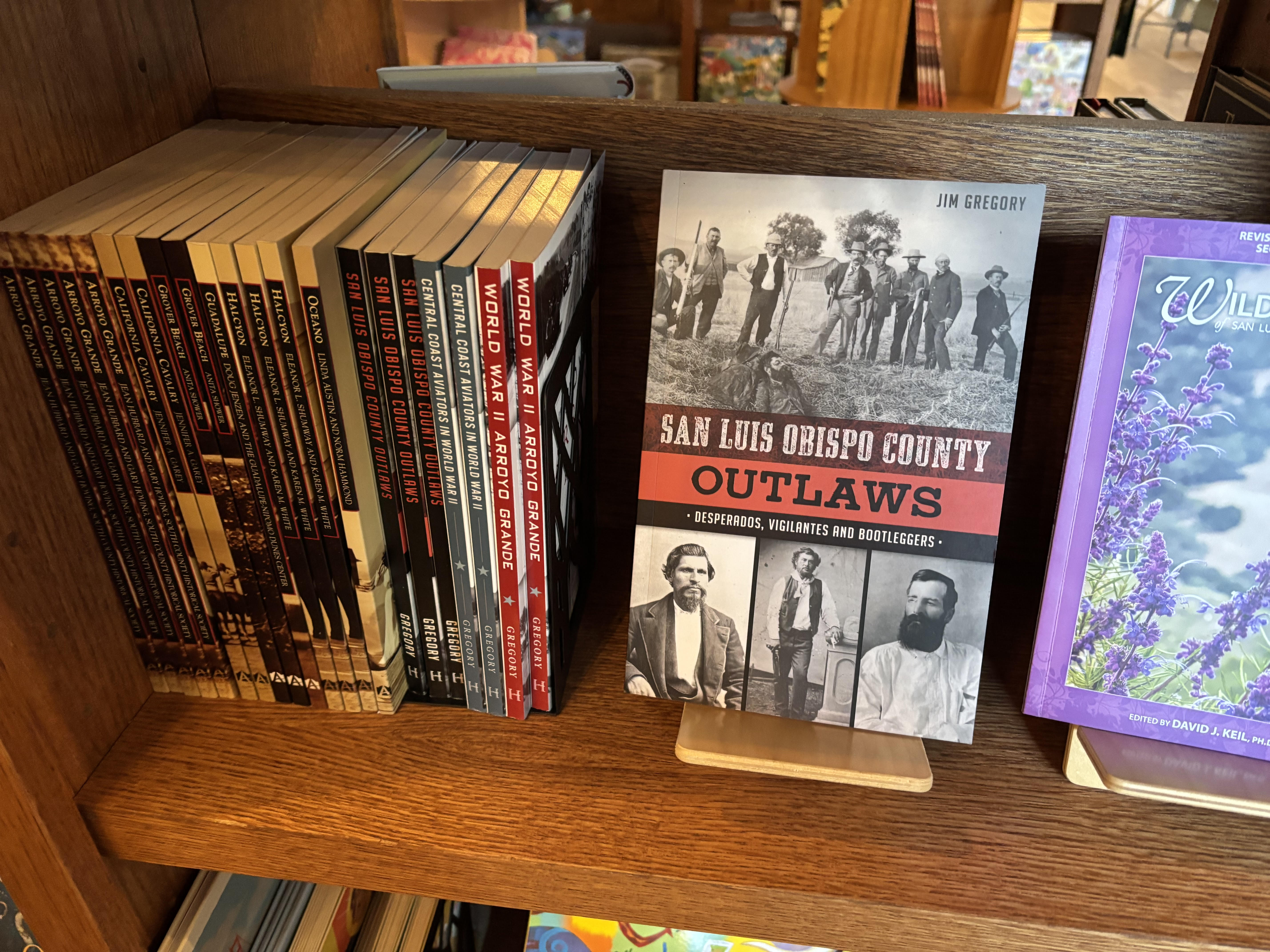
I love that Arroyo Grande—especially Branch Street Arroyo Grande—has an independent bookstore. My ego is happy because Monarch Books carries my books. We were waiting for a table to open across the street—my elder son’s and my younger sister’s birthdays—so I wandered across Branch to look for my books. I found them, but even I’m not so vain as to go into a bookstore and just looky-loo.
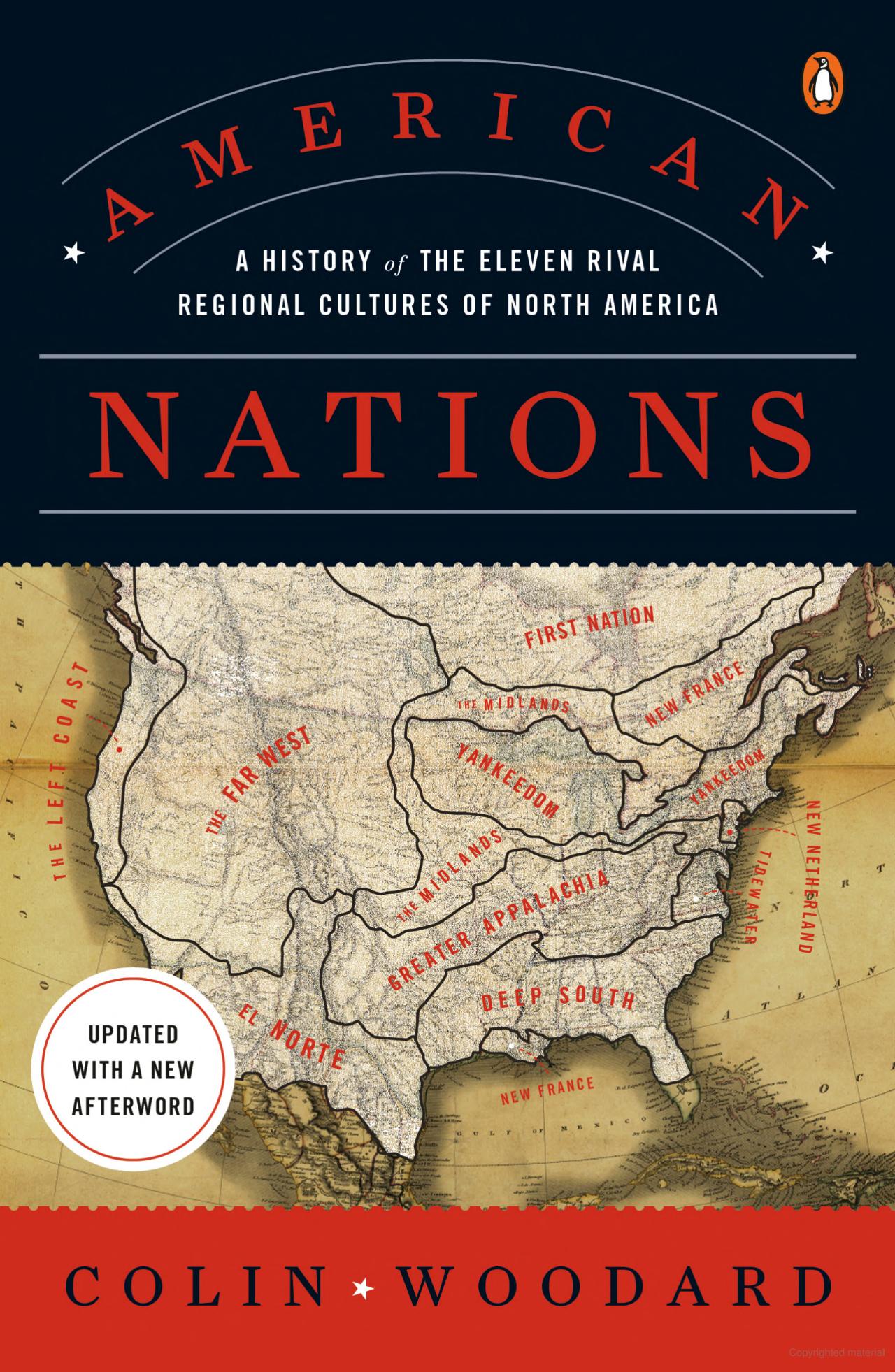
So I bought a book. This book.
I’ve only just started it, but it’s already one of the most extraordinary books I’ve read in years. I rarely start books at the beginning, so I dove into the first chapter about one of Woodard’s seven nations, “Greater Appalachia,” because my father’s family has roots there, planted firmly on Missouri’s Ozark Plateau.
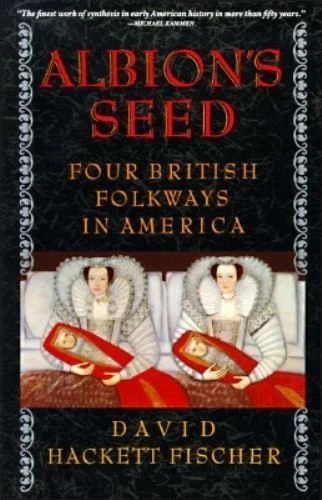
It reminded me of another extraordinary book I read years ago. I shared excerpts from Albion’s Seed with my AGHS history students, again, partly out of vanity, because another part of my family, Episcopalians all, comes from a second nation in Woodard’s book, “Tidewater.” They lived in places whose names—Fredericksburg, Spotslyvania, Petersburg—would be known as terrible battlefields a century after their arrival in America.
One of them, a collateral ancestor, Roger Gregory, married Mildred Washington, the great man’s aunt, and that homely name has persisted in my family, down to my own Aunt Mildred, who preferred to be called “Bill.”
Roger eventually sold Mt. Vernon to Washington’s father. My family is not known for its real estate acumen.
But Albion’s Seed revealed that Tidewater Virginians socialized their children by teaching them dance. That tradition carried down to my grandfather, John Smith Gregory, allegedly the sweetest waltzer in Texas County, Missouri. John could make his partner believe that the sawdust-strewn floor at a barn dance was polished glass. Even in his fifties, his partners were usually teenaged girls, waiting patiently for their turn on Mr. Gregory’s dance card.
My grandmother seethed. What can I say about my Grandmother Gregory? When she visited us kids in Arroyo Grande, we hid her dentures.
Her fried chicken, however, was sublime.
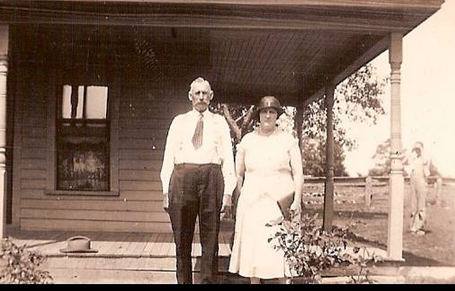
My grandparents, John and Dora Gregory, in front of the farmhouse. As you can tell, my grandmother–a delegate to the 1924 Democratic Convention in Madison Square Garden—was a hard woman to knock down in a windstorm. My dad is at right.
One day in 1933, she called my dad back to the farmhouse, which is still there, because he was barefoot. Dad was going to cross the road with Grandfather John to visit a neighbor. Grandma Gregory’s Scots-Irish pride would not permit a son of hers to visit Mr. Dixon barefoot.
So my grandfather, mostly deaf by then, never heard the speeding Ford roadster that killed him.
They let schools out the day of Mr. Gregory’s funeral.
There have been other books written about people like my ancestors, who migrated from the English Midlands to Tidewater Virginia, then Kentucky, then Missouri, until oil brought them to California. But other ancestors, like my Grandmother Gregory’s, came from Ulster or the Scots Lowlands, desperately poor, oppressed and spoiling for a fight. If they couldn’t get one in the British Isles, they’d be happy to start one in America. Woodard calls them the Borderlanders.
Former Virginia Sen. James Webb wrote Born Fighting, about the Scots-Irish military tradition in American history. Many of them, of course, marched in Stonewall Jackson’s “foot cavalry,” perhaps the finest infantry in the Victorian world, named for the rapidity of their marching. My Uncle Tilford’s middle name was “Stonewall.” So it goes.
And, of course, JD Vance’s offering was Hillbilly Elegy, a petulant book I started twice and then put down, never to return. I have started David Copperfield six times, and I will finish it because the book deserves it.
American Nations deserves a first reading and then many more.
To my shock, I discovered the echo of the January 6 people in the first chapter about “Greater Appalachia,” a region whose culture informs the Ozark Plateau.
REUTERS/Leah Millis/File Photo
Among the observations that Woodard makes about the people of Greater Appalachia, whom he calls the Borderlanders:
–They didn’t trust law courts. Justice, instead, was personal and retributive. The Hatfield-McCoy bloodletting is an example of a Borderland tradition that persisted long after their ancestors came to America.
–Within the group, Borderlanders did not tolerate dissent. Those, including kin, who violated the moral code, grounded in a cultural construct of reality, were dealt with violently.
–Borderlanders hated outsiders, most of all Native Americans, on whose land they squatted. When indigenous people resisted, the retribution visited on them was merciless, including the scalping of children.
–Because they’d been so exploited by absentee landlords in England, Scotland and Ulster, they despised city people, including those in Philadelphia, where a group took up arms, marched on the City of Brotherly Love (even Philadelphia’s Quakers took up arms) and were turned back by cannon loaded almost to the muzzle with grapeshot and by sweet Enlightenment reasoning. Negotiation with Benjamin Franklin finally persuaded the insurrectionists, known as “the Paxton Boys,” to go home.
–While Borderlanders resented the wealthy and the powerful, they followed their own leaders, who rose to the top not because of their command of policy or sweet reasoning, but by the force of their personalities, their emotional appeal and the blandishment of their personal wealth. Disparities in wealth were enormous among these people, and they were tolerated. Woodard notes that the top ten percent monopolized land in AppalachianAmerica, while the lower half had no land at all.
It struck me, in reading the passage about the march on Philadelphia, that MAGA, as far back as 1764, has been an American tradition. Today’s movement, of course, is not ethnic, but it has the trappings—a sense of injustice, of entitlement, of envy and of incipient rage— the same forces that drove the Paxton Boys’ march on the city they despised.
I found some comfort in this understanding, which I hope is accurate, because, after all, we survived 1764.
There are other inklings of hope in my Borderland ancestry. I am named for and descended from two Confederate officers, one, a brigadier general (James McBride died of illness in 1862); the other, his son, Capt. Douglass McBride (my middle name), was vaporized by a Yankee artillery shell in Arkansas the same year.
You’d think we would’ve learned, except for my Uncle Tilford Stonewall Gregory’s middle name.
One of Tilford’s sons, Roy, was my cousin. When World War II came to America, Roy, from the Missouri Ozarks, joined the Army and became a member of the Oklahoma-based 45th Infantry Division. He would fight in Italy and Western Europe and was wounded twice—both times from shell fragments from the superb German field gun, the 88— and was recovering from the second when the Germans launched Operation Nordwind in January 1945, in support of the greater offensive in the Battle of the Bulge.
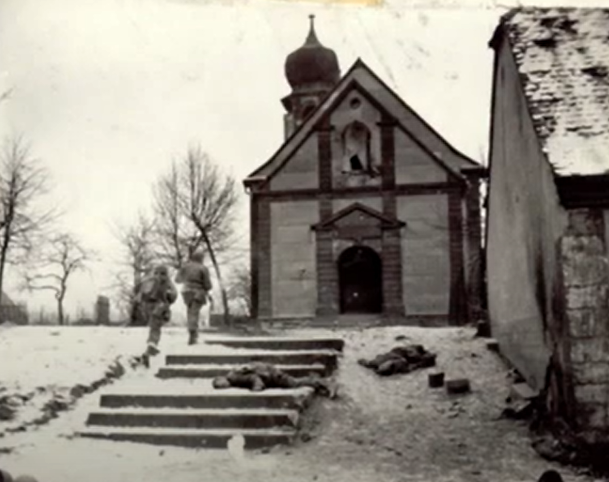
Roy, in recovery, was discharged from the hospital and sent to the front, to a French town, WIngen-sur-Moder, on the German frontier. His company was attacked by Waffen-SS mountain troops, soldiers who fought without mercy, and it was their artillery that finally claimed him. He died on the steps of the village church.
He came home to Greater Appalachia, to the Allen Cemetery in Texas County, Missouri, where his grave is not far from our Grandfather John’s, the sweetest waltzer in Texas County, Missouri.
My cousin, you see, was an Antifascist.
My cousin Roy; the church where he died.
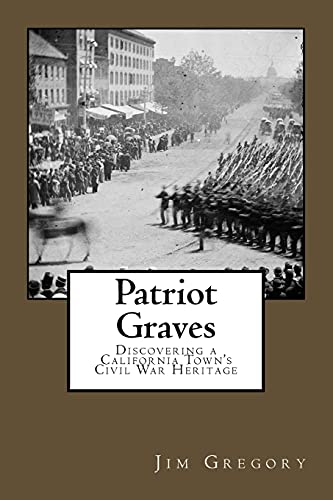
–Jim Gregory’s book Patriot Graves: Discovering a California Town’s Civil War Heritage, is about the sixty Union Civil War veterans buried in the Arroyo Grande District Cemetery.
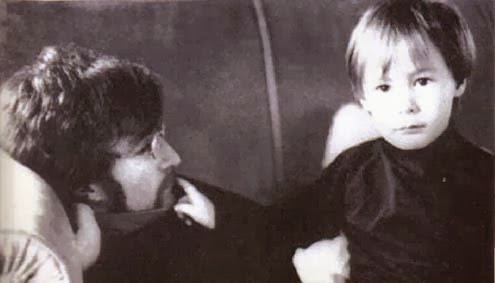
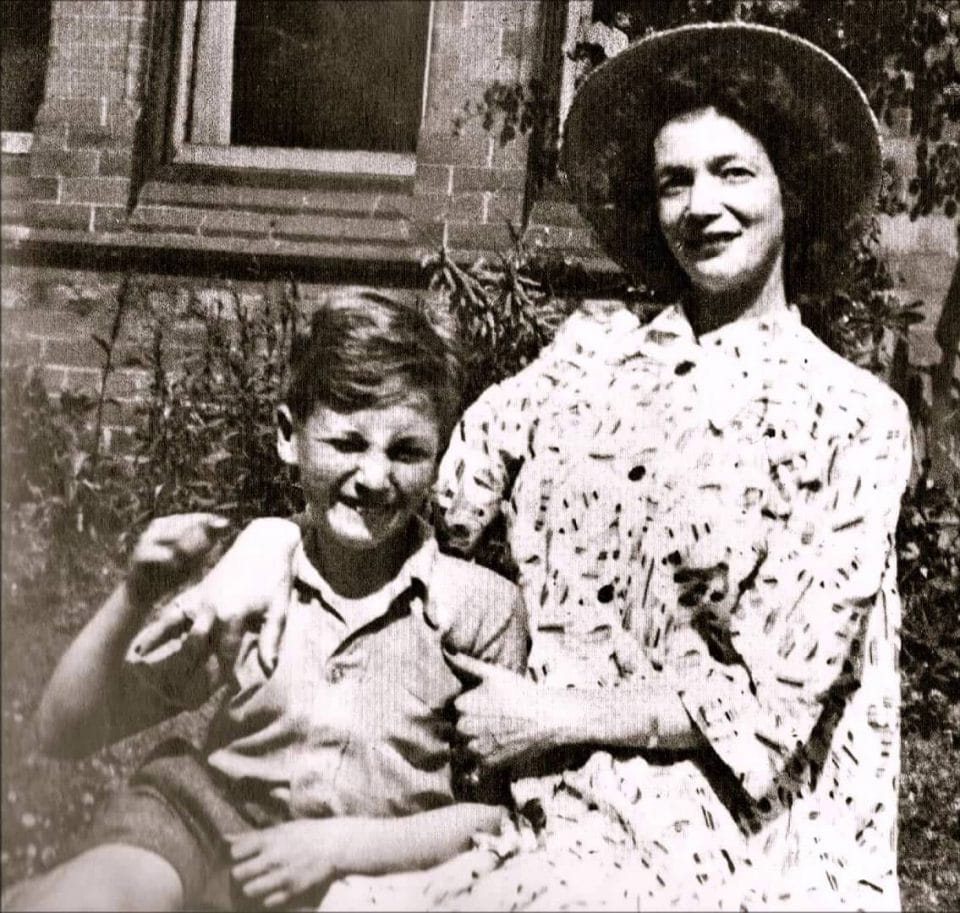
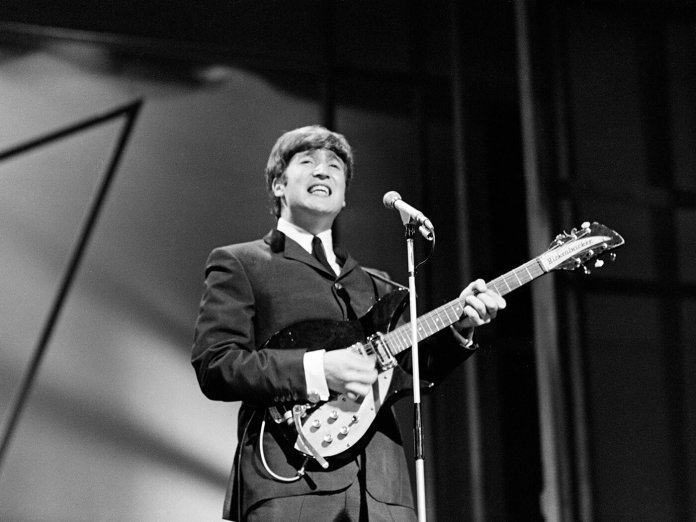
John Lennon was born on October 9, 1940, in Liverpool. The following month, the first round of raids from The Blitz, the Nazis’ attempt to pulverize England from the air, began. In an often merciful phenonmenon that neuroscientist call “infantile amnesia,” Lennon’s earliest memories, as he tried to sleep in the arms of his mother, would’ve been the detonations of Luftwaffe bombs, both muffled and instant, the fetid stink of human waste in the network of shelters designed to protect the port city’s workers and stevedores and their families, and, when the raid was over, he would’ve felt cold air and smelled the stink of burning buildings, burned Liverpudlians, and air made dense and moist by firehoses.
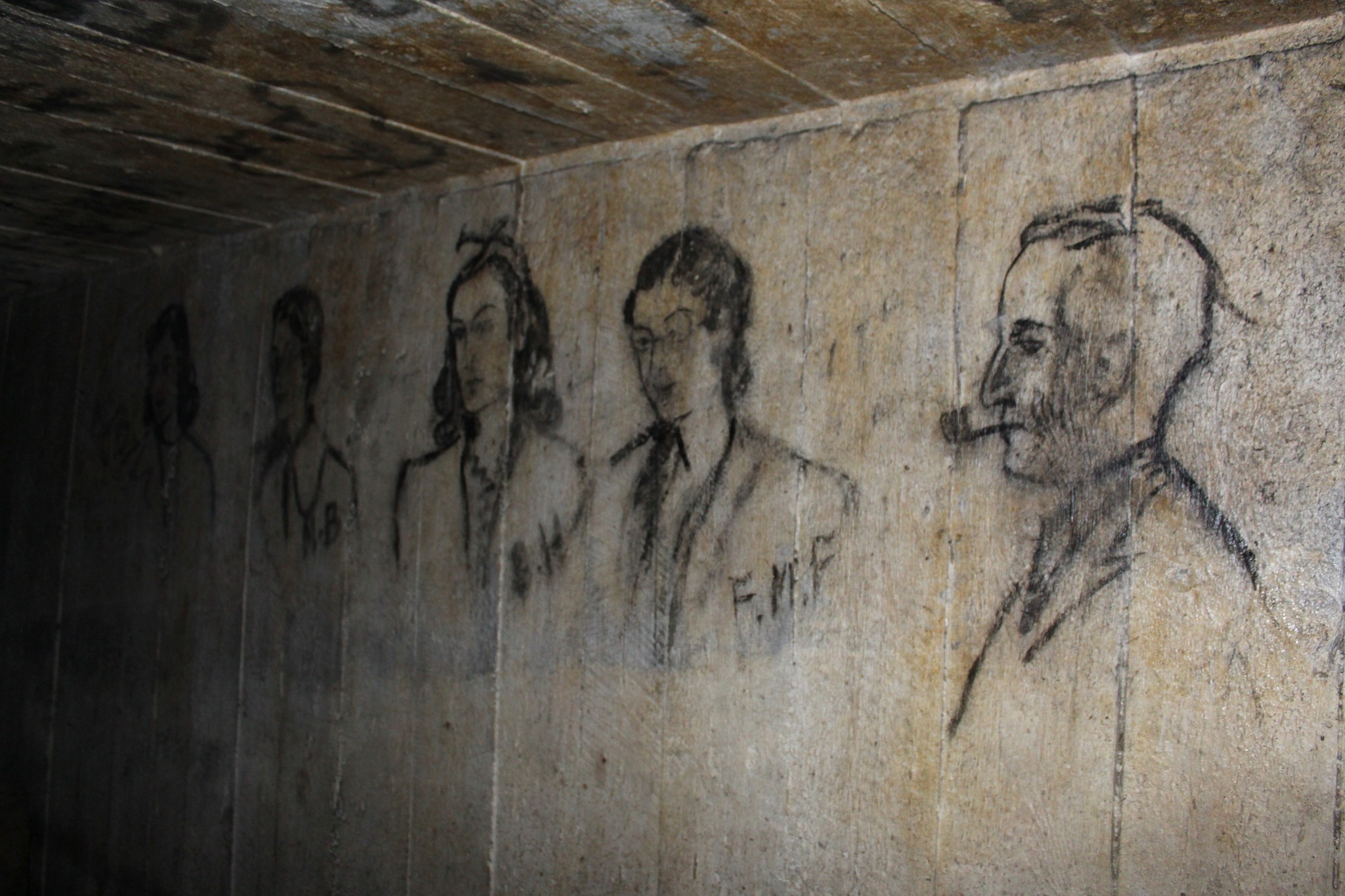
An artist of a different kind left his or her mark in this Liverpool air-raid shelter.
So that’s how Lennon’s life began.
John and Cynthia Lennon
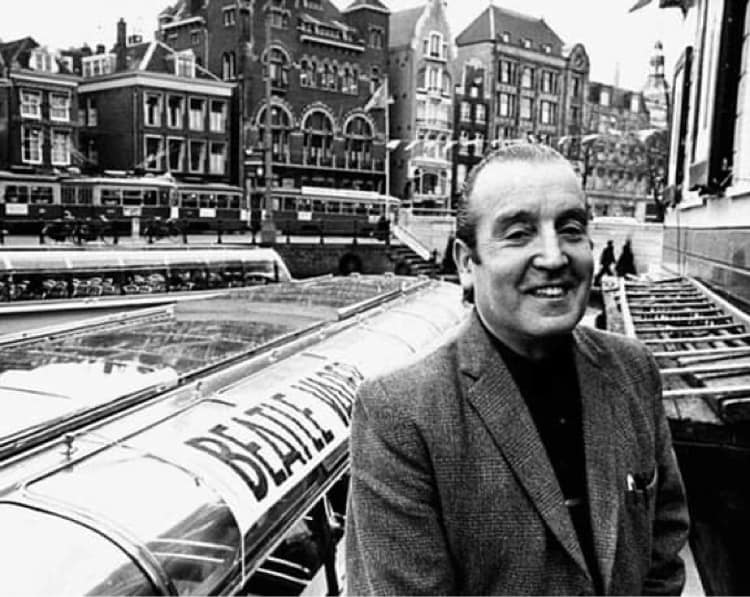
His father, Alfred, was a merchant seaman; and the month John was born, U-boats sent 350,000 tons of Allied shipping to the bottom. The u-boats’ goal was to starve Great Britain, and, in 1940, they were winning. Alfred, also known as “Freddie,” wasn’t. He went AWOL in 1943, allegedly fleeing for stealing a bottle of beer, and the checks he sent to his little family stopped coming.
Freddie in the 1970s.
This means that John’s childhood would’ve been a meager one, and that included the love any little boy would’ve wanted from his parents. He adored him Mum, Julia, but she was more of a playmate—musical, as was Freddie, high-spirited, funny—than a real Mum. It was her sister, Mimi, who did the mothering when Lennon was five.
Julia was walking near Mimi’s house in 1958 when she was killed. She was run down by a car driven by an off-duty policeman. John succumbed to what he called a “blind rage” for the next two years, fighting and drinking.
But what Julia left behind for her son the guitar she bought for him. It was his first.
Why can’t my generals be more loyal, like Hiter’s generals? Donald Trump to Chief of Staff Gen. John Kelly.
Hitler’s generals tried to kill him, and they almost pulled it off, Kelly replied.
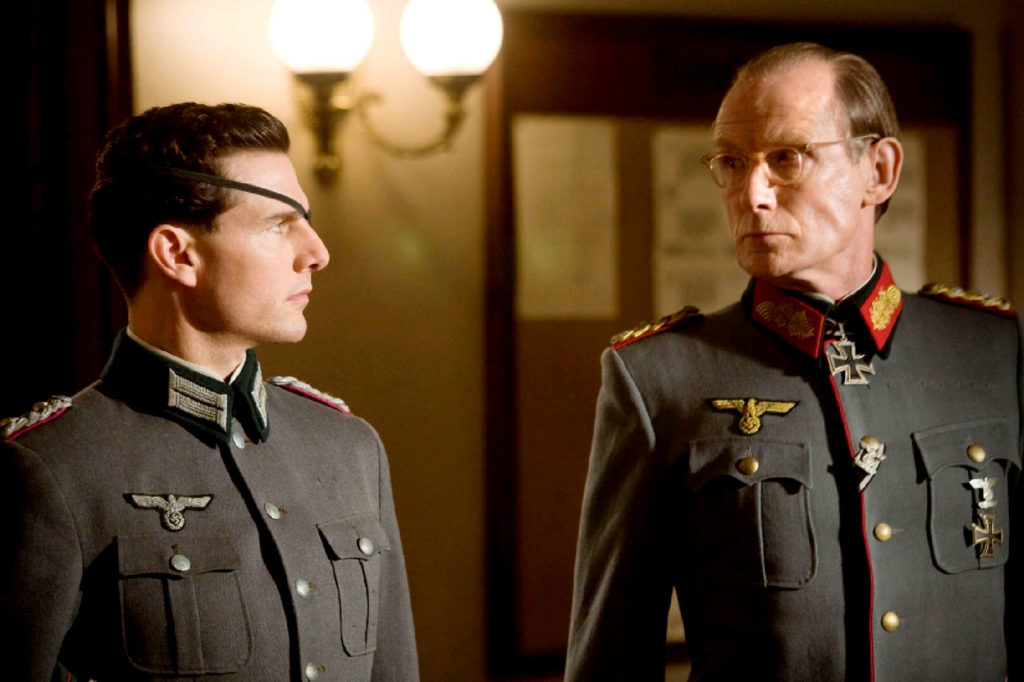
The most famous example of Kelly’s history, which is factual, as opposed to the President’s knowledge of history, which is nonexistent, is the July 20, 1944 bomb plot, engineered, as we all know, by Tom Cruise (Valkyerie), not my favorite actor, with an assist by Bill Nighy, who is.
The story is familiar to those who study history. Claus von Stauffenberg, a decorated German officer who kept losing parts of himself (one eye, one arm), was, like most of modern Washington D.C., disgusted with his nation’s leader. Unlike most of D.C., he was willing to do something about it.
At Hitler’s bunker in East Prussia, the Wolf’s Lair, Stauffenberg nudged a briefcase full of plastique under the map table to the edge of the Fuhrer’s kneecaps. He then discreetly left. Another officer, wanting a better view of the movement of the mythical panzer divisions–reinforced, equipped and sped into action across the map—Normandy at one end and the Russian frontier at the other, by Hitler, nudged the briefcase out of his way and behind a support that held the map table up.
The finicky offer painted the wall when the bomb detonated.
The Fuhrer had his pants shredded. Sadly, the explosion did not kill him at all.
Hours later, Stauffenberg was shot, the lucky fellow, unlike other senior officers, Bomb Plot plotters, who were hanged with piano wire, a procedure filmed and played for Hitler’s pleasure.
Claus and Nina von Stauffenberg in their 1933 wedding.
Our piano-wire days are not here yet, but we need to be patient. We’re firing already, nicely, on all eight cylinders of Gestapo.
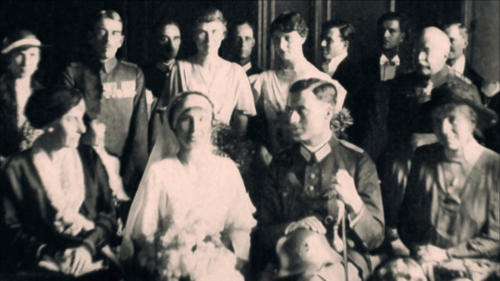
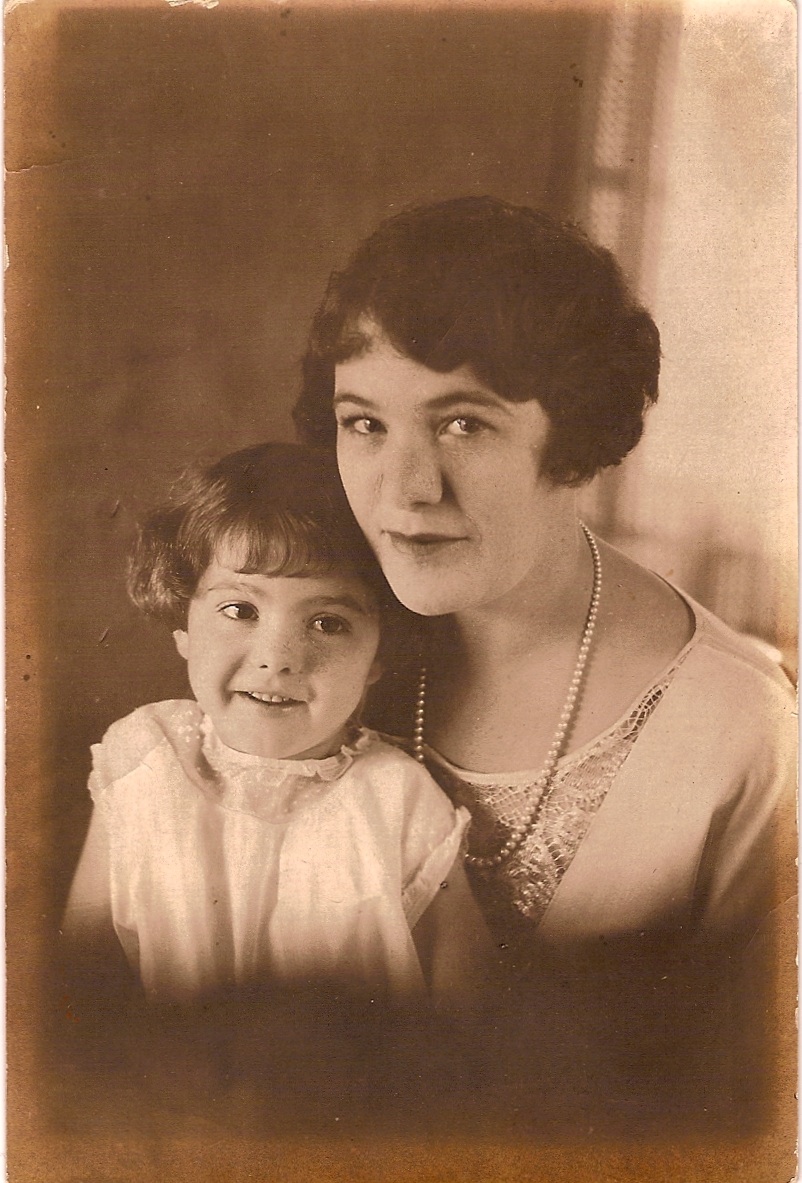
The doomed nationalist, Stauffenberg, was from Baden-Wurttemberg, and so were the ancestors of my beloved Grandma Kelly, whose maiden name (Kircher, from the word for “Church”) was blended with Irish blood, which may have led to two Irish husbands—one Keefe, a charming drunk and a car thief, my biological grandfather; one Kelly, a cop, my real grandfather.
My grandmother and my mother, circa 1925, about when the first Irishman, Ed Keefe, disappeared forever.
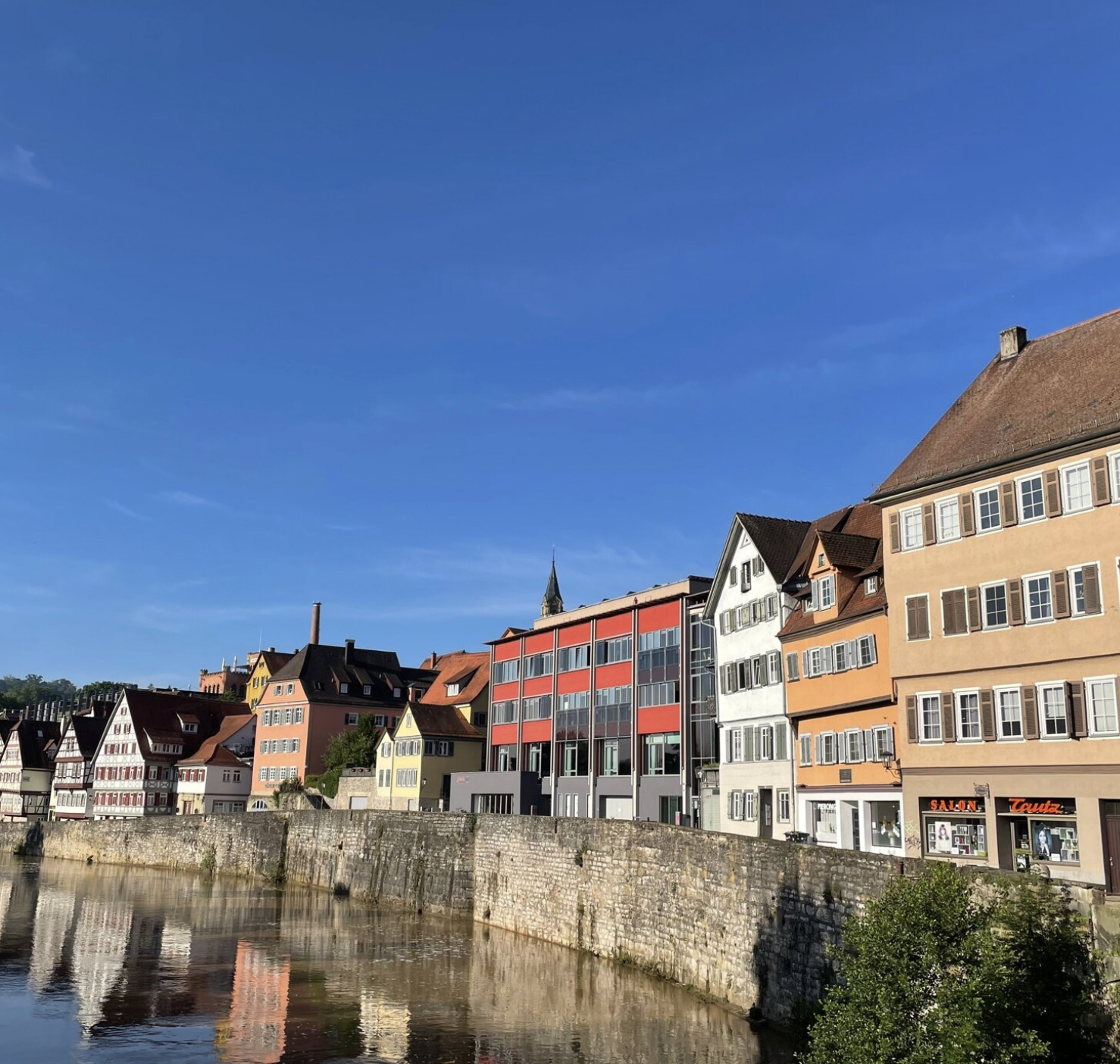
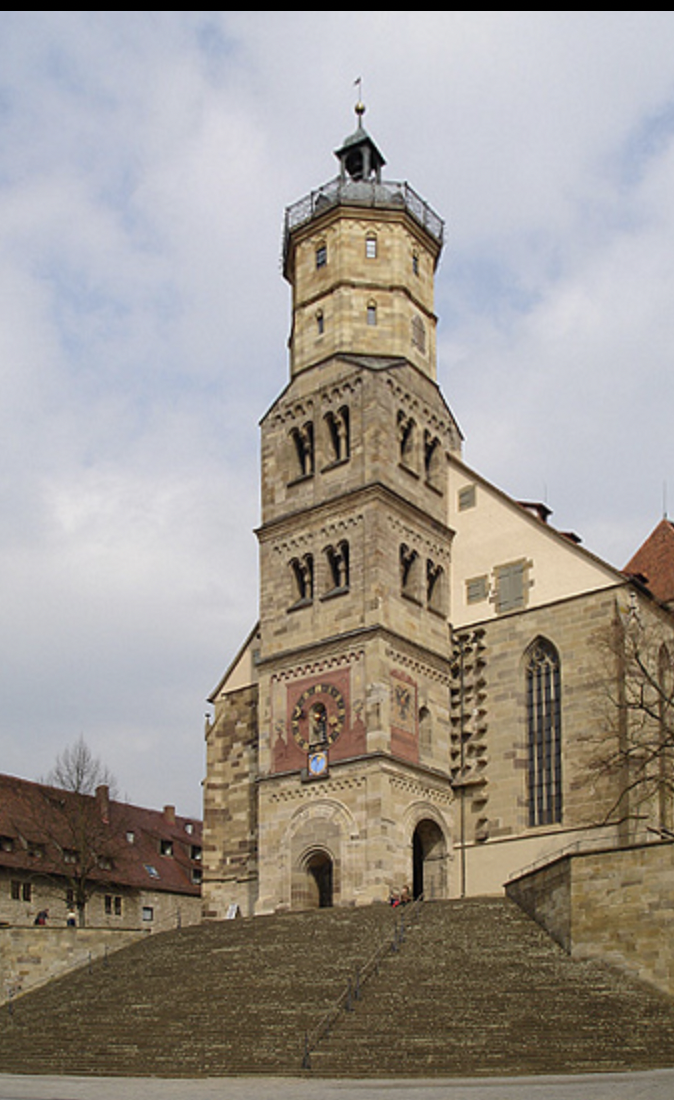
Baden-Wurttemberg, where the bomb plotter and a California gold chlorider (my Grandma Kelly’s father, Michael, who worked in a gold-processing mine and mill now beneath Lake Shasta) is stunningly beautiful.. On the left is the town where the Kirchers lived, until the 1830s; on the right is the Evangelical Lutheran church were Michen, my third great-grandfather, was baptized.
So there’s little chance that Stauffenberg and I are distant cousins. I wouldn’t mind it.
That’s not all. Oh, no.
Hitler was examined intensively after the bomb’s detonation had reduced his pants to crenelated culottes, There was not damage Down There, not that der Pilz des Anführers(“The Leader’s Mushroom”), a term suggested by porn star and Trump couplet and strumpet Stormy Daniels.
But up there? Here’s where I come in. I attended Stanford University.
Okay, for a week.
I studied the history of Depression, New Deal and World War II America with Dr. David Kennedy—an amazing man—who’d written the Pulitzer Prize-winning account of those years, Freedom from Fear. On one of our breaks—all of us high-school history teachers—we toured the Hoover Institute.
To refresh your memory, Hoover accomplished this in the 1932 presidential election (in red).
He was succeeded, of course, by some fellow from upstate New York who gave my teenaged father a job in relief work, distributing food to proud Ozark hill people whose starvation, briefly, overcame their pride, who sent CCC teenagers from New York City to Arroyo Grande to reclaim the soil that had been devastated by erosion, whose federal employees built school buildings extant in Arroyo Grande, whose vice president appointed my father to Officers’ Candidate School during World War II, whose tour of Camp Lejeune in December 1944 was guided by a Marine, a motor pool driver, a sergeant, a woman, from nearby Oceano, California, who’d lost her brother two years before on Tarawa.
Thelma and George Murray, in a composite made for their mother after his death.Murray’s body, and the graveyard of his Marine brothers on Tarawa, disappeared. He was found and came home to his mother –hie is now buried with her–in 2017.
So there’s all that.
The Murrays are all that. Our alleged president isn’t. He gives us nothing, sacrifices nothing, cares nothing for us, deserves nothing from us.
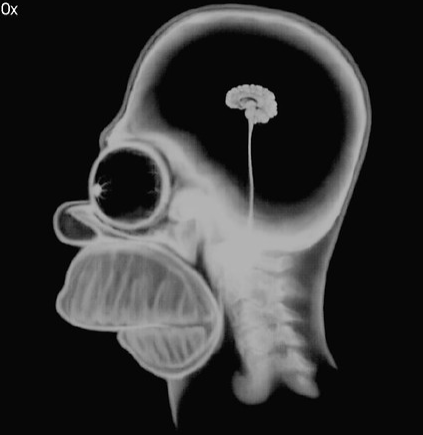
But at the Hoover Institute, an incredible repository, I was allowed to hold the X-ray of Hitler’s skull, taken after the misdirected explosion at the Wolf’s Lair this day in 1944. I have not seen an x-ray of our leader’s skull, but I have seen this one.
What I’ve seen instead, and just in the last few days, are President’ Trump’s ankles. They are grossly swollen, explained away glibly by the latest of his snake-oil doctors, like the one who proclaimed him the fittest man ever to occupy the White House.
But I’ve learned not to take his doctors’ word for anything. A more hopeful explanation, after a steady diet of Big Macs, incinerated New York steaks, gray inside, and colored only by Heinz ketchup, Kentucky-fried buckets whose grease is wiped clean on the armrests of Air Force One, double Mar-a-Lago helpings of chocolate cake with ice cream—he eats piggishly in front of his guests, allowed slivers of cake—complemented by exercise that consists of driving a golf cart across painfully manicured—by immigrants–putting greens. So there is a good chance that those bloated ankles portend congestive heart failure.
And, with God’s help, and may it be soon, the arteries that supply his heart and his brain will collapse.
He will not die for awhile.
He will stare, silent and furious, just as Stalin did at his Inner Circle after his stroke—many of them were soon the be shot at the Lubyanka, the secret police slaughterhouse in Moscow—at the the White House eunuchs who’ve abetted his every aberrant behavior, most of all the predatory ones, and they will have nothing for him, nothing to save him from the drowning his cruelty has earned him.
The cruelty he’ll leave behind is vast and invasive. The healing will take years. The war that lies ahead of us will be the hardest we have ever fought. To fight it, we need to look beyond ourselves.




























 A Work in Progress