• About
  • The Germans

A Work in Progress

A Work in Progress

Category Archives: Uncategorized

Manny the Meningioma

18 Thursday Dec 2025

Posted by ag1970 in Personal memoirs, Uncategorized, Writing

≈ Leave a comment

Tags

benign tumors, health, life, surgery, Writing

At the end of this post, you’ll see the opening credits to “Ben Casey,” a popular 1960s medical show about handsome Dr. Ben, a neurosurgeon, played by Vincent Edwards.

Dr. Ben deftly picked up the brain he’d dropped earlier in this little boy’s surgery.

His competition was handsome Richard Chamberlain, on another network, as Dr. Kildare, whose love interests included the actress Yvette Mimieux. She was beautiful, and that didn’t prevent her from getting excellent reviews for her performance. (Okay, maybe the bikini helped a little.)

(Her character died, like every last ONE of the young women who set foot on the Ponderosa in “Bonanza.” Those Cartwrights were hell on women.)

Ben Casey’s boss, writing on the blackboard in the video below, was Sam Jaffe, featured in 1939’s “Gunga Din.”

Jaffe as Gunga Din, with Cary Grant, about to swash and buckle.
Jaffe, as Dr. Zorba, with Edwards, as Dr. Casey.

Jaffe, born in New York City of Ukrainian Jewish parents–his childhood tenement is today a museum*– was of course a natural choice to play Gunga, essentially an Indian collaborator with the Raj, but, hey, his buddies were Cary Grant, Victor McLaglen and Douglas Faibanks, Jr., so it’s all good.

*(The Tenement House Museum, on the Lower East Side. Pardon Mr. History Guy for finding Jaffe’s connection amazing.)

Anyway, I was thinking of Ben today because I’ve decided I will contact Stanford and go up there for a wee bit of brain surgery. First, the caveats:

1. I have a tumor, but it’s benign. Nonetheless, it can cause you to fall down, develop blurred vision, and it messes with your memory, like forgetting the name of the actor in the movie you just saw on TV (Robert Ryan) or the name of General Grant’s horse (Cincinnati).

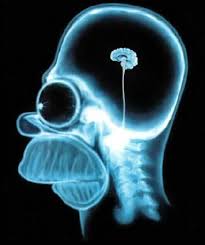
2. It is not actually a “brain tumor.” It’s arises instead in the meninges, which lines the brain. Since “Meninges” sounded to me like an island group, like “Azores,” I have named my tumor Manny.

Immigrants from the Meninges.

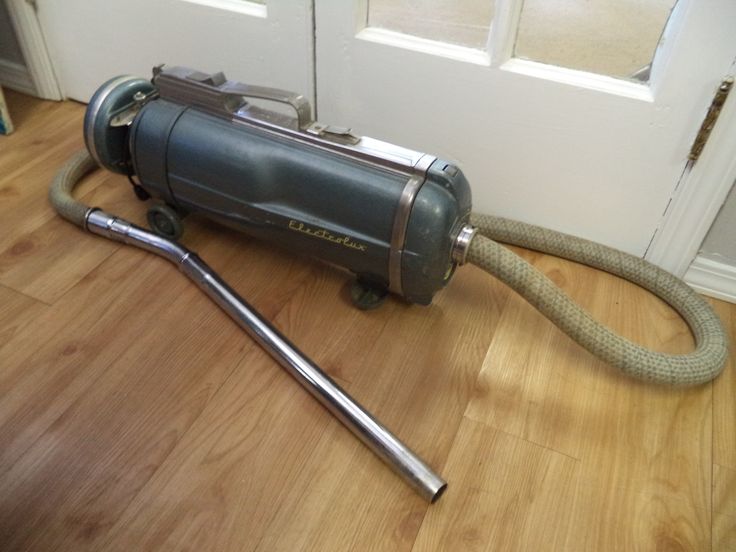
3. It’s a relatively simple procedure, requiring only a corkscrew and a 1960 Electrolux vacuum cleaner with an upholstery cleaner attachment.

4. Very high success rate, but recovery can be tough. It may involve people bringing me chiles rellenos or cheese enchiladas, sushi, Thai noodles with peanut sauce or ravioli for 60 days after the procedure. And maybe red velvet cake with cream cheese frosting.

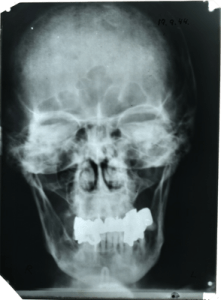
5. Since it’s at Stanford, unless the surgeon loses the corkscrew inside, I’m sure there’s a chance that my IQ will go up, all the way to 100. I attended a week of classes at Stanford in 2004, on the Great Depression and World War II, and got to hold this X-ray of Hitler’s skull, from the Hoover Institution, so all of this is very symmetrical.


6. I get to have morphine, once a dandy additive to children’s medicine.

I’m still working up the courage, being a devout coward, to start the process that will lead to the surgery. It’s been two days now. I will try again tomorrow. I am posting this in part as an incentive for me to get off my rear end and get going.

But I’d better stop watching this video:

Three 1939 Films that made me possible

05 Friday Dec 2025

Posted by ag1970 in Uncategorized

≈ Leave a comment

Tags

1939-films, film, movies

These are my parents, Robert Wilson Gregory and Patricia Margaret Keefe Gregory, before and after World War II. I remember that painting of the Monterey Cypress on the wall of our home in Arroyo Grande. In the photos, my folks are newlyweds, innocent of the catastrophe would be me several years later.. The photo on the right shows them after Dad had come home from the war in Europe. They’re at the Biltmore in Santa Barbara, as far a remove from an oil town like Taft as you can get.


They met in 1939, when this storefront was a sweet shop/soda fountain owned by Mom’s parents, the Kellys. Dad ordered a banana split, struck up a conversation and the little newspaper clip, from July 1940, shows what followed. It’s true that my young father, only 22, was the manager of the Fellows Bank of America. He was also the teller and the janitor.


It’s what’s in between the banana split and the wedding that fascinates me. My parents were dating in 1939. Here are some of the films that were released that year:


In a very real sense (here’s to you, Turner Classic Movies!), Hollywood made my life possible.

I will now embark on a fool’s errand. If I were forced to pick three 1939 that mean the most to me, which would I choose?

I will toss two of the most obvious films: Gone with the Wind didn’t reach smaller California markets until 1940. And I’m only omitting The Wizard of Oz because, providing we strike oil in our Arroyo Grande backyard, I want desperately to see that surround-you show (DUCK! Flying monkey!) in Las Vegas.

Here, then, are my choices:

Young Mr. Lincoln. John Ford. You can criticize me for omitting Ford’s Stagecoach, a favorite, and you can condemn Ford’s hagiography, as naive as a sixth-grade textbook, but the is the first film in which Ford emphasized Henry Fonda’s legs. They are inordinately long, and young Abe—a nickname he detested—is far more comfortable resting them along a Sangamon County riverbank than he his trying to find a place for them inside a Sangamon County courtroom. Ford used those legs again, in My Darling Clementine, in a brief and funny scene where Fonda’s Wyatt Earp attempts to balance his chair along a Tombstone boardwalk. Just in case you think I’m nuts, a distinct possibility, look at what Sergio Leone did with Fonda’s legs in Once Upon a Time in the West, twenty-nine years after Young Mr. Lincoln.

In a way, I met Lincoln in Daniel Day-Lewis’s portrayal of him in Spielberg’s marvelous film. But I was a little boy when I saw the Ford film on television, and that was the Lincoln I fell in love with, the Lincoln that led me toward teaching history to young people.

2. Mr. Smith Goes to Washington. If you want to know my politics, they’re hopelessly romantic—I’m Irish. It’s allowed—-than the perfect counterpoint to Young Mr. Lincoln is Mr. Smith Goes to Washington, where idealism collides with venality. The other thread that makes these films powerful is that their leading actors. Fonda and James Stewart were the best of friends, going back to Depression-era summer stock, and sharing a cheap apartment in New  York City (Gene Hackman’s roommates, in his New York stage days, included Robert Duvall and Dustin Hoffman).  In either case, you can imagine the young actors splitting a can of pork and beans.

But what made Fonda and Stewart authentic is that both loved America is vastly different ways: Fonda the Hollywood liberal, Stewart, the lifelong conservative from Indiana, Pennsylvania. Mr. Smith’s love for America is illuminated, as well, by its immigrant director, Frank Capra. You first meet that America in an earlier film, It Happened One Night, with Clark Gable and Claudette Colbert, when a busload of weary passengers suddenly comes to life by joining in singing “The Daring Young man in the Flying Trapeze.” It is an indelible scene, and Capra even inserts himself singing at the left edge of the movie frame.

It’s Stewart’s dogged idealism that makes Mr. Smith so appealing to me, but even he, one of my favorite actors, is not my favorite part. My favorite part is his co-star, Jean Arthur, today underappreciated. Arthur was smart, appealing, and suffered, all her career, from debilitating stage fright, including on film sets, but she delivered touching and very funny performances. Stewart and Arthur had been paired before in You Can’t Take It with You, another Capra film.  In Mr. Smith, she is a cynical reporter who takes Stewart under her wing. After young Smith is humiliated on the Senate floor, there’s a quiet streetside dialogue where she helps him find his courage again. It’s stunning. Arthur’s performance is stunning.

Above: Stewart near collapse in Mr. Smith’sfilibuster sequence; Arthur, as Clarissa Saunders, picks up the phone in Mr. Smith’s office; in a studio still—the scene was shot in deep shadow–Saunders restores Smith’s faith in himself.


Another Thin Man. The Nick and Nora Charles film series, based on a detective invented by San Francisco writer Dashiell Hammett, may seem a trifle compared to other films from 1939. But once again, it’s the chemistry between the two leads, William Powell and Myrna Loy, that make this lighthearted detective film enduring. Their relationship was such that millions of Americans assumed they were married in real life. In this entry, the couple, new parents, are invited to a swanky estate. Their host winds up very dead. Here’s the trailer:

Powell and Loy weren’t married, of course. The woman who wanted to marry the impossibly suave Powell was the actress Jean Harlow. They spent time together at Hearst Castle, where Harlow continued her courtship. Powell wasn’t ready for that kind of commitment. When Harlow died of kidney failure in 1937, the impact on Powell, seen here with his mother at Jean’s funeral, was overwhelming. He had lost the love of his life.

Above: Nora (Myrna Loy) can’t sleep, so Nick (William Powell fixes her scrambled eggs; the couple with their dog, Asta; Loy, Jean Harlow–
real-life friends–with Clark Gable; an unidentified woman, Powell and Harlow at Hearst Castle, 1934; Powell at Harlow’s funeral three years later.

I am not ashamed of my fondness for Myrna Loy. She was beautiful and her characters were played layers deep-, most notably in The Best Years of Our Lives, in her portrayal of a veteran’s wife who discovers that her husband has become an alcoholic. If her Nora Charles is far less worldly than Nick, she can still get the best of him, as she does in this charming closing scene from After the Thin Man, the 1936 film and predecessor to Another Thin Man.


I’m not alone in my admiration for Myrna Loy. That’s her in the statue in front of her Alma Mater, Venice High. My students and I visited the Frank home in Amsterdam many years ago. In Anne’s room, inside the Secret Annex, she’d cut a photo of Loy from a movie magazine and glued it to the wall. It was still there, carefully preserved beneath plexiglass.

The statue, Venice High School; Loy as a very young actor; the Frank home, Amsterdam.

What’s it all about, Bebe?

04 Thursday Dec 2025

Posted by ag1970 in Uncategorized

≈ Leave a comment

They were gathering firewood Saturday for their family.

Apologies to composers Burt Bacharach and Hal David. The original version, written for the 1965 Michael Caine film Alfie, is performed by the incomparable Dionne Warwick in the video below.


The Gift of Laura Nyro

01 Monday Dec 2025

Posted by ag1970 in Uncategorized

≈ Leave a comment

Tags

classic-rock, laura-nyro, music, pop, Writing

I guess it bothers me a little that most of the young people I taught don’t know about Laura Nyro. She didn’t have the staying power of, say, her contemporary, Joni Mitchell, but this was because ovarian cancer took her away, at 49, in 1997.

That’s long-ago enough, but the funky character of this videotape, from a 1969 NBC special, shows that this performance is even longer ago. It’s Nyro and her song, which means as much today as it did then.


Nyro was an amazing performer, but what made her special is how amazing her songs became in the performances by other artists. I will now be quiet and let you be the judge of Laura Nyro.

Sara Bareilles, “Stoney End,” for the induction of Nyro into the Rock Hall of Fame.

“Eli’s Coming,” a Nyro song performed by Three Dog Night. This video, made in 2025, is one of those “First Time Hearing” videos I’m fond of, where younger folks are introduced to songs from the time of us older folks. The bonus in the video is this man’s marvelous face.


In my youth, American Bandstand was the dance show based in Philadelphia, South Train, which amazed this wee Irishman, featured amazinger dancers. Nyro’s “Stoned Soul Picnic,” showed she could go mellow, to use a terrible word. Popularized by the Fifth Dimension, the song proved that an Italian/Russian Jewish songwriter from the Bronx touched L.A. Black kids, graceful and elegant.

Nyro’s songwriting crossed genres in other ways. Blood Sweat and Tears covered her “And When I Die” that is folk-jazz-Gospel, a genre I just now made up.


We need to hear Laura’s voice again, so this is her mesmerizing performance of “Poverty Train” at Monterey Pop in 1967. She was nineteen years old.

Last call for the poverty train
It looks good and dirty on shiny light strip
And if you don’t get beat you got yourself a trip You can see the walls roar, see your brains on the floor Become God, become cripple, become funky and split Why was I born
No-no-no-no
whoa-oh no-no-no-no no no no, no

Oh baby, I just saw the Devil and he’s smilin’ at me
I heard my bones cry,
Devil why’s it got to be
Devil played with my brother,
Devil drove my mother
Now the tears in the gutter are floodin’ the sea
Why was I born
No-no-no-no
whoa-oh no-no-no-no no no no, no

Oh baby, it looks good and dirty, them shiny lights glow
A million night tramps, tricks and tracks will come and go You’re starvin’ today
But who cares anyway
Baby, it feels like I’m dyin’ now

I swear there’s something better than
Getting off on sweet cocaine It feels so good
It feels so good
Gettin’ off the poverty train
Mornin’…


Twelve years after that performance, I heard another beautiful train song, this time by Rickie Lee Jones. I had the great good luck to teach American Literature to high school students, and my favorite unit featured the terse diamondlike verse of Emily Dickinson and the endless self-regard—and the verbosity—of Walt Whitman. I loved them both. Whitman believed, as I do in teaching history, that we are all connected. He is writing this poem, “Crossing Brooklyn Ferry,” to a reader not yet born.


Laura was East Coast, Rickie Lee L.A., but time and distance avail not. Jones acknowledged and paid explicit tribute to Nyro in her album Pirates. She performs Laura Nyro songs in concert. So here is her train song, from her 1979 debut album.


“Night Train,” by Rickie Lee Jones

Here I’m going
Walkin’ with my baby in my arms
‘Cause I am in the wrong end of the eight-ball black
And the devil, see, he’s right behind us

And this worker said she’s gonna take my little baby
My little angel back


They won’t getcha, no
‘Cause I’m right here with you
On a night train

Swing low, Saint Cadillac
Tearin’ down the alley
And I’m reachin’ so high for you

Don’t let ’em take me back
Broken like valiums and chumps in the rain
That cry and quiver

When a blue horizon is sleeping in the station
With a ticket for a train
Surely mine will deliver me there

Here she comes
I’m safe here with you
On the night train
Mama, mama, mama, mama

Concrete is wheeling by
Down at the end of a lullaby
On the night train


The Dodger Stadium Case

01 Monday Dec 2025

Posted by ag1970 in Uncategorized

≈ Leave a comment

Tags

baseball, chavez-ravine, dodgers, family, fiction, life, short-story, Writing

You don’t have to believe me, not one damn bit. I don’t need your sympathy, but, many years ago, I could’ve used a Corona Familiar. I was stranded two miles northwest of Loma Enjuta, California, with the radiator steaming the way Mt. St. Helens would steam a year later. It was a miserable moment in what turned out to be the most satisfying case of my time as an L.A. private detective.

I was giving a lift to the little boy I’d found by the side of the road next to his dead horse. He regarded the Buick’s breakdown and me gravely. So did the buzzard with the head shaped like your grandfather’s Adam’s Apple. The buzzard was not in the Express Line at Taco Bell. He was content, instead, with his dark sepulchral wings spread in the sun, to wait for his dinner—that would be us–to be properly cooked.

I smiled bravely at the little boy. We’d spoken enough, in Spanglish, for me to understand that his horse, old enough to be a mount in Pancho Villa’s dorados in 1916, had decided that in this heat, it was better for him just to lie down. So, he did.

The little boy lived in Loma Enjuta, and he probably would catch hell for coming home alone, so our conversation grew a little stilted. But at least he smiled faintly back.

I’d come to this place, so bare that it makes the nearby Salton Sea look like Lake Tahoe, to look for a missing old man, Patrick O’Connell Jimenez, a sugar beet farmer, who’d gotten off the Union Station Greyhound stop in Los Angeles and then vanished.

The Jimenez family came into my office smelling like sugar beets. I’ve smelled worse smells. I once passed an Amarillo stockyard at noon.

But they were Irish Mexicans, like the actor Anthony Quinn, and so maybe my favorite kind—although, to be truthful, I like Mexicans and Mexican Americans of any variety, and, even better, like them if they have a little sugar beet money.

I came south two weeks after that interview, when the Buick overheated. I  hadn’t found much up in L.A. and hadn’t gotten much help from LAPD Detective Sgt. Lopez, who’d looked at me dubiously and asked

You want my help in finding WHAT?

A lost Mexican.

A lost Mexican? In L.A.?

He was old.

That helps immensely.

And he would have smelled.

So does my abuela.

So now I needed information about Patrick O’Connell Jimenez. I needed to interview again his family, maybe, but not likely, the local priest, maybe, but even less likely, the Loma Enjuta Police.

The buzzard ruffled his wings. He was hungrier now and we weren’t dead enough yet.

“Ha!” I cried for the little boy.

The steam coming from the Buick’s radiator had subsided to the point where I could unscrew the cap without getting my arm blown off. I refilled the radiator from the Joad Family Model Waterbag, checked for potential leaks to be plugged from the bucket of Bazooka bubble gum in the back seat, and started the car.

It was a grand car, a 1957 Roadmaster, emerald over cream, with the classic bullet holes alongside the hood. I loved the steering wheel, too, big enough for a World War II fleet carrier.

The Buick


The little boy and I got back in and back on the road. I managed to scrape together enough Spanish, free of conjugated verbs, and I pulled  a fifty out of my wallet, asking my passenger if he’d care to translate for me. He agreed. Happily. He began to blow Bazooka bubbles. His name was Carlos.

You know you’re getting close to a town like his from all the white plastic Ralph’s shopping bags entangled in the sagebrush. This is civilization in California.

Carlos got me to pull over the parking lot of a tamale house from the shoebox school of architecture. He opened the screen door and held it for me gingerly. Once I was through, he dashed inside and the door imploded, smacking us both in the ass.

It was his mom’s place. He was relieved because he wasn’t in trouble. The old horse was an old horse. His mother’s eyes liquified a little when, I think, Carlos told her how nice I had been. She made me sit down and prepared a big plate of chiles rellenos surrounded by rice and liquidy refried beans, the way I like them. The meal came with some one-shade-short-of-thermonuclear salsa, the way I like it, and a stack of fresh corn tortillas for the scooping.

Fresh corn tortillas, unlike sugar beets, have the most the most beautiful smell on this here Planet Earth.

I was happy in my scooping and, to the buzzard’s regret, could have died right then and there a happy man.

But Carlos was on the payroll now, and his mom knew the Jimenez family. My Spanish was still alive enough to capture about every fifth word, but the one that stuck was “Doyers.”

“Dodgers?” I asked Carlos.

That was it. The old man had gotten a wild hair and announced it here while scooping his his frijoles.. He’d decided to take the bus taken the bus north for a three-night homestand between the Dodgers and the Gigantes of San Francisco. Don Sutton was one of the L.A. pitchers, and Patrick O’Hara Jimenez loved him. Pedro Borbon, whom the old man liked no better than a scorpion in his work boot, was one of the Giants’ pitchers. His hatred for Borbon was inexplicable and visceral.

Don Sutton.


Now, I had discovered purpose for his visit north. Carlos and I then drove to the police, who were Oklahomans and thinly pleasant, with thin blond mustaches in need of Miracle-Gro. They were stumped, too, and not terribly bright. We tried the Santa Ines de Bohemia parish house, where the young priest, Father Herman, was asleep after some vigilant taste-testing of communion wine.

No help there. Carlos took me for one more stop, the Jimenez home. Sugar beets will not get you Mt. Vernon, but the Jimenez home was large and kind of upscale Bakersfield.


Patrick’s daughter, Scarlett Dolores, and his son-in-law, Alvino, sat me down and brought me that Corona and Carlos a lemonade. I’d liked them in my office and that didn’t let up now in their living room. We were parked on the sofa in front of the family’s massive Curtis-Mathes console television, the size of a coffin, big enough to contain a man the size of, say, Don Drysdale.

Scarlett said her dad loved watching the Dodgers on the big color screen and, when Borbon pitched for the Giants, the usually dignified old farmer hurled thick and vile Spanish insults at the Dominican starter.

A well-worn 1970s Curtis-Mathes console. The only feature it lacked was a defibrillator.


“Go home and chop sugar!” Patrick would shout and would add verbiage that the couple could not repeat in front of Carlos. Patrick hated cane sugar, too.

But they had not much more to offer. Fr When the old man decided to vanish, he did a thorough job—-but they thought a sudden and impulsive trip to Chavez Ravine, where he could yell at Borbon in person, was at least plausible.

I got home to L.A. about one in the morning.

At four in the morning, I woke up in my apartment, in many ways a duplicate of Fred MacMuray’s in Double Indemnity. I was in a MacMurrayesque cold sweat.

I’d covered the old man’s origin point. What about his destination?

I needed to go to Chavez Ravine.

The Ravine once upon a time was the lively barrio where, in1943, Midwestern sailors wolf-whistling at lovely chicanas precipitated the Zoot Suit Riots. The LAPD intervened in the customary way: they waited until the sailors, using axe-handles, had beaten the Zoot Suiters senseless.

Then they arrested the Mexican kids.

Two decades later, the City of Los Angeles flattened the Ravine with battalions of bulldozers to make way for Walter O’Malley’s Dodger Stadium. The only thing that remains of the barrio is its name, sometimes used to refer to the stadium that replaced it.


I had a friend at Chavez Ravine, and in the Dodger organization. He sold frozen lemonades, in big conical containers, in the stands during games, so he had enough pull to get me in as they were preparing the field for a night game.

I’d asked about my eleventh employee about any old Mexicans they’d seen in the last three weeks and got the Detective Sgt. Lopez treatment from all of them. The twelfth was chalking baselines and his eyes widened.

“You mean like the old guy who was nailed during batting practice?”

Well, yes, I replied, trying to be even-voiced, that might be the one.

He asked for a moment and walked into the groundskeeper’s.

He never came back out, but two security officers did. They airlifted me, my toes never quite touching the ground, to the Dodger Stadium Corporate Offices, which even the likes of Vin Scully entered maybe two or three times a year. (Jerry Doggett Scully’s co-broadcaster, was made to wait outside.)

Broadcasters Scully and Doggett, from a 1960 program. Scully was a masterful storyteller and game-caller. Doggett, who got a few middle innings, was stolid but occasionally confused.

I was reamed by a junior executive, a young, good-looking man with a German-Jewish surname, who threatened me with arrest for trespassing.

Sure. Arrest me. But what happened to the old man?

Security was summoned.

One floor up, I got the same treatment by another executive, this one Italian American. 

This is why I was a Dodger fan, too. They’d carried that whole immigrant ethic from Brooklyn to the West Coast. And after they’d bulldozed Chavez Ravine for the stadium, they’d even pay a little back with the kid pitcher from a town smaller than Loma Enjuta–Etchohuaquila, Sonora—the birthplace of Fernando Valenzuela.

The next-floor-up executive soon grew tired of me. He called Security. They were getting a workout that day.

They glided me up, not unpleasantly, to the sanctum sanctorum of Dodger Baseball, the O’Malley family office. They let me sweat awhile in a big leather sofa and then Himself walked in.

Walter O’Malley and his kingdom.


It was the Old Man, Walter O’Malley, preceded into the office, for several seconds, by his cigar. He sat in an office chair big enough for Pharaoh and looked at me a long time in silence.

What do you want? he snarled. Finally.

I want to find out about an elderly man a Mr. Jimenez, who has disappeared. I was retained by his family. Dodger Stadium was the last place he was seen alive.

And what in Christ’s Pajamas do you think we have to do with him disappearing?

Word has it he was hit here by a line drive during BP. He wasn’t seen after that.

Damned lie, O’Malley replied from behind a cumulus cloud of cigar smoke. Jesus Christ and Sandy Koufax!

Your best pinch-hitter of all time, Manny Mota, killed a kid in the stands with a line drive back in 1970.

I’d done my homework.

Silence. For a long time.

He’s still here, O’Malley finally whispered.

Manny Mota?

No. Your old man.

What?

Look, O’Malley said. I am a businessman, and I am an old man, too. It’s time for me to turn the team over to my son and, when his time comes, the team may pass into another family—maybe even a foreign family, like those Frenchies, the Rothschilds, or those Murdochs from Australia.

So?

So our brand—the Dodgers—has an immaculate reputation, and an old man getting killed during BP could do us irreparable harm. But, being an old man myself, we treated the one you’re looking for with complete dignity.

How?

He’s underneath the pitcher’s mound.

Beg pardon?

The next away series, we excavated the pitcher’s mound, wrapped him in Mexican and American flags, covered him in roses, put the mound back together. After that, we invited mariachis to play at the mound. Told them it was some kind of welcome for a kid pitcher who’d soon be coming up from Mexico.

Fernando. In his first start–Opening Day, 1981–he shut out the Astros 2-0.


You got most of the flags right. This Mexican was half Irish. His full name was Patrick O’Connell Jimenez. The name was starting to roll off my tongue now.

Ỏ, cac, O’Malley said. Oh, shit.

His face had softened a little, transforming into that of Jackie Robinson’s surrogate father. Surrogate uncle. Robinson’s surrogate father was Brooklyn GM Branch Rickey, Protestant Irish, who’d signed Robinson to a minor league contract in 1945.

Robinson and O’Malley; #42 and Branch Rickey.


Well, then. What is it that you want?

The family has a right to know, I said.

O’Malley’s silences were masterful.

Three days later, I drove back to Loma Enjuta. I presented Carlos with a Don Sutton autographed baseball. I presented Scarlett and Alvino with a non-disclosure agreement. They signed it because of the big color Curtis-Mathes television and, as they say in MLB trades, for a cash consideration.

For the rest of his MLB career, they believed that Borbon, who would pitch for many clubs, could never be comfortable atop that Dodger Stadium mound. They would think, while watching Dodger games on his TV, of Patrick O’Connell Jimenez, just below Borbon, and that made their secret a proud one.


Twenty years after his father’s time, Pedro Borbon, Jr., became a Dodger pitcher. In 1996, the team was sold to the Murdoch family’s Newscorp. They, in turn, sold the team in 2004.


Tom Stoppard is Dead. Damn

30 Sunday Nov 2025

Posted by ag1970 in Uncategorized

≈ Leave a comment

British playwright Tom Stoppard died today at 88.

Tom Stoppard may be best known to Americans for the Academy-Award winning screenplay for Shakespeare in Love, which I watch maybe not quite as often as Casablanca, The Searchers or The Godfather.

But almost that much.

It’s full of deliciousness, even from the lips of Ben Affleck, thanks to Stoppard’s words.


My big brother Bruce was an English major at UCSB and left around a copy of the absurdist Stoppard play Rosencrantz and Guildenstern are Dead, about two doomed and not terribly bright courtiers—messengers—in the court at Elsinore in Prince Hamlet’s time. I read it and didn’t understand most of it, except the coin-tossing scene (I loved it) a commentary on, I guess, free will, or the lack of it—if the two are powerless to turn up “tails,” then they’ll have no more power to save themselves from Hamlet’s merciless plot.


That scene was from a 1990 film adaptation of the Stoppard play. The then-very young actors are Gary Oldman, a favorite, and Tim Roth, marvelous in this scene with an even-more-marvelous Samuel L. Jackson. Tarantino, of course, not Stoppard.


Tom Stoppard, who died today at 88, loved our language in the same way that Jackson does in this scene, free-styling Old Testament Yahweh verses that don’t exist. He makes our language marvelous, including that f-word that would’ve been familiar in the England of Hamlet’s time.

https://www.instagram.com/reel/DRpwwX4D8T3/

Stoppard’s work, like Shakespeare’s, is so often beyond my poor understanding that I finally had to forgive myself. These are words meant to heard, not just read. Then they come to life. Another great playwright, Robert Bolt, reconstructs the trial of Sir Thomas More in his play A Man for All Seasons. In this scene, a onetime member of More’s household, Richard Rich (the wonderful Sir John Hurt, he of the Alien Belly Eruption) has just committed the perjury that will send More to the scaffold. But More wins anyway, with that delicious little dig at the scene’s end.

English insults don’t sear the way they do in Spanish or Italian, but their aftereffect is such that Hurt’s character must leave the courtroom with the sudden realization that his legs are missing below their knees.


I am fond of snide humor, but when Elizabeth and I saw the Stoppard play, early in our marriage, I was intimidated because we were Yanks in Levi’s inside what I think is this magnificent theater in the West End. (We were later Yanks in Levi’s at Oxford when the chapel sexton insisted we come in to hear the boys’ choir for a sung Mass. He was a lovely man. And we were Yanks in Levi’s still later, at Stratford-on Avon, for Twelflth Night, a little saddened that our seats were standing-room only.

Until, we realized at intermission that we were closest to the bar.)

My previous awesome theater experience was at the Obispo in San Luis, beautiful but about the size of Cinderella’s glass slipper compared to this place.

Then I noticed the opera glasses. They were for rent–rather, “for hire”–and I thought that was supremely cool. I hired us a pair.


And then Rosencrantz and Guildenstern are Dead began, and I began to laugh so hard that I began to feel quite at home. We wanted to take the young actors, made larger by our opera glasses, home with us, but, after all, they were in the right place at the right time, playing the right roles, and they were enjoying themselves, too.

This two hours of happiness was Stoppard’s work, the man who could make our beautiful language flow and, when he wanted, make it hiccup, too. I wrote this to thank him.


P.S. Speaking of Shakespeare—and why not speak of him?—director Chloe Zhao’s Hamnet, whose emotional center is Shakespeare’s son, is coming to Arroyo Grande in mid-December. Here’s the trailer. I can’t wait. Maybe I’ll rent some opera glasses.


Jimmy’s Trip to the Dermatologist

21 Friday Nov 2025

Posted by ag1970 in Uncategorized

≈ 1 Comment

Tags

dermatologist, Writing

Screenshot 2025-11-21 152127.png


Today it was time to eradicate all those little precancers that we of Anglo-Irish descent tend to accumulate, so I went to the dermatologist for the Blue Light Treatment.

 I forgot that the Blue Light Treatment lasts an hour and a half. First they put a substance on you that smells like an exploded still on the Ozark Plateau. Then they leave you in a darkened room to fidget for an hour. Then they sit you in a chair and wheel you inside the Blue Light Machine, which looks amazingly like Robocop’s mask.

Screenshot 2025-11-21 153142.png

Then they go away. The machine goes hmmmmmmmmmmmmmmmmmmm, only softer. Most of the light is yellow but there’s definitely blue bars above you and to your sides.

Hmmmmmmmmmmmmmmmmmmmmm.

It starts to get warm. They give you a little fan but, being a he-man type male, I only used it once. The rest of the time I was counting “One Mississippi, Two Mississippi…”

For seventeen minutes and forty seconds.

Sometimes the nurse comes in to tell you how much time you have left, kind of like Leslie Nielsen:

both-good-luck.gif

ONLY ELEVEN MORE MINUTES!

Hmmmmmmmmm. 

Three hundred twelve Mississippi, three hundred thirteen Mississippi…

Panic begins to set in. The machine’s supposed to shut off automatically. What if it doesn’t? What if the nurse’s boyfriend is breaking up with her over the phone and she forgets about me?

Phew! She pops in:

ONLY SEVEN MORE MINUTES!

Seven hundred thiry-eight Mississippi, seven hundred thirty-nine Mississippi…

Your face feels like copulating fire ants. 

Leslie Nielsen is replaced by Robert Duvall.

apocalypse-now-coppola.gif

Then, thank the Good Lord, the machine goes dark. They give you lots of post burning tips: Don’t go out in the sun, refrigerate Vaseline for pain relief, use sunscreen, don’t stand under a napalm strike. They give you two prescriptions for an ointment and a steroid for pain.

They want you back in January.

November 5 in Rock and/or Roll History

05 Wednesday Nov 2025

Posted by ag1970 in Uncategorized

≈ Leave a comment

1966: “The Last Train to Clarksville” makes its debut on national TV for the always-adorable Monkees. It’s their first #1 hit. I was a freshman at AGHS.

1988: The Beach Boys’ last #1 hit, “Kokomo,” is released. It’s been labeled the group’s most-hated song, and featuring it in Tom Cruise’s Cocktail–big hair, skimpy bikinis—did it no favors. I was a Daddy; my son John was three weeks old.

Terry Melcher, whom Manson really wanted to kill that awful night, co-wrote the song. Mike Love is also credited as a co-writer it and, many years later, he had the B. Boys booked at Mar-a-Lago. Bad Karma all around.

Oct. 21, 1805: Lord Nelson is dead. But he’s still kind of fun.

20 Monday Oct 2025

Posted by ag1970 in Uncategorized

≈ Leave a comment

Tags

british-history, england, History, nelson, royal-navy

A royal marine and a midshipman return fire on the French sniper that has just shot Admiral Nelson, lying on the deck, right-center.

October 21 is “Trafalagar Day,” commemorating the overwhelming victory of Lord Admiral Horatio Nelson’s British fleet over a combined Franco-Spanish fleet off Spain’s Cape Trafalgar. It’s also the day Nelson died. As he paced the quarterdeck of his flagship, HMS Victory, a French sniper shot him in the shoulder. The musket ball wento on to puncture Nelson’s lung and shatter his spine. He died several hours later belowdecks.

The musket ball was removed by Victory’s surgeon. It wound up preserved in this locket, surrounded by gold braid taken from the little admiral’s dress coat. (He was somewhere between 5’4″ and 5’7″.)

–To be truthful, Nelson got himself shot. He gloried, as George Custer did, in elaborate uniforms and was wearing all his medals (not quite so many as a North Korean general, to be sure) as Victory went into battle, including the diamond-encrusted cockade presented him by the Sultan of Turkey in 1798. This replica (the original was stolen years ago) shows what it looked like. All those medals and foofery made him an easy target for an ambitious sniper.

–Nelson was awarded that hat accessory after his victory over a French fleet at Aboukir Bay in Egypt. What came to be called “The Nelson touch”—shameless audacity—was in full display at Aboukir Bay. The French had anchored their fleet just beyond shoal waters, so shallow that no attacking ship would dare enter. They were wrong. Nelson divided his fleet, sending half into the shallowest part of the bay. Another column of British ships attacked the seaward side of the French ships, meaning that all of the French guns, port and starboard, were very, very busy that day. The British lost 218 sailors at what came to be called the Battle of the Nile. The French lost over 5,000. The fleet was there, by the way, in support of Napoleon’s invasion of Egypt. After Nelson’s victory, the Emperor, as he would do in the retreat from Moscow, abandoned his army and went back to Paris.

–Nelson’s audacity was shown even when he was a sixteen-year-old midshipman. On a voyage to the far north in search of the Northwest Passage, he was onshore and confronted a polar bear. I think both parties eventually fled, but the incident’s notoriety led to this 1809 painting.


–In 1794, during an assault on Corsica, a cannonball’s impact sent sand and stone into then-Captain Nelson’s face, leaving him nearly blind in his right eye. Seven years later, in an attack on the French-Allied Danish fleet at Copenhagen, the admiral in command used signal flags to order a withdrawl. Nelson raised his telescope toward the flagship and insisted that he saw no such order. He was holding the telescope to his blind eye—we get the expresson “to turn a blind eye” from this incident. The Brtish went on to win the Battle of Copenhagen.

A collector peers through the telescope Nelson used at Trafalgar in 1805.

–A musket ball hit Nelson in the right arm during an attack on Spanish forces in the Canary Islands. The wound was so serious that a surgeon had to amputate. Nelson adapted, teaching himself to write left-handed and using this combined fork and knife to eat.


–He was the son of an Anglican minister and was properly married to a widow, Frances Nisbet, in 1787. Six years later, on a visit to Sir William Hamilton, the British ambassador to Naples, he first caught sight of Sir William’s wife, Emma. It was all over after that. The two marrieds entered into a lively relationship that was analogous perhaps only to the Richard Burton/Elizabeth Taylor scandal that began during the filming of Cleopatra. While Nelson continued to support his wife—she remained “devoted” to him, it’s said—Nelson’s devotion lay forever after in the charming arms of Emma. The relationship produced a daughter, tragically named Horatia.

A young Emma Hamilton.
An artist imagined Nelson and Emma in Naples.
Liz and Dick in a scene from Cleopatra.
Frances Nisbet—“Fanny”—and His Lordship. Her father had lots of money.

–Like my fictional naval hero, Horatio Hornblower, played by Ioan Gruffudd in a TV miniseries, Nelson was largely out of sight once his ship sailed from England. That’s because both salty sea-dogs were prone to violent seasickness, which both overcame only after several miserable days at sea.

–Nelson died on the orlop deck of HMS Victory, the 104-gun ship still on display in Portsmouth. But in 1805, it was a long voyage (Victory had been mostly dismasted) back to England. What to do with his lordship? It was decided to insert him into an empty ship’s cask and then fill the cask with brandy to preserve the body. It worked. Mostly. On lying in state, Nelson’s face had to be covered with a handkerchief; the rest of him was in his full-dress uniform. He’s buried in a massive tomb in St. Paul’s that belies the actual size of its occupant. Elizabeth and I saw the funeral barge that carried his coffin to St. Paul’s. In the novel Hornblower and the Atropos, the junior captain is in charge of the barge when it begins to take on water from the Thames. Hornblower and the barge crew make it to the cathedral, but not before he suffers the most epic panic attack, I think, ever recorded in fiction.

Oh, and a ration of rum or brandy allotted daily to British sailors came to be known as “Nelson’s Blood.” Ew.

HMS Victory’s stern, Portsmouth.
A water cask like the one that carried Nelson’s body.
Nelson’s tomb in the crypt of St. Paul’s, London.
The royal barge, on display in Portsmouth, that gave young Capt. Hornblower such a hard time.

–What Nelson lacked in height he made up for in monuments. The little admiral was placed, in stone, atop two famous columns. One stands in, of course, London’s Trafalgar Square. Another once stood on O’Connell Street in Dublin, uncomfortably close to the General Post Office, the site of the 1916 Easter Rising. Fifty years after the Rising, the IRA blew Lord Nelson up.

So it goes.

Nelson’s Column, Trafalgar Square.
“Nelson’s Pillar,” Dublin. The General Post Office ia at the extrme left edge of this photo.
My doggie, Nelson, was a West Highland White Terrier.

And it’s only appropriate to close this piece with this song.


MAGA, 1764

12 Sunday Oct 2025

Posted by ag1970 in trump, Uncategorized

≈ Leave a comment

Tags

ancestry, family, Family history, genealogy, History

I love that Arroyo Grande—especially Branch Street Arroyo Grande—has an independent bookstore. My ego is happy because Monarch Books carries my books. We were waiting for a table to open across the street—my elder son’s and my younger sister’s birthdays—so I wandered across Branch to look for my books. I found them, but even I’m not so vain as to go into a bookstore and just looky-loo.

So I bought a book. This book.

I’ve only just started it, but it’s already one of the most extraordinary books I’ve read in years. I rarely start books at the beginning, so I dove into the first chapter about one of Woodard’s seven nations, “Greater Appalachia,” because my father’s family has roots there, planted firmly on Missouri’s Ozark Plateau.

It reminded me of another extraordinary book I read years ago. I shared excerpts from Albion’s Seed with my AGHS history students, again, partly out of vanity, because another part of my family, Episcopalians all, comes from a second nation in Woodard’s book, “Tidewater.” They lived in places whose names—Fredericksburg, Spotslyvania, Petersburg—would be known as terrible battlefields a century after their arrival in America.


One of them, a collateral ancestor, Roger Gregory, married Mildred Washington, the great man’s aunt, and that homely name has persisted in my family, down to my own Aunt Mildred, who preferred to be called “Bill.”

Roger eventually sold Mt. Vernon to Washington’s father. My family is not known for its real estate acumen.

But Albion’s Seed revealed that Tidewater Virginians socialized their children by teaching them dance. That tradition carried down to my grandfather, John Smith Gregory, allegedly the sweetest waltzer in Texas County, Missouri. John could make his partner believe that the sawdust-strewn floor at a barn dance was polished glass. Even in his fifties, his partners were usually teenaged girls, waiting patiently for their turn on Mr. Gregory’s dance card.

My grandmother seethed. What can I say about my Grandmother Gregory? When she visited us kids in Arroyo Grande, we hid her dentures.

Her fried chicken, however, was sublime.

My grandparents, John and Dora Gregory, in front of the farmhouse. As you can tell, my grandmother–a delegate to the 1924 Democratic Convention in Madison Square Garden—was a hard woman to knock down in a windstorm. My dad is at right.

One day in 1933, she called my dad back to the farmhouse, which is still there, because he was barefoot. Dad was going to cross the road with Grandfather John to visit a neighbor. Grandma Gregory’s Scots-Irish pride would not permit a son of hers to visit Mr. Dixon barefoot.

So my grandfather, mostly deaf by then, never heard the speeding Ford roadster that killed him.

They let schools out the day of Mr. Gregory’s funeral.

There have been other books written about people like my ancestors, who migrated from the English Midlands to Tidewater Virginia, then Kentucky, then Missouri, until oil brought them to California. But other ancestors, like my Grandmother Gregory’s, came from Ulster or the Scots Lowlands, desperately poor, oppressed and spoiling for a fight. If they couldn’t get one in the British Isles, they’d be happy to start one in America. Woodard calls them the Borderlanders.

Former Virginia Sen. James Webb wrote Born Fighting, about the Scots-Irish military tradition in American history. Many of them, of course, marched in Stonewall Jackson’s “foot cavalry,” perhaps the finest infantry in the Victorian world, named for the rapidity of their marching. My Uncle Tilford’s middle name was “Stonewall.” So it goes.

And, of course, JD Vance’s offering was Hillbilly Elegy, a petulant book I started twice and then put down, never to return. I have started David Copperfield six times, and I will finish it because the book deserves it.

American Nations deserves a first reading and then many more.

To my shock, I discovered the echo of the January 6 people in the first chapter about “Greater Appalachia,” a region whose culture informs the Ozark Plateau.

REUTERS/Leah Millis/File Photo


Among the observations that Woodard makes about the people of Greater Appalachia, whom he calls the Borderlanders:

–They didn’t trust law courts. Justice, instead, was personal and retributive. The Hatfield-McCoy bloodletting is an example of a Borderland tradition that persisted long after their ancestors came to America.

–Within the group, Borderlanders did not tolerate dissent. Those, including kin, who violated the moral code, grounded in a cultural construct of reality, were dealt with violently.

–Borderlanders hated outsiders, most of all Native Americans, on whose land they squatted. When indigenous people resisted, the retribution visited on them was merciless, including the scalping of children.

–Because they’d been so exploited by absentee landlords in England, Scotland and Ulster, they despised city people, including those in Philadelphia, where a group took up arms, marched on the City of Brotherly Love (even Philadelphia’s Quakers took up arms) and were turned back by cannon loaded almost to the muzzle with grapeshot and by sweet Enlightenment reasoning. Negotiation with Benjamin Franklin finally persuaded the insurrectionists, known as “the Paxton Boys,” to go home.

–While Borderlanders resented the wealthy and the powerful, they followed their own leaders, who rose to the top not because of their command of policy or sweet reasoning, but by the force of their personalities, their emotional appeal and the blandishment of their personal wealth. Disparities in wealth were enormous among these people, and they were tolerated. Woodard notes that the top ten percent monopolized land in AppalachianAmerica, while the lower half had no land at all.

It struck me, in reading the passage about the march on Philadelphia, that MAGA, as far back as 1764, has been an American tradition. Today’s movement, of course, is not ethnic, but it has the trappings—a sense of injustice, of entitlement, of envy and of incipient rage— the same forces that drove the Paxton Boys’ march on the city they despised.

I found some comfort in this understanding, which I hope is accurate, because, after all, we survived 1764.

There are other inklings of hope in my Borderland ancestry. I am named for and descended from two Confederate officers, one, a brigadier general (James McBride died of illness in 1862); the other, his son, Capt. Douglass McBride (my middle name), was vaporized by a Yankee artillery shell in Arkansas the same year.

You’d think we would’ve learned, except for my Uncle Tilford Stonewall Gregory’s middle name.

One of Tilford’s sons, Roy, was my cousin. When World War II came to America, Roy, from the Missouri Ozarks, joined the Army and became a member of the Oklahoma-based 45th Infantry Division. He would fight in Italy and Western Europe and was wounded twice—both times from shell fragments from the superb German field gun, the 88— and was recovering from the second when the Germans launched Operation Nordwind in January 1945, in support of the greater offensive in the Battle of the Bulge.

Roy, in recovery, was discharged from the hospital and sent to the front, to a French town, WIngen-sur-Moder, on the German frontier. His company was attacked by Waffen-SS mountain troops, soldiers who fought without mercy, and it was their artillery that finally claimed him. He died on the steps of the village church.

He came home to Greater Appalachia, to the Allen Cemetery in Texas County, Missouri, where his grave is not far from our Grandfather John’s, the sweetest waltzer in Texas County, Missouri.

My cousin, you see, was an Antifascist.

My cousin Roy; the church where he died.


–Jim Gregory’s book Patriot Graves: Discovering a California Town’s Civil War Heritage, is about the sixty Union Civil War veterans buried in the Arroyo Grande District Cemetery.

Version 1.0.0

← Older posts
Newer posts →

Subscribe

  • Entries (RSS)
  • Comments (RSS)

Archives

  • June 2026
  • May 2026
  • April 2026
  • March 2026
  • February 2026
  • January 2026
  • December 2025
  • November 2025
  • October 2025
  • September 2025
  • August 2025
  • July 2025
  • June 2025
  • May 2025
  • April 2025
  • March 2025
  • February 2025
  • January 2025
  • December 2024
  • November 2024
  • October 2024
  • September 2024
  • August 2024
  • July 2024
  • June 2024
  • May 2024
  • April 2024
  • March 2024
  • February 2024
  • January 2024
  • December 2023
  • November 2023
  • October 2023
  • September 2023
  • August 2023
  • July 2023
  • June 2023
  • May 2023
  • April 2023
  • March 2023
  • February 2023
  • January 2023
  • December 2022
  • November 2022
  • October 2022
  • September 2022
  • August 2022
  • May 2022
  • April 2022
  • March 2022
  • February 2022
  • January 2022
  • December 2021
  • November 2021
  • October 2021
  • September 2021
  • August 2021
  • July 2021
  • June 2021
  • April 2021
  • March 2021
  • February 2021
  • January 2021
  • December 2020
  • November 2020
  • August 2020
  • July 2020
  • June 2020
  • May 2020
  • April 2020
  • January 2020
  • December 2019
  • November 2019
  • October 2019
  • September 2019
  • August 2019
  • May 2019
  • April 2019
  • March 2019
  • February 2019
  • January 2019
  • December 2018
  • November 2018
  • October 2018
  • September 2018
  • July 2018
  • June 2018
  • May 2018
  • April 2018
  • March 2018
  • February 2018
  • January 2018
  • December 2017
  • November 2017
  • October 2017
  • April 2017
  • March 2017
  • December 2016
  • November 2016
  • October 2016
  • September 2016
  • August 2016
  • July 2016
  • June 2016
  • April 2016
  • March 2016
  • February 2016
  • January 2016
  • December 2015
  • November 2015
  • October 2015
  • September 2015
  • August 2015
  • July 2015
  • June 2015
  • May 2015
  • April 2015
  • March 2015
  • February 2015
  • January 2015
  • December 2014
  • November 2014
  • September 2014
  • August 2014
  • July 2014

Categories

  • American History
  • Arroyo Grande
  • California history
  • Family history
  • Film and Popular Culture
  • History
  • News
  • Personal memoirs
  • Teaching
  • The Great Depression
  • trump
  • Uncategorized
  • World War II
  • Writing

Meta

  • Create account
  • Log in

Blog at WordPress.com.

  • Subscribe Subscribed
    • A Work in Progress
    • Join 69 other subscribers
    • Already have a WordPress.com account? Log in now.
    • A Work in Progress
    • Subscribe Subscribed
    • Sign up
    • Log in
    • Report this content
    • View site in Reader
    • Manage subscriptions
    • Collapse this bar

Loading Comments...